Hoops update: SoCon play begins for The Citadel

— The Citadel at the College of Charleston, 8:00 pm Thursday, December 1, 2011, at TD Arena, Charleston, South Carolina

— The Citadel at Wofford, 7:00 pm Saturday, December 3, 2011, at Benjamin Johnson Arena, Spartanburg, South Carolina

Both games can be heard on WQNT-AM 1450 in Charleston, with “voice of the Bulldogs” Danny Reed describing the action. Audio is also available online via Bulldog Insider. The game against the College of Charleston will be televised by WMMP-DT 36.1 in Charleston and is also being carried by ESPN3.com.

The Citadel is now 2-3 on the season, with a 97-44 win over Florida Christian (a non-Division I team) sandwiched by a pair of losses, 73-50 at home to Clemson and 80-72 on the road against High Point, the latter contest being decided in overtime.

The Bulldogs did what they were expected to do against Florida Christian, although it should be noted that the Suns only lost to Bethune-Cookman of the MEAC by 18 points. The game was notable for being the first start of the season for Barry Smith, who also started the game against High Point. The sophomore forward scored 19 points against Florida Christian after being inserted into the lineup for defensive reasons.

I wanted to make a few observations about the games against Division I competition. The Citadel has now played four contests against D-1 teams, winning one and losing three, with two of the losses being close games. The not-so-competitive loss, alas, came at McAlister Field House, and to a Clemson team which then lost consecutive games at Littlejohn Coliseum to the College of Charleston and Coastal Carolina. (The Tigers defeated Furman by ten points on Saturday night to avoid losing three straight home games to in-state foes.)

Chuck Driesell has used the early part of the season to give opportunities to numerous players on his roster, with eleven cadets seeing action in every game. Those aren’t just cameos by the 9th or 10th players off the bench, either; of the 57 individual appearances made by Bulldogs in five games, 50 were for at least nine minutes and two others were for eight minutes.

Offensively, the Bulldogs have played fairly well. The Citadel has taken care of the basketball and has been reasonably balanced on offense, although the Bulldogs got into a three-point shooting contest against High Point and subsequently took 43% of their field goal attempts from outside the arc, which is too many. (The Panthers shot 44 three-pointers in that game, out of 59 field goal attempts.)

The Citadel has to continue to work the ball inside to Mike Groselle, who has been unsurprisingly excellent thus far. Groselle is averaging 18 points (these stats do not count the Florida Christian game) while shooting 68% from the field. He also has a double-double in every game this season while averaging 36 minutes per contest, answering any lingering questions about his stamina.

Groselle needs more help inside, though, both offensively and defensively. He particularly needs some assistance on the offensive glass, as Groselle has almost half of the offensive boards claimed by the Bulldogs in the four D-1 games (18 of 39).

The Bulldogs have struggled on defense. The Citadel ranks in the bottom 75 nationally in several key defensive measures, including eFG%, free throws attempted per field goals attempted, and turnover rate (numbers are from kenpom.com).

The Citadel is dead last in all of Division I (345 teams) in the percentage of opponents’ shots blocked (which probably accounts in least in part for opponents of the Bulldogs having success in converting 2-point baskets). Charleston Southern is next-to-last in the category, with Army, Navy, and Presbyterian also in the bottom 11. That’s three military schools and three Palmetto State schools, so I guess it’s only natural that The Military College of South Carolina is last.

At 5-1, the College of Charleston is off to a promising start as it enters SoCon play. The Cougars’ five victories include the road win at Clemson mentioned earlier, along with two victories in the Battle 4 Atlantis holiday tournament that was recently held in the Bahamas. After losing its opening game in the tournament to Central Florida 74-63, the CofC outlasted UNC-Asheville 68-66 in the consolation bracket. The Cougars completed the tourney with an 85-61 win over Massachusetts, running away with that game in the second half.

Through six games, the CofC is shooting the ball very well, with an eFG% of 54.9, ranking in the top 25 of Division I. The Cougars get about one-third of their points via the three-point shot, which is fairly high, but you can get away with that when you have several guys shooting well from distance, including Jordan Scott, Anthony Stitt, and Andrew Lawrence (who has made 14 of 28 three-pointers).

The Cougars have at times struggled with rebounding, which was their downfall against UCF (as they were outboarded 43-21 in that contest). It was probably not a coincidence that touted freshman forward/center Adjehi Baru got in early foul trouble in that game. When playing, Baru has been a significant defensive presence. CofC opponents have an offensive rebounding percentage of 39.7, which places the Cougars in the bottom 20 of D-1 for that metric. Obviously, the sample size is a small one.

The lone senior on the CofC’s roster, Antwaine Wiggins, was named the Southern Conference player of the week last week after the Cougars’ victory over Clemson, a game in which he scored 22 points. He followed up that excellent performance with a total clunker against Central Florida, only scoring two points against the Knights. However, he scored 23 points in each of the next two games, so the UCF contest appears to have been an aberration.

I think the primary longterm concern for CofC fans will be the Cougars’ depth, a problem exacerbated by the loss in preseason of forward Willis Hall to a knee injury. Hall started all 37 of the CofC’s games in 2010-11. Without him, the Cougars have been reduced to what is essentially a seven-man rotation, with five players averaging more than 25 minutes per game. That isn’t exactly a new thing for a Bobby Cremins squad, but it’s something to watch over the grind of a long season. There are three players averaging more than 30 minutes per contest — Wiggins, Lawrence, and 6’8″ forward Trent Wiedeman.

The Cougars have won eleven straight SoCon games at home. Their last loss in league play at what is now called TD Arena came on February 8, 2010, against The Citadel.

The Citadel will face Wofford in its second game of the SoCon season, with the matchup taking place at the Benjamin Johnson Arena. That facility opened in 1981 with a game between the Bulldogs and the Terriers, won by The Citadel 65-64.

Wofford is 3-3 on the season. Like the College of Charleston, the Terriers had to replace multiple key performers from last season’s team, including a star player. The Cougars lost Andrew Goudelock, while Wofford now has to make do without Noah Dahlman. Goudelock was a first-round pick of the L.A. Lakers, but it is Dahlman who will be more difficult to replace.

Dahlman helped make Wofford one of the nation’s better offensive teams, with a team adjusted efficiency rating of 111.0, a top 50 mark in Division I. This season, that number through five D-1 contests (Wofford’s only home game to date was a victory over Emory&Henry) is 94.5, a huge differential. That is what can happen when you have to replace four starters who accounted for 66 points and 23 rebounds per game.

I should note that it doesn’t help Wofford’s offensive statistics to have played one of those five Division I games against Wisconsin. The Badgers bludgeoned the Terriers, 69-33. Wofford does have a nice win over Bradley (70-66), but that is somewhat offset by a neutral court loss to UMKC (64-58, in OT). The Terriers also struggled mightily in a win over Prairie View, which is not expected to be one of the SWAC’s better teams (in other words, it is expected to be among the nation’s worst teams). Wofford’s other loss was a respectable effort against Georgia (62-49).

The Terriers’ offensive woes are reflected in their eFG% (41.1) and their FTA/FGA, ranking in the bottom 30 nationally in both categories. Wofford has also been a bit turnover-prone (and conversely has not been particularly effective in forcing turnovers, which has hurt its defense). The Terriers have not shot the ball well from the field, either in front of or behind the three-point line.

Wofford has employed a seven-man rotation, with senior guards Kevin Giltner and Brad Loesing each averaging more than 38 minutes per contest. Yikes. Loesing, the point guard, started last season, but Giltner was more of an impact sub, shooting 42% from three-land last year. Through six games this season, Giltner is shooting 31% from beyond the arc.

Drew Crowell’s time on the court has increased by about 20 minutes per game from last season to this one; he is basically filling the Tim Johnson role for the Terriers. Two true freshmen, forward Lee Skinner and the highly regarded Karl Cochran (a 6’1″ combo guard), are also seeing plenty of time on the court, as is Domas Rinksalis, a 6’9″ forward/center who redshirted last season.

Wofford isn’t expected to contend in the Southern Conference this season, though the Terriers might prove a tough out come SoCon tourney time.

Neither of these games will be easy for The Citadel, to say the least. The Bulldogs aren’t expected to win either contest, and are a sizable underdog to the College of Charleston (kenpom.com gives the cadets only an 8% probability of winning).

I think it’s good, though, to start out league play with a pair of road games. I would like to think that by the time the return games roll around, the team will have improved substantially, with the freshmen more fully understanding their roles and gaining confidence. Then that increased understanding and confidence can be put to good use at McAlister Field House, where the Bulldogs should have a better chance of success.

Odds and ends…

– I am continuing to contribute to a roundtable discussion (more or less) about the SoCon. The latest edition for this season has been posted to a Chattanooga blog, Mocs Mania, and can be found here:  Link

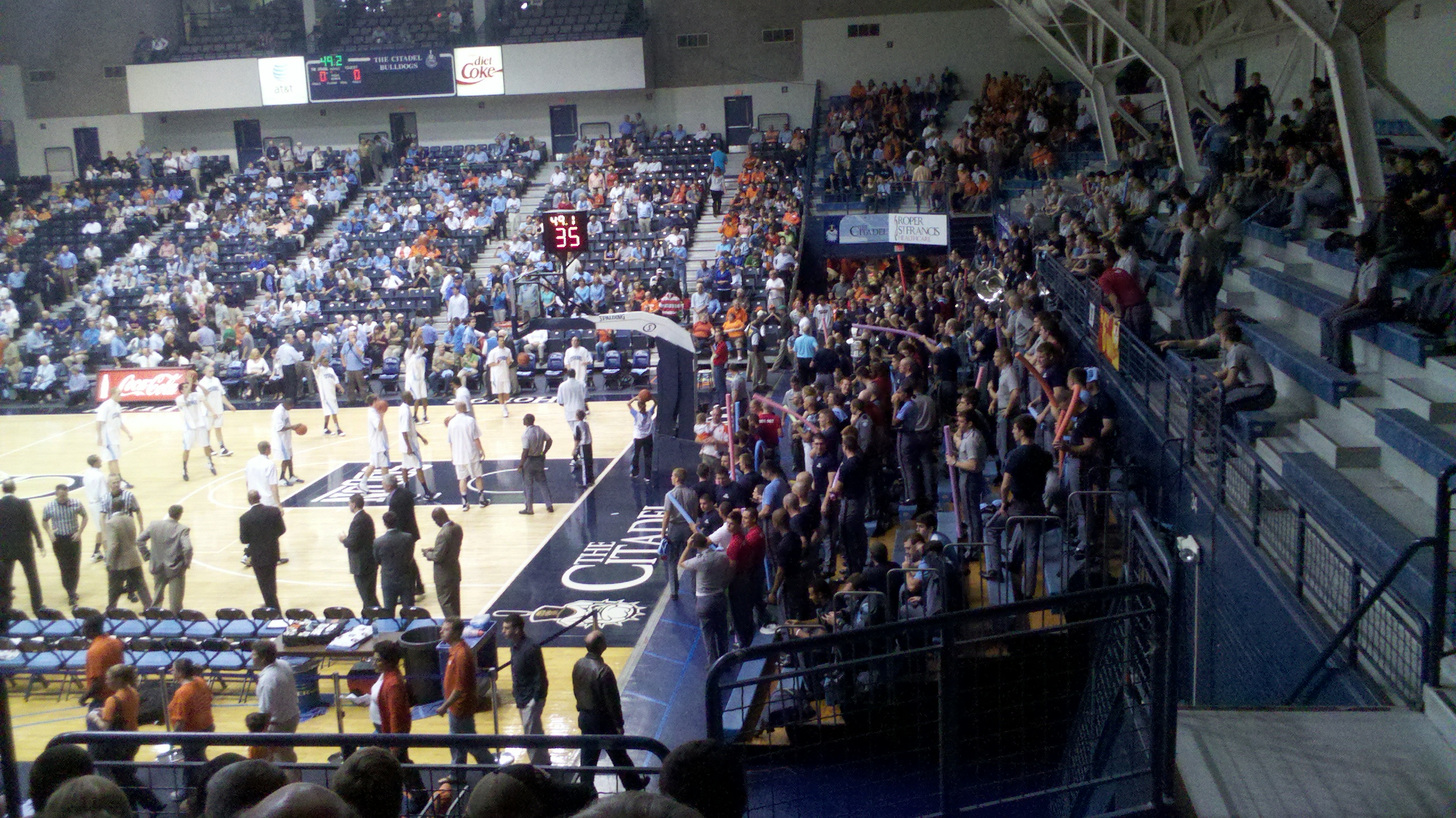
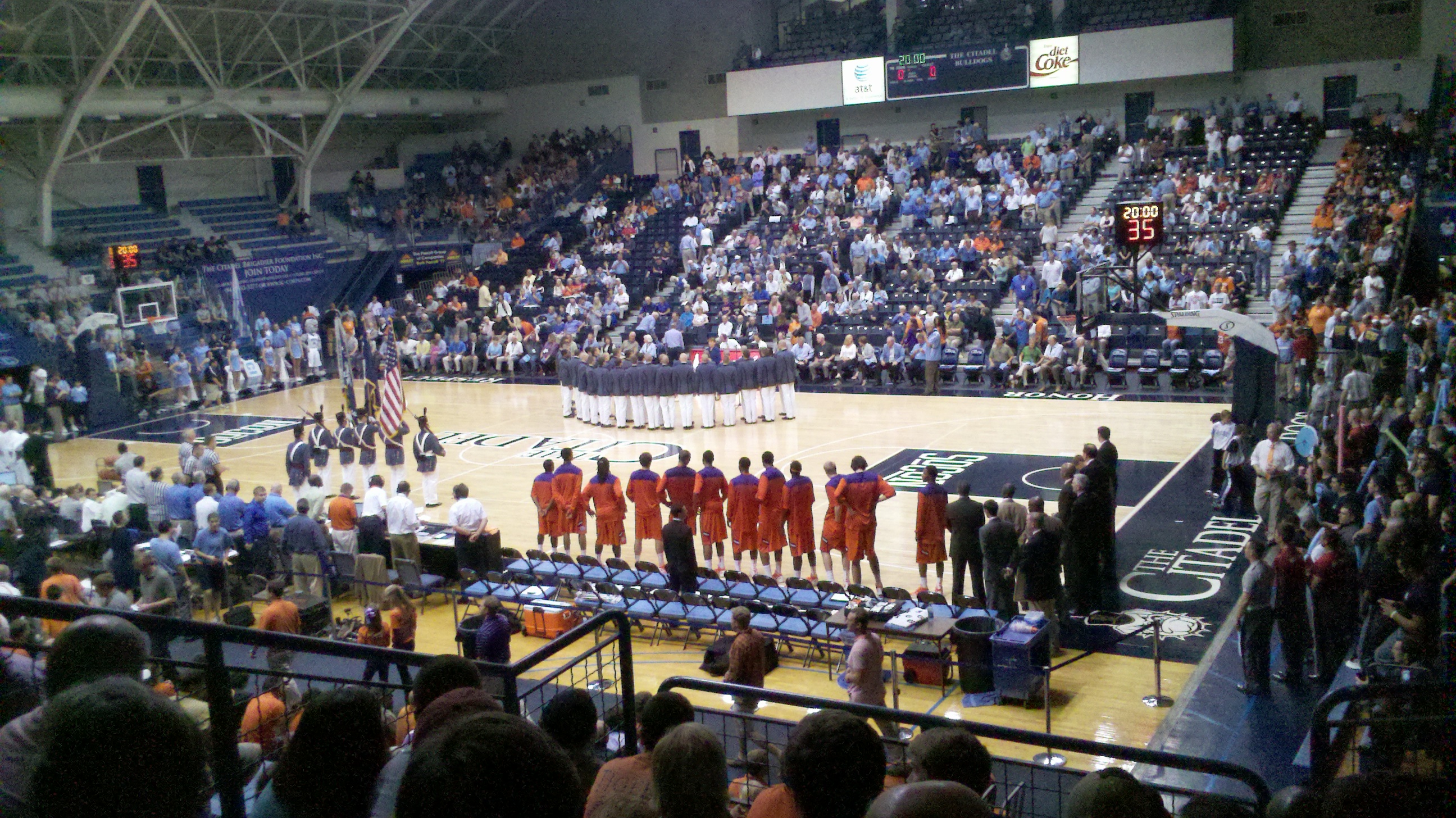
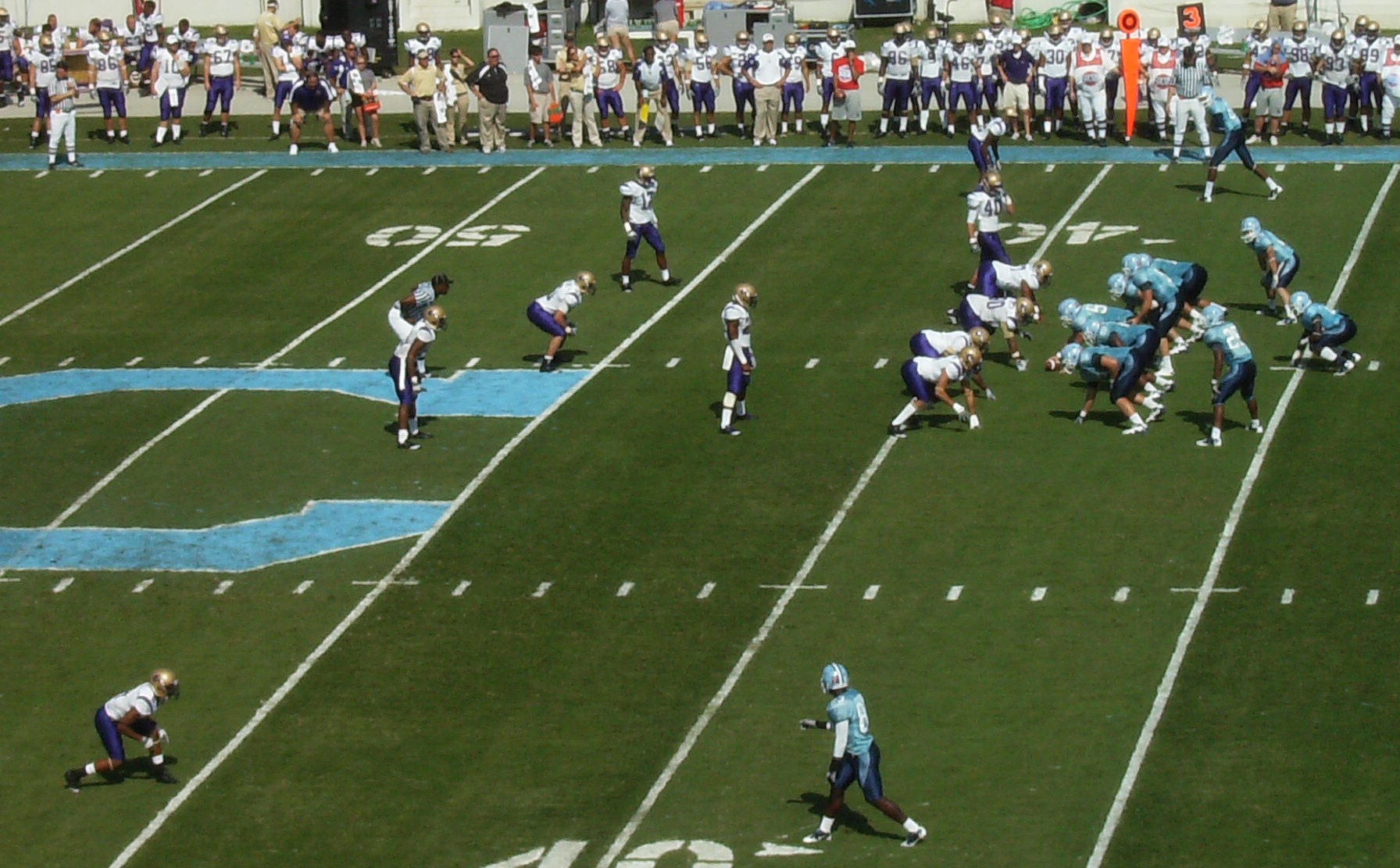
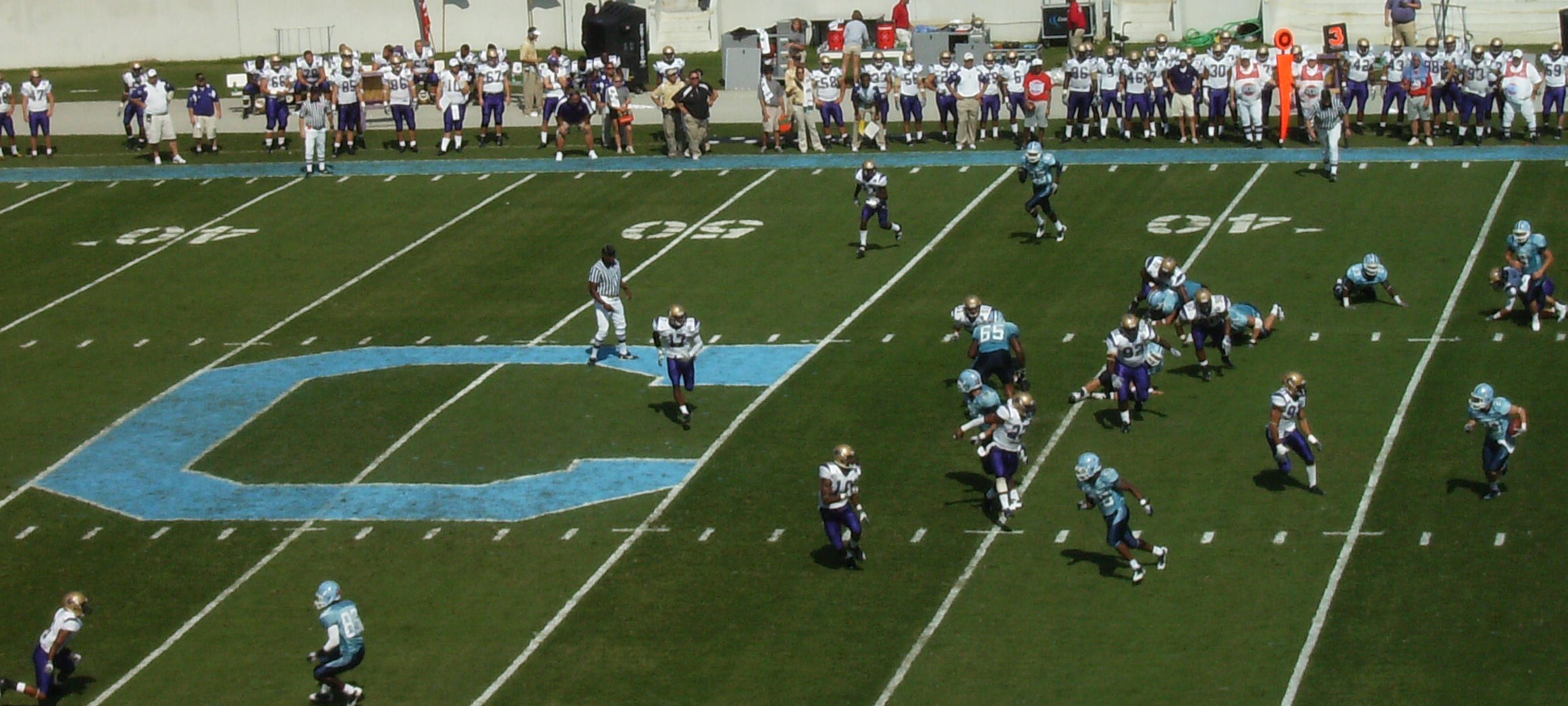
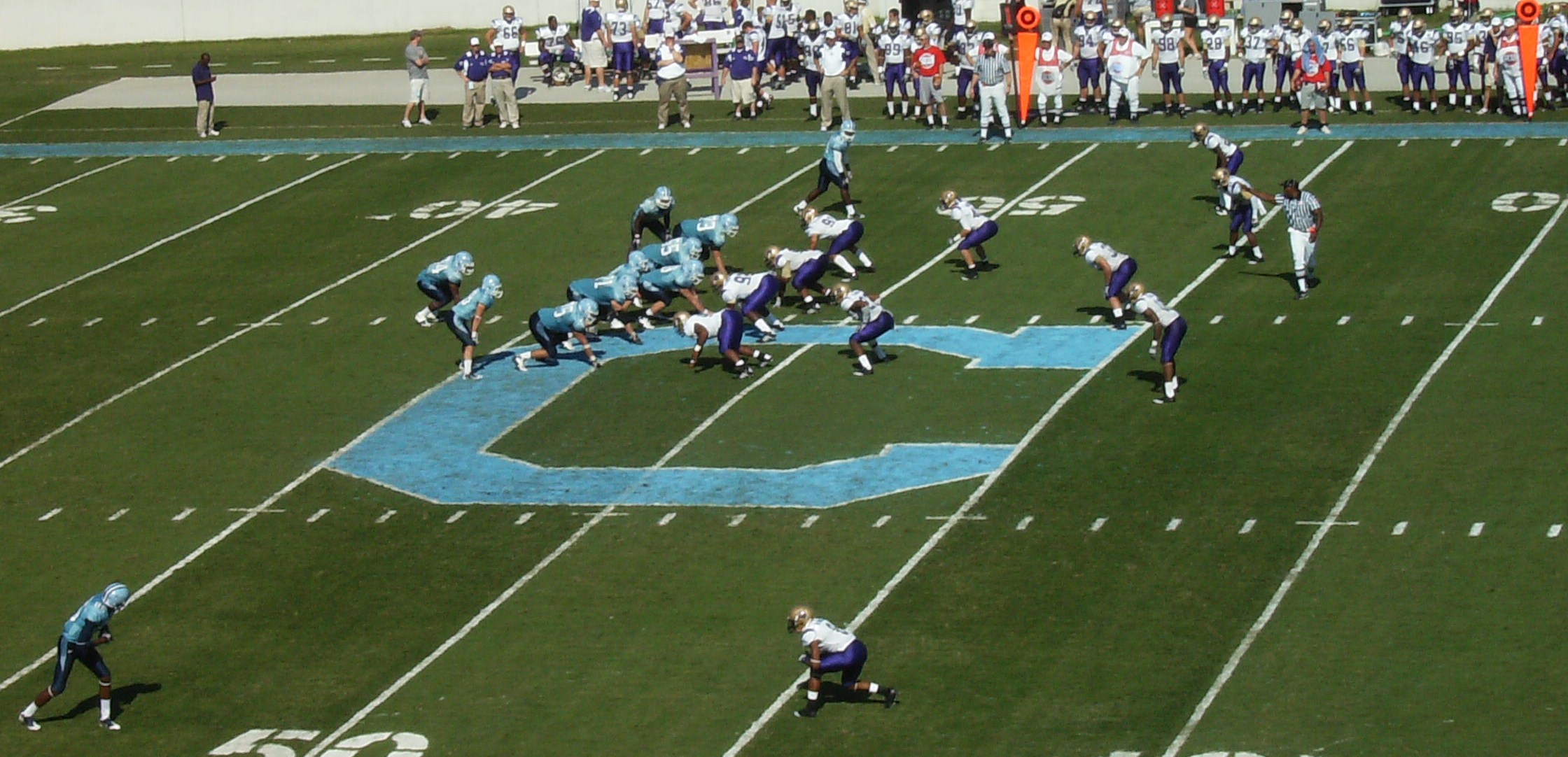
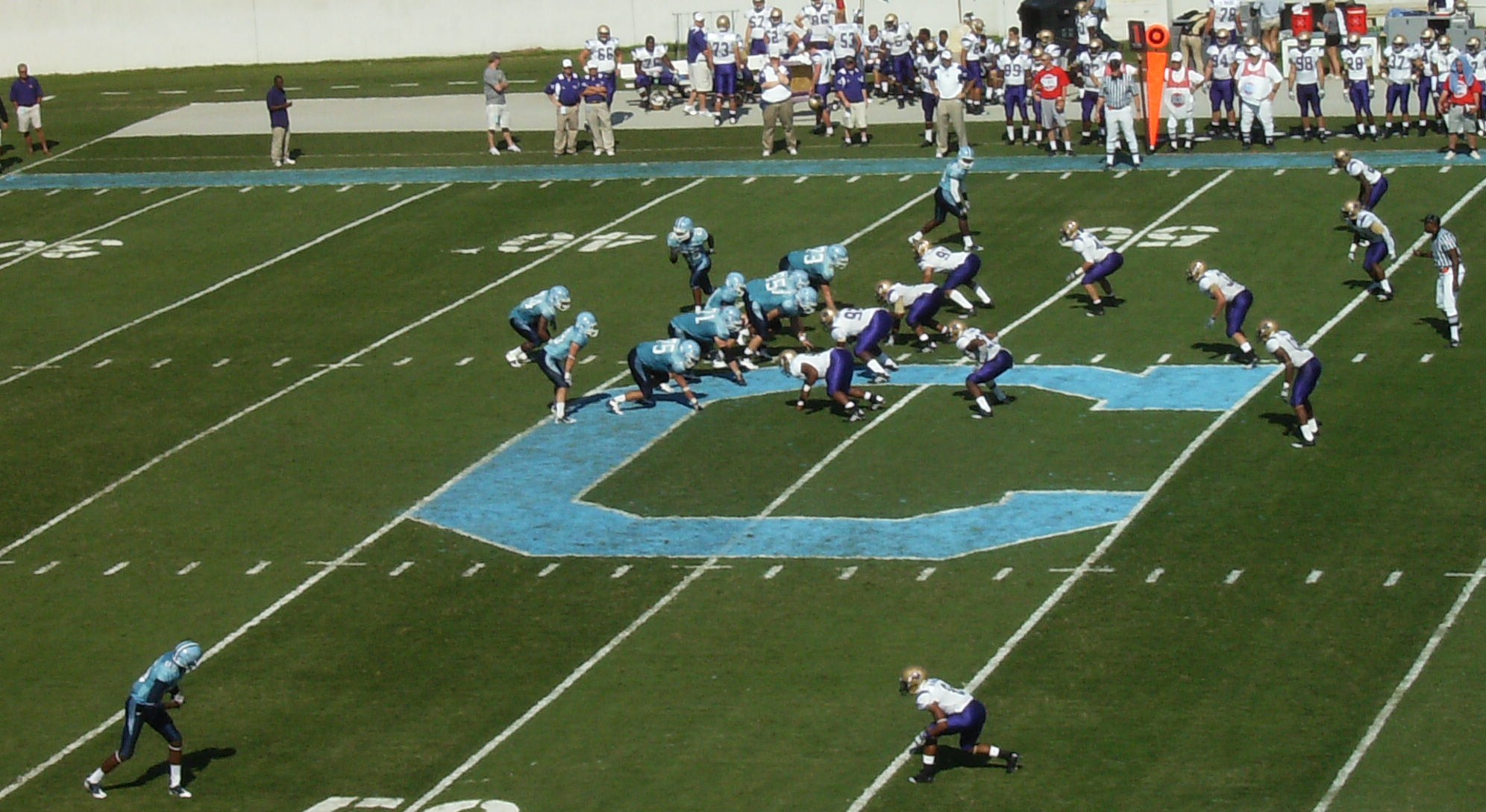
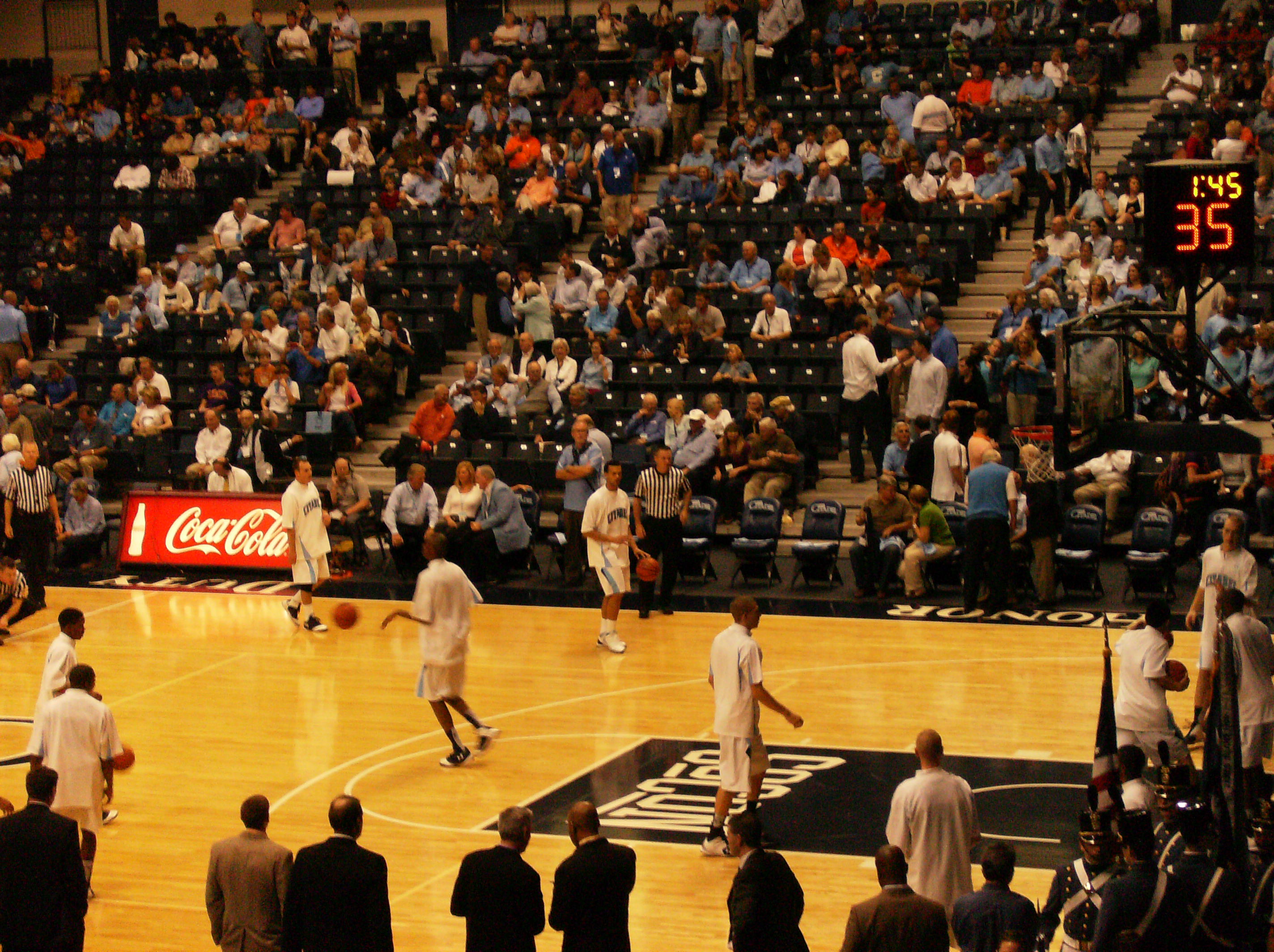
— I was at McAlister Field House for the Clemson game. So were lots of Clemson fans. I would say almost half the fans in attendance were wearing orange. That’s okay (for now), though. We’ll gladly take their money. I took a few pictures. As always, keep in mind that I’m a less-than-scintillating photographer with an iffy camera, which is one reason you won’t see any action photos. All the pictures are from the pregame scene.

Hoops update: The Citadel returns home to host Clemson

The Citadel vs. Clemson, 7:00 pm Wednesday, November 16, 2011, at McAlister Field House. The contest will be broadcast on the ESPN3.com platform, with Darren Goldwater calling the game alongside analyst Dean Keener. The game can also be heard on WQNT-AM 1450 in Charleston, with “voice of the Bulldogs” Danny Reed describing the action. That audio is also available online via Bulldog Insider.

The Citadel opened the 2011-12 campaign by splitting a pair of games at the All-Military Classic in Colorado Springs. The Bulldogs lost 103-100 to VMI in their opener before coming back from 20 points down in the first half to defeat Army, 83-72.

The two games were essentially played on the same day, at least if you were on Eastern Standard Time, which to me made the comeback against the Bulldogs of the Hudson that much more impressive. Army is not a good team (projected to finish last in the Patriot League), but any D-1 win at this point of the season with a squad as young as The Citadel’s has to qualify as a good win.

The Bulldogs had a chance to win both games, but could not overcome a bad start against VMI. The Keydets led by as many as 16 points in the first half before The Citadel made a run to cut the lead to two. VMI scored two late baskets to take a six-point lead into the break, and continued to increase its lead throughout the second half, actually leading 98-83 with less than four minutes to play. A furious rally by the Bulldogs fell just short.

Obviously, The Citadel needs to avoid falling behind by so many points early in the game. While the Bulldogs were able to rally past Army, that’s not something they will be able to do on a regular basis.

The game against VMI was televised by CBS Sports Network, with Roger Twibell calling the game alongside analyst Pete Gillen. In the first half, Lefty Driesell joined them via telephone for a five-minute interview segment.

Listening to Pete Gillen have a conversation with Lefty Driesell gave me a renewed appreciation of the versatility of the English language.

The star for the Bulldogs over the two games was, not surprisingly, Mike Groselle, who was named the Southern Conference Player of the Week for his efforts. His totals were great, and perhaps even more promising going forward, Groselle played 68 minutes over the two games. Considering that was at altitude, over a period of less than 24 hours, and that 37 of those minutes came against VMI and its racehorse style of play, any questions about his conditioning and general endurance have been answered.

Tangent: In its game release, The Citadel listed players who had three or more consecutive double-doubles (Groselle has now had three straight such games on two different occasions). I am surprised not to see Gary Daniels’ name on this list. I would have thought he had probably done that at least once during his career at The Citadel.

Groselle wasn’t the only player who excelled in Colorado. DeVontae Wright rebounded from a tough night against VMI (1-7 FG) and had an outstanding game against Army, scoring 26 points on just 12 shots from the field (he was 8-8 from the line).

Eleven Bulldogs played in each contest, and all of them scored against VMI. Ten of them got in the scoring column against Army (C.J. Bray was the exception, though he did have four rebounds in that game). Cosmo Morabbi attempted one three-pointer against Army, and made it, the first three he had made since the 2009-10 season (he had missed a number of games last year due to injury). I hope that is a sign of things to come for Morabbi. Bo Holston had 12 points and 7 rebounds in that game.

Lawrence Miller provided a spark against VMI, going 4-5 from three-land and scoring 14 points. Marshall Harris III had 11 points and 9 assists against the Keydets, and Ashton Moore added 10 points and 5 assists in the same game. The Bulldogs had four players come off the bench to score in double figures against VMI, as Barry Smith scored 12 points in 16 minutes of play.

Offensively, there wasn’t much to complain about in the first two games. The Citadel shot the ball well from the field and the line, made a decent percentage of threes (without taking too many), and did not commit an avalanche of turnovers. The assist-to-basket ratio was good, particularly against VMI. Groselle could use a little help on the offensive boards, though.

The defense needs to get better, however. The Bulldogs struggled defensively last season, and must improve on that side of the court to compete in the Southern Conference. The Citadel gave up 103 points to VMI on an estimated 85 possessions.

Thanks to a strong second-half effort, the numbers were better against Army, but the Bulldogs needed as many stops as they could get in the second half after giving up 49 first-half points. The Citadel did a much better job defending the three in that second frame; Army was 6-8 beyond the arc in the first half, but only 1-13 thereafter.

It has been a while since The Citadel defeated a “BCS team” in basketball. Indeed, the Bulldogs have lost 55 consecutive games to schools currently in a BCS conference, and 81 of their last 82. The lone victory in that run came near the end of the 1988-89 season, when The Citadel memorably defeated South Carolina in Columbia, 88-87. The Gamecocks actually made the NCAA tournament that year, so it’s not like the Bulldogs took advantage of a bad team.

The last time The Citadel beat Clemson? 1979, at McAlister Field House. The Bulldogs won 58-56, one of twenty victories for The Citadel in that particular campaign, the first time the school had ever won that many games in a season (and only matched once since then, three years ago).

Interesting note: the Bulldogs’ last two victories over BCS schools came against South Carolina and Clemson. Randy Nesbit was the head coach when The Citadel beat the Gamecocks, and a player when the Bulldogs defeated the Tigers. In fact, Nesbit hit the game-winning shot against Clemson in 1979.

Last year at Littlejohn Coliseum, Clemson defeated The Citadel 69-54. Mike Groselle had 14 points and 10 rebounds (five of them offensive boards) in that game.

Milton Jennings of Clemson, who went to Pinewood Prep in Summerville, also had a double-double in that game despite playing only 18 minutes; he’s an expected starter for Wednesday’s game. Jennings also had a double-double at Duke, on the Blue Devils’ Senior Night. The junior was a McDonald’s All-American, and he may be just starting to realize his potential.

Other Tigers who will start or see major action include sharpshooter Andre Young, who can fill it up despite being only 5’9″, freshman guard T.J. Sapp, and 6’5″ swingman Tanner Smith. Jennings will be joined in the frontcourt by Devin Booker, a decent jump shooter with nice touch around the rim. He’s a good rebounder as well. Jennings and Booker will be a formidable challenge for the Bulldogs’ big men.

The Tigers were a solid defensive club last year under first-year coach Brad Brownell. They held their opponents to an eFG% of 45.6, 25th-best nationally, and also forced turnovers at an impressive clip. Clemson occasionally struggled keeping opponents off the offensive boards.

Notable stat: the Tigers led the ACC in free throw shooting, which for many observers was disorienting.

Clemson played another group of Bulldogs, Gardner-Webb, in its opener. That game was tied at the half, 29-29, after G-W overcame a 13-point deficit. The Tigers broke out early in the second half, though, and reasserted control of the game, cruising to a 65-44 victory. Young was 7-9 from the field (3-4 3FG). Clemson also got 11 points from Sapp and a career-high 14 rebounds from Smith.

This will be the Tigers’ first visit to McAlister Field House since November 28, 1989. That was a big night for McAlister, as it was the first game played in the venerable arena since it had closed for remodeling two years earlier.

I was at that game, won by the Tigers 71-54 (the game was more competitive than the final score suggests). Clemson’s team featured both Elden Campbell and Dale Davis. On that particular evening, Campbell was average, but Davis was tremendous, impressing everyone in the building with his athleticism and skill.

It should be a fun night at McAlister Field House. I enjoyed the commercial The Citadel produced to promote the game. I hope a big crowd is there to “Pack the Mac”, as Chuck Driesell so eloquently put it.

2011 Football, Game 2: The Citadel vs. Furman

The Citadel vs. Furman, to be played at historic Johnson Hagood Stadium, with kickoff at 6:00 pm ET on Saturday, September 10.  The game will be televised on WYMA (Asheville, NC), and will be available on ESPN3.com.  There will also be a webcast on Bulldog Insider (subscription service), and the game can be heard on radio via The Citadel Sports Network, with new “Voice of the Bulldogs” Danny Reed calling the action.

The Citadel begins play in the Southern Conference with a game against traditional rival Furman.  It’s only the third time the two schools have ever met in a league opener, but it’s the second consecutive season that has been the case.

I’m not going to rehash the history of the series in terms of the time of year the game has been held; anyone interested can read what I wrote on the subject for last year’s game preview.  Regardless of whether you think the game should be a midseason clash (my preference) or played at the end of the year (a not-insignificant number of fans from both schools), I think everyone can agree that September 10 is too early for this game to be played.

Jeff Hartsell has reported that, per the SoCon office, next year’s meeting will come at the end of the 2012 season, on November 17.  (The conference does not make league schedules beyond one year in advance.)

I’m okay with that, as long as the Clemson-South Carolina game continues to be played the Saturday after Thanksgiving, as is now the case.  I just don’t want The Citadel and Furman to play on the same day as the matchup between the Tigers and Gamecocks.

Furman was 5-6 last season, its first losing campaign since 1998.  Bobby Lamb resigned after nine years in charge and over a quarter-century at the school as a player or coach.  The Paladins had missed the FCS playoffs for four consecutive seasons, which did not go over well among some supporters.  It was time for Furman to make a change.

The question, though, is did Furman really make a change?

The new coach is Bruce Fowler.  Fowler is a 1981 graduate of Furman who played for Dick Sheridan.  Lamb was a 1986 graduate of FU who had played for Sheridan. Fowler spent 18 years at Furman as an assistant coach.  Lamb had been an assistant coach at Furman for 16 seasons.

One difference is that Fowler wasn’t a complete Furman lifer like Lamb had been.  For the past nine years, he had been an assistant at Vanderbilt, where he was defensive coordinator for Bobby Johnson (and Robbie Caldwell in 2010).  Of course, Johnson had been the head coach at Furman before taking the Vandy job, and before that he had been an assistant under Dick Sheridan.

You may have noticed a pattern here.  Dick Sheridan left Furman after the 1985 season to take over at N.C. State, but his presence is still felt in the program.  All four of the men who have held the head coaching position since Sheridan left (including Fowler) were players and/or assistants under him.

If you were going to have your football program maintain what is in effect a 25-year tie to a former coach, you could do much worse than Sheridan, who did nothing but win throughout his coaching career (even as a 28-year-old rookie head coach at an Orangeburg high school).  It’s a type of continuity that may be worth preserving.

On the other hand, there is always the possibility that Furman risks going to the well once too often.  Fowler isn’t exactly a carbon copy of Lamb, though — for one thing, he’s 52 years old, 13 years older than Lamb was when Lamb got the job.  Also, he’s primarily a defensive coach (though he was the receivers coach at FU for seven seasons).  Lamb was mostly an offensive coach (and a former quarterback) during his time with the Paladins.

Usually when a school is in a position to make a coaching change after a run of disappointing seasons, it brings in somebody to shake things up.  That’s certainly not what Furman has done.  Besides Fowler, three of the assistant coaches played for Sheridan; another has been a Paladins assistant for 13 years.

Before I move on to the Paladins of 2011, I should note that Art Baker, who preceded Sheridan as head coach at Furman (eventually leaving to take the job at The Citadel), hired Sheridan, Jimmy Satterfield, and Bobby Johnson as assistant coaches, all of whom would later ascend to the top job at FU.  Baker had a significant impact on Furman’s coaching tree.

Furman lost 30-23 at Coastal Carolina in its opener.  The Paladins never led the contest.  The game had been tied at 16 and 23 before the Chanticleers scored the game-winning touchdown with 1:23 remaining in the fourth quarter.

Coastal Carolina gained 231 yards rushing and 195 yards passing against the Furman defense, but perhaps more interesting was that the Chanticleers had 59 rushing attempts for the game.  CCU ran 81 offensive plays from scrimmage for the game, while the Paladins had just 58.

As Bruce Fowler noted in the SoCon teleconference, Furman had trouble getting its defense off the field.  Coastal was 7-16 on 3rd-down conversion attempts and made its only 4th-down try, a major reason the Paladins trailed by over 12 minutes in time of possession.  That continued a trend from last season, when Furman finished last in the SoCon in time of possession.

The Paladins do have two impact players on defense, middle linebacker Kadarron Anderson and cornerback Ryan Steed, both of whom are on the Buck Buchanan Watch List.  Another linebacker, Chris Wiley, had fourteen tackles against Coastal Carolina.  Furman defensive end Josh Lynn is tall (6’5″) and rangy, and may be a key factor in how the Bulldogs’ triple action attack fares on Saturday.  Against Coastal, he had five tackles and a sack.

Furman’s starting quarterback against Coastal Carolina was Chris Forcier, of the Forcier Family of Quarterbacks.  I think it’s fair to say that the Forciers are, as a group, somewhat controversial.  I guess it’s a question of style.  When Chris Forcier decided to transfer from UCLA to Furman, the family issued a press release that wound up being posted on Deadspin.

His brother Tate is a former Michigan quarterback who has now transferred to San Jose State (after originally announcing he was going to Miami).  His oldest brother, Jason, also played quarterback at Michigan before transferring to Stanford.  The brothers also transferred to different high schools at various times.

Against the Chants, Forcier was solid, completing two-thirds of his passes while averaging over seven yards per attempt.  A classic “dual threat” quarterback, Forcier also rushed for 50 yards before leaving the game in the third quarter, apparently suffering from cramps.  Without him, the Furman offense sputtered, not scoring in the fourth quarter.

Assuming he is healthy (and there is no reason to believe otherwise), stopping Forcier will be a difficult task for The Citadel’s defense.

If dealing with Forcier wasn’t enough, the Bulldogs must also contend with Jerodis Williams, who rushed for 142 yards and 3 touchdowns against Coastal (including a 68-yard score).  Williams was the Southern Conference offensive player of the week, and also picked up FCS National Back of the Week honors from something called the “College Football Performance Awards“.

Furman had five different receivers catch passes against the Chanticleers (including Williams).  Tyler Maples had five receptions for 65 yards.  Colin Anderson had four catches, and presumably will have a career day against The Citadel, as has often been the case for Furman tight ends.

Along the offensive line, Furman has experienced and well-regarded tackles (one of whom, Ryan Lee, is moving from guard to tackle) and a veteran center, Daniel Spisak (who is Matt Millen’s nephew).  The guards include a first-year starter who came to Furman as a walk-on, and a sophomore who started three times last season before a season-ending foot injury.

Furman placekicker Ray Early was 11-12 on field goal attempts last season, including a long of 52 yards, and only missed one extra point all year (40-41).  Against Coastal Carolina, however, Early’s first field goal attempt of the season was blocked, and he then missed the PAT after the Paladins’ first touchdown.

After that, Early did not attempt a placekick in the game (although he did kick off), giving way to Furman punter Chas Short.  That may be something to watch on Saturday.

Short, incidentally, had a fine year for Furman in 2010.  The Paladins finished in the top 10 nationally in net punting.

With Furman having allowed a bunch of rushing yards to Coastal Carolina, and having lost the time of possession battle so decisively, there may be some hope among Bulldog fans that the Paladins’ defensive issues could play into The Citadel’s hands on Saturday.  As Jeff Hartsell wrote in The Post and Courier:

…on defense, the Paladins’ 4-3 look was blitzed for 237 rushing yards, including 105 yards and two TDs by CCU quarterbacks Aramis Hillary and Jamie Childers. That might bode well for the Bulldogs’ option attack, as QB Ben Dupree went for 141 yards and two scores in a 31-9 win over Jacksonville. Higgins said Dupree was 23 for 23 on his option reads, and The Citadel rushed for 439 yards, the most since 1994.

That does seem promising from The Citadel’s perspective.  I would make this observation, though:

The Bulldogs ran the ball well on Furman last year, dominated time of possession, and lost 31-14.  The Citadel gained 294 net yards rushing on 60 attempts, held the ball for over 36 minutes — and did not score until the fourth quarter.

Actually, The Citadel’s 359 total yards against Furman in 2010 was the most yardage gained by the Bulldogs in any Southern Conference game for the entire season.  The problem?  Three turnovers, a missed field goal, and a failed fourth-down try inside the Furman 25.  Another issue was that The Citadel started very slowly on offense, gaining only 64 total yards on its first five possessions.

Conversely, Furman got out of the blocks fast on offense in each half, scoring touchdowns on its initial drive in both the first and third quarters.  Of the Paladins’ other three scores against The Citadel, two came on drives starting in Bulldog territory after an interception and a failed onside kick.

Kevin Higgins has said in the past that sometimes it takes a triple option team a possession or two to figure out how the defense is playing.  That makes sense.  You could see it in last week’s game against Jacksonville, as the game was well into the second quarter until Triple O’Higgins got fully warmed up.

Against a SoCon opponent, though, it needs to warm up faster.  The Bulldogs can’t go an entire quarter with no offensive production, especially as running the offense generally means there are fewer possessions in the game.  Also, while obvious, The Citadel must control its fumbling problems, which cropped up against Jacksonville (albeit with only one coming on an exchange) and stay “on schedule”.

The other thing that can’t happen Saturday if The Citadel has any chance of winning is for the defense to concede relatively easy touchdown drives right out of the dressing room.  Last season, Furman’s TD drives in each half were for a total of 123 yards and featured only two third-down plays.

What the defense really needs is to force some turnovers.  Last year against Furman, the Bulldogs forced no turnovers and also did not record a sack.

The Bulldogs must also contain Forcier, who is capable of making big plays with his arm or his feet, and prevent Williams from breaking long runs, such as the one he had against Coastal Carolina.  (Also, the defense must watch the tight end.  He’ll be catching the ball over the middle for 15 yards before you know it.  Two or three times.)

I thought Ben Dupree played well against Jacksonville.  What he proved, beyond a shadow of a doubt, is that he has the ability to make big plays.  While the triple option is mostly about moving the chains, it’s important to have a breakaway aspect to the offense, and Dupree can provide that with his running ability.  He is still a work in progress as a passer.  If he continues to improve that part of his game, he will be a very dangerous weapon indeed.

Terrell Dallas’ injury against the Dolphins was not serious, thankfully, but it appears he may not play on Saturday.  That will be a loss, but Darien Robinson showed he is quite capable of handling the fullback position.

I thought the defense really came to play against Jacksonville.  Now it faces another challenge.  It won’t have the size and depth advantage against Furman that it had against the Dolphins.

Odds and ends:

— Check out the game notes to see all the different helmet logos The Citadel has had over the years (page 5).  There have been no fewer than 25 different designs since 1952 (and I think it’s likely there have been a few more that went unrecorded).

Those artist renderings/photos in the game notes came from the Helmet Archive, a good site if you want to peruse helmet histories of other teams as well.

— Has anyone else noticed that there are a lot of entities giving out “player of the week” awards these days?  It’s hard to figure out which ones to take seriously.  I can’t decide if the plethora of “recognition sites” is a boon or a curse for athletic media relations departments.

— The Summerall Guards are performing at halftime, but not at Johnson Hagood Stadium.  The Guards will be in Death Valley for the Wofford-Clemson game (it is Military Appreciation Day at Clemson).  It strikes me as a little odd that they would perform at another stadium on the same day as a home football game, but no big deal.

I’m looking forward to the game.  I am hopeful that the success of the home opener, along with Saturday’s opponent, results in a nice crowd at JHS.  As for the on-field action, I’m not quite sure what to expect.  I was pleasantly surprised by what I saw against Jacksonville.  I would like to be pleasantly surprised again.

Chal Port and his legacy

Chal Port was the best coach I ever had, and his love of his boys poured out of him the way it always does with the best of the breed.

— Pat Conroy, Prologue, My Losing Season

We are not reloading; we are in a rebuilding process.  Our team is made up of reserves of past years and freshmen who will get the opportunity to play this year and hopefully be up to the challenge…Our baseball accomplishments measured by victories this year could be moderate.  From our players we need a dedication of purpose, firm self-discipline and tenacious determination.  Hard work and aggressive play must overcome our limitations.

We will be playing off the enthusiasm of youth, and that should result in some entertaining baseball.  We must judge this team on the basis of their performance, according to their individual abilities and improvement throughout the season.  We want to teach them not to beat themselves and to always play with a fighting spirit and essential mental toughness.

We need to stay out of the way of line drives and recover foul balls so that we can stay within our budget.

— Chal Port, from The Citadel’s 1990 Baseball Media Guide

That last line is one of Port’s more famous witticisms, mainly because it is one of the most publicized, as it got a lot of press after the 1990 team reached the College World Series.  It is quintessential Port, to be sure.

Port died Saturday in Charleston after a long illness.  He was 80 years old.  You can read and view stories and tributes to Port in many places, including Jeff Hartsell’s article in The Post and Courier, WCIV-TV, WCSC-TV, and this selection from the 2005 documentary DVD “Who’d a Thunk It?”.

Chal Port won 641 games and seven Southern Conference championships at The Citadel, but the opening paragraph on any story about his career at the military college always prominently includes that 1990 squad, and justifiably so.  At the time, longtime Clemson coach Bill Wilhelm said he didn’t know of “a lower-budget team to go to the College World Series,” and he wasn’t being patronizing in any way.

Port was the only fulltime coach on the staff; his two assistants were a part-timer (Tom Hatley) and a GA (Ken Creehan).  As for how many scholarships Port had available, I have heard different numbers, though all sources agree that he had far from the maximum 11.7 schollies.  He probably had half that amount at his disposal, at best.

Winning 46 games with a team that had such limited resources, including the wins over North Carolina State and East Carolina at the Atlantic Regional, becoming the only team to ever win two games against Miami at Mark Light Stadium in a regional, and then actually winning a game in Omaha…that was some kind of run.  Nothing like it had ever happened before, and it is hard to imagine it ever happening again.

Port guiding his Bulldogs to Omaha was a godsend for both the local and national media in 1990, as he gave scribes and TV commentators all the material they wanted and then some.  Just a sample:

— [From the Atlanta Journal-Constitution] “After his team beat perennial power Miami to reach the CWS, ESPN’s Tim Brando asked Port how it felt to win in the shadow of the building named for Ron Fraser, Miami’s coach.

‘No big deal,’ he said.  ‘I’ve got a building at The Citadel named after me.  It’s the Port-O-Let next to the dugout.'”

(After that comment, the AJC‘s Tom Whitfield wrote that “Chal Port of The Citadel has been named college coach of the year by The Sporting News…when it comes to down-home wisdom and one-liners, he’s the coach for the ages.”)

— Brando interviewed Port at the Atlantic Regional in Miami.  Also at that regional, a young Miami Herald sportswriter named Dan Le Batard documented an exchange with Port that went in part like this:

Le Batard: “…but Chal, your team…is an impressive 41-12 and…”

Port:  “Good scheduling, don’t you think?”

Le Batard:  “But Chal, pal, your team had a 26-game winning streak this year, the nation’s longest, and…”

Port:  “Aw, we don’t win a lot of baseball games but we do pretty good in wars.”

— Port also gave an interview to columnist William Rhoden of The New York Times:

“When we looked at the calendar last fall, our goal for June 1st was to make sure that the kids had turned in all their equipment.” …

… “‘Baseball has never been big at The Citadel,” he said. ”It’s a military school, and as a military school, football is the god, then basketball. When baseball has a good year, we’re third. When we have poor years, we drop down behind golf.”

For all of the success of this year’s team, Port realizes that The Citadel will never become a perennial baseball power.

”Most excellent baseball players are not interested in marching and wearing uniforms,” Port said.

Of course, one team and a bunch of jokes don’t really define the man.  His overall record is extremely impressive, but when put into context, the adjective “amazing” may be a more appropriate term than “impressive”.  This next section is something I wrote a couple of years ago as part of a study of the records of Port and Fred Jordan, with some minor editing.

Chal Port had to make numerous on-field adjustments during his tenure, including the change from wooden to aluminum bats, and the Southern Conference moving to divisional play (and then dropping the divisions), among other things.  Then there were the off-field adjustments, which included integration, and the fact that going to a military school wasn’t exactly the cool thing to do in the early-to-mid-1970s (not that it’s ever been the really cool thing to do).   Consider what the baseball program accomplished, especially when compared to The Citadel’s football and hoops programs of that decade:

From 1971-1979, the football team was coached by Red Parker, Bobby Ross, and Art Baker.  Ross in particular is known as having been an outstanding coach, with major success at multiple levels of the sport.  The football team had four winning seasons overall in those nine years, with no league titles and a conference mark of 26-29 (47.2%).  SoCon finishes:  3rd, 4th, 7th, 5th, 4th, 6th, 3rd, 5th, 3rd.

The basketball team was coached from 1971-79 by Dick Campbell, George Hill, and Les Robinson.  Robinson would later prove his worth as a coach with an outstanding rebuilding job at East Tennessee State, but during this period the hoops program had just two winning seasons, bookends on seven straight losing campaigns, and had an overall conference record of 43-69 (38.4%).  Conference finishes:  4th, 5th, 4th, 6th, 7th, 6th, 7th, 8th, 3rd.

Meanwhile, from 1971-1979 Port went 85-43 (66.4%) in conference play, with three championships, nine winning seasons overall, and eight winning seasons in the league (and the other was a .500 season).  His SoCon finishes during that time:  1st, 4th, 3rd, 4th, 1st, 3rd, 3rd, 3rd, 1st.  He finished in the upper half of the league all nine years.

He wasn’t done yet, either.  He had his best teams up to that time in 1982 and 1983, with the ’82 squad finishing 40-8.  At that point another power arose in the Southern Conference, as Western Carolina hired Jack Leggett to upgrade its already promising program.  The Catamounts would win five straight league titles, a stretch dovetailing almost exactly with a gradual decline in The Citadel’s fortunes on the diamond.

Port outlasted WCU’s run and (even more impressively) Hurricane Hugo, however, and orchestrated a season that won’t soon be forgotten, plus a very nice coda (the ’91 campaign).

The 1990 season was incredible, but don’t forget all those terrific teams he had in the 1970s and 1980s.  A few of those squads were just a break or two away from being DVD-worthy themselves (the 1982 team in particular).

Port is, without much doubt, the best coach The Citadel has ever had, in any sport.  He got it done off the field, too, as almost all of his players graduated.

The State of South Carolina has had more than its fair share of outstanding college baseball coaches over the years, but Chal Port was arguably better than any of them, given his resources.  I say that as someone who has a great deal of respect for the wonderful job Ray Tanner has done at South Carolina (not to mention Wilhelm, Bobby Richardson, etc.).

Port’s influence over the game continues today.  Numerous former players went on to become successful high school coaches in the state, preaching the gospel of Chal.

Some of his disciples moved on to the college ranks, including three current D-1 head coaches:  his successor at The Citadel, Fred Jordan; Tony Skole (ETSU);  and Dan McDonnell (who made a little history for himself by leading Louisville to Omaha a few years ago, joining the exclusive club of individuals to have played for and coached a CWS team).

Port’s influence can even be seen indirectly with players like Baltimore Orioles All-Star catcher Matt Wieters, whose father Richard was an outstanding pitcher-outfielder for Port in the 1970s.

Chal Port’s ability to develop and nurture leaders inside and outside the game is his real legacy, even more so than his renowned storytelling ability and his championship-winning baseball teams.

Condolences to his family and friends.

The Citadel hoops it up in Las Vegas…and a couple other places

What happens in Vegas…stays in Vegas.

On Friday, The Citadel plays the first of four basketball games in the western half of the United States, with one game in Boulder, Colorado, another in Albuquerque, New Mexico, and two games in Las Vegas.  If you have to play four games in the week before Christmas, you could do worse in terms of locales.

The four games are all part of the IBN Las Vegas Classic, which is an in-season tournament that really isn’t a tournament.  Well, I suppose it’s a tournament for Colorado, New Mexico, Indiana, and Northern Iowa.  Those four schools host two games, then play in a four-team bracket in Las Vegas for the “tournament” title. Meanwhile, four other schools (The Citadel, South Carolina State, Longwood, and SIU Edwardsville) play two games at the “bigger” schools and then two games against each other in Vegas.

It doesn’t matter if The Citadel beats Colorado and/or New Mexico before playing in Las Vegas.  It’s still paired off with the Longwood-SIUE-SCSU group.

This kind of in-season event is a growing trend that can be blamed mostly on Gardner-Webb, which a couple of years ago upset Kentucky and replaced the Wildcats in a made-for-ESPN tournament at Madison Square Garden.  That didn’t sit well with event organizers, which missed out on the hordes of UK fans (and also presumably annoyed ESPN, which lost a big TV draw).

After that, the folks who run these types of events started the “guaranteed four” setup, so as to ensure that the four “name” teams in the tournament advance to play at the main site.  Of course, both sets of teams in the LVC are playing at Orleans Arena anyway, but I’m guessing CBS College Sports (which is televising each game of the Colorado-New Mexico-Northern Iowa-Indiana group) didn’t want to be faced with the possibility of televising Longwood-South Carolina State instead of Northern Iowa-Indiana.

In addition, the organizers want to sell as many tickets, advanced or otherwise, as possible, and it’s not as easy to do that without “heavyweight” matchups (although there is nothing particularly heavy about any of the heavies in this tourney).  If you click on the “IBN Las Vegas Classic” link above, you will notice that ticket prices for the event range from $44 to $110, and single-game tickets are not available.  (If you listen to the announcer on the streaming video advertisement, you will also notice him promoting South Carolina as playing in this event; undoubtedly the folks who put the video together got South Carolina confused with South Carolina State.)

The Citadel also played in a “tournament” with pre-determined matchups a couple of years ago, in Cancun, an event that also featured New Mexico, and which was most notable for having its games played in a ballroom (complete with chandeliers).

Just some thoughts on The Citadel’s upcoming opponents, nothing too substantial…let’s start with Chris Fowler’s alma mater:

Colorado is 5-3.  The Buffaloes are 5-0 at home and 0-3 on the road.  Luckily for Colorado, it will play The Citadel at home.

This appears to be enough of an edge for The Denver Post, and possibly Buffs coach Tad Boyle, to take the Bulldogs for granted.  Boyle plans to “substitute freely” against The Citadel, in an effort to give his benchwarmers some playing time. According to the Post, “it will be a disappointment if Colorado can’t empty its bench” against the Bulldogs.

I think that qualifies as bulletin board material…

You can understand Colorado’s confidence, what with its impressive wins over national powers Idaho State and Texas-Pan American, and its near-upset of Harvard, which only beat the Buffaloes by 16 points.

Alec Burks (20.5 PPG this season and last year’s Big XII freshman of the year) and Cory Higgins (16.9 PPG) are good players, and need to be saved for other games, like those against top-100 RPI teams.  Colorado needs to beat some of those teams to finish the year in the top 100 itself, something it hasn’t done in the past four seasons. Part of the reason for that has been its less-than-stellar defensive play; among other things, Colorado finished last in the Big XII in 2009-10 in FG% defense.

Boyle won 25 games last year at Northern Colorado, and then moved to Boulder to replace Jeff Bzdelik (currently losing games to low-major squads at an alarming rate for Wake Forest).  He wants to improve Colorado’s defense and rebounding, which is a good idea, but through eight games the Buffs are still struggling to defend (including allowing opponents to shoot 40% from three-land; Zach Urbanus, take note).

The Citadel, by my count, has now lost 51 straight games to schools currently in BCS conferences.  Its last victory over a major-conference foe came in 1989, at South Carolina.  Before that you have to go back to 1979 and a win over Clemson.  The Bulldogs have only one victory over a current Big XII school, a 62-61 decision against Texas A&M in 1971.

While beating Colorado might be considered unlikely, given that history, it’s not out of the realm of possibility, particularly since the Buffaloes are not exactly on the same level as Duke or Kansas.  I’m a bit bemused by the Post story, which appears to be assuming a walkover.

Going into this season, Steve Alford had won 76 games in three years at New Mexico, including 30 last season (a school record).  One of those 30 victories came in the NCAA tournament, which matched Alford’s total number of NCAA tourney triumphs in eight years at Iowa.  It appears Albuquerque is a better fit for Alford than Iowa City, somewhat surprising for a Big 10 legend…or a Big 10 leader…whatever.

(We’ll be mocking the new Big 10 division names for years to come.)

Alford should have a good team this year, too, although it could have been even better had MWC player of the year Darington Hobson returned.  He elected to go pro and bypass his senior season, however.  Hobson and Ramon Martinez (also departed) combined to average 30 points and 15 rebounds per game last season; now Alford has to replace that production.

The Lobos are 7-1, including back-to-back wins over New Mexico State (a scheduling oddity; the victory in Las Cruces came in OT) and victories over Arizona State and Detroit.  The one loss was a 25-point beatdown at California.

New Mexico has a lot of depth, and Alford is still in the process of figuring out how to use it, evidenced by the fact ten different players have seen action in all eight of the Lobos’ games, and that doesn’t include Phillip McDonald, who missed three early games with an elbow injury.  When Alford does get a handle on his rotation, New Mexico should be an upper-echelon Mountain West Conference outfit, albeit probably a rung below San Diego State (Steve Fisher appears to have his best team in 12 years at the helm of the Aztecs’ program).

New Mexico plays its home games in one of college basketball’s great venues, The Pit, which has undergone a $60 million renovation.  The Pit is probably best known as the site of North Carolina State’s famous victory over Houston’s “Phi Slama Jama” squad in the 1983 NCAA title game.

It’s too bad Final Fours aren’t played in true basketball arenas any more, because The Pit was a classic host site.  CBS has been using “The Road to…” tagline for years to hype the NCAA tournament, and nothing ever sounded better than “The Road to Albuquerque”.

Once The Citadel arrives in Las Vegas, it will face South Carolina State.  This is, in a word, dumb.  Two schools 77 miles apart (believe me, I am more than familiar with the distance between Orangeburg and Charleston) will travel across the country to play each other.  I don’t see why the event organizers didn’t have SCSU and The Citadel play Longwood and/or SIU Edwardsville in the first round, to lessen the chance they would play each other.

South Carolina State is 4-4, with all four victories coming against non-D1 opposition. (The Orangeburg Bulldogs will play Indiana and Northern Iowa prior to matching up with The Citadel.)  The losses include setbacks at Clemson and at Charlotte; SCSU has also lost to Furman and, perhaps most disappointingly for its fans, North Carolina Central.

Carrio Bennett, a senior who was the MEAC freshman of the year three seasons ago, scored a combined 35 points against Furman and NC-Central, but averaged just six points against Charlotte and Clemson.  Darnell Porter lit it up against the Bulldogs’ non-D1 competition, but hasn’t yet produced against the better teams on SCSU’s schedule.

All of South Carolina State’s scholarship newcomers this season are junior college players; one of them, Brandon Riley, scored 23 points against Charlotte and 12 against Furman.

Through four games against D-1 teams, SCSU has done a good job forcing turnovers and rebounding, and a poor job defending in the paint (allowing 54.1% on 2-point FG attempts).  The Bulldogs are a mixed bag when it comes to offensive efficiency; they’re a good 2-point shooting team but terrible beyond the arc (26.6%).

This will be the first meeting between The Citadel and South Carolina State since 2004.  Charleston’s Bulldogs hold a 7-3 advantage in the series.

After playing South Carolina State, The Citadel will play either Longwood or SIU Edwardsville.

Longwood is 3-8, with its lone D-1 victory over Columbia.  The Lancers share one common opponent with The Citadel, James Madison, losing at home to the Dukes 88-78 (the Bulldogs lost to JMU 74-67 at McAlister Field House).

The globetrotting Lancers have also lost at Kansas, Seton Hall, Marquette, and VMI (losing 114-82 to the run-and-gun Keydets).  When The Citadel is playing Colorado, Longwood will be playing New Mexico (and vice versa).

Longwood is a small school (a little over 4000 undergraduates) in Farmville, Virginia that has been a D-1 member since 2007.  It’s an independent in hoops, which largely explains its all-over-the-map schedule.  Its most famous hoops alum is Jerome Kersey, who was a longtime NBA player for the Portland Trail Blazers.

SIU Edwardsville started institutional life as an extension of SIU Carbondale (the school commonly referred to as Southern Illinois or SIU).  SIUE now has almost 14,000 undergraduate students.

Like Longwood, SIUE is a recent debutant in D-1.  The Cougars ply their trade in the Ohio Valley Conference, although they won’t compete in league play as a member until next season. SIUE is still transitioning to Division I.

SIUE is 2-9, with only one victory over a D-1 squad.  That win came last Saturday against Kennesaw State in 2OT.  Kennesaw State had beaten Georgia Tech earlier in the season, so beating KSU was a nice scalp for the Cougars.  Actually, any win would be a nice scalp for SIUE, which prior to the Kennesaw State win had only defeated MacMurray (the college, not the dad from ‘My Three Sons’).  Last season the Cougars were 5-23, which included two non-D1 victories.

SIUE has several notable alums from the world of sports, including the great tennis doubles team of Ken Flach and Robert Seguso, the respected baseball broadcaster Dewayne Staats, and pro wrestler Paul Wight (“The Big Show”).  Sportswriter Bill Plaschke also attended SIUE.  However, the most notable SIUE basketball alum is longtime referee Ed Hightower.

When I last wrote about the hoops team, The Citadel was about to play its first two Southern Conference games of the season, along with a game against D-3 St. Mary’s of Maryland.  I had expected the Bulldogs to go 2-1 in those three games, and that’s exactly what happened.

As for the four upcoming “tournament” games, I believe The Citadel should be 2-2 at worst.  I don’t really expect an upset on the road in Boulder or Albuquerque (although it would be nice, obviously), but I think The Citadel has a better squad than South Carolina State (and a more cohesive and experienced one as well).  The Bulldogs should be favorites against either Longwood or SIUE.

Jeff Hartsell did a nice job in a recent “Bulldog Bites” post of breaking down how the season has gone so far, although I think the Bulldogs are a little better than that current Pomeroy projection.  I certainly hope so, anyway.  The Citadel needs to continue to work out its problems on the defensive end; the Bulldogs are a bottom 50 team nationally in 2-point FG% defense and aren’t much better in defensive turnover rate.  The Citadel does have good numbers defensively against the three-point shot, however, as opponents are only shooting 31% from beyond the arc.

The Citadel is only shooting 62.9% from the line, which is actually better than I would have expected, given that the player who has shot the most free throws so far this season is Bryan Streeter.  If good foul shooters like Cameron Wells and Mike Groselle get more opportunities from the charity stripe, the FT% will go up.

One way for Groselle to get more chances is for his minutes to increase, which I think is going to happen, particularly if he can hold his own defensively.  On the offensive side of the court, he has been very impressive.

I’ve been trying to decide who Groselle reminds me of in terms of his offensive game. Maybe this is a reach, and it certainly is a blast from the past, but I’m going to say he has a game not unlike John Pinone, who was a star for Rollie Massimino at Villanova in the early 1980s.

Streeter may be a total liability at the foul line (33.3%), but he is an offensive rebounding machine, with 29 in eight games.  That is getting it done.   Even with his struggles with free throws, he has still been arguably the Bulldogs’ second-best player so far this year when you combine all the elements of the game.

Zach Urbanus appears to have located his missing outside shot, and the team has solid numbers in terms of assist/turnover ratio and assist/made basket ratio (the A/B of 64% is 20th-best in the country).  Where the Bulldogs are hurting offensively is inside.  I noted The Citadel’s poor 2-point FG% defense earlier; it’s matched by an equally poor 2-point offensive percentage.  Between that, the team’s early struggles from three-land and the free throw issues, The Citadel’s eFG% is 314th out of 345 Division I teams.

I hope the players have a good time on the trip, and come back with an extra Christmas present or two, like a win in Boulder or Albuquerque.

The Citadel: Status of the Football Program

Judging from some posts at TCISN over the last few weeks (and from some non-message board discussions I have heard), there is sentiment in some circles that it’s time to make a coaching change at The Citadel.  This is, in my opinion, definitely a minority viewpoint, but it’s out there.

It’s a position that reached its zenith in popularity following the offensive debacle against Georgia Southern, and I have to say it would be hard to blame anyone for having a knee-jerk reaction after sitting through that game.  It was embarrassing.  The improved performance against Elon last Saturday seems to have muted some of the “we need a new coach” talk, though.

That said, I seriously doubt there is going to be a coaching change after this season. Actually, I would be really, really surprised if Kevin Higgins weren’t retained.

Higgins is currently under contract through the 2013 football season.  In this economic climate, there aren’t many schools that are prepared to let a coach go with three years left on his deal, and The Citadel doesn’t have a history of doing that, anyway.  Just the opposite, in fact.  The Citadel has honored the full contracts of “lame-duck” coaches like Don Powers in football and Randy Nesbit in basketball, just to name two.

Another thing to consider is that after last season, his second straight losing campaign (and fourth in five years), Higgins decided to completely scrap his spread offense and move to the triple option.  That doesn’t strike me as the move of a man worried about job security, because he had to know when he made that decision that the 2010 season was probably going to be difficult.  Maybe he didn’t think it was going to be as difficult as it has turned out, perhaps, but he knew the potential pitfalls.

I don’t know, but I would guess that before deciding to employ a new offense Higgins had a chat with AD Larry Leckonby about the move, just to make sure his position was safe for at least a couple of years.  That also was likely the message Leckonby delivered to prospective assistant coaching candidates (Higgins brought in seven new assistants).

Tommy Laurendine, for example, was in a presumably “safe” job at his alma mater, Lenoir-Rhyne.  I doubt he would have taken the job at The Citadel if he thought there was a chance that it would only be for one year.  The same is true for Josh Conklin and Bob Bodine, among others.

Assuming Higgins is back for at least one more season, then, where does the program stand in relation to historical norms?  Is keeping a coach with his overall and league record a good idea, regardless of contract status?  What factors besides on-field performance need to be considered?

First, let’s look at some numbers (keep in mind that at the time of this post, The Citadel has yet to play its final game of the 2010 season, which is at Samford).

Kevin Higgins is 26-40 overall, 14-30 in the Southern Conference.  He has been the Bulldogs’ head coach for six full seasons.

Twenty-three men have served as head coach of The Citadel.  Eight of them coached prior to the school joining the Southern Conference.  Tatum Gressette is the transitional coach in this respect, with the last four years of his eight-year tenure marking the first four SoCon campaigns for The Citadel.

Counting Gressette, then, let’s take a look at how Higgins compares to those fifteen coaches who competed in the Southern Conference.

— Overall record:  Higgins ranks 10th out of 15 in winning percentage

— SoCon record:  Higgins ranks 8th out of 15 in winning percentage

There is more to this than just those placements, though.  Higgins may only be 10th alltime in overall winning percentage, but of the five coaches behind him, three of them were his immediate predecessors at The Citadel.  The other two, Quinn Decker and John McMillan, were the first two coaches at The Citadel following the program’s post-World War II restart.

As for the SoCon record, Higgins has a better conference winning percentage than Ellis Johnson and John Zernhelt (but not Don Powers, interestingly), and also has a better mark than Tom Moore, along with John Rowland, Gressette, Decker, and McMillan.

Starting with John Sauer, who only coached at The Citadel for two seasons, every coach who was at The Citadel between 1955 to 2000 has a better league record than Higgins, except Moore.  That includes Eddie Teague, who succeeded Sauer as head coach, and three men then-AD Teague later hired (Red Parker, Bobby Ross, and Art Baker).  Moore’s successor, Charlie Taaffe, also has a better SoCon record than Higgins.

Comparing Higgins’ SoCon record to the Gressette/Rowland/Decker/McMillan group is probably pointless, though.  For example, Gressette was 4-14 in league play over four seasons, but seven of his fourteen conference losses were to schools currently in the ACC or SEC.

Decker was 8-25-1 in conference action, which included playing either South Carolina or Clemson every season — as conference games.  (His 1950 squad was 2-3 in the league; one of the two wins came against the Gamecocks, at Johnson Hagood Stadium.)

That doesn’t even take into account the difficulties Decker (and later McMillan) had in trying to bring the program back up to the level it had been prior to the war.  It must have been hard, for the first nine seasons following the program’s return were losing campaigns.  Neither Decker nor McMillan ever had a winning season at The Citadel.

One thing to consider when evaluating a coach’s record at The Citadel would be, simply, how successful has the school been historically in football?  What should expectations be?

The Citadel has basically been a .500 program through most of its history.  At the time it joined the Southern Conference, the school’s overall football record was 115-112-24.  It had never had more than four consecutive winning seasons, or more than three straight losing campaigns.

The ten years leading up to league membership were fairly typical:  7-3, 3-6-1, 6-3-1, 4-5-1, 4-5-2, 5-4-1, 4-5, 3-5-1, 3-5-1, 4-3-1.  Even after joining the SoCon, the overall records (as opposed to conference play) continued in a similar vein.

As I mentioned, though, in the post-WWII era the football program at The Citadel struggled.  That included league play, despite the move of many of the SoCon’s bigger schools to a new confederation called the Atlantic Coast Conference.  Things finally changed with the arrival, not of a coach, but of a general.  Mark Clark wasn’t interested in losing.

After a bit of a false start with Sauer (probably best remembered at The Citadel for bringing in a young hotshot of an assistant named Al Davis), Clark’s hiring of Teague finally got the football program on a winning track.  In its nineteenth season of league play, The Citadel would finally finish with a winning record in conference action.  That was in 1957.

That’s right, it took nineteen seasons for The Citadel to have a winning league record after joining the Southern Conference.  Think about that.

Four years later, the school would win its first SoCon title.

Earlier I stated that The Citadel has “basically been a .500 program”, but of course the actual overall record is 454-518-32.  What I meant, though, is that for most of its history the school’s football program really puttered along at about a .500 clip, with two exceptions.

The first is that nine-year period following World War II.  The Citadel was 27-54-1 during that stretch.  The football program is 64 games under .500 alltime, and 27 of those 64 games can be accounted for in that near-decade of losing.

That’s arguably not the worst run in the history of the program, however (particularly if you account for the fact the program had been briefly dormant).  The longest stretch of consistent losing The Citadel has ever had has been a 13-year period where the cumulative record of the team is 50-93, 43 games under .500, with eleven losing campaigns and only one winning season in that timespan.  That includes an ugly 29-70 mark in SoCon play in those thirteen seasons.

Those thirteen years?  You guessed it.  They are the last thirteen years.  The current era is in the discussion for being the low point for the program, at least in terms of on-field competitiveness.

Was there one event, a specific turning point, that led to the football program’s slide?  I think so.  Some people might claim it to be the dismissal of Charlie Taaffe, but that wasn’t the tipping point.  No, the die was actually cast on November 23, 1999, two days before Thanksgiving that year.

Don Powers’ team had gone 2-9 that season (after a 5-6 campaign the year before). Powers was essentially a caretaker-type coach, a fill-in for Taaffe, but after four years it was clearly time for fresh blood.  Walt Nadzak made the decision to reassign Powers — and then was overruled by the school president, Major General John Grinalds.

I linked Jeff Hartsell’s article about this move above; here it is again.  It’s worth linking twice, because I think Grinalds’ decision, “honorable” as he thought it was, started the ball rolling downhill for the football program, and not in a good way.  Sure, it was just one year.  Sometimes, though, that one year matters.  This was one of those times.

Timing is everything in life, and that includes college athletics.  In 1999 Nadzak was faced with a football program with a deteriorating on-field performance and a decrepit stadium.  He also had to contend with issues over which he had little to no control, from the proliferation of college sports (especially football) on cable television to women at The Citadel.

Nadzak knew he needed a new stadium, and he also knew that with it he needed a competitive team.  He didn’t get either (although the stadium would come eventually). In a column written the following week, Ken Burger all but predicted that Grinalds’ move would signal the end of Nadzak’s tenure at The Citadel.  He was correct.

Asked if he expects the Bulldogs to have a better season next year, Grinalds said, “Yes, we do.'”

The team went 2-9 for a second straight season…

I would suspect (although I can’t say for sure) that the dead-in-the-water aspect to the program had an impact on fundraising, perhaps including the ability of the school to raise money for the new stadium.  Things went slowly, too slowly, as the world around the school kept moving faster and faster.

If you run in place, you don’t go anywhere.  The Citadel needed a decent team to continue to draw fans, particularly because the stadium was becoming more and more of a problem, whether it was archaeologists digging up gravesites underneath the stadium for reburial, or the fact that you couldn’t turn on the stadium lights and the french fry machines at the same time because it would short out the electrical system, or having so many bricks fall off the facade that eventually they were all removed for safety reasons.

Now the school finally has a quality stadium, and it’s a first-rate facility.  What it doesn’t have is a drawing card, a team good enough to bring in new fans (and revive interest from old fans).

Ellis Johnson tried to overcome the program’s malaise in part by featuring transfers and hideous uniforms, and it didn’t work.  After three seasons, he was ready to become an FBS defensive coordinator again.  John Zernhelt lasted one year, and then moved on, taking big money from the New York Jets. (Hard to blame him.)

In the ten years prior to Kevin Higgins taking over as coach, The Citadel had an overall record of 36-74.  That’s actually a worse record by percentage than the nine-year period following World War II I referenced earlier.  In addition, the school had not had a winning record in conference play since 1992, the year The Citadel won its second (and last) league title.

That’s a lot to overcome.  Higgins got off to a good start, but soon found that one year does not establish a trend, or even momentum.

Can he get over the hump?  Normally when a coach has his record after six seasons, he doesn’t get an opportunity to find out.  However, I think the evidence suggests that Higgins had a higher mountain to climb than most, and that patience may in fact be warranted.

There is an elephant in the room, however.  I’m talking about home attendance.

The Citadel now has a great facility, and (other than the on-field results) a very good atmosphere for home games, including the cadets, tailgating, etc…and attendance is declining at an alarming rate.

Average attendance at Johnson Hagood since 1997:

1997 — 12,173

1998 — 13,291

1999 — 14,543

2000 — 14,342

2001 — 15,687

2002 — 15,582

2003 — 16,759

2004 — 8,359 (the year of “half a stadium” and thus an aberration)

2005 — 11,674

2006 — 14,599

2007 — 13,757

2008 — 12,261

2009 — 13,029

2010 — 11,445

Ouch.  Ouch for the last seven years, really, but particularly for this season.

I wrote extensively about attendance at Johnson Hagood Stadium in July of last year. That post includes my theory on how television impacts attendance at The Citadel’s home games, among other things.

The Citadel cannot afford to have its home attendance continue to erode.  It’s not the only school to have concerns in that area, as anyone who has watched ACC games can attest.   Ultimately, though, attendance at Johnson Hagood Stadium has to get better.

While baseball is the most successful sport at The Citadel, and basketball is the sport with the most potential for growth, football always has been and remains the bell cow for the department of athletics.  It drives the entire department, and also has a significant impact on the school as a whole.  Sagging attendance is a major problem, one that should concern everyone.

Even if The Citadel has a breakthrough year on the field next season, I would be surprised if there is a dramatic improvement in home attendance.  There is often a one-year lag between on-field/on-court success and attendance gains.

Because of that, if the team were to turn the corner, and the triple option to start cranking out games like, say, Navy’s offense did against East Carolina last week, I don’t expect attendance to make a big jump in 2011 (although the home schedule should help, as Furman, Wofford, and VMI are all expected on the JHS slate of games).  The 2012 season is when you would see dividends from a positive 2011 campaign.

Basically, I’m fine with Kevin Higgins getting another year.   I haven’t been completely happy with his tenure at The Citadel, even excepting the wins and losses; there have been issues from the unimportant (my continued frustration with the uniforms) to the all-important (the Rice/Starks episode, which was much, much worse than multiple 0-11 seasons would ever be).

He seems to be popular with the administration, which is good.  I thought it was interesting that the Alumni Association made him an “Honorary Life Member”; that news came after consecutive games in which his team didn’t score.  I did wonder if someone was trying to make a statement to certain unhappy alums, but I suppose it was just coincidental.

After next season, though, I think Larry Leckonby has to make a move if things don’t work out.  At that time Higgins will still have two years remaining on his contract, but if the team does poorly Leckonby won’t be able to afford keeping him.  He can’t make the mistake that was made over a decade ago.

That’s the bottom line, even at The Citadel.

Review: Western Carolina

Western Carolina 24, The Citadel 13.

It was a dismal performance in just about every respect.  There are basically no positives that can be taken from this game.  None.

Blame will be placed on the anemic offense, and it’s certainly true there was no visible progress on that front in this game (and arguably some regression).  However, the defense was even more disappointing. particularly the secondary, which as a unit was terrible all day long.

The play that best summed up the game occurred on Western Carolina’s second possession of the contest.  The Catamounts faced a third-and-six on their own 24. Quarterback Brandon Pechloff, under some pressure, floated a pass that traveled almost 30 yards in the air, and I mean floated.  While the ball was in the air, it would have been possible to sing the national anthem in its entirety, including holding the “free” note as long as a diva could desire.

Despite the lack of sizzle on the pass, no Bulldog defender was able to make a play on the ball.  As a result Catamount wideout Josh Cockrell was able to make a 20-yard reception, cradling the ball as he fell backwards, with three Bulldogs within six yards of him (and a fourth rushing into the mix).

This happened a lot.  On the next WCU drive, the Bulldogs committed pass interference on consecutive plays, setting up a first-and-goal situation.  The Catamounts scored two plays later.  On both PIs the defender did not know the ball was headed in his direction, resulting in penalties when he made contact with the receiver (the second one was a close call, although I thought it was a correct one; a number of other people did not agree with me, however).

The Catamounts’ second TD came after a fumbled punt.  Pechloff’s pass to Jacoby Mitchell was underthrown and should have been intercepted or at least batted away, but the defender, while in good position, mistimed his jump.  Mitchell caught the ball and strolled into the end zone.

The fourth-quarter play that basically iced the game was another instance of a defensive back lacking ball awareness.  Pechloff floated a 30-yard pass that was badly underthrown (again), but the DB never saw it and the WCU receiver (Mitchell again) came back to the ball to make the catch at the Bulldog 5.  Western Carolina scored on the next play for an essentially insurmountable two-score lead.

Pechloff competed very well in this game, showing a lot of composure for a true freshman making his first career start.  However, he is slow afoot and his injury-riddled offensive line is not very good.  The Bulldogs’ defensive line probably should have sacked him more than once, although he did a good job getting rid of the ball.  In doing so, though, he threw several passes that would have been intercepted by a better defensive secondary.

As for the offense, the first half was abysmal.  There were five possessions, and they went like this:  3 yards and a punt; 8 yards and failed on 4th-and-1 (from the Bulldog 45 — I liked the decision to go for it, but not the play call); 33 yards, two first downs, and an 8-yard punt; 3 yards and a FG (this was after a WCU turnover); 42 yards, two first downs, and failed on 4th-and-10 (from the WCU 38).  If anything, it was worse than how it reads.

The offense struggled running the ball outside, a season-long problem, thanks mostly to the lack of good perimeter blocking.  No slotback had a rush longer than nine yards.  (The one good outside rush in the game, by Van Dyke Jones in the second quarter, was called back by an obvious, and pointless, holding penalty by a receiver.)

There was hope in the third quarter when a nice drive by the Bulldogs was finished by Terrell Dallas’ 45-yard touchdown, a play much like his 80-yard gallop in the PC game.  The Citadel then kicked a FG and was in a position to score again early in the fourth quarter when it faced a 4th-and-11 at the WCU 30.

Kevin Higgins elected to have Ryan Sellers attempt a 47-yard field goal.  Sellers had a good game on Saturday, stepping in for regular placekicker Sam Keeler (who was ill), but I thought attempting the FG in that situation was a mistake.  It’s a tough decision, but a field goal there still doesn’t give you the lead, and the odds of making a 47-yarder with your backup kicker probably aren’t that good.  On the other hand, it was 4th-and-11.

At any rate, Sellers narrowly missed the try, and then the defense just folded.  A missed tackle resulted in a 33-yard run, just about the only decent rush WCU had in the entire game.  That was immediately followed by Mitchell’s reception inside the 10. The Catamounts scored on the next play.  Four plays, touchdown, fans getting up and leaving.

It was a very frustrating game to watch.  Kevin Higgins was apparently frustrated as well.  I want to highlight one of Higgins’ quotes in Jeff Hartsell’s game story, though:

“In the first half, we just didn’t block like we needed to up front. They came out in a 4-3 defense, and we had been working on a (five-man front) all week, and we just didn’t make the adjustments up front and couldn’t get any first downs.”

It’s one thing to struggle on the first series of the game while trying to figure out what defense is being employed, but for an entire half?  That’s not good enough.  This has been a bit of a theme this year, with the Bulldogs allegedly being more of a “second quarter” team while spending the first quarter deciphering defenses.  The problem, of course, is that there are only a limited number of possessions in a game, especially for a triple option attack, and The Citadel can’t use one (or two) quarters as some sort of recon mission — it has to score (or at least possess the ball) early in the game, too.

I’ll have more on-the-field thoughts when I preview the UT-Chattanooga game, but for now I want to briefly discuss some off-field issues, notably attendance (or the lack thereof).

Larry Leckonby has a problem.  The attendance on Saturday (10,207) would have been embarrassing just a few short years ago, but now is almost old hat.  Leckonby finds himself in the position of presiding over the worst run of attendance at Johnson Hagood Stadium in at least four decades.

I’ve written about attendance before, and I understand there are multiple issues at play, but I am really surprised at the continued decline.  The easy answer is that The Citadel hasn’t had a good football program for a decade-plus, but there is more to it than that (although that’s a significant factor).

If The Citadel can’t stop the attendance downturn, that will undoubtedly have an impact on future scheduling.  In the upcoming years where The Citadel can schedule 12 games, perhaps the Bulldogs will wind up playing two FBS schools and not play an extra home game.  It may be that five home games will become the norm, regardless of whether the team plays 11 or 12 regular-season games.

On Saturday I had the opportunity to survey the club section for the first time during a game.  I have to say that, in general, the club setup is not meant for someone like me. During the game I am prone to glaring intently at the field, occasionally muttering to myself, and getting up and walking around if there is space available to do so.  The club section is a bit more relaxed, and that’s okay.

It’s a very nice setup.  It’s the kind of thing The Citadel is usually very good at managing, and so I wasn’t surprised at how neat it was.  It had TVs (watching Clemson commit six turnovers against Miami was sort of entertaining in itself), a bar (of course — this is The Citadel!), a buffet, seating…the works.  If you ever have a chance to go up there for a game, I would encourage you to do so.

I learned one thing on Saturday while in the club section:  sweet tea is a godsend during a college football game.  How did I not know this?

I do wonder if space in the club section might become more of an issue if game attendance (and presumably club seating attendance) was better.  Unfortunately, that’s a potential problem Larry Leckonby and Jerry Baker have yet to encounter.

I’ll close this by including some pictures I took during the game, mostly of the offense.  Some of these are of the same play (as it is developing).  If you’re wondering why I don’t have an entire play photographed, it’s because I’m a terrible photographer with a cheap camera.  The first three pictures of the offense are of the beginning of Terrell Dallas’ touchdown run.

The first photo, though, is a shot of the corps of cadets.  I took this picture because I want interested observers who don’t get to go to the games to see just how many cadets are actually in the stands during a game.  This is an issue I would really like to see addressed by the administration.  It was even more noticeable during last year’s Homecoming game.

Football, Game 4: The Citadel vs. Furman

Now that all the non-conference games have been played, it’s time for Southern Conference action to begin.  The Citadel will begin the SoCon slate by going on the road to face its traditional league opening game opponent…Furman.

Uh, Furman?  As the first conference game of the season?  In September?  When has that ever happened?

It’s happened once before.  In 1976, the Bulldogs and Paladins met on September 25 (same date as this year) in Greenville (same locale as this year) to play the league opener for both schools (same situation as this year).  The Citadel edged Furman that day, 17-16 (hey, that can be the same too, as far as I’m concerned).

The other 88 gridiron meetings between the Palmetto State schools took place in October or November.  Occasionally you will hear someone (often a Paladin supporter, but sometimes a Bulldog fan) gripe about how the game should be played at the end of the season, “like it used to be,” and blame somebody (The Citadel’s former AD, Walt Nadzak, usually plays the bogeyman) for the end of “the tradition” that was the season finale.

I want to delve into this a little, because the notion that Furman and The Citadel used to always play at the end of the season is wrong, and so is the idea that there is an implied tradition with regards to end-of-season meetings for either school.

The Citadel and Furman have met 89 times.  On 19 of those occasions, the game was the last game of the (regular) season for both schools.

The Citadel and Furman met in the season finale in 1965, 1966, and 1967, and then for sixteen straight years, from 1977 through 1992.

Prior to that 16-year stretch, though, the game was generally a midseason clash, much like Clemson-South Carolina was for many years (“Big Thursday”).  The opponent that has been Furman’s season-ending opponent most often is actually Clemson, and the Paladins also have had numerous seasons end with games against Wofford and UT-Chattanooga (which replaced The Citadel in the last-game rotation for a decade).  Furman has finished campaigns with opponents as diverse as Georgia and Maryville; as recently as the 1970s, the Paladins ended seasons against Louisville and Wake Forest.

Tangent #1:  While researching Furman’s football history, I enjoyed looking through the school’s excellent media guide, which includes some cool photos.  My personal favorite is the picture of the 1927 squad, known as the “30-Mule Team”, which went 10-1 and appears to have been sponsored by Target.

The Citadel has finished its season with Furman more than any other school, but has ended its season with South Carolina almost as many times (17), and has concluded numerous campaigns with Davidson, Wofford, and VMI.  The full list of final opponents for the Bulldogs is long and includes both Florida State (during the Lee Corso era) and Florida (during the Tim Tebow era), along with Clemson, Vanderbilt, North Carolina State, Sewanee, and the Parris Island Marines, just to name a few.

Tangent #2:  The Citadel actually has finished with Furman in twenty different seasons. In 1942 the two schools played on November 2.  That would wind up being the last game of the year for The Citadel in a shortened season, as every available upperclassman was called up to serve in World War II.  The Paladins played two more games that year.  Furman also had its fair share of students who went to serve their country; neither school would field a football team again until 1946.

The argument over whether the two schools should meet at the end of the season can be looked at in two ways:  1) How important is it to play a “rival” at the end of the season, and 2) how much tradition does The Citadel-Furman have as a year-end rivalry game?  My answers would be 1) it’s of limited importance, and 2) not a whole lot.

There are great end-of-season rivalries, of course — Army-Navy, Michigan-Ohio State, Harvard-Yale.  However, there are also great midseason rivalries, like Oklahoma-Texas, or Alabama-Tennessee.  Then you have Southern Cal-Notre Dame, which is a midseason game in South Bend but is played near the end of the year in Los Angeles.

What those end-of-season games have in common, for the most part, is that they have been the final game for each school for decades.  That’s not something that can be said for The Citadel-Furman, a game that has been played more often in October (51 times) than in November (37).

Part of this, of course, is how each individual fan views the series.  For me, I have always thought of it as a midseason contest.  When the game is played in Greenville, I picture a mid-October fall day with the leaves just beginning to change color.  When it’s in Charleston, I think of gorgeous October afternoons, crisp and clear as the late-summer low country heat finally dissipates.

Okay, so maybe the weather isn’t always so nice.  Just work with me…

I also think it’s not a bad thing that it is played at a different time of year than Clemson-South Carolina.  I always felt the matchup was given short shrift from the state’s media entities when it was played on the same day.  Having it at midseason gives it a time and place of its own in the state, and some additional publicity.

I can understand why some Furman fans want the game to be the season finale. Back in that stretch during the 1980s when it was the final game of the year, Furman was at its zenith as a football program.  Alums remember those days fondly and want to revisit them in every way possible.  Homecomings on the Greenville campus usually feature men wearing Members Only jackets and women with shoulder pads bigger than those of the football players, many of them gyrating to the sound of their favorite band, Winger.  Big hair is everywhere.

The scene is very different at The Citadel, of course, as it is renowned as a forward-thinking institution, and its alums have led the way into the 21st century.

Since this is a blog that tends to focus on The Citadel, I’ll now return to the 21st century.  Let’s take a brief look at the game to be played on Saturday…

Adam Mims is good.  He already holds the Furman career record for receptions (157), and he added to that mark in a major way against a very good South Carolina defense on Saturday.  Mims had 10 catches for 202 (!) yards, which included a 72-yard TD reception.  Just for fun, he also had two rushes for 26 yards.  In his previous two games against the Bulldogs, Mims has totaled 15 receptions for 156 yards and two touchdowns.

Furman was trailing 31-19 with less than six minutes to play against the Gamecocks, but had the momentum and was driving for another score before an ill-fated pass resulted in a pick-six that iced the game.  It would have been very interesting to see what would have happened if the Paladins had scored to get within a touchdown.  I would not have bet against a 3-and-out for the Gamecock offense, and Furman then having the chance to drive down the field for a game-winning TD.

That it didn’t happen doesn’t take away from Furman’s solid performance.  The Paladins scored as many points against South Carolina as the Gamecocks’ first two opponents combined, and those opponents were Southern Mississippi and Georgia.

The bad news for the Paladins is that its two-quarterback rotation was reduced to one, as Chris Forcier (the “running” QB) suffered an injury against the Gamecocks and is out for the season.  That leaves the reigns entirely to Cody Worley, the “passing” quarterback.

This will be a blow for Furman (Forcier was averaging over 15 yards per rush, including an 85-yard TD against Colgate), but Worley seems more than capable of shouldering the load.  I’m not sure how much more of a passer Worley really is as compared to Forcier, and at any rate I would expect him to do his fair share of running too.

Furman rushed for 377 yards against Colgate, which is probably a better approximation of what to expect from the Paladins’ running attack than its numbers versus the Gamecocks.  Tersoo Uhaa rushed for 126 yards on 16 carries.  With that kind of success on the ground, the Paladins only attempted 18 passes, completing eleven — interestingly, to seven different receivers.

Furman had two tight ends each catch one pass in that game, which is about four catches less than that position seems to historically have against The Citadel on a per-game basis.  Speaking of history, starting tight end Colin Anderson is a direct descendant of the man who commanded Fort Sumter at the beginning of the Civil War.

On defense, Furman appears improved from last season, although obviously it’s hard to tell after just two games, with one of those against an FBS opponent.  The Paladins may be susceptible to the pass, but that isn’t likely to be a problem for them against the Bulldogs.  However, I do expect The Citadel to go to the air a few more times than would normally be the case.

The key man in the defensive unit is safety Max Lerner, who spends most of his time somewhere other than where the opposition wants him to be.  He’s a very good player.  How Furman chooses to employ him against The Citadel’s triple option attack will be something to watch on Saturday.

Furman has dangerous return men.  Mims handles the punt return duties, and the kickoff returners include Mike Brown, who had a 76-yard kickoff return for a TD against The Citadel in that nutty 2007 game.

Saturday’s game is going to be a “white out” for Paladin fans.  I’ve always been a little leery about the effectiveness of these types of things (with occasional exceptions).  I think it’s because I remember the time a few years ago when South Carolina had a “black out” for a night game against Florida.  The Gator QB was Rex Grossman.  After the game, an easy Florida win, someone asked Grossman about it, and he said something like “you couldn’t see any of the fans, it was like nobody was there.”

The Citadel is going to have a “red out” for Homecoming.  I’m on record (from my preview of the Presbyterian game) as being a touch dubious about that one too, especially given the opponent, but it’s all in the name of merchandising.

I don’t pretend to be an insider when it comes to The Citadel, so I certainly won’t try to suggest I know the inner workings in Paladin Land, but I have to wonder how big a year this is for Bobby Lamb.  Furman fans are getting antsy about a playoff drought, and about being an also-ran for the SoCon crown in recent years.  Losing three of four to The Citadel would not help the cause.

For The Citadel to emerge victorious in this game, it must win the battle of clichés.  By that I mean it has to win the turnover battle and control the clock and field position. The time of possession is something that I think the Bulldogs can have some success in managing, but only if the defense can prevent the Paladins from those long, 70+-yard drives that Furman has specialized in over the years.  You’ve seen the script:  the throw down the middle to an open tight end…the delayed handoff on 2nd and 7 that goes for nine yards…the quarterback keeper for six yards…etc.

The Bulldogs also need to avoid penalties.  The Citadel committed only two infractions against Arizona, but regressed against Presbyterian.  Penalties on offense are particularly costly in the triple option, as they throw the team “off schedule”.

I don’t think The Citadel’s squad has many advantages in this game.  One possible advantage is that the pressure should be on Furman, which has greater expectations this season and which excited its fan base with its excellent effort against South Carolina.  With that considered, a good start for the Bulldogs would be particularly welcome.

Regardless of how you feel about what time of year these two schools should play their annual football game, I think everyone agrees that September 25 is too early.  For that, we can all join together to blame the SoCon league office.  However, I’m sure all the fans and players will be ready to go at 2 pm this Saturday anyway.

Football, Game 3: The Citadel vs. Presbyterian

Gametime:  7 pm ET, at Johnson Hagood Stadium

TV:  Uh, that would be a no.

The final non-conference game of the season for The Citadel is a matchup with in-state foe Presbyterian, a traditional opponent from days gone by, but now back on the schedule for a second consecutive year after an absence of almost two decades.  I wrote about the series history in my preview for last year’s contest, for anyone interested.

With the Bulldogs’ 46-21 victory in 2009, The Citadel now holds a commanding 49-11-1 lead in the series, including a 27-3 mark at Johnson Hagood Stadium, which has been the site for every game between The Citadel and PC since 1950 save one (a 1963 contest played in Savannah; I’m not sure why).  The Blue Hose last defeated the Bulldogs in 1979; since then, The Citadel has won eleven straight games in the series.

Tangent:  Last year’s preview includes links to some photos taken by Life magazine in 1955; a reporter for the weekly was on campus to write a story about Mark Clark’s new job as president of the school.  He was joined by a staff photographer, who took a lot of photos of cadet life, including a series of shots of the Homecoming football game against PC (none of which were used in the article).

I don’t have a copy of the issue (it’s from November 28 of that year), but from what I can tell, the actual feature on Clark is only about two pages in length.  I’m amazed at how many photographs were taken for such a short piece.  I’m glad they were taken, though; as a whole, they’re fascinating.   If you want to surf Google’s archive for the 1955 Clark/The Citadel Life photos (albeit while wading through some pictures not related to the military college), go here.

The road to FCS status has not been an easy one for the Blue Hose.  As recently as 2005, Presbyterian won the (Division II) South Atlantic Conference with a 10-2 overall record, the first conference title for PC since winning the SAC in 1979 (coincidentally, the last time the Blue Hose beat the Bulldogs).  However, as Presbyterian has made the transition from D-2 to FCS, the win-loss record has naturally declined, leading to last season’s 0-11 record.

Those eleven losses included only one game in which PC lost by less than seven points, a 41-37 setback against Coastal Carolina in Conway, which is also the team/locale of the Blue Hose’s last road victory (in October of 2007).  Presbyterian has lost 16 straight games overall, and has also lost 16 consecutive road games.  PC opened the 2010 campaign with two “automatic” losses, to Wake Forest and Clemson, by a combined score of 111-34.

Having noted all that recent gridiron misery for the Blue Hose, it would not be a shock if Presbyterian defeats The Citadel on Saturday.  Disappointing, yes, and perhaps a bit surprising, but not a shock.

Presbyterian hung around in last season’s game against the Bulldogs for the better part of three quarters, and now The Citadel will have to compete while continuing to work the kinks out of a brand-new offense that struggled at times against Chowan, to say nothing of Arizona.  It’s exactly the kind of situation that would give a team like Presbyterian hope.

After all, PC moved the ball on The Citadel’s defense last year, including 204 yards rushing.  Trandon Dendy was responsible for 147 of those rushing yards, and he’s back this year.  Joining him on the Blue Hose offense is Michael Ruff, who caught two touchdown passes last week against Clemson, and who also caught a TD pass on this much-seen trick play against Wake Forest.

PC won’t be afraid to throw some more “trickeration” The Citadel’s way, so the Bulldog defense needs to be prepared.  I do wonder if the Blue Hose might have been better off saving some of their best stuff for a more competitive game.  The fake against Wake was a great play, but even with it PC still lost by 40.  On the other hand, you’re probably not going to make SportsCenter if you run the play in an untelevised game.

Last year I wrote that against Presbyterian, the defensive line was occasionally  “pushed around by an offensive line that included a 258-lb. left tackle and a 240-lb. center.”  That won’t happen this year…because PC’s offensive line is much heavier. The starting center for the Blue Hose weighs 260 lbs., and the left side of the o-line averages 297 lbs.  So far, this year’s edition of The Citadel’s defensive front has shown a lot of potential.  It better show more than potential this Saturday.

The challenge for the Bulldog offense is to have the same type of production against PC it had last season, but without Andre Roberts.  The Blue Hose had no answer for Roberts, who caught 12 passes for 184 yards and 4 TDs against Presbyterian.  Andre won’t be in Charleston on Saturday; he’ll be in Atlanta, preparing to (hopefully) make his NFL debut with the Arizona Cardinals the next day.

Which player will (or should) be running Saturday’s offensive attack has been a subject of interest.  Kevin Higgins has announced that Matt Thompson will again get the call as the starter at QB, which I think is fine.  Thompson did struggle against Arizona, but that was Arizona — he’s not the only guy who struggled.  Sam Martin did do a fine job running the triple option when he entered the game in the third quarter, and should see his share of time too.

Really, at this point it doesn’t matter much who starts.  Both should play, both will probably get plenty of work, and in this transition season, anointing a permanent starting quarterback strikes me as probably a waste of time and possibly counter-productive.  I was a little surprised that Game 1 starter Ben Dupree was so quickly moved to slotback, but I gather that the coaching staff wants him on the field, regardless of position.  I also wouldn’t be all that surprised if Dupree is still in the mix at QB, even with the switch.

Things on offense that must continue to improve include the perimeter blocking, the center-QB exchange (something that affected both Thompson and Martin, despite Martin not actually losing a fumble), the pitch plays (both QBs threw some scary pitches, especially Thompson, with one of his resulting in a lost fumble), and the pass catching.  In this offense, you really can’t afford to drop passes, because there aren’t many reception opportunities as it is, and they tend to be big plays when successfully completed.

I would like to see more “playmaking” from the back seven, particularly the linebackers.  Other things that need to improve on defense include the tackling, which was better against Arizona but still not optimal (the Wildcats’ first TD came after Juron Criner gained an additional 20 yards following a missed tackle), and assignment pickups (with the DBs missing some reads against Chowan).

A few other random observations not related to the actual play on the field:

– I noticed during the Arizona game that the coach who sends in the offensive signals on the sideline wears a red shirt, presumably to make him easier for the QBs to see. He was wearing a plain Nike shirt; given that The Citadel is trying to push “Big Red” apparel, maybe the coach could wear a Big Red polo shirt instead.  Just a thought.

– Speaking of Big Red, The Citadel is going to have a “red out” at Homecoming.  Now, Arizona is having a “red out” against Iowa this Saturday, which should go well, since red is one of Arizona’s colors and Iowa wears black and gold.  I’m not necessarily criticizing The Citadel’s administration for the basic idea behind the “red out”, given the aforementioned push for Big Red, but as it happens the Bulldogs’ opponent for Homecoming is Elon.  The primary school color for the Phoenix is…red.

I don’t believe enough thought was put into that decision.

– Against Chowan, The Citadel introduced a new cartoon mascot, apparently to replace the shako-wearing Spike.  Here is a photo of the “new” Spike (if he is actually being called Spike; I’m not sure about that):  Link

There have already been complaints about the “look” of the new mascot, which has floppier ears than the old one, and of course does not wear the shako.  I don’t know, but I wouldn’t be surprised if the shako may have been a bit problematic when it came to wear and tear.

I don’t think the new mascot really looks like a rabbit, as was suggested in that thread I linked above, but I do think that if that’s going to be the new cartoon image, then The Citadel probably needs to adjust its mascot “mark” accordingly.  It should be consistent.  Of course, consistency has never been a hallmark of The Citadel’s logos/marks/branding history; it’s almost as bad as the school’s lack of stability in its football uniform history.

Ultimately, of course, my opinion about the new mascot doesn’t matter, and the same is true for any other alumnus.  That’s because the cartoon mascot isn’t intended to entertain the alums; it’s there for their kids.  If your typical five-year-old likes the mascot, then it’s good enough for The Citadel.  Adults are supposed to be entertained by good cut-block technique and superior tailgating.

Presbyterian will certainly be up for this game, as it represents a very real chance to break its long losing skid.  If the Bulldogs were to lose to PC, it would be the beginning of a very long season.  However, I am hopeful that the offense can generate enough points to avoid the upset, and I suspect the defense will be more than ready to assert itself.

I’ll be very curious about the attendance, what with Clemson (on TV) and South Carolina (at home) playing at the same time as The Citadel.  The weather should be more conducive to watching football than it was for Chowan, at least (please, no more 1 pm starts in early September).

Go Dogs!

A quick look at The Citadel’s future football schedules

One of the many curious things about college football is that fans often are just as interested (if not more interested) in what will happen in the future than what is happening right now.  I’m talking mostly about recruiting and scheduling, of course.

With this post, I’m going to wildly speculate on potential scheduling options for The Citadel.  This is something Jeff Hartsell briefly mentioned Tuesday.  The Citadel will play eight Southern Conference games each season.  In 2011 and 2012, that means the Bulldogs will play three non-conference games (11-game regular season).  In 2013 and 2014, the calendar will allow for a 12-game regular season for FCS schools, meaning The Citadel can play four non-conference games.

Each year one of The Citadel’s non-conference games has to be a road “guarantee” game against a BCS opponent, for budgetary reasons.  Also returning to the Bulldogs’ schedule in 2011 is VMI.  The battle for the coveted Silver Shako will resume at Johnson Hagood Stadium, with the teams alternating home-and-home for six years. It is my understanding that those years are consecutive, although I haven’t been able to confirm that yet.

Another non-conference game each season will take place against a non-conference opponent that won’t demand a return trip — in other words, teams like Chowan and Webber International (or more preferably, Presbyterian and Newberry).  I’ll call this game the Designated Home Opener, or DHO.

The 2011 non-conference schedule will feature VMI (home), South Carolina (away), and a DHO to be determined (home).

The 2012 non-conference schedule will feature VMI (away), North Carolina State (away), and a DHO to be determined (home).  In that season, the Bulldogs will only play five games at Johnson Hagood Stadium.

Starting in 2013, things get a little interesting.  Again, assuming the VMI series is for six consecutive years (assumptions always being dangerous), The Citadel’s non-league slate would feature VMI (home), Clemson (away), a DHO (home), and another team to be determined.

The 2014 season would include a road game against VMI, a DHO, and two games to be determined (with one of them definitely having to be a guarantee game).

That leaves Larry Leckonby with important decisions to make about scheduling in 2013 and 2014.  Do you add a second BCS guarantee game in those seasons?  Or do you add a second DHO-type team?

There is another possibility, one that would be very popular with alumni, and that is to schedule a game against Army or Navy (or Air Force, I suppose, although I don’t think there is nearly as much interest in that potential matchup).

A quick scan at future schedules for Army and Navy shows that there is a spot possibly available for an FCS opponent in 2013 for Army and 2014 for Navy (in 2014, Army has scheduled Fordham, which would have been a tough ticket seven decades ago; Navy is playing Delaware in 2013).  Of course, there is a chance that none of the academies would be interested in playing The Citadel anyway.

Scheduling a service academy or a second BCS school would be more problematic in 2014, as the VMI game would be played on the road that year.  I don’t know that Leckonby wants to put the team in position to play only five home games and seven road contests, with two of those being against FBS opponents (and that’s assuming he can find two FBS opponents).

One of the things that will be a factor is attendance at Johnson Hagood Stadium.  If The Citadel continues to have disappointing numbers at the gate, Leckonby may be more likely to eschew a possible sixth (or seventh) home game to grab a more lucrative road guarantee.

Another possibility would be a series like the one The Citadel had with Princeton, a two-game home-and-home (in 2013-2014) against an FCS school from outside the SoCon.   That seems a less likely option to me, but you never know.

We’ll see what happens.  All of the above is mostly uninformed guesswork by yours truly, of course, and should be taken with a grain of salt, assuming that it even deserves the grain.