Why The Citadel needs to sponsor more varsity sports (and a few other things)

The Citadel needs to sponsor more varsity sports. Yes, roll those eyes. I know the money isn’t there right now. It’s also true that some of our existing varsity sports could stand improvement, both on the field/court and in terms of resource allocation.

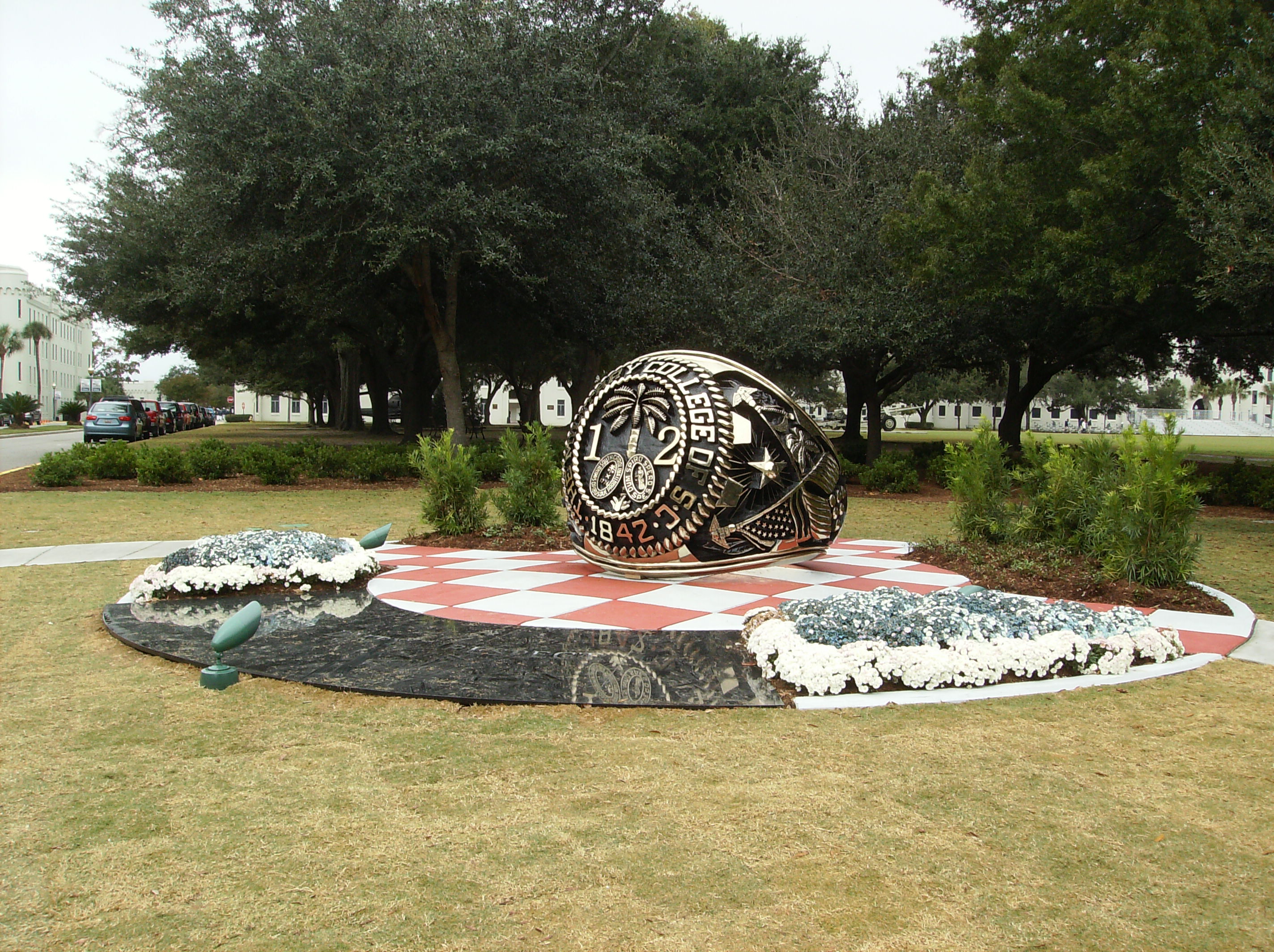
Before I get started on this ramble of a post, I want to issue a caveat bigger than the new Ring Statue, especially for people who might have accidentally wandered into the path of this little blog for the first time. There are things I know a little bit about, and can opine on with some confidence. I know that Chal Port was a great baseball coach. I can discuss how Rabbit Maranville, famous in his day, is now underappreciated. The Citadel defeated South Carolina in football in 1950; I have a fairly good grasp of the enormity of that upset. The “hold” statistic in baseball is flawed, and I can tell you why.

There are other things I don’t understand quite as well. Lots of things. It has become apparent to me in recent days that higher education is one of those things, particularly in regards to my alma mater. I remember when I was a cadet that there always seemed to be a lot going on around campus that I didn’t really understand, and never would. The same is true today.

That makes this post a bit different from my usual efforts, which I like to think are fairly precise in terms of information and analysis. Because the subject is important, though, I decided to press forward. I apologize in advance for anything outlandishly stupid. I don’t apologize for anything that is simply outlandish, though — this is something of a big-picture essay, more conceptual than specific.

Please keep that in mind. I’m not really crazy. At least, I don’t think I am…

Quick tangent before I go into blogging overdrive: speaking of resource allocation, The Citadel has the top college rifle range in the nation. This is a sport in which the school could conceivably win an NCAA title. However, The Citadel currently only offers 1.5 scholarships in rifle, while the NCAA maximum is 3.6 schollies.

I know I’m spending money that’s not mine (I’m going to be doing that throughout this post), but it seems to me that with such a great facility, and being a military school that might naturally attract people who like shooting things, it wouldn’t be a bad idea to maximize schollies — especially when that would only take a little over two more scholarships.

If The Citadel won an NCAA title, I would shortly thereafter go to the South Carolina Statehouse and take a picture of the top of the building. Since the state legislature has set a precedent with a Gamecocks flag flying atop the Statehouse following South Carolina’s CWS titles, I would very much enjoy seeing “Big Red” waving proudly above the dome.

The reasoning behind my suggestion that The Citadel needs more varsity sport options goes to the heart of where the military college is now as an institution, and where it will be in the future. I suspect some will disagree (perhaps strongly so) with my point of view, in terms of what the school is and could be. That’s okay. It’s the discussion that is most important. What follows may be a flight of fancy. Just humor me.

I have been thinking about this topic for a long time, but while a lot of this isn’t necessarily about college athletics, what actually inspired me to finally sit down and do some typing (and a fair amount of research) were two recent sports stories:

Furman received a $5 million contribution to establish men’s lacrosse and women’s lacrosse as varsity sports

VMI’s women’s water polo team played its first match ever, wearing swimsuits with supersized logos

With the addition of the two new lacrosse programs, Furman will have 20 varsity sports. VMI’s addition of women’s water polo brings its total to 17 varsity sports. The Citadel, despite having about six hundred more undergraduate students than VMI, has only 15 varsity sports.

Note: I am counting rifle as one sport, not two, as it is a co-ed sport in NCAA competition. Indoor and outdoor track are counted as separate sports, and that is the case for both the men’s and women’s teams.

Of course, you can’t directly compare the scope of a school’s varsity sports offerings simply by number of teams. Some of those sports may be fully funded, some may not. Still, it is apparent that The Citadel does not have nearly as diverse a collection of varsity sports as some of its peer institutions. A partial list:

The Citadel – 15
Elon – 17 (once women’s lacrosse is added, with possibly more to come)
VMI – 17
Samford – 17
Wofford – 18
Richmond – 19
Furman – 20 (when lacrosse programs are added)
Davidson – 21 (non-scholarship football)
Lafayette – 22 (non-scholarship football)
William & Mary – 23
Lehigh – 25 (non-scholarship football)
Colgate – 25 (non-scholarship football)
Bucknell – 27 (non-scholarship football)

While Lafayette, Lehigh, Colgate, and Bucknell currently field teams that play FCS football without offerering athletic scholarships, that will change beginning in 2013, as the Patriot League schools move to athletic financial aid awards in football. That decision has a number of ramifications, a couple of which may directly affect The Citadel.

As one of those links points out, northern schools will shortly have more options when scheduling FCS schools. A few years ago, The Citadel played Pittsburgh in a “money game”, but going forward Pittsburgh could schedule Bucknell or Lehigh instead and count the game toward its win total for bowl eligibility, something that couldn’t happen if those schools remained non-scholarship for football.

[Edit, 3/26/12: Actually, it was possible for a Patriot League school to be a “counter” in the past, depending on whether or not it averaged 56.7 or more football “equivalencies” (athletic need-based aid) over a rolling two-year period. Thanks to the first commenter for spotting that error.]

It is also true that the Patriot League schools will be able to offer athletic grants in a way they could not before, and as a result will be able to compete that much more with other colleges for recruits. Kevin Higgins is just one of many coaches who likes to recruit the Mid-Atlantic region (he is on record as preferring to bring in at least one Pennsylvania recruit in each class, for example). This will presumably be more difficult in the future.

While competing with those schools for football players is one thing, what I think is even more important to realize is that going forward, The Citadel might be competing with those institutions for other students as well. Therein lies the point of much of this post, and why I listed four private schools located north of the Mason-Dixon line as “peer institutions”.

From the November 1, 2011 minutes of a meeting of The Citadel Board of Visitors:

Chair Snyder called the meeting to order and updated the Board on The Citadel Foundation’s recent board meeting.  He reported that the Foundation anticipated falling short of its fundraising goal for the year. They expect to raise around $17 million against a “stretch” goal of $24 million.  The Foundation is finalizing its strategic plan and is working closely with the college administration to formalize plans for the next capital campaign…

…Chair Snyder expressed concern that many people external to the college are thinking that the college is looking at going private.  This is not the case, however, in light of reduced state funding we must move towards the private college fundraising model to ensure our financial sustainability.

Col. Snyder (assuming that he is the person who specifically made the comment in bold) is surely correct. Despite being a state school, this is the path the college is going to have to take in order to maintain excellence.

This is not recent news, but it is a fact that in 1994, the State of South Carolina funded 40% of The Citadel’s budget. As of FY12, state appropriations had dropped to 8.8% of the school’s $89 million budget.

Whatever your opinion is on how the Palmetto State funds higher education, the bottom line is that The Citadel cannot expect to go back to the days of 1994. It is not completely out of the question that the state will someday supply no funding at all to the military college. The school must plan with that possibility in mind.

I’m sure what I’m going to say now will have some people shaking their heads, but here goes…

If The Citadel is truly intent on moving to a “private college fundraising model”, then it has to act in ways that a private college or university might. It has to offer things that private schools offer, and provide other things that private schools don’t have. It has to compete directly with those private schools for students and for donors.

That means The Citadel will have to continue to grow as an institution. That growth won’t come cheaply. The school is operating right now on an annual budget of roughly $90 million. As a comparison, Furman’s budget in 2009 was $133 million. Furman has a slightly larger student body than The Citadel currently does, of course, but I think it’s a reasonable example — a benchmark, perhaps.

A fundraising model developed with the idea of supporting the college with a yearly budget (inflation-adjusted) of $90 million may work in the short term, but over the long run I’m not sure it’s a good idea. I think the school should prepare to raise funds as if its anticipated yearly budget going forward will be around $120 million, if not more.

You don’t have to tell me, “we don’t have the money.” I know we don’t have the money. I also know how impossibly difficult raising such an amount would be.

I just think that fresh investment in the college is likely to be achieved by expanding the scope of the college in a manner that would appeal to new donors. The school will be competing against private institutions for this type of support, and I suspect that what the military college needs to be marketing is something new and tangible — i.e. endowed faculty chairs, cutting-edge library technologies, a varsity sports program or two. On the other hand, I am not sure there is someone out there who wants a plaque in return for paying off The Citadel’s deferred maintenance costs.

(Though if there is someone out there who wants to do so, he or she could get a lot more than a plaque. In fact, I am sure a bronze bust inside Bond Hall could be arranged.)

Also, while a lot of what I’m suggesting may seem almost impossible, something not dissimilar is currently taking place at another school in the Southern Conference. I’ve written about Elon’s amazing transformation on a couple of occasions before (while previewing upcoming football games, of course; priorities and all that). Elon undoubtedly has some advantages over The Citadel when it comes to raising money, including being able to do exactly what it wants with its money, but it is still a good example of what can be done with foresight, hard work, and (probably) some luck.

That isn’t to say The Citadel can’t sell people on what it has now, of course. As an example of this, the list of marketing and community partnerships the school has with various corporate entities is impressive. It includes Under Armour, Google, and Boeing, among others.

The crux of the issue for The Citadel is that the college has to act and react in ways similar to private schools while remaining a public institution. It has needs similar to those of private schools, and standards similar to (and often greater than) private schools, but doesn’t have resources many of those schools have (such as large endowments). It also has obligations as a state institution, regardless of how much money the state actually provides the college. Chief among those is providing an education to qualified South Carolina high school graduates who want to attend The Citadel.

A further complication is that, thanks in part to the Ashley River, The Citadel can’t just raise some quick cash by dramatically expanding the size of the corps and raking in additional tuition dollars. That doesn’t mean undergraduate enrollment can’t increase, because it has in recent years, as the school administration has made strides in maximizing the physical capacity of the campus. Apparently that is continuing, with an additional new cadet company reportedly in the works for the 2012-13 school year.

I don’t know what the new “ideal” corps size is going to be. The upcoming Blueprint (the strategy planning focus for the college) will probably have more information on that front. The Office of External Affairs informed me that the Board of Visitors is scheduled to approve the next phase of the Blueprint in June. (That was one of several questions I recently asked OEA; I appreciate the staff’s patience with what must have seemed rather eccentric queries.)

I will say that I wouldn’t like the corps of cadets to get significantly larger than it is now; I think the small size of the school is part of its essence, and also helps alums continue to identify with their alma mater. I’m not sure what the tipping point for that is (maybe 2500 cadets?). Having said that, if The Citadel has to increase the size of the corps in order to remain viable in the future, then that’s what it should do.

As The Citadel moves into mega-fundraising mode (which it will regardless of its actual budgetary goals), I believe it is important for the college to expand its potential donor base. Fresh blood, if you will. Part of that expansion should be geographic in nature. I think the school should bring in as many out-of-state students as possible, much like many private institutions, such as Furman (69% of its student body being from out of state), Samford (61%), Elon (75%), Bucknell (76%), and Richmond (78%).

This is a subject not without some controversy, but before I address some specifics for the 21st century, I want to briefly note some of The Citadel’s past enrollment trends. History can be a guide.

Tough times around the nation. The Citadel in something of a financial crisis, with a state legislature more inclined to take money away from the school’s allocated budget than add to it.

I’m not talking about 2012, though. I’m talking about 1932…

By 1932 the country was in the throes of the Great Depression, and The Citadel was far from immune from its effects. In 1928, there were 722 cadets enrolled at the college, but by 1933 that number had dropped to 637 (these numbers and those in the next three paragraphs are from this book).

At that point in time, 71% of the corps hailed from South Carolina. However, the school began to attract more out-of-state students, and gradually the percentage of Palmetto State natives declined, although the raw numbers of South Carolinians were not reduced — rather, the corps increased in size primarily due to the influx of out-of-state cadets. By 1943, there were 1,980 cadets enrolled. From 1933-1943, the number of cadets at The Citadel more than tripled.

Students from outside South Carolina first outnumbered their Palmetto State counterparts in 1940, when 50.3% of the corps were out-of-state residents. It was a significant transformation in the student body’s geographic diversity that occurred over an eight-year period.

World War II had a deleterious effect on student enrollment, but once the size of the corps began to approach pre-war levels, the greater number of cadets continued to come from outside of South Carolina. Between 1955 and 1965, that majority hovered around 60%. After a while, a few politicians began to complain about this.

The bell cow for the issue in 1965 (and for much of the 1960s) was Dillon County state representative A.W. “Red” Bethea, who introduced an appropriations amendment that would have limited the number of out-of-staters at The Citadel to just 12% of the corps, which seems ludicrous today, and was probably considered ludicrous then. That said, the vote to kill his amendment was only 64-21, so 25% of his fellow House members were willing to go along with him.

Bethea was a self-styled populist (just one way to describe him). Among other things, he also campaigned against Clemson College changing its name to Clemson University. Bethea either did not understand or chose to ignore the fact that The Citadel was not exactly turning away large numbers of Palmetto State students. According to the linked article, 90% of South Carolina applicants were being accepted at the time.

Various members of the state legislature have over the years periodically echoed Bethea’s concerns over admissions policies as related to in-state vs. out-of-state students. That is understandable, as they are trying to represent their constituents. On this issue I tend to agree with the comments made by Kenneth Wingate (Chairman of the South Carolina Commission on Higher Education) and Charleston state representative Chip Limehouse in this article.

However, I am not impressed with threatening schools with enrollment caps, particularly after making large cuts in their annual appropriations. That strikes me as counter-productive, and not in the overall best interests of the state (to say nothing of the respective schools, as noted in some of the responses to this question-and-answer piece).

There is an occasionally overlooked part of The Citadel that should be considered when discussing the issue of opportunities for in-state students, namely The Citadel Graduate College. As Jeff Perez of the Office of External Affairs stated in the above-linked Q-and-A:

The CGC is deeply tied to the Lowcountry as it provides advanced education for those looking to advance their careers and contribute to the future of the region.

Another consideration is that admitting more out-of-state students may actually help in-state students in at least one respect:

[Coastal Carolina president David] DeCenzo and other college officials say there is another benefit to the influx of out-of-state students – students paying much higher out-of-state tuition rates help keep tuition from skyrocketing for in-state students.

I think that is a very good point. It used to be the case that with a little pluck and luck, a local could “shoestring” his way through The Citadel. That’s not really possible anymore, and the rise in tuition rates has made things even more difficult for South Carolina residents.  Ultimately, everyone wants qualified in-state residents from families of all income categories to have an opportunity to receive an education at The Citadel.

I believe it is important for the school to maintain its relationship with the citizens of the state. For the record, my point of view on that issue comes naturally. I was born and raised in South Carolina, graduated from The Military College of South Carolina, and have spent much of my adult life in South Carolina. The same was true for my father. I’m a Sandlapper through and through.

As far as The Citadel is concerned, every qualified South Carolina resident who applies is accepted to the military college. Some years, there are more in-state applicants than in others, leading to an occasional “yo-yo” effect in terms of in-state vs. out-of-state enrollment, as the “balance” is conditioned by the number of enrolling in-state students (again, thanks to OEA for explaining this to me). For example, in August 2010, 378 South Carolinians reported as part of the Class of 2014, the “largest S.C. population in 46 years”.

Tangent: I am wondering if that could have actually been 45 years between milestone classes, not 46. If it were 45 years, it would have been the summer after Red Bethea’s proposal was defeated and in line with the “substantial increase in Palmetto State freshmen” referenced in the 1965 newspaper article I linked earlier in the post. That would make it the entering class of 1969.

Other recent classes have had a larger percentage of out-of-state students, generally around 56% (the Class of 2011’s 60% out-of-state contingent being the highest over the past decade). However, early returns suggest the class of 2016 may be more evenly distributed. From the BOV minutes for 12/2/2011:

  • Projected enrollment is estimated to be higher than budgeted
  • In-state vs. out-of-state ratio will be approximately 50-50; we originally budgeted 46% in-state vs. 54% out-of-state.

One thing I haven’t mentioned yet is that The Citadel’s out-of-state student cohort is, by and large, southern. This is not an accident. The Citadel long had an acknowledged “five state recruiting area” of the Carolinas, Georgia, Florida, and Virginia, and that region continues to produce students for the military college. For the fall 2011 semester, 70.2% of the corps was made up of cadets from those five states. Taking out the South Carolinians, 24.3% of the corps is from either North Carolina, Georgia, Virginia, or Florida.

The numbers are similar throughout at least recent history (the link above states that 68% of incoming freshmen for the class of 1999 were from that five-state radius). When I looked at some recent enrollment figures, though, I was struck by something else — namely, a recent decline in cadets from the Mid-Atlantic and Northeast regions of the United States.

In 2006, there were 2037 cadets. Of that number, 286 (14% of the overall corps) were from the states of Maryland, Pennsylvania, Delaware, New Jersey, New York, Connecticut, Rhode Island, Massachusetts, Vermont, New Hampshire, and Maine.

In the fall of 2011, there were 2128 cadets. However, despite the increased size of the corps, only 229 students hailed from that same eleven-state grouping, which meant the percentage of cadets from that region fell to 10.8% of the overall corps.

States that dropped noticeably in enrollment totals included Maryland (from 59 cadets to 46), Massachusetts (28 to 17), and especially Pennsylvania (63 to 43). They weren’t the only states nationally to produce fewer cadets over that time span (Texas went from 73 cadets to 48), but to have an entire region decline in enrollment in a relatively short amount of time struck me as surprising. It’s not a large sample size (and it’s always possible 2006 was the high-water mark for those states), but something to think about nonetheless.

By now, if you’re still reading (and if you are, you are very patient), you know that I think The Citadel should be expanding its offerings. This should happen in a number of different areas, of course, but for the remainder of this post I’m going to focus on varsity sports. Why? Well, because this is a sports blog.

While I am postulating that The Citadel should be adding to its varsity sports portfolio, I think it’s only fair to take a quick look at some of the current issues affecting the department of athletics and The Citadel Brigadier Foundation.

In 2003 The Citadel cut two sports (men’s soccer and men’s golf) in an effort to save a little under $300,000 per year. At the time BOV member Glenn Addison (a former soccer player himself) observed:

Even though it makes sense from the standpoint of budget issues now, I think maybe stepping back is not the right thing to do.

Addison is still a BOV member (he is now the vice-chair). I would imagine that he may feel even more strongly that cutting those two sports was “not the right thing to do”. Even at the time, it struck some observers as penny-wise and pound-foolish. In my opinion, the move ultimately did little to relieve pressure on the athletics budget, even in the short term.

From the BOV minutes for 6/11/11:

Colonel Addison, Chair of the Athletics Committee, presented the following committee motions:

“That The Citadel Board of Visitors approves a 2012 Athletics operating budget of $10,201,702.”

Following discussion, the motion passed unanimously.

“That The Citadel Board of Visitors approves a budget of $350,000 from The Citadel Trust for the 2012 Athletics budget.”

Following discussion, the motion passed unanimously.

Some perspective: in 2007-08, The Citadel Trust provided almost $1.5 million to cover the remaining costs for the department. The FY2012 number reflects well on Larry Leckonby and his staff. Leckonby had a tough budget situation when he assumed the role of Director of Athletics. So far he seems to have done a good job getting costs under control. It should be noted, though, that the renovation of Johnson Hagood Stadium was still a factor in the budget boondoggle of 2007-08.

From the Blueprint, Strategic Initiative Three:

Athletic programs are an integral component of educating principled leaders, fostering institutional loyalty and spirit, and maintaining a vibrant campus community. The institution will institute the following actions designed to strengthen the athletics program specifically, and the College generally, during the next three years:

  • Create an Athletics Excellence Fund
  • Increase membership in The Citadel Brigadier Foundation (athletic foundation)

Key Performance Indicators:

  • Increase membership in The Citadel Brigadier Foundation 35% by 2012
  • Increase gifts to the Athletics Program to reach $250,000 by 2012

From the Blueprint annual report for 2011:

Goal: Increase membership in The Citadel Brigadier Foundation by 35% by 2012.

Result: 24% Progress (Behind Schedule)

When Jerry Baker was named Executive Director of The Citadel Brigadier Foundation in December of 2008, he stated that “our immediate goal is to get membership up.” Following his appointment, the TCBF had some initial success in doing just that. There were 1,599 members in 2009; that number increased to 1,729 in 2010. The meter barely moved in 2011, though (1,734 members). The TCBF appeared to hit a wall.

It may be an indication that a more expansive approach is needed. From the BOV minutes for 9/10/11:

…The Citadel Brigadier Foundation has raised $2.4 million over the past year; the memorial fund is at $9.1 million…

…Mr. Larry W. Leckonby, Athletics Director, commented that the Brigadier Foundation has changed its philosophy and is moving away from being a booster club and becoming a viable fundraising entity.

If The Citadel’s administration were to decide to add certain varsity sports, as part of an all-encompassing push to broaden the school’s profile and attract a new (or renewed) base of students/families, where would it start?

There is little doubt in my mind as to the answer. To its existing lineup, The Citadel should add men’s and women’s lacrosse.

I say that as someone who doesn’t even understand all the rules of lacrosse. I know it’s a fast-paced, exciting game in which players wield large sticks. Honestly, that sounds made-to-order for The Citadel, doesn’t it?

Actually, lacrosse is a sport the administration should take a hard look at adding very soon, even if the school’s immediate goals are more modest than what I’ve espoused here. The demographics of lacrosse are close to ideal for what The Citadel needs right now, and the timing could not be more perfect.

For the most part, the largest high school talent pools in lacrosse can be found in Maryland, New York, New Jersey, Pennsylvania, Connecticut, and Massachusetts. Many D-1 prospects play at outstanding parochial and preparatory schools; others play at quality public schools. The Citadel wants to attract students from these schools, along with drawing support from their families and associates. Combine this with the decline in cadets from that part of the country over the last few years, and you have a no-brainer in terms of recruitment strategy. Lacrosse fits the bill.

When competing for students from these schools, The Citadel actually has many advantages, from location (Charleston — it’s actually warm down here!), academics (including the well-regarded undergraduate engineering program), the cachet of the school itself and, yes, the military component. Sometimes I fall into the trap of viewing the military aspect of The Citadel as a detriment to recruiting future students, but in fact it is often viewed as a positive by recruits and their families.

The gradual increase in interest in the sport over the last two decades, particularly in the south, also means that two issues that would have come into play two decades ago are no longer problematic. First, there are enough high school lacrosse teams in South Carolina that a school like The Citadel doesn’t have to worry about total numbers within the program. The South Carolina High School League began holding championships in both boys’ and girls’ lacrosse in 2010 (in what may bode well for the sport’s future at that level in South Carolina, the first two years featured different champions for both the boys’ and girls’ divisions).

The other past issue would have been scheduling. Twenty years ago, it was rare to find a D-1 lacrosse program (like UNC) south of the state of Virginia. That is no longer the case.

Schools that have or will shortly have men’s and/or women’s lacrosse programs include Furman, Elon, Winthrop, High Point, Presbyterian, Mercer, and Jacksonville. There are also a number of Division II lacrosse programs in the Carolinas.

Jacksonville is a good example of why these schools are now offering lacrosse. JU is a relatively “young” school; I wrote about its history during my preview of The Citadel’s football game against the Dolphins last September. Jacksonville is clearly using lacrosse in an attempt to appeal to potential students outside its region. While the football program only had six players from outside the state of Florida, its lacrosse roster includes players from all across the eastern seaboard (including Canada), with just five Floridians.

The Citadel already has a vibrant men’s lacrosse club program, which would make a transition to NCAA Division I more manageable. The start-up costs would be alleviated to a degree by The Citadel already having an appropriate facility (Johnson Hagood Stadium).

I don’t believe the school needs $6 million, the total Michigan allocated toward its two new lacrosse programs. As a Big 10 school, Michigan’s department of athletics is presumably printing money; I wouldn’t be all that surprised if the Wolverines’ lacrosse sticks were gold-plated. The Citadel can have a much more modest approach and still get the job done.

What I would suggest, though, is that a decision is made fairly quickly. The Citadel has a chance to establish itself as a major player in this market, but time might be short to capitalize on that opportunity. The school probably needs to become D-1 by no later than 2015 in order to fully realize the potential of the two programs.

Oh, and make no mistake: The Citadel would in fact be starting two lacrosse programs, men’s and women’s teams.

The school doesn’t have an enrollment goal for female cadets (yet another question I had for OEA); rather, the Blueprint suggests a more general standard of “Expand[ing] student diversity by 4% each year, 12% by 2012”. Nevertheless, I am guessing that the administration would like to see a rise in qualified female applicants.

As of fall 2011 there were 141 female cadets in the corps, or 6.5% of the total. When I first looked at the numbers, I was struck by the lack of junior female cadets when compared to the other three classes (32 seniors, 22 juniors, 39 sophomores, and 48 freshmen).

Comparing The Citadel’s numbers to those of the service academies is not an apples-to-apples situation, not least because those schools have been admitting women for more than 35 years, but it is worth noting that 17% of the U.S.M.A.’s class of 2015 were women.

All of that is a long-winded way of saying that The Citadel is definitely interested in recruiting outstanding students of both genders from those generally excellent (and lacrosse-mad) high schools.

While lacrosse should be on the front burner when it comes to expanding the department of athletics, there are other sports that could prove beneficial in terms of providing more opportunities for potential recruits. In an ideal world, men’s soccer and men’s golf (the latter having been played at The Citadel for almost 70 years before it was eliminated) would return. Women’s tennis is another possibility.

Along with men’s and women’s lacrosse, though, the next varsity sport at The Citadel probably should be women’s sand volleyball, even if it is only to serve as a natural complement to the current volleyball program.  In early March the College of Charleston announced that it will be starting an NCAA sand volleyball team, and The Citadel might be well served to follow suit.

There are arguments to be made for other sports, of course. I read with interest an article about local college club teams, particularly The Citadel’s ice hockey team. The school may not be quite ready yet for a D-1 hockey program. Among other issues, scheduling could be a problem. You never know, though. There is a lot of passion for that program, and the uniforms can be distinctive.

As for why The Citadel doesn’t have a women’s basketball team, I’ll let Les Robinson speak to that:

What I’ve told the Southern Conference is that it would be an injustice for us to start basketball before we get all the other sports going. Until we get volleyball competitive and soccer. Right now, if we try to have women’s basketball it would be a disaster for the conference. It would pull down the conference RPI [Ratings Percentage Index]. It would hurt the conference in the long run as far as getting teams in the women’s NCAA Tournament and women’s NIT.

That was in 2008. Since then, the soccer program has made a remarkable turnaround and has been competitive for the past three seasons. The volleyball team continues to struggle for victories.

I suspect that given the landscape for Division I women’s basketball, which is arguably the most “mature” of D-1 women’s team sports, The Citadel needs to have a larger group of female cadets in the corps before it can seriously consider adding women’s hoops. I don’t know what that number is, but I know it isn’t less than 200. I think a more realistic “base” to draw from may be 500 cadets. It is debatable, to be sure.

One potential benefit to having an increased number of varsity athletes roaming the campus: just having more of them around might help the overall support of the school’s sports programs by the corps as a whole, an occasionally sore subject among alums (and some current cadets). Having a significant percentage of varsity athletes among the total student body would give off something of a Division III vibe, but at the Division I level, which could be rather cool.

Speaking of Division I, it is important for The Citadel to play its NCAA sports at the highest level possible, in order to attract top-quality cadets. The school wants those elite students, and many of them aspire to play at that level. That may seem obvious, but it’s a point that from time to time needs to be re-emphasized. It is the kind of issue that resonates with schools all over the country as they recruit prospective students; for example, it is one component of the U.S. Naval Academy’s decision to join the Big East for football.

Finally, I want to mention conference affiliation, which has been a regular feature of sports news for over a year now, and will continue to be as long as schools chase big money (which means it will be a regular feature of sports news for as long as college sports exist). The Citadel is a long-standing member of the Southern Conference, a league that has had schools come and go for nine decades.

With Appalachian State looking for (allegedly) greener pastures and Georgia Southern possibly not too far behind the Mountaineers in seeking FBS glory, the SoCon will be turning its membership over again, as will other FCS leagues such as the Colonial. It’s possible that The Citadel will be in a very different-looking conference in the not-too-distant future. Having a good variety of sports offerings will only help the military college become part of a league with like-minded schools that have numerous varsity teams. A potential “Cypress League” might look something like this:

The Citadel
Furman
Wofford
Davidson
Elon
VMI
William & Mary
Richmond

The odds are long that a conference will eventually form with that exact makeup of schools, but in my opinion a league with a similar grouping of schools is very possible.

I could go on, but I think this post is more than long enough. A quick wrap-up:

It takes a leap of faith to support what amounts to an institutional expansion during an era when contraction seems to be the trendy thing to do. My principal argument is based on two assumptions: that things will get better nationally over time, at least in terms of the economy, and that The Citadel is a great school that can become even greater. There may not be a lot of evidence right now in favor of that first assumption, but I have to believe that. Everyone has to believe that.

As for that second point: The Citadel has to move forward. That involves a certain element of risk. However, it’s 2012, and not trying to move forward doesn’t  have an end result of standing still. It has an end result of going in reverse.

The Citadel has never really been known for retreating…

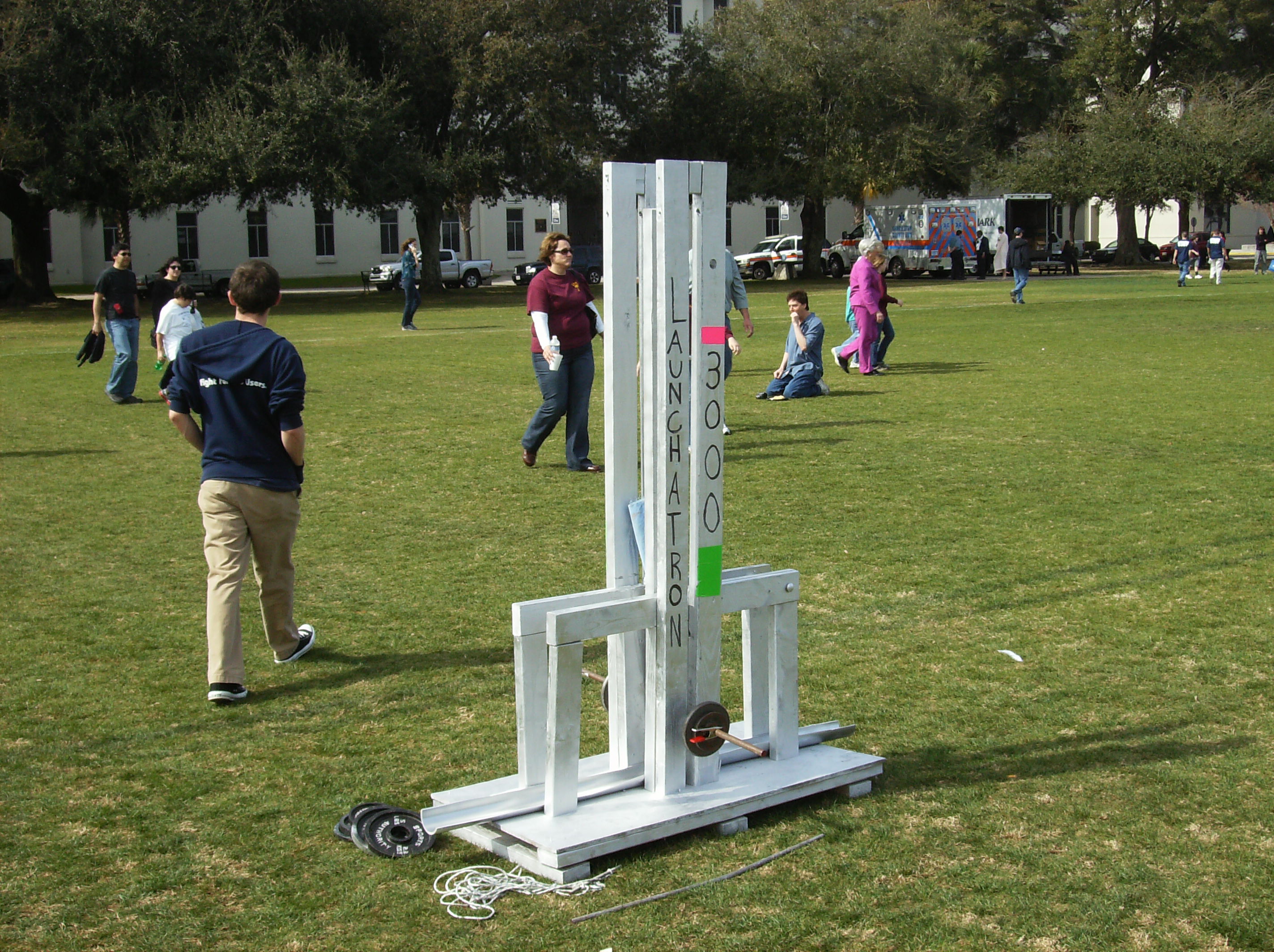
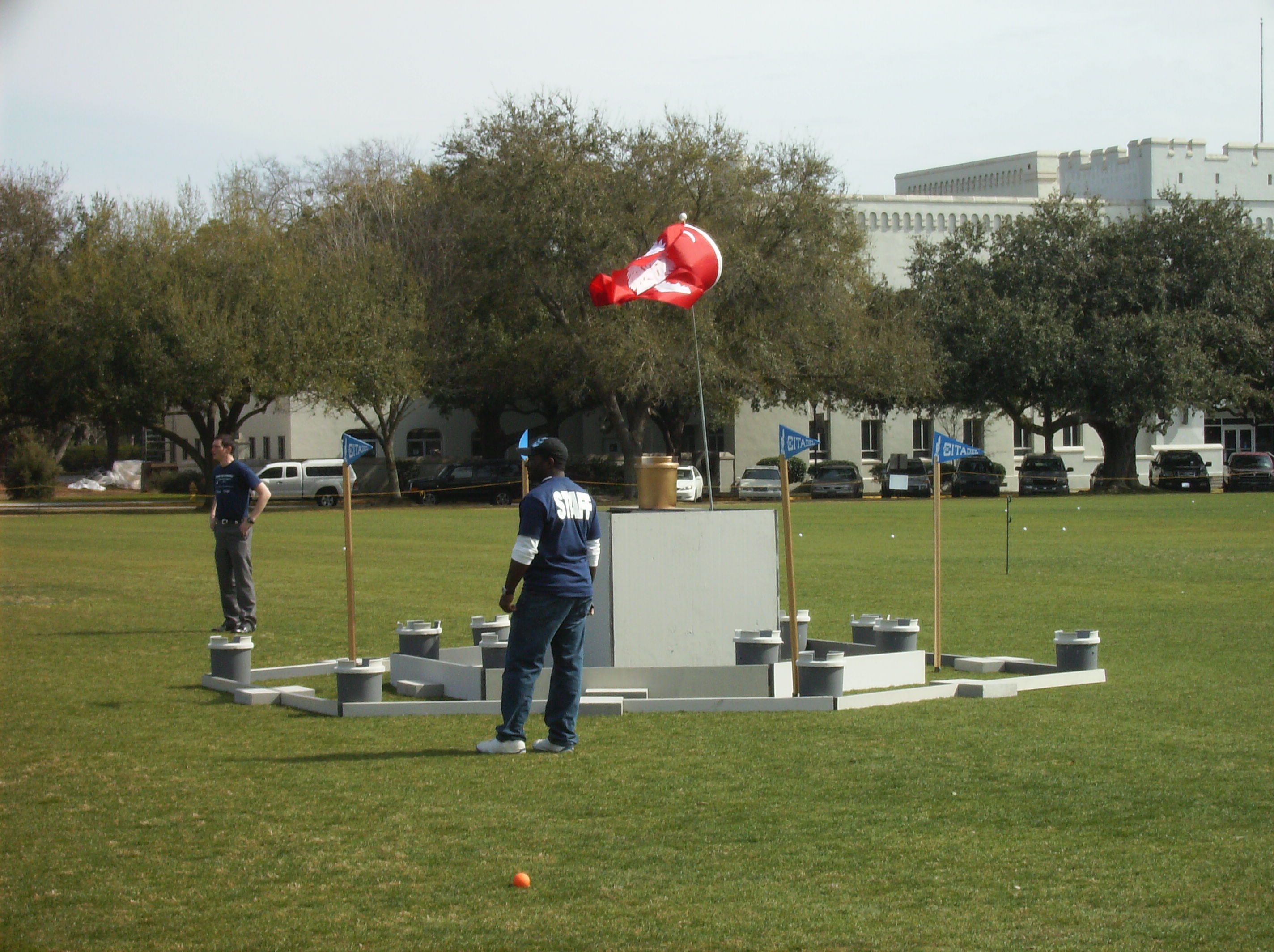
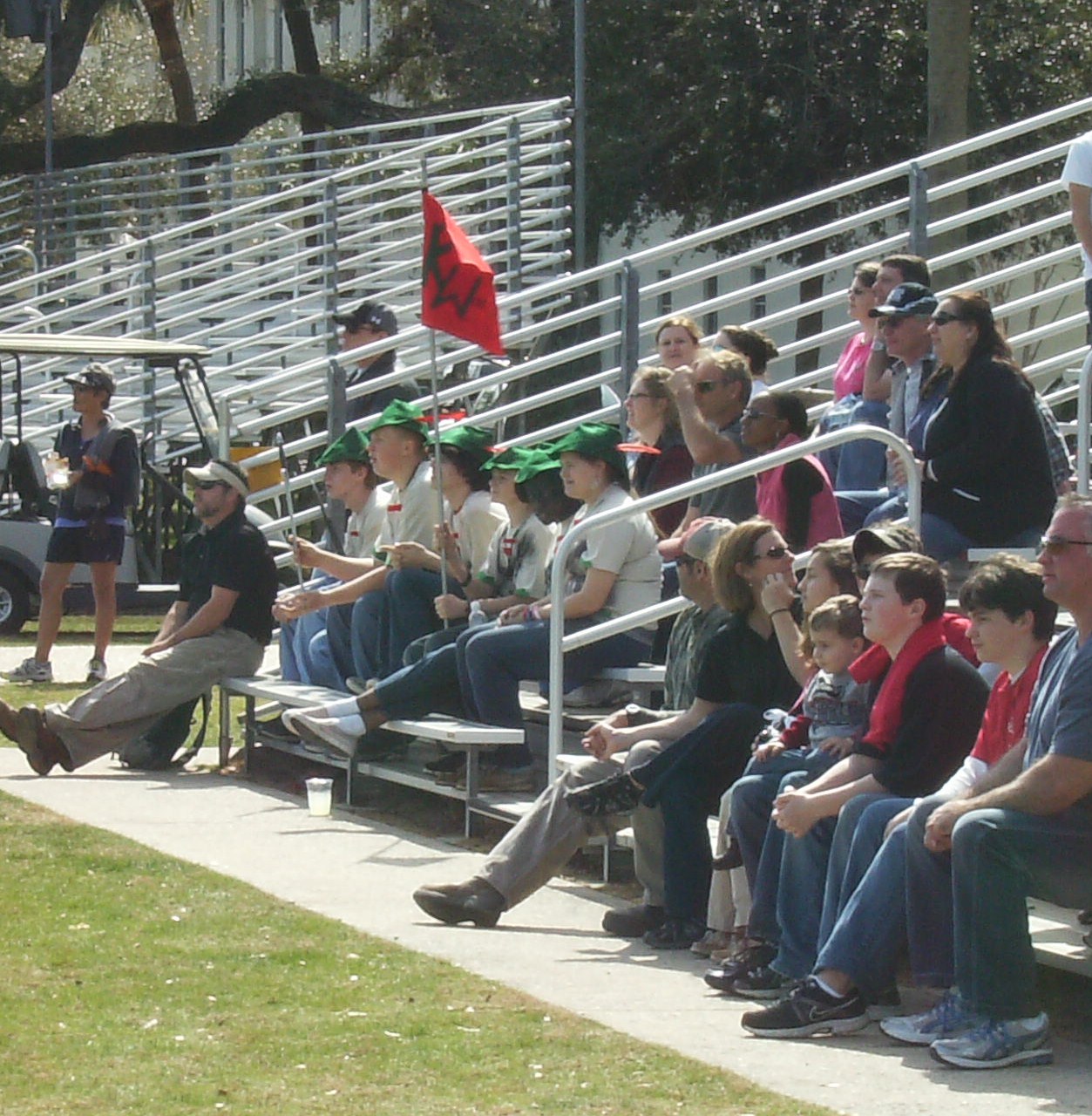
The Citadel successfully combines community relations with siege warfare

Well, it’s been a tough year for The Citadel in basketball…and it was a tough year in football…and things aren’t looking so great in baseball right now, either (although it’s still early — patience, grasshoppers). However, it’s not all gloom and doom at the military college. For one thing, The Citadel again has demonstrated its dominance in trebuchet building!

Yes, the cadet chapter of the American Society of Civil Engineers won its second straight title in the Storm The Citadel! Trebuchet Competition. It probably didn’t hurt that The Citadel hosted and co-sponsored the event.

I’m not really writing about winning as much as I am the event itself. It’s the second year The Citadel STEM Center of Excellence has teamed up with Google to sponsor the competition, which is really more about highlighting the importance of mathematics and science:

STEM Director Carolyn Kelley said the contest grew from 15 teams and 150 total participants last year to 36 teams and 350 people this year.

“In a very fun way, it engages kids in learning math and technology and science and engineering. It tricks them into enjoying STEM,” said Kelley.

While the kids had little, desktop-sized trebuchets, the big kids had big ones.

The star of Saturday’s show was Google’s giant “floating arm” trebuchet, a steel contraption that launched milk jugs filled with sand and water with amazing accuracy at a target about 75 yards away.

I was on campus last weekend, and in between watching football practice (which included some shotgun formations!) and a baseball game (The Citadel defeated Richmond, 10-7), I wandered around the parade ground, taking in the scene. The organizers were lucky, as the expected bad weather held off until late in the afternoon.

Instead, it was nice and sunny, and scores of kids and grownups watched and plotted and ate and generally had a good time. Some of them were dressed for the occasion, too, including a group of Sherwood Forest fans and a futuristic team wearing HAZMAT gear.

It’s always good when The Citadel can pull off an event like this (especially when it involves kids), one that brings the school a bit closer to the greater community, and exhibits another side to the college besides the military component, which can be intimidating to some people. The intent of this post, really, is just to say “job well done” to the folks who came up with this idea and made it work, which includes ’91 grad Jeff Stevenson, a program manager at Google.

I should add the trebuchet competition was just part of Engineering Week at The Citadel, which featured some other activities for math-inclined youngsters.

I took a few pictures. As usual, they aren’t so great (because I’m the photographer), but I’ve posted them below anyway. You can also see a slide show of photos taken by actual professionals at The Citadel’s YouTube channel.

Riley Report: The Citadel begins its 2012 baseball campaign

The Citadel will open its 2012 baseball season on Friday, February 17 at 4 pm ET, with a game against Towson, to be played at Joe Riley Park in Charleston. The contest is part of The Citadel Memorial Challenge, an event which also includes Richmond and Liberty.

So far, winter has been unexpectedly mild in the Palmetto State. February debuted with high temperatures in the 70s. Soon, however, there will be a decided chill in the air, the wind will begin to howl, and local TV meteorologists will begin to discuss the potential threat of freezing rain or possibly even snow. How do I know this will happen?

I know because college baseball season is almost here. When it comes to wintry weather, early-season college baseball is the equivalent of the White Witch from The Chronicles of Narnia.

Despite that near-inevitability, I am looking forward to the upcoming season. Before that glance forward, though, I think it might be a good idea to revisit the recent past, to see just what this season may bring in terms of success for The Citadel.

With that in mind, what follows is a somewhat statistical review of last season’s diamond debacle. It includes comparisons between the 2010 and 2011 campaigns, which were as different as night and day. To briefly recap:

2010: 43-22 overall, 24-6 SoCon (first). That included a road/neutral record of 16-12.

2011: 20-36 overall, 8-22 SoCon (11th and last). That included a road/neutral record of 3-18.

Yikes. The Bulldogs went from winning both the regular season and tournament titles in the Southern Conference to finishing last in the league for the first time ever, not even qualifying for the conference tournament. What happened?

One thing that happened, of course, was some natural turnover in personnel, but that happens every year. Maybe it’s not every season that you lose a dominant #1 starter like Asher Wojciechowski or an outstanding infield mainstay like Bryan Altman, but The Citadel has had to replace good players before.

A decline in team pitching was a major problem, which in and of itself would have made the Bulldogs also-rans in the league, but then was combined with (and affected by) a horrific drop in the quality of team defense, resulting in the horror show that was Bulldog baseball in 2011.

I’m going to start mentioning stats now, some more dorky than others, so don’t say you haven’t been warned. Unless stated otherwise, all of these statistics reflect conference play only. This makes it easier to compare schedules, teams, and home/away considerations. You don’t get anomalies, either good (Logan Cribb’s masterpiece against South Carolina) or bad (losing 9-0 at Winthrop). Besides, a season is usually judged on how the team fares in league play.

Before I go too far with this, I do want to briefly mention park effects. Players are going to put up different numbers at Riley Park than they would at Clements Stadium, just to name two of the league’s more distinctive parks, and when half their games are played at their respective home fields, that will affect team statistics accordingly. Of course, when you compare things on a year-by-year basis it’s easier to see how those statistics translate.

Incidentally, Boyd Nation’s Park Factors data for the 2008-2011 time period indicates what most observers would probably suspect: The Citadel plays in the SoCon’s most pitcher-friendly facility, by far. Most of the league parks favor hitters, particularly those at Georgia Southern, Appalachian State, and UNC-Greensboro.

Every scheduled league game save one (Furman-Davidson Game 3) was played in 2011, so every school other than the Paladins and Wildcats played 30 SoCon contests, 15 at home and 15 on the road. As it happens, the same thing occurred in 2010 (just one cancelled game in the league). There were 164 conference games played in each season. That works out well for comparative purposes.

There was one huge on-field difference that changed things in the SoCon, and in college baseball in general. That would be the new bat regulations. The easiest way to statistically demonstrate the difference in the bats from 2010 to 2011 is this: in 2010, SoCon teams averaged 7.1 runs per game in league play. In 2011, that number dropped to 5.7 runs per game. The league no longer featured hitters with slow-pitch softball numbers, with the notable exception of Georgia Southern’s Victor Roache (who had one of the more remarkable campaigns in recent conference history).

The Citadel’s batting statistics declined markedly in 2011. That can partly (not completely) be attributed to the bats. The Bulldogs had an OPS of .901 in 2010; that number dropped to .741 in 2011. However, the league as a whole also saw a decrease in OPS. In 2010, the league OPS was .855; in the 2011 campaign, .768 was the mean. The Citadel finished fourth in OPS in conference play in 2010, but tied for seventh in the same category last season.

Most of the decline in OPS for the Bulldogs was a result of batting average. After a team batting average of .321 in 2010, The Citadel only batted .280 as a club in 2011. The Bulldogs also didn’t draw as many walks in 2011 (119 vs. 96). Basically, The Citadel drew one fewer walk per league game in 2011, and had 1.4 fewer hits per contest. For comparison, the conference as a whole in 2011 had about the same number of walks per contest as in 2010, but teams averaged about a hit per game less.

The difference in the bats really showed in the league’s power numbers. In 2010, there were 1131 extra-base hits in SoCon action. That number fell to 873 last season. Even with Roache’s heroics, the total number of homers in conference play dropped from 374 to 219.

The Citadel’s extra-base hits declined at a rate similar to that of the rest of the league, although instead of hitting slightly more homers than league average, as it did in 2010, the Bulldogs’ 18 home runs in league play during the 2011 season lagged slightly behind the conference average (20). The trend held true for doubles as well.

In a recent radio interview, head coach Fred Jordan suggested that the company which makes The Citadel’s bats may have been a bit behind the curve in terms of adjusting to the new NCAA bat standards, and didn’t produce mondo-mashing metal quite as successfully as other bat manufacturers used by Bulldog opponents. That may have affected the team’s hitting (at least, in relation to other teams’ hitting). Jordan seemed to believe that any problems in that respect had been worked out for the upcoming season.

The Bulldogs’ pitching wasn’t nearly as good in 2011 as it was in 2010. After finishing first in league play in a variety of pitching categories (including ERA and strikeouts) during its championship season, The Citadel’s hurlers suffered through a disappointing 2011 campaign, one in which team ERA increased dramatically (from 4.26 to 5.44) despite the new bats generally holding down offense. The conference as a whole saw a decline in ERA from 6.15 to 4.69 (to reiterate, all these statistics reflect results from league games only).

Interestingly, Bulldog pitchers still maintained a solid K rate (7.8 per game). That isn’t quite as good as the 8.7 strikeouts per nine innings from the 2010 staff, but it was still enough to put The Citadel near the top of the league in the category. On the other hand, walks allowed increased from 3.2  to just over 4 per 9IP in conference play.

The Bulldog pitching staff gave up 9.4 hits per nine innings in 2010; in 2011, that number rose to almost 12 per 9IP. Included in that total was an increase in extra-base hits allowed, despite the nerf-like war clubs being used around the league. The Citadel allowed 28 homers in 30 SoCon games, up from 19 in 2010.

Curiously, the Bulldogs hit only 15 batters in those 30 conference games, tied with Davidson for the league low. That is something which can be interpreted in different ways — good control, lack of aggression/pitching inside, opponents getting out of the way because they want to hit, etc.

It’s hard to fully judge pitching without taking defense into consideration, and that is particularly the case with the 2011 Bulldogs, probably one of the worst fielding teams The Citadel has had in quite a while. One way to measure that pitching BABIP (batting average on balls in play).

In other words, forget about homers, strikeouts, walks, HBPs, or anything the pitcher (at least nominally) controls. What was the batting average for balls hit into the field of play? That should give one a decent idea of a team’s fielding prowess, or lack thereof.

— In 2010, The Citadel’s pitching staff had a BABIP of .345, better than the league average (.353) and fourth in the conference in that category.

— In 2011, The Citadel’s pitching staff had a BABIP of .391, much worse than the league average (.338, thanks to those new bat regs) and dead last in the conference in that category.

It’s no secret the Bulldogs struggled defensively last season. The Citadel committed the most errors in league play (58 in 30 games) and had the worst fielding percentage (by far). The reality was actually worse than the error totals, though, because (as BABIP tends to highlight) the defensive woes were as much about the plays not made as they were about errors on plays attempted. The Bulldogs also finished last in the league in total chances and double plays.

In 2010, The Citadel’s defensive efficiency (how many balls in play were turned into outs) was solid at 66.8%, a little better than the conference average. That was fourth-best in the league, more than good enough for a team with strikeout pitching and dependable hitting. Incidentally, that season South Carolina and Texas each had a DER of 72.6% to lead the country (that obviously included every game played by those two teams, not just SEC/Big XII contests).

Nationally, DER increased in 2011 (again, the bats were the key factor). However, the Bulldogs’ defensive efficiency nosedived to 63.2%, by some distance the worst in the conference. Western Carolina was the only other league team with a DER  lower than 67%.

Simply put, the Bulldogs failed to make two or three defensive plays per game in 2011 that they were able to make in 2010. Those two or three plays are extra outs for the opposition, and when you combine that with a more homer-prone pitching staff already allowing a couple more baserunners per nine innings, all in a lower-scoring environment — well, you’re just asking for trouble.

Tangent: in researching defensive efficiency, I came across a table stating that the Big 10 had a league DER of only 61.3% in 2011. If that’s the case, maybe it’s another example of why northern/midwestern baseball as a rule isn’t as good as that played by schools in the Sun Belt. 

The Citadel will play a three-game series at Minnesota this year. The Golden Gophers did lead the Big 10 in defensive efficiency (64.6%).

There were some changes made in the coaching staff, as Fred Jordan shook up things a bit after the disappointing 2011 campaign. He might have done so anyway, but going 8-22 in the SoCon one year removed from a title may have provided more incentive for trying a different approach.

Jordan hired a pitching coach, a first for The Citadel during the Port/Jordan era, and a move that was welcomed by a number of longtime observers of the baseball program. Both Chal Port and Jordan acted as their own pitching coaches, but this year the pitching coach for the Bulldogs will be Britt Reames.

Reames is extremely well qualified to be The Citadel’s pitching coach, to say the least. Reames is an alum, a former outstanding pitcher/catcher (under Jordan) who made it all the way to the major leagues and hung around for a while. Being a native of South Carolina (Seneca) won’t hurt him when he is on the recruiting trail, either.

Reames also has experience as a college coach, and in the Southern Conference, as he spent the past three years coaching at Furman. I like to think this makes The Citadel the SoCon’s version of the 1950s New York Yankees, with Furman in the role as the Kansas City Athletics.

I hope Reames helps The Citadel’s pitchers and catchers do a better job controlling the running game this season. Bulldog opponents stole 50 bases in 62 attempts during league play, the second-most stolen bases allowed by a team. The Citadel picked off six baserunners, slightly lower than average (there were 92 pickoffs in conference action).

The Bulldogs themselves stole 46 bases in 59 attempts in the SoCon, a respectable percentage (78%) marred by the nine times the Dogs were picked off (by my count). That was in keeping with what seemed to me a poor year on the basepaths for The Citadel.

It’s one thing to be aggressive. I’m not talking about stealing second on the first pitch with two outs and nobody else on base. I’m talking about things like the trail runner getting caught off second base because he didn’t know where the lead runner was going. I don’t have stats to illustrate that, only anecdotal memories (always questionable), but there is no doubt The Citadel needs to improve its baserunning.

Of course, SoCon teams in general have traditionally had a bit of a kamikaze approach when it comes to players running the bases. I am sure if Carter Blackburn called a league game, he would refer to the conference as the “Go-Go SoCo”.

The 2012 team will feature several players who were key contributors for both the 2010 and 2011 teams. Nick Orvin will be the centerfielder once again. Justin Mackert, per the aforementioned radio interview of Jordan, is moving from first base to left field. Jordan also mentioned that Grant Richards would return at catcher (and I’m guessing, perhaps wrongly, he will occasionally be a DH).

These are guys who have SoCon championship rings, and earned them. Orvin in particular has been a wonderfully consistent player for The Citadel for three seasons; he was first-team all-conference last season, despite the Bulldogs’ struggles as a team in 2011.

Richards and Mackert will perhaps be forever tied together in Bulldogs baseball lore thanks to a hit by Richards that scored Mackert in the ninth inning of the 2010 SoCon tourney against Elon. Of course, what is perhaps most remembered about that moment is how much Elon’s Scott Riddle enjoyed Mackert’s baserunning.

Two freshmen from last season were impressive in their rookie campaigns and will be expected to continue an upward track as sophomores in 2012. Drew DeKerlegand brought a solid bat to third base, and will man the hot corner again this season. Joe Jackson also knows what to do with the stick. He’ll likely split time at catcher/DH with Richards.

All of the above-mentioned players can get better. I would like to see the walk rate for each of them increase. Jackson needs to develop more power; I suspect that will come in time. DeKerlegand has to get better in the field. Richards must rebound from a tough year at the plate in 2011.

Jordan stated that there was competition for spots at right field and first base. There are freshman candidates at both positions, as well as returning players. I wouldn’t be surprised to see some platooning in those spots, at least early in the season.

The middle infield is evidently going to be made up of freshmen; there are apparently three of them who can or will see time. That shortstop-second base combo is going to be critical for The Citadel. Those players need to be able to hit, but more importantly, the middle infield has to stabilize the defense.

Austin Pritcher returns as a weekend starter for The Citadel. Pritcher had generally good peripheral statistics for the Bulldogs last season, although he did allow 107 hits in 84 innings. Again, he’s going to need help from the defense converting some of those hits into outs.

The other two spots in the weekend rotation are open to question, although Jordan seemed to indicate that freshman lefthander Kevin Connell would get one of them. Also in the mix is senior T.J. Clarkson, who pitched exclusively out of the bullpen last year.

In the running for weekday starts and/or key roles in the bullpen: sophomore Bryce Hines (battling shoulder stiffness) and his brother Ryan Hines, along with redshirt freshman Zach Brownlee. Jordan also referred to a “good lefty frosh” when discussing the bullpen. Then there is Logan Cribb, not mentioned by Fred Jordan in that radio spot, probably because Jordan did not want to upset the former Gamecock cheerleader who was conducting the interview.

I am sure that several other pitchers (and position players) will pop up as the season progresses, and surprise us all, faster than you can say “Steve Basch”.

I think one thing the 2011 season demonstrated is that there is a very fine line between success and failure when it comes to sports at The Citadel, and that includes baseball. The military college has very little margin for error on the field of play, and it doesn’t take much of a slip for a championship squad to become a cellar-dweller.

That said, I am hopeful that the program will rebound this season. It may be a bit of a transitional year, but I don’t believe the outlook is nearly as dire as some preseason prognosticators suggest. On the contrary, I think this could be a fun season. There are known quantities already in place, and then there is the chance for some younger players to emerge as regulars.

I am worried about the pitching depth, particularly in the starting rotation, and obviously I think it is critical that the defense dramatically improves. Both of those areas are probably going to need some time to develop into strengths, just one reason why it’s nice to see the Bulldogs begin their schedule with a bunch of home games against non-league opposition.

I will definitely be at some of those home games, cheering on the Bulldogs. I will probably be freezing, but I will be there…

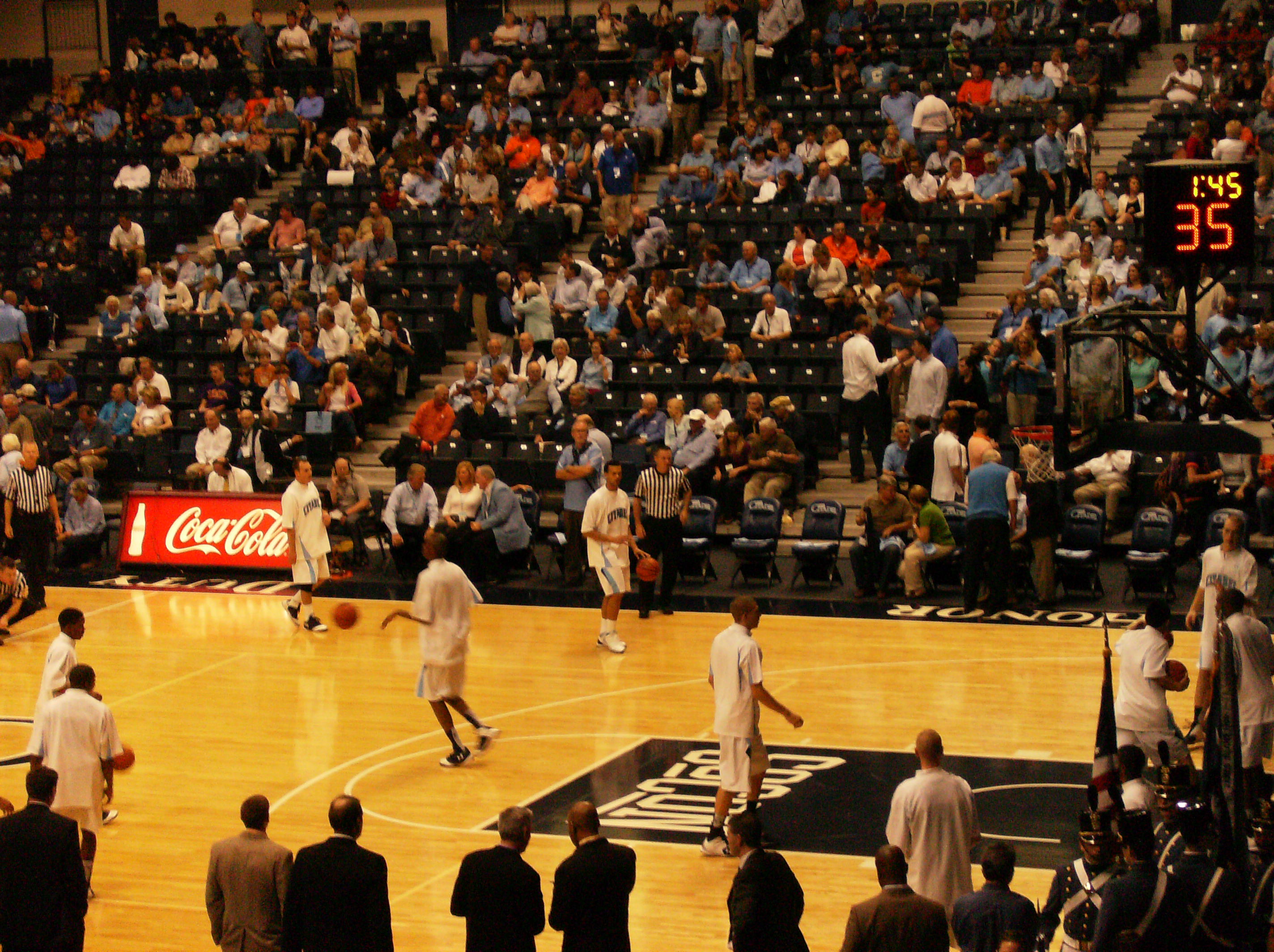
Hoops update: still searching for a second SoCon victory

Just a few quick thoughts on the losses to Wofford and Furman:

— The Citadel has a lot of issues to address, both offensively and defensively, but one noticeable problem the Bulldogs have had, particularly over the last three games, is a tendency to commit a ridiculous number of first-half turnovers. The Citadel has averaged over 11 turnovers in the first half in those three games. The Bulldogs have taken care of the basketball in the second half in two of those games, but to win consistently (or at all) they must cut down on turnovers throughout the game.

If The Citadel had not committed 12 first-half turnovers against Wofford, the Bulldogs likely would have had a decent lead at the break instead of being tied at 21. Against Furman, ten TOs in the opening stanza led to a deficit that the Bulldogs could never quite overcome.

The Citadel had 12 first-half turnovers against Georgia Southern in a game the Bulldogs lost in double overtime; in the second half and two overtime periods in that contest, The Citadel only committed seven turnovers. Just cutting down on a few of the first-half miscues would have resulted in a victory for the Bulldogs.

You just can’t throw away possessions like that. Against Furman, the Bulldogs shot the ball very well in the first half (53% FG), actually got to the foul line and made a good percentage of their free throws (9-12)…and still trailed by six points at intermission because 29% of The Citadel’s possessions ended in a turnover.

Against Wofford, 37.5% of The Citadel’s first-half possessions ended in a turnover.

Admittedly, none of this is news to the Bulldogs. As Mike Groselle said after the Wofford loss:

We’re really close, and everyone on the team knows it. It’s up to us to be more solid with the ball. That’s going to be the difference in winning and losing these games.

— Groselle is continuing to put together what is by anyone’s definition an outstanding season, despite The Citadel’s struggles. There is no telling how many points he would have scored against Furman if the Paladins had not elected to go to a sagging 2-3 zone midway through the second half; as it was, Groselle finished with 24 points on 10-12 shooting from the floor (along with 11 rebounds).

Unfortunately, the Bulldogs were unable to make Furman pay for that defensive strategy, only making three of fifteen three-point shots. Not only was The Citadel unable to hit from outside, the Bulldogs’ guards could not penetrate the zone for easier shots in the paint (or simple feeds to Groselle). Chuck Driesell’s take:

The zone bothered us, and I’m surprised about that. We worked on it, and we knew they played it some. We didn’t knock down shots. The zone keeps the ball out of the big man’s hands, but if you knock down a couple of 3-pointers, they can’t stay in it long.

Of course, it’s easy to say what the Bulldogs need to do against a zone. Executing that plan is another matter. I was reminded that it’s not the simplest of propositions when on Sunday, Rob Dauster of Ballin’ Is A Habit tweeted that “to beat a zone, you have to move the ball quickly and get the ball into the paint via pass or penetration.” The team that drew Dauster’s ire because of its inability to do that?

That team would be Connecticut — which, last time I checked, won the national title last season.

— I was able to make it to McAlister Field House on Saturday night, and happy to have been in attendance, despite the loss to Furman. The 1600 or so fans at the game were treated to a good game between two teams that played hard, if not always well.

At halftime, The Citadel honored Jake Burrows, whose accomplishments I mentioned in a previous post, by putting jersey number 3 in the rafters. Burrows is the third hoopster so honored by The Citadel; somewhat amusingly, only one numeral has been needed, as the other two honorees (Regan Truesdale and Art Musselman) both wore no. 33. Burrows spoke briefly and movingly to the crowd, better than most people could have, and most people aren’t 93 years old.

It is a shame there weren’t more cadets on hand, although it certainly is understandable, given it was Saturday night. The Southern Conference schedule doesn’t really help The Citadel on that front.

I have a suggestion to the administration that I’ve made before and that I’m going to make again. There are cadets on campus on Saturday nights (besides the hard-working pep band). I’m talking about cadets who are serving tours or confinements. It wouldn’t be a bad idea to give those cadets credit for tours/cons by letting them come to McAlister and support the team. I am betting some of them would be ideally suited for the role of cheering the Bulldogs and mocking the opponents.

Actually, I know they would be ideally suited, because the idea is not without precedent.

On a February night in 1990, conduct-restricted cadets (and a few of their “free to roam” colleagues) cheered on The Citadel’s basketball team as it battled an outstanding East Tennessee State squad, one that would win the second of four straight SoCon titles that season. The Bulldogs had played ETSU earlier that season in Johnson City and lost badly, 92-57.

However, with the support of a particularly rowdy section of the corps behind them, the Bulldogs put together what may have been their best performance of that season. Alas, it wasn’t quite enough for a win, as Ted Mosay’s last-second shot was blocked, enabling the Buccaneers to escape with an 87-86 victory. Still, it was a great game and a lot of fun.

The night at McAlister wasn’t over, though. In a decidedly unusual development, a wrestling match between The Citadel and UT-Chattanooga had been scheduled to follow the basketball game. The hoops game had tipped just after 6 pm, so by the time the first wrestling match started it was around 9 pm. UTC, the conference favorite, would eventually win, but things were tougher than expected for the Mocs, in no small part due to a vocal contingent cheering on The Citadel.

It was a great experience for the Bulldog wrestlers, and probably for the Moc grapplers as well. My lasting memory of that evening, though, was the one voice in the stands that stood out the most. Leading the crowd in cheers, needling the referee at every given opportunity, supporting the cadets on the mat throughout every match…was the assistant commandant of cadets, the one and only LTC Harvey M. Dick.

Harvey Dick died Saturday morning; there was a moment of silence before the game, and flags on campus were lowered to half-staff. It is a loss that has hit the greater community of The Citadel hard, understandably so. Few people loved The Citadel and cared more for its students than Harvey Dick. Stories about him are numerous, mostly true, and could be told for days on end. For me, I’ll always remember that night at McAlister. Condolences to his family.

Hoops update: Wofford and Furman travel to McAlister

Just some quick thoughts on the upcoming games at McAlister Field House…

The Citadel’s last three losses have been a) by one point at home to UNC-Greensboro, in as brutal a fashion as I’ve seen the Dogs lose in a while; b) a 29-point thrashing at Davidson that featured one of the worst first-half performances in the program’s recent history, which is saying something; and c) a double-OT setback at Georgia Southern in which The Citadel did a lot of things right but lost thanks to a series of first-half turnovers and a lopsided free throw disparity (the latter noted by Chuck Driesell, deservedly so).

The Bulldogs need to catch a break. First, they need to be in a position to take advantage of a break, which they were in Statesboro — it just didn’t work out. Will they be in position to pick up a win against either Wofford or Furman?

Let’s take a look at those always-critical “Four Factors” stats for The Citadel, courtesy of kenpom.com:

Four Factors                    Off  Rank        Def  Rank         D-1 avg.
Effective FG%: 48.0 199 56.7 341 49.0
Turnover %: 21.5 224 17.9 302 20.8
Off. Reb. %: 28.3 285 31.6 126 32.5
FTA/FGA: 30.1 306 30.7 57 36.5

The Bulldogs continue to struggle defensively, with the horrific eFG% more obvious than a $50 hooker outside Mark Clark Hall. Only four teams are worse than The Citadel in that category (for the record, they are Kennesaw State, Longwood, Monmouth, and Northern Arizona; those four teams plus The Citadel have a combined record of 23-79).

The Citadel also does not force enough turnovers on defense. The Bulldogs do a decent job limiting offensive rebounds, and generally don’t give opponents a lot of free throw opportunities (Georgia Southern excepted, I suppose). Conversely, those are two areas in which The Citadel’s offense has not fared as well.

Mike Groselle has been a force on the offensive glass, as his offensive rebounding rate of 13.9% is 64th-best nationally, but the problem is that he has accounted for 40% of The Citadel’s total offensive boards. He needs more help grabbing misses.

The team as a whole needs to get to the line more. The Dogs are not a terrible shooting team, but aren’t nearly good enough to get by without free points from the charity stripe. Of course, that brings up a bigger problem, which is that The Citadel isn’t converting enough of those freebies as it is. The Bulldogs must shoot much, much better than 63% from the foul line if they hope to win a few more games down the stretch.

Wofford is 12-8 overall, and has won three straight SoCon games to move to 5-3 in the league. The Terriers are aiming for a first-round SoCon tourney bye. There are still ten league games to go, but Wofford has a one-game lead over the College of Charleston for second place in the South division, behind runaway league leader Davidson. Second place in the division will be good enough for that much-wanted bye.

The Terriers have already beaten the CofC at home, and also can claim a victory over Wake Forest in Winston-Salem. Other than Davidson, Wofford has probably been the league’s most consistent team.

On December 3, Wofford beat The Citadel 82-63 in Spartanburg. The Terriers shot 55% from the field in that game, with Keith Giltner scoring 27 points and pulling down 10 rebounds. The most glaring offensive statistic for the Bulldogs had to be the lack of assists — only four (on 22 made baskets).

Furman is 9-10, 3-5 in SoCon play. The Paladins have hovered around .500 all season, never more than two games over or under the break-even mark.

The Bulldogs’ loss at Furman on January 5 featured a mind-numbing 42-16 run by the Paladins in the second half to end the game, which turned a 35-29 Furman lead into a 77-45 loss for the Bulldogs. Furman took a lot of threes (29) and made more than its fair share of them (13). Bobby Austin came off the bench for the Paladins and made five of his six attempts from beyond the arc. Like the Wofford game, The Citadel was outrebounded by a significant margin.

At halftime of Saturday’s game against the Paladins, Colonel Jake Burrows will have his jersey number (No. 3) recognized with a banner to be hung in the rafters at McAlister Field House. Burrows, now 93 years old, is a 1940 graduate of The Citadel. He had, it is fair so say, quite a career as a cadet. From the Wofford preview at citadelsports.com:

Burrows…is the lone member of the college’s [athletic] Hall of Fame who was both Regimental Commander and First Honor Graduate of his class.  As an athlete in which he competed for three years (freshmen were ineligible), Burrows earned eight total letters as he lettered in football three times, basketball three times and twice in track. He was an all-state pick in basketball three times and twice was named All-Southern Conference and during his three years of basketball, Burrows averaged 11.5 points per game which equated to 31 percent of the team’s total points.  In his three years on the hardwood, The Citadel defeated South Carolina and Furman six straight games each.

After graduating, Burrows began a career in the U.S. Army that included serving on Gen. Dwight Eisenhower’s staff during the latter part of World War II. More importantly, Burrows (in his role as Director of Cadet Activities) was the driving force behind the creation of the coveted Silver Shako, for which he probably merits an additional banner in the rafters.

Here is a recap of the Bulldogs’ season-opening 1938 victory over Furman, in which The Citadel defeated the Hurricane (!) 38-17. Burrows, a sophomore that season, led the team with eight points: Link

(Curiously, the basketball media guide records that game as a 37-17 Bulldogs victory, rather than 38-17.)

Burrows was also the leading scorer for The Citadel in its next game, a win over South Carolina. This was not an unusual occurrence. In his junior campaign, 1939, Burrows led The Citadel in scoring in all but one game all season. The Citadel won 65% of its games during Burrows’ career as a hoopster, including the “state championship” in 1939.

I am hoping that Burrows’ success on the hardwood will serve to inspire the current Bulldogs, at least for one night…

Hoops update: a league victory, SoCon vs. CAA, and TV

This post is going to be split into three different topics. Before reviewing and previewing the current on-court antics, I wanted to focus on a couple of recent articles in The Post and Courier. They touch on subjects that impact The Citadel’s department of athletics in general and its basketball program in particular.

With CAA as model, SoCon bids to climb ladder

[College of Charleston] basketball coach Bobby Cremins said he was jealous of George Mason’s league, the Colonial Athletic Association.

“I’d love to see the Southern Conference become something like that,” Cremins said. “That should be the goal of our conference. We use them as a model.”

The source of Cremins’ envy? The three teams the CAA sent to the NCAA tournament last season, and the four at-large bids the Colonial has landed in the last six seasons. That’s four more at-large bids than the SoCon has earned it its entire history dating back to 1939, when the NCAA tournament started.

The SoCon has never sent more than one team — the tournament champion, who earns an automatic bid — to the Big Dance, which expanded to a field of 68 teams last year.

Tangent to make an overly nerdy comment: technically, the SoCon has actually received three at-large bids in its history. From 1939 to 1950, the field for the NCAA tournament was made up of only eight teams. Three times, teams from the SoCon played in the event; on all three occasions, those bids were invitations and not automatic selections. In 1951, the NCAA tournament expanded to 16 teams, and the SoCon champion (North Carolina State) got an automatic bid into the event. Not that it really matters.

Bobby Cremins has yet to take the College of Charleston to the NCAAs, and knows the only way to do so (at least right now) is to win the league tournament. Cremins actually had a solid record as a league tournament coach when he was at Georgia Tech (winning the ACC tourney twice), but hasn’t yet grabbed the brass ring while at the CofC.

I think the information presented in the article underscores how tough a task the SoCon has in trying to emulate the CAA. Besides having larger schools that play in bigger arenas (for the most part), most of the CAA schools don’t have to worry about football. The CAA probably also benefits to a degree from having more of its schools located in larger metro areas, although that can be a double-edged sword.

It’s good that the SoCon is trying to be more strict about its non-conference scheduling, but it’s a difficult balancing act. It should be noted that playing a non-D1 doesn’t have any impact on the RPI. What the league doesn’t want is schools overloading their schedules with gimme games against non-D1s and guarantee games against BCS schools. The SoCon needs its members to play more “in-between” schools. Otherwise, instead of competing with the CAA it risks sliding down into SWAC territory.

Having said that, John Iamarino knows that some of his schools have fewer options than others. That’s the nature of the SoCon and its disparate membership. It would be interesting to know which school drew the commissioner’s wrath for its less-than-acceptable scheduling. If I had to bet, I would put my money on Chattanooga.

Let’s talk about TV

I’ve been meaning to write more about the linked article, which was originally published in early December.

The College of Charleston Sports Network will produce 11 games this season that will be broadcast locally on WMMP or WTAT. Those games also will be available on ESPN3, a streaming Internet service that reaches more than 70 million households worldwide and is available in 85 percent of U.S. homes. Some games also might be carried on ESPN FullCourt, a pay-per-view service available on cable systems.

By season’s end, at least 23 of the team’s 30 regular-season games will be televised.

Does The Citadel need to do something like this? Absolutely.

The startup costs would not be insignificant, but I believe it would be a worthwhile investment. The potential exposure for the varsity sports teams, not to mention the school in general, makes it a no-brainer.

That includes televising home football games in a format that can be used by ESPN3.com or one of the myriad sports TV networks, many of which seem desperate for programming.

It would likely give The Citadel an edge in recruiting — and if the school doesn’t do something like this, it will probably fall behind a host of other schools. Just look at FCS football.

Some of the FCS schools that had the majority (if not all) of their football games televised in 2011: Lafayette, Lehigh, Liberty, Maine, Montana, Montana State, Murray State, Northern Arizona, and seemingly all of the Dakota schools (including, not so coincidentally, national champion North Dakota State).

That’s not even counting schools that have home games televised on public television (like Eastern Illinois) or schools with a two- or three-game deal with a local TV station/cable carrier (like Cal Poly, Colgate, Georgetown, and Holy Cross). Not all of those games wind up on a Fox sports net or ESPN3.com, but plenty of them do.

The opportunities in basketball, baseball, and perhaps soccer and wrestling are there, too.

I’ve long advocated that The Citadel’s coaches schedule non-conference games with an eye to getting on television as much as possible. Now I think it is time for the school to be even more proactive.

The Citadel finally won a league game last week, beating Samford 73-62 at McAlister Field House. It was also the first league home game for the Bulldogs, and I am hopeful that the team can add to the victory total this week. Prior to the win over Samford, it had been very tough sledding, as The Citadel had lost its previous ten games against D-1 competition, all but one by double digits.

The worst of those was a 77-45 drubbing by Furman two days before the Samford matchup, so at least the Bulldogs showed some resiliency in bouncing back from that loss. However, the fact remains that it’s been a struggle all year for Chuck Driesell’s troops, particularly on defense.

The Citadel ranks in the bottom 50 nationally in the following defensive categories: effective field goal percentage, turnover percentage, block percentage, and two-point field goal percentage. The Bulldogs are actually dead last (59.3%) in 2-point FG%, 345th out of 345 D-1 teams. The Citadel’s overall defensive efficiency rating (per Pomeroy) is 8th-worst in the country.

Driesell has focused on his team’s defensive issues each and every time he’s discussed the squad’s performances, notably on the post-game radio show. I’ll say this, he’s not one to sugarcoat things, as anyone who has listened to the show can attest.

The win against Samford was a decent (not great) defensive performance. The Citadel has proven to be a tough matchup on the hardwood for the Birmingham Bulldogs over the years, and Saturday night was no exception. Samford shoots a lot of threes by design, but you have to make a decent percentage of them for that strategy to work, and Samford was only 7-29. Some of that was good defense by The Citadel, and some of it was just really bad shooting.

The chief negative for The Citadel was that Samford dominated the offensive glass, particularly in the first half, when it had an offensive rebound rate of almost 60%. The cadets should have led at halftime by about fifteen points, but had to settle for a seven-point edge.

On the positive side of things (after all, it was a victory), Mike Groselle was outstanding (10-10 FG, 25 points) and Cosmo Morabbi had a career night, with 20 points and six assists. The Bulldogs as a whole were solid on offense.

Next up for The Citadel: two more home SoCon games, against Elon and UNC-Greensboro. Elon has been a mild surprise this season, playing about as well as any team in the muddled SoCon North. The Phoenix won at home over South Carolina earlier in the campaign, but recently has hit a slump, losing five straight games.

Losing to North Carolina and San Diego State is not exactly embarrassing, but the streak also includes losses to Dartmouth (a traditional cellar-dweller in the Ivy League), Georgia Southern, and Columbia (another Ivy opponent). Elon has struggled putting the ball in the basket in those five games, as it has not shot better than 36% from the field in any of them. The Citadel needs to make sure that trend continues.

Tough matchup alert: Elon’s Lucas Troutman is a 6’10” native of Belton, SC, who was on the SoCon’s all-freshman team last year. He scored 22 points against NC State earlier this season and will be a difficult player for the Bulldogs to handle.

On Saturday the Bulldogs host UNC-Greensboro, which is 2-14 and only has one D-1 victory, that over winless Towson. The Spartans are on their second coach of the campaign, as longtime boss Mike Dement resigned in December. It was inevitable, especially after UNCG’s 22-point loss to North Carolina A&T two weeks before.

Wes Miller is the interim coach. Miller is only 28 years old, and may have a chance to keep the job, depending on how the rest of the season plays out for the Spartans. So far he has yet to record a victory as head honcho, although UNCG played well in a 10-point loss at Miami.

As you might expect, UNCG has some really bad stats, particularly on defense. What is unique about the Spartans D is that opponents shoot well from everywhere — three-point range (bottom 15 nationally), inside the paint (ditto), even at the foul line.

UNCG’s best player is Trevis Simpson, a 6’4″ guard. Like Elon’s Troutman, he was on last year’s league all-frosh team. Simpson is a volume shooter who blows hot and cold, but when he’s hot he can get very hot (at Miami, he hit 7 of 11 three-pointers as part of a 36-point explosion). The Citadel must work hard, especially early in the game, to make sure he doesn’t get on a roll.

The Citadel will be a slight underdog in both games this week. However, it will be disappointing if the Bulldogs don’t win at least one of the two contests. That’s the short-term view. As for what these games mean for the season as a whole, I’m hoping to see some improvement on the defensive side of things for The Citadel. If that happens, more wins will follow.

Talking stats: SoCon football and turnovers

I was reading Jeff Hartsell’s review of The Citadel’s football season in The Post and Courier. In the second post of the three-part series, head coach Kevin Higgins had this to say about turnovers:

 We didn’t get as many turnovers as I would have liked. We just didn’t have that many opportunities. That’s something we’ll have to study in the off-season and address that. We need to be able to turn the ball over — one more turnover against Samford or Georgia Southern or App State could have meant the difference in any of those games.

I thought it might be an interesting idea to dig a little deeper into the statistical record to see what The Citadel could do to force more turnovers. However, that meant more than just going by the raw data.

First, I decided that it would be best to concentrate solely on Southern Conference play. Including games played against the likes of Virginia Tech and Virginia-Wise (just to name two SoCon opponents) would make the statistics something less than balanced. Besides, teams are ultimately judged on how they fare against league opponents. There is also the benefit of each team’s conference statistical summary including four home and four away games.

Another consideration was trying to account for the different types of offenses employed by SoCon teams, including three “true” triple option teams and several schools running the spread, and with varied paces of play. That is why I felt it was important to focus on certain percentage categories, rather than totals.

I compiled data (league play only) for a number of different statistics, both for offense and defense. After doing this, I put together a spreadsheet which you can access at the link below:

Southern Conference 2011 Football Statistics

I trust most of what is on the spreadsheet makes at least some sense.

Before I get to my conclusions about The Citadel’s issues with forcing turnovers (along with observations on some other SoCon schools), I want to make a few points:

– It is generally accepted that there is no real skill in recovering fumbles. Anyone who follows any of the websites that study professional football statistics/history is aware of this. Football Outsiders puts it best:

Stripping the ball is a skill. Holding onto the ball is a skill. Pouncing on the ball as it is bouncing all over the place is not a skill. There is no correlation whatsoever between the percentage of fumbles recovered by a team in one year and the percentage they recover in the next year. The odds of recovery are based solely on the type of play involved, not the teams or any of their players.

Fans like to insist that specific coaches can teach their teams to recover more fumbles by swarming to the ball. Chicago’s Lovie Smith, in particular, is supposed to have this ability. However, since Smith took over the Bears, their rate of fumble recovery on defense went from a league-best 76 percent to a league-worst 33 percent in 2005, then back to 67 percent in 2006. Last year, they recovered 57 percent of fumbles, close to the league average.

Fumble recovery is equally erratic on offense. In 2008, the Bears fumbled 12 times on offense and recovered only three of them. In 2009, the Bears fumbled 18 times on offense, but recovered 13 of them.

Fumble recovery is a major reason why the general public overestimates or underestimates certain teams. Fumbles are huge, turning-point plays that dramatically impact wins and losses in the past, while fumble recovery percentage says absolutely nothing about a team’s chances of winning games in the future.

Although this makes perfect sense, it is understandable that longtime football fans might not be so sure. I think the best way to illustrate the randomness of fumble recoveries is to highlight Pittsburgh Steelers legend Jack Lambert, who besides being a fantastic linebacker was one of my favorite players.

In the 1975 AFC championship game against the Oakland Raiders, Lambert recovered three fumbles. In the following year, 1976, he recovered an amazing eight fumbles (in fourteen games) for a remarkable Steelers defense. Lambert had a “nose for the football”, to say the least — and yet…

Those three fumble recoveries against the Raiders were the only recoveries he made in eighteen career playoff games. Those eight fumble recoveries in the ’76 regular season? They make up almost half of his career total (17).

Not everything about the NFL applies to college football, of course, particularly in FCS play, but there is no doubt that this particular observation does hold at the college level. Basically, when a ball is loose on the ground each team has a 50-50 shot at getting it. In 2011, there were 130 fumbles in Southern Conference play. The defense recovered 69 of those fumbles, or 53%. Congratulations to SoCon defenses!

No team in league play had a particularly unusual percentage when it came to recovered fumbles, either from an offensive or defensive perspective. It may be that an individual school was luckier or unluckier by a fumble or two, but that’s about it.

That isn’t to say that fumbles aren’t important, because they are. Often a fumble is more damaging to an offense than an interception (because of lost field position). However, they aren’t predictive events.

That doesn’t mean coaches shouldn’t be training their players to use the Lawrence Taylor “chop”, or continuing to have drills emphasizing fumble recoveries. It’s just that everybody does those things.

– Another thing to remember: interceptions (from a defensive perspective) tend to be random too.

This one isn’t quite as intuitive as the fumble recovery factoid, but think about it this way. Most interceptions result from a bad pass thrown by the quarterback. However, what has (normally) happened is that the QB has thrown a bad pass that was caught by a defender, instead of a bad pass that just hits the ground; there is an element of chance to this. That is why team defense interception totals can vary wildly from year to year even with similar personnel.

That isn’t to say that defenses can’t create situations where interception-prone offenses will toss the pigskin to the wrong players. I wanted to see what teams in the SoCon did the best job at pressuring the quarterback, which seemed to me to be a good way of forcing offensive errors.

I compiled sack percentage and interception percentage to see if they correlated. Again, I didn’t use raw totals, because there is a big difference when facing a team that throws the ball seven times per game (Wofford) versus forty times per game (Elon). The “pressures” statistic isn’t readily available for the SoCon; I suspect that there would have been similarities between team pressures and sacks. At least, I hope so.

You can see the numbers in the linked spreadsheet. Some observations:

– It is no accident that the three teams to make the playoffs (Appalachian State, Georgia Southern, and Wofford) are in the upper echelon when it comes to defensive sack percentage. Furman, which finished fourth in the league, finished second in the category. Leading the category was Chattanooga (more about the Mocs later).

– Defensive interception percentage does seem to at least have some correlation to defensive sack percentage. The exceptions: Samford (which intercepted more passes than it “should” have), and Wofford and UTC (each of which intercepted fewer passes than a correlation might suggest). The Terriers, in particular, seem to have been short-changed a few picks.

The Citadel’s defense finished last in interception percentage. The Bulldogs were seventh in sack percentage, ahead of only Samford and Western Carolina. I think it’s no coincidence that The Citadel didn’t intercept many passes after having less-than-stellar sack numbers. (Admittedly, that’s a rather obvious conclusion.)

– I also examined the offensive statistics for the same categories. The Citadel finished as the worst team in the league in both interceptions thrown (by percentage) and fumbles per play. The Bulldogs fumbled 23 times in SoCon action, losing ten of them. (Curiously, Georgia Southern also fumbled 23 times in league play, losing ten.)

While I tracked fumbles per play, I elected not to go through every game account to determine whether fumbles occurred on rushing or passing plays; that would have taken more hours and more days than I have, to be honest. In the NFL, the average rushing play results in a fumble 1.16% of the time, while a pass play will end with a fumble 2.04% of the time. Interestingly, 18% of all sacks in the NFL (2000-2009 time period) resulted in fumbles.

I’m not sure those numbers are quite as relevant at the college level; for one thing, there is a lot more fumbling in SoCon play than in the NFL (2.66% vs. 1.67%). There is also a lot more running than passing in the conference (almost a 2-to-1 differential).

Those sack/fumble stats are something to think about, however.

Meaningless trivia: there was only one game in the Southern Conference this season in which neither team fumbled: Georgia Southern-Appalachian State.

– The “luckiest” team, at least on the surface, appears to have been Samford, which finished eighth in defensive sack percentage but fourth in defensive interception percentage. The Birmingham Bulldogs also had the best rates for offensive interceptions thrown (with the fourth-best sacks against percentage), so it worked out both ways for Samford.

I have to wonder if Samford’s pace of play had something to do with that. Samford ran the most plays from scrimmage of any team in the league, and also faced the second-most plays on defense (Western Carolina drew the short straw in that category).

– Balance, as always, is overrated. Samford was by far the most balanced team on offense (305 runs, 301 passes) and finished 4-4 in league play. The second-most balanced team was WCU, which was 0-8. There is nothing offensively balanced about Georgia Southern and Wofford; those two playoff teams combined for a league record of 13-3.

– I don’t know what to make of Chattanooga. Usually a team that loses so many close games (including three by the same exact score, 28-27) doesn’t do itself any favors in the turnover battle, but the Mocs tied for the league lead in fumbles recovered and led the league in forced fumbles. UTC also finished second-best in the league in offensive lost fumbles.

UTC didn’t have the rate of return on defensive interceptions that might have been expected by its league-leading defensive sack percentage, but it wasn’t bad. The Mocs did have a higher average offensive interception percentage, but it wasn’t abysmal.

I think it would take a more detailed look at Chattanooga to figure out exactly how and when things went wrong for the Mocs, but I can safely say no team in the league was unluckier than UTC — just not as unlucky in the things you usually would associate with unlucky teams.

I guess my final conclusion, at least with regards to The Citadel, is that the Bulldogs must get more pressure on the quarterback if they expect to increase their defensive turnovers. However, it has to be remembered that defensive turnovers are an effect of good play, not a cause of good play.

I would also suggest the Bulldogs were a touch lucky on offense themselves when it came to turnovers, and need to continue to improve the consistency of execution on that side of the ball.

I admit my analysis of The Citadel (and some of the other teams in the league) may be flawed. That’s one reason I included the spreadsheet, in case anyone else wants to take a crack at what the numbers may mean.

Hoops update: Defense is kind of important

Just a (very) quick post on The Citadel’s basketball team. Recent results can be summed up as follows:

“Our defense is terrible.” — Chuck Driesell on the postgame radio show, after the Bulldogs were drilled 88-69 by Charleston Southern

Yes, yes it is. Let us count the ways:

– The Bulldogs have allowed 80+ points and lost by at least 19 points in the last four games
– The Citadel’s defensive efficiency (adjusted) ranks in the bottom ten in the country (all stats per KenPom.com)
– Opponents of the Bulldogs are shooting 2-point shots (often attempts in the lane) at a 58.1% clip; only four other teams nationally are worse in that category (though The Citadel isn’t last among SoCon schools or military colleges, as two of those four teams are Georgia Southern and VMI)
– The Citadel also ranks in the bottom 25 nationally in defensive eFG%, percentage of blocked shots (defense), and defensive turnover percentage

Now the Bulldogs go on the road for three games, and are under-Bulldogs in all three contests. The first of the matchups will be against James Madison (4-3), which beat The Citadel 74-67 last season and will have the services of point guard Devon Moore for the first time this year. Moore, who had academic issues, will apparently make his 2011-12 debut on the hardwood against the Bulldogs. He scored 19 points in last year’s meeting.

Jeff Hartsell of The Post and Courier has a brief preview of The Citadel’s game at JMU:  Link

The Citadel will then face Denver, a sneaky-good Sun Belt squad (yes, Sun Belt) that has already beaten St. Mary’s and Southern Mississippi. The Pioneers are 8-2 and are led by former Princeton player and coach Joe Scott, who as you may have guessed runs the Princeton-style offense. Denver will be a formidable challenge for The Citadel.

Tennessee is 3-6 and has already lost this season to the College of Charleston and Oakland. Those are good teams, though, and both games were on the road. The Vols also lost at home to Austin Peay, though, a result much harder to fathom.

If the Bulldogs don’t pick it up defensively, these three games could wind up being downright embarrassing. As it is, The Citadel could play fairly well and still go 0-3.

Chuck Driesell has noted that this season is “a process”. It may or may not make Bulldog fans feel better that the coach seems to be as frustrated with the process as they are…

Hoops update: SoCon play begins for The Citadel

— The Citadel at the College of Charleston, 8:00 pm Thursday, December 1, 2011, at TD Arena, Charleston, South Carolina

— The Citadel at Wofford, 7:00 pm Saturday, December 3, 2011, at Benjamin Johnson Arena, Spartanburg, South Carolina

Both games can be heard on WQNT-AM 1450 in Charleston, with “voice of the Bulldogs” Danny Reed describing the action. Audio is also available online via Bulldog Insider. The game against the College of Charleston will be televised by WMMP-DT 36.1 in Charleston and is also being carried by ESPN3.com.

The Citadel is now 2-3 on the season, with a 97-44 win over Florida Christian (a non-Division I team) sandwiched by a pair of losses, 73-50 at home to Clemson and 80-72 on the road against High Point, the latter contest being decided in overtime.

The Bulldogs did what they were expected to do against Florida Christian, although it should be noted that the Suns only lost to Bethune-Cookman of the MEAC by 18 points. The game was notable for being the first start of the season for Barry Smith, who also started the game against High Point. The sophomore forward scored 19 points against Florida Christian after being inserted into the lineup for defensive reasons.

I wanted to make a few observations about the games against Division I competition. The Citadel has now played four contests against D-1 teams, winning one and losing three, with two of the losses being close games. The not-so-competitive loss, alas, came at McAlister Field House, and to a Clemson team which then lost consecutive games at Littlejohn Coliseum to the College of Charleston and Coastal Carolina. (The Tigers defeated Furman by ten points on Saturday night to avoid losing three straight home games to in-state foes.)

Chuck Driesell has used the early part of the season to give opportunities to numerous players on his roster, with eleven cadets seeing action in every game. Those aren’t just cameos by the 9th or 10th players off the bench, either; of the 57 individual appearances made by Bulldogs in five games, 50 were for at least nine minutes and two others were for eight minutes.

Offensively, the Bulldogs have played fairly well. The Citadel has taken care of the basketball and has been reasonably balanced on offense, although the Bulldogs got into a three-point shooting contest against High Point and subsequently took 43% of their field goal attempts from outside the arc, which is too many. (The Panthers shot 44 three-pointers in that game, out of 59 field goal attempts.)

The Citadel has to continue to work the ball inside to Mike Groselle, who has been unsurprisingly excellent thus far. Groselle is averaging 18 points (these stats do not count the Florida Christian game) while shooting 68% from the field. He also has a double-double in every game this season while averaging 36 minutes per contest, answering any lingering questions about his stamina.

Groselle needs more help inside, though, both offensively and defensively. He particularly needs some assistance on the offensive glass, as Groselle has almost half of the offensive boards claimed by the Bulldogs in the four D-1 games (18 of 39).

The Bulldogs have struggled on defense. The Citadel ranks in the bottom 75 nationally in several key defensive measures, including eFG%, free throws attempted per field goals attempted, and turnover rate (numbers are from kenpom.com).

The Citadel is dead last in all of Division I (345 teams) in the percentage of opponents’ shots blocked (which probably accounts in least in part for opponents of the Bulldogs having success in converting 2-point baskets). Charleston Southern is next-to-last in the category, with Army, Navy, and Presbyterian also in the bottom 11. That’s three military schools and three Palmetto State schools, so I guess it’s only natural that The Military College of South Carolina is last.

At 5-1, the College of Charleston is off to a promising start as it enters SoCon play. The Cougars’ five victories include the road win at Clemson mentioned earlier, along with two victories in the Battle 4 Atlantis holiday tournament that was recently held in the Bahamas. After losing its opening game in the tournament to Central Florida 74-63, the CofC outlasted UNC-Asheville 68-66 in the consolation bracket. The Cougars completed the tourney with an 85-61 win over Massachusetts, running away with that game in the second half.

Through six games, the CofC is shooting the ball very well, with an eFG% of 54.9, ranking in the top 25 of Division I. The Cougars get about one-third of their points via the three-point shot, which is fairly high, but you can get away with that when you have several guys shooting well from distance, including Jordan Scott, Anthony Stitt, and Andrew Lawrence (who has made 14 of 28 three-pointers).

The Cougars have at times struggled with rebounding, which was their downfall against UCF (as they were outboarded 43-21 in that contest). It was probably not a coincidence that touted freshman forward/center Adjehi Baru got in early foul trouble in that game. When playing, Baru has been a significant defensive presence. CofC opponents have an offensive rebounding percentage of 39.7, which places the Cougars in the bottom 20 of D-1 for that metric. Obviously, the sample size is a small one.

The lone senior on the CofC’s roster, Antwaine Wiggins, was named the Southern Conference player of the week last week after the Cougars’ victory over Clemson, a game in which he scored 22 points. He followed up that excellent performance with a total clunker against Central Florida, only scoring two points against the Knights. However, he scored 23 points in each of the next two games, so the UCF contest appears to have been an aberration.

I think the primary longterm concern for CofC fans will be the Cougars’ depth, a problem exacerbated by the loss in preseason of forward Willis Hall to a knee injury. Hall started all 37 of the CofC’s games in 2010-11. Without him, the Cougars have been reduced to what is essentially a seven-man rotation, with five players averaging more than 25 minutes per game. That isn’t exactly a new thing for a Bobby Cremins squad, but it’s something to watch over the grind of a long season. There are three players averaging more than 30 minutes per contest — Wiggins, Lawrence, and 6’8″ forward Trent Wiedeman.

The Cougars have won eleven straight SoCon games at home. Their last loss in league play at what is now called TD Arena came on February 8, 2010, against The Citadel.

The Citadel will face Wofford in its second game of the SoCon season, with the matchup taking place at the Benjamin Johnson Arena. That facility opened in 1981 with a game between the Bulldogs and the Terriers, won by The Citadel 65-64.

Wofford is 3-3 on the season. Like the College of Charleston, the Terriers had to replace multiple key performers from last season’s team, including a star player. The Cougars lost Andrew Goudelock, while Wofford now has to make do without Noah Dahlman. Goudelock was a first-round pick of the L.A. Lakers, but it is Dahlman who will be more difficult to replace.

Dahlman helped make Wofford one of the nation’s better offensive teams, with a team adjusted efficiency rating of 111.0, a top 50 mark in Division I. This season, that number through five D-1 contests (Wofford’s only home game to date was a victory over Emory&Henry) is 94.5, a huge differential. That is what can happen when you have to replace four starters who accounted for 66 points and 23 rebounds per game.

I should note that it doesn’t help Wofford’s offensive statistics to have played one of those five Division I games against Wisconsin. The Badgers bludgeoned the Terriers, 69-33. Wofford does have a nice win over Bradley (70-66), but that is somewhat offset by a neutral court loss to UMKC (64-58, in OT). The Terriers also struggled mightily in a win over Prairie View, which is not expected to be one of the SWAC’s better teams (in other words, it is expected to be among the nation’s worst teams). Wofford’s other loss was a respectable effort against Georgia (62-49).

The Terriers’ offensive woes are reflected in their eFG% (41.1) and their FTA/FGA, ranking in the bottom 30 nationally in both categories. Wofford has also been a bit turnover-prone (and conversely has not been particularly effective in forcing turnovers, which has hurt its defense). The Terriers have not shot the ball well from the field, either in front of or behind the three-point line.

Wofford has employed a seven-man rotation, with senior guards Kevin Giltner and Brad Loesing each averaging more than 38 minutes per contest. Yikes. Loesing, the point guard, started last season, but Giltner was more of an impact sub, shooting 42% from three-land last year. Through six games this season, Giltner is shooting 31% from beyond the arc.

Drew Crowell’s time on the court has increased by about 20 minutes per game from last season to this one; he is basically filling the Tim Johnson role for the Terriers. Two true freshmen, forward Lee Skinner and the highly regarded Karl Cochran (a 6’1″ combo guard), are also seeing plenty of time on the court, as is Domas Rinksalis, a 6’9″ forward/center who redshirted last season.

Wofford isn’t expected to contend in the Southern Conference this season, though the Terriers might prove a tough out come SoCon tourney time.

Neither of these games will be easy for The Citadel, to say the least. The Bulldogs aren’t expected to win either contest, and are a sizable underdog to the College of Charleston (kenpom.com gives the cadets only an 8% probability of winning).

I think it’s good, though, to start out league play with a pair of road games. I would like to think that by the time the return games roll around, the team will have improved substantially, with the freshmen more fully understanding their roles and gaining confidence. Then that increased understanding and confidence can be put to good use at McAlister Field House, where the Bulldogs should have a better chance of success.

Odds and ends…

– I am continuing to contribute to a roundtable discussion (more or less) about the SoCon. The latest edition for this season has been posted to a Chattanooga blog, Mocs Mania, and can be found here:  Link

— I was at McAlister Field House for the Clemson game. So were lots of Clemson fans. I would say almost half the fans in attendance were wearing orange. That’s okay (for now), though. We’ll gladly take their money. I took a few pictures. As always, keep in mind that I’m a less-than-scintillating photographer with an iffy camera, which is one reason you won’t see any action photos. All the pictures are from the pregame scene.

Hoops update: The Citadel returns home to host Clemson

The Citadel vs. Clemson, 7:00 pm Wednesday, November 16, 2011, at McAlister Field House. The contest will be broadcast on the ESPN3.com platform, with Darren Goldwater calling the game alongside analyst Dean Keener. The game can also be heard on WQNT-AM 1450 in Charleston, with “voice of the Bulldogs” Danny Reed describing the action. That audio is also available online via Bulldog Insider.

The Citadel opened the 2011-12 campaign by splitting a pair of games at the All-Military Classic in Colorado Springs. The Bulldogs lost 103-100 to VMI in their opener before coming back from 20 points down in the first half to defeat Army, 83-72.

The two games were essentially played on the same day, at least if you were on Eastern Standard Time, which to me made the comeback against the Bulldogs of the Hudson that much more impressive. Army is not a good team (projected to finish last in the Patriot League), but any D-1 win at this point of the season with a squad as young as The Citadel’s has to qualify as a good win.

The Bulldogs had a chance to win both games, but could not overcome a bad start against VMI. The Keydets led by as many as 16 points in the first half before The Citadel made a run to cut the lead to two. VMI scored two late baskets to take a six-point lead into the break, and continued to increase its lead throughout the second half, actually leading 98-83 with less than four minutes to play. A furious rally by the Bulldogs fell just short.

Obviously, The Citadel needs to avoid falling behind by so many points early in the game. While the Bulldogs were able to rally past Army, that’s not something they will be able to do on a regular basis.

The game against VMI was televised by CBS Sports Network, with Roger Twibell calling the game alongside analyst Pete Gillen. In the first half, Lefty Driesell joined them via telephone for a five-minute interview segment.

Listening to Pete Gillen have a conversation with Lefty Driesell gave me a renewed appreciation of the versatility of the English language.

The star for the Bulldogs over the two games was, not surprisingly, Mike Groselle, who was named the Southern Conference Player of the Week for his efforts. His totals were great, and perhaps even more promising going forward, Groselle played 68 minutes over the two games. Considering that was at altitude, over a period of less than 24 hours, and that 37 of those minutes came against VMI and its racehorse style of play, any questions about his conditioning and general endurance have been answered.

Tangent: In its game release, The Citadel listed players who had three or more consecutive double-doubles (Groselle has now had three straight such games on two different occasions). I am surprised not to see Gary Daniels’ name on this list. I would have thought he had probably done that at least once during his career at The Citadel.

Groselle wasn’t the only player who excelled in Colorado. DeVontae Wright rebounded from a tough night against VMI (1-7 FG) and had an outstanding game against Army, scoring 26 points on just 12 shots from the field (he was 8-8 from the line).

Eleven Bulldogs played in each contest, and all of them scored against VMI. Ten of them got in the scoring column against Army (C.J. Bray was the exception, though he did have four rebounds in that game). Cosmo Morabbi attempted one three-pointer against Army, and made it, the first three he had made since the 2009-10 season (he had missed a number of games last year due to injury). I hope that is a sign of things to come for Morabbi. Bo Holston had 12 points and 7 rebounds in that game.

Lawrence Miller provided a spark against VMI, going 4-5 from three-land and scoring 14 points. Marshall Harris III had 11 points and 9 assists against the Keydets, and Ashton Moore added 10 points and 5 assists in the same game. The Bulldogs had four players come off the bench to score in double figures against VMI, as Barry Smith scored 12 points in 16 minutes of play.

Offensively, there wasn’t much to complain about in the first two games. The Citadel shot the ball well from the field and the line, made a decent percentage of threes (without taking too many), and did not commit an avalanche of turnovers. The assist-to-basket ratio was good, particularly against VMI. Groselle could use a little help on the offensive boards, though.

The defense needs to get better, however. The Bulldogs struggled defensively last season, and must improve on that side of the court to compete in the Southern Conference. The Citadel gave up 103 points to VMI on an estimated 85 possessions.

Thanks to a strong second-half effort, the numbers were better against Army, but the Bulldogs needed as many stops as they could get in the second half after giving up 49 first-half points. The Citadel did a much better job defending the three in that second frame; Army was 6-8 beyond the arc in the first half, but only 1-13 thereafter.

It has been a while since The Citadel defeated a “BCS team” in basketball. Indeed, the Bulldogs have lost 55 consecutive games to schools currently in a BCS conference, and 81 of their last 82. The lone victory in that run came near the end of the 1988-89 season, when The Citadel memorably defeated South Carolina in Columbia, 88-87. The Gamecocks actually made the NCAA tournament that year, so it’s not like the Bulldogs took advantage of a bad team.

The last time The Citadel beat Clemson? 1979, at McAlister Field House. The Bulldogs won 58-56, one of twenty victories for The Citadel in that particular campaign, the first time the school had ever won that many games in a season (and only matched once since then, three years ago).

Interesting note: the Bulldogs’ last two victories over BCS schools came against South Carolina and Clemson. Randy Nesbit was the head coach when The Citadel beat the Gamecocks, and a player when the Bulldogs defeated the Tigers. In fact, Nesbit hit the game-winning shot against Clemson in 1979.

Last year at Littlejohn Coliseum, Clemson defeated The Citadel 69-54. Mike Groselle had 14 points and 10 rebounds (five of them offensive boards) in that game.

Milton Jennings of Clemson, who went to Pinewood Prep in Summerville, also had a double-double in that game despite playing only 18 minutes; he’s an expected starter for Wednesday’s game. Jennings also had a double-double at Duke, on the Blue Devils’ Senior Night. The junior was a McDonald’s All-American, and he may be just starting to realize his potential.

Other Tigers who will start or see major action include sharpshooter Andre Young, who can fill it up despite being only 5’9″, freshman guard T.J. Sapp, and 6’5″ swingman Tanner Smith. Jennings will be joined in the frontcourt by Devin Booker, a decent jump shooter with nice touch around the rim. He’s a good rebounder as well. Jennings and Booker will be a formidable challenge for the Bulldogs’ big men.

The Tigers were a solid defensive club last year under first-year coach Brad Brownell. They held their opponents to an eFG% of 45.6, 25th-best nationally, and also forced turnovers at an impressive clip. Clemson occasionally struggled keeping opponents off the offensive boards.

Notable stat: the Tigers led the ACC in free throw shooting, which for many observers was disorienting.

Clemson played another group of Bulldogs, Gardner-Webb, in its opener. That game was tied at the half, 29-29, after G-W overcame a 13-point deficit. The Tigers broke out early in the second half, though, and reasserted control of the game, cruising to a 65-44 victory. Young was 7-9 from the field (3-4 3FG). Clemson also got 11 points from Sapp and a career-high 14 rebounds from Smith.

This will be the Tigers’ first visit to McAlister Field House since November 28, 1989. That was a big night for McAlister, as it was the first game played in the venerable arena since it had closed for remodeling two years earlier.

I was at that game, won by the Tigers 71-54 (the game was more competitive than the final score suggests). Clemson’s team featured both Elden Campbell and Dale Davis. On that particular evening, Campbell was average, but Davis was tremendous, impressing everyone in the building with his athleticism and skill.

It should be a fun night at McAlister Field House. I enjoyed the commercial The Citadel produced to promote the game. I hope a big crowd is there to “Pack the Mac”, as Chuck Driesell so eloquently put it.