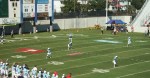
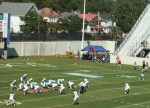
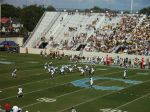
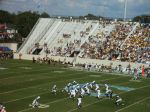
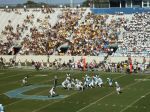
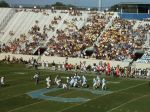
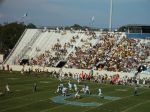
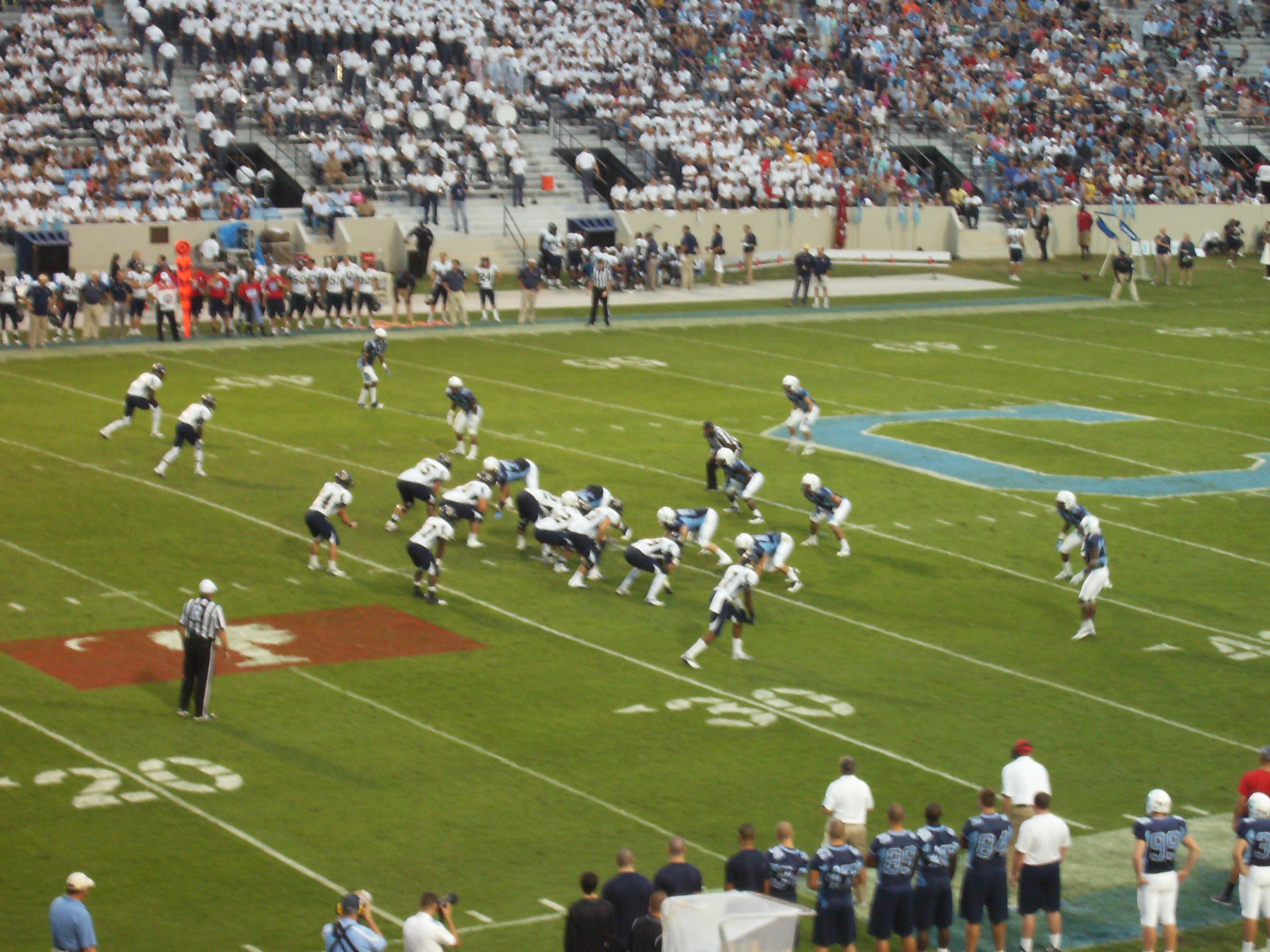
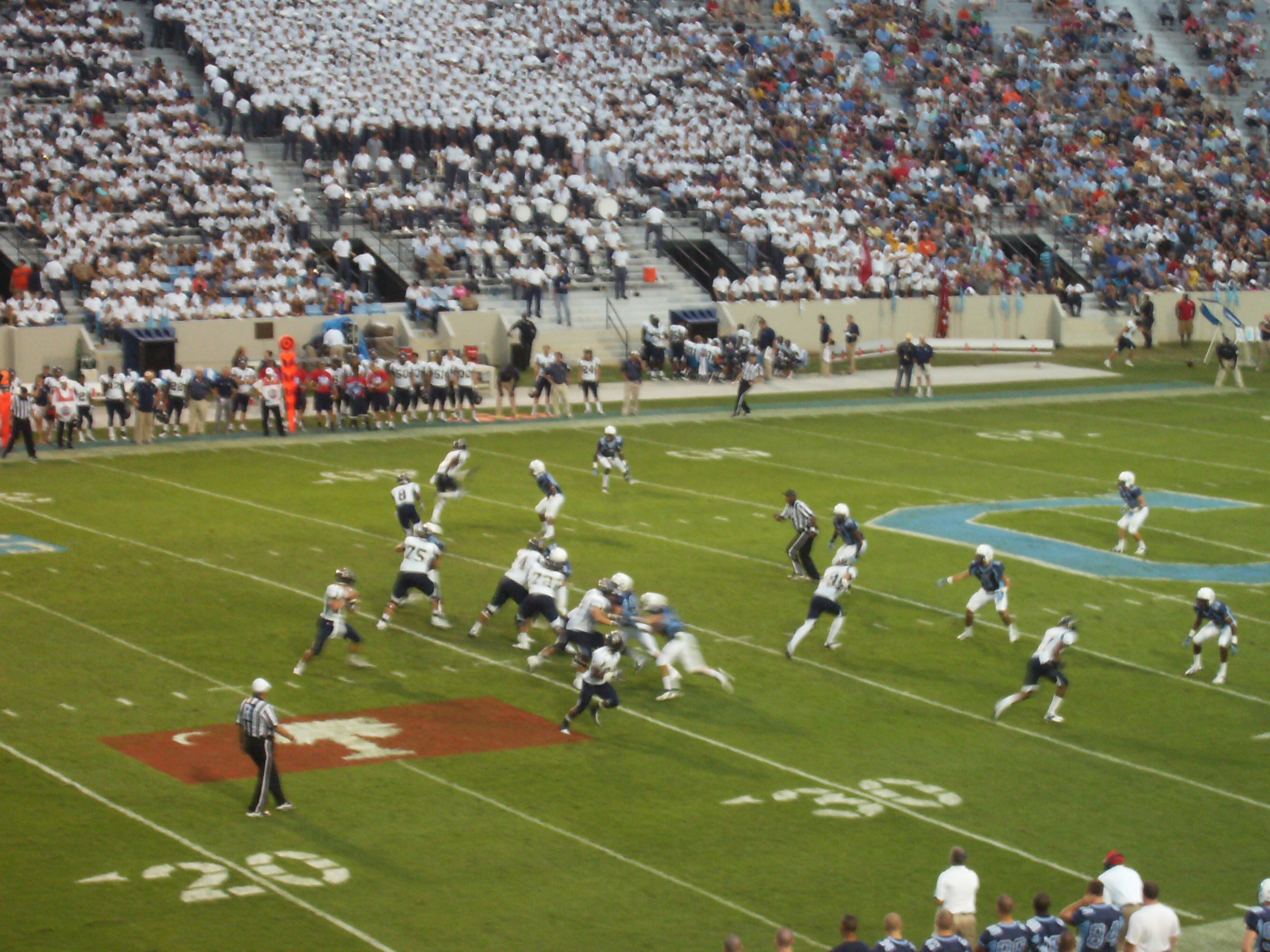
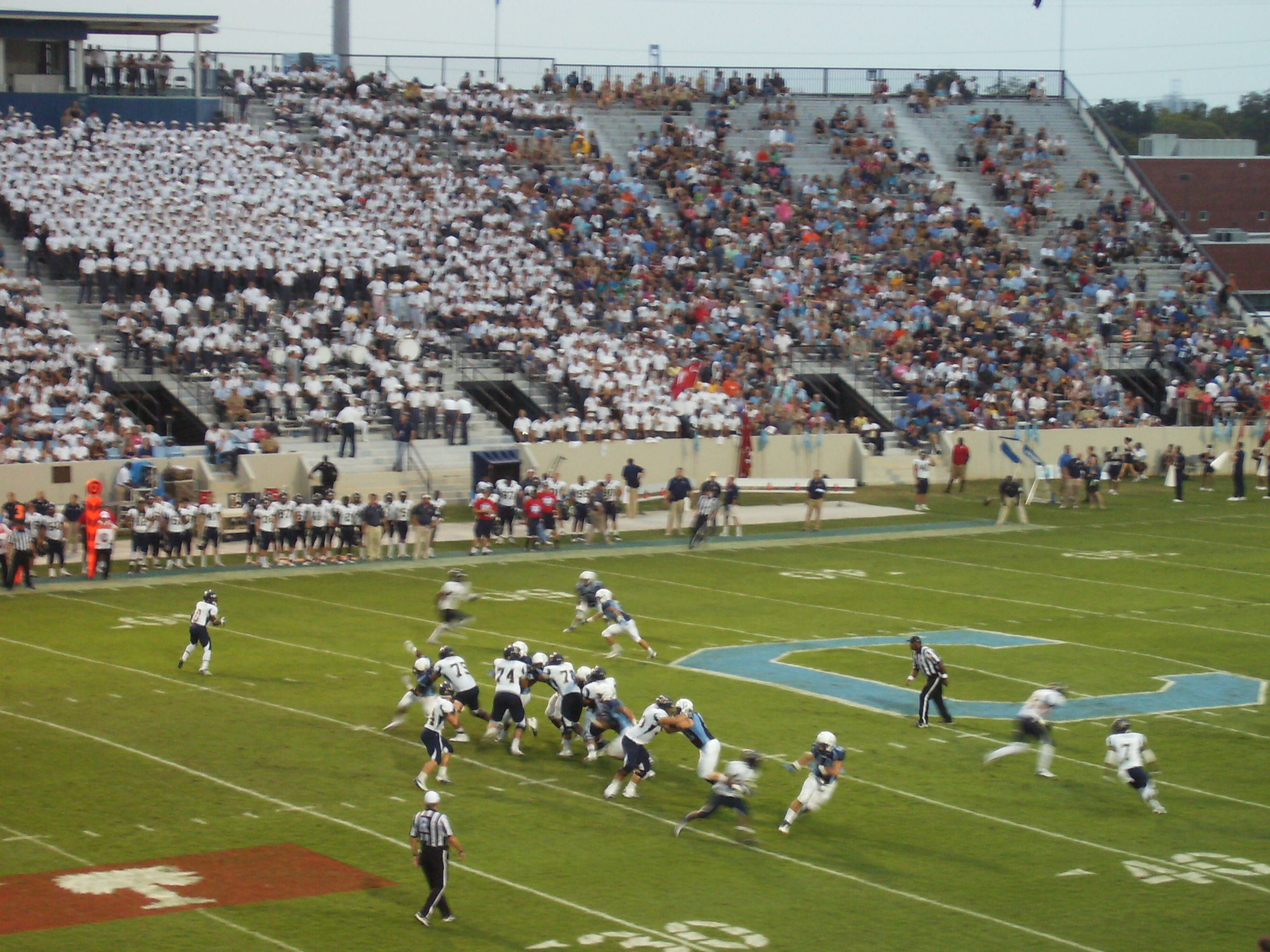
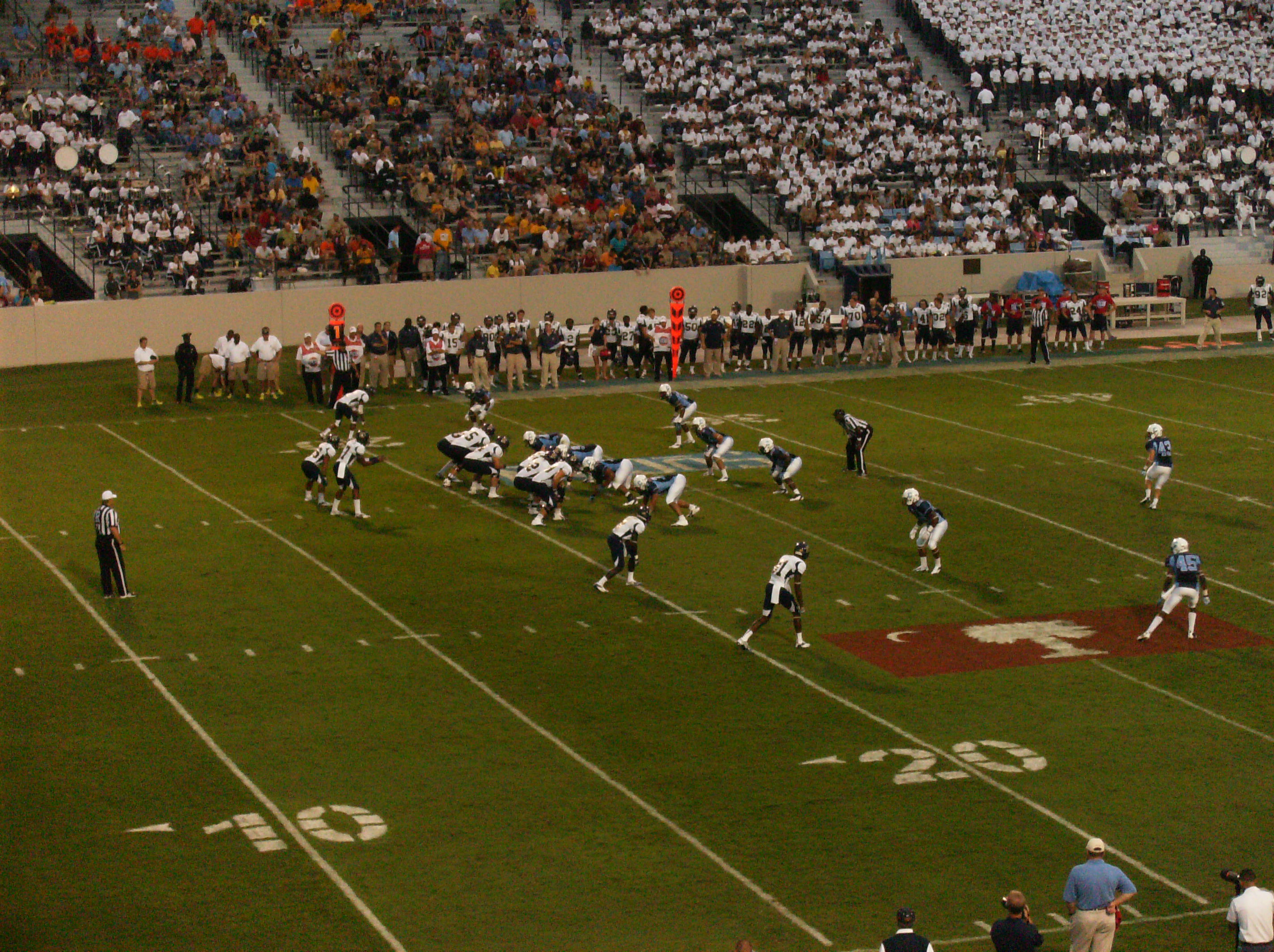
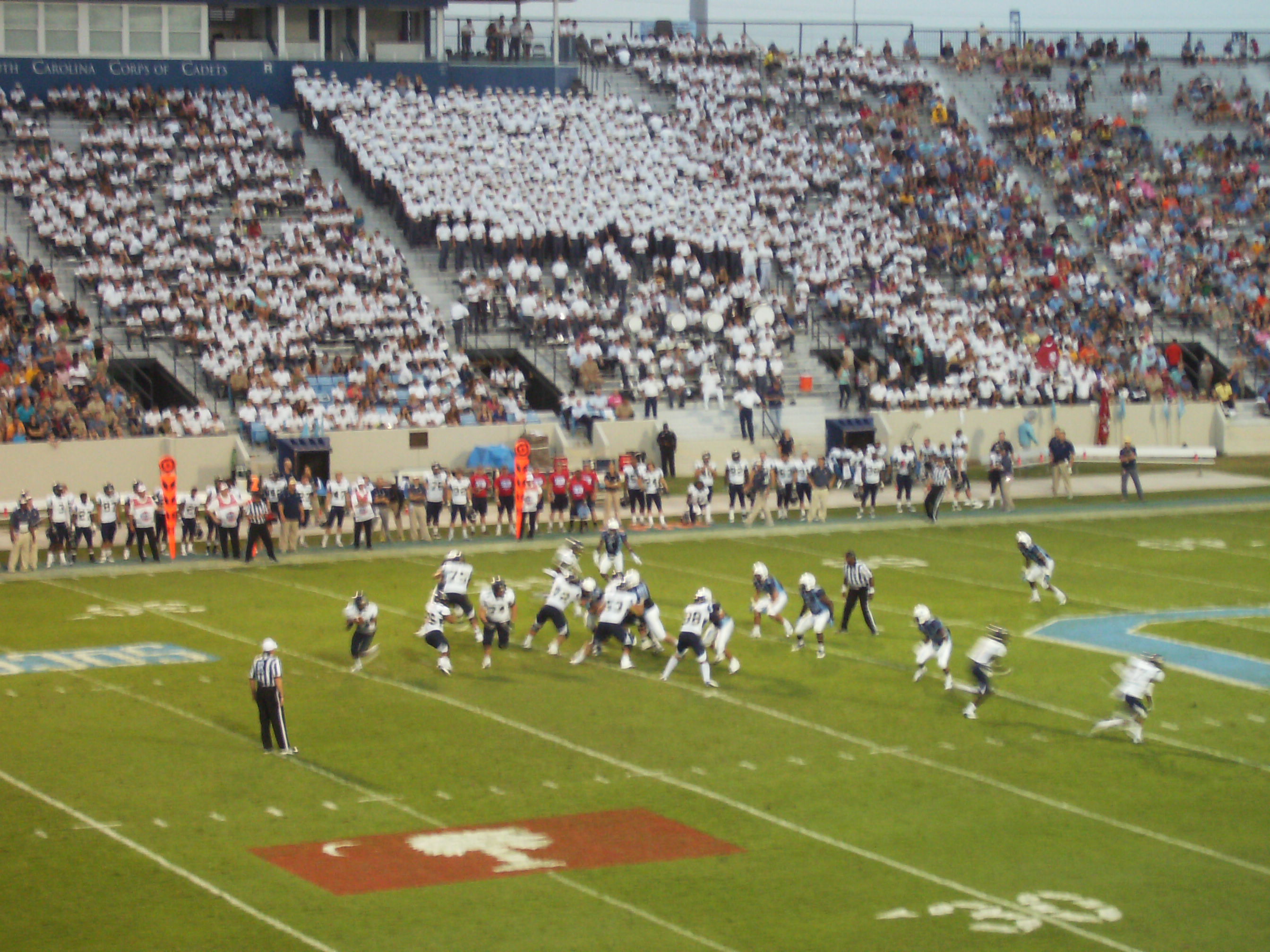
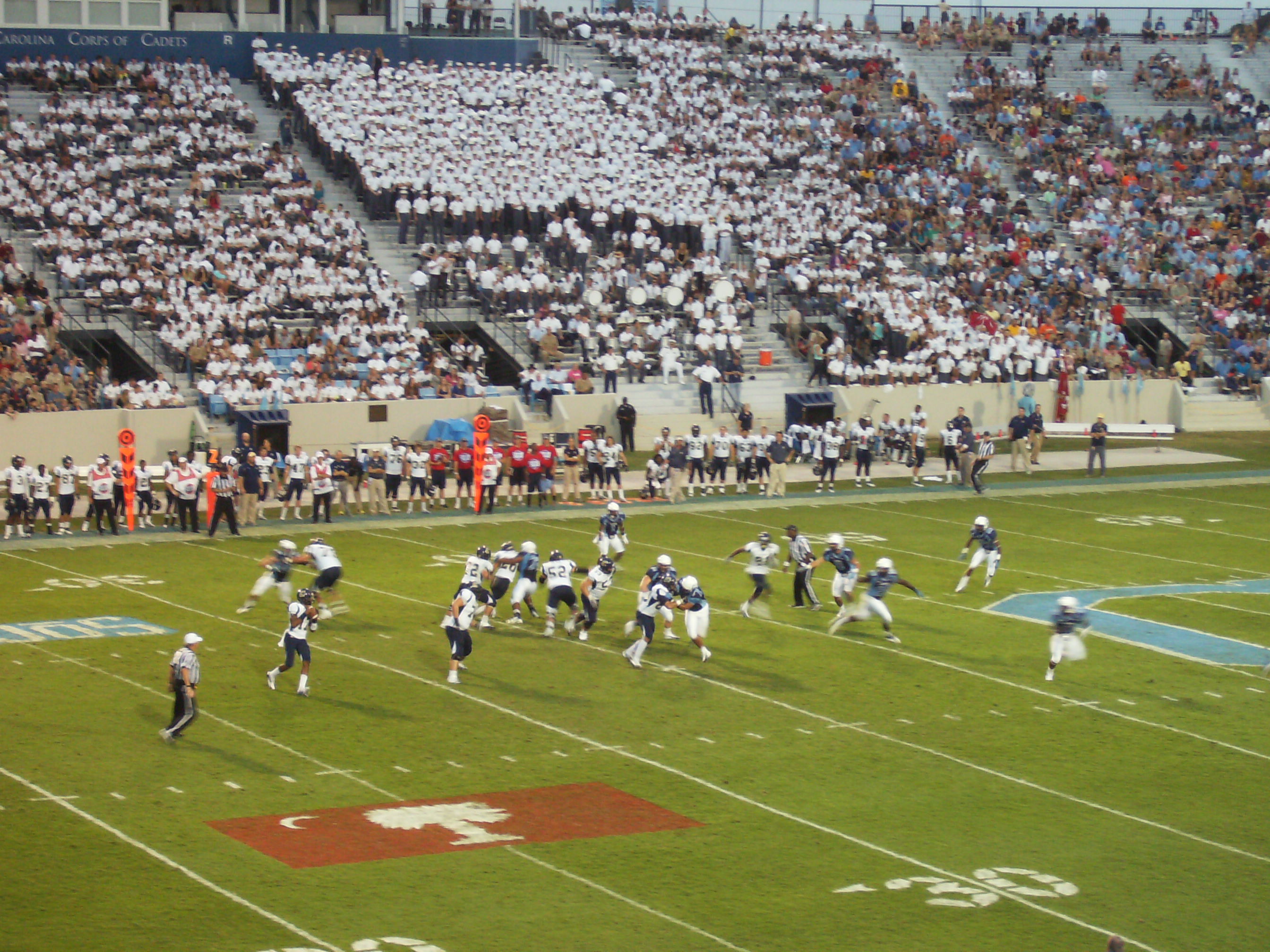
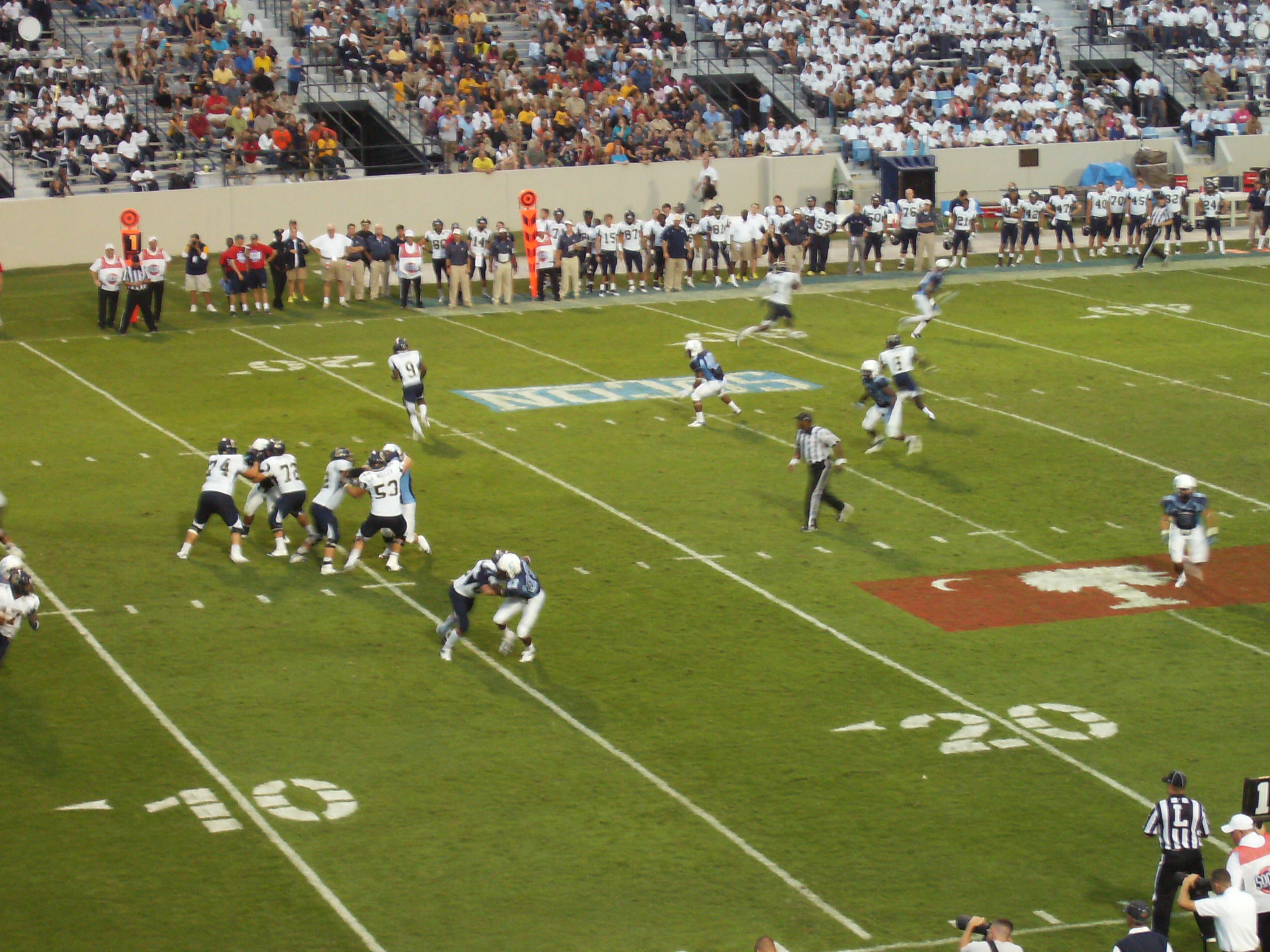
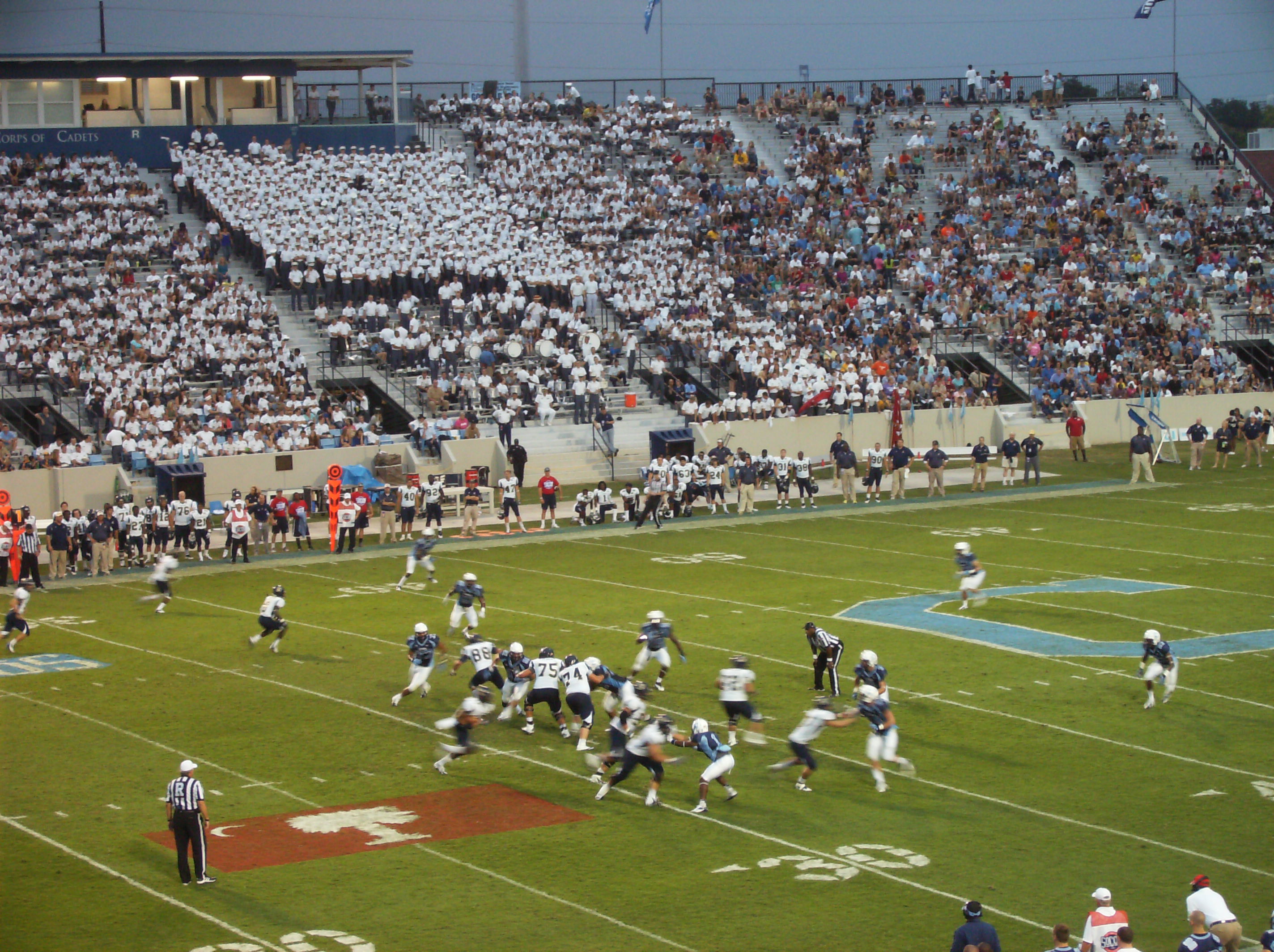
Attendance at Johnson Hagood Stadium: a 50-year review

Related: a discussion of the gameday atmosphere at Johnson Hagood Stadium

This post is mainly for use in linking to a spreadsheet I’ve put together that lists attendance at Johnson Hagood Stadium over the past 50 years, from 1964 to 2013. You can access the spreadsheet at this link:

Attendance at Johnson Hagood Stadium, 1964-2013

Edit, 8/10/15: I’ve added the 2014 attendance numbers to the spreadsheet, so it’s now a 51-year review.

As always, I appreciate the availability of these numbers, which can be credited to the staff of The Citadel’s Sports Information Department.

The spreadsheet lists year-by-year total and average game attendance, and the win/loss record for the team in each given season. There is also a category ranking the years by average attendance.

Other columns refer to the program’s winning percentage over a two-year, three-year, five-year, and ten-year period, with the “current” season being the final year in each category. For example, the three-year winning percentage for 1992 is made up of the 1990, 1991, and 1992 seasons.

I did this mainly to see what, if any, impact on attendance constant winning (or losing) has on long-term attendance trends. I would be hesitant to draw ironclad conclusions about the data, for the following reasons:

– The four directors of athletics over this time period (Eddie Teague, Walt Nadzak, Les Robinson, and Larry Leckonby) may have counted attendance in different ways.

– Because The Citadel’s football fortunes have declined markedly over the better part of two decades, it’s hard to determine exactly what attendance “should” be. The fourteen lowest ‘ten-year winning periods’ out of the fifty-year sample are the last fourteen years (which will be evident upon examination of that category on the spreadsheet).

– The stadium renovation undoubtedly affected attendance. Not all the fans came back.

If the data tells a story, it may be that a good season has more of an impact on walk-up sales than it does for increased season ticket sales for the following year, which might be surprising. However, the correlation is not particularly strong either way.

It would really help attendance if The Citadel could reel off a string of winning seasons, of course. Maybe just as importantly, The Citadel can’t have a repeat on the field of the last decade-and-a-half. One winning campaign every seven years or so won’t cut it.

2013 Football, Game 12: The Citadel vs. Clemson

The Citadel at Clemson, to be played in Clemson, South Carolina, at Memorial Stadium/Frank Howard Field, with kickoff at noon ET on Saturday, November 23. The game will be streamed on ESPN3.com, with play-by-play from Jim Barbar, analysis by John Bunting, and reporting from the sidelines by Angela Mallen.

The game can be heard on radio via the thirteen affiliates of The Citadel Sports Network. Danny Reed (the “Voice of the Bulldogs”) will call the action alongside analyst Josh Baker, with Lee Glaze roaming the sidelines.

WQNT-1450 AM [audio link], originating in Charleston, will be the flagship station for the network; the station will have a two-hour pregame show. It is also possible to listen to the game via a smartphone, using a TuneIn Radio application.

Links of interest:

The Citadel game notes

Clemson game notes

SoCon weekly release

ACC weekly release

The Kevin Higgins Show

Kevin Higgins on the SoCon media teleconference

ACC teleconference (Dabo Swinney is the first coach on the line); here is the transcript

Dabo Swinney press conference — Part 1, Part 2, Part 3

Brent Venables talks defense  — Part 1, Part 2

Clemson’s players are not believed to be aliens

Apparently really fast 6’5″, 200 lb. receivers are uncommon

It’s a big game for the Tigers, so despite injury Tajh Boyd will play

Gerald Dixon talks about Dabo Swinney

An in-depth review of Clemson’s game against Georgia Tech, play-by-play

Saturday will be Military Appreciation Day at Clemson, and the school (as usual) is going to put on quite a show. The festivities will feature a halftime performance by the Summerall Guards.

It will also be a “Purple Out”, with fans encouraged to wear purple for the game. From above, the stadium is going to look like a giant bruise.

One note on the “Purple Out”: students will be wearing purple t-shirts (and trying to stay warm). However, the original t-shirt design won’t be used:

All full-time Clemson students attending the game will receive a free Purple Out T-shirt, but it won’t include a Purple Heart symbol as originally planned. That design, chosen from more than 30 student submissions in a campuswide contest, didn’t meet licensing guidelines of the U.S. Army. Proceeds from sales of the redesigned shirt will still benefit campus ROTC units and the Student Veterans Association.

I’m not sure which team Clemson is playing next week, but Dabo Swinney was asked during his on-campus press conference if the Tigers had time to “peek ahead” to that game. Swinney was fairly emphatic:

We don’t have time to peek ahead…regardless of who we play…the objective is the win the football game…I can remember in 1992 I was a senior at Alabama and The Citadel beat Arkansas.

The reason I remember that is because [Alabama] played Arkansas the next week…it was chaos in Arkansas, and we went to Little Rock to play them…I will never forget that.

I didn’t even know who The Citadel was in 1992. Probably, literally the first time I had heard of The Citadel was because they beat Arkansas…

You better be ready each and every week…’cause if you’re not…you get beat. I don’t care who you play, what sport it is, what level it is, how much of a discrepancy it is, you get beat.

Incidentally, Swinney’s memory wasn’t perfect. Alabama actually played Arkansas two weeks after the Razorbacks lost to The Citadel. It was the first time Arkansas had returned to play a game in The Natural State after the dismissal of Jack Crowe, however.

Arkansas actually played at South Carolina the week after losing to the Bulldogs. Joe Kines led the Hogs to a 45-7 shellacking of the Gamecocks. (Dabo and his Crimson Tide beat Arkansas 38-11 the following Saturday.)

The Citadel has defeated Clemson on the gridiron in no fewer than five South Carolina towns. It’s possible no other opponent has lost to the Bulldogs at so many different locations.

The military college has wins over Clemson in Clemson (when the town was called “Calhoun”), Charleston (at the original Johnson Hagood Stadium), Anderson, Orangeburg, and Florence.

This Saturday, look for the Bulldogs to use a similar strategy to that employed in The Citadel’s 1931 victory over the Tigers in Florence:

The Citadel Bulldogs arose here today, whipped out a finely-timed, incisive and unanticipated running attack, to win their annual game with Clemson at the Pee Dee Fair, 6-0. In no previous game this season had the Cadets shown such power, speed, and brilliant elusiveness in advancing the ball…

A good, big bunch of men these Tigers were, too, but they were so much putty in the hands of a Citadel team that had a great day…

Local hero Edwin McIntosh scored the game-winning TD for the Bulldogs that afternoon. Another offensive star was “‘Leaping Larkin’ Jennings, the Columbia Comet”.

The defensive player most responsible for keeping the Tigers out of the end zone was “man-mountain, gargantuan” Delmar Rivers, also known as “Big Boy”.

Other tidbits about that game:

– The Citadel kicked off to start both halves.

– Despite that, Clemson only ran 46 offensive plays during the game, a statistic which would undoubtedly horrify Chad Morris. The lack of offensive snaps was partly due to the Tigers’ tendency to “quick kick” whenever possible. Clemson punted on third down six times, punted on second down three times, and punted on first down (?!) once.

– Clemson only picked up three first downs during the game (well, sure, with all that punting), not getting its initial first down until the fourth quarter.

– At one point during the contest, the Tigers threw incomplete passes on consecutive plays. By rule, that resulted in a five-yard penalty.

The News and Courier reported that both team captains were redheads.

– Attendance: 4000.

***Brief subject change before going back to football***

Clemson last played a football game at The Citadel in 1953, which shouldn’t be a shock to anybody. What may come as a surprise, though, is that the Tiger baseball team has not played The Citadel in Charleston during this century either.

In fact, Clemson and The Citadel have not met on a Low Country diamond since 1990, when the teams were coached by Bill Wilhelm and Chal Port. That game was played at College Park.

Now, you wouldn’t necessarily expect the two schools to play each other every year, as they are basically at opposite ends of the state.  That’s not true for the University of South Carolina, of course, and thus the Gamecocks and Bulldogs naturally meet more often.

However, South Carolina doesn’t just play The Citadel once in a while; the two schools play each other home-and-home every year. Meanwhile, Clemson…doesn’t. The last regular-season meeting of any kind between the Tigers and Bulldogs came back in 2004, at Clemson.

I think this is something that needs to be addressed, particularly because Clemson isn’t averse to playing in Charleston. The Tigers played at College of Charleston in 2008, for example.

It is facing the Bulldogs on The Citadel’s home turf that seems to have become an issue for the Tigers in recent years.

Speaking of that home turf, Clemson has actually played at Riley Park. In 2012, South Carolina and Clemson met in a game that was relentlessly hyped by sports columnist Gene Sapakoff of The Post and Courier, who apparently believed the matchup was the most important development in the history of western civilization and would be attended by hundreds of thousands of dignitaries from around the globe.

Sapakoff was highly upset at the game’s actual attendance (5,851), and was unable to accept the fact that despite the nonstop promotion (much of it by himself), the game drew about the same number of people who would attend a typical game between The Citadel and South Carolina at Riley Park. Indeed, last year’s game in Charleston between the Gamecocks and Bulldogs, played on a Tuesday night with no hype whatsoever, had an attendance of 5,838.

That said, having a crowd of 5,000+ for a regular-season college baseball game is very impressive, and not surprisingly the folks who run the Charleston Riverdogs wouldn’t mind seeing the Gamecocks and Tigers get together again at Riley Park in the near future. In a newspaper article from two years ago, the year 2015 was suggested.

However, I don’t think that game should be played. Not in 2015, anyway.

That’s because I believe the next game Clemson plays at Riley Park needs to be against the local college team that calls the stadium home. The Tigers should play The Citadel there first.

I am aware of a few reasons why Clemson and The Citadel have not met in recent years. I don’t care. People can put aside their differences, if only for one night.

Imagine how many people might attend a game at Riley Park between Clemson and The Citadel if the local media promoted it as heavily as Clemson-South Carolina 2012. That’s part of what this is about, at least to me.

I want The Citadel to receive that kind of positive attention, instead of being ignored while various entities start panting heavily at the mere sight of schools from other parts of the state.

Bringing this back to football, but in a similar vein, I find it a bit tiresome that a writer for a local newspaper (Aaron Brenner, the Clemson beat writer for The Post and Courier) has written multiple times that a local team is a “tune-up” for an opponent. It is particularly annoying that he first characterized the game as such before the season even started.

Look, I’m a realist here, but it wouldn’t hurt to show a touch more respect for a school located in your paper’s immediate area. When I first broached the subject with Brenner, back in August, I was immediately informed that Clemson had beaten The Citadel 15 straight times, and mostly by significant margins. (Tell me something I don’t know.)

Of course, I’m guessing Clemson fans wouldn’t think the 1931 loss to The Citadel is going to have any impact on Saturday’s game, and they would be correct. However, I would suggest that those 15 losses he mentioned won’t have any impact either. Do you think the 1976 game matters to the players of 2013? What about 1954? Or 1986? No, no, and no.

The real issue, I think, is that he isn’t covering Clemson from the Charleston perspective. Rather, he’s writing about the Tigers for the Charleston newspaper. There is a difference.

That’s not really the fault of Brenner, to be fair. He is doing what his employer wants him to do. You may not think there is any fault to be found at all, and I can understand that point of view.

Generally during one of my previews I start discussing a team’s statistics in relation to a comparison with those of The Citadel, but it’s pointless to do that this week since Clemson is an FBS squad. Instead, I’m just going to mention some of Clemson’s numbers. A few of them are scary.

– Clemson is averaging 41.3 points per game, 11th best nationally. The Tigers actually have a higher scoring average on the road, “only” scoring 39.8 points per game at Memorial Stadium.

– CU is ninth nationally in total offense, passing offense, and turnover margin.

– Clemson isn’t quite as dominant in a few offensive categories, ranking 50th in the nation in offensive 3rd-down conversion rate and 43rd nationally in offensive red zone TD%.

– The Tigers have had seven plays from scrimmage this season of 60+ yards, tied for third-most in FBS.

– Of course, Clemson’s raw offensive numbers are skewed by the hurry-up-no-I-mean-really-hurry-up style of offensive coordinator Chad Morris. The Tigers are averaging 82.9 plays per game on offense, fifth-most nationally. In terms of yards per play, Clemson is 32nd in FBS with a 6.18 average (Baylor leads the nation, averaging a staggering 8.5 yards per play).

– Clemson’s defensive third down conversion rate of 30.25% is 6th-best nationally. This may be the statistic that best demonstrates the influence of second-year defensive coordinator Brent Venables. In his first year at Clemson, the Tigers were 24th in FBS in this category, a substantial improvement over the 2011 season (when they were 72nd).

– Clemson’s defensive numbers are affected by its offensive style, and look better in context than in raw totals. Tiger opponents are averaging 5.25 yards per play, 42nd nationally. Getting off the field by stopping teams on third down has helped Clemson in that department (The Tigers were slightly above 5.6 y/p in both 2012 and 2011).

– On defense, the Tigers are allowing a red zone TD rate of 62.5%, which is only 69th in FBS. Venables is probably disappointed with that particular statistic.

– Clemson’s punting and kick coverage/return statistics are, in general, indifferent.

As for Clemson’s players, it’s simple: the Tigers have playmakers all over the field, particularly on offense.

Tajh Boyd has been a wonderful quarterback for Clemson. He has occasionally been labeled as a “doesn’t play well in big games” type, but anyone who believes that did not see his magnificent bowl-game performance against LSU last year.

Sammy Watkins is ridiculously good. Dabo Swinney said during his press conference this week that he thinks Watkins is the best wide receiver in the country, and you could certainly make that argument. I have no idea how the Bulldogs are going to cover him, but then almost every other team in the country would have the same problem.

It says something about Clemson’s talent level that Watkins may not even be the most difficult matchup for The Citadel on Saturday. Another wideout, Martavis Bryant, could pose even more problems.

The Tigers’ running game is keyed by the excellent Rod McDowell (who overcame a clubfoot as a child). McDowell runs behind a starting offensive line that averages 6’4″, 298 lbs.

Clemson defensive end Vic Beasley has 17 tackles for loss, fourth nationally. Ten of those TFLs are sacks. The other three starters on the Tigers’ d-line weigh more on average than The Citadel’s offensive linemen.

The Tigers have intercepted at least one pass in 13 straight games, the longest such streak in the country. Eight different players have at least one pick.

Linebackers Stephone Anthony and Spencer Shuey are 1-2 on the team in tackles.

Saturday’s game is officially a sellout, and that crowd will include a fair number of fans wearing blue and white. There will be multiple tailgating events on site for Bulldog fans, who usually know how to have a good time.

I trust the same can be said for the players. The game against Clemson should be fun.

It will be very challenging, to be sure. However, there is no pressure on the Bulldogs, and I think that will be reflected in their play.

One game is left this season. I hope it’s a memorable one for The Citadel, and in a good way.

Game review, 2013: Appalachian State

Links of interest:

Game story in The Post and Courier

Game story in the Watauga Democrat

Game story in the Winston-Salem Journal

School release

Box score

WCIV-TV report (video)

Postgame video: Kevin Higgins, Ben Dupree, Thomas Warren

Kevin Higgins’ locker room speech (don’t miss the end of this clip)

Ben Dupree called it a “relief” to get the win, which I think sums it up. The Bulldogs badly needed that victory.

It wasn’t a perfect performance by any stretch, but good enough. It was a spirited effort on a warm afternoon at Johnson Hagood Stadium, before a largely appreciative Parents’ Day crowd.

I’ll write more about this game when I preview the Georgia Southern contest later in the week. Just a few quick thoughts:

– It was hot. Hot, hot, hot.

It was hot enough it that occurred to me The Citadel might be better off wearing white jerseys for the game (thus forcing Appalachian State to wear black jerseys). However, I am sure the SoCon officials would not have allowed that, as they clearly enjoy harassing The Citadel about uniform choices.

– Marcus Cox was very impressive for the Mountaineers. He is a very effective runner, and maybe even a better pass-catcher out of the backfield. I won’t mind him playing in the Sun Belt next season instead of the SoCon.

– Both teams weren’t afraid to deliver some big hits throughout the game. Appalachian State’s Tony Washington should get credit for hanging on to the football (for a thirty-yard completion) after getting popped by Brandon McCladdie. Another Bulldog getting his money’s worth was Jake Stenson, who had a major league block on Dupree’s 53-yard touchdown run in the third quarter.

– On which play was the ball highest in the air at its uppermost point — Mitchell Jeter’s critical interception in overtime, or Thomas Warren’s game-winning field goal? I think my vote would go to the interception.

– Saturday’s contest marked the first time The Citadel had ever ended an overtime game by converting a game-winning field goal. The program’s only other OT triumph decided by a field goal came at Chattanooga on November 3, 2001. In that game, the kick was made in the first overtime session; the Bulldogs then intercepted a pass while on defense to clinch the win, basically the reverse of what happened against Appalachian State.

The Citadel’s other OT victories all ended with touchdown runs. The two previous OT wins for the Bulldogs at Johnson Hagood Stadium (Western Carolina in 2006 and the crazy Furman game in 2007) were both finished off by Tory Cooper TD runs.

Below are some of the pictures I took on Saturday. There are a lot of them this week. Most of them are mediocre at best, although there are a few that are actually decent (I took those by accident).

Included are a selection of photos from the Parents’ Day festivities. I had never actually been in one of the “new” barracks until Saturday. I took a few pictures of the interior of the first battalion, historically where the most elite of The Citadel’s cadets reside during the school year.

I also had the chance to talk to a few cadets from Alpha Company, traditionally the most outstanding of the companies within the corps of cadets. As usual, all of them were pleasant and intelligent, and patient enough to put up with an ancient alumnus like me.

There are a few photos of the parade, and a few other odds and ends. Most of the pictures, though, are of the game itself. I tried to annotate as many of them as possible, so as to give proper context.

2013 Football, Game 1: The Citadel vs. Charleston Southern

FOOTBALLFOOTBALLFOOTBALLFOOTBALLFOOTBALLFOOTBALLFOOTBALL

The Citadel vs. Charleston Southern, to be played at historic Johnson Hagood Stadium, with kickoff at 6:00 pm ET on Saturday, August 31. The game will not be televised, although it will be streamed on Bulldog Insider (subscription service) and can be heard on radio via the thirteen affiliates of The Citadel Sports Network. Danny Reed (the “Voice of the Bulldogs”) will call the action alongside analyst Josh Baker, with Lee Glaze roaming the sidelines and Walt Nadzak providing pre-game, halftime, and post-game commentary.

WQNT-1450 AM [audio link], originating in Charleston, will be the flagship station for the network; the station will have a two-hour pregame show prior to each home football game. 

From last week: my preview of the upcoming season

It has numbers and stuff in it; don’t say you haven’t been warned…

Other links of note:

The Post and Courier‘s Jeff Hartsell has a story on the upcoming game, a season preview, and a look at this year’s SoCon

– SoCon weekly release and Kevin Higgins’ SoCon media teleconference

– SoCon preseason media poll (The Citadel was picked to finish 6th) and coaches’ poll (6th again), and the league’s preseason all-conference teams

– My post on the CFPA watch lists, along with preseason FCS rankings from The Sporting News, Lindy’s, and Athlon Sports

– FCS Coaches preseason Top 25 poll, and The Sports Network’s preseason Top 25 rankings (also from TSN: its preseason FCS All-America teams and its SoCon preview)

– Phil Kornblut of SportsTalk interviews Kevin Higgins and the four team captains (Keith Carter, Derek Douglas, Ben Dupree, Brandon McCladdie)

– Also worth a listen: Kornblut’s interviews with Charleston Southern head coach Jamey Chadwell and three of CSU’s players

– AP preview of the Bulldogs (predicts The Citadel will finish 6th in the SoCon)

– Hometown articles on Ben Dupree and Sadath Jean-Pierre

– Game notes from The Citadel and Charleston Southern

Let’s talk about Charleston Southern…

When The Citadel and CSU met to open the 2012 campaign, the Buccaneers were coming off an 0-11 season, and it may not have been that good. Charleston Southern had changed its offense (essentially for the third consecutive season) and brought in a new defensive coordinator.

Despite all that, CSU actually led the Bulldogs 14-7 late in the second quarter, thanks in part to an ill-timed penalty and a series of fumbles (two of which The Citadel lost). Eventually the Bulldogs asserted their superiority and rolled to a 49-14 victory, but CSU showed flashes of a competitive spirit throughout the rest of its season.

The Buccaneers finished 5-6, a five-game improvement only bettered at the FCS level by Villanova (the Wildcats went from two wins to eight). Charleston Southern won four of its last six contests.

After the season, head coach Jay Mills announced his retirement. Named as his replacement was a former CSU assistant, Jamey Chadwell, who older Bulldog fans may remember as a quarterback at East Tennessee State in the late 1990s. Chadwell was a two-year starter at ETSU in non-consecutive seasons (his playing career was affected by a serious ankle injury).

Chadwell had spent the last four seasons as a head coach at the Division II level. He was the head coach at North Greenville for three years, leaving that job for the same position at Delta State.

The Statesmen (mascot: The Fighting Okra) were only 3-7 in Chadwell’s lone season in charge; prior to that, he had fashioned a 22-14 record at North Greenville, buoyed by an 11-3 record in 2011. That year, his quarterback was celebrated high school star (and former Clemson player) Willy Korn, who is now on Chadwell’s staff at CSU.

Mark Tucker, a former offensive assistant under Charlie Taaffe and Don Powers at The Citadel, is also on Chadwell’s coaching staff. As of August 22, so is former South Carolina (and NFL) linebacker Rod Wilson.

According to Chadwell in his interview with Phil Kornblut, Charleston Southern’s offense this year will feature a spread option look “in the gun”. The Buccaneers will run the ball more than they did under Jay Mills.

Chadwell wants to have a more balanced offense and “get playmakers out in space”. His ideal is Florida circa Tim Tebow, though he acknowledged that incumbent Bucs QB Malcolm Dixon isn’t exactly the second coming of Tebow.

Dixon had his moments against The Citadel in last year’s game, throwing a TD pass and also running for a score. As Chadwell pointed out to Kornblut, Dixon is learning his fourth offense in four years as a college player.

CSU running back Teddy Allen rushed for 56 yards (on only 11 carries) against the Bulldogs last season. Allen was one of two Buccaneers to make the Big South preseason all-conference team.

Also expected to see action at running back is juco transfer Christian Reyes, an Oregon native who has gone to some schools with really cool names, like Rogue River High School and College of the Siskiyous (located in Weed, California). Despite only being on CSU’s campus since January, Reyes (who rushed for 1958 yards last season in junior college) was named one of the team captains for the Buccaneers.

Other Charleston Southern offensive players to watch include Larry Jones III (20.5 yards per reception last season) and wideout Donte Sumpter, a transfer from East Carolina. Starting tight end Nathan Prater is 6’8″; disappointingly, the native of Ninety Six wears jersey #81.

The Bucs have four starters returning on the offensive line, but Chadwell suggested on CSU’s website that some freshmen are battling for those spots.

Charleston Southern was a mediocre passing team last year, ranking 62nd out of 121 FCS teams in passing efficiency. That actually isn’t half-bad, considering CSU completed less than 50% of its pass attempts.

When the Bucs did complete a pass, it generally went for good yardage, resulting in a respectable 7.86 yards per attempt (and 12 touchdowns against 8 interceptions). The Bucs averaged 5.35 yards per play, which was middle-of-the-pack nationally (65th).

Arguably, CSU’s most ominous offensive statistic last season was its third-down conversion rate (30.34%), 11th-worst in FCS football.

Defensive back Elijah Lee was the other Buccaneer besides Allen to garner preseason all-league honors. Lee will be part of a defense that is switching to a 3-4 base after previously being a 4-3. I’m not sure how big an impact that will have on the way the Buccaneers defend the triple option, though.

The key player for CSU against the Bulldogs is likely to be 290-lb. noseguard James Smith. Other defenders of note include linebacker Calvin Bryant and defensive end Will Hunt.

Last season the Bucs’ D topped the Big South in yards per pass attempt, allowing only 6.38 per attempt. Charleston Southern was 32nd nationally in pass efficiency defense.

However, CSU was next-to-last in the league in rush yards per attempt (5.32) and rush yards per game (208.82), leading to a bottom-20 finish nationally in rushing defense. The Citadel rushed for 479 yards against Charleston Southern in last year’s contest.

Opponents averaged 5.7 yards per play against Charleston Southern; the Bucs ranked 81st out of 121 FCS teams in that category in 2012.

When considering CSU’s on-field performance, the yards per play numbers are particularly important due to pace of play considerations. Both CSU’s offense and defense were each on the field for about 62 plays per game last season, which for both units was the eighth-fewest in the entire division. By contrast, The Citadel averaged 63.7 plays per game on offense (15th-fewest nationally) and 66.5 on defense (26th).

Elijah Lee and a pair of freshmen are expected to feature as kick/punt returners for the Bucs. Kickoff returns were problematic for CSU last year, as the team finished with a KOR average of 16.67 yards, 8th-worst in FCS. Charleston Southern finished in the top 20 of FCS in kick return coverage, though the Buccaneers did allow a kick return TD against Jacksonville (on an onside kick that went awry).

Jacksonville also returned a punt for a touchdown against CSU, which finished 87th nationally in net punting. The Buccaneers only attempted five field goals last season, making three (with a long of 31 yards). Both CSU’s punter and placekicker return in 2013.

The Buccaneers were picked to finish fourth in the six-team Big South by a panel of the league’s coaches and media. Charleston Southern will open its home schedule next week against Shorter University. The game will kick off at 11:00 am, one of three CSU home games scheduled for that start time.

Jamey Chadwell told Phil Kornblut that the game versus The Citadel would be a “big challenge” and that “we know going in we’re the underdogs, and rightfully so.” Chadwell also said this:

We’re trying to take that step where we have respect in this state and this city [for our conference]…we’re hoping to go in and compete and establish our identity…if we control the things that we can, our effort and attitude, we think we can compete [with anybody].

Further evidence that Chadwell is going to play the ‘respect card’ in motivating his team for the game against The Citadel: he “favorited” a tweet about the line for the matchup (the Bulldogs opened at -25.5 points). You can bet Chadwell let his players know about that.

Things I’ll be keeping a close eye on this Saturday:

– Execution in the first half

The Bulldogs need to take charge on both sides of the ball while there is still cannon smoke wafting in the air, as opposed to a repeat of last year’s sloppy opening half. The center-QB exchange needs to be second-nature, the “mesh” should be clean, the pitches and passes accurate, the catches made, and the blocking sound.

The team mantra this season is “1-0”. I like it. I want to see the squad live up to it.

– Penalties, or a lack thereof

The Citadel led all of FCS football in the categories “fewest penalties” and “least penalty yardage” in 2011, and matched that feat in 2012 (tying for fewest penalties last year with Lehigh). In all of NCAA football, regardless of division, only Brevard committed fewer penalties per game than did The Citadel in 2012.

– Punting

The Bulldogs actually didn’t punt in last year’s opener. While it would be great to have that happen again, odds are against it. The new punter has some big shoes to fill. The punt return unit will also be under the microscope.

Also worth watching on special teams: The Citadel will have a new long snapper and a new holder (who, as it happens, was last year’s long snapper).

– Third down conversions

Last season the Bulldog offense had a third-down conversion rate of 40.44%. That rate needs to improve. While The Citadel was 50th nationally in that category, fellow SoCon triple option teams Georgia Southern and Wofford were 23rd and 26th in FCS, respectively.

It was actually more of a concern on defense, as Bulldog opponents converted third downs at a rate of 43.08%, only 85th-best in the division. That has to get better, especially when facing the likes of GSU and Wofford (and Chattanooga, which was 30th nationally in offensive third down conversion rate).

– Forced turnovers

I touched upon this topic as part of my season preview. Incidentally, stopping the run (a focus of the coaching staff this season) is a key element to both the defensive third down conversion rate and forced turnovers (because it puts opponents in obvious passing situations).

– Defensive playmakers

Last year, the key moment for the defense against CSU was a fumble forced by Chris Billingslea, who had a knack for being in the middle of game-turning plays like that one. Billingslea has graduated, and the Bulldogs need someone else to carry the big-play torch (or sledgehammer).

One of the more interesting comments from Kevin Higgins’ Monday press conference was about the defense, stating that “we have a little more depth than I anticipated, especially inside.” That was good to hear.

– Freshmen

The Citadel has quite a few freshmen (and redshirt freshmen) on the depth chart. They are going to get a chance to make a strong first impression. The wide receivers, in particular, may get multiple opportunities to shine.

– Attendance

Last year’s opener had a crowd of 14,264, a good turnout at Johnson Hagood Stadium by 21st century standards. Whether or not the team’s fine season last year will lead to improved attendance is debatable.

When I took a look at JHS attendance trends a year ago, the numbers suggested that the success of 2012 will not necessarily lead to bigger crowds for the 2013 campaign. Of course, that’s just the people who actually file into Johnson Hagood Stadium. For all I know, the tailgating scene will continue to expand.

There was an article in The Post and Courier recently that noted Clemson and South Carolina only share one home date this season, November 23. That is unusual. I am not sure how much it will impact The Citadel’s attendance.

Quite honestly, you can make an argument that there are three Saturdays this fall in which Johnson Hagood Stadium will be the site for the most interesting college football game held in the state: September 7 (the Wofford game), September 28 (Furman), and October 5 (Appalachian State).  I just hope the general public agrees.

It is also worth mentioning that the Charleston Riverdogs have a game at Riley Park on Saturday scheduled to begin at 6:00 pm ET — yes, the same time as opening kickoff at Johnson Hagood Stadium. Parking could be at a premium.

Tangent: that article in The Post and Courier also referred to The Citadel’s game at Clemson as a “tune-up” for the Tigers prior to Clemson’s game at South Carolina — not an “anticipated” or an “expected” tune-up, mind you…just a tune-up. I wasn’t very happy with the Charleston paper making a dismissive comment like that about the local team, and said so (via Twitter).

The writer did not seem to understand my point, but then he’s not really writing about Clemson from a Charleston perspective — he’s just writing about Clemson for the Charleston paper. There is a distinction, I guess.

I am reminded of the Columbia newspaper once infamously stating in its gameday feature page that the Gamecocks would win if “they show up”. That was for a game between The Citadel and South Carolina played in 1990.

I’m ready for some football. You’re ready for some football. The players are ready for some football.

Let’s play football.

Next year’s football schedule: Who will The Citadel’s opponents play before they play the Bulldogs?

This is just a quick post on something I was looking at this past week. One thing that a triple option team sometimes has going for it is that its opponent doesn’t have time to prepare adequately for the offense, because it is so different from the “typical” offense. Of course, these days I’m not sure there really is a typical offense.

There is also something to be said about the quality of the opponent’s immediate prior opposition and how it affects its preparation, regardless of offensive or defensive setup.

The Citadel has announced its 2013 football schedule. Just for the record, here are the Bulldogs’ opponents’ opponents the week before they play The Citadel:

August 31: Charleston Southern — well, it’s the season opener

September 7: Wofford — the Terriers will travel to Florida State Baylor the week before playing The Citadel at Johnson Hagood Stadium. Advantage, Bulldogs.

Edit (2/25/13): Instead of Tallahassee, Wofford will head to Waco on 8/31, thanks to a late change in the Seminoles’ schedule.

Incidentally, Wofford’s game the next week is at home against Georgia Southern. That’s quite a stretch to begin the season.

September 14: at Western Carolina — the Catamounts are tentatively scheduled to play Virginia Tech in Blacksburg prior to facing The Citadel. Yikes. That’s after an opening game at Middle Tennessee State. Later in the year, WCU plays Auburn. Yes, three FBS programs in one season. Great for the financial bottom line, not so hot for trying to build a program.

September 21: at Old Dominion — the Monarchs host Howard on September 14. That follows consecutive games against FBS opposition (East Carolina and Maryland) for ODU, which is making the transition to FBS itself.

September 28: Furman — the Paladins are off the week of September 21. Rats.

October 5: Appalachian State — Edit (2/25/13): App State will host Charleston Southern on September 28. The Citadel will be the first of the SoCon’s three triple option teams that the Mountaineers will encounter during the 2013 season.

October 12: at Georgia Southern — the Eagles are at Samford the week before tangling with the Bulldogs in Statesboro. Will this be the last time The Citadel plays at GSU?

October 19: off week

October 26: at Chattanooga — the Mocs travel to Elon prior to facing The Citadel.

November 2: Samford — Pat Sullivan’s crew plays two straight games in South Carolina, traveling to Wofford before making an appearance at Johnson Hagood Stadium.

November 9: at Elon — November 2 will be an off week for the Phoenix. The matchup against The Citadel will also be Elon’s homecoming game.

November 16: VMI — the Keydets, like Samford, will venture to the Palmetto State in consecutive weeks, as they will journey to Presbyterian on November 9 to take on the Blue Hose.

November 23: Clemson — Edit (2/25/13): The Tigers will have two extra days off before playing The Citadel, as they will host Georgia Tech in an ESPN Thursday night game on November 14.

Clemson apparently tried to get out of the game against the Bulldogs. The Tigers have two FCS opponents in 2013 (The Citadel and South Carolina State) primarily as a result of the ACC waffling on having an eight- or nine-game league slate.

Just for comparison, last season’s opponents’ prior opponents:

Charleston Southern — season opener

Georgia Southern — the Eagles hosted Jacksonville

at Appalachian State — the Mountaineers hosted Montana

at North Carolina State — the Pack hosted South Alabama

Chattanooga — the Mocs hosted Appalachian State

at Samford — the Birmingham Bulldogs traveled to Georgia Southern

Western Carolina — the Catamounts hosted Georgia Southern

at Wofford — the Terriers traveled to Appalachian State

Elon — the Phoenix hosted Furman

at VMI — the Keydets traveled to Stony Brook

at Furman — the Paladins traveled to Appalachian State

Does it mean anything? Probably not. It won’t be in The Citadel’s favor that both Furman and Elon have a week off before playing the Bulldogs, but that’s the breaks. Another negative: Clemson will face fellow triple option team Georgia Tech immediately before playing The Citadel.

All this is, really, is something to pass the time while we wait for August 31 to roll around…

Game Review, 2012: Chattanooga

Chattanooga 28, The Citadel 10.

Links of interest:

Game story, The Post and Courier

Notes, The Post and Courier

Photo gallery from The Post and Courier

Game story, Chattanooga Times Free Press

Notes, Chattanooga Times Free Press

Kevin Higgins postgame presser (includes comments from  Bay Amrhein)

Postgame release from The Citadel

Box Score

The Citadel has now lost two consecutive games to Chattanooga at Johnson Hagood Stadium by the same exact score: 28-10. In 2010, the Bulldogs rushed for 238 yards and did not force a turnover. In 2012, the Bulldogs rushed for 232 yards and did not force a turnover…

I was disappointed in the game on Saturday night; I think the same could be said for all the home fans, as well as the players and coaches. The loss was complete and total and it is hard, at least less than 24 hours later, to find too many positives.

From my vantage point, the Bulldogs simply got beat up front on offense. That happened on defense as well, but in all honesty I felt The Citadel lost the coaching battle on that side of the ball too. I don’t pretend to be much of an expert when it comes to that kind of thing, so I’m not going to say much about it, but our defensive players always seemed a step behind last night, unprepared for the play that was developing.

Then we had a punt blocked — or, to be more precise, smothered.

All of this is a reminder that at The Citadel, when it comes to success on the field (or court), the margin for error is very small. It doesn’t take much of a dropoff for things to go south in a hurry. That is the nature of athletics at a small military college. The good times at 3-0 are now not so good at 3-2, with a road trip to 4-1 Samford looming.

It’s not a disaster, though. The wheels have not come off the season, to paraphrase a comment I saw on a certain message board.

The Bulldogs are 3-2. If you were a fan of the team and were asked at the beginning of the season, “Would you take 3-2 after five games?” Well, 90% (or more) knowledgeable supporters would have taken 3-2 and not thought twice about it. It would have meant that The Citadel had beaten either Georgia Southern or Appalachian State, for one thing.

Well, we know now that the Bulldogs beat both GSU and App State. Saturday’s loss to UTC was bad, both as a home loss and in the way the Bulldogs played, but the team’s success in the early part of the September has arguably entitled it to a mulligan of sorts.

Actually, next week is an opportunity for The Citadel, too. A win at Samford would put things right again.

Quick takes on the UTC game:

– The kickoff return teams were improved. I appreciated the tough running by Keith Gamble, too.

– A long run in the fourth quarter pushed Darien Robinson over 100 yards for the game. He finished with 132 yards rushing on only 12 carries. He really needed more than 12 carries.

– It wasn’t a good night for the defense, but Derek Douglas was back and you could tell. He had three tackles for loss, including a sack.

– Sadath Jean-Pierre finished with eleven tackles, including seven solo stops.

– The Citadel passed the ball with some success later in the game when it trailed by a substantial margin. The Bulldogs finished with 13 pass attempts. I’m usually of the opinion that The Citadel ought to stay in run-run-run mode whenever possible, but I do wonder if maybe the Bulldogs should have opened things up a bit more before falling behind by three scores. That may be hindsight fanboy talk, though.

– The Bulldogs averaged 5.2 yards per rush, but if you take out the two long runs by Robinson and Aaron Miller, The Citadel only averaged 3.3 yards per carry for the game. Of course, occasionally breaking a long gainer is a key component of the triple option, so taking those rushes out of the equation is probably unfair. On the other hand, I think it is telling that outside of Robinson, the rest of the offense rushed 33 times for only 100 yards.

– The Citadel did not tackle particularly well for the second game in a row. Terrell Robinson’s scramble-then-throw for UTC’s first TD pass was especially frustrating to watch. On that play, I was amazed that Chattanooga didn’t have an ineligible lineman downfield. That’s not a criticism of the officials; for all I know, the Mocs didn’t have any linemen leave the line of scrimmage during the play. If so, more power to them.

– Okay, I want to quickly riff on an off-the-field subject…

My understanding (which could be wrong) is that The Citadel’s band plays at certain, designated times — in other words, its activity is coordinated with the videoboard, PA, etc. I can understand that.

The problem is that as a result, the opposing team’s band sometimes winds up playing a lot more often than our own band. This was definitely the case on Saturday night.

I’m sitting in the stands, waiting for our band to play something, and in the meantime the UTC band is playing its little choo-choo number every chance it gets between plays, along with that Pitbull song which should have been declared illegal by now.

I’m not one to harp on this subject (although I know more than a few alums who will be glad to do so), but I admit I was a little frustrated on Saturday. Part of my issue with this is that I think the corps is most involved with the game when it is “warmed up” by the band. The same is true for the home crowd in general.

I know we’ve got a supersonic video board/PA system, and we want to use it, and sometimes it comes in handy. The corps did get into the spirit of things when the now-ubiquitous “Gangnam Style” was played near the end of halftime, and that was very enjoyable to watch. It was fun, even if Psy attended a school (Boston University) that dropped football.

However, during the game I would like to hear our band more often. At the very least, it should play at least as much as the opposing band.

Speaking of the PA, there were apparently some technical difficulties that led to the crowd being surprised by the sudden playing of the National Anthem. No big deal, although some of our fans do need a bit of a warning.

– I took a bunch of pictures. My performance in picture-taking on Saturday was rather poor, even by my mediocre standards. I am including some less-than-great shots anyway.

2012 Football, Game 2: The Citadel vs. Georgia Southern

The Citadel vs. Georgia Southern, to be played at historic Johnson Hagood Stadium, with kickoff at 6:00 pm ET on Saturday, September 8.  The game will not be televised, although it will be webcast on Bulldog Insider (subscription service) and can be heard on radio via the twelve affiliates of The Citadel Sports Network. Danny Reed (the “Voice of the Bulldogs”) will call the action alongside analyst Josh Baker, with Lee Glaze roaming the sidelines and Walt Nadzak providing pre-game, halftime, and post-game commentary. 

Links of interest:

The Citadel game notes                   Box score from The Citadel’s game last week

Georgia Southern game notes        Box score from GSU’s game last week

SoCon weekly release

I want to start by talking about one of my favorite topics, attendance.

A crowd of 14,264 attended the game against Charleston Southern. Even with the ticket promotions and the postgame fireworks, I was pleasantly surprised with that total. As I arrived, I could see that there were a lot of people in the area around the stadium, even if a significant portion of them were just there for the tailgating.

It was the largest crowd for a game at Johnson Hagood Stadium since 2009, and the largest crowd for a home opener since 2006.

Charleston Southern actually brought a decent number of fans, a departure from previous seasons. More power to them. Georgia Southern will bring considerably more this week, so an opportunity for a big crowd is there.

This will be only the second time the two schools have met on the gridiron in the month of September. The Citadel played Georgia Southern on September 11, 1993, in Statesboro.

That is something to keep in mind when looking at attendance figures at Johnson Hagood Stadium for previous contests against the Eagles. Somewhat surprisingly, only twice has a game at JHS against Georgia Southern drawn crowds larger than the one last Saturday against CSU. However, all of those games came later in the season.

Attendance at Johnson Hagood Stadium when Georgia Southern is the opponent:

1994 — 18,559
1996 — 9,427
1998 — 14,222
2000 — 12,391
2002 — 16,427
2004 — 12,472
2006 — 12,129
2008 — 11,190
2010 — 10,385

I think there is a good chance that attendance will get a sizable bump for this matchup. It helps that both Clemson and South Carolina are playing earlier in the day.

That makes it all the more important for the Bulldogs to play well against the Eagles, because I believe that attendance for the remaining home games may be affected by The Citadel’s “momentum”. If a large crowd sees a good game, some of those people will come back for more. The bandwagon will start to roll again.

Interestingly, The Citadel’s potential attendance surge would be going against the national tide, at least if early-season FBS crowds are any indication:

There was exactly one announced capacity crowd in eight Southeastern Conference home openers. Before the Labor Day Georgia Tech-Virginia Tech game, six out of seven Atlantic Coast Conference schools had smaller crowds than their openers last year – some of them much smaller. Attendance was down at six out of eight Big 12 home openers from 2011. Five out of eight Pac-12 schools had smaller crowds as well, and Oregon’s 13-year sellout streak was in jeopardy until game day.

The Citadel’s attendance against Charleston Southern (14,264) was greater than the average attendance for the four MAC games played last week (13,928).

Can The Citadel beat Georgia Southern? Of course. What are the Bulldogs’ chances? Probably not very good, if history is a guide.

One of the great games in the history of Johnson Hagood Stadium was The Citadel’s 20-3 upset of top-ranked Marshall in 1988. The Bulldogs would also beat a top-10 opponent at JHS in 1991 when they edged #7 Furman 10-6 in a classic defensive struggle.

However, that 1991 win over Furman is one of just three victories by the Bulldogs over top 10 opposition since 1990. Two of those wins came in 1991; Appalachian State was ranked #9 when the Bulldogs beat the Mountaineers that season.

The Citadel defeated East Tennessee State in 1997 in Johnson City when the Bucs were ranked #8 (and still played football). Other than that, nothing:

– The Citadel vs. Top 10 opposition since 1990: 3-40 (29 straight losses)
– The Citadel vs. Top 5 opposition since 1990: 0-23
– The Citadel vs. Georgia Southern since 1990 when GSU was in the top 10: 0-9

I’m not trying to be negative. I’m just trying to provide a little perspective. If The Citadel were to win on Saturday, it would be the biggest win for the football program in at least fifteen years and the signature victory for Kevin Higgins in his tenure at the school.

It would also snap a rather ignominious streak: the Bulldogs have lost nine consecutive conference home games since beating Samford in 2009. The Citadel has not won a SoCon contest at Johnson Hagood Stadium since switching to the triple option offense.

While Georgia Southern has a history of high-octane offenses and rushed for 557 yards last week in a 58-0 demolition of Jacksonville, the Eagles’ best player is defensive lineman Brent Russell. He has had any number of big games (his performance versus Navy in 2010 was particularly noteworthy). Russell didn’t have a big game against The Citadel last year, though, because he was suspended and didn’t play.

Russell is back for this season’s matchup with the Eagles, but the Bulldogs will be without his fellow All-SoCon defensive lineman, Derek Douglas. Advantage: GSU.

One of the easy storylines for this game would be Russell matching up against The Citadel’s all-league center, Mike Sellers. However, it is unlikely there will be many (if any) one-on-one battles between the two star linemen. Kevin Higgins noted this at his weekly press conference when he pointed out Russell is now a “three technique” lineman.

Georgia Southern has moved Blake Riley to nosetackle in an effort to keep Russell from being repeatedly double-teamed, and as a result it will likely be The Citadel’s guards who will have to deal with Russell more often than not. Of course, the Bulldogs will try to neutralize him whenever possible by optioning off of him. The best way to neutralize Russell, though, is to block him. That will be a difficult task.

Another key figure in GSU’s defense will be Patrick Flowe, who is starting at middle linebacker for the Eagles as a true freshman.  It is surely unusual for a team coming off back-to-back appearances in the national semifinals to immediately start a true freshman at middle linebacker.

Curiously, Flowe is listed as the backup at MLB in GSU’s game notes.

Georgia Southern’s offense did not complete a pass in eight tries against Jacksonville, not that it mattered. In my preview of the Charleston Southern game I mentioned how overrated “balance” in an offense can be. To further illustrate this, GSU is 7-0 in modern program history when it fails to gain any passing yardage. One of those games was in 2010 at Johnson Hagood Stadium against the Bulldogs.

In contrast to The Citadel’s stuttering start against Charleston Southern, GSU came out blazing against the Dolphins, scoring 27 points in the first quarter. The second play from scrimmage for the Eagles was a 79-yard touchdown run by Ezayi Youyoute, one of two quarterbacks who will see significant time for Georgia Southern.

Fifteen different players carried the ball at least once for GSU. They included B-back Dominique Swope (104 yards, 3 TDs), Youyoute (164 yards, 3 TDs), Youyoute’s fellow QB Jerick McKinnon (71 yards, some of which came as a slotback, and a TD), and Robert Brown (63 yards on three rushes).

Those who remember the 2010 game against Georgia Southern (and Bulldog fans could be excused for trying to forget it) will recognize McKinnon’s name, as the then-frosh QB had to replace regular starter Jaybo Shaw early in that contest. McKinnon rushed for 182 yards that afternoon on 35 carries, both of which remain career highs for him.

Brown played in that game too, but as the B-back. He has now been moved to slotback. The fact he will play at all on Saturday is borderline amazing (at least to me), as he had back surgery just seven weeks ago.

Georgia Southern’s offense this season is expected to be more explosive with Youyoute and McKinnon at the controls. Jaybo Shaw was efficient and effective, a solid passer who made good decisions running the triple option, but was not a breakaway threat.

Of course, that doesn’t mean the combination of Youyoute/McKinnon won’t make the right reads, or that either/or can’t throw a nice ball. It may be, however, that The Citadel is playing Georgia Southern at the right time of year, as the two QBs are still developing as signal callers.

Georgia Southern also ran a fake punt against the Dolphins, and recovered an onside kick while leading 41-0 (though I gather that may have been an accident).

GSU had excellent special teams units last year, but is breaking in a new placekicker and punter this season, and needs to find a kick returner to replace Laron Scott.

Speaking of Scott, he also blocked one of the two missed Bulldog PATs that were so critical in last season’s game (free safety Darius Eubanks blocked the other). The Citadel is going to have to do a much better job in that phase of the game.

Confusion alert: Darreion Robinson, Georgia Southern slotback/punt returner, meet Darien Robinson, The Citadel B-back. Both scored touchdowns in last year’s matchup.

Offensively, the Bulldogs face the challenge of trying to control the line of scrimmage against Russell and company. It goes without saying that fumbling six times in a half again would be a bad idea. Georgia Southern lost both of its starting cornerbacks from last season (including the ubiquitous Scott), so perhaps this is the week that Triple O’Higgins breaks out the forward pass in a major way.

I was impressed with freshman running back Vinny Miller last Saturday, as were many other observers. I wouldn’t be surprised if he assumed an expanded role in this week’s game. Miller was one of several freshmen who made significant contributions during the Bulldogs’ victory over the Buccaneers. Another who impressed in his debut was defensive tackle Colin Parsons.

The Citadel’s defense has to do its best to prevent big plays, although it is probably inevitable that GSU will break at least a couple of long gainers. Against Jacksonville, the Eagles had nine runs of 19 yards or more. To combat the Eagles’ explosiveness, The Citadel must punish the high risk/reward nature of GSU’s offense by forcing turnovers.

Last year’s game featured five Georgia Southern fumbles (two lost) and an interception. The Bulldog D needs to at least match that total on Saturday.

The Bulldogs also must win the special teams battle. It’s not just about the placekicking, either.

Georgia Southern held The Citadel’s offense to 264 yards of total offense last season, which was the second-best performance by the Eagle defense all year (only Elon had fewer yards against GSU). However, the Bulldogs matched them on the other side of the ball, as Georgia Southern’s offense produced fewer total yards against The Citadel’s defense (320) than any team it played in 2011 except Appalachian State.

I don’t see that kind of game playing out on Saturday. I think both offenses are going to move the ball and score more points. That would probably be a good outcome from The Citadel’s perspective, as the Bulldogs are less likely to win a low-scoring game.

Indeed, The Citadel is 2-35 in the Kevin Higgins era when scoring 20 or fewer points (including an 0-4 record last season). I can understand having that bad a record when scoring 10 or fewer points, or even 14, but 20? Conversely, GSU is 2-5 under Jeff Monken when scoring 20 or fewer points.

It will be Military Appreciation Day on Saturday. It should be a festive occasion, with plenty of different events happening in conjunction with the football game. It will be even more festive if the home team can pull off a big upset. I would like to see a really big fiesta at Johnson Hagood Stadium that night.

Game review, 2012: Charleston Southern

The Citadel 49, Charleston Southern 14.

Links of interest:

Game story in The Post and Courier

Postgame notes in The Post and Courier

The Post and Courier‘s video review of the game

The Citadel’s release

Video of the postgame press conference

Charleston Southern’s release

First, an exercise in perspective…what if the second half of last night’s game had actually been the first half, and vice versa?

In the second half against Charleston Southern, the Bulldogs rushed 34 times for 255 yards. They completed both of their pass attempts. The Citadel scored five touchdowns (by four different players) in the half and did not fumble. The Bulldogs committed one penalty, for five yards.

Defensively, the Bulldogs held Charleston Southern to 113 total yards in the second half. It forced three turnovers (two fumbles and an interception). CSU did not score in the half.

In the first half, The Citadel scored twice and moved the ball with relative ease (the Bulldogs did not punt during the entire game), but the offense fumbled six times (two lost). In addition, an ill-timed penalty cost The Citadel three points.

The defense played fairly well in the first half, but allowed a long touchdown drive after the first lost fumble, and appeared to have some communication issues in the secondary.

If The Citadel had raced out to a 35-0 halftime lead, and then settled for a 49-14 victory after some sloppy second-half play, I think the fan reaction would have been almost uniformly positive. There would have been some admonitions about letting up, and maintaining focus, but the general opinion of the fan base for the game would have probably been “solid effort”.

That’s not what happened, of course, and as a result the Bulldogs played last night to mixed reviews. On the one hand, a win is a win, especially if you root for The Citadel, and the second-half effort was an encouraging response to a disappointing first-half performance.

However, that doesn’t excuse a first half that gave supporters flashbacks to two years ago, when just trying to run the offense was a major challenge. At various points in the half, I was more annoyed with the team than I had been during the Georgia Southern game in 2010, when the Bulldogs fumbled nine times in one of the all-time Johnson Hagood Stadium debacles.

Of course, it really wasn’t the same as that GSU game. For one thing, the Bulldogs did run the triple option effectively, at least in terms of yardage and possessions. Oh, those fumbles, though…and that penalty…and that long CSU drive against the defense, during which the Buccaneers converted a 3rd-and-7 from their own 5-yard-line, then added a 29-yard pass play and a 25-yard run, and capped it off with a 15-yard TD pass that came when one of the Bulldogs appeared to blow a coverage assignment.

Frustrating. Still, it was a victory, and in truth The Citadel was in control of the game throughout, with the exception of that brief window when the Bulldogs trailed 14-7. After the second of Rickey Anderson’s three touchdowns tied the game just before the half, however, it was simply a question of whether The Citadel would fumble six more times in the second half, or win the game going away. Thankfully, all the fumbling after the break came from the Buccaneers.

“The good thing is, we executed the option real well,” coach Kevin Higgins said. “The fumbles were not as much on exchanges as they were down field, the ones that hurt us. That’s a matter of protecting the ball and being smart.

“Our guys know they didn’t play as well as they could have, and that they have work to do next week. That’s probably good with a team like Georgia Southern coming in.”

Ah yes, Georgia Southern. I earlier mentioned the 2010 game with all the turnovers. That was the last time the Eagles journeyed to Johnson Hagood Stadium.

In a way, next week is part of an unintentional round-robin. Georgia Southern’s opponent on Saturday was Jacksonville, and the Dolphins will play at Charleston Southern next week while the Eagles tangle with The Citadel.

Last year, JU played at The Citadel in the home opener and played creditably, losing 31-9 to the Bulldogs. Unfortunately for the Dolphins, their starting quarterback and several other key players graduated after last season. Georgia Southern crushed JU 58-0, with 41 of those points coming in the first half. GSU had 557 total yards, all rushing (the Eagles were 0-8 passing).

Georgia Southern was ready for the season to begin. The Citadel needed a half to work out some kinks. The Bulldogs won’t be getting any mulligans next Saturday against the Eagles. More on that game later in the week.

I took a few photos last night, though not as many as I would have liked. Not unlike the Bulldogs, the first game of the season was a struggle for me at times, too.

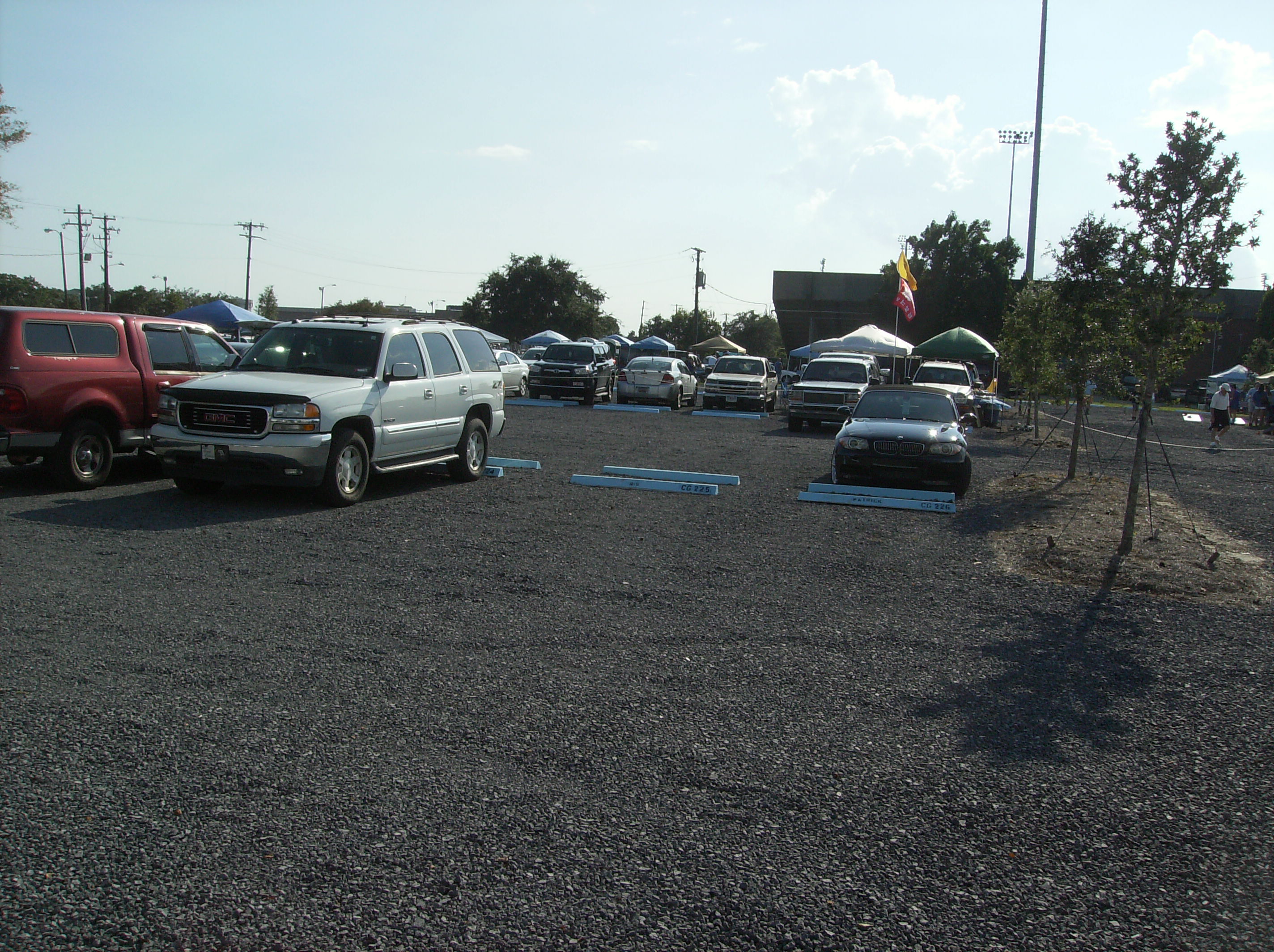
The first picture is a shot of the parking lot that replaced the old gym that used to be across the street from the stadium.


Home football attendance at The Citadel, 1964-2011: an analysis

I’ve written about home attendance at The Citadel on the blog before, as far back as 2009. With this post, though, I’m going to compare yearly win/loss numbers with how many people were in the stands. Basically, I’m trying to see how a history of winning (or not winning) correlates with attendance.

There are a lot of factors that lead to attendance increasing or decreasing, but the biggest one is the product on the field. Fans want to see a winner. What I set out to determine, to the best of my ability, was whether ticket sales at The Citadel in a given year go up or down based on the team’s play that particular season, or if prior seasons also make an impact.

To do that, I compiled the attendance at Johnson Hagood Stadium for every season since 1964 (seasonal totals; I don’t have that many of the individual game summaries). For some of the information, I received assistance from The Citadel’s Athletics Media Relations office, for which I am most grateful. Therefore, I promise to support Northwestern University football (preseason ranking: 59) throughout the 2012 Big 10 campaign. It’s the least I can do.

I’m going to take a few paragraphs to discuss the lack of available information for the pre-1966 years, and mention a few other odds and ends. Feel free to skip to the main section of this post if necessary…

Ideally, it would be possible to compare attendance totals all the way back to at least 1948, the year Johnson Hagood Stadium opened. However, compiling numbers from the pre-1966 years is problematic. I have checked newspaper accounts in an attempt to fill in gaps, but I am not confident in the accuracy of some of those listings. I am reasonably satisfied that the 1964 and 1965 seasons are accurate, so I included them in my study.

I value completeness as much as anyone, and I hope someday to have “good” attendance numbers for the 1940s/1950s/early 1960s. I know there are people interested in those years; I’m one of them. A few other notes on this subject:

– While I suspect newspaper writers of the time were generally good at estimating crowd totals, I was struck by how often scribes would suggest the crowd was actually larger than the stated attendance. In the 1960 home opener against Newberry, Ed Campbell wrote that “Citadel officials estimated the opening night crowd at 13,000 persons, although it was difficult to figure out how 8,000 more fans could have crammed into the [21,000 listed capacity] arena.”

On the front page of that same day’s paper, the estimated attendance was listed at “some 14,000 fans”, a “pleasant and generally sober crowd”.

The Citadel’s next home game that season was a notable contest against Florida State, a scoreless tie universally regarded as one of the Bulldogs’ all-time best results. Here again there were two different sets of attendance numbers in The News and Courier, with the game story describing “11,200 screaming fans”, while the front of the paper feature article listed a crowd of 12,000. That front-page piece includes one of the funnier alibis ever offered by a reporter unable to get a good quote or story:

The fans themselves were too interested in the ball game to provide material for journalistic comment.

Another example of a reporter questioning the attendance totals in 1960 (for the game against Presbyterian): was it 12,000 (per The Citadel) or “at least 15,000” (the writer’s opinion)? Even the Homecoming game against VMI that year was subject to debate, as the official total was announced as 13,970 despite the fact that the crowd “looked to some veteran observers to be more like 17,000”.

– The totals in The News and Courier generally were rounded. For instance, the listed totals in the paper for 1962’s home games were as follows: 10,200 (Davidson); 10,500 (Presbyterian), 10,300 (William&Mary); 10,100 (VMI); and 10,600 (Memphis State). I don’t have much faith in those totals, based on how similar they are (10,X00) and the “rounded-off” nature of them. I also find it hard to believe attendance in 1962 only deviated by 500 people per game for the five games. I consider them decidedly “unofficial” until convinced otherwise.

– I do not have the newspaper’s estimated totals for one game in 1961 and one game in 1963, so I wouldn’t have included them anyway, even if I thought the numbers were accurate and/or official. This is too bad, particularly for 1961, as a listing of home attendance figures for that year’s SoCon title team would have been noteworthy. For the record, I’m missing the home opener that year against George Washington. Attendance for the other four home games that season had an estimated range of 7,250 (Richmond) to 16,200 (a big Parents’ Day battle with Furman with league title ramifications, won by the Bulldogs 9-8).

– A crowd of 10,600 (apparently a go-to number for attendance) watched The Citadel lose the 1963 home finale to Richmond. Included in that alleged 10,600 was the former king of Italy, Umberto II. I am guessing it will be a while before another Italian king watches a game at Johnson Hagood Stadium.

If the great Umberto Eco were to make an appearance at the stadium, however, that would more than make up for it. Stat rosa pristina nomine, nomina nuda tenemus.

– Speaking of things that happened in 1963 that don’t really have anything to do with attendance, but which I encountered while doing some research and figured were interesting enough to throw in anyway: Vince Petno was the featured subject in the first “live” color photograph ever published by a South Carolina newspaper (at least, according to The News and Courier). The photo was in print “less than nine hours after the action occurred.”

Okay, table time. I took the average per game attendance numbers at JHS for 1964-2011 and compared them to the team’s win/loss totals in the following categories: winning percentage from the previous season, winning percentage for the current season, combined winning percentage for the previous season and the current one, and the combined winning percentage over three-, five-, and ten-year periods (with the current season being the final year in each category).

I wanted to test theories such as:

– Is attendance generally predicated on how a team did the year before, or is the current campaign more important?

– How much “goodwill” does a program buy if it is successful for multiple consecutive seasons?

I’ve posted tables listing the top 10 seasons in each category for 1964-2011, along with the corresponding bottom 10. Occasionally, there will be eleven seasons instead of ten, because of ties.

First, average attendance per game:

       Year         Wins       Losses         T-Att     Avg-Att
1991 7 4 92,476 18,495
1975 6 5 109,920 18,320
1976 6 5 90,830 18,166
1979 6 5 89,190 17,838
1992 11 2 141,477 17,684
1989 5 5 70,457 17,614
1980 7 4 105,415 17,569
1969 7 3 100,759 16,793
2003 6 6 83,794 16,578
1990 7 5 97,730 16,288
1997 6 5 73,036 12,172
1973 3 8 73,020 12,170
2005 4 7 58,369 11,673
2010 3 8 68,669 11,445
1974 4 7 55,597 11,119
1968 5 5 55,088 11,017
1964 4 6 52,600 10,520
1965 2 8 62,394 10,399
2004 3 7 40,435 10,108
1966 4 6 49,060 9,812

The first ten years are the best years for average attendance. The second group is the bottom ten. (That is how all the tables to follow are set up as well.)

Although 1992 comes in fifth place for average attendance in a season, in my opinion it was actually first. The Citadel claimed its second Southern Conference title that year, of course, and won a school-record 11 games. It also hosted eight home contests, due to two playoff matchups.

The official totals for those two playoff games were 12,300 (North Carolina A&T) and 13,021 (Youngstown State). As someone who attended both games, I can attest that those numbers are ludicrous, underestimating the actual totals by at least 5,000 people for each game. I assume the NCAA had something to do with that.

Even if you conservatively credit attendance for those games as including an extra 3,500 fans, 1992 would hold the per-game record.

Next up, the top 10 and bottom 10 teams by winning percentage:

       Year         Wins      Losses       Win %         T-Att     Avg-Att   Rank-Att
1992 11 2 84.62% 141,477 17,684 5
1971 8 3 72.73% 89,440 14,906 21
1969 7 3 70.00% 100,759 16,793 8
1981 7 3 (1 tie) 68.18% 105,725 15,103 17
1988 8 4 66.67% 94,509 15,751 12
1991 7 4 63.64% 92,476 18,495 1
1980 7 4 63.64% 105,415 17,569 7
1984 7 4 63.64% 75,050 15,010 19
2007 7 4 63.64% 82,541 13,756 31
1990 7 5 58.33% 97,730 16,288 10
2001 3 7 30.00% 78,333 15,666 13
2004 3 7 30.00% 40,435 10,108 47
1983 3 8 27.27% 79,825 15,956 11
1986 3 8 27.27% 83,348 13,891 29
1973 3 8 27.27% 73,020 12,170 40
2010 3 8 27.27% 68,669 11,445 42
2002 3 9 25.00% 93,491 15,581 14
1965 2 8 20.00% 62,394 10,399 46
1999 2 9 18.18% 86,898 14,483 25
2000 2 9 18.18% 71,712 14,342 27
1995 2 9 18.18% 83,209 13,868 30

The bottom 10 is actually eleven teams, as there is a tie. The “Rank-Att” category is the actual rank of each year in per-game attendance; for example, 1969 is the eighth-best attended season in the 48-year period in this study. This column will be included in the remainder of the tables.

Obviously, winning in the current season correlates strongly with improved attendance. Five of the top 10 winning seasons of all time are also in the top 10 for the most-attended campaigns. Only one year in that group (2007) is outside the top half for attendance.

Four of the bottom 10 in winning percentage are also in the bottom 10 for attendance. Average attendance for the top 10 winning teams: 16,150. For the 10 losing teams: 13,464.

What about success (or a lack thereof) from the year before? This time the category is “last year’s winning percentage”:

        Year         Wins       Losses   LY Win %         T-Att     Avg-Att    Att Rank
1993 5 6 84.62% 89,016 14,836 22
1972 5 6 72.73% 66,287 13,257 33
1970 5 6 70.00% 74,690 14,938 20
1982 5 6 68.18% 91,320 15,220 16
1989 5 5 (1 tie) 66.67% 70,457 17,614 6
1992 11 2 63.64% 141,477 17,684 5
1981 7 3 (1 tie) 63.64% 105,725 15,103 17
1985 5 5 (1 tie) 63.64% 88,603 14,767 23
2008 4 8 63.64% 73,568 12,261 38
1991 7 4 58.33% 92,476 18,495 1
2002 3 9 30.00% 93,491 15,581 14
2005 4 7 30.00% 58,369 11,673 41
1984 7 4 27.27% 75,050 15,010 19
1987 4 7 27.27% 83,490 13,915 28
2011 4 7 27.27% 76,758 12,793 37
1974 4 7 27.27% 55,597 11,119 43
2003 6 6 25.00% 83,794 16,578 9
1966 4 6 20.00% 49,060 9,812 48
2001 3 7 18.18% 78,333 15,666 13
2000 2 9 18.18% 71,712 14,342 27
1996 4 7 18.18% 76,860 12,810 36

Again, another “bottom 10” with eleven teams. Just to make things clear, the record for each year is that year’s record; the “LY Win %” column lists the winning percentage from the prior season.

This category didn’t correlate as strongly to attendance as I thought it would. Only three of the top 10 attendance years are in this top ten as well, and the reverse is also true for the bottom 10. The difference in attendance between the two groups (15,407/13,602) is not as great as might have been expected.

Incidentally, the 1989 campaign only includes four home games. The two games played at Williams-Brice Stadium in Columbia following Hurricane Hugo are not counted as home contests.

The only other season with as few as four home games in the 48-year period was 2004, when another hurricane played havoc with the schedule, leading to the cancellation of the would-be home opener against Charleston Southern.

The 2004 season (the year of “half a stadium”) also included what may have been the worst-attended home game of the 1964-2011 time frame, a Thursday night matchup against Benedict that drew 5,127 diehard fans. The fact there was little interest in attending a game in a dilapidated stadium on a Thursday night against a Division II school should not have come as a shock.

This is a post about home attendance, but while checking numbers I read a summary for the 1987 contest against Boston University, played at historic Nickerson Field in Boston. Official attendance for that game: 2,103. Yikes. That may be the lowest attendance for any game involving The Citadel in the last 30 years, if not longer. Not coincidentally, BU dropped football a few years later.

Now I’ll factor attendance based on winning percentage over two-year, three-year, five-year, and ten-year periods. In each case the final season in the grouping is the “current” campaign — for example, for three-year 1992 the seasons included are 1990, 1991, and 1992. I hope that makes sense.

Two-year winning percentage:

        Year         Wins       Losses         T-Att     Avg-Att    2-yr W%    Att Rank
1992 11 2 141,477 17,684 75.00% 5
1993 5 6 89,016 14,836 66.67% 22
1981 7 3 (1 tie) 105,725 15,103 65.91% 17
1991 7 4 92,476 18,495 60.87% 1
1969 7 3 100,759 16,793 60.00% 8
1980 7 4 105,415 17,569 59.09% 7
1971 8 3 89,440 14,906 59.09% 21
1972 5 6 66,287 13,257 59.09% 33
1989 5 5 (1 tie) 70,457 17,614 58.70% 6
1970 5 6 74,690 14,938 57.14% 20
1999 2 9 86,898 14,483 31.82% 25
1987 4 7 83,490 13,915 31.82% 28
2011 4 7 76,758 12,793 31.82% 37
2010 3 8 68,669 11,445 31.82% 42
1974 4 7 55,597 11,119 31.82% 43
1965 2 8 62,394 10,399 30.00% 46
1966 4 6 49,060 9,812 30.00% 48
2002 3 9 93,491 15,581 27.27% 14
1996 4 7 76,860 12,810 27.27% 36
2001 3 7 78,333 15,666 23.81% 13
2000 2 9 71,712 14,342 18.18% 27

The bottom ten is yet again made up of eleven teams.

It appears that having two bad seasons in a row is definitely a bigger drag on home attendance than just having a bad season. The two averages for this category are 16,133 (top 10) and 12,956 (bottom 10). Compare that to seasonal averages for the top 10, as listed above earlier: 16,150 (top 10) and 13,464 (bottom 10).

Three-year winning percentage:

        Year         Wins       Losses         T-Att     Avg-Att    3-yr W%    Att-Rank
1992 11 2 141,477 17,684 69.44% 5
1993 5 6 89,016 14,836 65.71% 22
1994 6 5 90,158 15,026 62.86% 18
1971 8 3 89,440 14,906 62.50% 21
1981 7 3 (1 tie) 105,725 15,103 62.12% 17
1982 5 6 91,320 15,220 59.09% 16
1990 7 5 97,730 16,288 58.57% 10
1991 7 4 92,476 18,495 57.35% 1
1969 7 3 100,759 16,793 56.67% 8
1970 5 6 74,690 14,938 54.84% 20
1974 4 7 55,597 11,119 36.36% 43
2003 6 6 83,794 16,578 35.29% 9
2004 3 7 40,435 10,108 35.29% 47
2011 4 7 76,758 12,793 33.33% 37
1965 2 8 62,394 10,399 33.33% 46
1966 4 6 49,060 9,812 33.33% 48
2010 3 8 68,669 11,445 32.35% 42
2000 2 9 71,712 14,342 27.27% 27
2002 3 9 93,491 15,581 24.24% 14
2001 3 7 78,333 15,666 21.88% 13

This is very similar to the two-year category. Top 10 average: 15,947. Bottom 10 average: 12,835. The only bottom 10 season in either the two- or three-year winning percentage categories to actually finish in the top 10 in average attendance was Ellis Johnson’s 2003 squad, which went 6-6 (5-1 at JHS).

The home schedule that year, as it is in a lot of “odd-numbered” years, was conducive to a potential attendance bump, with games against Furman and Wofford (both of which were nationally ranked when they played The Citadel that season), along with Appalachian State and Charleston Southern. It’s still a bit of an outlier. Actually, home attendance for all three years of Johnson’s tenure was somewhat anomalous.

Five-year winning percentage:

        Year         Wins       Losses         T-Att      Avg-Att   5-yr W%    Att Rank
1992 11 2 141,477 17,684 65.25% 5
1994 6 5 90,158 15,026 62.07% 18
1993 5 6 89,016 14,836 61.21% 22
1971 8 3 89,440 14,906 57.69% 21
1972 5 6 66,287 13,257 56.60% 33
1982 5 6 91,320 15,220 55.45% 16
1981 7 3 (1 tie) 105,725 15,103 55.45% 17
1991 7 4 92,476 18,495 55.26% 1
1995 2 9 83,209 13,868 54.39% 30
1984 7 4 75,050 15,010 53.64% 19
1967 5 5 64,060 12,812 38.00% 35
2006 5 6 72,814 14,562 37.50% 24
1999 2 9 86,898 14,483 34.55% 25
2000 2 9 71,712 14,342 34.55% 27
2005 4 7 58,369 11,673 34.55% 41
1966 4 6 49,060 9,812 34.00% 48
2001 3 7 78,333 15,666 33.33% 13
2004 3 7 40,435 10,108 30.91% 47
2003 6 6 83,794 16,578 28.57% 9
2002 3 9 93,491 15,581 27.27% 14

The average attendance for the top 10 in this category: 15,403. For the bottom 10: 13,705.

Ten-year winning percentage:

        Year         Wins       Losses         T-Att     Avg-Att  10-yr W%    Att-Rank
1993 5 6 89,016 14,836 55.26% 22
1994 6 5 90,158 15,026 54.39% 18
1997 6 5 73,036 12,172 53.95% 39
1992 11 2 141,477 17,684 53.51% 5
1964 4 6 52,600 10,520 53.03% 45
1984 7 4 75,050 15,010 52.27% 19
1996 4 7 76,860 12,810 52.19% 36
1985 5 5 (1 tie) 88,603 14,767 51.82% 23
1998 5 6 66,453 13,290 51.77% 32
1995 2 9 83,209 13,868 51.32% 30
2011 4 7 76,758 12,793 38.39% 37
2010 3 8 68,669 11,445 37.84% 42
2009 4 7 65,147 13,029 36.94% 34
2007 7 4 82,541 13,756 36.36% 31
2006 5 6 72,814 14,562 35.45% 24
2003 6 6 83,794 16,578 35.14% 9
2008 4 8 73,568 12,261 35.14% 38
2002 3 9 93,491 15,581 34.55% 14
2005 4 7 58,369 11,673 34.55% 41
2004 3 7 40,435 10,108 32.73% 47

This can be looked at in two different ways…

Perhaps Larry Leckonby can take solace in the fact that there is no obvious correlation at all for this category. In other words, the difference in attendance for the top 10 (14,177) and the bottom 10 (13,252) can easily be attributed to more recent campaigns, and not any permanent decline due to a long stretch of futility.

On the other hand, look at that bottom 10. It is actually completely made up of the last 10 seasons!

That says it all about the current cycle of Bulldogs football, and the need for a sustained stretch of success. An argument could be made that The Citadel’s struggles on the field since 1995 have erased what possibly could have been a continued gradual increase in attendance. I personally do not subscribe to that view in full — there are many other factors at play — but it is true that the losing has made it difficult to determine what The Citadel’s “natural” attendance at Johnson Hagood Stadium should be in this day and age.

One small caveat: over this 48-year period there have been four different ADs at The Citadel (Eddie Teague, Walt Nadzak, Les Robinson, and Larry Leckonby). It is possible (even probable) that they each had their own approach to reporting attendance. That is something to keep in mind when evaluating these trends over a long period of time.

It appears that good years for attendance at Johnson Hagood Stadium are usually a result of the team being successful in that specific season, which is not big news. The fact that a “one-year lag” (a good season leading to improved attendance the following year) is not particularly evident in the numbers, however, does strike me as surprising. That may suggest something about the relationship between the number of season tickets sold versus the walk-up crowd; it’s hard to say.

One bad season does not in itself result in poor attendance, but two bad years in a row? The bandwagon begins to empty out in a hurry.

As stated earlier, there are many other factors that impact attendance, including weather, quality of opponent, time of game, modern restroom facilities, etc. I wrote three years ago that The Citadel needed to continue appealing to its alumni base while reaching out to “unaffiliated” fans in the Charleston area, and to make the experience of going to a game as family-friendly as possible. Those points are still valid today, although it’s easy to see that an effort in all those areas has been made.

I would like to see the Junior Bulldog Club become something more substantial than a “Coming Soon!” webpage, though.

Ultimately, the biggest attraction of the game, other than the game itself, is the Corps of Cadets. I trust that when it comes to making sure the Corps is at the forefront of an exciting gameday atmosphere, the administration has a plan of attack for this season.

This year’s home attendance will probably come down to how the team fares in its first four games, both at JHS and on the road. Charleston Southern (home), Georgia Southern (home), Appalachian State (road), North Carolina State (road) — that is a tough stretch, particularly the three games following the opener.

If The Citadel can complete the gauntlet with a record of at least 2-2, that should result in a better crowd showing for the September 29 home game versus Chattanooga. The difference between 1-3 and 2-2 (to say nothing of 3-1 or, dare we dream, 4-0) could be critical when it comes to packing the stands that day.

It won’t be easy. Then again, it never is.

Edited 8/1/13:

The Citadel averaged 13,574 fans per game at Johnson Hagood Stadium in 2012, the highest attendance figures since 2007. Not coincidentally, the Bulldogs had their first winning season since 2007. However, that average still wasn’t enough to crack the top 30 of season attendance averages at JHS (post-1964). 

To  increase the number of fans in attendance in 2013, the football team has to continue to win games. It’s that simple. The first two home games of the season will be critical in this respect.

In 2008, the Bulldogs went 4-8, and attendance declined by 11%. Let’s hope that scenario is not repeated.

Overflow crowd at Johnson Hagood for the season opener? Not likely

Just a quick post while I hide from the heat and humidity…football can’t get here fast enough, and that includes football weather.

Someone on the TCISN board recently expressed hope that attendance at Johnson Hagood Stadium might be excellent for the season’s first two games, against Charleston Southern and Georgia Southern. Putting aside GSU for the time being, I was less than certain about the prospects for a big turnout when The Citadel hosts CSU in the season opener.

It’s a 6:00 pm start, and won’t be played at the same time as a Clemson or South Carolina home game (though the Tigers will be on TV at around the same time). That is good news in terms of the competition on Saturday night. On the other hand, I remember that when the Bulldogs and Buccaneers first started playing, it was anticipated there would be large crowds for a game against two Lowcountry schools. That didn’t happen.

In fact, attendance for the five games between the two teams (played between 2002-2007) was somewhat disappointing. The numbers do not lie.

2002: Played in November, on a Thursday night. Attendance: 12,412. Verdict: not bad, really, given the month/day. Average attendance at Johnson Hagood Stadium that season: 15,582.

2003: A 3:30 pm start time on August 30, in Charleston. Yeesh. A crowd of 15,219 brought their sunscreen, though. Average home attendance that year: 16,759.

2004: Game postponed due to a hurricane threat, but ultimately was not rescheduled.

2005: A night game, but only 10,316 showed up. Average JHS attendance in ’05: 11,674.

2006: The only time when attendance for the CSU game exceeded average attendance for the season, with 15,121 in the stadium for the game, as opposed to season average attendance of 14,599.

2007: Another early start (2pm) resulted in a sluggish crowd of 12,885. Season average: 13,757.

– Average attendance for the five games against Charleston Southern: 13,191.

– Average attendance for games played at Johnson Hagood Stadium in those seasons (2002-07, excepting 2004): 14,489.

Note: one small caveat to those figures: When I went through the statistics, I concluded there was probably an error in the 2002 attendance totals, likely for that season’s game against Delaware. Nevertheless, I don’t think it affects the overall analysis.

So there you have it. The average crowd for a CSU game was actually only 91% the size of an average crowd for games at JHS over those seasons (and that is including the CSU attendance numbers in the overall totals; the difference is even greater if you take the CSU figures out of the average). It is thus hard for me to believe there will be a significant “bump” in attendance for this year’s contest, particularly given the fact the Buccaneers are coming off an 0-11 season.

It would be nice to see a big crowd for the opener. It’s likely going to be up to Bulldog fans to make it happen, though.