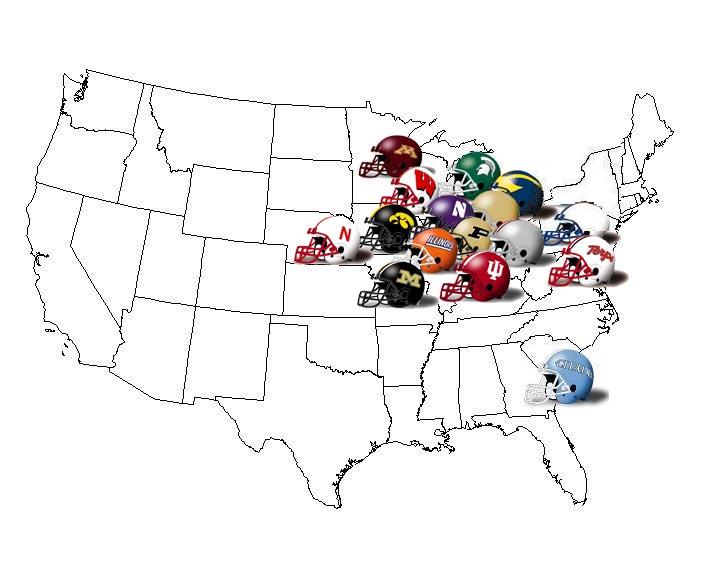
Schools that have never made the NCAA Tournament — the 2011 Edition

Updated: The 2016 edition

Now updated: the 2015 edition

Editor’s note: this post is from 2011. For the 2014 update, click here.

For the 2013 update, click here.

For the 2012 update, click here.

It’s conference tourney time, and that means it’s time to see if there is a chance that a longtime D-1 school with no NCAA tournament history will finally get its moment in the sun.

Last year I wrote about the twenty schools with the most years in Division I basketball without an NCAA tournament appearance.  There are other schools out there that have gone a long time waiting for a return invitation, like Harvard (which participated in the 1946 tournament) or Rice (which has made four tourney appearances, but none since 1970).

However, I’m only discussing those schools with no NCAA D-1 tourney history.  At least Harvard and Rice (and Dartmouth and Columbia, two other longtime absentees) have played in the event.  Imagine rooting for a team that has never been to the Big Dance, even before it was called the “Big Dance”.  Unfortunately, I don’t have to imagine it…

Last year I briefly outlined the chances of each of the twenty longest-waiting schools finally breaking through.  Alas, none of them did, so it’s the same group of twenty this season.  I guarantee the list will change next year, though, but only because this is going to be Centenary’s last season as a Division I school. (After this year’s tournament is over, UMKC will be the next school on the clock, unless the Kangaroos pull a stunner in the upcoming Summit League tourney.)

As always, the evaluation starts with the Forgotten Five (the five schools that have never made the NCAAs despite being members of Division I since the modern re-classification of the division in 1948).  Records listed are as of February 28:

— Northwestern:  At the beginning of the season, there was a buzz that this might be the year the Wildcats made it.  Instead, Northwestern is 16-12 and currently sits in ninth place in the Big 10.  It’s not going to happen this year.

— Army:  The Bulldogs of the Hudson have lost 18 games and are in last place in the Patriot League.  Things do not look promising.

— St. Francis (NY):  The Terriers have a winning record (15-14) and finished the regular season in fifth place in the NEC.  It’s been one of SFC’s better campaigns in recent years.  It’s unlikely the Terriers make a run in the league tourney, but it’s worth keeping a half-closed eye on the team.

— William & Mary:  With 21 losses and in next-to-last place in the CAA (behind only woeful Towson), I think the Tribe is going to have to wait another season.  William & Mary was a lot more competitive in the previous two years, but its window of opportunity for making the NCAAs appears to have closed, at least for now.

— The Citadel:  There were hopes prior to the season that the Bulldogs could make some noise in the SoCon.  Instead, new coach Chuck Driesell has presided over what is arguably the most disappointing season in school history.  Now, The Citadel has to win four straight games in the league tournament.  What are the chances of that happening?  Not good.

St. Francis looks like the best hope out of the Forgotten Five, but that’s mostly by default.  What about the rest of the schools in our group of 20?

— Centenary (NCAA Division I member since 1960):  Sadly, Centenary finished its five-decade run in D-1 with no NCAA tournament appearances.  The school is moving to Division III next season.  The Gents were 1-29 this year, with the sole win coming in the next-to-last game of the season.  There will be no Summit League tournament, so Robert Parish’s alma mater is done in D-1.

— New Hampshire (class of 1962):  The Wildcats, 12-17 overall, finished seventh in the America East after losing their last three games.  UNH is 344th in the country in field goal percentage, just additional evidence that suggests New Hampshire is not a team capable of springing a big surprise in the AE tournament.

— Maine (class of 1962):  The Black Bears may have peaked too early.  Maine won seven straight games in the month of January.  Then the team lost six straight in February.  The Black Bears are 15-14 and finished third in the America East.  It’s not inconceivable Maine could make a post-season run, but a big change in momentum would be required.

— Denver (D-1 from 1948 to 1980, then back to the division in 1999):  The Pioneers are 13-16 overall but did manage a winning record in the Sun Belt (9-7).  Denver has to rebound better to have any chance of running the table in the league tourney, though; the Pioneers are last in all of D-1 in rebounds per game (23.9).

— UT-Pan American (class of 1969):  The Broncs are 5-23 and finished last in the Great West, a conference that doesn’t even have an automatic bid.  So much for that.

— Stetson (class of 1972):  The Hatters lost 12 of their last 14 games to finish 8-23 overall.  Stetson failed to qualify for the Atlantic Sun tournament, so the dream is dead for another year.

— UC Irvine (class of 1978):  UCI is only 13-17 overall, but has won its last two games, both in double overtime.  The Anteaters feature Mike Wilder, a first team Afro All-American.  I could see UCI doing some damage in the Big West tourney.  Whether it’s capable of doing three games worth of damage is another question.

— Grambling State (class of 1978):  Hey, Doug Williams is back as head football coach again!  Good thing, too, because at 8-19, the basketball team isn’t getting a lot of positive press.  On the other hand, the Tigers do play in the SWAC, so winning the league tourney can’t be completely ruled out.

— Maryland-Eastern Shore (D-1 in 1974 and 1975, and then for good in 1982):  The Hawks are 7-21 overall and tied for last in the MEAC.  This isn’t going to be the year.

— Youngstown State (D-1 in 1948, back again in 1982):  The Penguins have lost 20 games and are tied for last in the Horizon League.  This isn’t going to be the year.

— Bethune-Cookman (class of 1981):  Whoa, a team in first place in its league?!  The Wildcats, currently 18-11, have in fact clinched the MEAC regular season title.  B-C did lose its sole meeting with Todd Bozeman’s Morgan State squad, but at the very worst an NIT bid is in the cards…and look — that’s Cy McClairen driving the bandwagon!  (Why not, he did everything else at the school.)

— Western Illinois (class of 1982):  I think the season for the Leathernecks can be summed up in eight words: “this is the team that lost to Centenary.”  Like the Gents, WIU did not qualify for the Summit League tournament.

— Chicago State (class of 1985):  Earlier in this post I noted that UT-Pan American is 5-23 and plays in the Great West, a league without an automatic bid.  The difference between Chicago State and UTPA?  The Cougars are 6-23.

— Hartford (class of 1985):  The Hawks contributed one of the season’s worst box scores in a loss to Stony Brook.  Hartford isn’t quite that bad, and actually beat Stony Brook in the rematch.  However, a team that can’t shoot (bottom 10 nationally) or rebound (bottom 50 nationally) probably isn’t going to shock the world in the league tournament.

— Buffalo (class of 1985):  The Bulls have just missed making the NCAAs a couple of times in recent years.  Buffalo is currently 16-11 with two MAC league games left before conference tourney play begins.  The Bulls likely will have to win four games in the MAC tourney, which is a tall order, but there isn’t a dominant team in the league, so you never know.

It looks like Bethune-Cookman has by far the best shot of making the big show out of the twenty schools.  Maine, Buffalo, and possibly St. Francis have not completely unreasonable chances.  For the rest, the chances are slim and none, like they are most every year.

Someday, though, that moment of triumph will come.  Uh…right?

Complaint to ESPN, c/o The Sports Arsenal

From time to time I get e-mail responses to things I’ve written on the blog.  They tend to run the gamut, from words of encouragement to criticism to spam (plenty of spam).  However, I got an e-mail on Saturday that I think is worth sharing.  I won’t include the name of the lady who wrote it, because I don’t think that would be fair.  

First, some background.  On Saturday afternoon Michigan played Indiana in a game televised on ESPNU.  The announcers for the game were Pam Ward (play-by-play) and Danny Kanell (analyst).  I didn’t see it, as I was at Johnson Hagood Stadium watching The Citadel’s game, but apparently the matchup in Bloomington was an exciting contest that featured very little defense.  The Wolverines prevailed, 42-35.  Shortly after the game ended, the following e-mail was sent to me:

If Pam Ward was the announcer for the U of M game today (Saturday, 10/2/2010) at 3:30 p.m., you should be ashamed of yourselves.  Aside from the mispronounciation of Denard “Dernard???!!!” Robinson’s name, could you please find an announcer who’s excited about the game?  She’s boring and uninformed, maybe why she falls back on the criticism she’s ridiculed everywhere for?  There are so many awesome sports broadcasters in the industry – please get creative!  We hate every game she announces and we’re sick of being forced to listen.  Not as agonizing as watching the Lions play every Thanksgiving… BUT CLOSE.  Thanks!

This is, obviously, a fantastic e-mail.  That last line about Pam Ward as an announcer not being as agonizing as watching the Lions play on Thanksgiving puts it over the top.

Some points:

— While she criticizes Ward, the e-mailer doesn’t seem entirely certain it was actually Ward doing the announcing (“If Pam Ward was the announcer…”).  However, that doesn’t stop her from blasting Ward anyway.

— More importantly, to me anyway, is the notion that I might somehow be affiliated with ESPN (“you should be ashamed of yourselves”, “could you please find an announcer who’s excited about the game?”).  I am guessing that the e-mailer googled Pam Ward’s name and found this post I wrote about ESPN’s announcers for 2010, and assumed I was a publicist for the network or something.

I found this amusing, because while I do write about things that involve ESPN on occasion, so would anyone who writes about sports in this country, given the pervasive nature of the network.  I haven’t always written favorably about ESPN, either (see this post or this post, just for a couple of examples).

— The e-mailer is apparently a Michigan fan.  She is sick of “being forced to listen” to Ward, but to be honest I don’t think Ward has done a whole lot of games featuring the Wolverines.  When she was calling the noon game on ESPN2 the past few years, she usually called Big 10 games  — but the two schools I always associate with a Ward call are Michigan State and Northwestern.  Michigan usually was televised on ESPN (or the Big Ten Network) if it drew the noon slot.  At least, that’s how I remember it.  I could be wrong about that.

Incidentally, Ward now wants to call NFL games.

— I couldn’t agree more with the e-mailer about the Lions, though.  Why should the entire country be subjected to that franchise every Thanksgiving?  Can’t they rotate host teams?  I’m tired of the Cowboys too, but at least Dallas usually has a good team.  The Lions are almost always bad and boring.  This year, turkey day at Ford Field will include the visiting New England Patriots, so at least one of the teams involved should be good.  Of course, that means the score will probably be something like 47-10 or 34-12 (the score of the last two games played on Thanksgiving in Detroit, both losses by the Lions). 

That game will be on CBS.  I suppose Phil Simms will give away a silver iron again.  It’s a lame gimmick, but not as lame as the thing Fox hands out to its game MVP.

To sum up, I’m sorry I can’t do anything about Pam Ward (or any other ESPN announcer) calling your team’s game(s), but I’m not affiliated with the four-letter.  If I’m going to field complaints about ESPN, though, the least the folks in Bristol could do is send me some free stuff. 

I’m not asking for an ESPY gift pack or anything; I would settle for a College Gameday t-shirt (size XXL – I’m fairly tall).  I would ask for a hat, but I doubt ESPN carries a lot of promotional caps in size 7 ¾.  If they did, Mark Schlereth would probably grab all of them anyway.  He looks like he’s got a large noggin.

As always, thanks to the e-mailers (and commenters) for all their feedback.

Conference expansion: should The Citadel join the Big 10?

Nebraska, Missouri, Notre Dame, Texas — it’s hard to take in all that’s (not) going on right now…

With all this expansion talk, there is a chance the Big 10 (motto:  “Just ignore the ’10’ thing”) might wind up with an odd number of teams.  Of course, it has an odd number of teams right now.  However, I’m thinking that when all the dust settles from this latest realignment, Jim Delany and company are going to want to be at 12 or 14 or 16 teams, if only to end speculation the league might expand again (and thus prevent all those late-night telephone calls from the folks at Iowa State begging for admission).

If the Big 10 needs an extra team, The Citadel would be an obvious candidate and would presumably get an invitation.  The question is, should the military college accept the Big 10’s offer and leave the Southern Conference?  What are the positives and negatives of making the move?

Positives

— There would be no controversy over where the conference baseball tournament would be hosted, as the other schools in the Big 10 would have no problem playing in Charleston every May.  Charleston versus Columbus?  No contest.  No more carping from the likes of UNC-Greensboro.  (And do you see UNCG mentioned as a candidate to join the Big 10?  No.  The Spartans should be grateful just to be in the same hemisphere with the Bulldogs, much less the same league.)

The Citadel would be a favorite to win the league in baseball every season.  Also, we could probably demand that all of our conference games would be played at Riley Park.  Fun spring trip for the guys from Minnesota and Wisconsin, and an easy three-game sweep for us.

–All home games in football and basketball would be on TV, along with a lot of televised games for the other sports.  Also, the Big 10 Network has a slightly larger distribution nationally than the SoCon TV package.

It’s important for The Citadel to increase its TV presence, as I have written many times before.  I have previously advocated playing Big 10 teams in non-conference action so as to get on TV.  Now, the opportunity could be there to play Big 10 teams as league games.

–By 2012 or 2013 or whenever we joined the league, there is a chance Indiana still wouldn’t have its act together on the hardwood and we could snag a road victory at Assembly Hall, which would be neat.  Plus, you know Nebraska won’t be any good at hoops, and Northwestern would be a promising opportunity for a road W.  So we could be competitive almost immediately.

–A new recruiting territory would open up, and with the advantage of offering recruits the best weather in the conference (unless Texas joins the league, and even then it’s a push).  The Citadel has already had some good luck recently with players from Big 10 country (Ohio is the home state for basketball’s Austin Dahn and baseball’s Justin Mackert).

If Texas winds up in the conference along with the Bulldogs, that opens up the Lone Star state even more to The Citadel’s predatory hoops recruiters (see:  Cameron Wells, Zach Urbanus, Mike Groselle).  With that type of opening, regular trips to the Final Four would be inevitable.

–The extra money from being a Big 10 member could go toward expanding Johnson Hagood Stadium.  The Big 10 could also flex its collective muscle and break the NCAA’s silly postseason ban in the Palmetto State.  That, combined with the newly expanded JHS, would result in a new bowl game for Charleston, so the community would also benefit.

Negatives

–Well, the road trips would feature a lot of snow and ice (excepting UT-Austin, which would probably be worth a mandatory travel game for the corps of cadets).  There is only so much places like East Lansing and Iowa City have to offer (not to mention Lincoln).

That’s why you can expect a lot of the league meetings to get moved to Charleston. Also, look for a lot of the Big 10 coaches to acquire beachfront property in the Low Country, a la Roy Williams, Ralph Friedgen, Les Robinson, etc.  It’s just a natural thing for them to do.

–Big 10 basketball can often be unwatchable.  Actually, you could say that about a lot of Big 10 sports…

–The Citadel probably would not be able to play schools like Chowan or Webber International in football.  Wait, that’s a positive!

–Women’s sports:  The Citadel has a limited number of women’s teams, and the ones we have would probably struggle in the Big 10.  We don’t have a women’s lacrosse program, though, which may be just as well.

–The other schools in the Big 10 would be much larger than The Citadel, which could lead to their fans trying to take over our home parks/arenas.  If we made sure the corps of cadets was fully armed before games, however, I think we would maintain our home field advantage.

–There is a possibility that a spot in the ACC or SEC could open up.  If that happens, it’s important for The Citadel to explore all its options.

All in all, I’m undecided about a potential berth in the newly constructed Big 10.  One thing I can say for sure, though, is that The Citadel will be okay wherever it lands.  Can Rutgers or Kansas say the same?

The New Big 10

Longest droughts: schools that have never made the NCAA tournament

Updated: The 2016 edition

Now updated: the 2015 edition

Editor’s note:  this post is from 2010. For the 2014 update, click here.

For the 2013 update, click here.

For a 2012 update, click here. For the 2011 review, click here.

It’s almost time for the conference tournament season, and almost every year a school will celebrate its very first bid to the NCAA tournament.  Announcers will gush as the students rush the court following a dramatic victory in a league tourney final.  “They’re dancing!” is the cry.

Of course, most of the time the school in question has only been in Division I for a few years after enjoying success in Division II or the NAIA.  Occasionally the team is supplemented, if not dominated, by sketchy transfers or refugees from a local work-release center.  It doesn’t matter, though — it’s in the field of 65.  The school becomes part of the madness of March, and its supporters will cheer wildly (often televised from a local sports bar) when its name is called by James Brown on Selection Sunday.

However, every now and then a school that has spent decades in the Division I wilderness, searching in vain for the road to the tourney, finds its way out of the woods and into the promised land.  Two seasons ago it happened to American University, which had just missed in several Patriot League tourney title games before finally punching its ticket with a 52-46 victory over Colgate.  AU had been in Division I since 1967.

Another school that had a long wait end in 2008 was UT-Arlington.  The Mavericks had been members of Division I since 1969, but had never made the NCAAs until winning the Southland tournament that season (as the 7 seed in the league tourney).

These are the schools I (usually) root for come tourney time, to get that proverbial monkey off their back.  They are the 20 schools that have been in Division I the longest without making a single appearance in the NCAA tournament.  To keep what follows in perspective, just remember that George Mason University, which made the Final Four a few years ago, didn’t even exist until 1972.

“The Forgotten Five”

The NCAA’s modern classification into what we now call Division I occurred in 1948, although the hoops tourney started in 1939.  The five schools that have been in D-1 since ’48 were all technically eligible to be selected to the NCAAs since that first 1939 tourney.  Of course, it was only an 8-team tourney in those years.

Tangent:  maybe it was only an 8-team field in those days, but none other than Harvard got a bid in 1946 (losing both its tourney opener and a consolation game). Thus, Harvard has been to the NCAA tourney despite having never won the Ivy League (which has officially only been around since 1954).

The class of 1948:

  • Army:  I didn’t know this until last year, but the Black Knights actually could have gone to the NCAA tournament in the 1960s.  According to Bob Knight (in a TV interview) Army turned down an NCAA invite to instead play in the NIT, with a chance to compete at Madison Square Garden.

Another tangent:  The last school to turn down an NCAA bid was Marquette (in 1970), a decision made by the late, great Al McGuire.  McGuire was annoyed that his team (ranked 8th nationally) was going to have to travel further than he thought was right for a top 10 squad, so he thumbed his nose at the NCAA brass and accepted an NIT bid (Marquette would win that tournament).  Schools are no longer allowed to decline NCAA bids to play in the NIT.

  • Northwestern:  The Wildcats are the only school in a “power conference” to never make the tournament.  The school hosted the first NCAA tourney in 1939.
  • St. Francis of New York:  This school is not to be confused with St. Francis of Pennsylvania, fellow member of the Northeast Conference, which actually made the tournament in 1991 (and had to win a play-in game to do so).  The Terriers, on the other hand, made three NIT appearances from 1956 to 1963, but have never been particularly close to an NCAA berth, at least from what I have been able to determine.  There isn’t a great deal of SFC hoops history readily available online.  The Terriers may be the most forgotten of the Forgotten Five.
  • William and Mary:  The Tribe did make the NIT in 1983.  Thomas Jefferson and Jon Stewart demand more success than that, though.
  • The Citadel:  I wrote about the school’s painful hoops history in November of 2008.  Since I wrote that manifesto, the team has won more games over a two-season stretch than at any other time in the Bulldogs’ history.  Karma?

The chances of any of these schools making it this year are not particularly good. Northwestern, William and Mary, and Army all got off to good starts, but have faded down the stretch (the Tribe’s 16-point loss to Iona in a Bracketbusters game probably eliminating W&M from at-large consideration).  To get a bid, it’s likely that only a league tournament title (and the automatic bid that goes with it) will do.

At this point, The Citadel might have the best shot, as it will be very difficult for Northwestern and/or William & Mary to win their respective conference tourneys (I think it’s fair to say that winning the Big 10/CAA tourneys is harder than winning the SoCon crown).  The Bulldogs, while currently playing good basketball, will probably have to win four SoCon tourney games in four days, however.  Considering the school has only won two consecutive SoCon tourney games once in its entire history, that may be too tall an order.

As for Army and St. Francis of New York, both are currently in 8th place in their respective conferences, which does not exactly scream “potential tourney run”, especially for Army, since there are only eight teams in the Patriot League.

Other schools who have had to hold their tickets for too long (records listed are as of Feb. 20):

  • Centenary (D-1 member since 1960):  Well, the Gentlemen only have two more years to make the NCAAs (including this one), since the school is moving to Division III after the 2011 season.  Robert Parish’s alma mater would have to win the Summit League tourney.  Currently Centenary is in next-to-last place in the conference and has lost 19 games.
  • New Hampshire (class of 1962):  A case could be made that the Wildcats have been the worst D-1 program since joining the division.  Entering the 2009-10 campaign, the Wildcats’ all-time school record (including the years before joining D-1) is 817-1327 (38%).  New Hampshire’s record in America East play entering this season was 142-299.  Yikes.  At any rate, it doesn’t look like UNH (currently seventh in the America East with an overall record of 10-15) will break through this year.
  • Maine (class of 1962):  Now here is a promising team to watch.  Like New Hampshire, Maine is a member of the America East conference.  Unlike UNH, though, Maine is having a solid season, third in the league, and with an overall record of 17-9.  Keep a close eye on the Black Bears, which may have their best shot at making the field since 1994, when Maine lost in the conference final to Drexel.
  • Denver:  The Pioneers were in D-1 in its initial incarnation in 1948, left the classification in 1980, and then returned to D-1 in 1999.  Denver (one of several hockey-first schools on this list) is a middling Sun Belt team this year (8-7 in league play, 15-11 overall).  It wouldn’t be a complete shock to see the Pioneers make a SB tourney run, though.
  • UT-Pan American (class of 1969):  The Broncs currently compete as members of the Great West conference, a league that doesn’t send an automatic qualifier to the NCAAs.  With a current record of 4-23, I’m guessing UTPA is not in line for an at-large bid.
  • Stetson (class of 1972):  The Hatters reside in the Atlantic Sun basement right now, tied with Florida Gulf Coast in league play (if you’ve never heard of Florida Gulf Coast before, don’t feel bad — DePaul never had either). Stetson has an overall record of 6-21. This isn’t going to be the year.
  • UC Irvine (class of 1978):  Like a lot of these schools, the Anteaters are at the bottom of their league standings, tied for last in the Big West with UC Riverside.  It’s not going to be their year either.
  • Grambling State (class of 1978):  You would think a school with a football tradition as grand as Grambling’s could parlay that into an occasionally good hoops team, but no.  This season is no different, as the Tigers are only 6-15 entering weekend play.  Of course, being in the SWAC means that a team with a 6-15 overall record can’t be completely ruled out as far as winning the league tourney is concerned.
  • Maryland-Eastern Shore:  The Hawks joined D-1 in 1974, but left after just two years, and then returned in 1982.  This season UMES is 6-6 in MEAC play but only 8-18 overall.  I don’t see the Hawks getting past Delaware State or South Carolina State in the MEAC tourney, much less Todd Bozeman’s Morgan State club.
  • Youngstown State:  The Penguins were D-1 in 1948, but then dropped down and didn’t return to the division until 1982.  Jim Tressel won multiple I-AA football titles while in Youngstown, but the hoops squad hasn’t been as successful, and this year is no different.  YSU is tied for last in the Horizon League with Illinois-Chicago (the Flames have been extinguished) and has an overall record of 8-18.
  • Bethune-Cookman (class of 1981):  B-C is actually tied with UMES in the MEAC standings right now, but at 14-12 may be a better team.  I wouldn’t give the Wildcats much more of a shot of winning the league tourney, though.  Maybe they need to bring Cy McClairen back.
  • Western Illinois (class of 1982):  The Leathernecks are currently third-from-last in the Summit League, one place above Centenary.  It’s hard to see WIU making much of a run in that conference tourney.
  • Chicago State (class of 1985):  Like Texas-Pan American, Chicago State is a member of the Great West.  Like UTPA, Chicago State has no chance to make the NCAAs in the foreseeable future.
  • Hartford (class of 1985):  The Hawks, whose most notable hoops alum is Vin Baker, missed a chance to make the NCAAs when they lost in the America East finals two seasons ago to UMBC.  At 8-19 this season, the odds are not in Hartford’s favor.
  • Buffalo:  the Bulls moved up to D-1 in 1974, left D-1 in 1977, then rejoined the classification in 1992.  Buffalo has come closer than any other school on this list to breaking through in recent years, losing in the MAC title game last season and in 2005 (the latter an excruciating 80-79 loss in overtime).  The Bulls are currently 15-9.  It wouldn’t be that surprising to see them in the conference championship game again.

So there you have it.  Those are the 20 schools that have waited the longest for an NCAA bid.  Will one of them break through this year?  Maine and Buffalo look like the best bets, but you wouldn’t really want to place a wager on any of them.

It would be great if one did, though.  I think back to that American victory in 2008, and the sight of Eagles head coach Jeff Jones crying in his sideline chair.  He knew the difficulty of what his team had accomplished.  I felt so good for him and for the long-suffering AU fans.

Incidentally, that difficulty of accomplishment is just another reason why expanding the tournament would be such a mistake.  It wouldn’t mean nearly as much if it were easier to gain entry into the field.  For myself, I’m not interested in The Citadel being part of a diluted field.  Like the fans and players of all the schools still waiting for their moment, I want to enjoy the real thing.

It would be nice to enjoy it sooner rather than later…

The NCAA wants to ruin its own basketball tournament

This is a little late…okay, more than a little.  It’s the holiday season, after all.  I was busy.

You may have heard that the NCAA is considering expanding the D-1 hoops tourney to 96 teams.  The particulars:

[The NCAA] is gauging the feasibility of moving the tournament from broadcast to cable…as it decides whether to exercise an escape clause in its 11-year, $6 billion deal with CBS, the NCAA’s longtime partner…

…the NCAA has the ability to opt out [of the deal] at the close of the 2010 Final Four. One source said this is just the beginning of a process that will conclude in summer  2010, at the earliest…

…the NCAA is not committed to making any changes. It also is talking with TV networks about whether they are interested in the tournament as is. The NCAA’s current deal with CBS is heavily backloaded. More than a third of the total value — $2.13 billion — is due to the NCAA in the final three years.

But the potential expansion of the NCAA tournament has support in collegiate circles, particularly from college basketball coaches. The idea talked about with TV networks would likely take it from its current field of 65 teams to 96 teams and add another week to the competition, with the top 32 teams receiving byes. The move has been characterized as folding the NIT into the NCAA tournament.

The NCAA clearly expects that the added week of games would significantly increase the tournament’s rights fee.

If you’re wondering why college basketball coaches favor expanding the tournament, it’s about job security, primarily for major college coaches.  Now, you might think that coaches who make six figures per annum (or more) might deserve being under a bit of pressure for that kind of dough (and all the other perks that go with the job).  The coaches, though, have a different idea.

Those poor major college coaches do have it rough.  There are 72 schools in the six BCS conferences.  Of those 72, only 36 made the NCAA tournament last season.  Just 50%.  Why, there wasn’t room for 16-14 Georgetown, or 18-14 Virginia Tech, or 17-15 Washington State!  Expanding the field to 96 would surely correct those injustices.

The writer of this article in The Wall Street Journal favors expansion.  As he puts it:

Expansion would, in no particular order, give more quality teams a chance to prove themselves and fix the shamefully low percentage of bids given to lesser-known “mid-major” teams. It might also create enough of a supply of games to allow a portion of the tournament to be shown on cable (at the moment, fans can’t see every game in its entirety because CBS—the rights holder—doesn’t broadcast every game nationally).

Most important of all, adding an extra round or stage to the tournament would mean an extra helping of what fans love most about the event: the early rounds, the unpredictable festival of games that go on all day and create wild excitement all across the country.

Give more quality teams a chance to prove themselves?  Isn’t that what the regular season is supposed to be about?

The problem with his argument about expansion aiding mid-major teams is in his next sentence.  The object of this exercise is for the NCAA to extract as much money as it can from ESPN and/or CBS (or maybe Fox; after all, Chris Rose needs work).  Let’s get serious here — ESPN isn’t going to give the NCAA a zillion dollars to televise first-round matchups between Illinois State-Niagara, or Duquesne-Tulsa.

His basic idea (which mirrors Coach K’s thoughts in the earlier link) is that a 96-team field would envelop and replace the NIT, which is now owned by the NCAA and doesn’t make nearly enough money to satisfy that organization.  As a practical matter, though, it would not and could not.

For one thing, three of the teams in last season’s NIT (Jacksonville, UT-Martin, and Weber State) were regular season champions of smaller conferences that would not be given at-large bids to an expanded tournament.  Several other schools invited to the NIT would also be questionable candidates for NCAA at-large bids, including several of the C-USA squads and Duquesne, which was only 9-7 in Atlantic 10 play.

If you expanded the field to 96, last season at least 51 of the 72 BCS schools would have made the field, and as a practical matter probably five or six more would have also (Vanderbilt for UT-Martin, Seton Hall for Jacksonville, etc.).  That would mean that over 75% of all major conference schools would have received bids last season.

Do we really need that many of those power league teams in the tournament?  Georgetown (to name just one example) lost 12 league games in the Big East (counting its first-round conference tourney loss to St. John’s).  I would suggest that the Hoyas conclusively proved that they had no business playing in the NCAAs.

Another thing is that the near-monopolization by the major conference outfits would only get worse, as once the tournament expands, you can expect a different approach to scheduling in the power leagues.  Schools would know that just approaching .500 in league play would be enough to get a bid as long as the overall record was a winning one.

It wouldn’t be a total wipeout of interesting non-conference games (ESPN has to televise something in November and December, after all).  It would, however, resemble what we’re starting to see in FBS football, which is a paucity of quality non-conference games.

Once that scheduling strategy came to the fore, you would start to see even more of the major conference schools grab at-large bids, to the point where the percentage of at-large bids in a 96-team field would be the same as it is now for the 65-team field.  Last season that number was 88%.

If that percentage held for a 96-team event, then 63 of the 72 BCS teams would get in the NCAAs.  Basically, just the one or two worst teams in each of the six BCS leagues would be left out.  Every BCS school would fully expect to make the tournament every season (well, maybe not DePaul).

Another thing that would happen is that the major conference tournaments would be completely devalued.  I suppose they might affect seeding, but that’s about it.  Even a game on opening day in the ACC or Big XII, for instance, between an 8 and 9 seed wouldn’t matter much.

I am surprised that people like Doug Elgin (MVC commissioner and now a proponent of expansion) are not concerned about how this thing might ultimately evolve.  If the idea is that maybe the mid-major leagues might get a few extra at-large bids, sure they might — but they will find that eventually their place in the tournament as a whole will be further marginalized.

Of course, the mid-majors will still be in better shape than the low-majors, who will be even less of a factor in an expanded field.  For example, 90% of the time the Southern Conference will only have one team in the tournament, the automatic qualifier.  The league has never had more than one team in the field in its history, and hasn’t had a school receive an at-large bid since 1950 (North Carolina State).

There have only been a tiny handful of SoCon schools over the years left out of the 64-team bracket that might have snagged an at-large bid in a 96-team tourney.  Davidson may have received one last season, and the Wildcats might have had a chance in 1996, too.  From a small-school perspective, does that justify the diluting of the tournament?  No.

Besides, the event is already open to nearly every school in Division I.  As pointed out in this article from last season, only 47 of the 344 schools competing in Division I did not have a chance to advance to the NCAAs from conference tournaments (and several of those were schools like Presbyterian, ineligible for the big tourney because they were transitioning to Division I).

Everyone has a shot — The Citadel, William & Mary, St. Francis of New York, Army, Northwestern — everybody.

I think an expansion to the tournament would ruin the event, which is almost perfect as it now stands.  The only true flaw in the current bracket is the dreadful play-in game; the tourney would be better served to have 64 teams instead of 65, and do so by eliminating one at-large berth.

If you expanded to 96 (and then 128, which I suspect would become inevitable), just making the tourney would lose a great deal of its value.  I would like very much someday to see people filling out a bracket with The Citadel on it, even if those people weren’t picking the Bulldogs (which would be a mistake — if The Citadel ever makes the field, I guarantee we’re taking out a high seed in the first round).

However, with 96 teams what would probably happen is that all the major bracket contests you see would start after the first weekend cull from 96 to 64.  It’s like having 32 play-in games instead of one.

I’m not arguing against expanding the field just because of bracket pools.  I’m arguing against it because it is (almost) perfect the way it is now, and expanding it would signicantly lessen its charm, particularly with regards to the schools that don’t see their name in lights all that often.

I have no doubt the NCAA will decide to expand…

The NCAA attacks its own (again)

On Thursday afternoon the NCAA issued a press release entitled “Executive Committee adopts wagering policy”.  Included was the following statement:

“No predetermined or non-predetermined session of an NCAA championship may be conducted in a state with legal wagering that is based upon single-game betting (high school, college or professional) in a sport in which the NCAA conducts a championship.”

Single-game betting is defined as wagering that involves either a money line or point-spread wager. The recommended policy would not apply to those states that may offer parlay betting, lottery tickets or sports pools/pull tabs.

What this apparently means is that effective immediately, schools in Delaware and Nevada will no longer be able to host any postseason NCAA events.  This includes even those events for which they would have qualified to host by merit.

The policy change will result in the University of Delaware not being able to host an FCS playoff game.  Also affected in that state is Wesley College, which has an excellent football program at the Division III level.  Delaware is a perennial FCS power that has hosted 22 postseason football games, while Wesley has hosted eight Division III playoff games.  The Blue Hens and Wolverines have each hosted playoff games as recently as 2007. 

The University of Nevada-Reno hosted a skiing regional in March and has the capability of hosting other regionals in sports like volleyball, basketball, and baseball.  The opportunity to host those regionals is now off the table for that school (as it is for UNLV). 

Faring a little better than Nevada and Delaware were the state schools in Montana.  There was a fear that the NCAA’s stance would also prohibit events from being held in that state, but the new policy allows sports pools (as opposed to single-game betting), so Montana avoided getting the Nevada/Delaware “treatment”.  This led to a predictably mealy-mouthed response from the Montana state attorney general:

“I applaud the NCAA for coming to a commonsense conclusion that preserves Montana’s right to host playoff and tournament games,” Montana Attorney General Steve Bullock said in a prepared statement. “Montana wholeheartedly supports its student athletes. Along with the NCAA, we remain committed to protecting the integrity of collegiate sports.”

What he is really applauding, of course, is that part about Montana (or Montana State) still getting to host playoff games.  He surely can’t serious in supporting the NCAA’s “commonsense conclusion”, since there isn’t anything sensible about it.

Look, I understand the NCAA’s concern about this issue.  There are two points, though, that need to be made.

1)  It isn’t the fault of the schools.  The colleges and universities in Nevada and Delaware have nothing to do with the gambling laws in those states, and can’t do anything about those laws anyway.  Why punish the student-athletes and institutions for something over which they have no control?

The NCAA presumably is hoping that this new policy will cause the politicians in the state of Delaware to reverse themselves (I can’t imagine even the NCAA thinks things will change in Nevada), but the organization has to know that losing an occasional playoff game is not going to be enough to stop the state from instituting single-game betting.  The legislation passed easily in both houses of the Delaware state legislature.  The state is hoping to generate more than $50 million in revenue from sports betting in the first year of implementation alone.  I’m afraid a playoff game against Southern Illinois or Northern Iowa isn’t going to make that kind of cash.

A cynic might think that the NCAA is punishing its member schools in the states because, well, they are the only entities that the NCAA can punish.  It’s like a version of the old Jerry Tarkanian line, “The NCAA is so mad at Kentucky it gave Cleveland State two more years of probation.”

2)  There have been plenty of schools with gambling scandals from states with no state-sponsored gambling.  Toledo, Northwestern, Florida, Maryland, Rhode Island, Maine, and Arizona State  (just to name a few) all had serious gambling incidents involving student-athletes just in the last two decades.  What Delaware is going to do won’t matter a whole lot in the grand scheme of things.

That is what really upset Nevada-Reno director of athletics Cary Groth.  As she put it:

“It’s outrageous,” Groth said. “Having worked in a non-betting state, in Illinois, it was more of an issue for us to monitor betting for our student-athletes than it is here at Nevada because there’s so much more awareness (here)…All anybody has to do is get on the Internet, or pick up the phone, to place a bet (anywhere in the U.S.).”

Groth added something else, just to stir the pot a little more:

“The NCAA has become such a monopoly on so many things, it’s not right,” Groth said, adding all states affected by the ban are home to non-Bowl Championship Series schools.

You knew that would come up, didn’t you?  Again, cynicism rears its ugly (but often intelligent) head.

I think another hot-button issue (at least, hot-button to the NCAA) is going to be affected by this policy, too.  The “non-predetermined” aspect of the ban will surely come to the attention of (among others) the South Carolina chapter of the NAACP.  As Tom Yeager, commissioner of the CAA, put it in an article written three weeks ago about the Delaware situation:

[Yeager compared] the wagering policy to the NCAA’s stance on South Carolina and Mississippi still flying the Confederate flag.The NCAA allows schools in those states to earn the right to host an NCAA championship event. Clemson, in South Carolina, hosted a recent baseball playoff. But the state would not be awarded a predetermined host role for a larger event, such as an NCAA basketball tournament regional.

Yeager argued that the wagering policy should not be any more stern.

“We continue to support the stand the NCAA has taken but also recognize that member institutions really aren’t part of a fight and shouldn’t be disadvantaged when having earned the right to host [NCAA] games on their campuses,” Yeager said.

It’s hard to argue with Yeager’s last point in particular (member institutions are just bystanders when it comes to these issues).  It’s also not unreasonable to suggest that if the NCAA is going to ban hosting even when merited for the likes of Delaware State or UNLV, the same principle presumably should apply to Mississippi State or Clemson.  The fact that there are four BCS schools in those two states may or may not be a factor.

You can bet there will be more to come on that front.

There are other aspects of this issue that need to be addressed (will the NCAA continue to sanction the Las Vegas Bowl?), but the bottom line is that here again we have an NCAA policy that will mostly, if not entirely, only affect its member institutions and its student-athletes in a negative manner.  I’m not sure who in the organization thought it was a good idea.  I only hope that, like the Andy Oliver case, it comes back to bite the NCAA in a major way.

Cancun Challenge matchups (that are actually in Cancun!)

It’s time for the Cancun Challenge to reach its highly anticipated climax.  All the excitement moves to Mexico, where The Citadel will play two games in two days this weekend in pre-determined, non-televised matchups.  On Saturday the Bulldogs play Central Arkansas.  On Sunday, the opponent will be Grambling State.  The games will be played at the Moon Palace Resort in Cancun.  Incidentally, this tournament is run by Triple Crown Sports, the same outfit responsible for the women’s NIT (pre-season and post-season).

Central Arkansas is a school with an enrollment of about 13,000 students.  It’s located in Conway, a city with a population of around 55,000, about 25 miles north of Little Rock.  UCA was an NAIA school for many years, then moved to NCAA Division II, and four years ago began its transition to NCAA Division I.  It’s in year three of that transition, and has a year to go before becoming a full-fledged D-1 member.  Thus, it isn’t eligible for its conference tournament until next season.

That conference would be the Southland.  UCA just completed a football season in which it went 10-2, 7-1 in the league, but it wasn’t recognized as conference champion because the league feared it would lose its automatic bid to the FCS playoffs if its champion was ineligible to compete in the postseason.

There are two other facts about Central Arkansas worth mentioning.  One is that Scottie Pippen went to UCA, where he was a two-time NAIA All-American before winning six NBA titles with Michael Jordan and the Chicago Bulls.  Pippen actually started his career at UCA as a 6’1″ walk-on (with team manager responsibilities), but then he grew to 6’7″ and the rest is history.  The other thing you need to know about Central Arkansas is that while its men’s teams are called the Bears, the women’s teams are known as the Sugar Bears.

The Citadel and Central Arkansas have never met in hoops.  So far this season UCA is 2-2, with home wins over Bacone (an NAIA school in Muskogee, Oklahoma) and UNC-Greensboro, and road losses to Northwestern and Vanderbilt.  The loss to Northwestern was just horrendous (81-39).  On the other hand, beating UNCG should be more than enough to impress The Citadel, which was swept by the Spartans last season.

UCA returns three starters from last year’s 14-16 squad (which went 4-12 in the Southland) and adds a couple of key players to that mix.  6’6″ Mitch Reuter missed most of last season for the Bears with an injury.  He’s off to a nice start this season, as is Chris Brown, a 6’8″ transfer from Wichita State.  Other players of note for UCA include Marcus Pillow, a 6’0″ guard who leads the team in scoring and minutes played, and Mike Pouncy, a 6’1″ guard who exploded for 26 points against UNC-Greensboro.  Also part of the Bears eight-man regular rotation are a pair of centers, 6’9″, 260 lb. Brian Marks (leading the team in rebounding) and 6’8″ Landrell Brewer.

There is one player from South Carolina on UCA’s roster, the wonderfully named King Cannon, a 6’5″ forward and graduate of York High School who is averaging 13 minutes per game.  Not seeing much action but worth mentioning is 6’1″ sophomore guard Imad Qahwash, who went to high school in Canada but played this summer for the Jordanian national team.  That’s not Michael Jordan’s house team, by the way.

So far this year UCA has not shot the ball particularly well, a carryover from last season when the Bears were among the poorer shooting teams in the country.  Central Arkansas is currently shooting less than 40% from the field and less than 30% from beyond the arc.  UCA shoots only 65.3% from the foul line.  So far this season, UCA’s defensive FG% stats are rather hideous in four games (opponents are shooting better than 50% from the field), but that’s obviously a small sample size.  Last year the Bears were okay defensively.

After its game against The Citadel, the Bears will play on Sunday against South Dakota State.

Grambling State is famous for its football.  Basketball, not so much (although the school does have one famous hoops alum, Willis Reed).  Grambling has been in Division I since 1978 and has never qualified for the NCAA tournament.  Only eleven schools can claim a longer (continuous) drought without an initial tourney appearance.  One of those schools, of course, is The Citadel.  The game on Sunday will be the first between the Tigers and Bulldogs.

In the last 15 years, Grambling has only enjoyed two winning seasons (14-12 in 2005 and 16-12 in 1998).  The Tigers followed up that 1997-98 season with a six-win season and a three-win campaign.  Maybe even more disappointing for a Grambling fan is that over that same time period, only three times have the Tigers had a winning conference record.  Considering that the SWAC annually ranks near or at the bottom of conference RPI ratings, that doesn’t say much for GSU.  Last year Grambling finished with a 7-19 record and an RPI of 328.  In other words, when it comes to hoops, Grambling State and The Citadel are peers.

Grambling’s new coach is Rick Duckett, who has been around.  He’s a UNC grad who had successful stretches as a head coach at the Division II level, and was most recently an assistant to Dave Odom at South Carolina.  He’s probably a good get for the school, but he has his work cut out for him.  In three games so far this season Grambling has lost a close home game to Louisiana Tech and has been blown out in two road games against New Mexico (96-50) and Oklahoma State (91-60).  Duckett wants to employ an up-tempo style, but he may not have the players to do that yet (in the three games the Tigers are averaging a slightly-above-average 72.5 possessions).

Grambling lost three starters from last season and two other key contributors.  Duckett does have Andrew Prestley, a 6’5″ forward who in three games so far this season is putting up a 17-8 line, and JC transfer Ibrahim Kpaka, a 6’4″ guard who is averaging 13 points per game.  Grambling has very little size; the biggest player in its seven-man rotation is 6’7″, 240 lb. Jamal Breaux.  Breaux is the SWAC’s leading returning rebounder and came into this season averaging 52% from the field for his career, but in three games so far this season he is shooting 36% and only collecting 4.3 boards per game.  Grambling as a team is shooting just 33% from the field and an abysmal 55% from the foul line.  Conversely, its opponents are shooting 50% from the field (43% from 3-land).

The day before playing The Citadel, Grambling State takes on Morehead State, another winless team (0-5).

It will be interesting to see how the Bulldogs fare in neutral-site games against teams with at least similar talent levels.  Playing two games in two days will be a good warmup for the Southern Conference tournament (although assuming the Bulldogs might play more than one game in that tourney is always dangerous).  I will be disappointed if The Citadel doesn’t win at least one of these two games.  Central Arkansas is probably a slight favorite, but the Bulldogs likely would get the edge over Grambling.

The Iowa Hawkeyes come to town

On Thursday night, the Iowa Hawkeyes will become the first Big 10 team to ever play a game at McAlister Field House.  I’m sure people will be telling their grandchildren some day about the time big bad Todd Lickliter came to town with his band of marauding hoopsters, intent on destruction.  Then again, maybe not.

Let’s delve into some of the history (or lack thereof) between the two schools…

I first want to mention Whitey Piro.  Who is Whitey Piro?  Well, he was once the head basketball coach at The Citadel.  In 1947, Piro’s Bulldogs were 5-11.  That doesn’t seem like much of a record, but keep in mind the four coaches who followed Piro all had worse overall records.  Never has a .313 winning percentage looked so good.  Piro, who was born in Germany, went to high school in New York and graduated from Syracuse in 1941.  At Syracuse he was a star wide receiver and also played one year on the basketball team as a reserve.  He did not score a point that season, which arguably made him an ideal candidate to later coach hoops at The Citadel.

Piro played one year in the NFL, for the Philadelphia Eagles, before joining the Army Air Corps during World War II.  He would eventually have a long career as an assistant coach at Iowa (and was later a pro scout).  His son is Iowa’s executive director of development for intercollegiate athletics.

Piro is still alive and resides in Iowa City.  He is 90 years old.

After that, connections between the two schools dry up a bit.  Ed Conroy, of course, is a native of Davenport, Iowa, as is his assistant Andy Fox.  Assistant Doug Novak was once the head coach at a JC in Council Bluffs.

This will only be the fifth time The Citadel has ever played a Big 10 school in basketball.  Two years ago the Bulldogs played both Iowa and Michigan State (which will be the case this season as well).  In 1974 The Citadel played Indiana in Bloomington, and in 1970 the Bulldogs faced Northwestern in a Christmas tournament in Greenville.  The Citadel lost all of those games.

The last time The Citadel defeated a school currently in a BCS conference was 1989, when the Bulldogs upset South Carolina 88-87 in Columbia.  (At the time, the Gamecocks were members of the Metro Conference.)  Since then The Citadel’s record against current BCS schools is 0-45.  Prior to that 1989 game the Bulldogs had last defeated a major conference opponent in 1979, when they beat Clemson 58-56 in Charleston.  Thus, The Citadel has lost 70 of its last 71 games against schools currently in BCS conferences.

The Big 10 is not the only major conference The Citadel is 0-for-history against; the same is true of the Pac-10.  However, there have been very few games between The Citadel and teams from those two leagues.  That is also the case with the schools making up the Big XII.  The Bulldogs do have a win against a current Big XII school, though, having defeated Texas A&M (then of the Southwest Conference) 62-61 in 1971.

Okay, enough of that.  Let’s talk about this game.  First, a little background on Iowa’s recent hoops history.  It’s not what Iowa fans would like it to be.

Iowa had made three NCAA tournament appearances before 1979.  In 1955, Iowa reached the Final Four (in a 16-team tournament) before losing to Tom Gola and La Salle.  In 1956, the Hawkeyes made it to the title game (playing the regionals in Iowa City; the national semis were in Evanston, Illinois) before running into Bill Russell, K.C. Jones, and San Francisco.  The coach for those two teams was Bucky O’Connor.  Ralph Miller was the coach of the 1970 Iowa team that won the Big 10, the next time the Hawkeyes made an NCAA tournament appearance.

Iowa hoops in the “modern” era (when the tourney began to take on bigger-than-life dimensions) started with Lute Olson and a series of appearances beginning in 1979.  After stubbing its toe a bit that year (Iowa lost in the first round to Toledo in a game, interestingly enough, played in Bloomington), the Hawkeyes made their third (and to date, last) appearance in the Final Four in 1980.  As a five seed, Iowa had to play a first-round game against Virginia Commonwealth (the tourney had 48 teams back then) and then faced fourth-seeded N.C. State, which had received a bye, in Greensboro.  The Hawkeyes won that game, and then crushed the nascent Big East conference by winning back-to-back games in Philadelphia against top-seeded Syracuse and third-seeded Georgetown.  In the national semifinals, Iowa lost to eventual national champion Louisville, and then also lost to fellow Big 10’er Purdue in the consolation game (the next-to-last time the consolation game was played).

After that season, you better believe expectations were raised in Iowa City.  Olson continued to put teams into the field, but without the success he had in 1980.  Iowa lost in the first round in 1981 and the second round in 1982.  In 1983, as a seven seed, Olson’s charges rolled Norm Stewart and Missouri in round two before getting upended by Rollie Massimino and Villanova 55-54 in the Sweet 16.

Olson moved on, and was replaced by George Raveling, who was still one coaching move away from his inevitable job at Nike.  Raveling went to the tournament twice but was one-and-done both times.  His successor, Tom Davis, brought Iowa to the brink of another Final Four in 1987, but the Hawkeyes blew an 18-point lead to UNLV in the West regional final.  The next year, Davis guided Iowa to the Sweet 16, but the Hawkeyes were thumped by old coach Olson and his new team, Arizona.  That established a pattern for Davis, whose teams always won their first round matchup, but seldom their second.  Davis took Iowa to eight NCAA tournaments in twelve seasons.

He was succeeded by Steve Alford, who was the hot name in coaching (besides being an Indiana high school and IU legend).  Alford, though, had a bit of a disappointing run in Iowa City, only making the NCAAs three times in eight seasons.  He also only had three winning seasons in conference play over his tenure as coach.  Alford won one NCAA tournament game as head coach at Iowa, which is one fewer than he had while coaching (Southwest) Missouri State.  Alford jumped at the New Mexico job two years ago in a classic “jump or be pushed” situation.

Now the coach at Iowa is Todd Lickliter, in his second year with the Hawkeyes after a great run at Butler that included two Sweet 16 appearances in six seasons.  He’s a good coach, but he has work to do.  Iowa was 13-19 in his first season (6-12 Big 10).  Iowa lost its share of close games (seven by six points or less), but also played a lot of fairly close games, which can happen when you average just over 60 possessions per game.  Iowa scored 56 points per game, low by even Big 10 standards.  The Hawkeyes scored under 50 points seven times, including once in a game Iowa actually won (a 43-36 victory over Michigan State that drew guffaws from around the country).  Iowa was not a good rebounding team and struggled to force turnovers, while committing a bunch themselves (bottom 15 nationally in turnover rate on offense).  The Hawkeyes had mediocre offensive shooting stats across the board and were not good from the foul line (64.9%).

This season Iowa is 2-0 with home wins over Charleston Southern (by 20 points) and UT-San Antonio (by 6).  One player almost certain to give The Citadel problems is Cyrus Tate, a 6’8″, 255 lb. senior who in two games is averaging 13.5 points and 8.5 rebounds.  He has also blocked five shots in two games.  He’s the type of post player The Citadel could not compete successfully against last season, and so far this season.  Tate is one of seven Hawkeyes who have played significant minutes so far this year.  Another guy to watch is 6’5″ freshman guard Matt Gatens, who was the high school player of the year in Iowa last season.

Iowa is continuing the deliberate pace it employed last season, averaging 61 possessions in the two games it has played to date.

One more thing — according to Iowa’s game notes, the game against The Citadel will probably be the only Iowa game this season that will not be televised.  All but one of the rest of the Hawkeyes’ games are guaranteed to be on TV.  (Conversely, The Citadel will only be on television three times this season.)

Iowa is picked to finish near the bottom of the Big 10, along with Northwestern and Indiana.  Due to Iowa’s rebuilding, youth (five of its top seven rotation players are freshmen or sophomores), and style of play, if you were going to pick a Big 10 team that could be beaten in McAlister, this might be the one.  However, I don’t see it happening, at least not tomorrow night.

The best chance The Citadel has is to make more than its fair share of three-pointers while somehow holding its own in the paint.  If Demetrius Nelson and company could neutralize Tate and his friends, and The Citadel could shoot well (while not repeating the somewhat out of character 21-turnover performance against VCU), maybe the Bulldogs have a shot.  The Citadel has yet to prove it can successfully defend inside (or outside, really) against a team at the Division I level, though.

Still, there is a reason they play the games…

Charlie Brown’s favorite college basketball program

Edit (8/10/09):  I originally wrote what follows in November 2008.  The 2008-09 basketball Bulldogs then went out and won 20 games for only the second time in school history, resulting in the first appearance by The Citadel in a post-season hoops tourney (okay, so it was the CollegeInsider.com Tournament, but that still counts).  Based on this turn of events, I am hopeful that if I write another essay prior to next season detailing the program’s less-than-stellar history, the 2009-10 edition of the Bulldogs will win the SoCon NCAA tournament.


There are only five schools that have been in NCAA Division I continuously since the classification’s formation in 1948 that have never participated in the NCAA basketball tournament.  Those five schools are Northwestern, Army, William&Mary, St. Francis of New York, and The Citadel.  Of those five, only one has never participated in the NIT.  Army has played in the NIT eight times (and according to Bob Knight, actually turned down an invitation to the NCAAs in the late 1960s).  Northwestern and St. Francis have three NIT invites each.  William&Mary has made one appearance in the NIT, in 1983.

The Citadel has made no such appearances.  It has never played in a game following its conference tournament.  No NCAA trips, no NIT bids, nothing.

This is not a fluke.

The history of basketball at The Citadel can be likened to the long-running Peanuts bit where Charlie Brown tries to kick the football, only to have Lucy jerk it away from him time and time again, except in this case the ball is jerked away from him about 10 seconds before he can even swing his leg to kick it…but he keeps trying to kick it anyway.

(Yes, I know that’s an analogy based on a football play, and this is a post about basketball.  There will be a motocross analogy later, too.  Just stay with me.)

Here are some quick facts about The Citadel’s basketball program:

— NCAA bids:  0
— NIT bids:  0
— Southern Conference tournament titles:  0
— Southern Conference regular season titles (undisputed or shared):  0
— Southern Conference regular season division titles (undisputed or shared):  0
— Southern Conference tournament MVPs:  0
— NBA players, past or present, who attended The Citadel:  0
— Appearances in the Southern Conference tournament final:  1 (1959)
— Number of times winning more than one game in the Southern Conference tournament:  1 (1959)
— Southern Conference tournament semifinal appearances since 1985:  1
— 20-win seasons:  1 (1979)
— Coaches with a winning record at The Citadel since World War II:  1 (Norm Sloan)
— Best-sellers about playing basketball at The Citadel titled My Losing Season 1
— Seasons with 20 or more losses:  11 (including the last three and five of the last six)
— Seasons finishing 10 or more games under .500:  20 (19 of them since World War II)
— Winning seasons since 1962:  10
— Winning seasons since 1962 in which The Citadel finished 3 or more games over .500:  5
— Consecutive losses in the Southern Conference tournament, 1985-1997:  13
— Consecutive losses in the Southern Conference tournament, 1961-1978:  17
— Overall record in the Southern Conference tournament:  11-55
— Coaches since 1975:  4 (nobody ever said The Citadel didn’t give its coaches a chance)

Brief Digression Number OneEvery season The Citadel loses in the SoCon tourney and sets a new NCAA record for most consecutive conference tournament appearances without winning a title – and every season, the following week Clemson ties the record (which is currently 55) when the Tigers lose in the ACC tournament.  Of course, Clemson came close to breaking its string of futility last year.  Incidentally, The Citadel’s 58-56 win over Clemson in 1979 is the last victory for the Bulldogs over a current member of the Atlantic Coast Conference.  The Citadel is 24-55 against Clemson, alltime.  Seven of those wins came after the Tigers joined the ACC.  Those are the only victories The Citadel has against a school that was a member of the ACC at the time.

The Citadel actually won a few more games than it lost in the seasons leading up to World War II.  Of course, the competition in those not-so-organized times wasn’t always the best.  In 1917, for example, The Citadel defeated the Charleston Navy Yard Machinist Mates 48-11.  In 1925 the Bulldogs beat Standard Oil 46-18, and in 1932 The Citadel recorded a 42-23 victory over the Jewish Alliance.  Alas, the Bulldogs’ 62-51 loss to the Savannah Ice Service in 1941 was a sign of things to come, because after the war things turned south in a hurry.

Brief Digression Number Two:  In 1927, coach Benny Blatt’s Bulldogs finished 17-2 and actually won a postseason tourney, the Southern Intercollegiate Athletic Association tournament, the only postseason event ever won by The Citadel.  The SIAA was the ancestor of the Southern Conference.  However, by 1927 all of the current SEC/ACC schools that would eventually make up the original Southern Conference had left the SIAA, and had been replaced by mostly smaller schools, with some holdovers (like The Citadel) still remaining in the old league.  In that 1927 tournament, The Citadel beat Mercer in the final.  It was the fourth time The Citadel had played Mercer that season, with the Bulldogs winning all four games.  All nineteen games The Citadel played that season were contested in the Carolinas or Georgia.

There is an old Peanuts TV special, “You’re a Good Sport, Charlie Brown,” in which Charlie Brown (with help from Linus) competes in a motocross race, with the winner to receive tickets to the NFL Pro Bowl.  Eventually, all of the other racers (including Snoopy) drop out of the event, and Charlie Brown wins it by default.  However, he finds out after the race that the organizers were unable to get the Pro Bowl tickets; instead, he receives coupons for five free haircuts at a barbershop in Denver, Colorado.  Keep in mind that Charlie Brown is bald, doesn’t live in Denver, and his father is a barber.

The Citadel’s victory in the ’27 SIAA tournament has always struck me as comparable to Charlie Brown’s motocross triumph.

Bernard O’Neil’s first year as coach, in 1948, resulted in a respectable 8-9 record, but his 1949 squad lost its first 17 games before winning the season finale.  He coached three more seasons, finishing with a career record of 28-72.

His replacement, the immortal Leo Zack, was 5-32 in two seasons, the latter season ending with 16 straight losses.  Three of his five career victories came against Newberry.  He also lost a game to Newberry, the school that during this time was better known for being the victim of Frank Selvy’s 100-point game.

Jim Browning was a respected professor at The Citadel, and also assisted the department of athletics whenever and wherever he was needed.  In his later years he helped compile statistics at home football games.  In the fall of 1954, he agreed to serve as coach for the basketball team.  I wish I knew more about how he wound up with the job; there has to be a good story there.  I vaguely recall a writeup about that season, but I don’t remember the source, and I haven’t been able to find it, at least not yet.  Incidentally, Col. Browning would have been a young man in 1954, probably not much older than the players.  I think his main job was to avoid forfeits, to be honest.  He succeeded in that, but that was about all the success the 1954-55 squad would have, finishing with a 1-21 record.  The only win was against the Jacksonville Naval Air Station.

Brief Digression Number Three:  Some sources incorrectly don’t count that as an official victory, including the Southern Conference record book, with the league still listing The Citadel as having lost a conference record 37 straight games during this time period (the record is for consecutive losses against all opponents, not consecutive conference losses).  However, during that era schools were allowed to count games against military bases (and AAU teams) as part of their overall record.  The NCAA actually changed its record book a few years ago to take out references to the “37-game losing streak”; the mistake had been made long ago, and wasn’t fixed until 2004.  (The actual losing streak was 30 games.)  Besides, it’s not like The Citadel was catching a break playing service teams – the Bulldogs also lost that year to that same N.A.S., and dropped two lopsided games to the Parris Island Marines as well.  The Citadel also lists a loss to Gibbs AAU for that season by a score of 121-65.

That loss to Gibbs AAU wasn’t the worst loss of the season, though.  Neither was the 125-54 drubbing in the first game against the P.I. Marines.  The worst defeat would be an 87-point loss at Furman, 154-67.  That game would become part of an unusual record, for in the second meeting that year between the two teams, The Citadel elected to play stall-ball (why the Bulldogs didn’t try that strategy more often during the season, I don’t know).  I was once told by someone that at one point during the game most of the players on both teams were sitting down on the court, a few of them amiably chatting with one another.  Furman eventually won the game, 26-24.  The 85-point differential from one game to the next between the same teams is an NCAA record.  Normally, a record like that would occur when a team lost by a large margin and then came back and posted a dominant victory.  In this case, however, The Citadel (naturally) managed to lose both games.

The next year another coach, Hank Witt, who doubled as an assistant coach for the football team, led The Citadel to a 2-19 record.  Some of the losses that season were just staggering (Presbyterian beat The Citadel by 50 points – twice).  After that season, somebody at The Citadel got serious about hoops.  That somebody was presumably Mark Clark, scourge of Italy (and Texas).  The famous World War II general had become the new president of the school in 1954 and had no use for inept varsity athletic teams, or anything else inept for that matter.  The military college decided to hire a young coach named Norm Sloan.  You may have heard of him.

Sloan did a fantastic job, winning 57 games in four seasons.  In his third season, The Citadel would finish 15-5, losing to Jerry West and West Virginia in the SoCon tourney final, the only appearance The Citadel has ever made in the title game.  (West Virginia would go all the way to the NCAA championship game that year, losing 71-70 to California.)  Sloan left after the following season to coach Florida (the first of two stints with the Gators; of course, in between he would win the national title at North Carolina State).

Brief Digression Number Four:  Sloan recruited the midwest exclusively while at The Citadel.  He seemingly had no interest in local players.  In the fall following his first season as coach, he held an open practice for cadets interested in trying out for the basketball team.  Well, maybe not so open.  Sloan walked into the gym and greeted all the candidates, and then asked them to line up single-file, facing him.  He then said, “Everyone from Ohio, Indiana, or Kentucky, take one step forward.”  A few of the cadets stepped forward.  Sloan then barked, “The rest of you are cut,”  and walked out of the gym.

Sloan’s replacement, Mel Thompson, had one good year, and then the program went downhill, including a 3-20 debacle in 1963.  Thompson did manage to put together two consecutive winning campaigns after that season (with records of 11-10 and 13-11).  However, Thompson and the program then suffered two more losing years with a combined win-loss total of 15-33.  His final season eventually spawned a best-selling book in which the coach was portrayed as something less than human, or all too human, depending on your point of view.

After Thompson’s departure, the program went through a seven-year period of .445 ball under two different coaches.  Dick Campbell coached for four seasons.  Campbell came to The Citadel after an enormously successful run at Carson-Newman, where he had averaged 25 wins per season in his last seven years as coach.  At The Citadel, however, Campbell would finish with a record of 45-54.  He left the military college to take the head coaching job at Xavier.  His career as a college coach would end two years later, after a 3-23 campaign for the Cincinnati school.

George Hill took over from Campbell.  Hill had been the head coach at the U.S. Coast Guard Academy, where in two years he had won 11 games, all 11 victories coming in his second season (the USCGA was 0-21 in his first year as coach there).  He couldn’t provide any forward momentum at The Citadel, though, going 33-42 in three seasons, all losing campaigns.  Hill would later become a sportswriter and an author.

Les Robinson, who had already been an assistant coach for several years, was then promoted.  Robinson, one of three North Carolina State graduates to coach The Citadel (Sloan and Thompson had also played for the great Everett Case), would start off the first season of his eleven-year head coaching career at The Citadel by winning four of his first five games.  Three games later, his squad was still in good shape at 5-3, but it would then lose its last twelve games.  Robinson would follow that up with a 17-loss campaign and two 19-loss seasons before finally finding success, with his 1978-79 team finishing with a 20-7 record and actually winning a SoCon tourney game, the school’s first postseason victory since 1961.  After a few middling-to-bad seasons, Robinson’s final Bulldog team would win 18 games.  He then left to become head coach and AD at East Tennessee State.  Four years later, Les Robinson would finally take a team to the NCAA tournament.  He would later become famous enough to have an invitational named after him.

His replacement, Randy Nesbit, had played for Robinson, and was only 26 years old when he got the top job.  In seven years, Nesbit had more 20-loss seasons (two) then winning seasons (one).  In all fairness to Nesbit, he didn’t have a lot of luck, even by the meager karma standards of basketball at The Citadel.  Among other problems, The Citadel’s ancient basketball arena, McAlister Field House, underwent a renovation that left it unusable for two seasons during his tenure.  McAlister could occasionally be a surprisingly difficult place to play for opposing teams (it was often described in its original incarnation as resembling an airport hangar).  In Nesbit’s third season as coach, however, his squad played no games on campus, with the designated home games played at a local high school or at the College of Charleston’s gymnasium.

The following year, The Citadel elected to play its home games at its physical education building, Deas Hall, one of the more bizarre places to serve as a home court for a Division I basketball team in the modern era of college basketball.  McAlister would eventually reopen, but Nesbit’s final two teams would lose a combined 40 games anyway.  Nesbit is now the head basketball coach at Roane State Community College in Tennessee (he also teaches in the business school there).  One of the players on his current squad is 73 years old.

Brief Digression Number Five:  Nesbit did have one great moment while coaching The Citadel.  In 1989, Nesbit’s Bulldogs shocked South Carolina in Columbia, 88-87, breaking a 36-game losing streak to the Gamecocks that had dated back to 1943.  The key basket in the game was a clutch three-pointer made by Nesbit’s younger brother, Ryan (if he had missed it, the adjective “clutch” would have been changed to “reckless”).  The Gamecocks were marching to their first NCAA bid in many years when they were stunned in the late-season matchup, but George Felton’s best team actually recovered from the loss and won enough games to make the dance anyway (losing to North Carolina State in the first round).  The victory in Columbia was The Citadel’s 16th of the season, and, as it turned out, its last.  Thus it was the final win in the career of one Ed Conroy, a senior guard on that team, and now the head coach of the Bulldogs.

Nesbit was followed by Pat Dennis (also known as “the long-suffering Pat Dennis”), who had been an assistant for Dick Tarrant at Richmond.  Dennis would last for fourteen years, the longest tenure of any of The Citadel’s basketball coaches.  His sixth squad finished 15-13, the first winning season at The Citadel in a decade, and actually won a SoCon tourney game, the first in 13 years for the school.  After a few more losing years, Dennis would have consecutive winning seasons in 2001-02 and 2002-03, one of only two times The Citadel has had consecutive winning seasons in the last 42 years.  The perpetually frustrated Dennis would lose 20+ games in three of his final four seasons, however.  Dennis finished with a career record at The Citadel of 156-235.

On the bright side, Dennis had a winning record against each military school he faced while coaching The Citadel (11-7 against VMI, 2-1 against Navy, 3-0 against Army, and 1-0 against Air Force).  So he had that going for him, which was nice.

The current coach of the Bulldogs, Ed Conroy, is 13-47 in two seasons at the helm.  Conroy was hired by none other than Les Robinson, who had returned to The Citadel as AD.  Conroy had actually been recruited by Robinson when he was a high school senior, although Robinson would leave for ETSU before ever getting a chance to coach Conroy at The Citadel.  Ed Conroy is a cousin of Pat Conroy, a relationship that was well documented when Ed took over the program.

Last year, Conroy made news by playing a squad almost entirely made up of freshmen.  Some of them actually showed promise (albeit while only winning two games against Division I competition), so perhaps he can be the coach to lead the Bulldogs to the promised land – the NCAA tournament.  I’m rooting hard for him – he’s a nice guy – but it’s going to be very, very tough.  When The Citadel beat South Carolina that cold night in 1989, Conroy was quoted as saying the victory would be “the one we’ll remember all our lives.”  Winning the Southern Conference title as head coach of The Citadel would be a much more memorable moment.

I always tell people that if The Citadel were to ever advance to the NCAAs in basketball, that would probably be a sure sign of an imminent Apocalypse…

It can be difficult to be a fan of college hoops — and I really enjoy college hoops — when your school is always terrible in basketball.  Not just occasionally terrible, mind you, not just those inevitable slumps of a year or two or even a bad decade, but always.  It’s like there’s a really cool party going on, and the party never really stops, but it doesn’t matter that the party lasts forever, because you still don’t have a ticket and you may never get one, and what really irks you is that practically every other person in the free world has been to the party, even some out-and-out losers who don’t even realize how great the party really is, and you are still left out in the cold.

It would be great to even consider the possibility of turning on the tournament selection show, and watching James Brown announce something like, “in the South regional, with these games being played in Winston-Salem, North Carolina, the #2 seed is Georgetown, and the mighty Hoyas will take on the #15 seed, the Southern Conference champion, The Citadel [brief pause, as Brown shakes his head in disbelief], making its first NCAA tournament appearance in school history.”  This would be followed by a live shot of cheering cadets, possibly with no hazing involved.

It would be absolutely surreal.

It hasn’t come close to happening, though, and really, if it were to happen (and this is important), I would like it to be in a year in which The Citadel was actually good.  I don’t want it to be a year where the Bulldogs go 11-18, and then get lucky and win the SoCon tourney because all the other teams’ players came down with food poisoning or something.

Besides, in that case, The Citadel would almost certainly land in the utterly reprehensible, completely despicable play-in game.  If The Citadel were to ever make the NCAAs, and the tournament selection committee then put the team in the play-in game, I would immediately drive up to Indianapolis and just start assaulting people.

That scenario isn’t likely to happen, though (which is just as well, as the drive to Indy would probably be really boring).  The Citadel has only won two games in the conference tourney once in its history.  It’s hard to conceive of it actually winning three times in one weekend.

I fully expect more hard times on the hardwood.  I hope for the best, but you have to be realistic.  After all, it’s a small military school with no hoops tradition whatsoever.  If Charlie Brown were to have a favorite college basketball program, this would be it.

Still my team, though.