Putting together The Citadel’s 2012-13 hoops schedule

It’s that time of year when I try to figure out The Citadel’s upcoming basketball schedule before it’s been released. Why do I do this? I have no idea. Marking time until football season begins, I suppose. Anyway, some quick thoughts:

Phil Kornblut interviewed Chuck Driesell recently; you can listen to that here. In the interview, Driesell stated that The Citadel will play fourteen home basketball games this season, and that the first six of those would come in a season-opening homestand at McAlister Field House.

The first two games at McAlister will come at the All-Military Classic against VMI and either Army or Air Force. It doesn’t appear at this time that those games will be played on the U.S.S. Yorktown, as had been rumored. It is possible that the game against VMI could still take place on the carrier, but I tend to doubt it.

Those games will take place on November 10 and November 11. Yes, The Citadel will play VMI in both basketball (at home) and football (on the road) on the same day. That doesn’t strike me as ideal.

After those two games, then, The Citadel will play four more home games before its first road game, which presumably will be the December 1 game against UNC-Greensboro (which has already released its schedule).

There are eighteen games in SoCon play. Nine at home, nine on the road. If The Citadel is opening with six straight home games, then one of them has to be a conference game. That’s because if all six were out of conference, the Bulldogs would be playing 15 home games (those six, plus the nine league matchups).

Since the number of home games is 14, one of the six has to be against a fellow SoCon squad. I’m guessing the date of that game is November 28, based on the recently released Furman schedule.

The other OOC home game that is “known” is Radford. The Citadel will host the Highlanders on November 24. That leaves two more non-conference games at McAlister to be determined.

If The Citadel is playing five OOC home games, then the Bulldogs will be playing six non-conference games on the road. Three of those have already been announced via the release of opponents’ schedules.

The Citadel will play at St. Bonaventure on December 19. Three days later, on December 22, the Bulldogs will travel to Atlanta to play Georgia Tech. Then on January 1, 2013, The Citadel will travel to Clemson.

Larry Leckonby is on record as stating that for budgetary purposes the basketball team was asked to schedule at least three “guarantee games” this season. I’m not positive that the three games mentioned above fit the bill, although they probably do. I am unsure about Clemson, as that game may be part of a previously arranged deal (since the Tigers played at McAlister last season). I am a little curious about the St. Bonaventure game, to be honest.

As for the remaining three road OOC contests, I am assuming (very dangerous, assumptions) that one of them will be against Charleston Southern, which played at MFH last year. As for the other two games, I don’t really have any idea, although I wouldn’t be all that surprised if one of them is another guarantee game.

That’s all I’ve got on the schedule front right now.

A brief break from sports, starring William Windom

On the “About The Sports Arsenal” page, I wrote that this blog “is intended to be a place for me to post my thoughts about sports, and maybe a few other things from time to time.” Consider this post to be one of those few other things.

I subscribe to Google Alerts about various subjects, including The Citadel. Sometimes alerts for “The Citadel” are actually about the military college; sometimes they aren’t. For example, I get a lot of notices about a theater group in Edmonton, a hedge fund in Chicago, and more than a few stories about fortress-like structures in the Middle East.  There is a broadcasting company that always seems to be in the news because someone is suing it. There are also a bunch of people out there who are a little too serious about video games.

There are also alerts about topics that touch on The Citadel, not as the main focus of an article, but in a tangential fashion at best. This post came about because of one of those alerts.

(Don’t worry, I’ll be ready for football season.)

William Windom, a versatile American character actor, died last week at the age of 88. You may not be familiar with the name, but you would almost certainly recognize the man. Among his credits: a key role in the movie To Kill A Mockingbird; a long-running stint on Murder, She Wrote; and countless other guest appearances on television shows, including memorable roles on Star Trek, The Twilight Zone, and Gunsmoke. Prior to his TV/movie work, Windom had enjoyed an extended career on Broadway. He won an Emmy award for best actor in a comedy series in 1970.

Windom had an eventful life, one that included a sojourn at The Citadel — though not as a cadet.

Windom started his academic career at Williams College, but when World War II broke out he joined the Army.

Before becoming an Army paratrooper in World War II, he joined the Army Specialized Training Program, under whose auspices he studied at The Citadel, Antioch College and the University of Kentucky.

During the war, with most of the cadets in the armed forces (and the school needing some extra cash), The Citadel worked out a deal with the Army to help train soldiers in various disciplines, with the men housed on campus. Windom was one of those soldiers. This in itself was not unusual, but while reading about Windom’s subsequent academic career I stumbled down an information rabbit hole — for after leaving Kentucky, Windom was not finished with higher ed. In all, he went to six different schools. Those six institutions only added up to “about two years’ worth of education,” according to the actor.

It was his fifth school that caught my attention. During the postwar Allied occupation of France, Windom enrolled in the Biarritz American University.

After the war three overseas universities were established for demobilizing GIs. These schools were temporary in nature, as you might imagine, and were shuttered (as planned) in 1946. One of the three was located in the French resort town of Biarritz. That’s the school Windom decided to attend. He chose wisely. None other than John Dos Passos called the students at Biarritz “the most contented GIs in Europe.”

Much of the resort had been mothballed since the fall of France, when its rich and aristocratic clientele stopped coming. The Americans simply took it over, billeting instructors and students in 300 hotels and villas.

The lowliest privates, accustomed to draughty barrack rooms, slept in soft beds with linen sheets, private bathrooms, hot water and maid service (as many townsfolk were glad of the work the new college brought).

The Hotel du Palais, built by Napoleon III for Empress Eugenie, became a regular college hostel; fine-art students at Villa Rochefoucauld were surprised to find one of Queen Victoria’s inventories in an armoire. Ten professors were billeted in what had been the resort’s top brothel, and were disturbed nightly by former customers. The casino became a library, with bookcases replacing the roulette wheel.

The wearing of uniform[s] was about the only piece of military discipline to be retained at BAU, though soldiers cutting lectures could be summonsed and fined. But there was a sense that this was not just a U.S. campus transplanted on to French soil.

BAU didn’t have any fight songs or school colors. It did feature guest instructors of international fame. Of course, sometimes this came at a cost:

Marlene Dietrich came to lecture on movie acting techniques (and the hapless GI charged with looking after her found himself tasked with sucking her toes to help her sleep).

Windom caught the acting bug at Biarritz, playing the title role in a school production of Shakespeare’s “Richard III”. He returned to the United States and continued his studies at Fordham before beginning his professional career.

An obituary posted in The New York Times included this sentence about his time at Biarritz:

“To be honest, I signed up because I thought it would be an easy touch,” he told The New York Times in an interview for this obituary in 2009, “and we had heard that actresses had round heels.”

Imagine being about 85 years old (or any age, I suppose) and getting a call from the Times about an interview for your eventual obituary. That’s…different.

What does it all mean? Not much, really. For me, it’s just a reminder that the internet can be a very interesting place, full of information, occasionally surprising and/or educational. You click on a link, and then one thing leads to another, and then another, and soon you realize that it’s well past midnight…

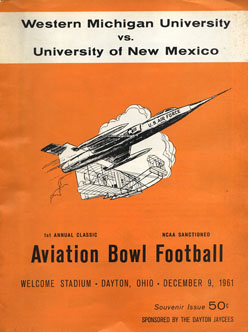
When the Aviation Bowl didn’t fly

While doing some research for my post about attendance at Johnson Hagood Stadium, I started reading about a relatively unknown footnote to The Citadel’s football history, specifically the 1961 campaign.

The Citadel’s 1961 football team, which won the Southern Conference title, actually had an opportunity to go bowling following the season. That would have meant the team would have gone to bowls in consecutive years, as the Bulldogs had played in the 1960 Tangerine Bowl. Instead, the school (and team) turned down not one, but two bowl invitations.

One of the two bowls in question was the Tangerine Bowl, which after being renamed multiple times is still going strong as the Capital One Bowl, although it is almost unrecognizable from its early days. The other bowl is long gone, as it was doomed by tragedy, bad luck, and just a touch of hubris. That one-and-done game was known as the Aviation Bowl.

The idea behind the Aviation Bowl wasn’t a bad one. It was an effort to raise the profile of the Mid-American Conference (MAC). The champion of the MAC would play a team from another region of the country at Welcome Stadium (capacity: 12,000) in Dayton, Ohio, the hometown of aviation pioneers Orville and Wilbur Wright.

(I have friends who would say calling a game played in Dayton the Aviation Bowl was the organizers’ first mistake, as that title should have been reserved for a bowl game in Kitty Hawk, North Carolina — but I digress.)

There were high hopes for the game, in part because the two favorites to win the MAC in 1961 were Bowling Green and Ohio University, both located in the state of Ohio. Alas, it was not to be. Bowling Green did win the MAC that year, but a tragedy that took place the year before would place the Falcons in another contest.

After a game between Cal Poly-SLO and Bowling Green on October 29, 1960, an airplane carrying members of the Cal Poly team crashed on takeoff in Toledo, Ohio. Sixteen members of the Cal Poly football team were among those killed in the disaster.

The following year, a benefit bowl game (the Mercy Bowl) was played at the Los Angeles Memorial Coliseum for the families of those who had perished, and for those victims who had survived the crash (one of whom was future Southern California and San Diego State head coach Ted Tollner). Bowling Green was asked to play in the game and accepted, eliminating the Falcons from Aviation Bowl consideration.

Ohio U. was in position to take the MAC’s berth in the Aviation Bowl, even after a 7-6 loss to Bowling Green, but needed to beat Western Michigan in the season finale to claim the spot. Instead, the game ended in a 20-20 tie, and the Broncos sneaked past both Ohio and Miami (OH) to grab the bid. Thus, the MAC representative for the bowl turned out to be not one of the Ohio contingent, but Western Michigan, with a record of just 5-3-1 and farther away from Dayton than any other MAC school.

The game between Western Michigan and Ohio was played on November 18. By that time, organizers were running out of candidates to fill the other spot in the game.

After originally releasing a wish list of sorts that included schools ranging from Colgate to Florida State to Wyoming, the folks in Dayton were having a hard time finding a school willing to play in the contest. It appears that offers to Rutgers and The Citadel were on the table at around the same time, but the Rutgers administration turned down the Aviation Bowl and the Sun Bowl on November 14, electing not to go bowling at all; the Scarlet Knights would eventually finish the season with a record of 9-0.

On November 18, the same day Western Michigan qualified for the Aviation Bowl, officials at The Citadel notified the Dayton organizers that the military college wouldn’t be accepting a bid either. That decision had apparently been left up to the team, as was a potential return trip to the Tangerine Bowl (more on that later).

Bowl officials then approached Xavier about playing (in an effort to at least have a semi-local team in the game), but before those negotiations could be completed, the bowl committee chairman worked out a deal with New Mexico to become Western Michigan’s opponent. He may have believed that a more “exotic” team in the game would increase interest in the contest, and a mysterious squad from the western part of the country fit the bill.

New Mexico was only 5-4, in third place in the Skyline Conference, and the Lobos still had a game against BYU to play, but hey — they were willing to go to Dayton! At least, UNM was willing to travel to Ohio for a guarantee of $15,000 (one source suggests it was $18,000), three times as much money as Xavier had been tentatively offered.

The contest was played on December 9 and was more or less a debacle. Two inches of snow fell in Dayton the morning of the game; with temperatures hovering in the 20s, the snow eventually turned to sleet and rain. Game attendance: 3,976, less than half of what the Dayton Jaycees needed to break even.

The Aviation Bowl queen and her court (one from each of the MAC schools) shivered under the Welcome Stadium grandstand for the first half, and when they went onto the field for halftime ceremonies, the microphone wouldn’t work. The PA system was fixed just in time for Gov. Michael DiSalle to launch into a campaign speech. He still was introducing other Ohio politicians when the third quarter began.

The game’s MVP was the New Mexico equipment manager, who acquired surgical gloves from a local hospital prior to the contest. The gloves allowed the Lobo ballcarriers to more easily hang on to the football in the brutal conditions (shades of “The Sneakers Game” of NFL lore). New Mexico won, 28-12.

The Dayton Jaycees lost about $15,000, and that spelled the end of the star-crossed Aviation Bowl.

At the same time The Citadel’s players elected not to play in the Aviation Bowl (a no-brainer of a decision, in retrospect), they also voted not to accept an offer to play in the Tangerine Bowl for a second consecutive season. However, the vote on the Tangerine Bowl was close enough that it was originally decided a “re-vote” would be held two days later. That didn’t happen, though, and the school informed the bowl it was declining the offer. According to The News and Courier:

It was rumored, however, that the seniors on the team had swung the vote to reject the offer. With senior essays hanging over their heads and exams coming up after the holidays, they decided it was best to forgo the playing for studying.

After the military college decided against going, Furman also declined a bid from the Orlando bowl (and also reportedly nixed a chance to be considered for a Sun Bowl berth). The Tangerine Bowl would eventually select Lamar to play OVC champ Middle Tennessee State in the contest.

The Citadel had accepted a bid to the Tangerine Bowl in 1960, beating Tennessee Tech 27-0. A year later, however, the cadets weren’t nearly as interested in making the trip to Orlando.

I don’t know what the difference was between 1960 and 1961; it’s not like there were no exams or essays on the horizon in 1960. On the other hand, it may be that the 1961 game would have had a “been there done that” feel to it. After winning the league title, the players may have felt they had nothing more to prove, and that fully concentrating on schoolwork was much more worthwhile than going to Florida again.

There could have been one more factor. From an article on the acceptance of the bowl invite in 1960:

Coach [Eddie] Teague said the Bulldogs would report for bowl game drills “about Dec. 5”. The squad will be given a week off for Christmas, then will depart for Orlando on Dec. 26.

That makes it sound like the players’ semester break would have consisted of about one week. I know firsthand how much cadets cherish semester break. That wouldn’t have been the most enjoyable situation, even without military obligations.

I could understand why some of the players might not have wanted to do that again for a trip to the same bowl. They probably were not unhappy to hear that the game between Lamar and Middle Tennessee State was played in “near-freezing temperatures”.

I could be completely wrong about that line of reasoning, of course.

Bowl history is convoluted enough as it is, but it’s important to remember that in the past, there were plenty of schools with teams good enough to play in bowls that simply weren’t interested in participating, either in certain years or at all. For example, Notre Dame did not compete in a bowl game between 1925 and 1970.

Ultimately, the decision not to play in a bowl game in 1961 is just a curiosity in The Citadel’s long football history. It may look a little strange 50 years after the fact, but in the context of the era, it makes perfect sense.

Home football attendance at The Citadel, 1964-2011: an analysis

I’ve written about home attendance at The Citadel on the blog before, as far back as 2009. With this post, though, I’m going to compare yearly win/loss numbers with how many people were in the stands. Basically, I’m trying to see how a history of winning (or not winning) correlates with attendance.

There are a lot of factors that lead to attendance increasing or decreasing, but the biggest one is the product on the field. Fans want to see a winner. What I set out to determine, to the best of my ability, was whether ticket sales at The Citadel in a given year go up or down based on the team’s play that particular season, or if prior seasons also make an impact.

To do that, I compiled the attendance at Johnson Hagood Stadium for every season since 1964 (seasonal totals; I don’t have that many of the individual game summaries). For some of the information, I received assistance from The Citadel’s Athletics Media Relations office, for which I am most grateful. Therefore, I promise to support Northwestern University football (preseason ranking: 59) throughout the 2012 Big 10 campaign. It’s the least I can do.

I’m going to take a few paragraphs to discuss the lack of available information for the pre-1966 years, and mention a few other odds and ends. Feel free to skip to the main section of this post if necessary…

Ideally, it would be possible to compare attendance totals all the way back to at least 1948, the year Johnson Hagood Stadium opened. However, compiling numbers from the pre-1966 years is problematic. I have checked newspaper accounts in an attempt to fill in gaps, but I am not confident in the accuracy of some of those listings. I am reasonably satisfied that the 1964 and 1965 seasons are accurate, so I included them in my study.

I value completeness as much as anyone, and I hope someday to have “good” attendance numbers for the 1940s/1950s/early 1960s. I know there are people interested in those years; I’m one of them. A few other notes on this subject:

– While I suspect newspaper writers of the time were generally good at estimating crowd totals, I was struck by how often scribes would suggest the crowd was actually larger than the stated attendance. In the 1960 home opener against Newberry, Ed Campbell wrote that “Citadel officials estimated the opening night crowd at 13,000 persons, although it was difficult to figure out how 8,000 more fans could have crammed into the [21,000 listed capacity] arena.”

On the front page of that same day’s paper, the estimated attendance was listed at “some 14,000 fans”, a “pleasant and generally sober crowd”.

The Citadel’s next home game that season was a notable contest against Florida State, a scoreless tie universally regarded as one of the Bulldogs’ all-time best results. Here again there were two different sets of attendance numbers in The News and Courier, with the game story describing “11,200 screaming fans”, while the front of the paper feature article listed a crowd of 12,000. That front-page piece includes one of the funnier alibis ever offered by a reporter unable to get a good quote or story:

The fans themselves were too interested in the ball game to provide material for journalistic comment.

Another example of a reporter questioning the attendance totals in 1960 (for the game against Presbyterian): was it 12,000 (per The Citadel) or “at least 15,000” (the writer’s opinion)? Even the Homecoming game against VMI that year was subject to debate, as the official total was announced as 13,970 despite the fact that the crowd “looked to some veteran observers to be more like 17,000”.

– The totals in The News and Courier generally were rounded. For instance, the listed totals in the paper for 1962’s home games were as follows: 10,200 (Davidson); 10,500 (Presbyterian), 10,300 (William&Mary); 10,100 (VMI); and 10,600 (Memphis State). I don’t have much faith in those totals, based on how similar they are (10,X00) and the “rounded-off” nature of them. I also find it hard to believe attendance in 1962 only deviated by 500 people per game for the five games. I consider them decidedly “unofficial” until convinced otherwise.

– I do not have the newspaper’s estimated totals for one game in 1961 and one game in 1963, so I wouldn’t have included them anyway, even if I thought the numbers were accurate and/or official. This is too bad, particularly for 1961, as a listing of home attendance figures for that year’s SoCon title team would have been noteworthy. For the record, I’m missing the home opener that year against George Washington. Attendance for the other four home games that season had an estimated range of 7,250 (Richmond) to 16,200 (a big Parents’ Day battle with Furman with league title ramifications, won by the Bulldogs 9-8).

– A crowd of 10,600 (apparently a go-to number for attendance) watched The Citadel lose the 1963 home finale to Richmond. Included in that alleged 10,600 was the former king of Italy, Umberto II. I am guessing it will be a while before another Italian king watches a game at Johnson Hagood Stadium.

If the great Umberto Eco were to make an appearance at the stadium, however, that would more than make up for it. Stat rosa pristina nomine, nomina nuda tenemus.

– Speaking of things that happened in 1963 that don’t really have anything to do with attendance, but which I encountered while doing some research and figured were interesting enough to throw in anyway: Vince Petno was the featured subject in the first “live” color photograph ever published by a South Carolina newspaper (at least, according to The News and Courier). The photo was in print “less than nine hours after the action occurred.”

Okay, table time. I took the average per game attendance numbers at JHS for 1964-2011 and compared them to the team’s win/loss totals in the following categories: winning percentage from the previous season, winning percentage for the current season, combined winning percentage for the previous season and the current one, and the combined winning percentage over three-, five-, and ten-year periods (with the current season being the final year in each category).

I wanted to test theories such as:

– Is attendance generally predicated on how a team did the year before, or is the current campaign more important?

– How much “goodwill” does a program buy if it is successful for multiple consecutive seasons?

I’ve posted tables listing the top 10 seasons in each category for 1964-2011, along with the corresponding bottom 10. Occasionally, there will be eleven seasons instead of ten, because of ties.

First, average attendance per game:

       Year         Wins       Losses         T-Att     Avg-Att
1991 7 4 92,476 18,495
1975 6 5 109,920 18,320
1976 6 5 90,830 18,166
1979 6 5 89,190 17,838
1992 11 2 141,477 17,684
1989 5 5 70,457 17,614
1980 7 4 105,415 17,569
1969 7 3 100,759 16,793
2003 6 6 83,794 16,578
1990 7 5 97,730 16,288
1997 6 5 73,036 12,172
1973 3 8 73,020 12,170
2005 4 7 58,369 11,673
2010 3 8 68,669 11,445
1974 4 7 55,597 11,119
1968 5 5 55,088 11,017
1964 4 6 52,600 10,520
1965 2 8 62,394 10,399
2004 3 7 40,435 10,108
1966 4 6 49,060 9,812

The first ten years are the best years for average attendance. The second group is the bottom ten. (That is how all the tables to follow are set up as well.)

Although 1992 comes in fifth place for average attendance in a season, in my opinion it was actually first. The Citadel claimed its second Southern Conference title that year, of course, and won a school-record 11 games. It also hosted eight home contests, due to two playoff matchups.

The official totals for those two playoff games were 12,300 (North Carolina A&T) and 13,021 (Youngstown State). As someone who attended both games, I can attest that those numbers are ludicrous, underestimating the actual totals by at least 5,000 people for each game. I assume the NCAA had something to do with that.

Even if you conservatively credit attendance for those games as including an extra 3,500 fans, 1992 would hold the per-game record.

Next up, the top 10 and bottom 10 teams by winning percentage:

       Year         Wins      Losses       Win %         T-Att     Avg-Att   Rank-Att
1992 11 2 84.62% 141,477 17,684 5
1971 8 3 72.73% 89,440 14,906 21
1969 7 3 70.00% 100,759 16,793 8
1981 7 3 (1 tie) 68.18% 105,725 15,103 17
1988 8 4 66.67% 94,509 15,751 12
1991 7 4 63.64% 92,476 18,495 1
1980 7 4 63.64% 105,415 17,569 7
1984 7 4 63.64% 75,050 15,010 19
2007 7 4 63.64% 82,541 13,756 31
1990 7 5 58.33% 97,730 16,288 10
2001 3 7 30.00% 78,333 15,666 13
2004 3 7 30.00% 40,435 10,108 47
1983 3 8 27.27% 79,825 15,956 11
1986 3 8 27.27% 83,348 13,891 29
1973 3 8 27.27% 73,020 12,170 40
2010 3 8 27.27% 68,669 11,445 42
2002 3 9 25.00% 93,491 15,581 14
1965 2 8 20.00% 62,394 10,399 46
1999 2 9 18.18% 86,898 14,483 25
2000 2 9 18.18% 71,712 14,342 27
1995 2 9 18.18% 83,209 13,868 30

The bottom 10 is actually eleven teams, as there is a tie. The “Rank-Att” category is the actual rank of each year in per-game attendance; for example, 1969 is the eighth-best attended season in the 48-year period in this study. This column will be included in the remainder of the tables.

Obviously, winning in the current season correlates strongly with improved attendance. Five of the top 10 winning seasons of all time are also in the top 10 for the most-attended campaigns. Only one year in that group (2007) is outside the top half for attendance.

Four of the bottom 10 in winning percentage are also in the bottom 10 for attendance. Average attendance for the top 10 winning teams: 16,150. For the 10 losing teams: 13,464.

What about success (or a lack thereof) from the year before? This time the category is “last year’s winning percentage”:

        Year         Wins       Losses   LY Win %         T-Att     Avg-Att    Att Rank
1993 5 6 84.62% 89,016 14,836 22
1972 5 6 72.73% 66,287 13,257 33
1970 5 6 70.00% 74,690 14,938 20
1982 5 6 68.18% 91,320 15,220 16
1989 5 5 (1 tie) 66.67% 70,457 17,614 6
1992 11 2 63.64% 141,477 17,684 5
1981 7 3 (1 tie) 63.64% 105,725 15,103 17
1985 5 5 (1 tie) 63.64% 88,603 14,767 23
2008 4 8 63.64% 73,568 12,261 38
1991 7 4 58.33% 92,476 18,495 1
2002 3 9 30.00% 93,491 15,581 14
2005 4 7 30.00% 58,369 11,673 41
1984 7 4 27.27% 75,050 15,010 19
1987 4 7 27.27% 83,490 13,915 28
2011 4 7 27.27% 76,758 12,793 37
1974 4 7 27.27% 55,597 11,119 43
2003 6 6 25.00% 83,794 16,578 9
1966 4 6 20.00% 49,060 9,812 48
2001 3 7 18.18% 78,333 15,666 13
2000 2 9 18.18% 71,712 14,342 27
1996 4 7 18.18% 76,860 12,810 36

Again, another “bottom 10” with eleven teams. Just to make things clear, the record for each year is that year’s record; the “LY Win %” column lists the winning percentage from the prior season.

This category didn’t correlate as strongly to attendance as I thought it would. Only three of the top 10 attendance years are in this top ten as well, and the reverse is also true for the bottom 10. The difference in attendance between the two groups (15,407/13,602) is not as great as might have been expected.

Incidentally, the 1989 campaign only includes four home games. The two games played at Williams-Brice Stadium in Columbia following Hurricane Hugo are not counted as home contests.

The only other season with as few as four home games in the 48-year period was 2004, when another hurricane played havoc with the schedule, leading to the cancellation of the would-be home opener against Charleston Southern.

The 2004 season (the year of “half a stadium”) also included what may have been the worst-attended home game of the 1964-2011 time frame, a Thursday night matchup against Benedict that drew 5,127 diehard fans. The fact there was little interest in attending a game in a dilapidated stadium on a Thursday night against a Division II school should not have come as a shock.

This is a post about home attendance, but while checking numbers I read a summary for the 1987 contest against Boston University, played at historic Nickerson Field in Boston. Official attendance for that game: 2,103. Yikes. That may be the lowest attendance for any game involving The Citadel in the last 30 years, if not longer. Not coincidentally, BU dropped football a few years later.

Now I’ll factor attendance based on winning percentage over two-year, three-year, five-year, and ten-year periods. In each case the final season in the grouping is the “current” campaign — for example, for three-year 1992 the seasons included are 1990, 1991, and 1992. I hope that makes sense.

Two-year winning percentage:

        Year         Wins       Losses         T-Att     Avg-Att    2-yr W%    Att Rank
1992 11 2 141,477 17,684 75.00% 5
1993 5 6 89,016 14,836 66.67% 22
1981 7 3 (1 tie) 105,725 15,103 65.91% 17
1991 7 4 92,476 18,495 60.87% 1
1969 7 3 100,759 16,793 60.00% 8
1980 7 4 105,415 17,569 59.09% 7
1971 8 3 89,440 14,906 59.09% 21
1972 5 6 66,287 13,257 59.09% 33
1989 5 5 (1 tie) 70,457 17,614 58.70% 6
1970 5 6 74,690 14,938 57.14% 20
1999 2 9 86,898 14,483 31.82% 25
1987 4 7 83,490 13,915 31.82% 28
2011 4 7 76,758 12,793 31.82% 37
2010 3 8 68,669 11,445 31.82% 42
1974 4 7 55,597 11,119 31.82% 43
1965 2 8 62,394 10,399 30.00% 46
1966 4 6 49,060 9,812 30.00% 48
2002 3 9 93,491 15,581 27.27% 14
1996 4 7 76,860 12,810 27.27% 36
2001 3 7 78,333 15,666 23.81% 13
2000 2 9 71,712 14,342 18.18% 27

The bottom ten is yet again made up of eleven teams.

It appears that having two bad seasons in a row is definitely a bigger drag on home attendance than just having a bad season. The two averages for this category are 16,133 (top 10) and 12,956 (bottom 10). Compare that to seasonal averages for the top 10, as listed above earlier: 16,150 (top 10) and 13,464 (bottom 10).

Three-year winning percentage:

        Year         Wins       Losses         T-Att     Avg-Att    3-yr W%    Att-Rank
1992 11 2 141,477 17,684 69.44% 5
1993 5 6 89,016 14,836 65.71% 22
1994 6 5 90,158 15,026 62.86% 18
1971 8 3 89,440 14,906 62.50% 21
1981 7 3 (1 tie) 105,725 15,103 62.12% 17
1982 5 6 91,320 15,220 59.09% 16
1990 7 5 97,730 16,288 58.57% 10
1991 7 4 92,476 18,495 57.35% 1
1969 7 3 100,759 16,793 56.67% 8
1970 5 6 74,690 14,938 54.84% 20
1974 4 7 55,597 11,119 36.36% 43
2003 6 6 83,794 16,578 35.29% 9
2004 3 7 40,435 10,108 35.29% 47
2011 4 7 76,758 12,793 33.33% 37
1965 2 8 62,394 10,399 33.33% 46
1966 4 6 49,060 9,812 33.33% 48
2010 3 8 68,669 11,445 32.35% 42
2000 2 9 71,712 14,342 27.27% 27
2002 3 9 93,491 15,581 24.24% 14
2001 3 7 78,333 15,666 21.88% 13

This is very similar to the two-year category. Top 10 average: 15,947. Bottom 10 average: 12,835. The only bottom 10 season in either the two- or three-year winning percentage categories to actually finish in the top 10 in average attendance was Ellis Johnson’s 2003 squad, which went 6-6 (5-1 at JHS).

The home schedule that year, as it is in a lot of “odd-numbered” years, was conducive to a potential attendance bump, with games against Furman and Wofford (both of which were nationally ranked when they played The Citadel that season), along with Appalachian State and Charleston Southern. It’s still a bit of an outlier. Actually, home attendance for all three years of Johnson’s tenure was somewhat anomalous.

Five-year winning percentage:

        Year         Wins       Losses         T-Att      Avg-Att   5-yr W%    Att Rank
1992 11 2 141,477 17,684 65.25% 5
1994 6 5 90,158 15,026 62.07% 18
1993 5 6 89,016 14,836 61.21% 22
1971 8 3 89,440 14,906 57.69% 21
1972 5 6 66,287 13,257 56.60% 33
1982 5 6 91,320 15,220 55.45% 16
1981 7 3 (1 tie) 105,725 15,103 55.45% 17
1991 7 4 92,476 18,495 55.26% 1
1995 2 9 83,209 13,868 54.39% 30
1984 7 4 75,050 15,010 53.64% 19
1967 5 5 64,060 12,812 38.00% 35
2006 5 6 72,814 14,562 37.50% 24
1999 2 9 86,898 14,483 34.55% 25
2000 2 9 71,712 14,342 34.55% 27
2005 4 7 58,369 11,673 34.55% 41
1966 4 6 49,060 9,812 34.00% 48
2001 3 7 78,333 15,666 33.33% 13
2004 3 7 40,435 10,108 30.91% 47
2003 6 6 83,794 16,578 28.57% 9
2002 3 9 93,491 15,581 27.27% 14

The average attendance for the top 10 in this category: 15,403. For the bottom 10: 13,705.

Ten-year winning percentage:

        Year         Wins       Losses         T-Att     Avg-Att  10-yr W%    Att-Rank
1993 5 6 89,016 14,836 55.26% 22
1994 6 5 90,158 15,026 54.39% 18
1997 6 5 73,036 12,172 53.95% 39
1992 11 2 141,477 17,684 53.51% 5
1964 4 6 52,600 10,520 53.03% 45
1984 7 4 75,050 15,010 52.27% 19
1996 4 7 76,860 12,810 52.19% 36
1985 5 5 (1 tie) 88,603 14,767 51.82% 23
1998 5 6 66,453 13,290 51.77% 32
1995 2 9 83,209 13,868 51.32% 30
2011 4 7 76,758 12,793 38.39% 37
2010 3 8 68,669 11,445 37.84% 42
2009 4 7 65,147 13,029 36.94% 34
2007 7 4 82,541 13,756 36.36% 31
2006 5 6 72,814 14,562 35.45% 24
2003 6 6 83,794 16,578 35.14% 9
2008 4 8 73,568 12,261 35.14% 38
2002 3 9 93,491 15,581 34.55% 14
2005 4 7 58,369 11,673 34.55% 41
2004 3 7 40,435 10,108 32.73% 47

This can be looked at in two different ways…

Perhaps Larry Leckonby can take solace in the fact that there is no obvious correlation at all for this category. In other words, the difference in attendance for the top 10 (14,177) and the bottom 10 (13,252) can easily be attributed to more recent campaigns, and not any permanent decline due to a long stretch of futility.

On the other hand, look at that bottom 10. It is actually completely made up of the last 10 seasons!

That says it all about the current cycle of Bulldogs football, and the need for a sustained stretch of success. An argument could be made that The Citadel’s struggles on the field since 1995 have erased what possibly could have been a continued gradual increase in attendance. I personally do not subscribe to that view in full — there are many other factors at play — but it is true that the losing has made it difficult to determine what The Citadel’s “natural” attendance at Johnson Hagood Stadium should be in this day and age.

One small caveat: over this 48-year period there have been four different ADs at The Citadel (Eddie Teague, Walt Nadzak, Les Robinson, and Larry Leckonby). It is possible (even probable) that they each had their own approach to reporting attendance. That is something to keep in mind when evaluating these trends over a long period of time.

It appears that good years for attendance at Johnson Hagood Stadium are usually a result of the team being successful in that specific season, which is not big news. The fact that a “one-year lag” (a good season leading to improved attendance the following year) is not particularly evident in the numbers, however, does strike me as surprising. That may suggest something about the relationship between the number of season tickets sold versus the walk-up crowd; it’s hard to say.

One bad season does not in itself result in poor attendance, but two bad years in a row? The bandwagon begins to empty out in a hurry.

As stated earlier, there are many other factors that impact attendance, including weather, quality of opponent, time of game, modern restroom facilities, etc. I wrote three years ago that The Citadel needed to continue appealing to its alumni base while reaching out to “unaffiliated” fans in the Charleston area, and to make the experience of going to a game as family-friendly as possible. Those points are still valid today, although it’s easy to see that an effort in all those areas has been made.

I would like to see the Junior Bulldog Club become something more substantial than a “Coming Soon!” webpage, though.

Ultimately, the biggest attraction of the game, other than the game itself, is the Corps of Cadets. I trust that when it comes to making sure the Corps is at the forefront of an exciting gameday atmosphere, the administration has a plan of attack for this season.

This year’s home attendance will probably come down to how the team fares in its first four games, both at JHS and on the road. Charleston Southern (home), Georgia Southern (home), Appalachian State (road), North Carolina State (road) — that is a tough stretch, particularly the three games following the opener.

If The Citadel can complete the gauntlet with a record of at least 2-2, that should result in a better crowd showing for the September 29 home game versus Chattanooga. The difference between 1-3 and 2-2 (to say nothing of 3-1 or, dare we dream, 4-0) could be critical when it comes to packing the stands that day.

It won’t be easy. Then again, it never is.

Edited 8/1/13:

The Citadel averaged 13,574 fans per game at Johnson Hagood Stadium in 2012, the highest attendance figures since 2007. Not coincidentally, the Bulldogs had their first winning season since 2007. However, that average still wasn’t enough to crack the top 30 of season attendance averages at JHS (post-1964). 

To  increase the number of fans in attendance in 2013, the football team has to continue to win games. It’s that simple. The first two home games of the season will be critical in this respect.

In 2008, the Bulldogs went 4-8, and attendance declined by 11%. Let’s hope that scenario is not repeated.

Overflow crowd at Johnson Hagood for the season opener? Not likely

Just a quick post while I hide from the heat and humidity…football can’t get here fast enough, and that includes football weather.

Someone on the TCISN board recently expressed hope that attendance at Johnson Hagood Stadium might be excellent for the season’s first two games, against Charleston Southern and Georgia Southern. Putting aside GSU for the time being, I was less than certain about the prospects for a big turnout when The Citadel hosts CSU in the season opener.

It’s a 6:00 pm start, and won’t be played at the same time as a Clemson or South Carolina home game (though the Tigers will be on TV at around the same time). That is good news in terms of the competition on Saturday night. On the other hand, I remember that when the Bulldogs and Buccaneers first started playing, it was anticipated there would be large crowds for a game against two Lowcountry schools. That didn’t happen.

In fact, attendance for the five games between the two teams (played between 2002-2007) was somewhat disappointing. The numbers do not lie.

2002: Played in November, on a Thursday night. Attendance: 12,412. Verdict: not bad, really, given the month/day. Average attendance at Johnson Hagood Stadium that season: 15,582.

2003: A 3:30 pm start time on August 30, in Charleston. Yeesh. A crowd of 15,219 brought their sunscreen, though. Average home attendance that year: 16,759.

2004: Game postponed due to a hurricane threat, but ultimately was not rescheduled.

2005: A night game, but only 10,316 showed up. Average JHS attendance in ’05: 11,674.

2006: The only time when attendance for the CSU game exceeded average attendance for the season, with 15,121 in the stadium for the game, as opposed to season average attendance of 14,599.

2007: Another early start (2pm) resulted in a sluggish crowd of 12,885. Season average: 13,757.

– Average attendance for the five games against Charleston Southern: 13,191.

– Average attendance for games played at Johnson Hagood Stadium in those seasons (2002-07, excepting 2004): 14,489.

Note: one small caveat to those figures: When I went through the statistics, I concluded there was probably an error in the 2002 attendance totals, likely for that season’s game against Delaware. Nevertheless, I don’t think it affects the overall analysis.

So there you have it. The average crowd for a CSU game was actually only 91% the size of an average crowd for games at JHS over those seasons (and that is including the CSU attendance numbers in the overall totals; the difference is even greater if you take the CSU figures out of the average). It is thus hard for me to believe there will be a significant “bump” in attendance for this year’s contest, particularly given the fact the Buccaneers are coming off an 0-11 season.

It would be nice to see a big crowd for the opener. It’s likely going to be up to Bulldog fans to make it happen, though.

The new college football playoff: will it hurt FCS schools?

As a fan of an FCS program, one thing stood out to me in all the hoopla about the new four-team FBS playoff. It may have just become a lot tougher for the department of athletics at an FCS school to balance its budget. Why?

Strength of schedule is apparently going to be a factor in determining which teams make the playoff.

From a June 21 article by Sports Illustrated writer Stewart Mandel:

Weighing schedule strength could prove beneficial beyond just the playoff. Unlike the AP and Coaches’ Poll, which tend to place the most importance on simply not losing, a committee could theoretically elevate, say, an 11-2 Pac-12 team over a 12-1 Big Ten team if the former played three power-conference foes in September, while the other played three MAC or FCS schools.

“How do you encourage people to play [tough games]?” said [Big 10 commissioner Jim] Delany. “And I’m talking about our people and other peoples’ people. I don’t think we served ourselves particularly well with the 12th game.”

Delany wants his league to play a challenge event of sorts against the Pac-12, beginning in 2017 (or thereabouts), which would account for one non-conference game for each school in both leagues. Some of the Pac-12 schools aren’t so crazy about the idea, in part because of that conference’s nine-game league slate.

The Big 10 only has an eight-game conference schedule, though there has been talk of that changing. Not all Big 10 schools are in favor of moving to nine, however. For Wisconsin, which is evaluating its future schedules with a possible strength of schedule component in mind, one gets the impression that proposed contests against the likes of Notre Dame or Alabama may not be as likely if the conference adds a league game.

Notre Dame, which plays a difficult schedule almost every season, is not surprisingly also on board with measuring a school’s SOS in evaluating playoff fitness.

West Virginia director of athletics Oliver Luck was direct when discussing the possible pitfalls of scheduling an FCS school in the future:

 “[The strength of schedule component to the playoff] is going to force everybody to look at their non-conference schedule and figure out if we can still play a I-AA school.”

That sounds ominous if you are an AD at an FCS school which needs to play (at least) one FBS opponent every year to help balance the budget. Larry Leckonby of The Citadel (with department expenses in FY 2012 of $10.1 million) is in such a position:

For 2013, Leckonby said budgeting is complicated by the fact that The Citadel will have only five home football games [during the 2012 season]. A home game is worth about $130k. The game at N.C. State will bring a guarantee of $375K…

…To help make up the numbers, Leckonby said basketball will be asked to play three guarantee games next year. Basketball guarantees can bring in from $50k to $80K or so, depending on the foe.

Leckonby confirmed that 2013 football non-SoCon foes will be CSU and VMI at home and at Clemson and at East Carolina for a 12-game schedule. In 2014, the Bulldogs will play at Florida State and at VMI, with Charlotte and Coastal Carolina coming to Johnson Hagood Stadium on one-year deals.

In 2014, the regular season for FCS schools will also be 12 games, as in 2013, but The Citadel is only playing one FBS team that year instead of two. Otherwise the Bulldogs would play seven road games, with two of them against FBS competition, and only five home games. Thus, the games against Charlotte and Coastal Carolina.

Back to Mandel: from a recent SI “mailbag”, he suggested that FBS teams “may (hopefully) see a decline in FCS foes, simply because of the blight that puts on one’s schedule, but we’ll still get plenty of games between the Big Ten and MAC, the SEC and Sun Belt.”

Well, I obviously disagree with that characterization. Some of my tomato plants might suffer from blight (though not if I can help it), but playing an FCS school is not a “blight” on an FBS team’s schedule. Of course, Mandel went to Northwestern, a Big 10 school; perhaps he’s hoping that the conference can avoid embarrassing losses to FCS opponents by simply not playing those games at all.

I got a slightly more positive response from Mandel’s SI colleague, Andy Staples, on Twitter. Just slightly. After saying he was “thrilled” there would possibly be fewer FBS/FCS matchups, he did acknowledge that smaller schools need those games.

I received a few negative tweets on the subject from the Twitterverse. My personal favorite was this one:

“we want your money” not a valid reason. Sorry.

Yes, how dare money-grubbing schools like The Citadel attempt to defile the pristine pastureland of major-college football.

The real reason the strength of schedule issue is getting so much play from people like Jim Delany is because of the recent dominance of the SEC. With six straight BCS titles, that league has demonstrated it can A) win the big game, and B) schedule its way to the big game. I am sure Delany and company would like to force the SEC powers to replace their annual “series” versus Southern Conference teams with games against, say, Big XII schools.

If the Pac-12 and Big 10 can have what I described earlier in this post as a “challenge event”, why not the Big XII and SEC? You could have a high-profile game like Florida-Texas, for instance. That’s right, the Gators would play a non-conference regular season game outside the state of Florida (which never happens).

I suspect there would be few “big-time” matchups, however, even if a Big XII-SEC challenge came to pass. One reason for that is RPI, even with strength of schedule a consideration.

The commissioners want strength of schedule emphasized and to give conference champions some preference. They are also working on power rankings, similar to the RPI used by the NCAA basketball tournament selection committee.

I’m not a professional mathematician, so this is going to be dangerous, but here goes…

RPI (Ratings Percentage Index) is formulated by a team’s winning percentage (generally 25% of the total), along with its opponents’ winning percentage (50%) and the winning percentage of its opponents’ opponents (25%). That’s the basic concept; there are usually small built-in bonuses and penalties (for road games, etc.).

Sure, Texas could play Florida (in this example, I’m assuming both the Longhorns and Gators are outstanding squads, as opposed to what they have been for the last two seasons). However, in such a matchup one team would obviously lose. Strength of schedule or no strength of schedule, any loss is going to be extremely harmful to a playoff aspirant, since there are only twelve regular season games.

What Texas and Florida would really want is the value of the other’s SOS without having to play, and risk a loss. Instead of playing each other in a Big XII vs. SEC “event”, they could schedule (presumably lesser) opponents of each other. Texas could play Kentucky while Florida faces Kansas. This would take advantage of the opponents’ opponents winning percentage (built up by playing an SEC or Big XII league schedule), not to mention the team’s own winning percentage, without having to play a truly elite opponent.

I think you would see a lot more of those kinds of games than Texas-Florida, LSU-Oklahoma, etc. In some cases, it would be more than justifiable.

Southern California already plays nine Pac-12 games, plus Notre Dame out of conference, each season. There is no real benefit for the Trojans in participating in Delany’s challenge, and having to face a Big 10 opponent like Ohio State or Michigan in another regular-season game.

In addition, there is a “connectivity” issue with RPI. This is especially problematic in college baseball, which is a much more regional sport than college hoops, and as a result teams from parts of the country with fewer baseball schools tend to get hosed by the RPI (and the reverse is also true). I would guess that college football would be even worse in this respect, because there aren’t nearly as many games, and so there would be far less connectivity.

Even if the football playoff selection committee uses a different version of RPI (or “power rankings”), it is likely to run into similar problems.

All of that is assuming that the landscape for non-conference scheduling changes at all. I realize I’ve just written several paragraphs about the potential for FCS schools to lose out on guarantee games, but ultimately I think that most FBS schools will ignore strength of schedule when putting together their non-league slates.

When he wasn’t calling FCS schools a “blight” on FBS schedules, Mandel was making a good point about the need for big-time programs to play as many home games as possible, for financial reasons. Those schools need to buy at least two guarantee games every season.

Another factor is the simple fact that not many schools will need to schedule with the post-season in mind. Only 3% of the entire FBS is going to be in a playoff each season, as opposed to the NCAA basketball tournament, where 20% of D-1 teams make the field. Unless there is a dramatic shift in college football’s hierarchy, Mississippi and Iowa State aren’t going to be in the mix for a playoff berth in football. Neither are Indiana or Oregon State. Playing an FCS school isn’t going to cost those schools a shot at a national title, but it will be good for their budgets and (usually) win totals.

Strength of schedule matters in college basketball because many more teams have a chance to advance to post-season play. Playing a weak non-league slate can hurt middle-of-the-pack schools in major conferences. In football, those schools aren’t in the running anyway.

I think that in the future a school may occasionally adjust its schedule for a potential title run. For instance, Florida State may decide it has a great chance to win it all in 2014. If the Seminoles go 12-0, they are a lock for a playoff berth — but what if FSU slips up and finishes 11-1? Would the ACC be strong enough as a league for Florida State to get a bid anyway?

FSU does play Florida in non-conference play, so its schedule strength should be helped by that matchup. Florida State has so far only announced one other OOC opponent for 2014. That school? The Citadel.

It wouldn’t surprise me if FSU were to decide (perhaps in the winter of 2013) that it needed to replace The Citadel with a BCS opponent in order to shore up any lingering questions about its schedule strength. In that case, though, FSU would buy out the game, so it wouldn’t be a total loss for the military college (and I could see Florida State arranging for The Citadel to play another FBS team to make up for it, perhaps another ACC school).

It may be, then, that the threat of guarantee games drying up for FCS schools is overstated. I hope so. It does bear watching, however.

For many FCS schools, annual games against FBS opponents are not only important for budgetary reasons, they are a recruiting tool and often a way to energize the fan base. They also help programs maintain a connection to major-college football, which at the very least is of some historical interest. Occasionally, they become something more. It’s not strictly about the money.

It’s just mostly about the money.

CAA vs. SoCon: another conference realignment update

In the week following my last post on the CAA’s ostensible attempt to “raid” the SoCon, there has been a meager amount of actual news, and a lot of rumor-mongering. A great example of how an internet rumor can get started came after a series of tweets by Burlington Times-News reporter Adam Smith. The tweet that ultimately initiated a cyber-roar:

Davidson, College of Charleston and App State – yes, App State – formally have been contacted by the #CAA.

Notice that he didn’t say the schools had been invited to join the CAA, or anything like that. He just said the three institutions “formally had been contacted”, which was simply Smith’s way of stating that CAA commissioner Tom Yeager had called his opposite number at the Southern Conference, John Iamarino, to let him know he was approaching those schools.

The fact Yeager was calling SoCon school officials wasn’t really that big a deal, as it had been reported a month ago. However, Smith’s scoop that Appalachian State had been one of the schools singled out by Yeager was quite newsworthy, and a bit of a surprise.

Smith’s tweet was apparently picked up by the folks who run GoBlueRidge.net, but that site put a different spin on the information, running with a report that the CAA had “made a formal invitation to Davidson, College of Charleston and Appalachian State—yes, ASU, to become league members.”

There is a major distinction between contact and an invitation, to say the least, but it was that part about the alleged invite that got things stirred up on various messageboards, not to mention Twitter. It took a while before people began to figure out that the schools in question had not yet been formally invited to switch leagues.

Smith followed up with an article in which he noted that Furman had not been in contact with the CAA (“per multiple sources”) and that the administration at Elon wasn’t saying anything. The news about Furman seemed to dampen various reports/rumors of the Paladins being part of a larger migration of SoCon schools to the CAA.

The story also pointed out why many observers (including me) are skeptical of Appalachian State jumping to the CAA:

Appalachian State, if it were to join the CAA, would be expected to abandon its well-known pursuit of climbing from the Football Championship Subdivision to the top tier Football Bowl Subdivision, because the CAA competes on the FCS level.

Such a concession from Appalachian State appears highly unlikely, given the investment the Mountaineers have made in growing football, already their flagship sports program.

There would be some angry Mountaineer fans if the Appy administration punted on its very public FBS ambitions to make an arguably lateral move to another FCS conference. Such a jump would cost the school $600,000, as that is the exit fee required for leaving the SoCon. In addition, Appalachian State would have to pay a $1 million exit fee to the CAA if it were to abandon that league after joining.

Shortly after the Burlington Times-News story was released, the Watauga Democrat posted a quote from Appalachian State spokesman Mike Flynn:

There are no new developments in Appalachian’s ongoing pursuit of a conference that sponsors FBS football.

So there (I guess).

One additional piece of information came the next day, when UNC-Wilmington chancellor Gary Miller had this to say about a timeframe for CAA expansion:

Christmas is a realistic goal. It’s a difficult question to answer, because the schools we want to talk to have time constraints, they’re in conferences already, they have exit strategies. We would like to see some things happen quickly – and definitely by next year.

Miller may be thinking about a holiday down the road, but SoCon commissioner Iamarino has his eye on a more immediate day of celebration, as he reportedly wants the institutions in his league to finalize their decisions by July 4.

I think Iamarino may get his wish. I’m not sure waiting is going to change anything as far as the Southern Conference schools are concerned.

One other piece of information was revealed on Tuesday that could be suggestive. The Atlantic Sun conference announced that Furman and Elon would be joining that league for women’s lacrosse. Both schools are starting lacrosse programs, and the league release stated the two would “debut their programs as affiliate members of the [Atlantic Sun] as early as 2014.”

Furman and Elon needed another league besides the SoCon to place their brand-new lacrosse programs because the Southern Conference does not sponsor the sport. However, the CAA does. It strikes me that if Furman and Elon were seriously considering a move to the CAA, they wouldn’t have been so quick to come to an arrangement with another conference for their lacrosse teams.

I believe there will probably be a resolution to the CAA/SoCon tug-o’-war in the next few weeks. I hope so, anyway. It’s almost time for football season.

Examining the conference realignment rumor mill: is the CAA going to decimate the SoCon?

Let’s take a quick look at the latest wild speculation in the never-ending game of conference musical chairs…

Andy Katz of ESPN had this to say in a blog post on June 18:

CAA commissioner Tom Yeager is actively looking at expansion and, according to Davidson coach Bob McKillop, was on the Charlotte-area campus. But no formal offer was given, and it’s unclear if Davidson would accept since it is comfortable in the Southern Conference. The CAA is also looking at Charleston and, according to sources, Furman and Elon are on a lengthy list. However, Stony Brook makes the most sense if it wants to link up its northern teams with Hofstra.

That’s right, Furman and Elon have now joined the College of Charleston and Davidson as schools being connected to a move to the CAA (along with Stony Brook of the America East). This Katzian nugget in itself wouldn’t have started a Twitter fire, but it was followed a couple of hours later by this tweet:

CAA fans shouldn’t be surprised if Stony Brook, Elon, Charleston, Davidson & Furman ALL join the CAA, per sources

The tweet’s author runs the site CollegeSportsInfo.com; I am not sure how good his sources would be, although I don’t think he’s exactly in the same league with Brett McMurphy. (Then again, who is?)

Nevertheless, the tweet got a lot of play in the world of Twitter and on message boards everywhere.

One thing I want to note in passing, however, is the rather strong “we’re in the America East to stay” vibe coming from Stony Brook’s AD in the Katz story. Of course, it’s not like he’s going to say that Stony Brook can’t wait to ditch its current league for the CAA, but it’s not a non-committal stance, either.

If Furman, Davidson, Elon, and the CofC all left the SoCon, the conference would look like this:

Appalachian State
Georgia Southern
The Citadel
Western Carolina
Chattanooga
Samford
Wofford
UNC-Greensboro (no football)

Considering that both Appalachian State and Georgia Southern want to move to an FBS conference in the near future, it’s obvious that losing all four of those schools (particularly the three private schools, which play football) would seriously hurt the league.

Assuming that any of these rumors have any validity is dangerous, but I can see why CAA commissioner Tom Yeager might be trying to make such a bold play. His problem, from my perspective, is that while the CAA may have a certain appeal to the College of Charleston, one of his two believed main target schools, the current CAA lineup doesn’t appear to  impress Davidson, the other school most observers think is on the primary CAA wishlist.

I wrote about much of that a month ago. I didn’t account for the possibility that the CAA might employ a different kind of strategy — namely, flush out Davidson from the Southern Conference by attempting to decimate that league by inviting other SoCon schools, which would also make the CAA more palatable to Davidson (and to current Colonial member UNC-Wilmington).

Such a grandstand play by the CAA, if successful, would be bad news for The Citadel, which would find itself in a hollowed-out shell of a SoCon, and one that would be difficult to reconstruct in a manner that would be acceptable for the military college. It would be so unsatisfactory that I think The Citadel would have to hope for a (perhaps unlikely) CAA invite of its own, even though that league includes schools as far away as Northeastern (980 miles from Charleston), Hofstra (793 miles), and Drexel (680 miles).

In addition, those schools are much larger than The Citadel (or Furman or Davidson). Drexel has well over 20,000 students (as does fellow CAA member Towson and possible invitee Stony Brook). Northeastern and Hofstra are also bigger, urban schools. None of them have any historic ties to The Citadel.

They don’t have any to Furman, Davidson, or Elon, either — which begs the question, is it really worth it for any/all of those three schools to make such a leap of faith?

Honestly, I don’t think it is, and for that reason I’m just a bit skeptical that such a major move is going to happen.

The CAA does have things that the SoCon currently does not — some immediate cash on hand, a modest TV contract with NBC Sports, and the promise of a new digital network. The last of those might be the most important thing of all in the long run, and is something the Southern Conference needs to develop if it wants to remain relevant.

On the other hand, familiarity matters. So does geography, despite what you may read. Sure, the BCS conferences have occasionally pulled off moves that made little geographic sense, but they made those moves despite that, not because of it. There was enough money being thrown around to overcome such issues.

At the mid-major (or low-major) level, however, that’s not the case. Creating an FCS league that stretches for the better part of 1000 miles would be foolhardy, in my opinion. I could be wrong about that. I’ve been wrong before. It just seems nonsensical, though.

In reading a variety of messageboards, just seeing what ideas/rumors/silliness were out there, a couple of things about Furman were mentioned that interested me, and seemed believable. One suggestion is that FU is institutionally concerned about what would happen to the SoCon if the CofC/Appy/Georgia Southern move. The folks in Greenville want to make sure any replacement school(s) would be acceptable to Furman.

That leads to the second point, which is that Furman wants to be in a league with “like-minded” schools. I am not sure the CAA can offer that to the Paladin faithful. I tend to think that if Furman waits for a couple of years, though, the SoCon may start to more fully resemble that school”s ideal.

All of this discussion may be for nothing, but if there is something to it, Gen. Rosa and Larry Leckonby must be out in front of any potential major movement within the league. This type of conference upheaval could affect athletics at The Citadel for many years to come. Standing pat is not the way to go.

Father’s Day

I can still remember the first sporting event I ever attended. One reason for this is that I wasn’t a baby, but a little kid. My parents weren’t crazy about taking babies to games; truth is, they weren’t all that crazy about games either.

It was a big deal, then, when on a drizzly Saturday afternoon in September my father and I made the ninety-minute drive to Charleston, with my mother staying home with my younger brother and sister. It was the season opener in football for my dad’s alma mater, The Citadel, and the opener of openers for me.

We made our way to the east stands, in the section next to the cannon crew, on the visitors’ side of an already obsolescent Johnson Hagood Stadium. I think we sat there instead of on the home side because there was a lot more room available and my father could thus more easily manage a small child.

Bobby Ross was in his second year as the coach for the Bulldogs. His charges that night were facing Presbyterian College, a traditional gridiron foe for The Citadel. The game itself was not really very good, unless you were a kid who had never been to a game before. For me, it was a wonderful, dramatic affair.

The Citadel won a slugfest 6-0, with the game’s only score taking place almost right in front of us. The star of the contest was a sophomore linebacker named Brian Ruff, who seemingly made every tackle for the cadets that day. A Bulldog named Ruff — yes, small me got a kick out of that.

The next game we attended was later that same season, against Davidson, and the Bulldogs smashed the Wildcats 56-21. I was super-excited about that. They were awesome! My father was honest with me, though. “Davidson’s just not very good,” he said. I was still impressed.

We started going to one or two football games at Johnson Hagood every season; after a couple of years, the rest of the family started tagging along too. Following an afternoon game, we would drive back home, always tuning in to “wonderful WOKE radio” to listen to its one-of-a-kind scoreboard show, hosted by the legendary Tennessee Weaver. Those were fun times.

I became, much to my parents’ surprise (and possible horror), a huge sports fan. This was definitely not an inherited trait. My love of sports was probably exacerbated by the fact that The Citadel always seemed to win when we went to the games, a truly novel circumstance. I am not sure how many games I attended before I finally saw the Bulldogs lose, but the number was at least ten.

One night Dad went to an event hosted by the local alumni club, and was introduced to Art Baker, who had succeeded Ross as head coach of The Citadel. My father told the coach that The Citadel always won when I went to the games, prompting Baker to tell him that he needed to take me to Johnson Hagood Stadium more often.

“He said it in a kidding way, but I think he may have been serious,” my father told me many years later, laughing at the memory. My guess is that Baker was hoping we would not miss the Furman game the following season. When it came to the matchup between The Citadel and Furman, Baker needed all the help he could get.

Of course, that winning streak of mine didn’t last forever. Davidson can’t be the opponent every week.

We started going to other sporting events from time to time. American Legion games became a semi-regular part of summer for a few years, along with high school football games in the fall. There were basketball games too, usually involving The Citadel. The first basketball game we attended was a pre-season scrimmage in Orangeburg.

That scrimmage took place early in Les Robinson’s tenure as head coach of The Citadel; to this day, I’m still not sure why the team played there. A few minutes into the game, a loose ball made its way into the stands, and into my hands. I hesitated briefly, tossed it back to the nearest player, then looked at my father. He nodded. I was glad to receive his approval, as I wasn’t sure whether or not I was supposed to have kept the ball.

My father tolerated my obsession with sports, even though he personally could take or leave them. He had actually been a member of his high school basketball team, although he rarely played. At The Citadel, he decided (along with some friends) to attend a tryout being held by the new hoops coach, a fellow named Norm Sloan.

He never got a chance to display his modest basketball talents, however. Sloan asked all the cadet hopefuls from Ohio, Indiana, and Kentucky to take one step forward. The coach then announced, “The rest of you are cut,” and walked out of the gym. Dad enjoyed telling that story.

Growing up, his primary sporting interest was short-track auto racing. He developed a small taste for stock car action again later in life, although he preferred watching the races on TV to actually attending them. His favorite driver was Jeff Gordon, which I found puzzling, as he seemed an odd choice for my father (and this was after Gordon was past his peak in terms of NASCAR success, not that Dad was ever a front-runner).

It made sense once he explained why, though. Gordon, he said, was a great driver, the best on the circuit, whose excellence behind the wheel was such that he rarely made mistakes that would get himself or anyone else in trouble. My father simply appreciated Gordon’s driving skill (described to me as “clean”), which was fundamental to his sport.

It was sound reasoning from a sound man. My father didn’t lack imagination, but at heart he was practical and sensible, not given to flights of fancy. That isn’t to say he was regimented in his thinking, for in a quiet way he had a bit of an independent streak. However, he could be a stickler for the bottom line.

He wasn’t such a stickler, though, to suggest I shorten my own athletic career. He surely would have been justified in doing so. After serving as a not-so-glorified tackling dummy in Pee Wee football, I tried basketball. Dad put up a basketball goal, and was rewarded with jump shooting so bad that one time an errant shot of mine bounded across to his parked car and knocked off the driver’s side mirror.

He wasn’t too happy about that.

Eventually I gravitated to tennis. I wasn’t very good,  but luckily my high school team wasn’t, either, so I got to play. I was never more pleased than when my father got off work in time to watch me in action, especially as his commute was about an hour’s drive. He had to get off work early to get to my matches. Otherwise, he would have missed most of them, as I had a habit of losing quickly.

Then it was time for college. He never suggested that I go to The Citadel; if anything, he was a tad ambivalent about it. We both knew I wasn’t a natural fit for the military school. I wasn’t good at things that are kind of important at The Citadel. It would take several hundred words to really explain it properly, but basically I am as graceful and physically skillful as a drunken giraffe, without quite as much polish.

When I made up my mind to actually go there, though, he was solidly in my corner. He knew it would be hard, but he gave me a great piece of advice, framing the entire experience in a way that made it easier for me to persevere.

“It’s a game,” he said. “Remember that. Don’t let it overwhelm you. Every day is just part of the game. You win the game when you graduate.”

I had to remind myself of that a lot, especially in my freshman year, but it helped. There were times I was overwhelmed, like anyone who goes to The Citadel, but I would always maintain a sense of perspective and hang on for another day, and continue to play the game. After four years, I won myself a diploma.

In the room where I am typing this, I have an arrangement of three items hanging on the wall in separate frames. To the left is a small notice of a “Provisional Appointment” to The Citadel. I received this when I was all of three months old. To the right is a cross-stitch of a cadet, one of my aunt’s creations. In the middle is a photograph. I don’t like seeing myself in pictures as a rule, but this one is different.

At The Citadel, a graduate with a son or daughter receiving a degree has the right to present the diploma to the new alumnus. As the cadet’s name is called, he or she walks onto the stage, and the school president gives the diploma to the father, who then presents it to the latest member of The Long Gray Line. It’s a nice thing, a great tradition.

In the background of the photograph on my wall is the fine gentleman who was the president of The Citadel, one of those people with the remarkable ability to appear relaxed while standing ramrod-straight. He is watching as my father presents me with my diploma. There is evident pride between us in the picture, and more than a suggestion of amusement as well.

After I graduated we would talk about sports on occasion, usually over the telephone, almost always initiated by me. There were exceptions to this. On an October night in 2004, almost immediately after Doug Mientkiewicz had caught an underhanded toss from Keith Foulke, my telephone rang. I picked it up and heard my father’s voice.  “How about that, they finally did it,” he chuckled.

I was a little surprised to get that call, but pleased. His parents were originally from Boston, and the ancestral club of our family had finally made good. It was most worthy of a late-night conversation.

Last year I went to five of The Citadel’s six home football games. The game I didn’t attend was played on a beautiful autumn day in Charleston, the kind that makes people fall in love with the city. We had been to a lot of games over the years on days just like it.

That particular day, though, I was with my father, not at the stadium, but in a hospital. It was the end of a long and very difficult battle.

A couple of weeks later, I went back to Johnson Hagood Stadium. It shouldn’t have been a big deal, and it wasn’t, really. The Citadel won easily on a brisk but sunny day and the home crowd went home happy.

About a half-hour before the game started, I was standing outside the stadium, aimlessly watching the tailgating scene, when I noticed someone stride out of the front gates and walk over to a gathering of family members. He directed them to where they were supposed to go, then walked back into the stadium through an open side gate next to the Altman Center.

The security-proof visitor was Bobby Ross, who was being honored at the game. As I watched him talk to one of the stadium workers, it suddenly occurred to me that Ross had been The Citadel’s coach at the first game I had attended with my father, and now was being honored at the first game I had attended since my father had passed away.

Memories came flooding back, and the next few minutes were tough. I recovered, though, and walked into the stadium to watch The Citadel beat VMI.

Maybe a little kid was there with his father, watching his first football game. I hope so.

My father was a very good man. He was also a really nice guy.

Miss you, Dad. Always will.

Happy Father’s Day.

Waiting on college football season…hurry up already!

This is a post featuring meaningless gridiron musings, and it’s not even June yet.

I saw this chart on Phil Steele’s site a couple of days ago. It’s an interesting look at the percentage of lettermen returning for each FBS team, although perhaps not really indicative of how a team may do this season. For example, I suspect that Southern California, next-to-last in the category, is still going to be really good.

North Carolina State, which will play The Citadel in late September, is also near the bottom of the list, with a lettermen return rate of 59.6%. That got me thinking, what’s The Citadel’s return rate? It turns out to be not much higher (62.9%).

I compiled a similar list of The Citadel’s opponents this year in a chart. Well, not all the opponents, for the simple reason that I couldn’t find readily available numbers. I found practically no information about Charleston Southern’s returnees, to name just one school, although I would imagine that since the Buccaneers were 0-11 last season there are going to be some changes.

I have return/loss statistics for eight of the eleven schools playing the Bulldogs. As I get more information for the others, I’ll add those numbers to the chart.

Anyway, this is what I came up with for eight opponents, plus The Citadel (excuse the less-than-stellar presentation):

Team     2011 L’men     Lost         Returning   % Returning

Appy           55                22                 33       60.0%

GSU             80                24                 56       70.0%

NCSU          52                 21                 31       59.6%

Wofford      64                 17                 44       68.8%

WCU           63                 21                42       66.7%

UTC            65                 20                 45       69.2%

Furman        62                 17                 45       72.6%

VMI          54                   19                    35       64.8%

The Citadel  62                 23                 39       62.9%

Among returning offensive and defensive starters, Chattanooga returns 16 of 22 (8 offensive/8 defensive); Georgia Southern, 15 of 22 (8/7); Appalachian State, 14 of 22 (5/9); North Carolina State, 14 of 22 (7/7); Western Carolina, 14 of 22 (8/6); VMI, 11 of 22 (5/6); and Furman, 14 of 22 (6/8).

Some links, if you’re interested or bored or both:

Appalachian State 2012 Preseason Prospectus

Georgia Southern 2012 Quick Facts

A report from Charleston Southern’s spring game

Wofford 2012 Quick Facts

Chattanooga 2012 Spring Notes

Furman 2012 Quick Facts

VMI 2012 Quick FactsNewspaper report on VMI spring footballschool report on final spring scrimmage

Western Carolina 2012 Quick Facts and A report from Western Carolina’s spring game

Samford 2012 Prospectus

A report from Elon’s spring game

North Carolina State 2012 Spring Prospectus

Phil Steele’s team page for The Citadel

Jeff Hartsell’s writeup of The Citadel’s spring game (over two months ago, sure, but in case you missed it)

Less than 100 days to go…