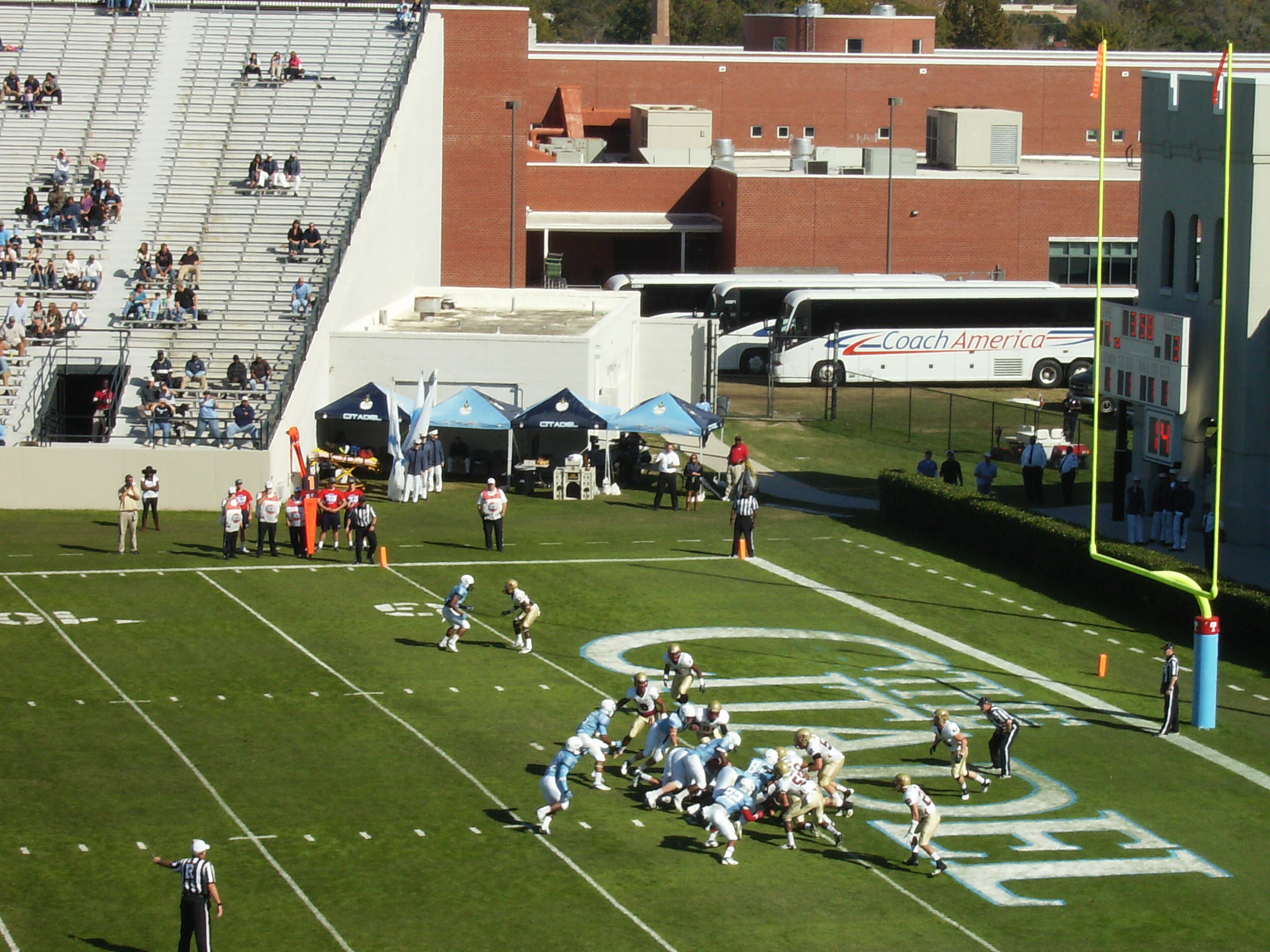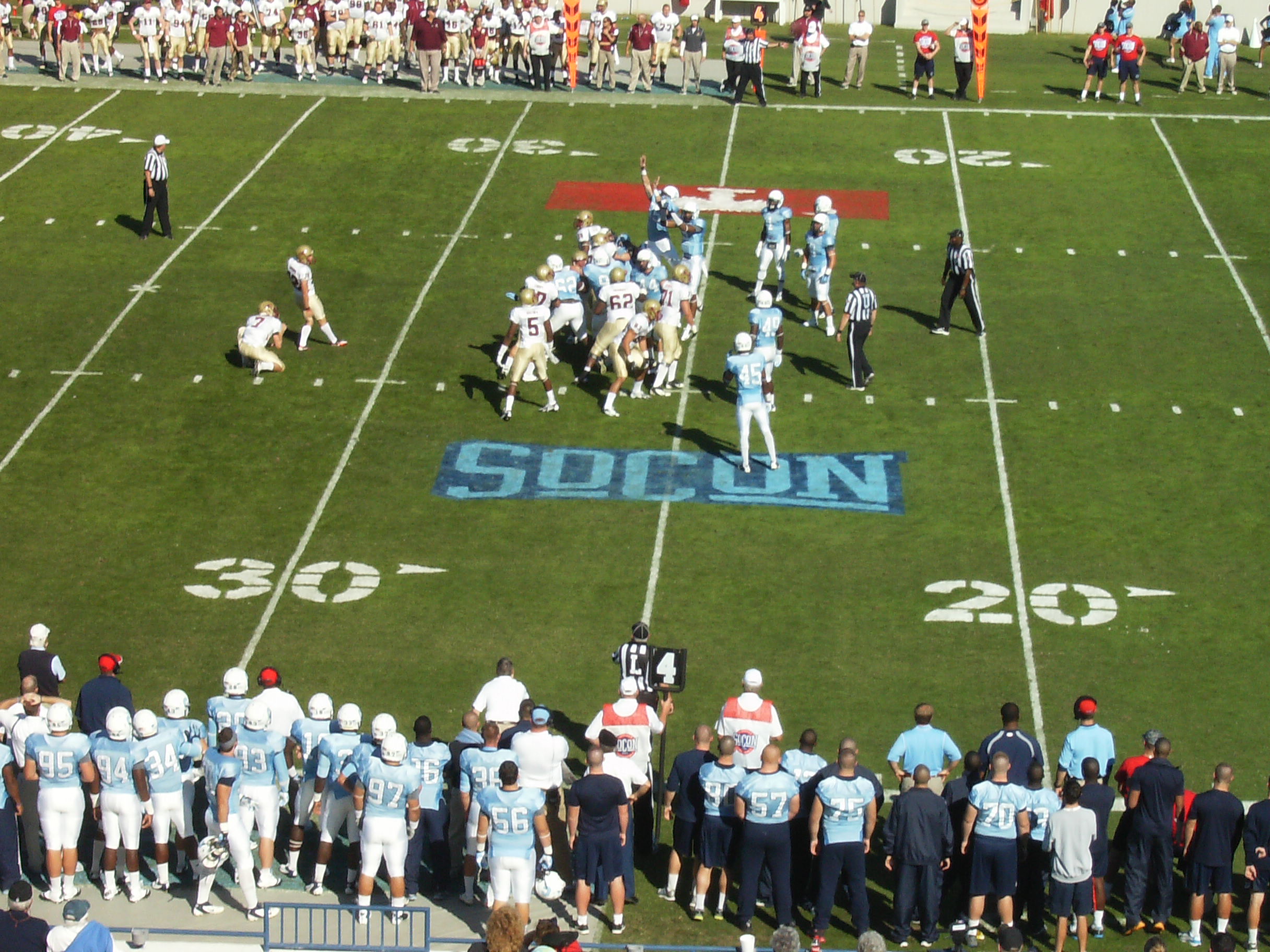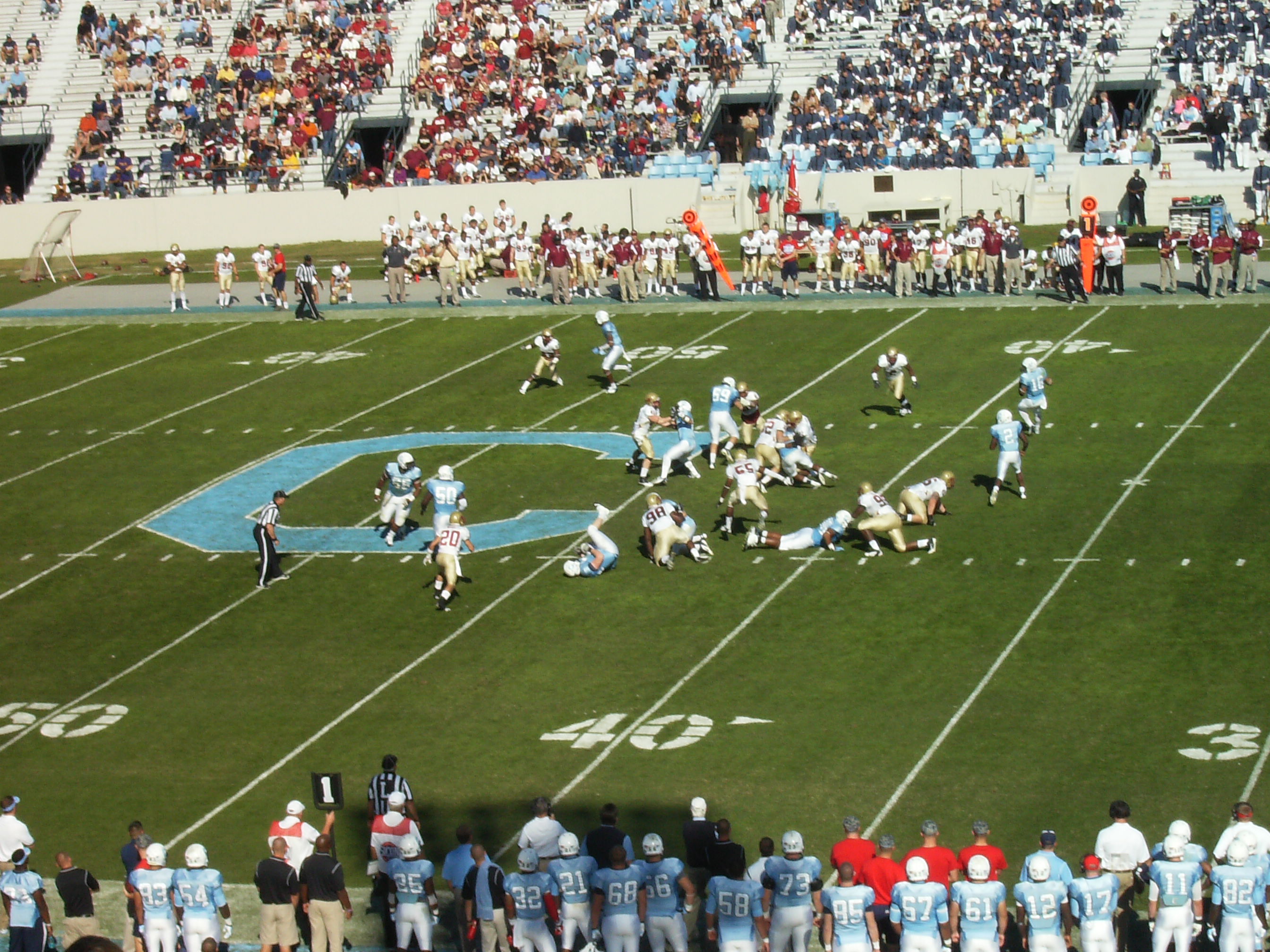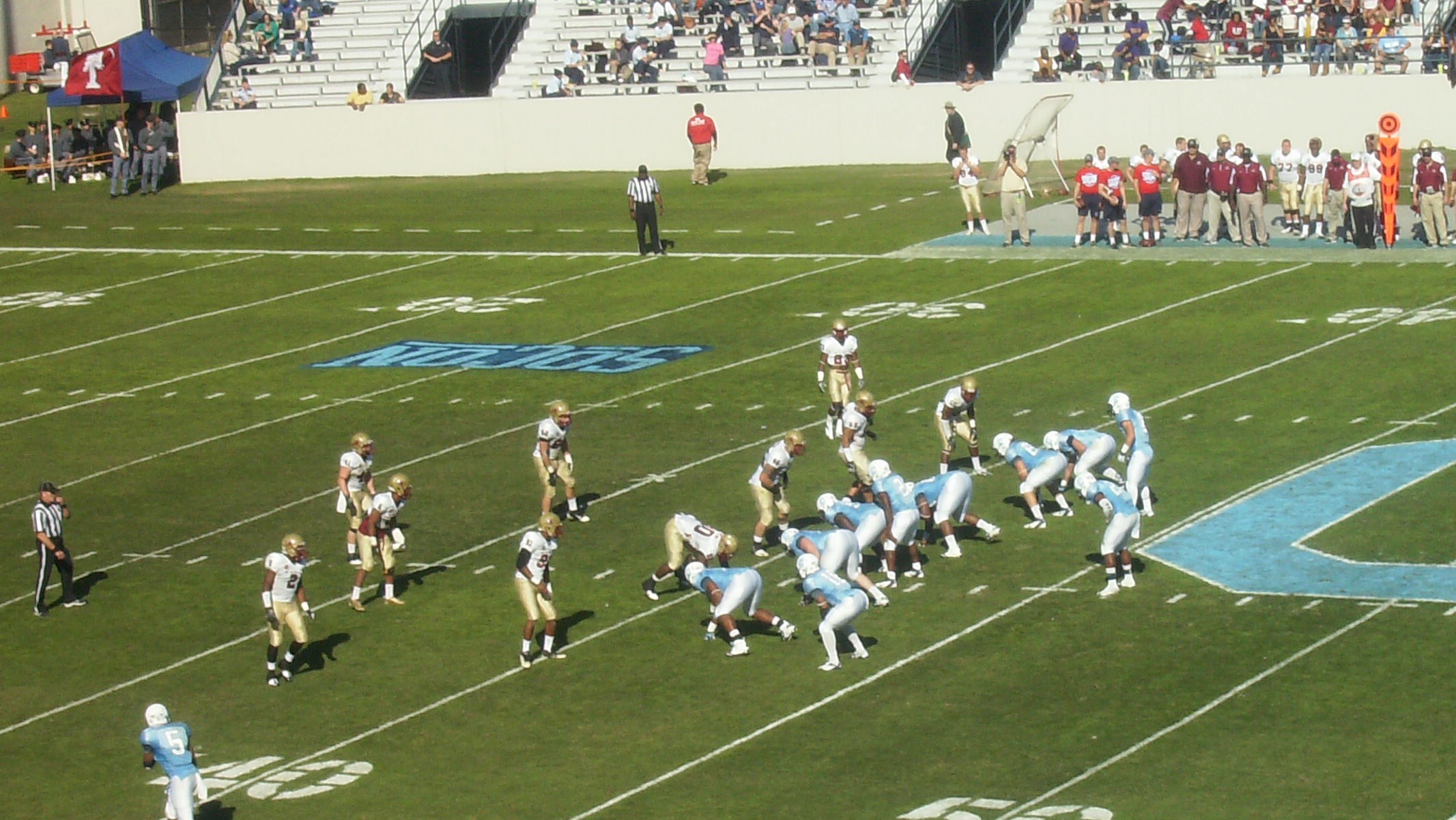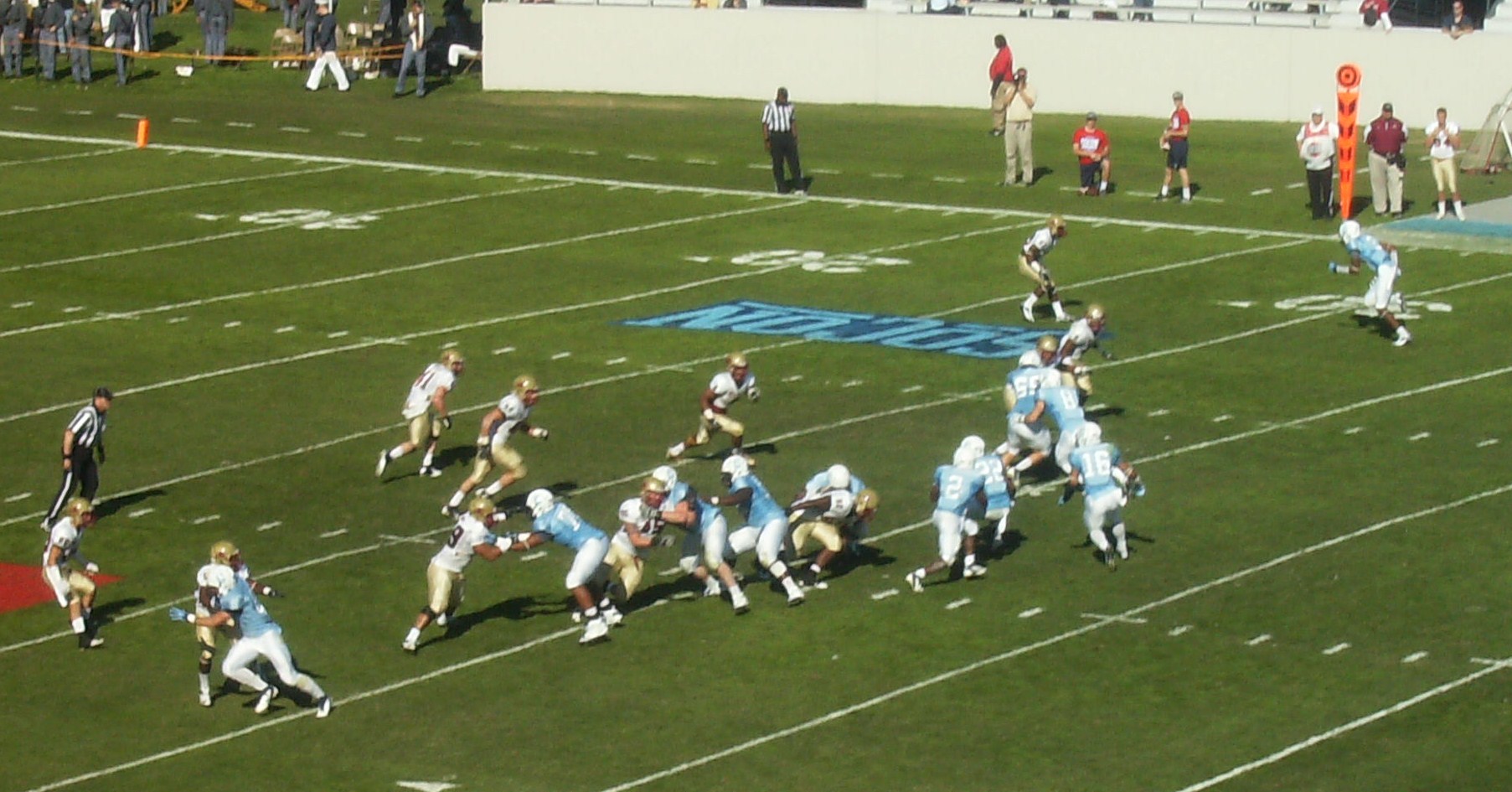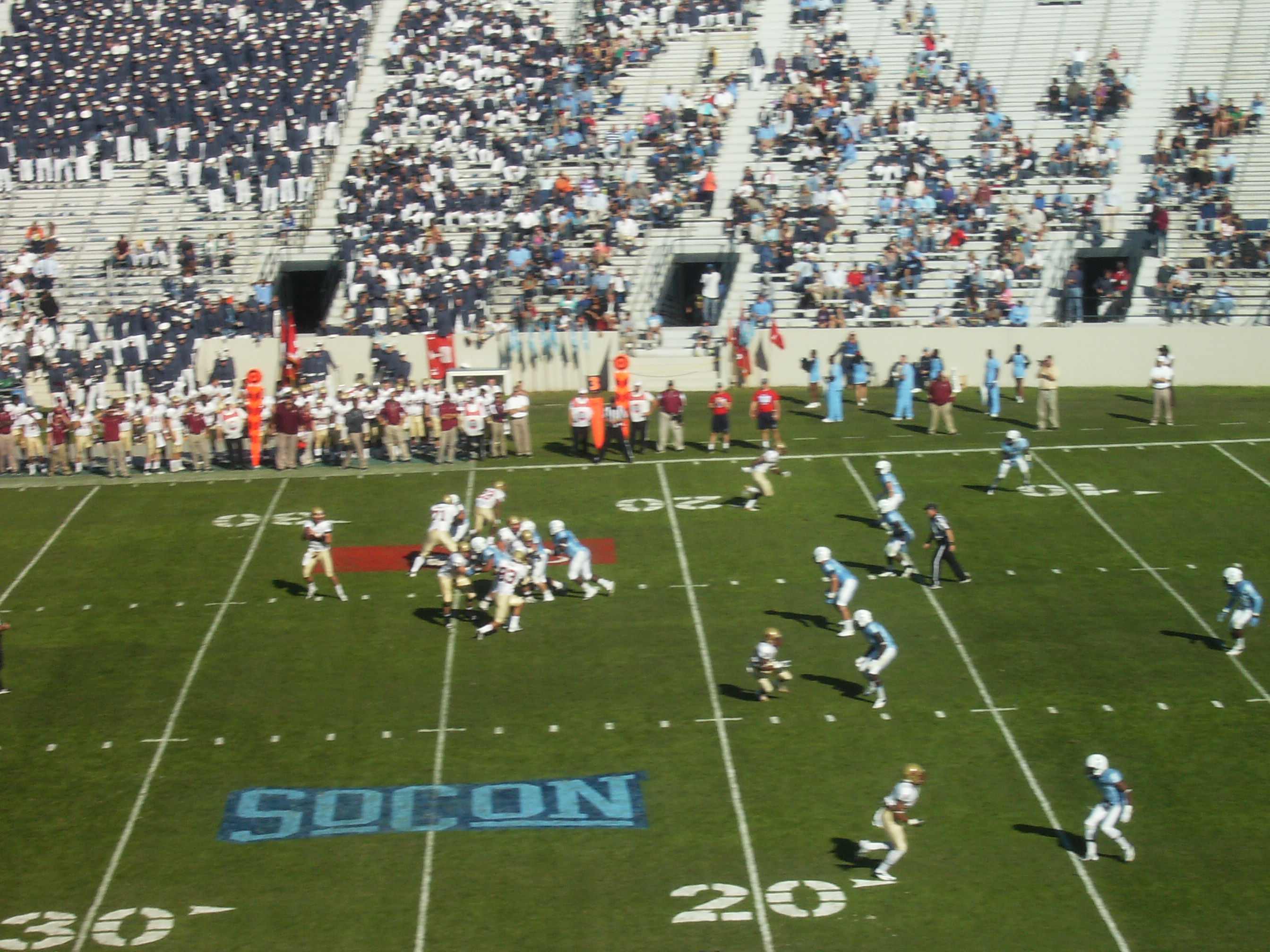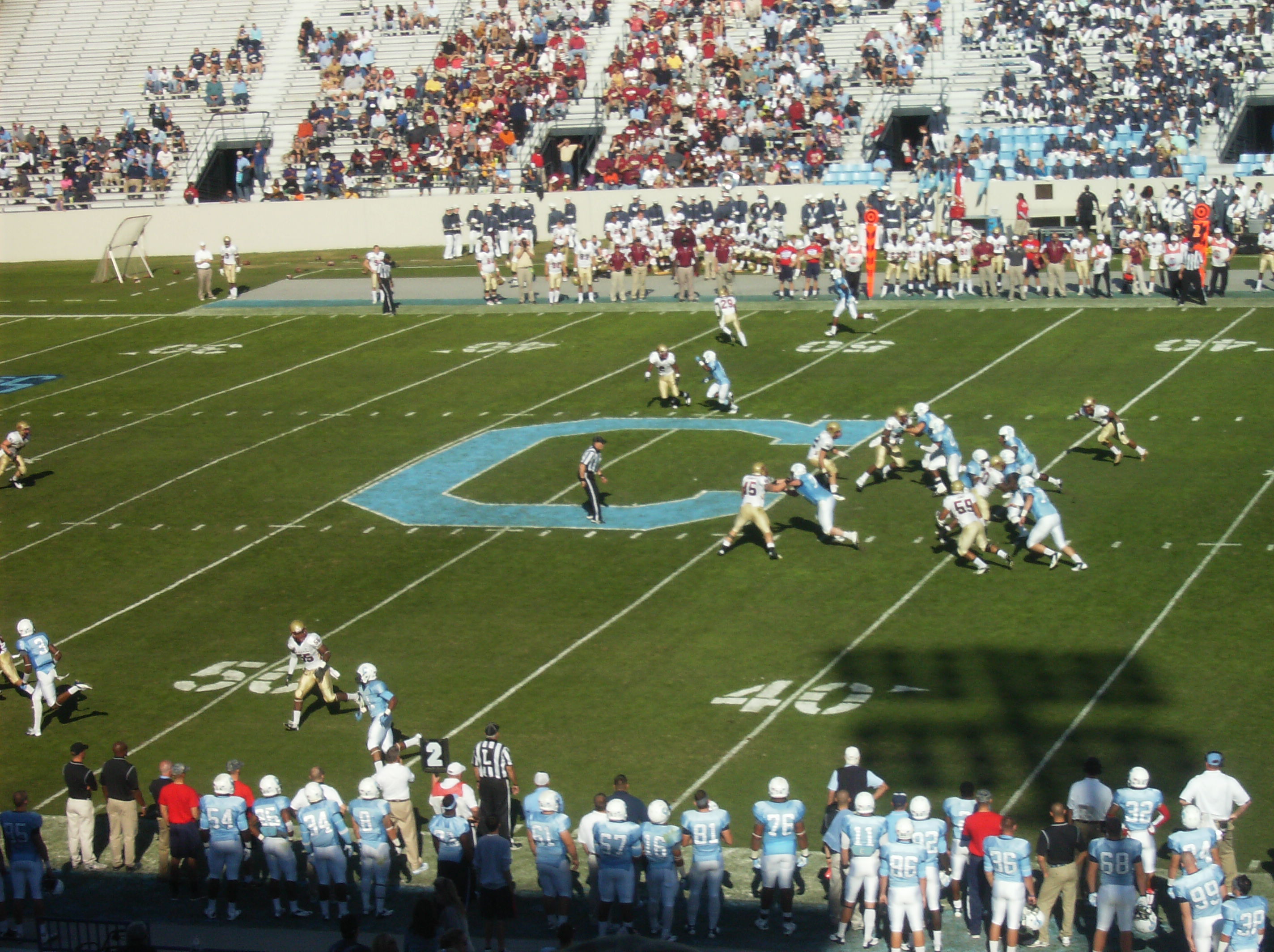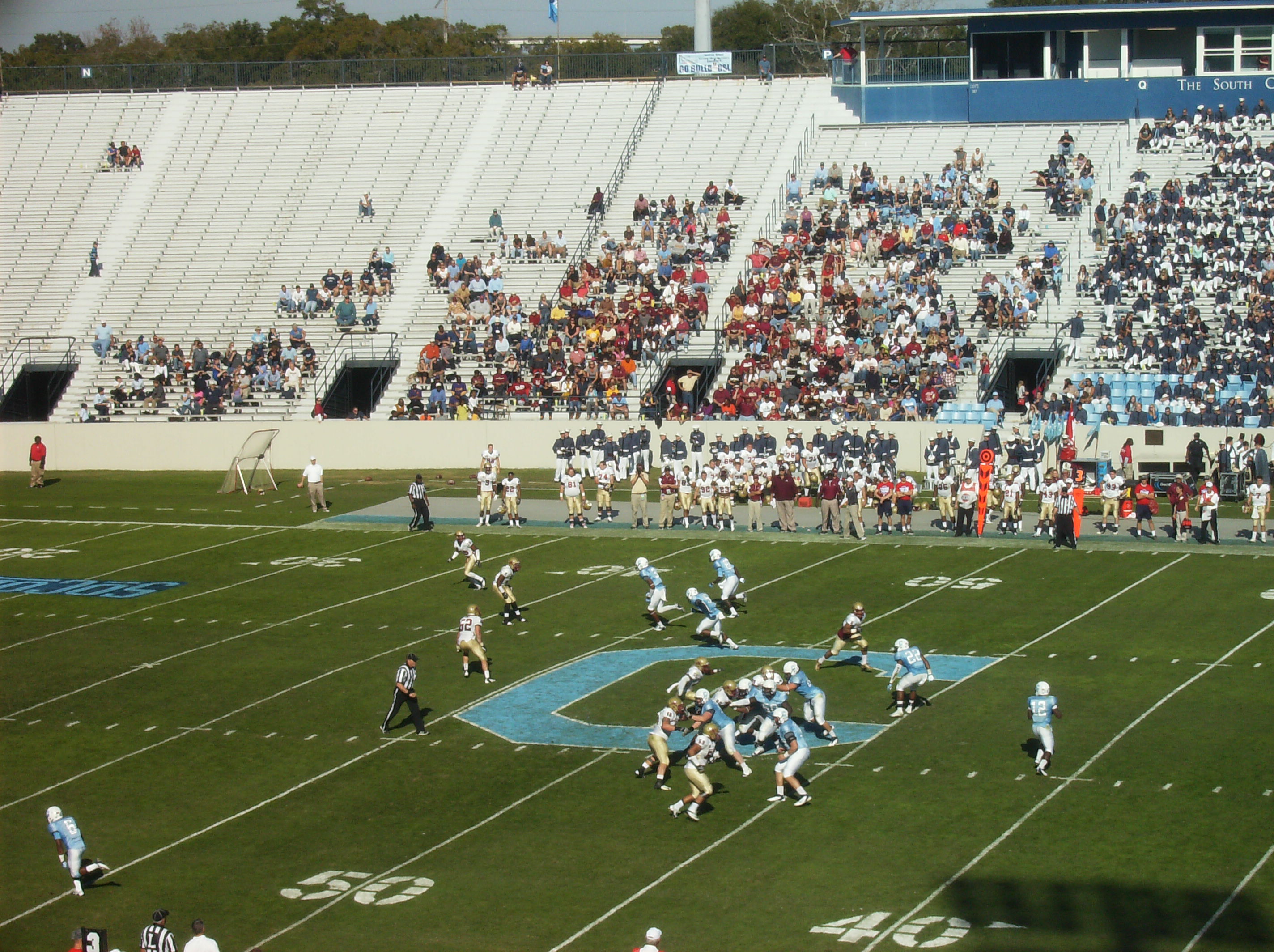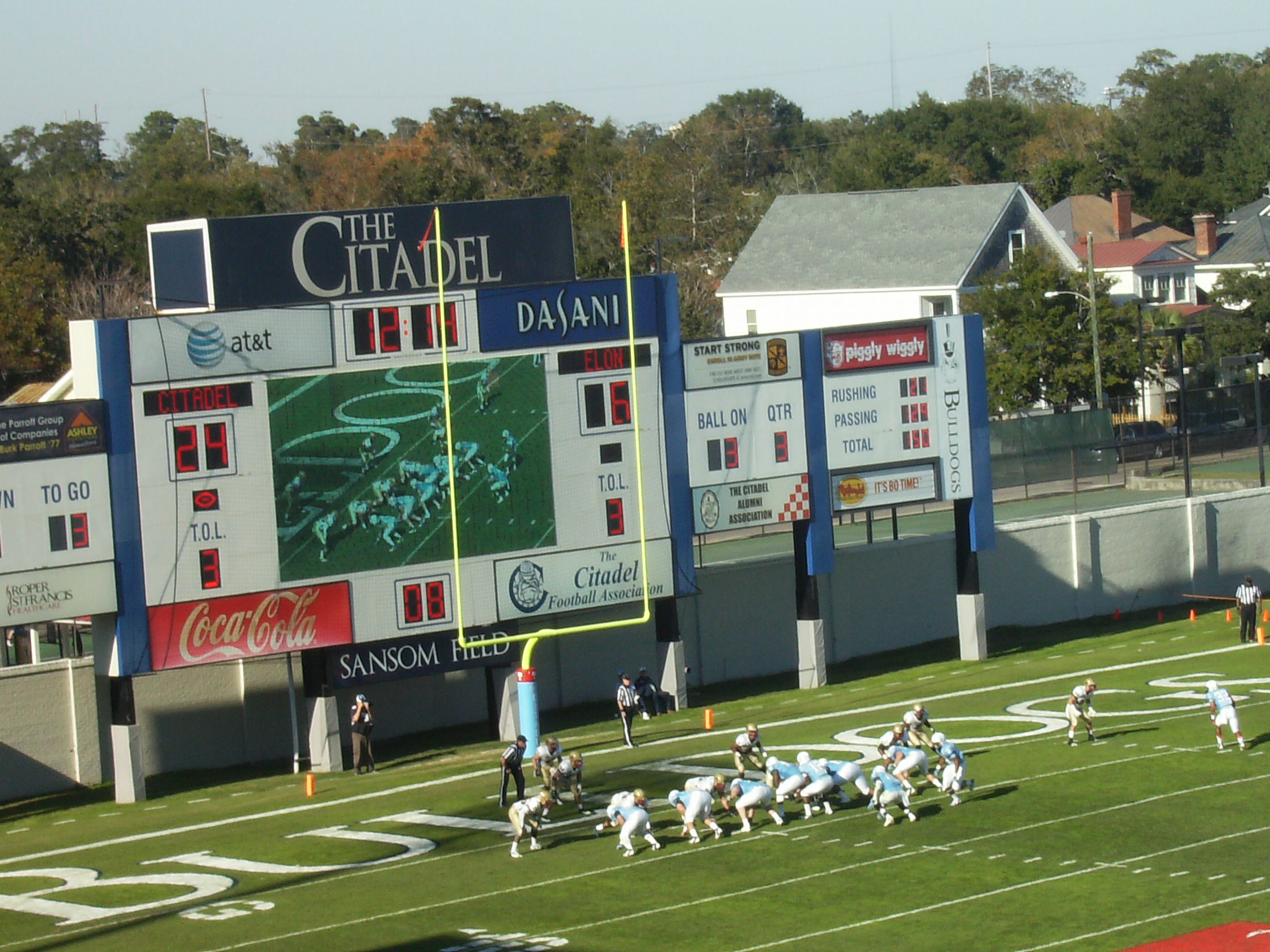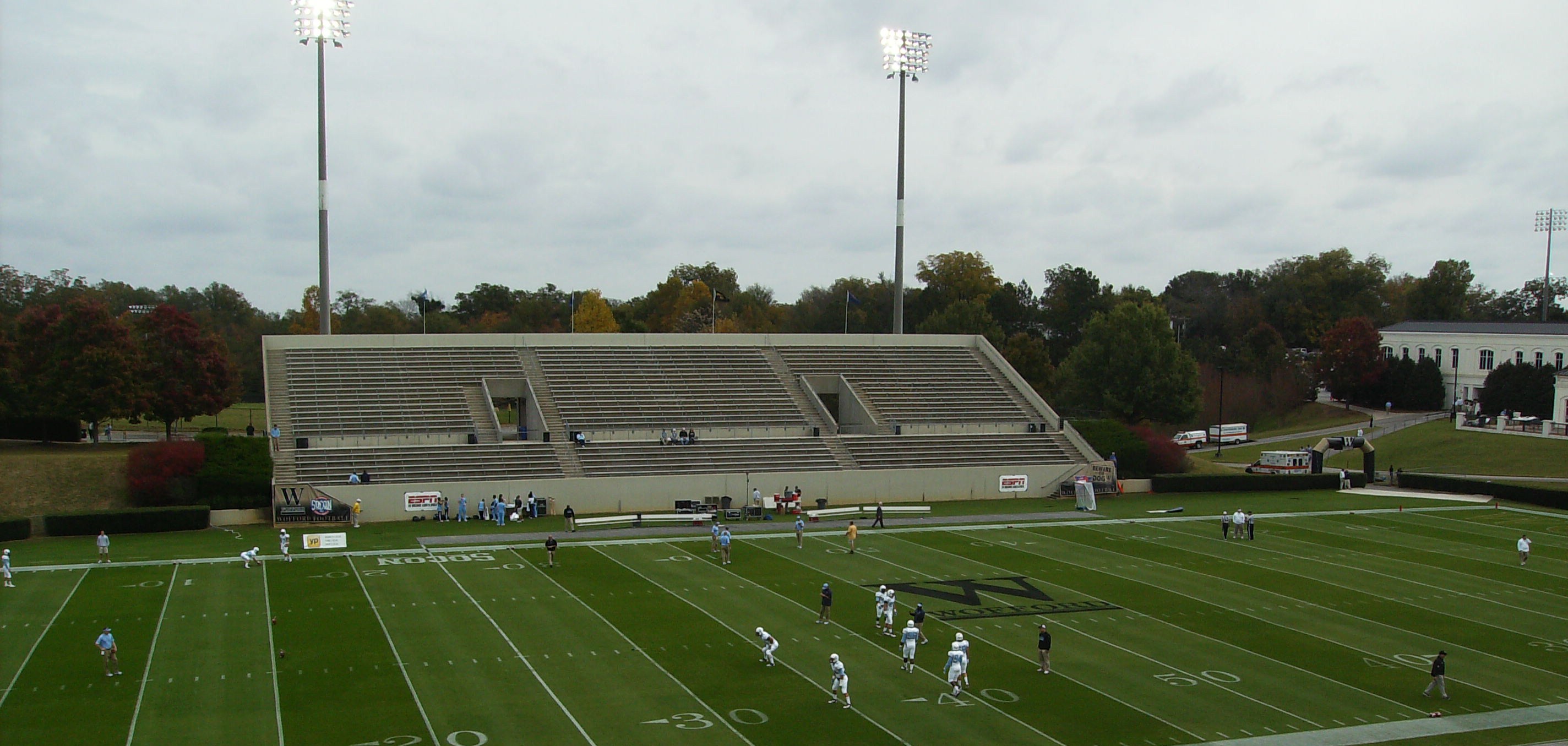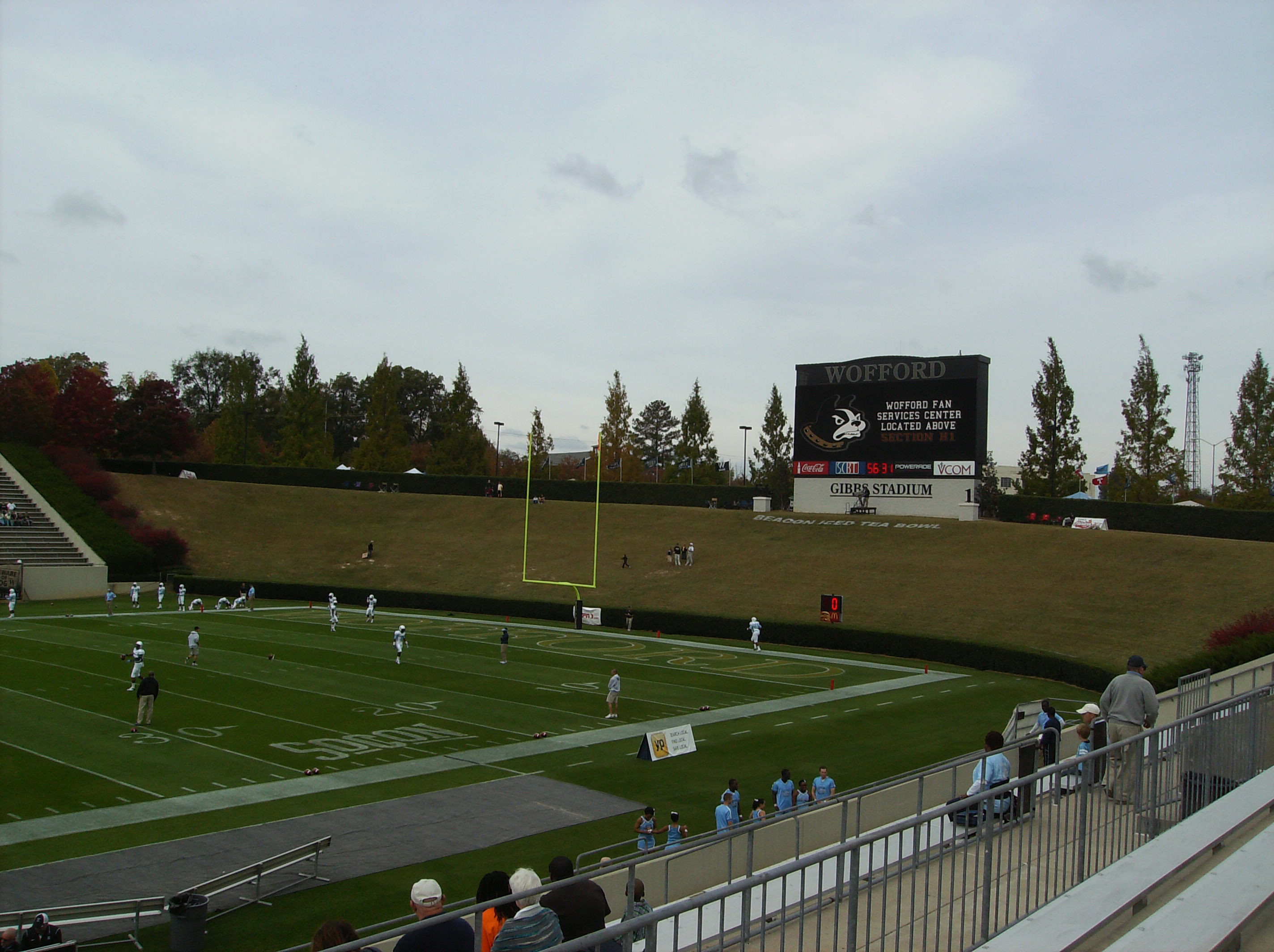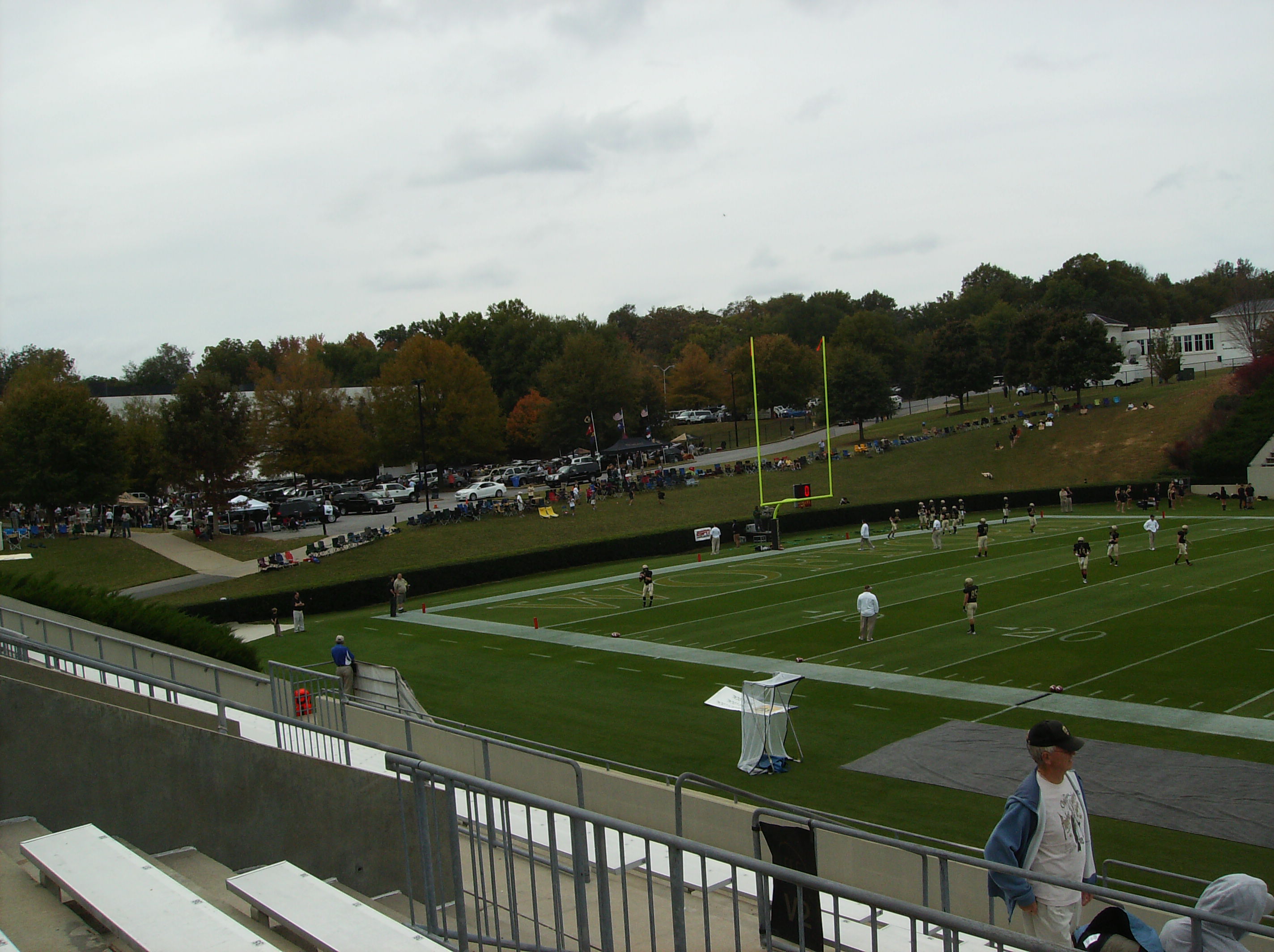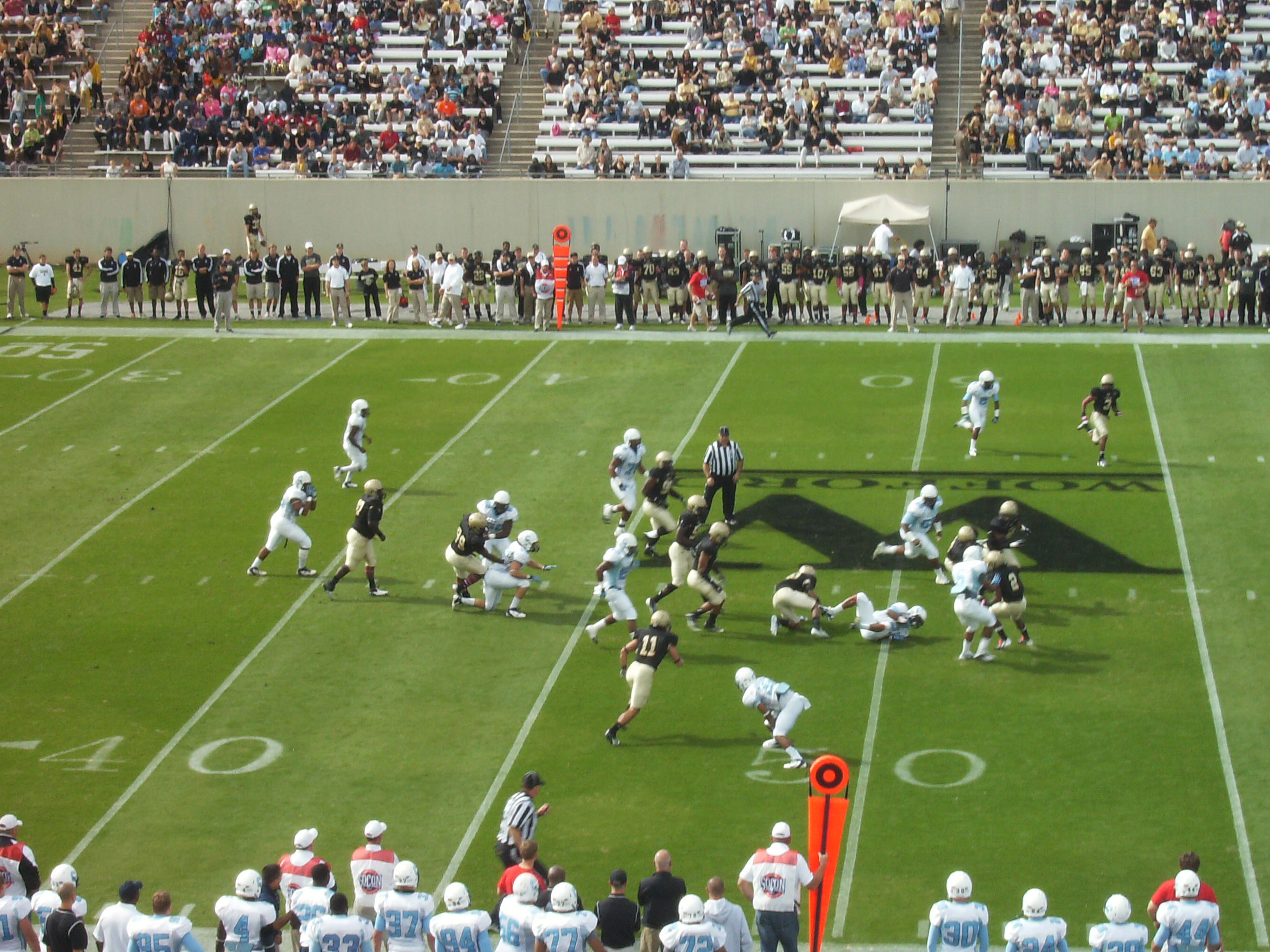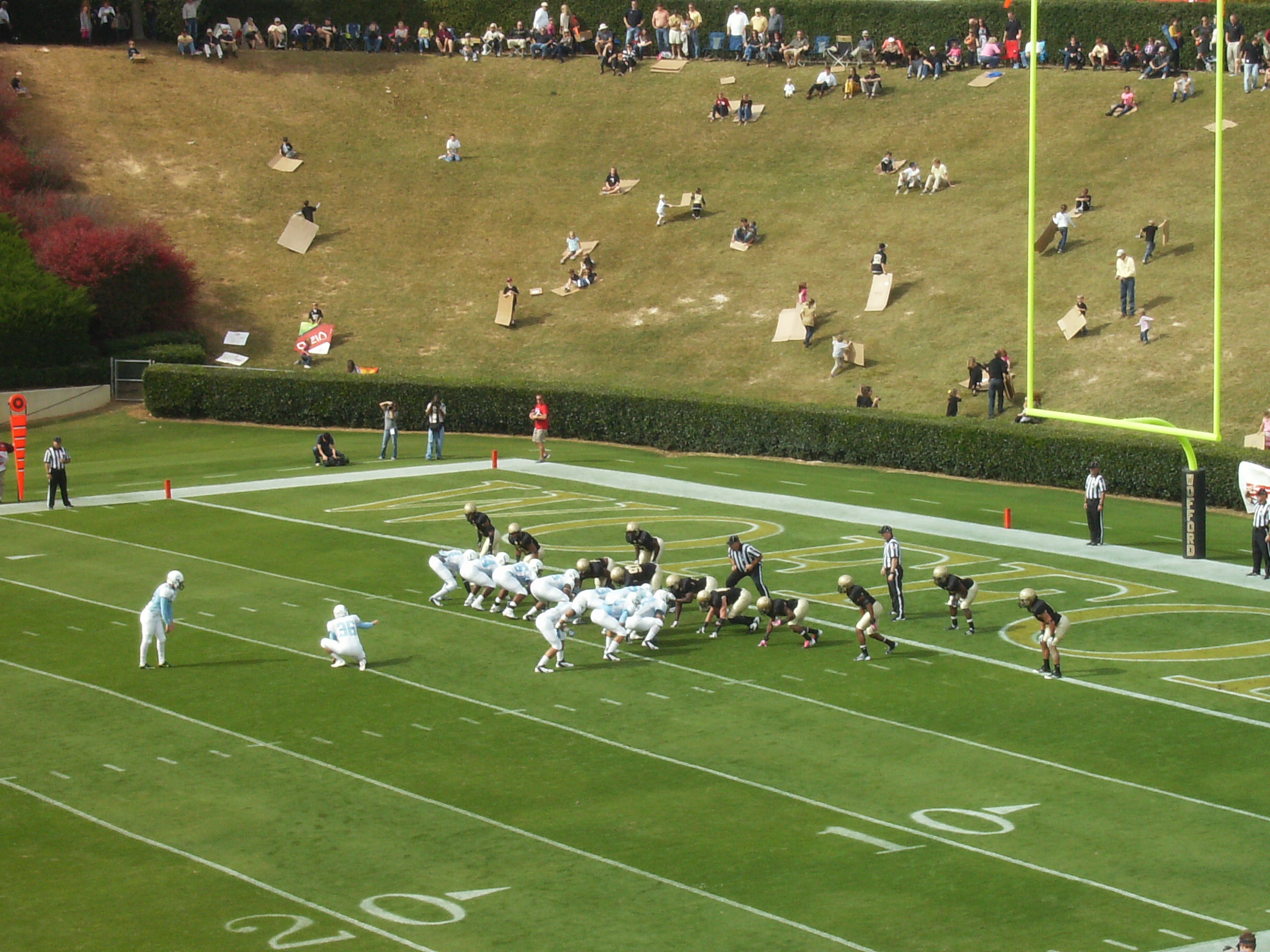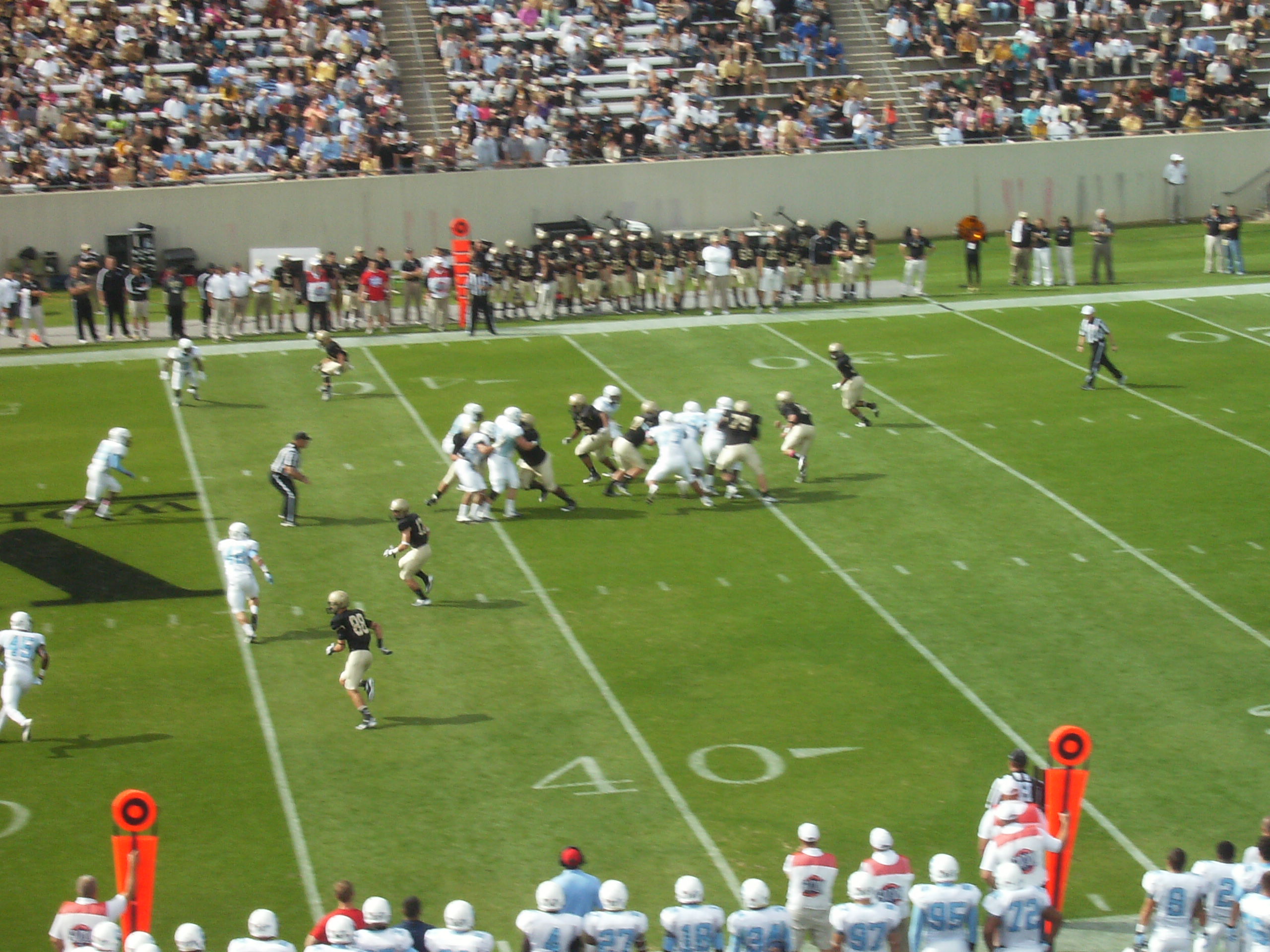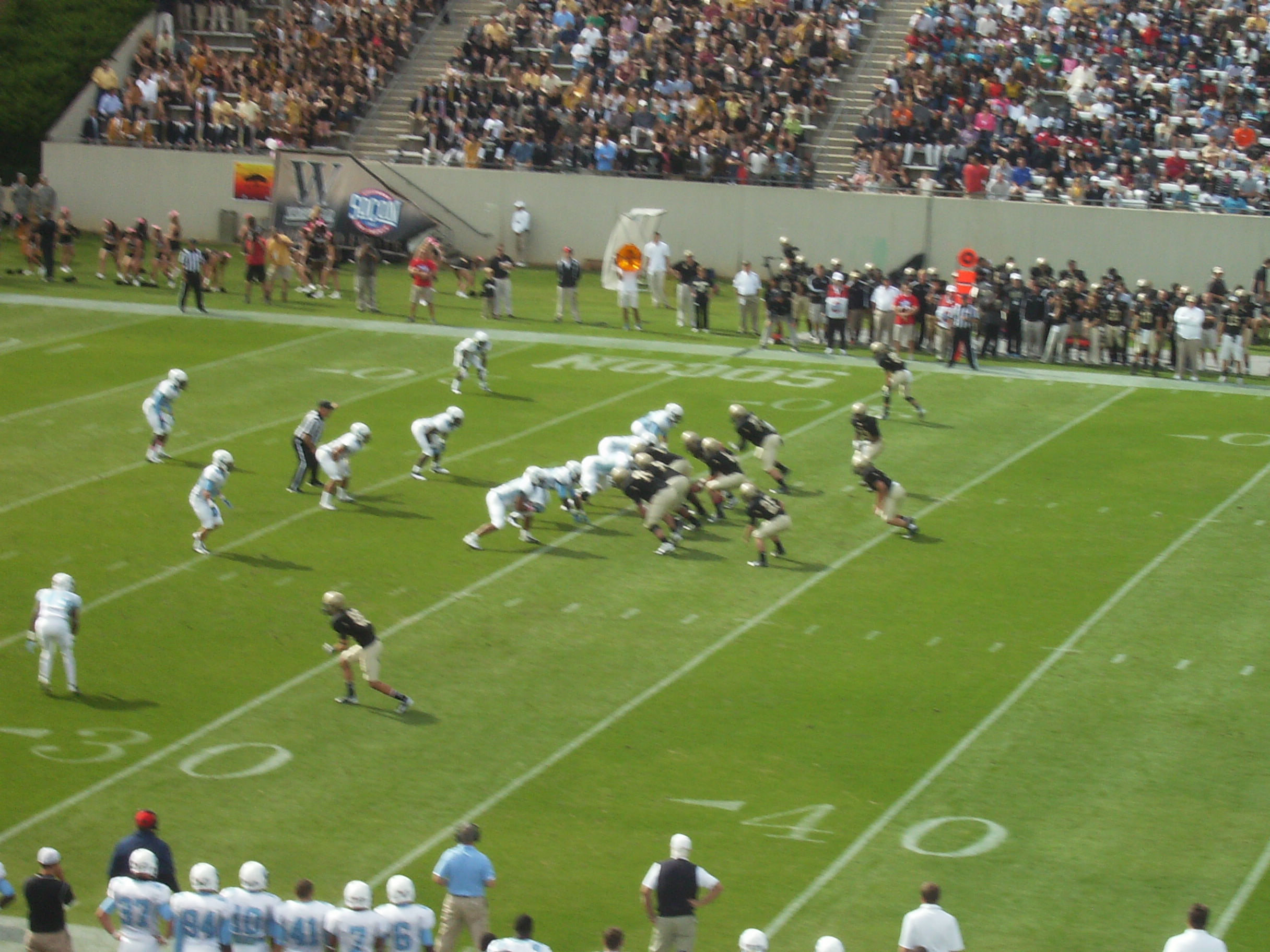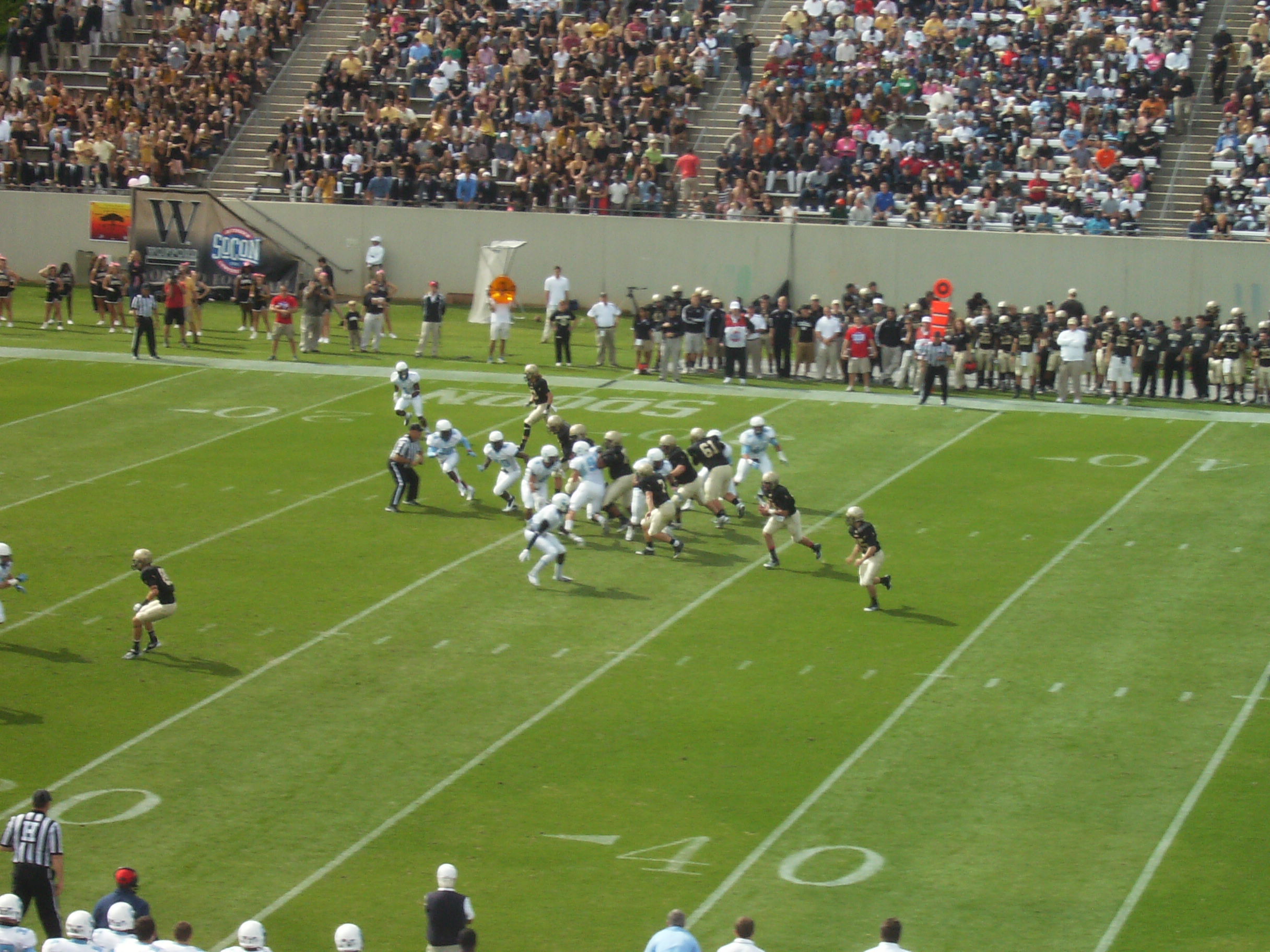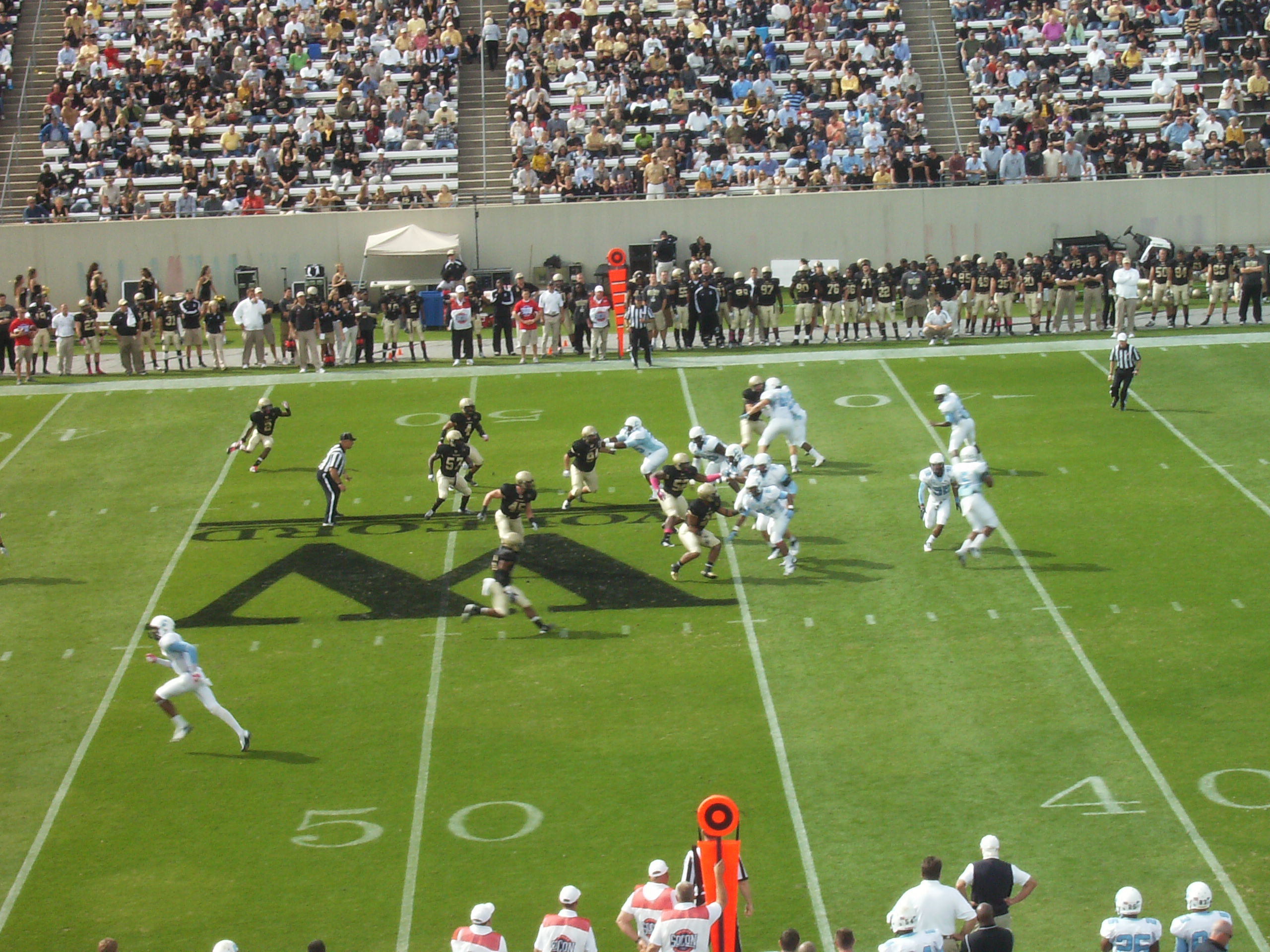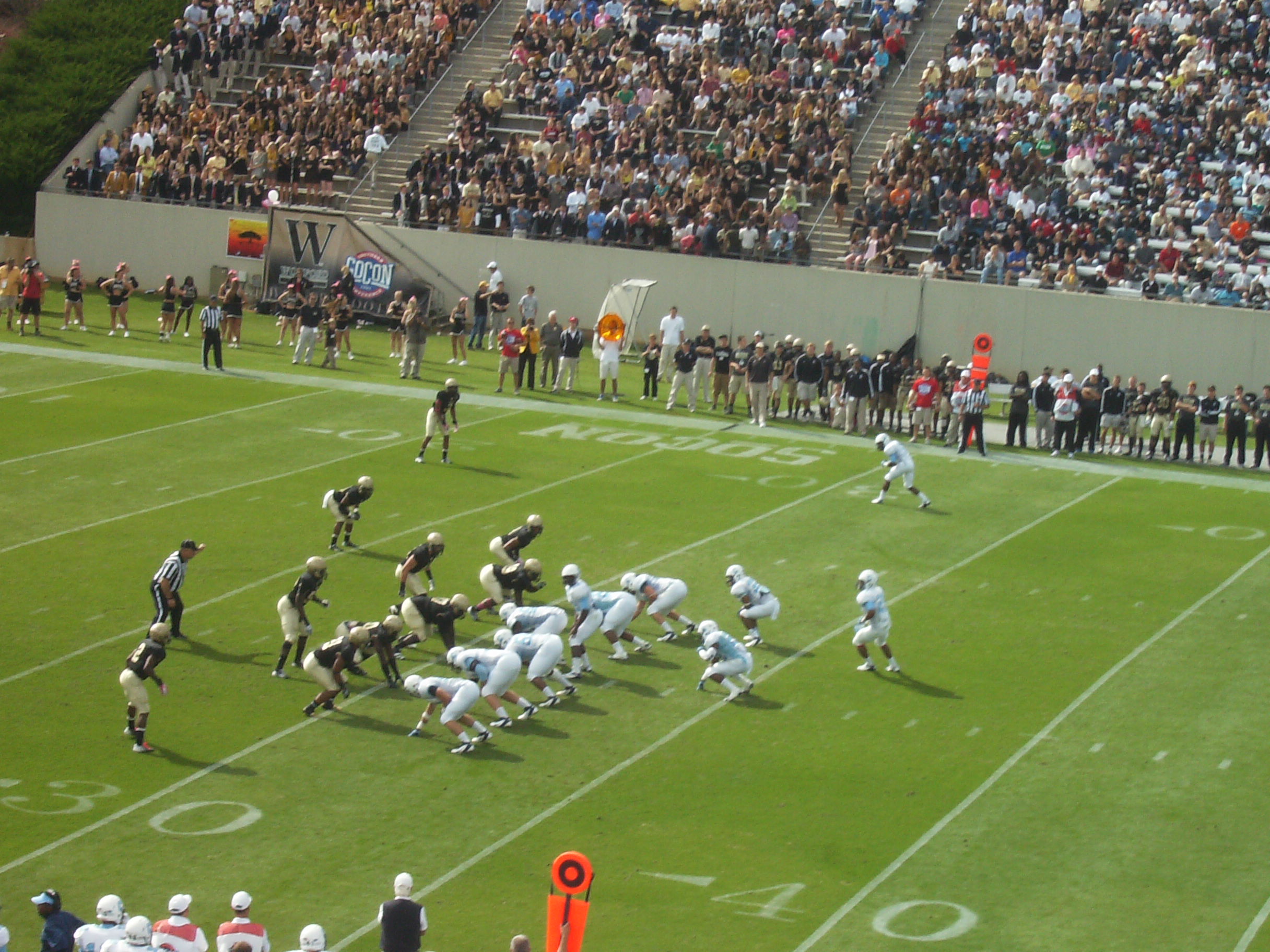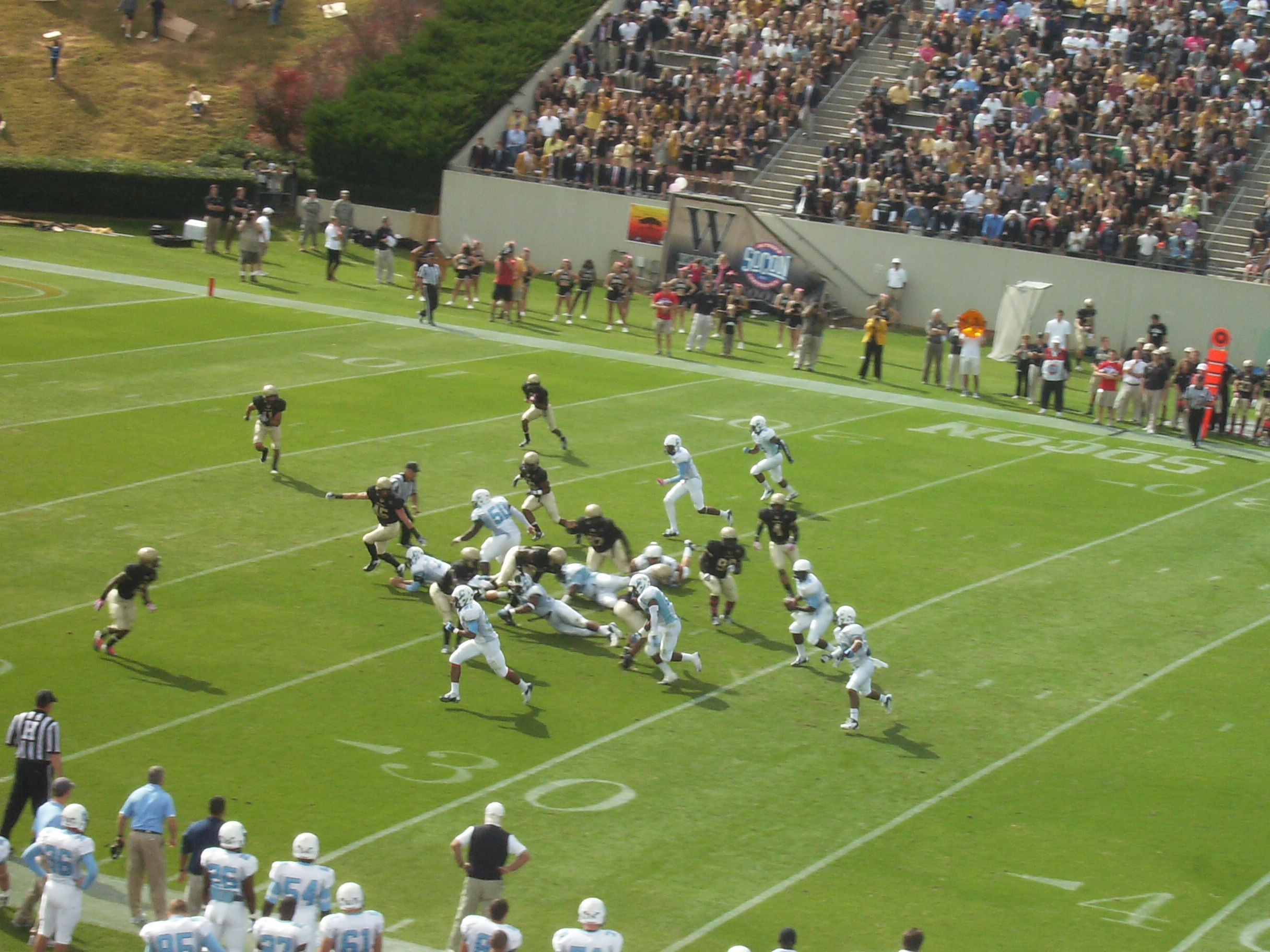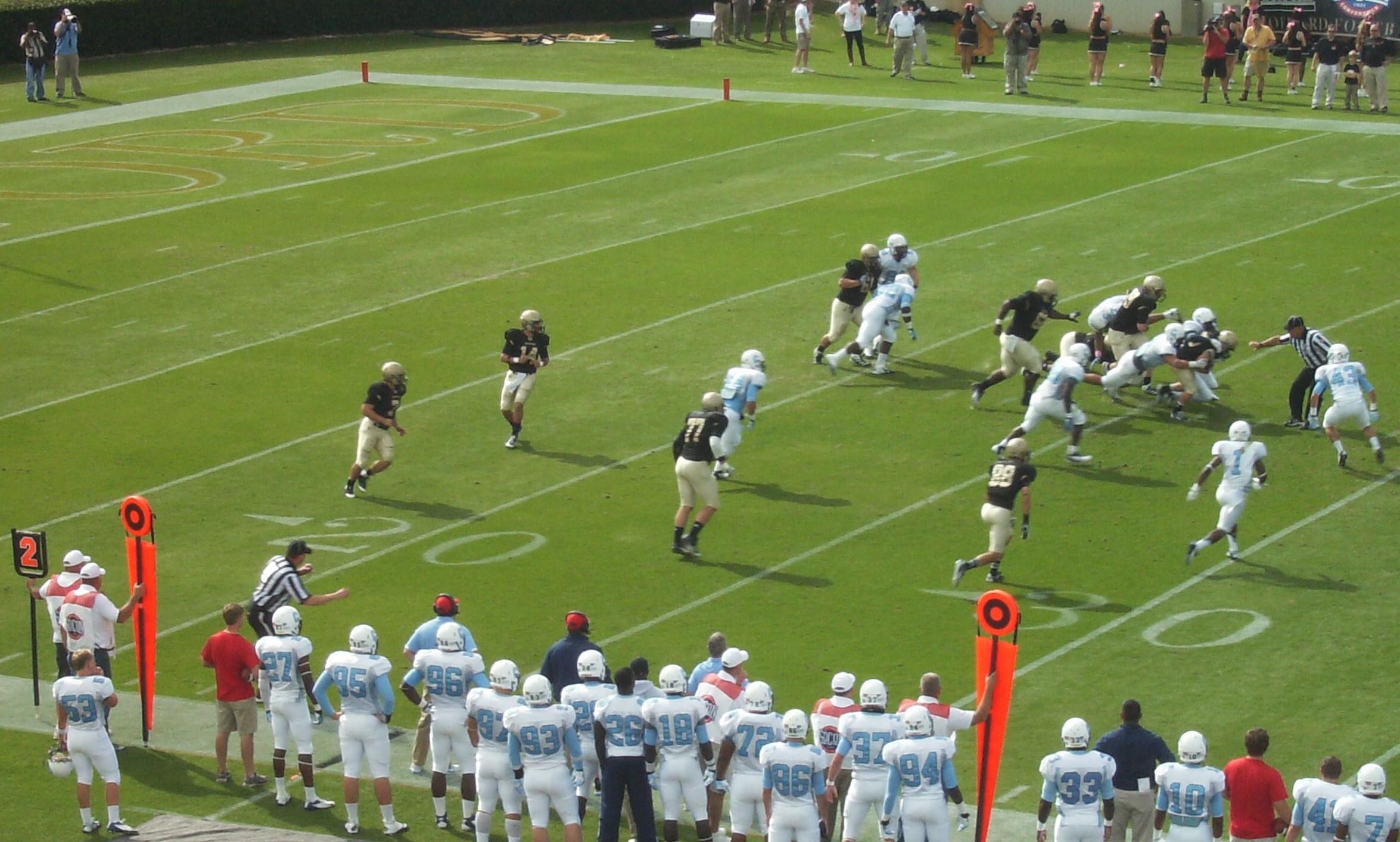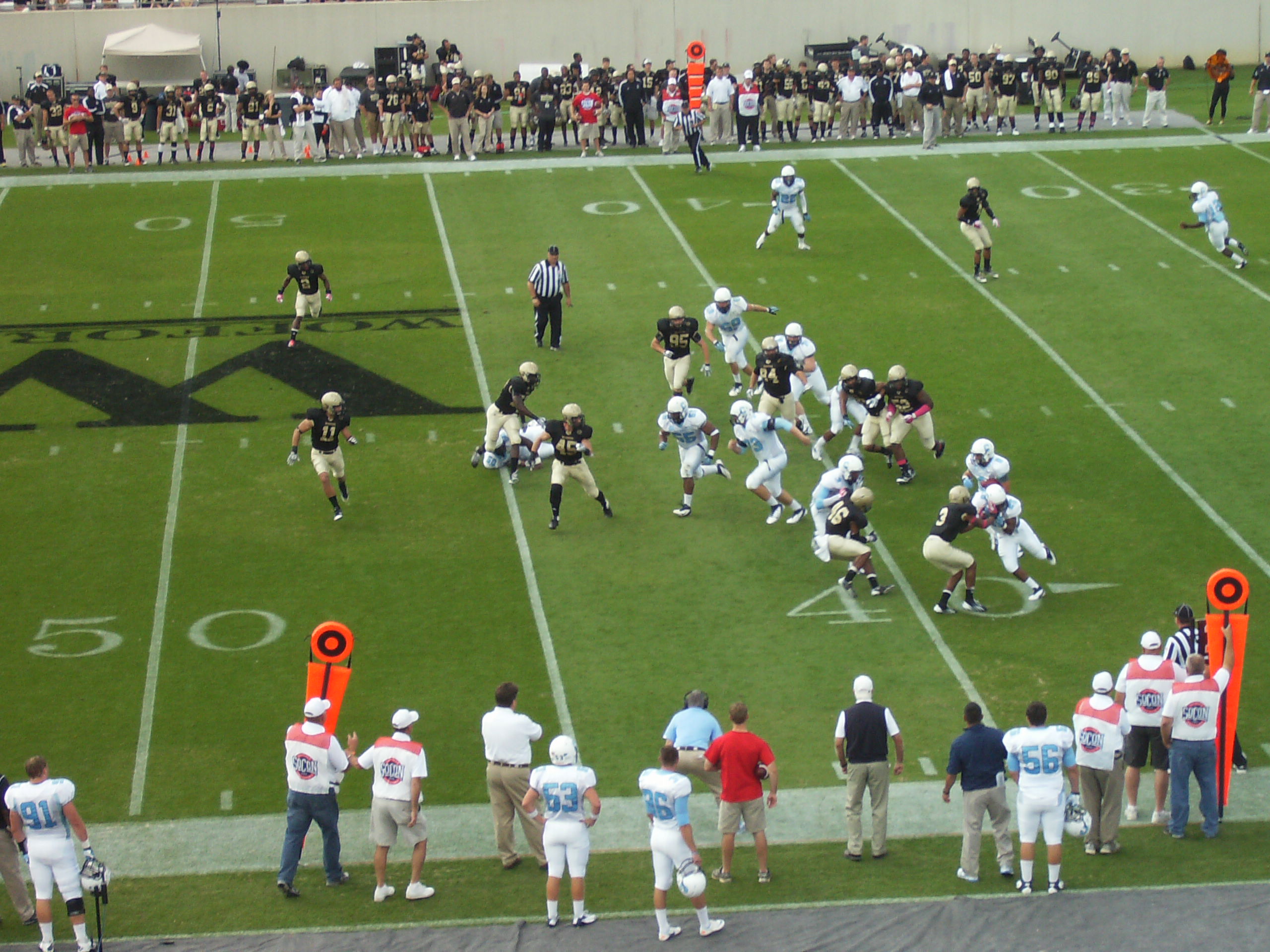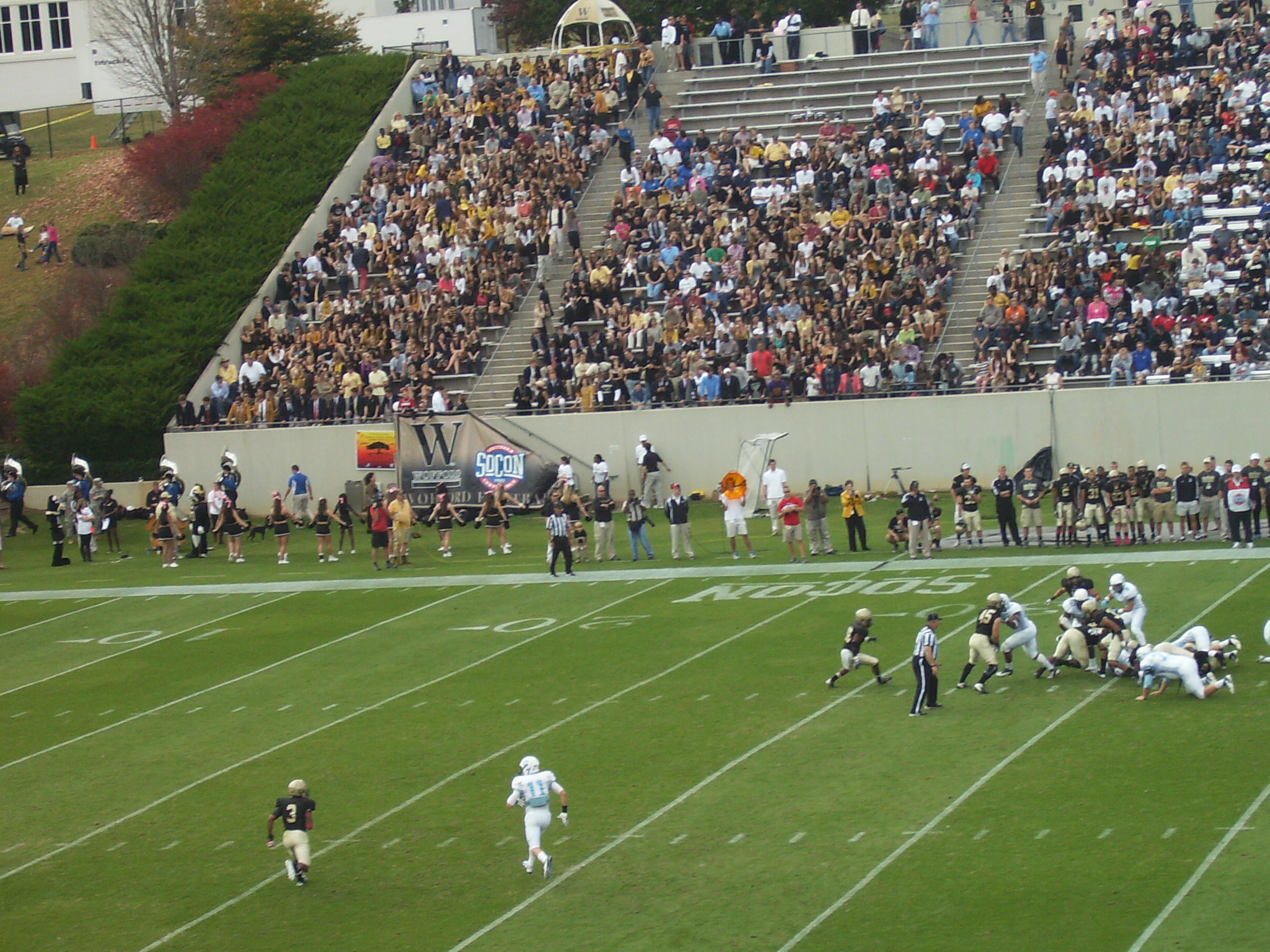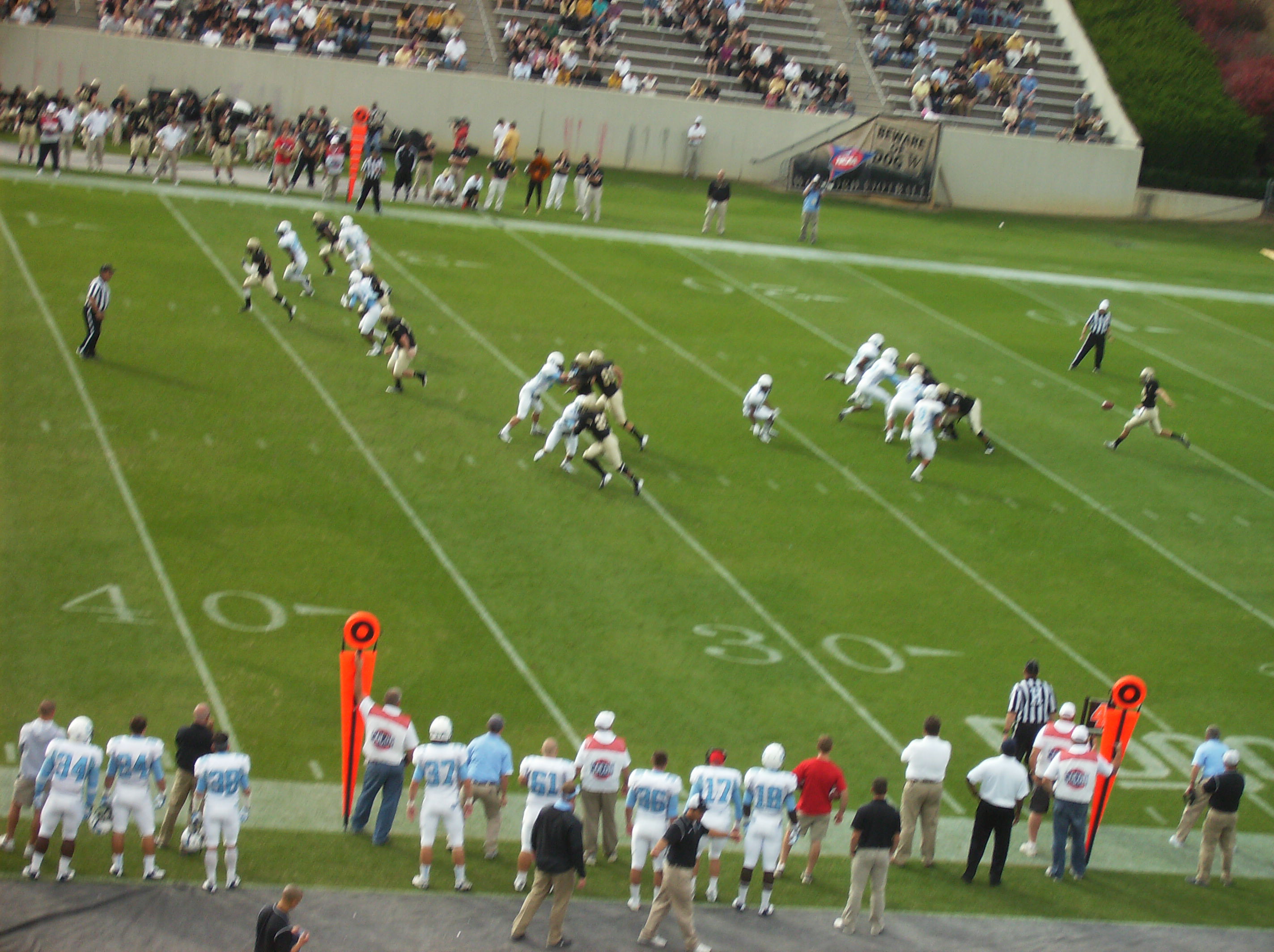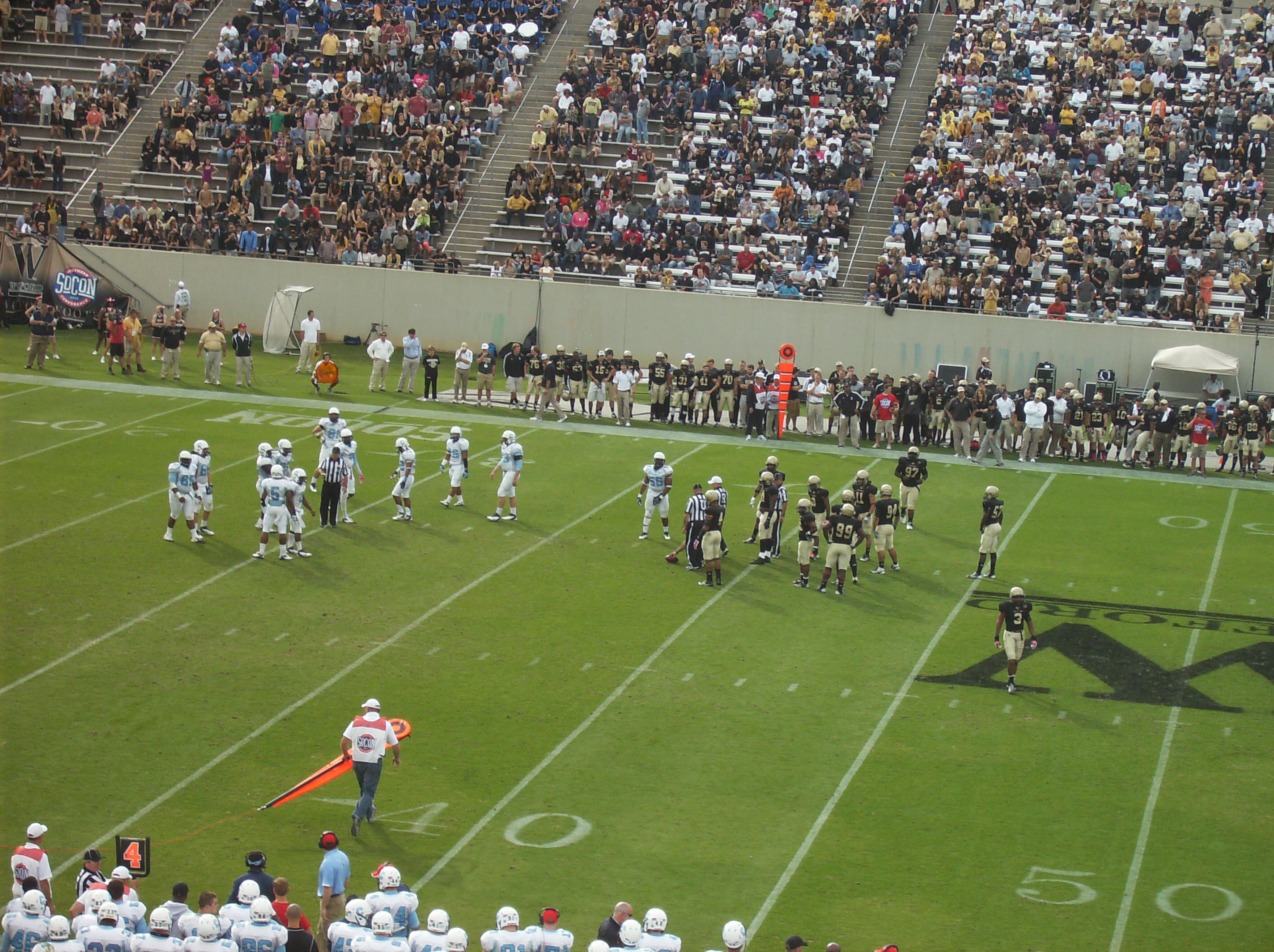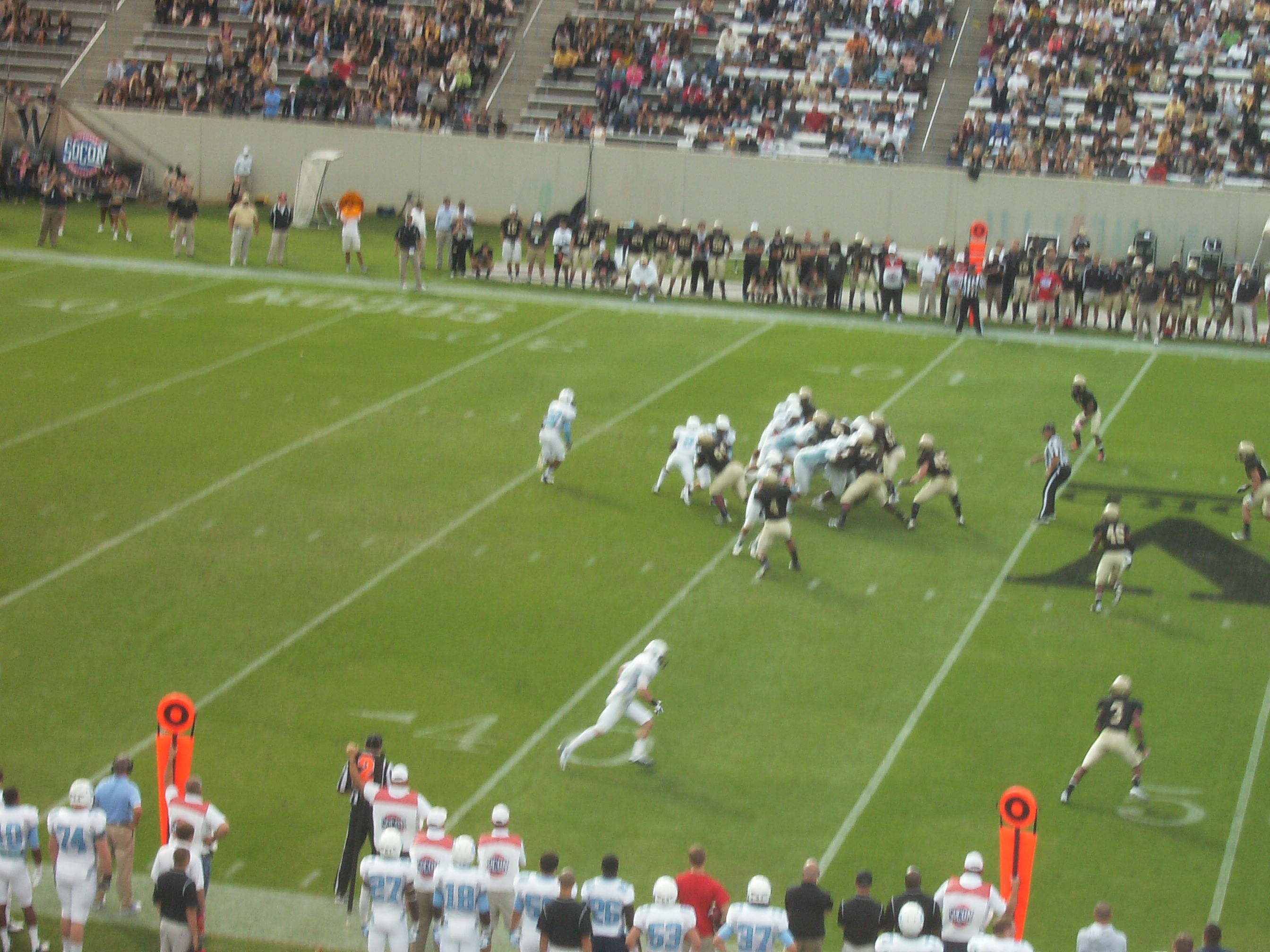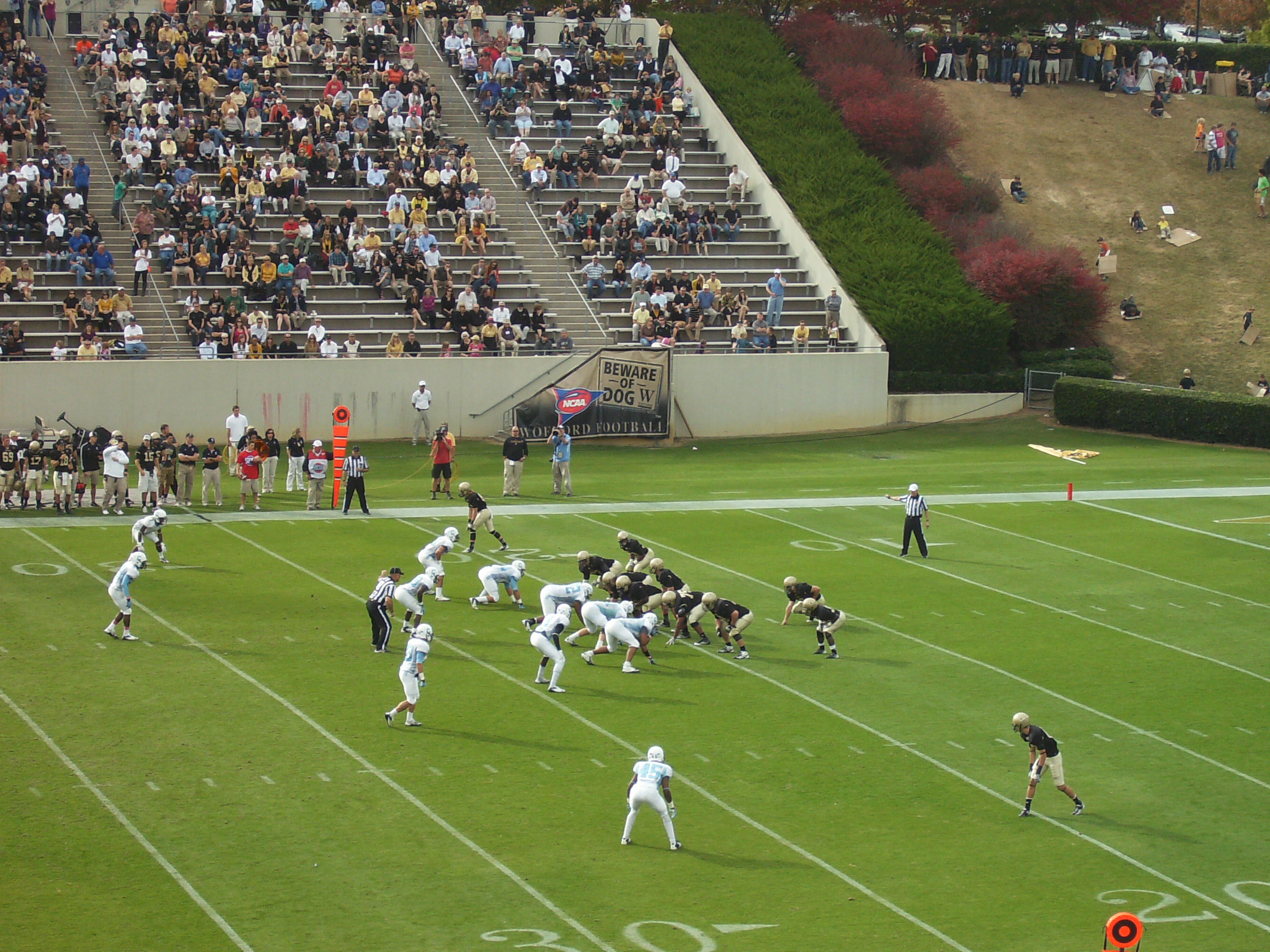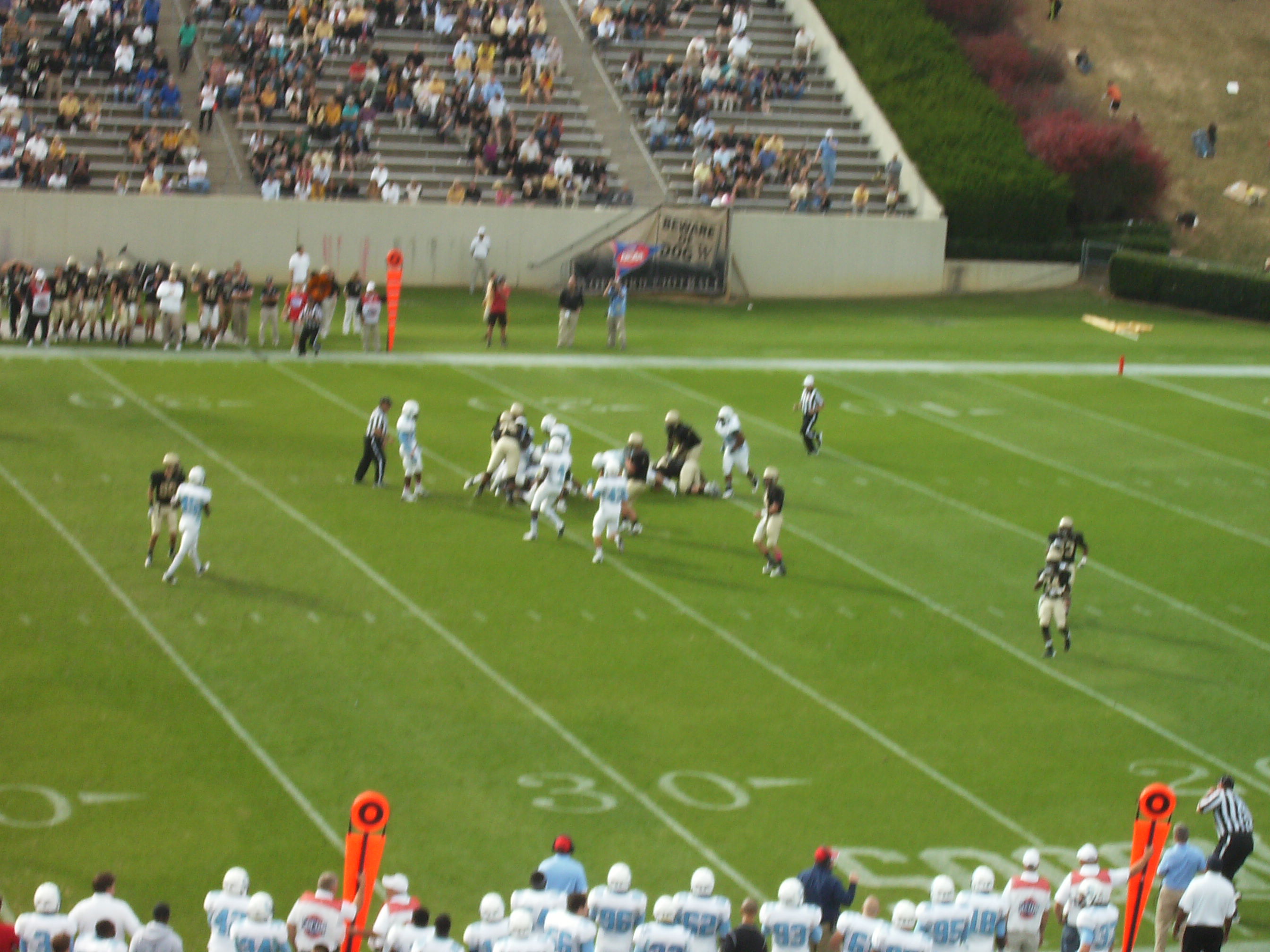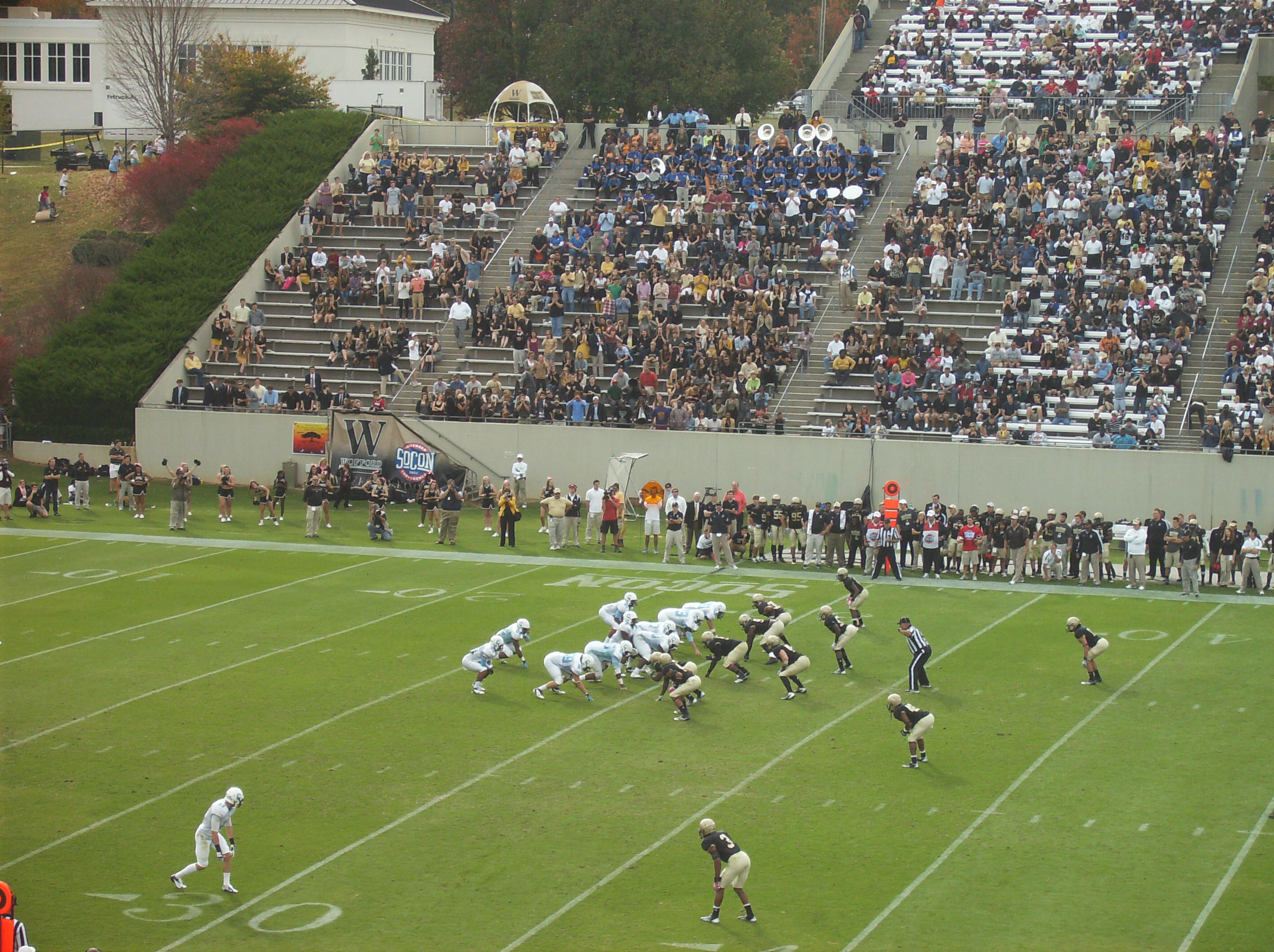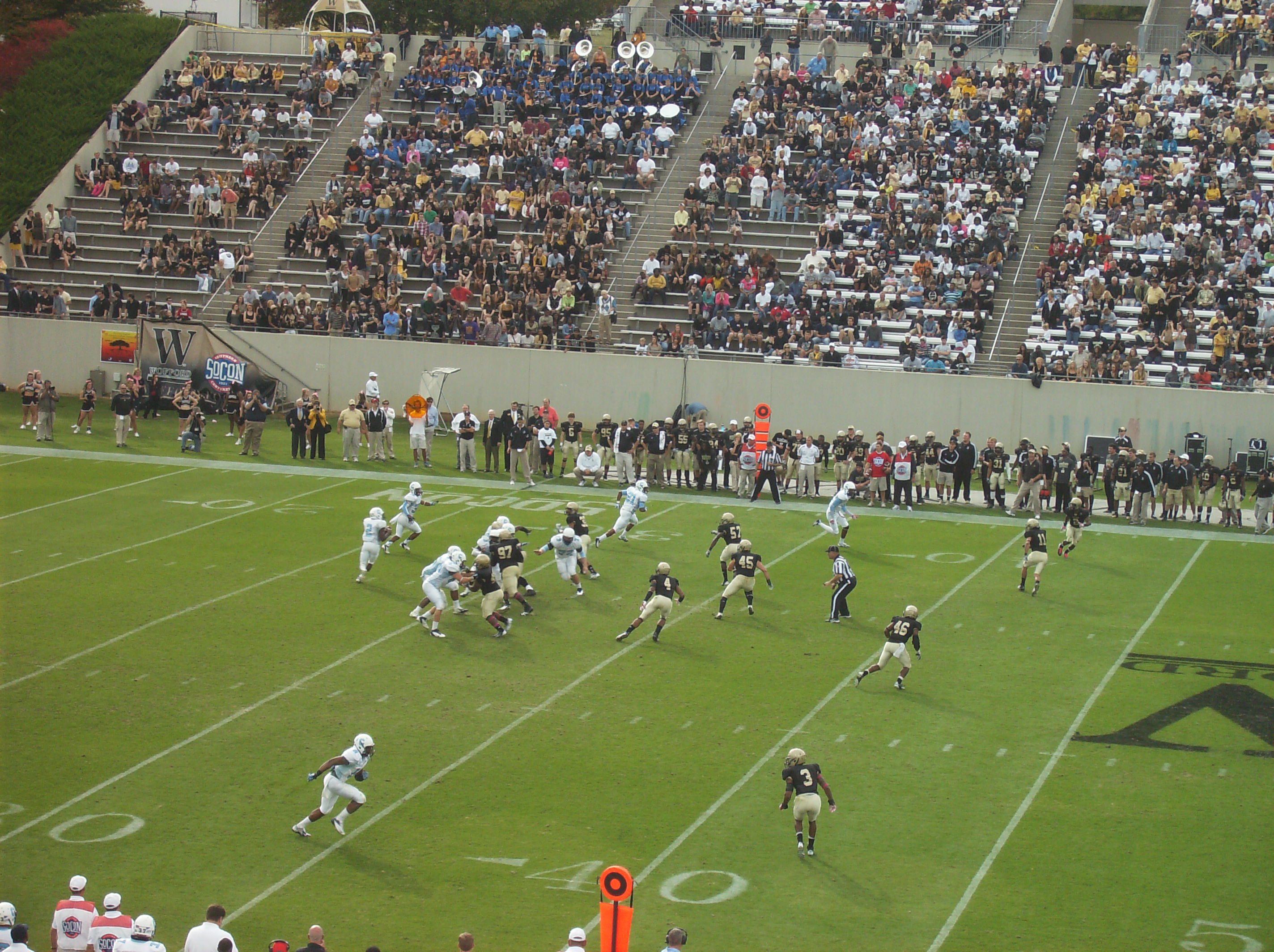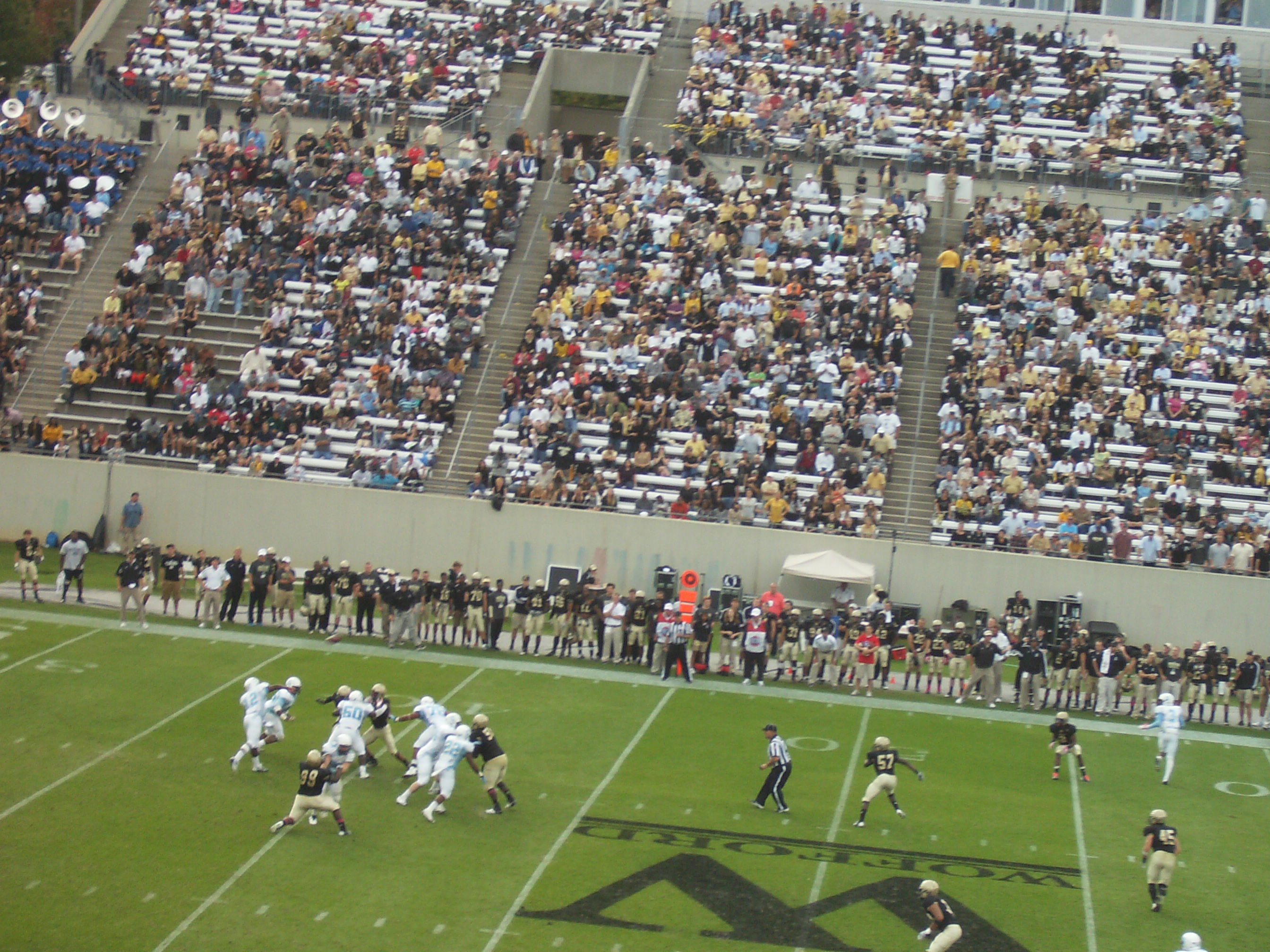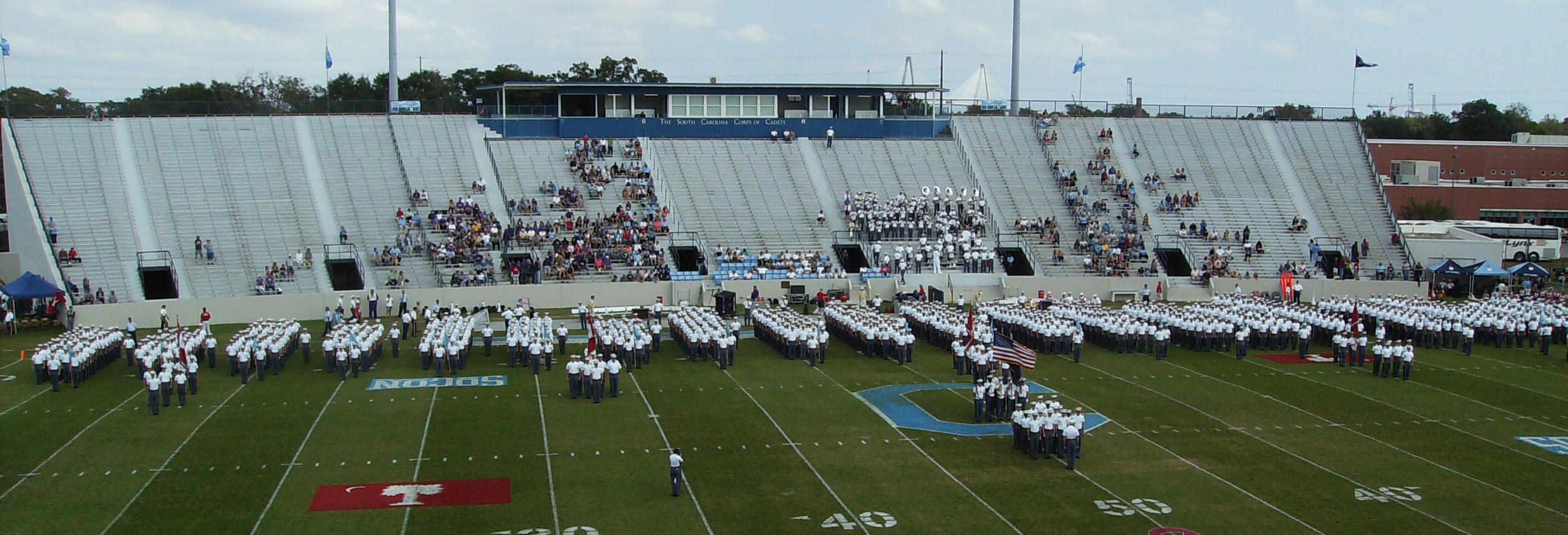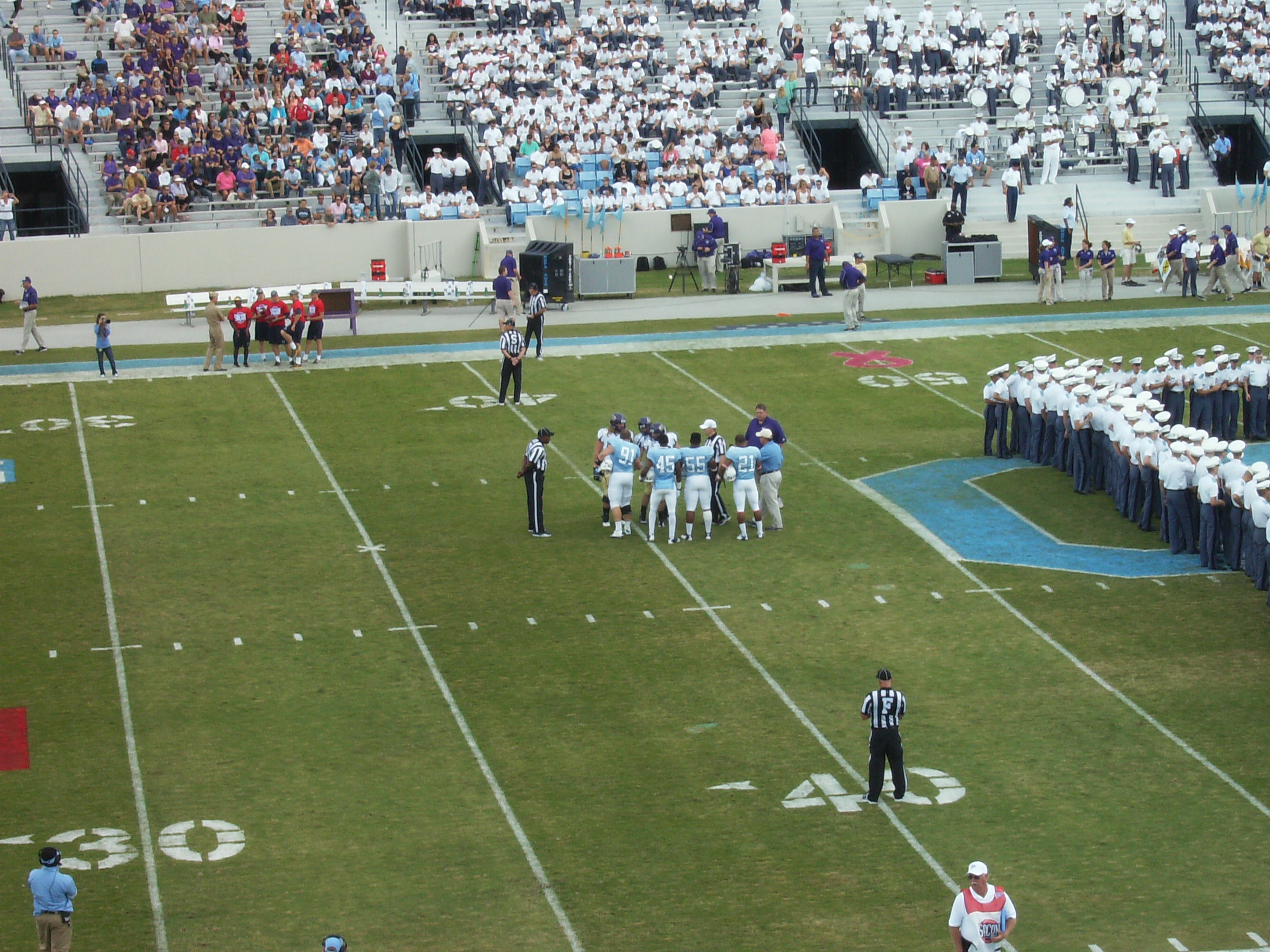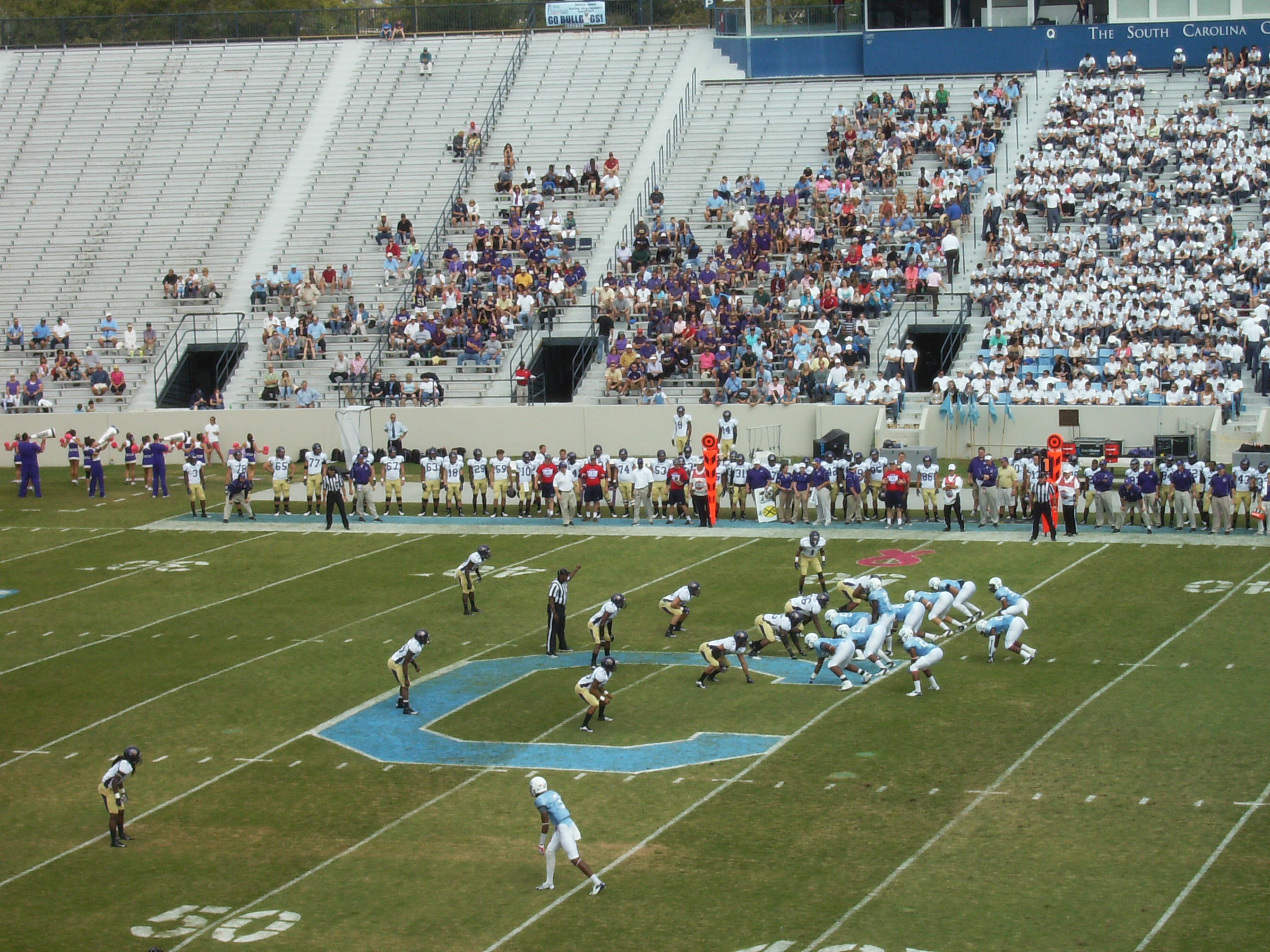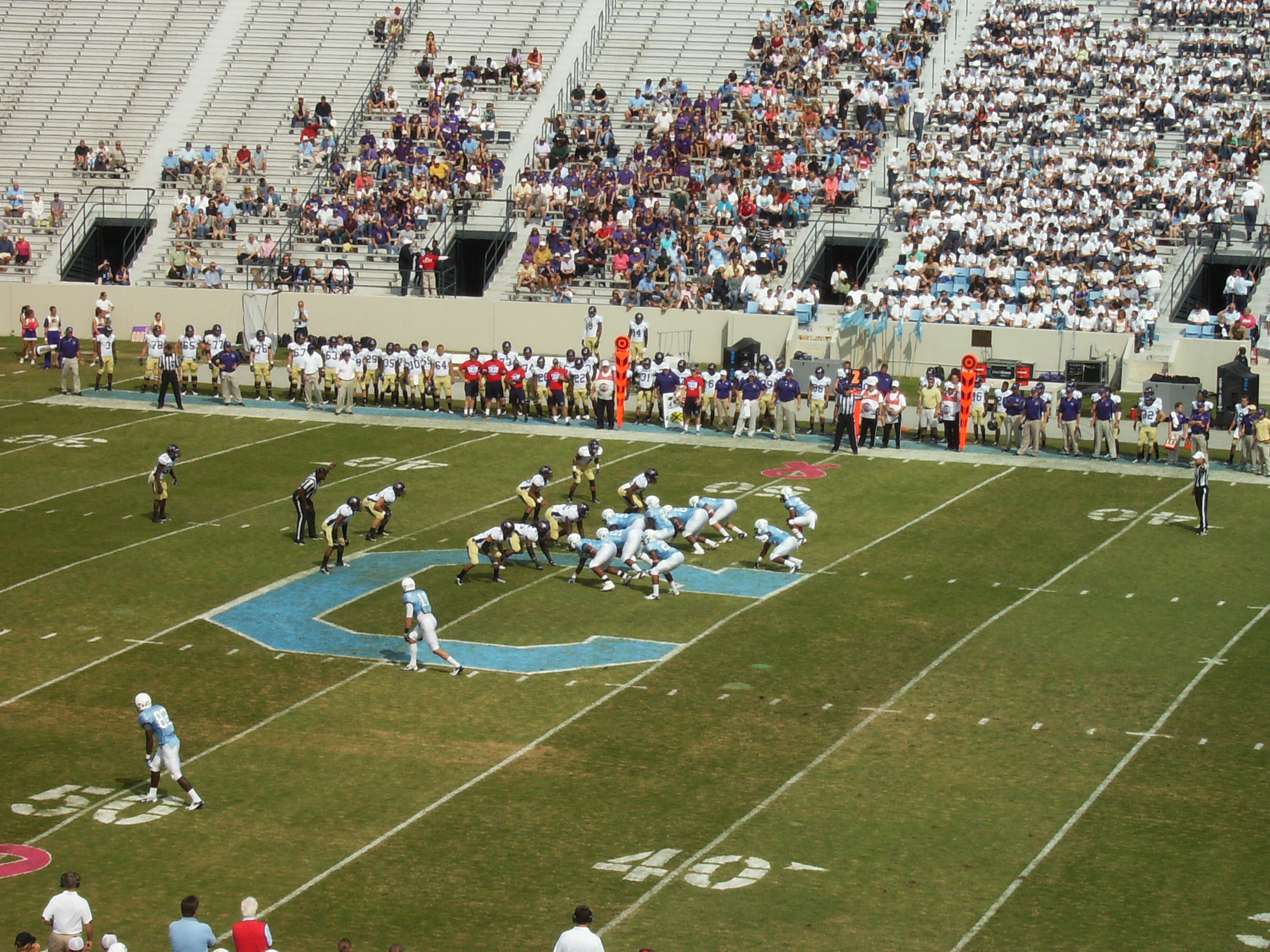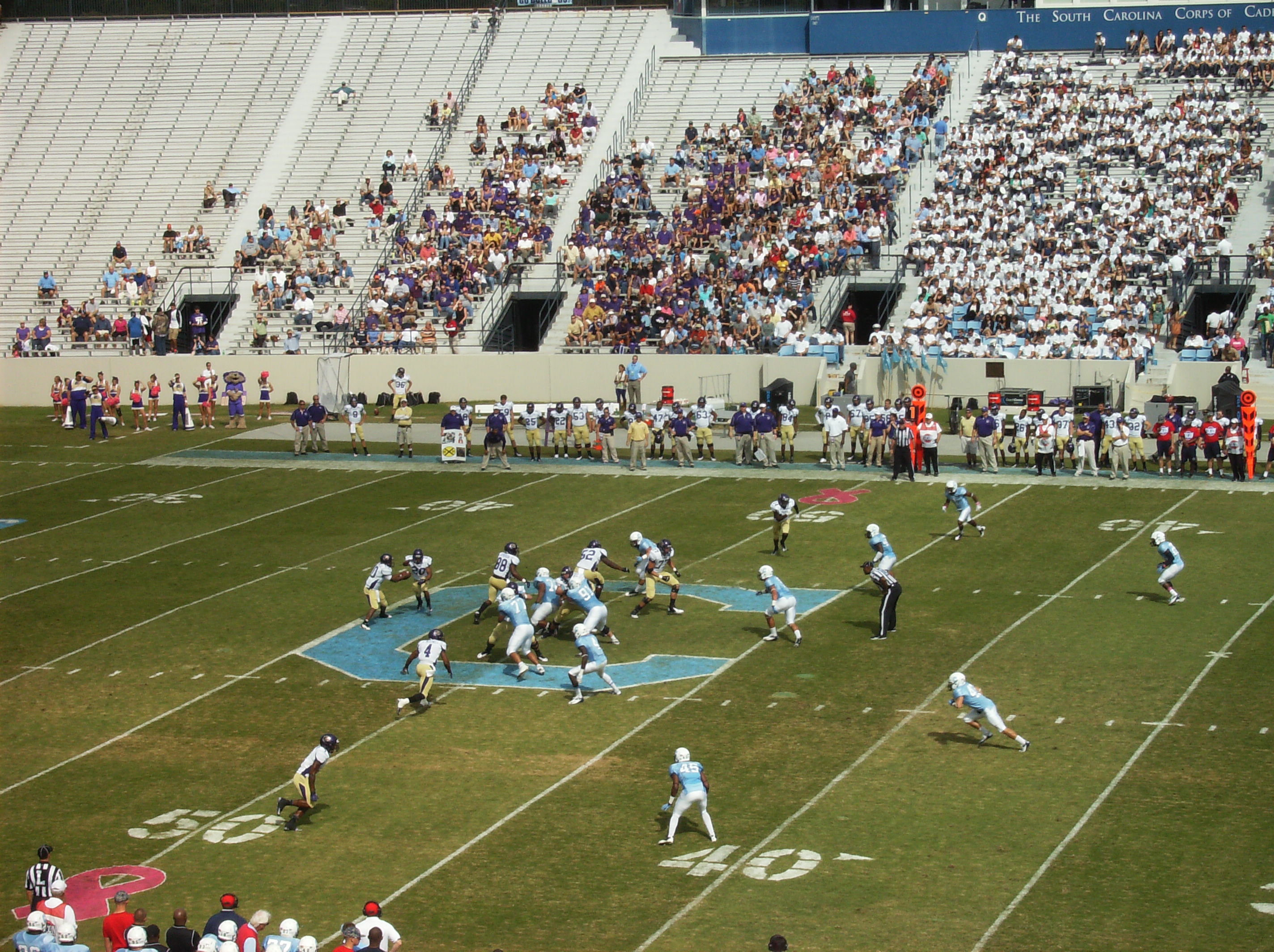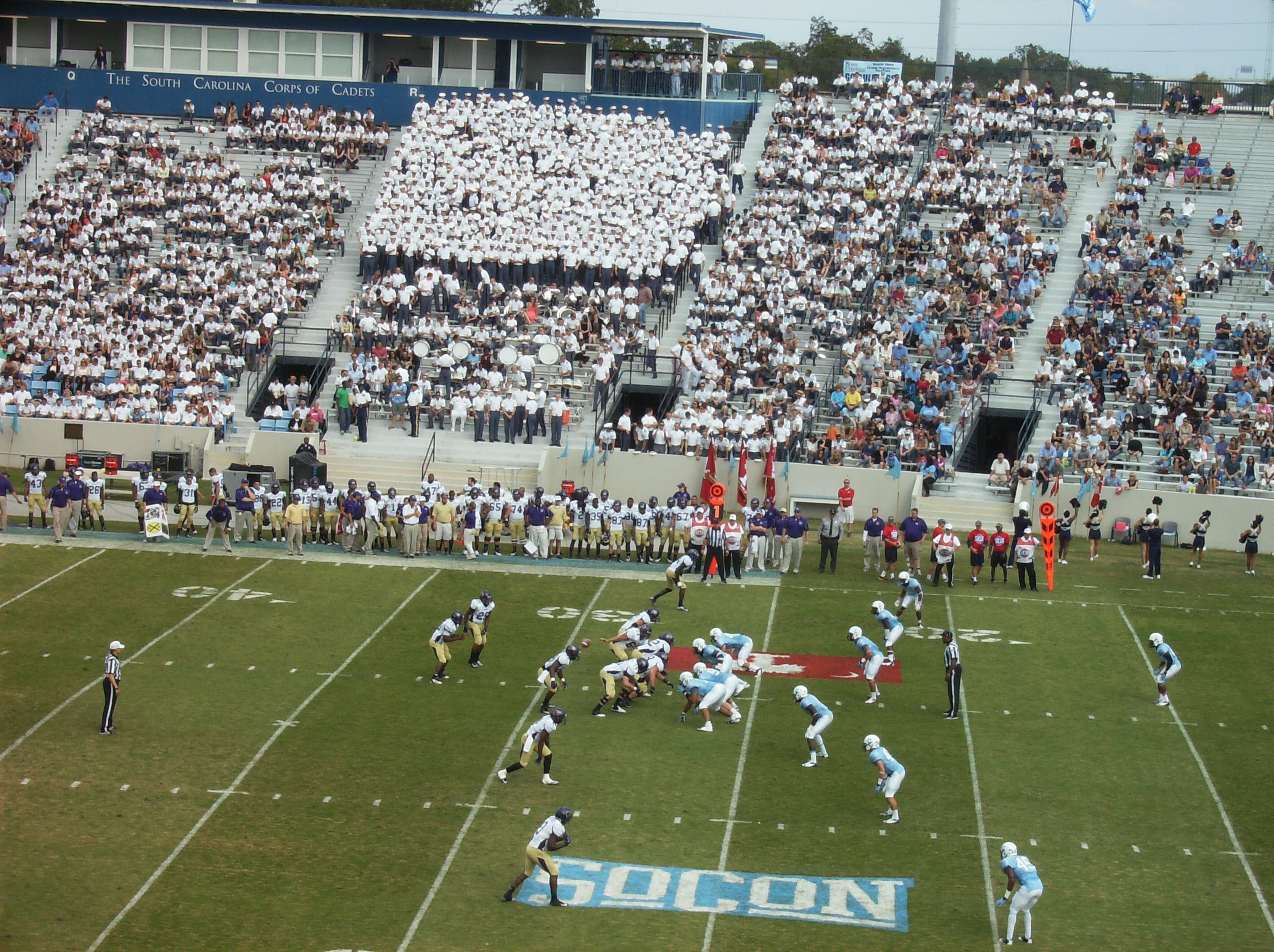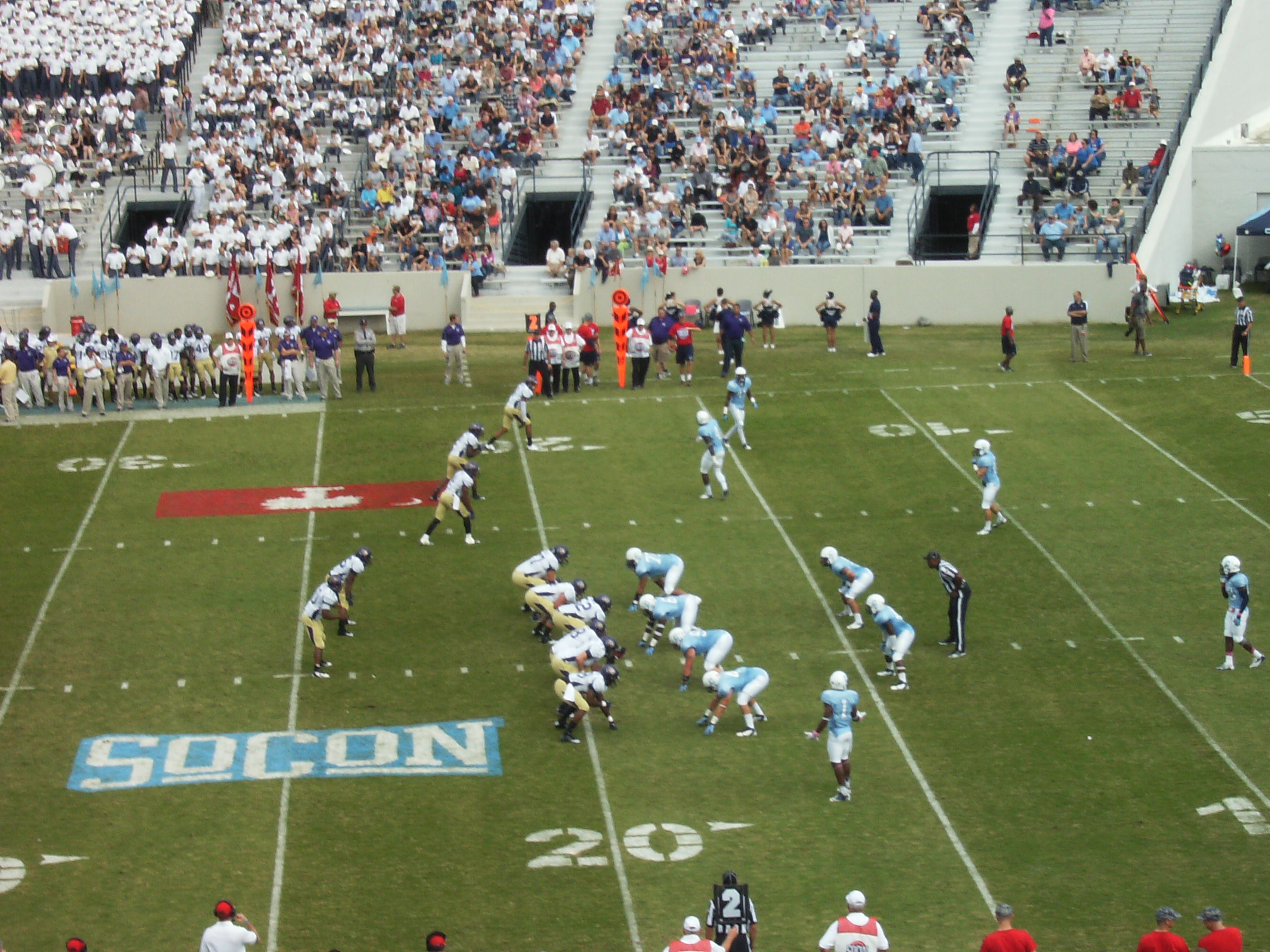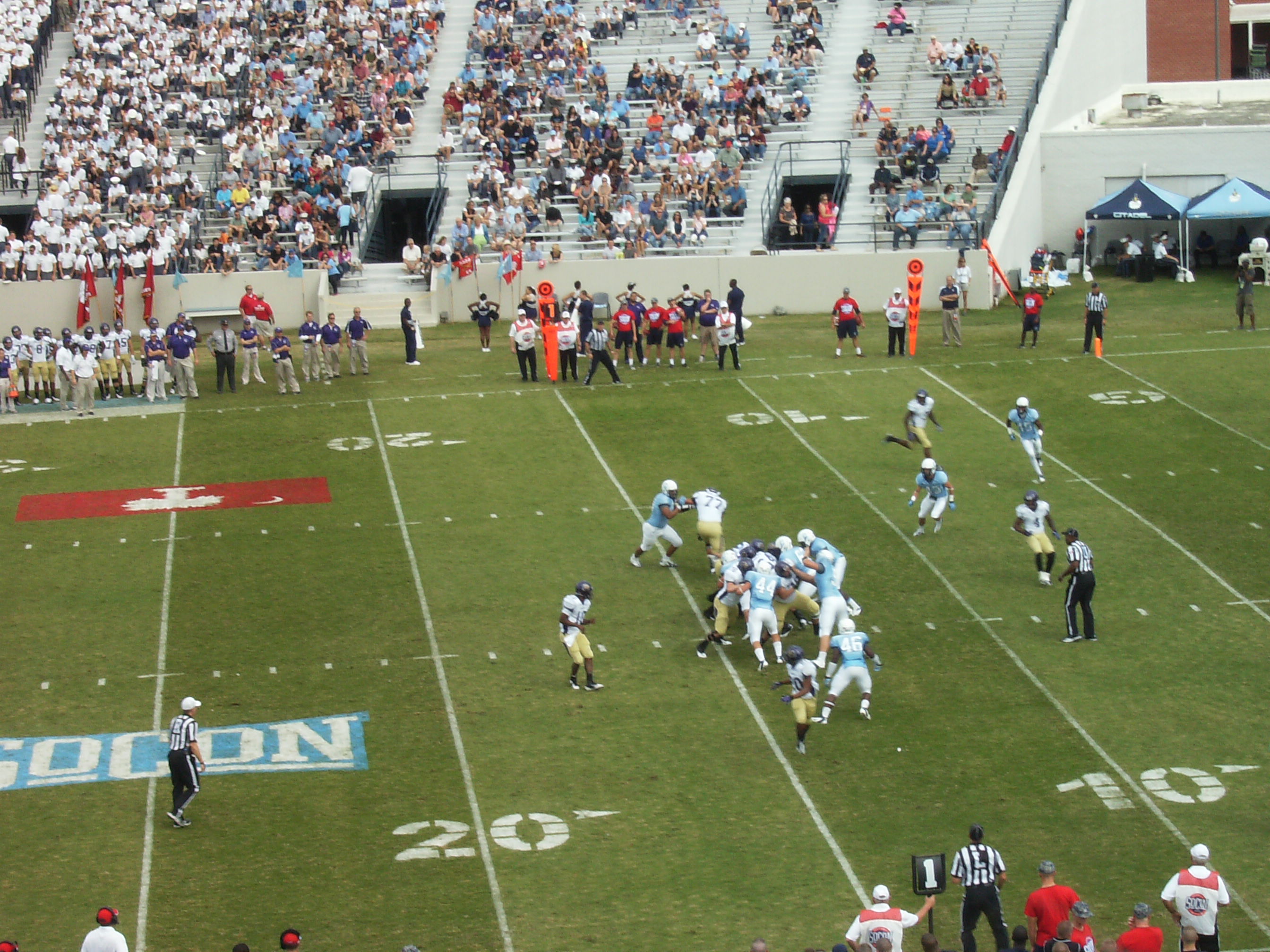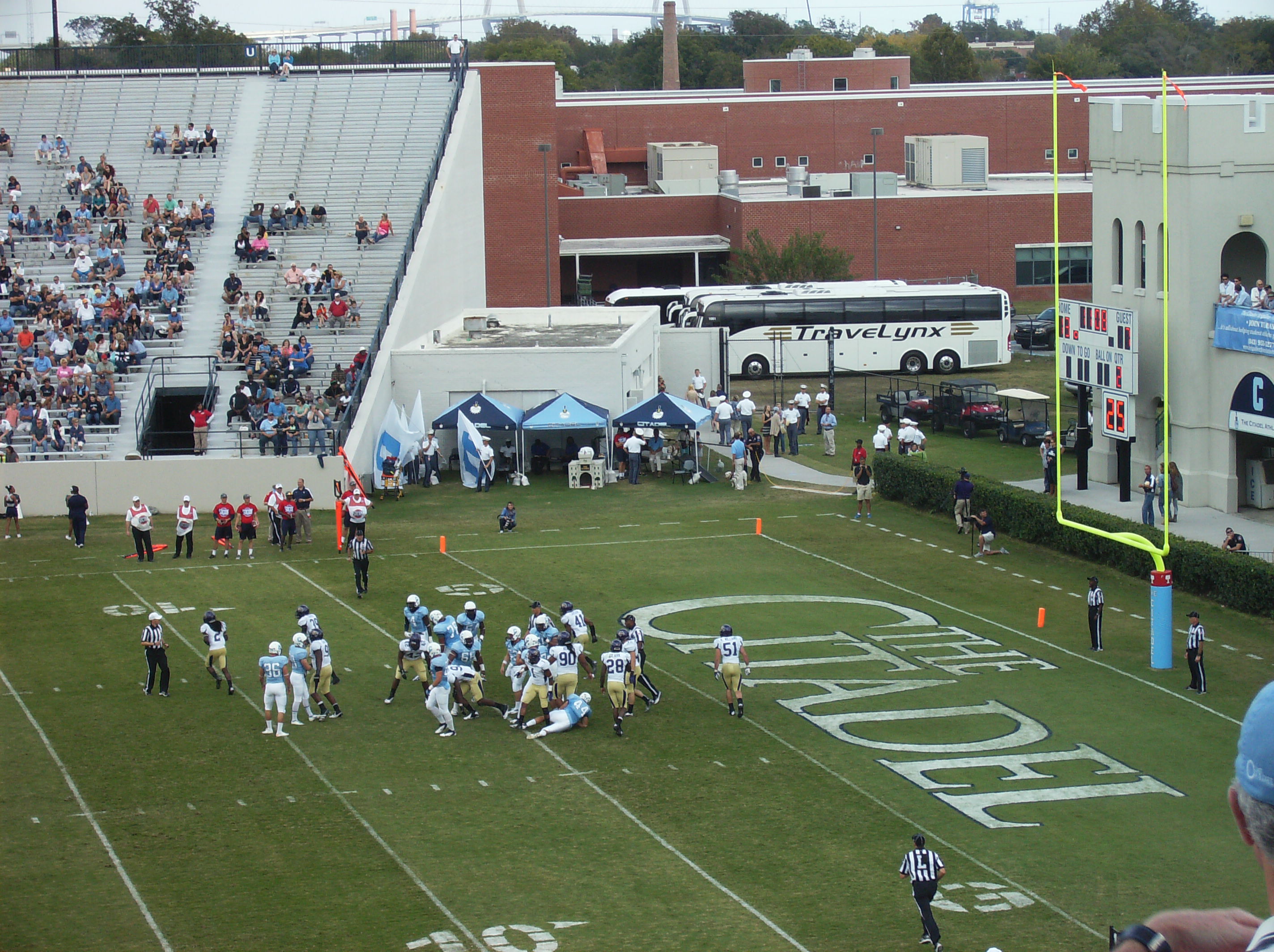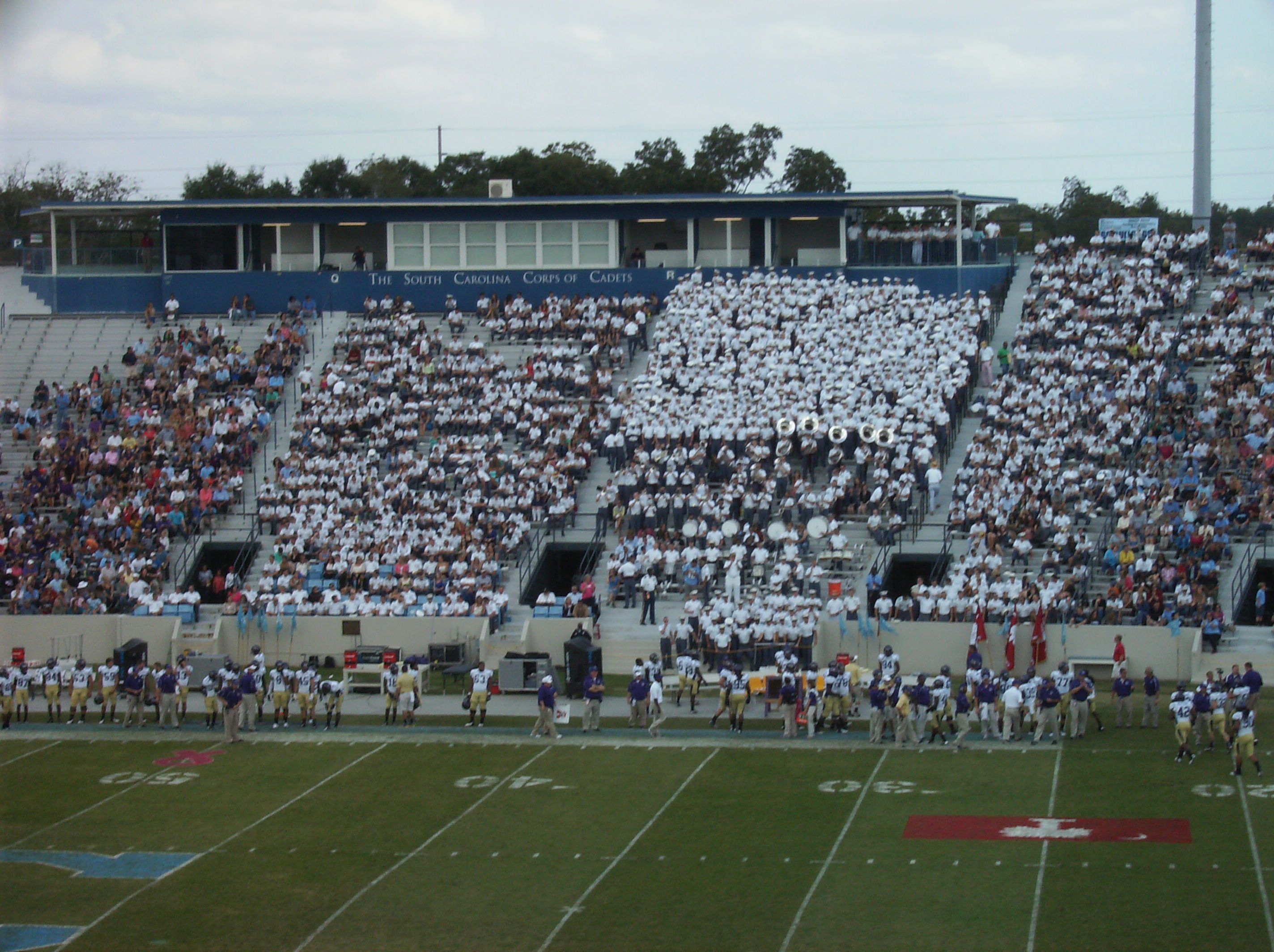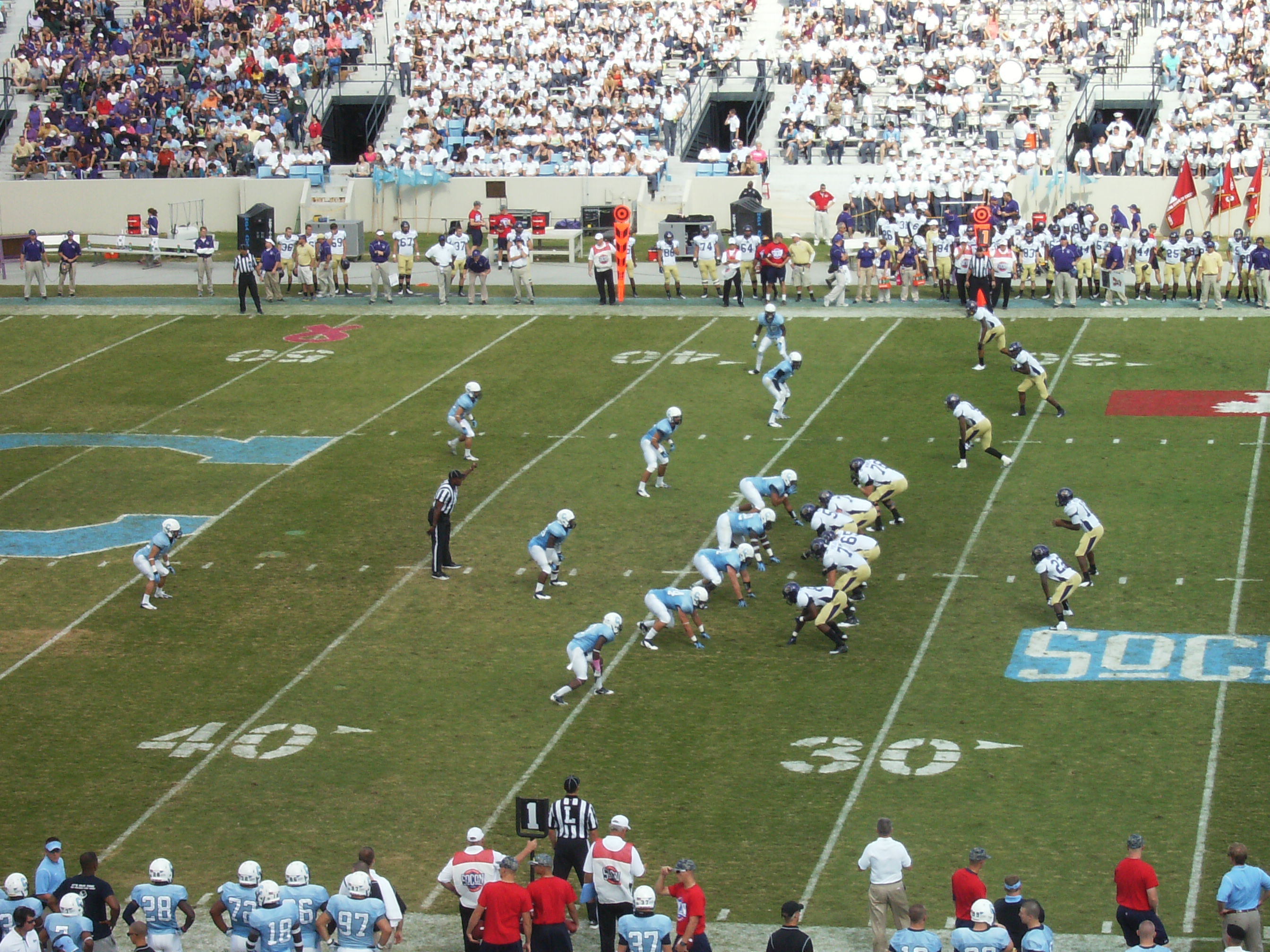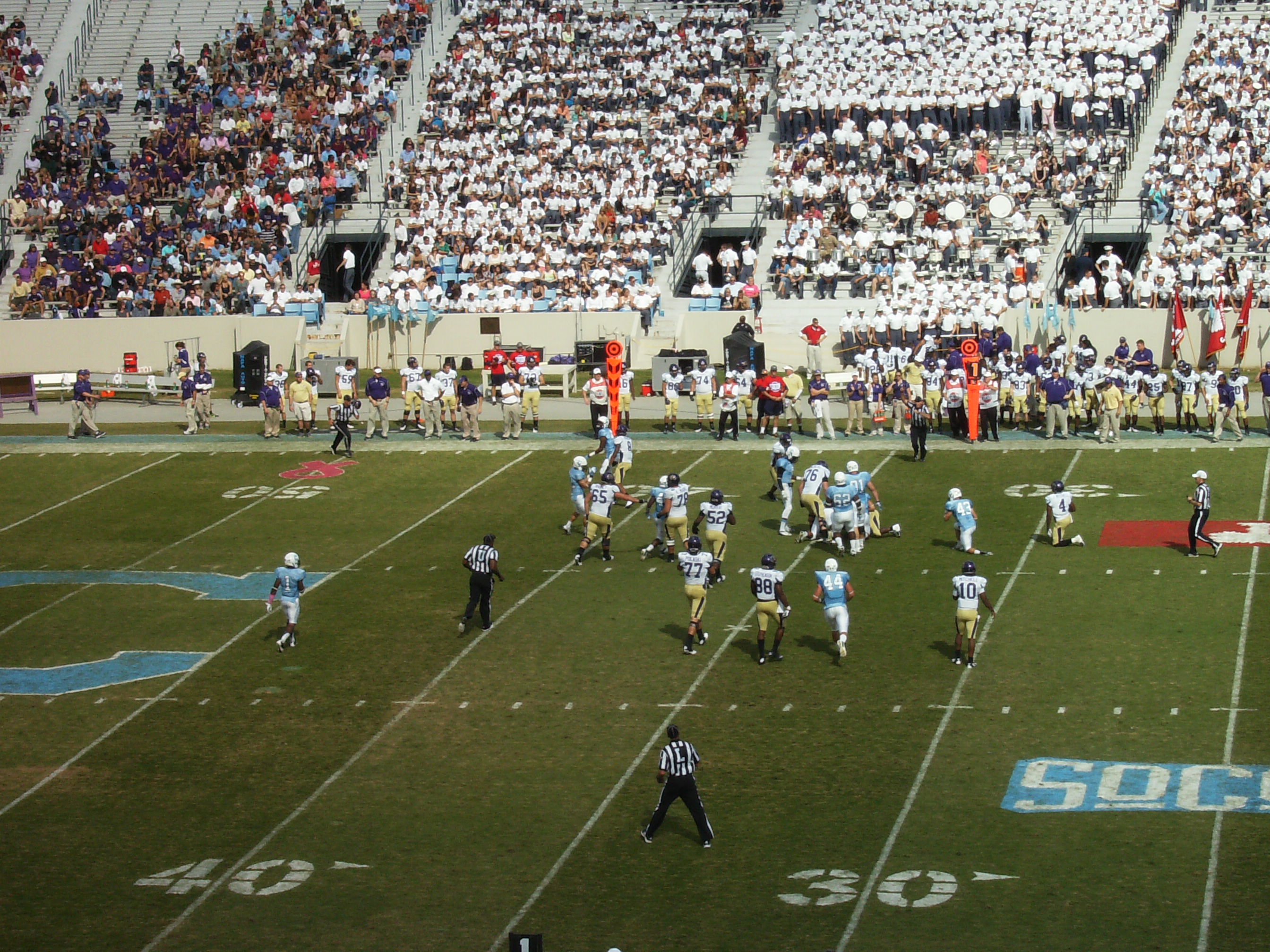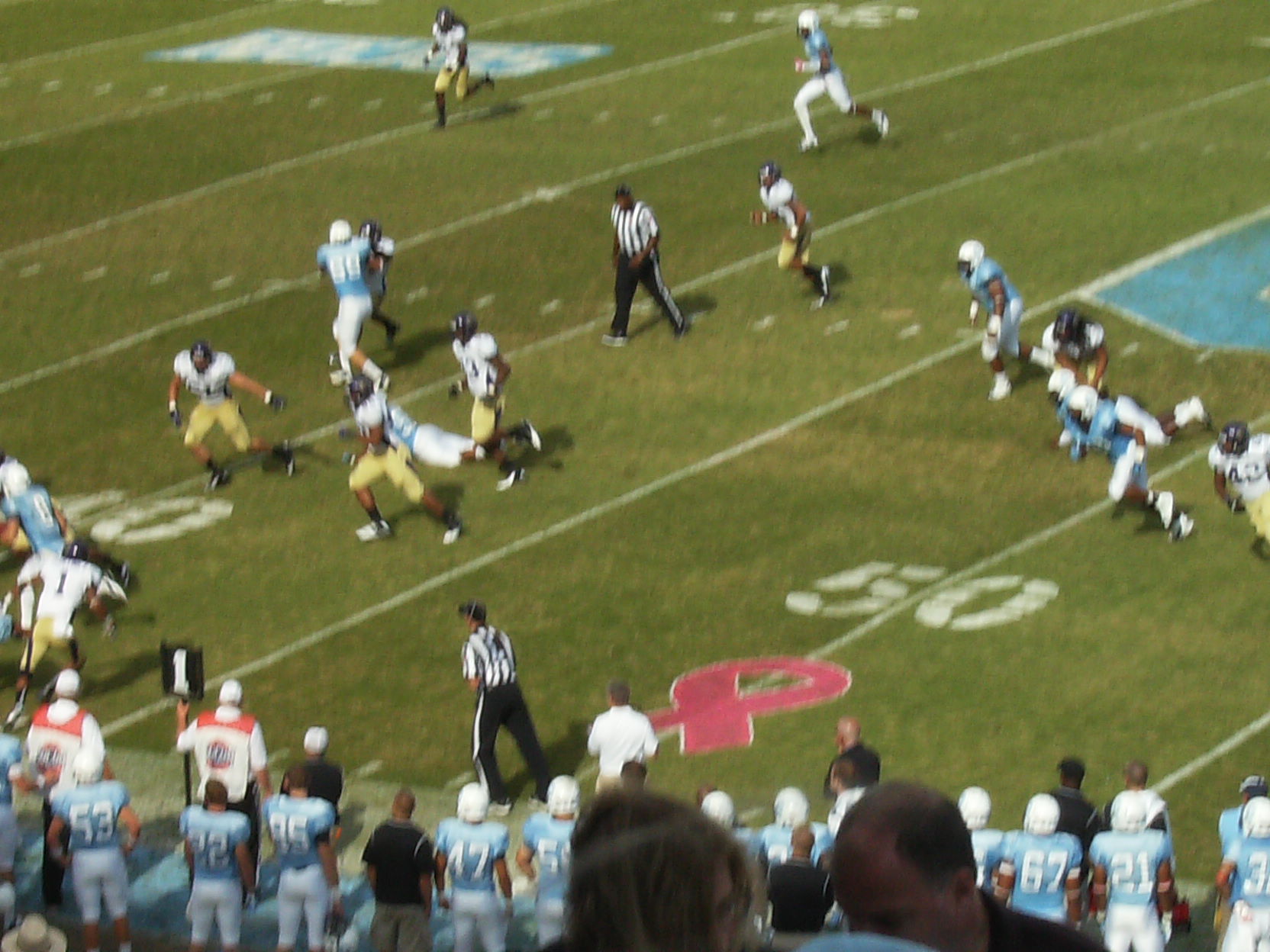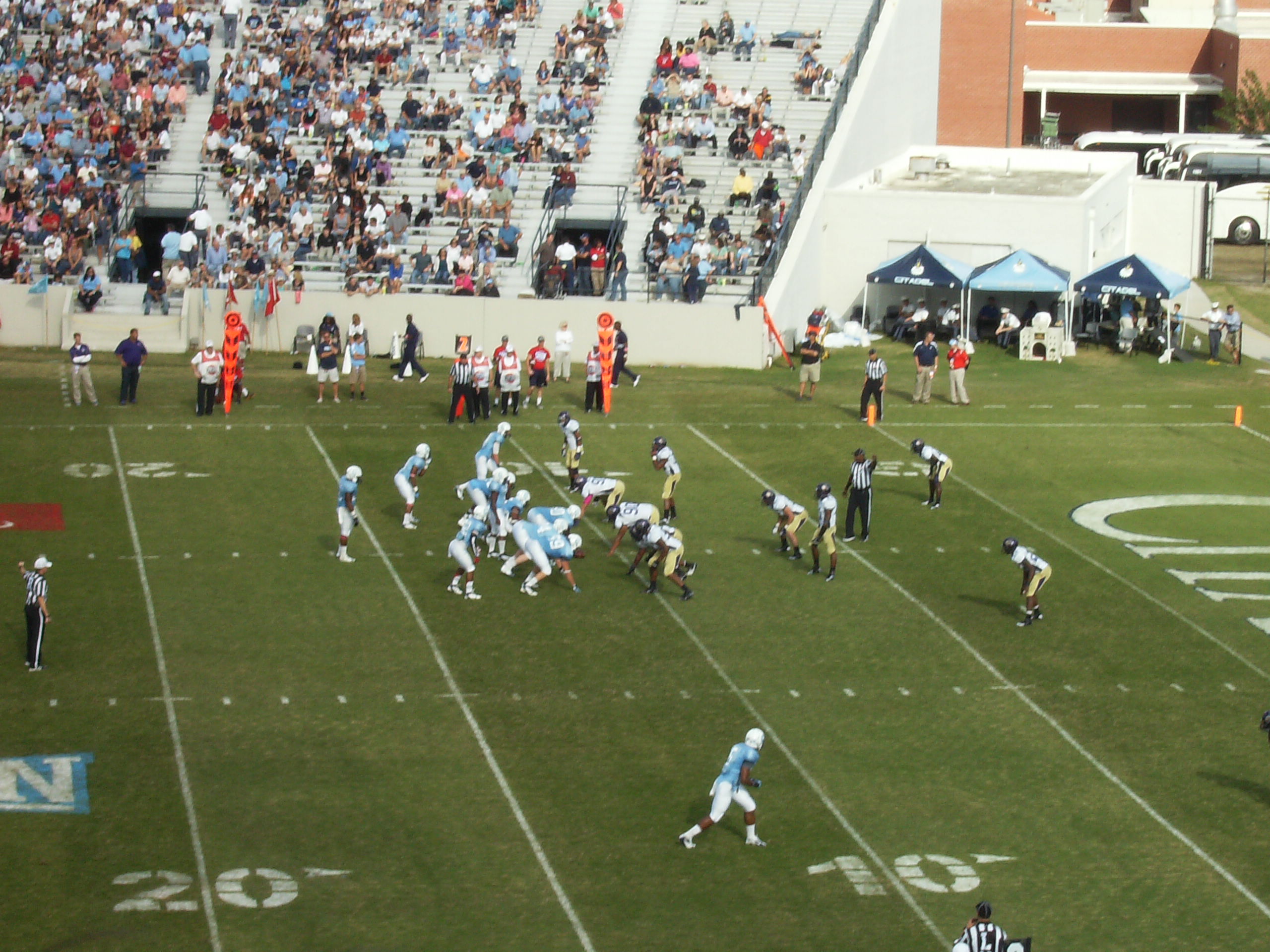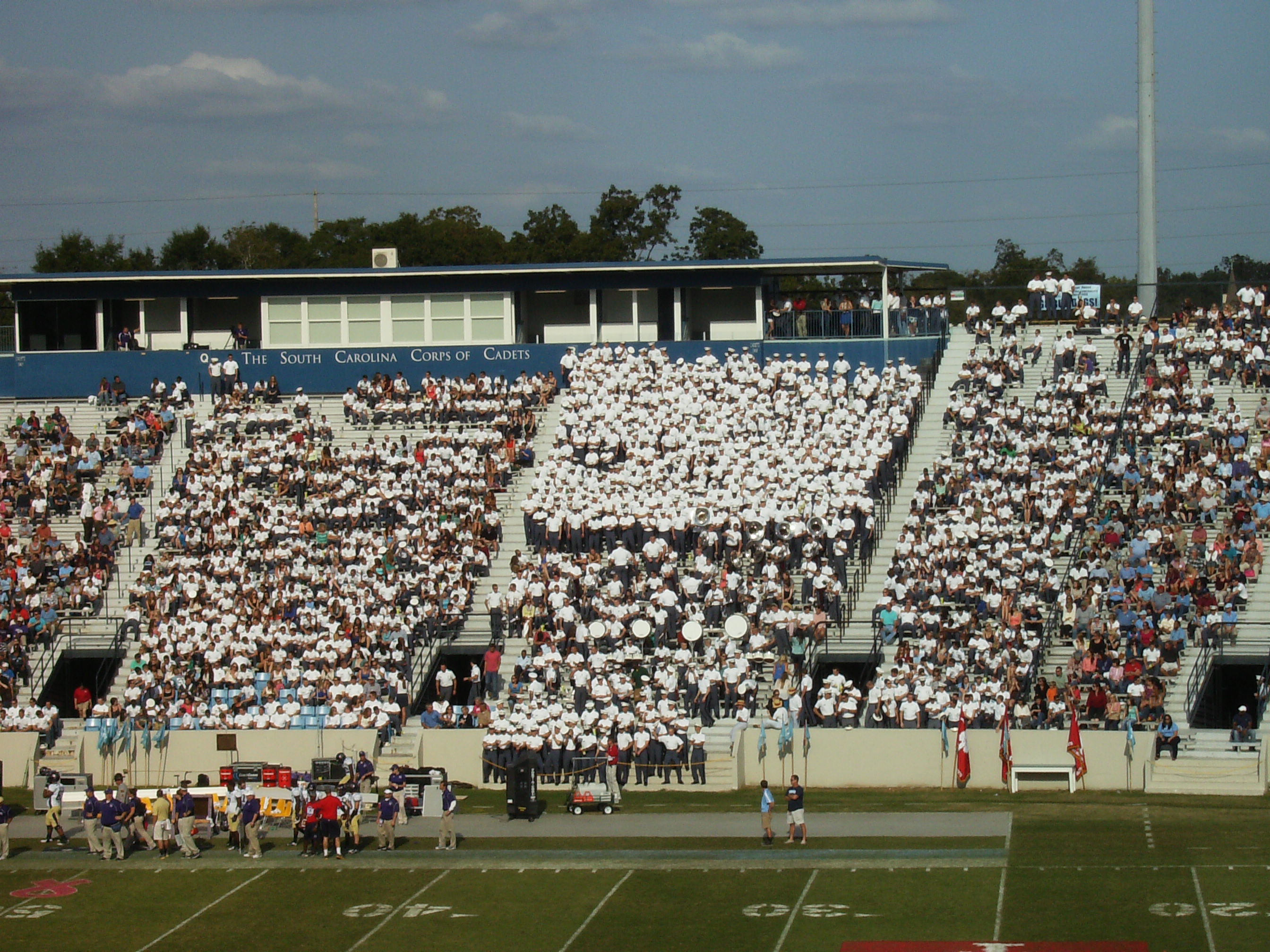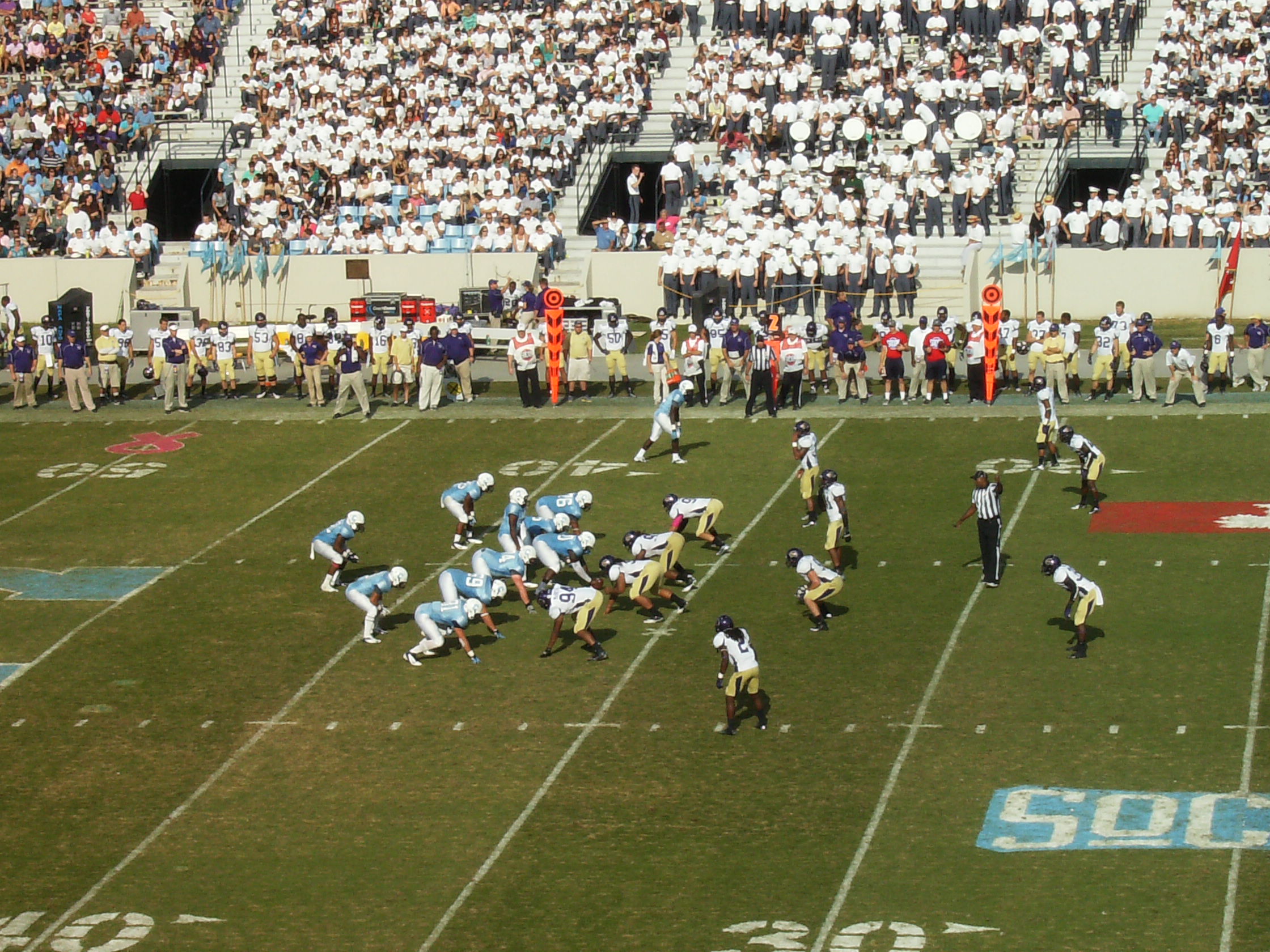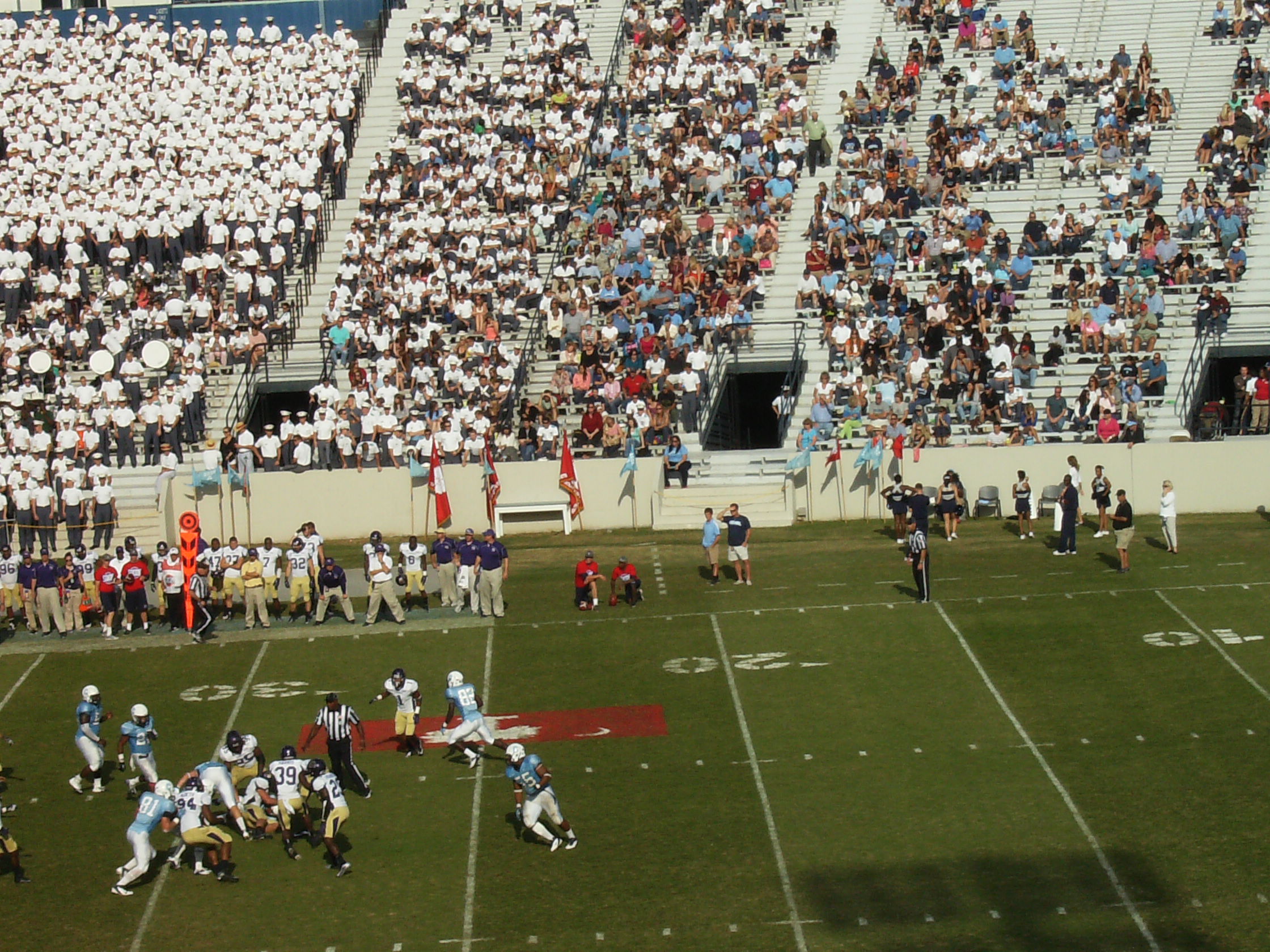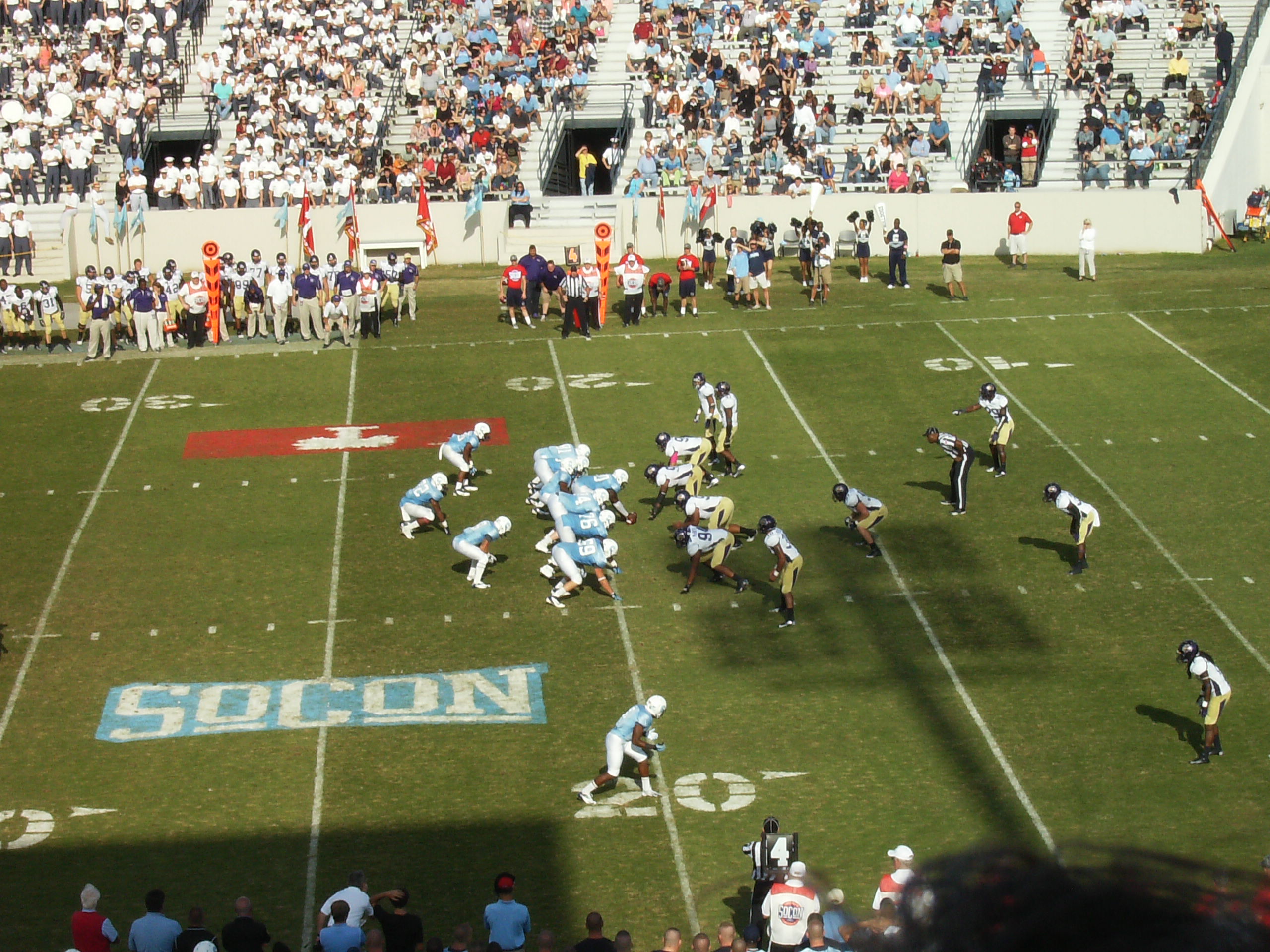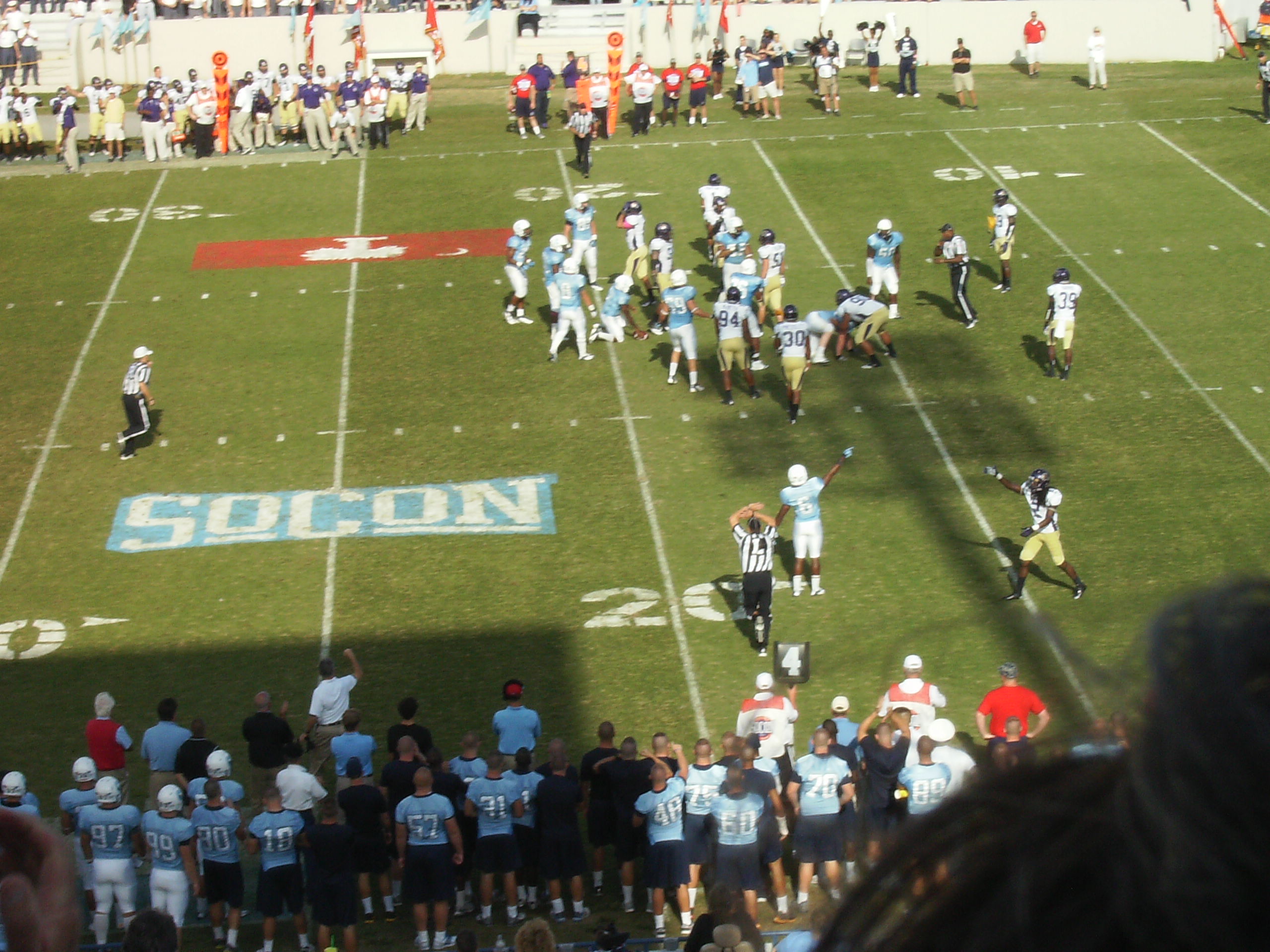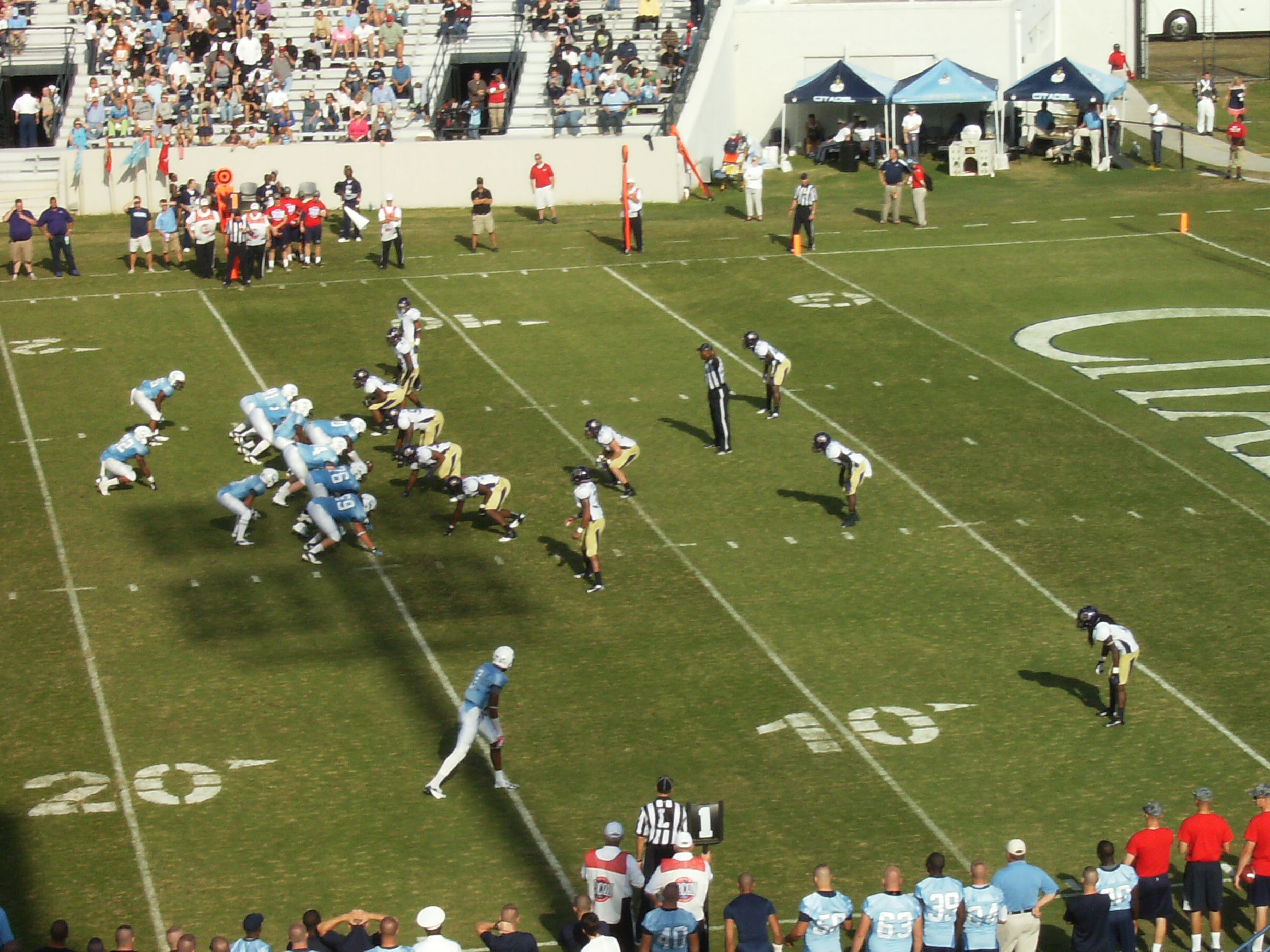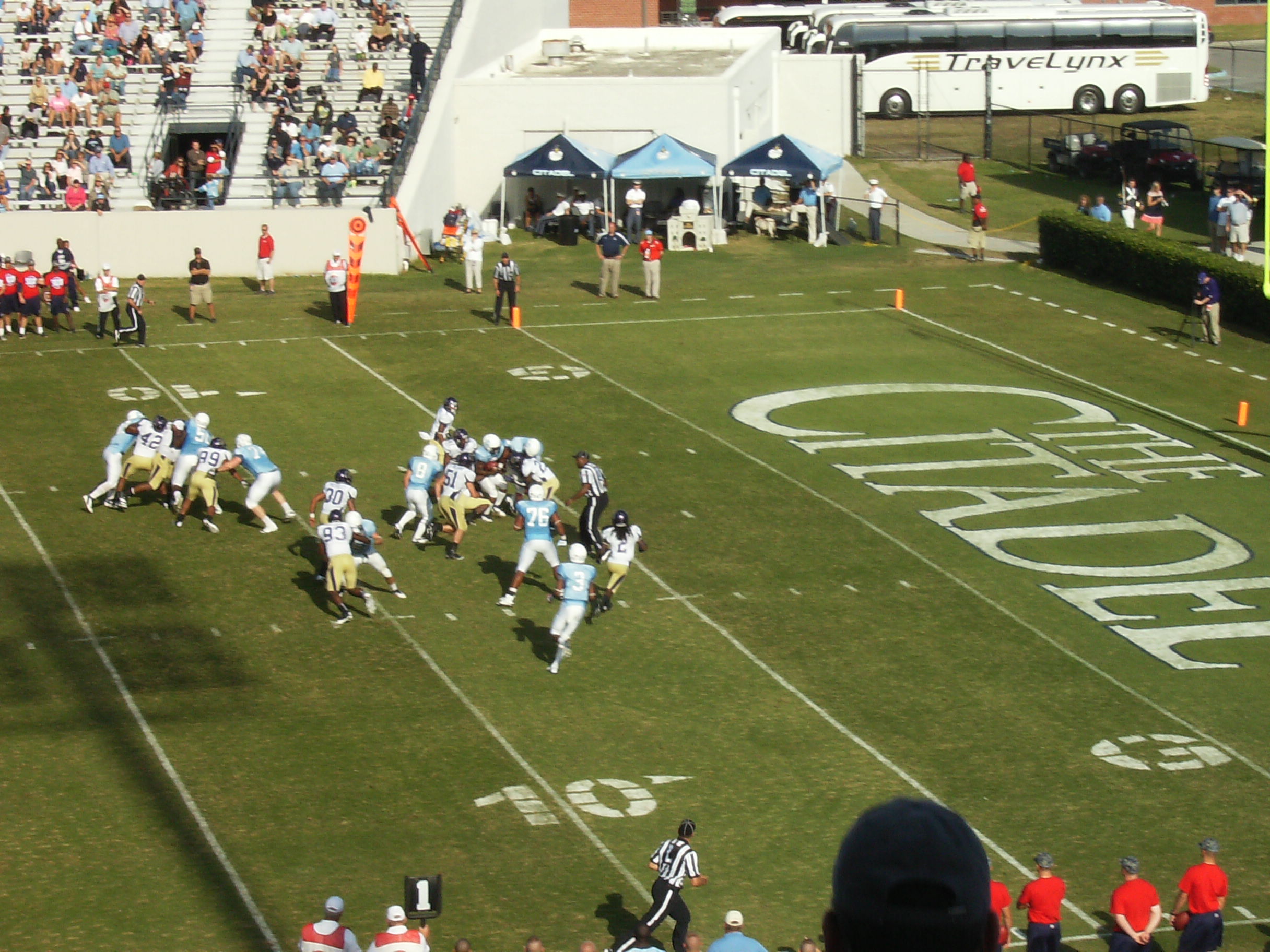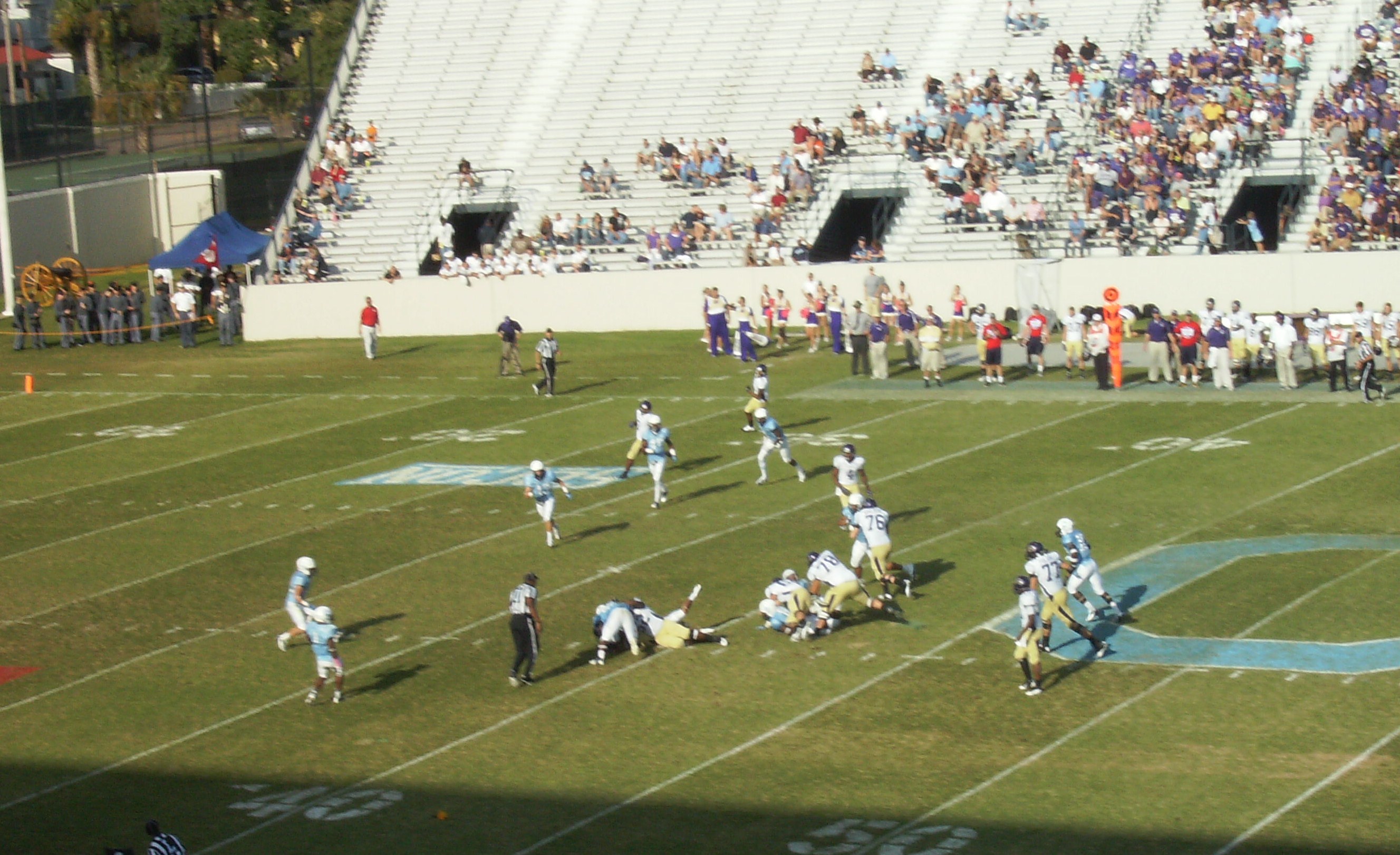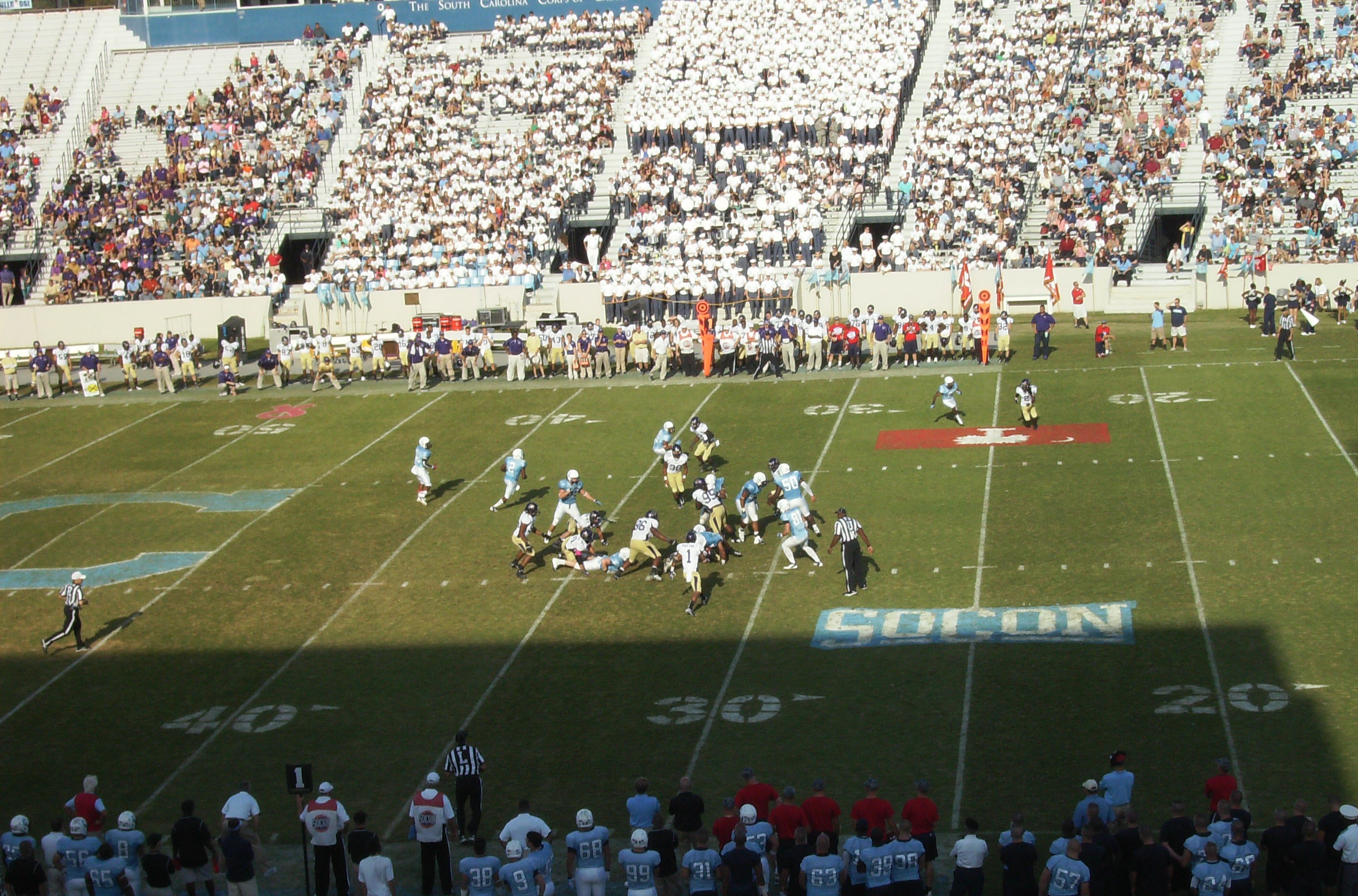
2012 Football, Week 10: The Citadel vs. VMI

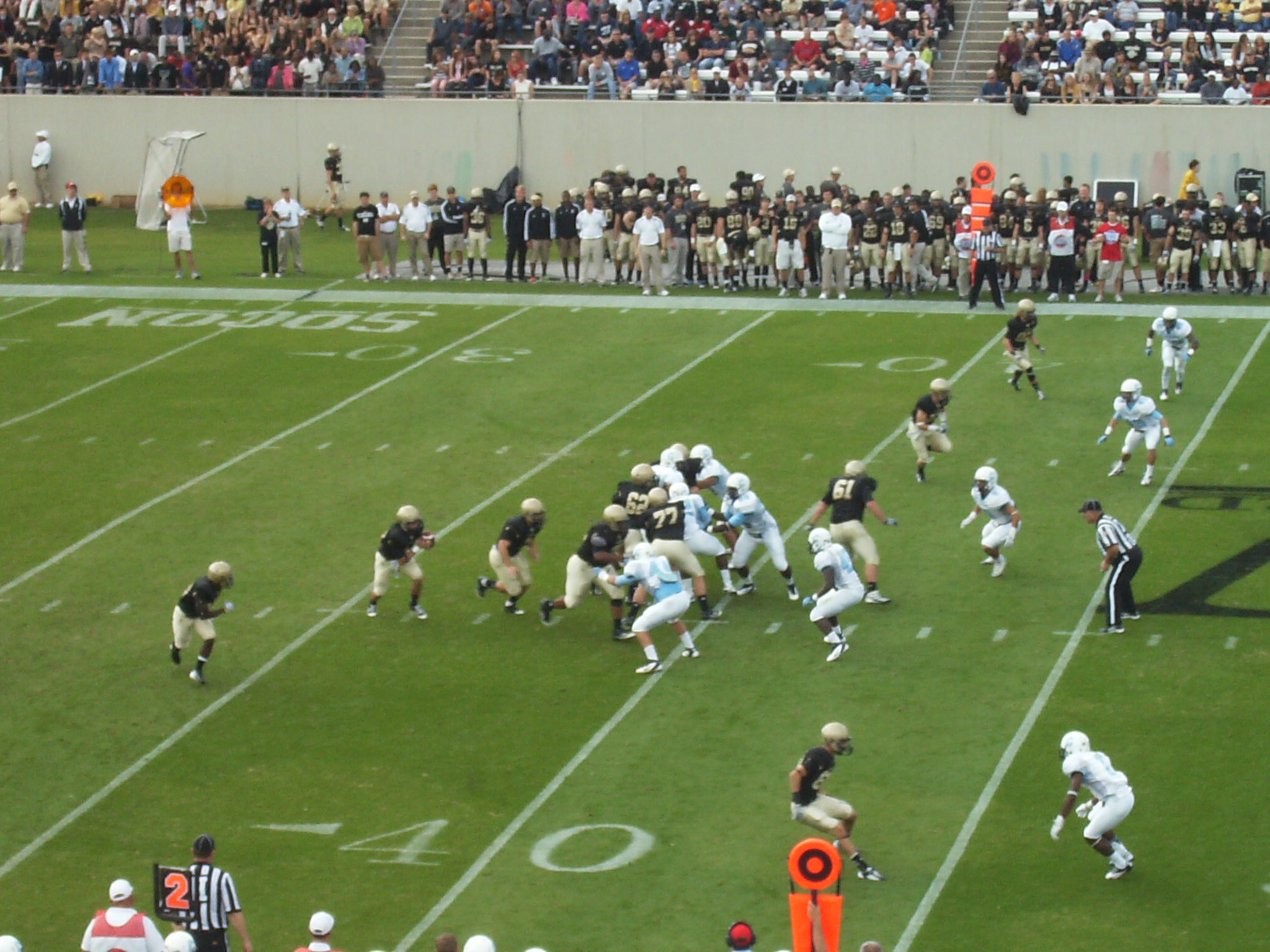
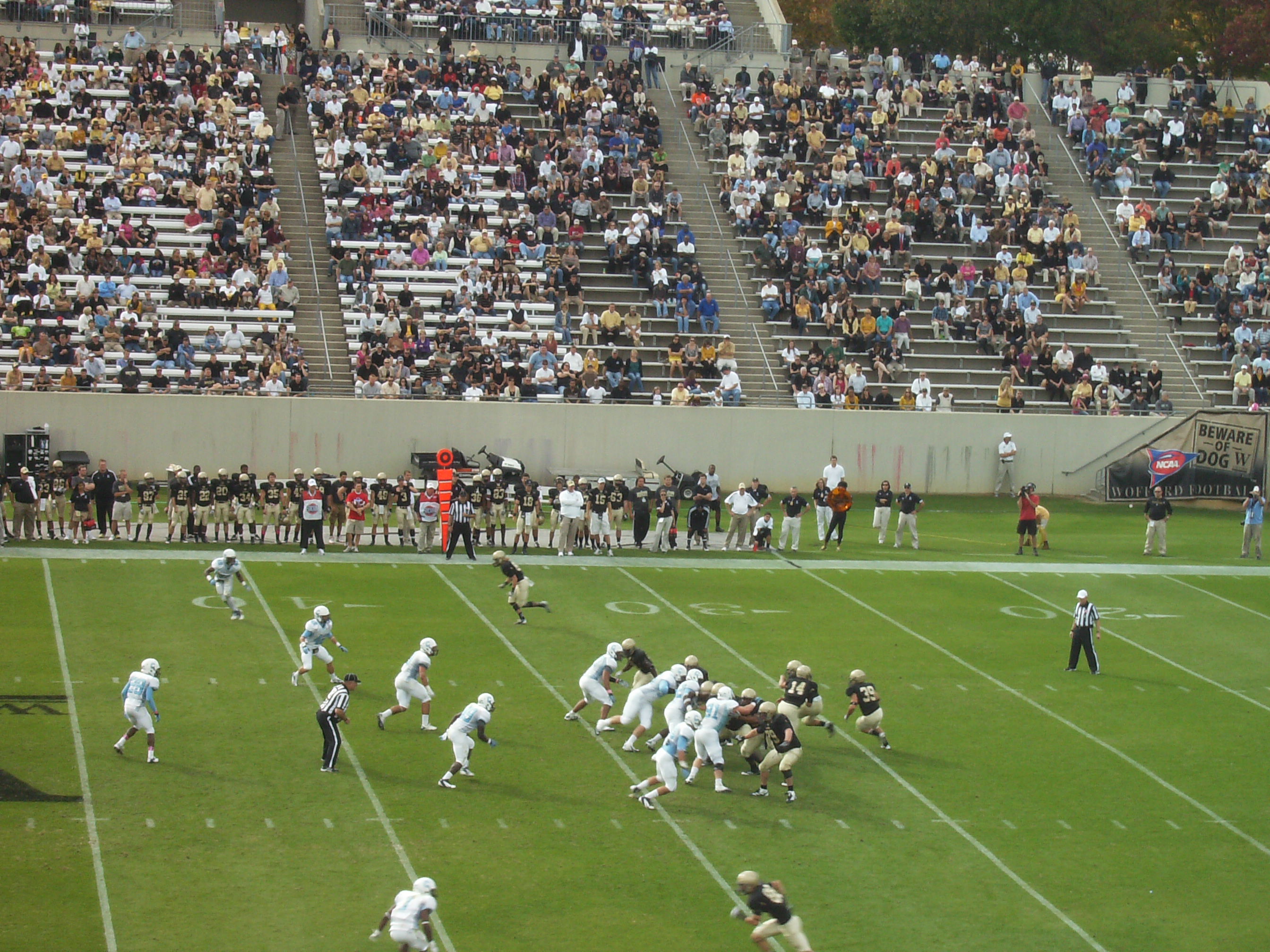
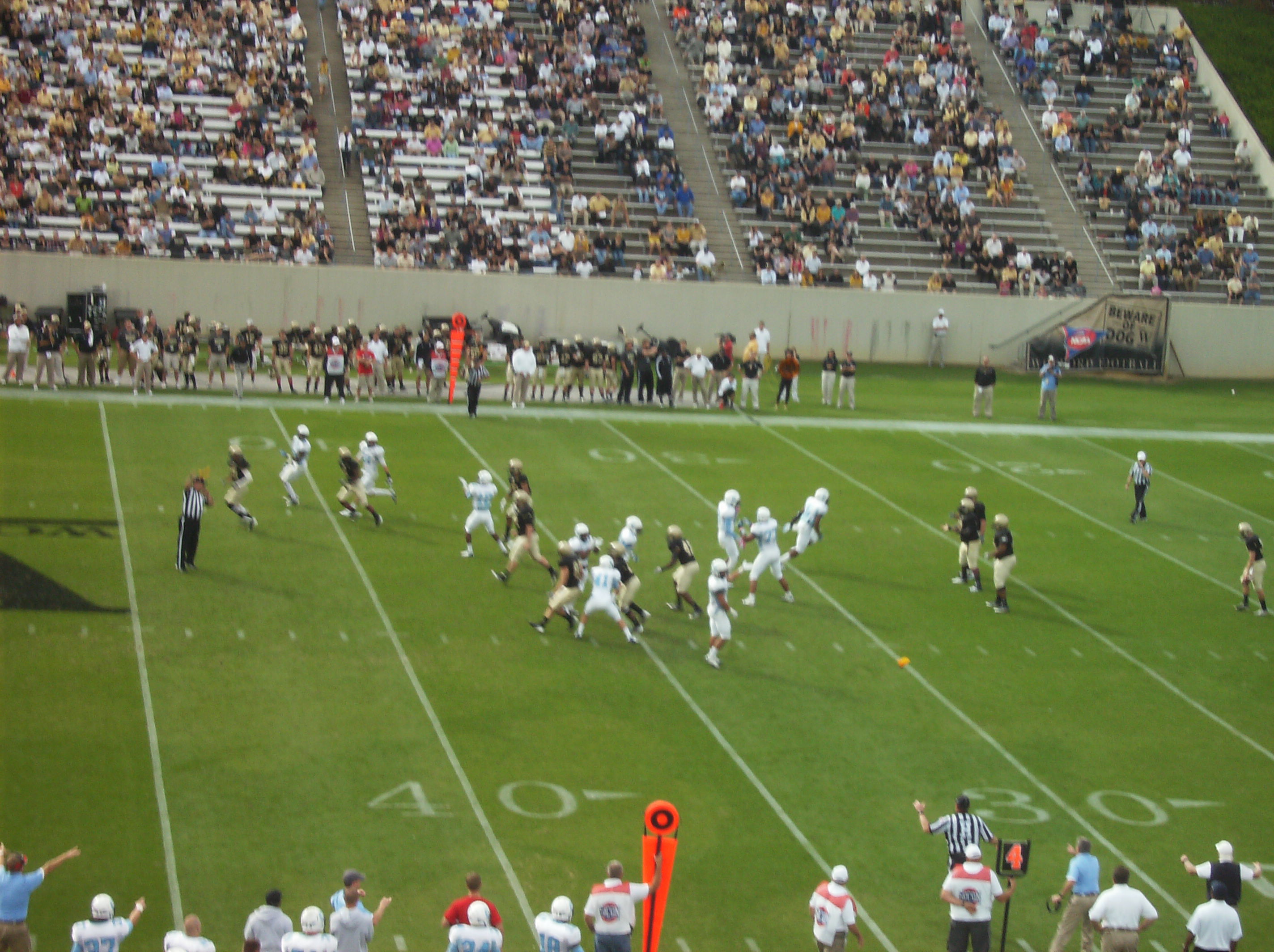
The Citadel at VMI, to be played at Foster Stadium in Lexington, Virginia, with kickoff at 1:30 pm ET on Saturday, November 10.  The game can be heard on radio via the twelve affiliates of The Citadel Sports Network. Danny Reed (the “Voice of the Bulldogs”) will call the action alongside analyst Josh Baker, with Lee Glaze roaming the sidelines and Walt Nadzak providing pre-game, halftime, and post-game commentary. Live video of the game will be available for a fee from the Big South Network.

Links of interest:

The Citadel game notes

VMI game notes

SoCon weekly release

FCS Coaches Poll

The Kevin Higgins Show (following the game against Elon), Part 1 and Part 2

Kevin Higgins’ 11/5 press conference quotes

Catching up with
Sadath Jean-Pierre

Sparky Woods at VMI’s Quarterback Club luncheon (with a guest appearance by VMI hoops coach Duggar Baucom)

Map of VMI campus

Saturday is going to be a busy day when it comes to athletic contests between The Citadel and VMI. Most of this post will focus on the football game, of course, but around the time the fourth quarter begins in Virginia, the Bulldog hoopsters will take on the Keydet cagers in McAlister Field House as part of the All-Military Classic.

That’s not all, though. Actually, most of the Dog vs. Roo action will occur on VMI’s campus, much of it prior to the football game.

At 10 am, there will be simultaneous competitions, both at the recently renamed Saunders Fields, a/k/a the North Post complex. On one field, there will be a women’s rugby game. On another, a men’s lacrosse match. Later in the day, following the football game, there will be a men’s rugby game at the North Post.

Admission to those matches is free, with donations going to the Special Operations Warrior Foundation. Anyone who is heading to VMI for the football game ought to check out these contests as well, particularly the lacrosse match, which should be a spirited affair. An additional way to support the teams and the SOWF: buying t-shirts and hats.

Another benefit to watching the Bulldogs’ lacrosse team is getting to see their snazzy uniforms in person, as they know how to wear camo. This includes the helmets.

I wrote extensively about VMI’s gridiron struggles last year. This season for the Keydets has been more of the same, and I’m not inclined to repeat what I wrote before. Some quick observations:

– VMI is 2-7, 1-4 in the Big South. The two victories have come against Chowan and Presbyterian. Both of those wins came at Foster Stadium; on the road, the Keydets are 0-5. Average score of those five losses: 35-8. VMI will be more than happy to host The Citadel this Saturday.

– Through nine games this season, VMI has only had 20 offensive plays that resulted in a gain of 20+ yards. By way of comparison, The Citadel has had 38 such plays. The Keydets have only had one rushing play of more than 20 yards all year.

Of those 20 “big plays” for VMI, only six have gone for 30 or more yards, the same number of 30-yard+ plays The Citadel had in its victory over Appalachian State.

– VMI is 0-7 when trailing at halftime, despite the fact that the Keydets have only suffered two early blowouts (against Coastal Carolina and Stony Brook). VMI has hung around in most of its losses, generally trailing by about ten points at the break.

The reason the Keydets haven’t been able to mount a few successful comebacks is simple: VMI can’t score (10.6 ppg).

– Sparky Woods spoke at VMI’s Quarterback Club luncheon about the Keydets’ most recent game, the 45-7 loss at Stony Brook (you can see that at one of the above links). He also discussed the matchup during the Big South teleconference, but Woods was speaking to a different audience in Lexington and his comments reflected that.

He seemed to emphasize the transient nature of Stony Brook’s roster when talking to the QC, saying something to the effect that VMI did not face many players actually recruited out of high school by the Seawolves, but rather a squad made up largely of transfers, including a former Iowa running back and refugees from Hofstra’s now-disbanded program.

I don’t think Woods was being defensive; rather, he appeared to be matter-of-factly explaining the way of the world to his audience. Stony Brook’s football program is leaving the Big South after this season, and because of that it may have been easier for Woods to outline the differences between the two squads.

– Since Stony Brook is leaving the Big South, I have a suggestion for the VMI administration: go ahead and take advantage of the extra non-conference game created by the Seawolves’ departure by scheduling an easy win.

VMI desperately needs to get that “no winning seasons since 1981” monkey off its back. The simplest way to do that is to schedule as many sure-thing victories as possible.

If the Big South is going to be a six-member league in football for a while, that means the Keydets will play five conference games each season. I’m assuming VMI needs to schedule a “guarantee” game each year. The remaining five contests, though, ought to include The Citadel and four teams the Keydets should expect to beat.

I realize VMI has long-cherished rivalries with Richmond and William & Mary (although the Tribe is not on the schedule this season), but I think it is more important long-term for Keydet football to develop some momentum, and to do that VMI needs to win some games. Right now, VMI is not going to pick up victories against those two schools (the Spiders won this year’s meeting in Lexington 47-6, the tenth straight win for UR in the series since VMI joined the Big South).

I think VMI should try to get four out-of-conference “gimmes” on the slate. Win those, pick off a couple of Big South opponents (more than manageable), and suddenly the Keydets wind up with a winning season.

– VMI has a new defensive coordinator this year, Jeff Farrington. He is a 1982 graduate of The Citadel, and is thus part of a semi-tradition of sort: grads from one of the military colleges coaching at the other (like Bobby Ross and Cal McCombs).

– This will be the second time VMI has faced a triple option team this season. The Keydets played Navy earlier in the year, losing 41-3. VMI trailed by just ten points (13-3) at halftime of that game, partly because Navy shot itself in the foot on multiple occasions, but also because the Keydet D played fairly well in the first half.

Considering that fifteen of the twenty-two players on VMI’s defensive two-deep are freshmen, sophomores, or redshirt sophomores, that wasn’t a bad effort. Nosetackle Charlie Jones and left end Shawn Chapman are the only seniors on VMI’s depth chart for defense.

VMI lined up against Navy in a five-man front, just as it did against The Citadel last season. For an extensive and excellent explanation of how the Keydets defended the triple option, and what Navy did to combat what they were doing, I highly recommend The Birddog’s post about the game, complete with video analysis:

VMI spent the game in a 5-man front, which meant that we saw a lot of zone dives and zone options. The coaches like to run the zone dive against odd fronts– or any front where the defense has someone lined up directly across from the center– because it’s an easy read for the fullback. The fullback reads the DT and runs to the opposite side of the center that the DT plays.

Navy actually didn’t run a lot of “true” triple option plays in that game, because of how VMI was playing defense.

– VMI has had the same starting eleven on defense in all but one game this season. One of those starters, free safety Adam Morgan, saw action against The Citadel last season as a quarterback, backing up Eric Kordenbrock.

Morgan was the Big South defensive player of the week on October 8 after intercepting two passes against Presbyterian. He is the only Keydet to receive league player of the week honors this season.

– At Kevin Higgins’ weekly press conference, the two Bulldog football players who spoke to the media were defensive lineman Bay Amrhein and offensive guard Jim Knowles. I was reminded again that there is a significant element of educational/life experience in intercollegiate athletics when Knowles (a native of Florida) said the trip to VMI would be the first time he had ever been that far north.

– Higgins noted that the Keydets lead the Big South in pass attempts. What he was polite enough not to say was that while VMI does lead that league in pass attempts, it is only fourth in the Big South in completed passes.

VMI is last in the Big South in scoring offense, total offense, rushing offense, and red zone offense. It is next-to-last in offensive pass efficiency, first downs made, turnover margin, and penalties committed.

Kevin Higgins singled out Keydet wide receiver James Rogers as someone to watch. Rogers is actually listed as a backup on the two-deep, but leads the team with 32 receptions, including an 80-yard TD grab against Gardner-Webb.

– The Keydets are not strong in special teams play. VMI is last in the Big South in kickoff return average and net punting, and next-to-last in kickoff coverage. The Keydets have only converted four of nine field goal attempts. What VMI is fairly good at is returning punts.

Fans who attended last year’s game at Johnson Hagood Stadium between these two teams will remember that VMI’s punt unit was — well, it was terrible, to be honest. The Citadel blocked three punts in that game.

This year VMI has tightened things up, only allowing one blocked punt all season.

– Conference opponents have committed more penalties against VMI than any other Big South team, which suggests that sloppy play can be viral. The Bulldogs have to be careful on that front after committing a higher-than-normal number of penalties against Elon.

Should The Citadel win this game on Saturday? Yes. Is it a lock? Absolutely not.

I can recall a few VMI teams a lot worse than this year’s edition giving The Citadel a hard time. I remember 1986 and 1989 all too well (especially 1986, the game that sealed Tom Moore’s fate as head coach of the Bulldogs).

That’s the nature of a true rivalry. People remember plays that happened decades ago, like Brian Ruff’s stop to clinch the 1975 game, or the back-to-back TD runs by Gene Brown in 1988.

I won’t be surprised at all if Triple O’Higgins struggles in the first half against VMI’s defense, which is probably better than its statistics suggest. The Bulldogs need to remain patient on both sides of the ball. The Citadel also must take advantage of its solid edge in the kicking game.

This is a big game, not just because the coveted Silver Shako is on the line, but because a victory would clinch a winning season for The Citadel. If the Bulldogs finish with at least six wins, they will have accomplished their primary goal.

I think it’s going to be tougher than expected on Saturday for the Bulldogs. VMI will be ready to play. A win over The Citadel will make the Keydets’ season.

It will be a challenge. The Citadel must meet that challenge.

McAlister Musings: SoCon voting issues, preseason ratings, and corps attendance

Before I get to the three specific topics I am discussing in this post, some links of interest:

My preview of The Citadel’s 2012-13 basketball season

Chuck Driesell talks Bulldog hoops with Danny Reed (video)

More hoops talk with Chuck Driesell and Danny Reed (video)

Jeff Hartsell was there to Meet the Bulldogs, and was impressed with two freshmen

Mike Groselle is one of the candidates for the Senior CLASS award

Groselle is ready for the season to start (video)

Preview from The Post and Courier

Quick note: In that first Chuck Driesell interview, the coach mentions having had a bunch of his father’s old game reels converted to DVD. I bet a significant number of people (mostly Maryland fans) wouldn’t mind paying for copies of those.

Recently the Southern Conference released its annual preseason polls, both from the media and the coaches. The Citadel received the fewest votes in either poll, but that’s not what I’m writing about. My concern has to do with the way the polls were conducted.

I don’t have a major issue with the media poll, although I would like to know how the conference came up with a total of 30 voters. There are twelve schools in the league, so how were the votes apportioned?

Obviously it’s only a preseason poll and thus not a big deal, but I do have serious reservations about a media vote that did matter, namely last season’s all-conference team selections. I’ll get to that later.

However, first I want to take a look at the coaches’ poll, because it is a puzzler. All twelve coaches voted, but coaches could not vote for their own team. They also could not vote for their own players in the voting for the preseason all-conference team. I’m more interested in the breakdown for the team polling, however.

Total number of points for the teams in the North division: 246

Total number of points for the teams in the South division: 241

That makes no sense; both divisions should add up to the same number of points. Each division should have 246 points allocated to its six teams in some fashion. That is the case for the North, but the South somehow got shortchanged five points.

Because Davidson received all eleven possible first-place votes (Bob McKillop not being allowed to vote for his own team), the Wildcats should have received the maximum number of possible points, 66. Instead, Davidson got 65 points, so one of those five “missing” points belongs to Jake Cohen and company.

Conversely, the fewest possible number of points a team could get in this particular voting setup is 16. That would happen if a team were the last choice in a division by all the other coaches. The Citadel was the preseason last-place selection in the South division, and got, uh, 15 points.

The Citadel actually got fewer points in the SoCon preseason coaches’ poll than was technically possible. If that isn’t bulletin board material, I don’t know what is.

It’s only a preseason poll, though, so why should anyone care? I’ll tell you why. It is just part of a pattern of questionable polling/selection practices administered by the conference. Exhibit A in that respect is last season’s All-SoCon teams.

Last season there were four obvious choices for first-team honors in the Southern Conference: Jake Cohen, De’Mon Brooks, Mike Groselle, and Eric Ferguson. They were, by any legitimate measure, the league’s top four players. Cohen, Brooks, and Ferguson did make the first team, but Groselle was relegated to the second team in favor of Wofford’s Brad Loesing and UNCG’s Trevis Simpson.

Am I biased? Yes. However, check out this statistical comparison:

Player A Player B
Points 501 550
PPG 16.7 18.3
eFG% 59.1 44.5
Rebounds 288 127
Rb/g 9.6 4.2
Assists 54 22
A/g 1.8 0.7
Steals 43 23
S/g 1.4 0.8
Blocks 19 6
Turnovers 65 67

Player A is Mike Groselle. Player B is Trevis Simpson.

I’m not trying to knock Simpson, who is a good player, and one of the league’s better performers last season. I think you could make a decent case for him over Loesing, actually. I just find it hard to imagine how someone could vote for both of those players over Groselle.

Groselle was the league’s leading rebounder and finished second in scoring to Simpson, who took 151 more shots over the course of the season (which is reflected in his eFG%). I know that UNCG won the North division, and I suppose Simpson could get extra credit for that, but if the Spartans had been in the South they wouldn’t have finished in the top half of that division. They did lose 19 games last season, after all (The Citadel lost 24).

I can’t tell you how close the voting was, because the league didn’t provide voting totals for its all-conference teams, at least not publicly; it also didn’t release how many people voted for them. This stands in stark contrast to a conference like the ACC, which publishes that information.

I don’t really understand why the league releases point totals for the preseason polls (which are meaningless) but not for its all-conference teams (which are not meaningless). Maybe it is afraid someone will compare the number of voters to the point totals and discover a discrepancy. I don’t know.

I haven’t even discussed the qualifications of the voters. I can’t, since I don’t know who they are. I don’t know if they are actual media members or merely affiliated with one of the schools. I also don’t know if the voters are evenly distributed by region.

It would be nice to know these things.

If you have a statistical bent when it comes to college hoops, then you probably know who Ken Pomeroy is, and you may know who Dan Hanner is. Both are affiliated with Basketball Prospectus, although Pomeroy has his own site, which is very popular with the tempo-free stats crowd (Hanner writes for RealGM.com).

Anyway, both have released their preseason ratings. It is no surprise that The Citadel is not rated highly.  The Bulldogs are 297th out of 347 Division I teams in Pomeroy’s preseason ratings, and 292nd out of 345 in Hanner’s rankings (Hanner does not rank Northern Kentucky and New Orleans, which are transitioning to D-1).

The Citadel is the lowest-rated SoCon team in Pomeroy’s ratings, but is ahead of two league schools in Hanner’s rankings. Samford and Appalachian State are below the Bulldogs in the latter system.

While Hanner’s rankings are part of the just-published 2012-13 College Basketball Prospectus guide, The Citadel is still predicted to finish last in the league in the SoCon section of the annual. The writer for the SoCon section is Joey Berlin, a freelance writer from Kansas City.

In discussing last year’s Bulldogs, Berlin wrote that “Despite the school’s name, the only impenetrable fortress at Citadel games was the opposing team’s basket.”

Pomeroy rates the SoCon 20th overall among conferences, and the new-look CAA 16th. I’m not sure that will provide much comfort to the College of Charleston’s administration as that school prepares to change leagues (assuming it does eventually do so).

Another ratings system was recently released by David Hess, who is affiliated with TeamRankings.com. In Hess’ ratings, The Citadel is 314th out of 347 teams. The Bulldogs are projected to have a record of 9-18 (5-13 SoCon), with a 0.2% chance of winning 20 games and a 0.1% chance of finishing with the best record in the league.

When I looked at his list of The Citadel’s toughest and easiest games, I was mildly surprised to see that the Bulldogs’ toughest game (at least prior to the start of the season) is projected to be the game at St. Bonaventure, as opposed to the games against Georgia Tech, Clemson, or Davidson.

During the 2011-12 campaign, The Citadel averaged 1,840 fans per game over a 14-game home season. For conference games, the number was 1,813. When the Bulldogs played on the road in the Southern Conference, the average opposition attendance was 2,546.

The Citadel only outdrew two other league teams for SoCon home games, Elon and Samford. The Citadel’s numbers were very similar to those of Furman and Wofford.

That’s not a big surprise, as the Bulldogs went 6-24. However, The Citadel obviously needs to improve on that average. For one thing, I believe increased attendance can occasionally affect the results on the court, not only in terms of inspiring the team or intimidating the opponents, but in influencing SoCon officials (especially for weekend games). The Bulldogs need all the help they can get.

There is a built-in group of potential basketball attendees, though, who could really boost the totals and exponentially increase the support/intimidation factor. That would be the corps of cadets.

I have been at McAlister Field House on more than one occasion when a rowdy group of cadets managed to discombobulate the opposition. It doesn’t take a lot of them to have an impact, either.

(Incidentally, from personal experience during my cadet years, I can attest that natives of New York and New Jersey seem to be particularly good at annoying opponents.)

There are those in the corps who come to every game to support the team. Quite a few of them are athletes themselves, including members of the football and baseball teams. Then there is the pep band, which is traditionally outstanding.

The pep band and the “regulars” are great fans, and deserve credit for providing most of the atmosphere McAlister Field House has on game days.

I just wish that the basketball team got support in the same manner that the football team does for home games. Of course, attendance by the corps at football games is mandatory — which leads me to make a couple of suggestions.

I don’t know what The Citadel can do about league games played on Saturdays. I’m not about to advocate that members of the corps should be required to go to Saturday night basketball games (although of course they do attend football games on Saturday).

For Saturday games, I think it is important to make it really worthwhile for cadets to show up. Perhaps free overnights can be considered. At the very least, provide free food. That usually works.

Also, there are cadets who are stuck on campus over the weekend, serving tours or confinements. I would like to see those cadets in the stands cheering on their team, instead of walking on the quad while toting a rifle.

For weeknight contests, I advocate a rotation. The Citadel plays five league home games this season on weeknights. The “hardcore” plan would feature mandatory attendance at three of those five games (hey, it’s only a couple of hours). The “okay, we won’t bother you more than once” plan would have cadets attending at least one game.

For the one-game only plan, each battalion would attend one game. For example, on January 10th, the legendary 1st Battalion would go watch the Bulldogs battle Chattanooga. For the CofC game, 2nd Battalion would get the call. You get the idea.

I would set up the “hardcore” plan like this:

January 10 (Thursday) — Chattanooga — 3rd and 4th Battalions

January 14 (Monday) — College of Charleston — the entire Corps of Cadets

January 31 (Thursday) — Wofford — 1st and 5th Battalions

February 14 (Thursday) — Georgia Southern — 2nd Battalion

February 28 (Thursday) — Furman — the entire Corps of Cadets

Of course, any cadet who wanted to go to a game could go, even if his battalion wasn’t scheduled to attend. I think regulars would get to sit in specific sections for these games.

This setup would be worth at least two wins for The Citadel, in my opinion. I also believe it might increase attendance among the “non-cadet” crowd.

One other suggestion: I think it’s important to indoctrinate the freshmen cadets as quickly as possible. I understand that most of the freshmen were in attendance for “Meet the Bulldogs”, which was an excellent move. I would also make the November 14th contest against Montreat (a Wednesday night game) an “all knobs attend” affair.

I know I’m asking a lot here of the cadets. However, I think it’s important to help out the hoopsters, and jazz things up a bit. I also believe that the basketball program has a great deal of potential if The Citadel could ever turn the corner. The current average attendance is only about 30% of the capacity of McAlister Field House. Even doubling that (in terms of paying customers) would really do wonders for the bottom line.

The season is about to start. Saturday’s game on the hardwood against VMI will be here before you know it.

Game Review, 2012: Elon

The Citadel 38, Elon 24.

Links of interest:

Game story, The Post and Courier

Notes, The Post and Courier

Game story, Burlington Times-News

Photo gallery, The Post and Courier

The Citadel’s release

Kevin Higgins’ postgame news conference (with Darien Robinson)

Postgame locker room speech

WCSC-TV story on the game (with video highlights)

Box score

The weather was great, the atmosphere was festive, the tailgating was ridiculous, and the Bulldogs won on Homecoming. All in all, it was a very good day to be back at The Citadel.

Was I worried when Elon crawled back from a 25-point deficit to get within a touchdown? Sure. I definitely didn’t want to be in the stands to witness the biggest blown lead in The Citadel’s football history.

Fortunately, that didn’t happen, thanks to a 14-play drive that didn’t end until Darien Robinson crashed into the end zone with 2:33 remaining, essentially icing the game. Afterwards, Robinson described Kevin Higgins’ pep talk to the offense before the drive:

Coach got his message across in no uncertain terms. He let us know, we had to establish ourselves on that drive.

Heh…”in no uncertain terms.” Robinson certainly took the message to heart, carrying the ball nine times during the possession (which lasted over six minutes and featured nothing but running plays). He gained 54 of his 178 yards for the day on those nine rushes. Of the final ten plays on the drive, eight were runs by Robinson.

The offensive line came to play at the end, too, especially Mike Sellers, who was taking names on a consistent basis.

I was struck by how physical the game was, from both sides. It took its toll on some of the participants. Elon appeared to get the worst of things, most notably when Phoenix running back Karl Bostick was hurt on a rather brutal play in which he got bent over backwards while being tackled.

Bostick’s injury was to his ankle and may have been season-ending, according to Elon coach Jason Swepson. I was afraid that might be the case when it happened.

I think Elon’s players deserve some credit for not quitting after falling behind 31-6 early in the third quarter, especially after the way the first half ended. That had to have been as crushing a way to go into a locker room for the break as one could imagine.

Swepson made a mistake managing the clock at the end of the half, and the Bulldogs took full advantage. Kevin Higgins could have let the half end, and no one would have criticized him, but he elected to run a play and see what would happen. He made an intelligent call, the quarterback draw, and was rewarded. Three plays later, The Citadel would pull off a “Hail Mary”.

It’s the first time I’ve ever seen The Citadel connect on a Hail Mary in person. At least, I don’t recall another one. I do remember, however, seeing the Bulldogs score a touchdown on the final play of the first half at Johnson Hagood Stadium on one other occasion.

That would have been November 28, 1992. With seven seconds remaining in the first half, The Citadel led North Carolina A&T 13-0 in the first round of the I-AA playoffs. The Aggies had the ball and were inside the Bulldogs’ 30-yard-line, but Tracey Gamble sacked the A&T quarterback, who fumbled. Todd Lair picked up the loose pigskin and rumbled 65 yards for a TD.

As it happens, the 1992 team was honored at halftime of Saturday’s game. Perhaps there was a little magic left over from that ’92 squad…

I linked above to The Post and Courier‘s photo gallery of the game, but just in case anyone missed it, here is a nice shot of Matt Thompson making the reception on the Hail Mary: Link

Having the presence of mind to turn and leap into the end zone may have been more impressive than the catch itself — and the catch was great.

The crowd at Johnson Hagood was announced as 14,853. There was no official total to be had for the number of tailgaters, of course. I really don’t know how many people were tailgating who never entered the stadium. If I said at least 3,000, would that be an outrageous guess? Or would it be a conservative estimate?

Oh, and the flyover was outstanding.

Complaints dept.:

– The Citadel let Elon back into the game by unaccountably bogging down on offense in the second half. After scoring a TD on its opening drive of the stanza, the Bulldogs’ next four drives went like this: lost fumble, three-and-out, three-and-out, three-and-out. A better team may have made The Citadel pay for losing its offensive momentum.

– The defense played well in the first half, but was also a bit lucky. Thomas Wilson failed to connect with Bostick on what would have been a TD pass on the Phoenix’s first possession. Later in the half, the Bulldogs blew a coverage, but Wilson overthrew Aaron Mellette, missing out on a long TD pass.

– The Hail Mary disguised the fact that the rest of the Bulldogs’ passing game was suboptimal on Saturday. Aside from that one play, The Citadel was 1-9 passing for 15 yards.

– I thought the Bulldogs’ timing on pitches seemed a little off at times on Saturday. The Citadel lost a fumble on an errant pitch. Another semi-wayward toss was gathered in by Terrance Martin, who turned it into a rather nimble six-yard run.

Employees of the Week dept:

– Darien Robinson

– Mike Sellers

– Brandon McCladdie, for his outstanding coverage of Aaron Mellette, who had caught at least two touchdown passes in his previous six games. Mellette had no TDs on Saturday and had no truly big plays.

Best play I haven’t mentioned yet: Douglas German made a memorable special teams tackle on The Citadel’s final kickoff. I’m not sure what adjective to use to describe it. I think I’ll go with “sudden”.

Now the Bulldogs are just one win away from clinching a winning season, which was the baseline goal entering the 2012 campaign. The first chance to get win #6 comes next Saturday at VMI, as The Citadel looks to retain the coveted Silver Shako.

There is still a possibility the Bulldogs could sneak into the FCS playoffs with two more victories, although the other SoCon results from this weekend probably reduced the chances of that happening. At any rate, this is VMI week. There is no reason to concentrate on anything else.

Below are photos from Saturday. I seem to be getting worse every week taking pictures. Most of the game action shots are from the first half, as I didn’t have much luck with the camera after halftime.

2012 Football, Game 9: The Citadel vs. Elon

The Citadel vs. Elon, to be played at historic Johnson Hagood Stadium, with kickoff at 2:00 pm ET on Saturday, November 3.  The game will not be televised, although it will be streamed on Bulldog Insider (subscription service) and can be heard on radio via the twelve affiliates of The Citadel Sports Network. Danny Reed (the “Voice of the Bulldogs”) will call the action alongside analyst Josh Baker, with Lee Glaze roaming the sidelines and Walt Nadzak providing pre-game, halftime, and post-game commentary. 

Links of interest:

The Citadel game notes

Elon game notes

SoCon weekly release

The Kevin Higgins Show (10/30), Part 1 and Part 2

Comments from Kevin Higgins at his weekly press conference

Elon’s video highlights package from its game last week against Furman

Furman’s video highlights package from its game last week against Elon

Homecoming calendar of events

The Citadel really needs to win on Saturday against Elon. For one, it needs to break a few streaks:

— The Citadel has lost three straight Homecoming games

— The Citadel has lost four straight games to Elon (including Homecoming in 2010)

— The Citadel has lost four of its last five games

Of course, Elon has also lost four of its last five games, and is only 3-5 overall (1-4 in the SoCon). The Bulldogs will be a slight favorite to break the aforementioned streaks.

Elon’s most recent game was a 31-17 home loss to Furman. The biggest play in that game was a 95-yard fumble return for a TD by the Paladins when Elon was on the verge of tying the score. On the final drive of the game for the Phoenix, quarterback Thomas Wilson was sacked five times in a seven-play sequence. It is not often a team gets sacked five times on one drive.

Only 6,158 people attended the game — at least, that was the official count — leading Elon head coach Jason Swepson to say:

It felt like a coffin out there, and we didn’t help it. There was no one in the stands. We had to create our own energy, and we were flat.

I’m guessing Elon won’t be using “It felt like a coffin out there” as a tag line on next year’s season tickets brochure.

The Phoenix rank near the bottom of the Southern Conference in scoring defense (eighth of nine teams) and rush defense (seventh). Of course, The Citadel doesn’t rank highly in the league of either of those categories, either.

Elon allowed 342 yards rushing at Georgia Southern, similar to the 312 yards rushing the Eagles had versus The Citadel. However, the following week against Wofford, the Phoenix gave up 500 yards rushing (at home), with the Terriers’ Eric Breitenstein accounting for 321 of those yards.

That would seem to put a dent in the theory that it is easier for teams to defend the triple option after having recently faced another triple option squad.

Elon nosetackle Tony Thompson was a preseason second-team all-league selection. Lined up behind Thompson is MLB Jonathan Spann, who leads the team in tackles. The Bulldogs must neutralize both players on Saturday. Danny Reed is hoping that defensive tackle Olufemi Lamikanra doesn’t make many stops.

In his press conference on Monday, Kevin Higgins noted that Elon does “a lot defensively and they are all over the place…so there will be some opportunities for, hopefully, big plays, but at the same time they are going to kick you in the teeth a couple of times [because] they are very aggressive.”

Aaron Mellette is Elon’s best player, and he’ll be playing on Sundays next year. If the Bulldogs can keep him in check, they stand a good chance of holding down Elon’s entire passing game, as Mellette has accounted for 43% of the Phoenix’s receiving yardage this year.

Mellette is a 6’4″ wideout with very good speed. He has caught at least two touchdown passes in the Phoenix’s last six games, and has 13 or more receptions in three of Elon’s last four games, with no fewer than 154 yards receiving in any of those contests.

He has 15 catches this season of 20 yards or more. Mellette caught a 41-yard touchdown pass in last year’s game against The Citadel. The Bulldogs cannot afford to let him have a big game on Saturday.

The same goes for Elon quarterback Thomas Wilson, in his second full season as Elon’s starter. When Elon was The Citadel’s Homecoming opponent two years ago, Wilson made his first career start after longtime Phoenix QB/3B Scott “Chickenhawk” Riddle was unable to play after suffering an injury. Wilson did a fine job, leading Elon to a 27-16 victory.

Wilson has put up some big passing numbers this season, including 419 yards at Appalachian State (Mellette accounted for 237 of those yards), 412 yards versus Western Carolina, 322 yards against Wofford, and 302 yards at Georgia Southern. He is occasionally interception-prone (three picks against the Mountaineers), and the Bulldogs have to take advantage of any errant tosses.

Elon has thrown between 33 and 47 passes in each of its last five games. The Citadel’s secondary must be up to the challenge. It won’t be easy; not only does Elon throw the ball a lot, it is efficient in doing so (leading the league in that department).

The Phoenix are last in the SoCon in rushing offense, and by more than 40 yards per game. Elon is averaging just 2.8 yards per carry. The Bulldog D needs to force that trend to continue, and ensure that the Phoenix offense remains one-dimensional.

Elon has a fine placekicker in Adam Shreiner, who is 12 for 15 on field goal attempts this season. Shreiner was a key factor in the Phoenix’s win over the Bulldogs last season, as he made four field goals in that contest.

The Phoenix are last in the SoCon in net punting. and next-to-last in kickoff coverage.

Odds and ends:

— Each week, Elon’s coaches select an outstanding offensive and defensive scout team player of the week. Those two players lead the rest of the team onto the field for each game, carrying the flags of the United States and the State of North Carolina. It’s an interesting idea, although it’s a shame that the Phoenix are forced to carry a mediocre banner like North Carolina’s state flag.

South Carolina definitely has a huge edge on its neighbor state when it comes to flags. It’s just another reason North Carolina is often referred to as “South Carolina’s hat”.

— The Citadel continues to lead the nation in fewest penalties committed per game (3.13) and fewest penalty yards per game (21).

— The first question posed to Kevin Higgins at Monday’s press conference concerned the team’s uniforms. Higgins confirmed that the team would wear light blue and white for Homecoming. This obviously meets with my full approval.

— The Citadel is averaging 13,255 fans per home contest. Homecoming will likely improve that statistic.

— The Regimental Band and Pipes will perform at halftime. I hope the band is allowed to play more during the game, too. That has been an issue this season.

— Also in action on Saturday will be members of The Citadel’s wrestling team, competing in The Citadel Open. If you’re wandering around campus Saturday morning and looking for something to do, check out McAlister Field House, where the competition is being held.

The Citadel has a very promising group of wrestlers, including two defending league champions, and was a close second to Chattanooga in the SoCon’s preseason poll. Rob Hjerling’s squad is definitely one to watch.

Elon may only be 1-4 in the SoCon, but it has been in almost every league game. The Phoenix lost 26-23 at Georgia Southern, 35-23 at Appalachian State, and lost the Furman game in large part due to the long fumble return I mentioned earlier (essentially a 14-point swing in a game that was decided by 14 points).

This is not going to be an easy game for The Citadel. In Wilson and (especially) Mellette, Elon has the players to really put on a show at the home team’s expense. The Citadel needs to close down the Phoenix run game (which seems doable), prevent Mellette from making big plays (a challenge), and regularly stop Elon on third down (a must).

Offensively, The Citadel should have some opportunities, and I expect Triple O’Higgins to have a good day. As always, The Bulldogs need to avoid committing turnovers. The Citadel must also stay in manageable second- and third-down situations, something that didn’t happen late in last week’s game against Wofford. The loss of Keith Carter to a torn Achilles’ tendon is yet another injury setback that the Bulldogs are going to have to overcome.

I am looking forward to Saturday. The atmosphere will be festive, and the tailgating scene should be tremendous, but all those alums better make sure they make their way into Johnson Hagood Stadium by kickoff in order to cheer on the Bulldogs.

I’ll be there.

Hope on the hardwood? The Citadel begins the 2012-13 basketball season

Note: as I mentioned earlier, I’m participating in “Scanning the SoCon”, a cross-blog/forum exercise. As part of this, there will be a preview for each league school. I am writing the preview for The Citadel, which you can read below (it is being posted on Mocs Mania! as well, of course). Previews for the other conference schools can be found here: Link

There were three topics (attendance, polls, and ratings) that I wanted to discuss in more detail but couldn’t quite fit into the preview. I’ve decided to write about them next week in a followup post.

The Citadel was 6-24 last season, 3-15 in the Southern Conference. Thus, it surprised no one that in the SoCon preseason polls (media and coaches)  the Bulldogs were picked to finish last in the South division of the league. Indeed, The Citadel received fewer votes than any team in the league, in either division.

The last time The Citadel finished dead last in both preseason polls was prior to the 2008-09 season. The Bulldogs had gone 6-24 the previous year, in head coach Ed Conroy’s second season at The Citadel. More of the same was expected, but instead the Bulldogs won 20 games for only the second time in school history, 15 of them coming in league play. It was the finest season on the hardwood for The Citadel in 30 years, and one of the best in school history.

Just like Ed Conroy in 2008-09,  Chuck Driesell is entering his third season in charge of the Bulldogs after enduring a 6-24 campaign. Conroy brought in eight scholarship freshmen for his second season; so did Driesell.

However, there are differences between then and now. Conroy’s batch of freshmen included a player who would be named Freshman of the Year in the Southern Conference, Cameron Wells, and another (Zach Urbanus) who finished the year as a solid contributor. None of the freshmen who played last year for The Citadel (two were redshirted) had a season as good as Wells’ initial campaign for the Bulldogs.

That isn’t to say that significant improvement can’t be made. I suspect it will. However, the same can be said for the Southern Conference in general. I expect the league to be better than it was last year, as many of the better players from last season are returning in 2012-13.

It’s only one statistical category, but I couldn’t help but notice that ten of last season’s top thirteen SoCon performers in Ken Pomeroy’s “offensive rating” system (minimum 20% possessions used) are back this year. That group of ten doesn’t even include established performers like Trevis Simpson, Lucas Troutman, Trent Wiedeman, and a couple of Cochrans (Wofford’s Karl and Davidson’s Nik).

The league is going to be tough this year. Can the Bulldogs hang in there? If they are going to do so, they must first address some obvious shortcomings.

The Citadel was a very poor defensive team last season. Mike Groselle was the only consistent rebounder on the squad (though he was good enough to lead the league), and only three teams in all of Division I allowed opponents to shoot a higher percentage inside the arc (55.7%) than the Bulldogs.

That carried over into league action, although The Citadel wasn’t the worst defensive outfit in the conference in SoCon play, in part thanks to opponents’ three-point shooting (only 30.3%). Three league teams allowed more points per possession than did the Bulldogs in conference games.

However, the Bulldogs struggled on the offensive side of the court in conference play more than any other SoCon team, and by a wide margin, scoring only .907 points per possession in 19 league games (18 regular season matchups plus the first round of the SoCon tourney). The Citadel shot just 31% from outside the three-point line in league action and also had the worst turnover rate in the conference.

One positive: when the Bulldogs did score, it often came as a result of good team passing (The Citadel was second in the league in its ratio of assists to made baskets).

Mike Groselle had an outstanding season in 2011-12. Groselle led the league in rebounding and was second in scoring, being edged for the SoCon scoring crown by UNCG’s Trevis Simpson (who attempted 151 more shots from the field). Groselle was a very efficient performer (59.1 eFG%), and persevered despite being the focus of every opponent’s game plan.

He did everything well, basically, and made the 10-man all-conference team selected by the league coaches. However, Groselle did not make the media’s All-SoCon first team, an omission that was not easy to understand.

For the Bulldogs to improve this year, Groselle is going to need help. Will he get any?

When I watched The Citadel’s freshmen in action last year, I came to the conclusion that while several of them had promising skill sets, they just weren’t strong enough to handle the adjustment to Division I hoops. There is a chance that a year of physical maturity (and a lot of work in the weight room) will improve the Bulldogs’ rebounding numbers and alleviate some of the turnover problems that plagued the team last year.

C.J. Bray is a good example. The 6’7″ Bray is athletic enough to have been offered a football scholarship to Arkansas, and he can present matchup problems with his ability to float outside and hit the three-point shot. I thought he showed good instincts on the boards, too, but he wasn’t able to corral every rebound chance that came his way.

That may change this year. If he can also provide solid post defense, he will be a great help to Groselle. Bray started more games than any other Bulldog freshman last season (18). Another rising sophomore who goes by his initials, 6’8″ P.J. Horgan, saw limited action last year and may also be a factor in the frontcourt rotation.

Lawrence Miller shot 42% from three-point land last season, better than his overall field goal percentage (39%). He will probably get first crack at the 2-guard spot for the Bulldogs. Ashton Moore, who started 14 games last season and played more minutes than any other freshman, will also be in the mix. Moore is capable of putting the ball in the basket (30 points against UVA-Wise) but needs to be more consistent.

The point guard for The Citadel will be Marshall Harris III, who started the final 11 games last season. Harris must cut down on his turnovers to succeed in that role, and it’s key for the Bulldogs that he do so. There is no other obvious candidate to play the point, as DeVontae Wright transferred to USC-Aiken this summer. Moore could be an option, and one of the freshmen may get a look.

Wright was one of three underclassmen to transfer after last season. Jordan Robertson, a forward who showed flashes of potential last year, is now at Davidson County Community College. He was the only one of last year’s group of freshmen to leave. The third player to transfer, Barry Smith, moved on to Bethune-Cookman.

The two seniors on last year’s team, Cosmo Morabbi and Bo Holston, both graduated. Holston had one year of athletic eligibility remaining, and elected to play as a graduate student at Anderson. In all, players no longer on the roster accounted for 42% of the minutes played last season.

There are seven players on this year’s roster who have yet to appear in a Division I game — four incoming freshmen, two redshirt freshmen, and a fifth-year transfer student.

The most heralded of the “knobs” is Matt Van Scyoc, a 6’6″ wing player who led the state of Wisconsin in three-point shooting last year. Van Scyoc averaged 24.3 points and 13.3 rebounds per game his senior season and was an all-state selection in Wisconsin’s Division 5 high school classification.

His fellow classmates include 6’3″ swingman Raemond Robinson, a Goose Creek product who was also an outstanding high school football player. Robinson is used to winning, both on the gridiron and on the court; perhaps he can bring that kind of positive energy to The Citadel’s hoops squad (much like John Brown did during that aforementioned 2008-09 campaign).

Janeil Jenkins and Quinton Marshall each signed late in the spring. They are both guards, but of markedly different sizes; Jenkins is 5’10”, while Marshall is 6’5″. Chuck Driesell mentioned Marshall in a recent interview with Jeff Hartsell of The Post and Courier as someone who might get to play early.

Two of the eight freshmen from last year did not see any action in 2011-12. Dylen Setzekorn is a 6’7″ wing on the slender side (194 lbs., per The Citadel’s website). 6’9″ forward Michael Hundley is even thinner (180 lbs.). It is easy to see why both were redshirted.

Hundley has a reputation as a shotblocker. If he could get on the court with that skill, it would be a huge boon for The Citadel, which hasn’t had a true shot-swatter since Kirill Misyuchenko patrolled the lane for the Bulldogs in the late 1990s.

The final player on The Citadel’s roster is something of a wild card. Stephen Elmore is a 6’6″, 220-lb. graduate student who saw limited action at Princeton…as a baseball player. The 2012-13 campaign will be his first (and last) taste of college basketball, at least as a player.

He is the son of Len Elmore, the well-known college basketball commentator who was an outstanding college player at Maryland (and who had a solid NBA career as well). Driesell described Stephen Elmore as “a power forward who can shoot the three-pointer”. I have no idea what kind of impact (if any) he will have for the Bulldogs.

The Citadel’s non-league slate is about what you would expect for a team that only won six games a year ago and includes two games against non-Division I competition. The Bulldogs will open the season by hosting the All-Military Classic, which also features VMI, Army, and Air Force.

The Citadel squares off with VMI in its first game, on the same day the Bulldogs play the Keydets in football — in Lexington, VA. It’s a scheduling quirk that I think is unfortunate.

There are no home games in December, which is a little strange. The Citadel is playing “guarantee games” against Georgia Tech, Clemson, and…St. Bonaventure. I’m not sure why the Bulldogs are making the trip to Olean, New York, but at least Andrew Nicholson has moved on to the NBA.

In what I believe is a first, The Citadel is participating in Bracketbusters this season. Other out of conference games include a home contest against Radford and road games versus Charleston Southern and Gardner-Webb.

I will be curious to see how Chuck Driesell handles tempo this season. Driesell prefers a faster pace than that implemented at The Citadel by Ed Conroy, but he was forced to slow things down last season in an effort to stay competitive. In that respect, he succeeded. The Citadel’s two late-season victories over Chattanooga and Appalachian State featured fewer possessions than any other games the Bulldogs played during the season.

I think a slower tempo is generally what works best for The Citadel, but it’s obviously not a style Driesell really enjoys, and I don’t know what his approach will be this year. His best player (Groselle) is probably best suited for games with a more restrained pace.

It’s just one of many things that makes this season for The Citadel a very interesting one. I’m not predicting a year like the 2008-09 campaign, but I believe the Bulldogs are going to surprise some people. The team has to make the leap from being competitive to winning games. It’s a difficult transition, but I think the talent is there to make that jump.

Game Review, 2012: Wofford

Wofford 24, The Citadel 21.

Links of interest:

Game story, The Post and Courier

Notes, The Post and Courier

Kevin Higgins’ postgame presser (video), with James Riley

Game story, Spartanburg Herald-Journal

Box score

I don’t really have a lot to say (or write, I suppose) about this game that hasn’t been said already. It was close, and the Dogs made a lot of good plays. They just didn’t make enough of them.

It’s hard to win on the road when you spot a good team 17 points, although to be fair The Citadel did not play poorly in the first half. There were a few bad breaks, and also some missed opportunities.

Odds and ends:

— I felt that offensive pass interference could have been called on Wofford on the pass that preceded the field goal; if it had been called, the Terriers would have only led 21-7 at halftime instead of 24-7. As it was, Domonic Jones actually got a piece of the ball on Wofford’s field goal, but it went through the uprights anyway. You don’t see that every day.

— The Citadel suffered yet another major injury on Saturday, as left guard Keith Carter ruptured his Achilles’ tendon. I was worried when I saw him sitting on the bench during the game. His absence on the o-line will be felt. Carter is a fine player and also serves as one of the team’s captains. He is having surgery on Friday.

— The bye week gave the coaches a chance to add a few new plays to the offensive repertoire. I would like to see that inside trap run (not sure what else to call it) more often going forward. It was frequently effective, and has “breakaway” potential, too.

— James Riley’s first game as a Bulldog was quite impressive. He had 12 tackles, with 2.5 for loss (including a sack). You could make an argument that he was the best defender on the field, for either team.

— It was nice to see The Post and Courier send a reporter and a columnist to the game. I would assume Clemson playing on Thursday night may have had something to do with that, but no matter.

In his column, Gene Sapakoff wrote: “Hopefully, head coach Kevin Higgins gets an extension on a contract due to expire after the 2013 season.”

While it is true that the Bulldogs have improved, contract extensions generally aren’t an immediate priority when the team has lost four of five contests, including one to an opponent the head coach has not beaten in eight tries, and with three games still remaining in the season.

That isn’t meant to be a slap at Kevin Higgins, by the way. He may eventually get an extension, and he may well deserve it.

I’m just suggesting that folks at The Citadel may not appreciate Sapakoff making such a pronouncement, particularly as his forays into the world of Bulldog athletics are limited at best.

— At the game on Saturday I was sitting in the stands next to a friend of mine. Midway through the third quarter he turned to me, gestured to the home stands and said, in an exasperated tone, “Those people don’t deserve their team.”

The statement was perhaps a bit harsh, but I knew where he was coming from. It was a largely docile crowd for major portions of the game.

There were 9,658 fans in attendance, the most people to see a game at Gibbs Stadium all season. That high-water mark could be attributed to homecoming, and to a sizable number of blue-clad fans in the visitors’ section.

The atmosphere at many football games can be described as festive or intense; at Wofford, it is pastoral.

Having said that, I enjoyed my trip to Spartanburg. I didn’t like the final score, but you can’t have everything.

Okay, pictures. I took a ton of bad photos on Saturday. My ability to take out-of-focus shots is almost unmatched. The least  embarrassing of the lot can be found below.

2012 Football, Week 8: The Citadel vs. Wofford

The Citadel at Wofford, to be played at Gibbs Stadium in Spartanburg, South Carolina, with kickoff at 1:30 pm ET on Saturday, October 27.  The game will be streamed on ESPN3.com, with Darren Goldwater providing play-by-play and Paul Maguire supplying the analysis. It can also be heard on radio via the twelve affiliates of The Citadel Sports Network. Danny Reed (the “Voice of the Bulldogs”) will call the action alongside analyst Josh Baker, with Lee Glaze roaming the sidelines and Walt Nadzak providing pre-game, halftime, and post-game commentary. 

Links of interest:

The Citadel game notes

Wofford game notes

SoCon weekly release

The Kevin Higgins Show (following the game against Western Carolina), Part 1 and Part 2

Kevin Higgins’ 10/22 press conference quotes

Mike Ayers on this week’s SoCon teleconference

Parking map for Gibbs Stadium

Catching up with…all-SoCon punter and fisherman Cass Couey

Catch up with Darien Robinson, too

This is the sixth time in the last seven years the game between The Citadel and Wofford will be on TV and/or ESPN3.com. It has been on SportSouth, it has been on SCETV, and now it’s on ESPN3, the second time the Bulldogs have been on that streaming service this season.

Paul Maguire was the analyst when The Citadel played NC State, and he will be again on Saturday. During the NCSU game he claimed in jest that his partner in the booth, Mike Gleason, was the offspring of Jackie Gleason. Perhaps this week he will try to suggest that Darren Goldwater is the son of Barry Goldwater. We can only hope.

While I can’t find the records (which is driving me crazy), I believe that The Citadel has only won one televised game during the Kevin Higgins era. It would be nice to turn that around this weekend.

Kevin Higgins has had no answers for Wofford. In the seven games the Bulldogs have played the Terriers since he became head coach of The Citadel, Wofford has won by an average score of 34-14, never failing to put at least 28 points on the board. It doesn’t matter if the Terriers have been good or bad (the 2009 team was 3-8 but still beat The Citadel by 26).

Last year, I wrote about what I felt was a possible lack of defensive aggression for The Citadel when it plays Wofford. In last season’s matchup, Wofford did not commit a turnover, and also was not penalized. That’s a rare combination. Of course, Wofford almost never gets penalized against The Citadel.

In the last four meetings between the two teams, the Terriers have committed a total of five penalties, for thirty yards (and one of the penalties was an intentional delay-of-game to set up a punt).

While I think the Bulldog D needs to be more aggressive, I am not sure it can afford to be. As everyone knows, The Citadel is starting to run out of linebackers, with Yemi Oyegunle the latest to be lost for the season. Oyegunle has a torn groin muscle, which does not sound particularly pleasant.

Getting the injury-ravaged defense ready for Wofford is going to be a tall order, even with an extra week to prepare. I am not overly confident on that front, especially after watching Western Carolina’s offense go up and the down the field against the Bulldogs two weeks ago.

One positive I came up with after crunching some numbers: The Citadel has generally not let a loss to Wofford ruin the rest of the season. The Bulldogs are only 2-5 during Higgins’ tenure after losing to the Terriers, but the overall record post-Wofford in that seven-year time frame is a respectable 13-13.

Wofford leads the league (and the nation) in rushing offense, at 408.3 yards per game. The Terriers also lead the SoCon in total offense, scoring offense, punt return average, field goal percentage (a perfect 8-8), offensive third-down conversion percentage, turnover margin, and both “red zone” offense and defense scoring percentage.

Wofford is second in the conference in offensive pass efficiency, penalties, and offensive sacks allowed (no surprise that the three league triple option teams are 1-2-3 in the last category).

All of that is very impressive, and goes a long way to explaining the Terriers’ 6-1 record. The only caveat is Wofford’s early-season schedule did not feature particularly strong opposition. Wofford has played Gardner-Webb, Lincoln (a Division II school located in Pennsylvania), Western Carolina, Elon, Furman, Georgia Southern, and Appalachian State (in that order).

The Terriers rushed for 402 yards against Gardner-Webb and actually increased their rushing yardage totals for each of the next two weeks. That isn’t easy to do when you start off with a 400-yard effort. Wofford rushed for 449 yards against Lincoln and a staggering 590 yards versus Western Carolina.

The following week, Elon “held” the Terriers to 500 yards rushing. Running back Eric Breitenstein had a 321-yard rushing day for the Terriers in that game. Rushing totals for Wofford in its last three games: 303 (against Furman), 221 (Georgia Southern, a game the Terriers lost 17-9), and 393 (Appalachian State).

Nobody has stopped Breitenstein yet this season. He only carried the ball five times against Lincoln because there was no need to use him, but he has rushed for at least 150 yards in four of Wofford’s other six games, and ran for over 100 yards in the other two contests.

While Breitenstein has been a constant, Wofford is going to be challenged over the remainder of the season to maintain its offensive efficiency, due to the loss of some key players due to injury. Left tackle Calvin Cantrell will miss his second straight game on Saturday due to a concussion, while slotback Donovan Johnson and backup quarterback Michael Weimer (who has played quite a bit for the Terriers) are also not expected to see the field.

Jared Singleton, Wofford’s center, is hurt but listed on the two-deep and will probably play. Left guard Tymeco Gregory also got banged up in the game against Appalachian State, but is expected to start.

The injury list for Wofford extends to its defense, as linebacker Kevin Thomas (who has started three games for the Terriers and is third on the team in tackles) will not play against The Citadel. Another linebacker, Phillip LeGrande (who has started all seven games), also may not play against the Bulldogs. Defensive end Zach Bobb started Wofford’s first five games of the season, but injured his knee against Furman and is out for the season.

Wofford placekicker Christian Reed missed the game against Appalachian State with a quad injury but is listed as the starter on the two-deep for this week’s contest. Punter Kasey Redfern replaced him against the Mountaineers and made his only FG try (29 yards).

There is a touch of uncertainty with Wofford’s injury list. For example, while Todd Shanesy of the Spartanburg Herald-Journal tweeted that Weimer would be out for the game against the Bulldogs, he is still listed on the depth chart. Just keep that in mind.

If Weimer doesn’t go, that doesn’t mean starting quarterback Brian Kass will play the whole game, according to Mike Ayers. Third-string QB James Lawson will likely get some snaps on Saturday.

Incidentally, Wofford has had eighteen different players carry the ball this season. Twelve of them have at least one rush for more than twenty yards.

Among other Terriers of note: offensive right tackle Jake Miles (a preseason all-SoCon selection), outside linebacker Alvin Scioneaux (also a preseason first team pick), and inside linebacker Mike Niam, a force when healthy (he has suffered multiple knee injuries while at Wofford).

Fellow inside linebacker Mike McCrimon leads the Terriers in tackles. Defensive end Tarek Odom’s 40-yard fumble return for a TD sealed the Terriers’ win over Appalachian State. E.J. Speller is a 290-lb. redshirt freshman nosetackle who is having a fine season; he will be a key factor on Saturday.

Wofford’s defense held each of its first four opponents under 100 yards rushing. Last week, the Terriers held the Mountaineers to 106 yards rushing (363 total yards).

Odds and ends:

— Wofford’s sideline reporter for its radio broadcasts is Van Hipp, Jr. If that name sounds familiar to Low Country residents, it’s because he ran for Congress about two decades ago. Hipp wound up in a primary runoff for the seat in the 1st Congressional District, but lost to a political newcomer named Mark Sanford.

— Saturday’s game will be Wofford’s Homecoming, which means The Citadel will play in two consecutive Homecoming games, Wofford’s and its own.

— Wofford is undefeated this season when it loses the coin toss (4-0).

The 1959 game between The Citadel and Wofford was the last game in the series to be played in Orangeburg, at the County Fairgrounds. The game was played on “Big Friday” and only drew 8,000 spectators, a disappointing showing that probably led to the end of neutral-site contests between the two schools. The Citadel won 40-8; six different Bulldogs scored touchdowns in the game.

Wofford would not play The Citadel again until 1967, possibly because of a disagreement between the two coaches, Eddie Teague of The Citadel and Wofford’s Conley Snidow. Snidow accused Teague of running up the score, a charge the Bulldogs coach vehemently denied.

Not only did Snidow complain about a late touchdown scored by The Citadel (even though the TD came after Wofford had fumbled the ball on its own five-yard-line), he belittled the Bulldogs’ victory, saying it came against one of his lesser squads. There may have been some previous bad blood between the two men, as The Citadel had already announced it was suspending the series.

The 1967 contest was the only time The Citadel played Wofford between 1959 and 1975.

By the way, the main photo accompanying the game story features “Broadway Billy” Hughes, and the first paragraph of the article itself describes teammate Billy Whaley as “The Citadel’s vice president in charge of touchdowns”. Ah, those were the days.

For anyone wondering, Paul Maguire did play in the game. He did not score, but caught three passes for forty yards and punted three times, averaging 43 yards per kick.

I’ll be honest. I don’t have a good feeling about the upcoming game, not from The Citadel’s perspective. While Wofford is struggling with injuries of its own, the Terriers have more than their fair share of proven depth. They have options.

Meanwhile, the Bulldogs are painfully thin at linebacker, a problem exacerbated by (in my opinion) less than optimal play by the defensive line in recent weeks. If The Citadel is going to have any chance of winning Saturday’s matchup, the d-line has to make big plays. That hasn’t really happened in the last month or so.

Anyone who saw the game against Western Carolina has to cringe at the thought of the Bulldogs’ D versus an experienced (if beat up) offensive line and a steady quarterback like Brian Kass, with Eric Breitenstein ready to break loose at any point (he has 12 runs of 20+ yards already this season).

Am I pessimistic? Well, yes.

However, the team has to take a more positive approach. Wofford isn’t invincible, and the Bulldogs don’t need to play a perfect game to win on Saturday. They just have to play very, very well.

I’ll be in Spartanburg on Saturday. I may have my doubts, but I’ll be there. The Bulldogs were good enough to beat Georgia Southern and thrash Appalachian State in Boone. The potential is still there.

Now let’s make something of it.

Conference realignment, SoCon style: the College of Charleston is (probably) heading to the CAA

Update: Conference realignment, SoCon style: Is it nitty-gritty time?

I wrote about potential changes in Southern Conference membership over the summer. Now, something has actually happened…

After a somewhat contentious meeting, the College of Charleston’s Board of Trustees voted 12-5 “to begin negotiations with the Colonial Athletic Association”:

The board met for 90 minutes before passing a resolution to open official talks with the CAA. The resolution, which passed by a 12-5 vote, does not guarantee the Cougars will join the nine-member league. The College of Charleston has been in the Southern Conference since 1998.

The final vote is expected to come at the board’s next scheduled meeting in January, although a vote on the school’s athletic conference affiliation could come before the start of the new year, according to board members.

While it’s not guaranteed that the CofC is moving to the CAA, it’s all but assured, barring some unexpected problems in the negotiations.

The biggest immediate issue for those negotiations, it appears, is travel expenses. While some observers thought the estimate put forward by the school was too high, others within the college weren’t sure it was high enough.

I think the CofC’s move was “sold” to some of the BOT members as part of a larger migration from the SoCon to the CAA, a shift that would have created a “CAA South” division with Davidson and one or more of Appalachian State, Elon, and Furman.

When Davidson decided to stay in the Southern Conference, that scenario essentially ceased to be a possibility. As a result, the CofC had to recalibrate its travel expenses.

The move by the CofC, assuming it comes to pass, is being made almost exclusively for the benefit of the men’s basketball program, platitudes by the school’s president notwithstanding. For the school’s other varsity sports programs, it is basically a wash, with the notable exception of baseball, which will suffer greatly from the transition.

However, while none of those other programs really mattered in the decision, they did provide good drama. At the occasionally confusing BOT meeting, board member and baseball supporter Jeff Schilz had this to say:

This move is made assuming there’s more money in the CAA. This is a men’s basketball decision and they would have to reach goals they haven’t reached in a while.

Schilz wasn’t finished. He also opined that “our athletic programs have been ignored by the [CofC] administration” and questioned the stability of the CAA, at least as compared to the SoCon.

All of the above quotes came in the BOT meeting. The proceedings were “live-tweeted” by several different media members, a very 21st-century (and cool) development. One of the more interesting tweets came from WCIV-TV sportscaster Scott Eisberg:

Schilz says he knows 1 sport that will lose 4 recruits if they go. Audible to me,Natasha Adair says,’what abt teams that will gain recruits’

Adair is the new women’s basketball coach at the College of Charleston. I wouldn’t advise inviting her and Schilz to the same party.

I don’t know if the move will be a good one for the CofC. I tend to doubt it, but I could be wrong. At any rate, the school has every right to make a mistake. It’s the American way.

When you shake out all the pluses and minuses (exposure, travel, recruiting, etc.), it comes down to this: is the CAA really a multi-bid league? Because if it isn’t, the CofC leaving for basketball reasons but staying in a one-bid league is very hard to justify. I suspect that Davidson passed on joining the CAA at least partly because it wasn’t sure the CAA would regularly put two and three teams into the NCAA tournament.

Since 1987, there have only been three years in which the CAA received at-large bids: 2006, 2007, and 2011 (when it got two at-large bids). While that recent run does suggest upward mobility for the conference, two of the three schools largely responsible for that success have left (Virginia Commonwealth) or are leaving (Old Dominion) the league.

The other school that has carried most of the league’s water in hoops, George Mason, could easily bolt for the Atlantic 10 if that conference made an offer. (There have also been football-fueled rumors about James Madison and/or Delaware eventually leaving the CAA.)

Last season Drexel won the CAA regular season title (with a 16-2 conference record) and advanced to the league tourney final, but did not get an at-large bid to the NCAA tournament, thanks in large part to an unbalanced league schedule and a poor non-conference slate. If a 16-2 CAA team can’t get an at-large berth in the NCAAs (and that was with VCU and ODU in the conference), then it seems unlikely the Colonial will be a multi-bid nirvana going forward.

 —

Okay, so the CofC is (probably) gone. It’s just as well, too, given Joe Hull’s comments about the Southern Conference earlier last month. As soon as the diplomacy-averse Hull made his remarks, I believe every fan and journalist affiliated in some way with the league pointed out that the school hasn’t won the “invisible” SoCon in hoops this century.

What does the College of Charleston leaving mean for the SoCon…and what does it mean for The Citadel?

The league has three options: A) do nothing, B) add one school to replace the CofC, or C) add three more schools to get to 14.

Moving to 14 schools would be a way to solidify the SoCon in the short-term while protecting the league from the eventual departures of Appalachian State and Georgia Southern, assuming those schools get an invite from an FBS league in the near future.

I want what is best for The Citadel. Is what is best for The Citadel also what is best for the league? Maybe.

At this time, I don’t see why the league has to expand to 14 schools, although there are indications that is a possibility. I also don’t think it’s absolutely vital to immediately find a twelfth member. The league can afford to wait.

Appalachian State and Georgia Southern don’t have their FBS tickets punched yet, and may still have to wait a while (particularly GSU). I think league decisions should be made based on the general idea that both schools will be around for at least another year, but will leave in the next five years or so.

The SoCon’s biggest membership issue is that it is made up of several different groups of schools which have competing interests — from the smaller schools, to the larger ones, to the universities west of the Carolinas, to the institutions that don’t have scholarship football programs.

The league has historically always been a mishmash of schools, of course. However, trying to get everyone to agree on potential “adds” for the conference could prove especially problematic right now.

It has been suggested in various places around the internet that a “compromise” could be in the works, one that would be agreeable to the smaller school bloc (most of the private schools, plus The Citadel) and the larger schools (App State, GSU, etc.). This would result in the league moving to 14 schools by adding one private and possibly two larger public schools, in an effort to appease the bigger schools and also the institutions west of the Carolinas (which want company on their side of the league).

I don’t think that would be in the best interests of The Citadel. Depending on the schools involved, it also would be close to anathema for Furman and Davidson. I find it hard to believe Davidson would have elected to remain in the SoCon knowing there was a good chance the conference would be adding multiple schools with significantly different institutional profiles.

As for the other schools in the league, I am less certain. For example, take the North Carolina universities. Elon is a bit of a wild card; I’m not going to even try to guess what its decision-makers may be thinking. UNCG is a non-football school with limited history in the league. Western Carolina is a smaller public school (as compared to Appalachian State and Georgia Southern) in a relatively remote location.

I’ve seen all kinds of schools mentioned as possible new SoCon members. Some of them may have little to no interest in joining the league; some of them would name all their incoming freshmen after John Iamarino in order to get in the club. Below are my comments, opinions, etc., about a few of these schools. Remember, I’m doing this with a bias. I want what is best for The Citadel.

Do I have insider knowledge on any of this? Nope. If you read something on the internet from someone who claims to have insider knowledge on any of this, should you believe that person? Nope.

Let’s start with the favorite to be the next school to join the SoCon.

– Mercer: mentioned by an actual media person, Adam Smith, who seems to have a decent handle on SoCon info. Would make sense on a lot of levels. Mercer is just starting its football program, which will begin as a non-scholarship entity. Still, a natural replacement for the football-free CofC.

Negatives: no scholarship football (yet). Could be blocked by larger schools that want the aforementioned compromise so as to jam two or three big public universities into the league.

After Mercer, there are no obvious picks.

– Virginia Military Institute: left the league a decade ago. Would probably like to come back. I could see all the privates plus The Citadel favoring VMI’s return.

Negatives: league currently has nine football schools, and a nine-game SoCon schedule could be tough to implement. The alternative is to not have a round-robin.

Another consideration is that VMI has been terrible in football for 30 years. That counts (and is why it left the league in the first place). I could see VMI making a return to the SoCon when App State and/or Georgia Southern depart. If the league went to 14, I am not sure VMI would be one of the three additions.

– Coastal Carolina: ah, here comes controversy…

This is the school many of the larger state schools want in the league (at least, their fans do). So which schools are not so crazy about CCU joining the SoCon? That would be Furman, The Citadel, and Davidson. I am not as sure about Wofford, although I would think it would be in the same group.

From the perspective of The Citadel and Furman, adding another, larger South Carolina school with a different mission and budget is a complete non-starter (and another Palmetto State school also may not sit well with Samford and Chattanooga). It doesn’t benefit either S.C. school. I also suspect longtime SoCon types look at Coastal Carolina and think “Marshall II”, and one Marshall was enough for a lot of people.  That may be unfair to CCU, but it’s reality.

Also, I don’t think Appalachian State’s and Georgia Southern’s wishes (in terms of new members) should even be considered by the other schools. App and GSU have stated they want to leave, and they eventually will, which is fine. However, why should the schools remaining in the conference make a decision on league membership for the benefit of schools that aren’t going to be in the SoCon much longer? That would be stupid.

– Kennesaw State: reportedly discussed in the league’s meeting in June. From an April article in the Marietta Daily Journal:

One of the big challenges for Kennesaw State’s athletic programs will be to find a conference before the football team kicks off its inaugural season since the Owls’ current conference, the Atlantic Sun, does not sponsor football. [New Kennesaw State AD Vaughn] Williams said he has had some preliminary conversations with representatives from the Southern Conference and the Ohio Valley Conference about joining their leagues in the future.

I could see Chattanooga and the other state schools in favor of Kennesaw State, which I suppose would be part of a three-school add-on, with Mercer and some other institution. KSU won’t start its football program until 2014. It would basically be like adding UNC Charlotte to the league.

Would adding such a school to the SoCon be in the best interests of The Citadel? Not really. Could it happen? Sure. Trying to get into the Atlanta market would be the major justification for inviting Kennesaw State.

– South Carolina State: allegedly was also discussed at the (surely infamous) June league meeting. It is hard to imagine the league seriously considering SCSU, which has a host of institutional problems, including serious financial issues. SC State has had more school presidents in the last five years than Western Carolina has had league victories in football.

I also have my doubts that it would be in South Carolina State’s best interests to leave the MEAC in the first place.

– Tennessee Tech: located in Cookeville, Tennessee. Public, but on the small side (around 10,000 undergraduate students). Would appeal to Western Carolina, Chattanooga, and probably Samford. Whether or not the conference wants to venture any further from its current geographic footprint is open to question.

As far as The Citadel is concerned, it is probably a more palatable option than any of the above-mentioned schools save Mercer and VMI. Tennessee Tech is in the OVC and I am not sure why it would want to leave that league.

– William & Mary: would be a great get, but is not happening unless the CAA implodes, and even then W&M’s first choice would likely be the Patriot League.

– Richmond: would only join the SoCon as a football-only member if the CAA dropped football sponsorship, as UR is happy to have its hoops program in the A-10.

I don’t see any school joining the SoCon as a football-only member. I saw a report suggesting Kennesaw State might be interested in this option. That should not happen, and I don’t think it will.

– Presbyterian: another Palmetto State school, which is PC’s biggest problem. Furman and Wofford aren’t interested in “elevating” the Blue Hose.

– Jacksonville: I wrote about JU in September of 2011, when I previewed The Citadel’s football season opener against the Dolphins that year. JU has potential (and a good market), but it’s another non-scholarship football program.

– Jacksonville State: wants to go FBS, like App and GSU. I don’t see the point of adding a member school like that. I doubt JSU does either.

– Liberty: see the entry for Jacksonville State.

– East Tennessee State: dropped football, dropped out of the SoCon. Now may want back in, though it still doesn’t have football. I’m not sure how serious a possibility ETSU is as things currently stand. Would not be the first choice for any of the current league members with the possible exception of Chattanooga.

A few other schools have been mentioned in passing, including Gardner-Webb, High Point, Murray State, Winthrop, Eastern Kentucky, North Alabama, and West Georgia. I don’t see any of them as realistic options for the SoCon (though I could be wrong).

A slightly different question: is the College of Charleston leaving the SoCon good or bad for The Citadel?

The real answer to that question is “to be determined”. Ultimately, though, it will depend on two things:

1) Which (if any) schools replace the CofC in the league

2) What (if anything) The Citadel does to take advantage of the CofC leaving

The Citadel has something to say about the first item, and everything to say about the second.

If the school(s) that replace the College of Charleston in the SoCon are from The Citadel’s perspective “like” institutions (smaller schools, good academics, etc.), then the CofC leaving will present the military college with an opportunity. That opportunity is greatly lessened if the new member schools do not fit that profile.

With the College of Charleston’s departure, The Citadel takes complete control of the Charleston market for the SoCon, and that’s a good thing. The Charleston area will, in my opinion, more easily identify with a football conference that has a long history, and that has “familiar” schools (like Furman and Wofford). The Palmetto State is, ultimately, a football state.

The Charleston market has also already proven over time to be supportive of SoCon baseball (with its long tenure as the league tourney host). That reminds me: it’s time for John Iamarino to step up and give the Low Country a long-term contract to host the tourney again.

Speaking of baseball, it’s possible that Monte Lee’s loss will be Fred Jordan’s gain in terms of recruiting for their respective programs.  I think Coastal Carolina may also benefit from the CofC joining a lower-tier baseball conference (and Charleston Southern will have something to say about it as well), but it won’t hurt The Citadel at all to pick up impact local recruits who want to play against quality opposition closer to home.

I also wouldn’t be surprised if a few other varsity sports at The Citadel benefit from the “only local school in the local league” phenomenon.

What The Citadel needs to do is get the message out to the local populace that the Bulldogs are the hometown team of choice, especially in a football-crazy state that also loves its baseball. It should be, to steal a term from college basketball officiating, a “point of emphasis”. I know that is already happening, but now more than ever it is a strategy that needs to be pushed.

I just named three sports in consecutive sentences. That means it is time to wrap this up…

The next few months are going to be very interesting for fans of the Southern Conference. Few other leagues have the potential for divisiveness quite like the SoCon, thanks to its disparate membership. For The Citadel, it is important that the school’s administration looks out for the school’s best interests, even if they are not in line with what league officials may propose.

This is not the time to “go along to get along”. Earlier, I mentioned three SoCon options. One of them was to do nothing and stay at eleven schools. There is nothing bad about that option right now. If the alternative is something that is not optimal for The Citadel, then the school should not be afraid to be intransigent.

We’re good at that.

Game Review, 2012: Western Carolina

The Citadel 45, Western Carolina 31.

Links of interest:

Game story, The Post and Courier

Notes, The Post and Courier

Story (with video), WCSC-TV

Kevin Higgins’ postgame presser (video), with Brandon McCladdie and Darien Robinson

Box score

Phew.

At the end of this post are some photos I took before and during the game. I’m including quite a few shots of the corps marching on to the field, more than usual.

As for the game shots, I tried to take more “action” shots this time, to go along with my standard pre-snap photos. As I’ve said many times, I’m not a good photographer, and my camera is just as limited as I am. Thus, the pictures can be hit-or-miss, with a lot more misses than hits.

Now for some random observations from the game, in no particular order.

The key play of the game, without any question, came with a little over nine minutes remaining in the third quarter:

Austin Jordan kickoff 54 yards to the WCU11, Shaun Warren return 8 yards to the WCU19 (Vinny Miller).

That is how the play was described in the box score play-by-play account. To say the description does not do Vinny Miller justice is a massive understatement.

Miller did not merely tackle the kick returner. HE BLEW HIM UP. There are balloons in the Macy’s Thanksgiving Day parade that aren’t blown up as much. The only reason the WCU player did not fumble the football is because the ball was basically pressed to his body in the same way a suction cup can be attached to a flat surface. Such was the force of the hit.

At the time, the game was tied at 24, and the crowd was, shall we say, apprehensive. After Miller’s hit, the atmosphere in the stadium markedly changed. The fans got wound up, and so did the defense, which to that point in the game had not forced a Western Carolina punt.

The sequence following Miller’s tackle went like this: defense forces three-and-out (including a sack by Cam Mobley, the Bulldogs’ first of the game), offense gets great field position, offense scores in four plays (helped by a 15-yard Catamount penalty), defense forces another three-and-out, offense drives 84 yards in 11 plays and scores to give The Citadel a two-touchdown lead.

The tackle was a huge, momentum-swinging event. I am not one who puts much stock in big hits meaning a whole lot over the course of a game, but this was an exception. I don’t think anyone who was at the game would disagree with me (and Kevin Higgins referenced it during his postgame interview with the press).

Listed above in the links section is WCSC’s video story for the game. The play leading to Miller’s tackle starts at around the 1:10 mark. To be honest, I’m not sure the video gives viewers a true understanding of the hit’s magnitude. I guess you had to be there. I am glad that I was.

For the most part, the offensive play calling was excellent for The Citadel against Western Carolina. However, I have to take issue with one particular call. I don’t criticize play calling too much, because I know full well I’m no expert, but in this case I feel compelled to point out what I think was a mistake.

I’m now going to criticize a play call by the Bulldogs that resulted in a touchdown for The Citadel…

The situation was this: fourth quarter, The Citadel clinging to a 38-31 lead. Western Carolina had just scored and attempted an onside kick, only for it to be collected by Domonic Jones. With 4:39 remaining, the Bulldogs began the drive on the WCU 46.

The Citadel picked up two first downs. Then, with less than two minutes to play, the Bulldogs faced third-and-four on the WCU 19. Ben Dupree rushed for six yards and a first down at the WCU 13. With just one timeout remaining and less than ninety seconds left in regulation, it was over for Western Carolina. The Citadel could go into “victory formation” and run out the clock.

Instead, the Bulldogs ran another play, a toss to Van Dyke Jones, who ran 13 yards for a touchdown.

Why?

If you take a knee (or two), the game is over. Why risk another play and a potential turnover — especially a pitch? I didn’t understand that at all.

Even the result (a touchdown) doesn’t end the argument, because The Citadel gave the ball back to Western Carolina with 1:16 to play. WCU was down by two scores, but at least had the ball and a chance (however remote) for a miracle. If the Bulldogs had taken a knee, the Catamounts wouldn’t have had that opportunity.

What if Western Carolina had run the kickoff back for a TD, then recovered an onside kick? The Catamounts would have had about a minute (and a timeout) to tie the game. Sure, it would have been a longshot, but if you’re WCU that is better than no shot.

Another issue is that The Citadel’s defense had to go back onto the field. It wound up being for only five plays, but those are five plays the defense really did not need. Admittedly, one of them resulted in an emphatic sack by Chris Billingslea, the video of which he can use as an audition tape for the WWE.

I just think when you have a chance to run out the clock and end the game, you should do so.

I was really glad to see the Bulldogs wearing light blue jerseys and white pants on Saturday. I wouldn’t mind seeing the same combination for Homecoming. It’s a good look. It’s also the right look.

Full credit must be given to Western Carolina’s Rock Williams, an indefatigable tackler. He had 24 stops (17 solo) against The Citadel. Williams also stole the ball from Ben Dupree when the Bulldogs were driving for an apparent score, which was just a ridiculous play by the Catamount linebacker. WCU needs a few more guys like Williams in its lineup.

After the game, I was happy the Bulldogs won, but more relieved than anything. Losing to Western Carolina in that situation would have had a lot of negative consequences.

I don’t know if the team would have completely lost confidence if it had lost the game, but I think a significant percentage of the fan base would have. It was only a few weeks ago that The Citadel was riding high at 3-0, but if the Bulldogs had followed up less-than-competitive losses to Chattanooga and Samford with a home loss to a woeful Western Carolina squad on Parents’ Day — well, the knives might have come out.

By winning, the Bulldogs avoided losing three games in four seasons to WCU, a program that has now lost 48 of its last 51 SoCon contests. The Citadel also snapped a five-game losing skid in “celebration games” (Parents’ Day and Homecoming), a streak which certainly wasn’t helping longterm attendance issues.

All in all, the second half was (in my opinion) pivotal for the tenure of Kevin Higgins. I’m glad the Bulldogs overcame serious defensive issues and made enough plays to get the victory.

The bye week comes at a good time. The Citadel has two weeks to figure things out on defense; the Bulldogs definitely need that time. Injured players will have a chance to heal, and the team can mentally prepare for the four-game finish.

Before the season started, I thought a winning season would be considered a successful year. The Citadel is 4-3, not exactly in the way its fans may have envisioned it being 4-3, but regardless the Bulldogs are still in a decent position to accomplish that goal. It won’t be easy, but it can (and should) be done.

It’s time to take a breath before the stretch run.

2012 Football, Game 7: The Citadel vs. Western Carolina

The Citadel vs. Western Carolina, to be played at historic Johnson Hagood Stadium, with kickoff at 2:00 pm ET on Saturday, October 13.  The game will not be televised, although it will be streamed on Bulldog Insider (subscription service) and can be heard on radio via the twelve affiliates of The Citadel Sports Network. Danny Reed (the “Voice of the Bulldogs”) will call the action alongside analyst Josh Baker, with Lee Glaze roaming the sidelines and Walt Nadzak providing pre-game, halftime, and post-game commentary. 

Links of interest:

The Citadel game notes

Western Carolina game notes

SoCon weekly release

The Kevin Higgins Show

Comments from Kevin Higgins at his weekly press conference

Mark Speir SoCon teleconference

Hey, read about The Citadel’s outstanding punter, Cass Couey. He likes to fish!

When The Citadel played Western Carolina last season, I wrote (among other things) the following:

The game against Western Carolina isn’t about a learning experience, or moving forward, or anything like that. There is only one goal for the matchup with the Catamounts, and only one acceptable outcome.  The Citadel must win this game.

That was true then, and it is true now, though the circumstances are not quite the same. The Citadel was 2-4 at this point last season, having lost two straight games, and played WCU on the road.

This year, the Bulldogs are 3-3, but have lost three consecutive contests, with the last two games being dispiriting affairs. The seventh game of 2012 will take place at Johnson Hagood Stadium, on Parents’ Day.

Last year, The Citadel took care of business against the Catamounts, winning 35-7. What about Saturday’s game?

First, let’s take a quick look back at last Saturday’s game against Samford. Yes, we have to do that…

I think at this point The Citadel is a known quantity on defense. It is a unit that has some limitations, including a lack of experience in key spots. To be fair, though, that was the concern heading into the season.

For example, I believe most people liked our starting linebackers but were worried about depth at that position. Now the Bulldogs have lost two of those three players for the season. That is a problem and will continue to be one for the rest of the campaign.

It doesn’t mean the defense is a lost cause; far from it. There is still talent on that side of the ball.

The main problem on D against Samford, in my view, was that the defensive line did not have a particularly good day, getting very little pressure on Samford quarterback Andy Summerlin, and not having much luck against the run either.

I think the d-line is better than that one game. That was certainly the case against Georgia Southern and Appalachian State. It is also true that against Samford, the defense didn’t get any help from the offense, and that took its toll in the second half.

The offense’s play was the really disappointing thing about the game in Birmingham. It wasn’t the first time The Citadel had struggled offensively against Samford, though.

In three games against Samford since moving to the triple option, The Citadel is a combined 6 for 39 on third-down conversions. That is…not good.

Samford’s “bear” front basically forces a team to go outside or over the top to beat it. A team that is successful in doing so can break a lot of big plays. Georgia Southern couldn’t convert on third down against Samford either (0 for 10), but had three long touchdown runs. In the last three games against Samford, The Citadel has only had four plays from the line of scrimmage that went for longer than 20 yards.

In his weekly press conference, Kevin Higgins referenced both issues. I felt a little better after hearing his comments. The game plan, to me, appears to have been a fairly good one:

Our goal going into the game was to be aggressive…We went for it on fourth-and-one because we wanted to send a message out to our guys that we wanted them to play aggressive. We were fortunate to get the first down. The very next play we had a play-action throw, as Ben Dupree hit Matt Thompson for a 48-yard strike and we got some momentum going there.

We had two legitimate shots for touchdowns that we just didn’t throw the ball real well or we dropped it. We ended with six dropped balls on the day. Several of those being real tough catches, but we needed to make those plays. Additionally in the second quarter Dupree threw an interception off a scramble and that hurt us [it certainly did, as it was returned for a TD].

Third down conversions were not good…We didn’t do a good job at continuing drives, as we ended up going 1-14 on third-down conversions. If we would have moved the ball better in the first half, it would have taken pressure off of our defense.

That comes close to summing up the offense’s afternoon.

Before moving on to the Western Carolina game, a special teams observation. The Citadel had a field goal blocked against Samford, never a good thing, but paid back that mishap with its own field goal block a short time later. It was yet another rejection for special teams stalwart Domonic Jones. He also got a hand on a second Samford field goal attempt that eventually sailed wide.

In his last 17 games, Jones has blocked six punts and two field goal attempts (not counting the deflection against Samford). He blocked two punts against Jacksonville in last year’s opener, and would later block a punt versus Elon and another in the VMI game (of course, you had to take a number to do that against the Keydets).

Jones has burned Appalachian State in consecutive seasons, blocking a punt for a TD in both the 2011 and 2012 games against the Mountaineers. His first career block of a field goal attempt came this year and was a critical play in the Bulldogs’ victory over Georgia Southern (and may have influenced the Eagles’ other FG attempt, a last-second miss).

Blocking a kick every other game is rather remarkable, and while Jones has drawn some recognition for his kick-blocking exploits, I’m not sure he has really received his just due. I think the SoCon needs to consider adding a place on its all-conference team for a special teams performer who isn’t a kicker or return man. Jones would be an obvious candidate to fill that spot.

Times have been tough for the Western Carolina football program in recent years. If you need confirmation of that, all you have to do is look at the WCU game notes. I’ve seen a lot of releases over the years, but the folks in Cullowhee have apparently made a commitment to stating brutal truths. No sugarcoating is allowed, I guess. The lowlights include:

– An 18-game losing streak in SoCon play, which is the longest current streak of futility for any FCS team in its own conference. The last time Western Carolina won a league game? Well, it was the last time WCU played at Johnson Hagood Stadium.

– That win over The Citadel in 2010 is also the last time the Catamounts defeated an NCAA Division I opponent, and the last time WCU won a road game.

– Western Carolina lost 20 SoCon games in a row from 2005-08.

– WCU has lost five straight games this season after winning its opener against Mars Hill.

– The Catamounts are 4-29 in their last 33 road contests, a stretch that dates back to 2005. WCU’s current road losing streak stands at 11 games, which is the sixth-longest such streak among FCS schools (Idaho State has lost a staggering 36 consecutive road games).

– WCU beat Mars Hill 42-14. The fourteen points allowed by the Catamounts marked the fewest points scored by an opponent since, you guessed it, the 2010 game against The Citadel (a 24-13 WCU victory).

– Western Carolina has lost 47 of its last 50 Southern Conference games. Two of the three victories have come against The Citadel.

On the bright side, most observers applauded Western Carolina’s selection of Mark Speir as its new head coach. Speir was a student assistant at Clemson during the latter part of the Danny Ford era in Tigertown. He then moved to Western Carolina for several years before three-year stops at Presbyterian and Elon. He had been on the Appalachian State coaching staff since 2003, and the recruiting coordinator for Jerry Moore since 2004.

Speir comes across (at least in the media teleconferences the SoCon puts out every week) as folksy, but not overly so. While listening to him this week, I was particularly impressed with a comment he made (basically unprompted) about this year’s Catamount squad:

I told [the WCU players] we are still here for this team, the 2012 team, to be a good football team, and we have five more opportunities to become a good football team…and our staff is not looking to next year, we’re looking [forward] to this week and the next four weeks…

That sounds like the opposite of, say, Charlie Weis. Being the opposite of Charlie Weis as a football coach strikes me as a good place to be (although Weis apparently has a great agent).

Speir clearly has his work cut out for him, though, especially this season. This year’s WCU outfit has been okay offensively, but on defense…not so much.

The aforementioned game notes actually include a paragraph entitled “Western Carolina’s Troubles With The Triple Option”. I couldn’t wait to read that section.

– Wofford rushed for 590 yards against the Catamounts, averaging over 8.5 yards per carry. Three Terriers rushed for over 100 yards.

– Georgia Southern rushed for 614 yards against WCU, averaging over 7.7 yards per carry. GSU had five different ballcarriers rush for at least 89 yards.

– You didn’t have to run the triple option to run on Western Carolina, though. Furman averaged 7.9 yards per carry in its victory over the Catamounts; the Paladins’ Jerodis Williams rushed for 239 yards on only 18 carries. Williams also added a 100-yard kickoff return for a TD.

– Samford running back Fabian Truss rushed for 180 yards against Western Carolina.

In that Samford game, though, Western Carolina actually had the lead in the fourth quarter before giving up 15 unanswered points and losing 25-21. Still, that level of competitiveness should get The Citadel’s attention.

WCU opened the scoring against Samford with a fumble recovery for a touchdown, one of three fumble returns for TDs the Catamounts have had this season. Maybe it isn’t the world’s greatest defense, but it appears WCU’s D is at least opportunistic at times.

Western Carolina runs a spread offense, not unlike that of Appalachian State. Eddie Sullivan has received the bulk of the snaps at quarterback, but Troy Mitchell will also see a lot of time. Against Georgia Southern, the two were interchanged for each other on almost every down, and occasionally were in the backfield together.

The Catamounts have several running backs; the two-deep’s listed starter, Michael Vaughn, has fewer rushing yards than three of the other RBs. Jacoby Mitchell is Western Carolina’s leading receiver, but keep an eye on 6’4″ freshman Spearman Robinson, a native of Greenwood.

There appears to be a bit of uncertainty on the left side of WCU’s offensive line, with both the LG and LT spots on the two-deep listed as an “or” situation. Josh Weinberg is a 260-lb. true freshman who will start at right tackle.

On defense, Western Carolina’s best player is linebacker/tackling machine Rock Williams, a preseason second-team All-SoCon selection. Randy Pressley isn’t listed as a starter at linebacker, but he made 16 tackles against Georgia Southern last week, including the Catamounts’ only tackle for loss.

WCU’s defensive line is not particularly large, as only two of the nine players on the depth chart weigh more than 265 lbs. and four of them weigh less than 250 lbs. The secondary is young; two of the starters are freshmen, and two others are sophomores.

Western Carolina punter Clark Sechrest is having a good year thus far. He presents a different challenge for Domonic Jones and company in that he is left-footed and can employ the “rugby style” of punting. He is also the backup placekicker. According to WCU’s website, he kicks field goals and PATs with his right foot.

The regular placekicker for WCU, Richard Sigmon, is 4 for 8 on FG attempts with a long of 45. He has had one kick blocked. Sigmon is also the kickoff specialist. Four of his 27 kickoffs have resulted in touchbacks.

Western Carolina’s punt return unit is not particularly strong. On kickoff returns, the long for the season for the Catamounts is 38 yards.

Tangent alert…

I need a ruling. Is Saturday’s game Parent’s Day (as noted on the school’s game preview) or Parents Day (on the website’s season schedule)? Actually, I think Parents’ Day would be more correct than either.

The press release from External Affairs refers to “Parents’ Weekend” throughout, except for (of course) the title of the release (“Parents Weekend”).

I’m going to go with Parents’ Day on this blog post. Yes, I know nobody cares.

What we really care about is the action on the field. The Citadel needs to win this game. It doesn’t really matter how, although I would personally be in favor of a blowout victory in which everyone gets to play a lot and the cadets all get overnights. Hey, I’m generous. Also, I remember Parents’ Day 1986 all too well. Not a good weekend.

There have been some good Parents’ Day games (the most famous being The Citadel’s 1950 victory over South Carolina), but lately things haven’t gone the home team’s way at what I call the “celebration” games — Parents’ Day and Homecoming. The Citadel has lost five consecutive celebration games.

Since 1953 (when the modern yearly Parents’ Day/Homecoming advanced schedule began), The Citadel has never lost six consecutive celebration games.

Incidentally, in none of those five losses did The Citadel wear its “traditional” uniform of light blue jerseys/white pants. Sure, that is just a coincidence. Still, perhaps Kevin Higgins’ Leadership Council can get together and appease some old alums while reversing a little karma. Just a suggestion.

I think the Bulldogs will win on Saturday, although I’m not overly confident. Nobody should be confident, given the results of the last two weeks. It is also worth pointing out that despite Western Carolina being a terrible football program for a number of years now, the Catamounts have won two of the last three games in this series.

WCU has players on its roster who know they can beat The Citadel. They will be more confident against the Bulldogs than any other SoCon team.

On the other hand, the stats don’t lie. League opponents have run the ball at will against Western Carolina. Saturday’s game is a good opportunity for Triple O’Higgins to put up some big numbers, and for the players to regain some lost confidence.

Perhaps the fans can regain some lost confidence as well.

Congratulations to all the seniors as they get their rings, with a gentle reminder that it isn’t over yet. There are still diplomas to be acquired.

Congratulations also to the freshmen who have made it to this benchmark. You still have a long way to travel, but you’ve survived the most stressful part of the trip.

I hope everyone has a good time this weekend. Let’s win this game.