College Football TV Listings 2012, Week 3

This is a list of every game played during week 3 of the college football season involving at least one FBS or FCS school. Ā All games are listed, televised or not. Ā For the televised games (only live broadcasts are listed), I include the announcers and sideline reporters (where applicable). Ā I put all of it on a Google Documents spreadsheet that can be accessed at the following link:

College Football TV Listings 2012, WeekĀ 3

Additional notes:

– I include ESPN3.com games; they are denoted as ā€œESPN3″.

– I’ve listed the regional network affiliates for the SEC Network ā€œnationalā€ game of the week (ULM-Auburn) in a comment on the document. Ā There are numerous local affiliates, a listing of which can be found here: Ā Link

– The local affiliates for the ACC Network ā€œnationalā€ game of the week (Connecticut-Maryland) can be found here: Ā Link

– I’ve listed the regional nets carrying the SEC Network ā€œregionalā€ games (Florida Atlantic-Georgia, UAB-South Carolina, and Presbyterian-Vanderbilt) in comments on the document.

– I’ve listed the regional nets carrying the ACC Network ā€œregionalā€ game of the week (Furman-Clemson) in a comment on the document.

– Also listed on the document in a comment are the regional nets carrying the following games: Ā Louisiana Lafayette-Oklahoma State, Texas A&M-SMU, Florida International-UCF, Rhode Island-Villanova, and North Texas-Kansas State.

– There are comments in the document with additional information for several other games.

– ABC/ESPN2 coverage map for the 3:30 pm ET games: [Link when available]

– BTN (formerly Big Ten Network) ā€œgamefinderā€:Ā Ā Link

– USA Today Coaches Poll (FBS):Ā Ā Link

– FCS Coaches’ Poll:Ā Ā Link

—

A lot of the information I used in putting this together came courtesy ofĀ Matt Sarzyniak’s alarmingly comprehensive and completely indispensable websiteĀ College Sports on TV, which cannot be lauded enough. It’sĀ a must-bookmark for any fan of college sports, to say the least. Also to be credited, as always, are the indefatigable information gatherers (and in some cases sports-TV savants) atĀ the 506.com. Ā I am also assisted on occasion by helpful athletic media relationsĀ officials at various schools and conferences.

Game review, 2012: Georgia Southern

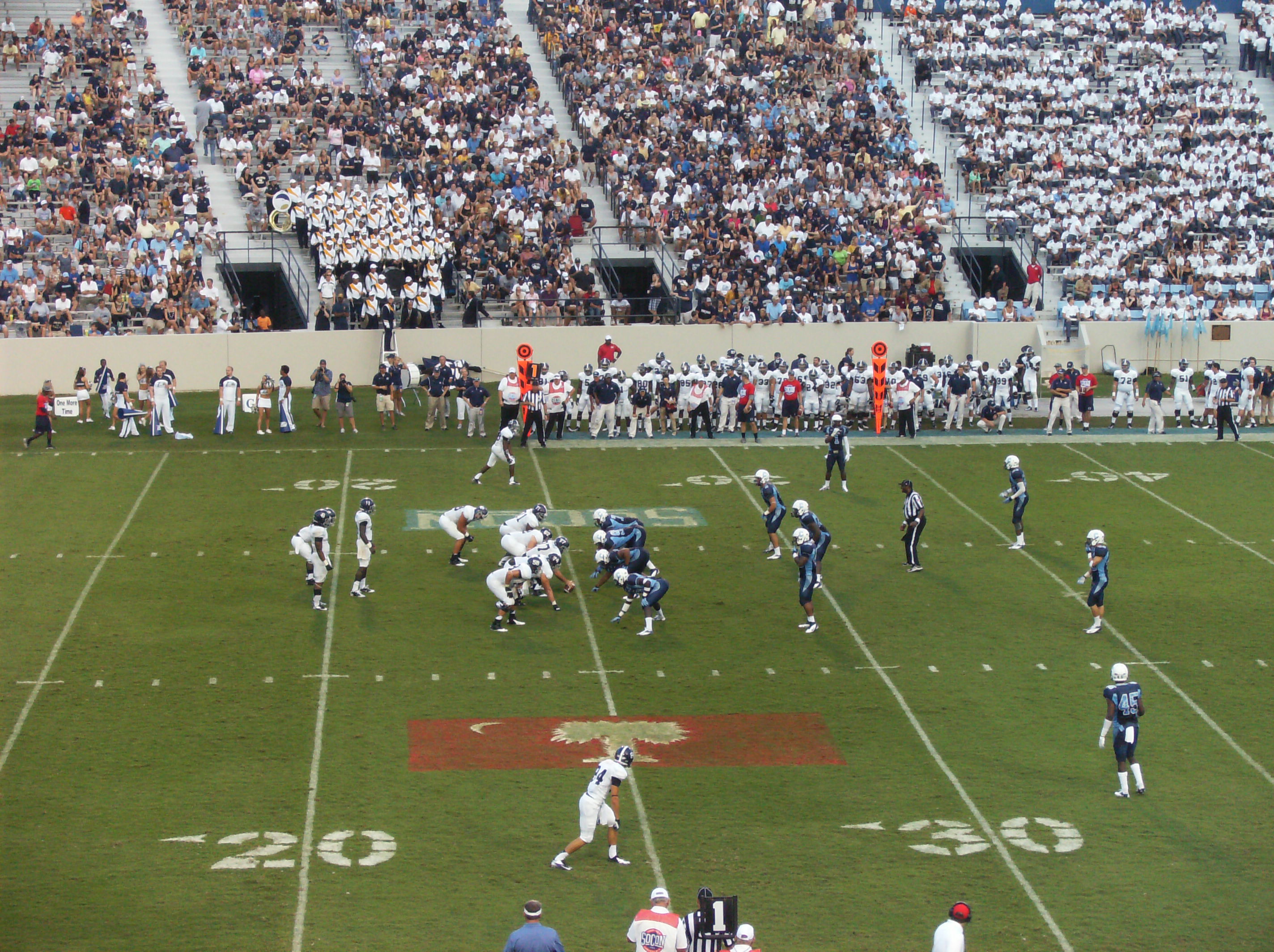
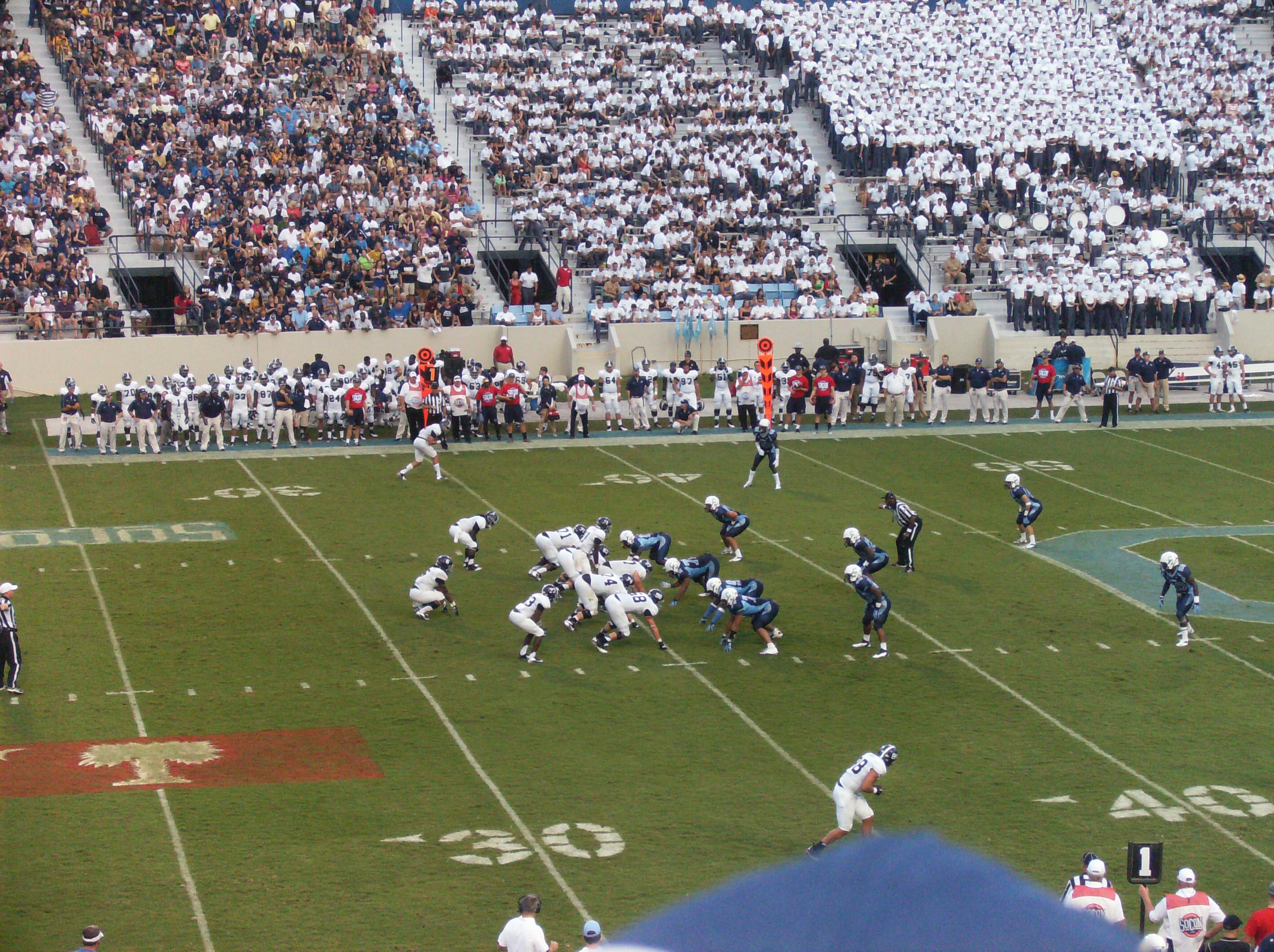
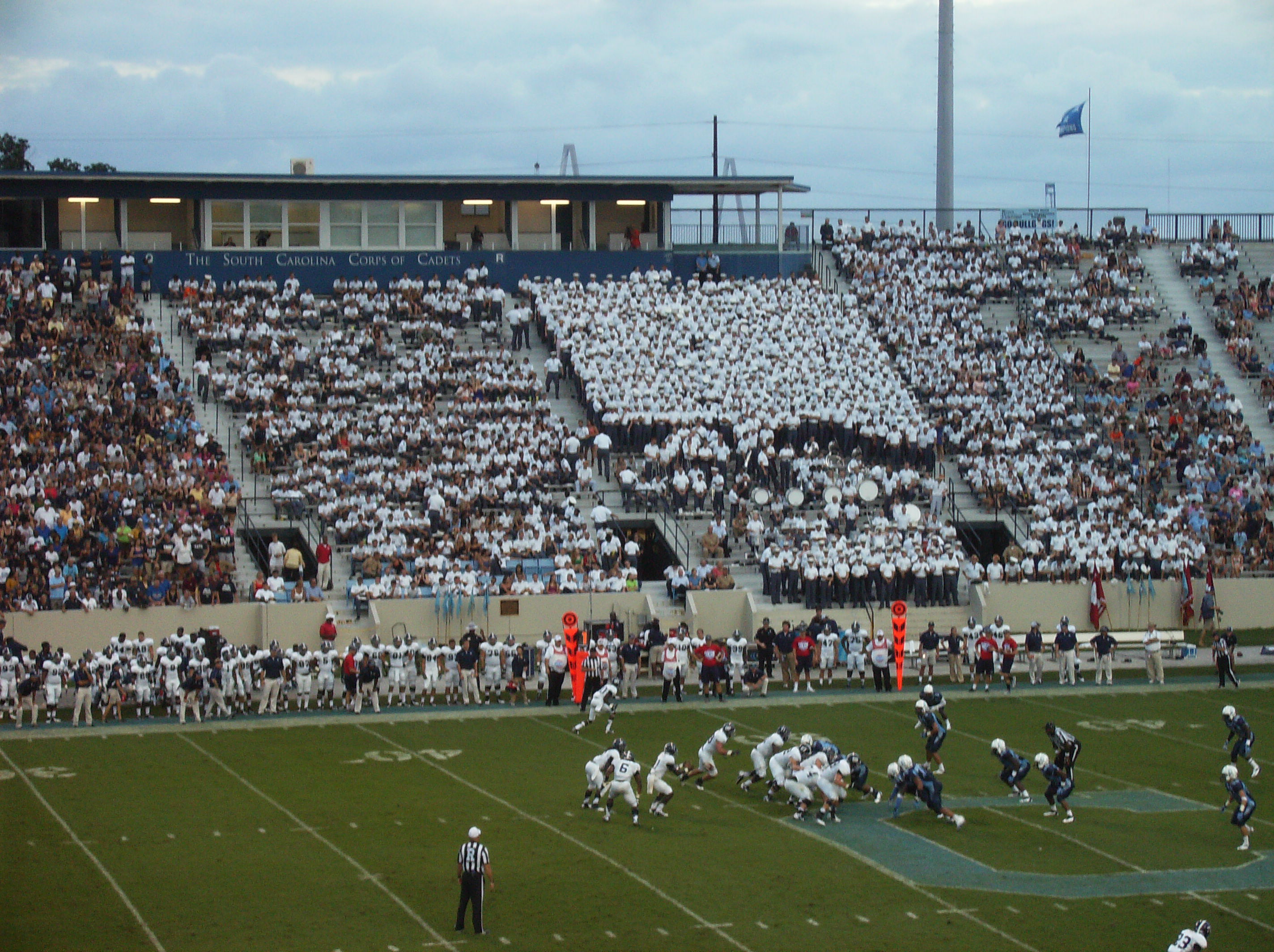
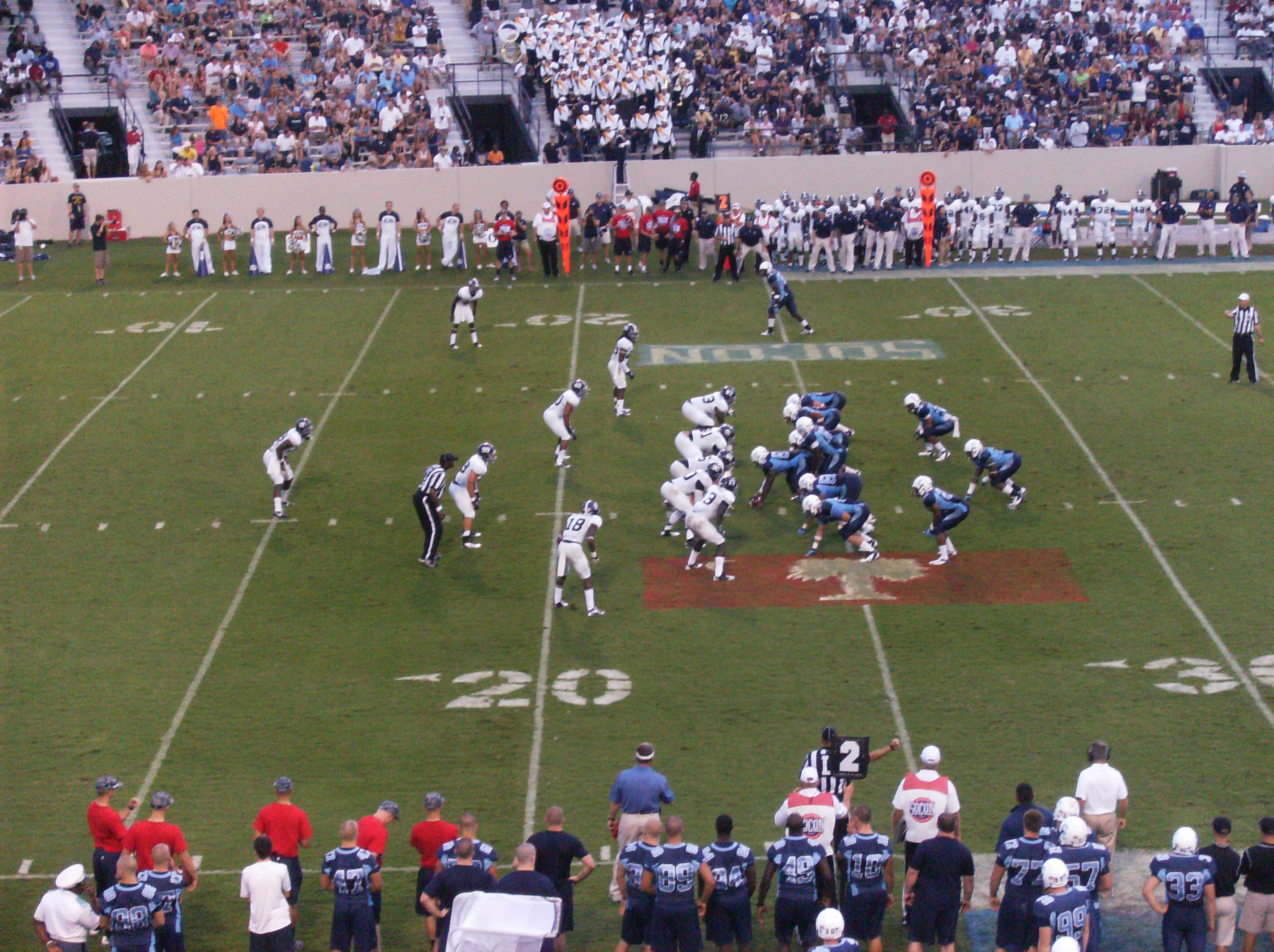
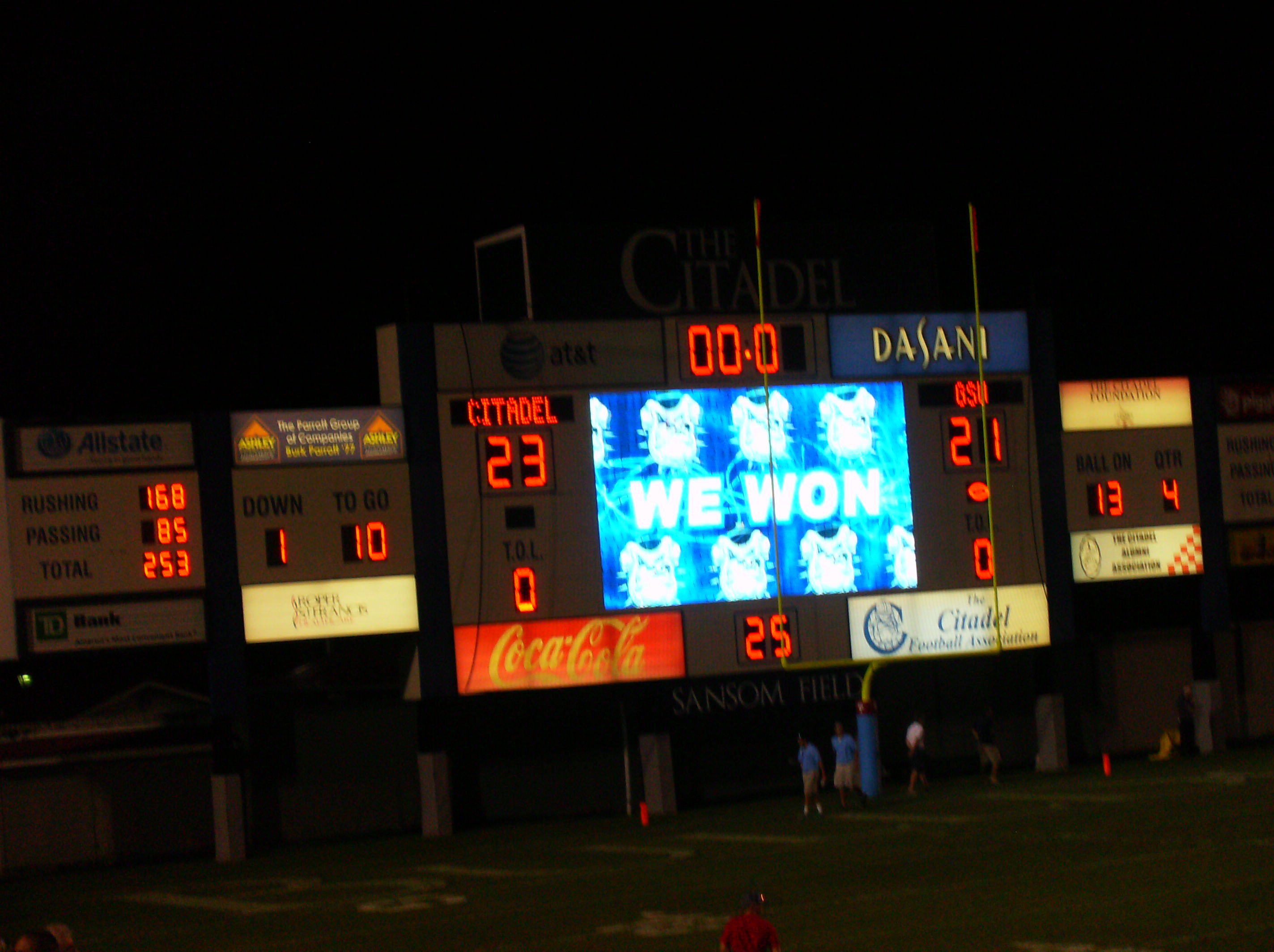
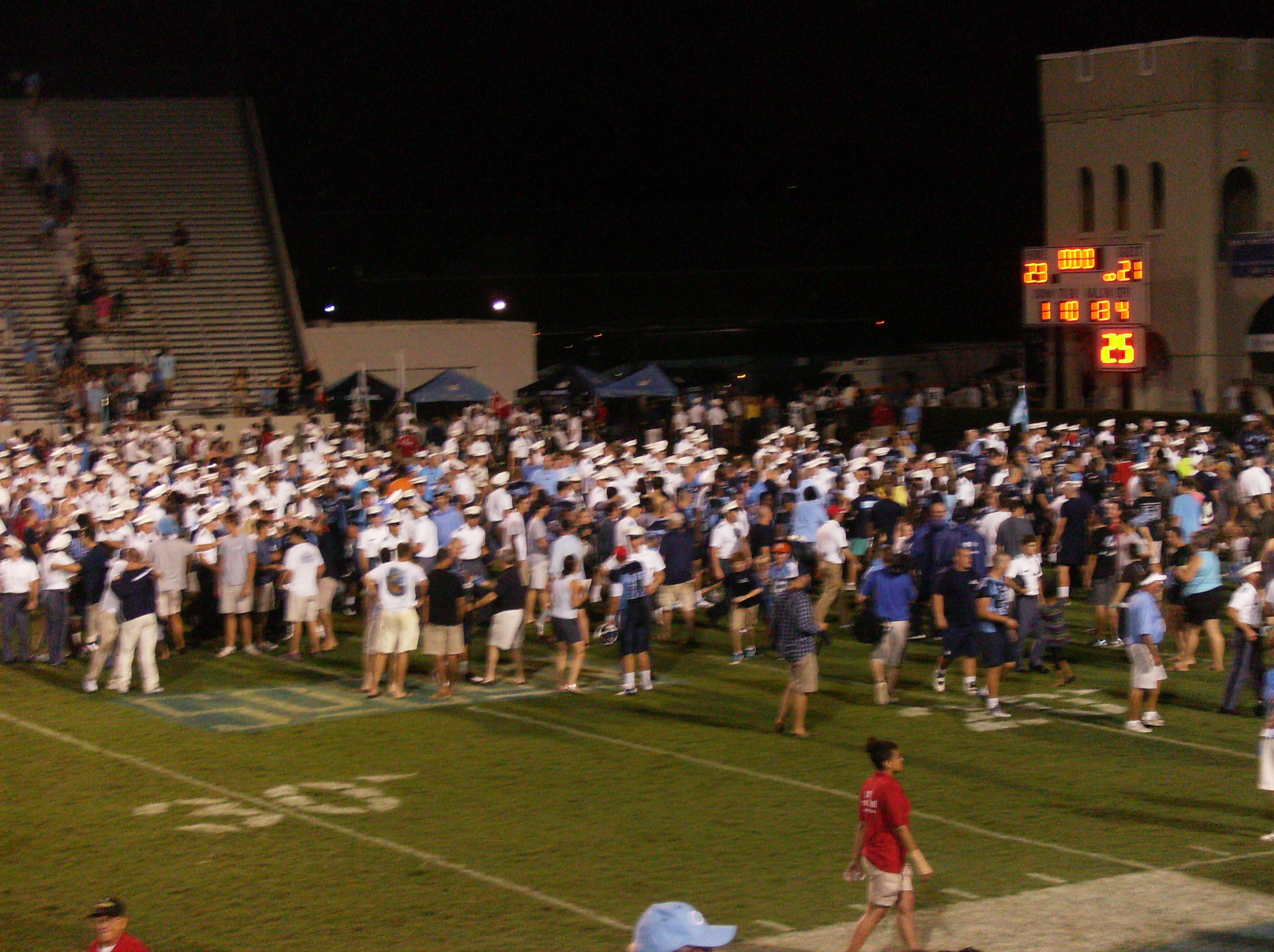
The Citadel 23, Georgia Southern 21.

Links of interest (lots of video from this one):

Game story inĀ The Post and Courier

Photo gallery from The Post and Courier

Kevin Higgins’ postgame locker room speech

Postgame press conference (The Citadel) video

The Citadel’s release

Photos from The Citadel’s website

Box score

Video from WCSC-TV of Charleston

Video from The Statesboro Herald

Game story in the Savannah Morning News

Video from WJCL-TV of Savannah

Postgame with GSU coach Jeff Monken (you can feel his anger coming through your computer screen)

YouTube clips from the point of view of The Citadel band (including a performance of the classic standard for a football postgame sendoff, Adele’s “Rolling In The Deep”)

I talked a little bit about perspective in last week’s game recap. Sometimes, perspective can be dramatically affected by one late made or missed field goal. This game, of course, had both. Can you say rollercoaster?

After it was over, someone who had not seen the game asked me what I thought was a fair question: were the Bulldogs really that good? Or were they lucky?

Well, luck plays a role in almost any close contest, both good and bad. However, my answer was The Citadel was that good last night. It was not a fluke. The basic statistics don’t quite reflect it (Georgia Southern had 111 more yards of total offense than The Citadel), but the Bulldogs were the better team last night and deserved the victory. They weren’t better by a lot, but by enough. Just enough.

The first half was where GSU piled up its advantage in total offense, but when the dust cleared, The Citadel led 17-14 anyway. The Bulldogs struggled to tackle Eagles B-back Dominique Swope; much of his first-half rushing yardage came after contact.

Swope was very impressive, although his early fumble set up the Bulldogs’ first score. The Citadel took full advantage of the turnover, with its touchdown coming on a fourth-and-one toss sweep to Rickey Anderson (a great call by offensive coordinator Bob Bodine).

Two plays later, GSU fumbled again on an ill-advised pitch by Eagles starting quarterback Ezayi Youyoute. The Citadel faced a third-and-long, but Ben Dupree made a play, scrambling away from GSU defenders long enough to float a well-thrown ball to Domonic Jones for a TD.Ā It was the first touchdown pass thrown by a Bulldog quarterback since Matt Thompson threw three touchdown passes in the 2010 season opener against Chowan.

Other than the two touchdown drives, The Citadel struggled offensively through much of the first half, thanks in no small part to GSU defensive tackle Brent Russell, who was outstanding all night long. However, when presented with opportunities, the Bulldogs offense capitalized. That is what matters. It’s about scoring points.

Georgia Southern’s offense piled up the yardage on three long drives following its two turnovers, with Swope getting the bulk of the work, and the Eagles scored touchdowns on two of them. A late field goal attempt by GSU to close the half was blocked by Domonic Jones (who certainly made his presence felt in this game).

That field goal would have matched a 42-yard kick made earlier by Thomas Warren following a 40-yard Bulldogs drive. The key play on that series was a 26-yard pass from Aaron Miller to Van Dyke Jones on a second-and-14, one of several long-yardage situations during the game that were successfully converted into first downs by The Citadel.

The coaching staff at The Citadel has to be credited with making solid halftime adjustments. Georgia Southern picked up two quick first downs to begin the second half, but then its offense hit a wall. The Citadel’s defense would force three consecutive three-and-outs before GSU would finally get untracked. By then the Bulldogs led 20-14 after another Warren field goal, this one made in a driving rain that lasted for much of the third quarter.

I was afraid that destiny was not shining on The Citadel after the critical play of GSU’s fourth-quarter touchdown drive. On fourth-and-six, the Eagles ran an option play where Youyoute handed the ball to fellow quarterback/occasional slotback Jerick McKinnon, who then attempted to pitch the ball.

It was a play GSU had run before in the game with some success, but this time Bulldogs cornerback Brandon McCladdie read it perfectly and anticipated the pitch, batting it into the air…where it landed in the arms of McKinnon, who turned around and ran against the grain for seven yards and a first down. Oof.

The next play would result in a Youyoute fumble, but officials ruled GSU recovered, and the Eagles would eventually score on the drive to take a 21-20 lead with a little over three minutes remaining.

The ensuing drive for the Bulldogs got off to a stuttering start, but on fourth-and-three Miller attempted a pass to Matt Thompson. GSU defensive back Lavelle Westbrooks was called for pass interference, keeping the drive alive.

In his game story in The Post and Courier, Jeff Hartsell referred to the penalty as being “iffy”, but I strongly disagree with that assessment. The play happened right in front of me. The only way you could argue it wasn’t interference is by saying the ball was uncatchable, but it was close, and the benefit of the doubt is usually given (rightfully so) to the offense in that situation. Also, Westbrooks had been forced to grab Thompson after Miller had scrambled to his right. If you didn’t think it was pass interference, it was certainly defensive Ā holding.

At any rate, GSU then got the benefit of a non-call, as on the next play Brent Russell anticipated the snap count a fraction too early and moved into the neutral zone before the snap. It wasn’t called, however, and he wound up blowing up the play and putting the Bulldogs into another long-yardage situation. After an incomplete pass on second down, Russell sabotaged yet another play on third down (Russell’s nickname is apparently “ManBearPig”, which seems appropriate).

That led to a fourth-and-15 which the Bulldogs converted, Miller throwing to Greg Adams, who ran a great route. Three plays later Thomas Warren made his third field goal of the day, a 37-yarder that proved to be the game-winner.

If you are a fan of The Citadel, you are probably thinking that you haven’t seen the Bulldogs prevail on a late field goal too often, at least in recent years. You would be correct. I looked this up, and I could have missed one someplace, but I think this is the list:

— Field goal made late in the fourth quarter to force a tie (and OT): Mike Adams versus Furman, 2007. This was the crazy 54-51 game, of course. The Bulldogs made a huge rally to force OT, winning on a TD run by Tory Cooper. Before that could happen, though, Adams had to make a 32-yarder with 1:19 remaining to tie the game at 48.

— Field goal made late in the fourth quarter to win a game that was tied: Travis Zobel versus Appalachian State, 2003. The Citadel tied the game late on a 44-yard run by Scooter Johnson (that had been preceded by a fake punt executed by Zobel). After an interception, Zobel connected on a 26-yarder with 1:16 remaining to give the Bulldogs a 24-21 victory.

— Field goal made late in the fourth quarter to win a game that The Citadel was trailing: Nick Haas versus Hofstra, 1998. Haas made a 32-yarder with six seconds left to give the Bulldogs a 32-30 victory. The winning kick was set up by Carlos Frank’s 37-yard run off a reverse.

So, yeah, it had been a while. For the specific circumstance Warren found himself in, fourteen years.

It almost didn’t work out, though, after J.J. Wilcox’s great return (he broke multiple tackles) set up Georgia Southern in Bulldogs territory. The Eagles almost fumbled it away late, but recovered, and things looked grim for The Citadel as GSU prepared for a 31-yard field goal attempt.

Even though they had time, though, the Eagles seemed a bit rushed to me as they got set up for the kick. There were actually a lot of things going against GSU. The earlier blocked FG attempt had to be in the thoughts of the players, and the two preceding Georgia Southern kickoffs (by a different kicker than the FG kicker) had been hooked out of bounds, with the second one almost landing in the home side stands.

The weather wasn’t conducive to placekicking, either, which made Warren’s kick (and the snap/hold) all the more impressive. For GSU, it wasn’t meant to be. The snap was very high. The holder barely got it down, and the timing for the kick was thrown off. Not surprisingly, the kick was hooked wide left.

Odds and ends:

– Besides doing a fine job holding on placekicks, Cass Couey continued to demonstrate why he is the SoCon’s best punter, averaging 47.2 yards on his four punts, with no return yardage. He can really boom ’em.

– In what is probably a testament to Brent Russell’s play as much as anything, The Citadel never established the B-back. Darien Robinson carried four times for eight yards, and that was it.

– The Citadel’s 253 yards of total offense were the fewest for the Bulldogs against a SoCon opponent since the 2010 season finale against Samford. The Citadel won that game, too.

– Georgia Southern’s offense had nine plays of at least 19 yards last week against Jacksonville. On Saturday, GSU had only one such play, a 23-yard run by Youyoute. That was a major accomplishment for the Bulldogs’ D.

– The Citadel had four illegal formation penalties on kickoffs. I don’t know what the problem was, but it’s something that needs to get cleaned up before next week.

– Attendance for the game: only 12,299. Ouch. I wasn’t expecting that. It can be explained to a large degree by the weather, as the local area was under the gun for potential thunderstorms (and generally heavy rain) for most of the afternoon.

The other point worth making is that Georgia Southern’s fan base did not show up in large numbers for the game, despite the pleas of head coach Jeff Monken. I think it’s probably time to put an end to any discussion about GSU’s fans “travelling” well to away games.

I’ve seen talk in various places (message boards, etc.) about this, but all I know is that the historical record suggests they have never been a major factor at Johnson Hagood Stadium, and if they aren’t going to make the short trip to Charleston, I find it hard to believe they are regularly going to Boone/Greenville/Spartanburg in overwhelming numbers either.

On Saturday, GSU brought about as many fans to the game as Charleston Southern had done the week before. The Eagle supporters who did attend were appropriately vocal, which is to their credit. Those were good fans. There just weren’t that many of them.

– I’m not going to complain too much about the all-navy uniforms, although I don’t like them at all. However, I really wish we wouldn’t wear navy unis at home when we’re playing opponents that have navy as their primary color.

Now the Bulldogs are 2-0 and know that they won’t be worse than 2-2 when they return to Johnson Hagood Stadium in three weeks to play Chattanooga. The road trips to Appalachian State and North Carolina State are going to be difficult, but there will be a renewed sense of confidence for the players and coaches as they get ready for those games. They won’t be thinking about being 2-2 after four games; no, they will be shooting for 3-1 or 4-0.

Saturday’s win over Georgia Southern was great, the biggest in Kevin Higgins’ tenure. What’s really good about it, though, is that The Citadel still has considerable room for improvement. It wasn’t a perfect performance by any means. The Bulldogs committed too many penalties, didn’t run the ball effectively on the ground (3.8 yards per carry), fumbled twice, and had trouble at times defensively bringing down Georgia Southern ballcarriers.

In other words, this team can get better — and if Saturday’s game is any indication, it’s already pretty good.

On to Boone, at least for the team. I won’t be there, as I will be travelling. The next two or three weeks, actually, are going to be busy for me, so there won’t be posts as long as this one, assuming anyone is still reading this post…

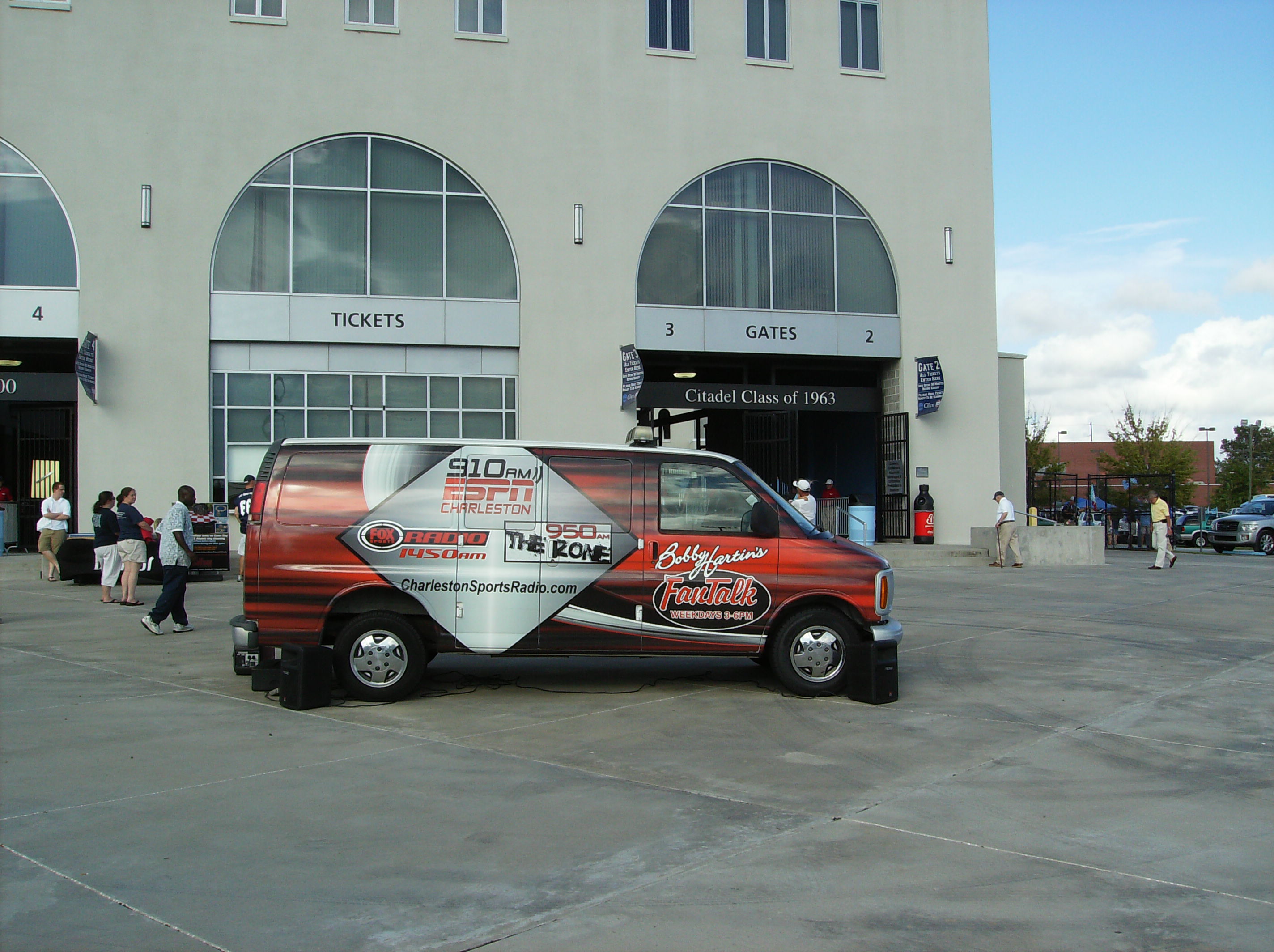
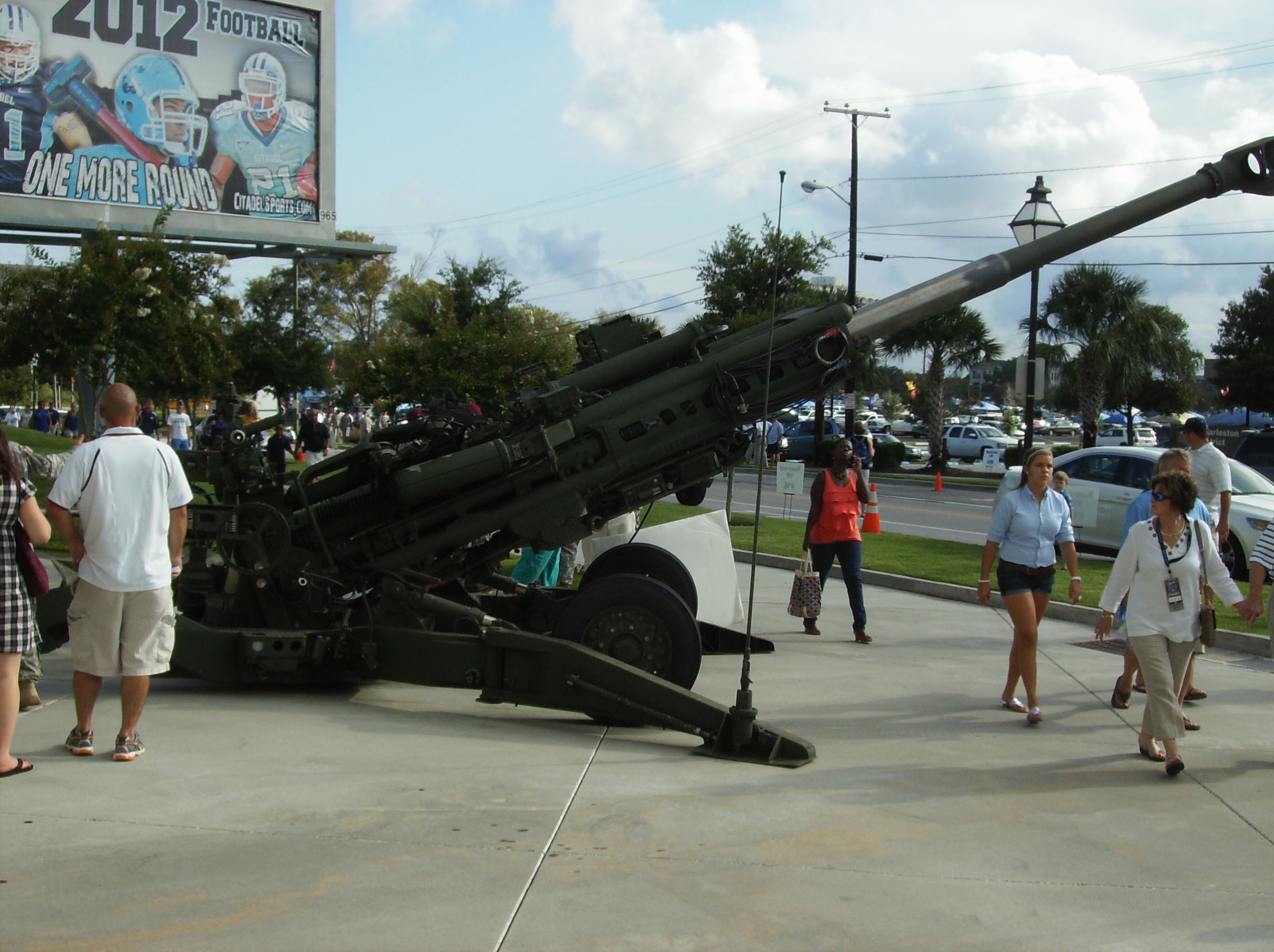
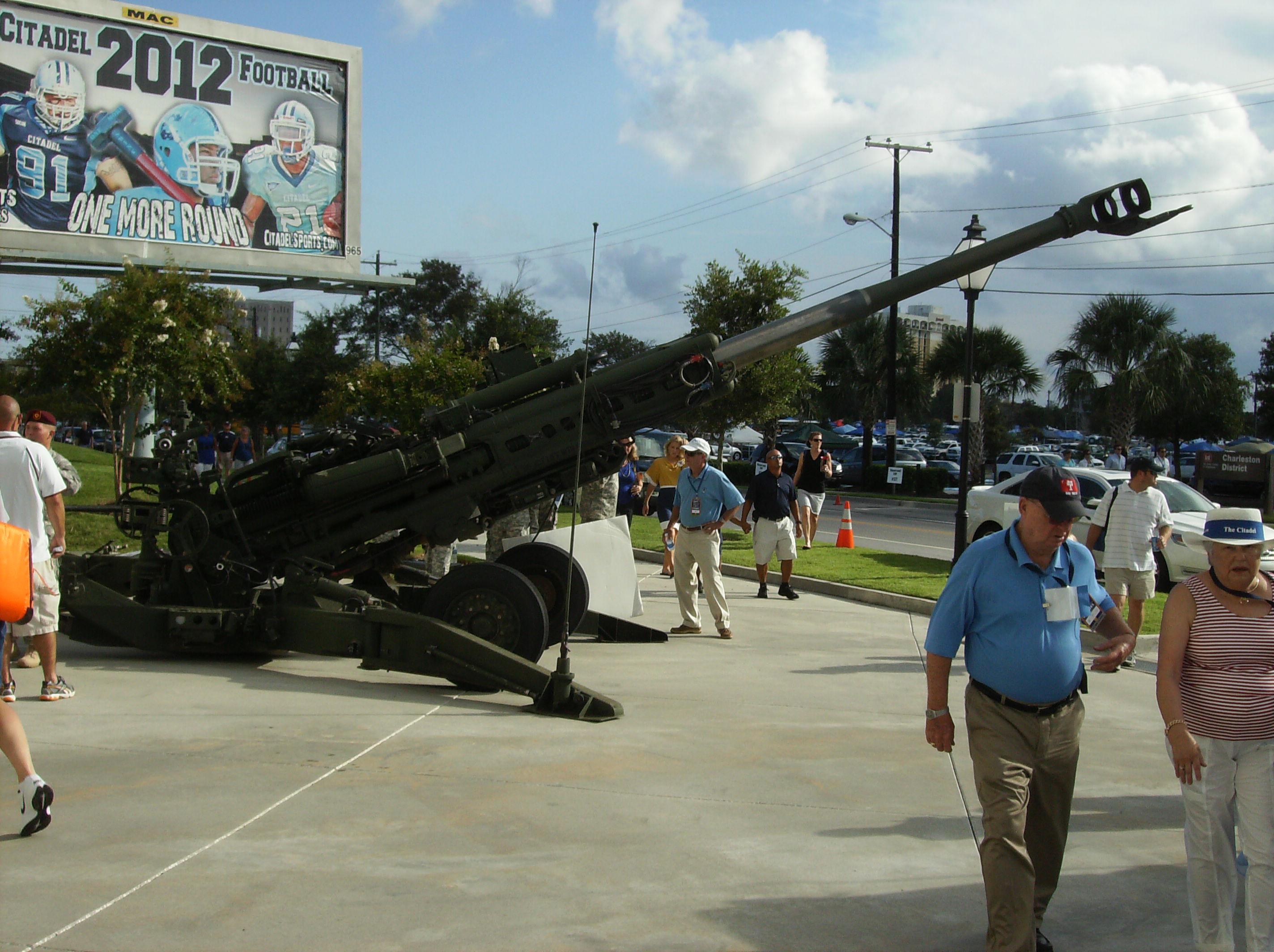
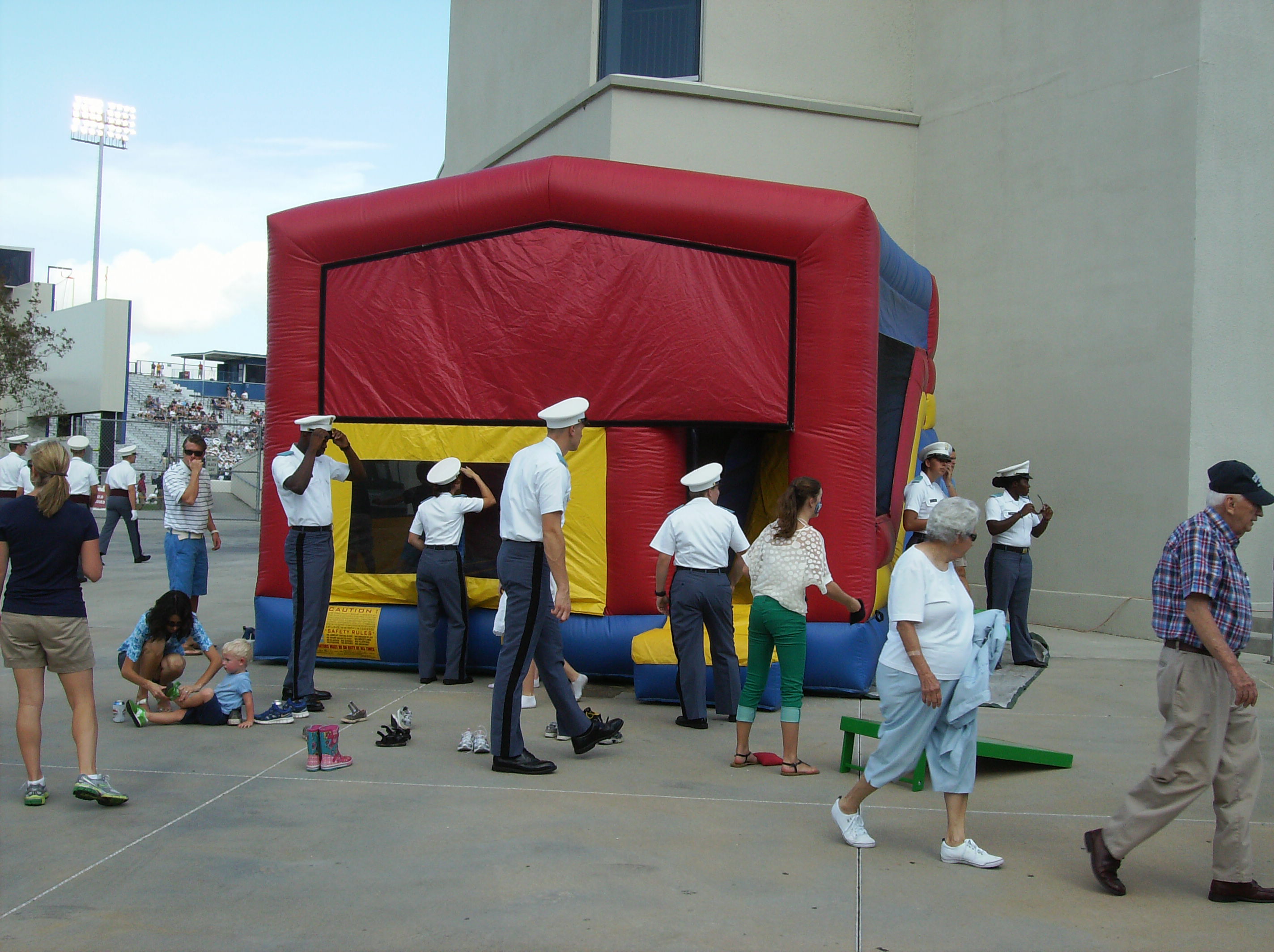
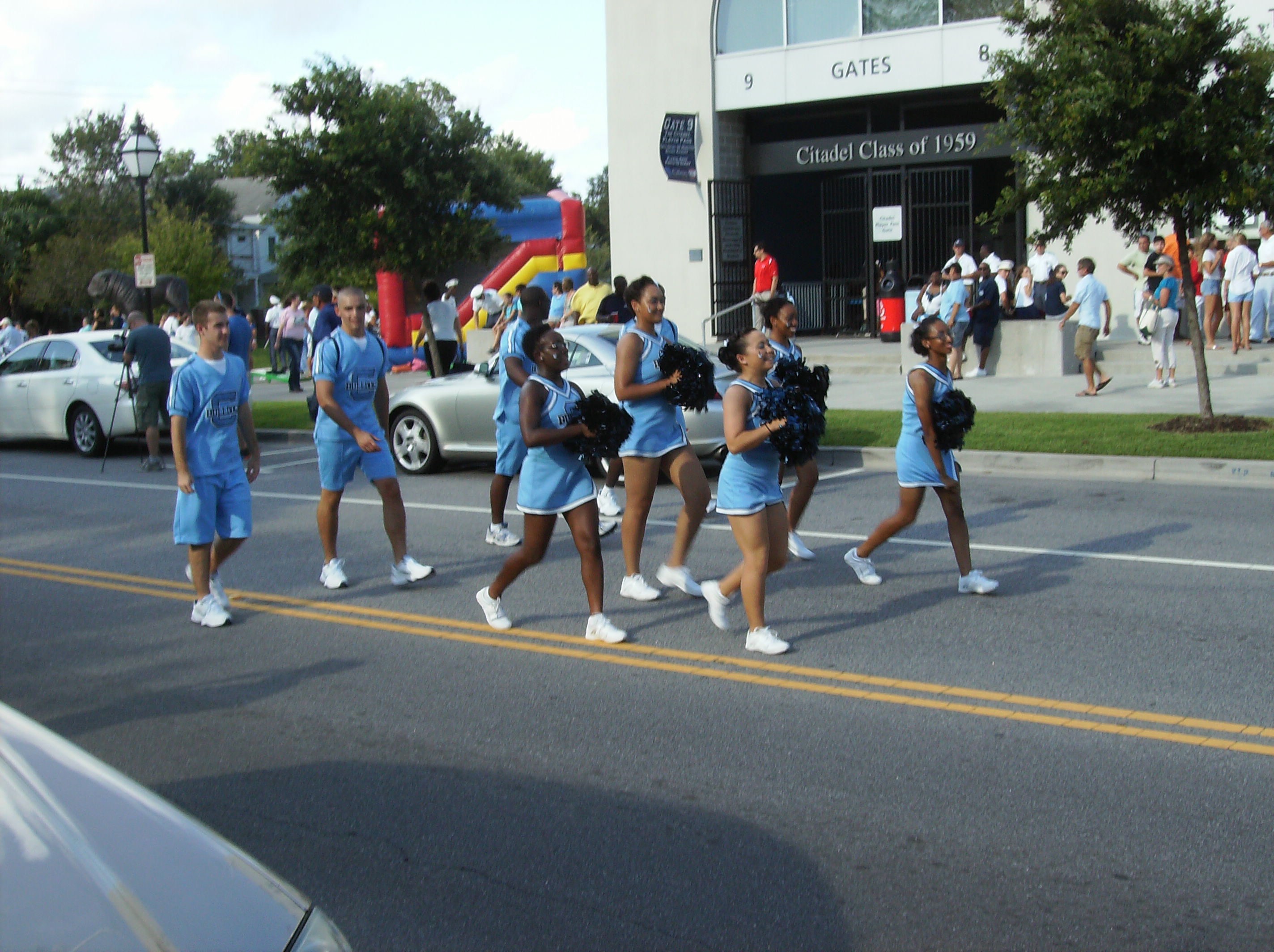
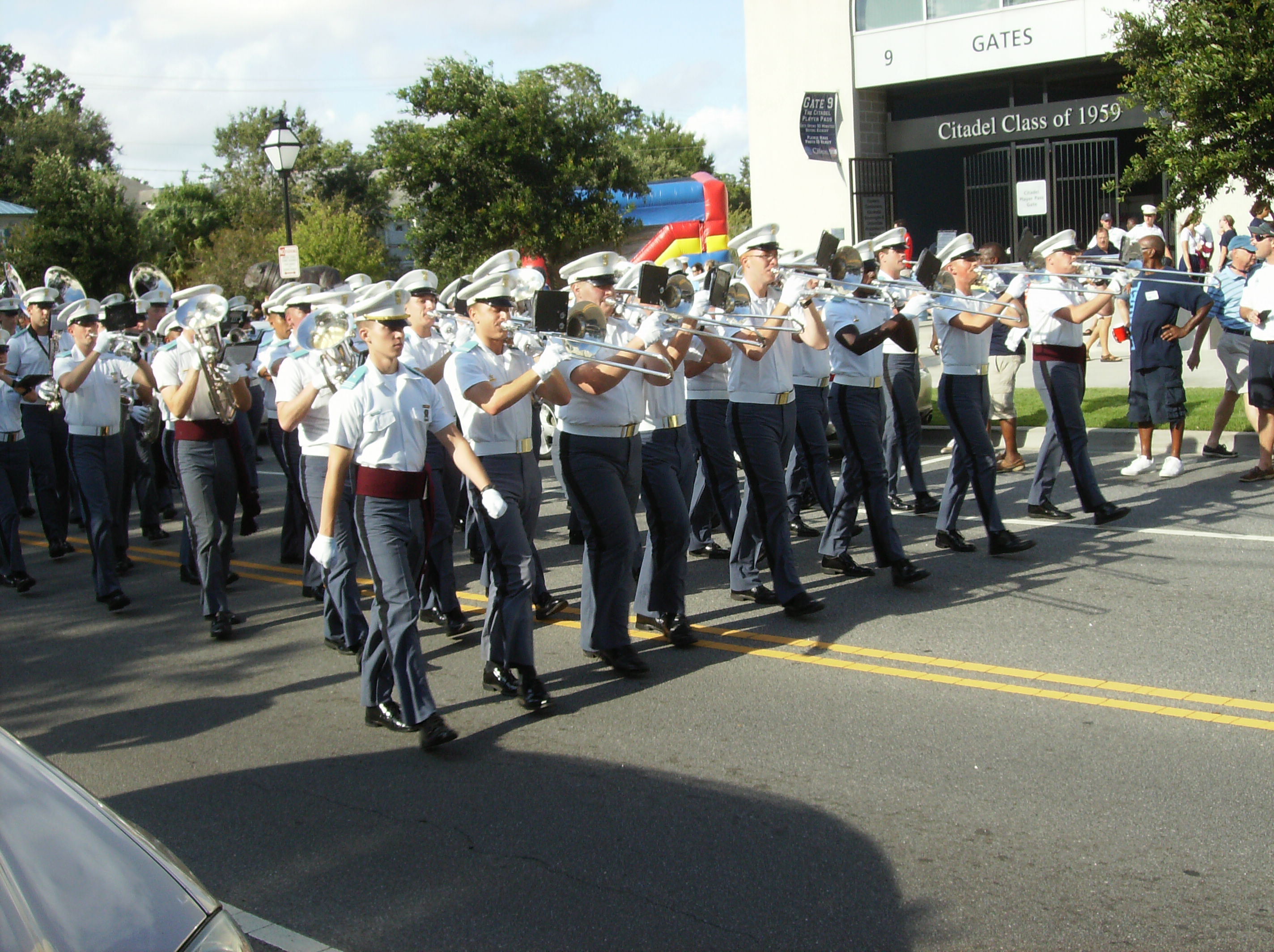
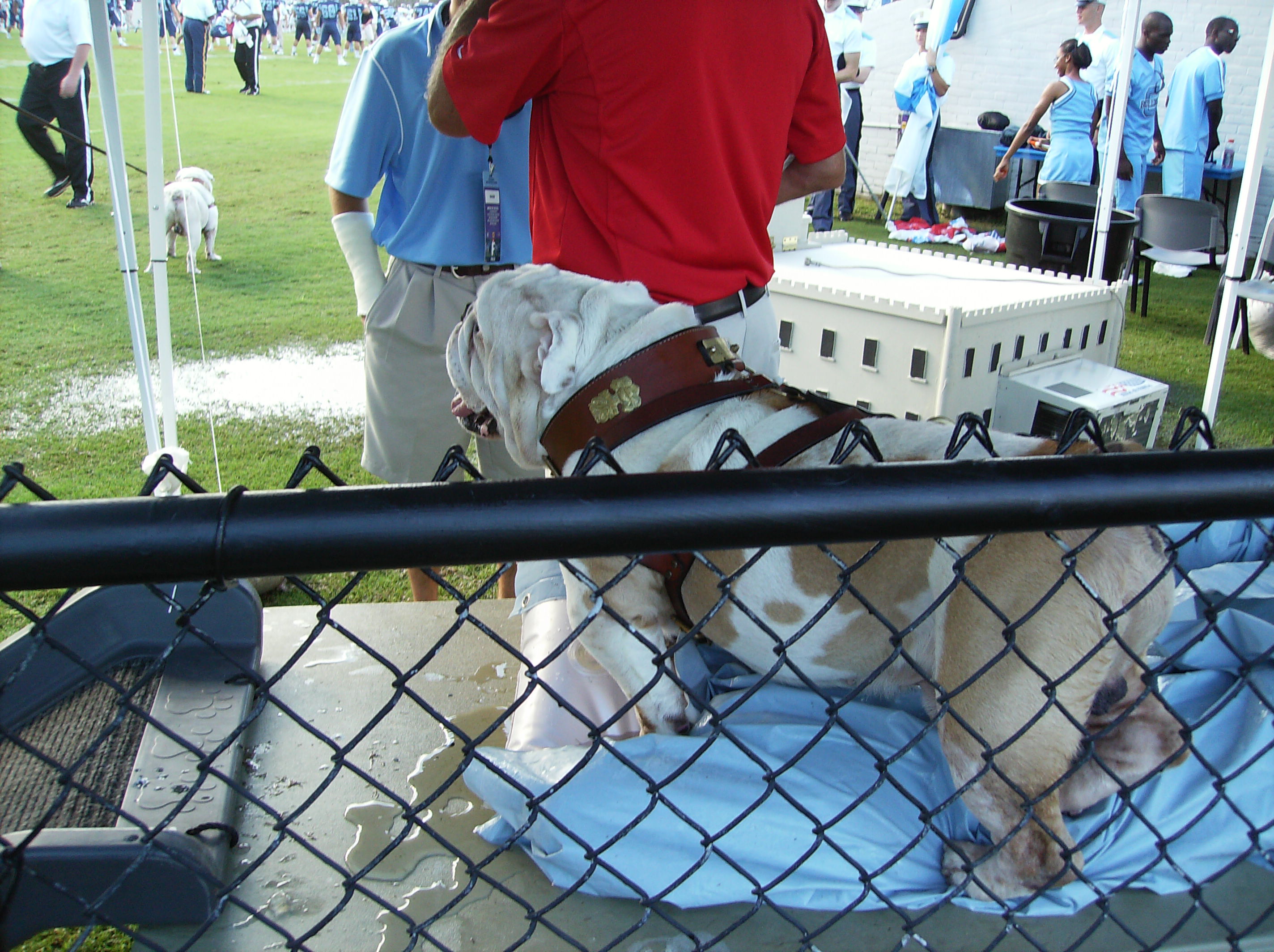
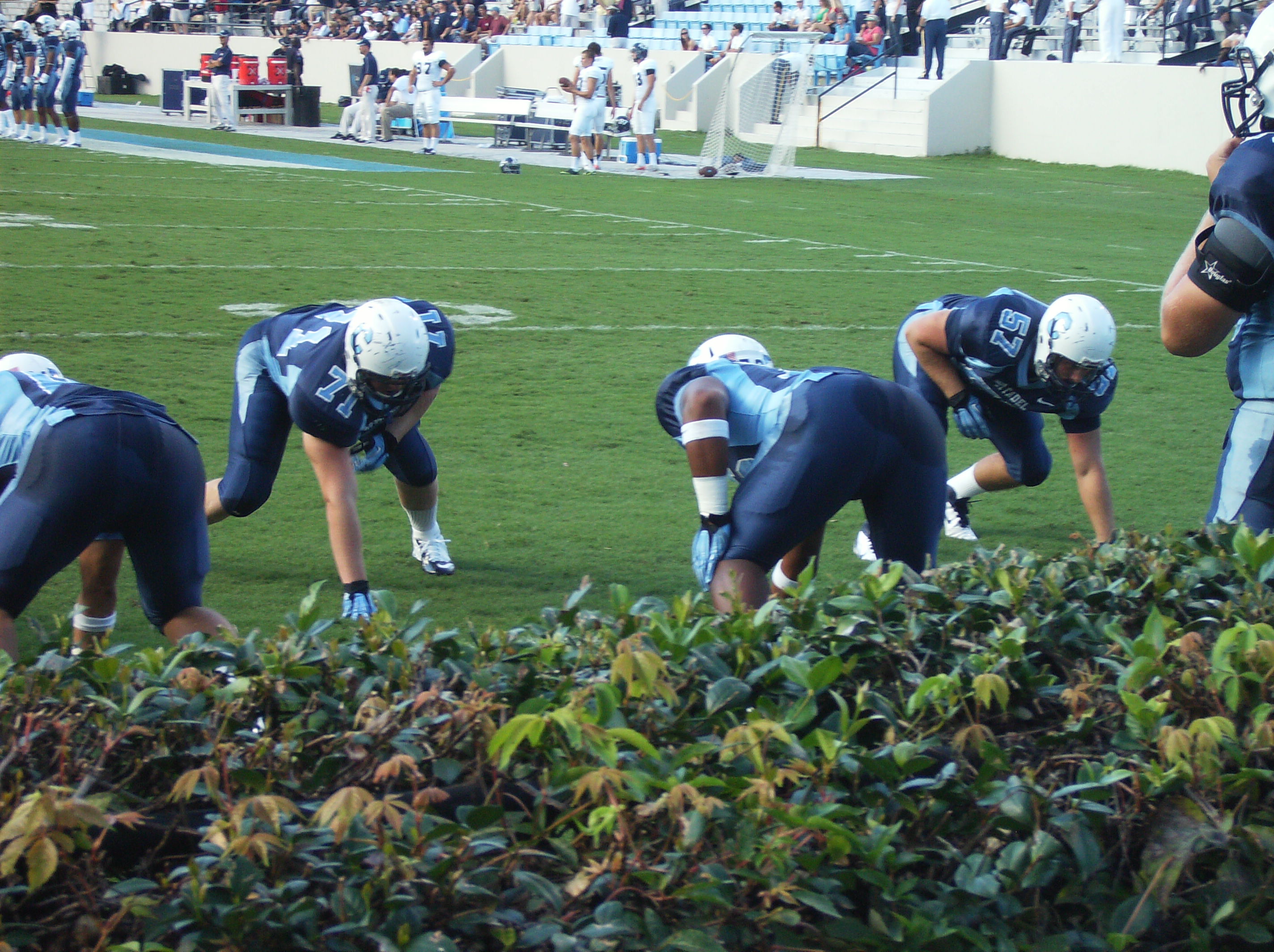
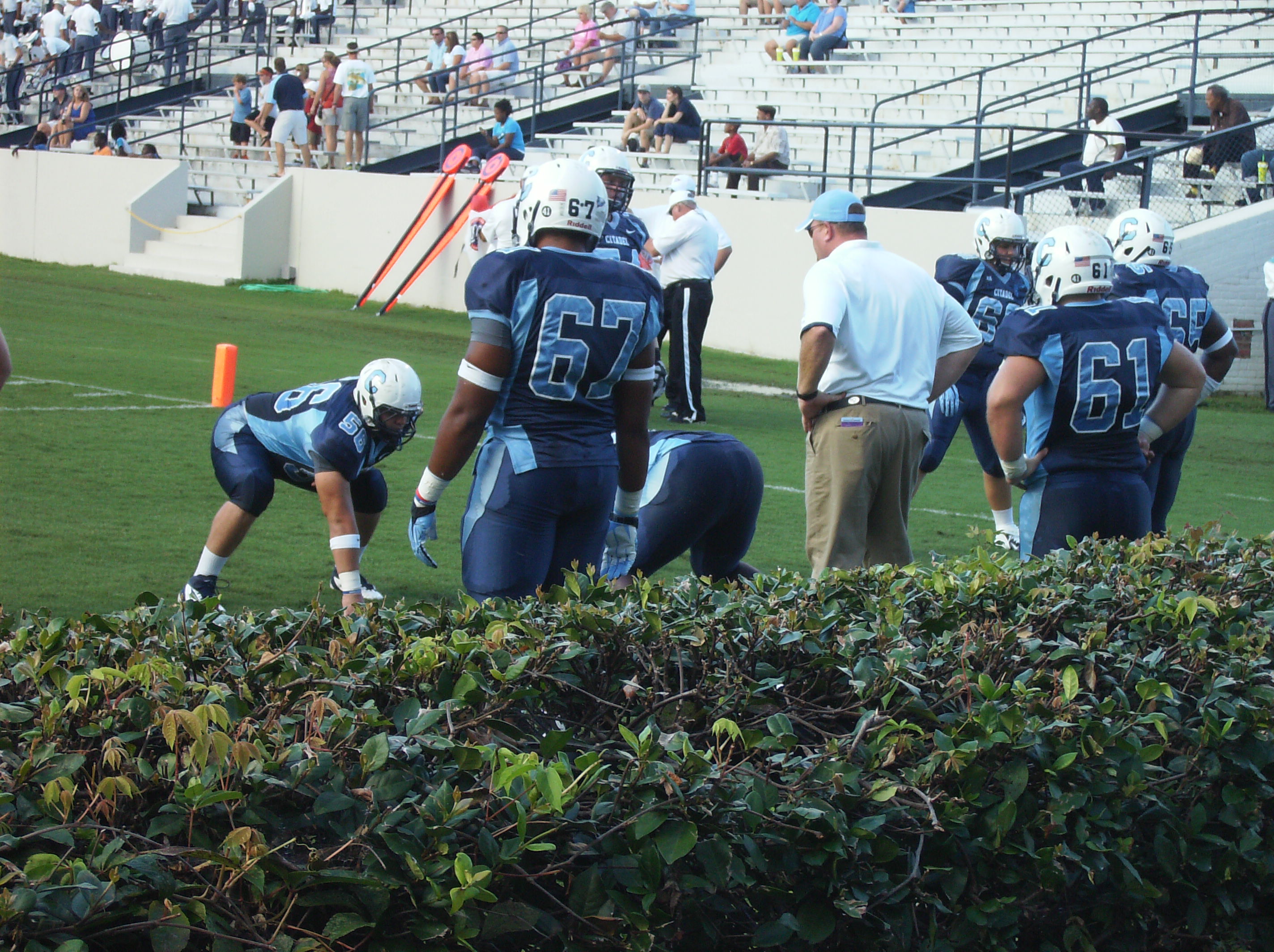
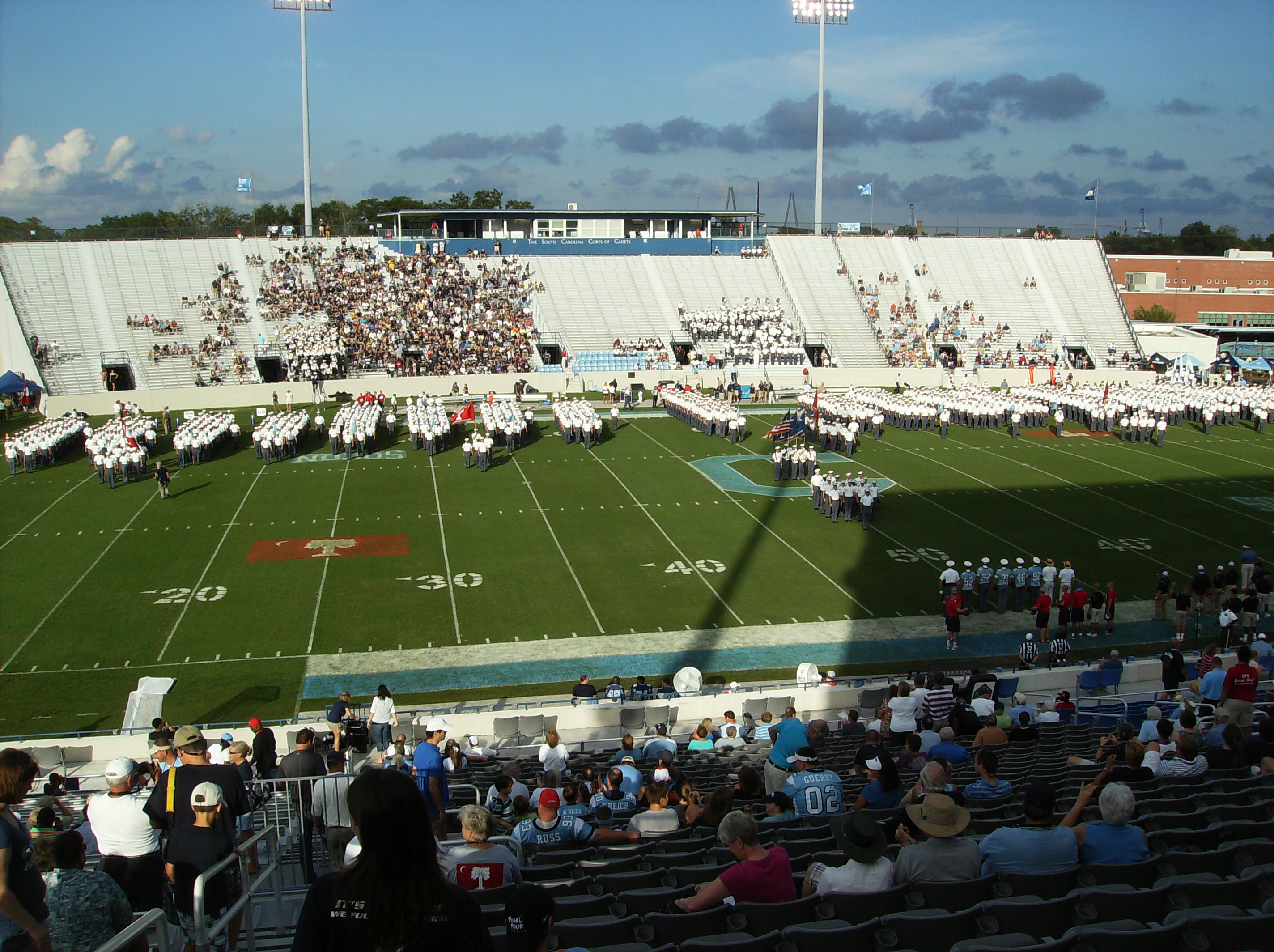
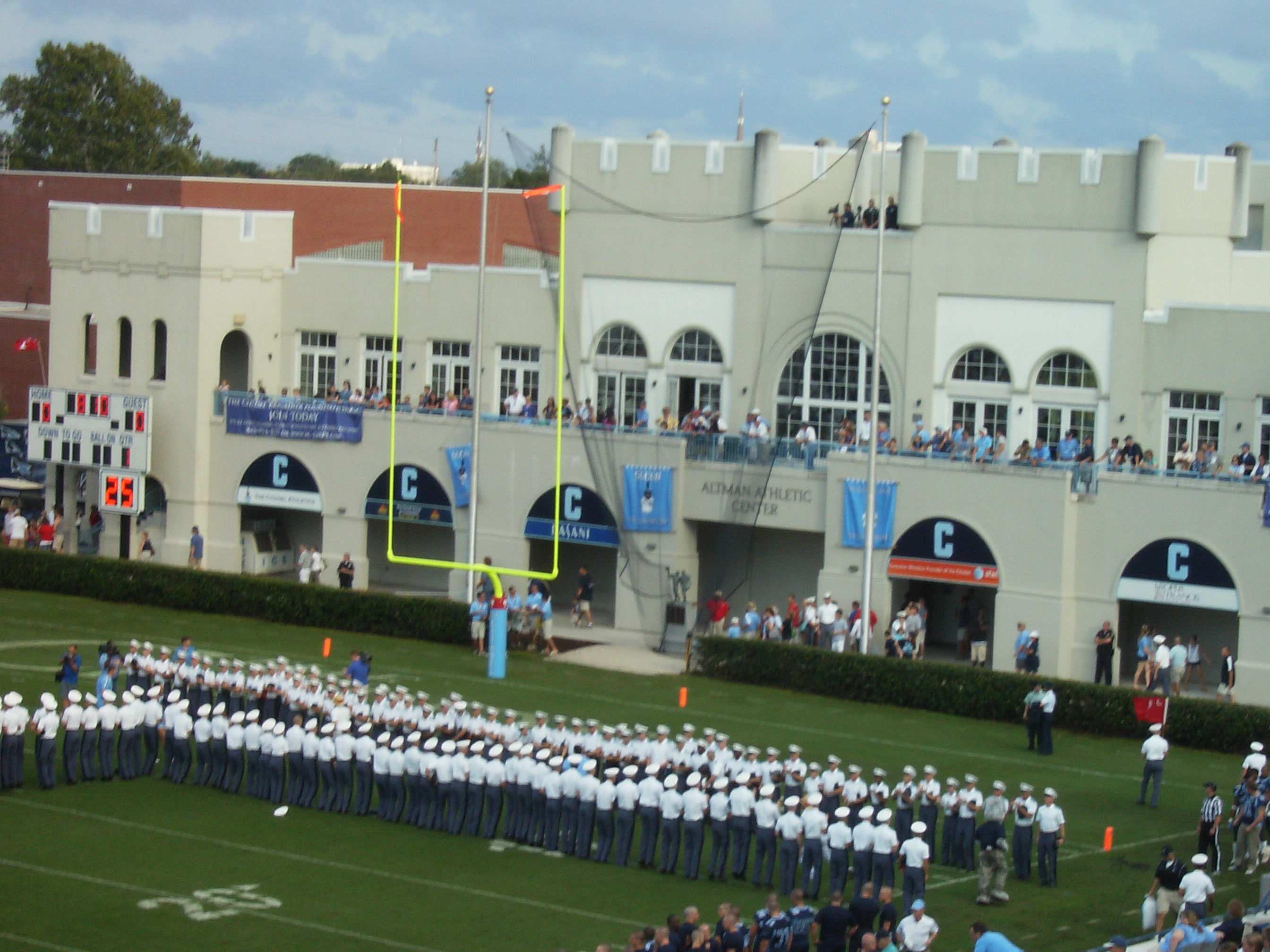
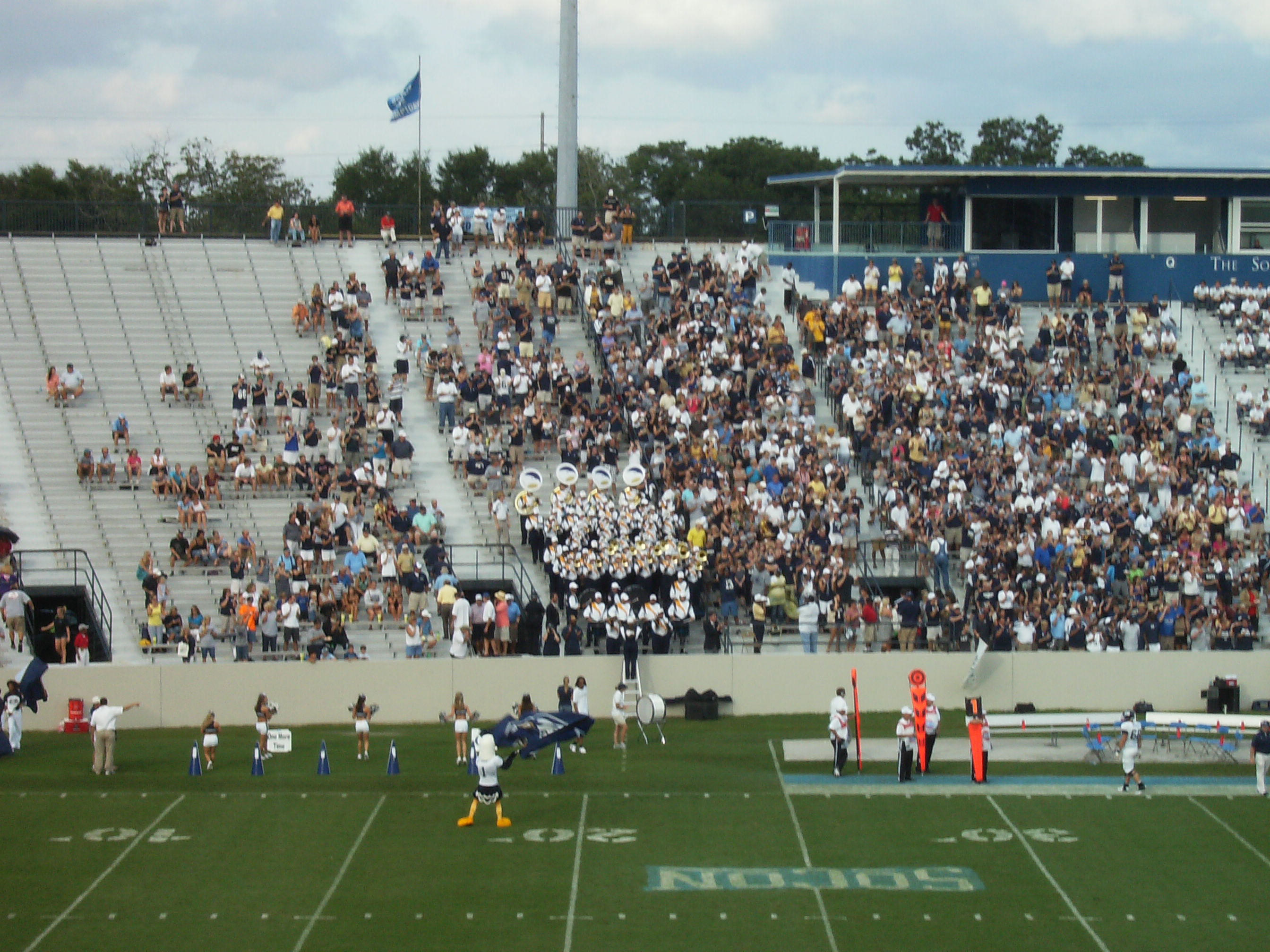
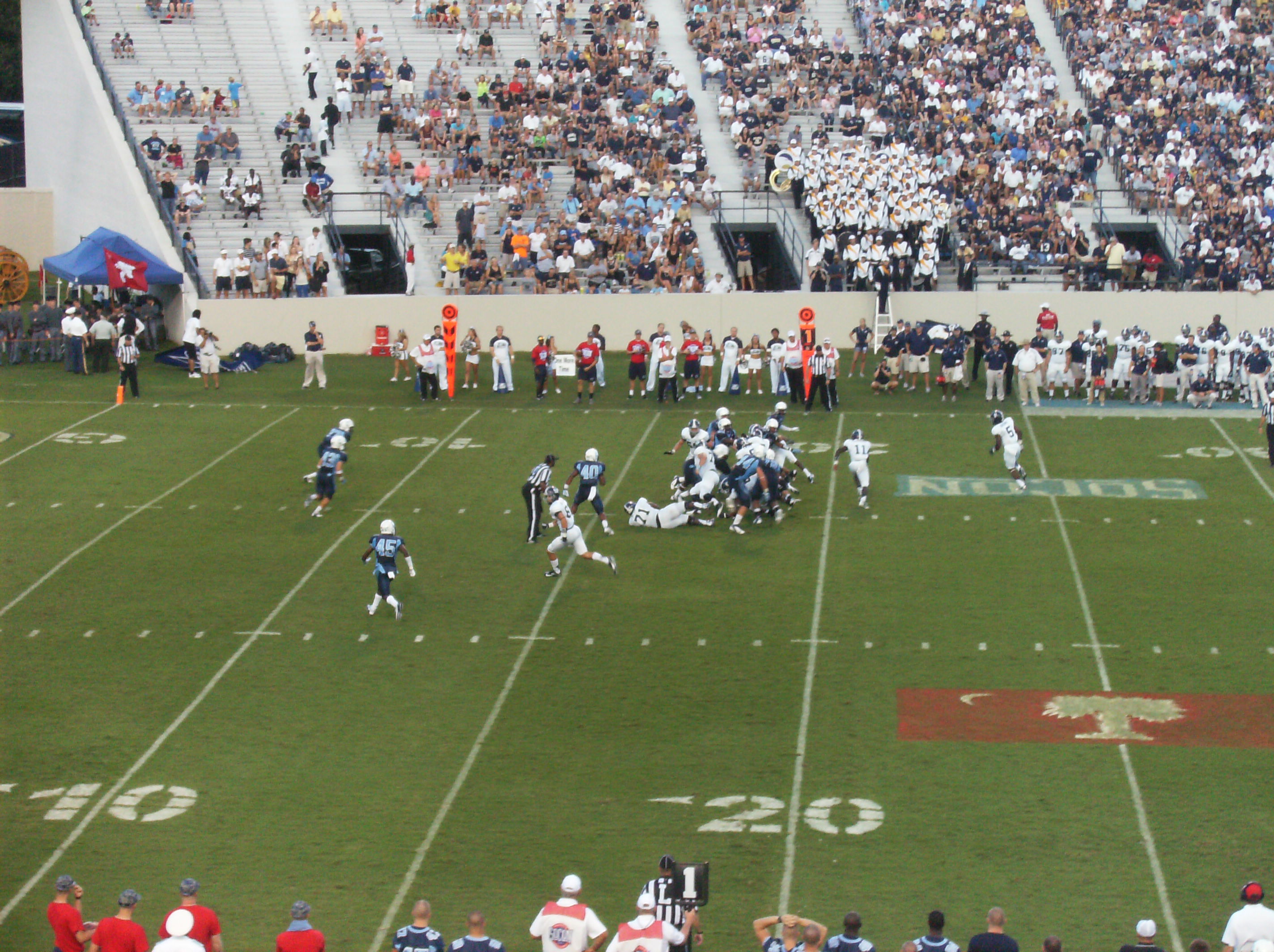
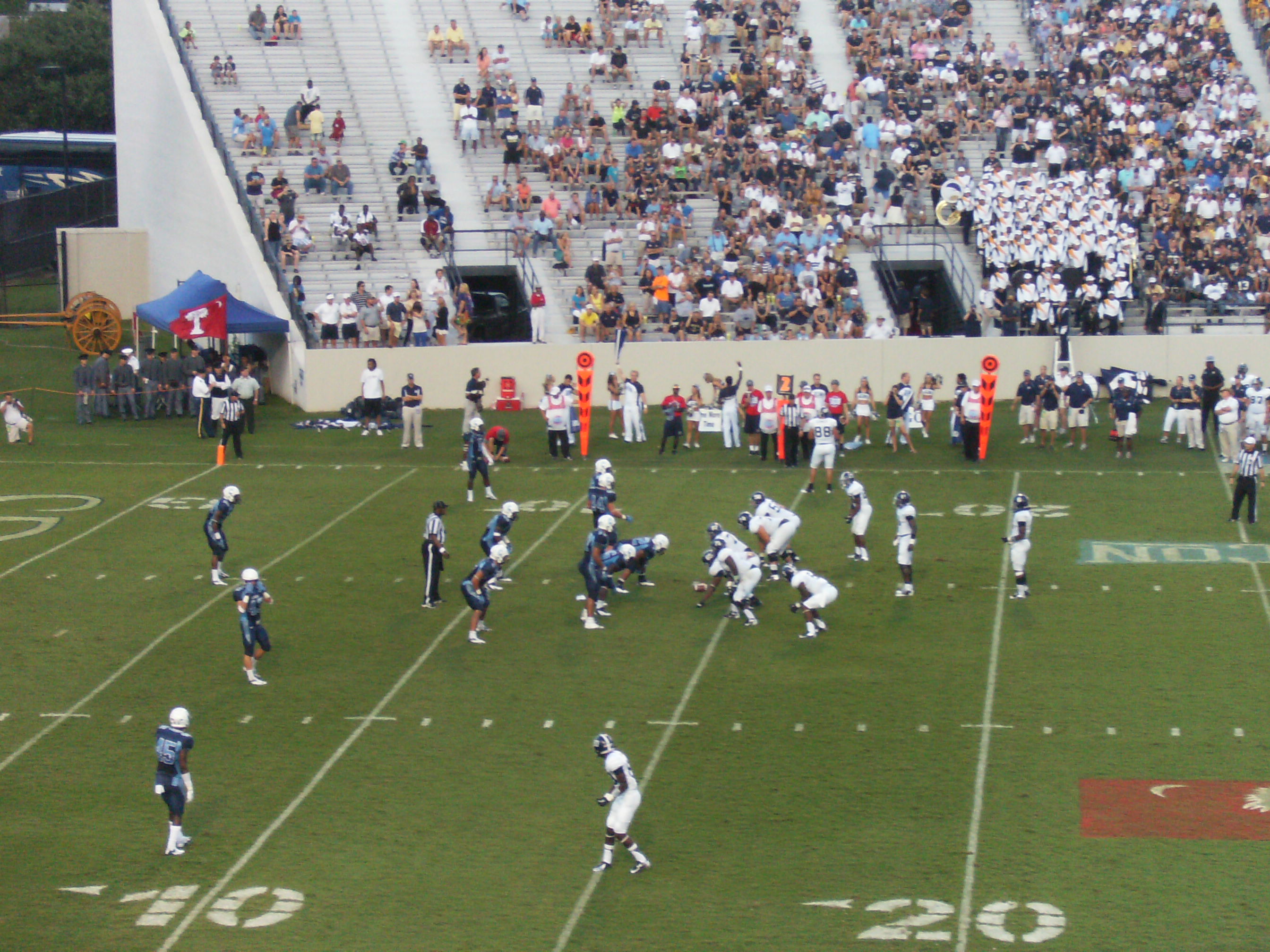
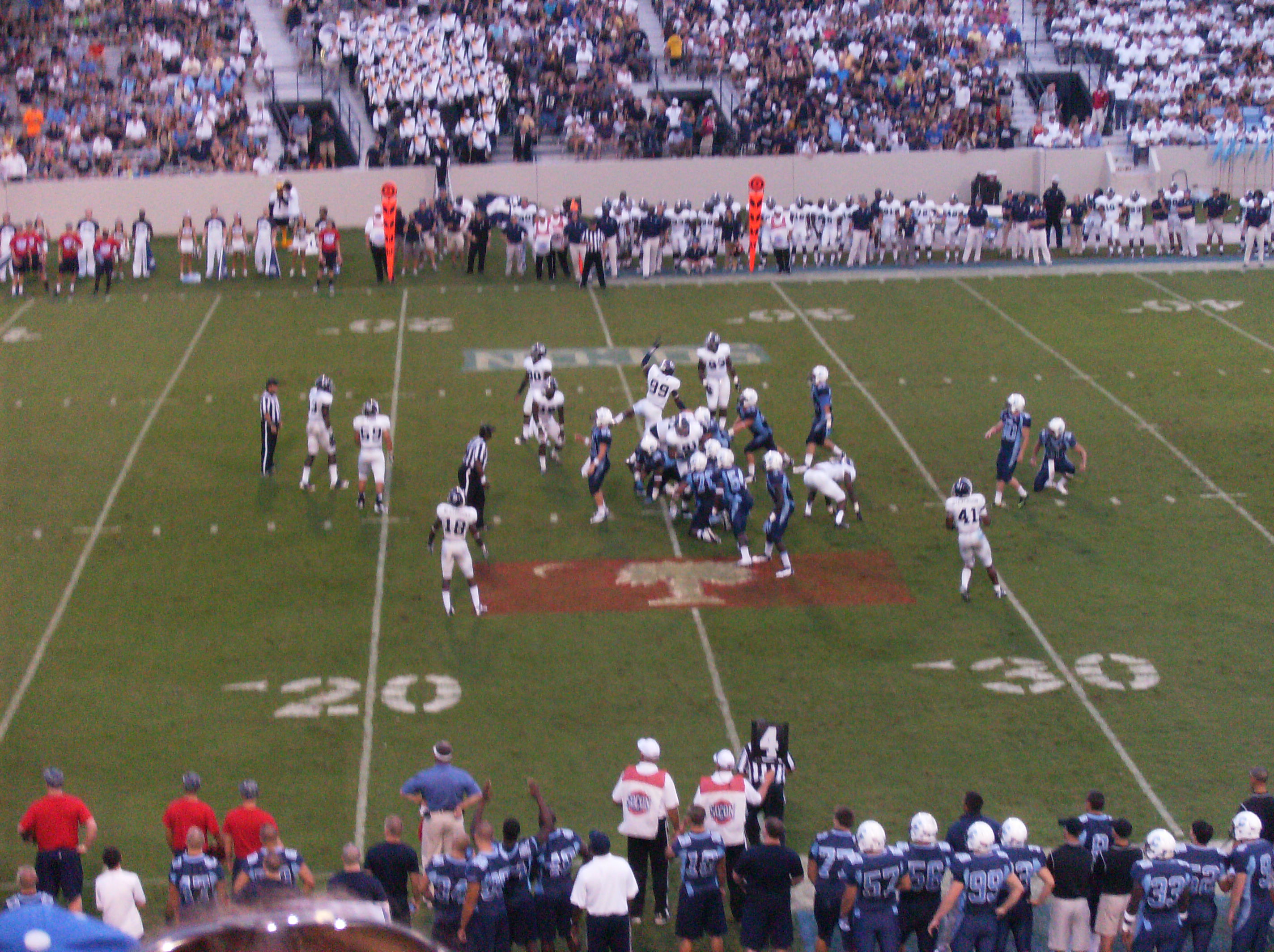
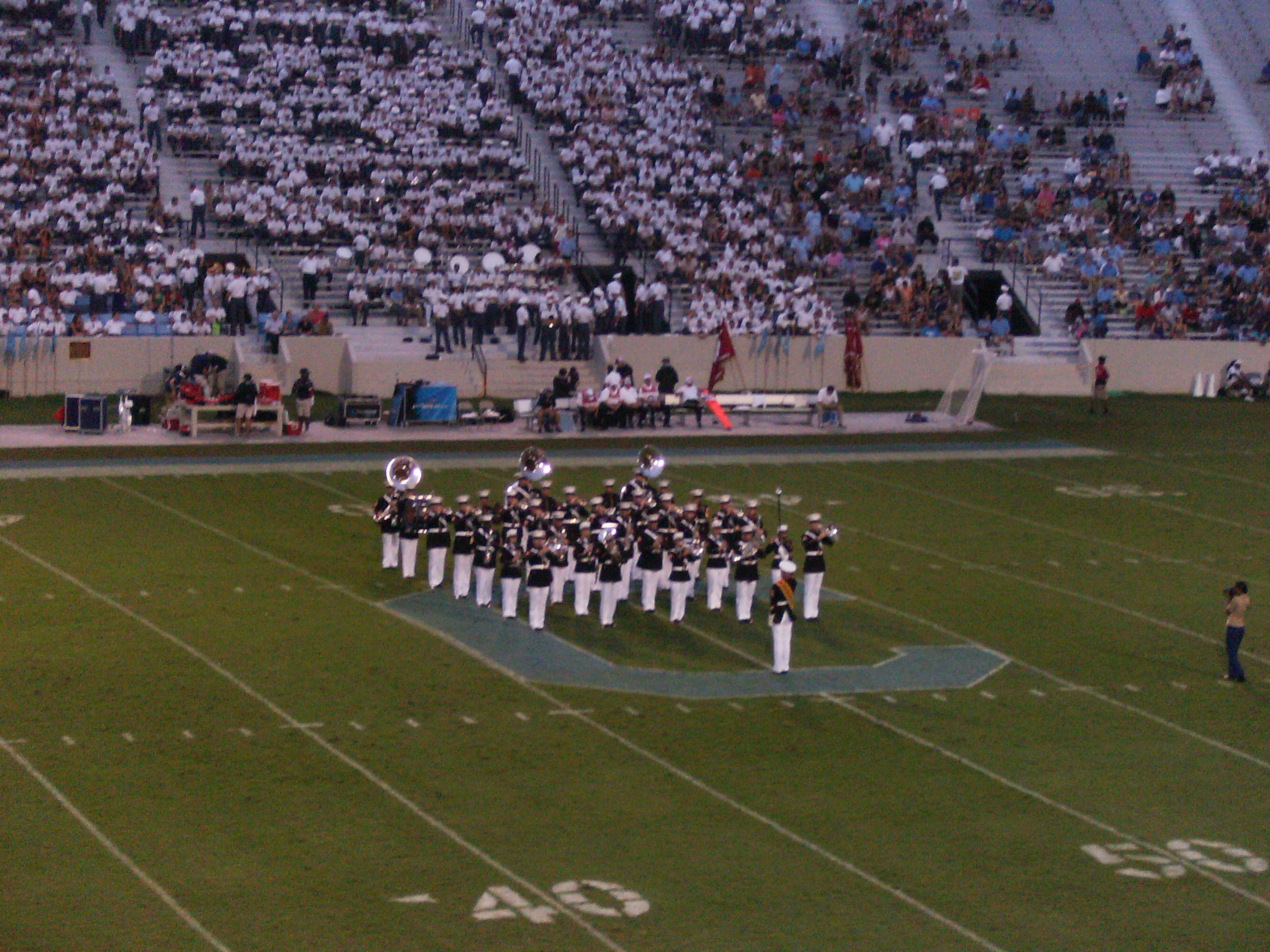
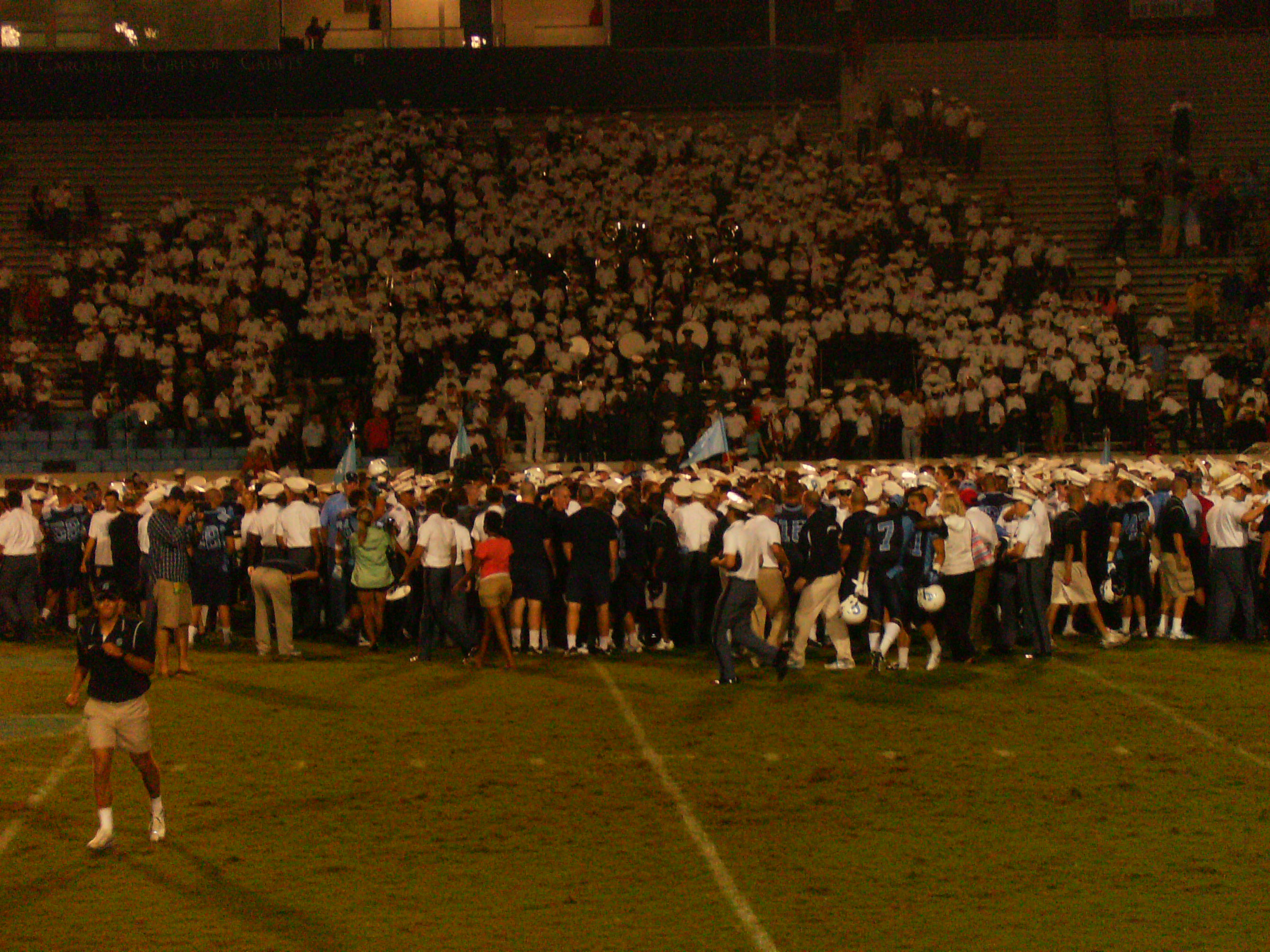
I took a bunch of pictures. Most of them weren’t very good, but then I’m not a good photographer. I tried to take a lot of pregame stuff, both around the stadium and field.

2012 Football, Game 2: The Citadel vs. Georgia Southern

The Citadel vs. Georgia Southern, to be played at historic Johnson Hagood Stadium, with kickoff at 6:00 pm ET on Saturday, September 8. Ā The game will not be televised, although it will be webcast onĀ Bulldog InsiderĀ (subscription service) and can be heard on radio via the twelve affiliates ofĀ The Citadel Sports Network.Ā Danny Reed (the ā€œVoice of the Bulldogsā€)Ā will callĀ the action alongside analyst Josh Baker, with Lee Glaze roaming the sidelines and Walt Nadzak providing pre-game, halftime, and post-game commentary.Ā 

Links of interest:

The Citadel game notesĀ  Ā  Ā  Ā  Ā  Ā  Ā  Ā  Ā  Ā Box score from The Citadel’s game last week

Georgia Southern game notesĀ  Ā  Ā  Ā  Box score from GSU’s game last week

SoCon weekly release

I want to start by talking about one of my favorite topics, attendance.

A crowd of 14,264 attended the game against Charleston Southern. Even with the ticket promotions and the postgame fireworks, I was pleasantly surprised with that total. As I arrived, I could see that there were a lot of people in the area around the stadium, even if a significant portion of them were just there for the tailgating.

It was the largest crowd for a game at Johnson Hagood Stadium since 2009, and the largest crowd for a home opener since 2006.

Charleston Southern actually brought a decent number of fans, a departure from previous seasons. More power to them. Georgia Southern will bring considerably more this week, so an opportunity for a big crowd is there.

This will be only the second time the two schools have met on the gridiron in the month of September. The Citadel played Georgia Southern on September 11, 1993, in Statesboro.

That is something to keep in mind when looking at attendance figures at Johnson Hagood Stadium for previous contests against the Eagles. Somewhat surprisingly, only twice has a game at JHS against Georgia Southern drawn crowds larger than the one last Saturday against CSU. However, all of those games came later in the season.

Attendance at Johnson Hagood Stadium when Georgia Southern is the opponent:

1994 — 18,559
1996 — 9,427
1998 — 14,222
2000 — 12,391
2002 — 16,427
2004 — 12,472
2006 — 12,129
2008 — 11,190
2010 — 10,385

I think there is a good chance that attendance will get a sizable bump for this matchup. It helps that both Clemson and South Carolina are playing earlier in the day.

That makes it all the more important for the Bulldogs to play well against the Eagles, because I believe that attendance for the remaining home games may be affected by The Citadel’s “momentum”. If a large crowd sees a good game, some of those people will come back for more. The bandwagon will start to roll again.

Interestingly, The Citadel’s potential attendance surge would be going against the national tide, at least if early-season FBS crowds are any indication:

There was exactly one announced capacity crowd in eight Southeastern Conference home openers. Before the Labor Day Georgia Tech-Virginia Tech game, six out of seven Atlantic Coast Conference schools had smaller crowds than their openers last year – some of them much smaller. Attendance was down at six out of eight Big 12 home openers from 2011. Five out of eight Pac-12 schools had smaller crowds as well, and Oregon’s 13-year sellout streak was in jeopardy until game day.

The Citadel’s attendance against Charleston Southern (14,264) was greater than the average attendance for the four MAC games played last week (13,928).

Can The Citadel beat Georgia Southern? Of course. What are the Bulldogs’ chances? Probably not very good, if history is a guide.

One of the great games in the history of Johnson Hagood Stadium was The Citadel’s 20-3 upset of top-ranked Marshall in 1988. The Bulldogs would also beat a top-10 opponent at JHS in 1991 when they edged #7 Furman 10-6 in a classic defensive struggle.

However, that 1991 win over Furman is one of just three victories by the Bulldogs over top 10 opposition since 1990. Two of those wins came in 1991; Appalachian State was ranked #9 when the Bulldogs beat the Mountaineers that season.

The Citadel defeated East Tennessee State in 1997 in Johnson City when the Bucs were ranked #8 (and still played football). Other than that, nothing:

– The Citadel vs. Top 10 opposition since 1990: 3-40 (29 straight losses)
– The Citadel vs. Top 5 opposition since 1990: 0-23
– The Citadel vs. Georgia Southern since 1990 when GSU was in the top 10: 0-9

I’m not trying to be negative. I’m just trying to provide a little perspective. If The Citadel were to win on Saturday, it would be the biggest win for the football program in at least fifteen years and the signature victory for Kevin Higgins in his tenure at the school.

It would also snap a ratherĀ ignominiousĀ streak: the Bulldogs have lost nine consecutive conference home games since beating Samford in 2009. The Citadel has not won a SoCon contest at Johnson Hagood Stadium since switching to the triple option offense.

While Georgia Southern has a history of high-octane offenses and rushed for 557 yards last week in a 58-0 demolition of Jacksonville, the Eagles’ best player is defensive lineman Brent Russell. He has had any number of big games (his performance versus Navy in 2010 was particularly noteworthy). Russell didn’t have a big game against The Citadel last year, though, because he was suspended and didn’t play.

Russell is back for this season’s matchup with the Eagles, but the Bulldogs will be without his fellow All-SoCon defensive lineman, Derek Douglas. Advantage: GSU.

One of the easy storylines for this game would be Russell matching up against The Citadel’s all-league center, Mike Sellers. However, it is unlikely there will be many (if any) one-on-one battles between the two star linemen. Kevin Higgins noted this at his weekly press conference when he pointed out Russell is now a “three technique” lineman.

Georgia Southern has moved Blake Riley to nosetackle in an effort to keep Russell from being repeatedly double-teamed, and as a result it will likely be The Citadel’s guards who will have to deal with Russell more often than not. Of course, the Bulldogs will try to neutralize him whenever possible by optioning off of him. The best way to neutralize Russell, though, is to block him. That will be a difficult task.

Another key figure in GSU’s defense will be Patrick Flowe, who is starting at middle linebacker for the Eagles as a true freshman. Ā It is surely unusual for a team coming off back-to-back appearances in the national semifinals to immediately start a true freshman at middle linebacker.

Curiously, Flowe is listed as the backup at MLB in GSU’s game notes.

Georgia Southern’s offense did not complete a pass in eight tries against Jacksonville, not that it mattered. In my preview of the Charleston Southern game I mentioned how overrated “balance” in an offense can be. To further illustrate this, GSU is 7-0 in modern program history when it fails to gain any passing yardage. One of those games was in 2010 at Johnson Hagood Stadium against the Bulldogs.

In contrast to The Citadel’s stuttering start against Charleston Southern, GSU came out blazing against the Dolphins, scoring 27 points in the first quarter. The second play from scrimmage for the Eagles was a 79-yard touchdown run by Ezayi Youyoute, one of two quarterbacks who will see significant time for Georgia Southern.

Fifteen different players carried the ball at least once for GSU. They included B-back Dominique Swope (104 yards, 3 TDs), Youyoute (164 yards, 3 TDs), Youyoute’s fellow QB Jerick McKinnon (71 yards, some of which came as a slotback, and a TD), and Robert Brown (63 yards on three rushes).

Those who remember the 2010 game against Georgia Southern (and Bulldog fans could be excused for trying to forget it) will recognize McKinnon’s name, as the then-frosh QB had to replace regular starter Jaybo Shaw early in that contest. McKinnon rushed for 182 yards that afternoon on 35 carries, both of which remain career highs for him.

Brown played in that game too, but as the B-back. He has now been moved to slotback. The fact he will play at all on Saturday is borderline amazing (at least to me), as he had back surgeryĀ just seven weeks ago.

Georgia Southern’s offense this season is expected to be more explosive with Youyoute and McKinnon at the controls. Jaybo Shaw was efficient and effective, a solid passer who made good decisions running the triple option, but was not a breakaway threat.

Of course, that doesn’t mean the combination of Youyoute/McKinnon won’t make the right reads, or that either/or can’t throw a nice ball. It may be, however, that The Citadel is playing Georgia Southern at the right time of year, as the two QBs are still developing as signal callers.

Georgia Southern also ran a fake punt against the Dolphins, and recovered an onside kick while leading 41-0 (though I gather that may have been an accident).

GSU had excellent special teams units last year, but is breaking in a new placekicker and punter this season, and needs to find a kick returner to replace Laron Scott.

Speaking of Scott, he also blocked one of the two missed Bulldog PATs that were so critical in last season’s game (free safety Darius Eubanks blocked the other). The Citadel is going to have to do a much better job in that phase of the game.

Confusion alert: Darreion Robinson, Georgia Southern slotback/punt returner, meet Darien Robinson, The Citadel B-back. Both scored touchdowns in last year’s matchup.

Offensively, the Bulldogs face the challenge of trying to control the line of scrimmage against Russell and company. It goes without saying that fumbling six times in a half again would be a bad idea. Georgia Southern lost both of its starting cornerbacks from last season (including the ubiquitous Scott), so perhaps this is the week that Triple O’Higgins breaks out the forward pass in a major way.

I was impressed with freshman running back Vinny Miller last Saturday, as were many other observers. I wouldn’t be surprised if he assumed an expanded role in this week’s game. Miller was one of several freshmen who made significant contributions during the Bulldogs’ victory over the Buccaneers. Another who impressed in his debut was defensive tackle Colin Parsons.

The Citadel’s defense has to do its best to prevent big plays, although it is probably inevitable that GSU will break at least a couple of long gainers. Against Jacksonville, the Eagles had nine runs of 19 yards or more. To combat the Eagles’ explosiveness, The Citadel must punish the high risk/reward nature of GSU’s offense by forcing turnovers.

Last year’s game featured five Georgia Southern fumbles (two lost) and an interception. The Bulldog D needs to at least match that total on Saturday.

The Bulldogs also must win the special teams battle. It’s not just about the placekicking, either.

Georgia Southern held The Citadel’s offense to 264 yards of total offense last season, which was the second-best performance by the Eagle defense all year (only Elon had fewer yards against GSU). However, the Bulldogs matched them on the other side of the ball, as Georgia Southern’s offense produced fewer total yards against The Citadel’s defense (320) than any team it played in 2011 except Appalachian State.

I don’t see that kind of game playing out on Saturday. I think both offenses are going to move the ball and score more points. That would probably be a good outcome from The Citadel’s perspective, as the Bulldogs are less likely to win a low-scoring game.

Indeed, The Citadel is 2-35 in the Kevin Higgins era when scoring 20 or fewer points (including an 0-4 record last season). I can understand having that bad a record when scoring 10 or fewer points, or even 14, but 20? Conversely, GSU is 2-5 under Jeff Monken when scoring 20 or fewer points.

It will beĀ Military Appreciation DayĀ on Saturday. It should be a festive occasion, with plenty of different events happening in conjunction with the football game. It will be even more festive if the home team can pull off a big upset. I would like to see a really big fiesta at Johnson Hagood Stadium that night.

College Football TV Listings 2012, Week 2

This is a list of every game played during week 2 of the college football season involving at least one FBS or FCS school. Ā All games are listed, televised or not. Ā For the televised games (only live broadcasts are listed), I include the announcers and sideline reporters (where applicable). Ā I put all of it on a Google Documents spreadsheet that can be accessed at the following link:

College Football TV Listings 2012, WeekĀ 2

Additional notes:

– I include ESPN3.com games; they are denoted as ā€œESPN3″.

– I’ve listed the regional network affiliates for the SEC Network ā€œnationalā€ game of the week (East Carolina-South Carolina) and a secondary SEC Network game (Western Kentucky-Alabama) in comments on the document. Ā There are numerous local affiliates for both games, a listing of which can be found here: Ā Link

– The local affiliates for the ACC Network ā€œnationalā€ game of the week (Ball State-Clemson) can be found here: Ā Link

– I’ve listed regional network affiliates for two Big East Network games (North Carolina State-Connecticut and Howard-Rutgers) in comments on the document. Local affiliates can be found here: Link

– I’ve listed the regional nets carrying the SEC Network ā€œregionalā€ game of the week (UTEP-Mississippi) in a comment on the document.

– I’ve listed the regional nets carrying the ACC Network ā€œregionalā€ game of the week (North Carolina-Wake Forest) in a comment on the document.

– Also listed on the document in a comment are the regional nets carrying the following games: Ā Tulane-Tulsa, Rice-Kansas, and Kent State-Kentucky.

– There are comments in the document with additional information for several other games.

– ABC/ESPN2 coverage map for the 3:30 pm ET games: Ā Link

– BTN (formerly Big Ten Network) ā€œgamefinderā€:Ā Ā Link

– USA Today Coaches Poll (FBS):Ā Ā Link

– FCS Coaches’ Poll:Ā Ā Link

—

A lot of the information I used in putting this together came courtesy ofĀ Matt Sarzyniak’s alarmingly comprehensive and completely indispensable websiteĀ College Sports on TV, which cannot be lauded enough. It’sĀ a must-bookmark for any fan of college sports, to say the least. Also to be credited, as always, are the indefatigable information gatherers (and in some cases sports-TV savants) atĀ the 506.com. Ā I am also assisted on occasion by helpful athletic media relationsĀ officials at various schools and conferences.

Game review, 2012: Charleston Southern

The Citadel 49, Charleston Southern 14.

Links of interest:

Game story in The Post and Courier

Postgame notes in The Post and Courier

The Post and Courier‘s video review of the game

The Citadel’s release

Video of the postgame press conference

Charleston Southern’s release

First, an exercise in perspective…what if the second half of last night’s game had actually been the first half, and vice versa?

In the second half against Charleston Southern, the Bulldogs rushed 34 times for 255 yards. They completed both of their pass attempts. The Citadel scored five touchdowns (by four different players) in the half and did not fumble. The Bulldogs committed one penalty, for five yards.

Defensively, the Bulldogs held Charleston Southern to 113 total yards in the second half. It forced three turnovers (two fumbles and an interception). CSU did not score in the half.

In the first half, The Citadel scored twice and moved the ball with relative ease (the Bulldogs did not punt during the entire game), but the offense fumbled six times (two lost). In addition, an ill-timed penalty cost The Citadel three points.

The defense played fairly well in the first half, but allowed a long touchdown drive after the first lost fumble, and appeared to have some communication issues in the secondary.

If The Citadel had raced out to a 35-0 halftime lead, and then settled for a 49-14 victory after some sloppy second-half play, I think the fan reaction would have been almost uniformly positive. There would have been some admonitions about letting up, and maintaining focus, but the general opinion of the fan base for the game would have probably been “solid effort”.

That’s not what happened, of course, and as a result the Bulldogs played last night to mixed reviews. On the one hand, a win is a win, especially if you root for The Citadel, and the second-half effort was an encouraging response to a disappointing first-half performance.

However, that doesn’t excuse a first half that gave supporters flashbacks to two years ago, when just trying to run the offense was a major challenge. At various points in the half, I was more annoyed with the team than I had been during the Georgia Southern game in 2010, when the Bulldogs fumbled nine times in one of the all-time Johnson Hagood Stadium debacles.

Of course, it really wasn’t the same as that GSU game. For one thing, the Bulldogs did run the triple option effectively, at least in terms of yardage and possessions. Oh, those fumbles, though…and that penalty…and that long CSU drive against the defense, during which the Buccaneers converted a 3rd-and-7 from their own 5-yard-line, then added a 29-yard pass play and a 25-yard run, and capped it off with a 15-yard TD pass that came when one of the Bulldogs appeared to blow a coverage assignment.

Frustrating. Still, it was a victory, and in truth The Citadel was in control of the game throughout, with the exception of that brief window when the Bulldogs trailed 14-7. After the second of Rickey Anderson’s three touchdowns tied the game just before the half, however, it was simply a question of whether The Citadel would fumble six more times in the second half, or win the game going away. Thankfully, all the fumbling after the break came from the Buccaneers.

ā€œThe good thing is, we executed the option real well,ā€ coach Kevin Higgins said. ā€œThe fumbles were not as much on exchanges as they were down field, the ones that hurt us. That’s a matter of protecting the ball and being smart.

ā€œOur guys know they didn’t play as well as they could have, and that they have work to do next week. That’s probably good with a team like Georgia Southern coming in.ā€

Ah yes, Georgia Southern. I earlier mentioned the 2010 game with all the turnovers. That was the last time the Eagles journeyed to Johnson Hagood Stadium.

In a way, next week is part of an unintentional round-robin. Georgia Southern’s opponent on Saturday was Jacksonville, and the Dolphins will play at Charleston Southern next week while the Eagles tangle with The Citadel.

Last year, JU played at The Citadel in the home opener and played creditably, losing 31-9 to the Bulldogs. Unfortunately for the Dolphins, their starting quarterback and several other key players graduated after last season. Georgia Southern crushed JU 58-0, with 41 of those points coming in the first half. GSU had 557 total yards, all rushing (the Eagles were 0-8 passing).

Georgia Southern was ready for the season to begin. The Citadel needed a half to work out some kinks. The Bulldogs won’t be getting any mulligans next Saturday against the Eagles. More on that game later in the week.

I took a few photos last night, though not as many as I would have liked. Not unlike the Bulldogs, the first game of the season was a struggle for me at times, too.

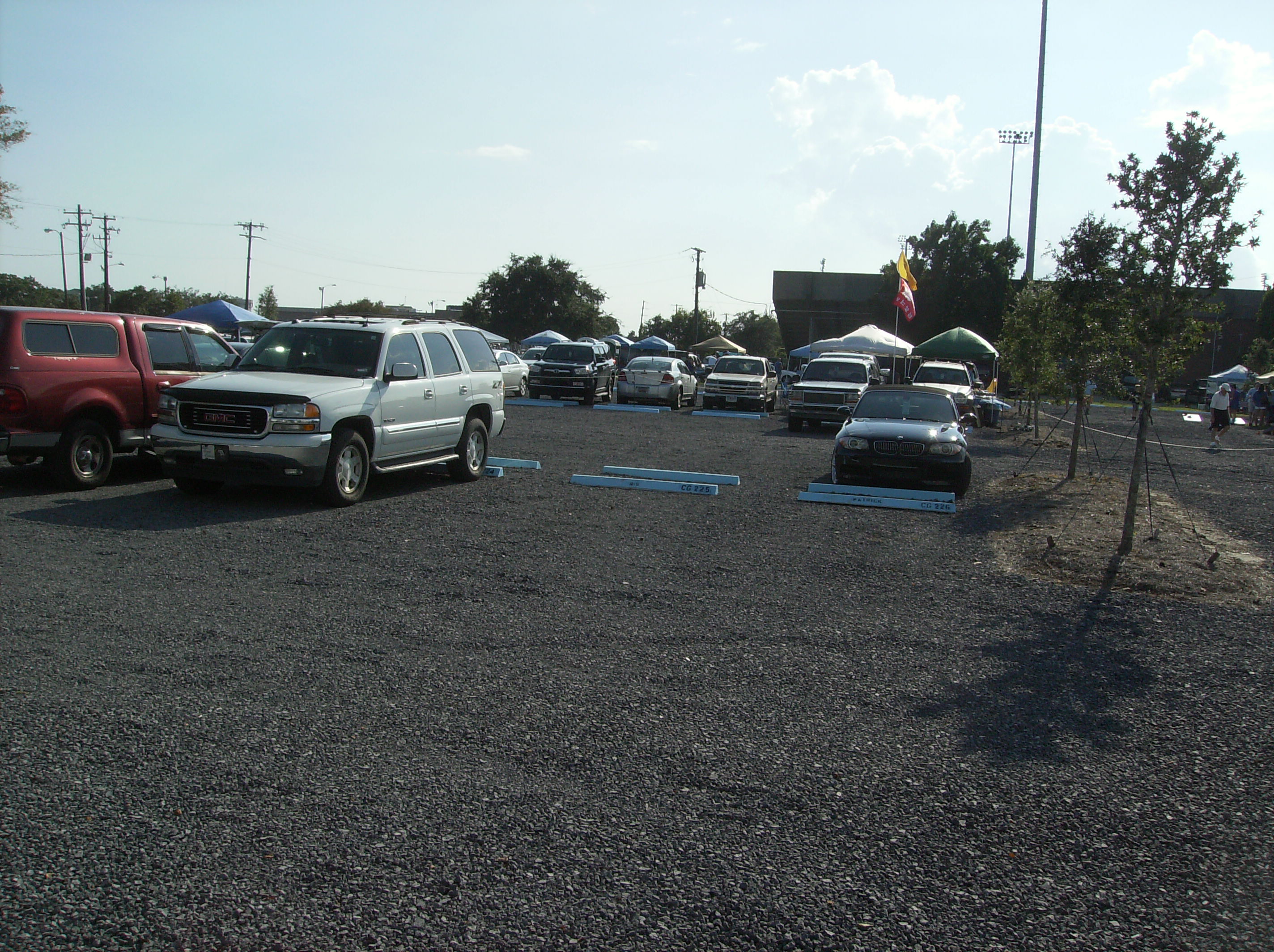
The first picture is a shot of the parking lot that replaced the old gym that used to be across the street from the stadium.


College Football TV Listings 2012, Week 1

This is a list of every game played during week 1 of the college football season involving at least one FBS or FCS school. Ā All games are listed, televised or not. Ā For the televised games (only live broadcasts are listed), I include the announcers and sideline reporters (where applicable). Ā I put all of it on a Google Documents spreadsheet that can be accessed at the following link:

College Football TV Listings 2012, WeekĀ 1

Additional notes:

– I include ESPN3.com games; they are denoted as ā€œESPN3″.

– I’ve listed the satellite affiliates for the SEC Network “national” game of the week (Buffalo-Georgia) in a comment on the document. Ā There are numerous local affiliates, a listing of which can be found here: Ā Link

– The local affiliates for the ACC Network ā€œnationalā€ game of the week (Elon-North Carolina) can be found here: Ā Link

– I’ve listed the regional nets carrying the SEC Network ā€œregionalā€ game of the week (Jackson State-Mississippi State) in a comment on the document.

– I’ve listed the regional nets carrying the ACC Network ā€œregionalā€ game of the week (Richmond-Virginia) in a comment on the document.

– Also listed on the document in a comment are the regional nets carrying the following games: Ā Appalachian State-East Carolina, Tulsa-Iowa State, Oklahoma-UTEP, and SMU-Baylor.

– There are comments in the document with additional information for several other games.

– ABC/ESPN2 coverage map for the 3:30 pm ET games: Ā Link

– BTN (formerly Big Ten Network) ā€œgamefinderā€:Ā Ā Link

– USA Today Coaches Poll (FBS):Ā Ā Link

– FCS Coaches’ Poll:Ā Ā Link

—

A lot of the information I used in putting this together came courtesy ofĀ Matt Sarzyniak’s alarmingly comprehensive and completely indispensable websiteĀ College Sports on TV, which cannot be lauded enough. It’sĀ a must-bookmark for any fan of college sports, to say the least. Also to be credited, as always, are the indefatigable information gatherers (and in some cases sports-TV savants) atĀ the 506.com. Ā I am also assisted on occasion by helpful athletic media relationsĀ officials at various schools and conferences.

2012 Football, Game 1: The Citadel vs. Charleston Southern

Ah, football. So glad to see you again, old friend. The offseason was long and hard. The lack of a winter confused us. We’ve had to wade through conference realignment conspiracy theories again, withĀ someĀ ofĀ thoseĀ rumors involvingĀ our own conference.

Yes, football is back, and just in time.

The Citadel vs. Charleston Southern, to be played at historic Johnson Hagood Stadium, with kickoff at 6:00 pm ET on Saturday, September 1. Ā The game will not be televised, although it will be webcast onĀ Bulldog InsiderĀ (subscription service) and can be heard on radio via the twelve affiliates ofĀ The Citadel Sports Network.Ā Danny Reed (the ā€œVoice of the Bulldogsā€)Ā will callĀ the action alongside analyst Josh Baker, with Lee Glaze roaming the sidelines and Walt Nadzak providing pre-game, halftime, and post-game commentary. After the game, there will be a fireworks show, which probably guarantees that a series of thunderstorms will begin to pass through Charleston during the second half.

Some links of note:

The Citadel game notes Ā  Ā The Citadel depth chart Ā Ā SoCon weekly release

Oh, and just for fun, a few things I wrote in the spring and summer:

Why I don’t expect an overflow crowd at Saturday’s game

A brief look at returning lettermen for The Citadel and its opponents

An analysis of attendance at Johnson Hagood Stadium over the past five decades

My ridiculously long-winded manifesto on why The Citadel needs to add more varsity sports

Watching The Post and Courier‘s video preview for The Citadel’s upcoming season, I was interested to hear Jeff Hartsell state that head coach Kevin Higgins was not under any particular pressure in terms of wins and losses for this year. According to Hartsell, The Citadel administration is “all-in” on Higgins, who is now in his eighth season at the military college.

I’m not surprised school officials would take that position in public (it is, after all, the correct thing to do). I was a little curious to hear Hartsell say so withoutĀ equivocation, which tells me the public position is also the private one. Higgins has one year remaining on his contract after this season, to be sure, and The Citadel is not known for terminating coaches in that situation.

Not that I’m advocating a “win this year or else” strategy with regards to Higgins; far from it. I think it’s good to have a veteran coach running things. As long as he still has the energy for the job (and that certainly appears to be the case), I like the idea of having a coach who has been at the school long Ā enough to know what to do and what not to do. He knows how to approach things that are unique to The Citadel, whether it be recruiting or corps squad/rest of corps relations (this tweet is evidence of the latter).

In other words, he’s made all the big mistakes he’s going to make. Now, though, I would like to see him win a few more games, which would go along nicely with his cutting-edge practice fieldĀ attire.

I think it’s important to be realistic about a football program that has had just one winning season since 1997. The definition of a successful campaign this year, then, is to finish with more wins than losses. As Hartsell also said in the video preview, that’s what fans should be expecting (in terms of a breakthrough).

It won’t be easy. The schedule is not as conducive to a winning year as one would like. There are only five home games, and in addition to that the slate isĀ front-loaded. It is not out of the question The Citadel could be 1-4 after its first five games. In fact, the footballĀ cognoscentiĀ of the SoCon would predict exactly that. The Bulldogs were picked to finish next-to-last in the league by both the media writers and the coaches.

Therefore, a key to the season is improving upon that 1-4 expectation. That is quite possible, in my view. The Bulldogs more than held their own last season against the three league opponents they will play in that five-game stretch. The Citadel lost by seven points to Appalachian State at home, narrowly missed out on a road upset of Georgia Southern, and stunned Chattanooga (in Chattanooga!) after spotting the Mocs a 27-point lead.

The Citadel won’t be favored to be as competitive against North Carolina State, though nothing is impossible (and taking no chances, Tom O’Brien is already preparing his team for the triple option). The Bulldogs are a solid favorite against Charleston Southern. (I get a little nervous whenever I write that The Citadel is a “solid favorite” over any team.)

The Citadel total offense (in yards) vs. SoCon opponents, 2010:Ā 359, 304, 263, 197, 160, 143, 300, 203

The Citadel total offense (in yards) vs. SoCon opponents, 2011: 301, 267, 268, 238, 361, 447, 264, 259

Triple O’Higgins was clearly better last season, yet there is plenty of room for improvement. The Citadel averaged 300.6 yards of total offense in eight league games. That number rises to 318.8 counting the non-conference contests, which was the worst total in the SoCon.

Of course, the numbers that matter are points, but total offense is generally a good indicator of points scored, and The Citadel’s 23.5 points per game finished next-to-last in the SoCon, ahead of only hapless Western Carolina.

Most of The Citadel’s total offense came in rushing, which will surprise nobody. The Bulldogs only averaged 32.2 yards passing per contest, which ranked last in the entire country. In a way, that makes The Citadel’s rushing totals all the more impressive, given every opponent could focus exclusively on the run — and I do mean exclusively.

I remember driving through a torrential thunderstorm on I-26 and listening to Danny Reed call the Bulldogs’ game against Elon. “10 men in the box for Elon,” he said about one early second-quarter play. Later on, he exclaimed, “Now the Phoenix have 11 men in the box!” As the game wound down to its conclusion, I was half-expecting him to say that Elon was putting 12 men in the box.

The lack of a passing threat was a key reason why the Bulldogs, despite finishing third in the SoCon (and the nation) in rushing, wound up finishing last in the league in total first downs.

For this season, The Citadel needs to at least make its opponents nervous about the possibility of a forward pass. To do so, a new formation has been added to the playbook:

A new feature of The Citadel offense this year will be a heavier reliance on the shotgun, a formation which will allow both returning quarterbacks to improve their accuracy and make the Bulldogs more of a productive passing team.

Kevin Higgins is not going to tell anybody what numbers he is looking for in the passing game, which is understandable, because he really isn’t looking for a specific amount of receiving yards. He just wants to make opponents honor the pass, which will in turn help the Bulldogs’ rushing attack.

While there may be no “magic number”, I believe some parameters for success can be estimated. It appears The Citadel does plan to throw the ball a bit more often this season.Ā If the idea is to average 10-12 pass attempts per game (the Bulldogs averaged a shade under 7 attempts last season), then I think The Citadel needs to average around 8.0-8.5 yards per pass attempt at a minimum (preferably it should be above 9 yards per attempt). Last season, that number was 4.7 ypa, an awful average.

As for interceptions, I am inclined to think the goal should be no more than one per 25 attempts, though that number could fluctuate based on overall total offense production and the number of possessions per game. Last season the Bulldogs threw seven interceptions in only 75 passing attempts, which is very poor. Interestingly, Wofford tossed seven picks in 108 attempts, which isn’t much better — but the Terriers also threw eight touchdown passes. The Citadel only had one TD pass, and that was a halfback option pass by Rickey Anderson.

While the Bulldogs need to improve in the passing game, the team needs to be careful not to lose its identity as a run-first, run-second, run-as-much-as-possible offense. The Citadel needs to stick to the basics. This isn’t about “balance”. Nothing is more overrated than balance in an offense. It’s not how you score points, it’s how many points you score. Case in point: since 1990, there have been ten games in which The Citadel has had seven or fewer passing yards. The record for the Bulldogs in those ten games? 6-4.

Regardless of formation variance, I think the offense will be better this season. The Citadel has a generally solid cast of returnees, including a plethora of slotbacks, two quality B-backs, and two quarterbacks. The largely experienced offensive line is led by the offense’s best player, center Mike Sellers.

There is some concern about the wide receiver position, but to me the biggest question marks are the two tackle positions and the rotating quarterbacks. The Citadel recently made a significant move at the tackle position, inserting Cullen Brown at starting right tackle. Alex Glover will now start at tight end.

Regarding the QBs, I am not a huge believer in the notion that you must have a #1 guy at the position, at least at the college level.Ā However, I do wonder about the timing of the offense when you combine two quarterbacks with two different B-backs. Everyone remembers the problems the Bulldogs had two years ago with the center-QB exchange and the QB/back “mesh” operation. No one at The Citadel wants to see anything resembling a repeat of those days.

I am a little worried about the defense, particularly when it comes to that four-game stretch following the opener: Georgia Southern, Appalachian State, North Carolina State, and Chattanooga. The unit must be ready to compete at a high level for those games, but lacks starting experience in key areas. The front-loaded schedule could really hurt the Bulldogs.

Four of the five leading tacklers from last season are gone, although that in itself doesn’t bother me too much. It’s the amount of experience those four players had that is the real issue (last year’s three starting linebackers played in a combined 126 career games).

Then there is the loss of Derek Douglas for at least the first part of the season due to a knee injury. Many observers felt Douglas was the team’s best all-around player last season, a force on the d-line and an all-conference selection. He had 11 tackles for loss; only one other returning SoCon player had more (Wes Dothard of UTC). Douglas can’t return fast enough for the Bulldogs.

There is more talent coming back, however, including lineman Chris Billingslea, a true playmaker on the defensive side of the ball. Billingslea’s big-play capability (he always seems to be around the football) is something The Citadel needs from more of its defensive players; while solid, last season’s defense didn’t force quite enough negative plays, particularly turnovers (eighteen in eleven games).

There are a number of candidates to feature alongside Billingslea (and Douglas, when he returns) on the defensive line. I think the Bulldogs are in reasonably good shape with this group. The Citadel just needs two or three of them to assert themselves as major contributors, and quickly. It appears that at least two freshmen will get an opportunity to make an impact.

While the linebacking corps will feature three new starters, all three played last season and showed promise, including flashes of that big-play ability the Bulldogs need. However, there has been talk that they aren’t as athletic as the previous starters. Personally, I’m not overly concerned with their athleticism, as long as they can make game-changing plays that benefit The Citadel. Depth could be an issue, however, as there are fewer obvious options for this group than there are for the defensive line.

The secondary needs to improve on its interception totals (only six all last season). The lack of picks has been an ongoing problem. The Citadel was last in the league in passes intercepted in 2010 and next-to-last in 2011. Another issue that has occasionally bedeviled The Citadel is theĀ “killer pass” from the opposition — Ā not just long TD throws, but third-down conversion pickups that have allowed drives to continue.

The Citadel allowed opponents to complete 65.3% of their passes last season, the highest percentage allowed in the Higgins era. Opponents have completed at least 60% of their passes against the Bulldogs in each of the last four years, a far cry from the 52.7% completion rate allowed in 2007, The Citadel’s last winning campaign.

The Bulldogs were next-to-last in the league in defensive pass efficiency last season. To win more games, The Citadel has to do better than that in 2012.

Phil Steele recently released his FCS Special Teams rankings for the 2011 season. The Citadel, primarily thanks to its success in punting and returning (or rather, blocking) punts, finished first in the nation in his ratings. Only one other Southern Conference team finished in the top 30 (Georgia Southern was thirteenth).

The star performer for The Citadel’s special teams last season was punter Cass Couey, who was superb, leading the SoCon in punting average (43.0 yds) and net punting (38.2 yds). He’s also capable of tucking the ball under his arm and running for a first down if the opposition isn’t paying attention.

The Citadel also had a big edge when the other team punted, thanks to nine blocked punts. However, one of the NCAA’s rules changes for 2012 will force the Bulldogs to adjust at least part of their kick-blocking strategy:

There will…be a new rule prohibiting players from leaping over blockers in an attempt to block a punt. Receiving-team players trying to jump over a shield-blocking scheme has become popular for teams in punt formation. Receiving-team players try to defeat this scheme by rushing into the backfield to block a punt. In some cases, these players are contacted and end up flipping in the air and landing on their head or shoulders.

This change could be called the Domonic Jones Rule, as the rangy 6’5″ wide receiver blocked or deflected five punts last season by doing exactly what is described above. While the new rule may not favor The Citadel, in all honesty I think it’s a good change. Too many times I have watched a player land on his head or neck after leaping into a pair of shield blockers.

Kevin Higgins was on the committee that recommended the new rules changes, and he and his fellow panelists were busy. The kicking game drew special attention, and the Jones Rule wasn’t the only thing to be enacted:

[T]eams will kick off at the 35-yard line instead of the 30. Also, players on the kicking team can’t line up for the play behind the 30-yard line, which is intended to limit the running start kicking teams used to have during the play.

Also, touchbacks on free kicks will be moved to the 25-yard line instead of the 20 to encourage more touchbacks. Touchbacks on other plays (for example, punts that go into the end zone, or fumbles that go out of the end zone) will remain at the 20-yard line.

Those rule changes will affect The Citadel on kickoffs, an aspect of special teams the Bulldogs could improve upon. While the kickoff return unit was fine, The Citadel was seventh in the league in net kickoff coverage. A freshman is expected to be the Bulldogs’ kickoff specialist this fall. So far, reviews are good.

Reviews are also good for senior Thomas Warren, who becomes the starting placekicker this season. By all accounts, Warren has had an excellent preseason camp. Missed opportunities in the kicking game cost The Citadel a chance at winning both the Elon and Georgia Southern games last season, and as a result there is a lot of interest (if not angst) among fans about the placekicking unit. It should be pointed out, however, that it’s not all about the kicker. The holder, snapper, and blockers must all do their jobs too.

One thing The Citadel did very well last year was not commit penalties. In fact, the Bulldogs were the least-penalized team in the nation last season, both in terms of number (3.09 per game) and yardage (22.45 yds), which is to the credit of the players and the coaches. I like rooting for a team that doesn’t commit a lot of penalties.

Incidentally, another rules change for this season will particularly impact teams running the triple option:

Offensive players in the tackle box at the snap who are not in motion are allowed to block below the waist legally without restriction. All other players are restricted from blocking below the waist with a few exceptions (for example, straight-ahead blocks).

The Citadel’s opponent on Saturday, Charleston Southern, had a rough season last year. Actually, “rough” may be a nice way to put it, as the Buccaneers were 0-11. Charleston Southern started the season getting blitzed by two FBS opponents (Central Florida and Florida State) by a combined score of 124-10, and never really recovered.

The lowlight of the Bucs’ season was probably the 32-20 loss to Division III Wesley College, which came at CSU’s Homecoming. Charleston Southern lost close games to Jacksonville, VMI, Coastal Carolina, and Gardner-Webb, but also got bashed a few times, including a 30-point loss to Norfolk State and a 31-point defeat to Presbyterian in the season finale.

Non-FBS opponents averaged 35 points per game against the Bucs, and had success on the ground and in the air. CSU allowed 225 rushing yards per game, and 217 passing yards per contest.

Charleston Southern ranked last in the Big South in the following defensive categories: defensive pass efficiency, fumbles recovered, rushing defense, total defense, scoring defense, tackles for loss, sacks, and turnovers gained.

Offensively, CSU ranked last in the Big South in rushing offense and scoring offense. The Bucs were also the worst team in the league at returning kickoffs.Ā On the bright side, Charleston Southern led the Big South in net punting and only lost seven fumbles.

It all added up to a winless season. CSU has now lost twelve straight and eighteen of its last nineteen games.

Charleston Southern has two quarterbacks battling for the starting spot; regardless of which player wins the job, he must improve upon last year’s pass completion percentage (45.7%). I mentioned earlier that CSU finished last in the Big South in rushing offense. In fact, the Bucs only averaged 2.6 yards per carry, and only two starters return on CSU’s offensive line. Charleston Southern quarterbacks were sacked 32 times last year.

The defense has a new coordinator, Shawn Quinn, who was Georgia Southern’s linebackers coach and recruiting coordinator last season. He has work to do. However, given his experience at GSU, he should have a very good idea of how to defend The Citadel’s triple option attack.

Charleston Southern is not completely bereft of experienced talent. Senior cornerback Charles James was selected as the preseason Big South Defensive Player of the Year. He must be an excellent player to receive that kind of accolade while playing for a team coming off an 0-11 campaign. James is a former walk-on who has ten career interceptions; he also made 66 tackles last season for the Bucs and is a fine punt returner as well, averaging just under ten yards per return last season (with one touchdown).

Junior wideout Nathan Perera caught 43 passes (four touchdowns) last season and joined James on the preseason All-Big South squad. Perera averaged over 16 yards per reception. However, he is questionable for the game against The Citadel due to injury.

The Buccaneers’ special teams were respectable in 2011, with the punting units in particular being very solid. However, CSU must replace its punter/placekicker this season.

Charleston Southern was picked to finish last in the Big South’s preseason poll. One of the eighteen voters did tip CSU to finish second, for reasons not immediately apparent.

This year’s Charleston Southern team is probably not as good as the Jacksonville squad that The Citadel faced in last year’s opener. However, the Bucs are likely better than 2010 opening-game opponent Chowan or the Presbyterian outfit the Bulldogs played in the 2009 home opener.

While CSU’s defense last year was porous, it will return seven starters, and that group doesn’t include UGA transfer Damian Dixon, who will likely start in the defensive backfield with Charles James. Add in to the mix a new defensive coordinator who is familiar with The Citadel’s offense, and the result is a unit that should be ready to compete against the Bulldogs.

On the other side of the ball, The Citadel has several players who will be starting for the first time, but the same is going to be true for CSU’s offense. It may be a good situation for the Bulldogs in that respect.

The Citadel should win this game. It probably won’t be a rout, but it ought to beĀ decisive. Losing to the Buccaneers would be disastrous. The Bulldogs will struggle to salvage the rest of the 2012 campaign if they do not prevail on Saturday.

That is pressure. Then again, nobody goes to The Citadel to avoid pressure.

I can’t wait until Saturday.

Putting together The Citadel’s 2012-13 hoops schedule

It’s that time of year when I try to figure out The Citadel’s upcoming basketball schedule before it’s been released. Why do I do this? I have no idea. Marking time until football season begins, I suppose. Anyway, some quick thoughts:

Phil Kornblut interviewed Chuck Driesell recently; you can listen to that here. In the interview, Driesell stated that The Citadel will play fourteen home basketball games this season, and that the first six of those would come in a season-opening homestand at McAlister Field House.

The first two games at McAlister will come at the All-Military Classic against VMI and either Army or Air Force. It doesn’t appear at this time that those games will be played on the U.S.S. Yorktown, as had been rumored. It is possible that the game against VMI could still take place on the carrier, but I tend to doubt it.

Those games will take place on November 10 and November 11. Yes, The Citadel will play VMI in both basketball (at home) and football (on the road) on the same day. That doesn’t strike me as ideal.

After those two games, then, The Citadel will play four more home games before its first road game, which presumably will be the December 1 game against UNC-Greensboro (which has already released its schedule).

There are eighteen games in SoCon play. Nine at home, nine on the road. If The Citadel is opening with six straight home games, then one of them has to be a conference game. That’s because if all six were out of conference, the Bulldogs would be playing 15 home games (those six, plus the nine league matchups).

Since the number of home games is 14, one of the six has to be against a fellow SoCon squad. I’m guessing the date of that game is November 28, based on the recently released Furman schedule.

The other OOC home game that is “known” is Radford. The Citadel will host the Highlanders on November 24. That leaves two more non-conference games at McAlister to be determined.

If The Citadel is playing five OOC home games, then the Bulldogs will be playing six non-conference games on the road. Three of those have already been announced via the release of opponents’ schedules.

The Citadel will play at St. Bonaventure on December 19. Three days later, on December 22, the Bulldogs will travel to Atlanta to play Georgia Tech. Then on January 1, 2013, The Citadel will travel to Clemson.

Larry Leckonby is on record as stating that for budgetary purposes the basketball team was asked to schedule at least three “guarantee games” this season. I’m not positive that the three games mentioned above fit the bill, although they probably do. I am unsure about Clemson, as that game may be part of a previously arranged deal (since the Tigers played at McAlister last season). I am a little curious about the St. Bonaventure game, to be honest.

As for the remaining three road OOC contests, I am assuming (very dangerous, assumptions) that one of them will be against Charleston Southern, which played at MFH last year. As for the other two games, I don’t really have any idea, although I wouldn’t be all that surprised if one of them is another guarantee game.

That’s all I’ve got on the schedule front right now.

A brief break from sports, starring William Windom

On the “About The Sports Arsenal” page, I wrote that this blog “is intended toĀ be aĀ place for me to post myĀ thoughtsĀ about sports, and maybe a few other things from time to time.” Consider this post to be one of those few other things.

I subscribe to Google Alerts about various subjects, including The Citadel. Sometimes alerts for “The Citadel” are actually about the military college; sometimes they aren’t. For example, I get a lot of notices about a theater group in Edmonton, a hedge fund in Chicago, and more than a few stories about fortress-like structures in the Middle East. Ā There is a broadcasting company that always seems to be in the news because someone is suing it. There are also a bunch of people out there who are a little too serious about video games.

There are also alerts about topics that touch on The Citadel, not as the main focus of an article, but in a tangential fashion at best. This post came about because of one of those alerts.

(Don’t worry, I’ll be ready for football season.)

William Windom, a versatile American character actor, died last week at the age of 88. You may not be familiar with the name, but you would almost certainly recognize the man. Among his credits: a key role in the movie To Kill AĀ Mockingbird; a long-running stint on Murder, She Wrote; and countless other guest appearances on television shows, including memorable roles on Star Trek, The Twilight Zone, and Gunsmoke. Prior to his TV/movie work, Windom hadĀ enjoyed an extended career on Broadway. He won an Emmy award for best actor in a comedy series in 1970.

Windom had an eventful life, one that included a sojourn at The Citadel — though not as a cadet.

Windom started his academic career at Williams College, but when World War II broke out he joined the Army.

Before becoming an Army paratrooper in World War II, he joined the Army Specialized Training Program, under whose auspices he studied at The Citadel, Antioch College and the University of Kentucky.

During the war, with most of the cadets in the armed forces (and the school needing some extra cash), The Citadel worked out a deal with the Army to help train soldiers in various disciplines, with the men housed on campus. Windom was one of those soldiers. This in itself was not unusual, but while reading about Windom’s subsequent academic career I stumbled down an information rabbit hole — for after leaving Kentucky, Windom was not finished with higher ed. In all, he went to six different schools. Those six institutions only added up to “about two years’ worth of education,” according to the actor.

It was his fifth school that caught my attention. During the postwar Allied occupation of France, Windom enrolled in the Biarritz American University.

After the war three overseas universities were established for demobilizing GIs. These schools were temporary in nature, as you might imagine, and were shuttered (as planned) in 1946. One of the three was located in the French resort town of Biarritz. That’s the school Windom decided to attend. He chose wisely. None other than John Dos Passos called the students at Biarritz “the most contented GIs in Europe.”

MuchĀ of the resort had been mothballed since the fall of France, when its rich and aristocratic clientele stopped coming. The Americans simply took it over, billeting instructors and students in 300 hotels and villas.

TheĀ lowliest privates, accustomed to draughty barrack rooms, slept in soft beds with linen sheets, private bathrooms, hot water and maid service (as many townsfolk were glad of the work the new college brought).

The Hotel du Palais, built by Napoleon III for Empress Eugenie, became a regular college hostel; fine-art students at Villa Rochefoucauld were surprised to find one of Queen Victoria’s inventories in an armoire. Ten professors were billeted in what had been the resort’s top brothel, and were disturbed nightly by former customers. The casino became a library, with bookcases replacing the roulette wheel.

The wearing of uniform[s] was about the only piece of military discipline to be retained at BAU, though soldiers cutting lectures could be summonsed and fined. But there was a sense that this was not just a U.S. campus transplanted on to French soil.

BAU didn’t have any fight songs or school colors. It did feature guest instructorsĀ of international fame. Of course, sometimes this came at a cost:

Marlene Dietrich came to lecture on movie acting techniques (and the hapless GI charged with looking after her found himself tasked with sucking her toes to help her sleep).

Windom caught the acting bug at Biarritz, playing the title role in a school production of Shakespeare’s “Richard III”. He returned to the United States and continued his studies at Fordham before beginning his professional career.

An obituary posted in The New York TimesĀ included this sentence about his time at Biarritz:

“To be honest, I signed up because I thought it would be an easy touch,ā€ he toldĀ The New York TimesĀ in an interview for this obituary in 2009, ā€œand we had heard that actressesĀ had round heels.ā€

Imagine being about 85 years old (or any age, I suppose) and getting a call from the Times about an interview for your eventual obituary. That’s…different.

What does it all mean? Not much, really. For me, it’s just a reminder that the internet can be a very interesting place, full of information, occasionally surprising and/or educational. You click on a link, and then one thing leads to another, and then another, and soon you realize that it’s well past midnight…

When the Aviation Bowl didn’t fly

While doing some research for my post about attendance at Johnson Hagood Stadium, I started reading about a relatively unknown footnote to The Citadel’s football history, specifically the 1961 campaign.

The Citadel’s 1961 football team, which won the Southern Conference title, actually had an opportunity to go bowling following the season. That would have meant the team would have gone to bowls in consecutive years, as the Bulldogs had played in the 1960 Tangerine Bowl. Instead, the school (and team) turned down not one, but two bowl invitations.

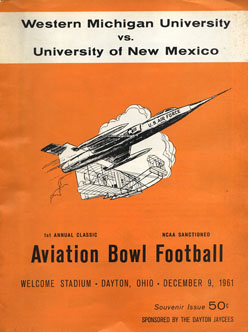
One of the two bowls in question was the Tangerine Bowl, which after being renamed multiple times is still going strong as the Capital One Bowl, although it is almost unrecognizable from its early days. The other bowl is long gone, as it was doomed by tragedy, bad luck, and just a touch of hubris. That one-and-done game was known as the Aviation Bowl.

The idea behind the Aviation Bowl wasn’t a bad one. It was an effort to raise the profile of the Mid-American Conference (MAC). The champion of the MAC would play a team from another region of the country at Welcome Stadium (capacity: 12,000) in Dayton, Ohio, the hometown of aviation pioneers Orville and Wilbur Wright.

(I have friends who would say calling a game played in Dayton the Aviation Bowl was the organizers’ first mistake, as that title should have been reserved for a bowl game in Kitty Hawk, North Carolina — but I digress.)

There were high hopes for the game, in part because the two favorites to win the MAC in 1961 were Bowling Green and Ohio University, both located in the state of Ohio. Alas, it was not to be. Bowling Green did win the MAC that year, but a tragedy that took place the year before would place the Falcons in another contest.

After a game between Cal Poly-SLO and Bowling Green on October 29, 1960, an airplane carrying members of the Cal Poly team crashed on takeoff in Toledo, Ohio. Sixteen members of the Cal Poly football team were among those killed in the disaster.

The following year, a benefit bowl game (the Mercy Bowl) was played at the Los Angeles Memorial Coliseum for the families of those who had perished, and for those victims who had survived the crash (one of whom was future Southern California and San Diego State head coach Ted Tollner). Bowling Green was asked to play in the game and accepted, eliminating the Falcons from Aviation Bowl consideration.

Ohio U. was in position to take the MAC’s berth in the Aviation Bowl, even after a 7-6 loss to Bowling Green, but needed to beat Western Michigan in the season finale to claim the spot. Instead, the game ended in a 20-20 tie, and the Broncos sneaked past both Ohio and Miami (OH) to grab the bid. Thus, the MAC representative for the bowl turned out to be not one of the Ohio contingent, but Western Michigan, with a record of just 5-3-1 and farther away from Dayton than any other MAC school.

The game between Western Michigan and Ohio was played on November 18. By that time, organizers were running out of candidates to fill the other spot in the game.

After originally releasing a wish list of sorts that included schools ranging from Colgate to Florida State to Wyoming, the folks in Dayton were having a hard time finding a school willing to play in the contest. It appears that offers to Rutgers and The Citadel were on the table at around the same time, but the Rutgers administration turned down the Aviation Bowl and the Sun BowlĀ on November 14, electing not to go bowling at all; the Scarlet Knights would eventually finish the season with a record of 9-0.

On November 18, the same day Western Michigan qualified for the Aviation Bowl, officials at The Citadel notified the Dayton organizers that the military college wouldn’t be accepting a bid either. That decision had apparently been left up to the team, as was a potential return trip to the Tangerine Bowl (more on that later).

Bowl officials then approached Xavier about playing (in an effort to at least have a semi-local team in the game), but before those negotiations could be completed, the bowl committee chairman worked out a deal with New Mexico to become Western Michigan’s opponent. He may have believed that a more “exotic” team in the game would increase interest in the contest, and a mysterious squad from the western part of the country fit the bill.

New Mexico was only 5-4, in third place in the Skyline Conference, and the Lobos still had a game against BYU to play, but hey — they were willing to go to Dayton! At least, UNM was willing to travel to Ohio for a guarantee of $15,000 (one source suggests it was $18,000), three times as much money as Xavier had been tentatively offered.

The contest was played on December 9 and was more or less a debacle. Two inches of snow fell in Dayton the morning of the game; with temperatures hovering in the 20s, the snow eventually turned to sleet and rain. Game attendance: 3,976, less than half of what the Dayton Jaycees needed to break even.

The Aviation Bowl queen and her court (one from each of the MAC schools) shivered under the Welcome Stadium grandstand for the first half, and when they went onto the field for halftime ceremonies, the microphone wouldn’t work. The PA system was fixed just in time for Gov. Michael DiSalle to launch into a campaign speech. He still was introducing other Ohio politicians when the third quarter began.

The game’s MVP was the New Mexico equipment manager, who acquired surgical gloves from a local hospital prior to the contest. The gloves allowed the Lobo ballcarriers to more easily hang on to the football in the brutal conditions (shades of “TheĀ Sneakers Game” of NFL lore). New Mexico won, 28-12.

The Dayton Jaycees lost about $15,000, and that spelled the end of the star-crossed Aviation Bowl.

At the same time The Citadel’s players elected not to play in the Aviation Bowl (a no-brainer of a decision, in retrospect), they also voted not to accept an offer to play in the Tangerine Bowl for a second consecutive season. However, the vote on the Tangerine Bowl was close enough that it was originally decided a “re-vote” would be held two days later. That didn’t happen, though, and the school informed the bowl it was declining the offer. According to The News and Courier:

It was rumored, however, that the seniors on the team had swung the vote to reject the offer. With senior essays hanging over their heads and exams coming up after the holidays, they decided it was best to forgo the playing for studying.

After the military college decided against going, Furman also declined a bid from the Orlando bowl (and also reportedly nixed a chance to be consideredĀ for a Sun Bowl berth). The Tangerine Bowl would eventually select Lamar to play OVC champ Middle Tennessee State in the contest.

The Citadel had accepted a bid to the Tangerine Bowl in 1960, beating Tennessee Tech 27-0. A year later, however, the cadets weren’t nearly as interested in making the trip to Orlando.

I don’t know what the difference was between 1960 and 1961; it’s not like there were no exams or essays on the horizon in 1960. On the other hand, it may be that the 1961 game would have had a “been there done that” feel to it. After winning the league title, the players may have felt they had nothing more to prove, and that fully concentrating on schoolwork was much more worthwhile than going to Florida again.

There could have been one more factor.Ā From an article on the acceptance of the bowl invite in 1960:

Coach [Eddie] Teague said the Bulldogs would report for bowl game drills “about Dec. 5”. The squad will be given a week off for Christmas, then will depart for Orlando on Dec. 26.

That makes it sound like the players’ semester break would have consisted of about one week. I know firsthand how much cadets cherish semester break. That wouldn’t have been the most enjoyable situation, even without military obligations.

I could understand why some of the players might not have wanted to do that again for a trip to the same bowl.Ā They probably were not unhappy to hear that the game between Lamar and Middle Tennessee State was played in “near-freezing temperatures”.

I could be completely wrong about that line of reasoning, of course.

Bowl history isĀ convolutedĀ enough as it is, but it’s important to remember that in the past, there were plenty of schools with teams good enough to play in bowls that simply weren’t interested in participating, either in certain years or at all. For example, Notre Dame did not compete in a bowl game between 1925 and 1970.

Ultimately, the decision not to play in a bowl game in 1961 is just a curiosity in The Citadel’s long football history. It may look a little strange 50 years after the fact, but in the context of the era, it makes perfect sense.