Review: Georgia Southern

Well, that game was a debacle…and when I say it was a debacle, I mean just that.  IT. WAS. A. DEBACLE.

Nine turnovers.  Nine.  Let’s look at some facts about this game:

— Nine turnovers in a game, as you may have guessed, is a school record for The Citadel.

— Among the many amazing things about the game, the Bulldogs committed nine turnovers while running only 47 plays from scrimmage.

— The Citadel committed four turnovers in nine passing attempts (three interceptions, one fumble) and five turnovers on 38 rushing plays (all fumbles, obviously).

— Georgia Southern lost its starting quarterback on its second offensive play.  GSU completed no passes in the game and did not really dominate on the ground, either (4.0 yards per rush).  Yet it still won.  On the road.  By 20 points.

— GSU and The Citadel combined to complete seven passes, three to offensive players and four to defensive players.  It was the first time I had ever seen a game, either in person or on television, where the defensive units for the two teams caught more passes than the offensive units.

— After a game in which The Citadel completed no passes (against Appalachian State), it played a game in which its opponent completed no passes.  I guess that’s like a team getting no-hit in baseball one day, then throwing a no-hitter the next day, but losing both games.

— As Jeff Hartsell pointed out, it was the first time a Bulldog opponent had failed to complete a pass since 1973.  The opposition that day was William & Mary.  That game was also at Johnson Hagood Stadium, and The Citadel lost it, too (24-12). That Bulldog squad finished the year 3-8, by the way, in Bobby Ross’ first season at The Citadel.

— The Citadel fumbled away the ball on its first three offensive possessions.  In seven first-half possessions, the Bulldogs turned the ball over five times and punted twice (three-and-outs on both those drives).

— The second half wasn’t much better, consisting of four turnovers, one punt, and failing on a fourth-down play.

— Thanks to all the turnovers, Georgia Southern’s average starting field position was The Citadel’s 40-yard line.

— The Citadel committed more turnovers against GSU at Johnson Hagood Stadium on Saturday (nine) than the basketball team committed against GSU in McAlister Field House last season (eight).

The Citadel is now in last place in all of FCS in the following categories:  fumbles lost (19, five more than the next-worst team), offensive passing yardage per game, and offensive passing efficiency.  The Bulldogs are in a three-way tie for having committed the most turnovers (27).

I went back and looked at the turnover numbers during Charlie Taaffe’s first season as head coach (1987).  The Bulldogs committed 31 turnovers that year in 11 games; 19 fumbles and 12 interceptions.  The most lost fumbles in one game that season? Four, against Army.  The season high for turnovers in one game that year was five, against Furman.

On the other hand, that team was much more productive on offense, including passing yardage (114 passing ypg. in 1987, 50 this season), total yards (363 to 274), and scoring offense (20.7 to 16.9).  The 1987 team also had a time of possession advantage over its opponents of just over eight minutes; the 2010 Bulldogs to date have a TOP edge of just over four minutes.

One other thing I’ll say that I can’t prove with statistics.  I believe (from memory) that the 1987 team’s lost fumbles were more spread out in terms of different types.  In other words, there were fumbles on bad/dropped pitches, fumbles where the ballcarrier was hit hard and fumbled, “mesh” fumbles, QB/center exchange issues, etc.

Most of the 2010 fumbles are QB/center exchange problems and “mesh” errors.  I have to say that in all honesty, the Bulldogs haven’t managed to get outside enough to have a lot of fumbles on pitch plays (although they have had a few).

Kevin Higgins, from his Monday presser:

“As we analyze each of the nine turnovers, something different happens in each of them, but the one common denominator in all of the fumbles was that a freshman player was involved. That’s not an excuse, but the young guys need to grow up and learn how to do the right thing with the football.”

Okay, so freshmen were “involved” in all nine turnovers.  That might be something to use as a crutch if this had been the first or second game of the season, but it wasn’t. It was the eighth game of the season.  Those guys are all now closer to being sophomores in terms of game experience than freshmen.

Nine turnovers in a spring game would be eye-raising.  Nine turnovers on October 23 is just embarrassing.

The defense played well.  The fact that the final score was “only” 20-0 is a credit to that unit.  I won’t say it was an A+ effort from the D; I would have liked to have seen more forced turnovers, particularly with the backup QB in the game for the Eagles, but it’s also true that GSU employed a fairly conservative game plan on offense for the most part (and why not).

The one time the Bulldog defense had a chance to swing momentum in the game, it did just that, after GSU coach Jeff Monken unaccountably started channeling Wade Phillips late in the first half.  Brandon McCladdie intercepted an ill-advised pass (ill-advised in both strategy and execution), and suddenly The Citadel had the ball in Eagle territory with under a minute to play in the half.

However, on the next play The Citadel gave Georgia Southern the ball right back, returning the Eagles’ interception with one of its own, and that was that.

One other thing from that game:  Greg Adams is apparently okay after a vicious, and illegal, hit by a GSU player who struck the defenseless Adams as he was preparing to return a punt.  I’m glad Adams is all right, but I also think the play warranted a suspension for the offender from the Southern Conference.  As it was, the player wasn’t even ejected from the game.

There are more things to discuss, related not just to this game but the season in general and the state of the football program in particular.  I want to think about them for a few more days…I’ll discuss those issues in my preview of the Wofford game. The discussion may make up the bulk of that preview, actually.

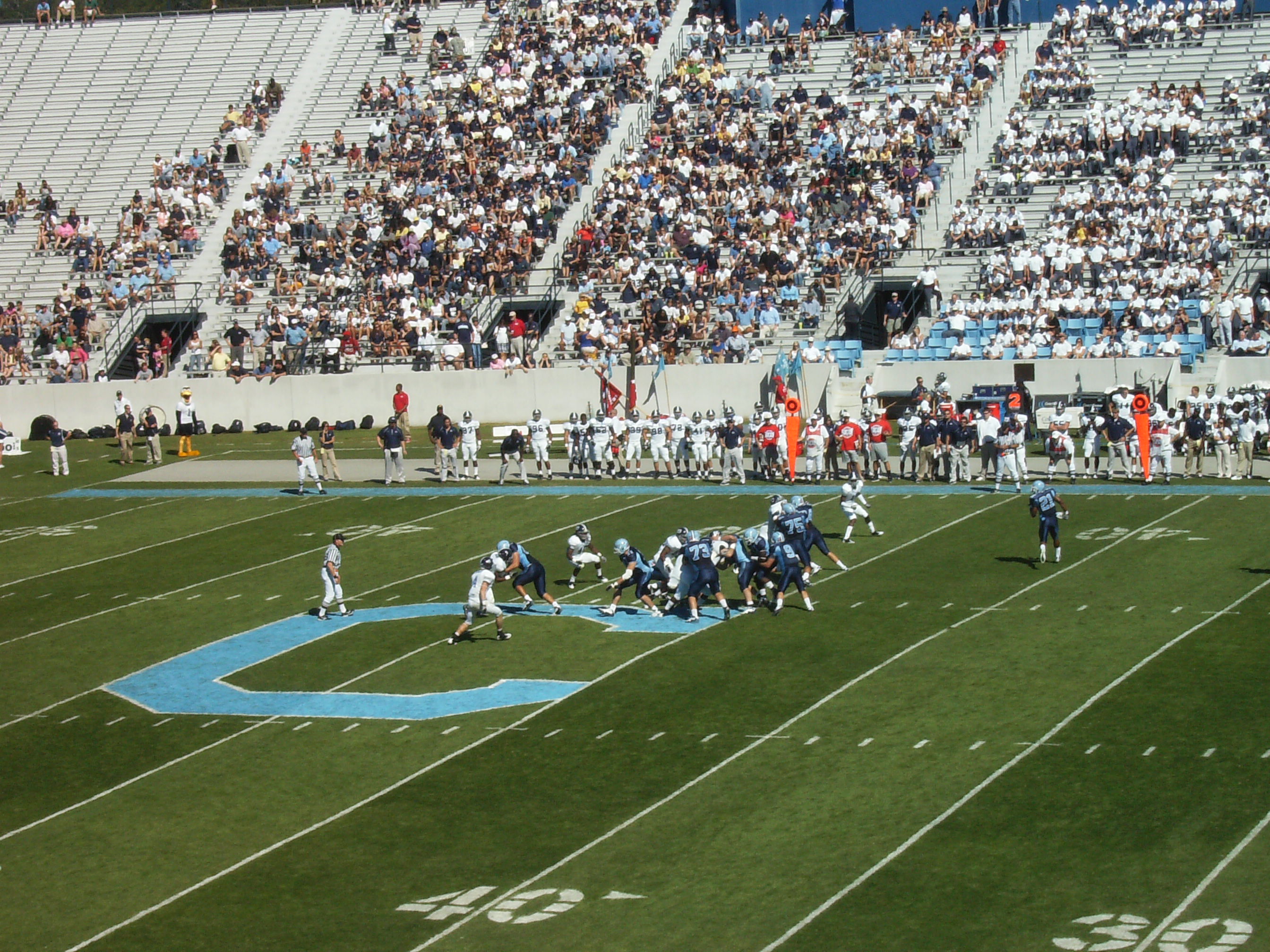
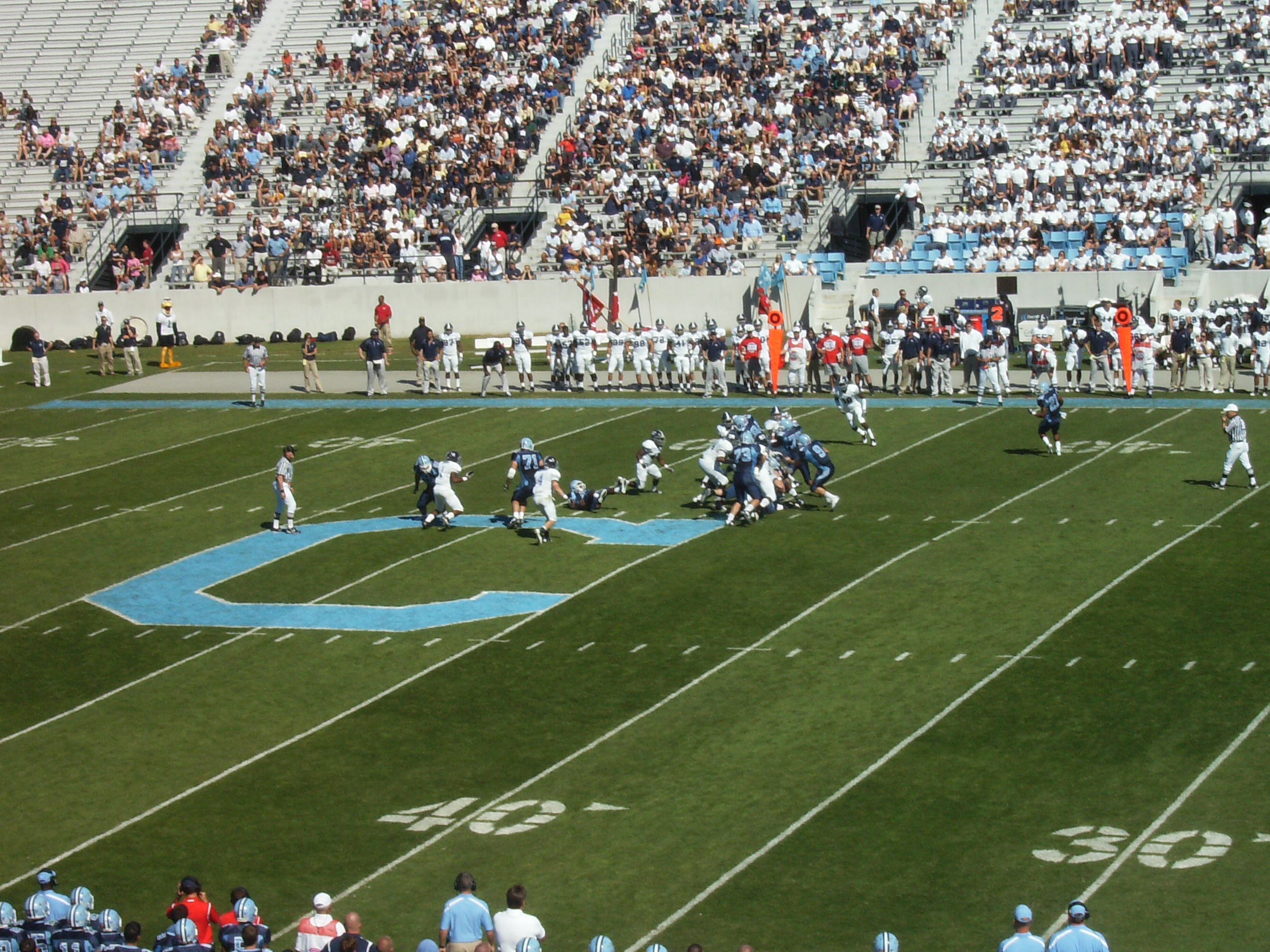
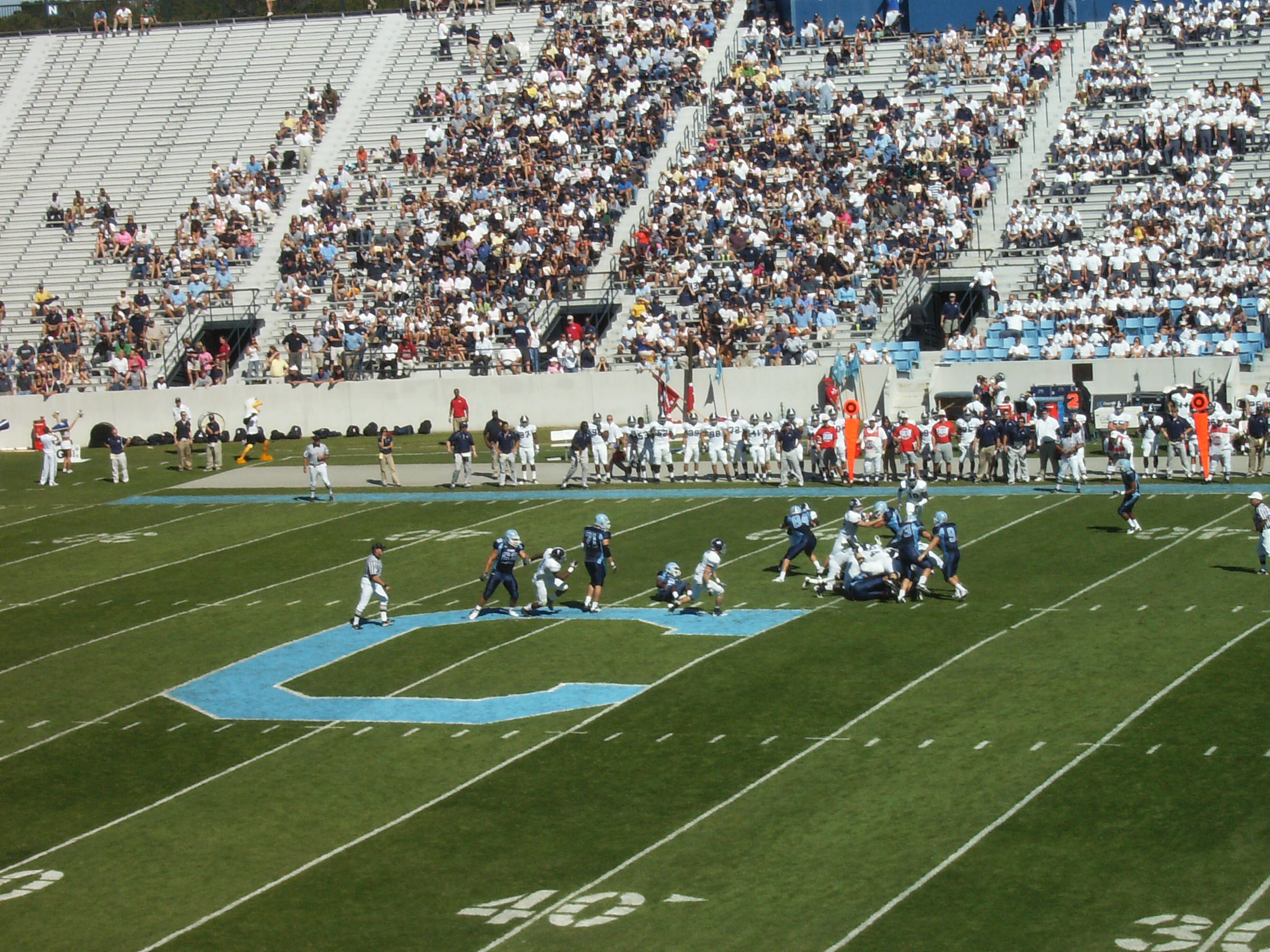
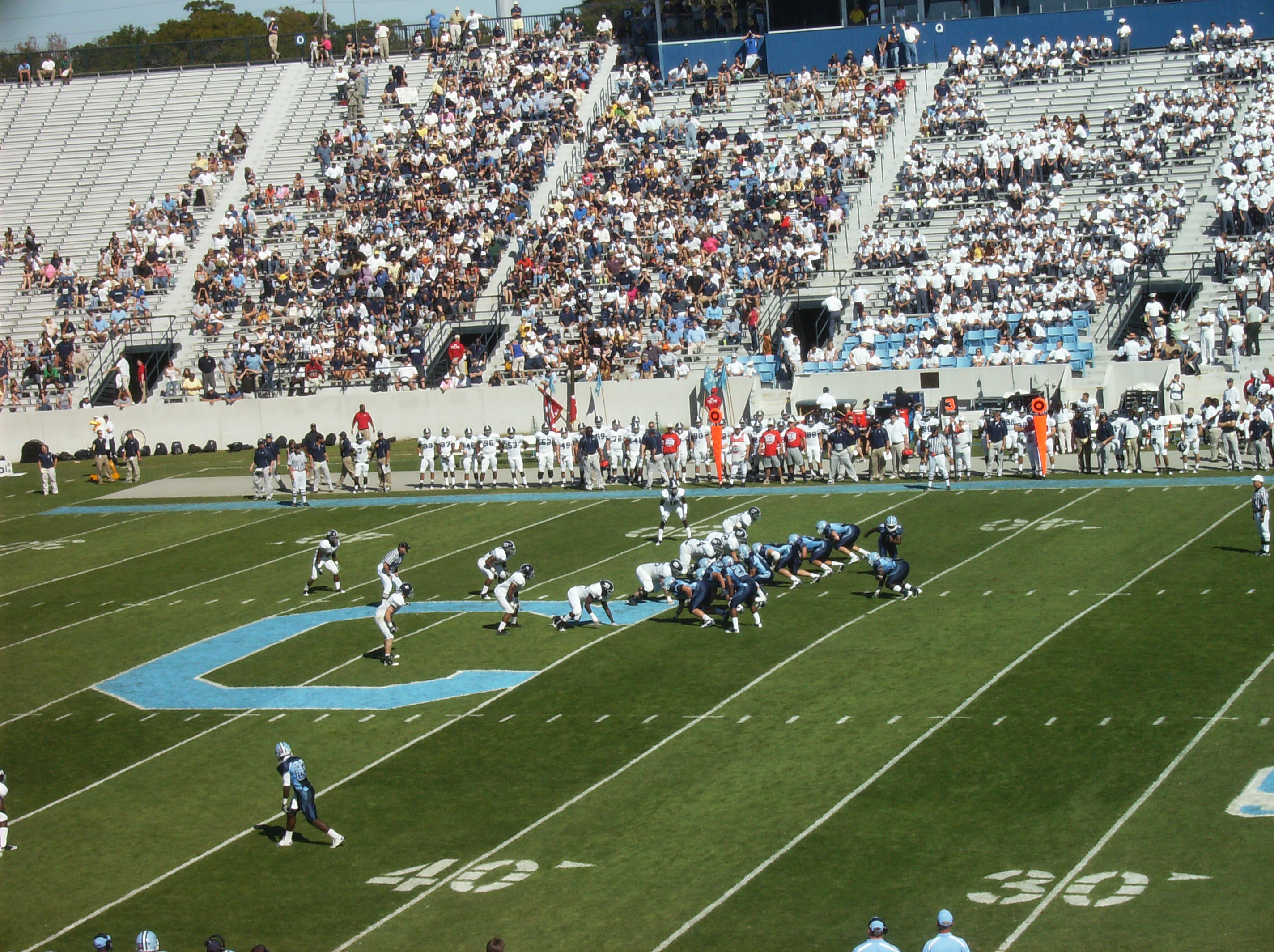
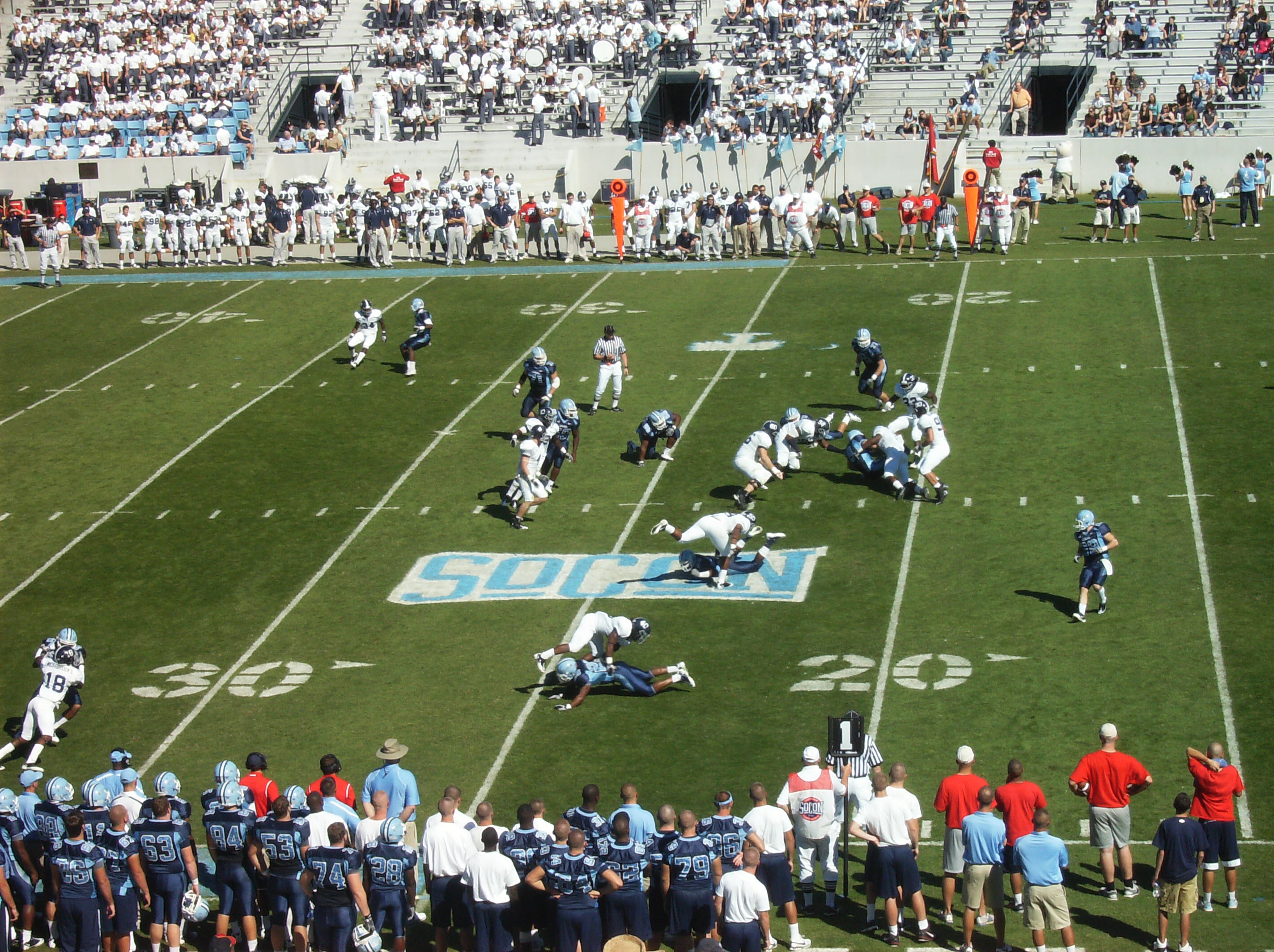
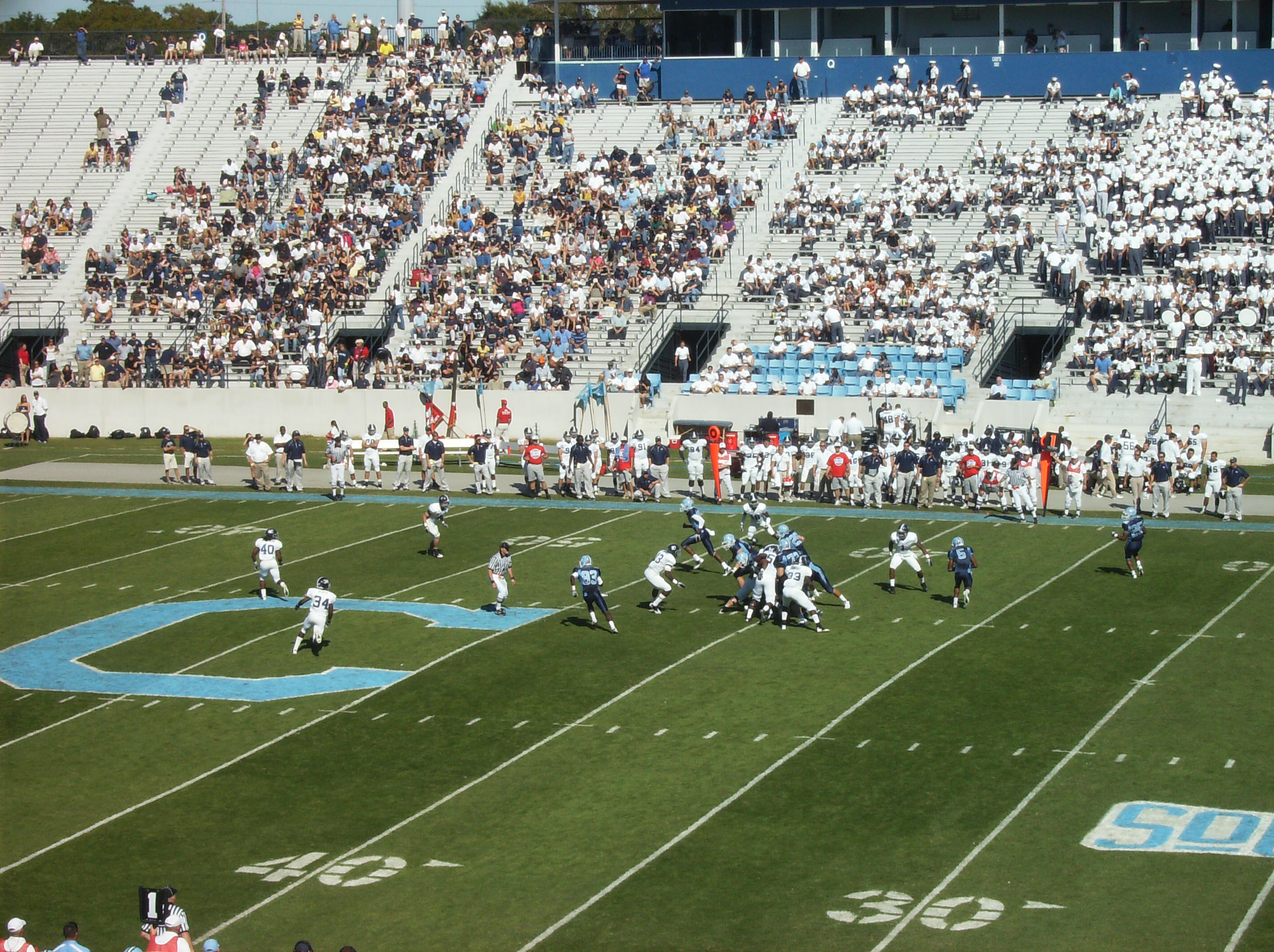
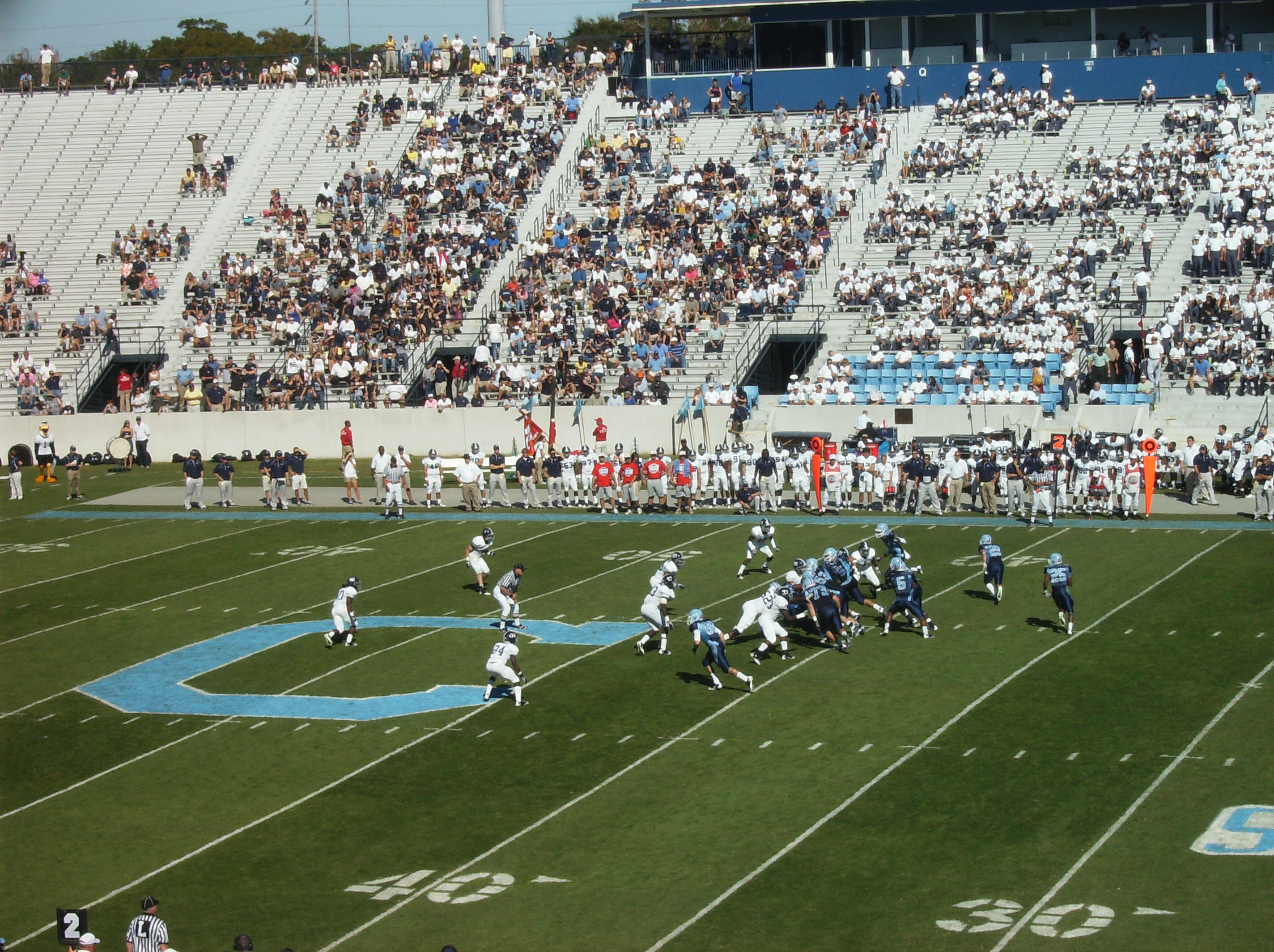
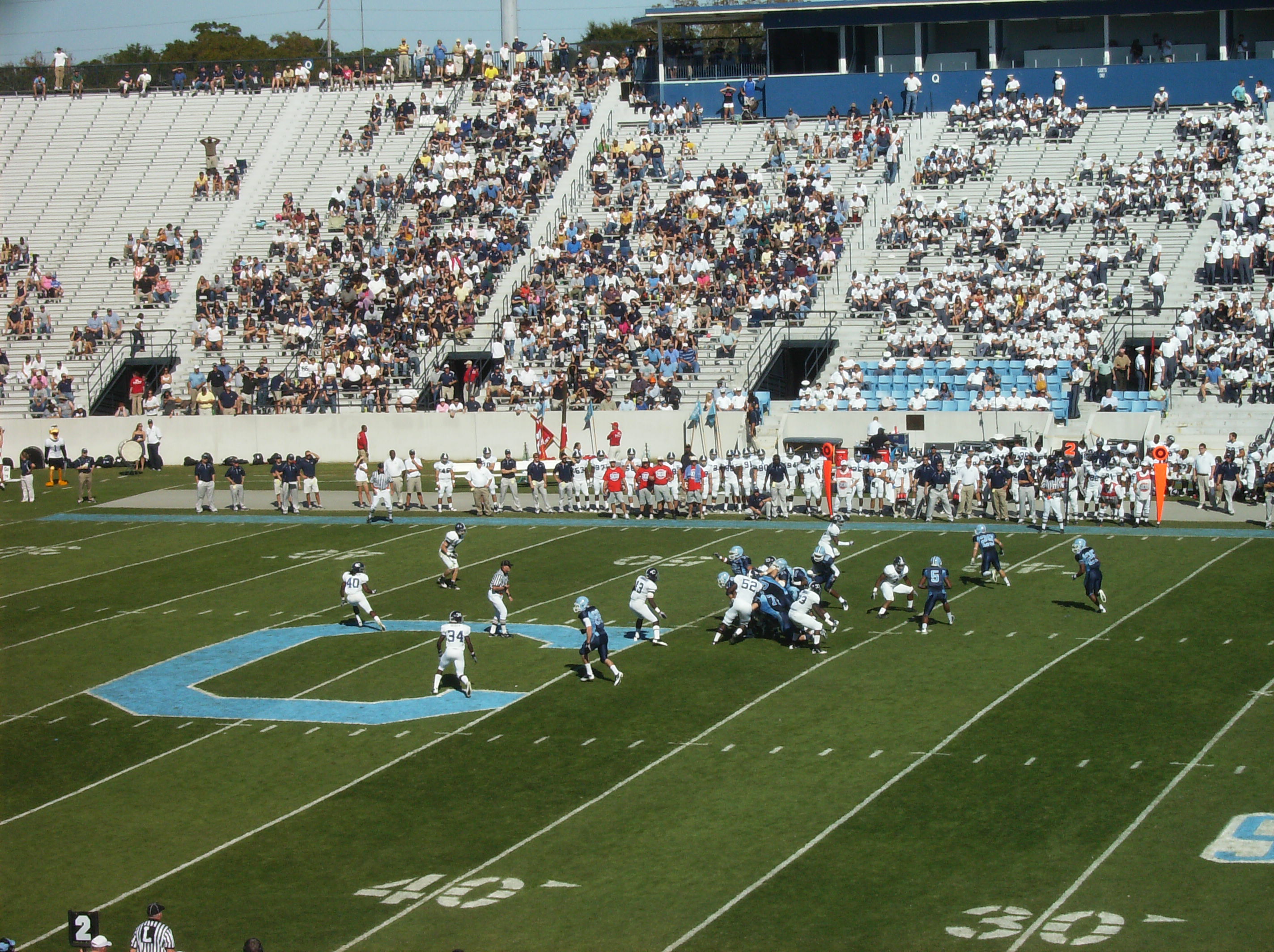
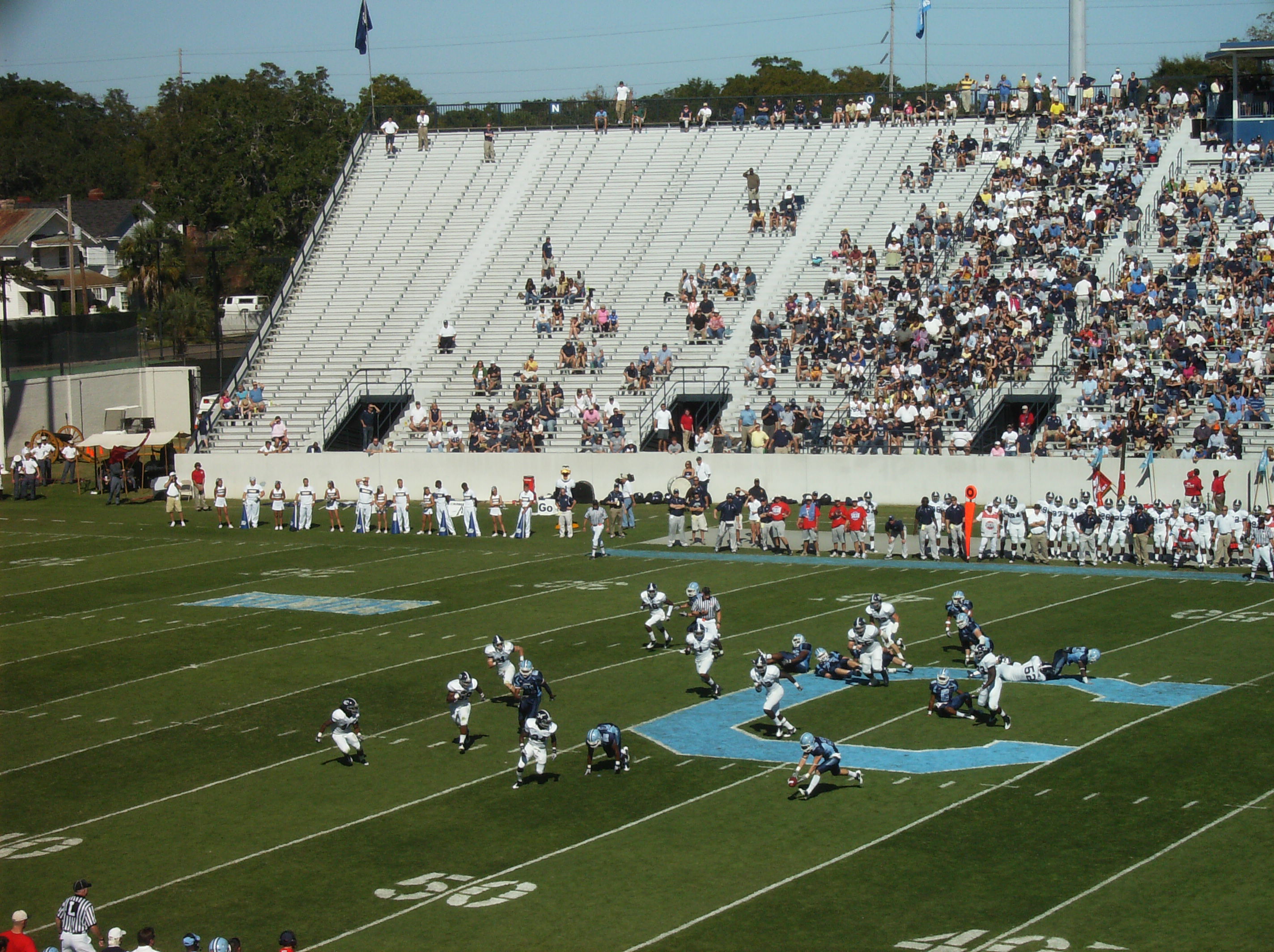
Below are a few pictures I took during the game.  There isn’t anything special about any of them.  I would note that I didn’t think it was such a good idea for the team to wear all-navy on a warm day, but then I wouldn’t like the navy uniforms on any kind of day.

Football, Game 8: The Citadel vs. Georgia Southern

The Bulldogs return to Johnson Hagood Stadium for a 1:00 pm ET game against the Eagles.  First, though, a few thoughts on the Appalachian State game, since I didn’t post a review of that contest.

First, I heard the final score — 39-10.  I later read that during the game, The Citadel:

Did not complete a pass (the first time the Bulldogs had failed to do that in 15 years)

— Committed two turnovers, one fumble and one interception

— Botched two punt snaps, the second of which led to punter Cass Couey leaving the game with an injury

— Lost the battle of time of possession, despite 53 rush attempts (in 59 total plays)

— Only averaged 18.2 yards per kickoff return

— Missed out on a defensive turnover thanks to a pass interference penalty

— Allowed TD receptions of 65 and 73 yards

Lost one of its experienced playmakers, running back Van Dyke Jones, with what was later determined to be an ACL injury; Jones’ career highlight, of course, was a 69-yard run against the Mountaineers in last year’s meeting

All of that came on the road, against the #1 ranked team in FCS football.  So how exactly did The Citadel only lose by 29 points?

Well, App State dialed it down some in the fourth quarter, but there were some positives for the Bulldogs, looking at the stat sheet:

— First, full credit to backup punter Alexander Wall for doing a nice job on short notice; he averaged 42.2 yards per punt and only allowed 10 total return yards

— While Matt Thompson started, Sam Martin did play and saw significant time, so his injury from last week apparently wasn’t serious

— The aforementioned PI aside, the Bulldogs only committed five penalties

— The Bulldog D did force two turnovers that counted, including a fumble that was returned 40 yards by Eric Clanton, setting up the game’s first score; a later interception by Brandon McCladdie was the first pick by an App State opponent this season

— The defense, despite giving up two big pass plays, allowed less than 400 yards of total offense, which against App State (and considering it was on the field longer than normal) wasn’t too bad

— App State was only 5-14 on third down conversions

— The Citadel blocked not one but two PATs

Okay, so maybe I had to stretch to come up with some of those positives, but I guess my final analysis of the game would go something like this:  it could have been worse. Hey, the Mountaineers are ranked #1; the Bulldogs are not.  It was never going to be a game for The Citadel to use in measuring its progress this season.

On the other hand, Saturday’s game against Georgia Southern is such a game.

Prior to this season, Jeff Monken had spent the past 13 years as an assistant for Paul Johnson at three different schools — Georgia Southern, Navy, and Georgia Tech. (Monken was also a grad assistant at Hawai’i when Johnson was the offensive coordinator there.)  He was hired by GSU to restore the triple option, and with it the glory days of Eagle football.

Perhaps the difference in expectations for the football programs at Georgia Southern and The Citadel can be summed up by this Monken quote:

“Who cares about transition years?  Nobody cares about that.  We want to win. I want to win, our fans want to win, our kids want to win. Nobody wants to hear about transition, or we’re young, or we’re learning. That’s a bunch of talk.

When you play a football game, you play to win. My expectation is the same for this season as it is for every season, and that’s to try and win every game. That’s what I expect.”

Contrast that with The Citadel, where most (although by no means all) fans are content to allow Kevin Higgins a “transition year” in the sixth season of his tenure at the military college.  Of course, Monken knows that he has a little more leeway than what he expressed in the above quote.  Georgia Southern fans aren’t expecting him to compete for the national title this year.

Next year, though, is a different story…

There are also those GSU supporters who aren’t that interested in the FCS national crown, because they would rather see the program move up to FBS land.  I think that would be a mistake, at least as things are currently constituted in the two sub-divisions.  I wrote about this last year, when GSU released its study on the issue.

Of course, now Appalachian State has decided it’s also going to study the pros and cons of making the move.  It’s prudent to assess the landscape of college football, and I don’t blame either school for investigating their options.  It’s my opinion, though, that unless there are major alterations in the world of FCS (or FBS), staying put is the way to go for the folks in Boone and Statesboro.

Georgia Southern is 3-3, 1-2 in the SoCon.  It looked for a while like Monken was ahead of schedule, for going into the game against Wofford the Eagles were 3-1 and ranked in the FCS Coaches Poll.  However, a home loss to the Terriers was followed by last week’s setback at Chattanooga, and it’s clear that it’s not yet smooth sailing for GSU in conference play.

The biggest advantage Georgia Southern has had over The Citadel in re-instituting the triple option has been at quarterback, where the Eagles can rely on Georgia Tech transfer Jaybo Shaw, who not only ran the offense at Tech, but also ran it in high school.  He’s not an explosive runner, but he can make all the reads and can also throw the ball fairly well (10.3 yards per pass attempt; 4 TDs, no INTs).

GSU is averaging 4.9 yards per rush.  J.J. Wilcox is a solid slotback who can also catch the ball (his eleven receptions leads the team).  Robert Brown is a freshman fullback who actually leads the Eagles in rushing, but he’s been hurt.  There is no Adrian Peterson (GSU version, not Oklahoma version) suiting up this year for GSU.

Wilcox is the only GSU player with more than 95 receiving yards (he has 302).  No other Eagle has more than six grabs, but when one does make a catch, it’s usually for a good gain.  GSU receivers are averaging 19.1 yards per reception.

Georgia Southern has a young-ish offensive line (three juniors, a sophomore, and a freshman), and it’s been a little inconsistent.  While the Eagles are fourth nationally in rushing offense, they have suffered eleven sacks, which is a lot for a team that doesn’t throw the ball too often.

On defense, the Eagles are led by Brent Russell, an interior lineman with 4.5 sacks, three other tackles for loss, and two pass breakups.  He’s a very good player.  Other than Russell, though, GSU is not particularly sack-happy, with 12 total sacks on the year.  Georgia Southern has a solid, if not dynamic, group of linebackers and an improved secondary, although one with a tendency to give up the big play (five TD passes allowed of greater than 25 yards).  Does that sound familiar?

Georgia Southern’s special teams have been outstanding. Placekicker Adrian Mora has not missed a field goal or extra point this season.  He hasn’t been asked to kick long FGs (his longest this year is 41 yards) but he has made all that he has tried. Punter Charlie Edwards is the key factor behind the Eagles’ excellent net punting average of 39 yards, fourth in the country.

Georgia Southern’s 3-1 start included a game at Navy.  GSU lost that game, but only by a 13-7 margin.  Considering it was a battle of triple option teams, both with Paul Johnson connections, I thought it was interesting that the game was low scoring.

The Citadel is also running a similar triple option system, of course.  Will the Eagles defend the same way against the Bulldogs?  And how exactly did they defend, anyway?

Well, a good person to ask would be The Birddog, chronicler of Naval Academy athletics and the unquestioned Tolstoy of the Triple Option.  I’ve mentioned his blog before; for something of an introductory primer on the offense, here are a few posts from it:

Reading Is Fundamental

The Science and the Art

The Midline Option

Other People’s Rivalries And The Futility Of Defending Against the Wishbone

I asked him a few questions about the Georgia Southern-Navy game.  Some of the Q-and-A is below:

Question:  I read that GSU defended the option in part by using its corners more aggressively (“firing the corners”) than is the norm.  Is that correct?

Answer:  The best way to defend firing corners is just to block.  It’s not an uncommon move; Air Force, Wake Forest, and SMU did it too. The difference between the wins and the losses was personnel, specifically the slotbacks. One of our junior slotbacks who was injured to start the year came back against Wake Forest, and all of a sudden it was no longer a problem.

Question:  Would the passing game be one way to combat that?  Specifically, throwing the ball to a slotback, or maybe even the fullback (on a screen pass)?

Answer:  There are ways to beat it in the passing game too.  The simplest way is to just throw to the uncovered receiver.  I think there’s a video of that in the Air Force writeup.

[Note from SS…that post can be found here:  Link ]

The cornerback blitz is as vulnerable to screen passes as any other blitz, and Navy runs a screen to the fullback in the direction of the blitz on occasion. The wheel-post works really well against blitzing corners too.

The safety has to roll over to cover the wide receiver, which leaves a linebacker to cover a slotback, which is usually a pretty favorable matchup for the offense.  I have an example toward the end of this post:  Link

Georgia Southern’s staff knew the Navy staff’s hand signals, so Navy had to stop going no-huddle early on.  Brent Russell also played a very good game.


Question:  Any thoughts on their splits?

Answer:  GSU’s splits are wider than Navy’s. There was a rule enacted last year that prohibited anyone lined up outside the tackles from blocking below the waist back inside the tackle box. That’s why Navy’s slots line up with their inside foot inside the outside foot of the tackle.  GSU doesn’t bother having their slots cut block inside anymore, preferring to keep the formation more spread.

Thanks again to The Birddog for answering my (probably simpleminded) questions.

The passing game has been a sore spot for The Citadel this year, of course, so the notion that being able to successfully throw the ball against GSU’s defense might be a key to the game probably makes Bulldog fans a little queasy.  The Bulldog slotbacks also must block well; perimeter blocking has been an issue for The Citadel all season.

Earlier in the post I linked Jeff Hartsell’s story about The Citadel’s anemic passing game.  Here is an excerpt from that piece that is worth noting:

…the Bulldogs have to get some semblance of a throwing game in shape before Georgia Southern brings its version of the double-slot option to Johnson Hagood Stadium on Saturday.

Coach Kevin Higgins said Monday that offensive coaches will simplify their passing schemes this week in order to do just that.

“One thing we talked about as a staff (Monday) morning is simplifying what we are doing,” Higgins said at his weekly news conference. “Last week, we carried in 30 to 36 passing plays that you practice on a routine basis, based on what you might see in a game. At this point, I think we have a good idea of what our opponents will be running. Now, in my mind, we’ve got to get that 36 down to 10 or 15 plays.

“We need to run those plays well in practice every day, so that the quarterback is more confident, and receivers and everybody else are on the same page. So I think we’ve got to simplify and practice those specific plays more throughout the week.”

Hartsell also pointed out later in the story that the better you are at running the ball in the TO, the easier it is to pass it.
It should be a nice day for a game on Saturday in Charleston, with sunny skies and temperatures in the mid-70s.  Let’s hope that the sun finally shines on The Citadel in conference play.

Football, Game 7: The Citadel vs. Appalachian State

Time and Place:  6:00 pm ET, Kidd Brewer Stadium, Boone, NC

Television:  a tape-delayed broadcast on a local cable channel called MTN-18 that really needs to improve its website

This will be only the second Saturday night game played in Boone since 2001.  I gather that many of the Mountaineer fans wanted a night game; why you would want one in the mountains in mid-October, I have no idea, but their wish has been granted.  Appalachian State also played a Saturday night game against Presbyterian two years ago.

Note that I specified “Saturday night”.  In the last three seasons, the Mountaineers have played two Friday night games in Boone, one a I-AA semifinal against Richmond, the other a regular season game against Wofford televised (unfortunately for Wofford) on ESPN2.  So a night game in Boone isn’t a novelty; it’s just a little unusual.

This preview is a fairly short one, because I am in the middle of a busy stretch that includes some travel.  Among other things, that means I won’t be able to even listen to the dulcet tones of Darren Goldwater on the radio.  I won’t find out how the game went until late Saturday night.  I can probably make a decent guess as to how it will go, though.

Just a few brief observations, while I have a few minutes:

— Appalachian State is ranked #1 in both the FCS Coaches Poll and The Sports Network poll.  The last time The Citadel defeated the top-ranked I-AA team, it was 1988, and the opponent was Marshall.  That is still the most “electric” atmosphere for any game at Johnson Hagood Stadium that I have attended.

The upset on that sunny afternoon was keyed by an outstanding performance by the Bulldog defense.  To stay competitive on Saturday night, The Citadel will need a similar effort from its defensive unit.

— Sam Martin was hurt during the Chattanooga game.  This excerpt from Jeff Hartsell’s Tuesday report in The Post and Courier concerned me:

…early in the second quarter, Martin got hit by Mocs tackle Nick Davison and another player. He got to his feet and called a timeout, to Higgins’ consternation.

“I said, ‘Sam, why did you call a timeout?’ ” Higgins said at his Monday news conference. “He said, ‘Coach, I couldn’t see anything.’ So we got him off the field, and I determined it was a concussion. I’m not sure if that is what our medical staff is calling it, but we didn’t put him back in the game. He was doing fine after the game.

“We’ll keep giving him tests, but (Sunday) he was fine, (Monday) he was fine. I think he will be OK and we’ll get him practicing this week.”

Okay, a couple of things:

1)  Kevin Higgins has considerable coaching expertise, but I’ll go with the medical staff’s determination on whether or not a player has a concussion.

2)  If he really suffered a concussion, he wouldn’t be practicing.

As to what really happened to Martin during the UTC game, I have no idea.  I’m no doctor.  It sounded a little bit like what happened to Notre Dame quarterback Dayne Crist during the Irish’s game against Michigan State, though.  Crist was reportedly diagnosed with an “ocular migraine”.  He left that game, but later returned (and played very well).

I might add that we are less likely to find out these days exactly what a player’s medical condition is/was due to privacy laws, and I think that’s a good thing.  I also have full confidence in our medical/training staff.

— Alex Sellars tore his ACL and is done for the year.  It’s been a tough season for the fifth-year senior, who had previously suffered from back problems.  He had some outstanding moments for the Bulldogs during his career; it’s a shame there apparently won’t be any more on the field.

— Armanti Edwards is now a Carolina Panther, meaning that in terms of success, he’s gone from the penthouse to the outhouse.  He gets paid better to stay in the outhouse, though.

— His successor, DeAndre Presley, has already been named SoCon offensive player of the week three times this season, including last week against Elon, when he amassed 374 yards of total offense and scored three touchdowns.  Presley has yet to throw an interception this season in 118 attempts.

Presley was injured late in that game, but is expected to play on Saturday.

— The Mountaineers’ offensive line has remained intact through all five games so far this season.  Four of those five linemen also started every game last year, and the fifth (Daniel Kilgore) started on the line for every game in 2008.

— Speaking of experience, Appalachian State has three receivers (Matt Cline, CoCo Hillary, and big-play threat Brian Quick) who seem to have been playing for the Mountaineers since the late 1990s.

— As you can see, Appalachian State had lots of starters on offense coming back, save the quarterback position, and Presley obviously has made the transition from Edwards fairly seamless.  However, the Mountaineers have some new faces on defense, and that’s been a bit of a problem (at least, as big a problem as an undefeated team could have).

Appalachian State is allowing 254 passing yards per game and 381 total yards per contest, both below-average numbers.  However, its average points allowed per game (23.8) isn’t as bad as those peripheral statistics.  App State games are like track meets, and opponents find it difficult to keep up.  No lead is safe, either, as Chattanooga found out (ASU prevailing 42-41 after scoring 28 points in the fourth quarter).

— In last year’s game against the Mountaineers, the Bulldogs just missed pulling off a big upset (30-27, OT).  What The Citadel did well in that game was run the football, compiling 214 yards rushing while in a spread attack, including one of the more spectacular runs in the history of Johnson Hagood Stadium (Van Dyke Jones’ 69-yard TD).

The Bulldogs will need more than 214 yards rushing to compete with App State on Saturday, at least as long as the offense continues to average less than 60 yards passing per game.  Incidentally, The Citadel’s 247.7 ypg rushing is actually less than ASU’s (264.6 ypg).

— Appalachian State has already had ten different players score offensive touchdowns this season.  Five of those players have scored three TDs or more (Presley has eight).

— If the Mountaineers punt, don’t be confused when you hear Sam Martin’s name mentioned.  That’s the name of the ASU punter, no relation (I’m guessing) to the Bulldog quarterback.

— You may have read that Appalachian State is going to conduct a feasibility study on the possibility of moving up to FBS (I-A).  Of course, just last year fellow Southern Conference member Georgia Southern commissioned its own study on the topic, which I wrote about (probably too extensively) here.

In general, I am skeptical about schools moving up to FBS land; while fans and administrators dream of being the next Boise State, the truth is most schools are much more likely to become the next Louisiana-Monroe.  However, I can understand why App State is exploring the terrain.

It’s a strange time right now in the world of FCS.  The CAA is a good example.  Villanova is the reigning FCS champ, but has an offer to move to I-A and the Big East.  Two league schools (Hofstra and Northeastern) dropped the sport last year.  Georgia State and Old Dominion are now fielding teams and will join the league.  Rhode Island is considering a move to the Northeast Conference (motto:  we’re cheaper).

That’s just one league.  Back in the not-so-gentle world of the Southern Conference, it wasn’t that long ago the league included East Tennessee State, VMI, and Marshall.  Things change, and it’s important to evaluate things once in a while.  After all, as recently as 1995, The Citadel studied I-A as a possible option.

I think Appalachian State is marginally better positioned to move to FBS than Georgia Southern.  However, I greatly suspect that the feasibility study will show that ASU should stay right where it is, which I think would satisfy most of its fan base.  However, if “right where it is” were to no longer exist, the school should have a better idea of what its options are.

There won’t be a specific review post of the Appalachian State game on the blog next week.  Writing the preview of the Georgia Southern game is going to be enough of a struggle as it is; I’ll undoubtably take a look back at the ASU game as part of that preview.  The TV schedule post will still happen, possibly a day later than normal.

Go Dogs!

Review: Chattanooga

Chattanooga 28, The Citadel 10.

Kevin Higgins quote #1:

“The coaches talked all week about challenging our players to come out and play with more intensity than the past week, and as we watched the game and evaluated everything, they did just that.”

Kevin Higgins quote #2:

“They got off to a 14-0 start, which put us in a hole.”

No, he didn’t say those two things one right after the other (although they are the first two quotes you see when you click on the press conference notes page on the school’s athletics website).  He might as well have, however.  It’s testimony to the fact that intensity only goes so far.  Besides, the other team is likely to bring some intensity of its own to the table.

It would have been nice if the Bulldogs had decided to “play with more intensity” against Western Carolina.  Perhaps if that had been the case, The Citadel would have beaten the Catamounts.  However, Chattanooga is a better team than WCU, and it showed on Saturday.  In its second year under Russ Huesman, UTC has already passed The Citadel as a football program, something that will surely frustrate Bulldog fans already antsy about Kevin Higgins’ tenure as head coach of the Bulldogs.

I’m not one of those fans, but I’ll say this.  I don’t want to hear any more discussion about a Bulldog team being flat, or not being intense enough — whatever you want to call it — for a football game.  There are only eleven football games on the schedule. How hard can it be for the team to mentally prepare and focus for each and every one?

I realize that to a certain extent I’m still harping on the loss to the Catamounts while writing a review about the Chattanooga game, but I make no apologies.  It was an embarrassing loss, and deserves to be acknowledged as such, repeatedly if necessary.

Kevin Higgins can’t do anything about Southern Conference officiating, however.  For the second time in three years, a Parents’ Day game at Johnson Hagood Stadium featured less-than-stellar work from the men in stripes.  It wasn’t quite as bad as the Elon game two years ago (that was a very special episode of SoCon officiating ineptitude, although I don’t think Mayim Bialik was involved), but it was poor nonetheless.

Most of the trouble on Saturday had to do with spotting the ball.  I’m including in that category the missed call on UTC’s first touchdown, which was clearly a fumble that occurred before the ball crossed the goal line.  There were other issues (notably a mystery pass interference call that kept a drive alive for the Mocs), but mainly it was the spotting.

One of the neat things about Parents’ Day is that a larger number of folks than normal are seeing a football game at The Citadel for the first time.  I shudder to think what goes through the minds of people experiencing their first taste of SoCon officiating.

I know that over time things are supposed to even out, but somehow I’ve missed seeing a lot of the makeup calls…in all sports.  For example, if you peruse the league statistics for women’s soccer (through Sunday’s play), you will find that only two players have been red-carded in league matches so far this season.  Just two.

Yes, both from The Citadel.  I guess we have a bunch of Nigel de Jong wannabes on our squad.

(Of course, if they were really de Jong wannabes they wouldn’t have been sent off, as his special brand of violence seems immune from on-field censure.)

Tangent:  The women’s soccer team at The Citadel is 4-2 in the SoCon despite seeing red on occasion, and looks well-positioned to make the league tourney for the first time in school history.  That would be a tremendous accomplishment for Bob Winch and the program.  I’m hoping the team is a little greedy, though; a top-4 finish would give the Bulldogs a first-round home game at WLI Field.  At this point, it’s within reach.

I’m going to be traveling over the next couple of weeks.  I may have to make a post about that team when I get back, if I have time.

Okay, back to (American) football.

I want to emphasize the officiating didn’t cost The Citadel the game against Chattanooga.  No, the Bulldogs just weren’t good enough on Saturday.  The headline for Jeff Hartsell’s game story referred to “missed opportunities”.  I think that’s about right.

Small things hurt the Bulldogs.  A snap infraction on the Chattanooga 1-yard line.  An overthrown pass on a trick play that was going to go for a TD.  A receiver not quite strong enough to hold off a defender in the end zone, turning a potential TD into an interception.  Giving up first downs on third-and-six (or more) three times during the game’s decisive drive.  (UTC was 6-for-10 on third-down conversions.)

The Citadel was unable to create a big play on offense, other than punter Cass Couey’s 33-yard run for a first down (an outstanding call, perfectly executed).  UTC basically sat back on defense, counting on the young offense not being able to sustain a drive with a succession of positive plays.  It was a sound strategy, and it worked. Chattanooga’s D only broke down twice, on Couey’s run (which set up the Bulldogs’ lone touchdown) and on the receiver pass that could have been a a TD.

The Mocs rushed for 222 yards on 41 carries.  I was disappointed that the Bulldog defense allowed that many rush yards.  It wasn’t a terrible effort overall by the D, certainly not as frustrating as the week before, but it wasn’t anything special, either. On the fourth-quarter drive that iced the game, The Citadel needed a big play from someone on its defense.  It never got it (although the aforementioned PI call might have made a difference).

Incidentally, I suspect Chattanooga’s biggest problem in its quest for a playoff bid is going to be its special teams.  Against the upper-echelon teams in the league, I’m not sure UTC is dynamic enough to overcome some of the issues it has in that area. That said, Huesman clearly has his program moving forward.

I’m going to try to put a small preview of the Appalachian State game together over the next couple of days.  The next week or so will see a sharp drop in word count.  Of course, that may be a good thing…

Football, Game 6: The Citadel vs. Chattanooga

I’ll begin this post with what may become an annual riff on UTC nomenclature.  As I noted last year, trying to determine what to call the athletic teams of the University of Tennessee at Chattanooga isn’t the simplest thing in the world to do:

Recently the school began using a ‘C’ mark, for “Chattanooga”.  The university’s teams have variously been referred to over the years as “UT-Chattanooga”, “Tennessee-Chattanooga”, “UTC”, and “Chattanooga”.

The nickname/mascot history is even more tangled.  A “moccasin” used to be a snake, then a shoe, then a cartoon Cherokee Indian called ‘Chief Moccanooga’, and now a mockingbird train conductor (and “moccasin” has morphed into “moc”, for mockingbird).

There is an explanatory page on the school’s website detailing some of the nickname history.

I’ve actually made a change from last year in how I am referring to the school.  While the school itself is still called the University of Tennessee at Chattanooga, it is now consistently calling its athletic teams “Chattanooga” while still using the “UTC” acronym.  Therefore, I’ll drop the “UT-Chattanooga” usage.

Irrelevant but semi-interesting:  while surfing UTC’s website (the main one, not the athletics site) I found out that UTC was actually a private school until 1969, when it merged with the University of Tennessee.  Between 1889 and 1907, it was called U.S. Grant University.

Both UTC and The Citadel have had football programs that have been in the doldrums for a decade or more.  However, the Mocs appear poised to finally move up the ladder in the Southern Conference, under the direction of Russ Huesman.  Huesman inherited a program that had gone 1-11 in the year before he arrived.  In 2009, his first year at the helm, the Mocs improved to 6-5.

This season Chattanooga is 2-2, after losing its first two games to Appalachian State and Jacksonville State, both currently ranked in the FCS Top 5.  The Mocs rebounded with victories over Eastern Kentucky and Western Carolina, the latter game played in Cullowhee.

Those two losses may have excited the UTC fan base more than the two wins, as both were close games against quality opponents.  Chattanooga led Appalachian State 28-7 at halftime before the Mountaineers scored 28 fourth-quarter points to take a 7-point lead.  The Mocs scored what would have been the tying touchdown with under a minute to play, but Huesman elected to go for two.  It didn’t work, and Appalachian State escaped Finley Stadium with a victory.

Chattanooga also led Jacksonville State 17-7 entering the fourth quarter, only for the Gamecocks to respond with 14 fourth-quarter points.  JSU’s game-winning TD came on a 72-yard pass play with 1:16 remaining.  That game, played in Alabama, came one week after Jacksonville State’s stunning win over Mississippi.

UTC’s 42-24 victory over EKU included 548 yards of total offense, including 375 yards passing (4 TDs) from B.J. Coleman and 122 yards rushing from Erroll Wynn.

Against Western Carolina, the Mocs turned the ball over four times, one of those being a fumble returned for a touchdown (Chattanooga lost three fumbles overall).  UTC was also burned by a wide receiver pass for a TD, but prevailed 27-21 in part because the Mocs D forced four turnovers of its own.

Speaking of Coleman (a transfer from Tennessee), you may remember him from last year’s game, in which The Citadel blew a 15-point lead.  During the UTC rally, the Mocs went to a no-huddle offense, and the Bulldogs never stopped it, despite the fact Chattanooga could not run the ball.  Coleman somehow threw 61 passes without being sacked, and was only “hurried” once.

Obviously, The Citadel has to turn that around on Saturday, but it won’t be easy.  For one thing, UTC appears to actually have a running game now, with senior Erroll Wynn averaging exactly 100 yards per game in three games (he didn’t play against App State).  That should take a lot of pressure off Coleman, who is averaging almost nine yards per pass attempt and has thrown 10 TD passes (against only 3 interceptions).

Chattanooga doesn’t seem to be missing Coleman’s main target from last season, Blue Cooper, all that much, as Joel Bradford has already caught 30 passes and is averaging over 126 yards receiving per game (nearly 17 yards per reception). Bradford is also a fine punt returner.

Other than the fourth-quarter problems against Appy and JSU, the Mocs D has played well, holding both EKU and WCU to less than 60 yards rushing and forcing eleven turnovers in its last three games, including nine interceptions.  Four of the picks were made by freshman Kadeem Wise.

Defensive end Chris Donald is another Tennessee transfer making an impact for the Mocs.  He has 4.5 sacks so far this season.  UTC is currently ninth in the country against the run.  One reason for that is linebacker Ryan Consiglio, who is averaging almost eleven tackles per game.

You may have seen Jeff Hartsell’s breakdown of The Citadel’s recent recruiting classes on “Bulldog Bites”.  Just for comparison, here is the two-deep from The Citadel’s playoff game against North Carolina A&T in 1992.  I could be wrong about a couple of these guys, but I should have most of this right.  The number by a player’s name is the year he entered The Citadel (for instance, Jack Douglas entered in the fall of 1988, hence “88”).

QB — Jack Douglas (88) and CJ Haynes (90)

FB — Everette Sands (89) and Travis Jervey (91)

LHB — Erick Little (90) and Terrance Rivers (90)

RHB — Cedric Sims (89) and Undra Mitchem (90)

TE — Marty Fagan (88) and Greg Perry (89, and originally a walk-on)

WR — Cornell Caldwell (89) and Damond Boatwright (90)

LT — David Morelli (88) and Doug Cobarras (89)

LG — Shayne Stephens (89) and Levi Davis (90)

C — Brett Copeland (88) and Bart Hearn (91 walk-on, I think)

RG — Lance Hansen (88) and Scott Reagan (89)

RT — Carey Cash (88) and Mike Wilkerson (91)

PK — Jeff Trinh (91)

DE — Garrett Sizer (89) and Ed McFarland (89, and originally a walk-on)

DE — Judson Boehmer (89) and Brad Keeney (92)

RT — LaQuincy Powell  (89, and yet another walk-on from that class), Todd Lair (91, maybe a walkon; not sure)

LT — Jake Erhard (89) and Lenny Clark (91)

LB — Micah Young (91) and Jim Wilson (88)

LB — Rob Briggs (89) and Tracey Gamble (90)

LB — Mike Wideman (89) and Kendall McKnight (90)

LCB — Torrency Forney (89) and Chauncey Chappelle (92)

RCB — Detric Cummings (90) and Corey Gay (90)

SS — Dan Johnson (89) and Ahren Self (91)

FS — Lester Smith (88) and Speizio Stowers (89)

P — Eric Willingham (88)

The return specialists were all part of the offense-defense two-deep.  Sizer was the long snapper.

46 players —

9 fifth-year seniors (including Douglas, Smith, and Cash)

17 players from the ’89 recruiting class, including three walk-ons

10 from the ’90 recruiting class

8 from the ’91 recruiting class

2 “true” freshmen

One quick note on the above:  the 1991 recruiting class was actually rather thin; only two other scholarship members of that class would contribute in future seasons. Whether that “lost class” was a key factor in the eventual decline in The Citadel’s gridiron fortunes is hard to say, although it certainly didn’t help.

I had plenty to say about the loss to Western Carolina last week, and about some things that rather obviously need to improve.  I’ll add a little to what I already mentioned, and note a couple of other things:

— I was glad to see that Kevin Higgins acknowledged the poor play of the secondary against WCU (you can read about his press conference here and here).  Watching the lack of ball awareness was excruciating.

— He also addressed game-planning for opposing defenses, explaining what he feels the issues are.  I suspect that this wouldn’t be as big a problem if the Bulldogs were in Year 3 or Year 4 of the triple option.

Teams that have run an option attack for a long time, like Navy or Air Force or Wofford, generally force the opponents to adjust to them, not the other way around.  That’s because their players have been in the system long enough to recognize different defensive looks, and understand basically (if not always specifically) what each person’s job is when facing a certain setup.

Having said that, I was a little concerned that Higgins seemed confident in what Russ Huesman’s defense will probably do on Saturday.  He’s basing that on what Huesman has done in the past against the option, but the Mocs have had a week off and presumably a lot more time to put in new things.  What if UTC comes out in a defensive formation for which the Bulldogs aren’t prepared?  Another lost half for The Citadel’s offense?

— Amidst all the talk about changing quarterbacks, his decision to change placekickers has seemingly gone under the radar.

— About those quarterbacks…

I’ll be honest.  I don’t care which quarterback starts.  If Higgins thinks Sam Martin starting might jump-start the team in the opening quarter, then by all means run him out there.  The bottom line is that both Martin and Matt Thompson are going to play, and they’re both going to play about the same number of plays — at least, that’s the plan.

Martin has looked more comfortable in the offense than Thompson, but he hasn’t been that much better.  We’re not talking about the second coming of a healthy Jamelle Holieway here.  At this point, we don’t know if we’re talking about the second coming of a healthy Brendan Potts (which would be okay by me).

Neither Martin nor Thompson has mastered the center/QB exchange (to be fair, neither have the centers).  Thompson seems to still struggle with the “mesh”, and should also heed the advice of John Wooden — be quick but don’t hurry.  However, he’s a true freshman with some obvious talent, and he deserves a chance to show what he can do (as does Martin).  This is, as I’ve said before, a transition season, although not everyone seems to understand that.

While leaving the stadium on Saturday after the WCU game, I overheard a Bulldog fan say, in a non-ironic way, that the loss to the Catamounts meant “we won’t go to the playoffs now.”  You don’t say…

One thing both quarterbacks must improve (and for that matter, their receiving corps): the Bulldogs currently have a pass completion rate of 35.4%.  While The Citadel doesn’t throw the ball a lot in this offense, it has to do better than that.  Completing less than 36% of your pass attempts is just horrendous.  If that percentage holds up, it would be the lowest completion percentage for a Bulldog squad since 1965.  Care to guess how many games that 1965 team won?

Two.

The Bulldogs will be Underdogs on Saturday, and deservedly so.  However, I’ll close this post by pointing out that there is hope for the game against UTC:

1)  Chattanooga, while improved, hasn’t really proven that it’s made a move to the next level in the Southern Conference, at least not yet.  Those two games against Appalachian State and Jacksonville State were both impressive in a lot of ways, but they were also both losses.  Last year The Citadel also lost a close game to Appalachian State at home, in overtime.  It did not lead to a winning season.

I’m not quite ready to buy stock in a team which to this point in the season has only beaten Eastern Kentucky (which has just one win on the season) and Western Carolina.

2)  The Bulldog offense may continue to struggle, but I find it hard to believe that the defense (particularly the DBs) will have two consecutive clunkers.  I think there is a lot of talent on that side of the ball, and sometime (hopefully soon) it will begin to show. Also, there is something to be said for regression to the mean.

We’ll find out Saturday.

College baseball bubble, 5/29

Just a quick update…for the breakdown prior to conference tournament play, see this post:  Link

The Saturday morning report, with changes noted from what I wrote in midweek:

– Locks (36):  Louisville, Connecticut, Virginia, Georgia Tech, Miami, Clemson, Florida State, Virginia Tech, Texas, Oklahoma, Texas A&M, Coastal Carolina, Cal State Fullerton, Rice, TCU, Arizona State, UCLA, Washington State, Oregon, Florida, South Carolina, Auburn, Arkansas, Vanderbilt, Mississippi, Alabama, LSU, College of Charleston, Florida Atlantic, Louisiana-Lafayette, Kansas State, UC Irvine, The Citadel, New Mexico, Stanford, Baylor

Change: Six teams that were not locks earlier in the week are now:  Kansas State, UC Irvine, The Citadel, New Mexico, Stanford, and Baylor.

– Champions from “one-bid” leagues:  15

Congratulations to Stony Brook and Rider for clinching automatic bids on Friday out of the America East and MAAC, respectively.

— Champions from leagues likely to get just one bid, but that do have bubble teams (but no locks):  4 (the leagues in question are the A-Sun, Big 10, MVC, and Southland)

Change: Florida Gulf Coast did lose in its tournament.

That means 55 spots are taken, with 9 still to go.

— Florida Gulf Coast University’s loss in the Atlantic Sun tournament will hurt, but it may still draw an at-large bid, making the A-Sun a two-bid league.  Could be close for the Eagles.

— The Big 10 is not likely to be a two-bid league.  Minnesota is in the driver’s seat for the auto bid.  I won’t completely discount this league getting a second team (Michigan), only because it’s the Big 10, and not because it deserves one.

— Wichita State is in the final of the MVC tournament and plays Illinois State for the title on Saturday.  The Shockers could lose today and still get in the NCAAs, but I tend to doubt it.

— Texas State is still alive in the bloodbath that has been the Southland tournament.  Could Texas State get an at-large bid, if needed?  Possibly.  Like FGCU, it would be a close call.

— The Big East has two locks and likely will get a third team in the field.  That team would have been Pittsburgh, but the Panthers went 1-2 in the tourney.  Also, St. John’s could steal a bid.  If the Johnnies win the tournament, is this a 4-bid league?

— Results in the Pac-10 on Friday broke almost perfectly for that league getting 8 teams in the field.  Stanford locked up a bid, and there were big wins for Oregon State and California.  Washington also won, but I think the Huskies are the ninth team and will not make it.  Oregon State and Cal both probably need one more win.  Arizona is still in good shape, but the Wildcats need to beat the Beavers at least once during the weekend to feel 100% secure.

— The Big XII is going to be a five-bid league.  It also has four completely meaningless games in its tournament today, thanks to the wonder that is pool play.

— The Southern Conference will be at least a three-bid league.  Elon should be that third team, despite losing a fight and a game on Thursday.  The Phoenix can still win the SoCon tourney, but if Elon doesn’t and either Western Carolina or Appalachian State does, I’m not sure the committee is taking four teams from this league.  The Citadel and the College of Charleston will be in the field of 64.

— Southern Mississippi plays Rice in the C-USA title game on Saturday, and the Golden Eagles probably have to win that game to get a bid.

— Liberty is still alive in the Big South tournament, but with more conference tourney upsets looming, it looks like the Flames must win that tourney to snatch a bid.  That will be a tall order, as Liberty will have to beat High Point once and Coastal Carolina twice.

— The Sun Belt could become a three-bid league if a team other than Florida Atlantic wins its tournament.  Either Arkansas State or Troy will be in the final, and FAU has to beat Florida International to get to the other side of the title matchup.  It would be interesting to see Garrett Wittels continue his hit streak in the NCAAs, but I think FIU has to win the SB tourney to make it.  Of course, they may just do that.

— Boston College is probably out of the mix for an at-large after going 1-2 in the ACC tourney (a result that helps North Carolina).  North Carolina State beat Clemson in its opener and probably needs one more win to feel good about its chances.  At this point, I think the Wolfpack might need that win only to further differentiate itself from BC.

— I still think the SEC will get 8 bids.  Kentucky is still in the mix, but I just don’t see it.  I wouldn’t be shocked if Kentucky’s name popped up on the selection show, though.

So, there are nine spots to fill.  As of Saturday morning, I think they might go like this:

Arizona, North Carolina, Oregon State, FGCU, Pittsburgh, North Carolina State, California, Elon, Liberty

Still alive:  Texas State (if needed), Southern Mississippi, Washington, Michigan, Boston College, Wichita State (if needed), Kentucky

The SoCon baseball race goes to the final weekend

Just a quick breakdown of the different combinations, possibilities, and some observations…

There are four teams in the SoCon that still have NCAA regional at-large aspirations (in other words, schools that could potentially receive a bid even without winning the league tournament).  The Citadel, College of Charleston, Georgia Southern, and Elon are the squads in the mix (5th-place Samford, 29-21 overall with an RPI of 68, is not a serious candidate for an at-large bid at this point).  RPI numbers per Boyd Nation (as of 5/18):

The Citadel — 34-20 overall, 21-6 SoCon, RPI of 42
College of Charleston — 39-14 overall, 22-8 SoCon, RPI of 29
Georgia Southern — 33-19 overall, 19-8 SoCon, RPI of 53
Elon — 34-19 overall, 17-10 SoCon, RPI of 48

Realistically, two of these teams are likely to make it.  It’s possible that three get in the field of 64, although I tend to doubt that will happen.

The Citadel’s profile has slipped a bit, thanks in part to its own struggles (particularly in midweek games) and partly because of results elsewhere.  For example, the Bulldogs are currently only 1-8 against top 50 teams; thanks to Appalachian State and Western Carolina falling out of the top 50, The Citadel “lost” six top 50 wins.  Conversely, CofC is 5-5 against Top 50 opposition while Elon is 6-7.  GSU is 0-9.

With an excellent overall record, the College of Charleston would be a lock for the tourney by now if it had not dropped more than its fair share of league games, including losing a series at Furman.  Georgia Southern has won 11 straight games to get back on the at-large radar, but has been swept at CofC and lost a home series to Western Carolina.  Elon has some nice wins (including two at Clemson, one at NC State, and a home victory over UNC) but has been swept at home by The Citadel and also lost a home series to Georgia Southern.

Those league series losses at home hurt.  The Citadel is the only team in the SoCon that has avoided losing a home series this season.  The Bulldogs also have a better overall strength of schedule than the other three contenders.

Then there is this little nugget:  with the meeting this weekend at Georgia Southern, The Citadel will have played the 2nd-, 3rd-, 4th-, and 5th-place teams in the SoCon all on the road.  The Bulldogs have drawn what is easily the toughest slate of road league games, and held their own in them so far.

That’s why I believe that if The Citadel were to win the series in Statesboro and claim the regular season title in a top 10 league (the SoCon is currently rated 9th in RPI), it will be completely deserving of an NCAA bid, regardless of what happens in the Southern Conference tournament (and despite the Bulldogs’ foibles in midweek play).  If The Citadel does not win at least two games at GSU, however, then the at-large prospects for the Bulldogs become a lot dicier.

The College of Charleston is in fairly good shape for a second bid for the league.  I believe the other contenders likely have to win the league tournament, although Elon could make a case for an at-large with a strong tourney run.  What Elon would not want in that situation is for a team other than the CofC or The Citadel to win the tournament. 

(Note:  the seeding possibilities outlined below assume there are no rainouts this weekend.)

As far as SoCon tournament seeding goes, the CofC is going to be either the 1 or 2 seed.  The Cougars have completed their league schedule.

The Citadel can be the 1 seed (with two wins in Statesboro), the 2 seed (with one win), or the 3 seed (if it is swept). 

GSU is the 2 seed with a sweep and the 3 seed with 1 or 2 victories this weekend; if the Eagles are swept they could wind up as the 4 seed, but only if either Elon or Samford sweep their series against each other.

Elon and Samford will be the 4 and 5 seeds (and play each other for a fourth consecutive time in the first round of the tournament) unless the dual-sweep scenario outlined above occurs.

Western Carolina would be the 6 seed if the tournament started today, and will stay in that spot with a combination of two WCU wins/Appalachian State losses.  The Mountaineers will be the 7 seed unless they can make up ground on the Catamounts. 

There are three teams still alive for the 8th and final spot in the tournament (Davidson has been eliminated).  Wofford holds a one-game lead over Furman, but the Paladins hold the tiebreaker.  UNC-Greensboro is two games back of the Terriers, but does host Furman this weekend (Wofford has a series against Appy in Spartanburg).  UNCG would need to sweep the Paladins and hope Appalachian State sweeps Wofford; otherwise, it’s out of the running.

One more thing with regards to the SoCon tourney to keep in mind:  the teams are basically divided into two four-team pods, with the winner of each pod meeting in the title game.  One pod will have the 1, 4, 5, and 8 seeds, while the other will feature the 2, 3, 6, and 7 seeds.  That second group, in particular, will be a bloodbath (not that the first will be a walk in the park).

Southern Conference tourney time

Last year, I wrote about The Citadel’s abysmal record in the Southern Conference tournament.  The next few paragraphs are an updated version of that piece.  Feel free to ignore them if you have a weak stomach.  The preview for this year’s tournament (from The Citadel’s perspective) follows the history lesson.

One of the more curious things about The Citadel’s wretched history in the SoCon tourney is that there is no firm answer to just how many times the school has lost in the event.  That’s because the league has mutated so many times there is a dispute as to what year the first “official” conference tournament was held.

Before 1920, The Citadel was one of many schools in a rather loose confederation known as the Southern Intercollegiate Athletic Association.  (The Citadel initially joined in 1909.)  There were about 30 colleges in the SIAA by 1920, including almost every member of the current SEC and about half of the current ACC, along with schools such as Centre, Sewanee (later a member of the SEC  — seriously!), Chattanooga, Wofford, Howard (now called Samford, of course), and Millsaps, just to name a few.  As you might imagine, the large and disparate membership had some disagreements, and was just plain hard to manage, so a number of the schools left to form the Southern Conference in late 1920.

In the spring of 1921, the SIAA sponsored a basketball tournament, which would be the forerunner to all the conference hoops tourneys to follow.  Any southern college or university could travel to Atlanta to play, and fifteen schools did just that.  Kentucky beat Georgia in the final.  The Citadel did not enter the event, but several other small colleges did, including Newberry (for those unfamiliar with Newberry, it’s a tiny school located in central South Carolina).  The tournament featured teams from the new Southern Conference, the old SIAA, and squads like Newberry, which wasn’t in either league (it would join the SIAA in 1923).

In 1922 the SIAA held another tournament in Atlanta, this one won by North Carolina, which beat Mercer in the final.  The Citadel entered this time, losing in the first round to Vanderbilt.  The SIAA tournament remained all-comers until 1924, when it was restricted to Southern Conference members.

Some sources suggest that the 1921 tournament is the first “official” Southern Conference tournament, some go with the 1922 event, and others argue for 1924.  From what I can tell, the league itself is a bit wishy-washy on the issue.  On the conference website, it states:

The first Southern Conference Championship was the league basketball tournament held in Atlanta in 1922. The North Carolina Tar Heels won the tournament to become the first recognized league champion in any sport. The Southern Conference Tournament remains the oldest of its kind in college basketball.

That’s great, but the conference’s own record book lists Kentucky as having won the first tournament title in 1921 (on page 113; oddly, that year is excluded from the game-by-game tournament results that begin on page 114).  Of course, the edition of the record book on the conference website is several years old and lists The Citadel as having once lost 37 straight games, which is incorrect, so take it for what you will.

Personally, I think that the idea of having a conference tournament is to determine a league champion, and it stands to reason that such a tournament would only include league members.  So the first “real” Southern Conference tournament, in my opinion, was held in 1924.

There is a point to this, trust me.  The difference between counting the Vanderbilt loss as a SoCon tourney loss and not counting it is the difference between The Citadel’s alltime record in the event being 10-56 or 10-57.  Not that they both aren’t hideous totals, but as of now The Citadel shares the NCAA record for “most consecutive conference tournament appearances without a title” with Clemson, which is 0-for-56 in trying to win the ACC tournament.  Counting the Vanderbilt game would mean The Citadel is alone in its conference tourney infamy.  No offense to the Tigers, but I don’t believe the 1922 game should count, because it wasn’t really a Southern Conference tournament game.

By the way, you read that right.  The Citadel is 10-56 alltime in the SoCon tournament.  That’s just unbelievably bad.  It comes out to a 15% winning percentage, which is more than twice as bad as even The Citadel’s lousy alltime conference regular season winning percentage (35%).  The Citadel lost 17 straight tourney games from 1961-78, and then from 1985-97 lost 13 more in a row.

Tangent:  The single-game scoring record in the tournament is held by Marshall’s Skip Henderson, who put up 55 on The Citadel in 1988 in a game Marshall won by 43 points.  The next night the Thundering Herd, which had won the regular season title that year, lost to UT-Chattanooga by one point.  Karma.

Those long losing streaks didn’t occur in consecutive years, as The Citadel didn’t always qualify for the tournament, particularly in the years before 1953, when there were up to 17 teams in the league at any given time, and only the top squads played in the tourney.  The Citadel’s first “real” appearance, in 1938, resulted in a 42-38 loss to Maryland.

The Citadel would lose two more tourney openers before winning its first game in 1943, against South Carolina.  That would be the only time the Bulldogs and Gamecocks faced each other in the tournament, and so South Carolina is one of two teams The Citadel has a winning record against in SoCon tourney play (the Bulldogs are 2-0 against VMI).

The next time The Citadel would win a game in the tournament?  1959, when the Bulldogs actually won two games, against Furman and George Washington, and found themselves in the tourney final.  Unfortunately, the opponent in the title game was West Virginia, led by Jerry West.  West scored 27 points and the Mountaineers pulled away late for an 85-66 victory.  This would be the only time The Citadel ever made the championship game; it’s also the only time the Bulldogs won two games in the tournament.

After a 1961 quarterfinal victory over Richmond, The Citadel would not win another tournament game until 1979, when the Bulldogs defeated Davidson before losing to Furman.  The game against Davidson was played at McAlister Field House and was the final victory of a 20-win campaign, the school’s first.

The Citadel would win single games in 1982 and 1985 before going winless until 1998, when it finally broke a 13-game tourney losing streak by beating VMI.  The Keydets would be the next victim as well, in 2002, and were apparently so embarrassed they left the league.  The Citadel’s latest win in conference tournament action came in 2006 against Furman.

Twenty-one different schools have defeated The Citadel in tournament play, with Davidson’s eight victories leading the way (against one loss to the Bulldogs).  East Tennessee State went 6-0 against The Citadel while in the league.

Ed Conroy is 0-3 in the SoCon tourney as head coach of The Citadel (he was also 0-4 as a player).  If The Citadel were to win its conference tournament opener against Samford, and then lose the next day to Appalachian State, Conroy’s record would improve to 1-4.  That would be the second-highest winning percentage in the tournament for a Bulldog coach since the days of Norm Sloan.

Sloan was 2-4 in the tourney; his successor, Mel Thompson, won his first tournament game as head coach.  He would never win another, finishing with a record of 1-6.  Dick Campbell was 0-4.  George Hill was 0-3.  Les Robinson was 3-10 (a record which by winning percentage leads all of the post-Sloan coaches).  Randy Nesbit was 0-7.  Pat Dennis was 3-14.

(By the way, the best record for a Bulldog coach in SoCon tourney play is that of Bo Sherman, who went 1-1 in 1943, his lone season in charge.  Sherman’s Bulldogs defeated South Carolina before losing to Duke.)

The Citadel’s record against current SoCon teams in the tournament:  Furman 2-5, UT-Chattanooga 0-1, Elon 0-1, Samford 0-1, College of Charleston 0-1, Georgia Southern 0-2, Western Carolina 1-1, Appalachian State 1-6, Davidson 1-8.  (The Citadel has never played Wofford or UNC-Greensboro in the tournament.)

Last season The Citadel was flying high, having won 20 games for only the second time ever, and had high hopes entering the tournament.  Those hopes came crashing down against Samford, a team The Citadel had defeated by 25 points during the regular season.  Samford’s patient, Princeton-style offense scored 76 points on only 55 possessions, as the Birmingham Bulldogs got off to a great start and never really let The Citadel into the game.  It was a very disappointing finish to an otherwise outstanding season.

This season The Citadel appeared on the verge of making a nice run into the SoCon tourney, having reeled off five straight victories, and needing just one more to clinch a winning season, both overall and in  league play.  It didn’t happen, though, as the Bulldogs lost their last three games. The loss at Furman, in particular, was very poor.  The Citadel is now 15-15 for this year’s campaign, and would have to win at least two games in the tourney to garner its first back-to-back winning campaigns since 1980.

Instead of a bye into the quarterfinals, The Citadel finds itself playing in the first round on Friday, finishing as the 4th seed in the South division.  Friday’s opponent, Samford, struggled to an 11-19 record (5-13 SoCon) and is the 5th seed from the North division.  The winner will play Appalachian State, which finished first in the North, on Saturday night.

The two teams met twice during the regular season, with The Citadel winning both games.  The first game, played in Birmingham on January 16, was the definition of slow tempo, with The Citadel’s patient motion offense (61.4 possessions per game, 8th slowest nationally) outlasting Samford’s Princeton-style attack (58.1 possessions per game, slowest in the country).

The cadets had but 51 possessions in the contest, and made just enough of them count to prevail 51-50.  Cameron Wells had 19 points, while Austin Dahn had 17 (making 4 three-pointers).  For Samford, Bryan Friday and Andy King combined for 28 points.  The Citadel’s edge on the boards (26-20) proved critical.

In the rematch in Charleston, Samford led by 10 points with less than 10 minutes to play but was unable to hold on, thanks to a fine outside shooting performance in the second half by The Citadel.  Freshman Ben Cherry had his best game of the season with 3 three-pointers, including two big shots late in the game.

Austin Dahn, who had made 4 three-pointers in the first meeting, hit four more in the second game to finish with 15 points and offset a poor shooting night for Wells (2-10 FG).  Harrison DuPont added 13 points and 7 rebounds, good enough to survive an excellent game by Samford’s Josh Davis (24 points on only 11 FG attempts).  The Citadel had 54 possessions in that game.

For The Citadel, the key to beating Samford for a third time this season is confidence. Last year in the tournament game, Samford ran out to an early lead.  I think The Citadel’s players got a little nervous, especially because trying to play from behind against a team as patient as Samford can be very frustrating (just like it can be for teams playing The Citadel).  The fact that the game was an elimination game in tournament play just exacerbated the tension.

It cannot help that The Citadel has no history of success in the SoCon tourney on which to build.  That is why I think it is important for the Bulldogs to win this game. Even if The Citadel does not go on to win the tournament (winning four games in four days is extremely unlikely), enjoying just a taste of victory in the tourney may go a long way next season, when The Citadel figures to field a squad capable of contending for the SoCon title.  This current crop of players needs to know it can win games in the tournament.

One thing working in The Citadel’s favor is that while it has lost three straight games, so has Samford.  Also, while Cameron Wells did not shoot well in the latter part of the season, he was 10-16 from the field in the season finale against Wofford.  That bodes well for the Bulldogs, which will need point production from Wells in the tournament.

The Citadel needs to start well, maintain its confidence, and not spend the whole night in “here we go again” mode.

If the Bulldogs advance, the next opponent would be Appalachian State, a team The Citadel defeated 62-58 in Boone early in the season.  Appy star Donald Sims scored 22 points, but got no help from his teammates, none of whom scored more than 7 points, while Wells had 21 and Dahn 14 for the Bulldogs.  Since then, the Mountaineers have fashioned an excellent season, and if not for the draw would be my pick to win the league tournament.

Wofford won the regular season and has the best draw, and I suppose should be the favorite, but for some reason I’m not quite convinced the Terriers have what it takes to win three straight games in three days.

It should be an interesting four days in Charlotte.  It would be nice if The Citadel added to the interest.

Win one, lose one: The Citadel’s hoops team marches on

The Citadel is now 10-10 overall, 4-4 in the Southern Conference.  It’s been a .500 kind of year from the start; the Bulldogs have been 1-1, 2-2, 3-3, 6-6, 7-7, 8-8, 9-9, and the current 10-10 mark — and in league play the cadets have been 1-1, 2-2, 3-3, and now 4-4.  The Citadel hasn’t won more than two games in a row, and has lost more than two in a row just once (the three-game stretch against Michigan State, Texas A&M, and Houston).

Last week was more of the same, as the Bulldogs lost at home to Wofford on a last-second tip-in on Thursday before recovering to beat Furman on Saturday at McAlister Field House, a game in which Regan Truesdale’s jersey was honored at halftime.  The win over the Paladins (final score:  70-60) broke a six-game streak of Bulldog games decided by seven or fewer points, with three of those matchups decided by two points or less.

Brief thoughts on the two games:

– When the final score is 44-42, as it was in the game against Wofford, it’s an indication that neither team’s offense had a good day, and that was certainly the case, tempo-related adjustments aside.  Wofford won despite shooting 30% from the field (just 2-12 from 3-land).  The Citadel did not shoot much better and was outrebounded by the Terriers (including allowing 14 offensive boards).

The Bulldogs also lost the turnover battle 12-11; they are now 0-6 in games in which they commit more turnovers than the opposition.  Joe Wolfinger, in particular, struggled holding on to the ball, committing four turnovers in only twelve minutes of action.  Wasted was a fine defensive effort by The Citadel that included a surprising six blocked shots, four of them courtesy of Harrison DuPont, who is beginning to assert himself in league play.

– The win over the Paladins was a nice bounce-back game, although it took a while for the offense to get into gear.  With the Bulldogs trailing 40-32 in the second half, Ed Conroy called time.  The Citadel would proceed to score on eleven of its next twelve possessions, resulting in a 15-0 run that completely turned the game around.

That is what is known by basketball experts as a “good timeout”.

One interesting aspect of the game against Furman was Conroy’s reliance on his starting lineup (Harrison DuPont, Bryan Streeter, Cameron Wells, Zach Urbanus, and Austin Dahn).  Those five players each played over 30 minutes in the contest, which struck me as a bit unusual.  The Bulldogs committed just eight turnovers, won the rebound battle and actually shot well from beyond the arc (8-20).  It was The Citadel’s third consecutive win over Furman.

Next up is a road trip within the division, with The Citadel playing Georgia Southern in Statesboro on Thursday and traveling to Davidson on Saturday.  Like Furman, Georgia Southern has lost three games in a row against The Citadel, including earlier this season at McAlister (68-43).  The two games before that streak were Eagle victories until last week, when the wins were vacated.  GSU is now on NCAA-imposed probation for two years, thanks to serious academic irregularities.

In the game in Charleston, The Citadel shot 14-22 from 3-land, outrebounded the Eagles, and won the turnover battle 20-8.  I don’t expect all of that to happen again; Georgia Southern has been playing a little better since that December 5 matchup, and can claim home victories over Appalachian State and Western Carolina, along with a close loss to Davidson.

GSU still isn’t a good offensive team, ranking last in the conference in shooting percentage and assist/turnover ratio, and also struggles defending the three (allowing a league-worst 43.4% to its opponents).  The Eagles play a higher-tempo game than any team in the league (75.5 possessions per game in SoCon action), and it will be important for The Citadel to keep the game at its preferred slower pace.  Patience, and good work on the offensive glass, will carry the day.

Davidson beat The Citadel at McAlister in the conference opener on December 3, 74-63.  In that game, the Wildcats were an absurd 15-27 from beyond the arc.  William Archambault had a career night from outside, making 6 of 9 three-pointers.  J.P. Kuhlman was 3-4, and Jake Cohen was 4-8.  Ben Allison made his first three-pointer of the season in that game (he now has four).

The Wildcats are certainly a capable outside shooting club, but it’s hard to imagine them shooting as well as they did that night.  The Citadel needs to contain that part of Davidson’s game, and take advantage of what the Wildcats don’t do well.  So far this SoCon season, that would be playing defense, as Davidson current ranks last in league play in points allowed per possession and FG% defense.  The Wildcats are also next-to-last in 3FG% defense and tend to commit a lot of fouls (10th in that category out of 12 SoCon teams).

I would imagine that last statistic might particularly trouble a Davidson fan when considering the game against The Citadel will be played on a Saturday night, and all SoCon fans are aware of the vast disparity in officiating quality between weekday and weekend games in the conference.  Of course, that doesn’t necessarily bode well for The Citadel, either, as it has seen its own fair share of SoCon ref “issues” (including a rare technical for Ed Conroy in a Saturday matchup against Samford two weeks ago).

One final note:  for The Citadel to have a realistic chance of garnering a first-round bye in the Southern Conference tournament, it probably needs to win both games this week, in part because both are divisional games.  Davidson, of course, is also competing for a top-2 finish in the South division, which makes that game even more important.  Winning two league road games, while an achievable goal, will be a tall order.

Evaluating The Citadel’s basketball team after six SoCon games

The Citadel split its most recent four games, all in league play, which wasn’t so bad when you consider three of them were on the road, but it could have been much better — and it could have been much worse.  All four games were close, with two coming down to the final possession.  The Bulldogs were burned on a last-ditch three-pointer by UT-Chattanooga on Thursday, but recovered to outlast Samford on Saturday by one solitary point.

That Samford game, by the way, was not exactly a track meet.  The final score (51-50) reflected a game in which The Citadel had 51 possessions, while Samford had 52.  This was not a surprise, as the two teams are among the four slowest-paced outfits in Division I, both preferring an ultra-patient approach.  It’s particularly the case with Samford, which for the season is averaging just 57 possessions per game, easily the lowest number in the country.  The Citadel, at barely 60 possessions per contest, is fourth-lowest.

The slower pace definitely helps The Citadel, which is much more competitive in games in which it can control the tempo.  The importance of each possession in these types of games is something to which the Bulldogs have become accustomed, and is something not all opponents have grasped.  This has sometimes given The Citadel an advantage when playing teams that are perhaps more athletic but not as disciplined.

I know what some people are wondering about, though.  Right now The Citadel is 9-9 overall, 3-3 in the league.  This is after last season’s 20-win campaign (which included 15 SoCon victories).  What is not going right this year that went right last year?

Well, first it should be noted that the Bulldogs are almost exactly where they were last year at this time in terms of record.  Last season after 18 games The Citadel was 8-10, 3-4 in the league, coming off a loss at Wofford.  The Bulldogs then proceeded to win 11 games in a row.

I’m going to make a not-so-bold prediction now, which is that The Citadel is not about to embark on a 11-game winning streak.  Not this year, anyway.  That isn’t to say the team can’t put together a good midseason run, but there are issues that may not be easily solvable.

When looking at the team statistics, the first thing that jumps out at you is the three-point shooting, both offensively and defensively.  At first I was concerned with the defensive stats, but upon further review (stealing an NFL term) they aren’t all that bad.  Offensive output from beyond the arc, though, is another story.  The Citadel is struggling shooting the three-pointer, and I think a lot of that has to do with…interior play.

Last season in conference play, the Bulldogs only allowed opponents to shoot 28.9% from three-point land, which led the league.  This season that number has risen significantly, to 36.8%.  However, almost all of that increase  is attributable to one game, Davidson’s flukish (well, I think it was flukish) 15-27 night from beyond the arc.  If you take that game out of the equation, in five other SoCon matchups The Citadel’s defensive 3FG% is 31.1%, still a little higher than last season but acceptable.

Then there are the offensive numbers from behind the three-point line.  Last season The Citadel shot 36.7% from three-land in SoCon play; this year after six games that number is 28.5%, which is next-to-last in the league.  That includes a 10-22 shooting performance against Georgia Southern, which is the poorest team in the conference at defending the three.   The Bulldogs were solid from beyond the arc against Appalachian State (9-22) but otherwise have been mostly dreadful from deep, including 3-18 against the College of Charleston and 5-34 against UTC.

Almost as disturbing as the number of misses against the Mocs were the number of attempts, which points up another curious statistic.  The Citadel is actually averaging more points scored per game via three-pointers this season (38.7% of total points scored) than it did last year (31.1%) despite not shooting as well from outside.

Last year the Bulldogs only had four conference games (out of 20) in which they shot worse than 31% from three-point land.  This year they’ve been below that mark three times in six games.  Despite the lack of success, the Bulldogs are averaging 3 more three-point attempts per game this season than last.  So why is the three-point scoring more prominent?

The answer, I would suggest, lies in the Bulldogs’ lack of productivity inside.  The easiest way to illustrate this is The Citadel’s below-average 47.5% shooting from inside the arc (last year in league play that number was over 50%).  However, I think the real issue is the lack of made free throws.  This is where the Bulldogs really miss Demetrius Nelson.

Last season 21.2% of The Citadel’s points came at the charity stripe, which was excellent (the national average is 18%).  This year, though, the Bulldogs are only getting 13.94% of their points from the line.  That’s a big difference, especially for a team that has a limited number of possessions per game.

The Citadel averages 60.4 points per game.  13.94% of 60.4 is 8.4, so the Bulldogs are picking up a little over 8 points per game from the foul line.  Now, let’s say they were getting 21.2% of their points from free throw shooting.  That would be about 13 points per game.  Those extra 5 points make a big difference.  Last season The Citadel was 6-3 in games decided by 5 points or less.  Three of those games came during the 11-game win streak.

This year the Bulldogs are 1-2 in such games, and that doesn’t count the six-point loss to the CofC.  In that game, The Citadel shot only 8 total free throws.  In the Bulldogs’ two victories over the Cougars last season, the Citadel shot a combined 40 free throws.

The problem is that I don’t know if The Citadel can increase its free throw productivity.  Nelson averaged over 5 made free throws per game last season, which was more than every other player on the roster combined, save Cameron Wells.  This season Wells is averaging almost exactly the same number of made FTs per game as he did last year (3.3), but no one else is drawing fouls and shooting free throws.

The two primary inside players for The Citadel, Joe Wolfinger and Bryan Streeter, each are averaging one made free throw per game.  When compared to Nelson, that’s a big differential to overcome.  The essential dilemma for The Citadel is that unlike Nelson, neither is a true post threat.

Wolfinger has the size but not the strength or intuitiveness for the role.  Streeter has strength and verve, but lacks size and is not the most offensively skilled of players; he is also a poor free throw shooter.  He has made some strides this season in FT%, though, and has also improved his turnover rate by over 50%.

I’ve mentioned before that I have been impressed with Mike Groselle in his brief appearances for The Citadel, and he may be the future in the paint.  However, his development has been affected by an ankle injury, and at any rate it is probably a bit much to ask a true freshman to play major minutes in the post.

My guess is that as the season goes along Ed Conroy and his coaching staff will try to devise more ways to get players to the foul line.  Whether that means Cameron Wells (or another guard/swingman type) posting up more, I have no idea.

Without the “free” points, The Citadel is going to have to just be that much better at everything else it does offensively.  So far the Bulldogs have done a good job avoiding turnovers (the turnover rate is actually better right now than it was last season), and the rebounding, while not great, hasn’t been a major problem.  The Citadel has to continue to improve on the offensive boards, especially if it continues to struggle from outside.

There will be more missed shots, and thus more chances to grab offensive boards.  Those chances need to be taken; as I noted earlier, every possession is important.  Someone who is providing value in that respect is Harrison DuPont, who has 11 offensive rebounds in his last three games, which is outstanding.

The lack of offensive game on the interior is probably a factor in the less-than-stellar outside shooting.  Without the threat on the inside, opponents can concentrate on stopping the Bulldogs’ marksmen.

Zach Urbanus is currently in a bit of a slump from outside, shooting only 9-39 in his last seven games, including 3-19 in a two-game stretch against the CofC and UTC.  He was 1-2 against Samford, though, so perhaps becoming more selective (which is his general mode anyway) will get him back in the groove.

I’m hoping that both Urbanus and Cosmo Morabbi start shooting better from beyond the arc.  Morabbi went four straight games without a made three-pointer before hitting one against Samford.  The Bulldogs really need him to start making that 3-ball from the corner.  Conversely, Austin Dahn appears to be back on track from outside.  Dahn needs to improve his decision-making on offense just a bit, though, as of late he has been a touch turnover-prone.

Also getting time in the rotation is Daniel Eykyn, who seems to be a “glue guy” of sorts for Conroy; passes the ball, plays defense, hustles, lets other players rest, etc.  He averages one turnover every 35 minutes of play, best on the team for players with over 100 total minutes played (also taking care of the ball in limited time:  Groselle and Ben Cherry, who has no turnovers in 66 minutes of action).

As for Wells, he continues his impressive campaign, which looks a lot like last year’s impressive campaign.  He’s currently averaging almost 18 points per game, to go along with about 5 rebounds and 4 assists per contest.  He’s on the floor for 34+ minutes per game (just behind Urbanus for the team lead; both are among the national leaders in minutes played) and has close to a 2-1 assist/turnover ratio.

Wells has pilfered almost two steals per game and even leads the team in blocked shots (albeit with only five; The Citadel is tied for last in the country in blocked shots per game, sharing that less-than-ideal distinction with Nicholls State).

Next up for the Bulldogs are two home games, one on Thursday against Wofford and the second on Saturday against Furman.  After those two contests, The Citadel will have played every one of its divisional opponents at home, so the stretch run will include a lot of tough road games.  Holding serve at home is important, particularly in what I believe to be an improved Southern Conference.  The Citadel has already lost two home SoCon games and can’t afford to drop many more at McAlister Field House.

It’s not going to be easy.  First up on Thursday, as mentioned, is Wofford.  I believe Wofford may be the best team in the league, although the Terriers started 0-2 in conference play.  The loss at Western Carolina was understandable, but Wofford followed that up by losing at home to Appalachian State.  Since then, though, the Terriers have reeled off four straight SoCon victories, the most impressive of which probably being a 68-62 home win over Davidson.

It’s out of conference where Wofford has made its best impression.  The Terriers have wins over Georgia and South Carolina, not to mention a 3-point loss at Pittsburgh which looks better ever day.

The Terriers are a deep team (10 players get 10+ minutes per game; 7 of them get 17+ mpg) led by 6’6″ junior Noah Dahlman, one of the league’s best players.  Dahlman is averaging 17.7 points per game (the only Terrier averaging double figures in scoring), and shoots better than 60% from the field.  He had 20 against Pitt and 19 against South Carolina.

He’s not the only guy to watch, though, as evidenced by the win over Georgia.  Dahlman had 11 points (in only 21 minutes) in that game, but three other Terriers chipped in 10+ points to enable the Terriers to win, led by 6’8″ senior Corey Godzinski, who had 13.

Godzinski scored 12 points in last year’s game at McAlister, one of two games Wofford won over The Citadel last season (Dahlman had 17 in both contests).  The Terriers proved to be a tough matchup for the Bulldogs in 2008-09.  I suspect the same will be true this year.

Wofford isn’t a big three-point shooting team, although it is an efficient squad from closer range.  Wofford is a good passing team, leading the conference in assists per game.  The Terriers do a good job defending the outside shot, and also force more than their fair share of turnovers.  Wofford does turn the ball over itself a bit more than the norm.  The Terriers average 71.3 possessions per game in league play.

Furman looks to be much more competitive this season; after only winning 4 of 20 league games last year, the Paladins are 3-3 in the conference play entering this week’s play.  Like The Citadel, Furman has a road win against Appalachian State and a home victory over Georgia Southern.  The Paladins also have a win at Elon.

Furman is a junior-dominated team with two double-figure scorers, Amu Saaka (16.7 ppg) and Jordan Miller (15.2 ppg).  The 6’6″ Saaka, who started his career at South Florida, scored 34 points in a loss to Davidson and is also averaging 6.8 rebounds per contest.  Miller is a 6’2″ guard who had 15 points and 6 assists in the Paladins’ recent win over Georgia Southern.

Furman has been good defending the three-point shot in league play, which might trouble The Citadel.  On the other hand, the Paladins are both turnover-prone and not particularly adept at creating turnovers.  Furman averages 72+ possessions per game, so the battle to control tempo will be key.

One more thing:  at halftime of the Furman game on Saturday, The Citadel will honor the jersey of Regan Truesdale, two-time Southern Conference player of the year and the school’s all-time leading scorer.  The Citadel honored Art Musselman in similar fashion last year.  This is part of Ed Conroy’s  long-range plan for developing a hoops tradition at The Citadel, and I think it’s a really good idea.  Congratulations to Regan Truesdale, who absolutely deserves the honor.