Social media and the SoCon: the age of Twitter and Facebook

Last week, I saw a ranking of college sports twitter feeds posted at Tennessee’s athletics website. I thought it was interesting, though I wouldn’t want to draw any immediate conclusions from the data.

I decided to see how the SoCon schools compared to each other when it comes to Twitter and Facebook presence. This proved to be difficult, because schools don’t necessarily approach Twitter and/or Facebook in similar ways.

The league is almost evenly split between schools that have football-specific twitter feeds and those that do not. Samford has nine different sports with dedicated twitter feeds; meanwhile, Wofford doesn’t have any. There is significant variance in the number of Facebook pages created by the individual schools. Those are just a few of the differences.

Part of the reason for the contrasting approaches is probably manpower, and part of it is likely philosophical. Not everyone thinks having multiple Twitter feeds and Facebook pages is such a great idea for smaller schools. Says one social media consultant:

In college sports, unlike professional sports, fans usually have an allegiance to a school, not a team. To say that fans would be annoyed by news from other school sports in their Twitter feed might be an error…

We found that the majority of…fans appreciated news from other sports, and wanted one main feed where they could get all the news. Most of the sports communicators I’ve talked with at non-BCS schools say their fans feel the same way. Their allegiance is to the school, not a particular team.

The opportunity to showcase the team across multiple channels is much more important to a school than having a sport-specific Twitter feed or Facebook page…smaller schools (non-BCS schools) need to think about scale, not volume…Their fans bases are simply too small.

Another consideration is the percentage of people who use the different social media elements. A survey taken at the end of last year suggested that usage among internet users breaks down this way: 67%, Facebook; 16%, Twitter; 15%, Pinterest; 13%, Instagram; and 6%, Tumblr.

I would say that if your school decides to have a dedicated feed for a sport on Twitter, then it should have a Facebook page for that sport as well — and vice versa. I also am of the opinion that Instagram is on the rise, and that not using YouTube to promote your school and its teams is a major mistake.

Included in my mini-survey are all current SoCon schools, the school that just left (College of Charleston), and the three schools that will enter the league next year (East Tennessee State, Mercer, and VMI). The numbers listed (“follows” and “likes”) are as of the weekend of July 13-14.

What follows are a few observations, and then some tables, with two caveats:

1) I may have missed a couple of school feeds/pages. If I did, it’s not my fault. It’s the fault of the school(s), for not making it simple for an easily confused person like myself to find their feeds/pages.

2) Twitter and Facebook are far from the only things happening in social media, of course. For example, The Citadel has done an excellent job in recent months using YouTube, and it is not alone on that front. A few schools have taken a spin with Pinterest.  Instagram has been embraced by several of the league members (as well as the SoCon office itself). However, Twitter and Facebook are the focus of this post.

– The league website has a “Social Media Directory” that needs to be updated. For one thing, CofC isn’t in the conference any more [Edit 8/16: the CofC links have now been removed from the directory]. The feeds themselves also need to be checked; some are not valid, and there are also a number of omissions.

I don’t really blame the SoCon office for this as much as I do the individual schools. It’s probably very difficult, if not impossible, for the league office to keep up with team-specific feeds.

On the other hand, someone at the conference probably ought to know that @CoachMikeDement shouldn’t be the listing next to UNCG’s “Head MBB Coach” line, since he hasn’t been the Spartans’ coach for over a year and a half. Wes Miller is clearly upset about this.

– Speaking of UNCG, its AD, Kim Record, is on Twitter, and she is listed as such in the SoCon directory…but her feed is protected.

– Furman’s most-followed feed is its general athletics feed, which is not a surprise. The second-most followed Furman feed, however, is for a coach of a program that has yet to win a game. The Paladins will start playing men’s lacrosse in 2014, and head coach Richie Meade (formerly the longtime lacrosse coach at Navy) has 1024 followers.

– The twitter feed for Furman’s baseball program is run by players.

– Davidson, a basketball-first (if not only) school if there ever was one, doesn’t have a dedicated feed for men’s hoops, and head coach Bob McKillop isn’t on Twitter.

– At least one SoCon head football coach follows two different Jenn Brown accounts.

– Chattanooga’s wrestling feed has 2574 followers, which stacks up fairly well when compared to other programs across the country. The most I found for a collegiate wrestling feed was for Oklahoma State (11857). Defending national champion Penn State has 5750.

The other two SoCon schools with wrestling feeds are Appalachian State and The Citadel, though I should mention that UNC-Greensboro has a dormant feed as well (one that became inactive when the school dropped its wrestling program).

– Several SoCon schools have twitter feeds for their equipment room/staff. They tend to be fairly well-followed, too, partly because equipment room staffs from across the country all follow each other. Equipment guys circle the wagons.

– The new head football coach at East Tennessee State, Carl Torbush, isn’t on Twitter. However, there are two different parody Carl Torbush accounts, though both are inactive. ETSU’s athletics twitter feed is following one of them.

– I only found one other fake twitter feed for a conference football coach. Western Carolina’s Mark Speir has been so honored. Also parodied: SoCon commissioner John Iamarino.

– As of this weekend, Samford only had 44 followers for its men’s hoops feed, but that’s because it only established the feed on July 2.

– VMI seems to have two different official university (non-athletic) twitter feeds. Neither has many followers; perhaps I’m just missing the “real” feed.

– Of the six SoCon schools that have dedicated twitter feeds for both baseball and men’s basketball, five of them have more baseball feed followers, which may say something about the league’s status in each sport. I didn’t include College of Charleston in that group of six since it is no longer in the league, but it also has slightly more baseball feed than hoops feed follows.

– East Tennessee State doesn’t have a football twitter feed yet, or a pigskin Facebook page, but it does have a notable fan “bring/brought back football” presence for Twitter and Facebook.

– Wofford athletics only follows one feed, that of PGA pro (and Wofford alum) William McGirt. Similarly, the Facebook page for Wofford athletics only “likes” one entity — the 2012 Southern Conference basketball tournament.

– GSU head football coach Jeff Monken takes it one step further than Wofford, however. Just like Jay Bilas, Monken doesn’t follow anybody.

– With VMI being admitted to the league, the Southern Conference facebook page made sure it “liked” VMI’s university facebook site. Unfortunately, it appears the actual “active” VMI school facebook page is this one.

– UNCG is the league school with the most sport-specific Facebook pages, having one for eleven different varsity sports.

– I found a few sport-specific facebook pages that are essentially dormant. However, they are still “official”, and since they have not been deleted I included them in the tables.

– Of the lower-profile SoCon sports, volleyball may be the most active in terms of social media. Seven conference schools feature Facebook pages for volleyball, and that doesn’t include CofC or ETSU, both of which also have pages for their volleyball teams. CofC and ETSU join six SoCon schools that also have twitter feeds for volleyball.

Some of the Twitter and Facebook statistics for follows/likes are grouped in tables below. I didn’t list all the sports feeds/pages that are on Twitter/Facebook, just some of the ones that tend to draw the most interest.

Twitter

Athletics
Appalachian State 10644
The Citadel 2292
Davidson 3970
Elon 4300
Furman 2951
Georgia Southern 8493
Samford 3131
UNC-Greensboro 3466
UT-Chattanooga 4144
Western Carolina 3773
Wofford 3171
College of Charleston 4726
East Tennessee State 2651
Mercer 1578
Virginia Military Institute 1521

Football
Appalachian State 1133
The Citadel 692
Furman 759
Samford 939
UT-Chattanooga 900
Mercer 1270
Virginia Military Institute 261

Head Football Coach
Appalachian State 2585
The Citadel 555
Furman 236
Georgia Southern 4515
Samford 1005
UT-Chattanooga 571
Western Carolina 1301
Mercer 679
Virginia Military Institute 382

Men’s Basketball
Appalachian State 700
The Citadel 190
Elon 956
Furman 149
Samford 44
UNC-Greensboro 866
UT-Chattanooga 637
College of Charleston 2135

Head Men’s Basketball Coach
The Citadel 335
Furman 675
Georgia Southern 730
Samford 370
UNC-Greensboro 7572
UT-Chattanooga 2438
Western Carolina 1418
East Tennessee State 412
Virginia Military Institute 584

Women’s Basketball
Appalachian State 1338
Davidson 102
Elon 341
Furman 416
Georgia Southern 347
Samford 398
UNC-Greensboro 505
UT-Chattanooga 827
College of Charleston 590
East Tennessee State 374

Baseball
Appalachian State 2141
The Citadel 1263
Davidson 444
Elon 1015
Furman 427
Georgia Southern 1030
Samford 1206
UNC-Greensboro 332
College of Charleston 2413
East Tennessee State 579
Mercer 561

Facebook

Athletics
Appalachian State 5946
The Citadel 2301
Davidson 4771
Elon 4426
Furman 2629
Georgia Southern 12302
Samford 3590
UNC-Greensboro 6276
UT-Chattanooga 6459
Western Carolina 13546
Wofford 4586
College of Charleston 2405
East Tennessee State 3951
Mercer 1865
Virginia Military Institute 3632

Football
Appalachian State 45948
The Citadel 2117
Elon 867
Georgia Southern 3482
Samford 256
Western Carolina 235
Mercer 2244

Men’s Basketball
Appalachian State 2474
The Citadel 74
Davidson 554
Elon 982
UNC-Greensboro 1491

Women’s Basketball
Appalachian State 61
Davidson 187
Elon 648
Furman 612
Georgia Southern 241
UNC-Greensboro 476
UT-Chattanooga 731
College of Charleston 221
East Tennessee State 552

Baseball
Appalachian State 1659
The Citadel 408
Elon 307
Furman 177
Georgia Southern 745
Samford 1282
UNC-Greensboro 170
East Tennessee State 274

Watching a Watch List (from the CFPA), and some early FCS preseason polls

It’s mid-June, and we’re getting closer to actual gridiron activity. There have already been a few national preseason polls released, and a series of watch lists. I decided to take a quick look at a few of them, starting with the CFPA watch lists.

Two or three years ago, the College Football Performance Awards started to get cited by athletic media relations departments on a regular basis. This is when I first began to wonder if anybody with a pulse could come up with preseason and postseason awards and have them publicized by desperate sports information directors. Of course, the folks behind the CFPA would argue they aren’t just anybody:

The goal of College Football Performance Awards is to provide the most scientifically rigorous conferments in college football. Recipients are selected exclusively based upon objective scientific rankings of the extent to which individual players increase the overall effectiveness of their teams.

As prominent scholars from a wide variety of disciplines note, CFPA eliminates the politics and biases that vitiate balloting-based awards. Furthermore, CFPA has received praise from both Republican and Democratic White House officials for promoting objectivity and fairness in college football.

Well then.

Dennis Dodd of CBS Sports wrote about the CFPA three years ago:

Just what the world needs, more college football awards, right? It has gotten a bit silly. Every position and coach is honored to the point that, well, didn’t some group or another just announce the Petrino Award, for the coach most likely to rent?

Anyway, I clicked on the site just for giggles. Something caught my eye…

…The consultants on this project include noted economist Andrew Zimbalist…

…Former Davidson and USC kicker Brad Smith put the CFPA together.

That’s right. An ex-Davidson placekicker is responsible for the CFPA, which has an “academic review” panel that includes, well, academics. The undergraduate degrees received by members of this group include Davidson, Carleton, Kansas, Columbia, and St. Mary’s College. Very few pigskins have been bruised in recent years at any of those schools.

To be honest, at times when I was wandering through the CFPA website (which needs updating in a major way), the thought occurred to me that the whole enterprise was a giant put-on. I don’t think it is (Andrew Zimbalist isn’t going to lend his name to a joke), but it does not inspire a great deal of confidence.

I noticed that a lot of releases from various schools trumpeting one of their players being selected to a watch list included this phrase (or something very similar):

All CFPA recipients are selected exclusively based upon objective scientific rankings of the extent to which individual players increase the overall effectiveness of their teams.

That’s nice, but what exactly is the process that leads to “objective scientific rankings”? Where is the statistical summary? I couldn’t find any nuts-and-bolts description of the CFPA “methodology”, which I found disappointing (no, the overview on page 2 of its Methodology page doesn’t cut it; besides, the page itself hasn’t been updated since 2008).

Last season, CFPA named Harvard quarterback Colton Chapple its QB of the year and its National Performer of the Year. Chapple led a Crimson squad that set multiple offensive records in the Ivy League. He certainly had an outstanding season, but was it really good enough for a player of the year honor at the FCS level? It’s not like the Ivy is considered to be among the better FCS conferences, and Harvard didn’t even win the league — Penn did.

The CFPA claims to control for strength of schedule. Without more information, it’s hard to know it that is actually true.

Also, someone needs to inform the CFPA that the commissioner of the Southern Conference is John Iamarino.

At any rate, let’s take a quick look at the CFPA watch lists, at least from the perspective of The Citadel. A watch list isn’t really scientific — it’s strictly a promotional vehicle — but that’s okay. It gives people something to read during the summer, after all.

FCS Offensive Awards Watch List

– Ben Dupree is on the list of quarterbacks. Also on the list of note: Jamal Londry-Jackson (Appalachian State), Jacob Huesman (Chattanooga), Jerick McKinnon (Georgia Southern), Andy Summerlin (Samford), and Taylor Heinicke (Old Dominion). The Citadel will face a number of quality QBs this season (including Clemson’s Tajh Boyd).

– Darien Robinson is one of three SoCon players on the running backs list, joining Dominique Swope (Georgia Southern) and Fabian Truss (Samford). Tyree Lee (Old Dominion) is also on the list.

– There are no Bulldogs among the “watch list” wide receivers and tight ends, but plenty of The Citadel’s opponents are represented, including Sean Price and Andrew Peacock (Appalachian State), Kierre Brown (Elon), Larry Pinkard (Old Dominion), Kelsey Pope and Zeke Walters (Samford), and Mario Thompson (VMI).

FCS Defensive Line/Linebackers Watch List

– Derek Douglas and Carl Robinson of The Citadel are both on the watch list at their respective positions. Also on the list from the defensive side of the ball: Derrick Lott, Davis Tull, Wes Dothard, D.J. Key, and Kadeem Wise (Chattanooga), Javon Mention (Georgia Southern), Caleb Taylor (Old Dominion), Jaquiski Tartt (Samford), and Alvin Scioneaux (Wofford).

Chattanooga will undoubtedly be championing the CFPA watch list until at least the start of the season.

Several preseason magazines are already out with their predictions and polls. Here are three of them.

Sporting News Top 25

1. North Dakota State
2. Georgia Southern
3. Montana State
4. Eastern Washington
5. Appalachian State
6. Sam Houston State
7. Villanova
8. South Dakota State
9. Illinois State
10. Old Dominion
11. Central Arkansas
12. Northern Iowa
13. Towson
14. Montana
15. Richmond
16. Arkansas-Pine Bluff
17. Northern Arizona
18. Stony Brook
19. Eastern Illinois
20. Chattanooga
21. Cal Poly
22. New Hampshire
23. Colgate
24. Sacramento State
25. Bethune-Cookman

Its preseason All-American list includes Taylor Heinicke of Old Dominion at QB, Georgia Southern’s Garrett Frye and Furman’s Dakota Dozier along the offensive line, and wide receiver Sean Price of Appalachian State. Davis Tull of Chattanooga (DL) and Jaquiski Tartt of Samford (DB) are on the first-team defense.

Predicted SoCon standings:

1. Georgia Southern
2. Appalachian State
3. Chattanooga
4. Wofford
5. The Citadel
6. Samford
7. Furman
8. Elon
9. Western Carolina

Athlon Sports Top 25

Athlon has five SoCon schools in the Top 25, including The Citadel at #25. About the Bulldogs, the magazine says:

A rare sweep of Appalachian State and Georgia Southern last season could be a prelude for an even better 2013. The Bulldogs’ triple option returns quarterbacks Ben Dupree and Aaron Miller, 1,000-yard fullback Darien Robinson and a veteran offensive line.

Athlon’s first-team All-Americans include App’s Price, Chattanooga’s Tull, and Samford’s Tartt, who was one of two Samford players named (Fabian Truss made the squad as a kick returner).

The magazine projects Chattanooga and Wofford will make the playoffs out of the SoCon.

Lindy’s Top 25

1. North Dakota State
2. Georgia Southern
3. Montana State
4. South Dakota State
5. Wofford
6. Eastern Washington
7. Central Arkansas
8. Towson
9. Villanova
10. Sam Houston State
11. New Hampshire
12. Appalachian State
13. Northern Iowa
14. Stony Brook
15. Coastal Carolina
16. Northern Arizona
17. Bethune-Cookman
18. Eastern Illinois
19. Youngstown State
20. Chattanooga
21. Richmond
22. Illinois State
23. Montana
24. Wagner
25. Tennessee State

Lindy’s first-team All-Americans include Tull, Dozier, Dothard, Tartt, and Truss (again as a kick returner). It also has a preseason second-team AA roster; Price and Frye are on that team.

The magazine also makes an excellent point about the expanded 24-team FCS playoff. There will be no Ivy League or SWAC teams participating in the playoffs, and Appalachian State, Georgia Southern, and Old Dominion are all ineligible for postseason competition.

If you assume that the Pioneer League champion will be the only team from that league to receive a bid (which is likely), then essentially there are 91 schools competing for 23 spots in the playoff. Those aren’t bad odds.

Something to think about as the season draws closer…

Riley Report: Missing mojo; must find immediately if not sooner

This is going to be a ramble more than a coherent essay; I’m just throwing together a few thoughts prior to the SoCon baseball tournament…

Links of interest:

Fred Jordan interview (video)

The Citadel’s tournament notes

Appalachian State’s tournament notes

Western Carolina’s tournament notes

Samford’s tournament notes

Furman’s tournament notes

Elon’s tournament notes

College of Charleston’s tournament notes

Georgia Southern’s tournament notes

SoCon release

Tournament bracket

Quick note on the bracket: The Citadel plays the early game on Wednesday (10 am ET) versus Appalachian State. If the Bulldogs win, they will play at 5 pm on Thursday unless Furman also wins on Wednesday; if both the Bulldogs and Paladins are victorious, The Citadel would play the late game on Thursday (estimated 8:30 pm ET start).

If The Citadel loses to Appalachian State, it will again play the early game (10 am ET on Thursday).

Sunday’s title game is a winner-take-all affair; it is strictly single-elimination, regardless of whether or not the teams playing in it have one loss or no losses. I dislike this format. It should be double-elimination throughout the tournament. The league does it this way for television, but A) the process of determining an automatic bid should not be so subverted by TV; and B) the game isn’t going to be on broadcast TV, anyway.

If you can’t make it to Greenville’s Fluor Field, a free (!) video stream of each game is available from the SoCon. The league championship game will be televised by ESPN3.com. It wouldn’t hurt to register at the league website beforehand, just in case.

Directions to Fluor Field

Ballpark layout

Basically, it’s a carbon copy of Fenway Park, complete with a monster-ish left field wall. The dimensions mirror Fenway.

Day Passes are available for each day of the Southern Conference Tournament, for the low price of just $10. The Day Pass allows you to attend every game for the day in which you purchase.

A Student Day Pass will be also available to students from each of the respective colleges and universities, for only $6. While regular Day Passes can be purchased online, over the phone at (864) 240-4528, or at the Fluor Field Box Office, the Student Day Pass must be purchased at the Box Office and proper school identification must be shown.

Link

To say The Citadel is not riding a hot streak as it enters tournament play is an understatement. The Bulldogs are 5-5 in their last 10 games, but perhaps more pertinent is the fact that The Citadel has lost five of its last seven league games, with four of those losses coming to teams that did not even qualify for the conference tourney. Several of those losses have been brutal, none more so than the last two games of the UNCG series.

At this point the Bulldogs have major issues with the bullpen and some uncertainty about the starting rotation beyond Austin Pritcher. The defense has remained problematic, though the offense has continued to excel. Because of that offense, I expect the Bulldogs to be competitive in this tournament. There is a big difference between competing in the tourney and winning it, though, and pitching problems and defensive foibles suggest that it is unlikely The Citadel will be celebrating a championship on Sunday.

The Bulldogs do have a few things going for them, though.

– The main reason The Citadel is a 4 seed rather than a 1 or 2 seed is its less-than-stellar record against the three schools (Davidson, UNCG, and Wofford) that did not make the tournament. The Bulldogs were only 4-5 against those teams. On the bright side, however, The Citadel won’t have to face any of those squads in Greenville. The Bulldogs are 14-7 against the rest of the conference — 7-2 at home, 7-5 on the road. That’s very solid. Western Carolina, the 1 seed, was 15-6 against tourney teams; CofC was 12-8, and Elon was 10-10. The Citadel’s opponent on Wednesday, Appalachian State, was 7-11 against the other seven teams in the field.

– I think that three of the four teams that the Bulldogs wouldn’t want to face until the championship game are on the other side of the bracket. While Western Carolina has been the best team in the league this year and will presumably be the toughest out, The Citadel is fortunate that Elon, College of Charleston, and Furman will have to get past each other to make it to Sunday. (Things got tougher for CofC with the news that its top starting pitcher, Matt Pegler, is out for the tourney with a broken hand.)

The Paladins, in particular, are a team to watch, not as much for being the host school but because they have a much higher ceiling than a typical 6 seed. Furman has multiple quality victories out of conference this season (including two wins over Coastal Carolina and another versus South Carolina), and also won two out of three against all three schools in its bracket (Elon, College of Charleston, and Georgia Southern). Furman has been inconsistent in league play (and was 4-5 against the bottom three teams, just like The Citadel), but seems to be playing fairly well right now. The Paladins enter the tournament on a five-game winning streak.

– While The Citadel struggled down the stretch, so did several other teams in the league. Georgia Southern has lost seven straight, nine of its last ten, and nineteen of its last twenty-three games. The first three losses in that 23-game downward spiral came against the Bulldogs. Appalachian State is 7-11 in its last eighteen contests. Samford has lost seven of its last nine.

Fred Jordan is going to start Austin Pritcher against Appalachian State, a decision with which I completely agree. The first game in tournament play is critical, and even more so for The Citadel following its last-season slide. The Bulldogs have to get their mojo back sooner rather than later. I don’t like The Citadel’s chances of rebounding from a loss on Wednesday.

Starting the league’s Pitcher of the Year on Wednesday also gives Jordan the option of having Pritcher on the hill on Sunday, should the Bulldogs get that far. Pritcher is probably capable of giving The Citadel some decent innings on three days’ rest. If you started him on Thursday, I have my doubts he would be too effective on only two days’ rest.

The other thing that sometimes doesn’t get taken into account is that there is no guarantee which team will win the other game in The Citadel’s bracket. The idea of “holding” Pritcher to Thursday so as to have the Bulldogs’ best pitcher face Western Carolina is based on an assumption that the Catamounts will easily handle Samford on Wednesday. Maybe they will, but I wouldn’t bet the mortgage on it. WCU swept Samford in Cullowhee earlier in the season, but the score of the first matchup was 9-8.

I’m not overly confident that the Diamond Dogs can shake off the last two weeks and run the table in Greenville, but luckily I’m not one of the people who has to be confident. That requirement falls on the players (and coaches). It will be interesting to see if they are up to the challenge.

Conference realignment, SoCon style: history repeats itself

Everyone knows that the Southern Conference has been through a lot of membership changes over the years, with two splits of particular note leading to the formation of the SEC (in 1932) and ACC (1953). However, there have been other moves of consequence since then, and a few of those are instructive when looking at the current SoCon landscape.

This post is just an overview of some of those machinations. Not all of them, though. That would take up way too much bandwidth…

Tangent: linked above is a 1953 article on the newly formed ACC, which noted that Virginia and West Virginia were “running a neck and neck race” for the eighth spot in the league. UVA won that contest, much to the displeasure of certain WVU bloggers who had been confidently tweeting about WVU’s inevitable invite, despite the fact that Twitter had not yet been created and they had not yet been born.

When it comes to movement among SoCon schools over the last four decades, there have been two major themes:

– Davidson’s skittishness

– Longtime CAA commissioner Tom Yeager’s occasional, grandiose attempts to break up the SoCon

First up, the Wildcats.

The league lost four more members in the seventeen years after the ACC schools made their exit. Washington and Lee departed in 1958, Virginia Tech left in 1965, and West Virginia finally moved out of the conference in 1968.  George Washington dropped out in 1970.

Once the Colonials had left the league, that meant Davidson and VMI were the only two schools remaining in the SoCon that had ever won the conference’s men’s basketball tournament, then and now the nation’s oldest. Perhaps Davidson took this as a sign to start making moves of its own, or maybe those moves would have happened anyway.

At any rate, from that point forward Davidson has been the league’s femme fatale, always a doubt, sometimes leaving, sometimes staying, once actually gone, then suddenly back.

In 1969, Davidson’s football team, led by the estimable Homer Smith, went 7-4 and won the Southern Conference. The Wildcats played in the Tangerine Bowl.

By February 1970, Smith was gone, resigning after the school’s board of trustees decided to cut his budget by almost half. Then in 1973, Davidson decided to de-emphasize football by eliminating football scholarships.  In a move that reporter John Kilgo described as “bush league style”, the school administration notified the press before telling the AD, football coach, or the players. (Kilgo would later become the Wildcats’ radio play-by-play announcer for basketball.)

Davidson’s decision to get out of the scholarship football business didn’t go over very well with some of the other league members, but by then there were other issues too. The looming I-A/I-AA split was one of them. It was a key factor in East Carolina and Richmond leaving the SoCon, and Richmond’s departure also led to William & Mary and VMI leaving — but then the folks in Lexington changed their minds, and VMI stayed.

Both Richmond and ECU wanted to remain at the I-A level, as did William & Mary, and those schools were concerned that the SoCon’s recent or inevitable additions of Appalachian State, Western Carolina, UT-Chattanooga, and Marshall would result in the league becoming a I-AA conference. (Another school that had been interested in joining the league, James Madison, was not seriously considered.)

The departing schools tried to form a new “Big Conference“, which would have included Richmond, East Carolina, William & Mary, VMI, Southern Mississippi, and South Carolina. They were hoping to add two or more of Virginia Tech, West Virginia, and Florida State. It didn’t work out (FSU soon wound up in another new league, the Metro).

Of those schools that left the Southern Conference, only ECU would remain in the subdivision now called FBS.

Then Davidson decided to leave the SoCon, effective July 1, 1977. The school stated that it wanted “to associate with an athletic conference offering national-level competition in basketball.” Sound familiar?

However, the school changed its mind in February of 1977 and decided to stay.

By now the league had two “established” schools (The Citadel and Furman), one recent entrant (Appalachian State), three other new schools (WCU, UTC, and Marshall), and two other schools that had been in the league for a long time but had considered leaving (Davidson and VMI).

It didn’t take that long for Davidson to shake things up again in the SoCon. In 1985, the school decided to join the new Colonial League (later renamed the Patriot League) for football. The rest of the Southern Conference schools, however, turned down Davidson’s request to remain in the SoCon for its other sports. Davidson then left the league in 1988.

Tangent: in another article around that time, it was mentioned that the Southern Conference’s constitution “limits membership to 12 institutions”. I thought that was interesting.

By the following year, though, there were Davidson-back-to-the-SoCon rumblings. That was because Marshall was already making noises about leaving the league (though that didn’t happen until 1997). Among the schools reportedly in the mix at that time: Richmond, James Madison, and William & Mary (all as football-only members, a concept the conference ultimately rejected), Eastern Kentucky (which was still on the SoCon radar six years later), and Liberty.

Eventually, Davidson would be brought back into the league (sans football) in 1992.

Now in the space of two years, Davidson has turned down the CAA and is seriously considering the Atlantic 10. There is nothing new under the sun.

Tom Yeager’s first known attempt to punch a gaping hole in the SoCon came in 1996. At the time, the CAA did not sponsor football. Yeager was intent on changing that, and in a big way. The CAA apparently tried to entice The Citadel, Furman, VMI, and Davidson (yes, despite its football situation) to join a league that would have also included Richmond, William & Mary, and James Madison.

That didn’t happen. Neither did a potential 12-team SoCon football league.

Not on the CAA wish list in 1996: Georgia Southern, which had joined the Southern Conference in 1992. Five years earlier, a SoCon spokesman had suggested that GSU was “a little bit beyond the fringe geographically” to become a league member. However, a little-known shift in a continental tectonic plate moved Statesboro significantly closer to conference headquarters, and Georgia Southern was eventually invited.

Yeager came back with a vengeance in 2000, and this time he had an even bigger idea. The CAA went after no fewer than seven Southern Conference schools: VMI, Furman, The Citadel, Davidson, Wofford (which had joined the SoCon in 1997), UNC-Greensboro (which had also joined the conference in 1997), and the College of Charleston (a SoCon member since 1998). The CAA would have been a fourteen-member league, with eight of those schools playing football.

The gambit failed when Richmond stunned the CAA in May by moving to the Atlantic 10. In the wake of UR’s departure, the SoCon invited JMU and William & Mary to join. However, those schools elected to stay in the Atlantic 10 for football. Eventually, the Atlantic 10 football schools would all fall under the CAA umbrella (though that didn’t officially happen until 2007).

At the same time the SoCon was extending invites to JMU and William & Mary, the CAA offered VMI a spot in its league. VMI (second only to Davidson in its league identity issues) decided to stay, but was out of the SoCon three years later. Now, of course, it is a leading candidate to return to the league.

Last year, Yeager and the CAA attempted to grab three SoCon members: Appalachian State (which obviously had FBS aspirations instead), the College of Charleston (which jumped) and Davidson (which said thanks but no thanks). In 2013, internet rumors continue to swirl about various SoCon-to-CAA transfers, from the prosaic (Elon and only Elon) to the fanciful (the fabled “expanded CAA southern division”).

We’ll see what happens — or doesn’t happen. With the SoCon, something usually happens.

Conference realignment, SoCon style: some actual news (Mercer, ETSU, and VMI?) and a little speculation

Previously in this series:

SoCon style: the football/hoops conundrum

SoCon style: a look at the varsity sports portfolios for candidate schools

SoCon style: it is definitely nitty-gritty time now

Finally, there has been some “real” news on the SoCon expansion front.

John Frierson of the Chattanooga Times Free Press and Randy King of the Roanoke Times both reported on Friday that Mercer, East Tennessee State, and VMI will be receiving on-campus visits from SoCon honchos over the next few weeks. Assuming those visits go well, it is expected that the league will vote on invitations at the end of May, at the annual league spring meetings on Hilton Head Island.

Of course, all three of those schools come with question marks. One of those questions, however, appears to have already been answered.

Mercer has a lot of positives — location, an upwardly mobile men’s basketball program, very good baseball, and a new football program. That football program was going to be non-scholarship, which was the main drawback to a potential SoCon invite, though not a dealbreaker. However, the Macon Telegraph dropped a minor bombshell in its story on Mercer’s potential inclusion in the league:

Mercer’s invitation would be contingent on committing to becoming a scholarship program, most likely for the 2014 football season.

If so, that makes Mercer the most appealing contender for SoCon membership. It’s a good school, located in the geographic footprint (and in an area of league need), with improving facilities, scholarship football, and basketball and baseball programs on the rise. Check, check, check, check, check.

It has been suggested (but not confirmed) that the CAA has started to assess whether or not Mercer might be a fit in that league. According to William & Mary’s AD, the CAA is trying to add three schools. If it is true (and I am not sure it is) that the CAA has approached Mercer, it strikes me as being a little late in the game to have done so.

East Tennessee State is a pick made primarily for the benefit of the schools on the western side of the league. It’s a natural rival for Chattanooga. ETSU men’s basketball isn’t as good as it was in the days of Les Robinson/Alan LaForce, but it isn’t terrible either (RPI last five years: 111-118-89-172-135).

Now that it is restarting football, ETSU currently fields teams in every SoCon-sponsored sport except wrestling. It will have to add up to three women’s sports to become Title IX compliant in order to “offset” football, or drop a similar number of men’s sports.

However, there is still a major question to be answered, namely the stadium situation. There is no way the SoCon will sign off on the “Mini-Dome” as an acceptable stadium for football (something ETSU’s school president has essentially already acknowledged).

If Mercer’s SoCon invite is contingent on offering football scholarships, then surely ETSU’s invitation would have to come with the stipulation that the Buccaneers’ football team play in a new (and appropriate) facility, and sooner rather than later. Reports on the progress of the prospective stadium are a bit foggy right now. It is apparently second in line (in terms of major school facility additions) behind a performing fine arts center.

If ETSU wants to join the Southern Conference, a new football stadium can’t be second in line behind anything.

Then there is VMI, which when it comes to expansion has been the whipping boy on just about any SoCon (or otherwise) message board you would care to peruse, mainly because its football team has been regularly whipped on an annual basis for three decades.

VMI has two problems when it comes to league membership. The one that isn’t mentioned as often is its lack of women’s sports — or to be more precise, its lack of women’s sports sponsored by the SoCon (since VMI does offer women’s swimming and water polo). I wouldn’t be surprised if the league asks VMI to field a sport in at least one of women’s volleyball, women’s basketball, or softball.

There has to be a commitment by VMI’s administration to improve its varsity sports teams in general, but specifically its football program, which hasn’t had a winning season since 1981. Sometimes people think making such a commitment means sacrificing values or ideals. That isn’t true.

VMI simply has to figure out a way to become more flexible while maintaining its standards. For examples of how this can be done, it only has to look at several other like-minded schools in its prospective new (and former) conference, including one located on the banks of the Ashley River.

I believe VMI is an excellent fit for the SoCon if it can make that commitment to varsity athletics. It appears I’m not alone in that assessment, as two different reporters had sources tell them in recent weeks that VMI had the most support among the current league schools.

If VMI, East Tennessee State, and Mercer are all going to play scholarship football in the SoCon, that would give the league ten teams in that sport. Would there be a nine-game league schedule, or would there be divisions?

Is there a possibility of adding two football-only schools to get to twelve and have two six-team divisions? I say football-only because I have doubts the league wants to have more than twelve basketball schools. I could be wrong about that, though.

What about Davidson? Jeff Goodman of CBS Sports reported on April 14 that the Atlantic 10 was “close to adding Davidson to the league, likely in 2014-15”. Since that report, there has been a lot of official silence and a lot of unofficial chatter. The only news from the school itself came in a response to The Charlotte Observer:

A strong Southern Conference is in our best interest, but we have to consider all options best for Davidson in this volatile environment.

According to The Macon Telegraph, the Mercer/ETSU/VMI combo was SoCon commissioner John Iamarino’s recommendation as early as mid-April, but further moves were then tabled:

Word of Davidson’s possible departure surfaced, and Southern Conference athletics directors were tentative about following Iamarino’s recommendations.

Now, however, the league is comfortable moving forward with visits to Mercer, ETSU, and VMI. Is this because…

1) The league is no longer worried that Davidson is going to move to the A-10, or

2) The league has now come to the conclusion that Davidson’s decision cannot be influenced by any membership addition the SoCon makes

When it comes to moving to the A-10, Davidson’s risk/reward situation is well described by Jeff Eisenberg in this Yahoo! Sports column. Among other things, Davidson would have to make some adjustments in its long-established policies regarding missed class time, and the school would have to spend a lot more money on its basketball program (and presumably varsity sports as a whole).

There is also another potential factor worth mentioning. It appears Richmond is more than just a sleeper candidate for the new Big East. I had thought Richmond was behind Dayton in the race for what would in effect be the twelfth bid to a league that currently has ten members (St. Louis being team 11).

Now I’m not so sure. From the Richmond Times-Dispatch:

Richmond, an Atlantic 10 member in basketball and most other sports since 2001, is expected to be a strong candidate if the new Big East expands from a 10-school composition to 12, growth that at some point seems likely…

…Saint Louis, also of the A-10, appears to be a potential addition to the Big East’s five Midwest schools, while Richmond would fit as an addition to the five Eastern schools.

It is a rather curious little column. The lacrosse angle also mentioned in the piece is a bit puzzling. Still, it has a “I know something I can’t print in the paper yet” feel to it, at least to me. This blurb isn’t the only suggestion that Richmond is a serious contender for a Big East spot, either.

Could the possibility Richmond won’t be in the A-10 in future seasons have an impact on Davidson’s decision? I don’t know, but I think it might.

Incidentally, in an article in the Asheville Citizen-Times that was centered around UNC-Asheville and its SoCon chances, Iamarino said that he did not have “inside information with regard to Davidson, but [he would] certainly hope that they remain in the Southern Conference.”

Davidson’s Board of Trustees is scheduled to meet in mid-May. My guess is that is when we will find out Davidson’s decision.

The other SoCon school that has been bandied about as possibly leaving is Elon, though that has mostly been internet speculation and rumor-mongering. The league connected with Elon is the CAA, with Elon often mentioned as part of an expanded southern division that would also include Furman, Wofford, possibly UNCG, and maybe even Davidson (never mind the fact that Davidson has already turned the CAA down once and apparently has a better offer anyway).

The much-discussed “expanded CAA southern division” is probably the conference realignment equivalent of the Kingdom of Prester John.

Most of these rumors are floated by fans of CAA schools who don’t understand their league isn’t exactly the most appealing conference in the land (not that the SoCon is exceptionally beguiling). Just as a reminder, there are only four current CAA schools that play both football and basketball in the league. It’s a cumbersome setup, and not a naturally stable one.

One of those four schools that does play football and hoops in the CAA, James Madison, is exploring its options for moving to the FBS. That leaves Delaware, William & Mary, Towson, and a group of schools that play basketball but not football, or are in the CAA only for football, and which are spread all over the eastern seaboard, from Charleston to Boston.

Furman (or Wofford, or The Citadel for that matter) would almost certainly have no interest in such a league, whether Elon decides to move on its own or not. I don’t really know what Elon will do; no one really knows what Elon will or won’t do.

I’ve written about its meteoric rise before, but I’m still a bit uncertain as to what Elon’s ultimate goals are as an institution, including what its optimal enrollment numbers (or overall scope of offerings) might be. I assume any decision made by the university will be based on what it wants for its varsity athletics, and with which schools it most wants to associate.

At any rate, I haven’t seen any legitimate source suggest that a move by Elon is imminent. Maybe it is.

If it were to move to the CAA, some of the same rambling internet sources say that Elon would be joined as an all-sports member by Albany. That school was just recently added to the CAA for football.

Stony Brook, which like Albany is a recent football-only CAA selection, would by some distance be a superior all-sports addition to the CAA. However, it is reportedly being blocked from full CAA membership by a northern cabal led by Hofstra. If that is really true, it is high comedy…or maybe low comedy. I can’t decide.

Again, it is hard to imagine the likes of Furman, Wofford, or The Citadel having any desire to become part of such a conference.

I just hope that in a few weeks time, most of the SoCon realignment is going to be over, one way or another. Something tells me it won’t be, though.

Conference realignment, SoCon style: the football/hoops conundrum

Previously:

It is definitely nitty-gritty time now for the SoCon

A look at the varsity sports portfolios of SoCon candidate schools

After Georgia Southern and Appalachian State announced they would be leaving the Southern Conference for the Sun Belt last week, SoCon commissioner John Iamarino held a media teleconference. All in all, he did a good job, sounding reasonably confident about his league’s future. Among other things, he had this to say:

If we assume we’re adding three schools to replace the three we are losing, you don’t get that opportunity often. We could strategically look at what can help us where we need help, and I’ve said I’d like us to get better in basketball.

But we also have to look at football. We are losing two outstanding programs, and football matters in this league and in this part of the country.

This came on the heels of an interview in the Chattanooga Times Free Press in which Iamarino stated:

No matter how much success we’ve had in football, and we’ve had a lot of it, FCS football doesn’t pay off on a national level the way winning games in the NCAA tournament does for you.

Unfortunately, it’s becoming more and more evident that the one common component of the mid-majors who’ve had some of the greatest success in basketball — Gonzaga, Butler, Davidson — is that they don’t play scholarship football. It’s difficult to find a FCS program that’s also successful in basketball.

He isn’t wrong. Part of the reason for that is schools that spend the most money on their men’s basketball programs tend to be the most successful, and schools that field scholarship football teams at the FCS level generally don’t have the resources to commit to both sports (in some cases, they have the resources but not the focus).

Only one school with a full-scholarship FCS program is ranked in the Top 60 in men’s basketball expenditures. Villanova is 31st.

Note: all references to expenses are per the 2011-12 school year, as reported to the U.S. Department of Education.

It is not an accident that four of the eight schools that advanced to the NCAA regional finals in men’s basketball this season also rank in the top 8 in terms of money spent on hoops. Duke ranked first, with almost $16 million in expenses, followed by Louisville. Syracuse was fourth, and Marquette eighth. Kentucky was third; the Wildcats missed the NCAAs this season, but won the national title the previous year.

Another regional finalist, Florida, wasn’t far out of the top 8 (thirteenth). The exception, in a sense, was Wichita State (68th), but basketball is clearly a focal point for the school, as it does not field a football team.

A majority of SoCon schools don’t put that type of emphasis on men’s basketball. Southern Conference institutions averaged about $1.44 million in men’s hoops expenditures (that includes the three departing schools), while spending a total on average of $14,117,677. That means only 10.2% of expenses went towards men’s basketball.

Iamarino mentioned Gonzaga, Butler, and Davidson. Men’s basketball accounted for 28.6% of Gonzaga’s expenses and 26.6% of Butler’s. For Davidson, that number was a more modest 16.3% — but that percentage is the highest in the SoCon.

Davidson may not spend the most money on hoops in the league (in 2011-12 Samford did), but clearly it puts more emphasis on the sport than any other school in the league. In smaller leagues, that may matter almost as much as the actual gross expenses. It certainly goes a long way to explaining Davidson’s success in basketball within the conference itself.

In contrast, men’s basketball expenses for South Carolina ranked 20th nationally ($7.3 million), but only made up 8.39% of its total expenses. The Gamecocks are still searching for their first NCAA tournament victory since 1973.

Before the Southern Conference adds schools, the powers that be are probably going to have to decide whether to begin a transition to a hoops-first league, or continue as a conference that historically values football over basketball. While Davidson is clearly a “basketball school”, as is UNC-Greensboro (since it has no football program), most of the current membership savors fall Saturdays above all else. This is certainly true for The Citadel and Furman, the two schools with the longest continuous membership in the league.

The conference’s dilemma may perhaps be best demonstrated by comparing Furman and Davidson. They are fairly similar private schools, though Furman is larger and has a much bigger budget for varsity athletics.  Furman offers (or will offer) 20 varsity sports. Davidson offers 21 varsity sports. Furman plays scholarship football and treasures it; Davidson fields a team, but doesn’t offer schollies in the sport.

— Furman total athletic expenses: $20,531,292. Davidson total athletic expenses: $10,603,460.
— Furman men’s basketball expenses: $1,679,288. Davidson men’s basketball expenses: $1,727,330.

Davidson spends more money on men’s basketball despite Furman spending twice as much money on its total sports portfolio.

The major difference is football, of course. Furman’s athletic expenses in football for 2011-12 were $5,414,705. Davidson spent only $790,295 on football.

Football may be part of the reason why 45% of Furman’s expenses are for athletic aid (scholarships), while Davidson, with comparable tuition costs, spent 28% of its total expenses on athletic aid.

I put together a spreadsheet that lists various athletic expenses for a cross-section of Division I schools. Most of these schools are not candidates to join the Southern Conference, but I wanted to show (and also get an idea myself) of how schools in general spend money, at least at the non-BCS level.

There are 75 schools listed on the spreadsheet. All are in non-BCS leagues and most of them are east of the Mississippi. I included every SoCon school, and a majority of schools from the Big South, Atlantic Sun, CAA, Patriot League, and Atlantic 10. I also noted the current league affiliation for each school (through the 2012-13 school year).

The spreadsheet can be accessed at the following link:

2012 expenses, varsity athletics — selected schools

A few (okay, more than a few) caveats: I’m not an accountant, but I do know that some of these numbers could be a little…tricky. Different schools may have different ways of counting expenses, etc. Exact comparisons can be dicey, especially when you take a look at the numbers of, say, the Ivy League institutions.

Also, I try to avoid referring to budgets rather than expenses, because there is a difference.

I compiled five expense categories: total expenses, football expenses, men’s basketball expenses, athletic aid, and coaching salaries. It wasn’t hard to do, just a touch monotonous.

Observations about various schools that are in the SoCon, that are candidates for the SoCon, and a few that aren’t:

– Richmond spent $5.56 million on football, more than any Southern Conference school, and more than any FCS school on the list except James Madison ($6.6 million), Delaware ($5.6 million), and Liberty ($8.3 million). Old Dominion also spent more than Richmond, but ODU is transitioning to FBS. Richmond also spent $3.9 million on basketball.

– William & Mary spent $4.5 million on football, fitting comfortably in the middle of a group that includes Furman, Samford, Elon, and The Citadel.

– Athletic aid is a significant part of expenses for all schools, but especially private schools. Of those schools I surveyed, fifteen of the sixteen that had the largest percentage of athletic expenses allocated to athletic aid were private. The one exception: The Citadel.

Of The Citadel’s total expenses, 40.4% were for athletic aid. It is possible that is the highest percentage for a public school in all of Division I.

– Schools that had 20% or more of their expenses go for coaches’ salaries included Davidson, Georgia Southern, Western Carolina, VMI, and North Florida. Among the schools below 12% in that category: Furman, Wofford, Presbyterian, James Madison, and Tennessee Tech.

– Not referenced in the spreadsheet but of interest: UNC-Wilmington has formed a committee to review its varsity sports programs, after its chancellor said the department had been neglected for a decade.

– Unless you consider Belmont and JMU serious candidates, UNCW is the only school regularly or even semi-regularly mentioned as a possible addition to the Southern Conference that spent as much money or more on men’s basketball as did Samford, Davidson, or Furman — despite the fact that several candidate schools (Mercer, Kennesaw State, and East Tennessee State, just to name three) didn’t have football programs in 2011-12.

Of course, Florida Gulf Coast’s spending on men’s hoops would have put it in the bottom half of the SoCon, and that school seems to have done all right. It should also be pointed out that Mercer had a fine team this past season and finished ahead of FGCU in the Atlantic Sun standings. I think the real conclusion to draw is that the Mercers and the ETSUs of the world are going to have to seriously ramp up their fundraising as they add football, especially if they move to a new conference, and that additional money will be spent on other sports besides football.

– When it comes to total expenses, James Madison and Liberty probably wouldn’t have many issues in moving to FBS, as both schools compare favorably to most Sun Belt and MAC schools. Appalachian State is a little behind them, but not totally out of line (though I wonder about travel expenditures). Georgia Southern has a lot of work to do. A lot.

I wrote about GSU when if first considered making the FBS jump, back in 2009 (when it released its initial “Football Reclassification Analysis“). I thought it would be a mistake then, and I’m still a bit dubious today, even with (or perhaps because of) the changing landscape of college athletics.

– Davidson has been mentioned as a candidate for the Atlantic 10. One problem the school would have is that its current men’s hoops budget would be the lowest among all A-10 schools, and there would be a major increase in travel expenses (not unlike last year’s proposed move to the CAA that Davidson declined to make). One A-10 member, Rhode Island, spent $4.6 million on men’s basketball in 2011-12, almost $3 million more than Davidson. Of course, the Rams have a cumulative record over the last two seasons of 15-45.

There were a few expense-related items not contained in the spreadsheet I wanted to briefly mention, for no particular reason other than I thought they were interesting, if not surprising.

– When Duke lost to Lehigh in the 2012 NCAA tournament, it was a case of a men’s basketball team with $15.9 million in expenses losing to a team with $1.4 million in expenses. That may be some kind of record.

– While Texas has the largest varsity athletics budget ($129 million, including over $20 million in coaching salaries alone), it appears that Alabama spent the most on football in 2011-12: $36.9 million. Right behind Alabama in football expenses was Ohio State, with $34 million. Alabama has won three of the last four BCS titles; Ohio State was undefeated last season. I guess they got their money’s worth.

– SEC schools as a group spent $262 million on football in 2011-12. That did not include the expenses for Texas A&M or Missouri.

– Kentucky ranked fifteenth nationally in total athletic expenses. That was only the eighth-highest total for an SEC school.

There is another aspect to the football/basketball emphasis question that has to be considered. It was most recently mentioned by John Iamarino after the Barry Alvarez “we’re not playing FCS schools anymore” brouhaha in February. While being interviewed about that, Iamarino said:

The only reason to have 63 scholarships is to be eligible to play FBS teams and count toward their bowl eligibility. If those games go away, the entire subdivision would have to look at if 63 is the right number. Could we save expenses by reducing the number of scholarships? It would seem to me that’s one thing that would have to be looked at.

This may be the elephant in the room.

First, I believe Iamarino was mistaken when he said that “the only reason” to have 63 scholarships is to count to bowl eligibility for FBS opponents, but that’s not really the issue here. Saving money is the issue.

If the Southern Conference wants to become a hoops-centric league while maintaining viable scholarship football, it may be that the league will push for the division as a whole to lower scholarship limits. My guess is that the new limit would be around 50, a significant reduction but still distinguishable from the Division II maximum of 36.

The money saved from reducing scholarships and related expenses could be used to improve men’s and women’s basketball, or perhaps it could be spread around to enhance athletic programs across the board. However, I suspect the league wouldn’t make the move unless the entire division did the same. I am more than a little unsure about that, though.

There are two main problems with reducing scholarships. One is the risk of devaluing the product. At a certain point, customers (and donors) will conclude that the quality of what is being offered is not worth their time or their money.

The more immediate concern is the reduction in opportunities for potential students. One would hope that the scholarships not used in football would at least be used to fund scholarships in other varsity sports, but there is no guarantee that would happen.

I don’t know if this subject will come up when league officials and school administrators meet on April 10, but I would be mildly surprised if it doesn’t. It could be a factor in how the league approaches adding new schools, even if the potential reduction wouldn’t come to fruition for several years down the road.

In a few weeks’ time, league observers should have a very good idea of the SoCon’s strategy moving forward, both in terms of membership additions and any philosophical change in its outlook on football and basketball.

Or maybe we won’t have any idea at all…

Next year’s football schedule: Who will The Citadel’s opponents play before they play the Bulldogs?

This is just a quick post on something I was looking at this past week. One thing that a triple option team sometimes has going for it is that its opponent doesn’t have time to prepare adequately for the offense, because it is so different from the “typical” offense. Of course, these days I’m not sure there really is a typical offense.

There is also something to be said about the quality of the opponent’s immediate prior opposition and how it affects its preparation, regardless of offensive or defensive setup.

The Citadel has announced its 2013 football schedule. Just for the record, here are the Bulldogs’ opponents’ opponents the week before they play The Citadel:

August 31: Charleston Southern — well, it’s the season opener

September 7: Wofford — the Terriers will travel to Florida State Baylor the week before playing The Citadel at Johnson Hagood Stadium. Advantage, Bulldogs.

Edit (2/25/13): Instead of Tallahassee, Wofford will head to Waco on 8/31, thanks to a late change in the Seminoles’ schedule.

Incidentally, Wofford’s game the next week is at home against Georgia Southern. That’s quite a stretch to begin the season.

September 14: at Western Carolina — the Catamounts are tentatively scheduled to play Virginia Tech in Blacksburg prior to facing The Citadel. Yikes. That’s after an opening game at Middle Tennessee State. Later in the year, WCU plays Auburn. Yes, three FBS programs in one season. Great for the financial bottom line, not so hot for trying to build a program.

September 21: at Old Dominion — the Monarchs host Howard on September 14. That follows consecutive games against FBS opposition (East Carolina and Maryland) for ODU, which is making the transition to FBS itself.

September 28: Furman — the Paladins are off the week of September 21. Rats.

October 5: Appalachian State — Edit (2/25/13): App State will host Charleston Southern on September 28. The Citadel will be the first of the SoCon’s three triple option teams that the Mountaineers will encounter during the 2013 season.

October 12: at Georgia Southern — the Eagles are at Samford the week before tangling with the Bulldogs in Statesboro. Will this be the last time The Citadel plays at GSU?

October 19: off week

October 26: at Chattanooga — the Mocs travel to Elon prior to facing The Citadel.

November 2: Samford — Pat Sullivan’s crew plays two straight games in South Carolina, traveling to Wofford before making an appearance at Johnson Hagood Stadium.

November 9: at Elon — November 2 will be an off week for the Phoenix. The matchup against The Citadel will also be Elon’s homecoming game.

November 16: VMI — the Keydets, like Samford, will venture to the Palmetto State in consecutive weeks, as they will journey to Presbyterian on November 9 to take on the Blue Hose.

November 23: Clemson — Edit (2/25/13): The Tigers will have two extra days off before playing The Citadel, as they will host Georgia Tech in an ESPN Thursday night game on November 14.

Clemson apparently tried to get out of the game against the Bulldogs. The Tigers have two FCS opponents in 2013 (The Citadel and South Carolina State) primarily as a result of the ACC waffling on having an eight- or nine-game league slate.

Just for comparison, last season’s opponents’ prior opponents:

Charleston Southern — season opener

Georgia Southern — the Eagles hosted Jacksonville

at Appalachian State — the Mountaineers hosted Montana

at North Carolina State — the Pack hosted South Alabama

Chattanooga — the Mocs hosted Appalachian State

at Samford — the Birmingham Bulldogs traveled to Georgia Southern

Western Carolina — the Catamounts hosted Georgia Southern

at Wofford — the Terriers traveled to Appalachian State

Elon — the Phoenix hosted Furman

at VMI — the Keydets traveled to Stony Brook

at Furman — the Paladins traveled to Appalachian State

Does it mean anything? Probably not. It won’t be in The Citadel’s favor that both Furman and Elon have a week off before playing the Bulldogs, but that’s the breaks. Another negative: Clemson will face fellow triple option team Georgia Tech immediately before playing The Citadel.

All this is, really, is something to pass the time while we wait for August 31 to roll around…

Game Review, 2012: Furman

The Citadel 42, Furman 20.

Links of interest:

Game story, The Post and Courier

Notes, The Post and Courier

Game story, The Greenville News

The Citadel’s release

Furman’s release

Postgame interview of Kevin Higgins (video)

WCSC-TV story (with video)

WCIV-TV story (with video)

Boxscore

Well, that was an enjoyable afternoon in the Upstate…

The Citadel spotted Furman a touchdown, came roaring back with some big (and entertaining) plays, hung in there while the contest was still in doubt, took a risk and was richly rewarded for it, and then finished the game in style.

A fake punt was the key play in the game. Furman’s offense had held the ball for the first seven minutes of the third quarter, settling for a field goal after a couple of outstanding plays by Mitchell Jeter (including a 13-yard sack).

The Bulldogs’ D needed to stay off the field for a while, which is why Kevin Higgins elected to roll the dice on 4th-and-5 from The Citadel’s 30-yard-line. Cass Couey has executed fake punts before, though not in a while, but he did his part very well, and eighteen yards later the Bulldogs were near midfield with a fresh set of downs.

Eight plays after Couey’s mad dash, Dalton Trevino took a pitch and raced around the left corner and into the end zone, taking out an official in the process (who was fortunate not to get hurt). Trevino’s TD run was particularly well blocked on the outside.

That made the score 28-20. On the Paladins’ next possession, The Citadel forced a three-and-out. After Furman punted, the Bulldogs scored on an 85-yard drive that featured two outstanding plays by Ben Dupree. The first was a 23-yard pass completion to Terrance Martin on 3rd-and-18. Both the throw and catch were of high quality.

While some observers were mildly surprised by the precise, powerful throw Dupree made to Martin, the 28-yard TD toss he made to Domonic Jones three plays later was exactly the kind of improvisational maneuver that Bulldog fans have come to expect from the Pennsylvania native, only with a twist at the end. He was going to throw, then he was going to run, then he was going to run the other way, then he suddenly pulled up and lobbed the ball into the waiting arms of Jones for an easy touchdown.

That was a fun play. At least, it was fun if you were rooting for The Citadel. For Furman, it was more of the same, as the Paladins struggled in the fourth quarter all season. VanDyke Jones completed the day with his third touchdown of the game on The Citadel’s next series.

Odds and ends:

— Jerodis Williams and Hank McCloud combined to rush for 195 yards on 30 carries. The Bulldogs had trouble all day stopping the run. On the other hand, Furman’s passing game was ineffective, particularly after starting quarterback Reese Hannon left the game with an injury.

That made the Paladins’ occasional deviation from its rushing attack all the more puzzling. Furman had a couple of promising first-half drives that were short-circuited by pass plays gone bad.

I realize that you have to mix things up once in a while, but in my opinion the Paladins should have continued to feed the ball to Williams and McCloud until the Bulldogs actually stopped them. Instead, Furman seemed determined to add to Chris Billingslea’s personal highlights collection.

I also thought Furman gave up on its running game way too early. Neither Williams nor McCloud had a rushing attempt in the fourth quarter; all twelve of the Paladins’ plays in the last period (counting a play wiped out by penalty) were passing attempts or sacks by The Citadel on would-be pass plays.

— While The Citadel has had its own issues with home attendance, the Bulldogs enjoyed a lot more support this year than did the Paladins. Furman averaged just over 9,000 fans per game this season, with Saturday’s finale drawing a crowd of 8,127. A significant number of those in attendance were wearing blue and white, and they made themselves heard all afternoon.

— Furman is building a new football complex. As part of that effort, the current press box is being demolished.

The lower two levels of the complex will be devoted to the football program. The plans include rooms that will accommodate all eight position groups (only four rooms are available now, forcing some groups to meet in locker rooms), and an office for each coach. The training room will be expanded and modernized…

…The complex’s top level will serve as home to working press and feature a spacious television broadcast booth, home and visiting radio booths, coaches boxes, and twin photo decks, as well as public address and ultra-modern video production room…

…[The building is] essential…in terms of Furman’s efforts to be competitive in Division I and the Southern Conference. In recent years, every other conference member has upgraded its athletic facilities.

The facility is scheduled for completion in late 2013.

— The last three times the game between Furman and The Citadel has ended the regular season, the Bulldogs have won, which could be a annoying fact for some members of Furman’s sports information department. As I outlined in my preview, the matchup cannot be the final game of any season in which The Citadel is the home team. As it happens, the Bulldogs will close their 2013 regular-season campaign at Clemson (which, by the way, is the opponent Furman has ended its season against the most times).

I would not put a lot of money on Furman vs. The Citadel being the season finale in 2014, either, but we’ll see what happens.

There was some hope that the Bulldogs could garner an at-large bid to the FCS playoffs. That didn’t happen.

Looking over the bracket, I don’t have an issue with The Citadel not making the field. I would have been disappointed if the Bulldogs were left out at the expense of a team like Lehigh (the Mountain Hawks fashioned a 10-1 record against a tissue-soft schedule), but the teams that did get selected all brought something to the table.

The last two at-large teams in the field were South Dakota State and Stony Brook. The latter school is one of two Big South entrants into the field, which does raise a question, since the Big South is not a strong league (and there are only seven teams in it).

However, I understand why the selection committee took the Seawolves. Stony Brook played two FBS schools this season, and won one of those games, beating Army. Admittedly, the Bulldogs of the Hudson are not a good team, but SBU won the game by twenty points.

Stony Brook also played very credibly in a loss at Syracuse (28-17). I suspect that the Seawolves are a very good team that had one bad afternoon (at Liberty).

I thought the only curious decision the committee made was taking New Hampshire (and giving it a bye) instead of Towson. I think that was probably a mistake, but it doesn’t really affect The Citadel, since the CAA was going to get at least three teams into the field one way or another.

Next year, the playoff field will increase from 20 to 24 teams. I am not sure the Bulldogs would have landed in a 24-team bracket this season. It would have been very close.

I’m sure the players are mildly disappointed at not making the playoffs, but they shouldn’t be. This was a successful season for The Citadel, and having it end with a 22-point victory over Furman in Greenville seems more than appropriate.

Next year appears to hold a lot of promise on the gridiron for The Citadel, but there will be plenty of time to discuss that. Too much time for a lot of people, I’m sure.

For those players who have completed their football careers at The Citadel, many thanks for providing a lot of good memories, especially this season, even if it were at times a bit of a rollercoaster ride.

One more round wound up having a good taste to it.

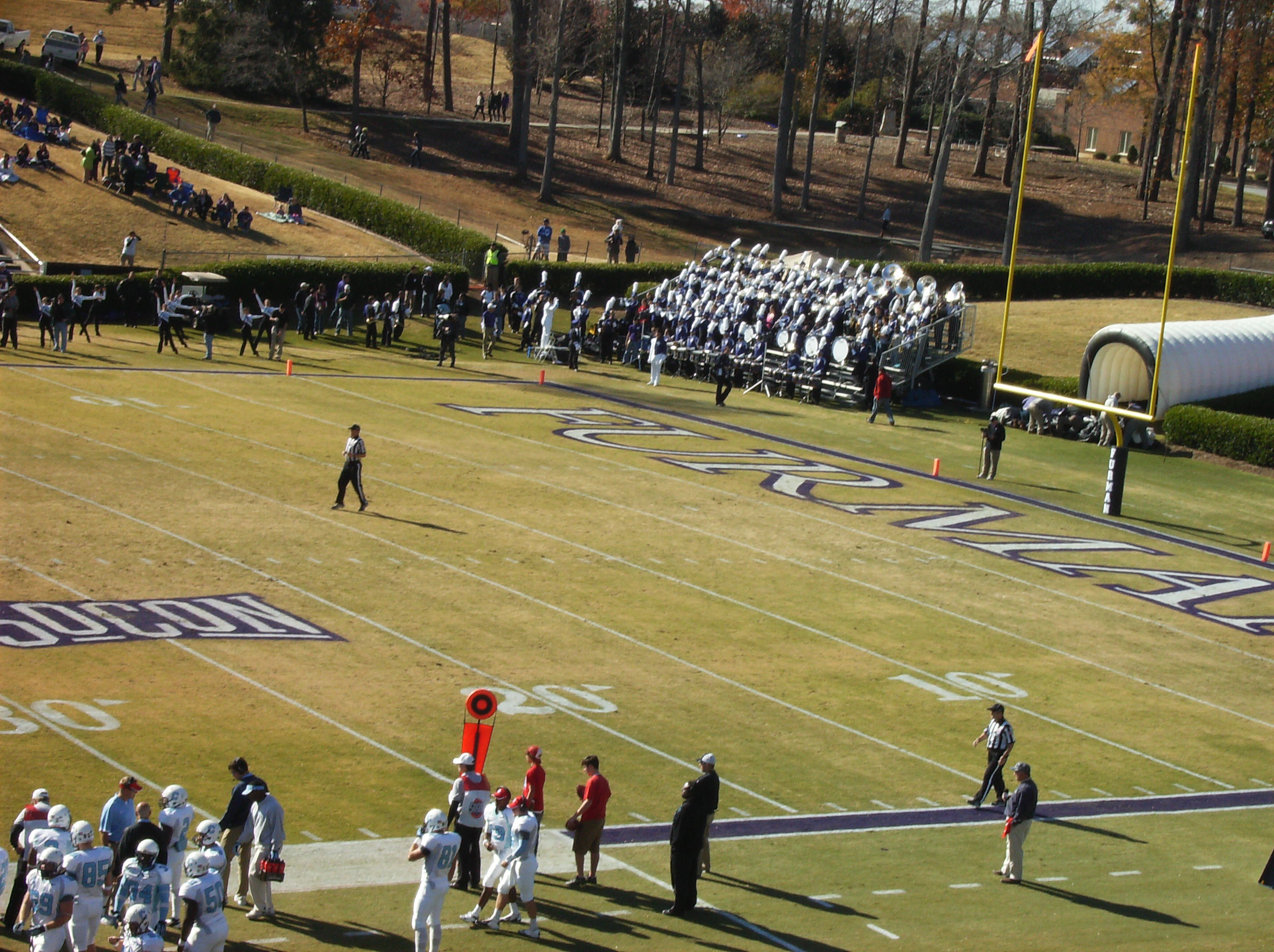
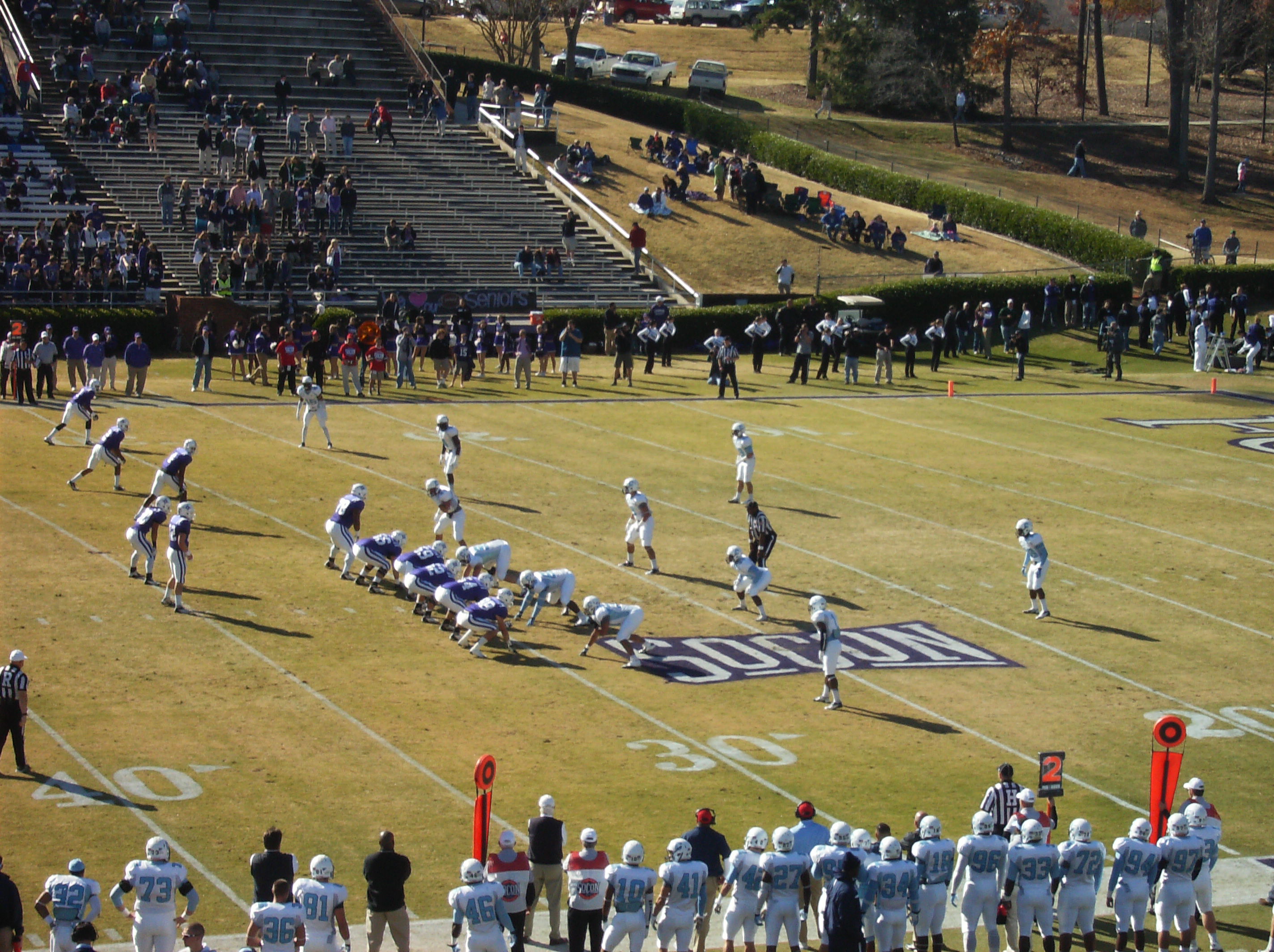
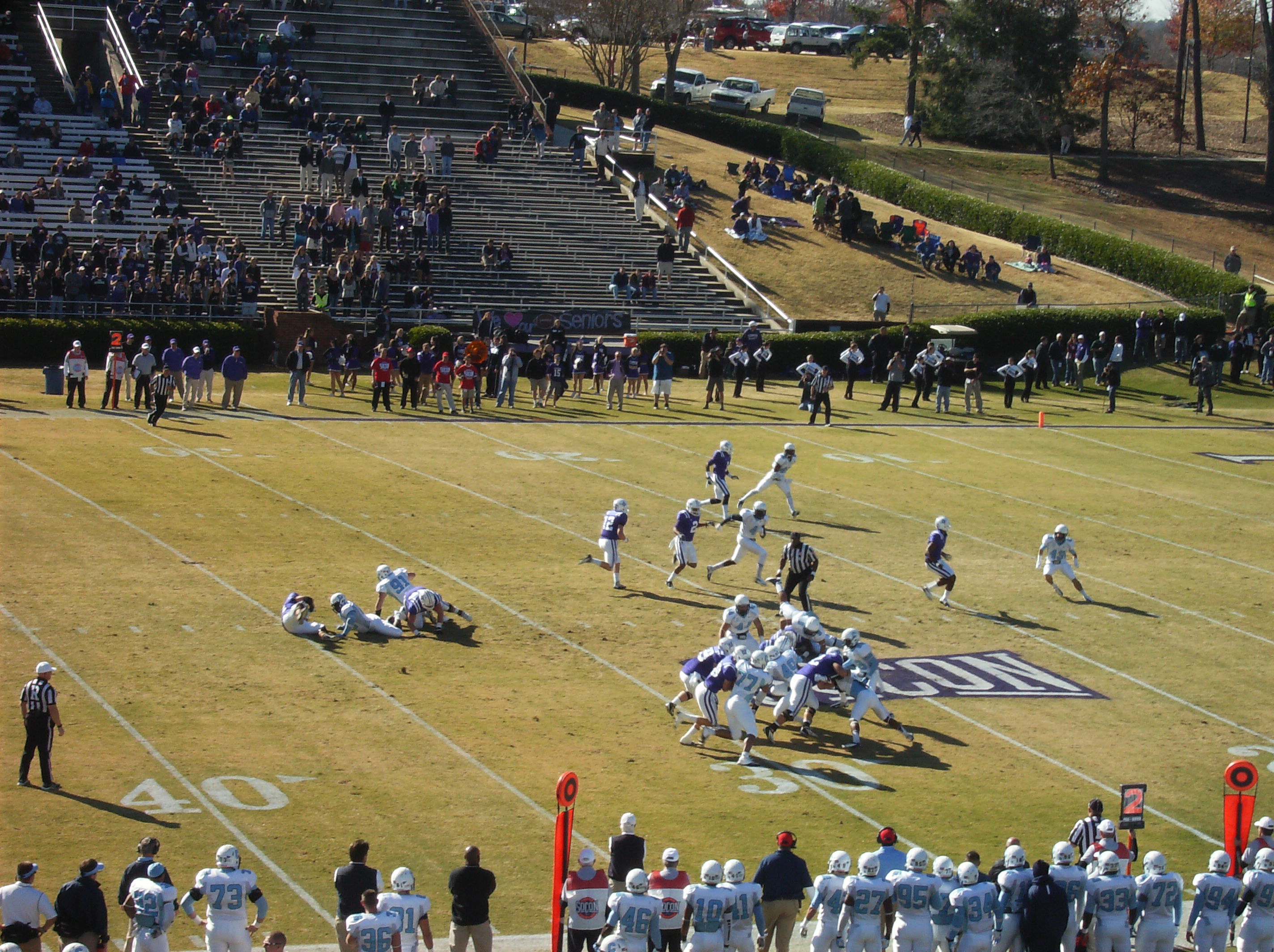
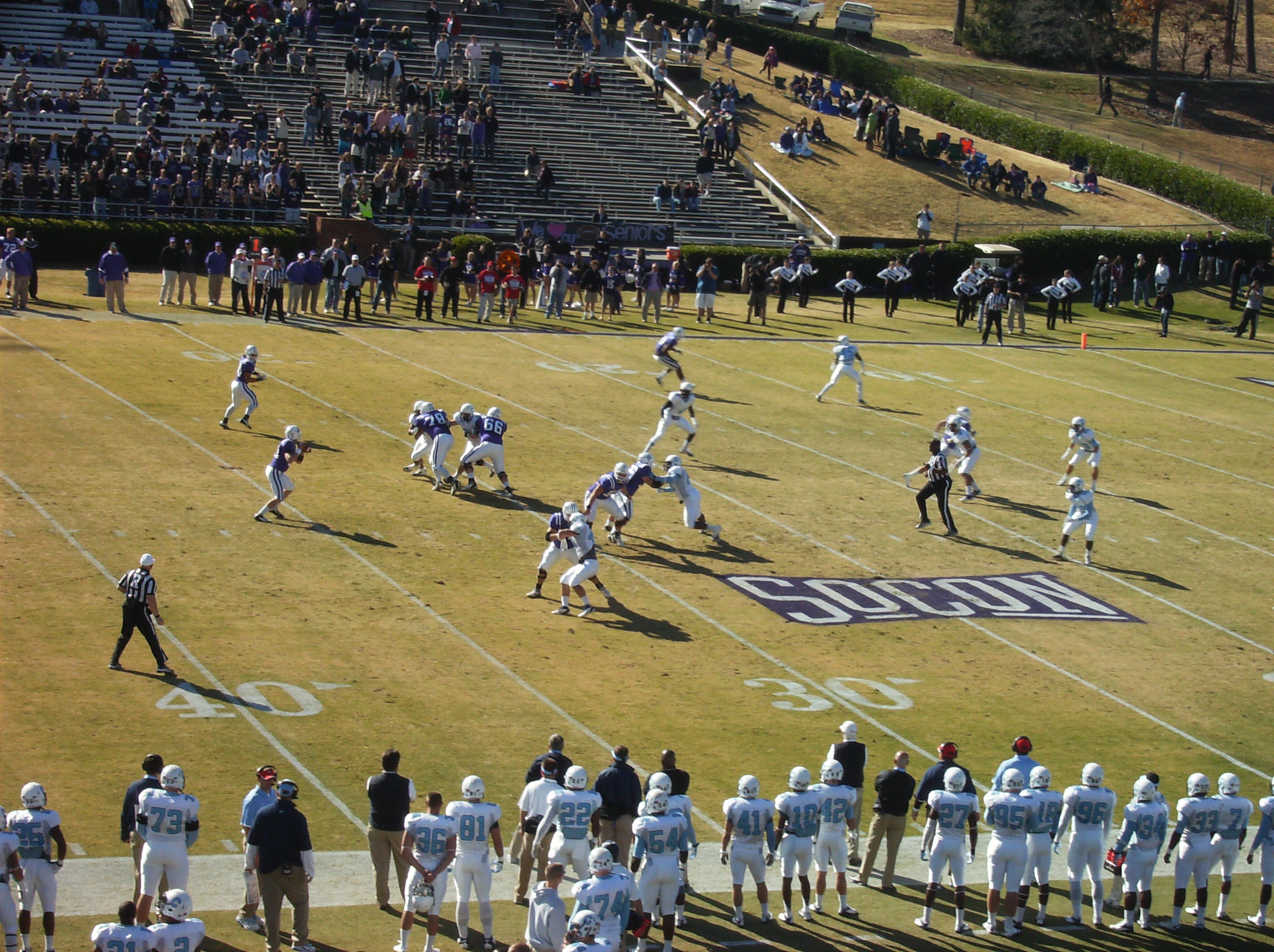
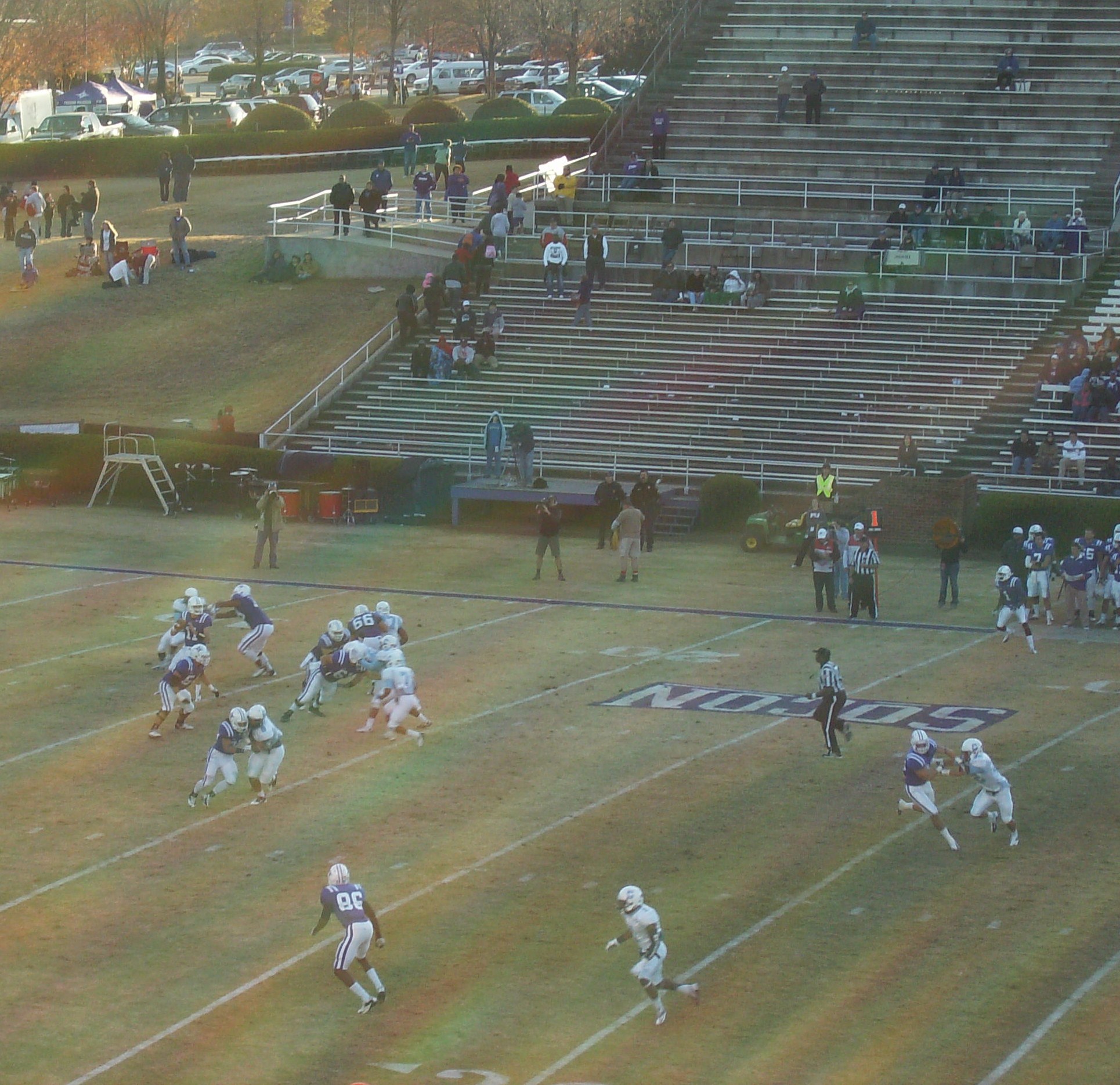
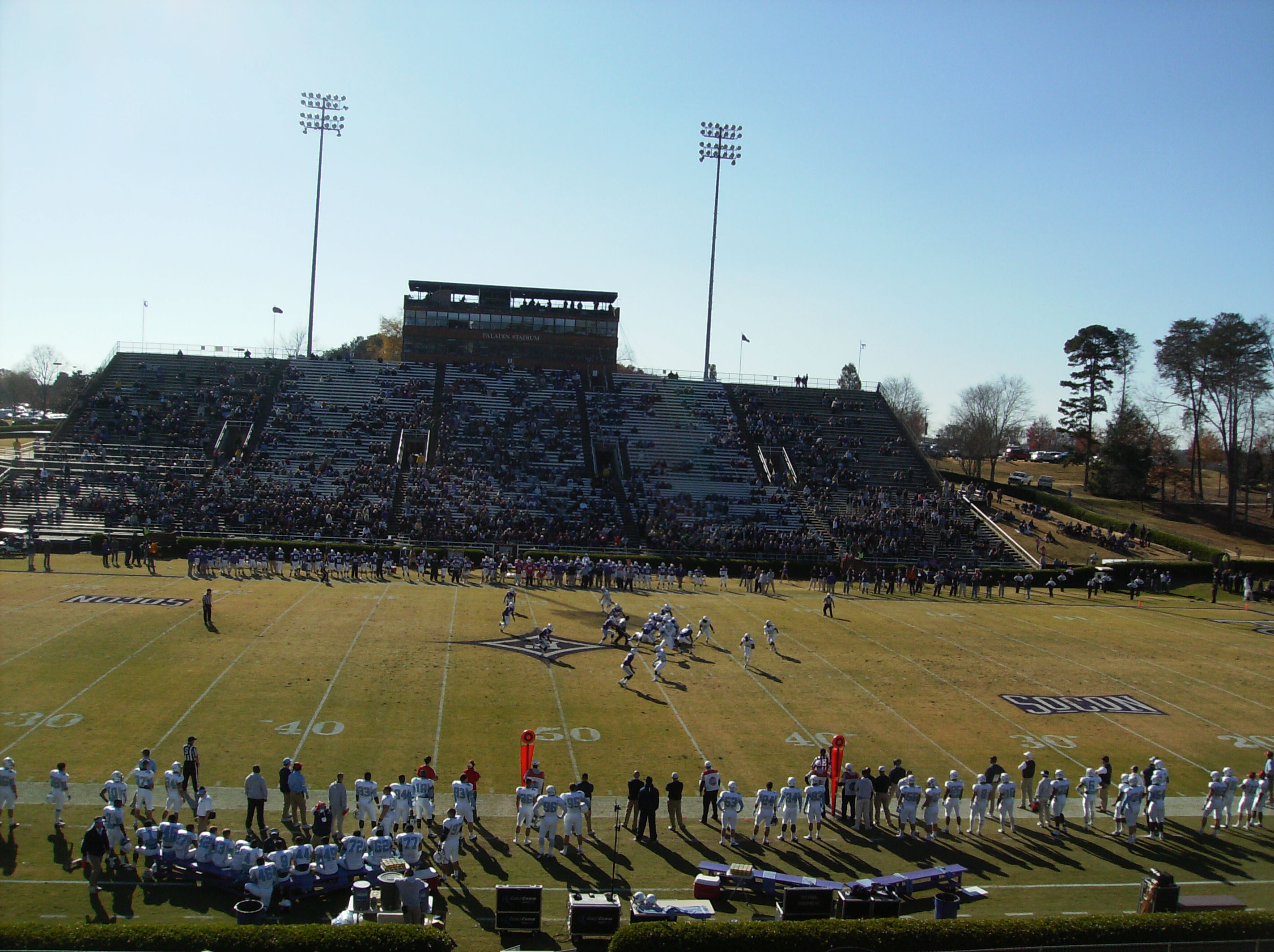
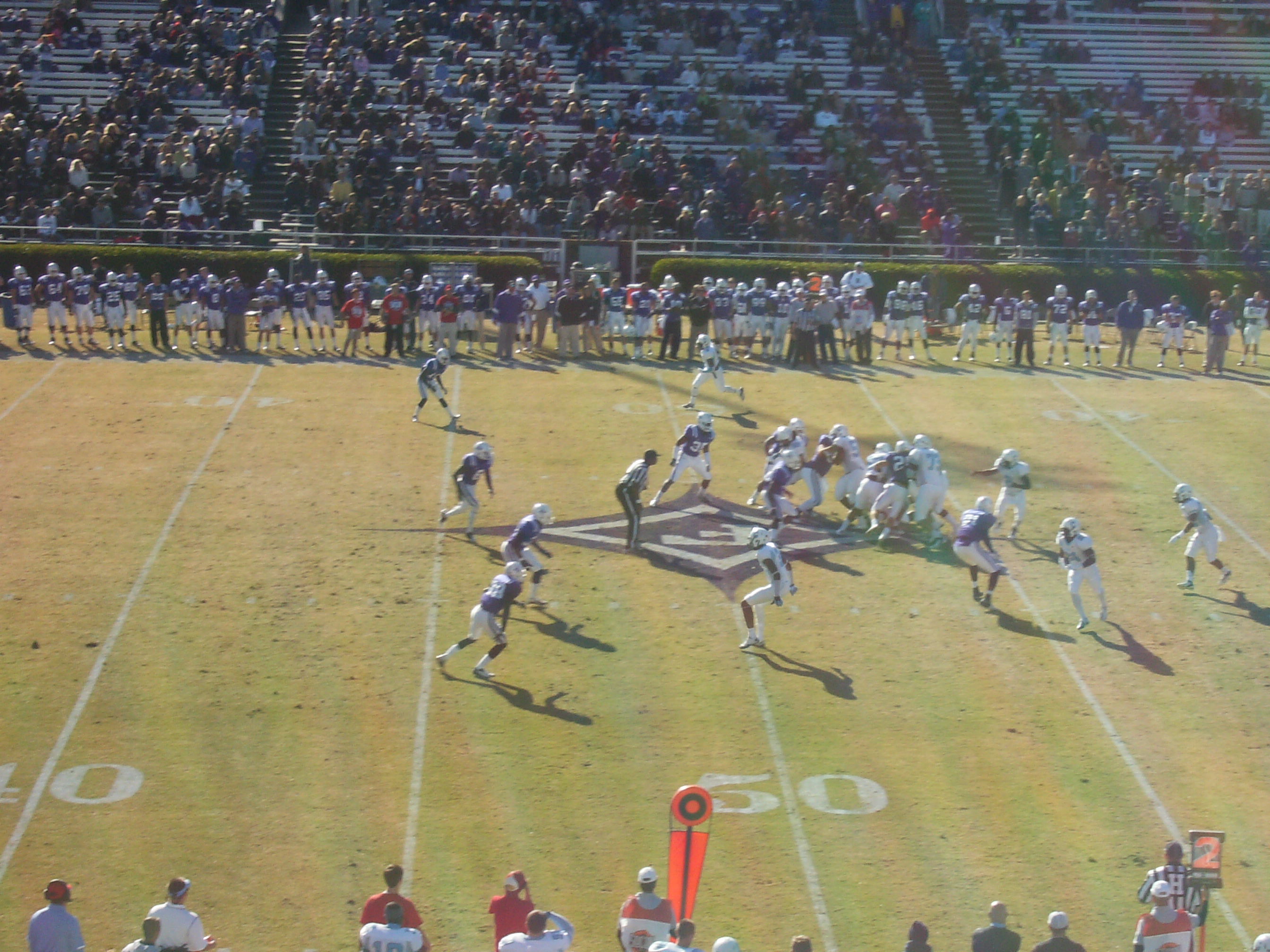
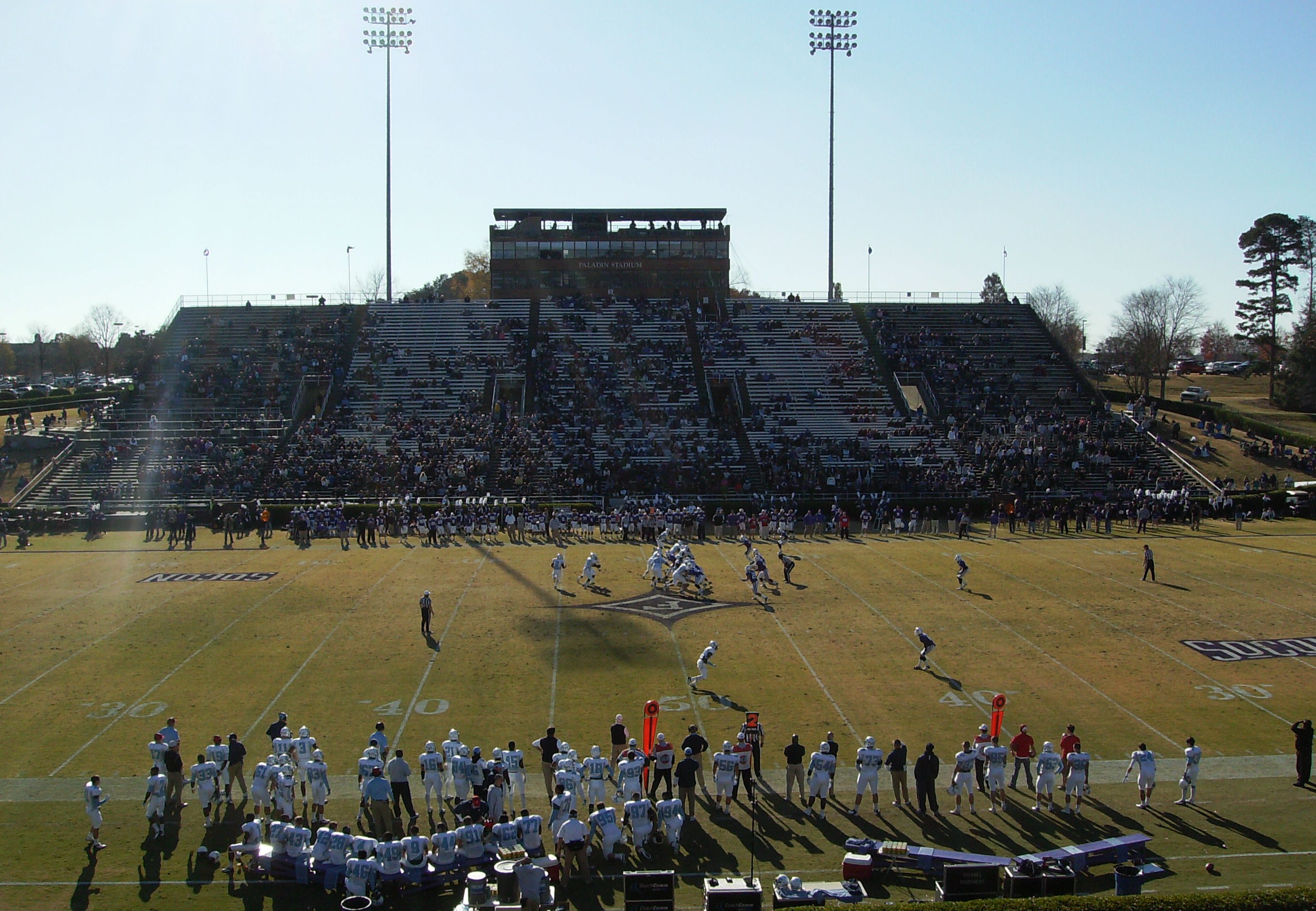
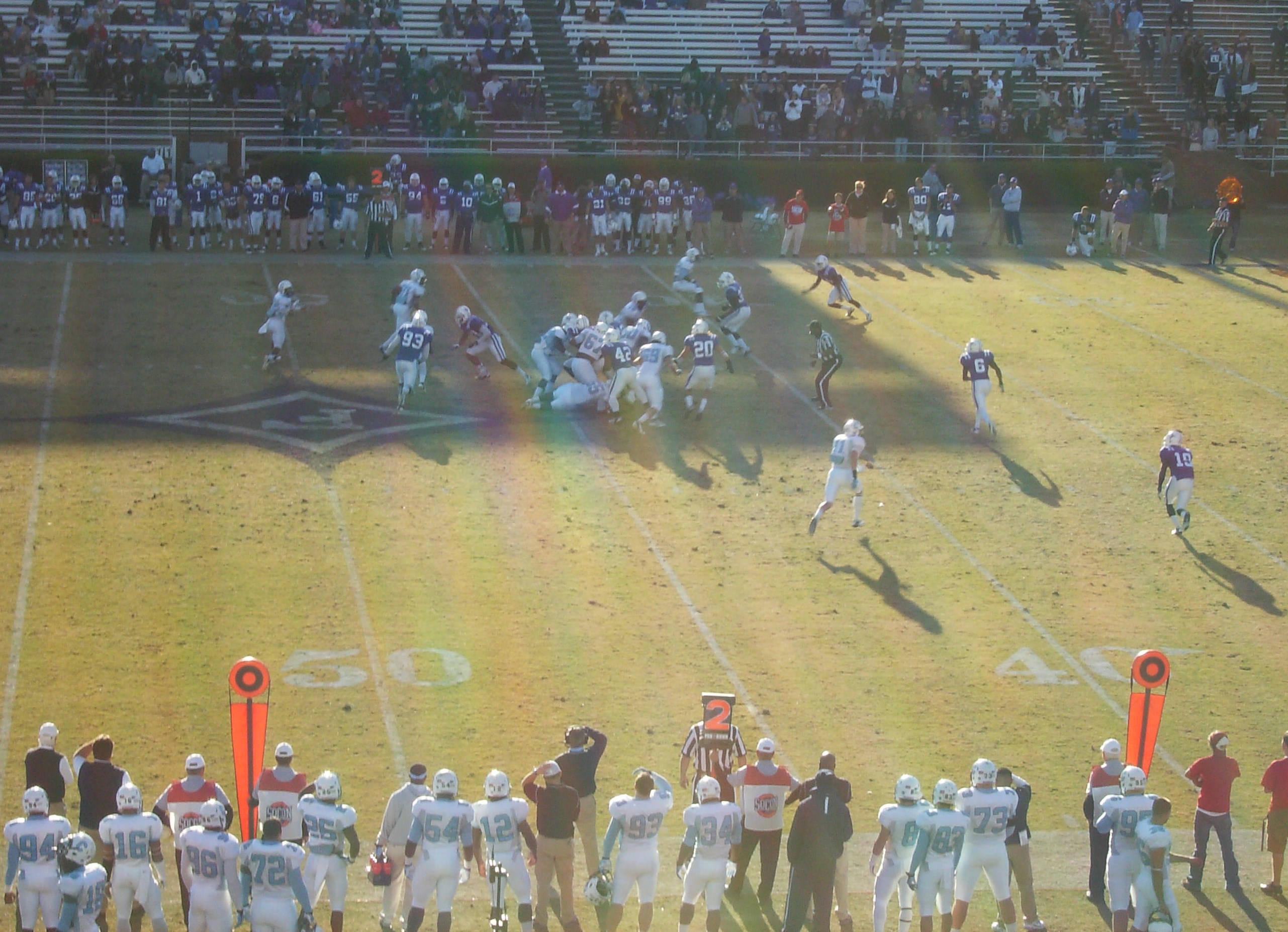
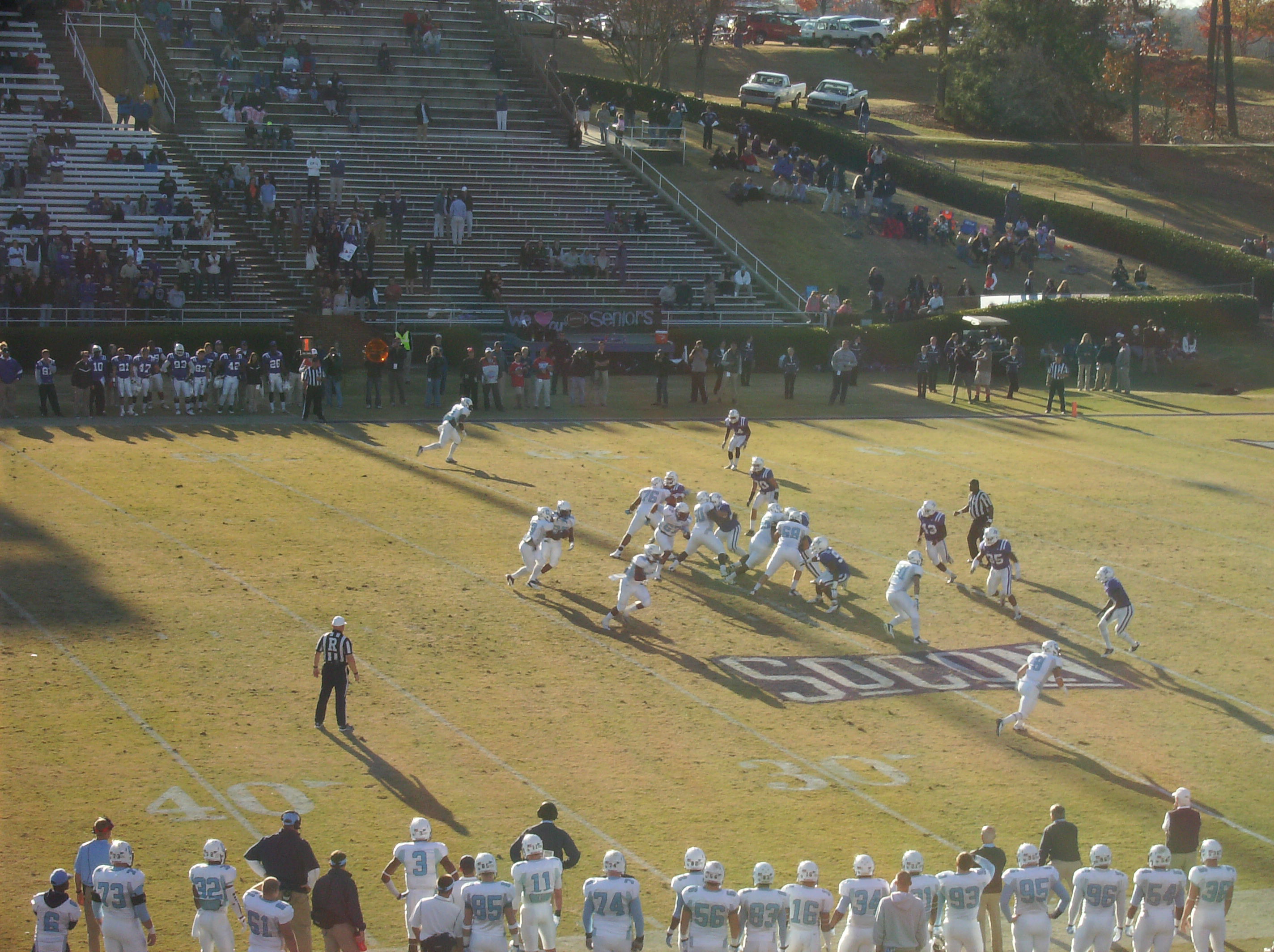
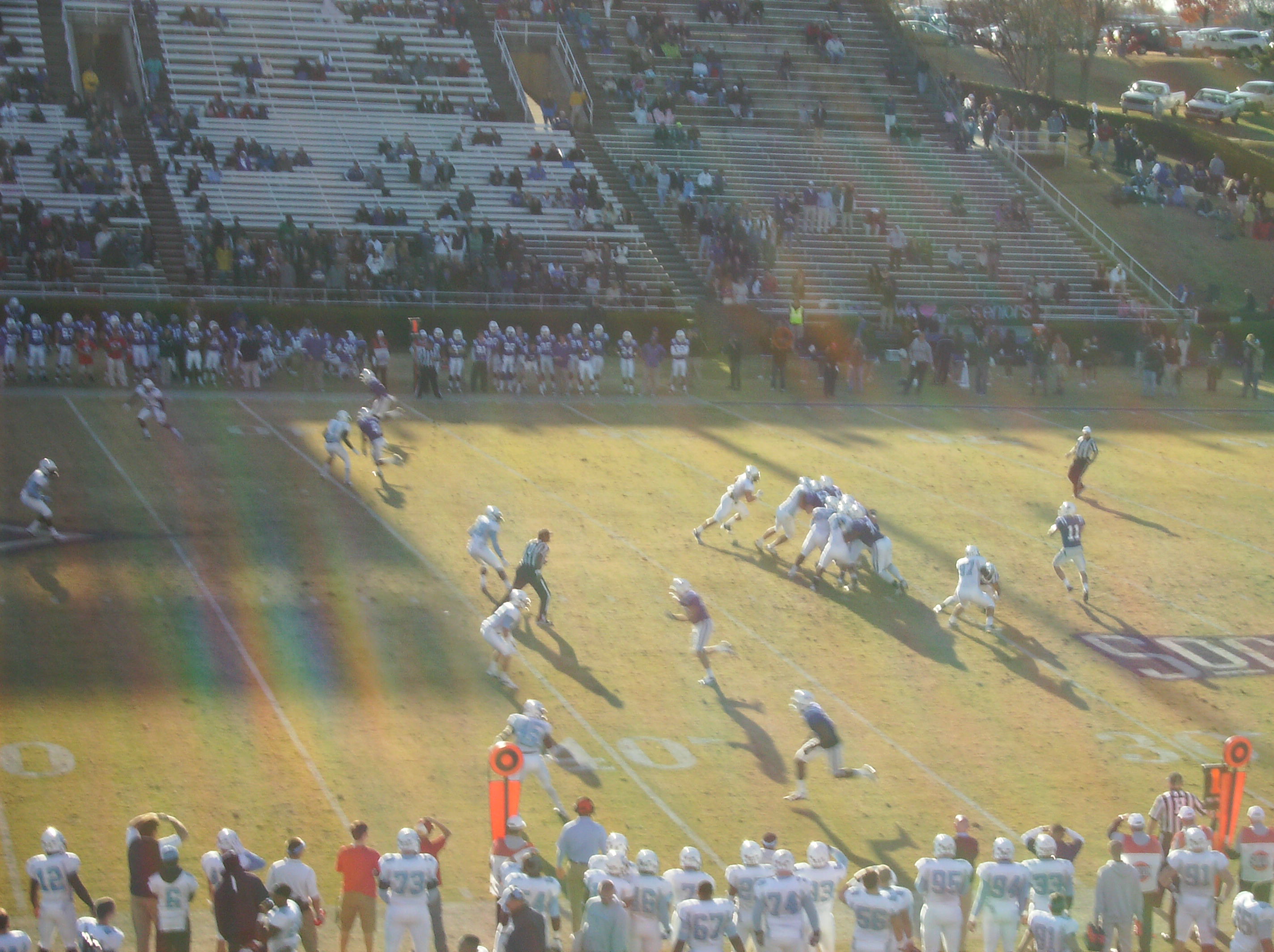
As usual, I’ll close with a few photos. I had a tough afternoon taking pictures, thanks mostly to a rather insistent beam of sunlight that kept coming over the press box and into my line of sight. The quality of these shots is even worse than normal, which is really saying something…

2012 Football, Week 11: The Citadel vs. Furman

The Citadel at Furman, to be played at Paladin Stadium in Greenville, South Carolina, with kickoff at 1:30 pm ET on Saturday, November 17.  The game will be streamed on ESPN3.com, with Darren Goldwater providing play-by-play and Doug Chapman supplying the analysis. It can also be heard on radio via the twelve affiliates of The Citadel Sports Network. Danny Reed (the “Voice of the Bulldogs”) will call the action alongside analyst Josh Baker, with Lee Glaze roaming the sidelines and Walt Nadzak providing pre-game, halftime, and post-game commentary. 

Links of interest:

The Citadel game notes

Furman game notes

SoCon weekly release

The Kevin Higgins Show (following the game against VMI), Part 1 and Part 2

Kevin Higgins’ 11/11 press conference quotes

Bruce Fowler’s SoCon teleconference for 11/12

According to legend, the game between The Citadel and Furman had been each school’s regular-season finale for as long as the sun had heated the earth.

One dismal day, however, an evil wizard arrived. Certain seers from the Upstate claimed he had come from the land of Denison, but no one was sure. The wizard cast a terrible spell that moved the game to a non-November month. This horrible event happened two long decades ago.

Finally, after an incantation from the Magician of Monsey, the spell was broken. The game was shifted to its rightful place on the calendar. Surely, it will stay there forevermore.

— Excerpt from The Golden Book of Tall Football Tales, 2012 edition

The Citadel and Furman will close their respective 2012 campaigns on the gridiron this Saturday. There are people who believe the game should always be the season finale, and more than a few of them think that it always was until the last twenty years.

They are wrong about that, of course. I’ve pointed this out before, but it seems to be a very hard thing for some fans to grasp.

It’s not just fans, though. Furman’s sports information department has a blurb in its game notes that is titled “Back Where It Belongs” and includes this comment:

This year arch-rivals Furman and The Citadel will meet for the first time in the regular season finale since 1992, when The Citadel passed on a SoCon scheduling option for year-end traditional rival games. The option was put in place by the SoCon, which at the time was adjusting future schedules to accommodate the addition of Georgia Southern to the league.

I am less than impressed with this attempt by Furman’s SID to suggest that the series was usually played at season’s end until The Citadel ruined everything. The paragraph in Furman’s release is more than a little obnoxious. At any rate, the facts are simple:

— The Citadel and Furman have played 91 times; the two schools have faced each other every season since 1919 with the exception of three years during World War II.

— The game has been the regular-season finale for both schools 19 times.

That’s it. Those nineteen games were the sixteen games played between 1977 and 1992, and a three-year stretch in the mid-1960s (1965-67).

The matchup has actually been played more often in October (51 times) than in November (37 times). Three times it has been played in September, including the last two seasons.

Do I think playing this game in September is too early? Yes. However, I don’t think it needs to end the season, either. There isn’t a long tradition of it doing so.

Besides, these days it can’t end the season — not every year, anyway.

The Citadel is not going to host any game on the last weekend of the regular season (regardless of the opponent) as long as the current school academic calendar is in effect. The corps of cadets goes on Thanksgiving break on the Friday before the holiday. That wasn’t always the case, but it is now, and I suspect it will be for the foreseeable future.

There won’t be any regular-season home games scheduled without the presence of the corps of cadets. Next year’s pre-Thanksgiving weekend game is at Clemson; the week before, the last weekend the corps will be on campus, The Citadel is hosting VMI.

That doesn’t mean the game can’t be the season-ender when it is played at Furman, and maybe a good way to set up the series would be to have the matchup as the last game of the season in Greenville, and a midseason clash in Charleston.

That would be similar to the Notre Dame-Southern California series, which is traditionally played at midseason in South Bend and late in the year in Los Angeles.

I never liked having the game played at the end of the year because it was generally ignored by the state media in favor of the Clemson-South Carolina contest, which was played on the same day.

However, with the Clemson-South Carolina series moving to the Saturday after Thanksgiving, there is less chance of the game between The Citadel and Furman being lost in the shuffle, so I don’t have an issue with the game ending the season when it is hosted by the Paladins.

There is one other thing I would like to see adjusted, in terms of Furman and scheduling. Right now The Citadel plays Furman and Wofford at home in odd-numbered years and on the road in even-numbered years. I think that ideally the Bulldogs would make just one trip to the Upstate every year, and play one of those two schools at home each season.

Of course, all of those potential moves are subject to the whims of the SoCon office, which is just as likely to schedule Furman-The Citadel on September 14 next year as it is October 19.

Furman is 3-7, 2-5 in the SoCon. The Paladins have not had a lot of luck in close games, leading Kevin Higgins to state in his Monday press conference that “they are the best FCS team in the country with their record.”

There is a snakebit quality to Furman’s losses. The Paladins opened with a 24-21 loss at Samford when the Birmingham Bulldogs converted a last-minute field goal. Furman lost the next week at home to Coastal Carolina in triple overtime, 47-45.

Wofford beat Furman 20-17, with the winning points coming on a long TD pass in the third quarter. Last week, Appalachian State slipped past the Paladins 33-28, with the difference being two second-half Mountaineer field goals.

Furman hasn’t been very lucky. Truthfully, though, it hasn’t been all that good either.

The Paladins are next-to-last in scoring offense in the SoCon, and seventh in the league in scoring defense. That’s not a combination that generally leads to winning seasons.

Furman is balanced on offense , perhaps more so than any SoCon team other than Chattanooga, but it is not a particularly efficient passing team (seventh in the league) and does not pick up a lot of first downs (also seventh). FU is last in the conference in third down conversion rate and red zone offense.

The Paladins are next-to-last in the league in defensive pass efficiency, allowing more passing yards than any team in the conference. How much that really matters against The Citadel is open to question. Furman’s games against the other triple option teams in the league may provide an answer.

Against Wofford, Furman did a good job containing the Terriers’ run game (303 rushing yards, 364 total yards) but allowed that aforementioned touchdown pass (52 yards).

That solid effort came on the road. At home against Georgia Southern, Furman gave up only 275 rushing yards, but got burned through the air on a couple of occasions, including a 75-yard TD strike.

Furman is the league’s best team when it comes to returning kickoffs, but is last in the conference in punt return average. FU is next-to-last in net punting (though well ahead of last-place Elon in that department).

The Paladins are -5 for the year in turnover margin, the worst mark in the SoCon.

Perhaps the statistic that best defines why Furman is 3-7 is fourth quarter scoring. The Paladins have been outscored 91-26 in that period. Furman’s opponents have a slight advantage in the third quarter as well, offsetting the Paladins 110-64 edge in the second quarter.

I haven’t seen any of Furman’s games, but it makes me wonder if the Paladins have issues with line play as the game progresses. It suggests a lack of depth. I could be completely misreading that, of course.

Furman’s best player is running back Jerodis Williams, who was impressive in last year’s game against The Citadel and will be a major problem for the Bulldogs’ D this year as well. Williams is tough, hard to tackle, and has good speed too.

He is the reason Furman leads the SoCon in kickoff return average, as he has taken two kicks back for touchdowns this year (each for 100 yards). One of those TD returns came last week against Appalachian State. Williams’ understudy at running back, Hank McCloud, is also a talented player.

Reese Hannon is a true freshman from Greer who has started most of the season for the Paladins. He has completed 61.6% of his passes this season, with seven touchdowns and seven interceptions. He is not a running threat in the Paladins’ offense.

Kevin Higgins mentioned Furman had “excellent speed” at the wide receiver position, but the Paladins will miss their leading receiver, Will King, who is out for the season due to injury. Furman does have an outstanding tight end, Colin Anderson, and that position has traditionally posed a problem for The Citadel in this series.

Furman’s best offensive lineman is left tackle Dakota Dozier, not to be confused with backup quarterback Dakota Derrick.

The Paladins have some fine players on the defensive side of the ball. Sophomore linebacker Gary Wilkins leads the team in tackles. Other players of note include defensive end Josh Lynn, safety Nathan Wade, linebacker Mitch McGrath, and backup lineman Ricky Lang (who has five sacks).

Backup safety Marcus McMorris has two return TDs this season, including a 95-yard fumble return that was the key play in the Paladins’ victory over Elon.

Placekicker Ray Early is 8 for 14 on field goal attempts this season, with a long of 48 yards. He has also done the majority of the punting for the Paladins this year.

I don’t think The Citadel has much of a chance at a playoff berth even if the Bulldogs are fortunate enough to win in Greenville on Saturday. However, just in case the Mayans were right, I’ve made a checklist of sorts. It features games that would affect the Bulldogs’ (admittedly remote) chances of postseason play.

Obviously The Citadel must finish 7-4. The other “must” game, from the Bulldogs’ perspective, is Samford-Kentucky. The Wildcats have to win that game. I wouldn’t bet on it.

Here are the remaining games to watch. The teams Bulldog fans want to win are listed first:

VMI over Liberty
New Hampshire over Towson
Lafayette over Lehigh
Old Dominion over James Madison
William & Mary over Richmond
Delaware over Villanova
Cal Poly over Northern Arizona
South Dakota over South Dakota State
UC Davis over Sacramento State
Charleston Southern over Coastal Carolina

I’m listing the CSU-CCU game even though it technically won’t affect the number of at-large bids available (don’t ask why, that would take three paragraphs) because a win by the Buccaneers would result in CSU finishing 6-5 (a really good achievement after going 0-11 last year).

That would result in The Citadel having a non-conference victory over a team with a winning record. Those aren’t always easy to come by. For example, of the six CAA teams battling for a playoff bid, only Villanova has beaten a team out of conference with more wins than losses. The Wildcats actually have two such victories (over Fordham and Penn).

It should be a nice day for a game in Greenville on Saturday. The preliminary forecast calls for sunny skies and a high of 60 degrees, perfectly acceptable late-season football weather.

I don’t have any idea how the Bulldogs will play on Saturday, not that I ever really do. The Citadel has accomplished its major goal, a winning season. A playoff bid is a longshot. Finishing with a winning record in the SoCon (something Derek Douglas mentioned in the Monday presser) is something to shoot for, but not exactly a huge prize either.

Playing Furman means something, and I’m not trying to soft-pedal that (despite what the first part of this post may suggest). However, I’m not completely sure how much it means to the players. It may be a big deal to them; I don’t know.

I’m sure the game would be World War III if some of the alums on both sides had anything to say about it, but they aren’t the ones putting on the pads.

My guess is that the game will be spirited and intense on both sides, and close. It’s the last game of the year between two proud teams. There won’t be a lack of effort.

I’m looking forward to one more Saturday of gridiron action. One more round, you might say.

2012 Football, Game 9: The Citadel vs. Elon

The Citadel vs. Elon, to be played at historic Johnson Hagood Stadium, with kickoff at 2:00 pm ET on Saturday, November 3.  The game will not be televised, although it will be streamed on Bulldog Insider (subscription service) and can be heard on radio via the twelve affiliates of The Citadel Sports Network. Danny Reed (the “Voice of the Bulldogs”) will call the action alongside analyst Josh Baker, with Lee Glaze roaming the sidelines and Walt Nadzak providing pre-game, halftime, and post-game commentary. 

Links of interest:

The Citadel game notes

Elon game notes

SoCon weekly release

The Kevin Higgins Show (10/30), Part 1 and Part 2

Comments from Kevin Higgins at his weekly press conference

Elon’s video highlights package from its game last week against Furman

Furman’s video highlights package from its game last week against Elon

Homecoming calendar of events

The Citadel really needs to win on Saturday against Elon. For one, it needs to break a few streaks:

— The Citadel has lost three straight Homecoming games

— The Citadel has lost four straight games to Elon (including Homecoming in 2010)

— The Citadel has lost four of its last five games

Of course, Elon has also lost four of its last five games, and is only 3-5 overall (1-4 in the SoCon). The Bulldogs will be a slight favorite to break the aforementioned streaks.

Elon’s most recent game was a 31-17 home loss to Furman. The biggest play in that game was a 95-yard fumble return for a TD by the Paladins when Elon was on the verge of tying the score. On the final drive of the game for the Phoenix, quarterback Thomas Wilson was sacked five times in a seven-play sequence. It is not often a team gets sacked five times on one drive.

Only 6,158 people attended the game — at least, that was the official count — leading Elon head coach Jason Swepson to say:

It felt like a coffin out there, and we didn’t help it. There was no one in the stands. We had to create our own energy, and we were flat.

I’m guessing Elon won’t be using “It felt like a coffin out there” as a tag line on next year’s season tickets brochure.

The Phoenix rank near the bottom of the Southern Conference in scoring defense (eighth of nine teams) and rush defense (seventh). Of course, The Citadel doesn’t rank highly in the league of either of those categories, either.

Elon allowed 342 yards rushing at Georgia Southern, similar to the 312 yards rushing the Eagles had versus The Citadel. However, the following week against Wofford, the Phoenix gave up 500 yards rushing (at home), with the Terriers’ Eric Breitenstein accounting for 321 of those yards.

That would seem to put a dent in the theory that it is easier for teams to defend the triple option after having recently faced another triple option squad.

Elon nosetackle Tony Thompson was a preseason second-team all-league selection. Lined up behind Thompson is MLB Jonathan Spann, who leads the team in tackles. The Bulldogs must neutralize both players on Saturday. Danny Reed is hoping that defensive tackle Olufemi Lamikanra doesn’t make many stops.

In his press conference on Monday, Kevin Higgins noted that Elon does “a lot defensively and they are all over the place…so there will be some opportunities for, hopefully, big plays, but at the same time they are going to kick you in the teeth a couple of times [because] they are very aggressive.”

Aaron Mellette is Elon’s best player, and he’ll be playing on Sundays next year. If the Bulldogs can keep him in check, they stand a good chance of holding down Elon’s entire passing game, as Mellette has accounted for 43% of the Phoenix’s receiving yardage this year.

Mellette is a 6’4″ wideout with very good speed. He has caught at least two touchdown passes in the Phoenix’s last six games, and has 13 or more receptions in three of Elon’s last four games, with no fewer than 154 yards receiving in any of those contests.

He has 15 catches this season of 20 yards or more. Mellette caught a 41-yard touchdown pass in last year’s game against The Citadel. The Bulldogs cannot afford to let him have a big game on Saturday.

The same goes for Elon quarterback Thomas Wilson, in his second full season as Elon’s starter. When Elon was The Citadel’s Homecoming opponent two years ago, Wilson made his first career start after longtime Phoenix QB/3B Scott “Chickenhawk” Riddle was unable to play after suffering an injury. Wilson did a fine job, leading Elon to a 27-16 victory.

Wilson has put up some big passing numbers this season, including 419 yards at Appalachian State (Mellette accounted for 237 of those yards), 412 yards versus Western Carolina, 322 yards against Wofford, and 302 yards at Georgia Southern. He is occasionally interception-prone (three picks against the Mountaineers), and the Bulldogs have to take advantage of any errant tosses.

Elon has thrown between 33 and 47 passes in each of its last five games. The Citadel’s secondary must be up to the challenge. It won’t be easy; not only does Elon throw the ball a lot, it is efficient in doing so (leading the league in that department).

The Phoenix are last in the SoCon in rushing offense, and by more than 40 yards per game. Elon is averaging just 2.8 yards per carry. The Bulldog D needs to force that trend to continue, and ensure that the Phoenix offense remains one-dimensional.

Elon has a fine placekicker in Adam Shreiner, who is 12 for 15 on field goal attempts this season. Shreiner was a key factor in the Phoenix’s win over the Bulldogs last season, as he made four field goals in that contest.

The Phoenix are last in the SoCon in net punting. and next-to-last in kickoff coverage.

Odds and ends:

— Each week, Elon’s coaches select an outstanding offensive and defensive scout team player of the week. Those two players lead the rest of the team onto the field for each game, carrying the flags of the United States and the State of North Carolina. It’s an interesting idea, although it’s a shame that the Phoenix are forced to carry a mediocre banner like North Carolina’s state flag.

South Carolina definitely has a huge edge on its neighbor state when it comes to flags. It’s just another reason North Carolina is often referred to as “South Carolina’s hat”.

— The Citadel continues to lead the nation in fewest penalties committed per game (3.13) and fewest penalty yards per game (21).

— The first question posed to Kevin Higgins at Monday’s press conference concerned the team’s uniforms. Higgins confirmed that the team would wear light blue and white for Homecoming. This obviously meets with my full approval.

— The Citadel is averaging 13,255 fans per home contest. Homecoming will likely improve that statistic.

— The Regimental Band and Pipes will perform at halftime. I hope the band is allowed to play more during the game, too. That has been an issue this season.

— Also in action on Saturday will be members of The Citadel’s wrestling team, competing in The Citadel Open. If you’re wandering around campus Saturday morning and looking for something to do, check out McAlister Field House, where the competition is being held.

The Citadel has a very promising group of wrestlers, including two defending league champions, and was a close second to Chattanooga in the SoCon’s preseason poll. Rob Hjerling’s squad is definitely one to watch.

Elon may only be 1-4 in the SoCon, but it has been in almost every league game. The Phoenix lost 26-23 at Georgia Southern, 35-23 at Appalachian State, and lost the Furman game in large part due to the long fumble return I mentioned earlier (essentially a 14-point swing in a game that was decided by 14 points).

This is not going to be an easy game for The Citadel. In Wilson and (especially) Mellette, Elon has the players to really put on a show at the home team’s expense. The Citadel needs to close down the Phoenix run game (which seems doable), prevent Mellette from making big plays (a challenge), and regularly stop Elon on third down (a must).

Offensively, The Citadel should have some opportunities, and I expect Triple O’Higgins to have a good day. As always, The Bulldogs need to avoid committing turnovers. The Citadel must also stay in manageable second- and third-down situations, something that didn’t happen late in last week’s game against Wofford. The loss of Keith Carter to a torn Achilles’ tendon is yet another injury setback that the Bulldogs are going to have to overcome.

I am looking forward to Saturday. The atmosphere will be festive, and the tailgating scene should be tremendous, but all those alums better make sure they make their way into Johnson Hagood Stadium by kickoff in order to cheer on the Bulldogs.

I’ll be there.