Football, Game 9: The Citadel vs. Wofford

Date and time:  Saturday, October 30, at 1:30 pm ET

Television:  SportSouth and FCS-Central; Tom Werme and Sam Wyche on the call from Spartanburg

This, somewhat amazingly, is going to be the fifth year in a row the game between Wofford and The Citadel has been televised.  I believe it’s the third consecutive time Werme and Wyche have called the game; in 2006 the game was televised by South Carolina ETV, while the last three (and Saturday’s game) have all been carried by SportSouth.

Tangent:  The Citadel doesn’t appear on television that often, which is understandable, but this week there are two Big XII matchups that won’t be televised, which is less understandable.  One reason for this is the Big XII has a poor TV contract, and the other is that one of the matchups is a Texas A&M home game.

Aggies AD Bill Byrne is well-known for his aversion to pay-per-view telecasts, or regional broadcasts where the school doesn’t receive a payout.  He apparently believes televising home games hurts attendance.  He is almost certainly wrong about that, at least in the long term.  I actually wrote a little bit about this subject in last year’s Wofford preview.

A school with a tradition as grand as that of Texas A&M should have no trouble with home attendance in the first place.  At any rate, television is a great promotional tool for a school’s football program and the university in general, and it’s very surprising that in 2010, there is still someone in a position of authority who doesn’t believe that.

Byrne may be the final holdout, after the 2007 death of longtime Chicago Blackhawks owner “Dollar Bill” Wirtz.  As a result, Texas A&M was the last FBS team to appear on TV this season, when it finally had a game against Oklahoma State televised.

When I initially started writing this post, my idea was to use the bulk of it to discuss Kevin Higgins’ status as head coach of The Citadel.  However, I changed my mind about one-third of the way through it, for a couple of reasons.

One is that I felt I had not had time to thoroughly research a couple of points I wanted to make.  I didn’t want to write some hurried screed lacking proper foundation, particularly on this issue.  Also, I’m not sure writing about a coach’s tenure immediately after his team commits nine turnovers lends itself to treating things with proper perspective.

It’s just a blog, but I do have some standards…

What I’m going to do, I think, is wait until The Citadel’s bye week, and then in lieu of a normal preview (since there won’t be a game to write about) I’ll post my thoughts on the coaching situation.

Because of the last-minute change in approach, this preview is going to be shorter than normal.  That is probably just as well, because to be perfectly honest I’m not quite sure what to say about Saturday’s game against the Terriers, other than the Bulldogs can’t possibly play worse on offense than they did against Georgia Southern.  At least, I hope not.

Wofford was 3-8 last season, as it struggled with a lot of injuries and what was considered a bad case of fumbleitis, although not as bad as the Bulldogs’ fumbling problems this year.   The Citadel has fumbled 33 times, losing 19.  Through eight games last season, Wofford had fumbled 19 times, losing 13.

Wofford lost one fumble in its ninth game, against The Citadel, but unfortunately that didn’t keep the Terriers from scoring 43 points.

Last season one of Wofford’s key injuries was to fullback Eric Breitenstein.  He’s back this season, and leading the nation in scoring, averaging just over two touchdowns per game (he scored four times against Furman while rushing for 234 yards).  Breitenstein has scored at least two touchdowns in his last six games.

Mitch Allen struggled last year for the Terriers, but the quarterback has been much improved this season.  Allen had a season-high 178 yards rushing against Western Carolina (one of three Terriers to rush for over 100 yards in that game).  He also has a 3.9 GPA in Physics, which a professor at another Southern Conference school once told me would be the equivalent of a 2.9 GPA at The Citadel.  (Hey, I’m just reporting the facts here.)

While perusing the statistics, I was surprised to see that Wofford’s opponents actually have had a slight edge in time of possession.  Wofford is converting 43% of its third down attempts, which is a little lower than what the Terriers would like but better than last season.   Wofford as usual has not shied away from going for it on 4th down, and the Terriers are 8 for 11 in that category.

Mike Niam is a 6’3″, 245 lb. linebacker for Wofford.  He played in two games last season for the Terriers, leading the team in tackles both times, before tearing his ACL.  He returned for spring practice, then had to have surgery on his knee in the fall, when it was discovered he had torn his ACL again.  He missed the first five games of the season, but returned two weeks ago — and has led the team in tackles in both games since returning.

Wofford’s best defensive player, though, is DE Ameet Pall, a Canadian who leads the nation in sacks per game (1.5).  He has 10.5 sacks total on the season (3 of those against Furman — boy, that was a tough game for the Paladins, wasn’t it?).  Peet has 15 tackles for loss overall.  At least one observer rates him ahead of GSU defensive tackle Brent Russell, which is really saying something.

Wofford placekicker Christian Reed is 8-10 on FG attempts but has missed four PATs this season (including a stretch of three misses in a row).  The Terriers have only punted 25 times in seven games; just five of those have been returned (although for a 13-yard average that probably concerns Terrier coaches).

Wofford games don’t feature a lot of penalties.  The Terriers are being flagged about five times per game.  Wofford opponents are only averaging three penalties per contest, which I find a bit curious.

One injury of note for Wofford:  center Trey Johnson broke his arm in last week’s game against Elon.  He will be replaced by redshirt freshman Jared Singleton, who played most of that contest after Johnson got hurt.

Last season’s game against Wofford was one of the more disappointing games I’ve seen at Johnson Hagood Stadium.  (Unfortunately, this year I’ve seen two games at JHS that were even more disappointing.)  The Bulldogs played poorly in all aspects of the game, and the score reflected that.

Kevin Higgins thinks that the matchup with Wofford on Saturday will be “a great football game“.  I’m glad he thinks it will be, since he’s the head coach.  Of course, last season he thought the Bulldogs were “going to war“.  That wasn’t quite the case.

I just watch the games from a safe distance, and from what I’ve seen, I don’t think it’s going to be a great game.  Wofford has confidence, experience, and is at home.  The Citadel (at least offensively) lacks confidence, experience, and is on the road.  The Bulldogs have lost 11 straight SoCon games away from home, and most of them weren’t close losses.

I would like to be wrong on Saturday.  Very wrong.

Final note:  Jean Marshall, who for many years was the ticket manager for The Citadel’s department of athletics, died last week at the age of 80.  I was just one of many people who had the chance to interact with Ms. Marshall over the years.  As was stated in The Blue and White (probably by Andy Solomon), “She was a favorite of many and will be missed.”  Condolences to her family.

Review: Georgia Southern

Well, that game was a debacle…and when I say it was a debacle, I mean just that.  IT. WAS. A. DEBACLE.

Nine turnovers.  Nine.  Let’s look at some facts about this game:

— Nine turnovers in a game, as you may have guessed, is a school record for The Citadel.

— Among the many amazing things about the game, the Bulldogs committed nine turnovers while running only 47 plays from scrimmage.

— The Citadel committed four turnovers in nine passing attempts (three interceptions, one fumble) and five turnovers on 38 rushing plays (all fumbles, obviously).

— Georgia Southern lost its starting quarterback on its second offensive play.  GSU completed no passes in the game and did not really dominate on the ground, either (4.0 yards per rush).  Yet it still won.  On the road.  By 20 points.

— GSU and The Citadel combined to complete seven passes, three to offensive players and four to defensive players.  It was the first time I had ever seen a game, either in person or on television, where the defensive units for the two teams caught more passes than the offensive units.

— After a game in which The Citadel completed no passes (against Appalachian State), it played a game in which its opponent completed no passes.  I guess that’s like a team getting no-hit in baseball one day, then throwing a no-hitter the next day, but losing both games.

— As Jeff Hartsell pointed out, it was the first time a Bulldog opponent had failed to complete a pass since 1973.  The opposition that day was William & Mary.  That game was also at Johnson Hagood Stadium, and The Citadel lost it, too (24-12). That Bulldog squad finished the year 3-8, by the way, in Bobby Ross’ first season at The Citadel.

— The Citadel fumbled away the ball on its first three offensive possessions.  In seven first-half possessions, the Bulldogs turned the ball over five times and punted twice (three-and-outs on both those drives).

— The second half wasn’t much better, consisting of four turnovers, one punt, and failing on a fourth-down play.

— Thanks to all the turnovers, Georgia Southern’s average starting field position was The Citadel’s 40-yard line.

— The Citadel committed more turnovers against GSU at Johnson Hagood Stadium on Saturday (nine) than the basketball team committed against GSU in McAlister Field House last season (eight).

The Citadel is now in last place in all of FCS in the following categories:  fumbles lost (19, five more than the next-worst team), offensive passing yardage per game, and offensive passing efficiency.  The Bulldogs are in a three-way tie for having committed the most turnovers (27).

I went back and looked at the turnover numbers during Charlie Taaffe’s first season as head coach (1987).  The Bulldogs committed 31 turnovers that year in 11 games; 19 fumbles and 12 interceptions.  The most lost fumbles in one game that season? Four, against Army.  The season high for turnovers in one game that year was five, against Furman.

On the other hand, that team was much more productive on offense, including passing yardage (114 passing ypg. in 1987, 50 this season), total yards (363 to 274), and scoring offense (20.7 to 16.9).  The 1987 team also had a time of possession advantage over its opponents of just over eight minutes; the 2010 Bulldogs to date have a TOP edge of just over four minutes.

One other thing I’ll say that I can’t prove with statistics.  I believe (from memory) that the 1987 team’s lost fumbles were more spread out in terms of different types.  In other words, there were fumbles on bad/dropped pitches, fumbles where the ballcarrier was hit hard and fumbled, “mesh” fumbles, QB/center exchange issues, etc.

Most of the 2010 fumbles are QB/center exchange problems and “mesh” errors.  I have to say that in all honesty, the Bulldogs haven’t managed to get outside enough to have a lot of fumbles on pitch plays (although they have had a few).

Kevin Higgins, from his Monday presser:

“As we analyze each of the nine turnovers, something different happens in each of them, but the one common denominator in all of the fumbles was that a freshman player was involved. That’s not an excuse, but the young guys need to grow up and learn how to do the right thing with the football.”

Okay, so freshmen were “involved” in all nine turnovers.  That might be something to use as a crutch if this had been the first or second game of the season, but it wasn’t. It was the eighth game of the season.  Those guys are all now closer to being sophomores in terms of game experience than freshmen.

Nine turnovers in a spring game would be eye-raising.  Nine turnovers on October 23 is just embarrassing.

The defense played well.  The fact that the final score was “only” 20-0 is a credit to that unit.  I won’t say it was an A+ effort from the D; I would have liked to have seen more forced turnovers, particularly with the backup QB in the game for the Eagles, but it’s also true that GSU employed a fairly conservative game plan on offense for the most part (and why not).

The one time the Bulldog defense had a chance to swing momentum in the game, it did just that, after GSU coach Jeff Monken unaccountably started channeling Wade Phillips late in the first half.  Brandon McCladdie intercepted an ill-advised pass (ill-advised in both strategy and execution), and suddenly The Citadel had the ball in Eagle territory with under a minute to play in the half.

However, on the next play The Citadel gave Georgia Southern the ball right back, returning the Eagles’ interception with one of its own, and that was that.

One other thing from that game:  Greg Adams is apparently okay after a vicious, and illegal, hit by a GSU player who struck the defenseless Adams as he was preparing to return a punt.  I’m glad Adams is all right, but I also think the play warranted a suspension for the offender from the Southern Conference.  As it was, the player wasn’t even ejected from the game.

There are more things to discuss, related not just to this game but the season in general and the state of the football program in particular.  I want to think about them for a few more days…I’ll discuss those issues in my preview of the Wofford game. The discussion may make up the bulk of that preview, actually.

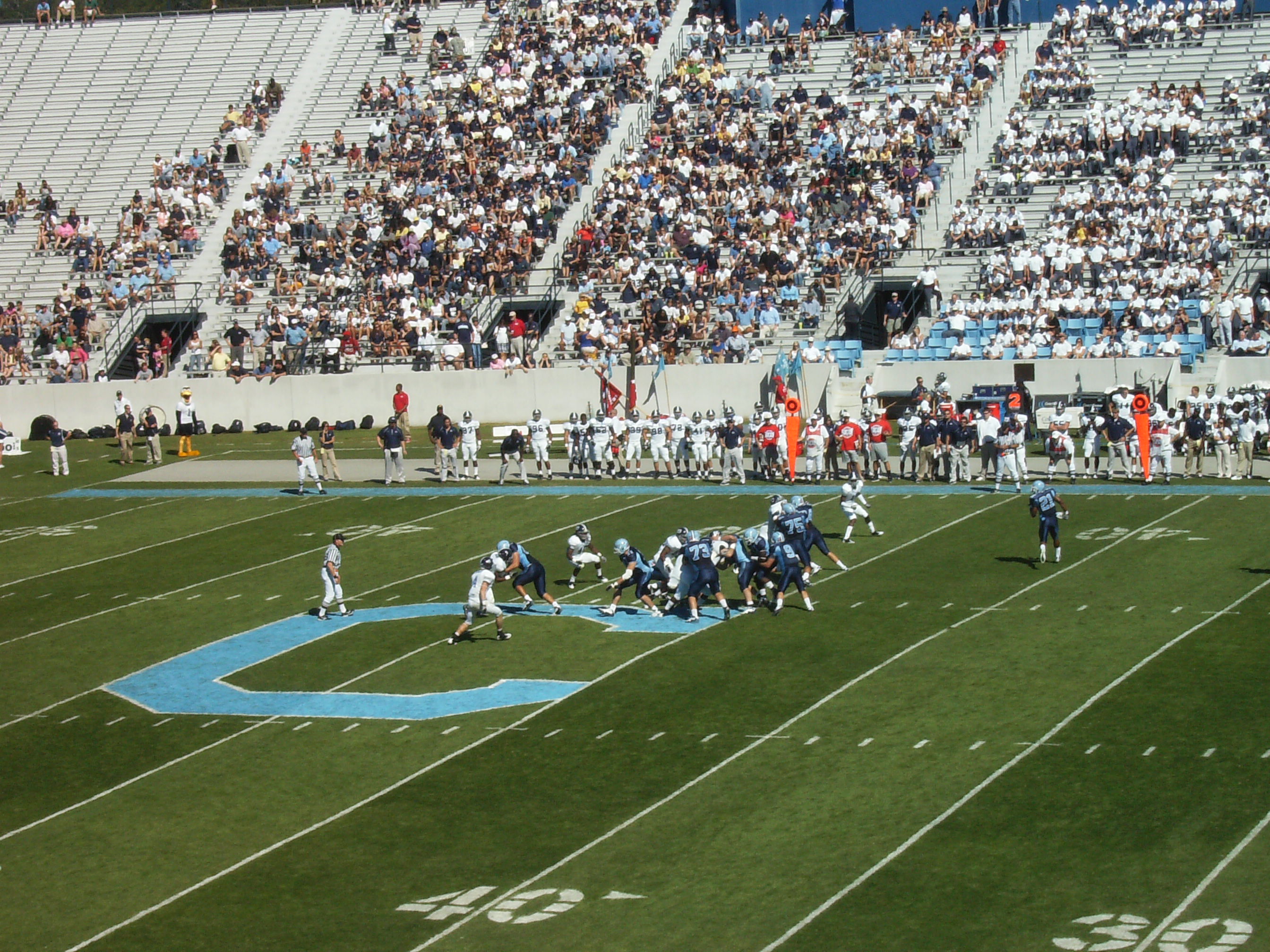
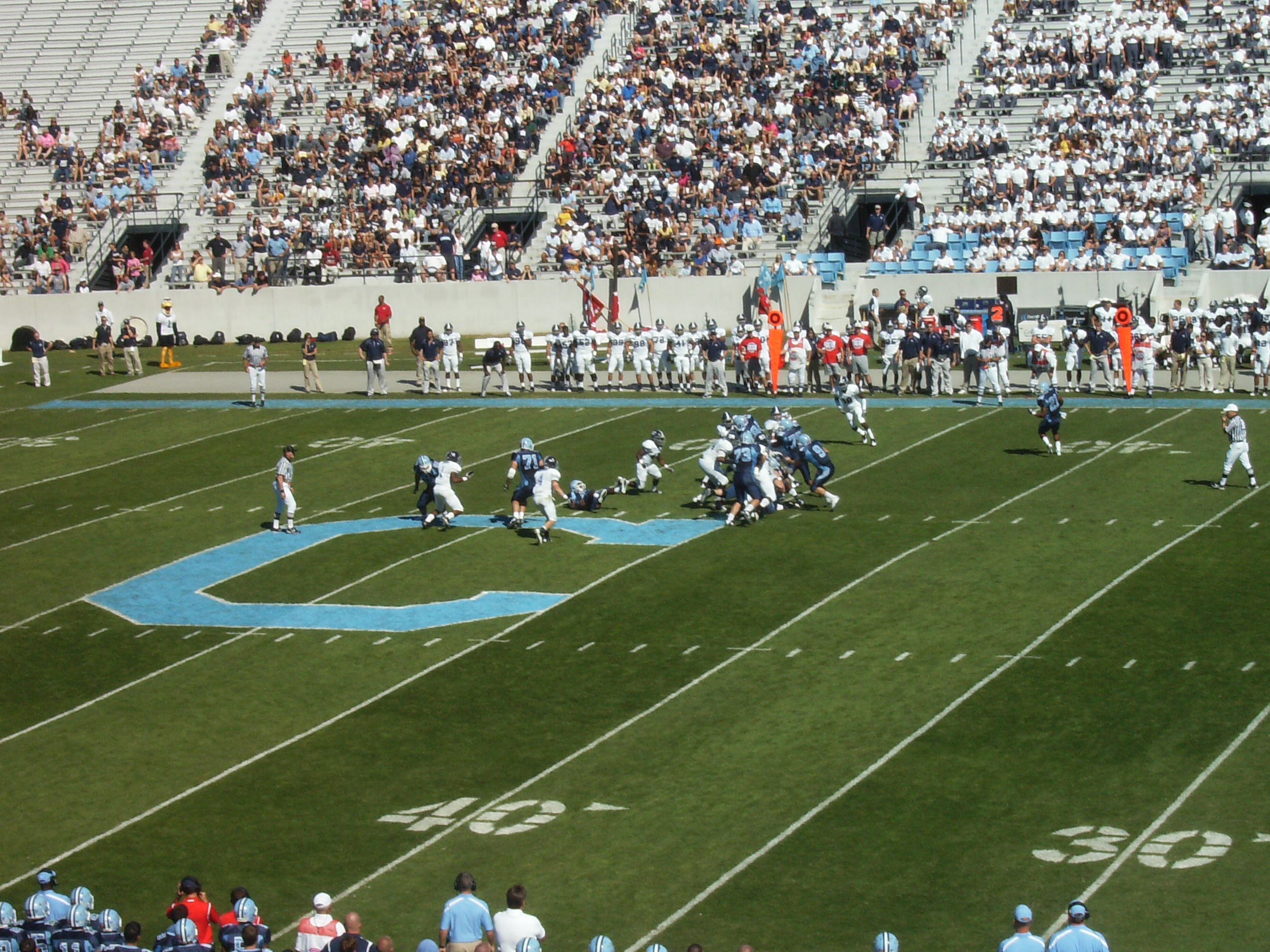
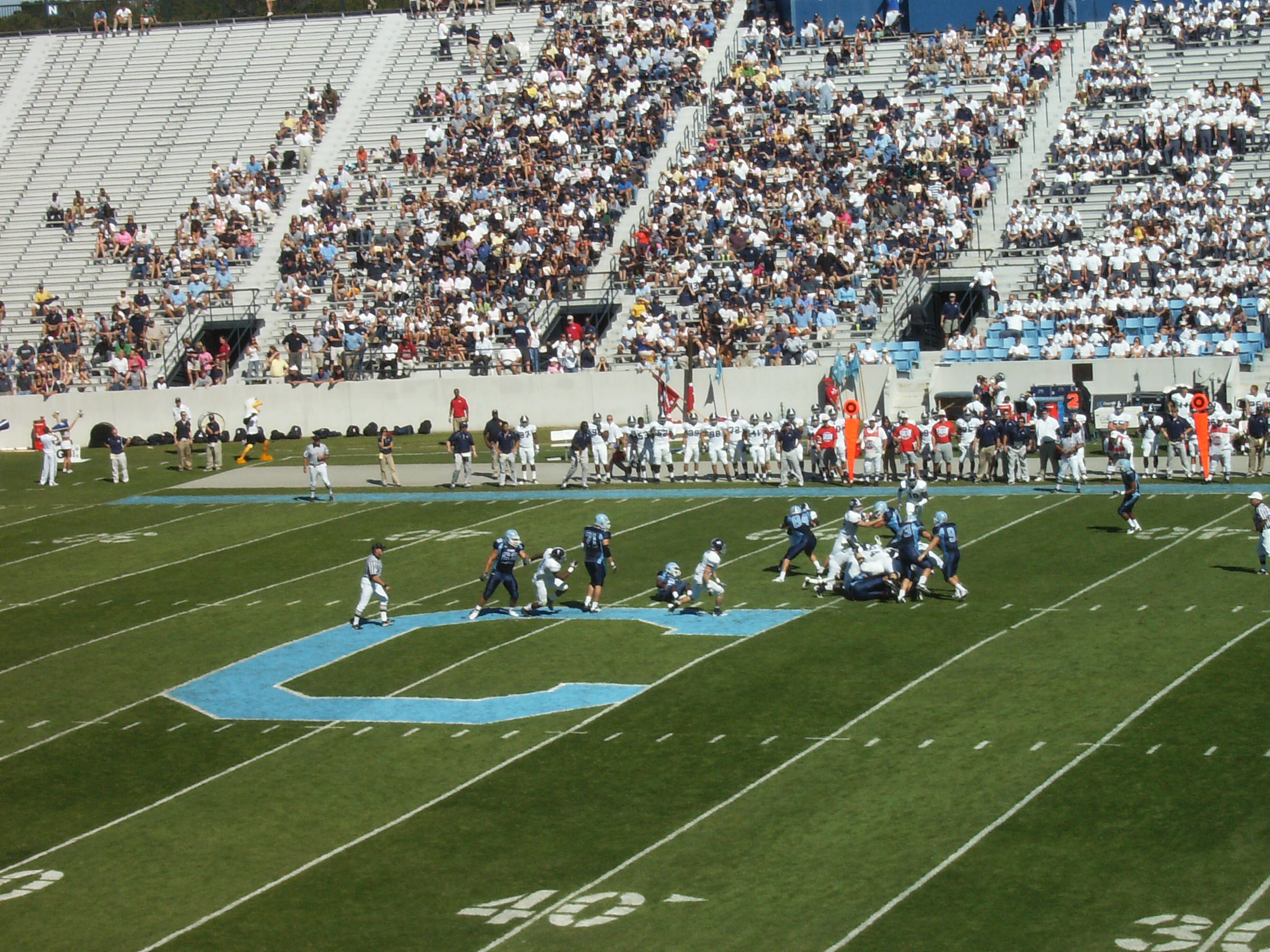
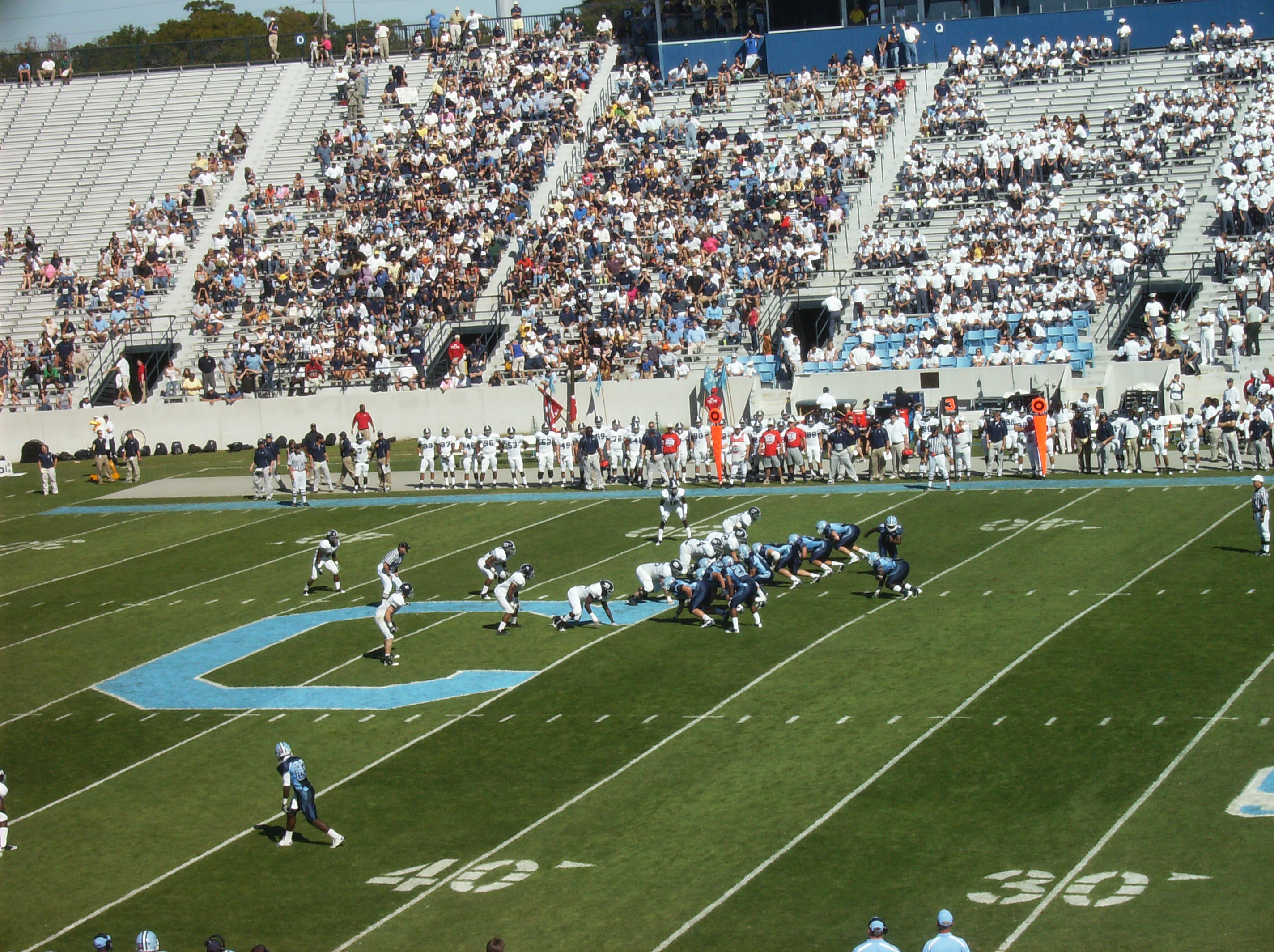
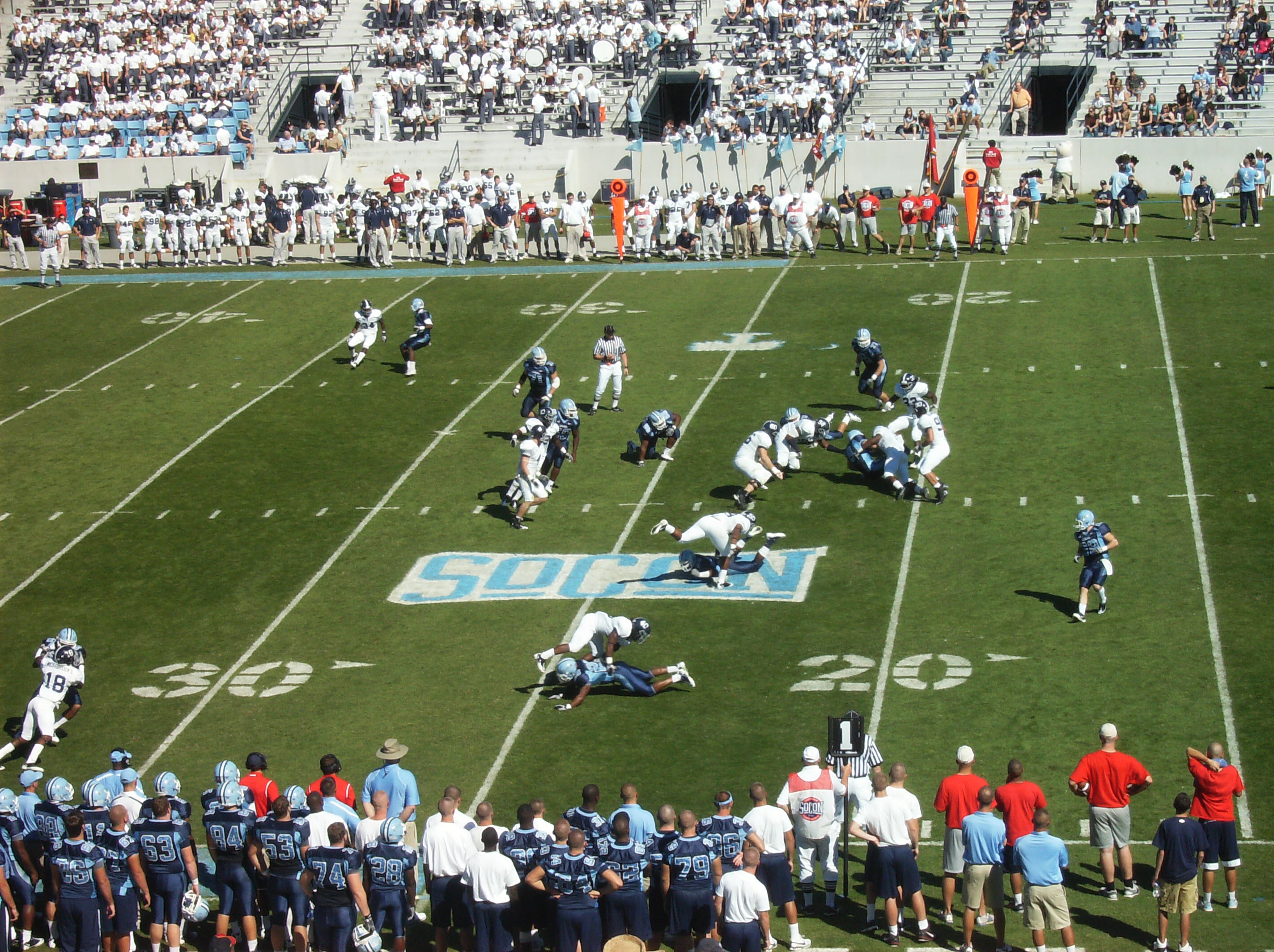
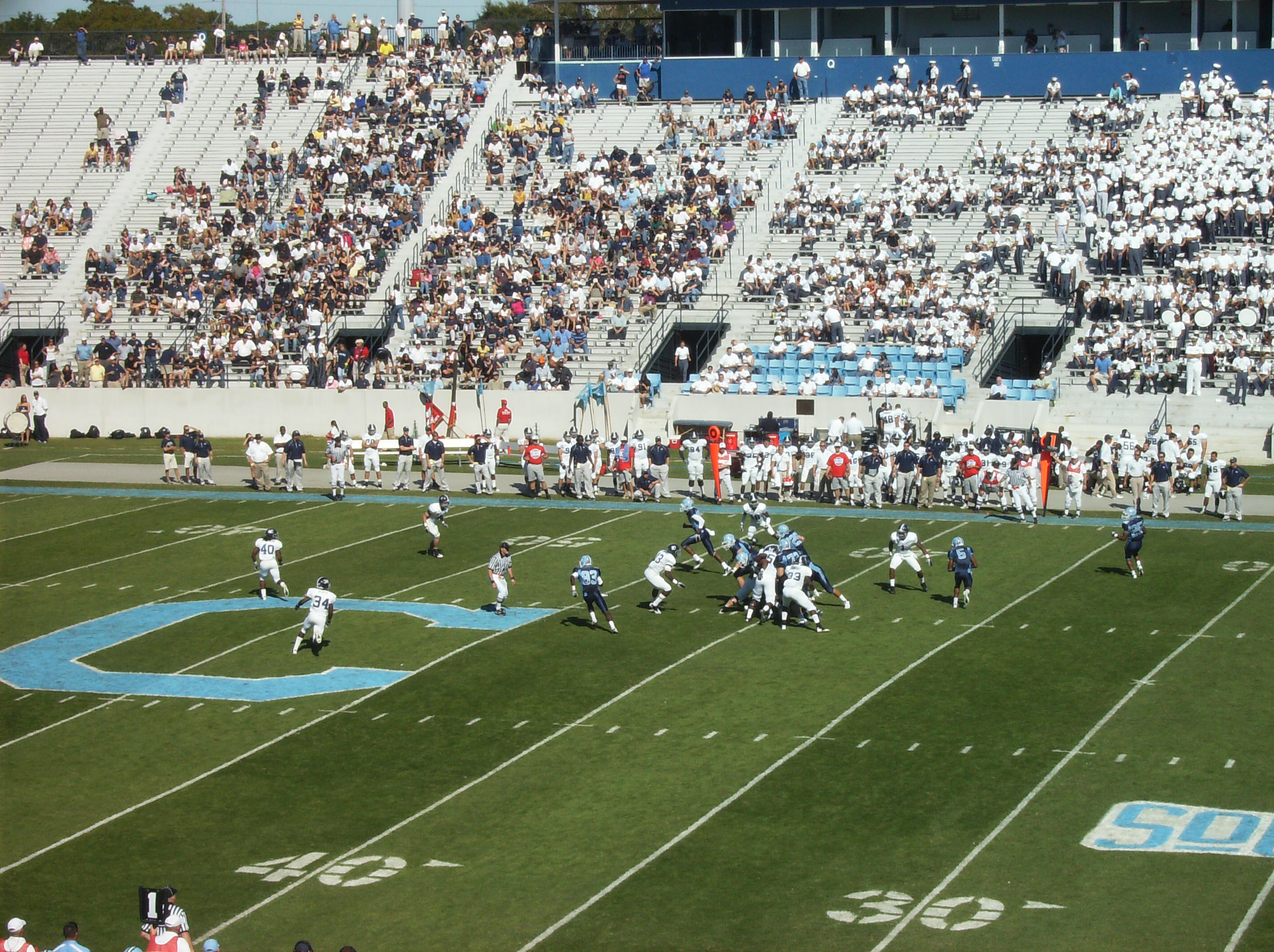
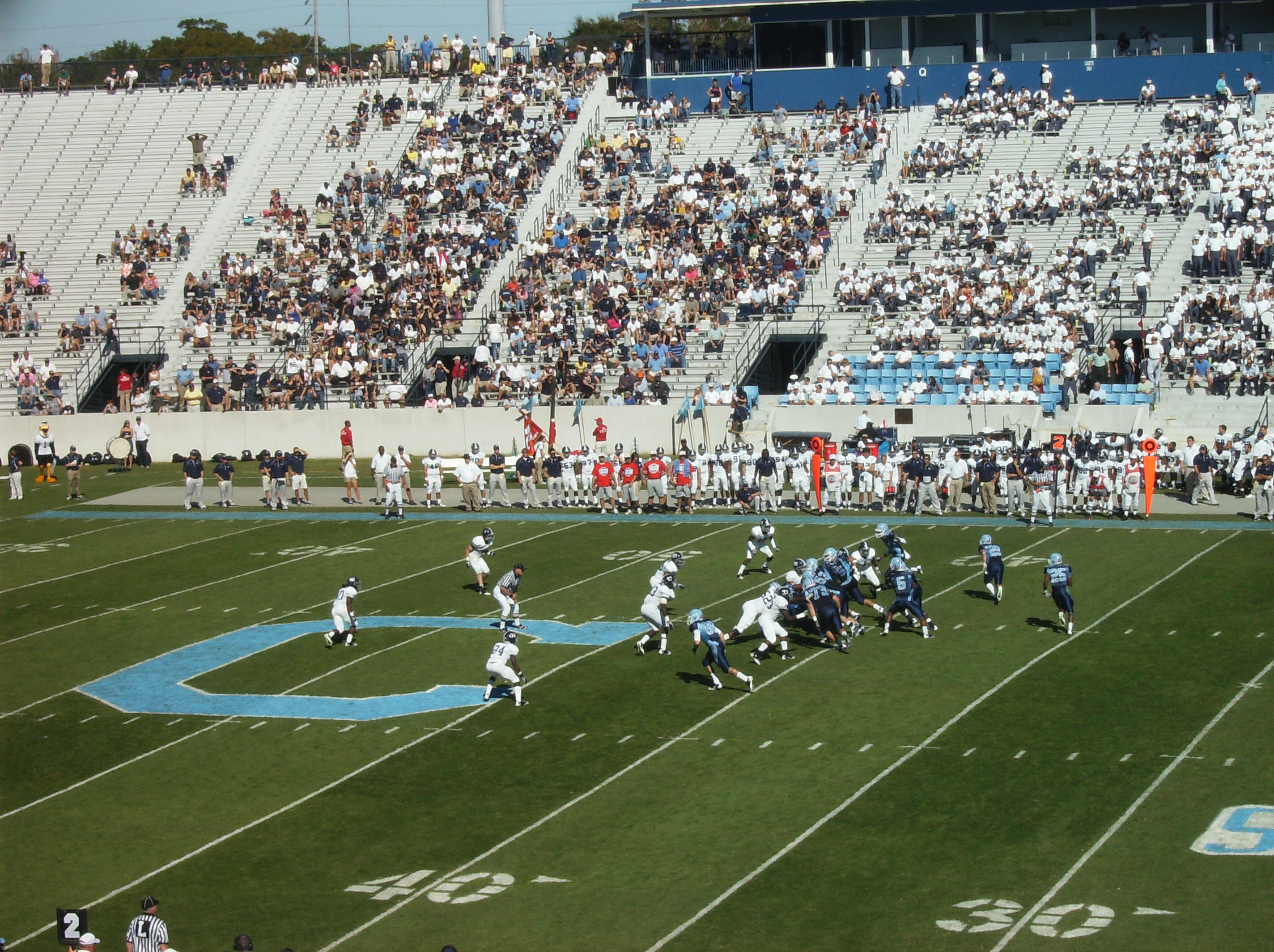
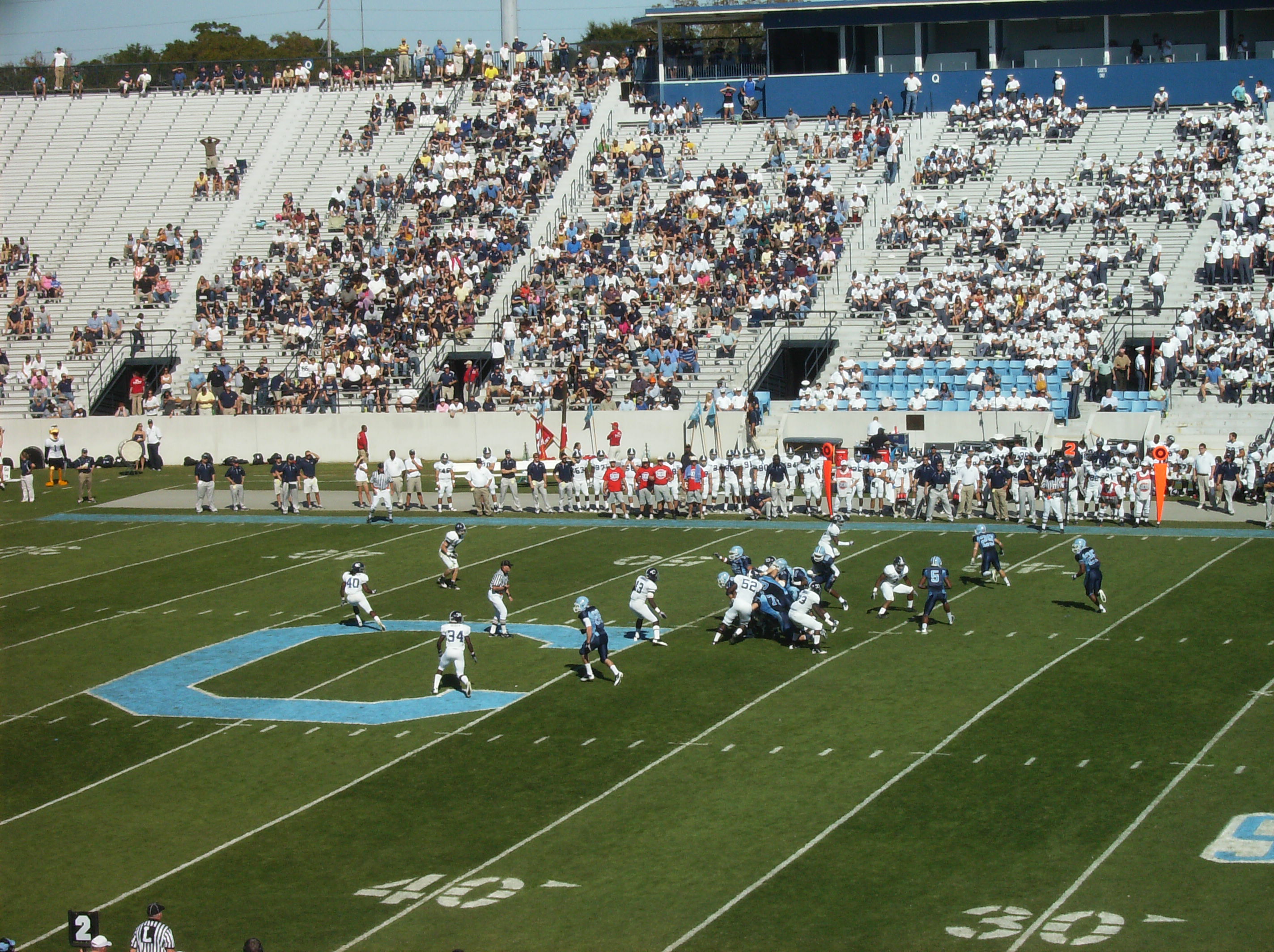
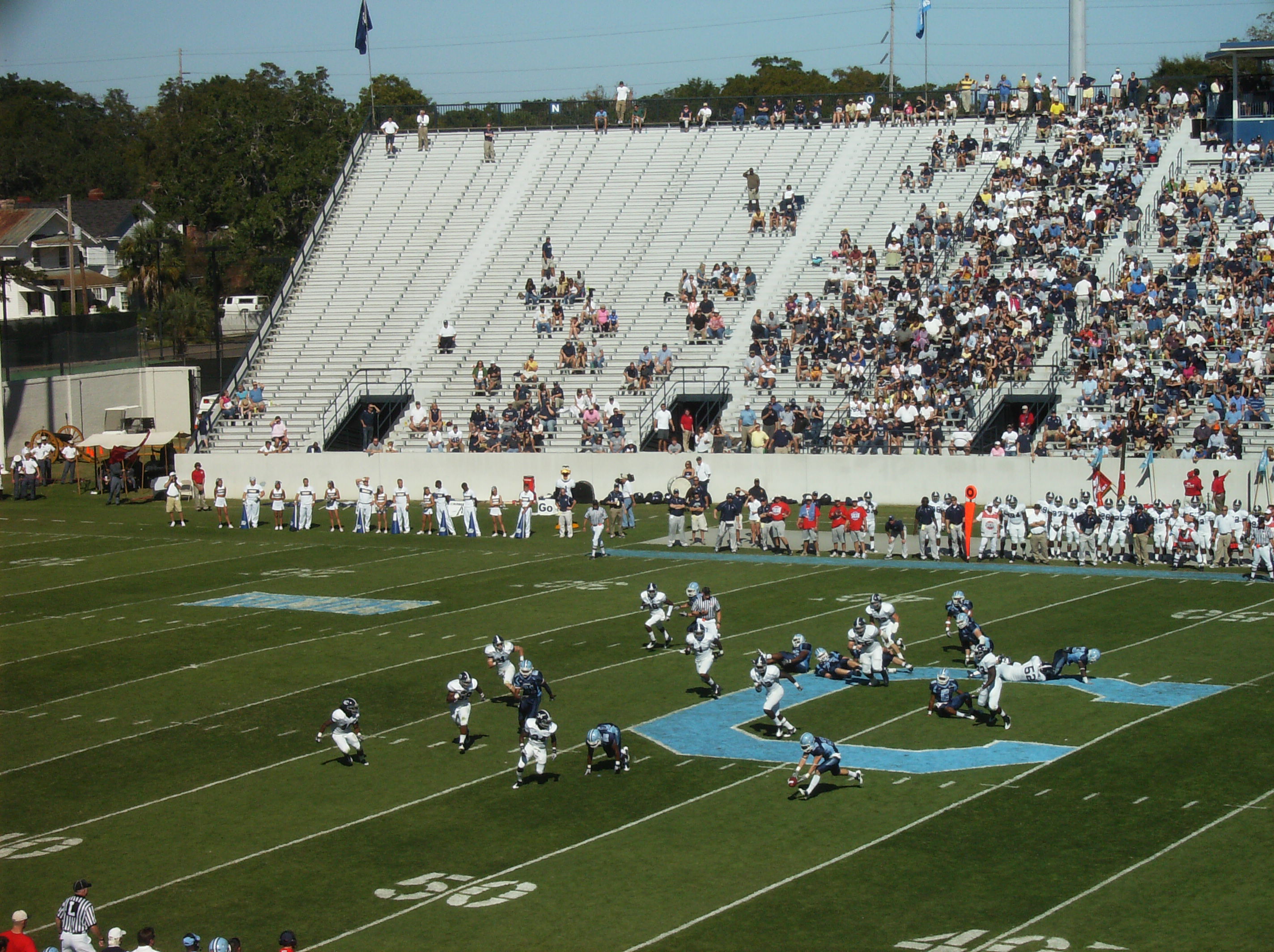
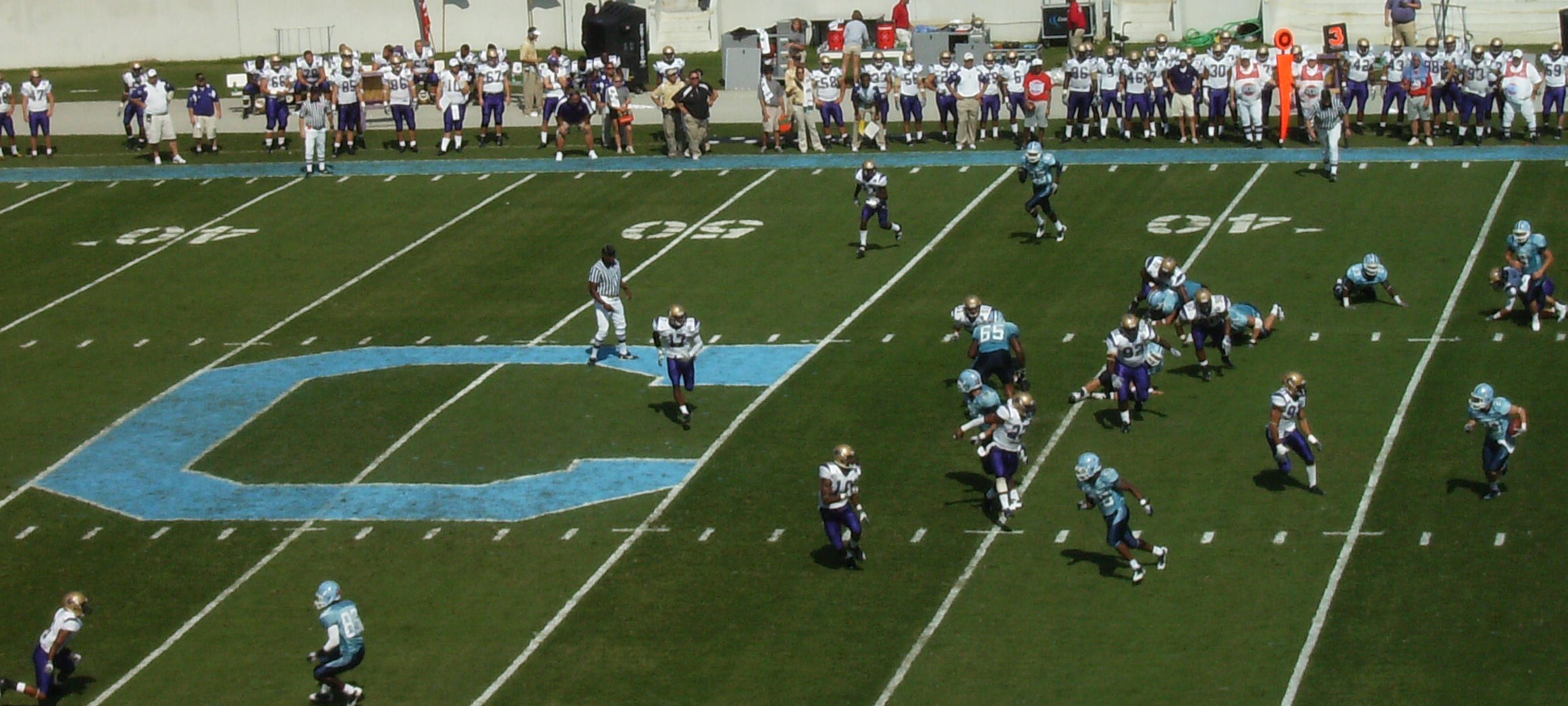
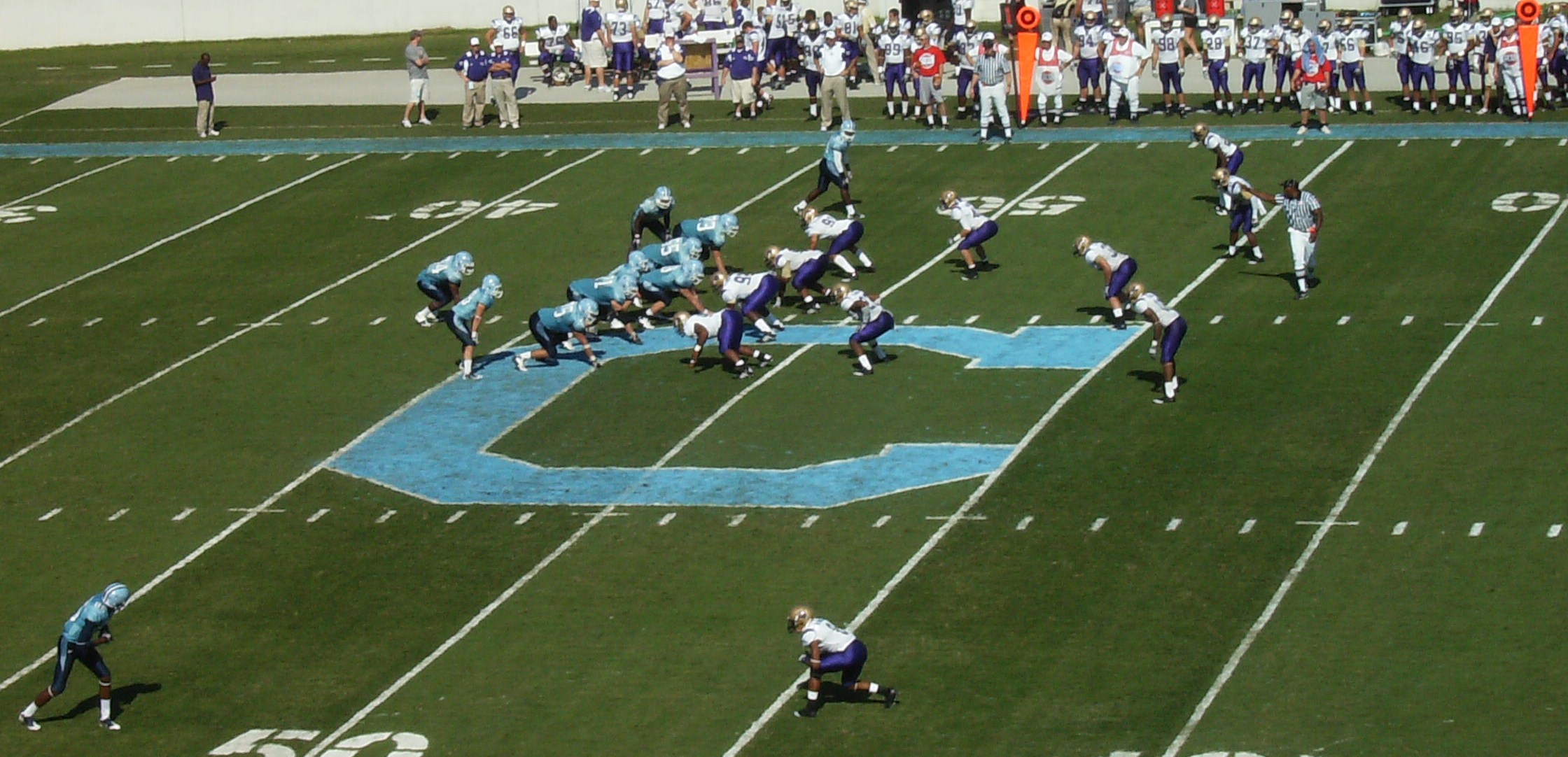
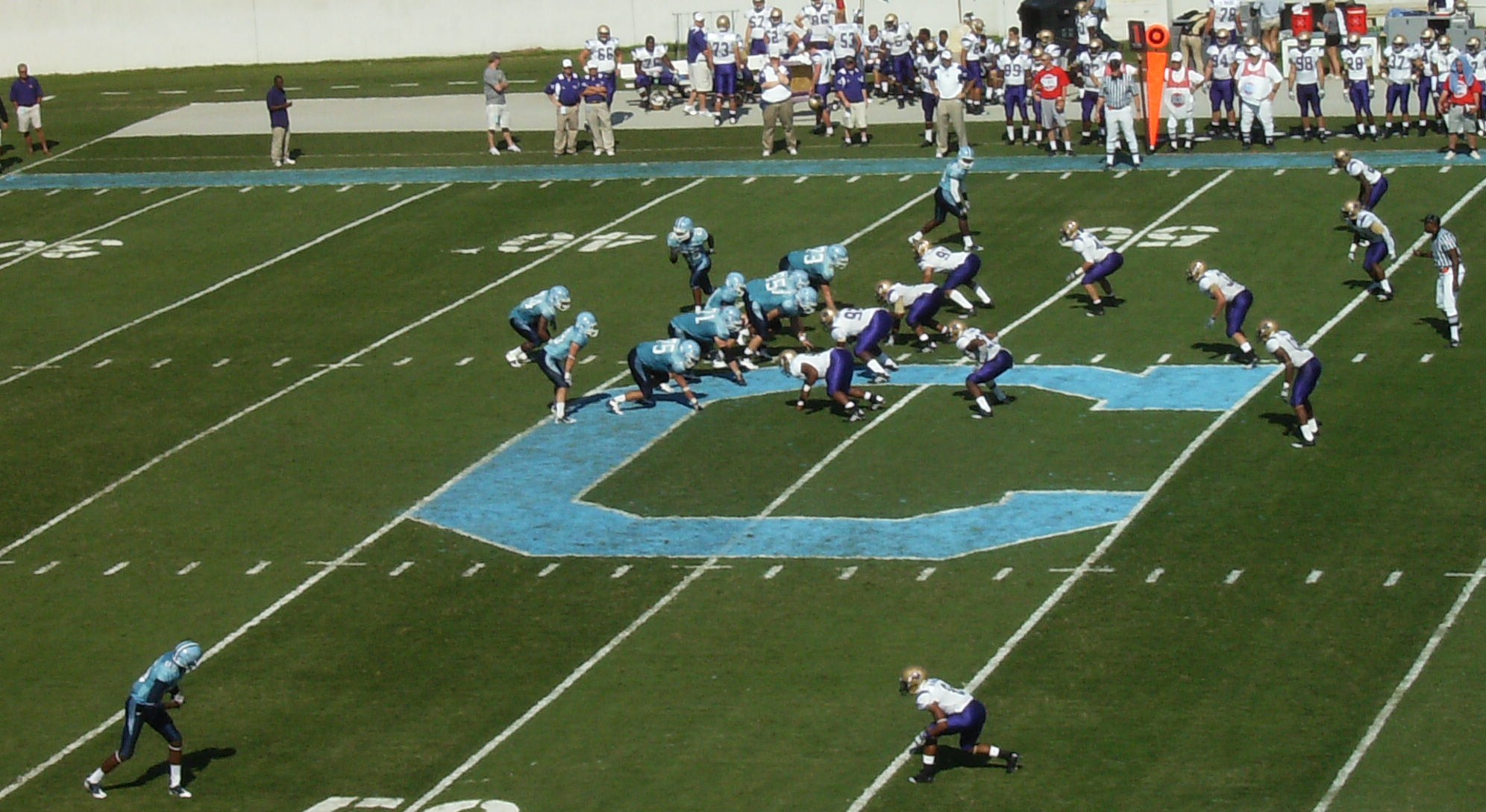
Below are a few pictures I took during the game.  There isn’t anything special about any of them.  I would note that I didn’t think it was such a good idea for the team to wear all-navy on a warm day, but then I wouldn’t like the navy uniforms on any kind of day.

Football, Game 8: The Citadel vs. Georgia Southern

The Bulldogs return to Johnson Hagood Stadium for a 1:00 pm ET game against the Eagles.  First, though, a few thoughts on the Appalachian State game, since I didn’t post a review of that contest.

First, I heard the final score — 39-10.  I later read that during the game, The Citadel:

Did not complete a pass (the first time the Bulldogs had failed to do that in 15 years)

— Committed two turnovers, one fumble and one interception

— Botched two punt snaps, the second of which led to punter Cass Couey leaving the game with an injury

— Lost the battle of time of possession, despite 53 rush attempts (in 59 total plays)

— Only averaged 18.2 yards per kickoff return

— Missed out on a defensive turnover thanks to a pass interference penalty

— Allowed TD receptions of 65 and 73 yards

Lost one of its experienced playmakers, running back Van Dyke Jones, with what was later determined to be an ACL injury; Jones’ career highlight, of course, was a 69-yard run against the Mountaineers in last year’s meeting

All of that came on the road, against the #1 ranked team in FCS football.  So how exactly did The Citadel only lose by 29 points?

Well, App State dialed it down some in the fourth quarter, but there were some positives for the Bulldogs, looking at the stat sheet:

— First, full credit to backup punter Alexander Wall for doing a nice job on short notice; he averaged 42.2 yards per punt and only allowed 10 total return yards

— While Matt Thompson started, Sam Martin did play and saw significant time, so his injury from last week apparently wasn’t serious

— The aforementioned PI aside, the Bulldogs only committed five penalties

— The Bulldog D did force two turnovers that counted, including a fumble that was returned 40 yards by Eric Clanton, setting up the game’s first score; a later interception by Brandon McCladdie was the first pick by an App State opponent this season

— The defense, despite giving up two big pass plays, allowed less than 400 yards of total offense, which against App State (and considering it was on the field longer than normal) wasn’t too bad

— App State was only 5-14 on third down conversions

— The Citadel blocked not one but two PATs

Okay, so maybe I had to stretch to come up with some of those positives, but I guess my final analysis of the game would go something like this:  it could have been worse. Hey, the Mountaineers are ranked #1; the Bulldogs are not.  It was never going to be a game for The Citadel to use in measuring its progress this season.

On the other hand, Saturday’s game against Georgia Southern is such a game.

Prior to this season, Jeff Monken had spent the past 13 years as an assistant for Paul Johnson at three different schools — Georgia Southern, Navy, and Georgia Tech. (Monken was also a grad assistant at Hawai’i when Johnson was the offensive coordinator there.)  He was hired by GSU to restore the triple option, and with it the glory days of Eagle football.

Perhaps the difference in expectations for the football programs at Georgia Southern and The Citadel can be summed up by this Monken quote:

“Who cares about transition years?  Nobody cares about that.  We want to win. I want to win, our fans want to win, our kids want to win. Nobody wants to hear about transition, or we’re young, or we’re learning. That’s a bunch of talk.

When you play a football game, you play to win. My expectation is the same for this season as it is for every season, and that’s to try and win every game. That’s what I expect.”

Contrast that with The Citadel, where most (although by no means all) fans are content to allow Kevin Higgins a “transition year” in the sixth season of his tenure at the military college.  Of course, Monken knows that he has a little more leeway than what he expressed in the above quote.  Georgia Southern fans aren’t expecting him to compete for the national title this year.

Next year, though, is a different story…

There are also those GSU supporters who aren’t that interested in the FCS national crown, because they would rather see the program move up to FBS land.  I think that would be a mistake, at least as things are currently constituted in the two sub-divisions.  I wrote about this last year, when GSU released its study on the issue.

Of course, now Appalachian State has decided it’s also going to study the pros and cons of making the move.  It’s prudent to assess the landscape of college football, and I don’t blame either school for investigating their options.  It’s my opinion, though, that unless there are major alterations in the world of FCS (or FBS), staying put is the way to go for the folks in Boone and Statesboro.

Georgia Southern is 3-3, 1-2 in the SoCon.  It looked for a while like Monken was ahead of schedule, for going into the game against Wofford the Eagles were 3-1 and ranked in the FCS Coaches Poll.  However, a home loss to the Terriers was followed by last week’s setback at Chattanooga, and it’s clear that it’s not yet smooth sailing for GSU in conference play.

The biggest advantage Georgia Southern has had over The Citadel in re-instituting the triple option has been at quarterback, where the Eagles can rely on Georgia Tech transfer Jaybo Shaw, who not only ran the offense at Tech, but also ran it in high school.  He’s not an explosive runner, but he can make all the reads and can also throw the ball fairly well (10.3 yards per pass attempt; 4 TDs, no INTs).

GSU is averaging 4.9 yards per rush.  J.J. Wilcox is a solid slotback who can also catch the ball (his eleven receptions leads the team).  Robert Brown is a freshman fullback who actually leads the Eagles in rushing, but he’s been hurt.  There is no Adrian Peterson (GSU version, not Oklahoma version) suiting up this year for GSU.

Wilcox is the only GSU player with more than 95 receiving yards (he has 302).  No other Eagle has more than six grabs, but when one does make a catch, it’s usually for a good gain.  GSU receivers are averaging 19.1 yards per reception.

Georgia Southern has a young-ish offensive line (three juniors, a sophomore, and a freshman), and it’s been a little inconsistent.  While the Eagles are fourth nationally in rushing offense, they have suffered eleven sacks, which is a lot for a team that doesn’t throw the ball too often.

On defense, the Eagles are led by Brent Russell, an interior lineman with 4.5 sacks, three other tackles for loss, and two pass breakups.  He’s a very good player.  Other than Russell, though, GSU is not particularly sack-happy, with 12 total sacks on the year.  Georgia Southern has a solid, if not dynamic, group of linebackers and an improved secondary, although one with a tendency to give up the big play (five TD passes allowed of greater than 25 yards).  Does that sound familiar?

Georgia Southern’s special teams have been outstanding. Placekicker Adrian Mora has not missed a field goal or extra point this season.  He hasn’t been asked to kick long FGs (his longest this year is 41 yards) but he has made all that he has tried. Punter Charlie Edwards is the key factor behind the Eagles’ excellent net punting average of 39 yards, fourth in the country.

Georgia Southern’s 3-1 start included a game at Navy.  GSU lost that game, but only by a 13-7 margin.  Considering it was a battle of triple option teams, both with Paul Johnson connections, I thought it was interesting that the game was low scoring.

The Citadel is also running a similar triple option system, of course.  Will the Eagles defend the same way against the Bulldogs?  And how exactly did they defend, anyway?

Well, a good person to ask would be The Birddog, chronicler of Naval Academy athletics and the unquestioned Tolstoy of the Triple Option.  I’ve mentioned his blog before; for something of an introductory primer on the offense, here are a few posts from it:

Reading Is Fundamental

The Science and the Art

The Midline Option

Other People’s Rivalries And The Futility Of Defending Against the Wishbone

I asked him a few questions about the Georgia Southern-Navy game.  Some of the Q-and-A is below:

Question:  I read that GSU defended the option in part by using its corners more aggressively (“firing the corners”) than is the norm.  Is that correct?

Answer:  The best way to defend firing corners is just to block.  It’s not an uncommon move; Air Force, Wake Forest, and SMU did it too. The difference between the wins and the losses was personnel, specifically the slotbacks. One of our junior slotbacks who was injured to start the year came back against Wake Forest, and all of a sudden it was no longer a problem.

Question:  Would the passing game be one way to combat that?  Specifically, throwing the ball to a slotback, or maybe even the fullback (on a screen pass)?

Answer:  There are ways to beat it in the passing game too.  The simplest way is to just throw to the uncovered receiver.  I think there’s a video of that in the Air Force writeup.

[Note from SS…that post can be found here:  Link ]

The cornerback blitz is as vulnerable to screen passes as any other blitz, and Navy runs a screen to the fullback in the direction of the blitz on occasion. The wheel-post works really well against blitzing corners too.

The safety has to roll over to cover the wide receiver, which leaves a linebacker to cover a slotback, which is usually a pretty favorable matchup for the offense.  I have an example toward the end of this post:  Link

Georgia Southern’s staff knew the Navy staff’s hand signals, so Navy had to stop going no-huddle early on.  Brent Russell also played a very good game.


Question:  Any thoughts on their splits?

Answer:  GSU’s splits are wider than Navy’s. There was a rule enacted last year that prohibited anyone lined up outside the tackles from blocking below the waist back inside the tackle box. That’s why Navy’s slots line up with their inside foot inside the outside foot of the tackle.  GSU doesn’t bother having their slots cut block inside anymore, preferring to keep the formation more spread.

Thanks again to The Birddog for answering my (probably simpleminded) questions.

The passing game has been a sore spot for The Citadel this year, of course, so the notion that being able to successfully throw the ball against GSU’s defense might be a key to the game probably makes Bulldog fans a little queasy.  The Bulldog slotbacks also must block well; perimeter blocking has been an issue for The Citadel all season.

Earlier in the post I linked Jeff Hartsell’s story about The Citadel’s anemic passing game.  Here is an excerpt from that piece that is worth noting:

…the Bulldogs have to get some semblance of a throwing game in shape before Georgia Southern brings its version of the double-slot option to Johnson Hagood Stadium on Saturday.

Coach Kevin Higgins said Monday that offensive coaches will simplify their passing schemes this week in order to do just that.

“One thing we talked about as a staff (Monday) morning is simplifying what we are doing,” Higgins said at his weekly news conference. “Last week, we carried in 30 to 36 passing plays that you practice on a routine basis, based on what you might see in a game. At this point, I think we have a good idea of what our opponents will be running. Now, in my mind, we’ve got to get that 36 down to 10 or 15 plays.

“We need to run those plays well in practice every day, so that the quarterback is more confident, and receivers and everybody else are on the same page. So I think we’ve got to simplify and practice those specific plays more throughout the week.”

Hartsell also pointed out later in the story that the better you are at running the ball in the TO, the easier it is to pass it.
It should be a nice day for a game on Saturday in Charleston, with sunny skies and temperatures in the mid-70s.  Let’s hope that the sun finally shines on The Citadel in conference play.

Review: Chattanooga

Chattanooga 28, The Citadel 10.

Kevin Higgins quote #1:

“The coaches talked all week about challenging our players to come out and play with more intensity than the past week, and as we watched the game and evaluated everything, they did just that.”

Kevin Higgins quote #2:

“They got off to a 14-0 start, which put us in a hole.”

No, he didn’t say those two things one right after the other (although they are the first two quotes you see when you click on the press conference notes page on the school’s athletics website).  He might as well have, however.  It’s testimony to the fact that intensity only goes so far.  Besides, the other team is likely to bring some intensity of its own to the table.

It would have been nice if the Bulldogs had decided to “play with more intensity” against Western Carolina.  Perhaps if that had been the case, The Citadel would have beaten the Catamounts.  However, Chattanooga is a better team than WCU, and it showed on Saturday.  In its second year under Russ Huesman, UTC has already passed The Citadel as a football program, something that will surely frustrate Bulldog fans already antsy about Kevin Higgins’ tenure as head coach of the Bulldogs.

I’m not one of those fans, but I’ll say this.  I don’t want to hear any more discussion about a Bulldog team being flat, or not being intense enough — whatever you want to call it — for a football game.  There are only eleven football games on the schedule. How hard can it be for the team to mentally prepare and focus for each and every one?

I realize that to a certain extent I’m still harping on the loss to the Catamounts while writing a review about the Chattanooga game, but I make no apologies.  It was an embarrassing loss, and deserves to be acknowledged as such, repeatedly if necessary.

Kevin Higgins can’t do anything about Southern Conference officiating, however.  For the second time in three years, a Parents’ Day game at Johnson Hagood Stadium featured less-than-stellar work from the men in stripes.  It wasn’t quite as bad as the Elon game two years ago (that was a very special episode of SoCon officiating ineptitude, although I don’t think Mayim Bialik was involved), but it was poor nonetheless.

Most of the trouble on Saturday had to do with spotting the ball.  I’m including in that category the missed call on UTC’s first touchdown, which was clearly a fumble that occurred before the ball crossed the goal line.  There were other issues (notably a mystery pass interference call that kept a drive alive for the Mocs), but mainly it was the spotting.

One of the neat things about Parents’ Day is that a larger number of folks than normal are seeing a football game at The Citadel for the first time.  I shudder to think what goes through the minds of people experiencing their first taste of SoCon officiating.

I know that over time things are supposed to even out, but somehow I’ve missed seeing a lot of the makeup calls…in all sports.  For example, if you peruse the league statistics for women’s soccer (through Sunday’s play), you will find that only two players have been red-carded in league matches so far this season.  Just two.

Yes, both from The Citadel.  I guess we have a bunch of Nigel de Jong wannabes on our squad.

(Of course, if they were really de Jong wannabes they wouldn’t have been sent off, as his special brand of violence seems immune from on-field censure.)

Tangent:  The women’s soccer team at The Citadel is 4-2 in the SoCon despite seeing red on occasion, and looks well-positioned to make the league tourney for the first time in school history.  That would be a tremendous accomplishment for Bob Winch and the program.  I’m hoping the team is a little greedy, though; a top-4 finish would give the Bulldogs a first-round home game at WLI Field.  At this point, it’s within reach.

I’m going to be traveling over the next couple of weeks.  I may have to make a post about that team when I get back, if I have time.

Okay, back to (American) football.

I want to emphasize the officiating didn’t cost The Citadel the game against Chattanooga.  No, the Bulldogs just weren’t good enough on Saturday.  The headline for Jeff Hartsell’s game story referred to “missed opportunities”.  I think that’s about right.

Small things hurt the Bulldogs.  A snap infraction on the Chattanooga 1-yard line.  An overthrown pass on a trick play that was going to go for a TD.  A receiver not quite strong enough to hold off a defender in the end zone, turning a potential TD into an interception.  Giving up first downs on third-and-six (or more) three times during the game’s decisive drive.  (UTC was 6-for-10 on third-down conversions.)

The Citadel was unable to create a big play on offense, other than punter Cass Couey’s 33-yard run for a first down (an outstanding call, perfectly executed).  UTC basically sat back on defense, counting on the young offense not being able to sustain a drive with a succession of positive plays.  It was a sound strategy, and it worked. Chattanooga’s D only broke down twice, on Couey’s run (which set up the Bulldogs’ lone touchdown) and on the receiver pass that could have been a a TD.

The Mocs rushed for 222 yards on 41 carries.  I was disappointed that the Bulldog defense allowed that many rush yards.  It wasn’t a terrible effort overall by the D, certainly not as frustrating as the week before, but it wasn’t anything special, either. On the fourth-quarter drive that iced the game, The Citadel needed a big play from someone on its defense.  It never got it (although the aforementioned PI call might have made a difference).

Incidentally, I suspect Chattanooga’s biggest problem in its quest for a playoff bid is going to be its special teams.  Against the upper-echelon teams in the league, I’m not sure UTC is dynamic enough to overcome some of the issues it has in that area. That said, Huesman clearly has his program moving forward.

I’m going to try to put a small preview of the Appalachian State game together over the next couple of days.  The next week or so will see a sharp drop in word count.  Of course, that may be a good thing…

Football, Game 6: The Citadel vs. Chattanooga

I’ll begin this post with what may become an annual riff on UTC nomenclature.  As I noted last year, trying to determine what to call the athletic teams of the University of Tennessee at Chattanooga isn’t the simplest thing in the world to do:

Recently the school began using a ‘C’ mark, for “Chattanooga”.  The university’s teams have variously been referred to over the years as “UT-Chattanooga”, “Tennessee-Chattanooga”, “UTC”, and “Chattanooga”.

The nickname/mascot history is even more tangled.  A “moccasin” used to be a snake, then a shoe, then a cartoon Cherokee Indian called ‘Chief Moccanooga’, and now a mockingbird train conductor (and “moccasin” has morphed into “moc”, for mockingbird).

There is an explanatory page on the school’s website detailing some of the nickname history.

I’ve actually made a change from last year in how I am referring to the school.  While the school itself is still called the University of Tennessee at Chattanooga, it is now consistently calling its athletic teams “Chattanooga” while still using the “UTC” acronym.  Therefore, I’ll drop the “UT-Chattanooga” usage.

Irrelevant but semi-interesting:  while surfing UTC’s website (the main one, not the athletics site) I found out that UTC was actually a private school until 1969, when it merged with the University of Tennessee.  Between 1889 and 1907, it was called U.S. Grant University.

Both UTC and The Citadel have had football programs that have been in the doldrums for a decade or more.  However, the Mocs appear poised to finally move up the ladder in the Southern Conference, under the direction of Russ Huesman.  Huesman inherited a program that had gone 1-11 in the year before he arrived.  In 2009, his first year at the helm, the Mocs improved to 6-5.

This season Chattanooga is 2-2, after losing its first two games to Appalachian State and Jacksonville State, both currently ranked in the FCS Top 5.  The Mocs rebounded with victories over Eastern Kentucky and Western Carolina, the latter game played in Cullowhee.

Those two losses may have excited the UTC fan base more than the two wins, as both were close games against quality opponents.  Chattanooga led Appalachian State 28-7 at halftime before the Mountaineers scored 28 fourth-quarter points to take a 7-point lead.  The Mocs scored what would have been the tying touchdown with under a minute to play, but Huesman elected to go for two.  It didn’t work, and Appalachian State escaped Finley Stadium with a victory.

Chattanooga also led Jacksonville State 17-7 entering the fourth quarter, only for the Gamecocks to respond with 14 fourth-quarter points.  JSU’s game-winning TD came on a 72-yard pass play with 1:16 remaining.  That game, played in Alabama, came one week after Jacksonville State’s stunning win over Mississippi.

UTC’s 42-24 victory over EKU included 548 yards of total offense, including 375 yards passing (4 TDs) from B.J. Coleman and 122 yards rushing from Erroll Wynn.

Against Western Carolina, the Mocs turned the ball over four times, one of those being a fumble returned for a touchdown (Chattanooga lost three fumbles overall).  UTC was also burned by a wide receiver pass for a TD, but prevailed 27-21 in part because the Mocs D forced four turnovers of its own.

Speaking of Coleman (a transfer from Tennessee), you may remember him from last year’s game, in which The Citadel blew a 15-point lead.  During the UTC rally, the Mocs went to a no-huddle offense, and the Bulldogs never stopped it, despite the fact Chattanooga could not run the ball.  Coleman somehow threw 61 passes without being sacked, and was only “hurried” once.

Obviously, The Citadel has to turn that around on Saturday, but it won’t be easy.  For one thing, UTC appears to actually have a running game now, with senior Erroll Wynn averaging exactly 100 yards per game in three games (he didn’t play against App State).  That should take a lot of pressure off Coleman, who is averaging almost nine yards per pass attempt and has thrown 10 TD passes (against only 3 interceptions).

Chattanooga doesn’t seem to be missing Coleman’s main target from last season, Blue Cooper, all that much, as Joel Bradford has already caught 30 passes and is averaging over 126 yards receiving per game (nearly 17 yards per reception). Bradford is also a fine punt returner.

Other than the fourth-quarter problems against Appy and JSU, the Mocs D has played well, holding both EKU and WCU to less than 60 yards rushing and forcing eleven turnovers in its last three games, including nine interceptions.  Four of the picks were made by freshman Kadeem Wise.

Defensive end Chris Donald is another Tennessee transfer making an impact for the Mocs.  He has 4.5 sacks so far this season.  UTC is currently ninth in the country against the run.  One reason for that is linebacker Ryan Consiglio, who is averaging almost eleven tackles per game.

You may have seen Jeff Hartsell’s breakdown of The Citadel’s recent recruiting classes on “Bulldog Bites”.  Just for comparison, here is the two-deep from The Citadel’s playoff game against North Carolina A&T in 1992.  I could be wrong about a couple of these guys, but I should have most of this right.  The number by a player’s name is the year he entered The Citadel (for instance, Jack Douglas entered in the fall of 1988, hence “88”).

QB — Jack Douglas (88) and CJ Haynes (90)

FB — Everette Sands (89) and Travis Jervey (91)

LHB — Erick Little (90) and Terrance Rivers (90)

RHB — Cedric Sims (89) and Undra Mitchem (90)

TE — Marty Fagan (88) and Greg Perry (89, and originally a walk-on)

WR — Cornell Caldwell (89) and Damond Boatwright (90)

LT — David Morelli (88) and Doug Cobarras (89)

LG — Shayne Stephens (89) and Levi Davis (90)

C — Brett Copeland (88) and Bart Hearn (91 walk-on, I think)

RG — Lance Hansen (88) and Scott Reagan (89)

RT — Carey Cash (88) and Mike Wilkerson (91)

PK — Jeff Trinh (91)

DE — Garrett Sizer (89) and Ed McFarland (89, and originally a walk-on)

DE — Judson Boehmer (89) and Brad Keeney (92)

RT — LaQuincy Powell  (89, and yet another walk-on from that class), Todd Lair (91, maybe a walkon; not sure)

LT — Jake Erhard (89) and Lenny Clark (91)

LB — Micah Young (91) and Jim Wilson (88)

LB — Rob Briggs (89) and Tracey Gamble (90)

LB — Mike Wideman (89) and Kendall McKnight (90)

LCB — Torrency Forney (89) and Chauncey Chappelle (92)

RCB — Detric Cummings (90) and Corey Gay (90)

SS — Dan Johnson (89) and Ahren Self (91)

FS — Lester Smith (88) and Speizio Stowers (89)

P — Eric Willingham (88)

The return specialists were all part of the offense-defense two-deep.  Sizer was the long snapper.

46 players —

9 fifth-year seniors (including Douglas, Smith, and Cash)

17 players from the ’89 recruiting class, including three walk-ons

10 from the ’90 recruiting class

8 from the ’91 recruiting class

2 “true” freshmen

One quick note on the above:  the 1991 recruiting class was actually rather thin; only two other scholarship members of that class would contribute in future seasons. Whether that “lost class” was a key factor in the eventual decline in The Citadel’s gridiron fortunes is hard to say, although it certainly didn’t help.

I had plenty to say about the loss to Western Carolina last week, and about some things that rather obviously need to improve.  I’ll add a little to what I already mentioned, and note a couple of other things:

— I was glad to see that Kevin Higgins acknowledged the poor play of the secondary against WCU (you can read about his press conference here and here).  Watching the lack of ball awareness was excruciating.

— He also addressed game-planning for opposing defenses, explaining what he feels the issues are.  I suspect that this wouldn’t be as big a problem if the Bulldogs were in Year 3 or Year 4 of the triple option.

Teams that have run an option attack for a long time, like Navy or Air Force or Wofford, generally force the opponents to adjust to them, not the other way around.  That’s because their players have been in the system long enough to recognize different defensive looks, and understand basically (if not always specifically) what each person’s job is when facing a certain setup.

Having said that, I was a little concerned that Higgins seemed confident in what Russ Huesman’s defense will probably do on Saturday.  He’s basing that on what Huesman has done in the past against the option, but the Mocs have had a week off and presumably a lot more time to put in new things.  What if UTC comes out in a defensive formation for which the Bulldogs aren’t prepared?  Another lost half for The Citadel’s offense?

— Amidst all the talk about changing quarterbacks, his decision to change placekickers has seemingly gone under the radar.

— About those quarterbacks…

I’ll be honest.  I don’t care which quarterback starts.  If Higgins thinks Sam Martin starting might jump-start the team in the opening quarter, then by all means run him out there.  The bottom line is that both Martin and Matt Thompson are going to play, and they’re both going to play about the same number of plays — at least, that’s the plan.

Martin has looked more comfortable in the offense than Thompson, but he hasn’t been that much better.  We’re not talking about the second coming of a healthy Jamelle Holieway here.  At this point, we don’t know if we’re talking about the second coming of a healthy Brendan Potts (which would be okay by me).

Neither Martin nor Thompson has mastered the center/QB exchange (to be fair, neither have the centers).  Thompson seems to still struggle with the “mesh”, and should also heed the advice of John Wooden — be quick but don’t hurry.  However, he’s a true freshman with some obvious talent, and he deserves a chance to show what he can do (as does Martin).  This is, as I’ve said before, a transition season, although not everyone seems to understand that.

While leaving the stadium on Saturday after the WCU game, I overheard a Bulldog fan say, in a non-ironic way, that the loss to the Catamounts meant “we won’t go to the playoffs now.”  You don’t say…

One thing both quarterbacks must improve (and for that matter, their receiving corps): the Bulldogs currently have a pass completion rate of 35.4%.  While The Citadel doesn’t throw the ball a lot in this offense, it has to do better than that.  Completing less than 36% of your pass attempts is just horrendous.  If that percentage holds up, it would be the lowest completion percentage for a Bulldog squad since 1965.  Care to guess how many games that 1965 team won?

Two.

The Bulldogs will be Underdogs on Saturday, and deservedly so.  However, I’ll close this post by pointing out that there is hope for the game against UTC:

1)  Chattanooga, while improved, hasn’t really proven that it’s made a move to the next level in the Southern Conference, at least not yet.  Those two games against Appalachian State and Jacksonville State were both impressive in a lot of ways, but they were also both losses.  Last year The Citadel also lost a close game to Appalachian State at home, in overtime.  It did not lead to a winning season.

I’m not quite ready to buy stock in a team which to this point in the season has only beaten Eastern Kentucky (which has just one win on the season) and Western Carolina.

2)  The Bulldog offense may continue to struggle, but I find it hard to believe that the defense (particularly the DBs) will have two consecutive clunkers.  I think there is a lot of talent on that side of the ball, and sometime (hopefully soon) it will begin to show. Also, there is something to be said for regression to the mean.

We’ll find out Saturday.

Review: Western Carolina

Western Carolina 24, The Citadel 13.

It was a dismal performance in just about every respect.  There are basically no positives that can be taken from this game.  None.

Blame will be placed on the anemic offense, and it’s certainly true there was no visible progress on that front in this game (and arguably some regression).  However, the defense was even more disappointing. particularly the secondary, which as a unit was terrible all day long.

The play that best summed up the game occurred on Western Carolina’s second possession of the contest.  The Catamounts faced a third-and-six on their own 24. Quarterback Brandon Pechloff, under some pressure, floated a pass that traveled almost 30 yards in the air, and I mean floated.  While the ball was in the air, it would have been possible to sing the national anthem in its entirety, including holding the “free” note as long as a diva could desire.

Despite the lack of sizzle on the pass, no Bulldog defender was able to make a play on the ball.  As a result Catamount wideout Josh Cockrell was able to make a 20-yard reception, cradling the ball as he fell backwards, with three Bulldogs within six yards of him (and a fourth rushing into the mix).

This happened a lot.  On the next WCU drive, the Bulldogs committed pass interference on consecutive plays, setting up a first-and-goal situation.  The Catamounts scored two plays later.  On both PIs the defender did not know the ball was headed in his direction, resulting in penalties when he made contact with the receiver (the second one was a close call, although I thought it was a correct one; a number of other people did not agree with me, however).

The Catamounts’ second TD came after a fumbled punt.  Pechloff’s pass to Jacoby Mitchell was underthrown and should have been intercepted or at least batted away, but the defender, while in good position, mistimed his jump.  Mitchell caught the ball and strolled into the end zone.

The fourth-quarter play that basically iced the game was another instance of a defensive back lacking ball awareness.  Pechloff floated a 30-yard pass that was badly underthrown (again), but the DB never saw it and the WCU receiver (Mitchell again) came back to the ball to make the catch at the Bulldog 5.  Western Carolina scored on the next play for an essentially insurmountable two-score lead.

Pechloff competed very well in this game, showing a lot of composure for a true freshman making his first career start.  However, he is slow afoot and his injury-riddled offensive line is not very good.  The Bulldogs’ defensive line probably should have sacked him more than once, although he did a good job getting rid of the ball.  In doing so, though, he threw several passes that would have been intercepted by a better defensive secondary.

As for the offense, the first half was abysmal.  There were five possessions, and they went like this:  3 yards and a punt; 8 yards and failed on 4th-and-1 (from the Bulldog 45 — I liked the decision to go for it, but not the play call); 33 yards, two first downs, and an 8-yard punt; 3 yards and a FG (this was after a WCU turnover); 42 yards, two first downs, and failed on 4th-and-10 (from the WCU 38).  If anything, it was worse than how it reads.

The offense struggled running the ball outside, a season-long problem, thanks mostly to the lack of good perimeter blocking.  No slotback had a rush longer than nine yards.  (The one good outside rush in the game, by Van Dyke Jones in the second quarter, was called back by an obvious, and pointless, holding penalty by a receiver.)

There was hope in the third quarter when a nice drive by the Bulldogs was finished by Terrell Dallas’ 45-yard touchdown, a play much like his 80-yard gallop in the PC game.  The Citadel then kicked a FG and was in a position to score again early in the fourth quarter when it faced a 4th-and-11 at the WCU 30.

Kevin Higgins elected to have Ryan Sellers attempt a 47-yard field goal.  Sellers had a good game on Saturday, stepping in for regular placekicker Sam Keeler (who was ill), but I thought attempting the FG in that situation was a mistake.  It’s a tough decision, but a field goal there still doesn’t give you the lead, and the odds of making a 47-yarder with your backup kicker probably aren’t that good.  On the other hand, it was 4th-and-11.

At any rate, Sellers narrowly missed the try, and then the defense just folded.  A missed tackle resulted in a 33-yard run, just about the only decent rush WCU had in the entire game.  That was immediately followed by Mitchell’s reception inside the 10. The Catamounts scored on the next play.  Four plays, touchdown, fans getting up and leaving.

It was a very frustrating game to watch.  Kevin Higgins was apparently frustrated as well.  I want to highlight one of Higgins’ quotes in Jeff Hartsell’s game story, though:

“In the first half, we just didn’t block like we needed to up front. They came out in a 4-3 defense, and we had been working on a (five-man front) all week, and we just didn’t make the adjustments up front and couldn’t get any first downs.”

It’s one thing to struggle on the first series of the game while trying to figure out what defense is being employed, but for an entire half?  That’s not good enough.  This has been a bit of a theme this year, with the Bulldogs allegedly being more of a “second quarter” team while spending the first quarter deciphering defenses.  The problem, of course, is that there are only a limited number of possessions in a game, especially for a triple option attack, and The Citadel can’t use one (or two) quarters as some sort of recon mission — it has to score (or at least possess the ball) early in the game, too.

I’ll have more on-the-field thoughts when I preview the UT-Chattanooga game, but for now I want to briefly discuss some off-field issues, notably attendance (or the lack thereof).

Larry Leckonby has a problem.  The attendance on Saturday (10,207) would have been embarrassing just a few short years ago, but now is almost old hat.  Leckonby finds himself in the position of presiding over the worst run of attendance at Johnson Hagood Stadium in at least four decades.

I’ve written about attendance before, and I understand there are multiple issues at play, but I am really surprised at the continued decline.  The easy answer is that The Citadel hasn’t had a good football program for a decade-plus, but there is more to it than that (although that’s a significant factor).

If The Citadel can’t stop the attendance downturn, that will undoubtedly have an impact on future scheduling.  In the upcoming years where The Citadel can schedule 12 games, perhaps the Bulldogs will wind up playing two FBS schools and not play an extra home game.  It may be that five home games will become the norm, regardless of whether the team plays 11 or 12 regular-season games.

On Saturday I had the opportunity to survey the club section for the first time during a game.  I have to say that, in general, the club setup is not meant for someone like me. During the game I am prone to glaring intently at the field, occasionally muttering to myself, and getting up and walking around if there is space available to do so.  The club section is a bit more relaxed, and that’s okay.

It’s a very nice setup.  It’s the kind of thing The Citadel is usually very good at managing, and so I wasn’t surprised at how neat it was.  It had TVs (watching Clemson commit six turnovers against Miami was sort of entertaining in itself), a bar (of course — this is The Citadel!), a buffet, seating…the works.  If you ever have a chance to go up there for a game, I would encourage you to do so.

I learned one thing on Saturday while in the club section:  sweet tea is a godsend during a college football game.  How did I not know this?

I do wonder if space in the club section might become more of an issue if game attendance (and presumably club seating attendance) was better.  Unfortunately, that’s a potential problem Larry Leckonby and Jerry Baker have yet to encounter.

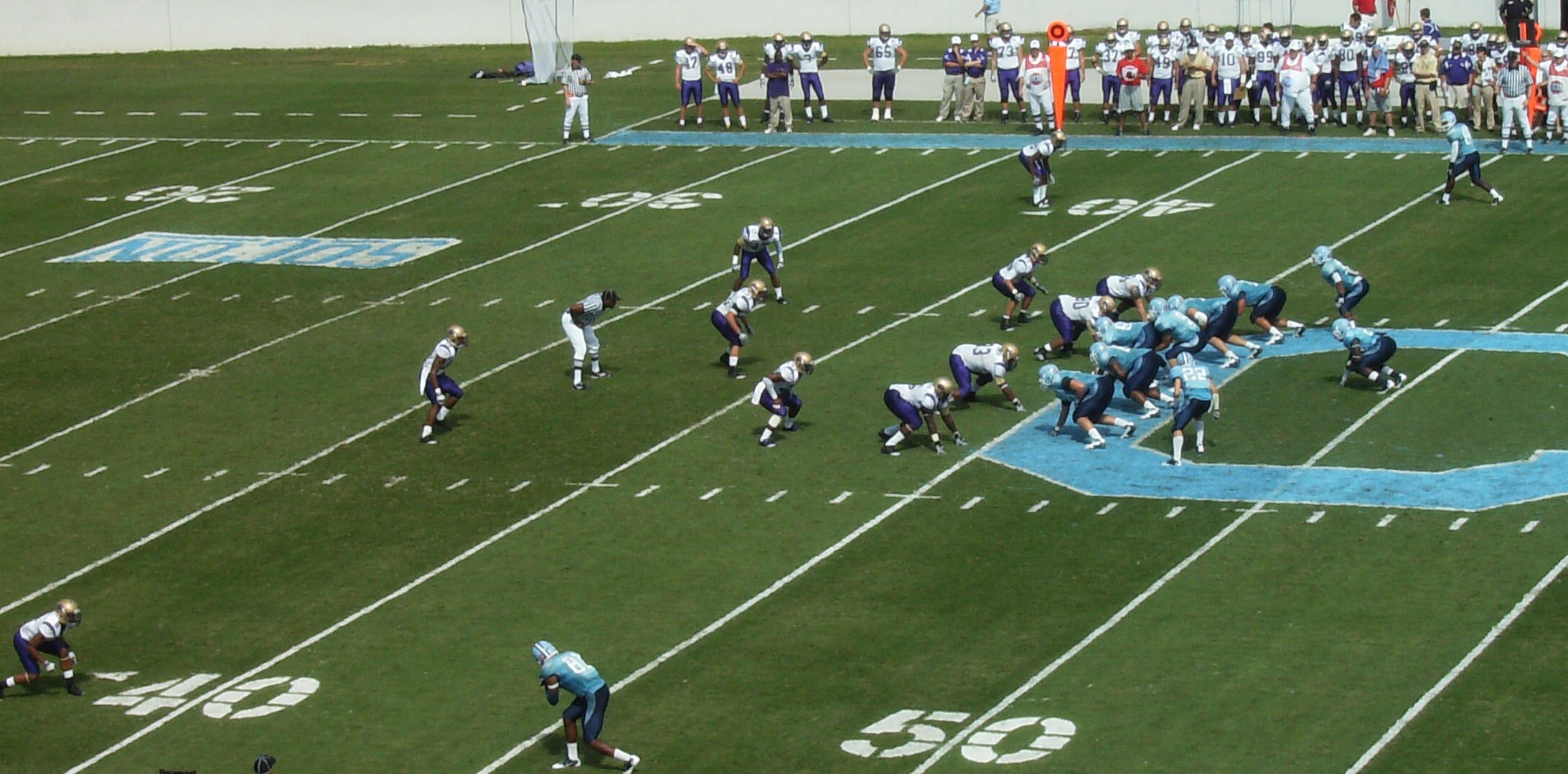
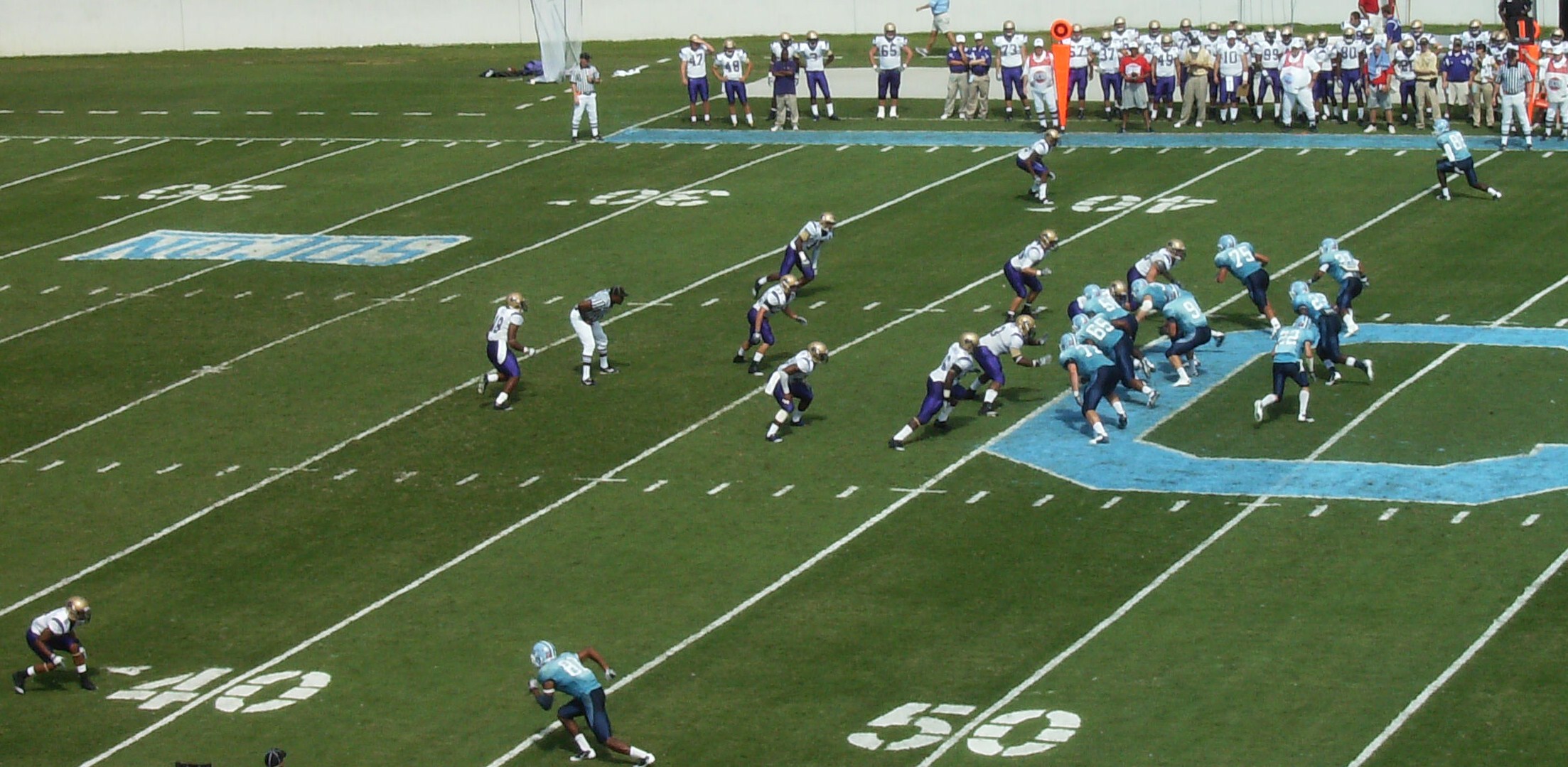
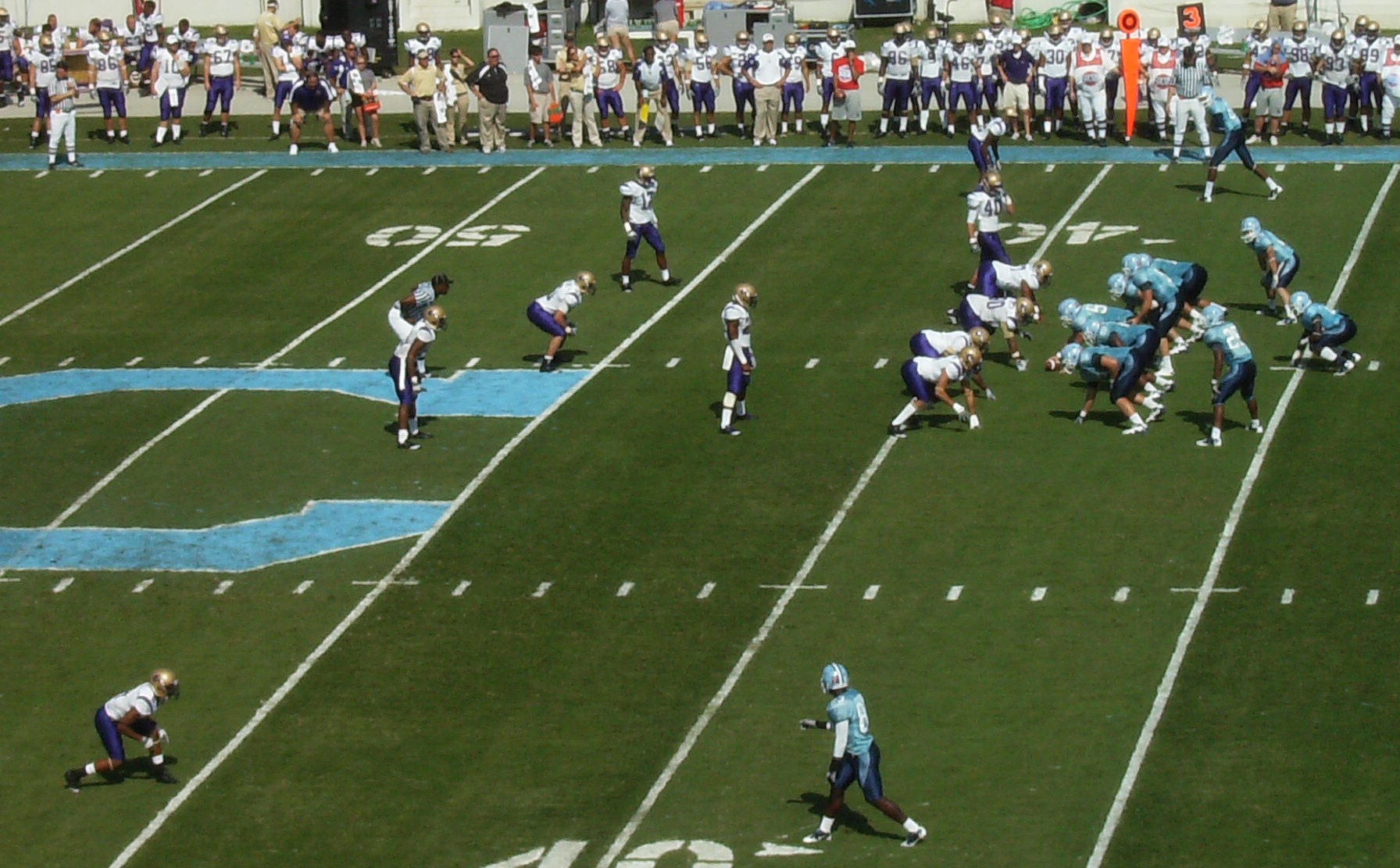
I’ll close this by including some pictures I took during the game, mostly of the offense.  Some of these are of the same play (as it is developing).  If you’re wondering why I don’t have an entire play photographed, it’s because I’m a terrible photographer with a cheap camera.  The first three pictures of the offense are of the beginning of Terrell Dallas’ touchdown run.

The first photo, though, is a shot of the corps of cadets.  I took this picture because I want interested observers who don’t get to go to the games to see just how many cadets are actually in the stands during a game.  This is an issue I would really like to see addressed by the administration.  It was even more noticeable during last year’s Homecoming game.

Football, Game 3: The Citadel vs. Presbyterian

Gametime:  7 pm ET, at Johnson Hagood Stadium

TV:  Uh, that would be a no.

The final non-conference game of the season for The Citadel is a matchup with in-state foe Presbyterian, a traditional opponent from days gone by, but now back on the schedule for a second consecutive year after an absence of almost two decades.  I wrote about the series history in my preview for last year’s contest, for anyone interested.

With the Bulldogs’ 46-21 victory in 2009, The Citadel now holds a commanding 49-11-1 lead in the series, including a 27-3 mark at Johnson Hagood Stadium, which has been the site for every game between The Citadel and PC since 1950 save one (a 1963 contest played in Savannah; I’m not sure why).  The Blue Hose last defeated the Bulldogs in 1979; since then, The Citadel has won eleven straight games in the series.

Tangent:  Last year’s preview includes links to some photos taken by Life magazine in 1955; a reporter for the weekly was on campus to write a story about Mark Clark’s new job as president of the school.  He was joined by a staff photographer, who took a lot of photos of cadet life, including a series of shots of the Homecoming football game against PC (none of which were used in the article).

I don’t have a copy of the issue (it’s from November 28 of that year), but from what I can tell, the actual feature on Clark is only about two pages in length.  I’m amazed at how many photographs were taken for such a short piece.  I’m glad they were taken, though; as a whole, they’re fascinating.   If you want to surf Google’s archive for the 1955 Clark/The Citadel Life photos (albeit while wading through some pictures not related to the military college), go here.

The road to FCS status has not been an easy one for the Blue Hose.  As recently as 2005, Presbyterian won the (Division II) South Atlantic Conference with a 10-2 overall record, the first conference title for PC since winning the SAC in 1979 (coincidentally, the last time the Blue Hose beat the Bulldogs).  However, as Presbyterian has made the transition from D-2 to FCS, the win-loss record has naturally declined, leading to last season’s 0-11 record.

Those eleven losses included only one game in which PC lost by less than seven points, a 41-37 setback against Coastal Carolina in Conway, which is also the team/locale of the Blue Hose’s last road victory (in October of 2007).  Presbyterian has lost 16 straight games overall, and has also lost 16 consecutive road games.  PC opened the 2010 campaign with two “automatic” losses, to Wake Forest and Clemson, by a combined score of 111-34.

Having noted all that recent gridiron misery for the Blue Hose, it would not be a shock if Presbyterian defeats The Citadel on Saturday.  Disappointing, yes, and perhaps a bit surprising, but not a shock.

Presbyterian hung around in last season’s game against the Bulldogs for the better part of three quarters, and now The Citadel will have to compete while continuing to work the kinks out of a brand-new offense that struggled at times against Chowan, to say nothing of Arizona.  It’s exactly the kind of situation that would give a team like Presbyterian hope.

After all, PC moved the ball on The Citadel’s defense last year, including 204 yards rushing.  Trandon Dendy was responsible for 147 of those rushing yards, and he’s back this year.  Joining him on the Blue Hose offense is Michael Ruff, who caught two touchdown passes last week against Clemson, and who also caught a TD pass on this much-seen trick play against Wake Forest.

PC won’t be afraid to throw some more “trickeration” The Citadel’s way, so the Bulldog defense needs to be prepared.  I do wonder if the Blue Hose might have been better off saving some of their best stuff for a more competitive game.  The fake against Wake was a great play, but even with it PC still lost by 40.  On the other hand, you’re probably not going to make SportsCenter if you run the play in an untelevised game.

Last year I wrote that against Presbyterian, the defensive line was occasionally  “pushed around by an offensive line that included a 258-lb. left tackle and a 240-lb. center.”  That won’t happen this year…because PC’s offensive line is much heavier. The starting center for the Blue Hose weighs 260 lbs., and the left side of the o-line averages 297 lbs.  So far, this year’s edition of The Citadel’s defensive front has shown a lot of potential.  It better show more than potential this Saturday.

The challenge for the Bulldog offense is to have the same type of production against PC it had last season, but without Andre Roberts.  The Blue Hose had no answer for Roberts, who caught 12 passes for 184 yards and 4 TDs against Presbyterian.  Andre won’t be in Charleston on Saturday; he’ll be in Atlanta, preparing to (hopefully) make his NFL debut with the Arizona Cardinals the next day.

Which player will (or should) be running Saturday’s offensive attack has been a subject of interest.  Kevin Higgins has announced that Matt Thompson will again get the call as the starter at QB, which I think is fine.  Thompson did struggle against Arizona, but that was Arizona — he’s not the only guy who struggled.  Sam Martin did do a fine job running the triple option when he entered the game in the third quarter, and should see his share of time too.

Really, at this point it doesn’t matter much who starts.  Both should play, both will probably get plenty of work, and in this transition season, anointing a permanent starting quarterback strikes me as probably a waste of time and possibly counter-productive.  I was a little surprised that Game 1 starter Ben Dupree was so quickly moved to slotback, but I gather that the coaching staff wants him on the field, regardless of position.  I also wouldn’t be all that surprised if Dupree is still in the mix at QB, even with the switch.

Things on offense that must continue to improve include the perimeter blocking, the center-QB exchange (something that affected both Thompson and Martin, despite Martin not actually losing a fumble), the pitch plays (both QBs threw some scary pitches, especially Thompson, with one of his resulting in a lost fumble), and the pass catching.  In this offense, you really can’t afford to drop passes, because there aren’t many reception opportunities as it is, and they tend to be big plays when successfully completed.

I would like to see more “playmaking” from the back seven, particularly the linebackers.  Other things that need to improve on defense include the tackling, which was better against Arizona but still not optimal (the Wildcats’ first TD came after Juron Criner gained an additional 20 yards following a missed tackle), and assignment pickups (with the DBs missing some reads against Chowan).

A few other random observations not related to the actual play on the field:

– I noticed during the Arizona game that the coach who sends in the offensive signals on the sideline wears a red shirt, presumably to make him easier for the QBs to see. He was wearing a plain Nike shirt; given that The Citadel is trying to push “Big Red” apparel, maybe the coach could wear a Big Red polo shirt instead.  Just a thought.

– Speaking of Big Red, The Citadel is going to have a “red out” at Homecoming.  Now, Arizona is having a “red out” against Iowa this Saturday, which should go well, since red is one of Arizona’s colors and Iowa wears black and gold.  I’m not necessarily criticizing The Citadel’s administration for the basic idea behind the “red out”, given the aforementioned push for Big Red, but as it happens the Bulldogs’ opponent for Homecoming is Elon.  The primary school color for the Phoenix is…red.

I don’t believe enough thought was put into that decision.

– Against Chowan, The Citadel introduced a new cartoon mascot, apparently to replace the shako-wearing Spike.  Here is a photo of the “new” Spike (if he is actually being called Spike; I’m not sure about that):  Link

There have already been complaints about the “look” of the new mascot, which has floppier ears than the old one, and of course does not wear the shako.  I don’t know, but I wouldn’t be surprised if the shako may have been a bit problematic when it came to wear and tear.

I don’t think the new mascot really looks like a rabbit, as was suggested in that thread I linked above, but I do think that if that’s going to be the new cartoon image, then The Citadel probably needs to adjust its mascot “mark” accordingly.  It should be consistent.  Of course, consistency has never been a hallmark of The Citadel’s logos/marks/branding history; it’s almost as bad as the school’s lack of stability in its football uniform history.

Ultimately, of course, my opinion about the new mascot doesn’t matter, and the same is true for any other alumnus.  That’s because the cartoon mascot isn’t intended to entertain the alums; it’s there for their kids.  If your typical five-year-old likes the mascot, then it’s good enough for The Citadel.  Adults are supposed to be entertained by good cut-block technique and superior tailgating.

Presbyterian will certainly be up for this game, as it represents a very real chance to break its long losing skid.  If the Bulldogs were to lose to PC, it would be the beginning of a very long season.  However, I am hopeful that the offense can generate enough points to avoid the upset, and I suspect the defense will be more than ready to assert itself.

I’ll be very curious about the attendance, what with Clemson (on TV) and South Carolina (at home) playing at the same time as The Citadel.  The weather should be more conducive to watching football than it was for Chowan, at least (please, no more 1 pm starts in early September).

Go Dogs!

Review: Arizona

Well, it was about what I expected.

Arizona is probably a better-than-average Pac-10 team, possibly a contender in that league (although Oregon has to be the favorite).  The Wildcats did what top-25 FBS teams are supposed to do when playing an outmanned FCS squad.

I don’t believe in moral victories, but I do believe in looking at the positive side of things when it’s warranted.  Some points in The Citadel’s favor:

1.  It wasn’t a complete debacle.  I was worried that even if The Citadel were not completely overmatched, the nascent offensive system would turn the ball over repeatedly and give Arizona a bunch of easy points.  Other than a couple of mini-stretches late in the first half and early in the second, however, that didn’t happen.  52-6 may not look that great, but it’s a lot better than 82-6.

2.  Apparently the Bulldogs came out of the game relatively unscathed.  Kevin Higgins mentioned Alex Carr and Tolu Akindele had been banged up in his press conference, but he didn’t rule any player out for the game against Presbyterian.

Two players Higgins didn’t mention but who I wondered about (in terms of injuries) were Johnathan Glaspie and Tyler Starnes, both of whom took big hits during the game.  Glaspie actually re-entered the game after taking a shot earlier in the contest.  (Judging from his expression as he walked off the field, I wasn’t sure he knew if he was in Tucson or still playing for Spring Valley High School.)  Starnes got somersaulted on a carry near the end of the game; it’s a wonder he didn’t suffer a serious leg injury.

— Edit:  According to Jeff Hartsell, Higgins did mention Starnes in his Monday presser.

3.  The defensive line was solid.  The Bulldogs appear to have found a potential star in Derek Douglas, who was singled out for praise by Higgins, and deservedly so.  He wasn’t the only lineman to make a play or two in the game, though.  I particularly liked the lick Erik Clanton laid on one unsuspecting Wildcat running back.  Of course, it helps when nobody blocks you…

4.  Sam Martin did a nice job running the offense when he entered the game.  I went back and noted who was in the game for Arizona on defense when Martin began his first drive.  The Wildcats had nine of their eleven defensive starters in the game, plus two other players who were in their regular rotation on the line.  In other words, he wasn’t playing against walk-ons when he led The Citadel to its first score.

5.  Although he didn’t throw the ball real well and didn’t have much luck moving the team, Matt Thompson never seemed to panic and maintained his poise.

6.  I agree with Higgins that the tackling was better against Arizona.  However, I think it still needs improvement.

7.  Terrell Dallas showed flashes of what he’s capable of accomplishing in this offense, which is a lot.

8.  The Citadel got an encouraging performance from its special teams units.  Cass Couey had an excellent game.  I bet he enjoyed punting in the desert air.  Sam Keeler made both of his field goal attempts; I hope that will improve his confidence.  The coverage teams did a nice job, and freshman Terrance Martin established himself as The Citadel’s primary kick returner.

9.  The Bulldogs only committed two penalties for a total of nine yards, my favorite statistic from the game.  More of that, please.

Obviously, there were negatives unrelated to the competition that need to be addressed.  Some of those for the offense would be the center-QB exchange, the pitch techniques, and the dropped passes (hopefully an anomaly).  The defense must continue to concentrate on tackling, and the back seven must show more dynamism.

There are more observations to make about what will (or should) happen going forward, of course.  I’ll try to mention those in my preview of the Presbyterian game.

Why exactly is The Citadel playing Arizona in the first place?

I didn’t touch on this in my preview of the game between The Citadel and Arizona, but I figured I could make a quick post out of the question:  why exactly is The Citadel playing Arizona in football in the first place?  I’m sure fans of both schools are a little curious about that.

Well, for money, of course.  The Citadel has to play at least one football “guarantee” game every season to balance (or attempt to balance) its budget for athletics.  On the other hand, surely The Citadel could find an FBS opponent a little closer to home, an ACC or SEC team, or even a Big East squad.  After all, the Bulldogs have played teams from all those leagues in the last few seasons, along with a Big XII team (Texas A&M), a Big 10 outfit (Wisconsin)…oh, wait a second.  I see a pattern — a pattern created by none other than Les Robinson.

That’s right, The Citadel’s national tour of BCS conferences is a result of one of former AD Les Robinson’s grand ideas.  You can read about it here:  Link

The game against the Pac-10’s Arizona is the last of the “BCS series” for The Citadel, which in the past five years has traveled to play against the aforementioned Texas A&M and Wisconsin, along with Pittsburgh of the Big East, Florida of the SEC, and North Carolina and Clemson of the ACC.

Just prior to that five-year run the Bulldogs traveled to Oxford to play Mississippi and Tallahassee to tangle with Florida State.  The coach for all these games has been Kevin Higgins, so keep that in mind when evaluating his 25-32 record at The Citadel. I think there is a good chance Higgins is the only head coach in the country to have played teams from all six BCS conferences in the last five seasons.

After this game the Bulldogs will have completed the Robinson Quest, having played teams from all six BCS leagues.  Robinson even set up a “bonus” two-game series with Princeton of the Ivy League.  I am not sure current AD Larry Leckonby is crazy about scheduling the likes of Arizona or (to a lesser extent) Wisconsin, as the travel for those games eats into the guarantee.  It was also a significant issue for the game at Princeton.

I can certainly understand that, and in the future I expect most, if not all, of The Citadel’s football guarantee games to come against SEC/ACC schools.  However, I don’t think it hurts the school to travel out of its home region on occasion.  I agree with the comment Robinson made in the linked article about such games providing needed national exposure.  Another thing they provide is an opportunity for alums living outside the southeast to attend a game.

The Citadel brought a very good crowd to the Princeton game last year.  I can attest to the number of PA/NJ/NY alums in attendance, most of whom showed up with their families, and some with friends too.  We need to play games like that once in a while, if only for those fans.

The game against Arizona will give some of our alums on the west coast a chance to see their team in action.  Admittedly, a game against UCLA or Stanford might have been a better bet in terms of Bulldog supporters showing up — I’m not sure how many alums live in Arizona — but still, it’s in the general area.

Anyway, I hope the following gives a little insight into how this game came to be.  I don’t think we’ll be seeing any other matchups on the gridiron between The Citadel and Pac-10 teams in the near future, but you never know.

Football, Game 1: The Citadel vs. Chowan

It’s time for college football!   This year the scene at Johnson Hagood Stadium should include a lot of the following:  great tailgating, photo ops with Bulldogs both live and bronze, and, uh, fumbles…

Okay, so maybe that wasn’t the sunniest intro of all time.  I have to be honest here, though.  While I am looking forward to the season, this year I am a bit apprehensive about what lies ahead for the Bulldogs on the gridiron.  The Citadel is going to the triple option on offense, with a head coach who has never run the offense (or any similar offense) before, and with players who were mostly recruited for a very different kind of system.

The players who were recruited with the triple option in mind, of course, are all true freshmen.  The quarterback position will likely be manned by one (or more) of those true freshmen. The “knob”-starting quarterback double is a rare one, and for a reason. It’s an exceedingly difficult combination.

The Southern Conference media and coaches agree that this season could be a long one for The Citadel, just as the last two seasons have been.  The media picked the Bulldogs to finish last in the league.  The coaches ranked The Citadel eighth out of nine teams, ahead of only Western Carolina.

The Catamounts finished last in 2009, with only one league win.  That one WCU victory came against The Citadel, which tied for next-to-last.  More of the same is expected by those who follow the SoCon.

Before beginning league play, though, The Citadel will play three non-conference games.  Next week’s game at Arizona should be…interesting.  The following week the Bulldogs will take on Presbyterian, a team that went 0-11 last season, including a 46-21 loss to The Citadel.  However, even the Blue Hose would be favored against the Bulldogs’ opponent on Saturday, Chowan University, a Division II school located in Murfreesboro, North Carolina.

When the Hawks were announced as the opposition for the home opener, a collective yawn could be heard from The Citadel’s less-than-thrilled fans.  It’s hard to blame anyone for not being excited about Chowan being on the schedule, with all due respect to that school.  I’m guessing this game’s not going to be a sellout.

Having said that, let’s take a look at Chowan.

I wish I could say with confidence exactly how “Chowan” should be pronounced.  This is probably something that should concern Bulldogs play-by-play announcer Darren Goldwater a lot more than me, but I like to know these things.  I even sent an e-mail to Chowan’s department of athletics asking the question, and quickly got a response:

It’s pronounced CHO-WAN with a hard CH, just like CHOKE or CHICKEN. CHO-WAN.

That’s from somebody who works at the school, so she ought to know, but two different people have insisted to me that it’s actually pronounced “Shuh-WONN”, with the “Sh” sound at the beginning and the accent on the second syllable.  Since both of them are natives of eastern North Carolina, the region of the state that actually has decent BBQ, I tend to trust them.

“Chowan” is a derivative of “Chowanoke”, the name given to the native tribe of the region by 16th-century European explorers.  My guess is that if you were French, you pronounced it with the “Sh”, and if you were English, you went with the hard “Ch” sound.  It’s kind of like Beaufort (BO-fert), North Carolina, and Beaufort (BYOO-fert), South Carolina.

You like to-ma-to, I like to-mah-to, let’s call the whole thing off…

There is also a Chowan river, and a Chowan County — but Chowan University isn’t located in that county, but in the adjoining county of Hertford.  Naturally, this school in northeastern North Carolina is named to honor a tribe whose name means “people of the south”.

Regardless of its pronunciation, the school has been around in one form or another since 1848, when it was founded as Chowan Baptist Female Institute.  The school remained all-female until 1931, but in 1937 it became a junior college.

It reverted back to four-year status in 1992, and changed its name to the current Chowan University in 2006.  This fall, it will offer its first Masters Degree program, in Elementary Education.  Chowan remains affiliated with the Baptist State Convention of North Carolina.

About 1100 students attend Chowan.  I thought the section titled “Who we serve” on the school’s website was interesting:

The Chowan University community is committed to serving average students. By “average” we mean students with a GPA from 2.25-3.25 and “average” SAT scores (around 1300 for the three part SAT). Students below these criteria may be admitted if they show a commitment to the Chowan University experience and academic potential…

Many of our students are first generation college students which means their parents did not attend college or complete a college degree. Because of Chowan’s commitment to individual attention in a Christian environment, these students thrive here.

I liked this statement.  Too many schools insist on presenting themselves as wannabe Ivies, when everyone knows better.  Here we have a school that knows exactly what its mission is, and what it wants to do, and isn’t apologetic about it in the least.  Good for Chowan.

Chowan had a fine run in football as a junior college, almost entirely under James Garrison, who was the head coach at the school for 43 years (and for whom its football stadium is named).  Quite a few Chowan alums went on to four-year schools and then the NFL, including George Koonce, Curtis Whitley, and Mark Royals.

However, Chowan has struggled on the gridiron since becoming a four-year school itself.  Since 1993, the Hawks (formerly the Braves) have a cumulative record of 39-168-1 in Division III and (since 2005) Division II.  That includes Saturday’s 59-10 loss to Lenoir-Rhyne.

Chowan has been a football member of the Central Intercollegiate Athletic Association since the 2008 season (and is now a full member of the conference). Chowan is the first non-HBCU member of the CIAA in the league’s 98-year history.

The CIAA now has 13 members, and as a result the conference’s slogan for this year is “Triskaidekaphobia: Fear the 13!”  I’m not sure what the Southern Conference’s slogan would be — “The SoCon: The Nation’s Most Transient League”?

For Chowan football, the last five years have looked like this:

2005 — 2-8, including a 56-10 loss to North Greenville (now of Willy Korn fame) and a 42-21 defeat at the hands of Allen, which dropped its program after the season

2006 — 0-10, including losses of 42-0 to Western Carolina, 52-6 to North Greenville, and 28-0 to Webber International; Webber played The Citadel the following season, with a slightly different result

2007 — 2-9, including a lot of total beatdowns:  51-0 (Coastal Carolina), 56-14 (North Greenville), Presbyterian (62-10), and Newberry (67-0)

2008 — 2-8, which featured an early-season 69-20 loss to VMI (which had concluded its 2007 campaign in memorable fashion)

2009 — 2-8, although most of the games were more competitive; the Hawks did lose 36-21 to Old Dominion, the Monarchs’ first game since restarting its program after a 68-year hiatus (ODU did finish the season 9-2, though)

Those last two seasons came under the direction of the current head coach, Tim Place.  Place is a Washington & Lee alum who was previously the head coach at Urbana, an NAIA school in Ohio.

One of the members of Place’s coaching staff is Omar Nesbit.  Nesbit was an All-SoCon lineman at The Citadel, graduating in 2002.  He is the Hawks’ offensive line coach.

According to the school’s pre-season football guide, the team runs a “multiple” offense and a “multiple” defense.  Thirteen starters are back from last year’s outfit.

Last season the Hawks scored 25.3 points per game, not bad, but allowed 35.2 ppg. While the Hawks were a respectable passing team, all 25 of its TD passes were thrown by C.J. Westler, who was the offensive player of the year in the CIAA, and who is not among the returnees.  Much like The Citadel, Chowan has to find a quarterback (it played two in the Lenoir-Rhyne game).

Chowan turned the ball over three times per game, almost double its opponents’ totals, and averaged an anemic 2.9 yards per rush.  The Hawks gave up 48 sacks.

Defensively, the Hawks allowed 4.6 yards per rush and 9.3 yards per pass attempt, which is obviously not good.  Opponents scored touchdowns 70% of the time when they entered the “red zone”.  Chowan was also not a particularly efficient punting or placekicking team.

Against Lenoir-Rhyne, Chowan allowed 513 rushing yards (6.9 per attempt).  This is noteworthy in that L-R is running the same offensive system this season it ran last year under the direction of then-offensive coordinator Tommy Laurendine — who of course is now the offensive coordinator at The Citadel.

Laurendine has his work cut out for him, based on early reports.  For example, this is how Jeff Hartsell began his recap of the August 21 scrimmage:

After watching his quarterbacks combine for six interceptions and at least five fumbled snaps in Saturday’s scrimmage, Citadel football coach Kevin Higgins stated the obvious.

“Offensively, we have a lot of work to do,” said Higgins…

You could say that, coach.  On the bright side, nine of the eighteen pass attempts in the scrimmage were caught by Bulldogs.  Alas, six of them were defenders.  At least on those plays the QB got the snap from center.  Unofficial totals from the scrimmage had the first-team offense rushing 27 times for 67 yards.

At least the defense apparently looked good, although how much of that was due to the offense’s struggles is open to question.  The kicking game again failed to impress, a problem Higgins has been unable to solve for the last two seasons.

The scrimmage on August 28 was apparently better, based on some anecdotal reports.  At this point it appears the Bulldogs will play two “true” freshman quarterbacks, Ben Dupree (from Pennsylvania) and Matt Thompson (from Florida).

Terrell “First Sergeant” Dallas will be the fullback.  There are several candidates to fill the slotback positions, led by Van Dyke Jones and injury-plagued Rickey Anderson (everyone’s crossing their fingers for you, Rickey).  The offensive line has some experience, but not at center, which in part explains the center-QB exchange problems.

We won’t know for sure exactly how the new offense will look until Saturday, but it probably will be a slightly different variation than Charlie Taaffe’s version of the wishbone.  It’s not going to be quite like Wofford’s option attack, either.

It’s probably going to most resemble the setup run by Paul Johnson at Georgia Southern, Navy, and now Georgia Tech.  With that in mind, I wouldn’t be surprised if Kevin Higgins, with a personal history of running spread passing offenses, throws the ball a little more often than you see in most triple option offenses.

He has to figure out a way to get talented tight end Alex Sellars involved in the offense. Higgins has also commented on the big-play ability of Domonic Jones, a 6’5″ redshirt freshman.  I like the idea of isolating a tall receiver on a smaller defensive back in this offense.  Of course, you have to have a quarterback capable of getting the ball to Jones.

I linked this in an earlier post, but to get up to speed on how this offense will probably operate, check out The Birddog (helmed by a grad/fan of the Naval Academy), the triple option devotee’s website of choice.  Here is a primer on the TO:  Link

While the offense is filled with question marks, the defense should have a lot of answers.  There is depth and talent on that side of the ball, particularly in the defensive backfield.  Cortez Allen has drawn pre-season accolades.  Other DBs with the potential to shine include Keith Gamble (who had an 89-yard interception return against Presbyterian last season) and Joseph Boateng (who intercepted two passes in his collegiate debut against North Carolina).

Former safety Rod Harland is now a linebacker, joining team leader Tolu Akindele and Jeremy Buncum as likely starters.  The defensive line should be solid, if a little young.  Chris Billingslea had some impressive moments last season (and made the All-SoCon freshman team as a result).  Keith Carter is a redshirt freshman who should draw notice, if only for being a defensive tackle who wears #33.

The other defensive lineman (at least that’s his roster designation) I want to mention is Milford Scott, a special teams terror who blocked three kicks last season and created havoc many other times.  He’s tall, has long arms, and describes himself as a “Charleston homeboy” from the beach.  He’s a weapon.

Unfortunately, Scott’s dynamism on special teams was an exception (not counting Andre Roberts, obviously).  While punter Cass Couey fared reasonably well, the Bulldogs continued to struggle in the placekicking department.  That’s two seasons in a row The Citadel has had sub-optimal kicking, and early returns suggest it might be three in a row.

I don’t blame the kickers.  I blame the coaching staff.  It’s the job of the staff to get that aspect of the squad fixed, either by improving the kickers on the squad or finding somebody else to kick.

The Citadel also could stand to improve its punt coverage team (Scott aside) and its kickoff return unit.  The Bulldogs will sorely miss Andre Roberts as a punt returner; look for that component of special teams to not be as effective this season.

There has been a lot of turnover in the coaching staff, not only with the new offensive scheme (where the aforementioned Laurendine is joined by offensive line coach Bob Bodine), but with the defense as well.  Higgins recruited former Wofford assistant Josh Conklin to join the staff, and later named him defensive coordinator.

Conklin will get help from another new assistant, Denny Doornbos, who was the defensive coordinator at Army during the Bob Sutton years, which were mostly good ones.  I have to gleefully point out, though, that he was the DC for this game…and for this game, too.

While all the talk in the off-season has been about the offensive scheme, and how the coaches will implement it, I think the new coaches on the defensive side of the ball will be just as important.  Generally, you would like to have more staff continuity than The Citadel has had, but in the case of the defense, I think a fresh approach may be just what was needed.

There was a sense over the last two seasons that the defense had underachieved; in particular, some observers felt the unit was not aggressive enough.  The Bulldogs’ D must be pro-active this season, and give the offense short fields with which to work. The defense will likely also have to bail the offense out on a regular basis.

This is going to be an important year for Kevin Higgins.  The off-season issues, not surprisingly, did not sit well with the alumni — and I’m not just talking about the big boosters or the message board regulars.  He also has had back-to-back disappointing seasons on the field.

The move to a new offense, and the overhaul of his coaching staff, were both bold moves made by someone who expects to stick around for a while.  They weren’t short-term stopgaps.  That is to his credit, I think.

Now, however, even with modest on-field expectations, he needs to get the fan base to buy into his program again.  After all, Larry Leckonby and company need to sell tickets and sponsorships.  Jerry Baker has Brigadier Club membership goals to obtain, whatever his methods are (high-tech, low-tech, begging, etc.).

A 1:00 pm start time against Chowan on Labor Day weekend in Charleston probably isn’t going to be a big winner as far as attendance goes.  I fully expect one of those hot-and-humid Lowcountry days that are fairly typical for this time of year. Ugh.  Of course, that’s assuming a hurricane doesn’t come into play.

I’ll be there anyway, though.  I’m ready for some football.