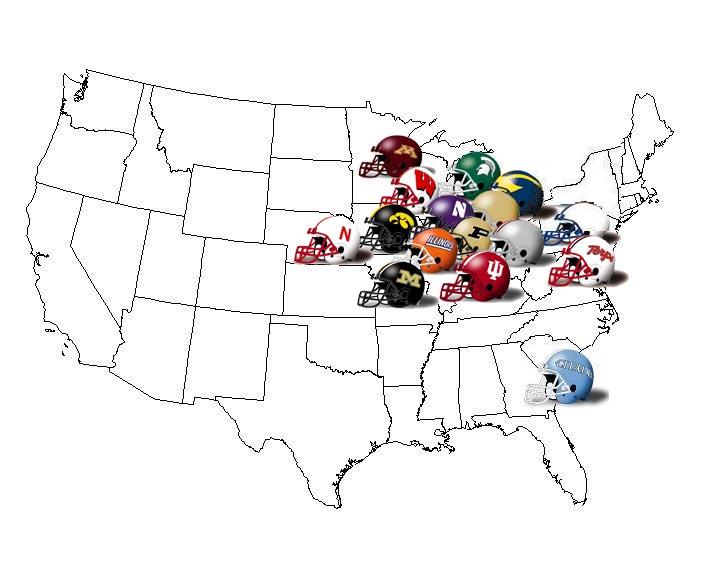
The Citadel’s “crossroads” moment — a review with commentary

This post basically serves to review and comment on an article published in The Post and Courier on Saturday, October 12. The writer of the story is Andrew Miller, regular P+C beat writer for The Citadel’s football program.

I appreciated this article. I don’t necessarily agree with everything stated in the piece, though most of those points of contention emanate from people quoted in the story, not Miller himself. I do quibble with certain aspects of the article that I think needed to include alternative, on-record opinions. There was also one “factoid” in the piece which was monumentally misleading. I’ll address that later.

Having said that, I was glad to see the feature published. It brings up multiple issues facing The Citadel and its department of athletics, all of which richly deserve public scrutiny.

I would encourage anyone at all interested in The Citadel to read the article.

I’ll break down my commentary by each portion of the story (excluding the introductory section).

The bottom line

The athletic department is projected to lose nearly $2 million this year…[Operating expenses] in the 2021-22 academic year amounted to $3.2 million. The projected operational budget for this year is expected to be $5.5 million, or an increase of 71 percent.

To make ends meet, the budget was cut by 10 percent with reductions in scholarships for the current season, according to an athletic department source.

“We’re having to cut expenses and scholarships,” the source said.

The football team’s operating budget, which does not include scholarships, was cut $200,000 to $1 million. It also lost the equivalent of 2½ scholarships.

The basketball team experienced a similar fate, another source said.

But according to Walters, there have been no budget or scholarship cuts.

The school is projected to spend $4.7 million on scholarships this year, having spent $4.1 million in 2022 and 2023, Walters said.

“The coaches have a budget, and they have to manage that budget, but we need to give them more tools to help them out,” Walters said.

Two different sources told Andrew Miller that the department of athletics is undergoing budget and scholarship cuts — but this was denied by Gen. Walters. That is more than a little curious.

Along those lines, there is something else worth noting that is not in the article.

If you go to the webpage for The Citadel’s Procurement Services Department, you will find a link to the school’s “Awards” site for procurement. This includes solicitations, sole sources, and the occasional emergency purchase.

It can be an interesting site to follow. Those perusing the page will see that The Citadel has a sole source justification for SoCon-mandated baseballs, for example, and will notice that the league also requires a specific vendor for video database and data analysis software.

The site also has a link to a sole source for a “Financial Consultant”. The advertisement for this sole source was posted on June 13 (expiring two weeks later). The school listed a potential contract amount of $250,000 (over the course of one year) for “a financial consultant to advise and assist in financial planning.”

That is a very generic description, but the person named as the sole source, Rick Kelly, is not generic at all. He is a former executive director of the S.C. Budget and Control Board, and later served as the Chief Financial Officer at the University of South Carolina. Kelly is an auditor by trade and has actually been hired as a consultant by The Citadel before (in July of 2020).

It is my understanding that Kelly recently completed an audit of The Citadel’s department of athletics, and that his findings are to be presented to the Board of Visitors in the near future — perhaps as soon as the BOV’s next scheduled meeting.

Revenue sources

Walters hopes to renew a series of outdoor concerts at Johnson Hagood Stadium, which had been put on hold after complaints by local residents who feared the added traffic and noise.

Then there’s naming rights to the playing field and stadium that could bring in money.

Remember, The Citadel was not successful in its June appeal to the City of Charleston’s Board of Zoning Appeals for approval for the outdoor series. The school was defeated by a combination of NIMBY-ism and an unfriendly zoning board (the vote was 7-0 against The Citadel).

Of course, the board couldn’t outright tell the military college that any concerts at Johnson Hagood Stadium are off the table. Otherwise, other neighborhoods could presumably block similar events at venues all over the city (as The Citadel’s VP for communications noted in the linked article). However, it is reasonable to expect that the same people who opposed the concert series will continue to fight against any major events held at the stadium, so relying on that as a regular source of income might be a dicey proposition.

It seems to me that profiting off naming rights to the stadium would also be hard to accomplish. You can’t rename Johnson Hagood Stadium right now without violating the state’s Heritage Act (unless two-thirds of state lawmakers could be convinced to approve a name change; good luck with that).

Until or unless the Heritage Act is successfully challenged in court, I’m not sure what The Citadel can do. And even if that were to happen, it is possible potential candidates for naming rights (banks, grocery stores, etc.) would be hesitant to be the “replacement” name under those circumstances.

The NCAA settlement [the “House” case] and what it will mean for The Citadel has been one of the many reasons for the delay in finishing the east side stands at Johnson Hagood Stadium...But the pandemic and other delays, including funding for the $5 million project, have postponed construction.

Capaccio said he hopes to have the east side stands ready for the 2025 football season.

“We have more than $3 million on hand and more than enough pledges to cover the rest,” Walters said.

I would be very pleasantly surprised if the rebuilt East stands are ready by the time the 2025 football campaign rolls around. The first game of the season next year is a home game on August 30 against North Dakota State.

It would be nice if the stadium were ready when the Bison’s travelling supporters arrive in Charleston. I just find that timeline hard to believe, particularly given the history of the project. I will be happy if my skepticism is unfounded.

Another thing worth mentioning is that the phrase “many reasons for the delay” is doing a lot of work in that paragraph. There seems to be a lag of about a year in the overall approval process which cannot be easily explained by COVID-19, related construction issues, or general fundraising.

Moving on down

One of the biggest fears from alumni is that the administration and athletic department will grow weary of the constant losing and financial struggles and decide to drop down to Division II or even Division III, where no athletic scholarships are awarded, to save money and be more competitive…

Walters said there’s no plan to move down in classifications.

“Not on my watch,” he said. “We’re not going Division II.”

Here, at least, there appears to be near-unanimity on a topic, and I was glad to see it. Dropping down a division (or two) would be a terrible idea on a lot of levels, and also completely unnecessary.

Besides the likely exodus of donors mentioned in the story, Division III makes no sense from a geographic perspective. What schools would The Citadel even play? There are no D3 football schools in South Carolina. There are two in Georgia — Berry and LaGrange. The North Carolina institutions with D3 football programs are Brevard, Greensboro College, Guilford, Methodist, and North Carolina Wesleyan.

That obviously wouldn’t work for The Citadel.

As for Division II, I get the impression that more schools are trying to leave that tier than move to it. And here again, the list of local institutions in the division do not as a group “match up” with The Citadel from a historical or practical standpoint. (D2 football schools in South Carolina: Allen, Benedict, Erskine, Limestone, Newberry, North Greenville.)

In terms of dropping down, VMI actually did something similar (at least philosophically) at the beginning of the century when it left the SoCon to join the Big South. That move did not work out for the folks in Lexington, VA, and they were thrilled to be able to re-join the Southern Conference after a decade out in the cold.

Now, there is a facet to this worth discussing. It is possible that in the future The Citadel’s athletics programs could be in a tier called “Division II” that would actually mostly resemble the current Division I. If there is a breakaway from the NCAA of 20-40 schools (the inevitable “Superleague”) for football and a slightly larger number of institutions for basketball (50-70, perhaps), then the eventual NCAA setup could look like this (at least for football):

  • Division I — P4 schools left out of the Superleague, the majority of G5 schools, maybe a few FCS institutions with historic success and decent revenue potential (the Montana and Dakota schools, for example)
  • Division II — The vast majority of FCS, plus a few G5 schools that still want to play football but would not be in an ideal financial position in the new order of college athletics

There wouldn’t be any problem with The Citadel being in that type of Division II. It would still likely play the same schools as before. It is just a question of nomenclature. There would also be an opportunity to play the “Division I” schools, as is the case now.

In that system, schools could compete in a revised D1 in basketball, baseball, and any other sport in which they wished to do so, and the remainder of their varsity teams would play in a D2 with fewer financial and infrastructure commitments.

That could wind up being just fine for a school like The Citadel.

Transfer portal, NIL, and non-cadet athletes

I’m going to split this section, separating NIL from the other two listed issues.

As for NIL:

Some Citadel alumni are against NIL, but barring athletes from making deals with local businesses would be against the law.

“Sometimes we’re our own worst enemy,” [former Bulldogs quarterback and past BOV member Jack Douglas] said. “We can’t get out of our own way. We need to be more welcoming to people and businesses. The gates around the campus aren’t there to keep people out, it’s to keep the cadets in. We’re not taking advantage of some of the resources in Charleston, people and businesses that don’t really have a connection to the school but could be friendly to us and help us out.”

One of those alumni who might have a problem with NIL, however, is the school president. From the minutes of the Board of Visitors meeting on April 24, 2024:

[Walters] then discussed the impact of the current rules/laws on the Southern Conference (SoCon) and The Citadel. He stated there has been little impact to date for The Citadel with only a few athletes participating. Of those, only one currently receives monetary compensation. The others receive products for their endorsements.

He stated that although The Citadel, the SoCon, or the NCAA cannot prohibit an athlete from entering NIL contracts, The Citadel can and will develop a policy that will impose limitations on its student athletes. Among the limitations discussed:

  • Specific prohibitions on when and where student athletes can appear in advertisements for third parties.
  • Prohibit student athletes from appearing in NIL opportunities while wearing team jerseys.
  • Prohibit student athletes from endorsing tobacco, alcohol, illegal substances or activities, banned athletic substances, and gambling, including but not limited to sports betting.
  • Prohibit endorsement of products which compete with school sponsorship agreements or contracts.

It was also discussed prohibiting endorsement of products which conflict with The Citadel’s institutional values, but it was noted that such a rule would likely raise First Amendment concerns.

Personally, I think there is a distinction to be made between general NIL rights and a school-sponsored “collective”, which should be a non-starter at The Citadel.

It is one thing for cadets to work with local businesses, learning the value of networking, etc., or engaging in activities such as sports camps or individual instruction. I have no problem with that; nobody should. It would be like someone in the regimental band teaching local students how to play the bagpipes or the trumpet (and being compensated for it).

A school-sponsored collective implies pay-for-play, however, and that is not the route The Citadel needs to take going forward. Doing so would fly in the face of the school’s overall mission.

It won’t be the route most of The Citadel’s peers will take, either, and that matters in the long run when schools form alliances (or new conferences) as a reaction to the “modernization” of college athletics.

I know there are currently schools in the SoCon that are banking on collectives, and pay-for-play. In the short term, they’re going to have an advantage over The Citadel in certain sports (particularly basketball). That isn’t really something which is controllable.

In ten years, there is a decent chance that The Citadel is not in the same conference with a school like, say, East Tennessee State. That won’t matter, though, if The Citadel is still aligned with VMI and Furman and other schools which could be construed as having a similar reputation (a hard-to-define combination of history, prestige, and cachet).

And yes, I realize that some of those “similar reputation” institutions are currently putting a lot of money into certain sports (like hoops). I’m thinking about what the outlook will be in 10-to-20 years, not 3-to-5.

Now about the transfer portal and non-cadet athletes:

Many of the old guard don’t want the Bulldogs to recruit and sign transfers. The vast majority of transfers signing with The Citadel recently have been graduate students. A handful of undergraduate day students have also transferred into the school.

The balance between cadet-athletes and non-cadet athletes has been a point of contention with some alumni…

…Walters said there are no caps or limits to the number of transfers each team can have.

“We have to give our coaches every opportunity to be competitive,” Walters said. “I’m sure most of the alumni would prefer to have all cadets on our teams, but they also want to win. We had 10 knobs on the basketball team last year and only a couple came back. I can’t hamstring Coach Conroy and have him sign 10 new freshmen every year. He wouldn’t be able to build a program.”

The current basketball roster includes a half-dozen transfers.

Attracting graduate students has been an issue as well. While many graduates want to take advantage of the school’s business program, The Citadel provides just $950 a month to graduate transfers for expenses.

“No one can live in Charleston on $900 a month,” [Citadel Football Association president Robbie Briggs] said. “You can’t pay rent and eat on that. Charleston is expensive. It would take a minimum of $2,000 in my opinion to live in Charleston.”

Ironically, it costs less for the school to sign a non-cadet transfer than to bring a freshman on campus. Freshmen student-athletes cost the school about $10,000 more a year than other undergraduates or graduate transfers due to providing uniforms and equipment.

First, I sincerely hope that coaches are not under any pressure to bring in non-cadets rather than freshmen in order to save money. I would consider any attempt to implement such a policy to be worthy of dismissal.

As to expenses for living in Charleston, I think the problem there is partly with the SoCon. In an appearance on an ETSU-affiliated podcast last December, East Tennessee State AD Richard Sander said this:

“The SoCon is the only conference in the country that limits cost of attendance. So we can only provide 28 student-athletes cost of attendance…we’re limited as to the [league’s] cap…that’s $2000.00. Well, our [actual] cost of attendance at ETSU is $6900.00.

We [ETSU], Chattanooga, a couple of other places [want to change that], but I’ll be honest, the private schools don’t want to change that. They think it’s a competitive advantage for us because our cost of attendance is high compared to theirs.

When we’re recruiting against, pick somebody in basketball…Western Kentucky or College of Charleston, they’re giving [players] total cost of attendance and we think in that kind of situation we think [the league rules] are creating a real difficult situation for us.”

It is possible the SoCon’s CoA rule might be working against The Citadel. I could be wrong about this interpretation, to be sure, but I don’t think the military college is one of the schools blocking a potential increase in the limit.

Briggs is absolutely correct about trying to live in Charleston on $950 per month, and that certainly has had a deleterious effect on the recruitment of certain athletes. We’ve all heard the stories.

Having said that, I am one of the alums who would greatly prefer that almost all (if not all) of our athletes are in the corps of cadets, or are recent graduates from the corps. There are arguments on both sides about this, of course, but I come back to a couple of things.

– “I’m sure most of the alumni would prefer to have all cadets on our teams, but they also want to win.” — Gen. Walters

Well, yes, but when is the last time a transfer-heavy squad at The Citadel was legitimately successful? I’ll wait on your answer. It will be a long wait.

The fact is that we have allowed our coaches to supplement their rosters with large numbers of transfers in recent years, and in no situation has it resulted in a significant increase in winning. Sometimes, it seems to have boomeranged in the opposite direction.

Also, while I understand the point about the problem of cycling through rosters due to freshman attrition, that has always been an issue at The Citadel, long before the transfer portal existed. I might add that the constant one-year “rental” of graduate students hasn’t done anything for continuity (or general competitiveness) either.

– There is another rationale involved here. For whom do the varsity teams at The Citadel primarily exist as a benefit? Well, the players themselves, obviously.

They also exist for the alumni and other supporters, including those in the local community. And they exist, most importantly, for the corps of cadets. I think it is natural and right for the corps to be able to cheer for a team that consists mostly (if not entirely) of fellow cadets.

This isn’t just about a pie-in-the-sky notion of utopia, either. There is also a financial consideration, after all. As Miller pointed out in his article:

Each cadet pays around $3,000 a year in student athletic fees, among the highest in the country. That comes out to approximately $6.4 million, the largest source of revenue for the athletic department.

If cadets are going to front the plurality of the funds which support varsity athletics, it seems to me that those teams should represent them in something close to totality. That means the players should mostly be cadets, too.

Some alumni have also bristled at the sight of long hair and facial hair among some graduate transfers.

“There are a lot of older alumni that believe this place was some kind of nirvana back in the day, and it’s just not true,” Walters said. “We had graduate students playing sports back when I was here in the 1970s, and we had guys with hair flowing out of the backs of their helmets when I was here. People don’t remember that, but I do.”

I wish Andrew Miller had quoted an alumnus with a strong opinion about the issue at hand. I would have liked him to interview one of those who had “bristled”. I think that would have been appropriate, and would have also avoided Walters’ comment coming off as a bit of a ‘strawman’ construct (which clearly wasn’t the intent).

Walters’ quote interested me, though, because I could not recall graduate students playing football in the 1975-78 time frame when he was at The Citadel (he’s a 1979 grad). I’m not old enough to know for sure, though, so I will defer to Walters on this.

To be fair, Walters didn’t specifically refer to grad students in football, but rather he just made a comment about “guys with hair flowing out of the backs of their helmets”.

From perusing the 1978 football media guide, which featured the team that played during Walters’ senior year, I can see how that might have occasionally been the case. Kenny Caldwell is on the cover with Art Baker, and Caldwell’s hair is a little longer than what you would see today at The Citadel.

It was a 1970s thing, I guess. The photos of the coaching staff are instructive as well; offensive coordinator Rick Gilstrap had a lot of lettuce, and running backs coach Mike O’Cain sported a world-class moustache.

However, I don’t think the hairstyles of the 1970s, groovy as they might have been, are really applicable to today. I expect varsity athletes to conform to the current standards of the corps, regardless of status.

That means relatively short hair and no beards or moustaches. The Citadel is a military college. The players that represent it (and the corps of cadets) need to look like they belong, whether on the field, court, track, road, mat, course, range, or diamond.

Also, while a lot of the issues mentioned in the article are hard problems to solve, this isn’t one of them. Just tell the guys to get a shave and a haircut. The world won’t end, and it won’t cost hundreds of thousands of dollars.

Texas A&M model

Oh, boy…

It was during the annual summer talking season in the early 2000s when [Ellis Johnson], the former football coach, brought up the idea of The Citadel adopting a Texas A&M model where the school would open its campus to more non-cadets.

The idea was met with a resounding silence.

As well it should have. However, there is (unfortunately) more:

Up until 1964, Texas A&M required all students to be members in the Corps of Cadets. That year, school president James Earl Rudder opened up the school to women and Blacks for the first time. A year later, membership in the corps became voluntary.

Today, Texas A&M is the second-largest university in the nation with more than 72,000 students. Of those, 2,500 —including 300 women — are cadets.

The idea of allowing non-cadets into The Citadel isn’t even that new. Red Parker, the Bulldogs head coach from 1966-72, was a proponent of letting in non-cadets.

“You have to remember this was in the middle of the Vietnam war and the military wasn’t that popular back then,” said [Charlie Baker], who played linebacker for Parker in the early 1970s. “People think we’d lose our identity as a military school, but we wouldn’t. Look at what Texas A&M has done. They still have a Corps of Cadets, and the school is doing great.”

Texas A&M last year had a $17.2 billion endowment.

I’ll get to the most disingenuous sentence in that quote in a few paragraphs.

However, first let me say this. I have great respect for both Ellis Johnson (who played at The Citadel and also served as its head football coach) and Charlie Baker (another former player who has done great things for The Citadel, and who bleeds light blue).

And they’re both incredibly wrong about this.

Why do people think The Citadel would lose its identity as a military college? Well, because it would.

Do most people today think of Texas A&M as a military school? Of course not. The only time that even comes up in general discourse is when sports fans at other schools make fun of the Yell Leaders.

The Citadel, on the other hand, is chiefly identified as a military college. If you marginalize that essential component, it ceases to be The Citadel, both in the minds of the overwhelming majority of its alumni and among the public at large. It becomes Palmetto A&M, an entity with no history and no justification for having one.

It could be argued the best thing the State of South Carolina has going for it from a higher education standpoint is that (despite the best efforts of some of its leaders over the years) it has produced among its colleges and universities a unique, undeniably successful institution on the banks of the Ashley.

The Citadel has incredible value in its current form. It might be better positioned for the new era of university education than 95% of its fellow schools in this country — and that might be an underestimation.

Colleges and universities are desperately trying to differentiate themselves in order to attract a limited number of future students. It is not an easy thing to do.

However, that isn’t a problem for The Citadel. You can’t get the experience of being a cadet in an online format. You have to be there. You have to feel the no-see-ums. You have to accept a difficult challenge and ultimately pass a test of will, and you have to pass that test in the presence (and with the assistance) of others.

Not only am I diametrically opposed to reducing The Citadel’s value as an alumnus, but I also resent the suggestion as a citizen of the state. Why diminish something so beneficial for no real advantage (and a lot of obvious pitfalls)?

Ellis Johnson also said this:

“Seventy percent of Citadel graduates don’t go into the military,” Johnson said. “They go start businesses, they become entrepreneurs, they go into politics, and they are good, productive citizens. What’s wrong with producing good people and good citizens? Sometimes I think the school caters to that 30 percent of the alumni base a little too much.”

I didn’t understand this comment, on two levels. First, I don’t really think the school caters to its veteran alums more than its other graduates. I’ve never noticed that myself.

More to the point, though, is the idea that the veteran alums are those most against the gradual dissipation of the corps of cadets as the school’s focus. I don’t think that is true at all.

I haven’t done a survey or anything, but I know plenty of non-veterans who are dead-set against turning the school into Palmetto A&M. I’m one of them.

I’m not even sure that a higher percentage of veterans than non-vets are against that concept. I would suspect that there is uniformity in the opposition, regardless of background.

This might be a digression, but I think it is a necessary one. The line in the article that I found particularly misleading was this one:

Texas A&M last year had a $17.2 billion endowment.

In the context of the story, that brief statement tends to imply that Texas A&M began admitting non-cadets and things have gone fantastically well ever since, including an amazing endowment which surely is directly related to the school’s change of mission.

The truth is that there cannot possibly be anything more unrelated than Texas A&M’s endowment and the status of its Corps of Cadets. It might be the most unrelated thing in the history of unrelatedness.

The actual reason Texas A&M has a large endowment is a 19th-century provision established in the Texas Constitution that created something known as the Permanent University Fund (PUF):

In 1876, the Texas Constitution set aside land in West Texas to support The University of Texas and Texas A&M systems of higher education. Today, that land – encompassing 2.1 million acres – is leased to oil and gas companies whose wells generate revenue that flows into the PUF. Land also is leased for grazing, wind farms and other revenue-generating activities.

The Texas A&M system receives one-third of the annual proceeds of the PUF, while the University of Texas system gets the other two-thirds (and thus UT’s endowment is even more monstrous than TAMU’s).

Texas A&M’s share of the PUF return in 2023 totaled slightly over $410 million. That’s for one year. It will get more money this year, and even more cash next year, and presumably every year after that as long as the wells don’t completely run dry.

The provision that set up TAMU (and UT) for all that moolah was enacted 88 years before the school began admitting non-cadets.

The reference to Texas A&M’s endowment should not have been in the article.

The Citadel doesn’t need to be like Texas A&M, and it couldn’t be like Texas A&M even if everyone wanted that outcome. And most people don’t anyway.

Earlier this week, there was another piece in The Post and Courier about The Citadel’s future in athletics, this one in the form of a column by Scott Hamilton that was centered around the upcoming search for a new director of athletics. I wanted to highlight one part of it:

Some initial thoughts are if The Citadel might consider moving down a level. Should dropping to Division II – or perhaps even Division III – be on the table?

No, they just need to know exactly who they are and what their mission is,” said Rob Yowell, president of Arizona-based Gemini Sports. “And that’s (to be) more like West Point, Annapolis and Air Force. Not Coastal Carolina, Liberty and Louisiana-Monroe.

Yowell, whose firm runs major events such as the PGA Tour’s Waste Management Phoenix Open and the Fiesta Bowl, is spot-on. Having an identity would simplify things so much. The service academies embrace who they are, just as traditional Group of 5 schools realize they’re not competing on and off the field with the likes of Alabama and Ohio State.

It is nice to read something as perceptive as that from an outsider — in this case, a Duke graduate who lives in Phoenix. Wonders will never cease.

I will say that The Citadel does share some things in common with Coastal Carolina and ULM, so it isn’t an “exact opposite” comparison when it comes to those two schools (and coincidentally, the AD at Louisiana-Monroe is John Hartwell, a graduate of The Citadel).

“There are a lot of older alumni that believe this place was some kind of nirvana back in the day, and it’s just not true,” Walters said.

Walters is 100% correct about that. I can sympathize with him as he tries to navigate the school through a lot of choppy water, trying to justify various decisions to alumni, a few of whom think it is still 1950, or who wish it were still 1950.

In terms of sports, this is a very trying time for the military college. I believe that the current climate in college athletics is the worst it could be from The Citadel’s perspective since the Sanity Code was enacted in 1948.

Of course, we all know what happened then. The Citadel became one of the famed “Sinful Seven”, and the Sanity Code was eventually revoked.

It didn’t come without controversy, however. For one thing, an attempt was made to expel those seven schools from the NCAA in 1950 — not put them in probation, mind you (probation as we know it today didn’t exist) — but throw them out of the association entirely.

And more than half of the schools in the NCAA voted to expel The Citadel, and the other six schools.

That’s right. Of the 203 delegates, 111 of them cast a ballot to toss out The Citadel and company. The president of the NCAA actually announced that the motion had passed — and then he was reminded that a two-thirds super-majority was needed, and that the motion had thus failed by 25 votes.

That failure essentially ended the long-term viability of the Sanity Code (though it wasn’t formally repealed until the following year).

I think about that occasionally. It is a reminder that things are always going to be a bit testy for The Citadel when it comes to its place in college sports. More than half of its fellow NCAA members once voted to throw the school out of the club.

It is also not strictly coincidental that The Citadel struggled mightily in varsity athletics in the years following the original enactment of the Sanity Code (there were admittedly other reasons too).

From 1948 through 1954, the Bulldogs’ football program had a record of 21-44-1, with no winning seasons in those seven years. In basketball it was even worse. From 1949 through 1956, the hoopsters were 28-135.

Does that sound vaguely familiar?

Things changed, though. The climate around college athletics eventually turned a bit (not too much) in The Citadel’s favor. By the late 1950s, backed by a new school president who didn’t like to lose, and playing in a conference with schools much more on its level than in the previous 20 years, The Citadel started winning consistently in almost all sports.

That can happen again. It will require patience, though. I just hope the folks running the institution (and the alumni and other supporters) maintain that patience.

I want to win, too. I just don’t want to throw away what makes The Citadel great in the process.

College Football 2017, Week 8: the top 15 matchups

An explanation of this post:

On his college hoops ratings website, Ken Pomeroy has an algorithm called ‘FanMatch’, in which “games are rated for competitiveness and level of play with a lean towards higher-scoring games”. It is a way to rate the potential watchability of various basketball contests. There is just a touch of whimsy involved, which makes it even better…

Borrowing this idea, I’ve created a utterly byzantine and truly enigmatic formula to produce game ratings; it is called “Tingle Factor”, or TF. The higher the TF, the better.

To access a Google Document that has a complete schedule of televised/streamed D-1 college football games (including all the announcing teams), see this post: Link

I am excluding the game between The Citadel and Chattanooga this week, as that matchup looms over the rest of the slate to such an enormous degree that comparing it to the other games on the schedule is a wasted exercise.

Outside of that contest, here are the top 15 games for Week 7 that will take place on Saturday:

Road Team Home Team Gametime (ET) TV/Streaming TF
Southern California Notre Dame 7:30 PM NBC 83.6
Oklahoma State Texas 12:00 PM ABC/ESPN3 82.9
Michigan Penn State 7:30 PM ABC/ESPN3 82.8
UCF Navy 3:30 PM CBS Sports Network 79.5
Iowa State Texas Tech 12:00 PM FS1/FS-Go 77.2
Louisville Florida State 12:00 PM ESPN 70.8
North Texas FAU 5:00 PM ESPN3 69.5
Wake Forest Georgia Tech 7:30 PM ESPNU 69.4
LSU Mississippi 7:15 PM ESPN 69.2
Arizona California 8:00 PM Pac-12 Network 68.6
Iowa Northwestern 12:00 PM ESPN2 66.5
USF Tulane 7:00 PM ESPN2 64.9
Eastern Washington Southern Utah 7:00 PM Eleven Sports 64.7
Oregon UCLA 4:00 PM Pac-12 Network 64.6
Oklahoma Kansas State 4:00 PM FOX/FS-Go 64.1


Additional notes and observations:

– Southern California-Notre Dame will also be streamed on NBC Live Extra.

– CBS/CBS Sports Network games will also be streamed on CBS Sports Digital.

– The games on the ESPN “Family of Networks” will also be streamed via WatchESPN.

– Arizona-California and Oregon-UCLA will both be streamed on the Pac-12 Digital Network.

– The one FCS game to break into the top 15 this week, Eastern Washington-Southern Utah, will also be streamed on the Big Sky Digital Network.

– Of the fifteen highest-rated “TF” games on the board this week, Iowa State-Texas Tech (over/under of 68) is projected to be the highest-scoring. Other potential scorefests in the top 15 include Oregon-UCLA (over/under of 67.5), Eastern Washington-Southern Utah (66.5) and North Texas-FAU (66).

– The classic intersectional matchup between Southern California and Notre Dame has often been a bit streaky, but the two programs have split the last eight meetings. This is the 40th anniversary of one of the wilder team entrances in series history, the green jerseys/Trojan horse lunacy of 1977.

– Oklahoma State had a yards/play margin of +5.8 against Baylor, the largest such margin in any FBS game last week.

– Iowa State’s 20.5 yard field position margin advantage over Kansas was the biggest differential in that category for any FBS game last week.

– Arizona and California both ranked in the top 5 in “turnover luck” last week (the Golden Bears were #1 in that category). They play each other this week, so something has to give.

– Oregon has won six straight games against UCLA, including the 2011 Pac-12 title game. The Ducks have averaged 41.3 points per game over that stretch. Meanwhile, the average score of UCLA’s games this season is Opponent 40.5, Bruins 39.5.

– Eastern Washington’s last to trips to Cedar City, Utah have been adventurous. In 2014, the Eagles (then ranked 2nd in FCS) had to rally for a 42-30 victory. Two years before, the homestanding Thunderbirds upended a top-ranked EWU squad 30-27.

– USF is 6-0 for only the second time in program history. In 2007 the Bulls were ranked #2 in the country after six games, but USF lost its seventh game that season at Rutgers, 30-27.

– UCF is 5-0 for only the second time in program history, and the first time as an FBS team. The Knights have never started a season 6-0. Saturday’s game at Annapolis, a meeting between two teams with a combined record of 10-1, is the first time UCF has ever faced one of the service academies.

– Louisville and Florida State have met on the gridiron seventeen times, with the Seminoles winning fourteen of those contests. Before the Cardinals’ staggering 63-20 triumph over FSU last year (which catapulted Lamar Jackson to favored status for the Heisman Trophy, which he eventually won), Louisville’s previous largest margin of victory versus Florida State came in the first meeting in the series, a 41-14 decision in 1952.

The next season, Florida State beat Louisville 59-0.

– Wake Forest and Georgia Tech are playing for only the third time in the last ten years. Georgia Tech has won both of the most recent meetings, but the matchup before that came in the 2006 ACC title game, won by the Demon Deacons, 9-6. Sam Swank’s three field goals were all the scoring Wake Forest would need that afternoon.

– The most famous game in the history of the LSU-Mississippi series is, without question, the 1959 meeting. LSU was ranked #1; Mississippi, #3. The two teams had combined to allow only two touchdowns all season prior to the October 31 matchup. The Tigers won 7-3 on a legendary punt return touchdown by Billy Cannon, who subsequently won that year’s Heisman Trophy.

It should be a great day of college football. The primetime block of games looks particularly appetizing. Get all your chores done in the morning, grab your snacks, and spend the rest of the day and night on the couch…

College Football 2017, Week #3: the top 15 matchups

The weekly explanation of this post:

On his college hoops ratings website, Ken Pomeroy has an algorithm called ‘FanMatch’, in which “games are rated for competitiveness and level of play with a lean towards higher-scoring games”. It is a way to rate the potential watchability of various basketball contests. There is just a touch of whimsy involved, which makes it even better…

Mimicking this idea, I’ve created a ridiculously complex and decidedly opaque formula to produce game ratings; it is called “Tingle Factor”, or TF. The higher the TF, the better.

I’ll list the top 15 TF games of Week 3, excluding The Citadel-East Tennessee State, because comparing that much-anticipated matchup to less interesting games would be pointless.

Sometimes the best games of the week are the anticipated, high-profile contests, but often under-the-radar matchups are well worth watching. This include FCS games.

To access a Google Document that has a complete schedule of televised/streamed D-1 college football games (including all the announcing teams), see this post: Link

Here are the top 15 games for Week 3. All of them are being played on Saturday (as was the case last week).

Road Team Home Team Gametime (ET) TV/Streaming TF
UCLA Memphis 9/16, 12:00 pm ABC/ESPN3 86.1
Kansas State Vanderbilt 9/16, 7:30 pm ESPNU 84.2
Clemson Louisville 9/16, 8:00 pm ABC/ESPN3 84.1
LSU Mississippi State 9/16, 7:00 pm ESPNU 81.9
North Dakota South Dakota 9/16, 3:00 pm MidCo/ESPN3 81.4
Purdue Missouri 9/16, 4:00 pm SEC Network 81.2
Kentucky South Carolina 9/16, 7:30 pm SEC Network 80.0
Arizona State Texas Tech 9/16, 8:00 pm FSN-National 78.9
Tulsa Toledo 9/16, 7:00 pm ESPN3 76.4
Mississippi California 9/16, 10:30 pm ESPN 75.3
MTSU Minnesota 9/16, 3:30 pm BTN/BTN2Go 74.7
Stanford San Diego State 9/16, 10:30 pm CBS Sports Net 72.7
Troy New Mexico State 9/16, 8:00 pm FSN-AZ+/ESPN3 70.1
Texas Southern California 9/16, 8:30 pm FOX/FS-Go 68.2
Central Michigan Syracuse 9/16, 3:30 pm ACC Digital Network 67.8


Additional notes and observations:

– The three CBS/CBS Sports Network games will also be streamed on CBS Sports Digital.

– The games on the ESPN “Family of Networks” will also be streamed via WatchESPN.

– The two BTN games will also be streamed on FS-Go.

– As was the case last week, none of the top 15 matchups are on the Pac-12 Network. Thus, most college football fans will be able to watch all of these games.

– Arguably the biggest surprise in this week’s rankings is the North Dakota-South Dakota game, which checks in at #5. It is the only matchup this week between ranked FCS teams.

– Several games in the top 15 have the potential to be very high-scoring, if a check of betting lines is any indication. Per one source that deals in these matters, the over/under of the Purdue-Missouri game at 77.5.

Other over/unders of note: Arizona State-Texas Tech (76), UCLA-Memphis (73), Mississippi-California (72), Central Michigan-Syracuse (67.5), Tulsa-Toledo (67.5), Texas-Southern California (67.5), Troy-New Mexico State (63).

– South Carolina is involved in a top 15 TF game for the third week in a row.

– The Tennessee-Florida game did not make the top 15, which may say something about the current state of those two programs.

This week, there aren’t quite as many high-profile matchups as last week, but plenty of gridiron goodness will still be on display. As always, the weekend can’t get here soon enough.

College Football 2017, Week #1: the top 15 matchups

On his college hoops ratings website, Ken Pomeroy has an algorithm called ‘FanMatch’, in which “games are rated for competitiveness and level of play with a lean towards higher-scoring games”. It is a way to rate the potential watchability of various basketball contests. There is just a touch of whimsy involved, which makes it even better.

I’m going to do the same thing (more or less) and rate the top 15 games of Week 1, excluding Newberry-The Citadel, because it wouldn’t be fair to compare that game with all the lesser gridiron battles.

Sometimes the high-profile contests really are the best games of the week, but often under-the-radar matchups are worth the attention of the viewing public. That includes FCS games.

I briefly explained this in a previously post, but basically I’ve created a super-secret formula (patent pending) to produce these game ratings; it is called “Tingle Factor”, or TF. The higher the TF, the better.

Of course, there are many games this week that are worth watching, because after all — they are college football games!

To access a Google Document that has a complete schedule of televised/streamed D-1 college football games, see this post: Link

Here are the top 15 games for Week 1 (Thursday through Monday):

Road Team Home Team Gametime (ET) TV/Streaming TF
Alabama Florida State 9/2, 8:00 pm ABC/ESPN3 86.73
North Carolina State South Carolina 9/2, 3:00 pm ESPN 84.20
Tennessee Georgia Tech 9/4, 8:00 pm ESPN 83.90
Virginia Tech West Virginia 9/3, 7:30 pm ABC/ESPN3 83.55
Tulsa Oklahoma State 8/31, 7:30 pm FS1/FS-Go 79.68
Richmond Sam Houston State 9/1, 7:00 pm ESPN3 78.11
Colorado State Colorado 9/1, 8:00 pm Pac-12 Network 72.15
James Madison East Carolina 9/2, 6:00 pm ESPN3 68.44
Temple Notre Dame 9/2, 3:30 pm NBC 67.18
Kennesaw State Samford 8/31, 7:00 pm ESPN3 66.95
Texas A&M UCLA 9/3, 7:30 pm FOX/FS-Go 65.60
Maryland Texas 9/2, 12:00 pm FS1/FS-Go 64.19
Eastern Washington Texas Tech 9/2, 4:00 pm FS Nets/FS-Go 64.03
South Carolina State Southern 9/3, 2:30 pm ESPN2 63.88
Navy Florida Atlantic 9/1, 7:00 pm ESPNU 63.79
  • Alabama-Florida State will be played in Atlanta, GA
  • Georgia Tech-Tennessee will also be played in Atlanta, GA
  • North Carolina State-South Carolina will be played in Charlotte, NC
  • Richmond-Sam Houston State will be played in Waco, TX
  • Colorado State-Colorado will be played in Denver, CO
  • Virginia Tech-West Virginia will be played in Landover, MD

Additional notes and observations:

– The top four games this week are all neutral-site Power 5 games. I think they would probably be more fun if played on a campus site, but money talks. At least these matchups will take place.

– It’s not surprising that Alabama-Florida State (a 1 vs. 3 matchup) tops the list, but watch out for North Carolina State-South Carolina. That should be a good game, and it is a bellwether contest for both programs.

– The game between Richmond and Sam Houston State was originally supposed to have been played last Sunday in Huntsville, TX, but was postponed and relocated due to Hurricane Harvey. Because of that, I had to resubmit the game into my computer program that produces the Tingle Factor ratings, and as a result it lost two TF points. It is still easily in the top 15 this week, however.

– If Tulsa can successfully replace Dane Evans at quarterback, look out (and as the over/under is 70, bet the over).

– Colorado State-Colorado strikes me as underrated, but perhaps instinctively the algorithm knows the game is being carried on the Pac-12 Network, and that very few people will be able to actually watch the game.

– James Madison, the defending FCS champion, is currently a 1-point favorite over homestanding FBS opponent East Carolina.

– Another FCS vs. FBS matchup, Eastern Washington-Texas Tech, features an over/under of 87.

– Navy-FAU barely sneaked into the top 15, but the algorithm doesn’t know the potential fun of having a military school face off against Lane Kiffin and a team described by one observer as an “Island of Misfit Toys”. This game might actually be top 10 material.

– One contest not in the top 15 is Michigan-Florida, and given that the Gators may struggle to put 11 players on the field at the same time on Saturday, that seems reasonable. BYU-LSU also didn’t make the cut.

– Tennessee State-Georgia State isn’t in the top 15 either, but it might be worthwhile to watch a few minutes of that game (it’s on ESPN3), if only to see the wonder of Georgia State playing at Turner Field (!).

It’s time for college football. Life is good.

With less than a month to go until football season begins, an odds-on look at Week 0 and Week 1

Please note: the information contained in this post is for entertainment purposes only. Use of this information in violation of any city, county, state, federal, international, interplanetary, or interdimensional laws is prohibited.

I’m basically going to do three things in this post: take a look at the sizable number of “lopsided” early-season contests; compare Massey Ratings projected game scores with early lines for various games of interest; and make a list of the best opening weekend (and pre-opening weekend) matchups.

Why am I doing this? Well, why not?

Lines are courtesy of an offshore site to be named later.

There are 136 contests in Weeks 0 and 1 that feature at least one Division I team. Among them are 44 FBS vs. FBS games; of those, 11 are games between Power-5 conference teams, 9 are Group of 5 matchups, and 24 are games in which a P5 team is playing a G5 opponent.

There are also 48 FBS vs. FCS matchups, 26 FCS vs. FCS contests, and 18 games in which FCS teams face non-D1 opposition.

Of those 136 games, 36 have an early-line spread of 30 points or more.

The breakdown of those 36 matchups:

  • FBS vs. FBS: 6
  • FBS vs. FCS: 18
  • FCS vs. FCS: 4
  • FCS vs. non-D1: 8

It’s not great that more than 26% of the D-1 games which take place prior to and through the Labor Day weekend are projected to be that one-sided. Of course, it could be argued that this is the best time for these matchups, given that the general football-loving public is starved for live gridiron action of any kind, no matter the blowout potential.

As of August 1, the largest point spread for any D-1 game in this time period is the Florida A&M-Arkansas contest on August 31, a Thursday night affair in Little Rock. The Razorbacks are favored by 51.5 points. Two games have 51-point spreads, Bethune-Cookman vs. Miami (the homestanding Hurricanes are favored, just to state the obvious) and an all-FCS matchup, Mississippi Valley State vs. North Dakota State (with the host Bison expected to prevail).

The biggest road favorite is Washington, favored by 30.5 points at Rutgers. Stanford plays Rice at a neutral site (Sydney, Australia); the Cardinal are 31.5-point favorites.

The other four FBS vs. FBS matchups with a spread of 30+ points: UTEP-Oklahoma (44 points, the largest spread in an all-FBS game), Kent State-Clemson (38.5 points), Georgia Southern-Auburn (35 points), and Akron-Penn State (33 points). To the surprise of no one, the home teams are all favored.

The other three FCS vs. FCS games with 30+ point spreads: Butler-Illinois State (36 points), Valparaiso-Montana (34 points; apologies to Adam Amin), and Delaware State-Delaware (33 points). Again, home teams are the favorites.

In the table below, I’ve included every FBS/FCS game in Week 0 (eight games played on August 26, and one on August 27), and a sampling of contests from Week 1 (August 31 through September 4). Just to reiterate, not every D-1 game from Week 1 is listed.

The first nine games in the table are from Week 0.

Favorite Underdog Line Massey Differential
Colorado State Oregon State 3.5 34-31 0.5
BYU Portland State 32.5 44-13 1.5
Florida A&M Texas Southern 1.5 26-24 -0.5
Jacksonville State Chattanooga 6.5 28-26 4.5
Cal Poly Colgate 7 35-31 3
USF San Jose State 20 41-31 10
Stanford Rice 31.5 38-7 0.5
Sam Houston State Richmond 6.5 38-34 2.5
Hawai’i Massachusetts 1 33-31 -1
Wake Forest Presbyterian 39 35-0 4
Toledo Elon 37.5 43-7 1.5
Georgia State Tennessee State 18 38-17 -3
Arkansas Florida A&M 51.5 52-3 2.5
Mercer Jacksonville 21 42-21 0
Samford Kennesaw State 7.5 38-30 -0.5
Towson Morgan State 28 35-7 0
Oklahoma State Tulsa 17 42-33 8
Ohio State Indiana 20.5 31-17 6.5
Army Fordham 15.5 40-24 -0.5
Eastern Michigan Charlotte 12.5 35-27 4.5
Navy Florida Atlantic 13.5 42-28 -0.5
Colorado Colorado State 7 35-28 0
Clemson Kent State 38.5 44-3 -2.5
Texas Maryland 16.5 34-27 9.5
Oklahoma UTEP 44 49-13 8
North Carolina California 12.5 42-32 2.5
Villanova Lehigh 6.5 28-22 0.5
Pittsburgh Youngstown State 14 40-24 -2
North Carolina State South Carolina 5.5 28-17 -5.5
Notre Dame Temple 15 28-24 11
Georgia Appalachian State 14.5 21-18 11.5
Michigan Florida 4 24-20 0
Virginia William and Mary 19.5 33-14 0.5
North Dakota State Mississippi Valley State 51 52-0 -1
Texas Tech Eastern Washington 16.5 45-38 9.5
Mississippi State Charleston Southern 18.5 38-21 1.5
The Citadel Newberry 30 37-7 0
Wofford Furman 13.5 26-14 1.5
Gardner-Webb North Carolina A&T 7 28-21 0
Baylor Liberty 30 42-14 2
East Tennessee State Limestone 28.5 35-7 0.5
Auburn Georgia Southern 35 34-13 14
Air Force VMI 31.5 41-10 0.5
Alabama Florida State 7.5 33-21 -4.5
LSU BYU 13 21-7 -1
Southern South Carolina State 2.5 27-24 -0.5
Virginia Tech West Virginia 4 29-26 1
UCLA Texas A&M 3.5 25-28 6.5
Tennessee Georgia Tech 3.5 31-32 4.5

Odds (hey, a pun!) and ends:

  • Not listed: James Madison-East Carolina, which does not have a line at present for some reason. However, Massey projects FCS defending champ JMU to win the game 38-31.
  • Western Carolina’s season opener at Hawai’i also does not have a line (at least, not one that I could find), possibly because the Rainbow Warriors play a game at Massachusetts the week before.
  • The same is true for Coastal Carolina, which opens by hosting the aforementioned Minutemen.
  • Two teams in the table that are favorites (UCLA and Tennessee) are projected to lose by the Massey Ratings.
  • Massey projects several games to be considerably closer than the current lines, notably Appalachian State-Georgia, Maryland-Texas, Eastern Washington-Texas Tech, Temple-Notre Dame, and Tulsa-Oklahoma State.
  • On the other hand, Massey likes North Carolina State and Alabama even more than the offshore folks do.

On his college basketball ratings website, Ken Pomeroy has something called ‘FanMatch’, in which “games are rated for competitiveness and level of play with a lean towards higher-scoring games”. It is a somewhat whimsical way to rate the potential watchability of individual games on a given night.

I’m going to do the same thing here. However, I am purposely not going to rate Newberry-The Citadel, which from my vantage point is the most watchable game of the Labor Day weekend.

Below is a listing of the Week 0/1 games that I consider to be the twenty best in terms of quality/competitiveness. I’ve created a secret formula to produce these game ratings; it is called “Tingle Factor”, or TF. The higher the TF, the better.

Road Team Home Team Gametime (ET) TV/Streaming TF
Alabama Florida State 9/2, 8:00 pm ABC/ESPN3 86.73
North Carolina State South Carolina 9/2, 3:00 pm ESPN 84.20
Tennessee Georgia Tech 9/4, 8:00 pm ESPN 83.90
Virginia Tech West Virginia 9/3, 7:30 pm ABC/ESPN3 83.55
Richmond Sam Houston State 8/27, 7:00 pm ESPNU 80.11
Tulsa Oklahoma State 8/31, 7:30 pm FS1/FS-Go 79.68
Chattanooga Jacksonville State 8/26, 6:30 pm ESPN 75.41
Colorado State Colorado 9/1, 8:00 pm Pac-12 Network 72.15
Oregon State Colorado State 8/26, 2:30 pm CBS Sports Net 72.00
James Madison East Carolina 9/2, 6:00 pm ESPN3 68.44
Temple Notre Dame 9/2, 3:30 pm NBC 67.18
Kennesaw State Samford 8/31, 7:00 pm ESPN3 66.95
Texas A&M UCLA 9/3, 7:30 pm FOX/FS-Go 65.60
Hawai’i Massachusetts 8/26, 6:00 pm TBA 65.47
Maryland Texas 9/2, 12:00 pm FS1/FS-Go 64.19
Eastern Washington Texas Tech 9/2, 4:00 pm FS Nets/FS-Go 64.03
South Carolina St. Southern 9/3, 2:30 pm ESPN2 63.88
Navy Florida Atlantic 9/2, 8:00 pm ESPNU 63.79
Villanova Lehigh 9/2, 12:30 pm Patriot League DN 63.58
Colgate Cal Poly 8/26, 7:00 pm ESPNU 63.56

Notes:

  • Alabama-Florida State will be played in Atlanta, GA
  • Georgia Tech-Tennessee will also be played in Atlanta, GA
  • North Carolina State-South Carolina will be played in Charlotte, NC
  • Colorado State-Colorado will be played in Denver, CO
  • Chattanooga-Jacksonville State will be played in Montgomery, AL
  • Virginia Tech-West Virginia will be played in Landover, MD

The season is getting closer…and closer…

A few thoughts on Bulldog baseball

Wow, this place is dusty.  I guess I need to post more often.

It’s been a tough year so far for The Citadel’s baseball team, to say the least.  One year after claiming the Southern Conference regular season and tournament titles, the Bulldogs are 10-19 overall, 5-10 in the SoCon (entering a weekend series against the College of Charleston).  If the season ended today The Citadel would barely qualify for the league tournament.  The Citadel failing to make the SoCon tourney, held again this year at Riley Park, would obviously be a painful outcome for the program and could have repercussions going forward (in terms of future SoCon tourneys in Charleston).

Obviously when a team is 10-19 there are multiple issues at play, but let me put my own spin on things…

The Citadel is 2-9 in one-run games, and 1-5 in two-run games.  Yes, that’s a lot of one-run games (tied for most in the nation heading into the weekend).  The Bulldogs played 12 one-run games all last season (going 6-6 in those contests).

One thing to keep in mind is that there have been more one-run games this season in college baseball.  Across the board, 10% more games have been decided by one run this year (through the first 45 days of the season) than last.  That means that almost one-fourth of all Division I games are being decided by one run.  There are also more games going into extra innings.

The reason for all the close games?  The games are lower-scoring, thanks to the new bats.  The new bats also make it very hard to compare statistics from last season to this season, but I’ve taken a look at a couple of things with regards to The Citadel that I want to note.

Before I start, I want to say that some of the general information I’m posting comes courtesy of CollegeSplits.com, although most of the numbers are not posted on that site (which provides analytical and data services to about half of MLB).  However, occasionally one of the site administrators publishes an article on ESPN Insider and discusses some of the data they have compiled.

Defensive efficiency is a statistic that measures the rate batted balls become outs — in other words, plate appearances that lead to the ball being put into play, as opposed to walks, homers, strikeouts, etc.  It’s a good way to judge a team’s defensive ability, as it doesn’t have the biases inherent in fielding percentage.

Last season South Carolina and Texas were the two teams that had the highest defensive efficiency in the country, which should come as no surprise to anyone.  They each rated at 72.6%.  This year, more balls are being put into play (thanks to the decline in homers), so the national leader after 45 days has a higher rate (74.6%).  That would be Louisville, led by former Bulldog second baseman Dan McDonnell.

What this means is that defense is arguably even more important this year than in previous years.

I can’t calculate exact defensive efficiency data for The Citadel in 2010 and 2011, mainly because I don’t know the number of runners who have reached base via an error.  I could get that data if I went through each game log for the past two seasons, but I can only be a dork for so many hours at a time.  At any rate, I have the BABIP data, which tells more than enough of a tale.  BABIP means batting average on balls in play, for anyone wondering.  The numbers for The Citadel are instructive.

Last season in Division I, the average BABIP was .351 (so slightly more than 35% of batted balls that weren’t homers turned into hits).  This year, with the new bats, that number is down markedly, to .334, as more balls are being gobbled up by fielders and turned into outs.

In 2010, The Citadel had an impressive .332 team BABIP.  In 2011, though, it’s at .370 through 29 games.

Yikes.  In my opinion, that goes a long way to explaining the team’s struggles, particularly in close games.  Those are extra outs Bulldog pitchers are having to get, and they aren’t always getting them.

Last season Matt Talley had a .302 BABIP; through April 7 of this year, it’s at .370 (right at the team average).  Drew Mahaffey had a .267 BABIP last season, which wasn’t likely to hold up this year, but as of today he’s got a .431 BABIP.  Wow (and not in a good way).  In other words, 43% of balls hit into play against Mahaffey are turning into hits.  Either teams are hitting screaming line drives off him, or a lot of bloops are finding holes.  I think it’s the latter.

It isn’t just about defense.  The Bulldogs have not pitched as well this season as last, although interestingly they are striking out batters at a very high clip (almost a batter per inning).  The Citadel is also averaging about a walk allowed per two innings, significantly higher than last season.  Neither of those numbers are in line with the “new bats data”, as strikeouts are just slightly up nationally, and walks are down.

The Bulldogs’ bats have been very slow to get started, as some of the returning regulars have struggled with the new “lumber”, although there are signs that they are heating up.  Good thing, too, as The Citadel is 0-12 in games in which the opponent scores 6 or more runs.

I have been impressed with two of the freshmen.  Drew DeKerlegand has had a solid year at the plate, and looks like he will be manning the hot corner for the next few seasons.  Joe Jackson (the great-great-great nephew of The Shoeless One) can really hit, too.  I am not sure yet about his abilities as a receiver, although I haven’t seen anything to suggest he won’t eventually become a fine catcher.  With that bat, he’ll play somewhere regardless.  I’m hopeful that he will develop more power with time, too.

One of the problems Fred Jordan has had is figuring out a way to keep the five returning regulars from last season in the everyday lineup (including all three of last year’s outfielders, catcher Grant Richards, and 2010 primary DH Brad Felder) without leaving out Jackson (DeKerlegand being set at third base).  All the jumping around has probably had an effect on the defense, particularly at shorstop, but also including the outfield.

However, I can’t blame Jordan for shuffling things around trying to find the right combination.  If I had a suggestion, it would be to settle on the best defender at shortstop and stay with him.  Easy to say from a distance, to be sure.

Another thing I want to mention briefly is the baserunning.  While the Bulldogs’ stolen base totals are okay, I don’t think the baserunning has been good at all.   Too many guys have been picked off, and there have been multiple miscues on the basepaths.  In a lower-scoring environment, The Citadel cannot afford giving up outs (and killing potential rallies) with bad baserunning.

Personally, I think The Citadel is better than its record suggests, but as Bill Parcells would say, “You are what your record says you are.”  The Bulldogs still have time to salvage the season, but the team needs to avoid losing confidence as a whole.  I’m a little worried about that — two of the last three games have been blowout losses — but I believe the squad will perservere.

The recipe for success over the remainder of the season?  Hope, faith, and less charity on defense…

Conference expansion: should The Citadel join the Big 10?

Nebraska, Missouri, Notre Dame, Texas — it’s hard to take in all that’s (not) going on right now…

With all this expansion talk, there is a chance the Big 10 (motto:  “Just ignore the ’10’ thing”) might wind up with an odd number of teams.  Of course, it has an odd number of teams right now.  However, I’m thinking that when all the dust settles from this latest realignment, Jim Delany and company are going to want to be at 12 or 14 or 16 teams, if only to end speculation the league might expand again (and thus prevent all those late-night telephone calls from the folks at Iowa State begging for admission).

If the Big 10 needs an extra team, The Citadel would be an obvious candidate and would presumably get an invitation.  The question is, should the military college accept the Big 10’s offer and leave the Southern Conference?  What are the positives and negatives of making the move?

Positives

— There would be no controversy over where the conference baseball tournament would be hosted, as the other schools in the Big 10 would have no problem playing in Charleston every May.  Charleston versus Columbus?  No contest.  No more carping from the likes of UNC-Greensboro.  (And do you see UNCG mentioned as a candidate to join the Big 10?  No.  The Spartans should be grateful just to be in the same hemisphere with the Bulldogs, much less the same league.)

The Citadel would be a favorite to win the league in baseball every season.  Also, we could probably demand that all of our conference games would be played at Riley Park.  Fun spring trip for the guys from Minnesota and Wisconsin, and an easy three-game sweep for us.

–All home games in football and basketball would be on TV, along with a lot of televised games for the other sports.  Also, the Big 10 Network has a slightly larger distribution nationally than the SoCon TV package.

It’s important for The Citadel to increase its TV presence, as I have written many times before.  I have previously advocated playing Big 10 teams in non-conference action so as to get on TV.  Now, the opportunity could be there to play Big 10 teams as league games.

–By 2012 or 2013 or whenever we joined the league, there is a chance Indiana still wouldn’t have its act together on the hardwood and we could snag a road victory at Assembly Hall, which would be neat.  Plus, you know Nebraska won’t be any good at hoops, and Northwestern would be a promising opportunity for a road W.  So we could be competitive almost immediately.

–A new recruiting territory would open up, and with the advantage of offering recruits the best weather in the conference (unless Texas joins the league, and even then it’s a push).  The Citadel has already had some good luck recently with players from Big 10 country (Ohio is the home state for basketball’s Austin Dahn and baseball’s Justin Mackert).

If Texas winds up in the conference along with the Bulldogs, that opens up the Lone Star state even more to The Citadel’s predatory hoops recruiters (see:  Cameron Wells, Zach Urbanus, Mike Groselle).  With that type of opening, regular trips to the Final Four would be inevitable.

–The extra money from being a Big 10 member could go toward expanding Johnson Hagood Stadium.  The Big 10 could also flex its collective muscle and break the NCAA’s silly postseason ban in the Palmetto State.  That, combined with the newly expanded JHS, would result in a new bowl game for Charleston, so the community would also benefit.

Negatives

–Well, the road trips would feature a lot of snow and ice (excepting UT-Austin, which would probably be worth a mandatory travel game for the corps of cadets).  There is only so much places like East Lansing and Iowa City have to offer (not to mention Lincoln).

That’s why you can expect a lot of the league meetings to get moved to Charleston. Also, look for a lot of the Big 10 coaches to acquire beachfront property in the Low Country, a la Roy Williams, Ralph Friedgen, Les Robinson, etc.  It’s just a natural thing for them to do.

–Big 10 basketball can often be unwatchable.  Actually, you could say that about a lot of Big 10 sports…

–The Citadel probably would not be able to play schools like Chowan or Webber International in football.  Wait, that’s a positive!

–Women’s sports:  The Citadel has a limited number of women’s teams, and the ones we have would probably struggle in the Big 10.  We don’t have a women’s lacrosse program, though, which may be just as well.

–The other schools in the Big 10 would be much larger than The Citadel, which could lead to their fans trying to take over our home parks/arenas.  If we made sure the corps of cadets was fully armed before games, however, I think we would maintain our home field advantage.

–There is a possibility that a spot in the ACC or SEC could open up.  If that happens, it’s important for The Citadel to explore all its options.

All in all, I’m undecided about a potential berth in the newly constructed Big 10.  One thing I can say for sure, though, is that The Citadel will be okay wherever it lands.  Can Rutgers or Kansas say the same?

The New Big 10

Reviewing the NCAA baseball tournament selection committee’s work

The verdict:  well, it wasn’t awful.

I realize that other observers have been more positive.  Kendall Rogers of Yahoo! Sports stated that the committee made “few puzzling decisions”.  Aaron Fitt of Baseball America thought that the committee “did better this year than it has in years.”

I won’t argue with that — after all, the committee did do the most important thing right, which is get the correct teams in the tournament.  This isn’t like last year, when Tim Weiser (the Kansas State AD) and his crew handed out bids to every Big XII outfit it could, only failing to pick Iowa State and Colorado because those two schools no longer field baseball teams.  No, it’s a justifiable field.  I actually correctly predicted the 64 teams in my previous post.  Maybe I wouldn’t have taken these exact 64 teams myself, but there were no shocks, no outrages.

However, I get the sense that everyone is so relieved the committee didn’t completely screw up that they are overlooking the errors that were actually made.  Let me list a few:

— Naturally, I’m going to complain about the ludicrous decision to slot The Citadel as a 3 seed in Columbia, while giving the College of Charleston a 2 seed and sending the Cougars to Myrtle Beach.  The two schools had similar RPI numbers (32 for The Citadel, 26 for the CofC).   More to the point, The Citadel won the regular season AND tournament titles in the Southern Conference.  The Cougars finished second (by two games) in the regular season and went 1-2 in the tournament.  Fitt did mention this anomaly in his BA post.

I am now not completely sure that The Citadel would have received an at-large bid had it failed to win the SoCon tourney.  Maybe it would have, but I’m not too confident, and just that sense of the unknown completely justifies Fred Jordan’s decision to start ace pitcher Asher Wojciechowski in the championship game on Sunday.  Imagine if Wojo had not pitched, The Citadel had lost, and then the Bulldogs had not received a bid.  Jordan would have second-guessed himself for the rest of his life.

Also, while we all have to accept the geographic constraints the committee has when setting up regionals, it would have been nice to send the Bulldogs somewhere other than Columbia, which is starting to get very old (and I say that as someone who lives in Columbia).  Why not flip The Citadel with Elon or Oregon State?  There wouldn’t be any more trips by airplane that would have had to be made.  Another option would have been to flip the 2-3 seeds in the Columbia and Myrtle Beach regionals.

—  California is a 2 seed.  Now, I think Cal belonged in the tournament, but as a 2? Also, the Golden Bears will play North Carolina in the first round, another bubble team, so Oklahoma, one of the weaker 1 seeds, gets the weakest 2 (in my opinion) and one of the weaker 3s.

I’m guessing the committee couldn’t quite figure out how to slot Cal as a 3 seed without causing another 3 seed travel issues, and so bumped the Bears up to a 2.  It still doesn’t make a whole lot of sense.  The committee could have made Oregon a 2 and Cal the 3 in the Norwich regional, which would have been at least marginally better, but maybe the Ducks are going to wear some crazy new Nike duds when they travel to Connecticut and the committee wanted more buzz in its northeastern regional.  I don’t know.

— The geographical decisions really cause some inequities in the matchups.  Georgia Tech is a national seed, but gets Alabama as its 2 seed; just to give you an idea, GT had an RPI of 11, ‘Bama 12 (and the Tide had a strong finish to its season).  TCU isn’t a national seed, but gets Baylor (35 RPI) as a 2 seed and Arizona (one of the last teams in the field) as a 3.

I already mentioned Cal in the Oklahoma regional; Arizona is similar in that I don’t think the committee could figure out where to stick the Wildcats, and so sending them to Ft. Worth became a default selection.  Maybe they were just trying to cut TCU a break for slotting the Horned Frogs (potentially) against Texas in a super-regional.

Of course, RPI isn’t necessarily indicative of quality (and I should mention Arizona actually had an RPI of 24), but it’s used as a crutch so often by the committee that when it isn’t, its absence is glaring.

— I don’t get the geographic thing for super-regional matchups.  You aren’t talking about that many more airplane flights even if the expected matchups actually occur, and sometimes they don’t anyway.  Why make TCU (a contender for the last national seed) have to play a super-regional at national 2 seed Texas?  Another team that had an argument for a national seed was Cal State Fullerton; at least with UCLA as the #6 national seed, that potential matchup is more fair (if also more convenient).

Really, though, if South Carolina (the other team in the national seed mix) is close to being #8, it shouldn’t be in a bracket opposite #4 Coastal Carolina.  It should be in the bracket opposite Georgia Tech (the team that did get the final national seed).  Would setting Oklahoma up to play Coastal Carolina be so terrible?  TCU-Louisville?  Florida State-Texas?

I think it’s time for the top teams to be seeded 1-16.

Well, that’s enough carping.  I’m just ready for the regionals to begin.

Open letter to Chuck Driesell

Dear Coach Driesell (mind if I call you Chuck?) —

Congrats on being named head coach at The Citadel.  I liked your choice of tie at the press conference.  You and your family will enjoy Charleston.  Whether or not you enjoy your new job will depend on how you approach it.  Here are some tips:

—  Know your history.  I assume Larry Leckonby told you all about The Citadel’s hoops past.  If not, here is a primer:  Link

I hope you’re not having second thoughts…

Now, that post in the link covers everything up to Ed Conroy’s last two years at The Citadel, which were really good by Bulldog standards.  Conroy won 20 games in 2009 and went 16-16 this past season; he parlayed that into a nice gig at Tulane.  This is good news for you, Chuck, if you have designs on moving up the D-1 coaching ladder. Imagine if you actually won the Southern Conference.  That might be worth an ACC job.

(Who am I kidding.  That would be worth an NBA job.)

—  If you want to make the NCAAs from The Citadel, you will have to win the Southern Conference tournament.  The Southern Conference is a one-bid league; there hasn’t been an at-large bid out of the SoCon since 1950.

Winning the SoCon tourney while at The Citadel will be a tall order, however.  The school’s postseason tournament history?  Ugly.

Now, you remember your father’s struggles in the ACC tournament, so you can appreciate a tourney hex — maybe not one quite on the scale of The Citadel’s foibles at the SoCon tourney, but you probably understand the frustration.  Of course, you also were on the team the year Lefty finally won the ACC tourney, so you know it’s possible to climb the mountain. Admittedly, you aren’t going to have the services of anyone as talented as Len Bias while at The Citadel.

—  Speaking of the left-hander, feel free to invite your father to show up at McAlister Field House whenever he wants.  We’re used to celebrities with connections to the program showing up at basketball games now, since Pat Conroy jumped on the bandwagon the last two seasons.  All I ask is that whenever there is an article in The New York Times about the team’s success, or if Wright Thompson writes a long, thoughtful piece on ESPN.com about the basketball program, that maybe the stories might actually mention a current player.  Just once?

It’s like the program got overshadowed by an ancillary figure.  5700 combined words, no mention of any player.  Sigh.

(By the way, there has to be a great photo op involving General (the bulldog, not Rosa) and Lefty Driesell.  Russ Pace, be ready.)

—  Learn as much as you can about The Citadel, but don’t sweat it if you don’t understand everything about the school. I’m a graduate, and I do not understand everything about the place, and never will.  If you really understand everything about The Citadel, you are certifiably insane.

One thing I will say is that you can’t quite lean on your time in the Navy, or at NAPS. There are some similarities but also some major differences.

You’re going to have to get a crash course in a new culture from somebody who was recently in your situation (Leckonby), and you should seriously consider having at least one guy on your staff with connections to the school. It’s kind of like having an interpreter.

—  You have a reputation as a solid talent evaluator.  I’m glad to hear that is the case, because I think that skill is critical to having success at The Citadel, much more so than just being a “getter” of players.  You’re going to have to look for under-the-radar types.

I’ll give you an example, Chuck.  Remember when Maryland was recruiting Jai Lucas? Of course you do, you were front and center on that recruitment.  Maryland didn’t get him, though, which must have been very disappointing, especially with his father (the great John Lucas) having played for your father at Maryland.

Jai Lucas wound up going to Florida, and then later transferred to Texas.  He was a big-time recruit.  Big-time recruits don’t go to The Citadel.

When you were watching his high school games, though, did you happen to notice the other guard for Bellaire?  Skinny kid, but a solid player.  Wasn’t getting offers from any of the high-majors, or any of the mid-majors for that matter.  I’m guessing you noticed him, at least enough to recognize him…even if you saw him now, in his cadet uniform.

His name was and is Cameron Wells, and he’s currently on pace to be the all-time leading scorer at The Citadel.  I would argue that he has had a much better college career than Jai Lucas, and that’s even taking the level of competition into consideration.  That’s the type of player you are seeking.  Wells wasn’t a McDonald’s All-American, but it’s not inconceivable he could eventually become the first alum from The Citadel to play in the NBA.

—  Besides finding “hidden” talent, Chuck, there is something else you need to keep in mind, something very important, and something quite a few coaches at The Citadel have found out the hard way.  When you recruit, you have to recruit cadets and make them players.  You can’t recruit players and make them cadets.

You have to bring in guys who are willing to embrace the challenge that is The Citadel. That’s what you’re selling, basically — a unique challenge, one that will stay with you all your life, along with a scholarship and the opportunity to play D-1 basketball.

It isn’t easy. No matter how good a salesman you are, The Citadel is never going to become the UCLA of the East.

The key to long-term success for any coach of any sport at The Citadel is to keep attrition low.  I can’t emphasize that enough.  You have to develop players over a four-year period.  It doesn’t do you any good to recruit some on-court stud if he’s only around for a year or two because he can’t handle the military system.

Also, remember to work with the system, not against it.  Don’t enable your players at the expense of the military side of things, as it will do you no good and will turn the corps of cadets (and a significant number of alumni) against you.  You need to have the corps on your side.

That line you had at the presser about players “taking that experience [of The Citadel’s military system] to the court” — that was solid, Chuck.  You at least talked a good game there.

—  Speaking of the corps of cadets, you need to confer with Leckonby and General Rosa and some of the cadet leadership to figure out how to make McAlister Field House a decided homecourt advantage again.  It wasn’t last season, and that’s a concern, because in the SoCon, you need to defend your homecourt.

The big problem is that league games are usually played on Thursdays and Saturdays.  On Saturday, the corps is generally on leave, and a leave that is both much-anticipated and much-needed.  On Thursday nights, you have a combination of things working against you, but I think you can work with the corps on that night.

See if you can arrange it so that a minimum of one-fourth (or at least one-fifth) of the corps is in attendance on Thursday nights, at least for SoCon games.  Saturday is a tough nut to crack; at the very least, make sure cadets stuck on campus are at the games.  Try to get cadets some rewards for supporting the team.

You have to understand, Chuck, that by and large cadets at The Citadel are not sports fans.  At Maryland, you could count on a large student body with a healthy number of hoops nuts.  You had a built-in student fan base.  That isn’t the case at The Citadel, with just over 2000 members of the corps of cadets, only a very small percentage of whom grew up following college basketball on any level.

—  That’s why, Chuck, you also need to reach out to the community.  In terms of selling the program to outsiders, you’re going to have to be a little bit more like your father, I think.  You’re competing with a lot of entertainment options, and Charleston is not really a sports town. However, it’s something you have to do.  The Citadel has one of the oldest fan bases in the league, if not the country.  You need to find some fresh blood.

— This is sort of an aside, Chuck, but I wanted to warn you in advance about Southern Conference officiating.  It can be, uh, inconsistent.  This is particularly true on Saturdays, when all the high-profile officials are working major-conference games.

Weekday games usually aren’t so bad, because there is sometimes a quality ref or two available for SoCon games. Saturdays, though, are often just short of an officiating debacle (actually, last season’s Davidson-Wofford game in Spartanburg was a debacle).

It’s just another reason why you need to have a good, boisterous crowd at McAlister for Saturday night games.

— Also, if you don’t mind, I would like for you to fix the uniforms.  The next time we break out new duds, please be sure that the lettering on them reads “The Citadel” and not “Citadel”.  It’s a pet peeve of mine, but still.  Get the name of the school right.  I bet General Grimsley would shake your hand if you made a point of correcting that, and it’s always good to be on the right side of the Grimmer.

—  Your predecessor, Ed Conroy, made a point of scheduling quality non-conference opposition, with occasional home games against the likes of Michigan State and Southern California.  I really liked this approach, and hope that you keep doing it.  You probably are going to have to play two or three “guarantee” games at a minimum every year, anyway.

With that in mind, Chuck, see if you can schedule games against Big 10 and/or SEC opponents.  Every Big 10 home game is televised on the Big Ten Network (BTN), and many of the SEC games are on one of the various ESPN platforms.  Even a game on ESPN3.com is worth it for The Citadel.

Last season the Bulldogs were on television a grand total of three times, once on ESPNU and twice on SportSouth.  To raise the profile of the program, and for recruiting purposes, I think it’s important to get on TV as much as possible. Besides, if we’re going to play elite teams to pay the bills, we might as well get something else out of it other than cash.

—  You are going to be in an unusual situation at The Citadel for a new coach, in that you will be inheriting a team that has the potential to be good next season.  I already mentioned Cameron Wells, but you have several other excellent players with whom to work.

At the press conference you mentioned that next season’s team could be “very special”.  I was interested in the way you described the number of returning starters. Instead of saying that “all five starters will be back,” you noted that (I’m paraphrasing slightly) “at the end of the season all five starters were coming back.”

There have been some rumblings that at least a couple of players are considering leaving the school, including two regulars in the rotation, so your first recruiting job is going to be trying to keep them from bolting.  It appears you are well aware of this, which is good.  I hope they stay, as if everyone comes back next season really could be special.

Despite the expectations for next year, you won’t really be under any pressure to win immediately, and can think long-term.  Ed Conroy left for a better job after four seasons.  The three coaches before him had a combined winning percentage of 41.2%, but despite that coached for 11 (Les Robinson), 7 (Randy Nesbit), and 14 (Pat Dennis) seasons at The Citadel.

The job isn’t a career-killer like it’s occasionally been made out to be.  Four of the last eight coaches, in fact, left to coach other Division I schools; one of them, Norm Sloan, would later win the national title.  Sloan and Robinson would actually coach two other D-1 schools after leaving The Citadel (counting Sloan’s two stops at Florida just once).

Congrats again for getting your first shot as a D-1 head coach, Coach Driesell.  Your opportunity comes at a place that is unusual and not for the faint of heart, but very special nonetheless.  Cherish the experience.

We’ll be rooting for you.

Sincerely,

SS

Urban Meyer’s easy decision

You may have heard that Tim Tebow suffered a concussion against Kentucky on Saturday.  (If you hadn’t heard it, it’s probably because you suffered a concussion yourself.)  There has been a lot of debate in the media about whether Tebow should play at LSU on October 10 (the Gators don’t play this Saturday).

The discussion is likely to be amplified after the NFL released a report suggesting that:

Alzheimer’s disease or similar memory-related diseases appear to have been diagnosed in the league’s former players vastly more often than in the national population — including a rate of 19 times the normal rate for men ages 30 through 49.

Even if that doesn’t have anything to do with Tebow’s case, a connection will be made in some (if not many) quarters.

At any rate, everyone has an opinion, from professional contrarian Gregg Doyel to Orson Swindle at Every Day Should Be Saturday.  Josh Levin at Slate also opines on the matter (lots of good links in that piece).  I have a slightly different take on the Tebow situation, or at least I hope it’s a little different.

The Gators are 4-0, with wins over Charleston Southern, Troy, Tennessee, and Kentucky.  Florida’s next three games are:

  • at LSU, October 10
  • Arkansas, October 17 (Homecoming in Gainesville)
  • at Mississippi State, October 24

The goal for Florida, obviously, is to win the BCS title.  To do that, Florida has to finish #1 or #2 in the BCS standings after the conclusion of the regular season.

Let’s say Tebow doesn’t play against LSU and the Gators lose.  Does that end UF’s chances of winning the BCS title?  Of course not.  After all, last season Florida was 3-0 before losing (at home, no less) to unranked Mississippi.  After that loss, the Gators fell from #4 in both major polls to #12 (AP Poll) and #13 (USA Today Coaches’ Poll).  Florida still managed to advance to the championship game anyway.

Florida is currently ranked #1 in both polls, and would be unlikely to fall further than #5 if it lost to LSU (which is currently ranked #4) in a game played in Baton Rouge, and a game in which its All-World quarterback did not play.  There would be plenty of time for the Gators to make their way back up the rankings, particularly since two of the teams that would be above them (Alabama and LSU) play each other, and Florida would then presumably get to play the winner of that contest in the SEC Championship game.

A one-loss Florida team (with the one loss coming without Tebow) would almost certainly get the BCS title game nod over an undefeated Boise State squad or any other one-loss team from a major conference (like Southern California, Ohio State, Penn State, Virginia Tech, or Oklahoma).

Undefeated BCS teams would be a trickier proposition, but other than Texas (which is already #2 and wouldn’t have to move past the Gators in the rankings anyway), I don’t see any other team that would jump over Florida in the polls/computer rankings.  That would include teams like Iowa, Michigan, and Cincinnati.

If Tebow actually suffered a “severe concussion”, which seems possible, as he reportedly lost consciousness for about two minutes after getting hit, then he is probably better off not returning for three or four weeks.  That would mean in addition to not playing against LSU,  he could miss the Arkansas game and the Mississippi State game.  After traveling to Starkville, the Gators then play Georgia in Jacksonville.

Assuming a one-loss Florida team would play for the BCS title, it stands to reason that if the Gators can handle at least two of their next three opponents without Tebow, then there is no urgency for his return to the field, at least not until the game against UGA.  The question becomes, can Florida win those games without its talismanic quarterback?

Of course it can.  Tebow’s replacement would be backup QB John Brantley, a redshirt sophomore who was a major high school star.  Brantley originally committed to Texas before changing his mind and signing with the Gators.  His father was a quarterback at UF, and his uncle was an All-American linebacker there as well, so he has something of a pedigree.

In limited time last season, Brantley averaged over eight yards per pass attempt and threw three TDs.  Obviously almost all of that came in mop-up duty, but he definitely has potential.  Basically, there is a better than even chance that Brantley is a college quarterback stud-in-waiting.

Not only that, but I suspect a few of Florida’s players would like to prove that there is a little more to the team than just Tim Tebow.  Urban Meyer could use an extended Tebow absence to challenge his squad.

Florida without Tebow should be good enough to beat Arkansas in Gainesville, and a trip the following week to Starkville will hold no terrors, other than the incessant ringing of cowbells.  LSU in Baton Rouge is a different story, but I’m not sure how good the Bayou Bengals really are, particularly after watching them escape Mississippi State last week.  LSU will probably have its hands full with Georgia on Saturday.

(Note:  LSU may or may not be that good, but Chad Jones is that good, and at apparently just about anything, from playing the outfield to pitching to roaming the secondary to returning punts.  With or without Tebow, the Gators better keep a close watch on Mr. Jones.)

The only danger to UF in holding out Tebow that long is if the Gators A) lose two of the three games (or all three of them), or B) lose one of the three games, and then lose again later in the season.  However, even if Florida were undefeated after that stretch, losing late in the season may cost the Gators a shot at the BCS title game regardless.  A late-season loss to Vanderbilt or South Carolina (to say nothing of Florida International) would be costly no matter if UF had one loss or no losses, and losing to Florida State (in the regular-season finale) or in the SEC title game would almost certainly rule the Gators out of championship consideration.

Semi-tangent:  Another potential issue is the effect missing multiple games would have on Tebow’s Heisman candidacy.  To be honest, I think he’s playing from behind this season already as far as that award is concerned.  I get the sense that it’s Colt McCoy’s “turn” this year.

Of course, Urban Meyer technically isn’t the one making the call on Tebow’s availability; that would be the Florida medical staff (and Tebow himself).  However, he could make a statement by telling Tebow to relax for a few weeks and wait until he’s completely ready (another factor in all this is that Tebow was apparently struggling with flu-like symptoms before he suffered the concussion).  Meyer would get major kudos from just about everyone in the media for putting Tebow’s health above Florida’s title considerations, without actually risking much in the way of those considerations.

I don’t think Meyer really cares about those types of plaudits.  Meyer cares about winning; his job is to win games.  That’s fine, but I think he has an opportunity here to look good with no real downside.  Also, parents of potential recruits would probably look favorably on the decision (as in “he’ll do what’s right for my kid”), although Florida certainly has few worries when it comes to recruiting anyway.  My guess is the university’s administration would also appreciate the school being cast in a “non-troglodyte” light.

What do I think will happen?  I believe Tebow will start in Baton Rouge on October 10.  I think he’ll play well, and Florida will win, whether or not it really needs Tebow to win the game.