Hope on the hardwood? The Citadel begins the 2012-13 basketball season

Note: as I mentioned earlier, I’m participating in “Scanning the SoCon”, a cross-blog/forum exercise. As part of this, there will be a preview for each league school. I am writing the preview for The Citadel, which you can read below (it is being posted on Mocs Mania! as well, of course). Previews for the other conference schools can be found here: Link

There were three topics (attendance, polls, and ratings) that I wanted to discuss in more detail but couldn’t quite fit into the preview. I’ve decided to write about them next week in a followup post.

The Citadel was 6-24 last season, 3-15 in the Southern Conference. Thus, it surprised no one that in the SoCon preseason polls (media and coaches)  the Bulldogs were picked to finish last in the South division of the league. Indeed, The Citadel received fewer votes than any team in the league, in either division.

The last time The Citadel finished dead last in both preseason polls was prior to the 2008-09 season. The Bulldogs had gone 6-24 the previous year, in head coach Ed Conroy’s second season at The Citadel. More of the same was expected, but instead the Bulldogs won 20 games for only the second time in school history, 15 of them coming in league play. It was the finest season on the hardwood for The Citadel in 30 years, and one of the best in school history.

Just like Ed Conroy in 2008-09,  Chuck Driesell is entering his third season in charge of the Bulldogs after enduring a 6-24 campaign. Conroy brought in eight scholarship freshmen for his second season; so did Driesell.

However, there are differences between then and now. Conroy’s batch of freshmen included a player who would be named Freshman of the Year in the Southern Conference, Cameron Wells, and another (Zach Urbanus) who finished the year as a solid contributor. None of the freshmen who played last year for The Citadel (two were redshirted) had a season as good as Wells’ initial campaign for the Bulldogs.

That isn’t to say that significant improvement can’t be made. I suspect it will. However, the same can be said for the Southern Conference in general. I expect the league to be better than it was last year, as many of the better players from last season are returning in 2012-13.

It’s only one statistical category, but I couldn’t help but notice that ten of last season’s top thirteen SoCon performers in Ken Pomeroy’s “offensive rating” system (minimum 20% possessions used) are back this year. That group of ten doesn’t even include established performers like Trevis Simpson, Lucas Troutman, Trent Wiedeman, and a couple of Cochrans (Wofford’s Karl and Davidson’s Nik).

The league is going to be tough this year. Can the Bulldogs hang in there? If they are going to do so, they must first address some obvious shortcomings.

The Citadel was a very poor defensive team last season. Mike Groselle was the only consistent rebounder on the squad (though he was good enough to lead the league), and only three teams in all of Division I allowed opponents to shoot a higher percentage inside the arc (55.7%) than the Bulldogs.

That carried over into league action, although The Citadel wasn’t the worst defensive outfit in the conference in SoCon play, in part thanks to opponents’ three-point shooting (only 30.3%). Three league teams allowed more points per possession than did the Bulldogs in conference games.

However, the Bulldogs struggled on the offensive side of the court in conference play more than any other SoCon team, and by a wide margin, scoring only .907 points per possession in 19 league games (18 regular season matchups plus the first round of the SoCon tourney). The Citadel shot just 31% from outside the three-point line in league action and also had the worst turnover rate in the conference.

One positive: when the Bulldogs did score, it often came as a result of good team passing (The Citadel was second in the league in its ratio of assists to made baskets).

Mike Groselle had an outstanding season in 2011-12. Groselle led the league in rebounding and was second in scoring, being edged for the SoCon scoring crown by UNCG’s Trevis Simpson (who attempted 151 more shots from the field). Groselle was a very efficient performer (59.1 eFG%), and persevered despite being the focus of every opponent’s game plan.

He did everything well, basically, and made the 10-man all-conference team selected by the league coaches. However, Groselle did not make the media’s All-SoCon first team, an omission that was not easy to understand.

For the Bulldogs to improve this year, Groselle is going to need help. Will he get any?

When I watched The Citadel’s freshmen in action last year, I came to the conclusion that while several of them had promising skill sets, they just weren’t strong enough to handle the adjustment to Division I hoops. There is a chance that a year of physical maturity (and a lot of work in the weight room) will improve the Bulldogs’ rebounding numbers and alleviate some of the turnover problems that plagued the team last year.

C.J. Bray is a good example. The 6’7″ Bray is athletic enough to have been offered a football scholarship to Arkansas, and he can present matchup problems with his ability to float outside and hit the three-point shot. I thought he showed good instincts on the boards, too, but he wasn’t able to corral every rebound chance that came his way.

That may change this year. If he can also provide solid post defense, he will be a great help to Groselle. Bray started more games than any other Bulldog freshman last season (18). Another rising sophomore who goes by his initials, 6’8″ P.J. Horgan, saw limited action last year and may also be a factor in the frontcourt rotation.

Lawrence Miller shot 42% from three-point land last season, better than his overall field goal percentage (39%). He will probably get first crack at the 2-guard spot for the Bulldogs. Ashton Moore, who started 14 games last season and played more minutes than any other freshman, will also be in the mix. Moore is capable of putting the ball in the basket (30 points against UVA-Wise) but needs to be more consistent.

The point guard for The Citadel will be Marshall Harris III, who started the final 11 games last season. Harris must cut down on his turnovers to succeed in that role, and it’s key for the Bulldogs that he do so. There is no other obvious candidate to play the point, as DeVontae Wright transferred to USC-Aiken this summer. Moore could be an option, and one of the freshmen may get a look.

Wright was one of three underclassmen to transfer after last season. Jordan Robertson, a forward who showed flashes of potential last year, is now at Davidson County Community College. He was the only one of last year’s group of freshmen to leave. The third player to transfer, Barry Smith, moved on to Bethune-Cookman.

The two seniors on last year’s team, Cosmo Morabbi and Bo Holston, both graduated. Holston had one year of athletic eligibility remaining, and elected to play as a graduate student at Anderson. In all, players no longer on the roster accounted for 42% of the minutes played last season.

There are seven players on this year’s roster who have yet to appear in a Division I game — four incoming freshmen, two redshirt freshmen, and a fifth-year transfer student.

The most heralded of the “knobs” is Matt Van Scyoc, a 6’6″ wing player who led the state of Wisconsin in three-point shooting last year. Van Scyoc averaged 24.3 points and 13.3 rebounds per game his senior season and was an all-state selection in Wisconsin’s Division 5 high school classification.

His fellow classmates include 6’3″ swingman Raemond Robinson, a Goose Creek product who was also an outstanding high school football player. Robinson is used to winning, both on the gridiron and on the court; perhaps he can bring that kind of positive energy to The Citadel’s hoops squad (much like John Brown did during that aforementioned 2008-09 campaign).

Janeil Jenkins and Quinton Marshall each signed late in the spring. They are both guards, but of markedly different sizes; Jenkins is 5’10”, while Marshall is 6’5″. Chuck Driesell mentioned Marshall in a recent interview with Jeff Hartsell of The Post and Courier as someone who might get to play early.

Two of the eight freshmen from last year did not see any action in 2011-12. Dylen Setzekorn is a 6’7″ wing on the slender side (194 lbs., per The Citadel’s website). 6’9″ forward Michael Hundley is even thinner (180 lbs.). It is easy to see why both were redshirted.

Hundley has a reputation as a shotblocker. If he could get on the court with that skill, it would be a huge boon for The Citadel, which hasn’t had a true shot-swatter since Kirill Misyuchenko patrolled the lane for the Bulldogs in the late 1990s.

The final player on The Citadel’s roster is something of a wild card. Stephen Elmore is a 6’6″, 220-lb. graduate student who saw limited action at Princeton…as a baseball player. The 2012-13 campaign will be his first (and last) taste of college basketball, at least as a player.

He is the son of Len Elmore, the well-known college basketball commentator who was an outstanding college player at Maryland (and who had a solid NBA career as well). Driesell described Stephen Elmore as “a power forward who can shoot the three-pointer”. I have no idea what kind of impact (if any) he will have for the Bulldogs.

The Citadel’s non-league slate is about what you would expect for a team that only won six games a year ago and includes two games against non-Division I competition. The Bulldogs will open the season by hosting the All-Military Classic, which also features VMI, Army, and Air Force.

The Citadel squares off with VMI in its first game, on the same day the Bulldogs play the Keydets in football — in Lexington, VA. It’s a scheduling quirk that I think is unfortunate.

There are no home games in December, which is a little strange. The Citadel is playing “guarantee games” against Georgia Tech, Clemson, and…St. Bonaventure. I’m not sure why the Bulldogs are making the trip to Olean, New York, but at least Andrew Nicholson has moved on to the NBA.

In what I believe is a first, The Citadel is participating in Bracketbusters this season. Other out of conference games include a home contest against Radford and road games versus Charleston Southern and Gardner-Webb.

I will be curious to see how Chuck Driesell handles tempo this season. Driesell prefers a faster pace than that implemented at The Citadel by Ed Conroy, but he was forced to slow things down last season in an effort to stay competitive. In that respect, he succeeded. The Citadel’s two late-season victories over Chattanooga and Appalachian State featured fewer possessions than any other games the Bulldogs played during the season.

I think a slower tempo is generally what works best for The Citadel, but it’s obviously not a style Driesell really enjoys, and I don’t know what his approach will be this year. His best player (Groselle) is probably best suited for games with a more restrained pace.

It’s just one of many things that makes this season for The Citadel a very interesting one. I’m not predicting a year like the 2008-09 campaign, but I believe the Bulldogs are going to surprise some people. The team has to make the leap from being competitive to winning games. It’s a difficult transition, but I think the talent is there to make that jump.

Game Review, 2012: Wofford

Wofford 24, The Citadel 21.

Links of interest:

Game story, The Post and Courier

Notes, The Post and Courier

Kevin Higgins’ postgame presser (video), with James Riley

Game story, Spartanburg Herald-Journal

Box score

I don’t really have a lot to say (or write, I suppose) about this game that hasn’t been said already. It was close, and the Dogs made a lot of good plays. They just didn’t make enough of them.

It’s hard to win on the road when you spot a good team 17 points, although to be fair The Citadel did not play poorly in the first half. There were a few bad breaks, and also some missed opportunities.

Odds and ends:

— I felt that offensive pass interference could have been called on Wofford on the pass that preceded the field goal; if it had been called, the Terriers would have only led 21-7 at halftime instead of 24-7. As it was, Domonic Jones actually got a piece of the ball on Wofford’s field goal, but it went through the uprights anyway. You don’t see that every day.

— The Citadel suffered yet another major injury on Saturday, as left guard Keith Carter ruptured his Achilles’ tendon. I was worried when I saw him sitting on the bench during the game. His absence on the o-line will be felt. Carter is a fine player and also serves as one of the team’s captains. He is having surgery on Friday.

— The bye week gave the coaches a chance to add a few new plays to the offensive repertoire. I would like to see that inside trap run (not sure what else to call it) more often going forward. It was frequently effective, and has “breakaway” potential, too.

— James Riley’s first game as a Bulldog was quite impressive. He had 12 tackles, with 2.5 for loss (including a sack). You could make an argument that he was the best defender on the field, for either team.

— It was nice to see The Post and Courier send a reporter and a columnist to the game. I would assume Clemson playing on Thursday night may have had something to do with that, but no matter.

In his column, Gene Sapakoff wrote: “Hopefully, head coach Kevin Higgins gets an extension on a contract due to expire after the 2013 season.”

While it is true that the Bulldogs have improved, contract extensions generally aren’t an immediate priority when the team has lost four of five contests, including one to an opponent the head coach has not beaten in eight tries, and with three games still remaining in the season.

That isn’t meant to be a slap at Kevin Higgins, by the way. He may eventually get an extension, and he may well deserve it.

I’m just suggesting that folks at The Citadel may not appreciate Sapakoff making such a pronouncement, particularly as his forays into the world of Bulldog athletics are limited at best.

— At the game on Saturday I was sitting in the stands next to a friend of mine. Midway through the third quarter he turned to me, gestured to the home stands and said, in an exasperated tone, “Those people don’t deserve their team.”

The statement was perhaps a bit harsh, but I knew where he was coming from. It was a largely docile crowd for major portions of the game.

There were 9,658 fans in attendance, the most people to see a game at Gibbs Stadium all season. That high-water mark could be attributed to homecoming, and to a sizable number of blue-clad fans in the visitors’ section.

The atmosphere at many football games can be described as festive or intense; at Wofford, it is pastoral.

Having said that, I enjoyed my trip to Spartanburg. I didn’t like the final score, but you can’t have everything.

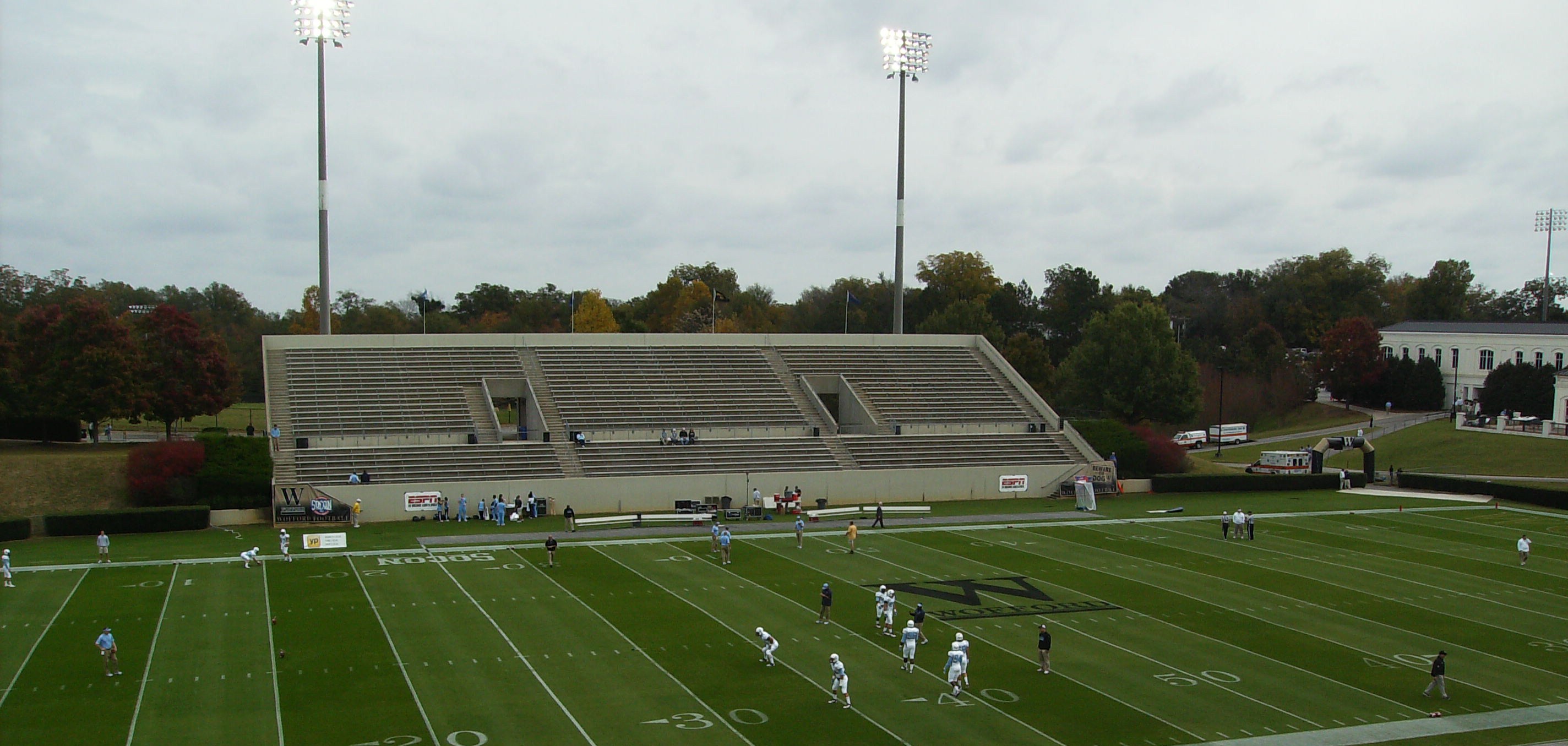
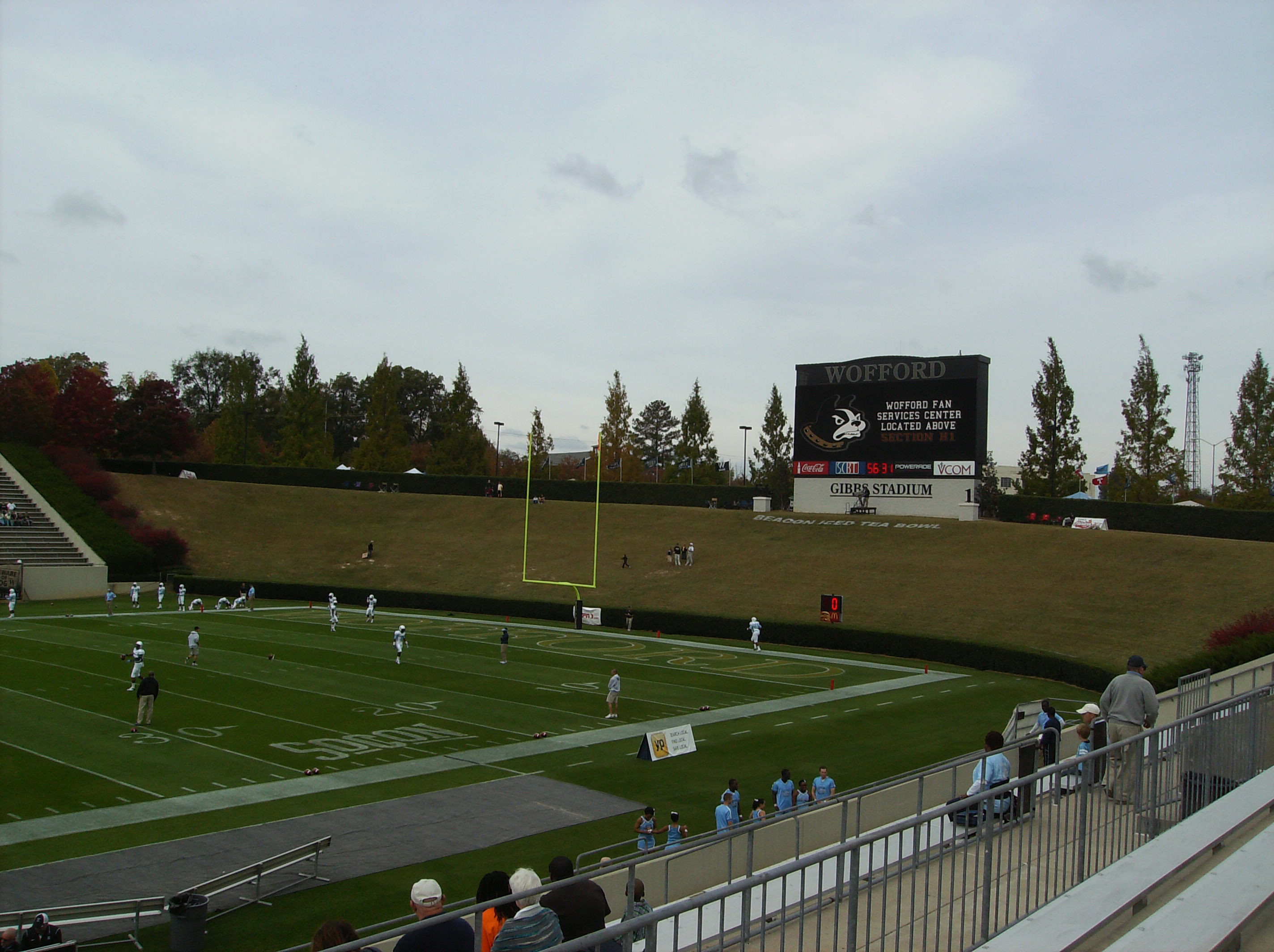
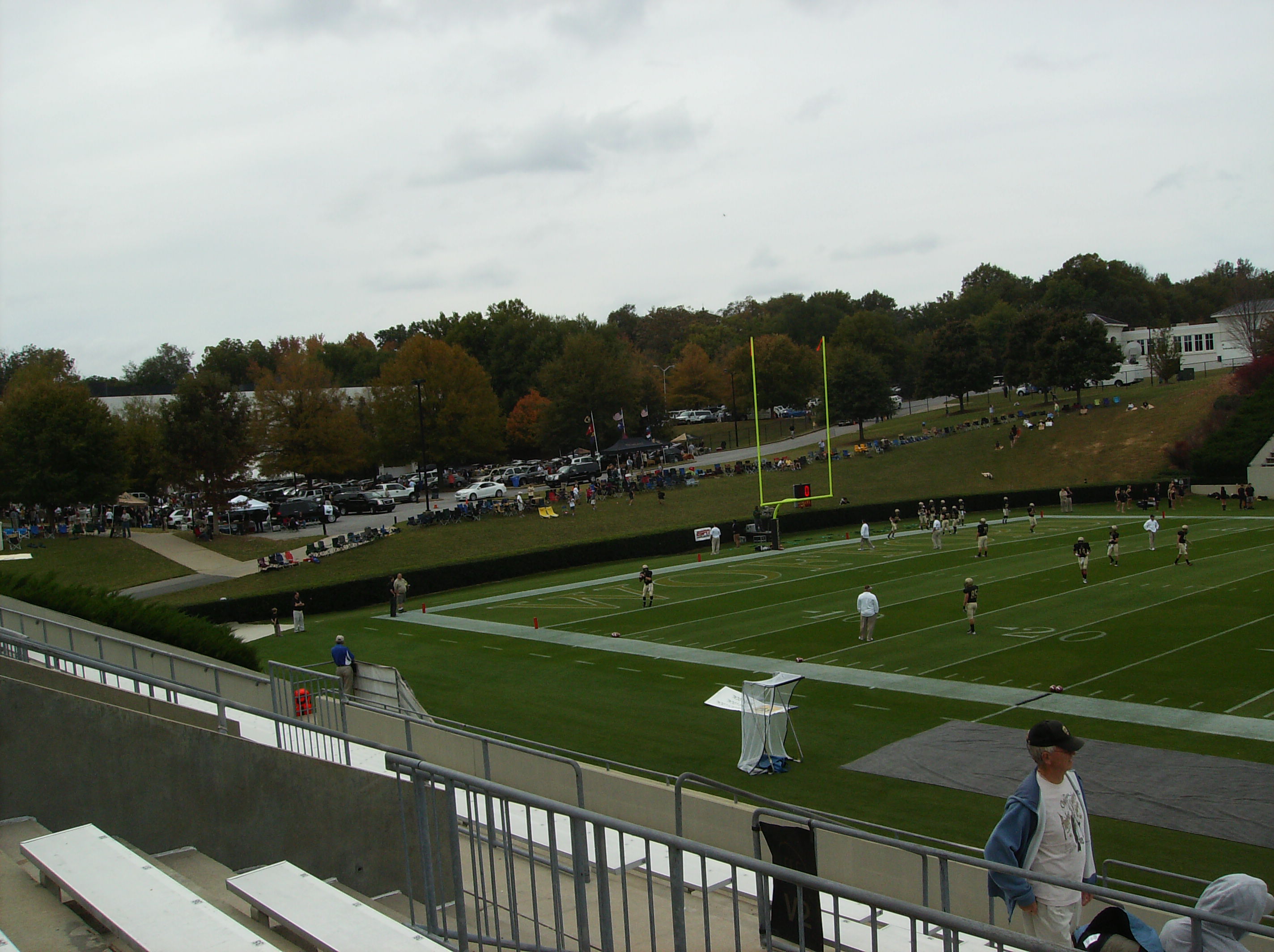
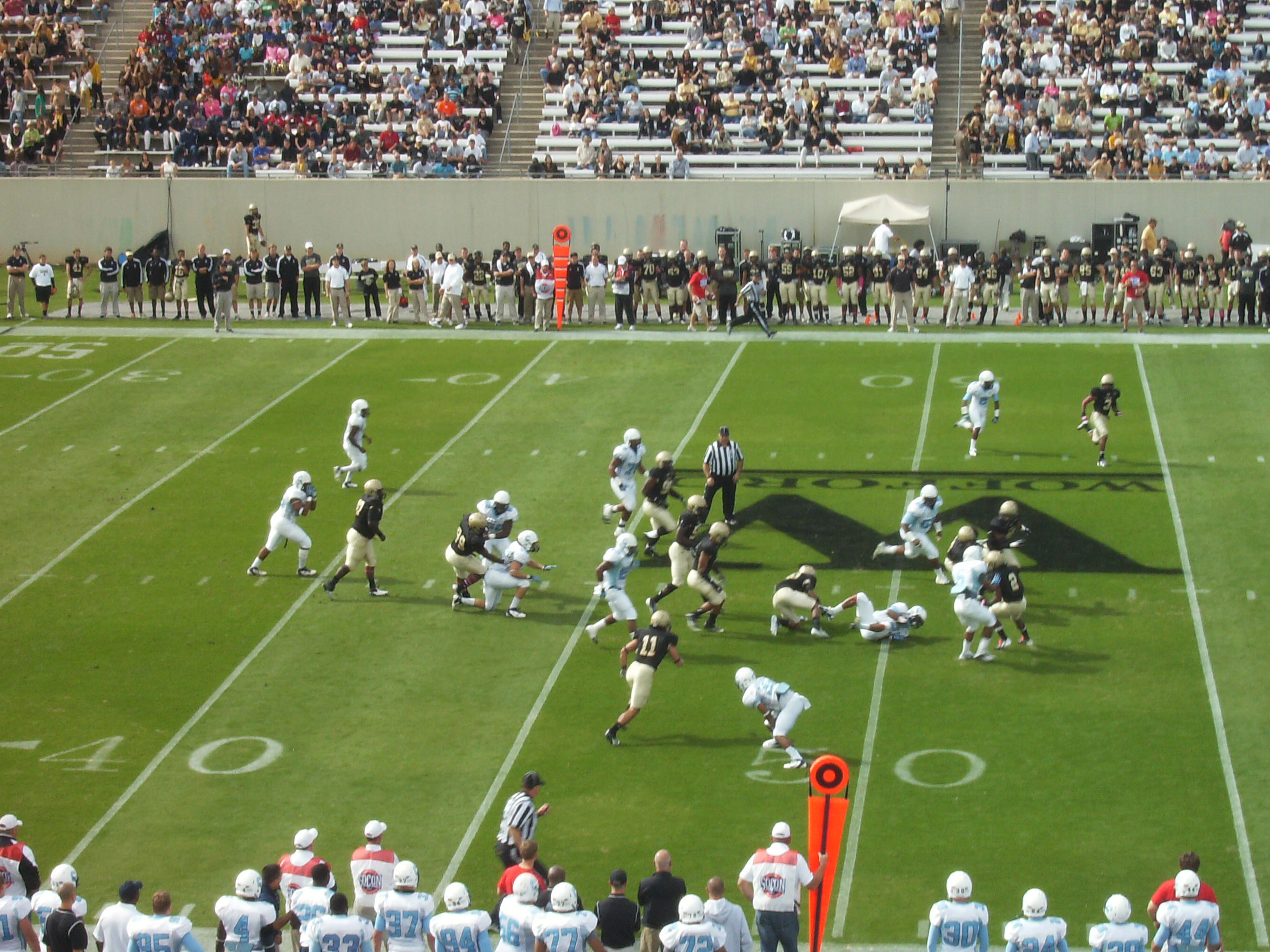
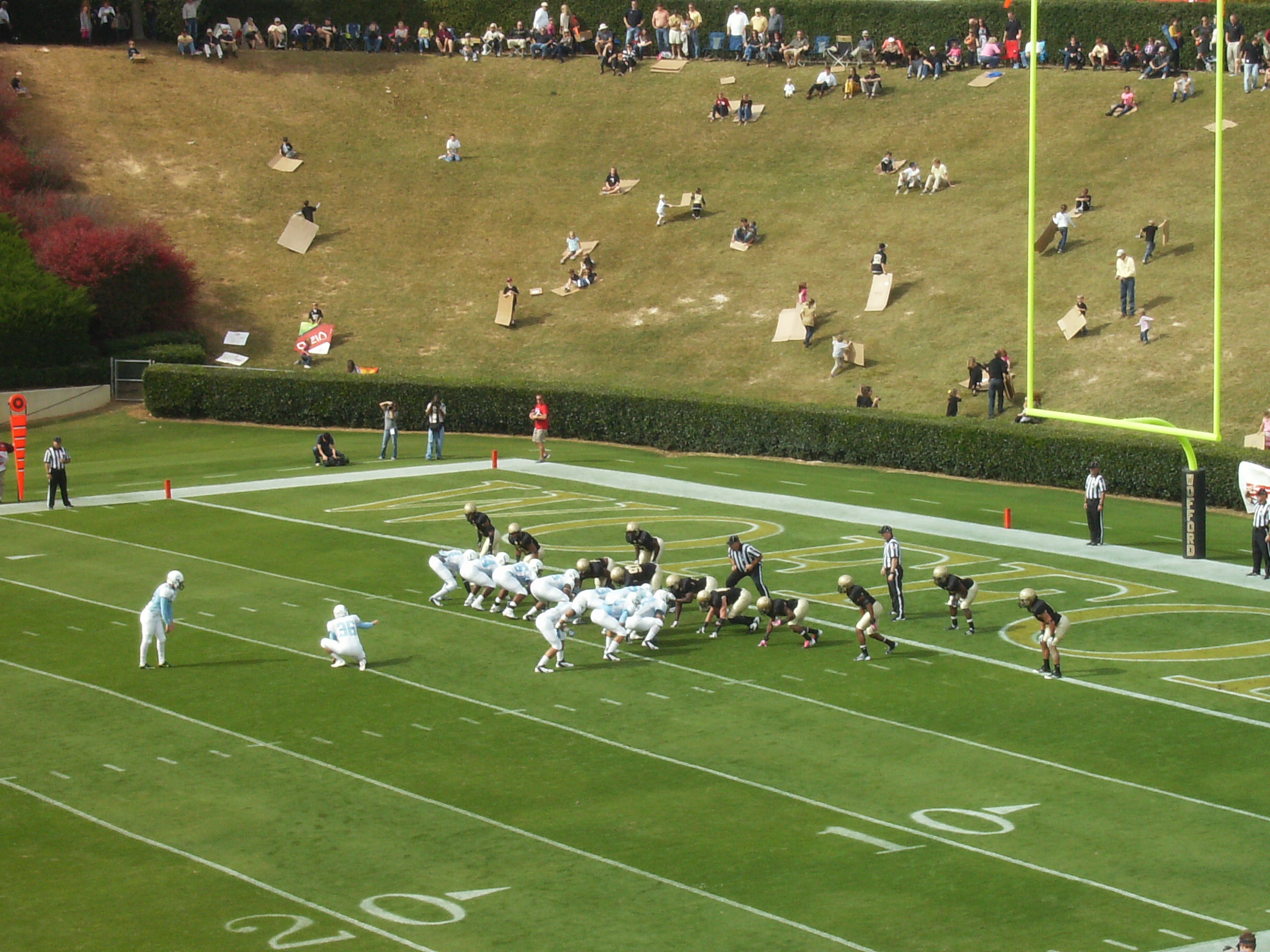
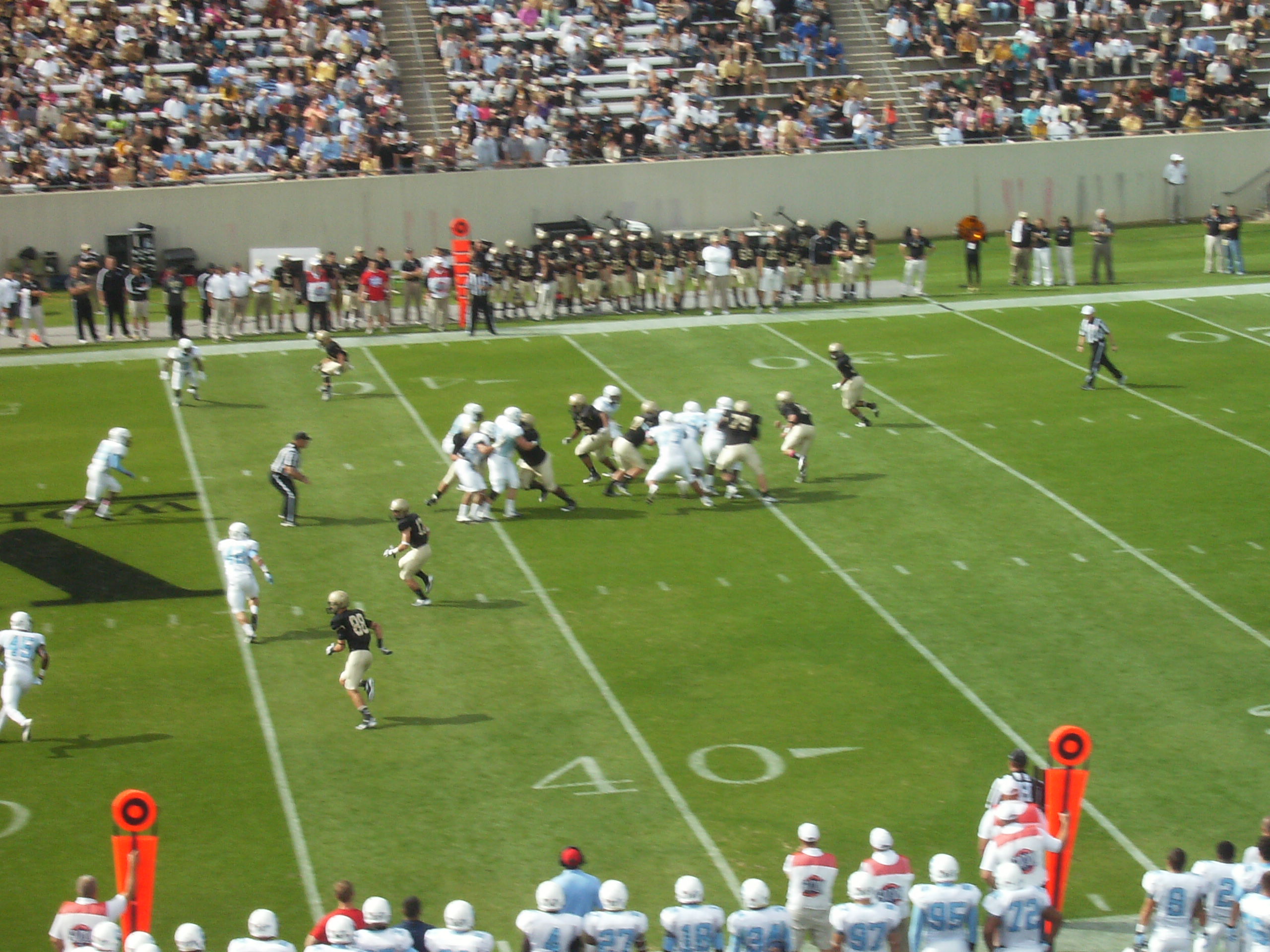
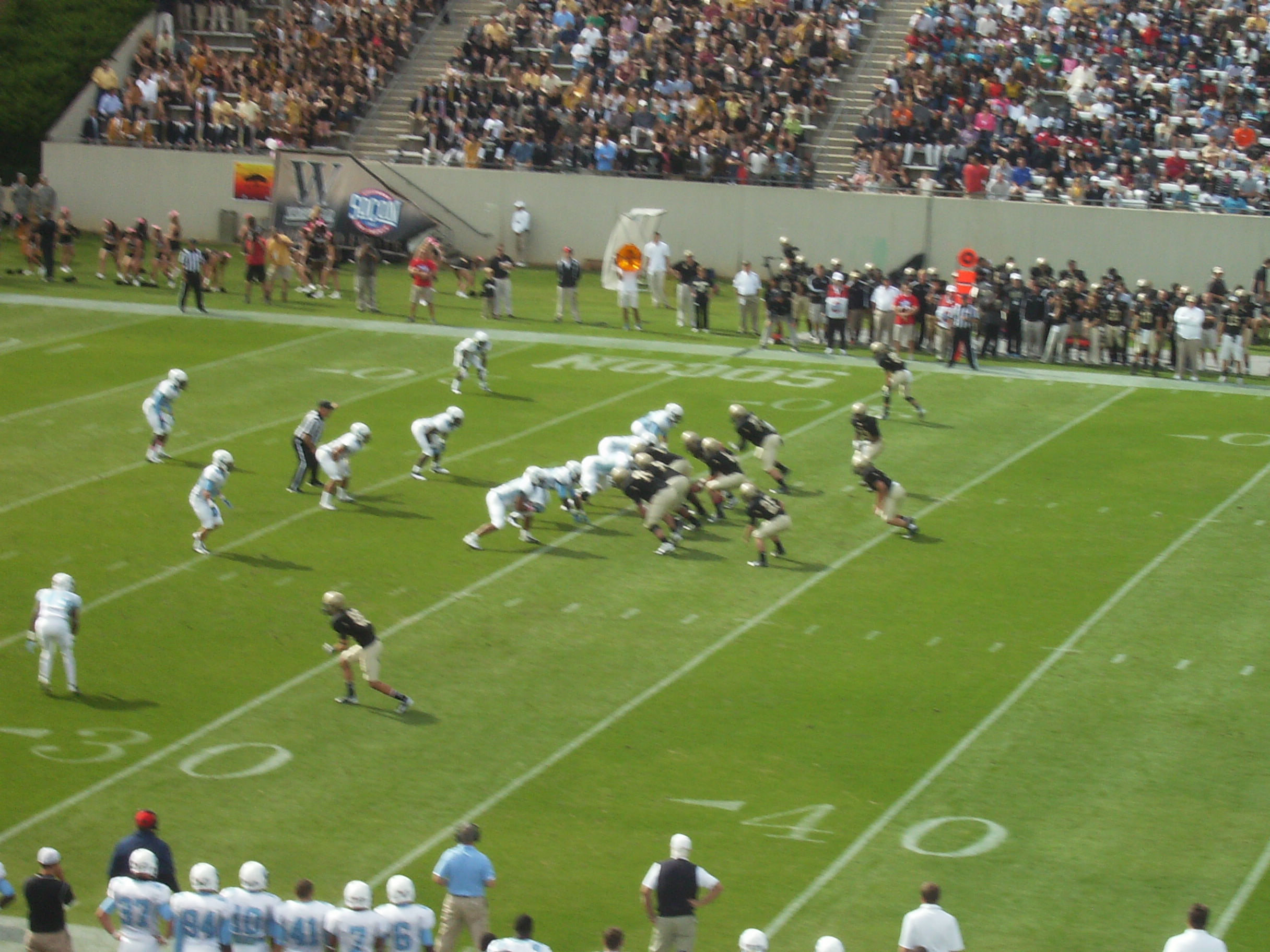
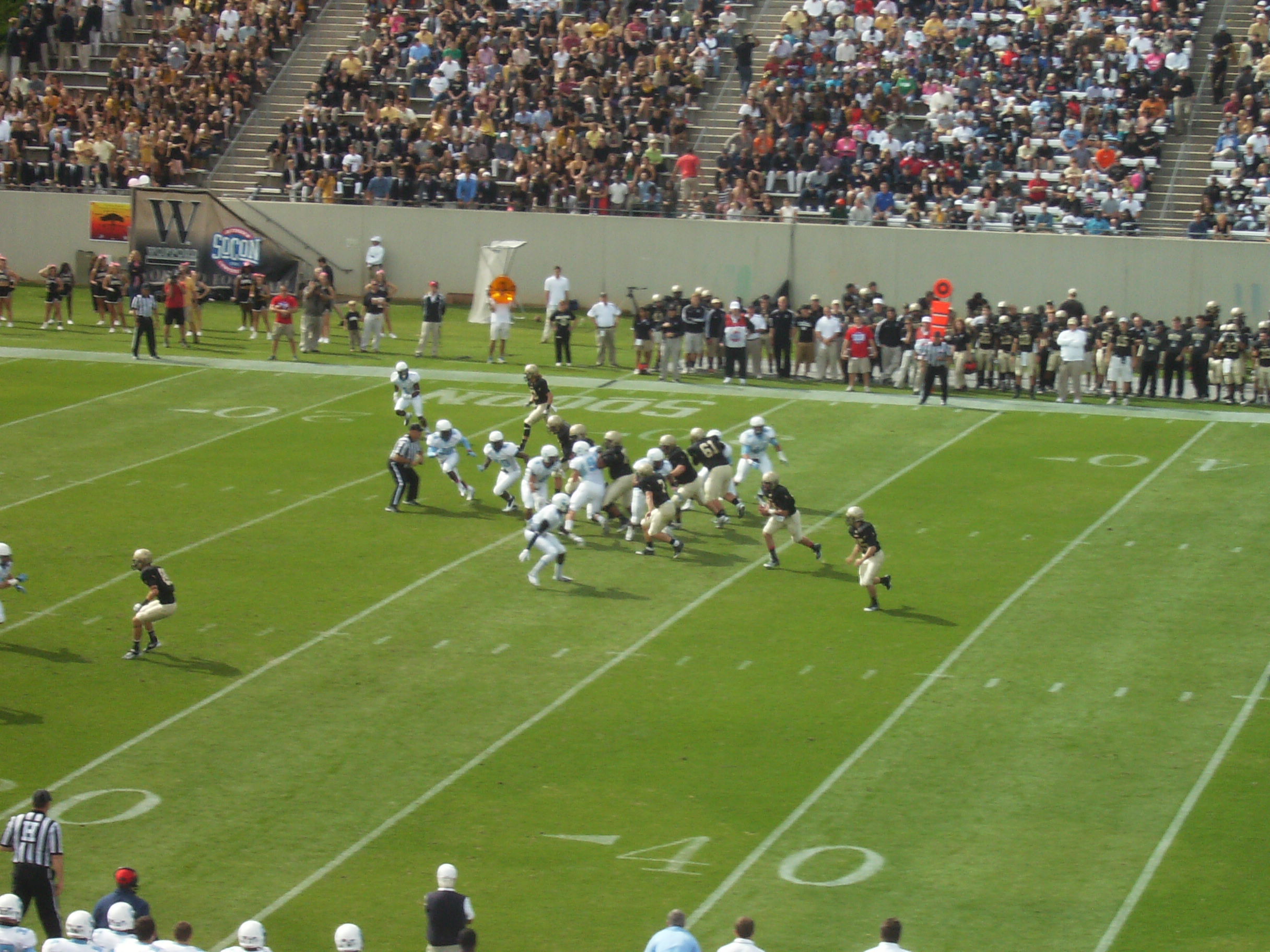
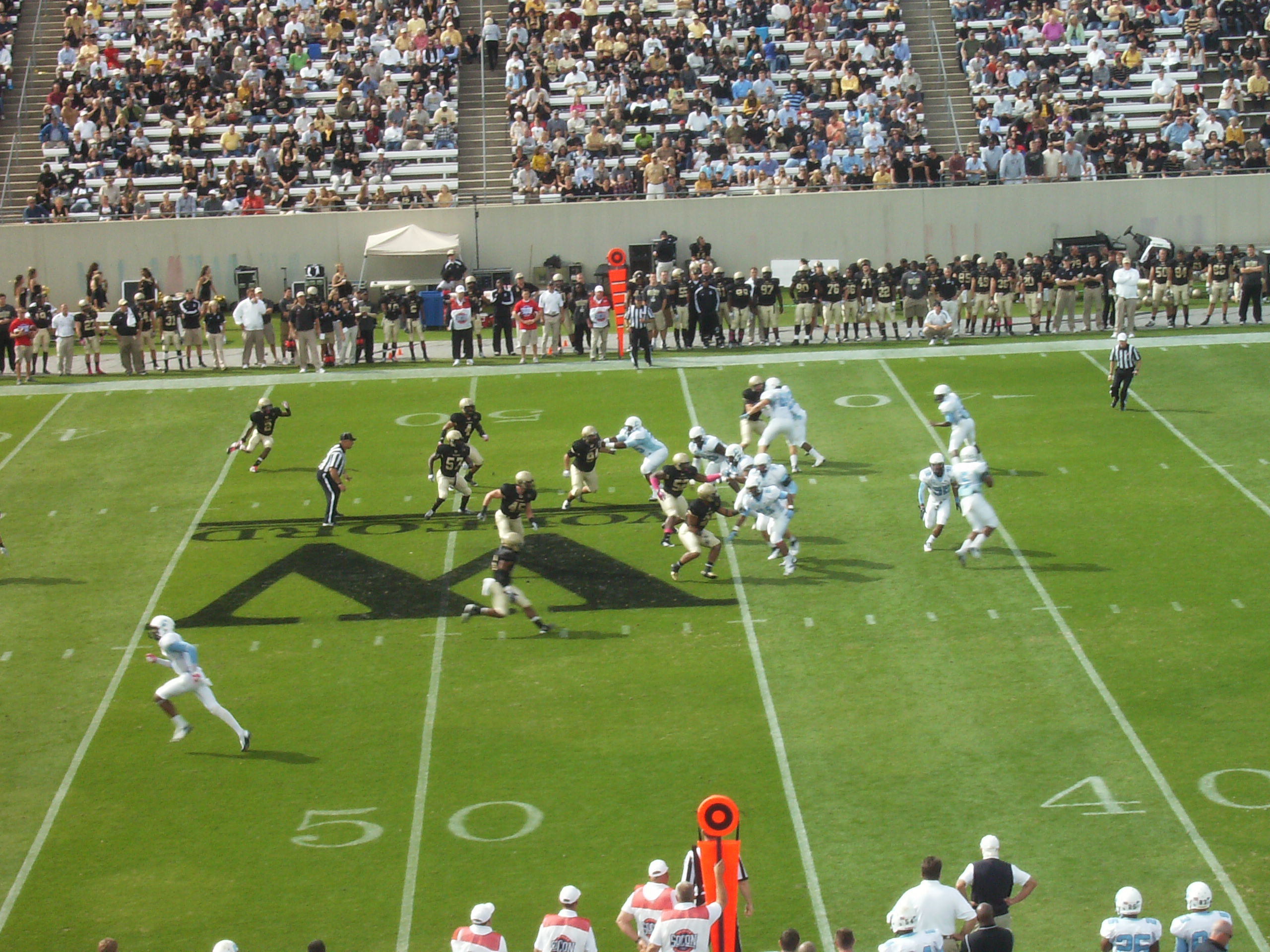
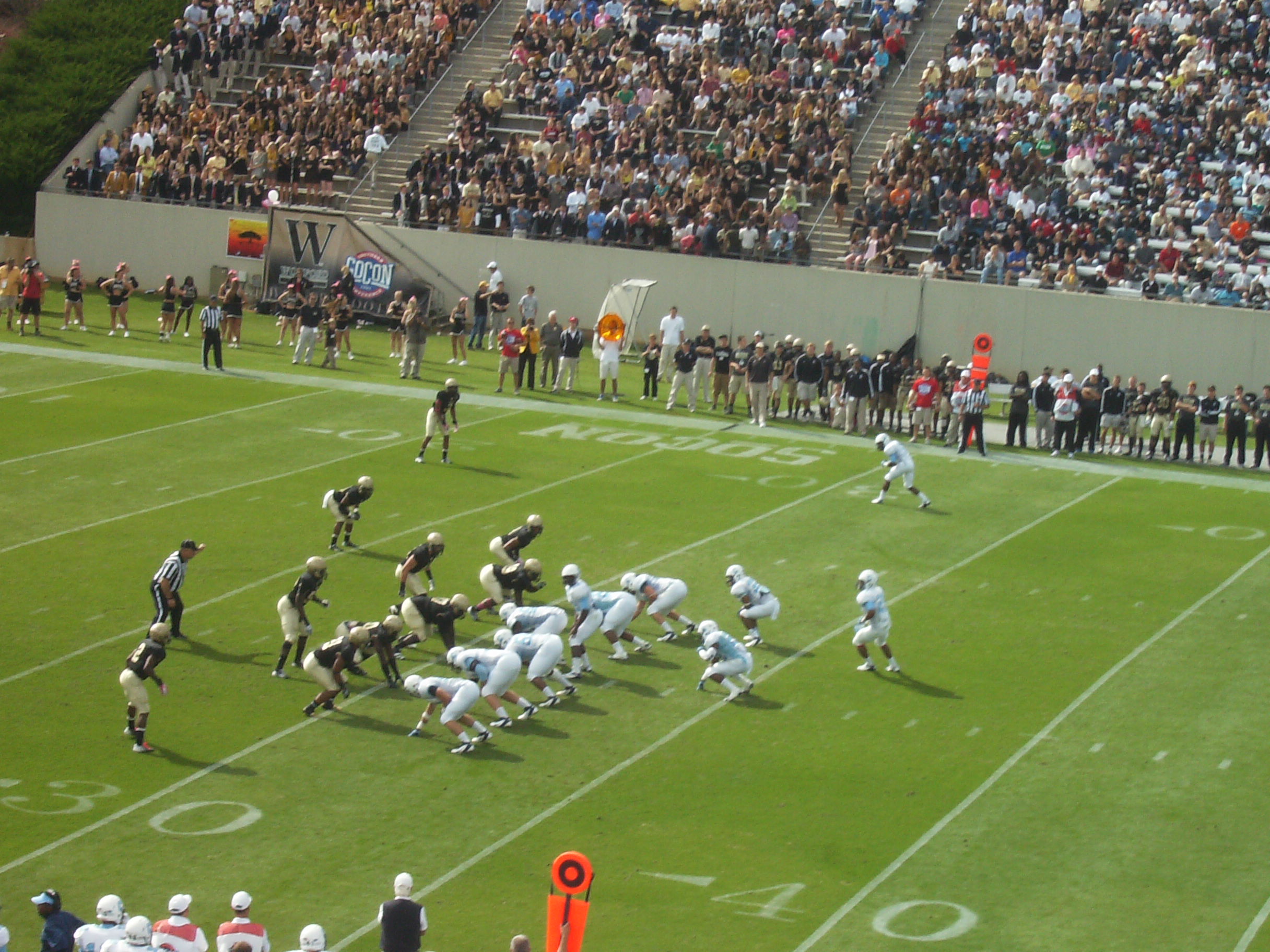
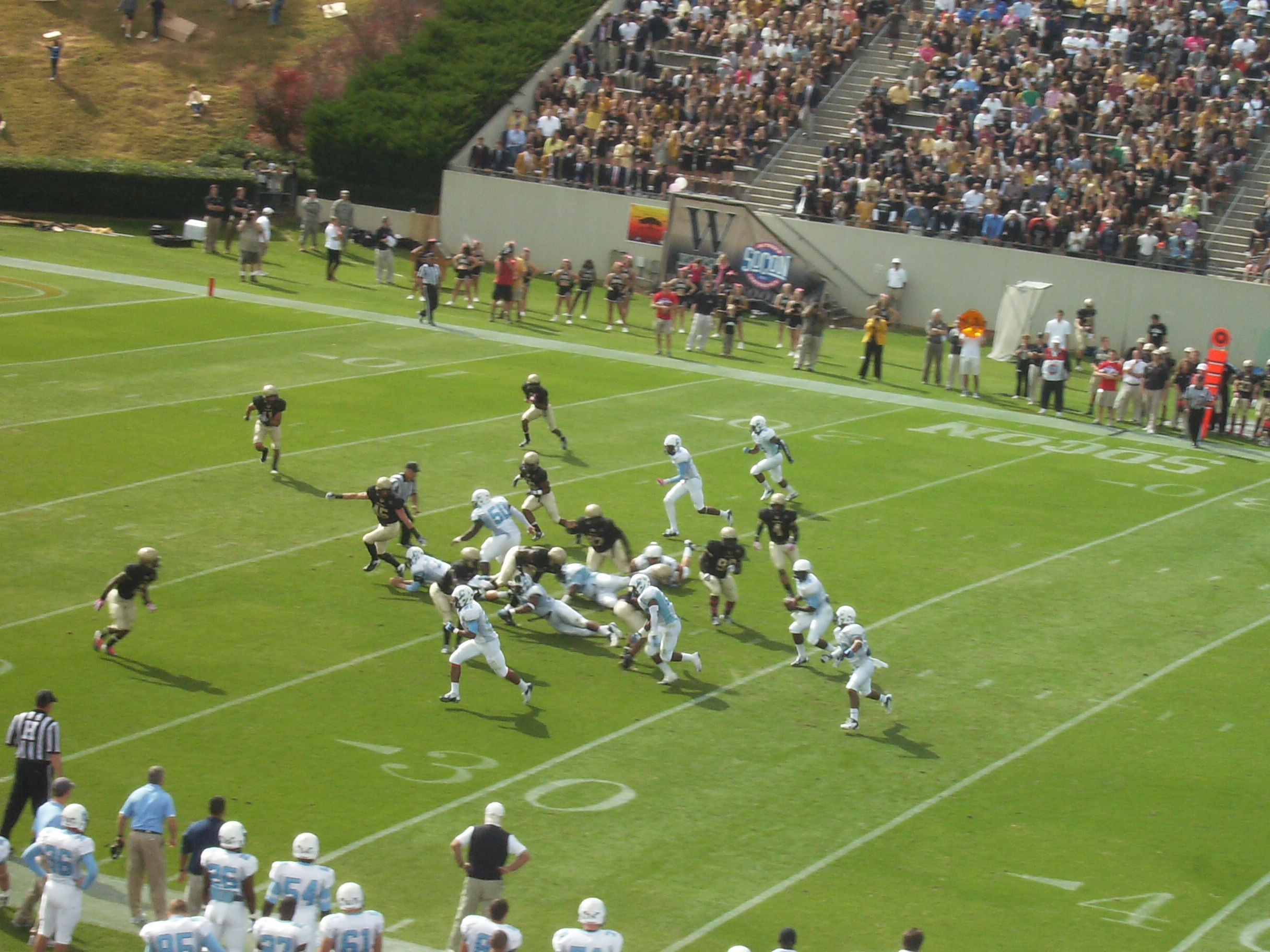
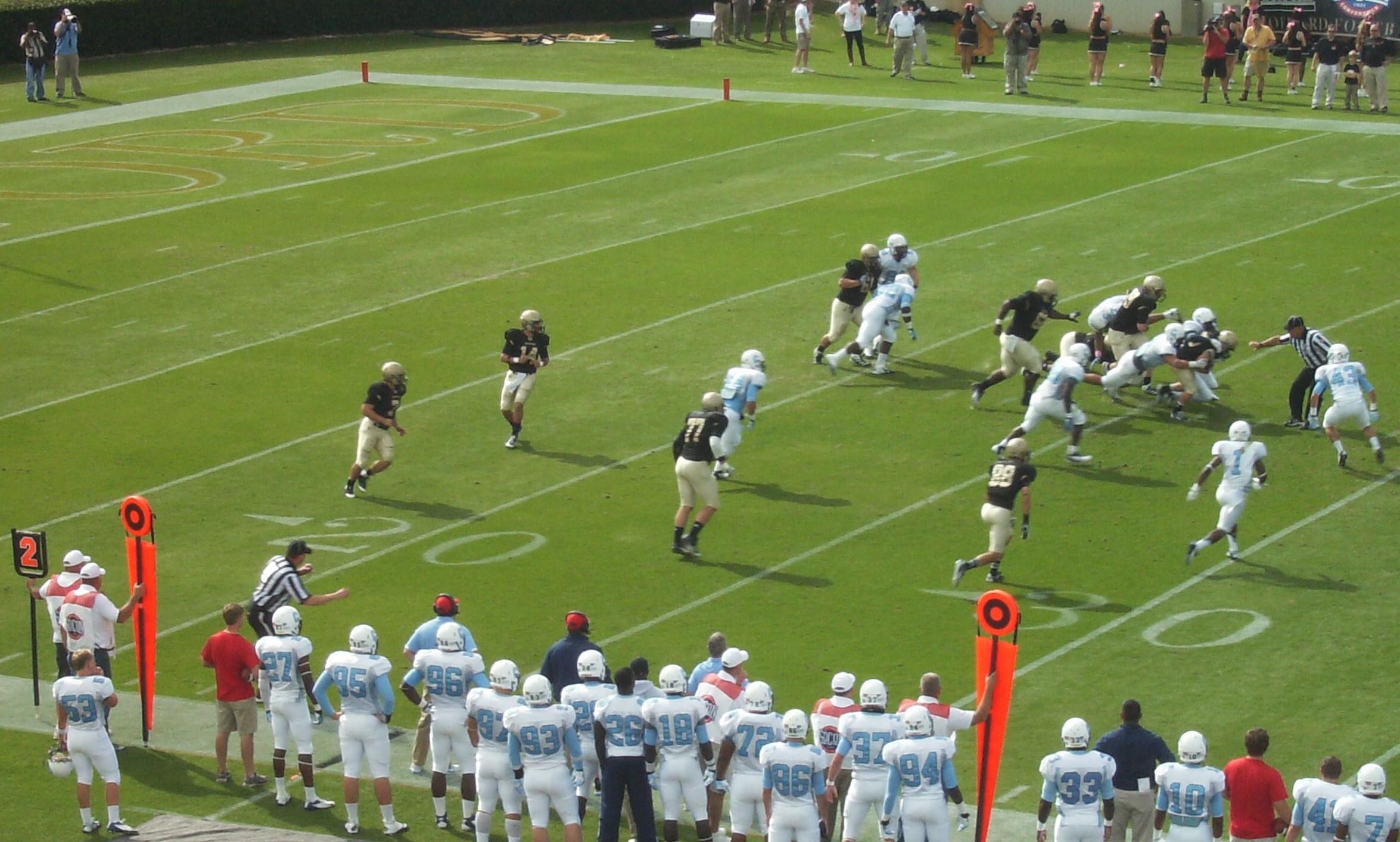
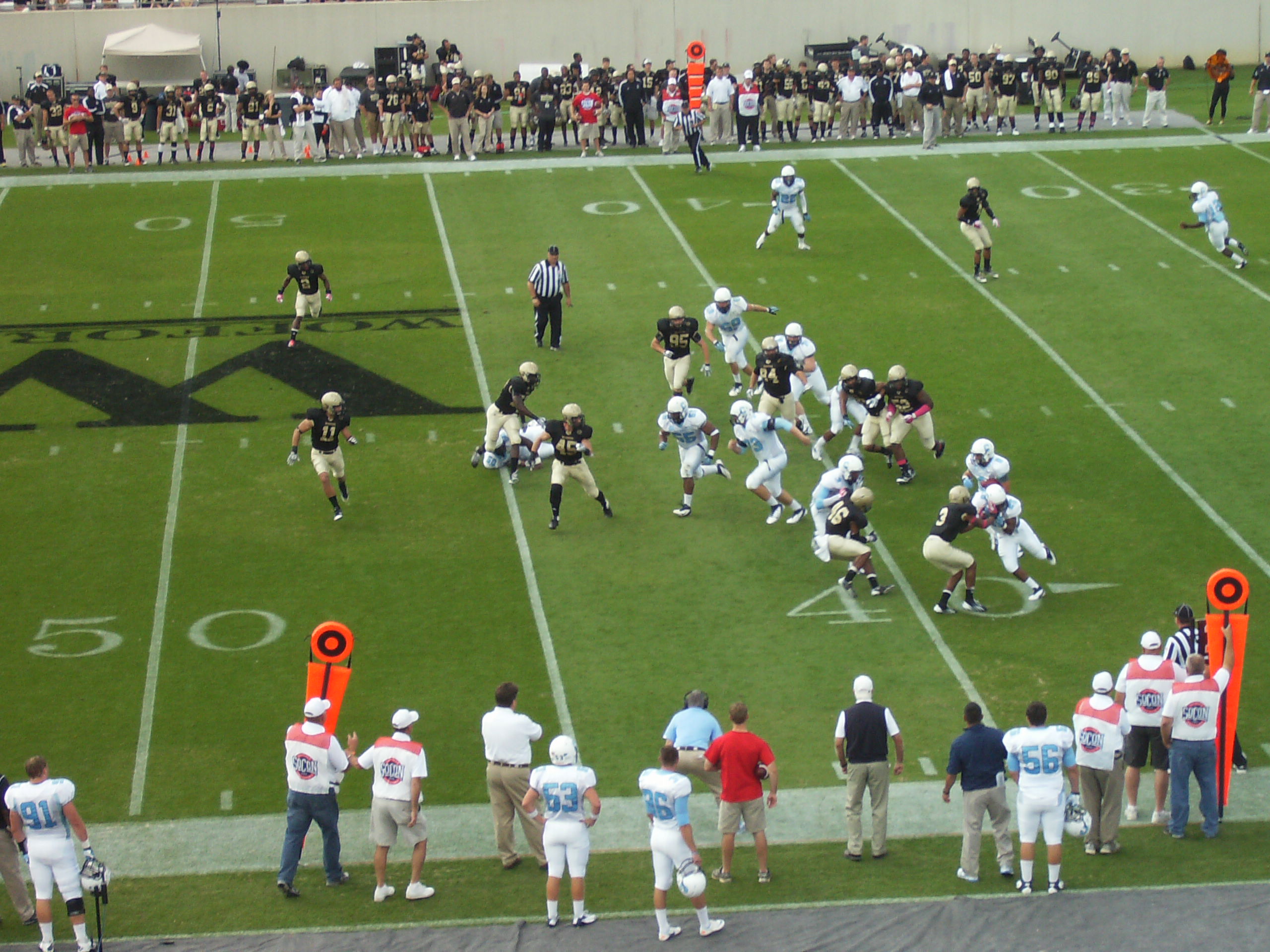
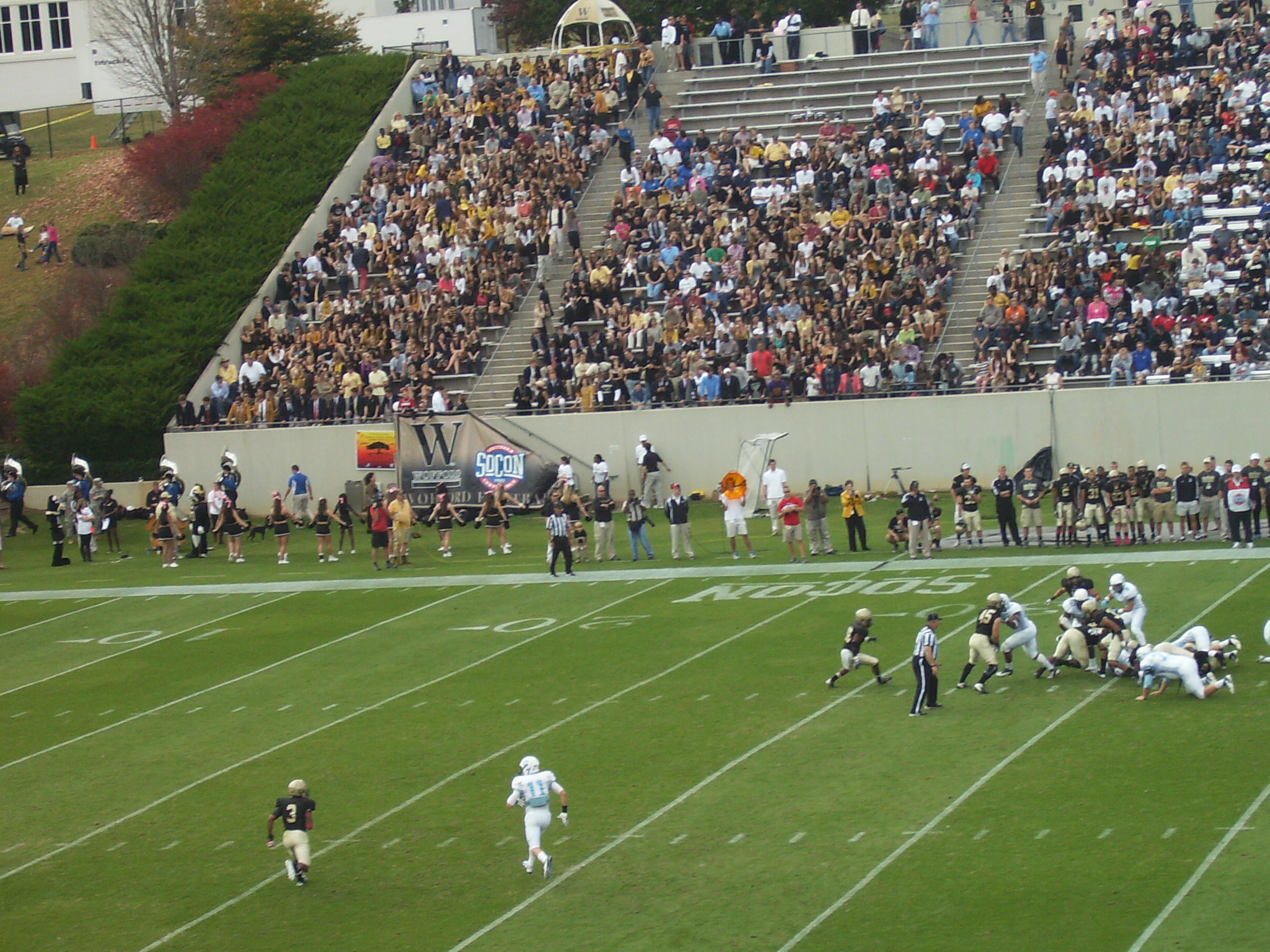
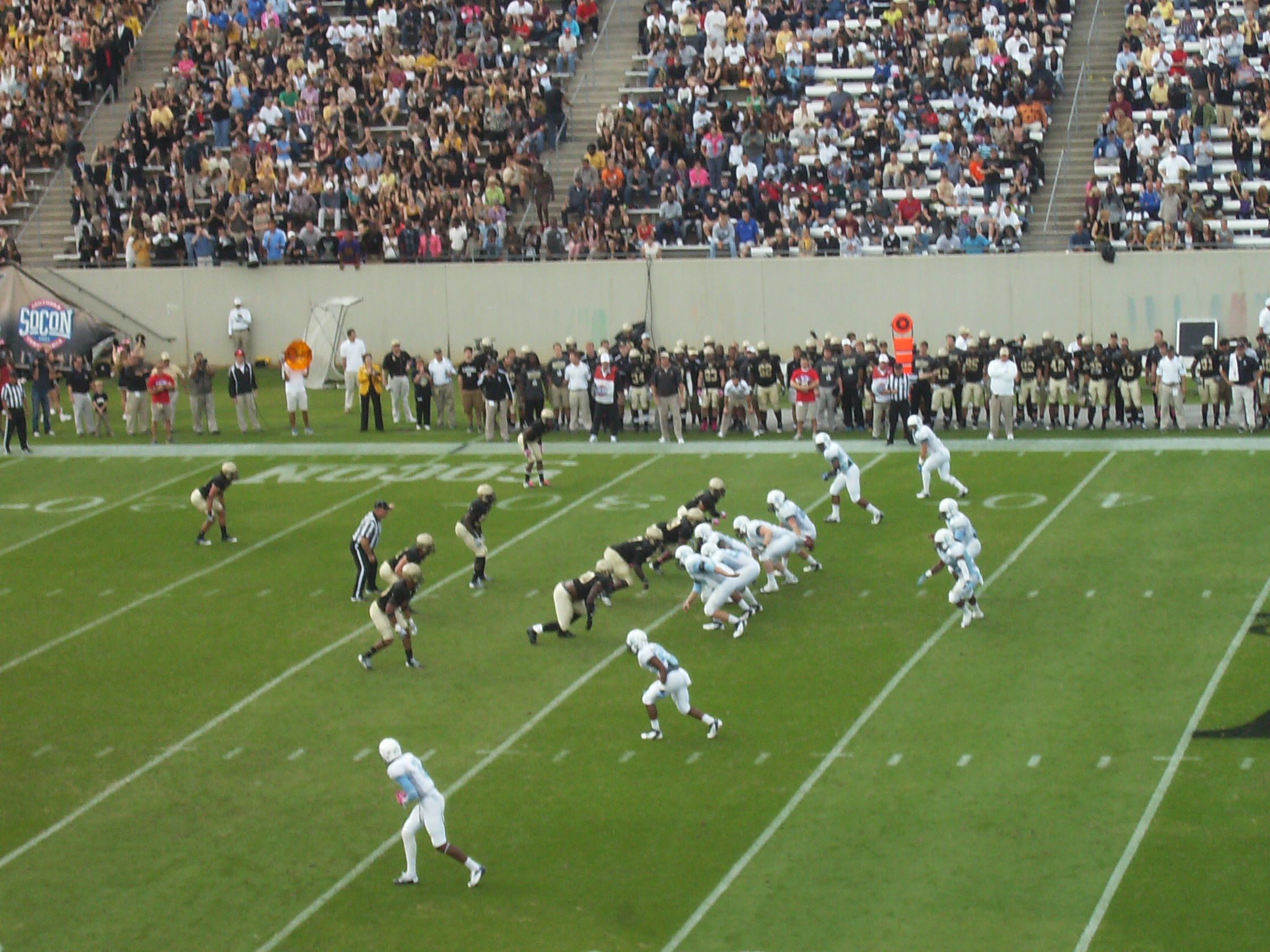
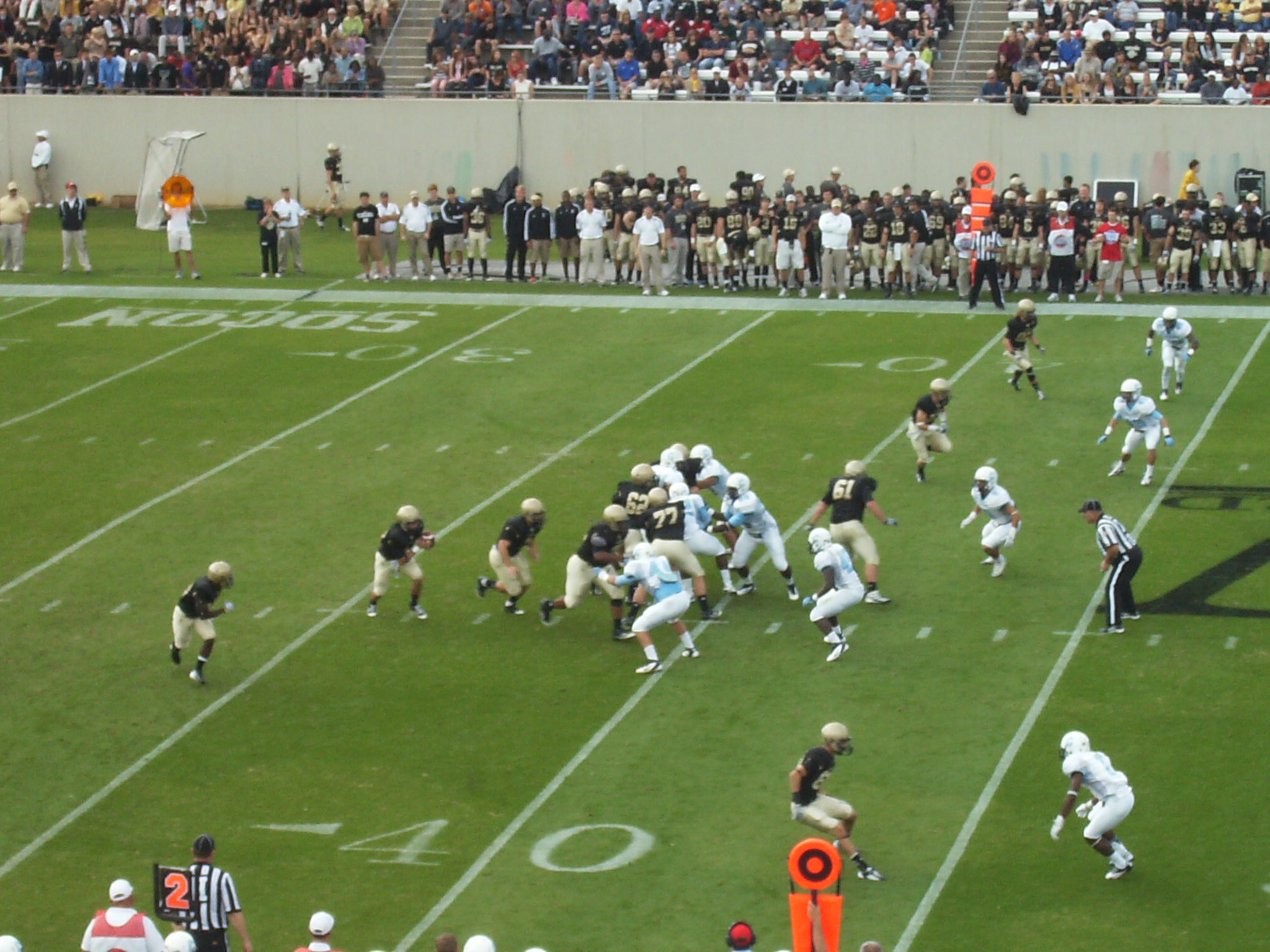
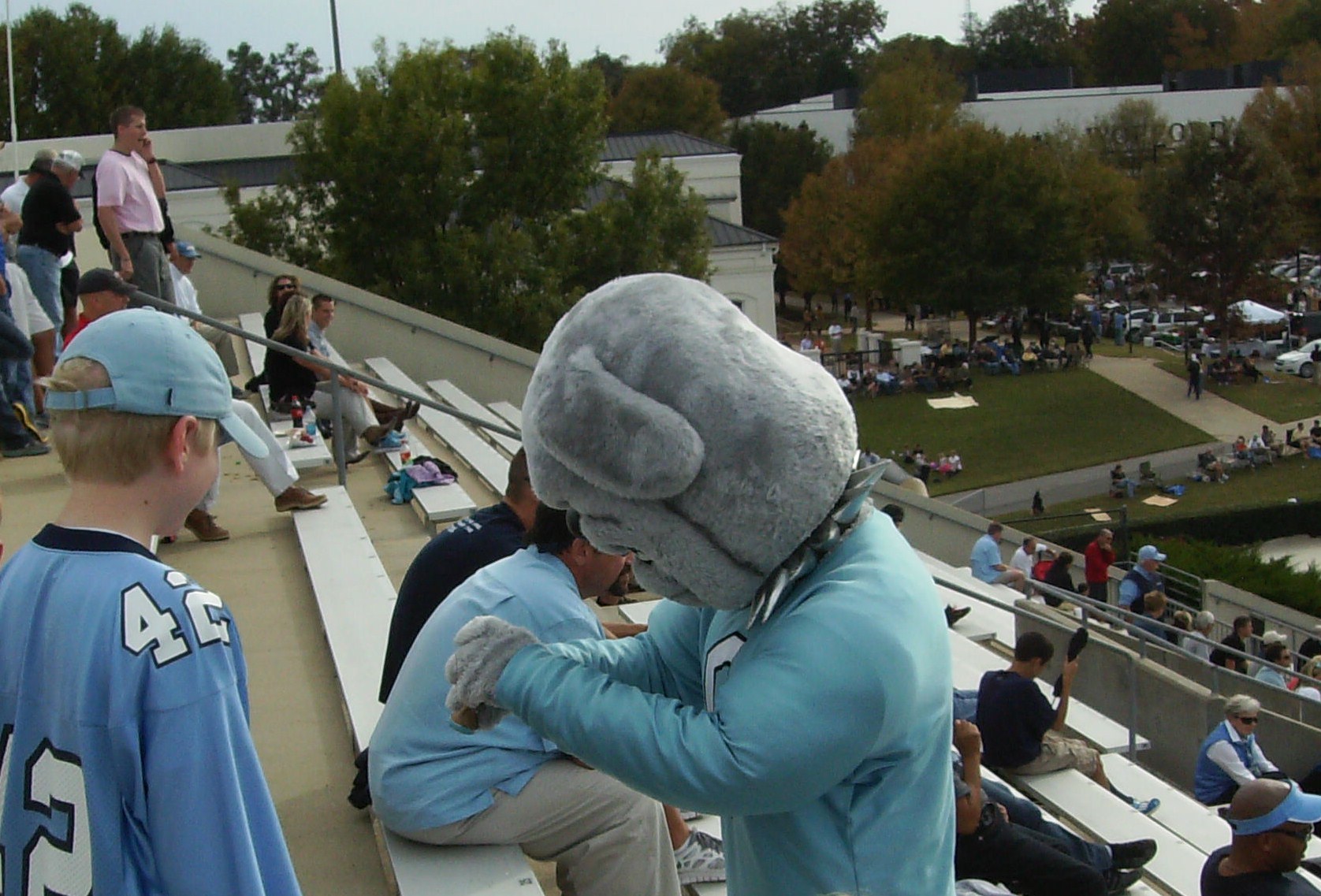
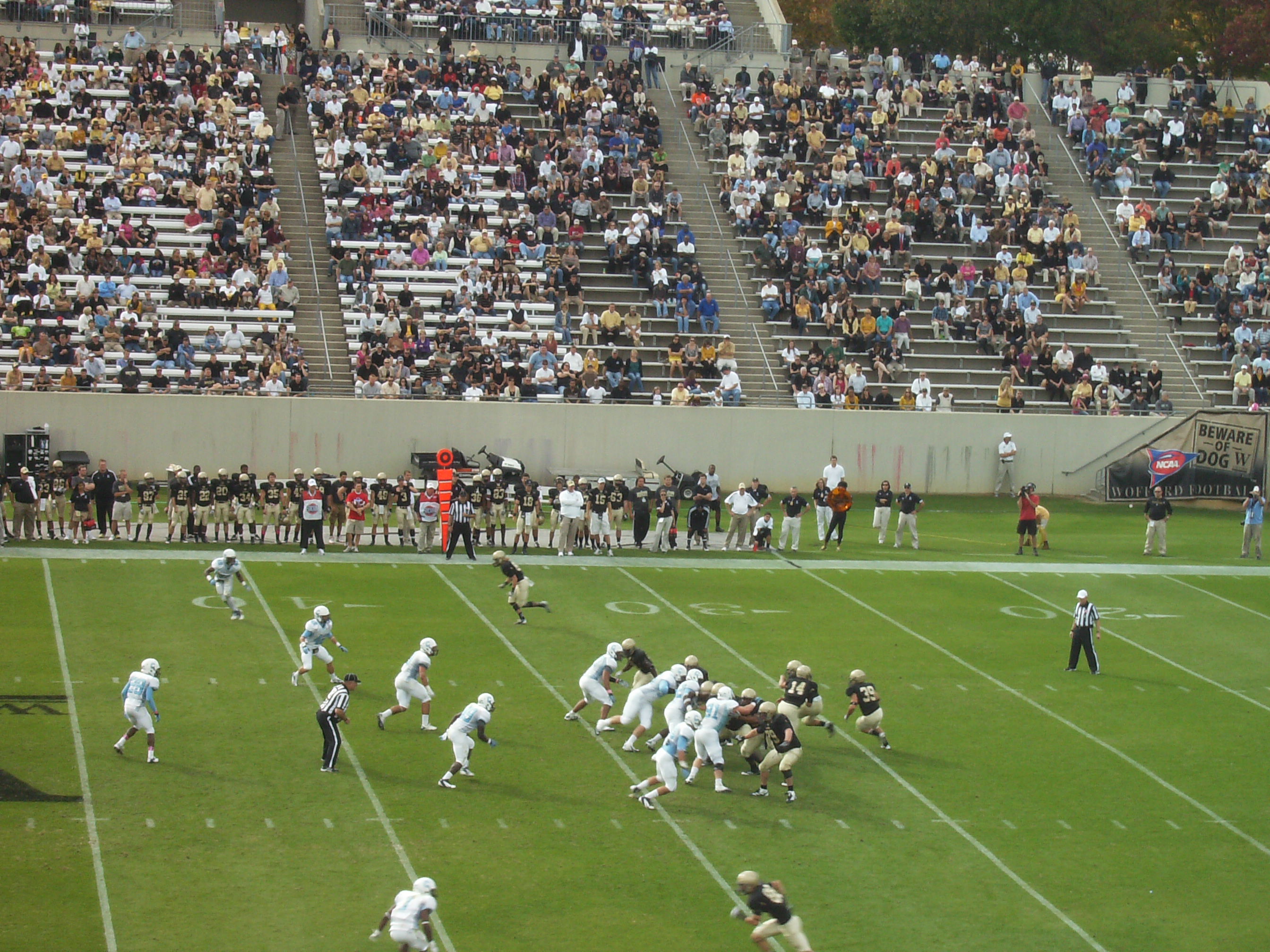
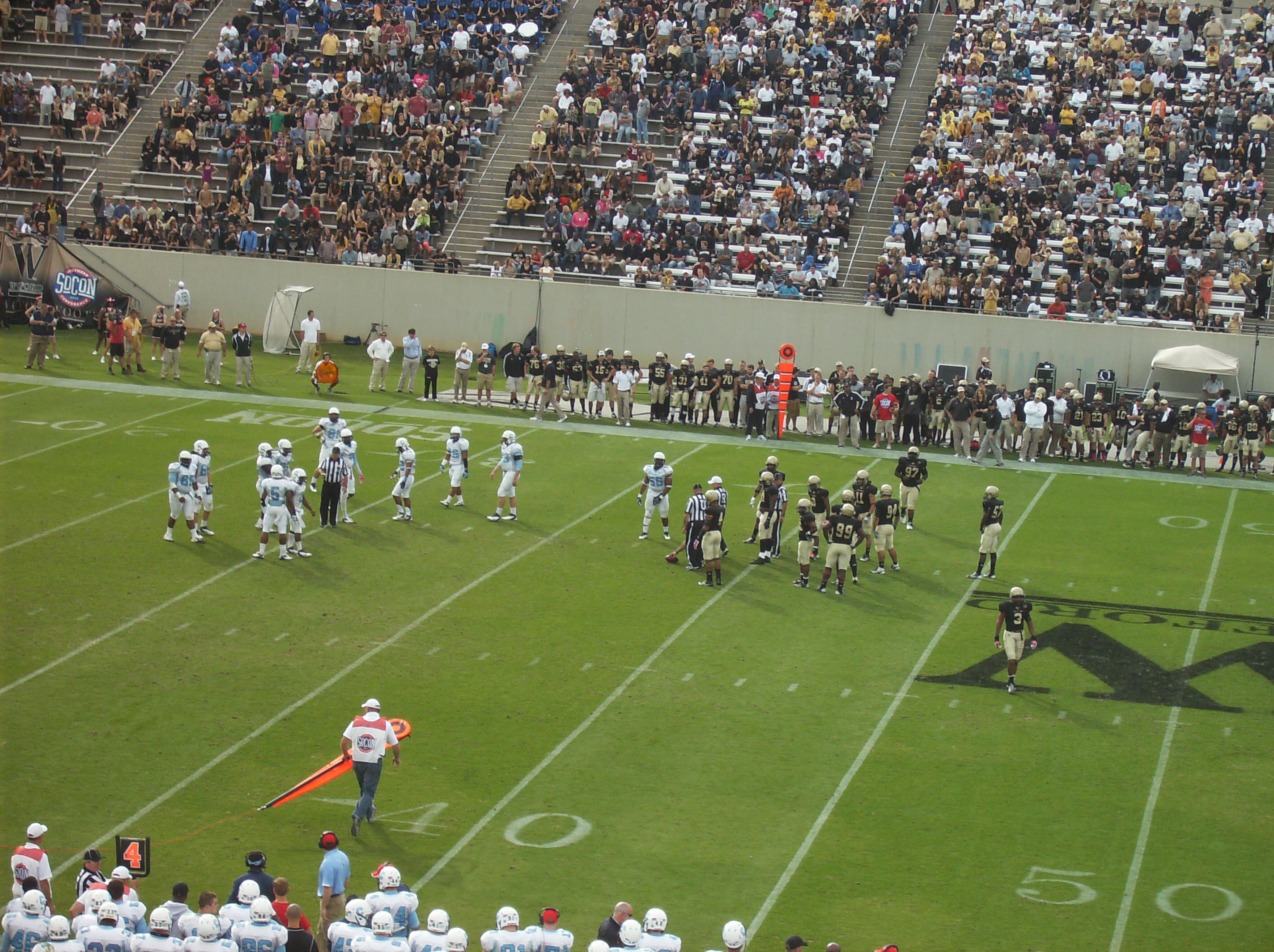
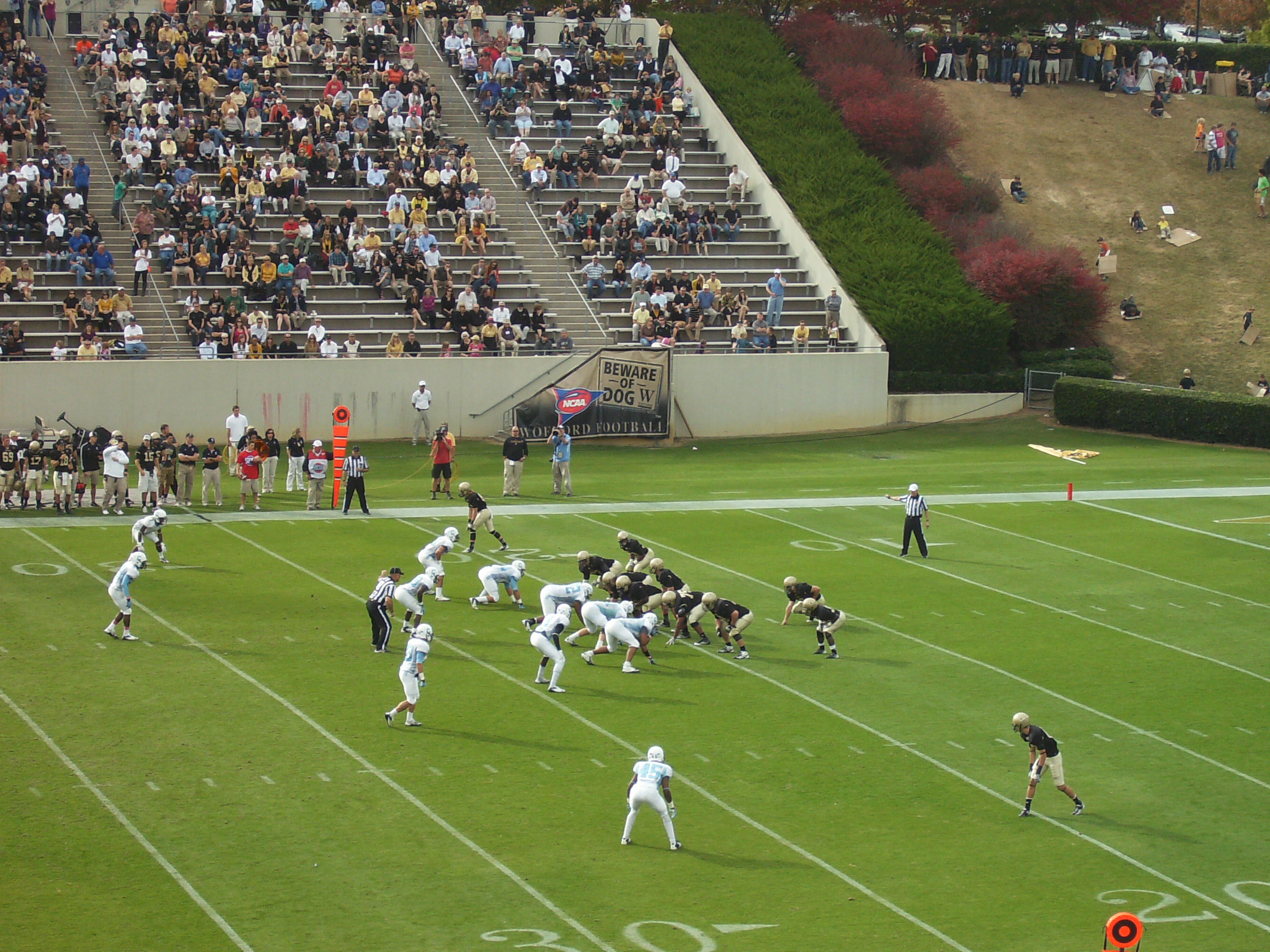
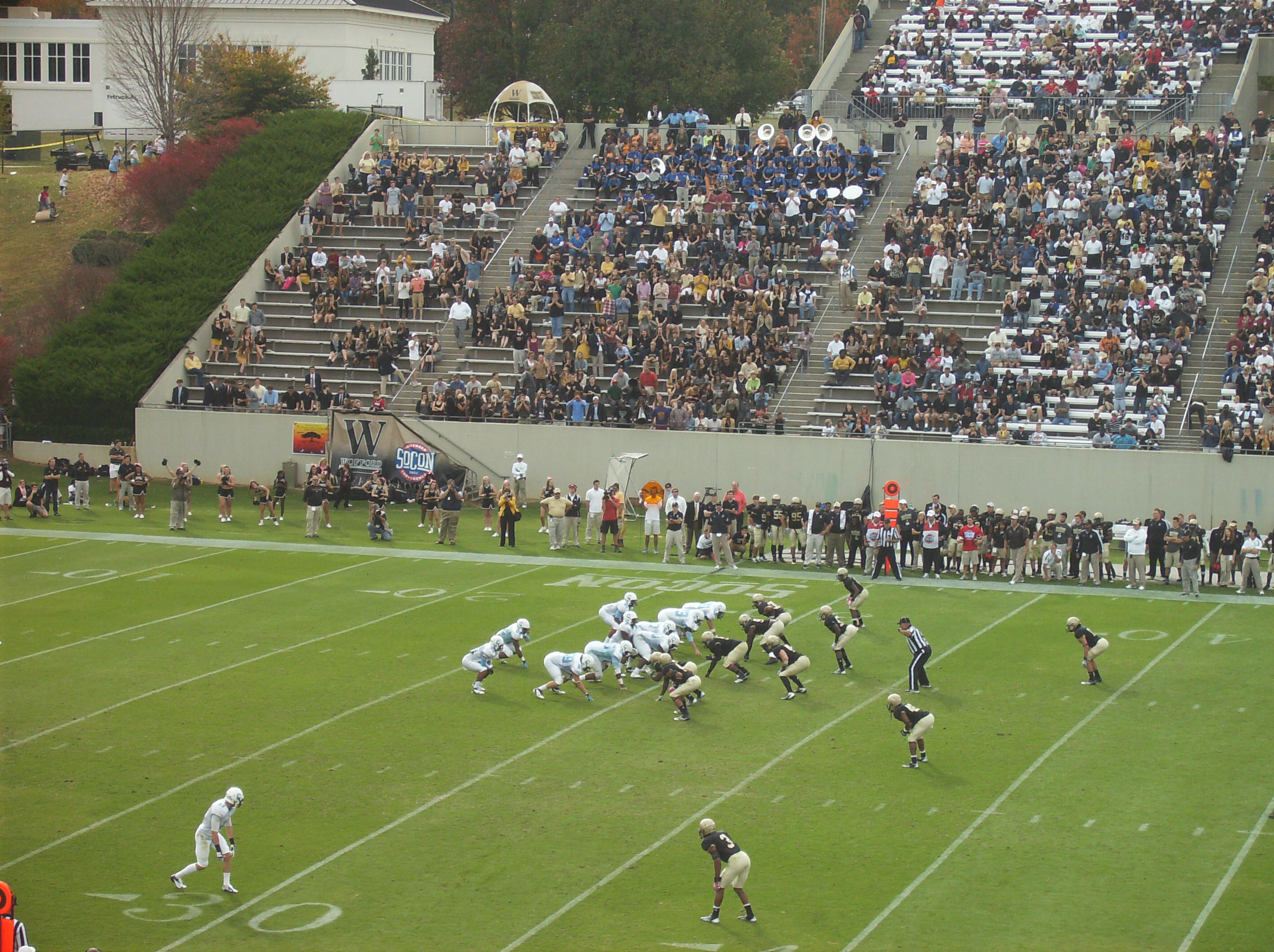
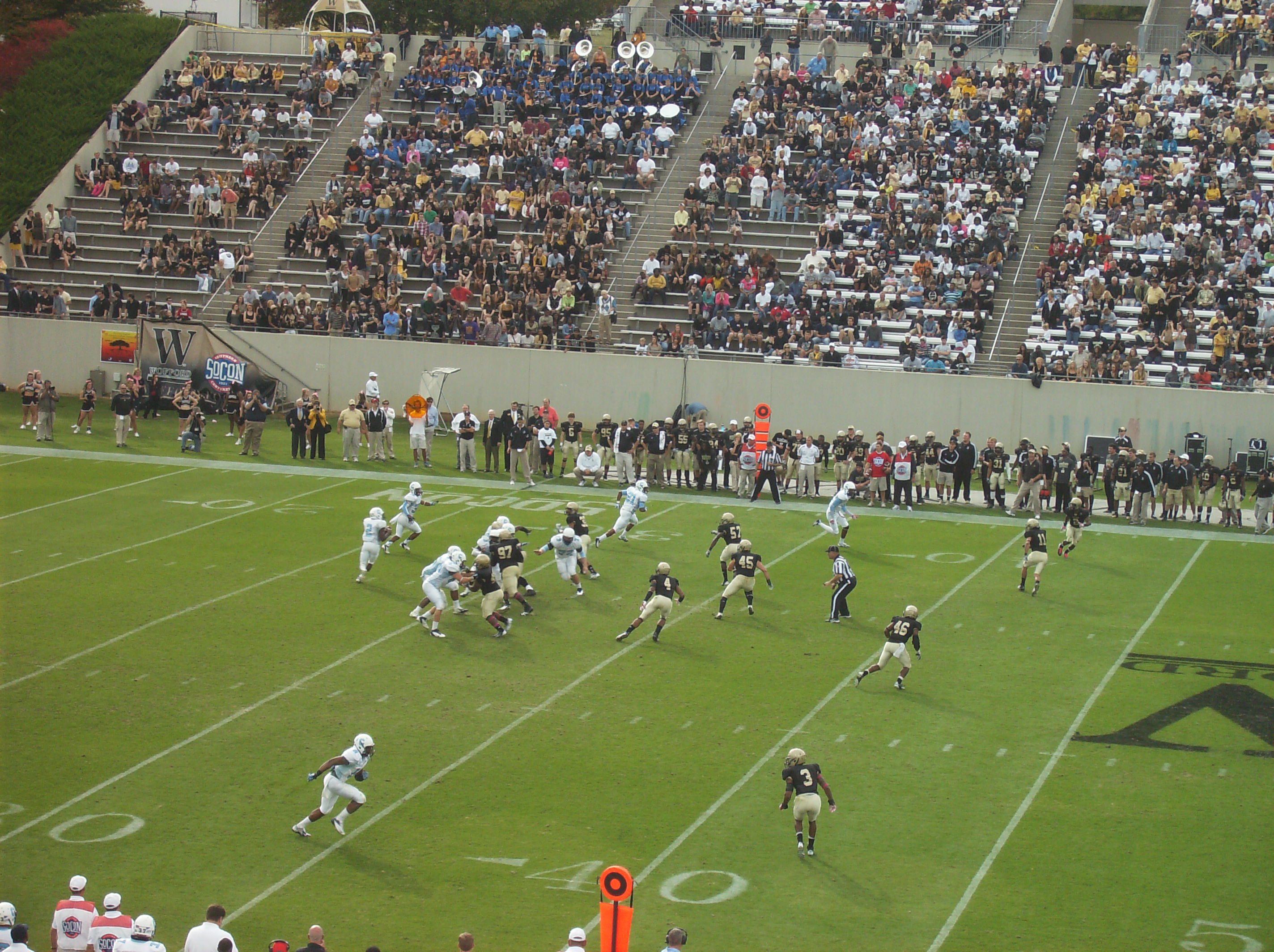
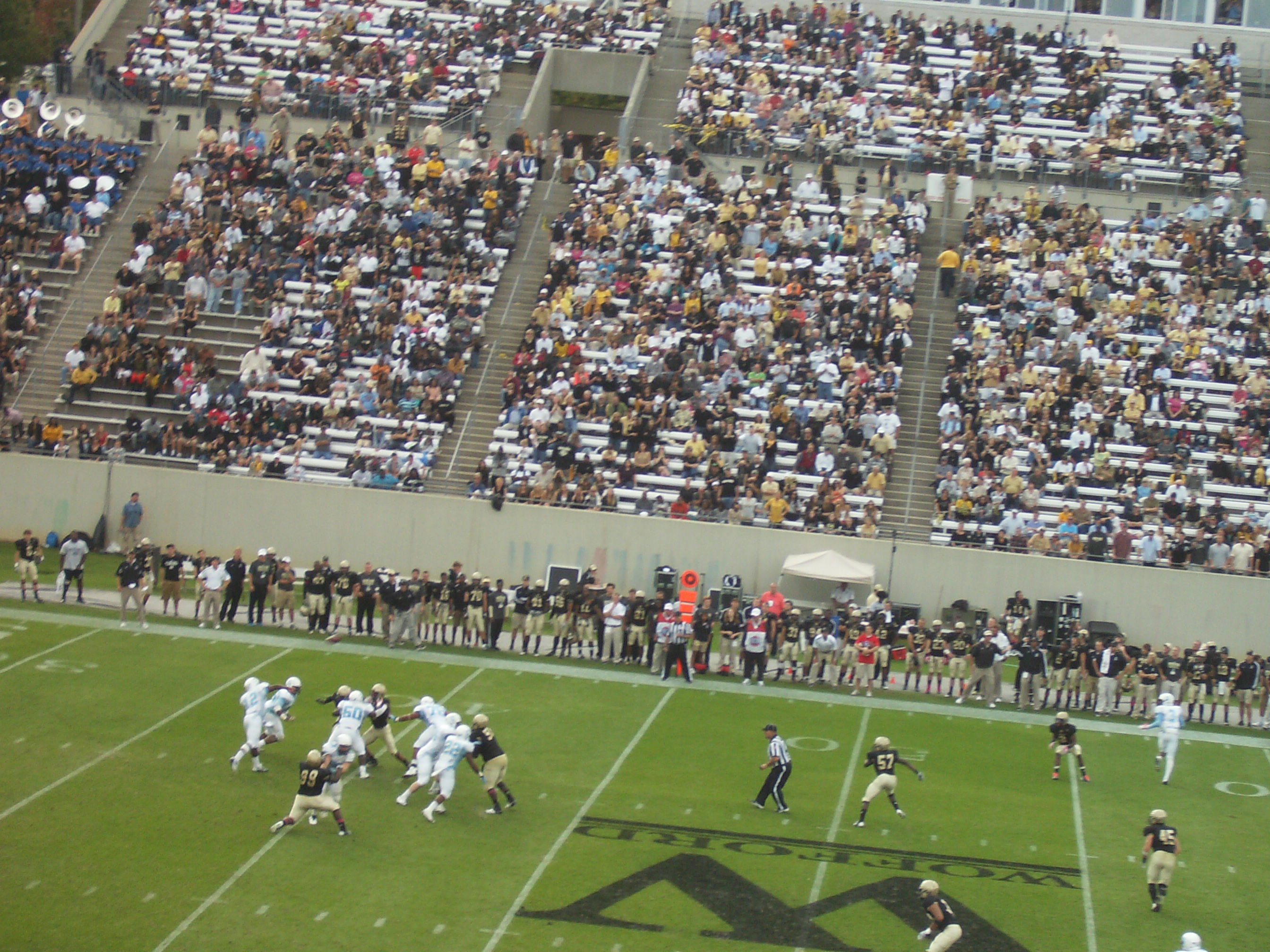
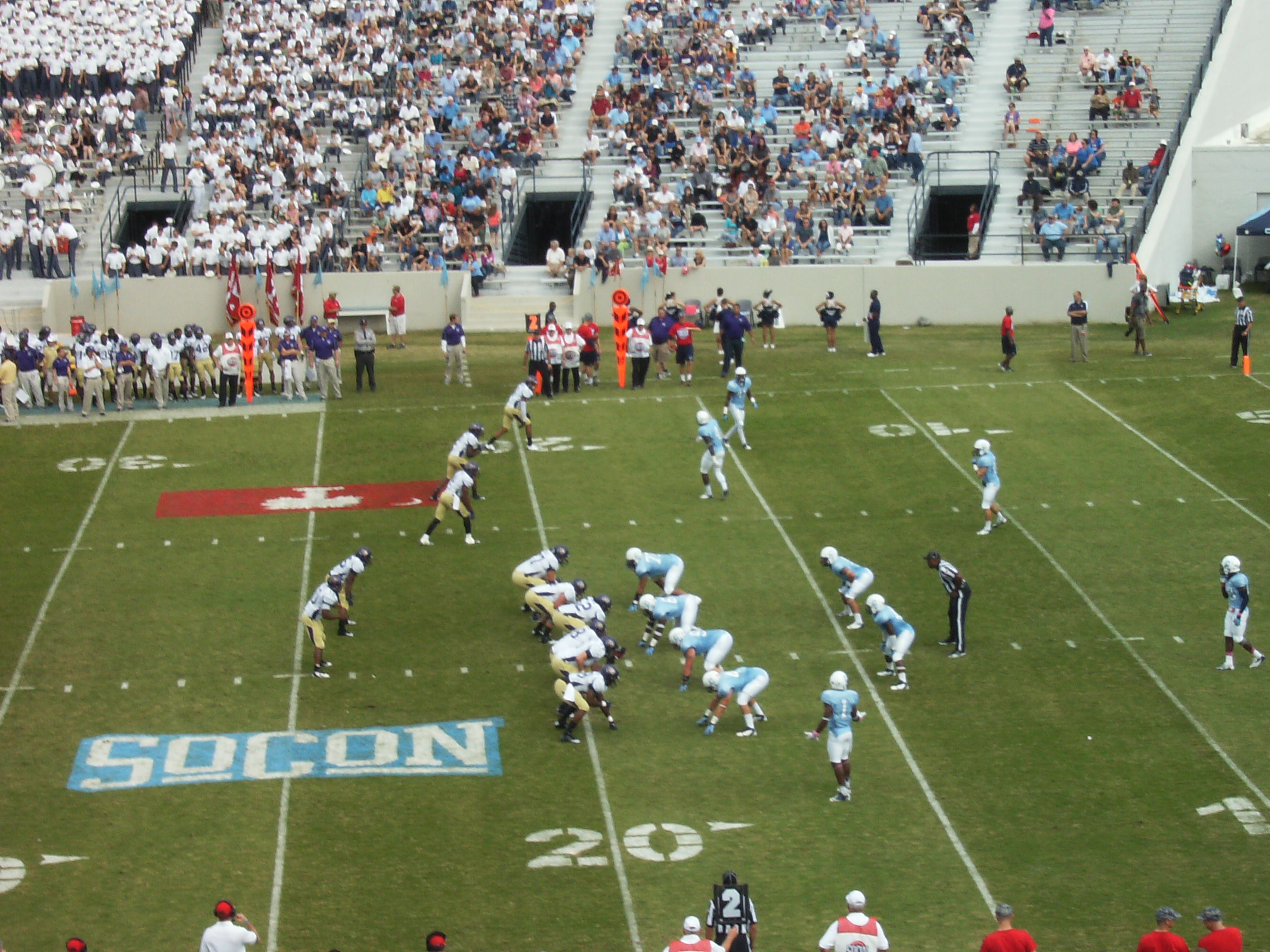
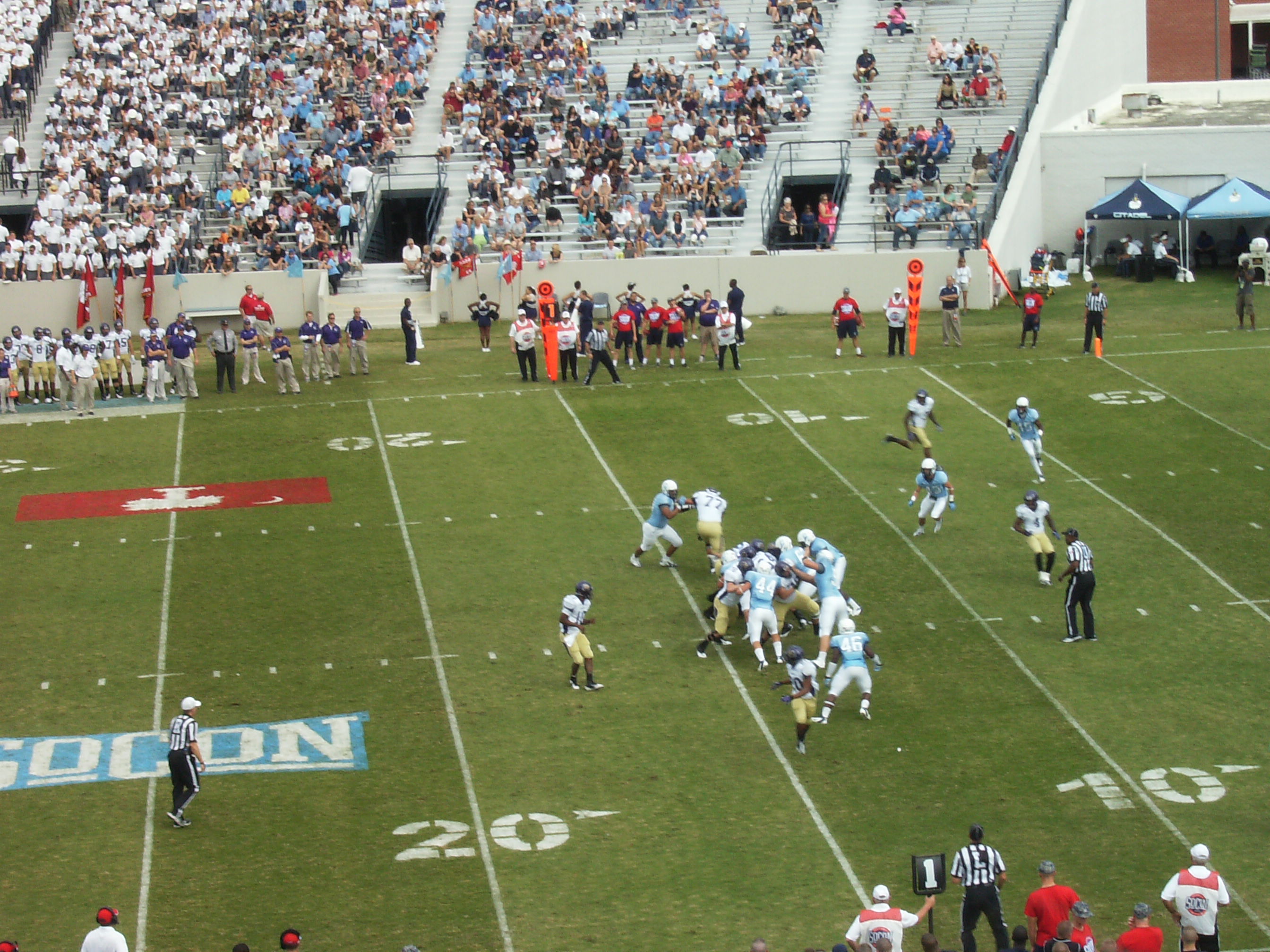
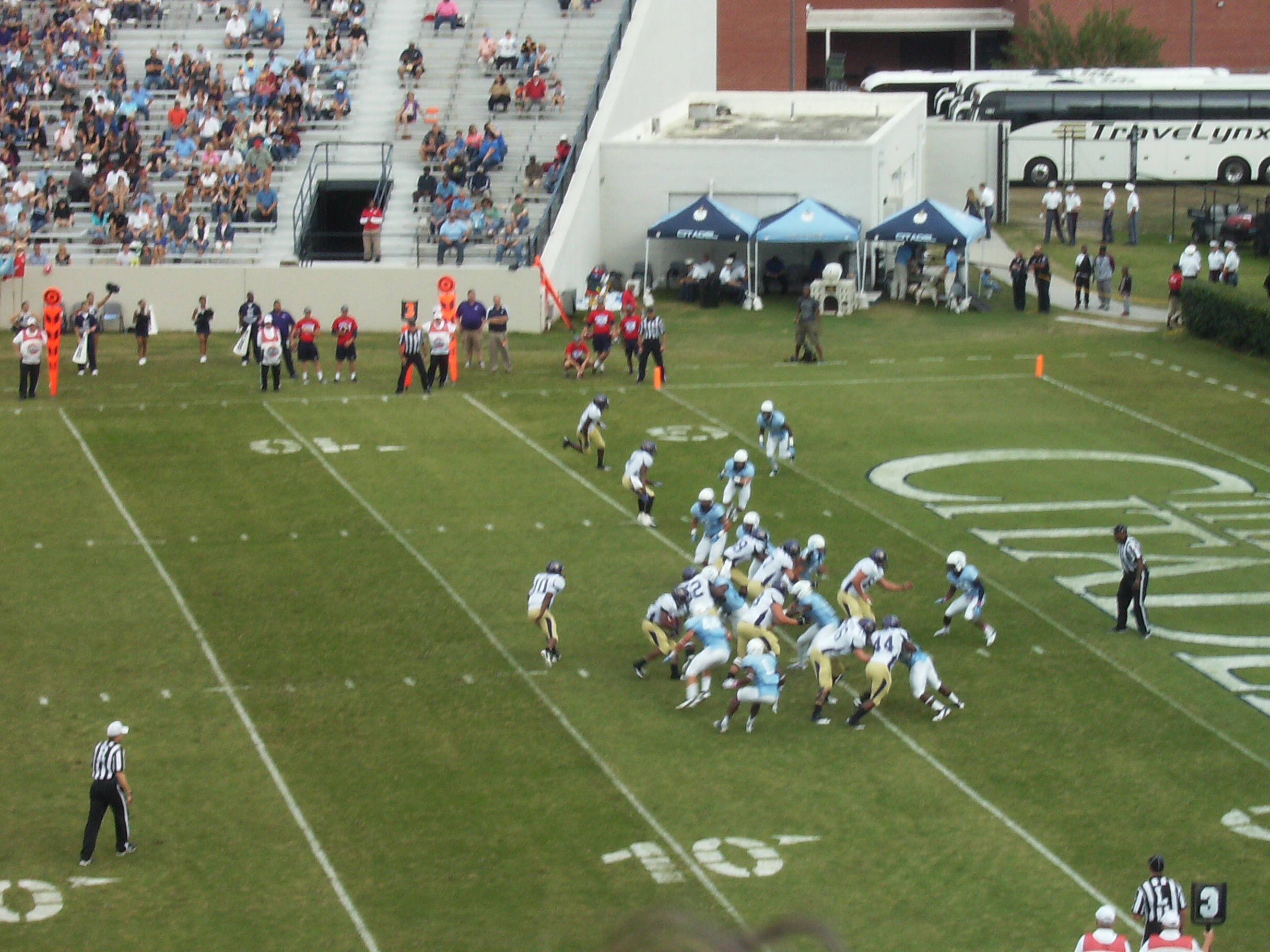
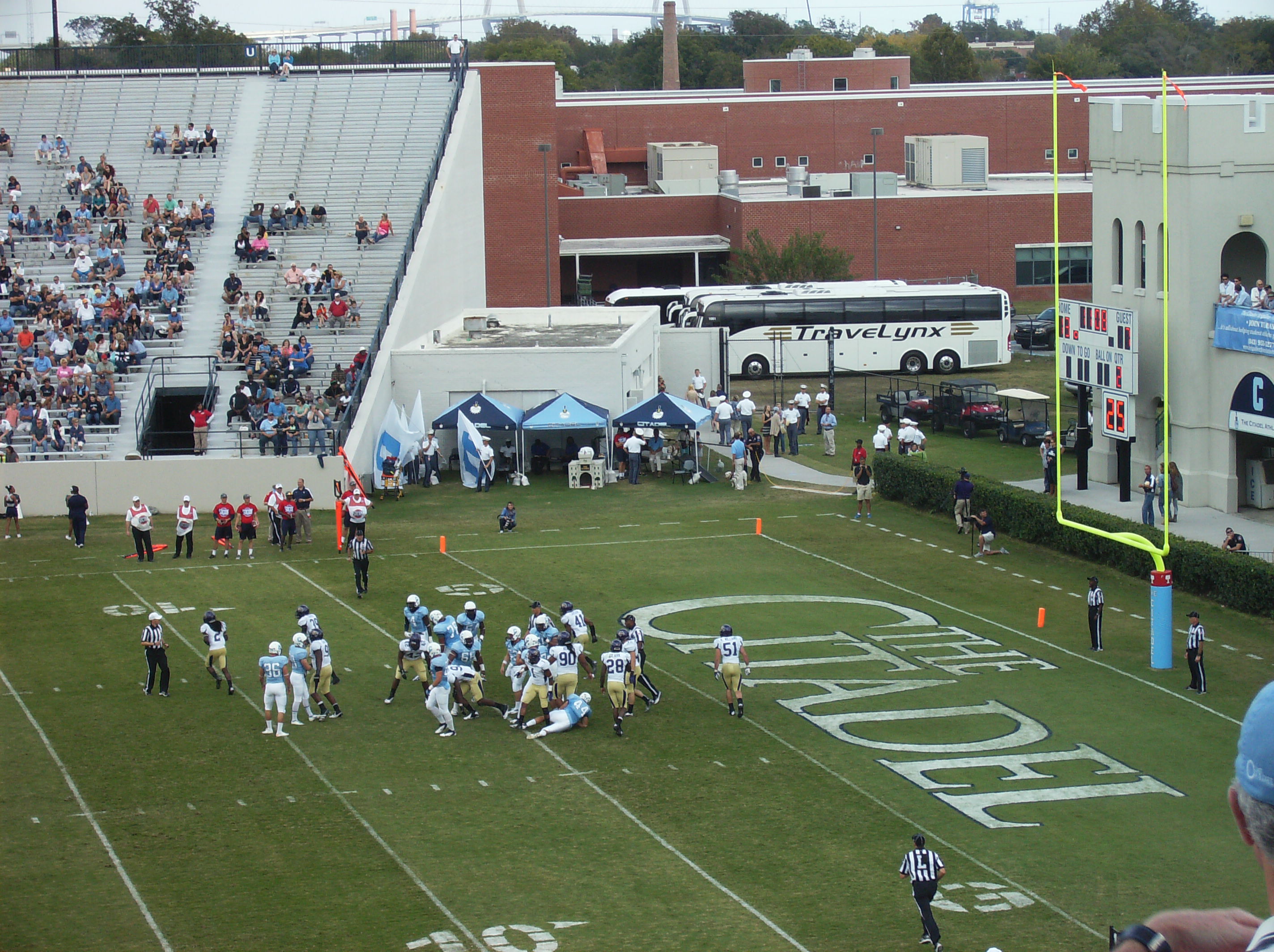
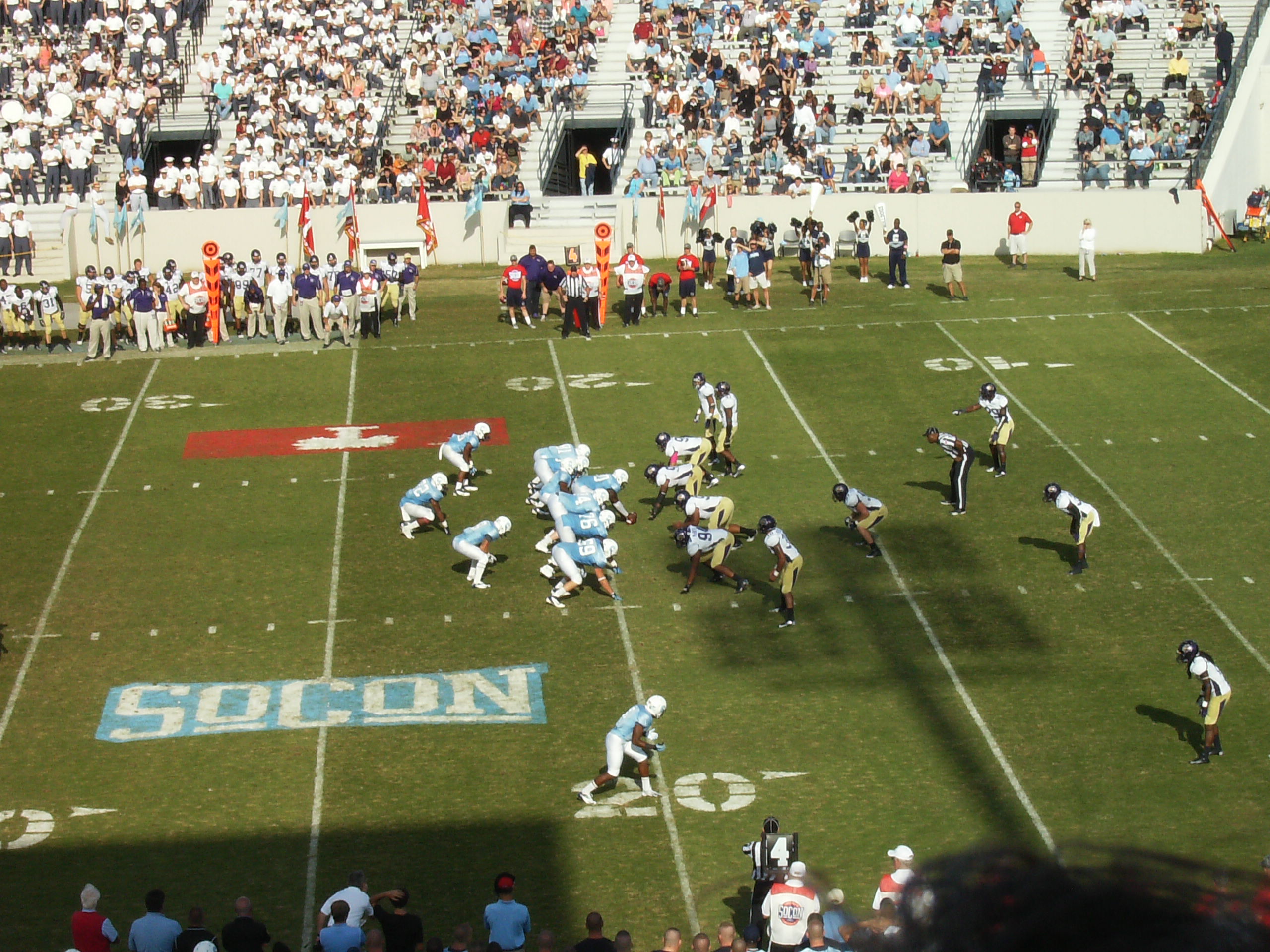
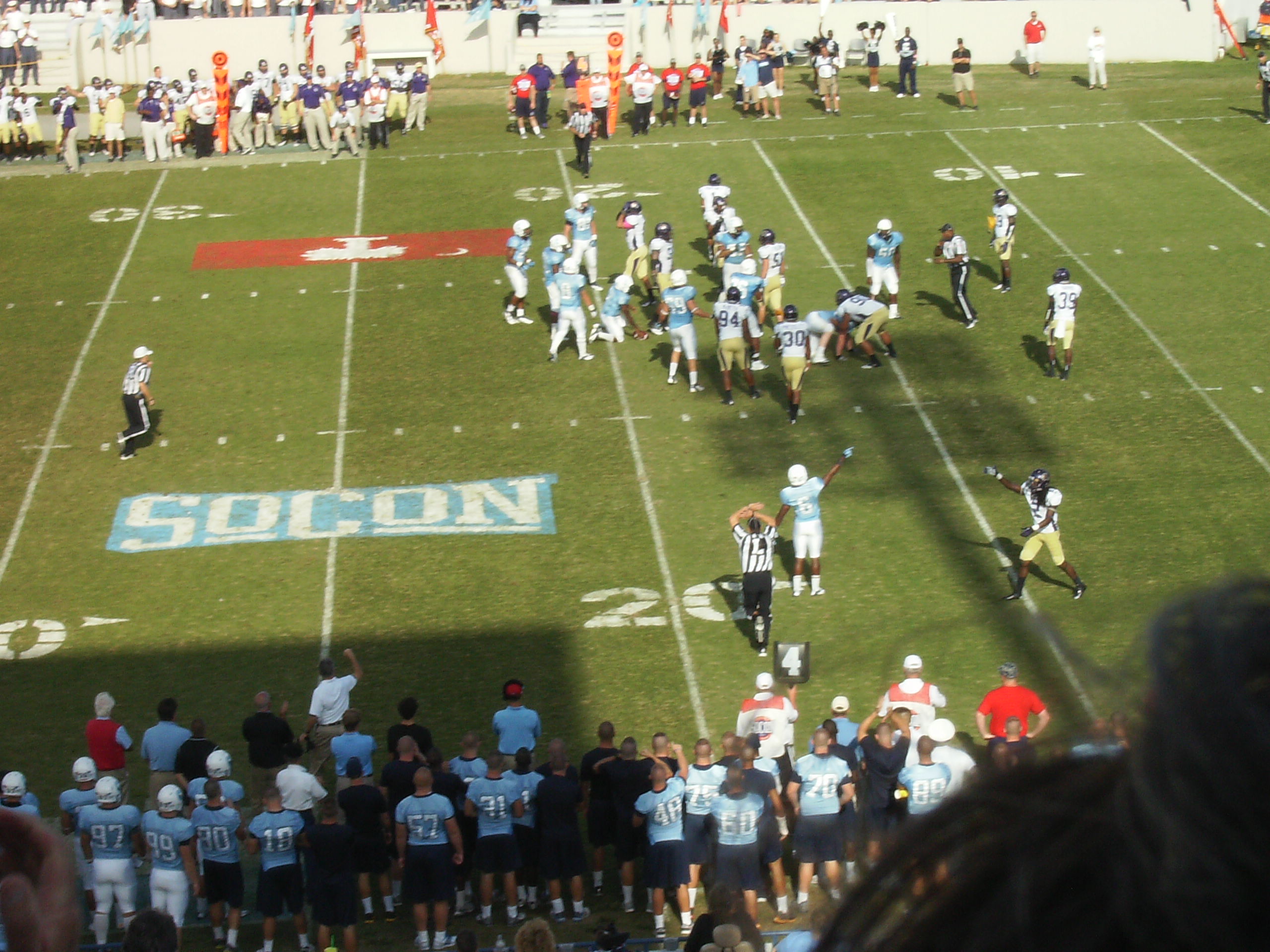
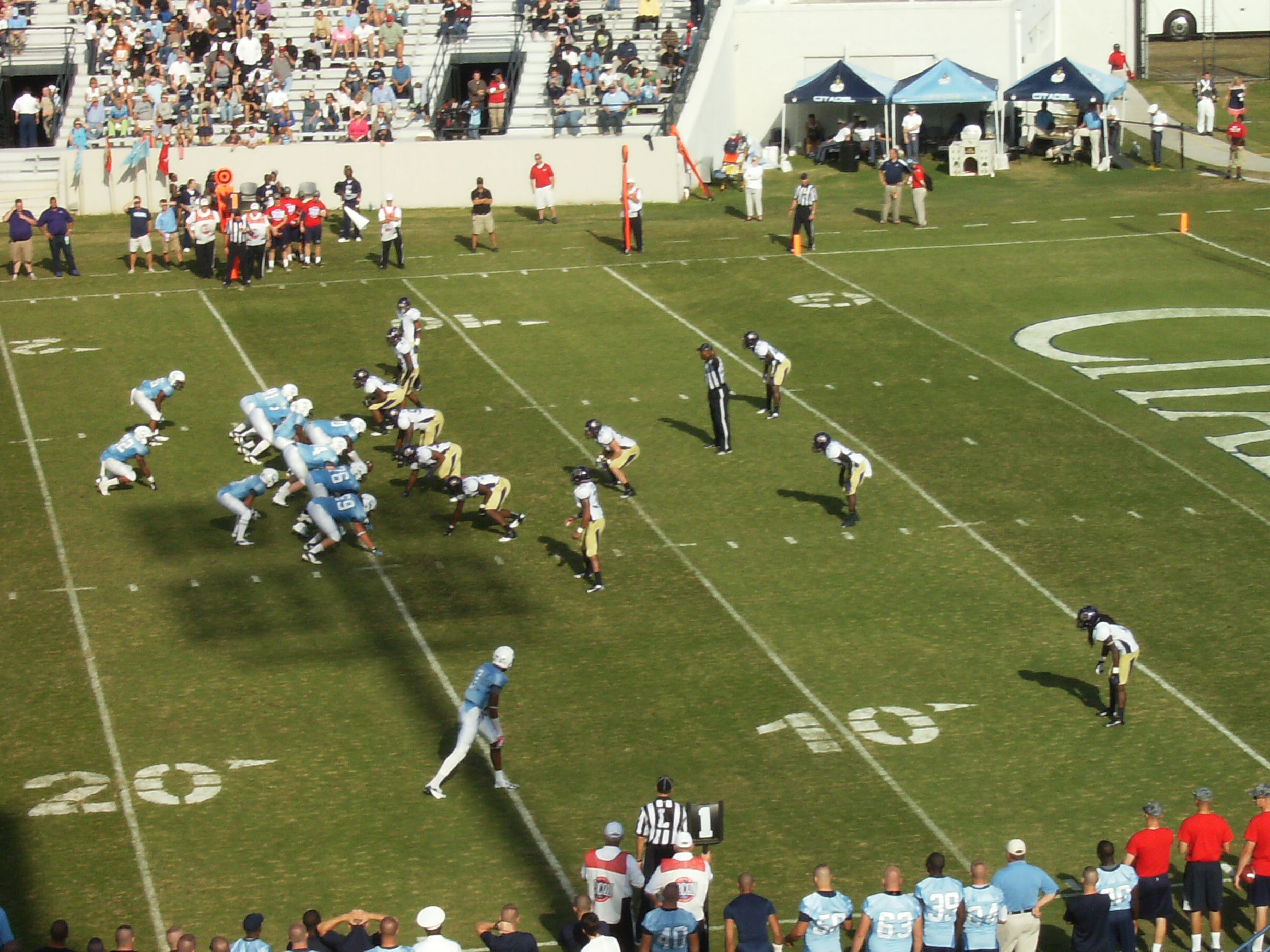
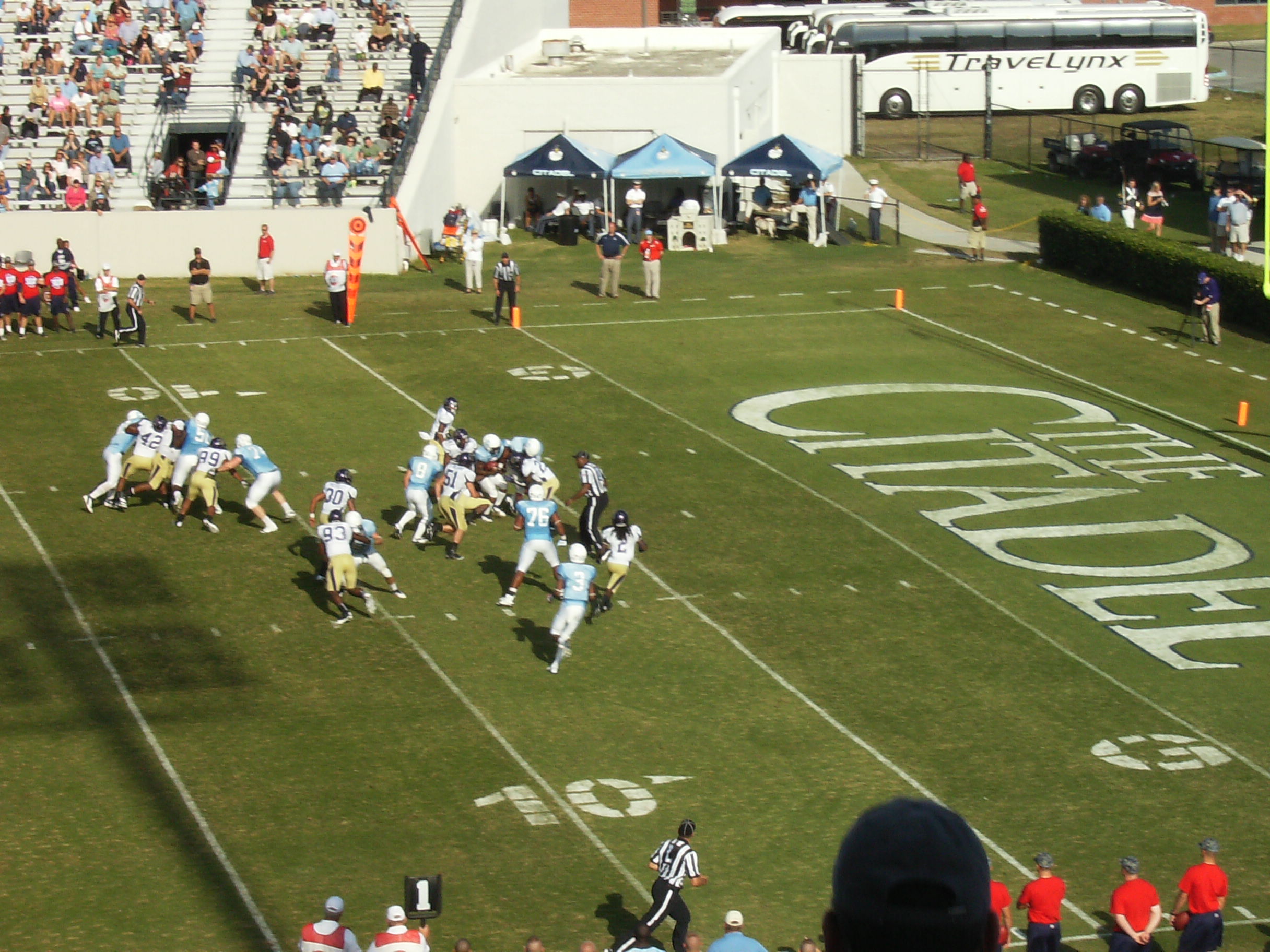
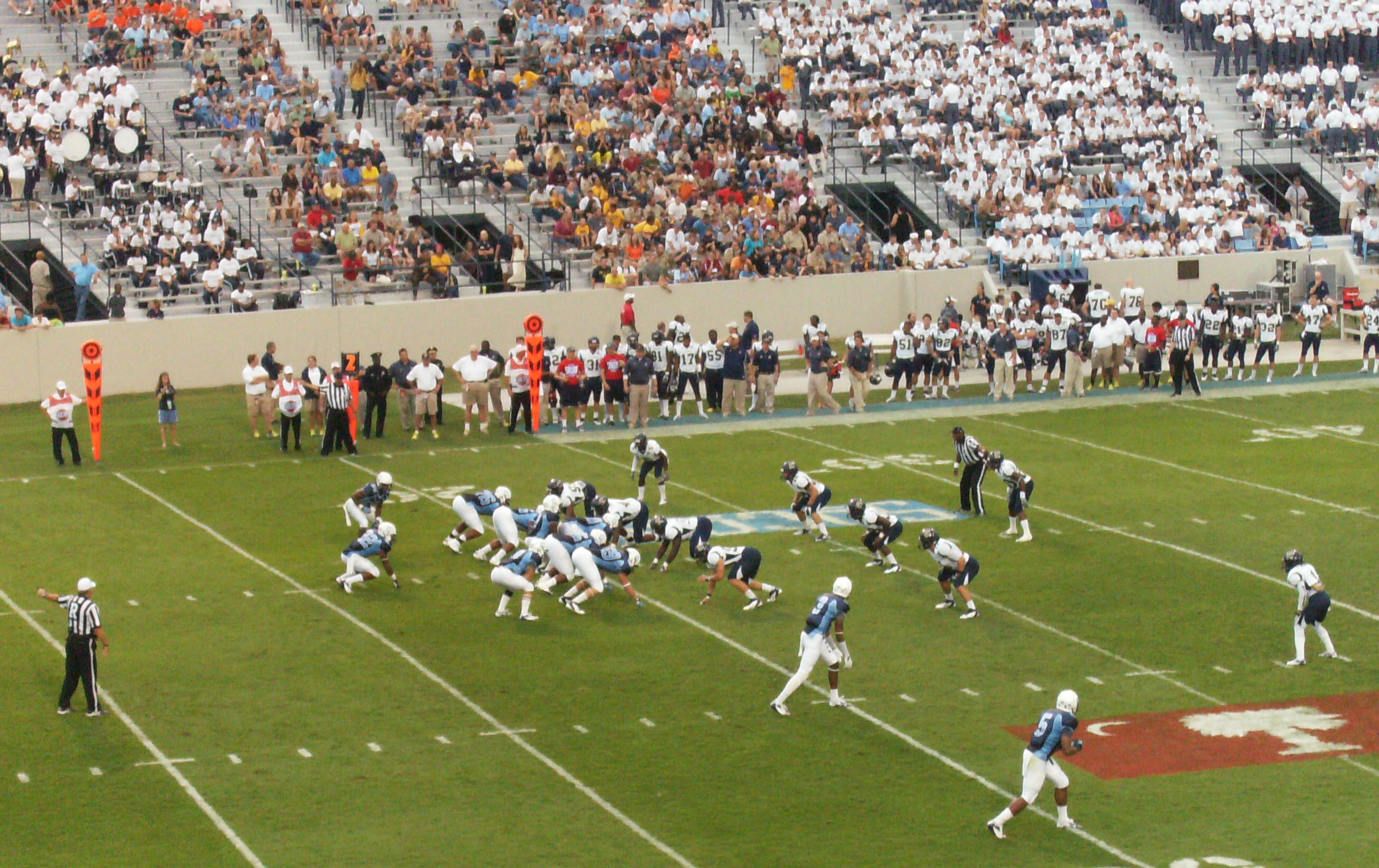
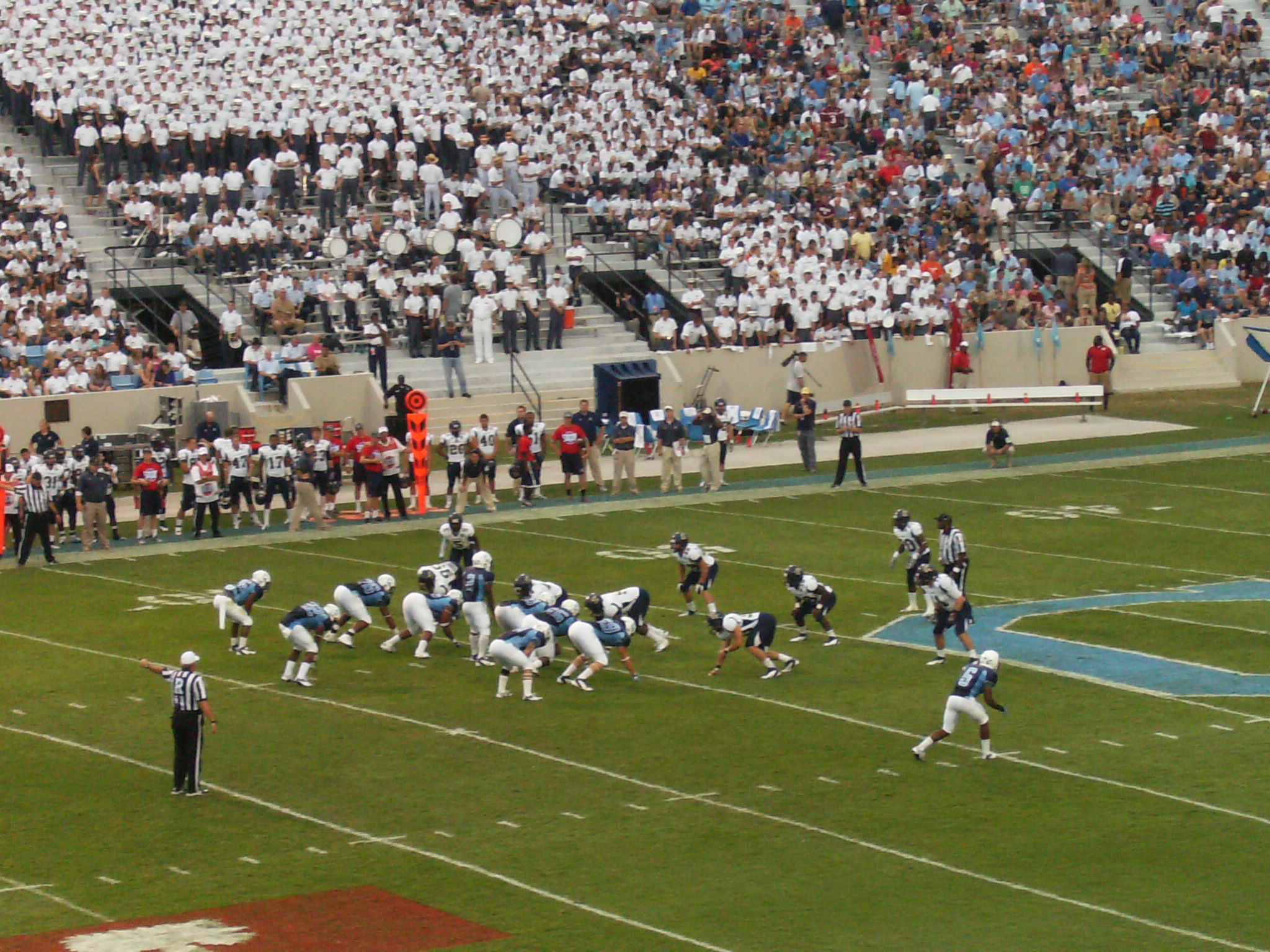
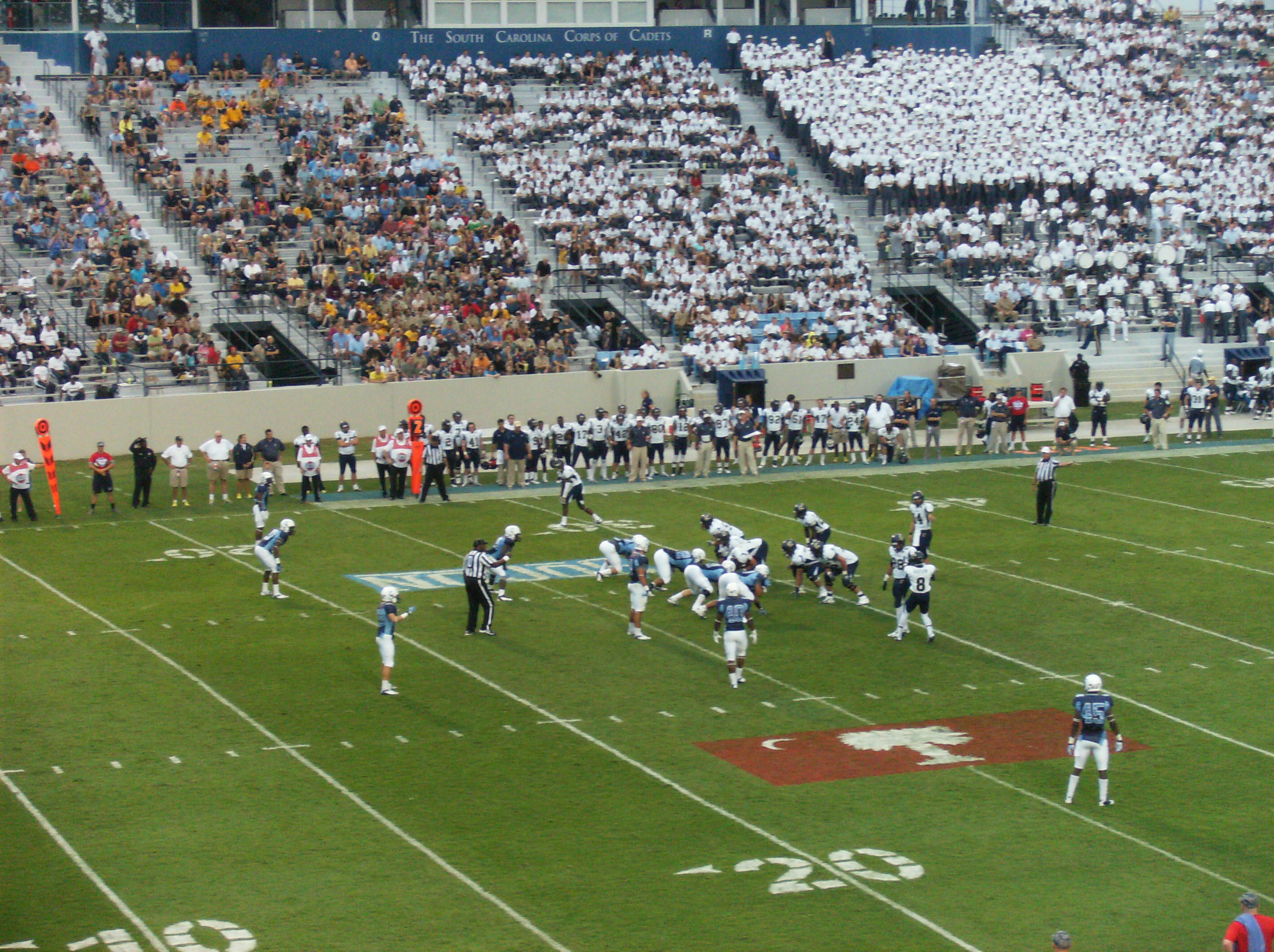
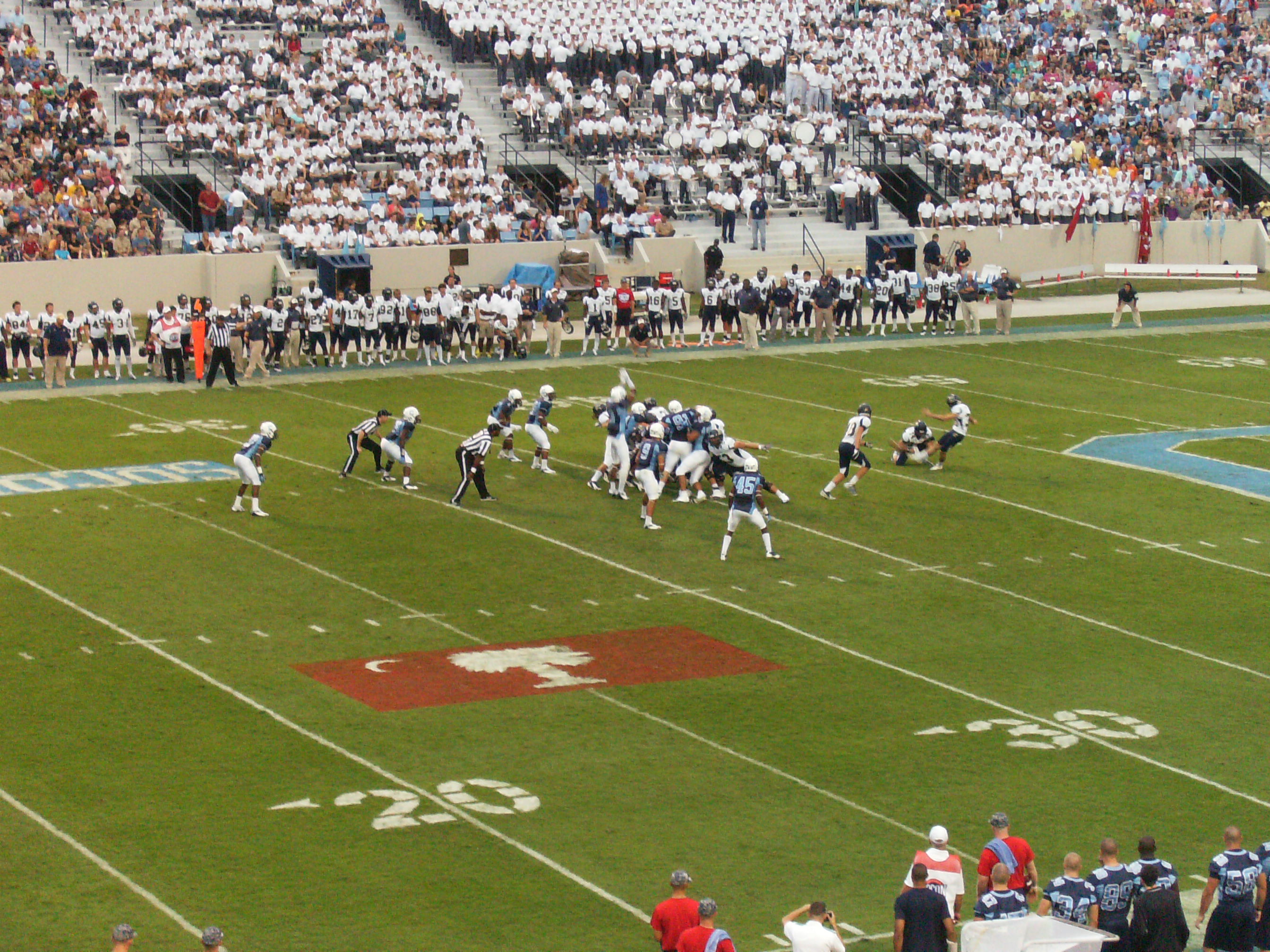
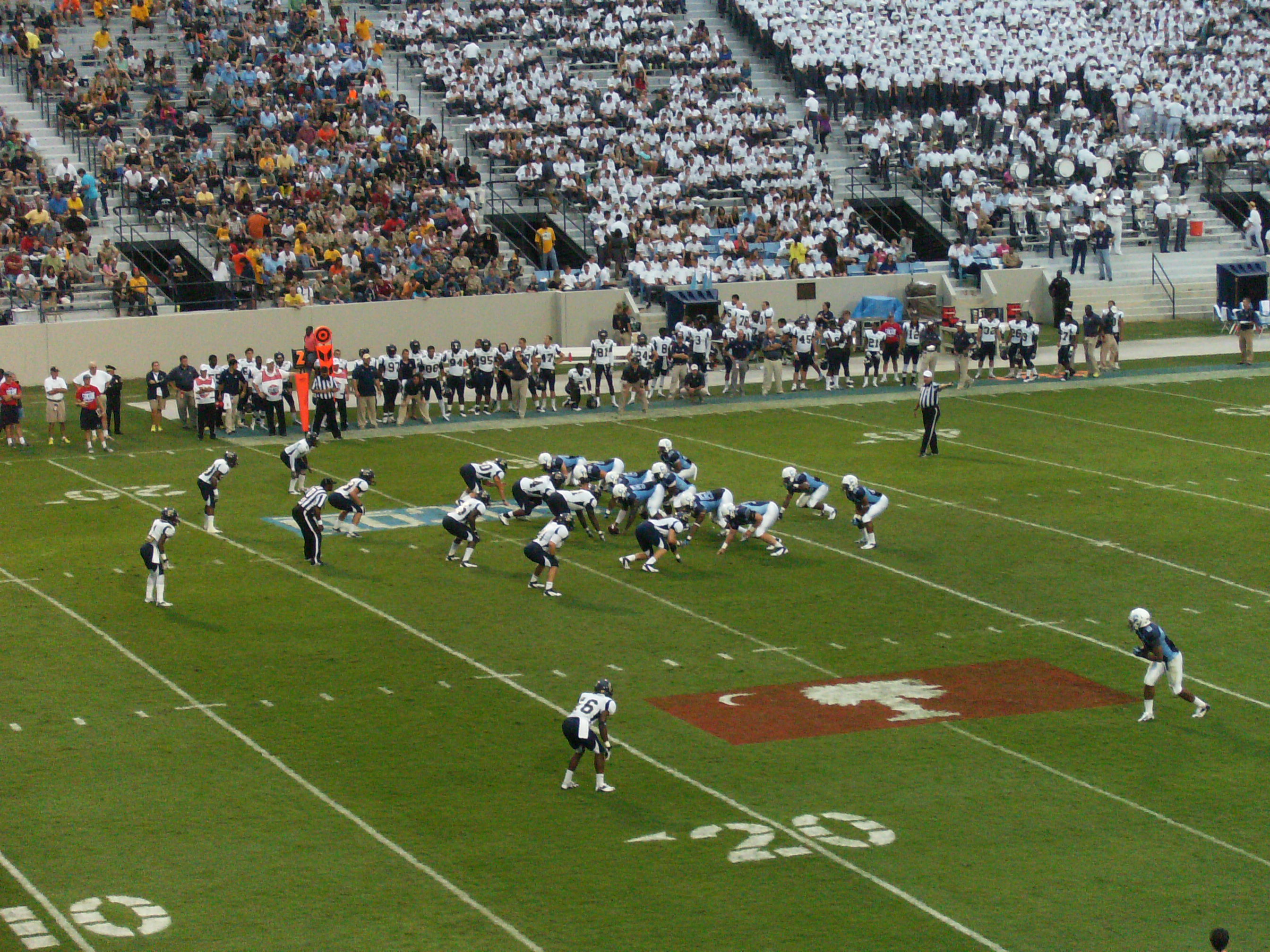
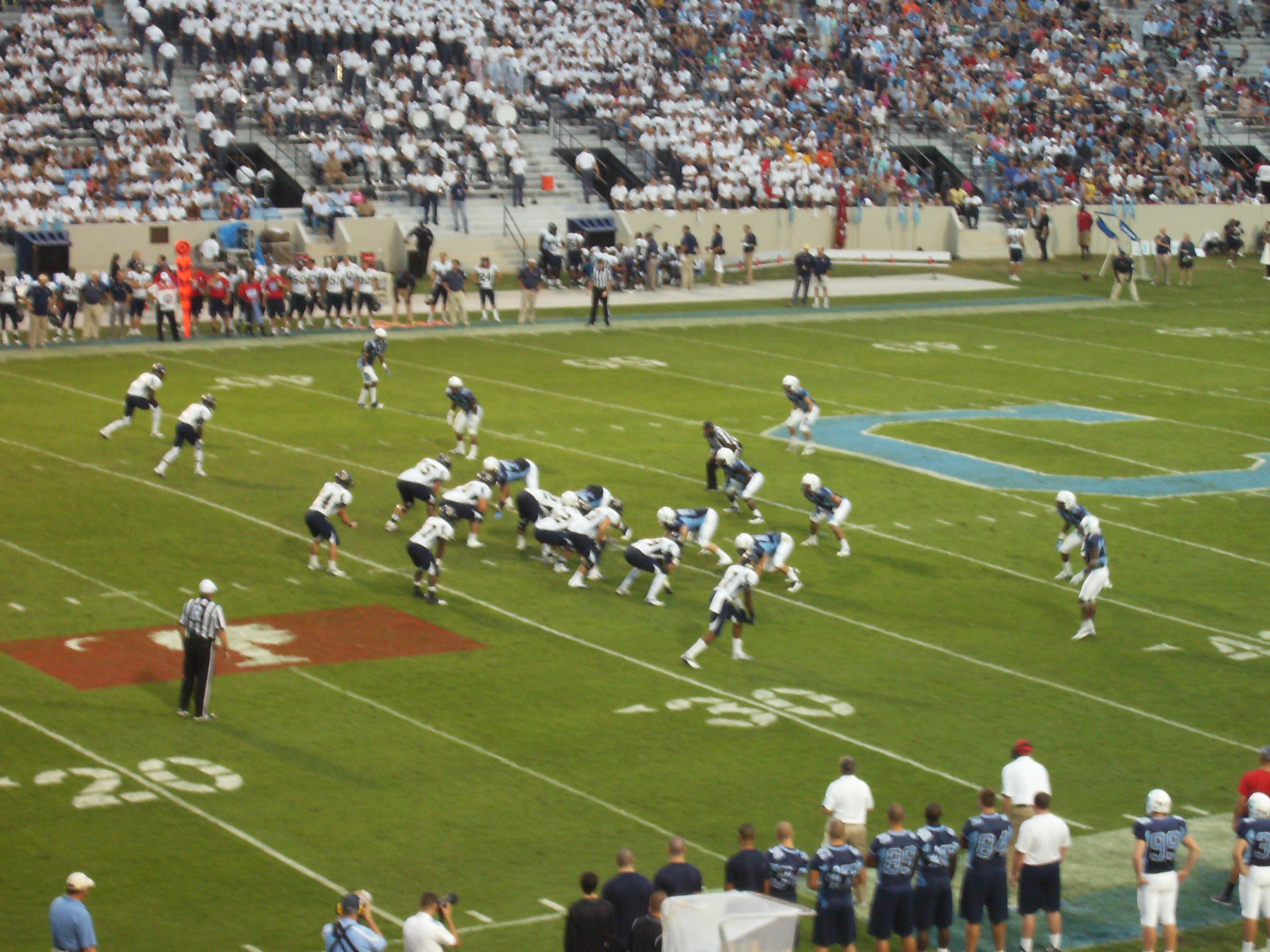
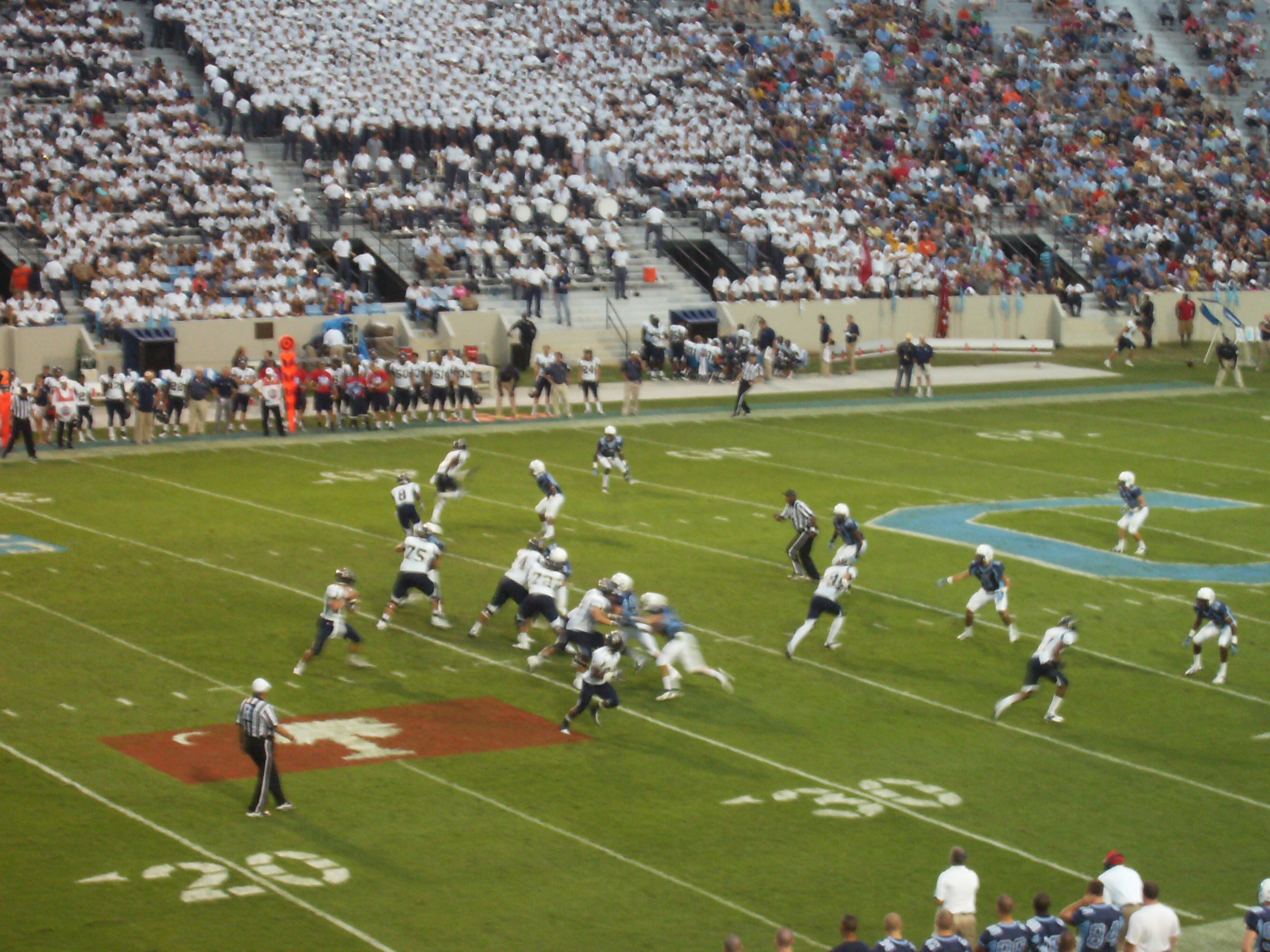
Okay, pictures. I took a ton of bad photos on Saturday. My ability to take out-of-focus shots is almost unmatched. The least  embarrassing of the lot can be found below.

2012 Football, Week 8: The Citadel vs. Wofford

The Citadel at Wofford, to be played at Gibbs Stadium in Spartanburg, South Carolina, with kickoff at 1:30 pm ET on Saturday, October 27.  The game will be streamed on ESPN3.com, with Darren Goldwater providing play-by-play and Paul Maguire supplying the analysis. It can also be heard on radio via the twelve affiliates of The Citadel Sports Network. Danny Reed (the “Voice of the Bulldogs”) will call the action alongside analyst Josh Baker, with Lee Glaze roaming the sidelines and Walt Nadzak providing pre-game, halftime, and post-game commentary. 

Links of interest:

The Citadel game notes

Wofford game notes

SoCon weekly release

The Kevin Higgins Show (following the game against Western Carolina), Part 1 and Part 2

Kevin Higgins’ 10/22 press conference quotes

Mike Ayers on this week’s SoCon teleconference

Parking map for Gibbs Stadium

Catching up with…all-SoCon punter and fisherman Cass Couey

Catch up with Darien Robinson, too

This is the sixth time in the last seven years the game between The Citadel and Wofford will be on TV and/or ESPN3.com. It has been on SportSouth, it has been on SCETV, and now it’s on ESPN3, the second time the Bulldogs have been on that streaming service this season.

Paul Maguire was the analyst when The Citadel played NC State, and he will be again on Saturday. During the NCSU game he claimed in jest that his partner in the booth, Mike Gleason, was the offspring of Jackie Gleason. Perhaps this week he will try to suggest that Darren Goldwater is the son of Barry Goldwater. We can only hope.

While I can’t find the records (which is driving me crazy), I believe that The Citadel has only won one televised game during the Kevin Higgins era. It would be nice to turn that around this weekend.

Kevin Higgins has had no answers for Wofford. In the seven games the Bulldogs have played the Terriers since he became head coach of The Citadel, Wofford has won by an average score of 34-14, never failing to put at least 28 points on the board. It doesn’t matter if the Terriers have been good or bad (the 2009 team was 3-8 but still beat The Citadel by 26).

Last year, I wrote about what I felt was a possible lack of defensive aggression for The Citadel when it plays Wofford. In last season’s matchup, Wofford did not commit a turnover, and also was not penalized. That’s a rare combination. Of course, Wofford almost never gets penalized against The Citadel.

In the last four meetings between the two teams, the Terriers have committed a total of five penalties, for thirty yards (and one of the penalties was an intentional delay-of-game to set up a punt).

While I think the Bulldog D needs to be more aggressive, I am not sure it can afford to be. As everyone knows, The Citadel is starting to run out of linebackers, with Yemi Oyegunle the latest to be lost for the season. Oyegunle has a torn groin muscle, which does not sound particularly pleasant.

Getting the injury-ravaged defense ready for Wofford is going to be a tall order, even with an extra week to prepare. I am not overly confident on that front, especially after watching Western Carolina’s offense go up and the down the field against the Bulldogs two weeks ago.

One positive I came up with after crunching some numbers: The Citadel has generally not let a loss to Wofford ruin the rest of the season. The Bulldogs are only 2-5 during Higgins’ tenure after losing to the Terriers, but the overall record post-Wofford in that seven-year time frame is a respectable 13-13.

Wofford leads the league (and the nation) in rushing offense, at 408.3 yards per game. The Terriers also lead the SoCon in total offense, scoring offense, punt return average, field goal percentage (a perfect 8-8), offensive third-down conversion percentage, turnover margin, and both “red zone” offense and defense scoring percentage.

Wofford is second in the conference in offensive pass efficiency, penalties, and offensive sacks allowed (no surprise that the three league triple option teams are 1-2-3 in the last category).

All of that is very impressive, and goes a long way to explaining the Terriers’ 6-1 record. The only caveat is Wofford’s early-season schedule did not feature particularly strong opposition. Wofford has played Gardner-Webb, Lincoln (a Division II school located in Pennsylvania), Western Carolina, Elon, Furman, Georgia Southern, and Appalachian State (in that order).

The Terriers rushed for 402 yards against Gardner-Webb and actually increased their rushing yardage totals for each of the next two weeks. That isn’t easy to do when you start off with a 400-yard effort. Wofford rushed for 449 yards against Lincoln and a staggering 590 yards versus Western Carolina.

The following week, Elon “held” the Terriers to 500 yards rushing. Running back Eric Breitenstein had a 321-yard rushing day for the Terriers in that game. Rushing totals for Wofford in its last three games: 303 (against Furman), 221 (Georgia Southern, a game the Terriers lost 17-9), and 393 (Appalachian State).

Nobody has stopped Breitenstein yet this season. He only carried the ball five times against Lincoln because there was no need to use him, but he has rushed for at least 150 yards in four of Wofford’s other six games, and ran for over 100 yards in the other two contests.

While Breitenstein has been a constant, Wofford is going to be challenged over the remainder of the season to maintain its offensive efficiency, due to the loss of some key players due to injury. Left tackle Calvin Cantrell will miss his second straight game on Saturday due to a concussion, while slotback Donovan Johnson and backup quarterback Michael Weimer (who has played quite a bit for the Terriers) are also not expected to see the field.

Jared Singleton, Wofford’s center, is hurt but listed on the two-deep and will probably play. Left guard Tymeco Gregory also got banged up in the game against Appalachian State, but is expected to start.

The injury list for Wofford extends to its defense, as linebacker Kevin Thomas (who has started three games for the Terriers and is third on the team in tackles) will not play against The Citadel. Another linebacker, Phillip LeGrande (who has started all seven games), also may not play against the Bulldogs. Defensive end Zach Bobb started Wofford’s first five games of the season, but injured his knee against Furman and is out for the season.

Wofford placekicker Christian Reed missed the game against Appalachian State with a quad injury but is listed as the starter on the two-deep for this week’s contest. Punter Kasey Redfern replaced him against the Mountaineers and made his only FG try (29 yards).

There is a touch of uncertainty with Wofford’s injury list. For example, while Todd Shanesy of the Spartanburg Herald-Journal tweeted that Weimer would be out for the game against the Bulldogs, he is still listed on the depth chart. Just keep that in mind.

If Weimer doesn’t go, that doesn’t mean starting quarterback Brian Kass will play the whole game, according to Mike Ayers. Third-string QB James Lawson will likely get some snaps on Saturday.

Incidentally, Wofford has had eighteen different players carry the ball this season. Twelve of them have at least one rush for more than twenty yards.

Among other Terriers of note: offensive right tackle Jake Miles (a preseason all-SoCon selection), outside linebacker Alvin Scioneaux (also a preseason first team pick), and inside linebacker Mike Niam, a force when healthy (he has suffered multiple knee injuries while at Wofford).

Fellow inside linebacker Mike McCrimon leads the Terriers in tackles. Defensive end Tarek Odom’s 40-yard fumble return for a TD sealed the Terriers’ win over Appalachian State. E.J. Speller is a 290-lb. redshirt freshman nosetackle who is having a fine season; he will be a key factor on Saturday.

Wofford’s defense held each of its first four opponents under 100 yards rushing. Last week, the Terriers held the Mountaineers to 106 yards rushing (363 total yards).

Odds and ends:

— Wofford’s sideline reporter for its radio broadcasts is Van Hipp, Jr. If that name sounds familiar to Low Country residents, it’s because he ran for Congress about two decades ago. Hipp wound up in a primary runoff for the seat in the 1st Congressional District, but lost to a political newcomer named Mark Sanford.

— Saturday’s game will be Wofford’s Homecoming, which means The Citadel will play in two consecutive Homecoming games, Wofford’s and its own.

— Wofford is undefeated this season when it loses the coin toss (4-0).

The 1959 game between The Citadel and Wofford was the last game in the series to be played in Orangeburg, at the County Fairgrounds. The game was played on “Big Friday” and only drew 8,000 spectators, a disappointing showing that probably led to the end of neutral-site contests between the two schools. The Citadel won 40-8; six different Bulldogs scored touchdowns in the game.

Wofford would not play The Citadel again until 1967, possibly because of a disagreement between the two coaches, Eddie Teague of The Citadel and Wofford’s Conley Snidow. Snidow accused Teague of running up the score, a charge the Bulldogs coach vehemently denied.

Not only did Snidow complain about a late touchdown scored by The Citadel (even though the TD came after Wofford had fumbled the ball on its own five-yard-line), he belittled the Bulldogs’ victory, saying it came against one of his lesser squads. There may have been some previous bad blood between the two men, as The Citadel had already announced it was suspending the series.

The 1967 contest was the only time The Citadel played Wofford between 1959 and 1975.

By the way, the main photo accompanying the game story features “Broadway Billy” Hughes, and the first paragraph of the article itself describes teammate Billy Whaley as “The Citadel’s vice president in charge of touchdowns”. Ah, those were the days.

For anyone wondering, Paul Maguire did play in the game. He did not score, but caught three passes for forty yards and punted three times, averaging 43 yards per kick.

I’ll be honest. I don’t have a good feeling about the upcoming game, not from The Citadel’s perspective. While Wofford is struggling with injuries of its own, the Terriers have more than their fair share of proven depth. They have options.

Meanwhile, the Bulldogs are painfully thin at linebacker, a problem exacerbated by (in my opinion) less than optimal play by the defensive line in recent weeks. If The Citadel is going to have any chance of winning Saturday’s matchup, the d-line has to make big plays. That hasn’t really happened in the last month or so.

Anyone who saw the game against Western Carolina has to cringe at the thought of the Bulldogs’ D versus an experienced (if beat up) offensive line and a steady quarterback like Brian Kass, with Eric Breitenstein ready to break loose at any point (he has 12 runs of 20+ yards already this season).

Am I pessimistic? Well, yes.

However, the team has to take a more positive approach. Wofford isn’t invincible, and the Bulldogs don’t need to play a perfect game to win on Saturday. They just have to play very, very well.

I’ll be in Spartanburg on Saturday. I may have my doubts, but I’ll be there. The Bulldogs were good enough to beat Georgia Southern and thrash Appalachian State in Boone. The potential is still there.

Now let’s make something of it.

“Scanning the SoCon”: a brief explanation

Last season, I participated in something called “Scanning the SoCon”, a multiple-school blogging exercise on Southern Conference basketball run by Mocs Mania!, a blog devoted to UTC hoops. This year, it has been expanded to include participants from all twelve SoCon schools (even the CofC).

I’ll be providing a preview of The Citadel’s 2012-13 hoops campaign in about a week. What I’ll probably do is post it here as well have Mocs Mania! post it; I haven’t quite figured that out yet, to be honest. (I also haven’t figured out when I’m going to have the time to do it, but that’s my problem.)

All twelve schools will be previewed over the next couple of weeks, as the season draws closer. Here is a link to the “preview page”: Link

Also, if you were wondering where all these preview writers are from: Link

The first preview was posted today. It’s about Elon, and was written by a writer for that school’s student newspaper.

The Citadel’s first game on the hardwood is on November 10, which is right around the corner. The Bulldogs host VMI that day, and yes, it’s the same day the football team plays at VMI. As far as scheduling quirks go, it’s not the most ideal.

I just hope the Bulldogs go 2-0 that day…

Conference realignment, SoCon style: the College of Charleston is (probably) heading to the CAA

Update: Conference realignment, SoCon style: Is it nitty-gritty time?

I wrote about potential changes in Southern Conference membership over the summer. Now, something has actually happened…

After a somewhat contentious meeting, the College of Charleston’s Board of Trustees voted 12-5 “to begin negotiations with the Colonial Athletic Association”:

The board met for 90 minutes before passing a resolution to open official talks with the CAA. The resolution, which passed by a 12-5 vote, does not guarantee the Cougars will join the nine-member league. The College of Charleston has been in the Southern Conference since 1998.

The final vote is expected to come at the board’s next scheduled meeting in January, although a vote on the school’s athletic conference affiliation could come before the start of the new year, according to board members.

While it’s not guaranteed that the CofC is moving to the CAA, it’s all but assured, barring some unexpected problems in the negotiations.

The biggest immediate issue for those negotiations, it appears, is travel expenses. While some observers thought the estimate put forward by the school was too high, others within the college weren’t sure it was high enough.

I think the CofC’s move was “sold” to some of the BOT members as part of a larger migration from the SoCon to the CAA, a shift that would have created a “CAA South” division with Davidson and one or more of Appalachian State, Elon, and Furman.

When Davidson decided to stay in the Southern Conference, that scenario essentially ceased to be a possibility. As a result, the CofC had to recalibrate its travel expenses.

The move by the CofC, assuming it comes to pass, is being made almost exclusively for the benefit of the men’s basketball program, platitudes by the school’s president notwithstanding. For the school’s other varsity sports programs, it is basically a wash, with the notable exception of baseball, which will suffer greatly from the transition.

However, while none of those other programs really mattered in the decision, they did provide good drama. At the occasionally confusing BOT meeting, board member and baseball supporter Jeff Schilz had this to say:

This move is made assuming there’s more money in the CAA. This is a men’s basketball decision and they would have to reach goals they haven’t reached in a while.

Schilz wasn’t finished. He also opined that “our athletic programs have been ignored by the [CofC] administration” and questioned the stability of the CAA, at least as compared to the SoCon.

All of the above quotes came in the BOT meeting. The proceedings were “live-tweeted” by several different media members, a very 21st-century (and cool) development. One of the more interesting tweets came from WCIV-TV sportscaster Scott Eisberg:

Schilz says he knows 1 sport that will lose 4 recruits if they go. Audible to me,Natasha Adair says,’what abt teams that will gain recruits’

Adair is the new women’s basketball coach at the College of Charleston. I wouldn’t advise inviting her and Schilz to the same party.

I don’t know if the move will be a good one for the CofC. I tend to doubt it, but I could be wrong. At any rate, the school has every right to make a mistake. It’s the American way.

When you shake out all the pluses and minuses (exposure, travel, recruiting, etc.), it comes down to this: is the CAA really a multi-bid league? Because if it isn’t, the CofC leaving for basketball reasons but staying in a one-bid league is very hard to justify. I suspect that Davidson passed on joining the CAA at least partly because it wasn’t sure the CAA would regularly put two and three teams into the NCAA tournament.

Since 1987, there have only been three years in which the CAA received at-large bids: 2006, 2007, and 2011 (when it got two at-large bids). While that recent run does suggest upward mobility for the conference, two of the three schools largely responsible for that success have left (Virginia Commonwealth) or are leaving (Old Dominion) the league.

The other school that has carried most of the league’s water in hoops, George Mason, could easily bolt for the Atlantic 10 if that conference made an offer. (There have also been football-fueled rumors about James Madison and/or Delaware eventually leaving the CAA.)

Last season Drexel won the CAA regular season title (with a 16-2 conference record) and advanced to the league tourney final, but did not get an at-large bid to the NCAA tournament, thanks in large part to an unbalanced league schedule and a poor non-conference slate. If a 16-2 CAA team can’t get an at-large berth in the NCAAs (and that was with VCU and ODU in the conference), then it seems unlikely the Colonial will be a multi-bid nirvana going forward.

 —

Okay, so the CofC is (probably) gone. It’s just as well, too, given Joe Hull’s comments about the Southern Conference earlier last month. As soon as the diplomacy-averse Hull made his remarks, I believe every fan and journalist affiliated in some way with the league pointed out that the school hasn’t won the “invisible” SoCon in hoops this century.

What does the College of Charleston leaving mean for the SoCon…and what does it mean for The Citadel?

The league has three options: A) do nothing, B) add one school to replace the CofC, or C) add three more schools to get to 14.

Moving to 14 schools would be a way to solidify the SoCon in the short-term while protecting the league from the eventual departures of Appalachian State and Georgia Southern, assuming those schools get an invite from an FBS league in the near future.

I want what is best for The Citadel. Is what is best for The Citadel also what is best for the league? Maybe.

At this time, I don’t see why the league has to expand to 14 schools, although there are indications that is a possibility. I also don’t think it’s absolutely vital to immediately find a twelfth member. The league can afford to wait.

Appalachian State and Georgia Southern don’t have their FBS tickets punched yet, and may still have to wait a while (particularly GSU). I think league decisions should be made based on the general idea that both schools will be around for at least another year, but will leave in the next five years or so.

The SoCon’s biggest membership issue is that it is made up of several different groups of schools which have competing interests — from the smaller schools, to the larger ones, to the universities west of the Carolinas, to the institutions that don’t have scholarship football programs.

The league has historically always been a mishmash of schools, of course. However, trying to get everyone to agree on potential “adds” for the conference could prove especially problematic right now.

It has been suggested in various places around the internet that a “compromise” could be in the works, one that would be agreeable to the smaller school bloc (most of the private schools, plus The Citadel) and the larger schools (App State, GSU, etc.). This would result in the league moving to 14 schools by adding one private and possibly two larger public schools, in an effort to appease the bigger schools and also the institutions west of the Carolinas (which want company on their side of the league).

I don’t think that would be in the best interests of The Citadel. Depending on the schools involved, it also would be close to anathema for Furman and Davidson. I find it hard to believe Davidson would have elected to remain in the SoCon knowing there was a good chance the conference would be adding multiple schools with significantly different institutional profiles.

As for the other schools in the league, I am less certain. For example, take the North Carolina universities. Elon is a bit of a wild card; I’m not going to even try to guess what its decision-makers may be thinking. UNCG is a non-football school with limited history in the league. Western Carolina is a smaller public school (as compared to Appalachian State and Georgia Southern) in a relatively remote location.

I’ve seen all kinds of schools mentioned as possible new SoCon members. Some of them may have little to no interest in joining the league; some of them would name all their incoming freshmen after John Iamarino in order to get in the club. Below are my comments, opinions, etc., about a few of these schools. Remember, I’m doing this with a bias. I want what is best for The Citadel.

Do I have insider knowledge on any of this? Nope. If you read something on the internet from someone who claims to have insider knowledge on any of this, should you believe that person? Nope.

Let’s start with the favorite to be the next school to join the SoCon.

– Mercer: mentioned by an actual media person, Adam Smith, who seems to have a decent handle on SoCon info. Would make sense on a lot of levels. Mercer is just starting its football program, which will begin as a non-scholarship entity. Still, a natural replacement for the football-free CofC.

Negatives: no scholarship football (yet). Could be blocked by larger schools that want the aforementioned compromise so as to jam two or three big public universities into the league.

After Mercer, there are no obvious picks.

– Virginia Military Institute: left the league a decade ago. Would probably like to come back. I could see all the privates plus The Citadel favoring VMI’s return.

Negatives: league currently has nine football schools, and a nine-game SoCon schedule could be tough to implement. The alternative is to not have a round-robin.

Another consideration is that VMI has been terrible in football for 30 years. That counts (and is why it left the league in the first place). I could see VMI making a return to the SoCon when App State and/or Georgia Southern depart. If the league went to 14, I am not sure VMI would be one of the three additions.

– Coastal Carolina: ah, here comes controversy…

This is the school many of the larger state schools want in the league (at least, their fans do). So which schools are not so crazy about CCU joining the SoCon? That would be Furman, The Citadel, and Davidson. I am not as sure about Wofford, although I would think it would be in the same group.

From the perspective of The Citadel and Furman, adding another, larger South Carolina school with a different mission and budget is a complete non-starter (and another Palmetto State school also may not sit well with Samford and Chattanooga). It doesn’t benefit either S.C. school. I also suspect longtime SoCon types look at Coastal Carolina and think “Marshall II”, and one Marshall was enough for a lot of people.  That may be unfair to CCU, but it’s reality.

Also, I don’t think Appalachian State’s and Georgia Southern’s wishes (in terms of new members) should even be considered by the other schools. App and GSU have stated they want to leave, and they eventually will, which is fine. However, why should the schools remaining in the conference make a decision on league membership for the benefit of schools that aren’t going to be in the SoCon much longer? That would be stupid.

– Kennesaw State: reportedly discussed in the league’s meeting in June. From an April article in the Marietta Daily Journal:

One of the big challenges for Kennesaw State’s athletic programs will be to find a conference before the football team kicks off its inaugural season since the Owls’ current conference, the Atlantic Sun, does not sponsor football. [New Kennesaw State AD Vaughn] Williams said he has had some preliminary conversations with representatives from the Southern Conference and the Ohio Valley Conference about joining their leagues in the future.

I could see Chattanooga and the other state schools in favor of Kennesaw State, which I suppose would be part of a three-school add-on, with Mercer and some other institution. KSU won’t start its football program until 2014. It would basically be like adding UNC Charlotte to the league.

Would adding such a school to the SoCon be in the best interests of The Citadel? Not really. Could it happen? Sure. Trying to get into the Atlanta market would be the major justification for inviting Kennesaw State.

– South Carolina State: allegedly was also discussed at the (surely infamous) June league meeting. It is hard to imagine the league seriously considering SCSU, which has a host of institutional problems, including serious financial issues. SC State has had more school presidents in the last five years than Western Carolina has had league victories in football.

I also have my doubts that it would be in South Carolina State’s best interests to leave the MEAC in the first place.

– Tennessee Tech: located in Cookeville, Tennessee. Public, but on the small side (around 10,000 undergraduate students). Would appeal to Western Carolina, Chattanooga, and probably Samford. Whether or not the conference wants to venture any further from its current geographic footprint is open to question.

As far as The Citadel is concerned, it is probably a more palatable option than any of the above-mentioned schools save Mercer and VMI. Tennessee Tech is in the OVC and I am not sure why it would want to leave that league.

– William & Mary: would be a great get, but is not happening unless the CAA implodes, and even then W&M’s first choice would likely be the Patriot League.

– Richmond: would only join the SoCon as a football-only member if the CAA dropped football sponsorship, as UR is happy to have its hoops program in the A-10.

I don’t see any school joining the SoCon as a football-only member. I saw a report suggesting Kennesaw State might be interested in this option. That should not happen, and I don’t think it will.

– Presbyterian: another Palmetto State school, which is PC’s biggest problem. Furman and Wofford aren’t interested in “elevating” the Blue Hose.

– Jacksonville: I wrote about JU in September of 2011, when I previewed The Citadel’s football season opener against the Dolphins that year. JU has potential (and a good market), but it’s another non-scholarship football program.

– Jacksonville State: wants to go FBS, like App and GSU. I don’t see the point of adding a member school like that. I doubt JSU does either.

– Liberty: see the entry for Jacksonville State.

– East Tennessee State: dropped football, dropped out of the SoCon. Now may want back in, though it still doesn’t have football. I’m not sure how serious a possibility ETSU is as things currently stand. Would not be the first choice for any of the current league members with the possible exception of Chattanooga.

A few other schools have been mentioned in passing, including Gardner-Webb, High Point, Murray State, Winthrop, Eastern Kentucky, North Alabama, and West Georgia. I don’t see any of them as realistic options for the SoCon (though I could be wrong).

A slightly different question: is the College of Charleston leaving the SoCon good or bad for The Citadel?

The real answer to that question is “to be determined”. Ultimately, though, it will depend on two things:

1) Which (if any) schools replace the CofC in the league

2) What (if anything) The Citadel does to take advantage of the CofC leaving

The Citadel has something to say about the first item, and everything to say about the second.

If the school(s) that replace the College of Charleston in the SoCon are from The Citadel’s perspective “like” institutions (smaller schools, good academics, etc.), then the CofC leaving will present the military college with an opportunity. That opportunity is greatly lessened if the new member schools do not fit that profile.

With the College of Charleston’s departure, The Citadel takes complete control of the Charleston market for the SoCon, and that’s a good thing. The Charleston area will, in my opinion, more easily identify with a football conference that has a long history, and that has “familiar” schools (like Furman and Wofford). The Palmetto State is, ultimately, a football state.

The Charleston market has also already proven over time to be supportive of SoCon baseball (with its long tenure as the league tourney host). That reminds me: it’s time for John Iamarino to step up and give the Low Country a long-term contract to host the tourney again.

Speaking of baseball, it’s possible that Monte Lee’s loss will be Fred Jordan’s gain in terms of recruiting for their respective programs.  I think Coastal Carolina may also benefit from the CofC joining a lower-tier baseball conference (and Charleston Southern will have something to say about it as well), but it won’t hurt The Citadel at all to pick up impact local recruits who want to play against quality opposition closer to home.

I also wouldn’t be surprised if a few other varsity sports at The Citadel benefit from the “only local school in the local league” phenomenon.

What The Citadel needs to do is get the message out to the local populace that the Bulldogs are the hometown team of choice, especially in a football-crazy state that also loves its baseball. It should be, to steal a term from college basketball officiating, a “point of emphasis”. I know that is already happening, but now more than ever it is a strategy that needs to be pushed.

I just named three sports in consecutive sentences. That means it is time to wrap this up…

The next few months are going to be very interesting for fans of the Southern Conference. Few other leagues have the potential for divisiveness quite like the SoCon, thanks to its disparate membership. For The Citadel, it is important that the school’s administration looks out for the school’s best interests, even if they are not in line with what league officials may propose.

This is not the time to “go along to get along”. Earlier, I mentioned three SoCon options. One of them was to do nothing and stay at eleven schools. There is nothing bad about that option right now. If the alternative is something that is not optimal for The Citadel, then the school should not be afraid to be intransigent.

We’re good at that.

Game Review, 2012: Western Carolina

The Citadel 45, Western Carolina 31.

Links of interest:

Game story, The Post and Courier

Notes, The Post and Courier

Story (with video), WCSC-TV

Kevin Higgins’ postgame presser (video), with Brandon McCladdie and Darien Robinson

Box score

Phew.

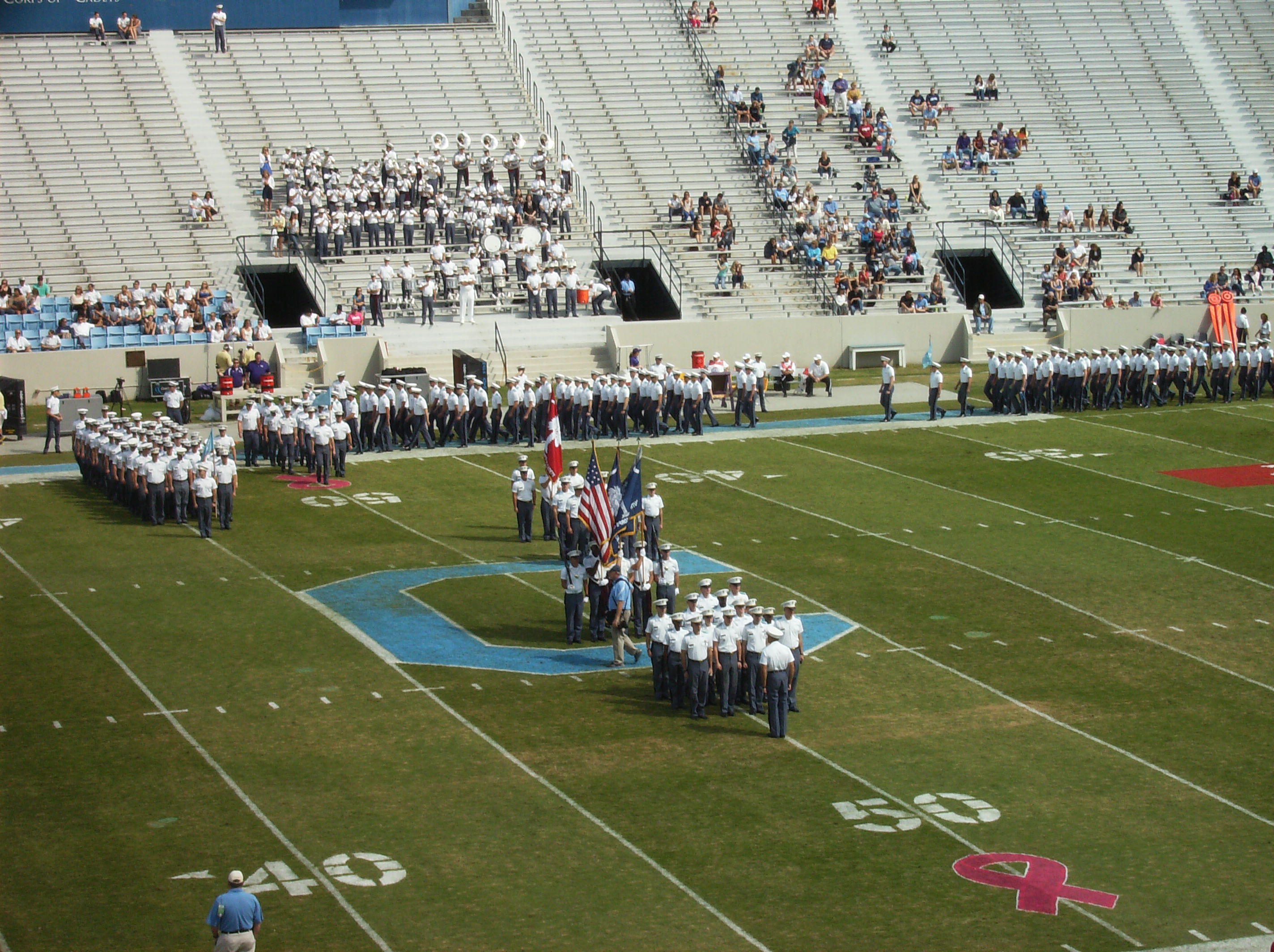
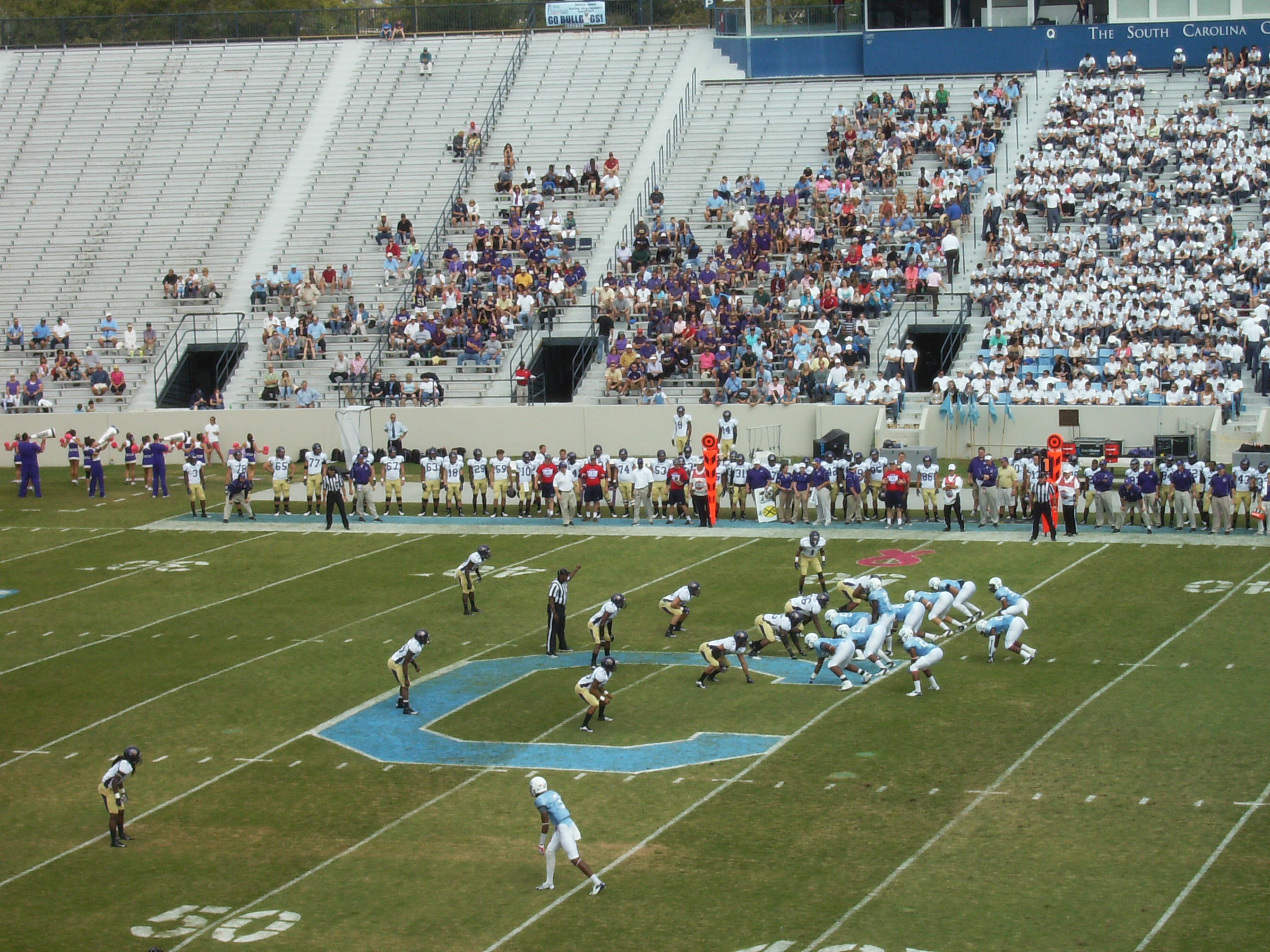
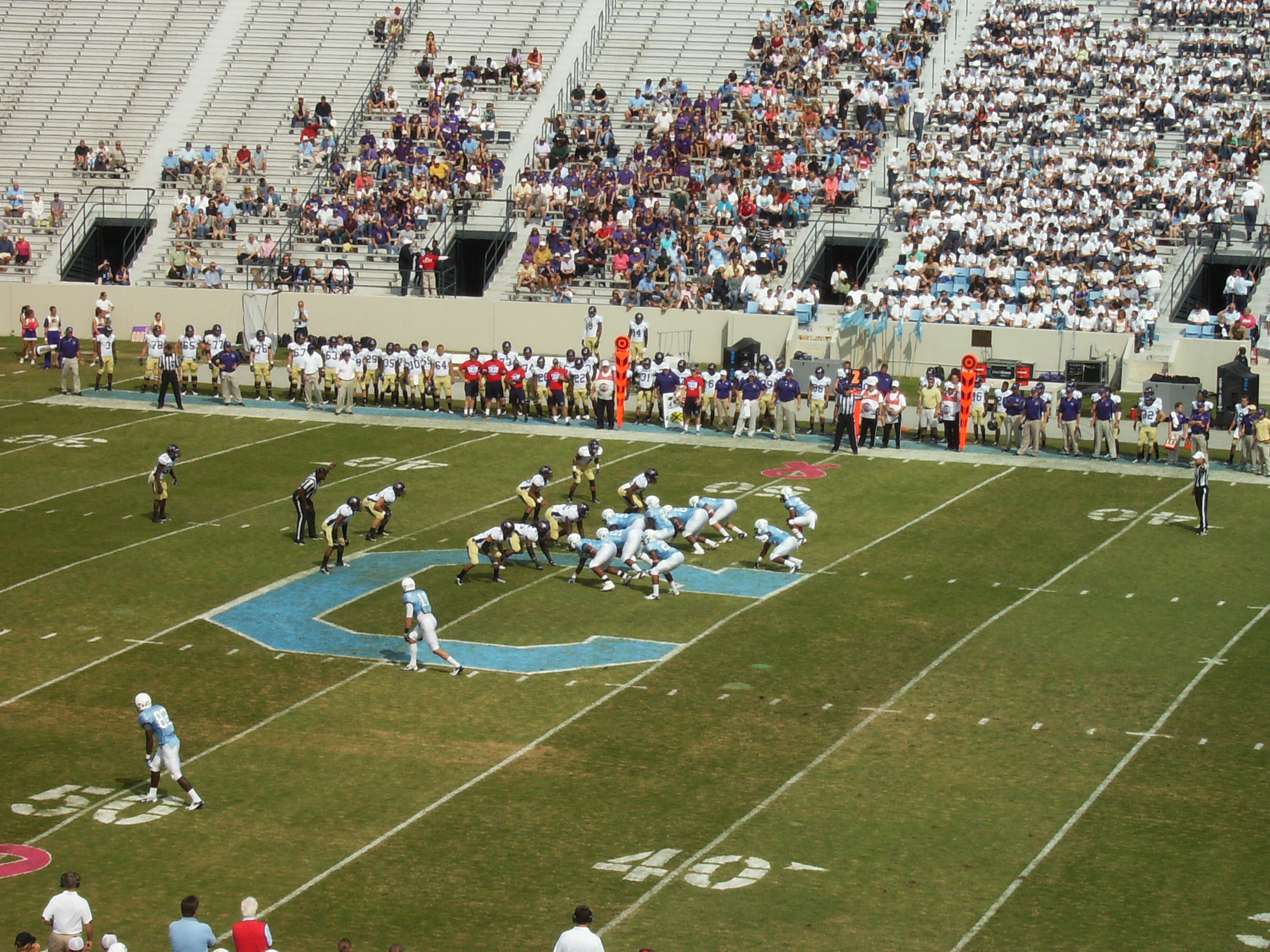
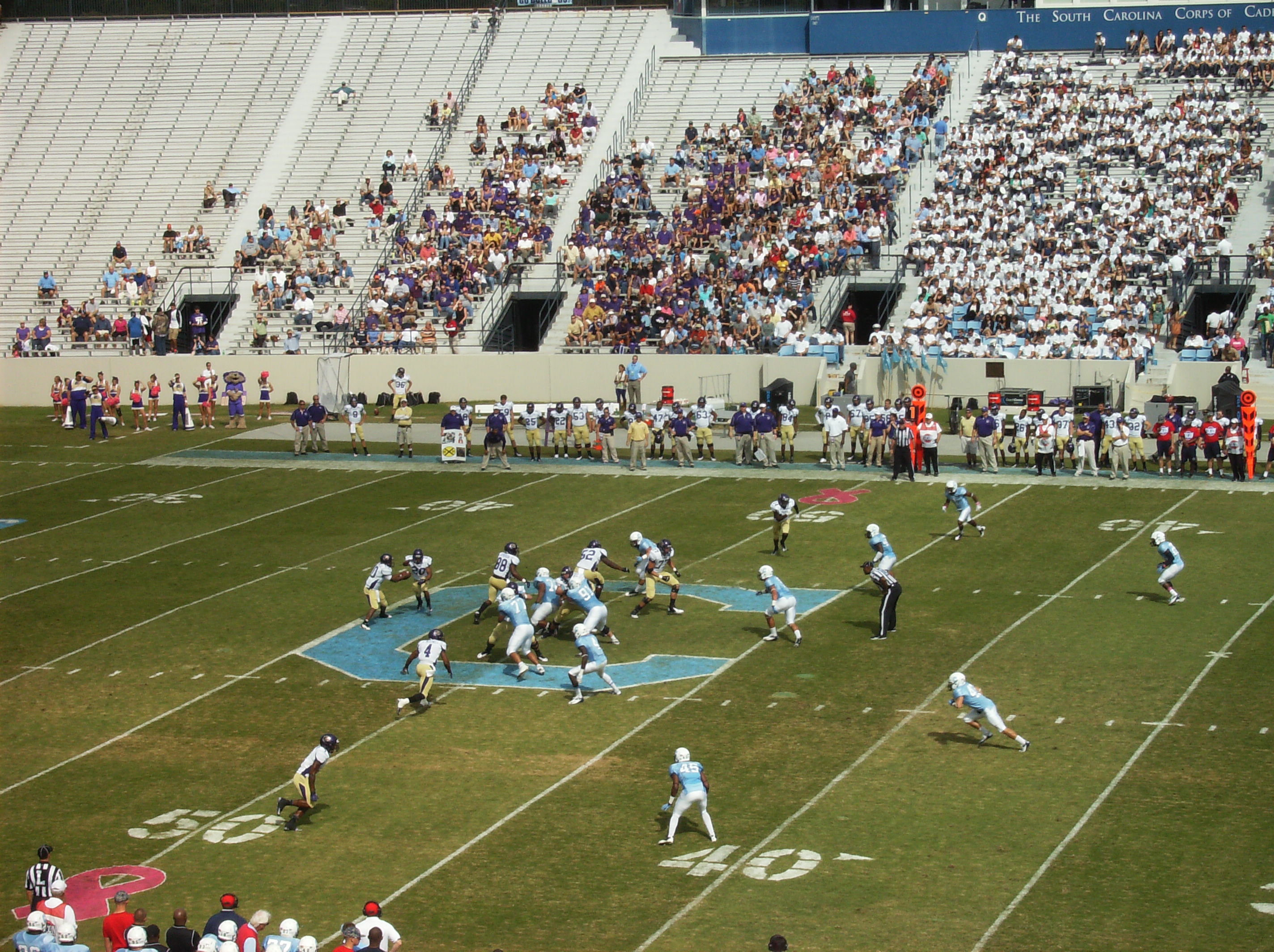
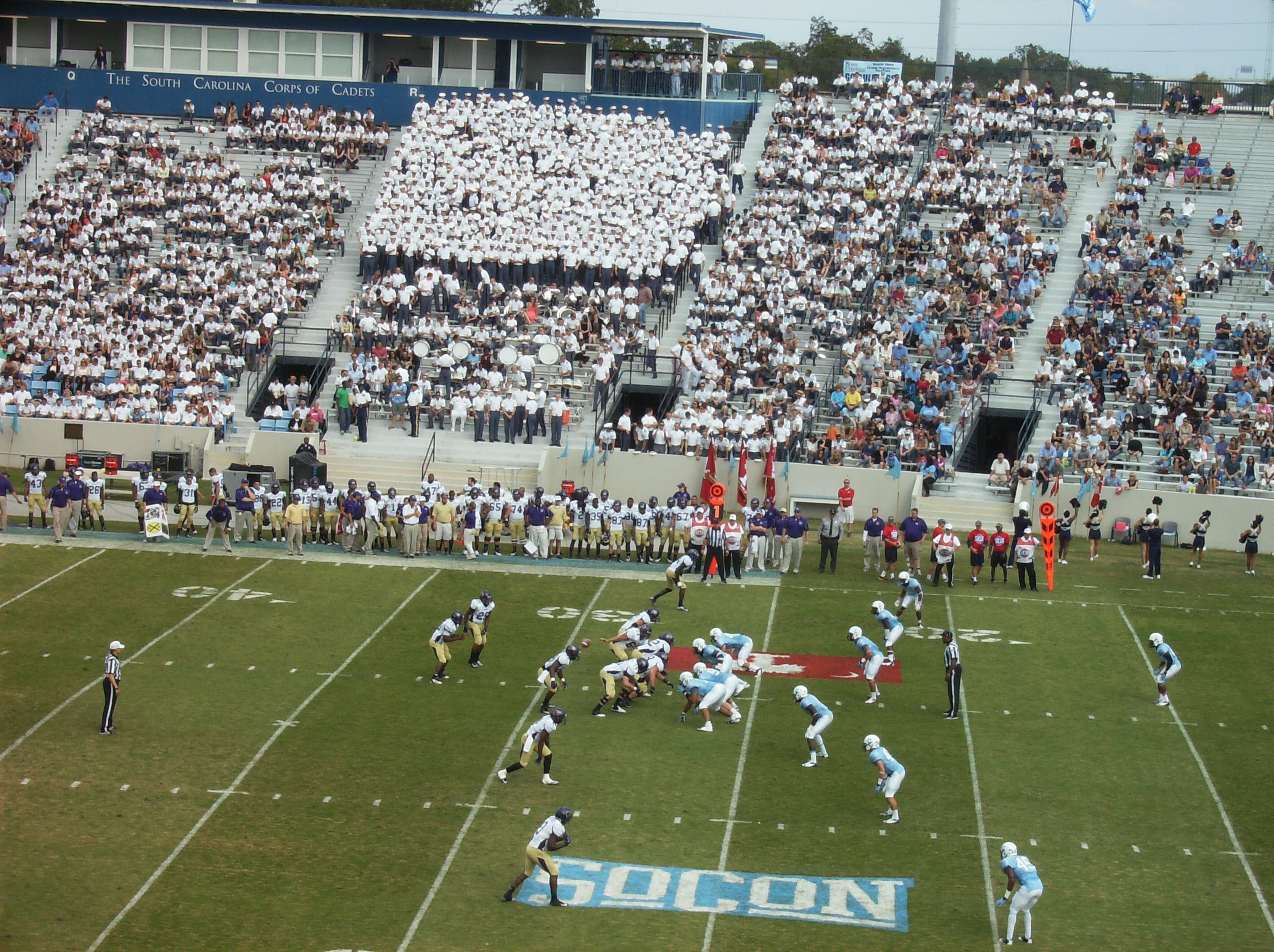
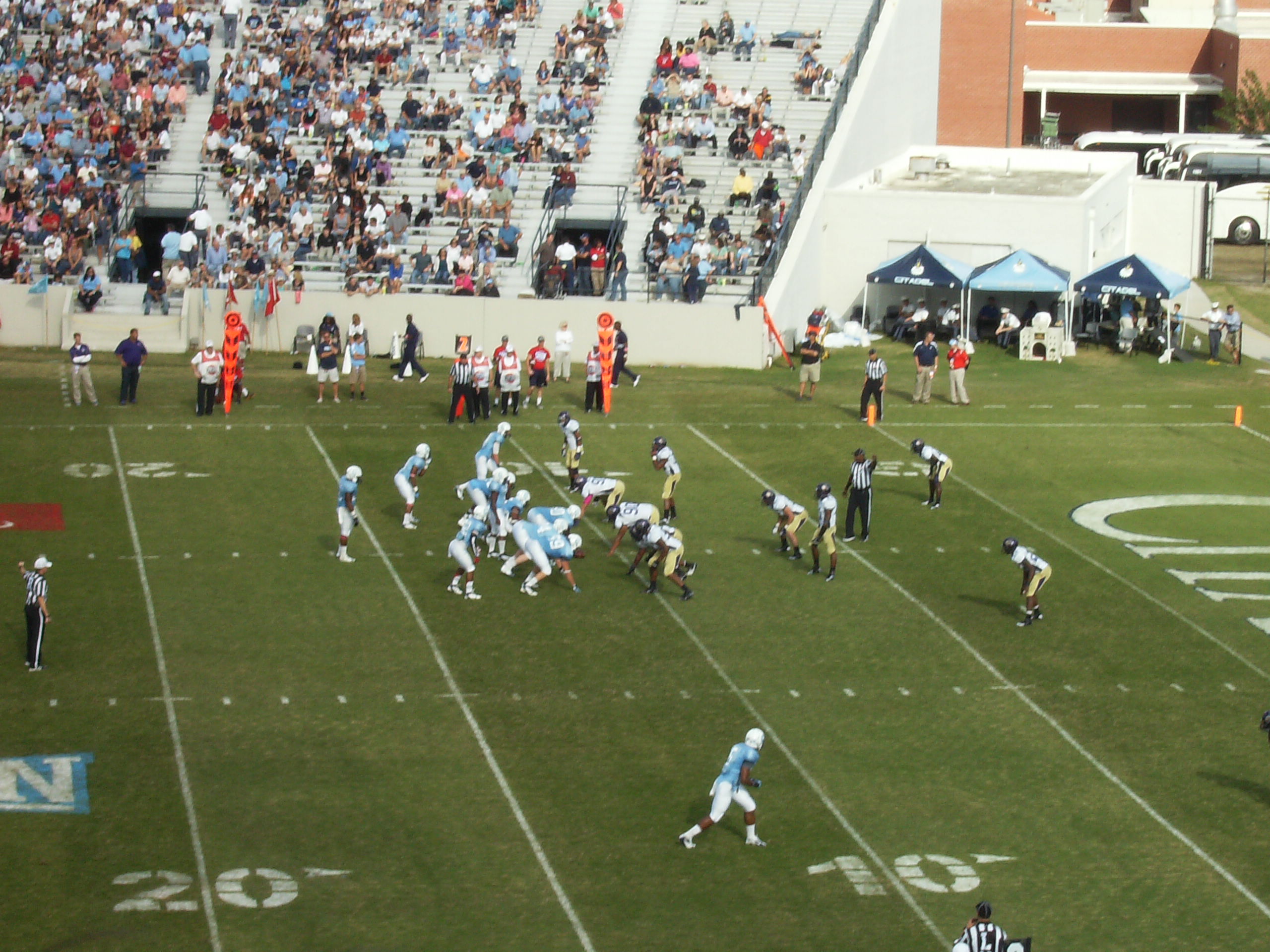
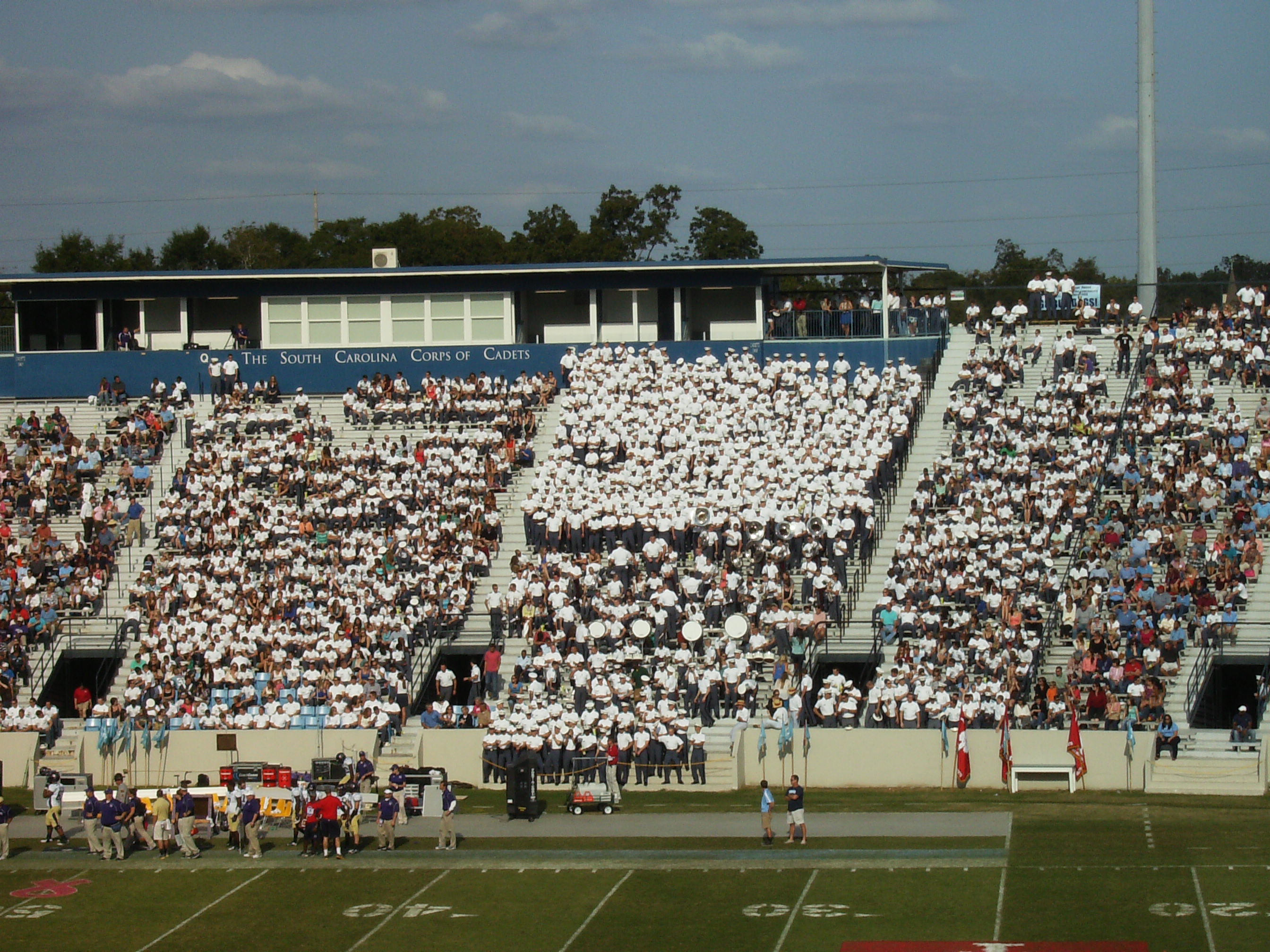
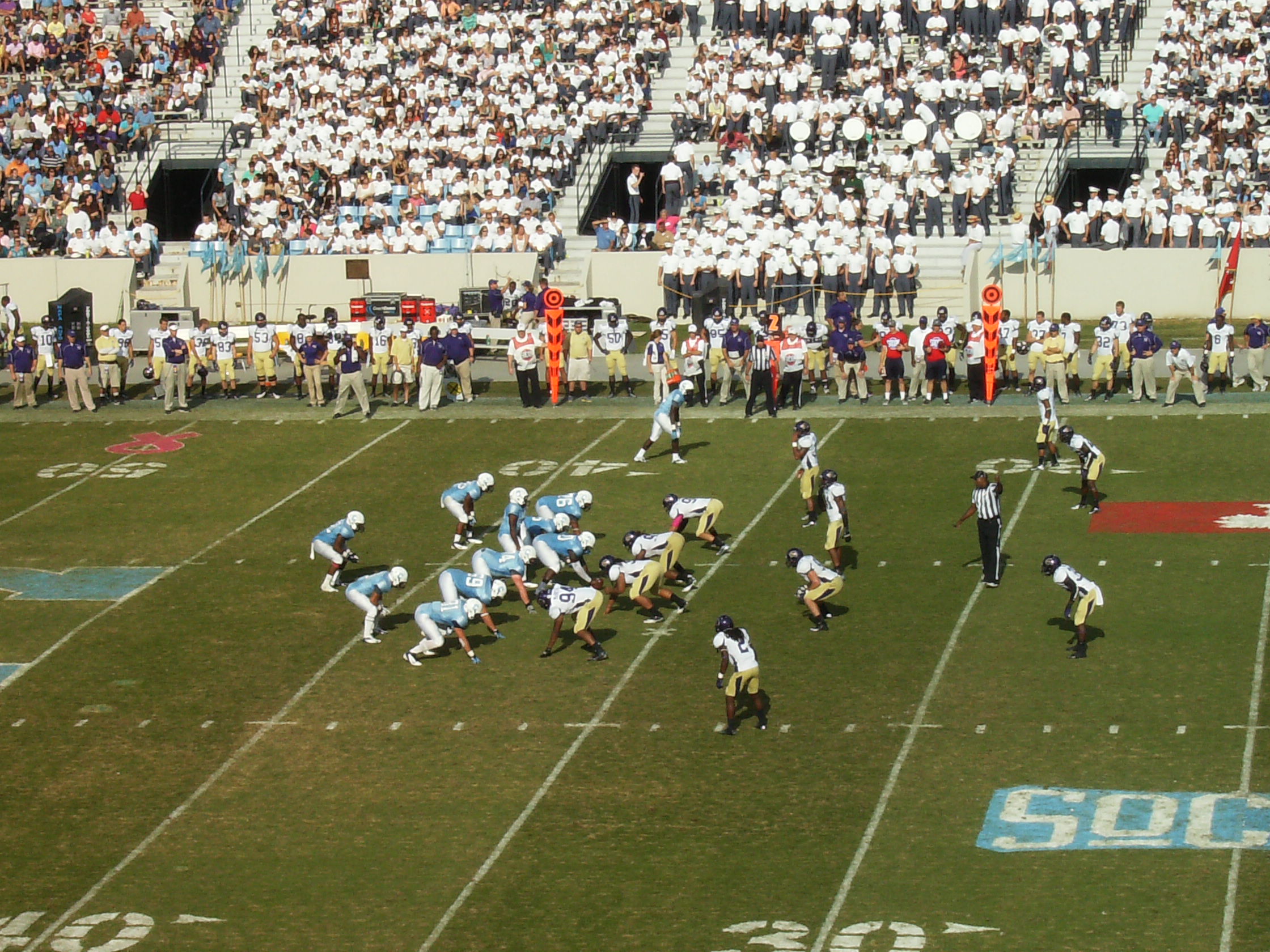
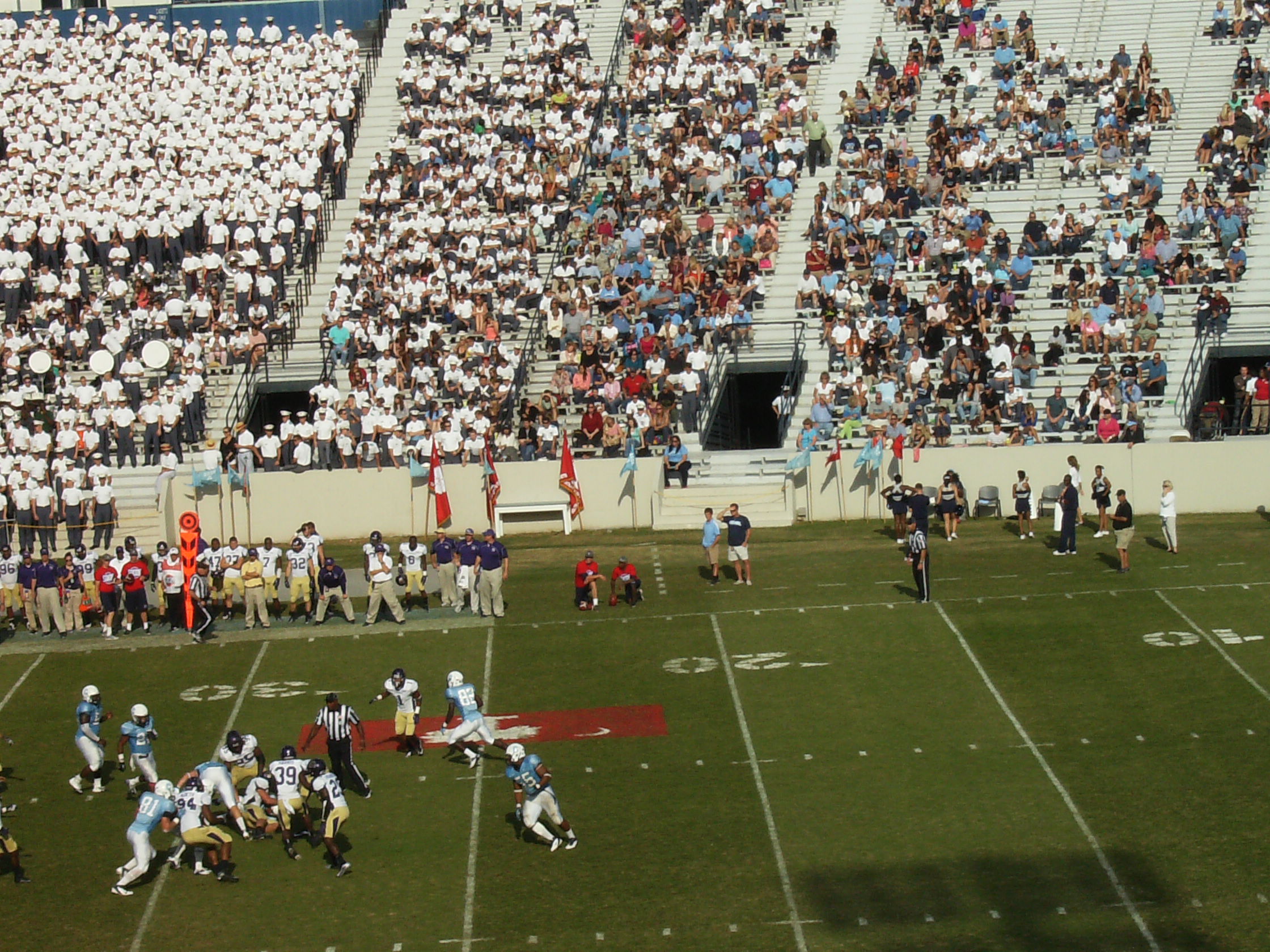
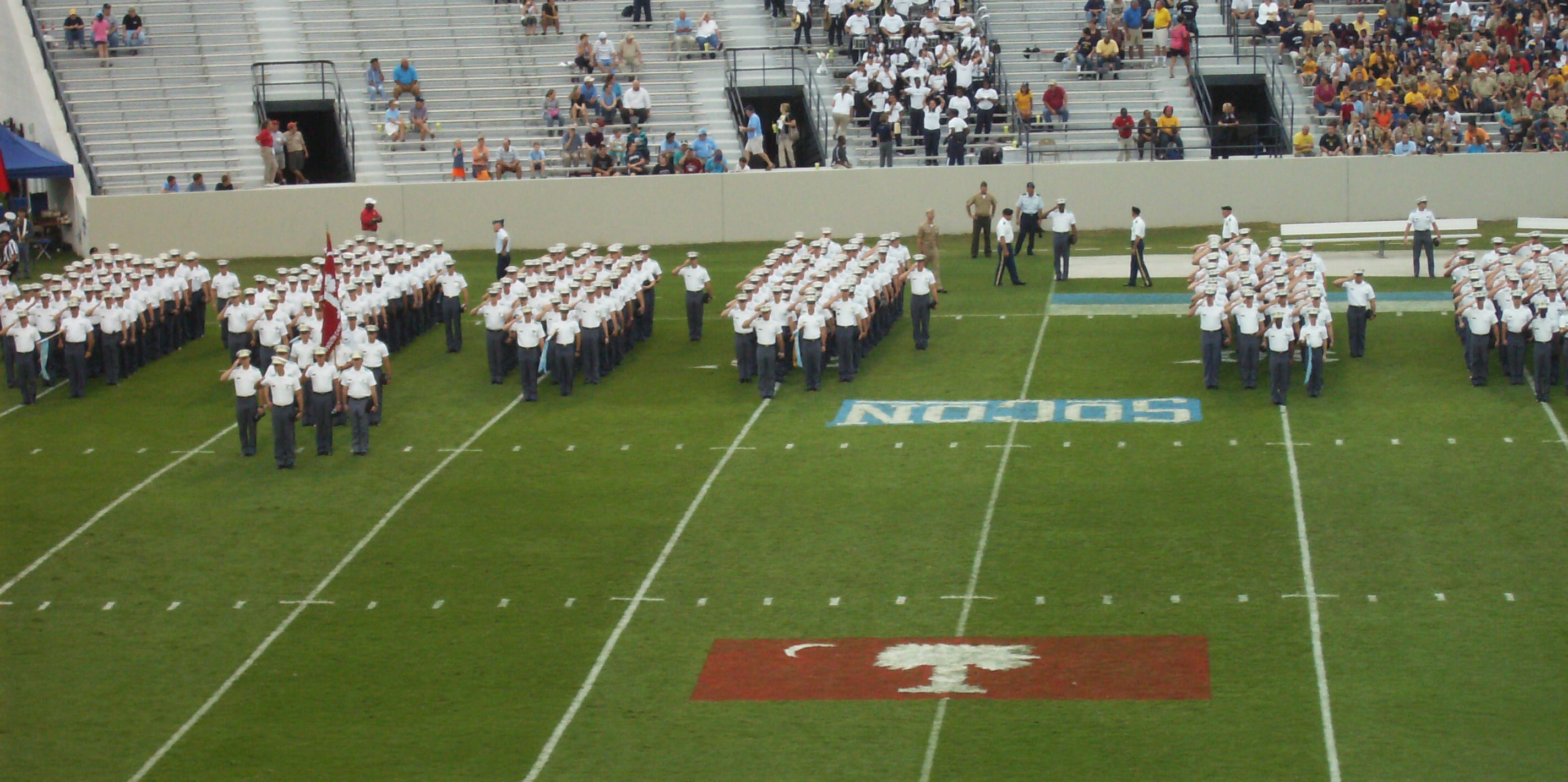
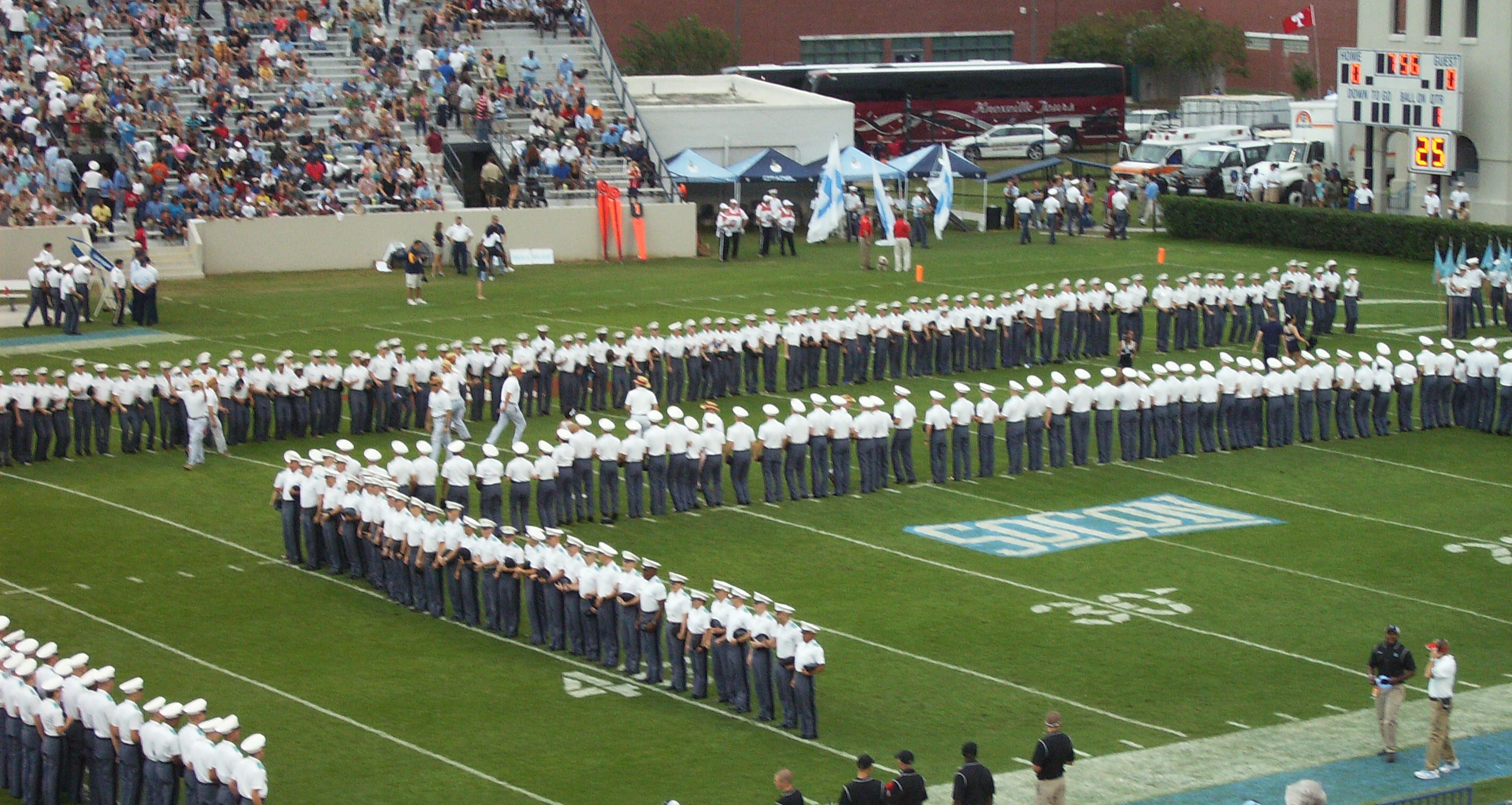
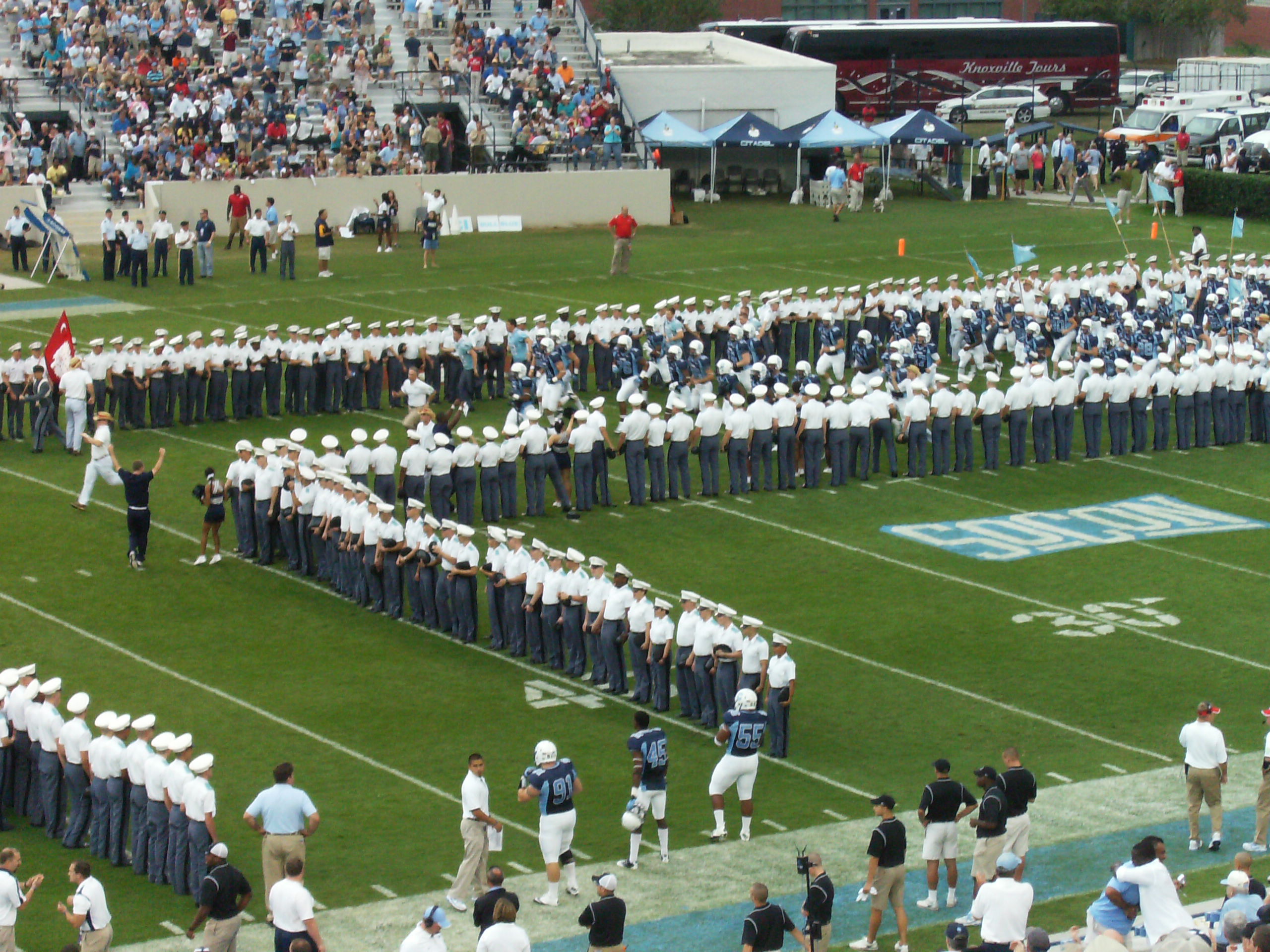
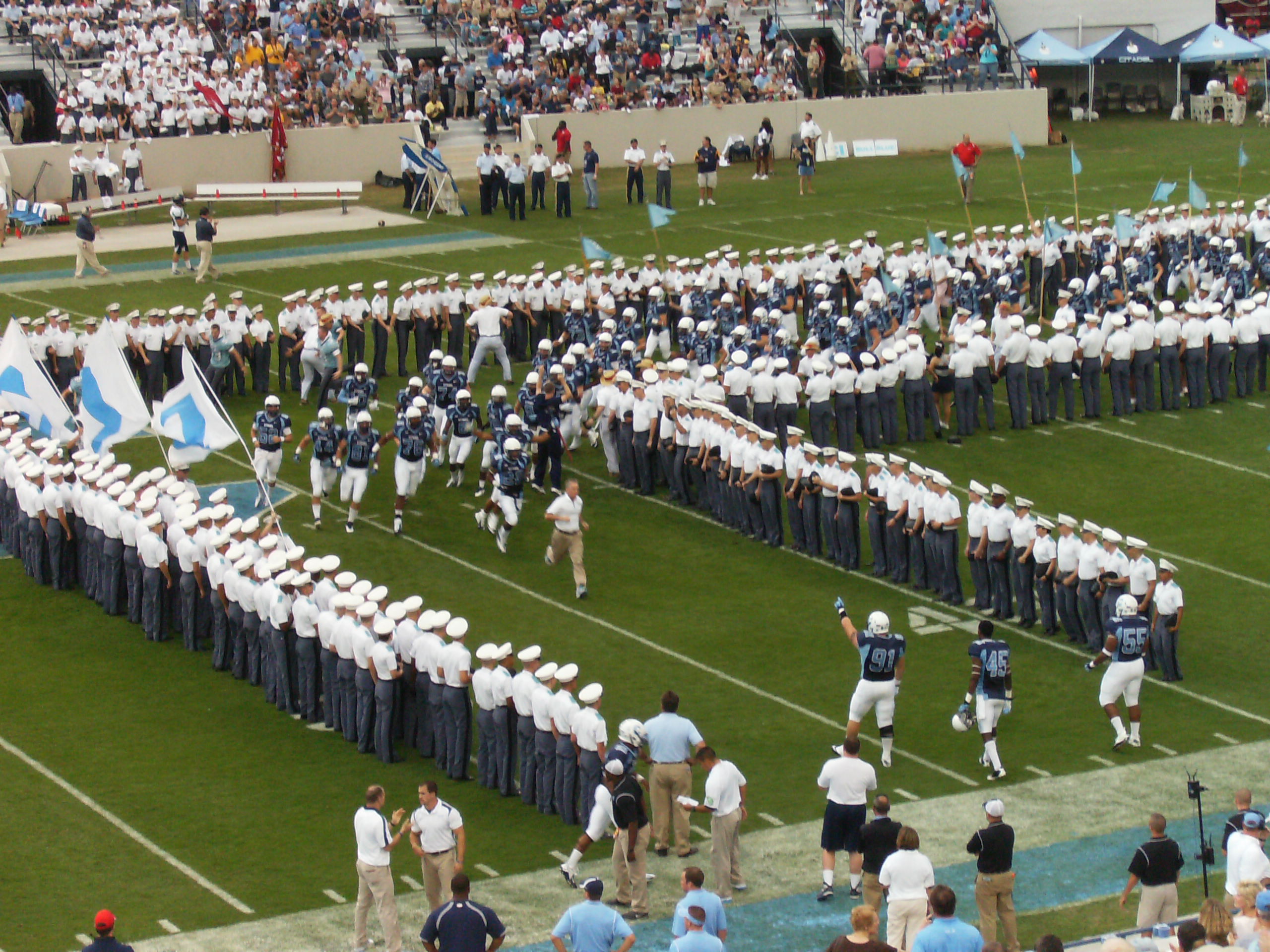
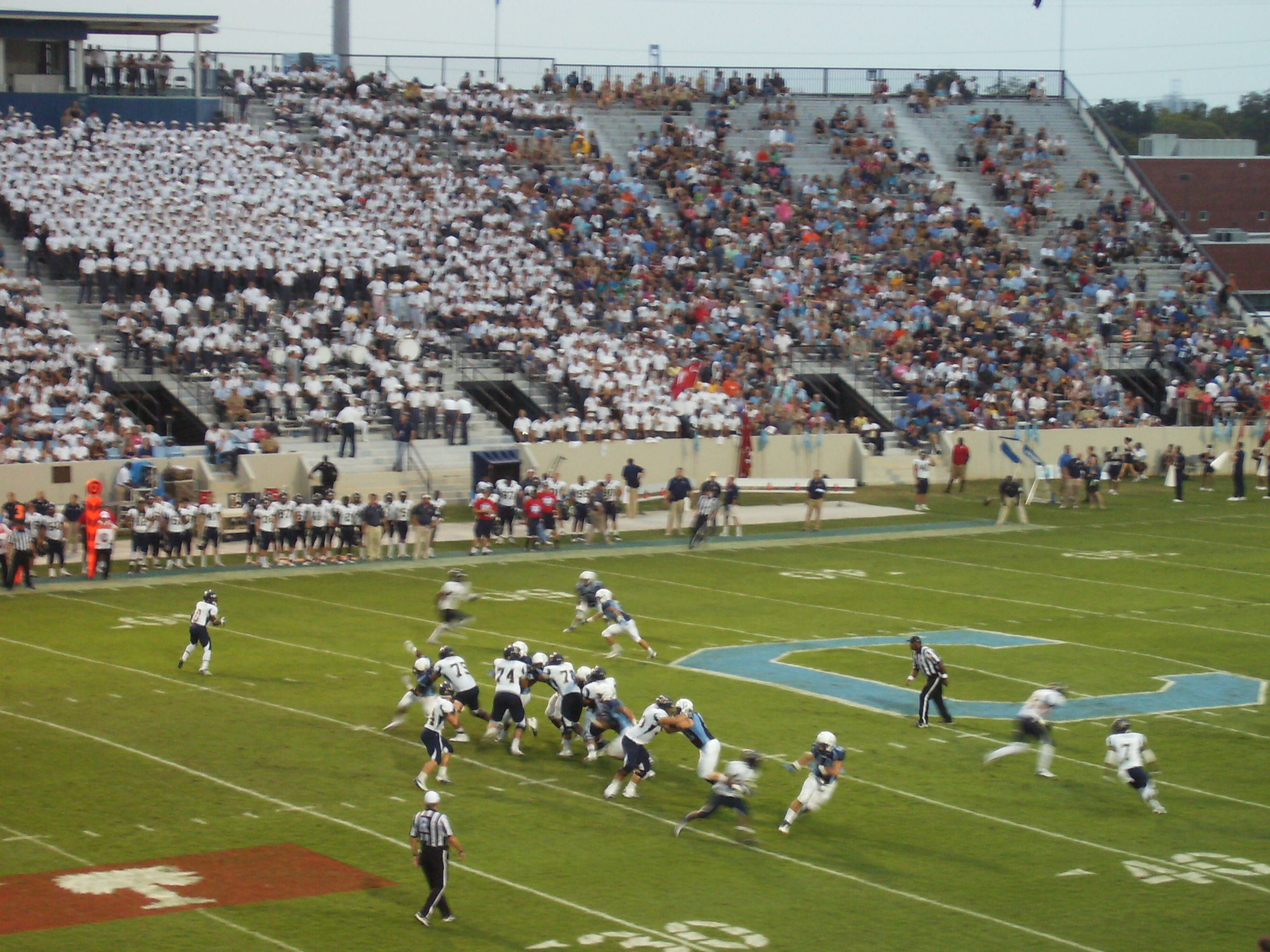
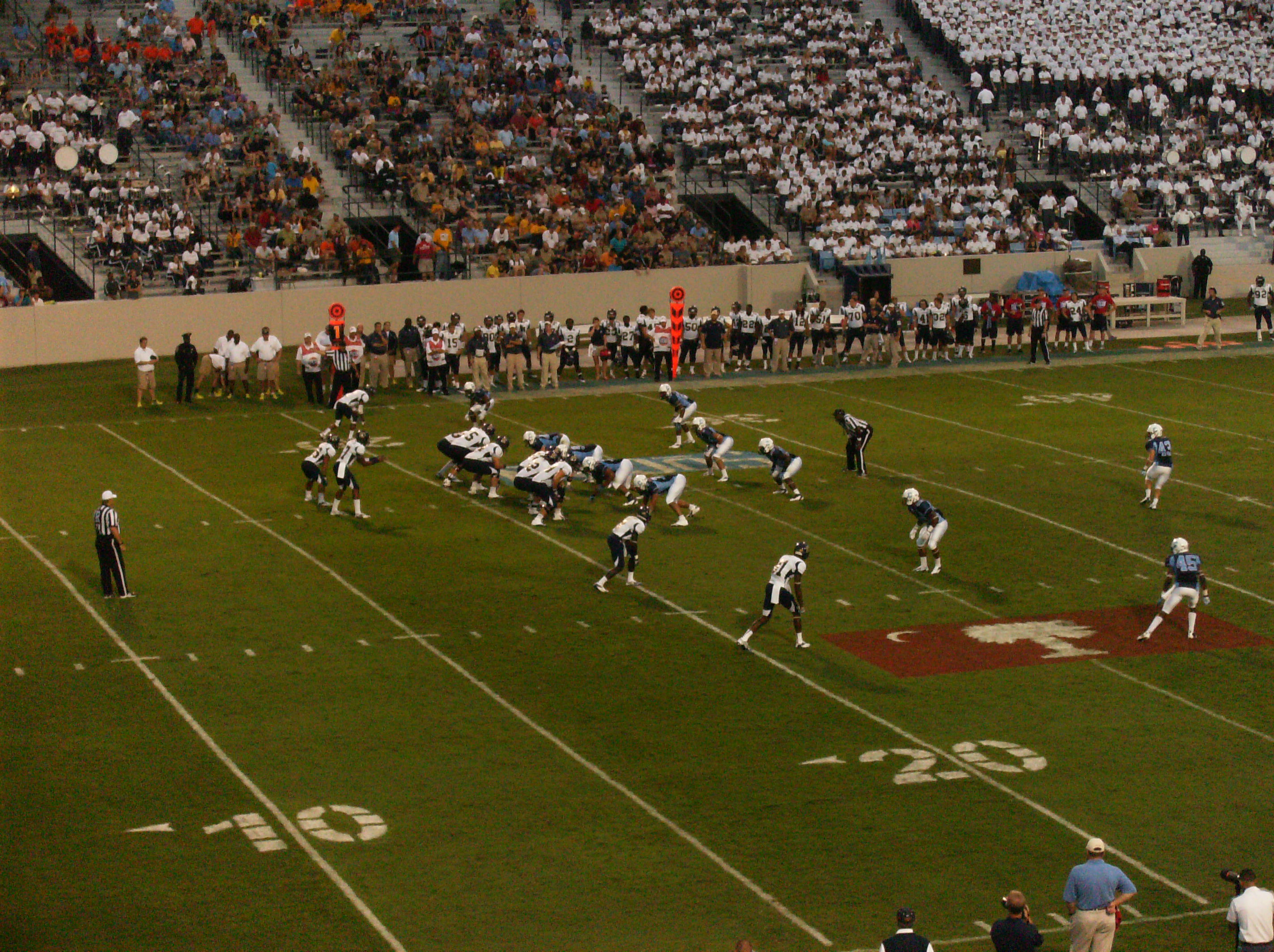
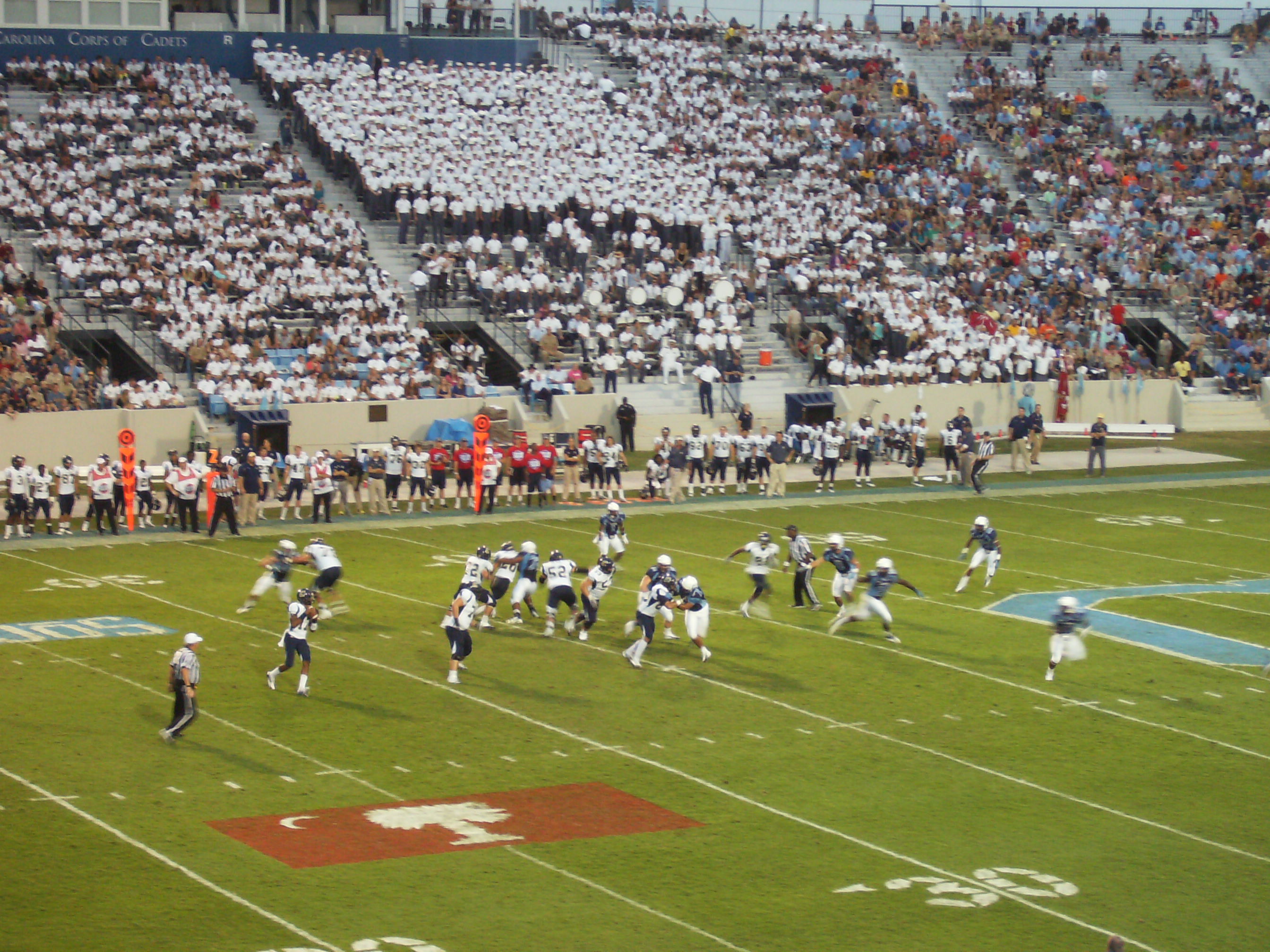
At the end of this post are some photos I took before and during the game. I’m including quite a few shots of the corps marching on to the field, more than usual.

As for the game shots, I tried to take more “action” shots this time, to go along with my standard pre-snap photos. As I’ve said many times, I’m not a good photographer, and my camera is just as limited as I am. Thus, the pictures can be hit-or-miss, with a lot more misses than hits.

Now for some random observations from the game, in no particular order.

The key play of the game, without any question, came with a little over nine minutes remaining in the third quarter:

Austin Jordan kickoff 54 yards to the WCU11, Shaun Warren return 8 yards to the WCU19 (Vinny Miller).

That is how the play was described in the box score play-by-play account. To say the description does not do Vinny Miller justice is a massive understatement.

Miller did not merely tackle the kick returner. HE BLEW HIM UP. There are balloons in the Macy’s Thanksgiving Day parade that aren’t blown up as much. The only reason the WCU player did not fumble the football is because the ball was basically pressed to his body in the same way a suction cup can be attached to a flat surface. Such was the force of the hit.

At the time, the game was tied at 24, and the crowd was, shall we say, apprehensive. After Miller’s hit, the atmosphere in the stadium markedly changed. The fans got wound up, and so did the defense, which to that point in the game had not forced a Western Carolina punt.

The sequence following Miller’s tackle went like this: defense forces three-and-out (including a sack by Cam Mobley, the Bulldogs’ first of the game), offense gets great field position, offense scores in four plays (helped by a 15-yard Catamount penalty), defense forces another three-and-out, offense drives 84 yards in 11 plays and scores to give The Citadel a two-touchdown lead.

The tackle was a huge, momentum-swinging event. I am not one who puts much stock in big hits meaning a whole lot over the course of a game, but this was an exception. I don’t think anyone who was at the game would disagree with me (and Kevin Higgins referenced it during his postgame interview with the press).

Listed above in the links section is WCSC’s video story for the game. The play leading to Miller’s tackle starts at around the 1:10 mark. To be honest, I’m not sure the video gives viewers a true understanding of the hit’s magnitude. I guess you had to be there. I am glad that I was.

For the most part, the offensive play calling was excellent for The Citadel against Western Carolina. However, I have to take issue with one particular call. I don’t criticize play calling too much, because I know full well I’m no expert, but in this case I feel compelled to point out what I think was a mistake.

I’m now going to criticize a play call by the Bulldogs that resulted in a touchdown for The Citadel…

The situation was this: fourth quarter, The Citadel clinging to a 38-31 lead. Western Carolina had just scored and attempted an onside kick, only for it to be collected by Domonic Jones. With 4:39 remaining, the Bulldogs began the drive on the WCU 46.

The Citadel picked up two first downs. Then, with less than two minutes to play, the Bulldogs faced third-and-four on the WCU 19. Ben Dupree rushed for six yards and a first down at the WCU 13. With just one timeout remaining and less than ninety seconds left in regulation, it was over for Western Carolina. The Citadel could go into “victory formation” and run out the clock.

Instead, the Bulldogs ran another play, a toss to Van Dyke Jones, who ran 13 yards for a touchdown.

Why?

If you take a knee (or two), the game is over. Why risk another play and a potential turnover — especially a pitch? I didn’t understand that at all.

Even the result (a touchdown) doesn’t end the argument, because The Citadel gave the ball back to Western Carolina with 1:16 to play. WCU was down by two scores, but at least had the ball and a chance (however remote) for a miracle. If the Bulldogs had taken a knee, the Catamounts wouldn’t have had that opportunity.

What if Western Carolina had run the kickoff back for a TD, then recovered an onside kick? The Catamounts would have had about a minute (and a timeout) to tie the game. Sure, it would have been a longshot, but if you’re WCU that is better than no shot.

Another issue is that The Citadel’s defense had to go back onto the field. It wound up being for only five plays, but those are five plays the defense really did not need. Admittedly, one of them resulted in an emphatic sack by Chris Billingslea, the video of which he can use as an audition tape for the WWE.

I just think when you have a chance to run out the clock and end the game, you should do so.

I was really glad to see the Bulldogs wearing light blue jerseys and white pants on Saturday. I wouldn’t mind seeing the same combination for Homecoming. It’s a good look. It’s also the right look.

Full credit must be given to Western Carolina’s Rock Williams, an indefatigable tackler. He had 24 stops (17 solo) against The Citadel. Williams also stole the ball from Ben Dupree when the Bulldogs were driving for an apparent score, which was just a ridiculous play by the Catamount linebacker. WCU needs a few more guys like Williams in its lineup.

After the game, I was happy the Bulldogs won, but more relieved than anything. Losing to Western Carolina in that situation would have had a lot of negative consequences.

I don’t know if the team would have completely lost confidence if it had lost the game, but I think a significant percentage of the fan base would have. It was only a few weeks ago that The Citadel was riding high at 3-0, but if the Bulldogs had followed up less-than-competitive losses to Chattanooga and Samford with a home loss to a woeful Western Carolina squad on Parents’ Day — well, the knives might have come out.

By winning, the Bulldogs avoided losing three games in four seasons to WCU, a program that has now lost 48 of its last 51 SoCon contests. The Citadel also snapped a five-game losing skid in “celebration games” (Parents’ Day and Homecoming), a streak which certainly wasn’t helping longterm attendance issues.

All in all, the second half was (in my opinion) pivotal for the tenure of Kevin Higgins. I’m glad the Bulldogs overcame serious defensive issues and made enough plays to get the victory.

The bye week comes at a good time. The Citadel has two weeks to figure things out on defense; the Bulldogs definitely need that time. Injured players will have a chance to heal, and the team can mentally prepare for the four-game finish.

Before the season started, I thought a winning season would be considered a successful year. The Citadel is 4-3, not exactly in the way its fans may have envisioned it being 4-3, but regardless the Bulldogs are still in a decent position to accomplish that goal. It won’t be easy, but it can (and should) be done.

It’s time to take a breath before the stretch run.

2012 Football, Game 7: The Citadel vs. Western Carolina

The Citadel vs. Western Carolina, to be played at historic Johnson Hagood Stadium, with kickoff at 2:00 pm ET on Saturday, October 13.  The game will not be televised, although it will be streamed on Bulldog Insider (subscription service) and can be heard on radio via the twelve affiliates of The Citadel Sports Network. Danny Reed (the “Voice of the Bulldogs”) will call the action alongside analyst Josh Baker, with Lee Glaze roaming the sidelines and Walt Nadzak providing pre-game, halftime, and post-game commentary. 

Links of interest:

The Citadel game notes

Western Carolina game notes

SoCon weekly release

The Kevin Higgins Show

Comments from Kevin Higgins at his weekly press conference

Mark Speir SoCon teleconference

Hey, read about The Citadel’s outstanding punter, Cass Couey. He likes to fish!

When The Citadel played Western Carolina last season, I wrote (among other things) the following:

The game against Western Carolina isn’t about a learning experience, or moving forward, or anything like that. There is only one goal for the matchup with the Catamounts, and only one acceptable outcome.  The Citadel must win this game.

That was true then, and it is true now, though the circumstances are not quite the same. The Citadel was 2-4 at this point last season, having lost two straight games, and played WCU on the road.

This year, the Bulldogs are 3-3, but have lost three consecutive contests, with the last two games being dispiriting affairs. The seventh game of 2012 will take place at Johnson Hagood Stadium, on Parents’ Day.

Last year, The Citadel took care of business against the Catamounts, winning 35-7. What about Saturday’s game?

First, let’s take a quick look back at last Saturday’s game against Samford. Yes, we have to do that…

I think at this point The Citadel is a known quantity on defense. It is a unit that has some limitations, including a lack of experience in key spots. To be fair, though, that was the concern heading into the season.

For example, I believe most people liked our starting linebackers but were worried about depth at that position. Now the Bulldogs have lost two of those three players for the season. That is a problem and will continue to be one for the rest of the campaign.

It doesn’t mean the defense is a lost cause; far from it. There is still talent on that side of the ball.

The main problem on D against Samford, in my view, was that the defensive line did not have a particularly good day, getting very little pressure on Samford quarterback Andy Summerlin, and not having much luck against the run either.

I think the d-line is better than that one game. That was certainly the case against Georgia Southern and Appalachian State. It is also true that against Samford, the defense didn’t get any help from the offense, and that took its toll in the second half.

The offense’s play was the really disappointing thing about the game in Birmingham. It wasn’t the first time The Citadel had struggled offensively against Samford, though.

In three games against Samford since moving to the triple option, The Citadel is a combined 6 for 39 on third-down conversions. That is…not good.

Samford’s “bear” front basically forces a team to go outside or over the top to beat it. A team that is successful in doing so can break a lot of big plays. Georgia Southern couldn’t convert on third down against Samford either (0 for 10), but had three long touchdown runs. In the last three games against Samford, The Citadel has only had four plays from the line of scrimmage that went for longer than 20 yards.

In his weekly press conference, Kevin Higgins referenced both issues. I felt a little better after hearing his comments. The game plan, to me, appears to have been a fairly good one:

Our goal going into the game was to be aggressive…We went for it on fourth-and-one because we wanted to send a message out to our guys that we wanted them to play aggressive. We were fortunate to get the first down. The very next play we had a play-action throw, as Ben Dupree hit Matt Thompson for a 48-yard strike and we got some momentum going there.

We had two legitimate shots for touchdowns that we just didn’t throw the ball real well or we dropped it. We ended with six dropped balls on the day. Several of those being real tough catches, but we needed to make those plays. Additionally in the second quarter Dupree threw an interception off a scramble and that hurt us [it certainly did, as it was returned for a TD].

Third down conversions were not good…We didn’t do a good job at continuing drives, as we ended up going 1-14 on third-down conversions. If we would have moved the ball better in the first half, it would have taken pressure off of our defense.

That comes close to summing up the offense’s afternoon.

Before moving on to the Western Carolina game, a special teams observation. The Citadel had a field goal blocked against Samford, never a good thing, but paid back that mishap with its own field goal block a short time later. It was yet another rejection for special teams stalwart Domonic Jones. He also got a hand on a second Samford field goal attempt that eventually sailed wide.

In his last 17 games, Jones has blocked six punts and two field goal attempts (not counting the deflection against Samford). He blocked two punts against Jacksonville in last year’s opener, and would later block a punt versus Elon and another in the VMI game (of course, you had to take a number to do that against the Keydets).

Jones has burned Appalachian State in consecutive seasons, blocking a punt for a TD in both the 2011 and 2012 games against the Mountaineers. His first career block of a field goal attempt came this year and was a critical play in the Bulldogs’ victory over Georgia Southern (and may have influenced the Eagles’ other FG attempt, a last-second miss).

Blocking a kick every other game is rather remarkable, and while Jones has drawn some recognition for his kick-blocking exploits, I’m not sure he has really received his just due. I think the SoCon needs to consider adding a place on its all-conference team for a special teams performer who isn’t a kicker or return man. Jones would be an obvious candidate to fill that spot.

Times have been tough for the Western Carolina football program in recent years. If you need confirmation of that, all you have to do is look at the WCU game notes. I’ve seen a lot of releases over the years, but the folks in Cullowhee have apparently made a commitment to stating brutal truths. No sugarcoating is allowed, I guess. The lowlights include:

– An 18-game losing streak in SoCon play, which is the longest current streak of futility for any FCS team in its own conference. The last time Western Carolina won a league game? Well, it was the last time WCU played at Johnson Hagood Stadium.

– That win over The Citadel in 2010 is also the last time the Catamounts defeated an NCAA Division I opponent, and the last time WCU won a road game.

– Western Carolina lost 20 SoCon games in a row from 2005-08.

– WCU has lost five straight games this season after winning its opener against Mars Hill.

– The Catamounts are 4-29 in their last 33 road contests, a stretch that dates back to 2005. WCU’s current road losing streak stands at 11 games, which is the sixth-longest such streak among FCS schools (Idaho State has lost a staggering 36 consecutive road games).

– WCU beat Mars Hill 42-14. The fourteen points allowed by the Catamounts marked the fewest points scored by an opponent since, you guessed it, the 2010 game against The Citadel (a 24-13 WCU victory).

– Western Carolina has lost 47 of its last 50 Southern Conference games. Two of the three victories have come against The Citadel.

On the bright side, most observers applauded Western Carolina’s selection of Mark Speir as its new head coach. Speir was a student assistant at Clemson during the latter part of the Danny Ford era in Tigertown. He then moved to Western Carolina for several years before three-year stops at Presbyterian and Elon. He had been on the Appalachian State coaching staff since 2003, and the recruiting coordinator for Jerry Moore since 2004.

Speir comes across (at least in the media teleconferences the SoCon puts out every week) as folksy, but not overly so. While listening to him this week, I was particularly impressed with a comment he made (basically unprompted) about this year’s Catamount squad:

I told [the WCU players] we are still here for this team, the 2012 team, to be a good football team, and we have five more opportunities to become a good football team…and our staff is not looking to next year, we’re looking [forward] to this week and the next four weeks…

That sounds like the opposite of, say, Charlie Weis. Being the opposite of Charlie Weis as a football coach strikes me as a good place to be (although Weis apparently has a great agent).

Speir clearly has his work cut out for him, though, especially this season. This year’s WCU outfit has been okay offensively, but on defense…not so much.

The aforementioned game notes actually include a paragraph entitled “Western Carolina’s Troubles With The Triple Option”. I couldn’t wait to read that section.

– Wofford rushed for 590 yards against the Catamounts, averaging over 8.5 yards per carry. Three Terriers rushed for over 100 yards.

– Georgia Southern rushed for 614 yards against WCU, averaging over 7.7 yards per carry. GSU had five different ballcarriers rush for at least 89 yards.

– You didn’t have to run the triple option to run on Western Carolina, though. Furman averaged 7.9 yards per carry in its victory over the Catamounts; the Paladins’ Jerodis Williams rushed for 239 yards on only 18 carries. Williams also added a 100-yard kickoff return for a TD.

– Samford running back Fabian Truss rushed for 180 yards against Western Carolina.

In that Samford game, though, Western Carolina actually had the lead in the fourth quarter before giving up 15 unanswered points and losing 25-21. Still, that level of competitiveness should get The Citadel’s attention.

WCU opened the scoring against Samford with a fumble recovery for a touchdown, one of three fumble returns for TDs the Catamounts have had this season. Maybe it isn’t the world’s greatest defense, but it appears WCU’s D is at least opportunistic at times.

Western Carolina runs a spread offense, not unlike that of Appalachian State. Eddie Sullivan has received the bulk of the snaps at quarterback, but Troy Mitchell will also see a lot of time. Against Georgia Southern, the two were interchanged for each other on almost every down, and occasionally were in the backfield together.

The Catamounts have several running backs; the two-deep’s listed starter, Michael Vaughn, has fewer rushing yards than three of the other RBs. Jacoby Mitchell is Western Carolina’s leading receiver, but keep an eye on 6’4″ freshman Spearman Robinson, a native of Greenwood.

There appears to be a bit of uncertainty on the left side of WCU’s offensive line, with both the LG and LT spots on the two-deep listed as an “or” situation. Josh Weinberg is a 260-lb. true freshman who will start at right tackle.

On defense, Western Carolina’s best player is linebacker/tackling machine Rock Williams, a preseason second-team All-SoCon selection. Randy Pressley isn’t listed as a starter at linebacker, but he made 16 tackles against Georgia Southern last week, including the Catamounts’ only tackle for loss.

WCU’s defensive line is not particularly large, as only two of the nine players on the depth chart weigh more than 265 lbs. and four of them weigh less than 250 lbs. The secondary is young; two of the starters are freshmen, and two others are sophomores.

Western Carolina punter Clark Sechrest is having a good year thus far. He presents a different challenge for Domonic Jones and company in that he is left-footed and can employ the “rugby style” of punting. He is also the backup placekicker. According to WCU’s website, he kicks field goals and PATs with his right foot.

The regular placekicker for WCU, Richard Sigmon, is 4 for 8 on FG attempts with a long of 45. He has had one kick blocked. Sigmon is also the kickoff specialist. Four of his 27 kickoffs have resulted in touchbacks.

Western Carolina’s punt return unit is not particularly strong. On kickoff returns, the long for the season for the Catamounts is 38 yards.

Tangent alert…

I need a ruling. Is Saturday’s game Parent’s Day (as noted on the school’s game preview) or Parents Day (on the website’s season schedule)? Actually, I think Parents’ Day would be more correct than either.

The press release from External Affairs refers to “Parents’ Weekend” throughout, except for (of course) the title of the release (“Parents Weekend”).

I’m going to go with Parents’ Day on this blog post. Yes, I know nobody cares.

What we really care about is the action on the field. The Citadel needs to win this game. It doesn’t really matter how, although I would personally be in favor of a blowout victory in which everyone gets to play a lot and the cadets all get overnights. Hey, I’m generous. Also, I remember Parents’ Day 1986 all too well. Not a good weekend.

There have been some good Parents’ Day games (the most famous being The Citadel’s 1950 victory over South Carolina), but lately things haven’t gone the home team’s way at what I call the “celebration” games — Parents’ Day and Homecoming. The Citadel has lost five consecutive celebration games.

Since 1953 (when the modern yearly Parents’ Day/Homecoming advanced schedule began), The Citadel has never lost six consecutive celebration games.

Incidentally, in none of those five losses did The Citadel wear its “traditional” uniform of light blue jerseys/white pants. Sure, that is just a coincidence. Still, perhaps Kevin Higgins’ Leadership Council can get together and appease some old alums while reversing a little karma. Just a suggestion.

I think the Bulldogs will win on Saturday, although I’m not overly confident. Nobody should be confident, given the results of the last two weeks. It is also worth pointing out that despite Western Carolina being a terrible football program for a number of years now, the Catamounts have won two of the last three games in this series.

WCU has players on its roster who know they can beat The Citadel. They will be more confident against the Bulldogs than any other SoCon team.

On the other hand, the stats don’t lie. League opponents have run the ball at will against Western Carolina. Saturday’s game is a good opportunity for Triple O’Higgins to put up some big numbers, and for the players to regain some lost confidence.

Perhaps the fans can regain some lost confidence as well.

Congratulations to all the seniors as they get their rings, with a gentle reminder that it isn’t over yet. There are still diplomas to be acquired.

Congratulations also to the freshmen who have made it to this benchmark. You still have a long way to travel, but you’ve survived the most stressful part of the trip.

I hope everyone has a good time this weekend. Let’s win this game.

2012 Football, Game 6: The Citadel vs. Samford

The Citadel at Samford, to be played at Seibert Stadium, with kickoff at 3:00 pm ET on Saturday, October 6.  The game will not be televised. The contest can be heard on radio via the twelve affiliates of The Citadel Sports Network. Danny Reed (the “Voice of the Bulldogs”) will call the action alongside analyst Josh Baker, with Lee Glaze patrolling the sidelines and Walt Nadzak providing pregame, halftime, and postgame commentary. Bulldog Insider will also provide free audio; the only video available for this game is being provided by Samford.

Links of interest:

The Citadel game notes

Samford game notes

SoCon weekly release

FCS Coaches Poll

The Sports Network FCS Poll

Pat Sullivan’s SoCon media teleconference

The Kevin Higgins Show, Part 1 and Part 2

Catching up with…Derek Douglas

Feature in The Post and Courier on Sadath Jean-Pierre

Some quick facts about Samford…

– Samford was called Howard College until 1965, when it became a university. In an effort to avoid being mistaken for Howard University, the MEAC school located in Washington, DC, the name was changed to Samford.

– While it is now in suburban Birmingham, Samford was originally located in Marion, Alabama. The decision to move to Birmingham (which happened in 1887) was far from unanimous, and among those staying in Marion was the school president, Col. James T. Murfee, who had in the post-Civil War era brought a military atmosphere to Howard College.

On the old Marion campus, Murfee founded Marion Military Institute, which is now a junior college and “The State Military College of Alabama”.

– Samford’s law school, Cumberland, was actually purchased from Cumberland University of Tennessee in 1961, one of only two such transactions involving a law school in the U.S., and the only one in which the law school moved across state lines.

(In case you were wondering, and I’m sure you were, the other law school to be bought and moved was the one at the University of Puget Sound, in Tacoma, Washington. It was sold and moved to Seattle University in 1994.)

– Samford played in the first football game ever contested at Legion Field, defeating Birmingham-Southern 9-0 on November 19, 1927.  Samford also played in the first night game at Legion Field (in 1928), losing 12-7 to Spring Hill.

The school’s football team also played games in Mexico City against the National University of Mexico in 1954 and 1963. Samford discontinued football in 1974, but reinstated the sport ten years later.

– Samford’s athletic teams, like those at The Citadel, are known as the “Bulldogs”. Also like The Citadel, its cartoon mascot is called “Spike”. It even has a live mascot now, like the military college, but there the similarities end. Samford’s bulldog is a female named “Libby“.

– Bobby Bowden was 31-6 as head coach at Samford (his alma mater), and his son Terry was 45-23-1 at Samford before taking the top job at Auburn. He is now in his first season as head coach of Akron. Terry Bowden’s first quarterback at Samford was Jimbo Fisher, who succeeded Bobby Bowden as head coach at Florida State.

[Pat] Sullivan said [last week] that this [Samford] team was the best he’s had in his six years at the school. The Bulldogs had their best grades in the offseason and have united as one.

“I’ve been talking about this team since last January,” Sullivan said. “I don’t know how the rest of the year is going to come out, but what I do know is that these players and coaches have been on a mission. There’s been no hidden agendas. Everybody talks about one family and this has truly been one (family) this year.”

I’m not sure if people knew what to make of this year’s Samford team before the season started. The Birmingham Bulldogs were picked to finish sixth in the SoCon by both the media voters and the coaches, but there was (and is) clearly a lot of respect for several individual Samford players (eight of whom were preseason choices for first- or second-team all-conference).

This is a team with a lot of talented players. The question, I suppose, is whether Samford has enough depth across the board to be a contender for the league title. Currently, Samford is 4-1 after suffering its first loss of the season last week at Georgia Southern.

If you have followed SoCon football at all over the last few years, you know that Dustin Taliaferro had been Samford’s quarterback since 1916, when the team was called the “Baptist Tigers”. Okay, I’m exaggerating — but Taliaferro ran Samford’s offense for so long that opponents actually knew his last name was pronounced “Tolliver”.

Taliaferro has finally used up his eligibility for Samford, and his replacement at QB is Andy Summerlin, who is a fifth-year senior transfer from Memphis. So far, Summerlin has been solid, although he struggled at Georgia Southern last week. He is completing 62.9% of his passes, and has thrown for five touchdowns against four interceptions (one of which was returned for a TD in the GSU game).

Fabian Truss is an excellent running back. He rushed for 102 yards against Furman and 180 yards versus Western Carolina. He is also an outstanding kick returner. His backup, Jeremiaha Gates, is no slouch either; after Truss was injured against The Citadel last season, Gates rushed 12 times for 59 yards, and followed that up with a 119-yard effort the next week at Auburn.

Wide receiver Kelsey Pope should be a familiar name to fans of The Citadel, since Pope caught 17 passes in last season’s matchup in Charleston. One of the other fine wideouts on the Samford roster, Riley Hawkins, is also a very good punt returner.

Samford traditionally has a large offensive line, and this year is no different. The listed weights of the five projected starters on the two-deep: 285 lbs., 295 lbs., 285 lbs., 285 lbs., 315 lbs. The most highly regarded of that group is center Ryan Dudchock, a redshirt senior who has made 27 consecutive starts. Dudchock was a preseason first-team All-SoCon selection.

Last year’s offensive coordinator, Rhett Lashlee, left to join Gus Malzahn’s staff at Arkansas State. From what I can tell, this year’ s offense is similar to what Samford ran in 2011, which was basically Malzahnish. Samford is averaging 74.6 plays from the line of scrimmage this year, almost the same hurry-up pace it had last season (75.6).

By way of comparison, The Citadel’s offense is averaging 60.8 plays from the line of scrimmage this season, after averaging 61.5 plays per game in 2011.

Samford’s play selection is very balanced, having so far this campaign rushed the ball 188 times while attempting 185 passes. Last year the Birmingham Bulldogs rushed 436 times and threw 396 passes.

The statistic that most correlates to winning and losing for Samford over the past season and a half is offensive rushing yardage. In ten victories, the rushing yardage totals have been as follows: 304, 160, 181, 348, 303, 113 (that was against The Citadel), 150, 227, 135, and 174. In five losses (not counting the Auburn game): 61, 34, 84, 92, and 63 (last week at Georgia Southern).

Samford runs the “Bear” defense against triple option teams. At his weekly press conference, Kevin Higgins described the defense:

The “Bear” front is basically when you cover up the center and both guards and then you have what we would call outside linebackers that are off of the offensive tackles…then out on the perimeter…when we bring our receivers in they are going to take their corners and press a little bit. They are going to take their “mike” linebacker and he’s going to be the guy to try to get from sideline to sideline because they keep him covered up as they cover [up] your five offensive linemen…their safety is also in the middle of the field, single high, and he’s going to be running hard on plays.

Higgins noted that the defense makes it harder “to get the B-Back going” because of the number of players on the inside.

Samford against the SoCon’s triple option teams over the past few seasons:

2010 The Citadel 119 rushing yards allowed (2.7 ypc)
2010 Wofford 360 rushing yards allowed (6.2 ypc)
2010 Georgia Southern 122 rushing yards allowed (2.4 ypc)
2011 The Citadel 248 rushing yards allowed (5.1 ypc)
2011 Wofford 443 rushing yards allowed (6.8 ypc)
2011 Georgia Southern 263 rushing yards allowed (5.4 ypc)
2012 Georgia Southern 360 rushing yards allowed (6.8 ypc)

In that game last week against GSU, Samford allowed touchdown runs of 41, 67, and 40 yards.

Nicholas Williams was a preseason all-conference choice on the defensive line. The 310-lb. DT is likely to be a key player in Saturday’s game, as is noseguard Jerry Mathis (who tips the scales at 292 lbs.). While there is beef in the middle, one of Samford’s starting defensive ends (Brinson Porter) only weighs 211 lbs.

Samford has a great deal of experience in the linebacking corps. All three starters are seniors. The aptly-named Keith Shoulders will have to shoulder a considerable load on Saturday at middle linebacker. His backup, Justin Shade, is the son of secondary coach Sam Shade, who some may remember from his days as a star safety at Alabama and in the NFL. The  younger Shade may be a backup on the depth chart, but he recorded 63 tackles last season, second on the team.

The leading tackler last year was strong safety Alvin Hines II, another preseason all-league pick (on the second team). The other starting safety, Jaquiski Tartt, was merely the SoCon’s defensive player of the month for September.

Tartt already has 51 tackles this season (25 solo stops), along with two interceptions. He also returned a fumble 80 yards for a score against Georgia Southern.

Samford has very good special teams units. Earlier I mentioned Truss and Hawkins, both of whom are dangerous return men. The Birmingham Bulldogs also boast reliable placekicker Cameron Yaw and have a solid punter in Greg Peranich.

Last season’s game between the two teams turned on two blocked field goals by Samford (one by Hines). This year’s special teams battle will be a tough one for The Citadel.

Odds and ends:

– Saturday’s game will be Youth Day at Seibert Stadium. Any youth football player or cheerleader who attends the game in uniform will be admitted for free.

– Samford has won its last five games after a loss.

– Samford has just concluded a three-game road trip, one that ended with its players still in an exam period. Students at the Birmingham school began fall break on Friday.

– The Citadel is the least-penalized team in the Southern Conference (in terms of yardage) by a considerable margin. Samford has been penalized more (in terms of yardage) than any SoCon team, also by a considerable margin.

– Samford leads the league in the following categories: kickoff return average, kickoff coverage average, punt return average, sacks, interceptions, defensive pass efficiency, and turnover margin.

– With regards to turnover margin, Samford is currently at +7 and is on pace for a fifth consecutive year of a positive turnover margin (previous four years: +7, +9, +1, +14).

– The Citadel is next-to-last in the SoCon in 3rd-down conversion defense. That has to improve, as the Bulldogs D has to be able to get off the field. Not surprisingly given that stat, The Citadel is also next-to-last in first downs allowed (and also next-to-last in offensive first downs).

One way to improve The Citadel’s third-down issues on defense is to stop the run, something the Bulldogs have at times struggled to do so far this year. Against Samford, that becomes even more important. The Birmingham Bulldogs don’t have the true running threat at QB that is associated with a lot of teams that run the Gus Malzahn style of offense, but make up for it with their running backs.

Stopping those RBs on Saturday will be a difficult task, particularly with the loss of Carl Robinson for the season due to a knee injury. Ian Thompson will step into the starting lineup in Robinson’s absence; Yemi Oyegunle and Doyen Harris will also see more action, per Kevin Higgins. I hope they tackle well. I hope the whole team improves its tackling, for that matter.

One positive from last week’s loss to Chattanooga was the passing game, which was reasonably effective and efficient. Indeed, Triple O’Higgins is second in the league in offensive pass efficiency. As I wrote in my review of the UTC game, I think The Citadel should be in run-run-run mode when feasible, but I think the game against Samford may present the military college with an opportunity to call some play-action passes.

Saturday’s game at Samford is going to be a very tough assignment for The Citadel. It may be a challenge too difficult for the cadets to overcome.

On the other hand, it is also an opportunity. The team can essentially wipe away the disappointment of the UTC loss with a victory over Samford. If that happens, it also stamps The Citadel as a legitimate contender in the Southern Conference.

That isn’t something you could say about The Citadel in recent years. It would be nice to be able to say it this season.

One more round.

Game Review, 2012: Chattanooga

Chattanooga 28, The Citadel 10.

Links of interest:

Game story, The Post and Courier

Notes, The Post and Courier

Photo gallery from The Post and Courier

Game story, Chattanooga Times Free Press

Notes, Chattanooga Times Free Press

Kevin Higgins postgame presser (includes comments from  Bay Amrhein)

Postgame release from The Citadel

Box Score

The Citadel has now lost two consecutive games to Chattanooga at Johnson Hagood Stadium by the same exact score: 28-10. In 2010, the Bulldogs rushed for 238 yards and did not force a turnover. In 2012, the Bulldogs rushed for 232 yards and did not force a turnover…

I was disappointed in the game on Saturday night; I think the same could be said for all the home fans, as well as the players and coaches. The loss was complete and total and it is hard, at least less than 24 hours later, to find too many positives.

From my vantage point, the Bulldogs simply got beat up front on offense. That happened on defense as well, but in all honesty I felt The Citadel lost the coaching battle on that side of the ball too. I don’t pretend to be much of an expert when it comes to that kind of thing, so I’m not going to say much about it, but our defensive players always seemed a step behind last night, unprepared for the play that was developing.

Then we had a punt blocked — or, to be more precise, smothered.

All of this is a reminder that at The Citadel, when it comes to success on the field (or court), the margin for error is very small. It doesn’t take much of a dropoff for things to go south in a hurry. That is the nature of athletics at a small military college. The good times at 3-0 are now not so good at 3-2, with a road trip to 4-1 Samford looming.

It’s not a disaster, though. The wheels have not come off the season, to paraphrase a comment I saw on a certain message board.

The Bulldogs are 3-2. If you were a fan of the team and were asked at the beginning of the season, “Would you take 3-2 after five games?” Well, 90% (or more) knowledgeable supporters would have taken 3-2 and not thought twice about it. It would have meant that The Citadel had beaten either Georgia Southern or Appalachian State, for one thing.

Well, we know now that the Bulldogs beat both GSU and App State. Saturday’s loss to UTC was bad, both as a home loss and in the way the Bulldogs played, but the team’s success in the early part of the September has arguably entitled it to a mulligan of sorts.

Actually, next week is an opportunity for The Citadel, too. A win at Samford would put things right again.

Quick takes on the UTC game:

– The kickoff return teams were improved. I appreciated the tough running by Keith Gamble, too.

– A long run in the fourth quarter pushed Darien Robinson over 100 yards for the game. He finished with 132 yards rushing on only 12 carries. He really needed more than 12 carries.

– It wasn’t a good night for the defense, but Derek Douglas was back and you could tell. He had three tackles for loss, including a sack.

– Sadath Jean-Pierre finished with eleven tackles, including seven solo stops.

– The Citadel passed the ball with some success later in the game when it trailed by a substantial margin. The Bulldogs finished with 13 pass attempts. I’m usually of the opinion that The Citadel ought to stay in run-run-run mode whenever possible, but I do wonder if maybe the Bulldogs should have opened things up a bit more before falling behind by three scores. That may be hindsight fanboy talk, though.

– The Bulldogs averaged 5.2 yards per rush, but if you take out the two long runs by Robinson and Aaron Miller, The Citadel only averaged 3.3 yards per carry for the game. Of course, occasionally breaking a long gainer is a key component of the triple option, so taking those rushes out of the equation is probably unfair. On the other hand, I think it is telling that outside of Robinson, the rest of the offense rushed 33 times for only 100 yards.

– The Citadel did not tackle particularly well for the second game in a row. Terrell Robinson’s scramble-then-throw for UTC’s first TD pass was especially frustrating to watch. On that play, I was amazed that Chattanooga didn’t have an ineligible lineman downfield. That’s not a criticism of the officials; for all I know, the Mocs didn’t have any linemen leave the line of scrimmage during the play. If so, more power to them.

– Okay, I want to quickly riff on an off-the-field subject…

My understanding (which could be wrong) is that The Citadel’s band plays at certain, designated times — in other words, its activity is coordinated with the videoboard, PA, etc. I can understand that.

The problem is that as a result, the opposing team’s band sometimes winds up playing a lot more often than our own band. This was definitely the case on Saturday night.

I’m sitting in the stands, waiting for our band to play something, and in the meantime the UTC band is playing its little choo-choo number every chance it gets between plays, along with that Pitbull song which should have been declared illegal by now.

I’m not one to harp on this subject (although I know more than a few alums who will be glad to do so), but I admit I was a little frustrated on Saturday. Part of my issue with this is that I think the corps is most involved with the game when it is “warmed up” by the band. The same is true for the home crowd in general.

I know we’ve got a supersonic video board/PA system, and we want to use it, and sometimes it comes in handy. The corps did get into the spirit of things when the now-ubiquitous “Gangnam Style” was played near the end of halftime, and that was very enjoyable to watch. It was fun, even if Psy attended a school (Boston University) that dropped football.

However, during the game I would like to hear our band more often. At the very least, it should play at least as much as the opposing band.

Speaking of the PA, there were apparently some technical difficulties that led to the crowd being surprised by the sudden playing of the National Anthem. No big deal, although some of our fans do need a bit of a warning.

– I took a bunch of pictures. My performance in picture-taking on Saturday was rather poor, even by my mediocre standards. I am including some less-than-great shots anyway.

2012 Football, Game 5: The Citadel vs. Chattanooga

The Citadel vs. Chattanooga, to be played at historic Johnson Hagood Stadium, with kickoff at 6:00 pm ET on Saturday, September 29.  The game will not be televised, although it will be streamed on Bulldog Insider (subscription service) and can be heard on radio via the twelve affiliates of The Citadel Sports Network. Danny Reed (the “Voice of the Bulldogs”) will call the action alongside analyst Josh Baker, with Lee Glaze roaming the sidelines and Walt Nadzak providing pre-game, halftime, and post-game commentary. 

Links of interest:

The Citadel game notes

Chattanooga game notes

SoCon weekly release

FCS Coaches Poll

The Sports Network FCS Poll

UTC coach Russ Huesman’s weekly press conference

The Kevin Higgins Show, Part 1 and Part 2

Okay, I had to post this too. It doesn’t have anything to do with the game on Saturday, but who cares. From Chattanooga’s athletics website [Link]:

Bath Fitter, a proud sponsor of the Chattanooga Mocs, has officially launched the “Bath Fitter Ugliest Bathtub Contest” which will run during the entire Chattanooga Mocs Football season. Bath Fitter is seeking out Mocs fans that claim to have the UGLIEST BATHTUB in Chattanooga! The winner of the contest will receive a FREE brand new bathtub or shower and installation courtesy of Bath Fitter.

Entering is easy. Simply take a picture of your ugly bathtub or shower [etc.]…

Last year’s game between The Citadel was one for the books, although it isn’t a story that the Mocs will want to read again. The Bulldogs pulled off the biggest comeback in school history, spotting Chattanooga 27 points before scoring 28 unanswered points of their own and holding on for a 28-27 victory.

That game was just one of a surprising number of close contests to have been played in this series over the years. In fact, in the last twenty-five games between Chattanooga and The Citadel, seventeen of them have been decided by a touchdown or less; eleven of those seventeen have been decided by three or fewer points.

Seven of those seventeen contests have been played at Johnson Hagood Stadium, with The Citadel winning four of them. Of those, probably the most memorable (and important) was the 1988 game, won by the Bulldogs 23-17. UTC pushed for a last-gasp TD to win the game, and had first-and-goal on the three-yard-line, but The Citadel made a big defensive stand to preserve the victory. It was the third of seven straight victories for the Bulldogs that season.

Note: if you read the linked game story, writer James Beck seems to imply that The Citadel got more than a little help from the officials at the end of the contest. I am not sure what game he was watching that day. For example, the clip on Jay Jackson was rather obvious.

As for the final play, no one in the press box (and few in the stands) could really see it because it happened in the far corner of the end zone, on the side opposite the Touchdown Cannon Crew. 

Yes, I’m being a touch defensive — but the first six paragraphs in Beck’s article were devoted to an angle that wasn’t really true. What is perplexing is that later in the same story he quoted the UTC receiver on the final play: “‘I had the ball until I hit the ground and then it popped loose,’ Philpot admitted.” Well, there you go.

Gene Brown, in the middle of his memorable one-year run as the Bulldogs’ quarterback, got hurt in the UTC game and missed the next two contests. Tommy Burriss started those two games, and led The Citadel to victories over Boston University and East Tennessee State. Both of those schools later dropped football.

Tommy Burriss, program killer.

Odds and ends, some relevant, some not-so-much:

– During his press conference, UTC coach Russ Huesman seemed to be under the impression that The Citadel was a private school. He made a reference suggesting as much when asked why the Bulldogs had “jumped up” to compete in the league this season. According to Huesman, The Citadel has “spread [itself] out” geographically to recruit better players, something that “places like that, smaller private schools, [have to do].”

The Citadel has never been a private school, but some folks might be surprised to know that until 1969, the University of Chattanooga was a private school. At that time, it merged with the University of Tennessee system.

– UTC lost three games last year by the exact same score, 28-27. All came in league play, and all three came against the three SoCon schools that run the triple option. That is an amazing coincidence.

The Citadel had never been involved in a contest that ended with a 28-27 score in its history before last season’s game.

– Kevin Higgins has mentioned that he likes to have a bye week occur after playing an FBS squad, a luxury the Bulldogs don’t have this year. During his seven-plus seasons as head coach of The Citadel, the Bulldogs have played the week immediately following a game against an FBS opponent on four occasions. The Citadel is 2-2 in such games, all at home.

The two losses were the triple-OT loss to Furman in 2005 (after playing Mississippi) and the horrific loss to CSU in 2006 (which following a game against Texas A&M). The Bulldogs beat Presbyterian 26-14 in 2010 (following a long trip to the desert to face Arizona) and edged Chattanooga 24-21 in 2006 (after playing Pittsburgh the week before).

– Of UTC’s six losses last season, five were by a total of twelve points. The Citadel lost seven games last year; four of them were by a total of seventeen points.

– The Citadel was the least-penalized team in all of FCS last season, both in terms of number of penalties and yardage. Chattanooga was fourth nationally in both categories, so there should be a lot of disciplined players on the field this Saturday.

– Looking through UTC’s game notes, I noticed that Jack Douglas holds the record for most rushing attempts by an opponent against the Mocs, rushing 38 times in the 1991 game (for 155 yards). Douglas’ 38 carries are the second-most by a Bulldog in a game, only bettered by Andrew Johnson’s 47 carries against William & Mary in 1974 (Johnson rushed for 241 yards against the Tribe).

The Bulldogs had 83 rushing attempts as a team in that 1991 contest, a 33-26 loss at Chattanooga, the most by an opponent against UTC, and also the most attempts The Citadel has ever had in a contest.

That was the first game for The Citadel after ditching an ill-fated experiment with the “split back veer”. From the Chattanooga game onward, the Bulldogs ran the wishbone for the rest of Charlie Taaffe’s tenure as head coach of The Citadel.

– Another Bulldog, Nehemiah Broughton, holds the distinction of having made the longest TD run from scrimmage by an opponent against the Mocs, a 92-yarder in 2004 at Johnson Hagood Stadium. The Citadel won that game 44-24. It was the third-longest run in The Citadel’s history, only eclipsed by Bob Carson’s 95-yard TD versus Boston University in 1971 and Travis Jervey’s 96-yard touchdown against VMI in 1994.

Jervey will be inducted into The Citadel Athletic Hall of Fame this weekend.

– Halftime adjustments and speeches, ahoy: The Citadel has outscored its opponents 52-7 in the third quarter this season.

– In the 1988 game against Chattanooga I mentioned earlier, the Mocs’ head coach was Buddy Nix. He is now the general manager of the Buffalo Bills.

– There has been some talk about beer being sold in the concessions stands at Finley Stadium during Chattanooga home football games, but no decision will be made on that until UTC hires a new chancellor and director of athletics. Chattanooga averaged 10,436 fans per game last season at Finley.

Chattanooga basically ran a “pro-style” offense last season, which took advantage of the talents of starting quarterback B.J. Coleman. Without Coleman, and with two quarterbacks who can both run and pass, the Mocs looked to transition into a spread attack this season.

There have been a few speed bumps along the way, none bigger than the drama of three weeks ago, when Terrell “Silk” Robinson quit the team on September 4, then changed his mind and rejoined the squad two days later.

Robinson was the 2011 co-freshman of the year in the SoCon for his efforts replacing Coleman after the latter was injured midway through the season. Robinson started three games at quarterback for the Mocs last year, and also started this year’s season opener against South Florida. However, he was replaced during that game by Jacob Huesman, who has started at QB for the last three games.

Jacob Huesman is, of course, the son of the head coach, and so this isn’t your average quarterback controversy. Of course, not everyone is willing to admit it is a controversy at all.

Regardless of which one takes the majority of the snaps on Saturday, expect Robinson to be on the field in some capacity on most offensive downs. Russ Huesman had this to say about how the offense was going to be structured against The Citadel:

The bottom line is that Terrell and Jacob better get touches. This is the last week I’m going to say that. They are our two best players when the ball is in their hands. They have to touch the ball.

In his press conference, Huesman mentioned Kansas State quarterback Collin Klein and the KSU offense as a model for what he would like to see from the Mocs. Against Oklahoma last Saturday, Klein threw 21 passes and had 17 rushing attempts. That is presumably the kind of output Huesman would like to see from the quarterback position, with (I’m guessing) some additional “touches” for Robinson as a receiver.

That certainly didn’t happen last week against Appalachian State. In that game, the two QBs combined to throw the ball 35 times, with only 14 rushing attempts (and four of those were sacks). It did not help that 12 of UTC’s 27 plays on first down were “spike plays” — plays that gained zero yards, or lost yards, and thus no better than just spiking the football.

Hey, I’m providing trendy, cutting-edge terminology in these previews.

Chattanooga’s offensive line has some experience, with 80 career starts among the five projected starters on Saturday, but left tackle Brandon Morgan is questionable for the game against The Citadel with a shoulder injury, and his backup is recovering from a knee problem. Starting left guard Synjen Herren is the least experienced of the starting group, as he is a redshirt freshman. Right tackle Adam Miller has started 36 games in his career and was a preseason second-team All-SoCon selection.

Marlon Anthony, who caught six passes against the Bulldogs last season, is UTC’s leading returning receiver, but he has been slowed by an ankle injury (he started his first game of the season against App State). The Mocs’ top passing target is actually tight end Faysal Shafaat, a 6’5″, 240-lb. native of Orlando who leads UTC in both receptions (16) and receiving yardage (177) after four games. He will be a difficult matchup for The Citadel, as will Anthony (who is also 6’5″).

Three different running backs have started for the Mocs this season.Between them, they are averaging 3.6 yards per carry. The most experienced of the three, senior J.J. Jackson, is a dependable receiver out of the backfield, with seven receptions this year (12.7 yards per catch).

By the way, the longest play from scrimmage by a UTC player so far this season was a 62-yard run by Jacob Huesman against Jacksonville State. That came on the first play of his first career start.

“Typically throughout the years, Russ and this defense have played the option as good, if not better than everybody else in our league,” The Citadel coach Kevin Higgins said during Tuesday’s Southern Conference media teleconference.

Huesman didn’t necessarily agree with that assessment, but he did say he felt “about as good as you can feel going into an option game.”

UTC defense — 2011

The Citadel: 265 yards rushing, 4.6 ypc
Georgia Southern: 326 yards rushing, 6.2 ypc
Wofford: 358 yards rushing, 5.6 ypc

UTC defense — 2010

The Citadel: 238 yards rushing, 4.2 ypc
Georgia Southern: 255 yards rushing, 5.2 ypc
Wofford: 295 yards rushing, 4.5 ypc

The 2011 numbers for the three teams against Chattanooga are very close to what they averaged per game on the ground that season. The Mocs won two of the six games listed above, beating both The Citadel and Georgia Southern in 2010.

One curiosity in the schedule is that in each of the last three years (including this one), Chattanooga has played the three triple option teams in the same order — The Citadel first, followed by Georgia Southern and then Wofford. This year is different in that the Mocs have a bye week after playing the Bulldogs. In the previous two seasons, UTC played The Citadel and Georgia Southern in back-to-back weeks.

UTC does have a number of outstanding defensive players, and will definitely be a challenge for Triple O’Higgins. One major difference between last year’s team and this season’s squad is the presence of two big (and I mean big) newcomers in the middle of the defensive line. Derrick Lott is a 6’4″, 303-lb. transfer from Georgia, while his backup Chris Mayes is a 6’3″, 295-lb. transfer from the Naval Academy. Both will see time, and both will be more than a handful for the Bulldogs’ o-line.

They join proven performers like Buchanan Watch list member Wes Dothard, the Mocs’ outstanding middle linebacker; defensive ends Josh Williams (an all-conference performer) and Davis Tull (who already has four sacks this season); and excellent defensive backs D.J. Key (strong safety) and Kadeem Wise (cornerback).

Nick Pollard is the regular placekicker and punter for the Mocs this season, after just handling FGs and PATs last year (and handling them fairly well). On kickoffs and long field goals, UTC will usually trot out freshman Henrique Ribiero. In this case, it appears “long field goals” means more than 40 yards. Ribiero is a native of Brazil who made a 57-yard field goal in high school.

The Mocs employ the “rugby style” of punting, which they went to late last season after some punt protection problems (notably the punt blocked by Chris Billingslea for a Rod Harland TD in The Citadel’s victory over UTC).  It will be interesting to see how the Bulldogs’ punt return team adjusts to this particular punting technique.

Chaz Moore is a solid kickoff returner who the Bulldogs must contain. The Citadel allowed a long kickoff return in the App State game, something that got overshadowed by the fact that the Bulldogs had so many kickoffs in that game. Both of The Citadel’s kickoff return units must improve on Saturday.

I think Saturday’s game is going to be a tight affair. Chattanooga almost has to win the game if it has any hopes of making a playoff push, while The Citadel needs to regain any momentum lost following the NC State game.

Points may be at a premium, which wouldn’t be the best omen for the home team. Kevin Higgins is now 2-36 when one of his Bulldog teams fails to score more than 20 points in a game. UTC is also a decent road team (6-6 in its last twelve SoCon road contests).

I’m not trying to be pessimistic. I’m just worried about facing a somewhat desperate but talented team, one that remembers all too well the game it let get away last season.

There are positive developments to consider as well, though. Derek Douglas should see more snaps on Saturday, which can only help the defense, particularly the defensive line. Speaking of the d-line, Mark Thomas has played like a potential star, a very nice bonus this year.

After just four games, The Citadel is only 40 yards away from surpassing its aerial yardage total from all of last season. Think about that.

Saturday’s game will feature halftime ceremonies honoring the newest members of The Citadel Athletic Hall of Fame. I already noted that one of them is Travis Jervey. The others are former baseball pitchers Jim Scott and Brian Wiley, 800-meter runner Mike Cason, and former basketball coach and AD Les Robinson.

I hope a good crowd shows up for this game. There is a chance for thunderstorms in the Charleston area on Saturday night, which could be a problem in terms of walk-up attendance (that was certainly the case for the GSU game). Still, I would like to think that with the way the Bulldogs have performed so far this season, there is an uptick of support, and a corresponding increase in the number of people in the stands. We shall see.

Can’t wait for Saturday.