The “unofficial” 2014 SoCon football schedule

Last week the Southern Conference accidentally “leaked” the provisional 2014 composite league football schedule. It has since been removed from the conference website, but here is a .pdf of the document as it (briefly) appeared online:

2014 provisional SoCon football schedule

There are a few things on the provisional schedule that have already been changed. For example, Chattanooga will no longer be hosting Georgia State on September 6. Instead, the Mocs will open their 2014 season at Central Michigan on Thursday, August 28 and will play their home opener against Jacksonville State (apparently on September 6, essentially replacing the Georgia State game).

Not included on the provisional schedule, but announced earlier this year, is a 9/20 meeting between the Paladins and South Carolina State, to be played in Orangeburg. That will be a rematch of the first-round 2013 playoff game won by Furman, of course.

There is also a little confusion about Furman’s opponent on 10/25. Some reports suggest the Paladins will play Chattanooga on that date, but this schedule lists Samford as Furman’s homecoming opponent.

Other “holes” in the provisional schedule include the following:

– The opponent for VMI on 10/18 (a non-league matchup) is unknown. Edit 1/7/14: VMI will play Gardner-Webb on that date, in Lexington.

– Wofford will presumably add at least one more game to its schedule (if not two). As of right now, the Terriers only have four listed home games (including a non-conference game vs. Jacksonville). I’m guessing that Wofford will play another OOC matchup in Spartanburg on either 9/20 or 9/27.

– Western Carolina also will be adding another game or two to its slate. From what I understand, Brevard will almost certainly be an early-season home opponent for the Catamounts.

– Samford has reportedly bought its way out of its game at Southeastern Louisiana, which had been tentatively scheduled for 9/13. SU may want to play a home game on that date instead.

While there are still additions and changes to be made to various schedules, I suspect that the actual league games are more or less official (though the uncertainty about Furman’s home opponent on 10/25 does give one pause). Each team will play seven conference games in both 2014 and 2015, as the league waits for East Tennessee State to restart its football program.

Ultimately, this is just throwing out a little football news to talk about in the middle of December. Nothing wrong with that.

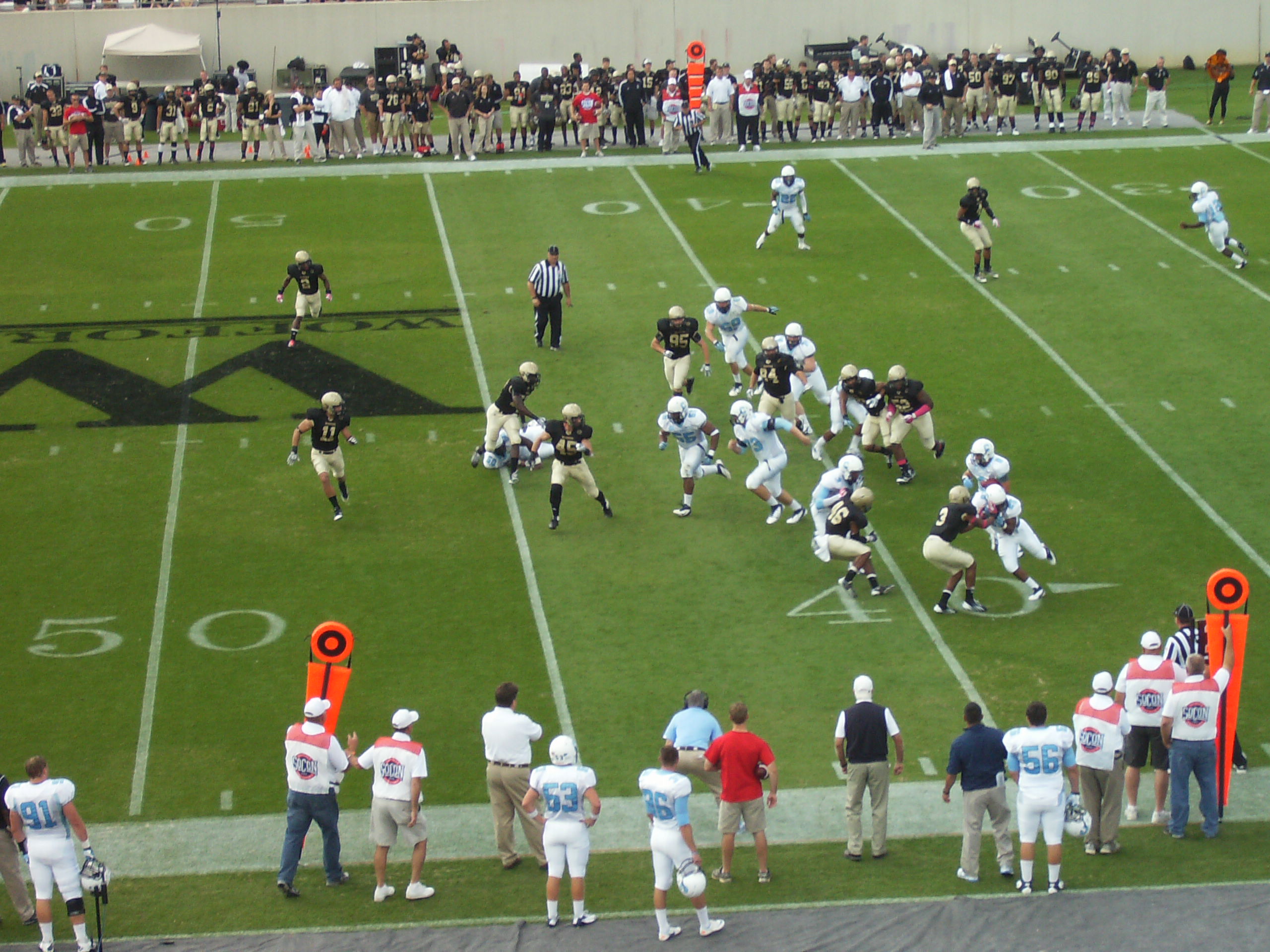
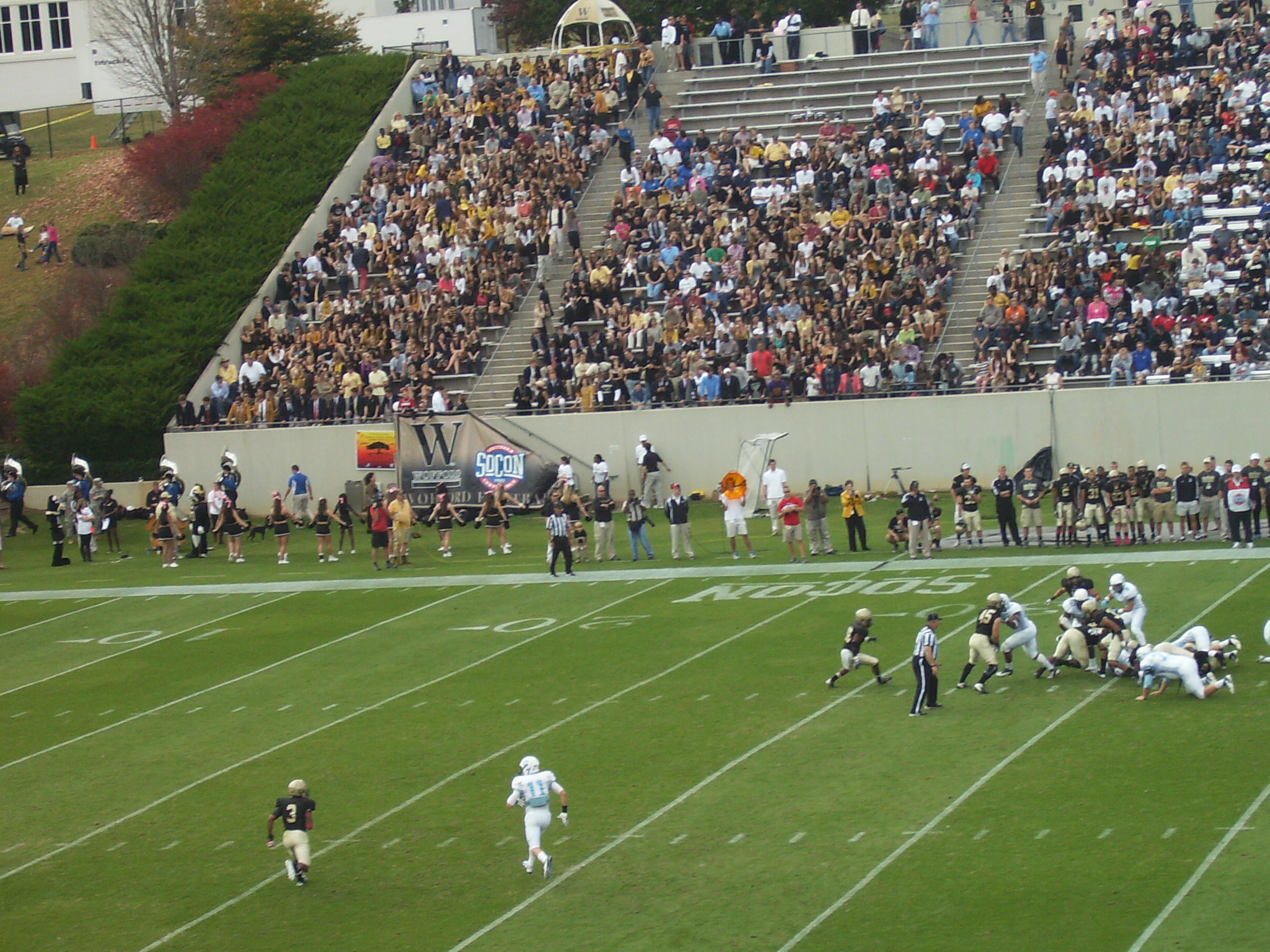
Game Review, 2013: Wofford

Well, that was not a huge surprise…

Actually, there were some elements of the game that were not expected. I didn’t think at this point in the season there would be a discussion about the regression of the offense from last year, but here we are.

There was one Bulldog cheerleader on hand for every offensive touchdown scored by The Citadel in this game. Given that the administration quietly eliminated the cheerleading squad prior to the 2013-14 school year, that’s not good. (Neither is not having any cheerleaders, but that’s a discussion for another post.)

I’ll write more about this game when I preview the Western Carolina matchup later in the week. Right now, though, things are tough for the Bulldogs, and tough in a way that wasn’t really anticipated before the season began.

The only saving grace so far is that The Citadel isn’t the only SoCon team struggling. Furman and Appalachian State are both winless as well (App lost at home to North Carolina A&T…hello).

Wofford, in all honesty, didn’t look that great even in its victory (which unfortunately does say a lot about the Bulldogs’ performance). Chattanooga did what it was supposed to do against Georgia State after not doing what it was supposed to do versus UT-Martin.

Samford has looked decent; the loss to Arkansas was probably more impressive than its win over Georgia State. Georgia Southern basically hasn’t started its season yet, and in a way, neither Western Carolina nor Elon has either.

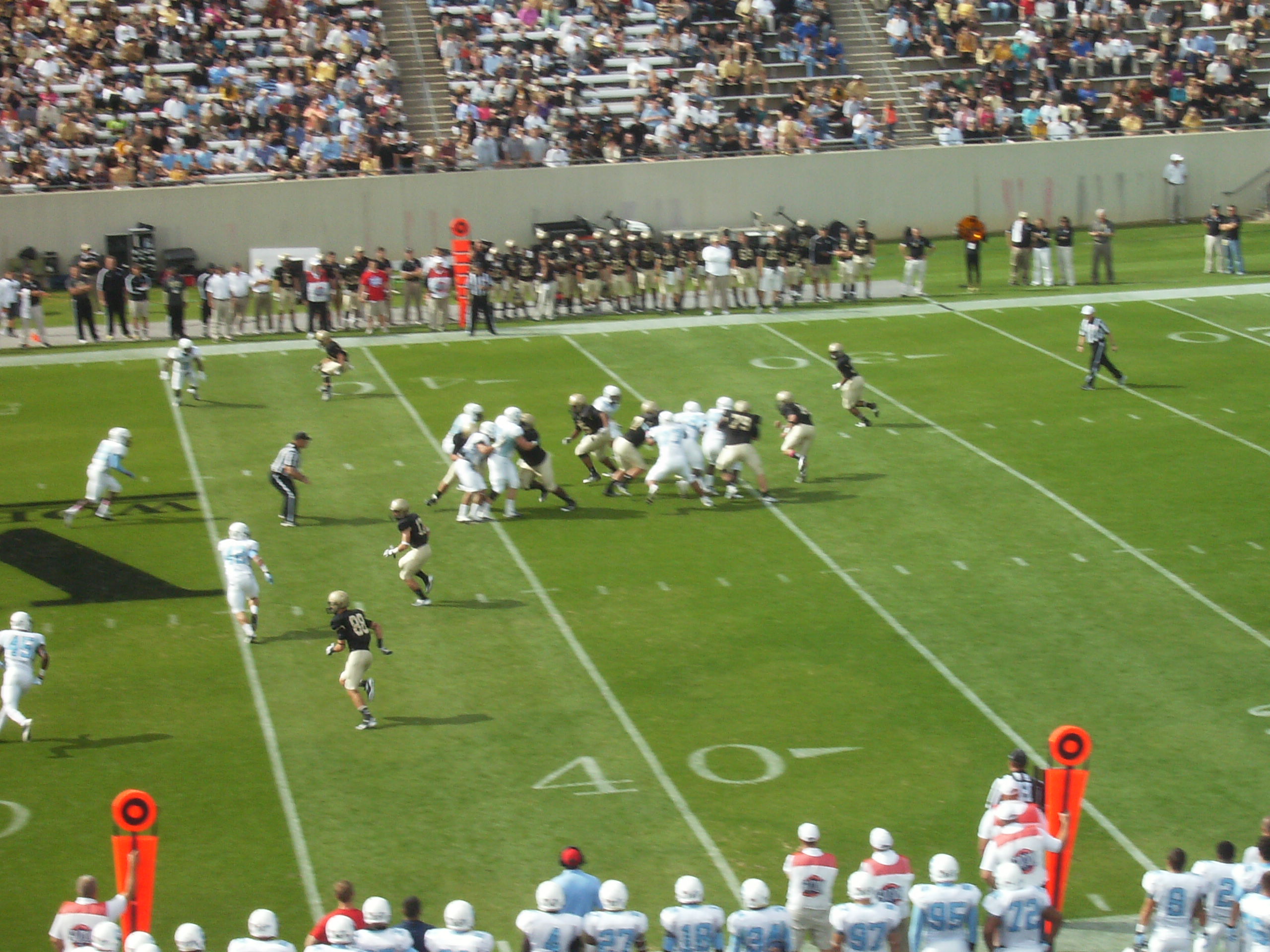
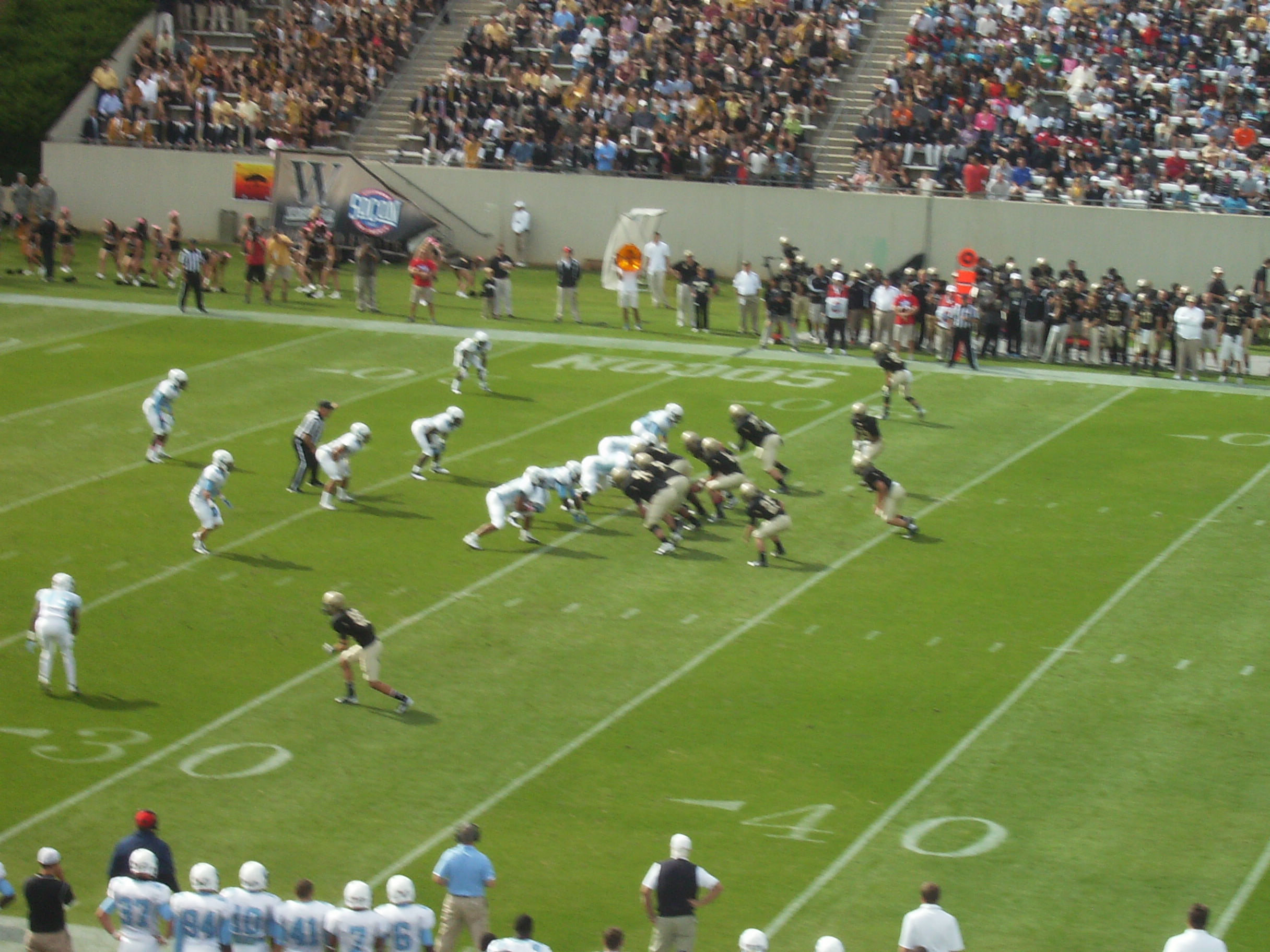
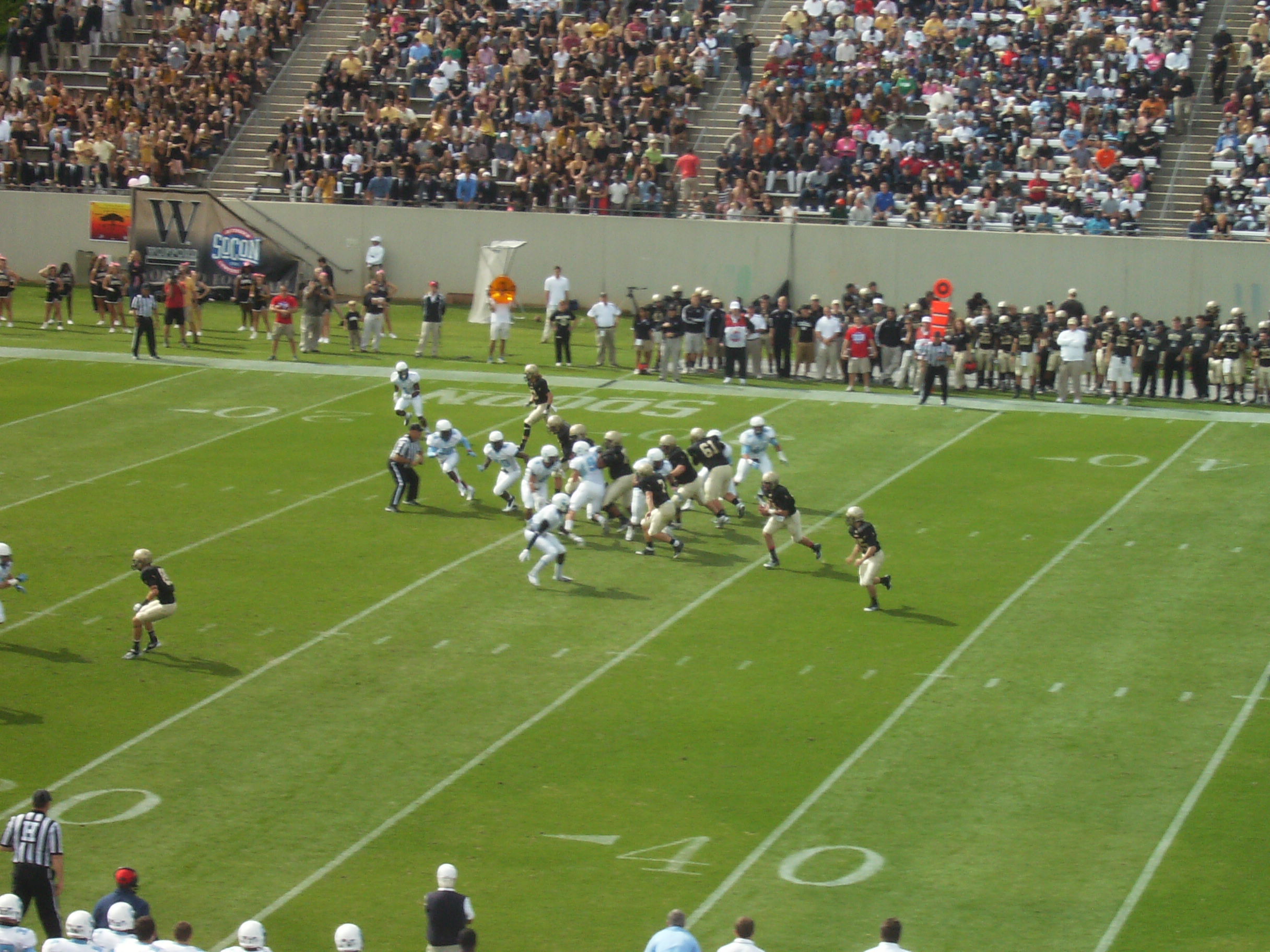
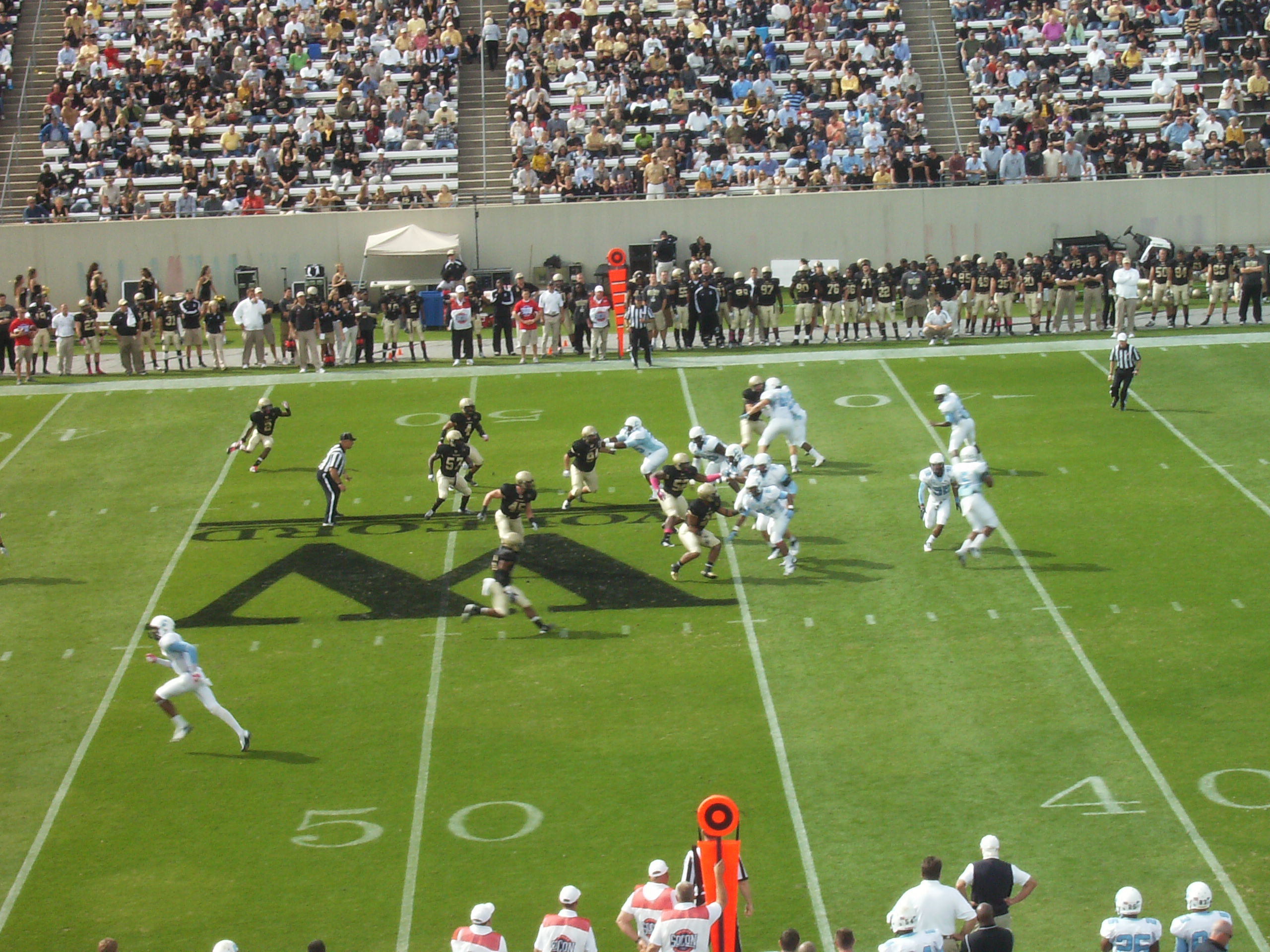
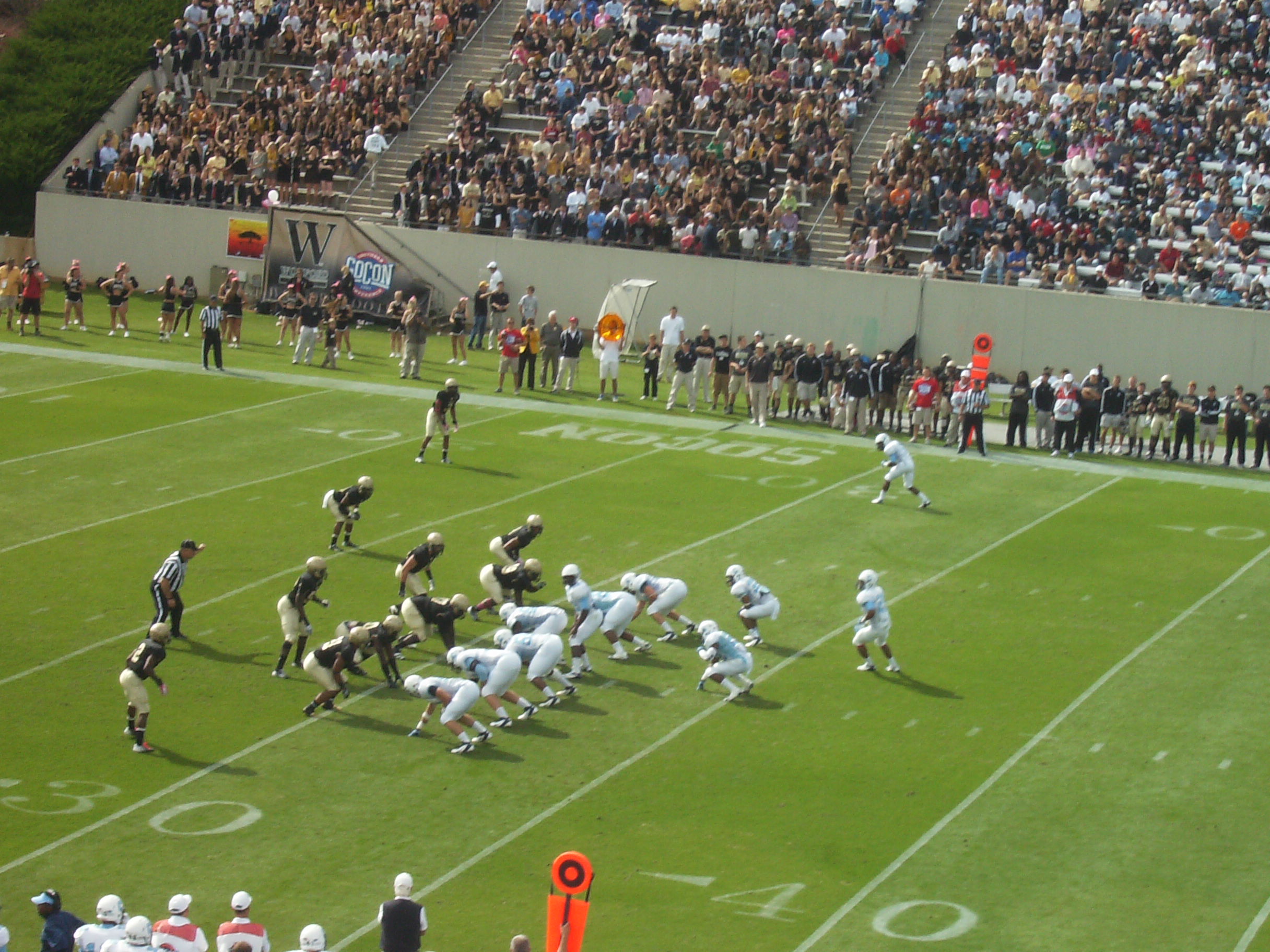
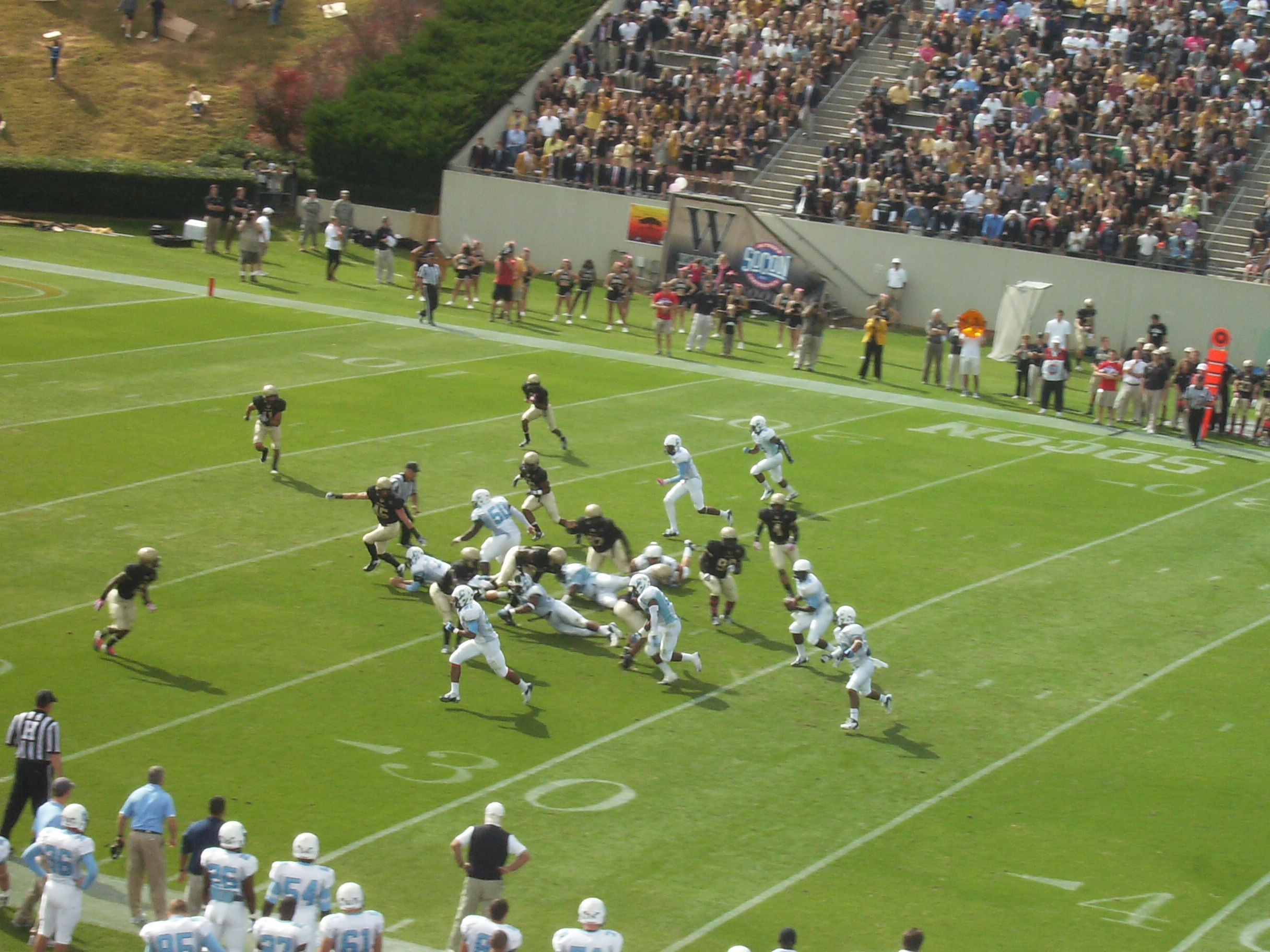
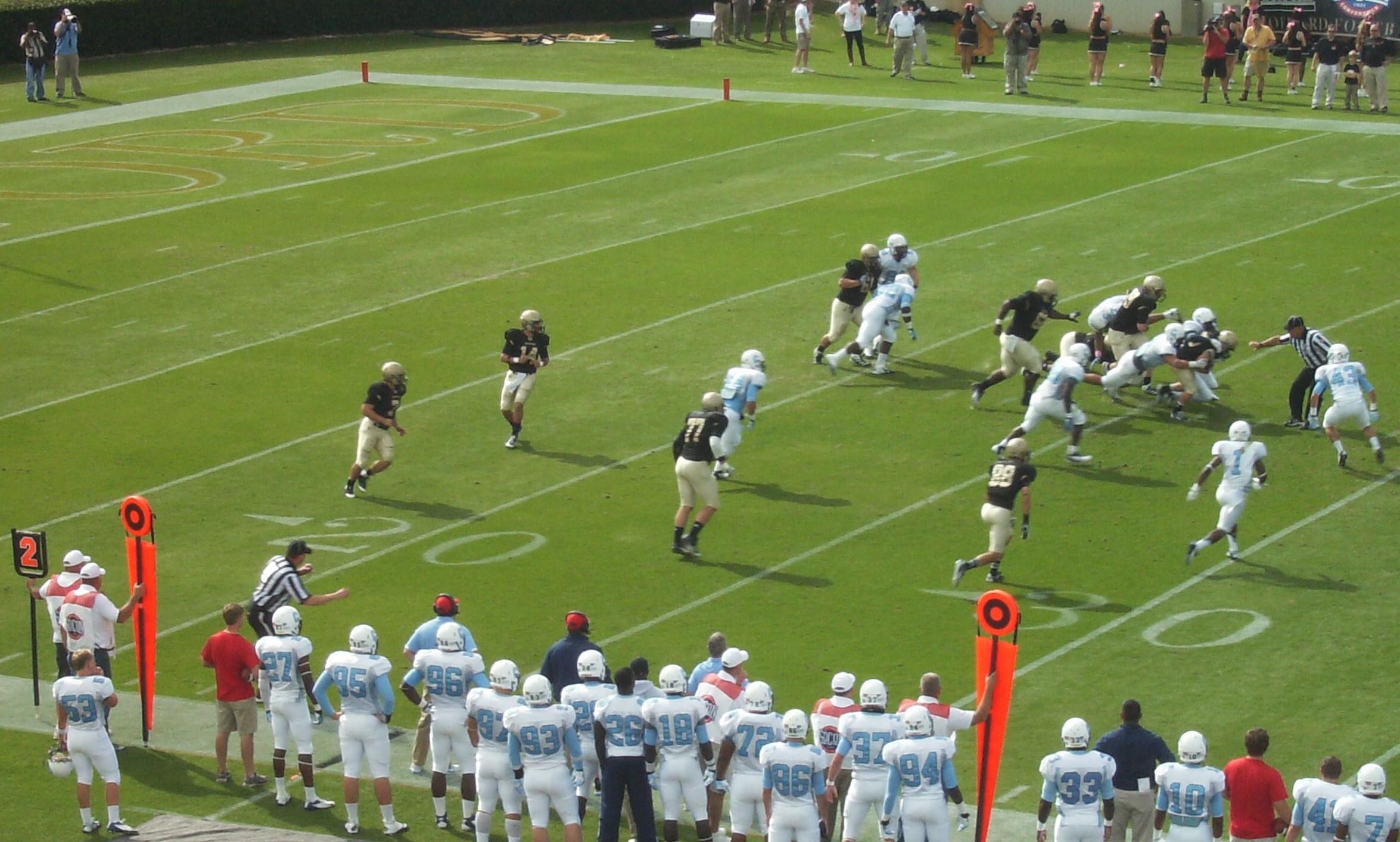
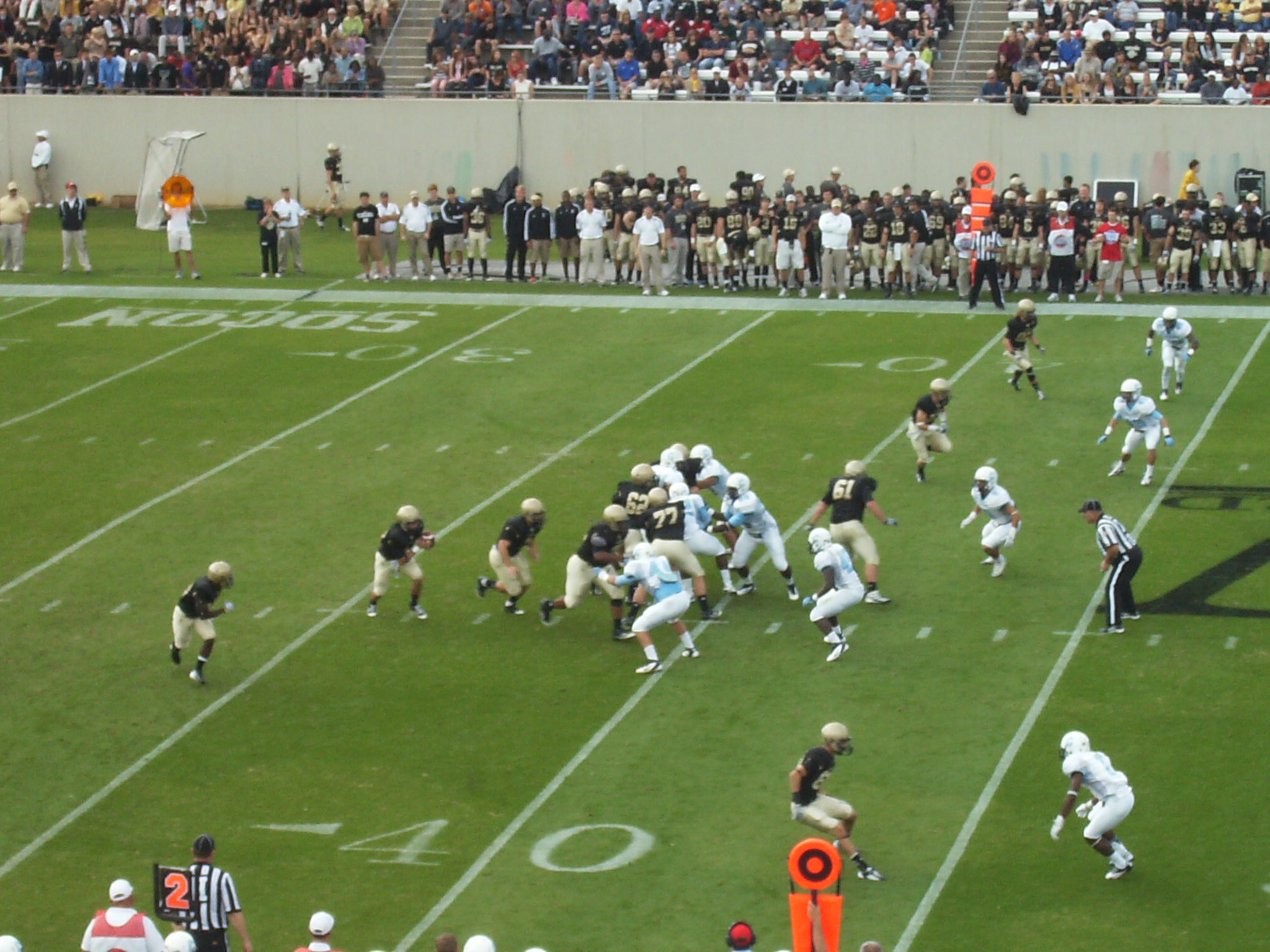
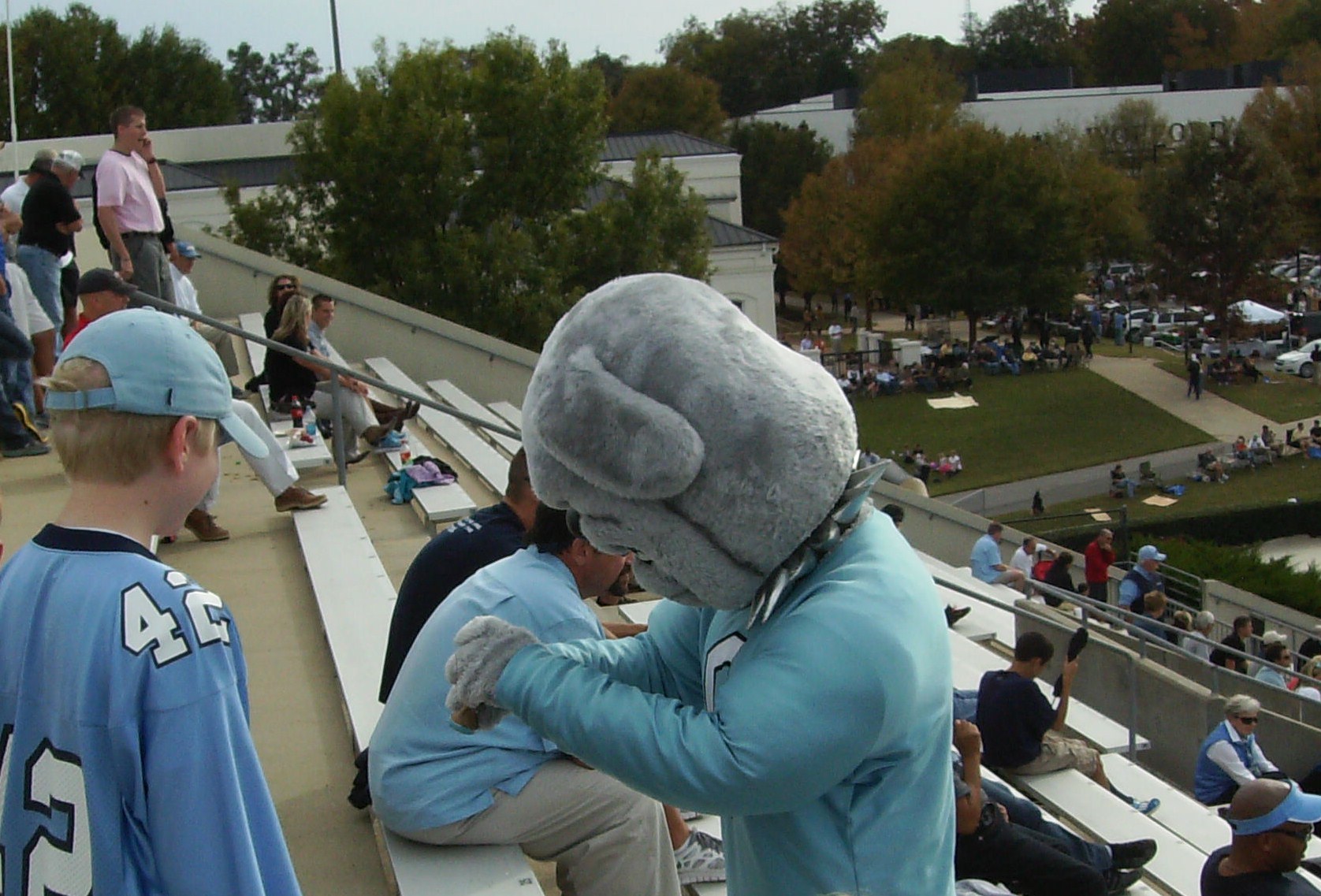
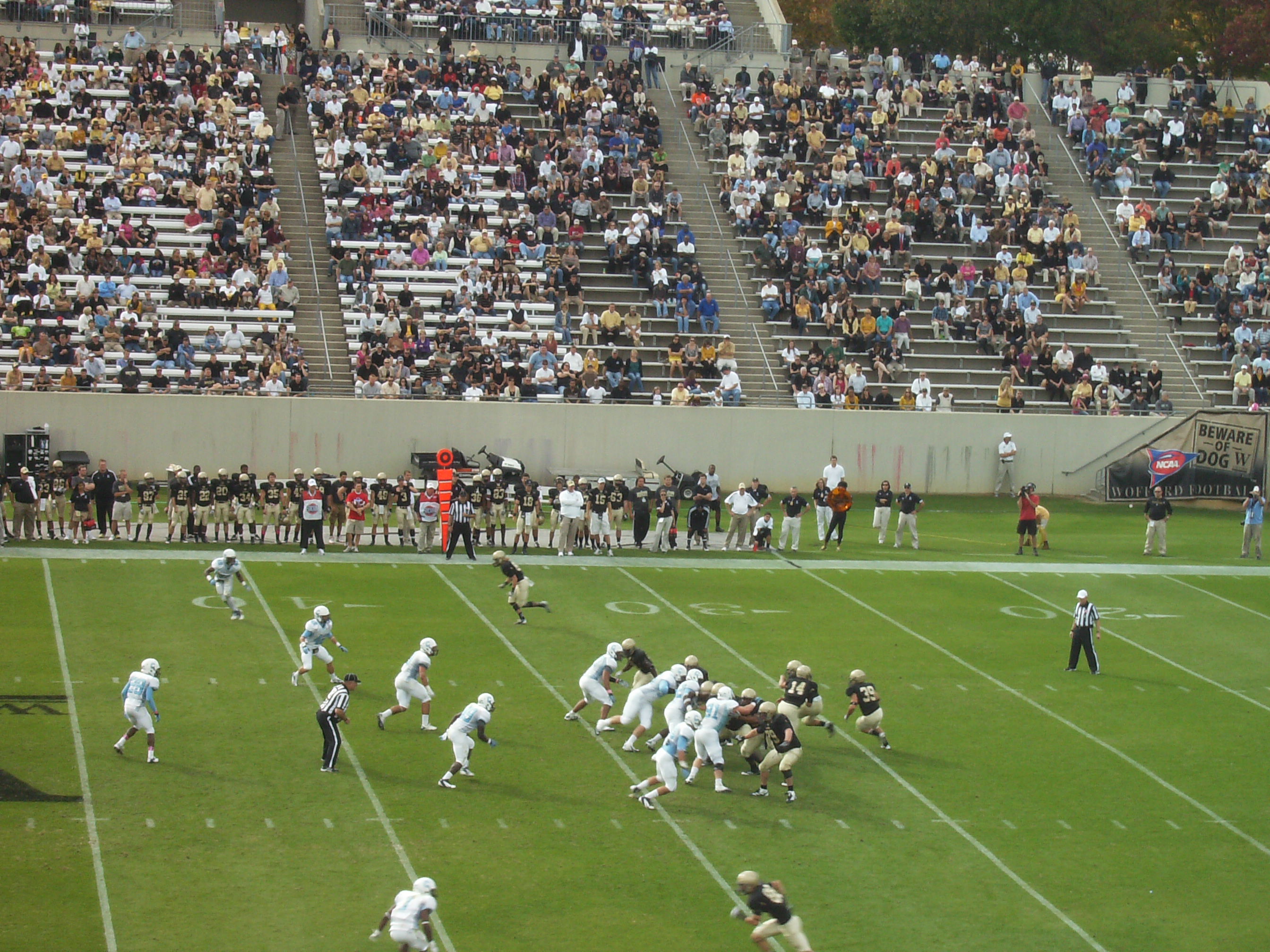
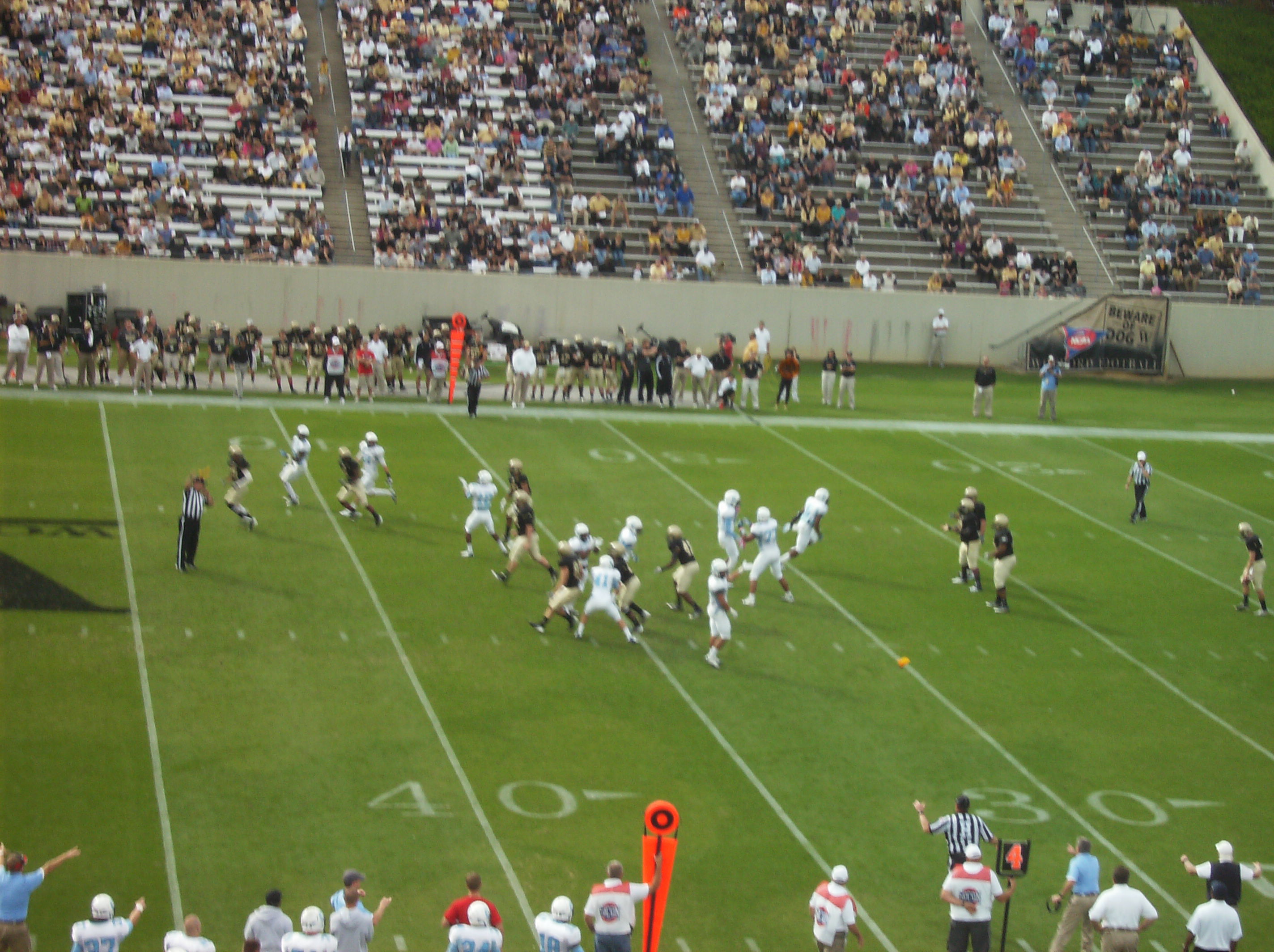
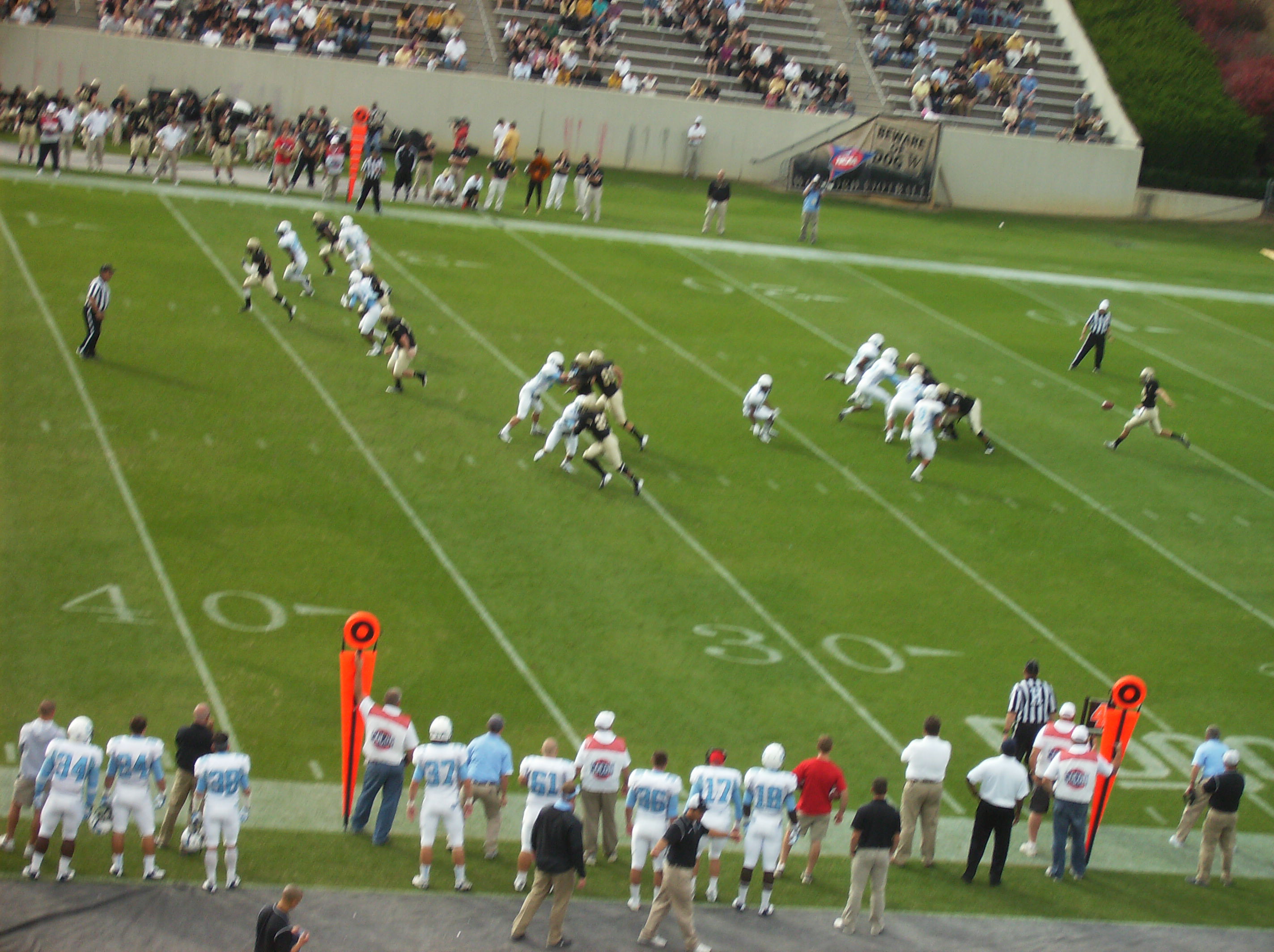
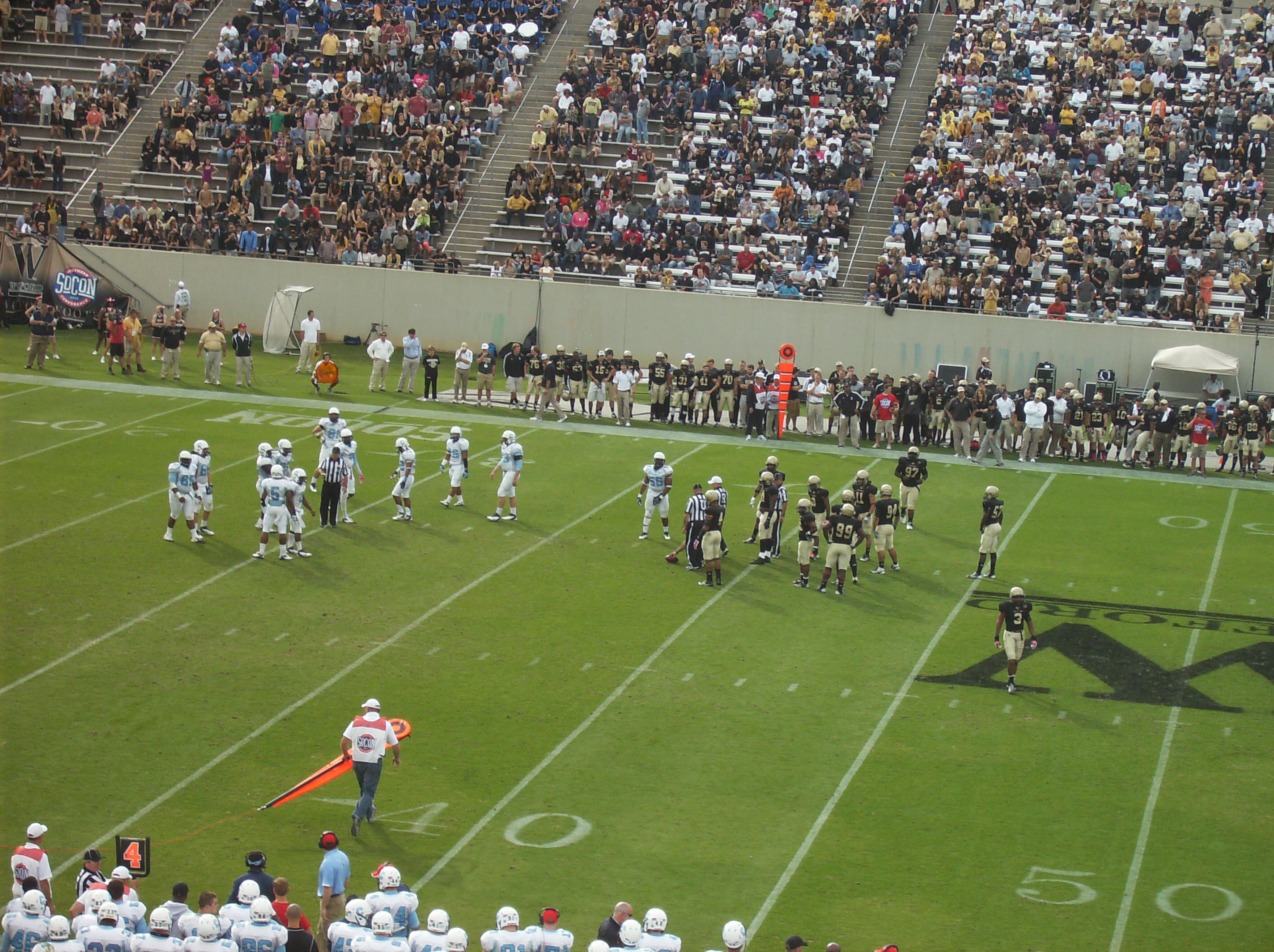
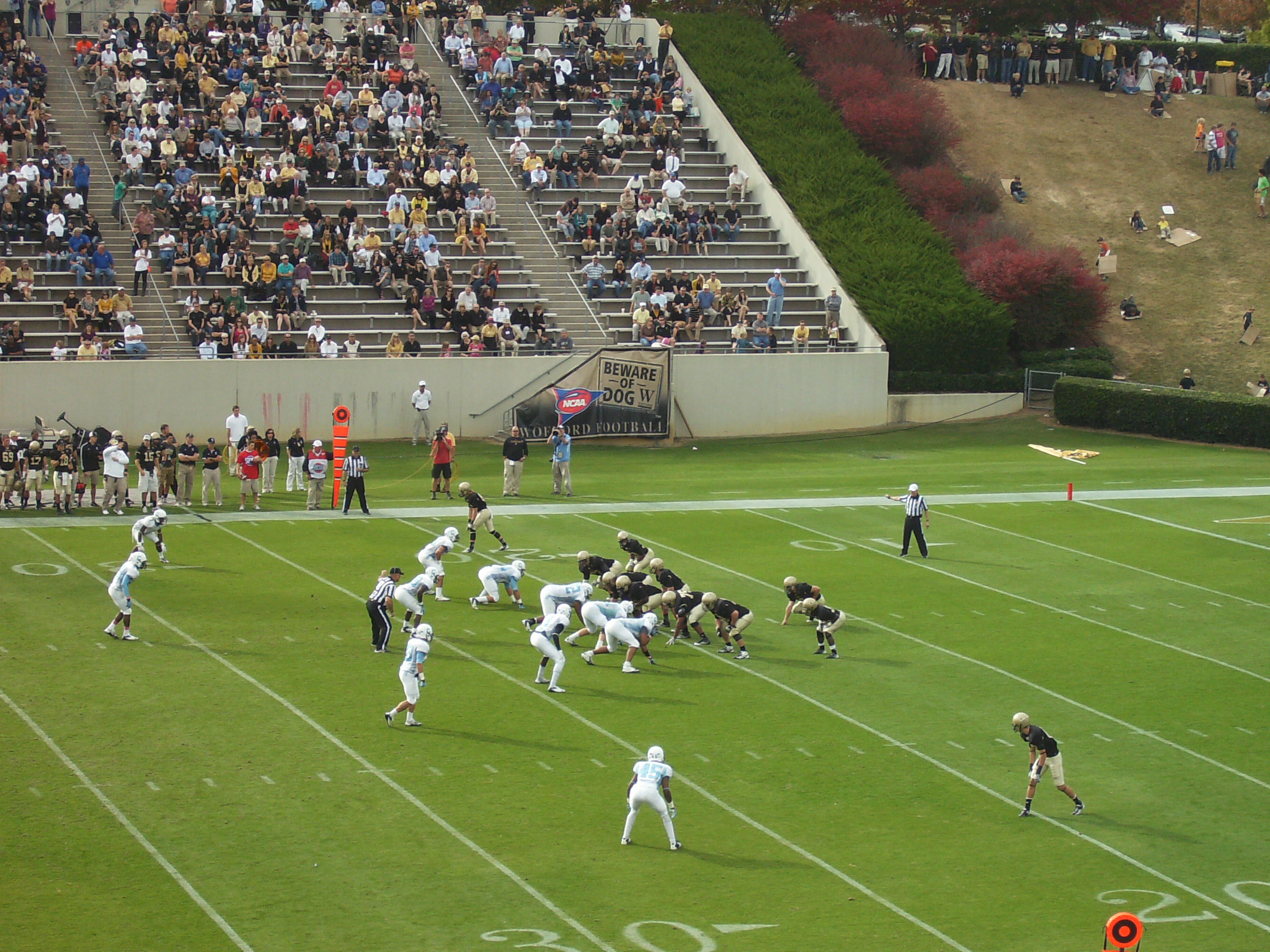
As usual, I took some pictures. As usual, they aren’t that great. However, I continue to take them anyway…

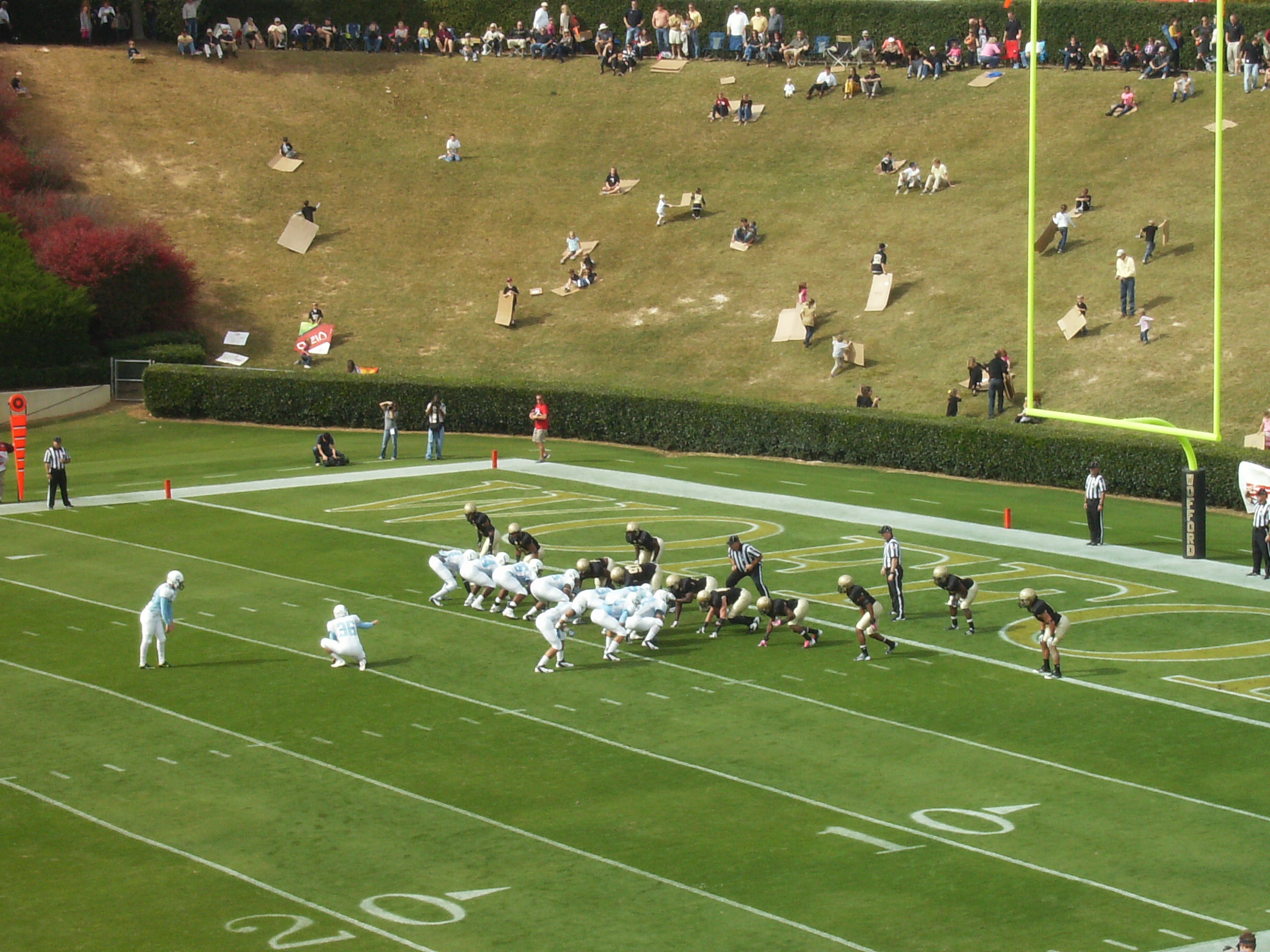
2013 Football, Game 2: The Citadel vs. Wofford

The Citadel vs. Wofford, to be played at historic Johnson Hagood Stadium, with kickoff at 6:00 pm ET on Saturday, September 7. The game will streamed on ESPN3.com, with play-by-play from Darren Goldwater and analysis by Paul Maguire. It can also be heard on radio via the thirteen affiliates of The Citadel Sports Network. Danny Reed (the “Voice of the Bulldogs”) will call the action alongside analyst Josh Baker, with Lee Glaze roaming the sidelines and Walt Nadzak providing pre-game, halftime, and post-game commentary.

WQNT-1450 AM [audio link], originating in Charleston, will be the flagship station for the network; the station will have a two-hour pregame show prior to each home football game. 

Links of interest:

My (very brief) review post from Game 1

The Citadel’s game notes

Wofford’s game notes

SoCon weekly release

SoCon media teleconference — Kevin Higgins

SoCon media teleconference — Mike Ayers

The Kevin Higgins Show (YouTube)

There are a lot of things that can be said about the season opener against Charleston Southern, almost none of them positive from The Citadel’s perspective.

First and foremost, I want to focus on the last 65 seconds of the first half.

The situation:

The Citadel led 16-7, but Charleston Southern had scored on its previous possession (a 64-yard TD pass) and then forced a three-and-out from the Bulldogs offense. After a long punt return blunted by a personal foul penalty, CSU had the ball at midfield, first-and-10, with 1:05 to play in the first half. The Buccaneers had no timeouts remaining.

On first down, a sack moved the ball back to the CSU 41-yard line. At that point, head coach Kevin Higgins called his first timeout of the half. Why?

Higgins explained later:

We’re thinking, we’ll call a timeout, go block a punt before the half. We’ve done that for the last three years, used the same kind of strategy, see if we can block a punt or get a drive at the end of the half.

Charleston Southern gained nine yards on its next play, setting up third-and-10 at the 50. The clock kept running, and The Citadel did not use a timeout.

I’m not sure why you wouldn’t call the second timeout if the idea was to have time left to block a punt or set up a return. It wasn’t like it was third-and-1. It was third-and-10.

That decision led to several things, none of which were good for The Citadel. First, CSU essentially got a “free shot” at making a big play on offense with the clock running out, and the Bulldogs were lucky that the Bucs narrowly missed connections on a pass over the middle that would have gone for big yardage (if not a TD).

That incompletion stopped the clock with less than 20 seconds to play in the half. On fourth down, CSU punted. The Citadel did not rush the punter (I went back and looked at the video to make sure). A return was not exactly set up either (a fair catch was called prior to the muff). Why anyone was even back to attempt to catch the punt strikes me as a fair question.

If the timeout had not been called after first down, the half would have ended without a punt even occurring. Instead, the Bulldogs were put in a position to fail with no realistic potential for success.

After the fumble recovery, Charleston Southern had the ball at the Bulldog 19-yard line with 12 seconds left in the half, and no timeouts. The one thing the defense can’t give up in that situation is a TD pass.

Tackle the receiver before the ball gets to him if that’s what it takes to stop the completion. In the worst-case scenario, pass interference would have put the ball at the Bulldog 4 and left the Bucs only one play (possibly two) before the half, which likely would have been a field goal attempt. The defense just can’t let a pass be completed in the end zone there.

I understand you’re asking a player to do something that would probably be against his instincts as a defender. It’s also possible the coaches discussed the strategy (The Citadel called its second timeout after the punt) and it wasn’t properly executed. For those reasons, I’m not bothered as much by the TD play as I am the game management that preceded the punt.

At any rate, the last minute of the first half was the key sequence in the game, and it was badly mishandled by The Citadel.

There were other missteps, too. The Citadel went for two points too early (though that was at least somewhat defensible). The playcalling, particularly on the final offensive series, left a lot to be desired.

The defense let CSU saunter right down the field to open the third quarter, as easy a TD drive as you could want, and gave up the aforementioned long TD pass on a badly blown coverage. There were other forgettable moments, too.

That end-of-half debacle, though…that’s a hard one to shake off.

It was nice of Kevin Higgins to talk about the “great job” Jamey Chadwell and his staff did in preparing for the game, but his comments did not exactly make Bulldog fans feel better. Also, I’m sure Chadwell is a good coach, but he’s the same guy who elected to punt on fourth-and-6 from the Bulldog 34 in the second quarter, with his team down two scores.

Punting from inside your opponent’s 35 in that situation (or almost any situation) is a decidedly sub-optimal strategy. I’m not convinced yet that Chadwell is the Albert Einstein of college football, which makes the whole ‘it was hard for our offense because they used a bunch of defensive fronts’ thing all the more galling.

With all due respect to Charleston Southern, this game wasn’t about the Buccaneers doing anything particularly exceptional. It was about The Citadel handing CSU the contest on a silver platter with fancy trimmings. It wasn’t a “disappointing loss”; it was a disastrous, unacceptable one.

I’ll wait until a later time (perhaps next week) to write about some of the ancillary elements from last Saturday, including the noticeable lack of cheerleaders and the disappointing crowd attendance. I’m very curious to see if there will be any changes in terms of off-field activities.

For example, will the band be allowed to play following the kickoff? Sometimes during the game I forget The Citadel even has a band, to be honest.

This is the seventh time in the last eight years the game between The Citadel and Wofford is being televised over the air (SportSouth, SCETV, etc.) or streamed on ESPN3.com. For the second year in the row, the game is on ESPN3.com, and for the second year in the row the announcers are Darren Goldwater and Paul Maguire.

The Citadel’s 42-20 victory in the season finale against Furman last year was only the second time in the Kevin Higgins era that the Bulldogs had won a televised/ESPN3-streamed game. Goldwater was the gamecaller for ESPN3.com that day too (with analyst Doug Chapman). It would be novel to win two in a row on ESPN3.com.

The average score between Wofford and The Citadel had been 34-14 in the seven years prior to last year’s game, which was obviously much closer. Among other items of interest, Wofford was penalized for 59 yards in that contest, almost twice as many yards as the Terriers had been penalized against the Bulldogs in the previous four games combined.

However, Wofford did not commit a turnover against the Bulldogs last year. That has been a trouble spot for The Citadel over the past few years against all opponents, one that emerged again last Saturday when the Bulldogs failed to force a turnover against Charleston Southern.

It is hard to judge anything about Wofford based on its game against Baylor, which the Terriers lost 69-3. I believe that Baylor is going to be one of the elite offensive teams in the country this year, and a serious contender for the Big XII title. Very few teams are going to be able to handle the Bears’ speed and general offensive execution; Wofford certainly couldn’t.

If you want to see the Wofford-Baylor game for yourself, you can, and in an extremely handy 50-minute package: Link

Tangent: That video is part of something the Big XII does for all its games that is called “No Huddle”, a concept that is undeniably awesome. All the plays, none of the fluff, loaded up to YouTube the Monday after the games. More of that, please.

Wofford injury report:

There were no major injuries in the Baylor game.

That is in the Wofford game notes. However, from Todd Shanesy of the Spartanburg Herald-Journal:

Wofford halfbacks Cam Flowers and Ray Smith, who suffered concussions last week in the game at Baylor, will be tested Friday to see whether they can make the trip to The Citadel…

…Flowers, a third-year sophomore from Damascus, Ga., made his second career start Saturday against Baylor and had four carries for 13 yards. Smith, a true sophomore who is Dorman High School’s all-time leading rusher, had three carries for 15 yards. He was listed as the backup to the other starting halfback, sophomore Will Gay from T.L. Hanna. Octavius Harden, a sophomore from Conover, N.C., was behind Flowers.

Flowers and Smith were two of the eight Terriers who got carries against The Citadel in last year’s game. Gay and Harden also saw action in that contest (Gay scoring a touchdown).

Wofford has plenty of fullback/halfback types, so if Flowers and/or Smith can’t go, the Terriers should still be in good shape. Wofford also returns the two wideouts who caught passes against the Bulldogs (Jeff Ashley and Will Irwin).

Starting fullback Donovan Johnson rushed for 473 yards last season as the backup to now-graduated Eric Breitenstein. A lot of that yardage came from the halfback position, as Breitenstein (understandably) saw the bulk of the time at FB.

The Terriers only returned two starting offensive linemen from last year’s squad, but they’re both good ones. Jared Singleton and Ty Gregory were each named to the SoCon’s preseason all-conference first team. There is still competition for at least one spot along the Wofford line.

Then there is the quarterback position. With one year of eligibility remaining, Brian Kass elected to transfer to Coastal Carolina. With Kass out of the picture, three players have battled for the Terriers’ starting QB spot. James Lawson started two late-season games for Wofford last season and also opened behind center against Baylor. He will likely start against The Citadel, but both Evan Jacks and Michael Weimer are expected to play.

Wofford lost six starters off its defense, but returns preseason all-league pick Alvin Scioneaux at outside linebacker. Free safety James Zotto had six tackles against the Bulldogs last season, tied for the most by a Terrier in that game. Two of Wofford’s starters along the defensive line are back, including second-team SoCon selection Tarek Odom and 6’2″, 290-lb. noseguard E.J. Speller.

Starting defensive end Hunter Thurley (a redshirt freshman) is 6’4″, but listed at just 245 lbs. In general, Wofford’s d-line is undersized (Speller is a notable exception) and the linebackers are tall and rangy.

Kasey Redfern handles all the kicking duties for the Terriers. Will Gay is Wofford’s punt returner and is usually joined on kickoffs by Cameron Flowers, though Flowers’ status will be in doubt up until gametime.

Odds and ends:

– I am not a big fan of Ben Dupree returning punts. I’ll hope for the best.

– Based on the two-deep in The Citadel’s game notes, it appears Tyler Renew may not get cleared by the NCAA in time for Saturday’s game. Shaunn Middleton is listed as Darien Robinson’s backup. Incidentally, Renew was listed in last week’s game notes as the second-team B-Back.

– Nick Jeffreys is listed as the tight end on the two-deep. No other player is listed at the position.

– Attendance at Johnson Hagood Stadium for Wofford’s past four visits: 11,290 (2005), 14,879 (2007), 15,155 (2009 — Homecoming), 12,316 (2011)

The last time Wofford entered the game against The Citadel with as many questions as the Terriers have this season, it was 2009. That wasn’t an early-season situation, though. In 2009, Wofford suffered through a series of injuries and finished with a 3-8 record.

One of those three victories was a 43-17 win over the Bulldogs, as listless a Homecoming performance from The Citadel as I’ve ever seen in person at Johnson Hagood Stadium. I am not sure what to expect from The Citadel in this year’s game, but it better not resemble anything like that.

I don’t think it will. I expect the Bulldogs to come out fired up and ready to prove something.

That doesn’t mean I expect a victory, though. A win for The Citadel on Saturday night is probably not in the cards.

Having said that: while I’m frustrated, and a little disgusted, and not all that confident the team can recover from its opening-night failure…I’m not giving up on this team. It’s my team, no matter what.

I’ll be cheering them on at Johnson Hagood Stadium this Saturday night, and I hope many other people will be doing the same.

Social media and the SoCon: the age of Twitter and Facebook

Last week, I saw a ranking of college sports twitter feeds posted at Tennessee’s athletics website. I thought it was interesting, though I wouldn’t want to draw any immediate conclusions from the data.

I decided to see how the SoCon schools compared to each other when it comes to Twitter and Facebook presence. This proved to be difficult, because schools don’t necessarily approach Twitter and/or Facebook in similar ways.

The league is almost evenly split between schools that have football-specific twitter feeds and those that do not. Samford has nine different sports with dedicated twitter feeds; meanwhile, Wofford doesn’t have any. There is significant variance in the number of Facebook pages created by the individual schools. Those are just a few of the differences.

Part of the reason for the contrasting approaches is probably manpower, and part of it is likely philosophical. Not everyone thinks having multiple Twitter feeds and Facebook pages is such a great idea for smaller schools. Says one social media consultant:

In college sports, unlike professional sports, fans usually have an allegiance to a school, not a team. To say that fans would be annoyed by news from other school sports in their Twitter feed might be an error…

We found that the majority of…fans appreciated news from other sports, and wanted one main feed where they could get all the news. Most of the sports communicators I’ve talked with at non-BCS schools say their fans feel the same way. Their allegiance is to the school, not a particular team.

The opportunity to showcase the team across multiple channels is much more important to a school than having a sport-specific Twitter feed or Facebook page…smaller schools (non-BCS schools) need to think about scale, not volume…Their fans bases are simply too small.

Another consideration is the percentage of people who use the different social media elements. A survey taken at the end of last year suggested that usage among internet users breaks down this way: 67%, Facebook; 16%, Twitter; 15%, Pinterest; 13%, Instagram; and 6%, Tumblr.

I would say that if your school decides to have a dedicated feed for a sport on Twitter, then it should have a Facebook page for that sport as well — and vice versa. I also am of the opinion that Instagram is on the rise, and that not using YouTube to promote your school and its teams is a major mistake.

Included in my mini-survey are all current SoCon schools, the school that just left (College of Charleston), and the three schools that will enter the league next year (East Tennessee State, Mercer, and VMI). The numbers listed (“follows” and “likes”) are as of the weekend of July 13-14.

What follows are a few observations, and then some tables, with two caveats:

1) I may have missed a couple of school feeds/pages. If I did, it’s not my fault. It’s the fault of the school(s), for not making it simple for an easily confused person like myself to find their feeds/pages.

2) Twitter and Facebook are far from the only things happening in social media, of course. For example, The Citadel has done an excellent job in recent months using YouTube, and it is not alone on that front. A few schools have taken a spin with Pinterest.  Instagram has been embraced by several of the league members (as well as the SoCon office itself). However, Twitter and Facebook are the focus of this post.

– The league website has a “Social Media Directory” that needs to be updated. For one thing, CofC isn’t in the conference any more [Edit 8/16: the CofC links have now been removed from the directory]. The feeds themselves also need to be checked; some are not valid, and there are also a number of omissions.

I don’t really blame the SoCon office for this as much as I do the individual schools. It’s probably very difficult, if not impossible, for the league office to keep up with team-specific feeds.

On the other hand, someone at the conference probably ought to know that @CoachMikeDement shouldn’t be the listing next to UNCG’s “Head MBB Coach” line, since he hasn’t been the Spartans’ coach for over a year and a half. Wes Miller is clearly upset about this.

– Speaking of UNCG, its AD, Kim Record, is on Twitter, and she is listed as such in the SoCon directory…but her feed is protected.

– Furman’s most-followed feed is its general athletics feed, which is not a surprise. The second-most followed Furman feed, however, is for a coach of a program that has yet to win a game. The Paladins will start playing men’s lacrosse in 2014, and head coach Richie Meade (formerly the longtime lacrosse coach at Navy) has 1024 followers.

– The twitter feed for Furman’s baseball program is run by players.

– Davidson, a basketball-first (if not only) school if there ever was one, doesn’t have a dedicated feed for men’s hoops, and head coach Bob McKillop isn’t on Twitter.

– At least one SoCon head football coach follows two different Jenn Brown accounts.

– Chattanooga’s wrestling feed has 2574 followers, which stacks up fairly well when compared to other programs across the country. The most I found for a collegiate wrestling feed was for Oklahoma State (11857). Defending national champion Penn State has 5750.

The other two SoCon schools with wrestling feeds are Appalachian State and The Citadel, though I should mention that UNC-Greensboro has a dormant feed as well (one that became inactive when the school dropped its wrestling program).

– Several SoCon schools have twitter feeds for their equipment room/staff. They tend to be fairly well-followed, too, partly because equipment room staffs from across the country all follow each other. Equipment guys circle the wagons.

– The new head football coach at East Tennessee State, Carl Torbush, isn’t on Twitter. However, there are two different parody Carl Torbush accounts, though both are inactive. ETSU’s athletics twitter feed is following one of them.

– I only found one other fake twitter feed for a conference football coach. Western Carolina’s Mark Speir has been so honored. Also parodied: SoCon commissioner John Iamarino.

– As of this weekend, Samford only had 44 followers for its men’s hoops feed, but that’s because it only established the feed on July 2.

– VMI seems to have two different official university (non-athletic) twitter feeds. Neither has many followers; perhaps I’m just missing the “real” feed.

– Of the six SoCon schools that have dedicated twitter feeds for both baseball and men’s basketball, five of them have more baseball feed followers, which may say something about the league’s status in each sport. I didn’t include College of Charleston in that group of six since it is no longer in the league, but it also has slightly more baseball feed than hoops feed follows.

– East Tennessee State doesn’t have a football twitter feed yet, or a pigskin Facebook page, but it does have a notable fan “bring/brought back football” presence for Twitter and Facebook.

– Wofford athletics only follows one feed, that of PGA pro (and Wofford alum) William McGirt. Similarly, the Facebook page for Wofford athletics only “likes” one entity — the 2012 Southern Conference basketball tournament.

– GSU head football coach Jeff Monken takes it one step further than Wofford, however. Just like Jay Bilas, Monken doesn’t follow anybody.

– With VMI being admitted to the league, the Southern Conference facebook page made sure it “liked” VMI’s university facebook site. Unfortunately, it appears the actual “active” VMI school facebook page is this one.

– UNCG is the league school with the most sport-specific Facebook pages, having one for eleven different varsity sports.

– I found a few sport-specific facebook pages that are essentially dormant. However, they are still “official”, and since they have not been deleted I included them in the tables.

– Of the lower-profile SoCon sports, volleyball may be the most active in terms of social media. Seven conference schools feature Facebook pages for volleyball, and that doesn’t include CofC or ETSU, both of which also have pages for their volleyball teams. CofC and ETSU join six SoCon schools that also have twitter feeds for volleyball.

Some of the Twitter and Facebook statistics for follows/likes are grouped in tables below. I didn’t list all the sports feeds/pages that are on Twitter/Facebook, just some of the ones that tend to draw the most interest.

Twitter

Athletics
Appalachian State 10644
The Citadel 2292
Davidson 3970
Elon 4300
Furman 2951
Georgia Southern 8493
Samford 3131
UNC-Greensboro 3466
UT-Chattanooga 4144
Western Carolina 3773
Wofford 3171
College of Charleston 4726
East Tennessee State 2651
Mercer 1578
Virginia Military Institute 1521

Football
Appalachian State 1133
The Citadel 692
Furman 759
Samford 939
UT-Chattanooga 900
Mercer 1270
Virginia Military Institute 261

Head Football Coach
Appalachian State 2585
The Citadel 555
Furman 236
Georgia Southern 4515
Samford 1005
UT-Chattanooga 571
Western Carolina 1301
Mercer 679
Virginia Military Institute 382

Men’s Basketball
Appalachian State 700
The Citadel 190
Elon 956
Furman 149
Samford 44
UNC-Greensboro 866
UT-Chattanooga 637
College of Charleston 2135

Head Men’s Basketball Coach
The Citadel 335
Furman 675
Georgia Southern 730
Samford 370
UNC-Greensboro 7572
UT-Chattanooga 2438
Western Carolina 1418
East Tennessee State 412
Virginia Military Institute 584

Women’s Basketball
Appalachian State 1338
Davidson 102
Elon 341
Furman 416
Georgia Southern 347
Samford 398
UNC-Greensboro 505
UT-Chattanooga 827
College of Charleston 590
East Tennessee State 374

Baseball
Appalachian State 2141
The Citadel 1263
Davidson 444
Elon 1015
Furman 427
Georgia Southern 1030
Samford 1206
UNC-Greensboro 332
College of Charleston 2413
East Tennessee State 579
Mercer 561

Facebook

Athletics
Appalachian State 5946
The Citadel 2301
Davidson 4771
Elon 4426
Furman 2629
Georgia Southern 12302
Samford 3590
UNC-Greensboro 6276
UT-Chattanooga 6459
Western Carolina 13546
Wofford 4586
College of Charleston 2405
East Tennessee State 3951
Mercer 1865
Virginia Military Institute 3632

Football
Appalachian State 45948
The Citadel 2117
Elon 867
Georgia Southern 3482
Samford 256
Western Carolina 235
Mercer 2244

Men’s Basketball
Appalachian State 2474
The Citadel 74
Davidson 554
Elon 982
UNC-Greensboro 1491

Women’s Basketball
Appalachian State 61
Davidson 187
Elon 648
Furman 612
Georgia Southern 241
UNC-Greensboro 476
UT-Chattanooga 731
College of Charleston 221
East Tennessee State 552

Baseball
Appalachian State 1659
The Citadel 408
Elon 307
Furman 177
Georgia Southern 745
Samford 1282
UNC-Greensboro 170
East Tennessee State 274

Conference realignment, SoCon style: history repeats itself

Everyone knows that the Southern Conference has been through a lot of membership changes over the years, with two splits of particular note leading to the formation of the SEC (in 1932) and ACC (1953). However, there have been other moves of consequence since then, and a few of those are instructive when looking at the current SoCon landscape.

This post is just an overview of some of those machinations. Not all of them, though. That would take up way too much bandwidth…

Tangent: linked above is a 1953 article on the newly formed ACC, which noted that Virginia and West Virginia were “running a neck and neck race” for the eighth spot in the league. UVA won that contest, much to the displeasure of certain WVU bloggers who had been confidently tweeting about WVU’s inevitable invite, despite the fact that Twitter had not yet been created and they had not yet been born.

When it comes to movement among SoCon schools over the last four decades, there have been two major themes:

– Davidson’s skittishness

– Longtime CAA commissioner Tom Yeager’s occasional, grandiose attempts to break up the SoCon

First up, the Wildcats.

The league lost four more members in the seventeen years after the ACC schools made their exit. Washington and Lee departed in 1958, Virginia Tech left in 1965, and West Virginia finally moved out of the conference in 1968.  George Washington dropped out in 1970.

Once the Colonials had left the league, that meant Davidson and VMI were the only two schools remaining in the SoCon that had ever won the conference’s men’s basketball tournament, then and now the nation’s oldest. Perhaps Davidson took this as a sign to start making moves of its own, or maybe those moves would have happened anyway.

At any rate, from that point forward Davidson has been the league’s femme fatale, always a doubt, sometimes leaving, sometimes staying, once actually gone, then suddenly back.

In 1969, Davidson’s football team, led by the estimable Homer Smith, went 7-4 and won the Southern Conference. The Wildcats played in the Tangerine Bowl.

By February 1970, Smith was gone, resigning after the school’s board of trustees decided to cut his budget by almost half. Then in 1973, Davidson decided to de-emphasize football by eliminating football scholarships.  In a move that reporter John Kilgo described as “bush league style”, the school administration notified the press before telling the AD, football coach, or the players. (Kilgo would later become the Wildcats’ radio play-by-play announcer for basketball.)

Davidson’s decision to get out of the scholarship football business didn’t go over very well with some of the other league members, but by then there were other issues too. The looming I-A/I-AA split was one of them. It was a key factor in East Carolina and Richmond leaving the SoCon, and Richmond’s departure also led to William & Mary and VMI leaving — but then the folks in Lexington changed their minds, and VMI stayed.

Both Richmond and ECU wanted to remain at the I-A level, as did William & Mary, and those schools were concerned that the SoCon’s recent or inevitable additions of Appalachian State, Western Carolina, UT-Chattanooga, and Marshall would result in the league becoming a I-AA conference. (Another school that had been interested in joining the league, James Madison, was not seriously considered.)

The departing schools tried to form a new “Big Conference“, which would have included Richmond, East Carolina, William & Mary, VMI, Southern Mississippi, and South Carolina. They were hoping to add two or more of Virginia Tech, West Virginia, and Florida State. It didn’t work out (FSU soon wound up in another new league, the Metro).

Of those schools that left the Southern Conference, only ECU would remain in the subdivision now called FBS.

Then Davidson decided to leave the SoCon, effective July 1, 1977. The school stated that it wanted “to associate with an athletic conference offering national-level competition in basketball.” Sound familiar?

However, the school changed its mind in February of 1977 and decided to stay.

By now the league had two “established” schools (The Citadel and Furman), one recent entrant (Appalachian State), three other new schools (WCU, UTC, and Marshall), and two other schools that had been in the league for a long time but had considered leaving (Davidson and VMI).

It didn’t take that long for Davidson to shake things up again in the SoCon. In 1985, the school decided to join the new Colonial League (later renamed the Patriot League) for football. The rest of the Southern Conference schools, however, turned down Davidson’s request to remain in the SoCon for its other sports. Davidson then left the league in 1988.

Tangent: in another article around that time, it was mentioned that the Southern Conference’s constitution “limits membership to 12 institutions”. I thought that was interesting.

By the following year, though, there were Davidson-back-to-the-SoCon rumblings. That was because Marshall was already making noises about leaving the league (though that didn’t happen until 1997). Among the schools reportedly in the mix at that time: Richmond, James Madison, and William & Mary (all as football-only members, a concept the conference ultimately rejected), Eastern Kentucky (which was still on the SoCon radar six years later), and Liberty.

Eventually, Davidson would be brought back into the league (sans football) in 1992.

Now in the space of two years, Davidson has turned down the CAA and is seriously considering the Atlantic 10. There is nothing new under the sun.

Tom Yeager’s first known attempt to punch a gaping hole in the SoCon came in 1996. At the time, the CAA did not sponsor football. Yeager was intent on changing that, and in a big way. The CAA apparently tried to entice The Citadel, Furman, VMI, and Davidson (yes, despite its football situation) to join a league that would have also included Richmond, William & Mary, and James Madison.

That didn’t happen. Neither did a potential 12-team SoCon football league.

Not on the CAA wish list in 1996: Georgia Southern, which had joined the Southern Conference in 1992. Five years earlier, a SoCon spokesman had suggested that GSU was “a little bit beyond the fringe geographically” to become a league member. However, a little-known shift in a continental tectonic plate moved Statesboro significantly closer to conference headquarters, and Georgia Southern was eventually invited.

Yeager came back with a vengeance in 2000, and this time he had an even bigger idea. The CAA went after no fewer than seven Southern Conference schools: VMI, Furman, The Citadel, Davidson, Wofford (which had joined the SoCon in 1997), UNC-Greensboro (which had also joined the conference in 1997), and the College of Charleston (a SoCon member since 1998). The CAA would have been a fourteen-member league, with eight of those schools playing football.

The gambit failed when Richmond stunned the CAA in May by moving to the Atlantic 10. In the wake of UR’s departure, the SoCon invited JMU and William & Mary to join. However, those schools elected to stay in the Atlantic 10 for football. Eventually, the Atlantic 10 football schools would all fall under the CAA umbrella (though that didn’t officially happen until 2007).

At the same time the SoCon was extending invites to JMU and William & Mary, the CAA offered VMI a spot in its league. VMI (second only to Davidson in its league identity issues) decided to stay, but was out of the SoCon three years later. Now, of course, it is a leading candidate to return to the league.

Last year, Yeager and the CAA attempted to grab three SoCon members: Appalachian State (which obviously had FBS aspirations instead), the College of Charleston (which jumped) and Davidson (which said thanks but no thanks). In 2013, internet rumors continue to swirl about various SoCon-to-CAA transfers, from the prosaic (Elon and only Elon) to the fanciful (the fabled “expanded CAA southern division”).

We’ll see what happens — or doesn’t happen. With the SoCon, something usually happens.

Conference realignment, SoCon style: some actual news (Mercer, ETSU, and VMI?) and a little speculation

Previously in this series:

SoCon style: the football/hoops conundrum

SoCon style: a look at the varsity sports portfolios for candidate schools

SoCon style: it is definitely nitty-gritty time now

Finally, there has been some “real” news on the SoCon expansion front.

John Frierson of the Chattanooga Times Free Press and Randy King of the Roanoke Times both reported on Friday that Mercer, East Tennessee State, and VMI will be receiving on-campus visits from SoCon honchos over the next few weeks. Assuming those visits go well, it is expected that the league will vote on invitations at the end of May, at the annual league spring meetings on Hilton Head Island.

Of course, all three of those schools come with question marks. One of those questions, however, appears to have already been answered.

Mercer has a lot of positives — location, an upwardly mobile men’s basketball program, very good baseball, and a new football program. That football program was going to be non-scholarship, which was the main drawback to a potential SoCon invite, though not a dealbreaker. However, the Macon Telegraph dropped a minor bombshell in its story on Mercer’s potential inclusion in the league:

Mercer’s invitation would be contingent on committing to becoming a scholarship program, most likely for the 2014 football season.

If so, that makes Mercer the most appealing contender for SoCon membership. It’s a good school, located in the geographic footprint (and in an area of league need), with improving facilities, scholarship football, and basketball and baseball programs on the rise. Check, check, check, check, check.

It has been suggested (but not confirmed) that the CAA has started to assess whether or not Mercer might be a fit in that league. According to William & Mary’s AD, the CAA is trying to add three schools. If it is true (and I am not sure it is) that the CAA has approached Mercer, it strikes me as being a little late in the game to have done so.

East Tennessee State is a pick made primarily for the benefit of the schools on the western side of the league. It’s a natural rival for Chattanooga. ETSU men’s basketball isn’t as good as it was in the days of Les Robinson/Alan LaForce, but it isn’t terrible either (RPI last five years: 111-118-89-172-135).

Now that it is restarting football, ETSU currently fields teams in every SoCon-sponsored sport except wrestling. It will have to add up to three women’s sports to become Title IX compliant in order to “offset” football, or drop a similar number of men’s sports.

However, there is still a major question to be answered, namely the stadium situation. There is no way the SoCon will sign off on the “Mini-Dome” as an acceptable stadium for football (something ETSU’s school president has essentially already acknowledged).

If Mercer’s SoCon invite is contingent on offering football scholarships, then surely ETSU’s invitation would have to come with the stipulation that the Buccaneers’ football team play in a new (and appropriate) facility, and sooner rather than later. Reports on the progress of the prospective stadium are a bit foggy right now. It is apparently second in line (in terms of major school facility additions) behind a performing fine arts center.

If ETSU wants to join the Southern Conference, a new football stadium can’t be second in line behind anything.

Then there is VMI, which when it comes to expansion has been the whipping boy on just about any SoCon (or otherwise) message board you would care to peruse, mainly because its football team has been regularly whipped on an annual basis for three decades.

VMI has two problems when it comes to league membership. The one that isn’t mentioned as often is its lack of women’s sports — or to be more precise, its lack of women’s sports sponsored by the SoCon (since VMI does offer women’s swimming and water polo). I wouldn’t be surprised if the league asks VMI to field a sport in at least one of women’s volleyball, women’s basketball, or softball.

There has to be a commitment by VMI’s administration to improve its varsity sports teams in general, but specifically its football program, which hasn’t had a winning season since 1981. Sometimes people think making such a commitment means sacrificing values or ideals. That isn’t true.

VMI simply has to figure out a way to become more flexible while maintaining its standards. For examples of how this can be done, it only has to look at several other like-minded schools in its prospective new (and former) conference, including one located on the banks of the Ashley River.

I believe VMI is an excellent fit for the SoCon if it can make that commitment to varsity athletics. It appears I’m not alone in that assessment, as two different reporters had sources tell them in recent weeks that VMI had the most support among the current league schools.

If VMI, East Tennessee State, and Mercer are all going to play scholarship football in the SoCon, that would give the league ten teams in that sport. Would there be a nine-game league schedule, or would there be divisions?

Is there a possibility of adding two football-only schools to get to twelve and have two six-team divisions? I say football-only because I have doubts the league wants to have more than twelve basketball schools. I could be wrong about that, though.

What about Davidson? Jeff Goodman of CBS Sports reported on April 14 that the Atlantic 10 was “close to adding Davidson to the league, likely in 2014-15”. Since that report, there has been a lot of official silence and a lot of unofficial chatter. The only news from the school itself came in a response to The Charlotte Observer:

A strong Southern Conference is in our best interest, but we have to consider all options best for Davidson in this volatile environment.

According to The Macon Telegraph, the Mercer/ETSU/VMI combo was SoCon commissioner John Iamarino’s recommendation as early as mid-April, but further moves were then tabled:

Word of Davidson’s possible departure surfaced, and Southern Conference athletics directors were tentative about following Iamarino’s recommendations.

Now, however, the league is comfortable moving forward with visits to Mercer, ETSU, and VMI. Is this because…

1) The league is no longer worried that Davidson is going to move to the A-10, or

2) The league has now come to the conclusion that Davidson’s decision cannot be influenced by any membership addition the SoCon makes

When it comes to moving to the A-10, Davidson’s risk/reward situation is well described by Jeff Eisenberg in this Yahoo! Sports column. Among other things, Davidson would have to make some adjustments in its long-established policies regarding missed class time, and the school would have to spend a lot more money on its basketball program (and presumably varsity sports as a whole).

There is also another potential factor worth mentioning. It appears Richmond is more than just a sleeper candidate for the new Big East. I had thought Richmond was behind Dayton in the race for what would in effect be the twelfth bid to a league that currently has ten members (St. Louis being team 11).

Now I’m not so sure. From the Richmond Times-Dispatch:

Richmond, an Atlantic 10 member in basketball and most other sports since 2001, is expected to be a strong candidate if the new Big East expands from a 10-school composition to 12, growth that at some point seems likely…

…Saint Louis, also of the A-10, appears to be a potential addition to the Big East’s five Midwest schools, while Richmond would fit as an addition to the five Eastern schools.

It is a rather curious little column. The lacrosse angle also mentioned in the piece is a bit puzzling. Still, it has a “I know something I can’t print in the paper yet” feel to it, at least to me. This blurb isn’t the only suggestion that Richmond is a serious contender for a Big East spot, either.

Could the possibility Richmond won’t be in the A-10 in future seasons have an impact on Davidson’s decision? I don’t know, but I think it might.

Incidentally, in an article in the Asheville Citizen-Times that was centered around UNC-Asheville and its SoCon chances, Iamarino said that he did not have “inside information with regard to Davidson, but [he would] certainly hope that they remain in the Southern Conference.”

Davidson’s Board of Trustees is scheduled to meet in mid-May. My guess is that is when we will find out Davidson’s decision.

The other SoCon school that has been bandied about as possibly leaving is Elon, though that has mostly been internet speculation and rumor-mongering. The league connected with Elon is the CAA, with Elon often mentioned as part of an expanded southern division that would also include Furman, Wofford, possibly UNCG, and maybe even Davidson (never mind the fact that Davidson has already turned the CAA down once and apparently has a better offer anyway).

The much-discussed “expanded CAA southern division” is probably the conference realignment equivalent of the Kingdom of Prester John.

Most of these rumors are floated by fans of CAA schools who don’t understand their league isn’t exactly the most appealing conference in the land (not that the SoCon is exceptionally beguiling). Just as a reminder, there are only four current CAA schools that play both football and basketball in the league. It’s a cumbersome setup, and not a naturally stable one.

One of those four schools that does play football and hoops in the CAA, James Madison, is exploring its options for moving to the FBS. That leaves Delaware, William & Mary, Towson, and a group of schools that play basketball but not football, or are in the CAA only for football, and which are spread all over the eastern seaboard, from Charleston to Boston.

Furman (or Wofford, or The Citadel for that matter) would almost certainly have no interest in such a league, whether Elon decides to move on its own or not. I don’t really know what Elon will do; no one really knows what Elon will or won’t do.

I’ve written about its meteoric rise before, but I’m still a bit uncertain as to what Elon’s ultimate goals are as an institution, including what its optimal enrollment numbers (or overall scope of offerings) might be. I assume any decision made by the university will be based on what it wants for its varsity athletics, and with which schools it most wants to associate.

At any rate, I haven’t seen any legitimate source suggest that a move by Elon is imminent. Maybe it is.

If it were to move to the CAA, some of the same rambling internet sources say that Elon would be joined as an all-sports member by Albany. That school was just recently added to the CAA for football.

Stony Brook, which like Albany is a recent football-only CAA selection, would by some distance be a superior all-sports addition to the CAA. However, it is reportedly being blocked from full CAA membership by a northern cabal led by Hofstra. If that is really true, it is high comedy…or maybe low comedy. I can’t decide.

Again, it is hard to imagine the likes of Furman, Wofford, or The Citadel having any desire to become part of such a conference.

I just hope that in a few weeks time, most of the SoCon realignment is going to be over, one way or another. Something tells me it won’t be, though.

Next year’s football schedule: Who will The Citadel’s opponents play before they play the Bulldogs?

This is just a quick post on something I was looking at this past week. One thing that a triple option team sometimes has going for it is that its opponent doesn’t have time to prepare adequately for the offense, because it is so different from the “typical” offense. Of course, these days I’m not sure there really is a typical offense.

There is also something to be said about the quality of the opponent’s immediate prior opposition and how it affects its preparation, regardless of offensive or defensive setup.

The Citadel has announced its 2013 football schedule. Just for the record, here are the Bulldogs’ opponents’ opponents the week before they play The Citadel:

August 31: Charleston Southern — well, it’s the season opener

September 7: Wofford — the Terriers will travel to Florida State Baylor the week before playing The Citadel at Johnson Hagood Stadium. Advantage, Bulldogs.

Edit (2/25/13): Instead of Tallahassee, Wofford will head to Waco on 8/31, thanks to a late change in the Seminoles’ schedule.

Incidentally, Wofford’s game the next week is at home against Georgia Southern. That’s quite a stretch to begin the season.

September 14: at Western Carolina — the Catamounts are tentatively scheduled to play Virginia Tech in Blacksburg prior to facing The Citadel. Yikes. That’s after an opening game at Middle Tennessee State. Later in the year, WCU plays Auburn. Yes, three FBS programs in one season. Great for the financial bottom line, not so hot for trying to build a program.

September 21: at Old Dominion — the Monarchs host Howard on September 14. That follows consecutive games against FBS opposition (East Carolina and Maryland) for ODU, which is making the transition to FBS itself.

September 28: Furman — the Paladins are off the week of September 21. Rats.

October 5: Appalachian State — Edit (2/25/13): App State will host Charleston Southern on September 28. The Citadel will be the first of the SoCon’s three triple option teams that the Mountaineers will encounter during the 2013 season.

October 12: at Georgia Southern — the Eagles are at Samford the week before tangling with the Bulldogs in Statesboro. Will this be the last time The Citadel plays at GSU?

October 19: off week

October 26: at Chattanooga — the Mocs travel to Elon prior to facing The Citadel.

November 2: Samford — Pat Sullivan’s crew plays two straight games in South Carolina, traveling to Wofford before making an appearance at Johnson Hagood Stadium.

November 9: at Elon — November 2 will be an off week for the Phoenix. The matchup against The Citadel will also be Elon’s homecoming game.

November 16: VMI — the Keydets, like Samford, will venture to the Palmetto State in consecutive weeks, as they will journey to Presbyterian on November 9 to take on the Blue Hose.

November 23: Clemson — Edit (2/25/13): The Tigers will have two extra days off before playing The Citadel, as they will host Georgia Tech in an ESPN Thursday night game on November 14.

Clemson apparently tried to get out of the game against the Bulldogs. The Tigers have two FCS opponents in 2013 (The Citadel and South Carolina State) primarily as a result of the ACC waffling on having an eight- or nine-game league slate.

Just for comparison, last season’s opponents’ prior opponents:

Charleston Southern — season opener

Georgia Southern — the Eagles hosted Jacksonville

at Appalachian State — the Mountaineers hosted Montana

at North Carolina State — the Pack hosted South Alabama

Chattanooga — the Mocs hosted Appalachian State

at Samford — the Birmingham Bulldogs traveled to Georgia Southern

Western Carolina — the Catamounts hosted Georgia Southern

at Wofford — the Terriers traveled to Appalachian State

Elon — the Phoenix hosted Furman

at VMI — the Keydets traveled to Stony Brook

at Furman — the Paladins traveled to Appalachian State

Does it mean anything? Probably not. It won’t be in The Citadel’s favor that both Furman and Elon have a week off before playing the Bulldogs, but that’s the breaks. Another negative: Clemson will face fellow triple option team Georgia Tech immediately before playing The Citadel.

All this is, really, is something to pass the time while we wait for August 31 to roll around…

2012 Football, Game 9: The Citadel vs. Elon

The Citadel vs. Elon, to be played at historic Johnson Hagood Stadium, with kickoff at 2:00 pm ET on Saturday, November 3.  The game will not be televised, although it will be streamed on Bulldog Insider (subscription service) and can be heard on radio via the twelve affiliates of The Citadel Sports Network. Danny Reed (the “Voice of the Bulldogs”) will call the action alongside analyst Josh Baker, with Lee Glaze roaming the sidelines and Walt Nadzak providing pre-game, halftime, and post-game commentary. 

Links of interest:

The Citadel game notes

Elon game notes

SoCon weekly release

The Kevin Higgins Show (10/30), Part 1 and Part 2

Comments from Kevin Higgins at his weekly press conference

Elon’s video highlights package from its game last week against Furman

Furman’s video highlights package from its game last week against Elon

Homecoming calendar of events

The Citadel really needs to win on Saturday against Elon. For one, it needs to break a few streaks:

— The Citadel has lost three straight Homecoming games

— The Citadel has lost four straight games to Elon (including Homecoming in 2010)

— The Citadel has lost four of its last five games

Of course, Elon has also lost four of its last five games, and is only 3-5 overall (1-4 in the SoCon). The Bulldogs will be a slight favorite to break the aforementioned streaks.

Elon’s most recent game was a 31-17 home loss to Furman. The biggest play in that game was a 95-yard fumble return for a TD by the Paladins when Elon was on the verge of tying the score. On the final drive of the game for the Phoenix, quarterback Thomas Wilson was sacked five times in a seven-play sequence. It is not often a team gets sacked five times on one drive.

Only 6,158 people attended the game — at least, that was the official count — leading Elon head coach Jason Swepson to say:

It felt like a coffin out there, and we didn’t help it. There was no one in the stands. We had to create our own energy, and we were flat.

I’m guessing Elon won’t be using “It felt like a coffin out there” as a tag line on next year’s season tickets brochure.

The Phoenix rank near the bottom of the Southern Conference in scoring defense (eighth of nine teams) and rush defense (seventh). Of course, The Citadel doesn’t rank highly in the league of either of those categories, either.

Elon allowed 342 yards rushing at Georgia Southern, similar to the 312 yards rushing the Eagles had versus The Citadel. However, the following week against Wofford, the Phoenix gave up 500 yards rushing (at home), with the Terriers’ Eric Breitenstein accounting for 321 of those yards.

That would seem to put a dent in the theory that it is easier for teams to defend the triple option after having recently faced another triple option squad.

Elon nosetackle Tony Thompson was a preseason second-team all-league selection. Lined up behind Thompson is MLB Jonathan Spann, who leads the team in tackles. The Bulldogs must neutralize both players on Saturday. Danny Reed is hoping that defensive tackle Olufemi Lamikanra doesn’t make many stops.

In his press conference on Monday, Kevin Higgins noted that Elon does “a lot defensively and they are all over the place…so there will be some opportunities for, hopefully, big plays, but at the same time they are going to kick you in the teeth a couple of times [because] they are very aggressive.”

Aaron Mellette is Elon’s best player, and he’ll be playing on Sundays next year. If the Bulldogs can keep him in check, they stand a good chance of holding down Elon’s entire passing game, as Mellette has accounted for 43% of the Phoenix’s receiving yardage this year.

Mellette is a 6’4″ wideout with very good speed. He has caught at least two touchdown passes in the Phoenix’s last six games, and has 13 or more receptions in three of Elon’s last four games, with no fewer than 154 yards receiving in any of those contests.

He has 15 catches this season of 20 yards or more. Mellette caught a 41-yard touchdown pass in last year’s game against The Citadel. The Bulldogs cannot afford to let him have a big game on Saturday.

The same goes for Elon quarterback Thomas Wilson, in his second full season as Elon’s starter. When Elon was The Citadel’s Homecoming opponent two years ago, Wilson made his first career start after longtime Phoenix QB/3B Scott “Chickenhawk” Riddle was unable to play after suffering an injury. Wilson did a fine job, leading Elon to a 27-16 victory.

Wilson has put up some big passing numbers this season, including 419 yards at Appalachian State (Mellette accounted for 237 of those yards), 412 yards versus Western Carolina, 322 yards against Wofford, and 302 yards at Georgia Southern. He is occasionally interception-prone (three picks against the Mountaineers), and the Bulldogs have to take advantage of any errant tosses.

Elon has thrown between 33 and 47 passes in each of its last five games. The Citadel’s secondary must be up to the challenge. It won’t be easy; not only does Elon throw the ball a lot, it is efficient in doing so (leading the league in that department).

The Phoenix are last in the SoCon in rushing offense, and by more than 40 yards per game. Elon is averaging just 2.8 yards per carry. The Bulldog D needs to force that trend to continue, and ensure that the Phoenix offense remains one-dimensional.

Elon has a fine placekicker in Adam Shreiner, who is 12 for 15 on field goal attempts this season. Shreiner was a key factor in the Phoenix’s win over the Bulldogs last season, as he made four field goals in that contest.

The Phoenix are last in the SoCon in net punting. and next-to-last in kickoff coverage.

Odds and ends:

— Each week, Elon’s coaches select an outstanding offensive and defensive scout team player of the week. Those two players lead the rest of the team onto the field for each game, carrying the flags of the United States and the State of North Carolina. It’s an interesting idea, although it’s a shame that the Phoenix are forced to carry a mediocre banner like North Carolina’s state flag.

South Carolina definitely has a huge edge on its neighbor state when it comes to flags. It’s just another reason North Carolina is often referred to as “South Carolina’s hat”.

— The Citadel continues to lead the nation in fewest penalties committed per game (3.13) and fewest penalty yards per game (21).

— The first question posed to Kevin Higgins at Monday’s press conference concerned the team’s uniforms. Higgins confirmed that the team would wear light blue and white for Homecoming. This obviously meets with my full approval.

— The Citadel is averaging 13,255 fans per home contest. Homecoming will likely improve that statistic.

— The Regimental Band and Pipes will perform at halftime. I hope the band is allowed to play more during the game, too. That has been an issue this season.

— Also in action on Saturday will be members of The Citadel’s wrestling team, competing in The Citadel Open. If you’re wandering around campus Saturday morning and looking for something to do, check out McAlister Field House, where the competition is being held.

The Citadel has a very promising group of wrestlers, including two defending league champions, and was a close second to Chattanooga in the SoCon’s preseason poll. Rob Hjerling’s squad is definitely one to watch.

Elon may only be 1-4 in the SoCon, but it has been in almost every league game. The Phoenix lost 26-23 at Georgia Southern, 35-23 at Appalachian State, and lost the Furman game in large part due to the long fumble return I mentioned earlier (essentially a 14-point swing in a game that was decided by 14 points).

This is not going to be an easy game for The Citadel. In Wilson and (especially) Mellette, Elon has the players to really put on a show at the home team’s expense. The Citadel needs to close down the Phoenix run game (which seems doable), prevent Mellette from making big plays (a challenge), and regularly stop Elon on third down (a must).

Offensively, The Citadel should have some opportunities, and I expect Triple O’Higgins to have a good day. As always, The Bulldogs need to avoid committing turnovers. The Citadel must also stay in manageable second- and third-down situations, something that didn’t happen late in last week’s game against Wofford. The loss of Keith Carter to a torn Achilles’ tendon is yet another injury setback that the Bulldogs are going to have to overcome.

I am looking forward to Saturday. The atmosphere will be festive, and the tailgating scene should be tremendous, but all those alums better make sure they make their way into Johnson Hagood Stadium by kickoff in order to cheer on the Bulldogs.

I’ll be there.

Game Review, 2012: Wofford

Wofford 24, The Citadel 21.

Links of interest:

Game story, The Post and Courier

Notes, The Post and Courier

Kevin Higgins’ postgame presser (video), with James Riley

Game story, Spartanburg Herald-Journal

Box score

I don’t really have a lot to say (or write, I suppose) about this game that hasn’t been said already. It was close, and the Dogs made a lot of good plays. They just didn’t make enough of them.

It’s hard to win on the road when you spot a good team 17 points, although to be fair The Citadel did not play poorly in the first half. There were a few bad breaks, and also some missed opportunities.

Odds and ends:

— I felt that offensive pass interference could have been called on Wofford on the pass that preceded the field goal; if it had been called, the Terriers would have only led 21-7 at halftime instead of 24-7. As it was, Domonic Jones actually got a piece of the ball on Wofford’s field goal, but it went through the uprights anyway. You don’t see that every day.

— The Citadel suffered yet another major injury on Saturday, as left guard Keith Carter ruptured his Achilles’ tendon. I was worried when I saw him sitting on the bench during the game. His absence on the o-line will be felt. Carter is a fine player and also serves as one of the team’s captains. He is having surgery on Friday.

— The bye week gave the coaches a chance to add a few new plays to the offensive repertoire. I would like to see that inside trap run (not sure what else to call it) more often going forward. It was frequently effective, and has “breakaway” potential, too.

— James Riley’s first game as a Bulldog was quite impressive. He had 12 tackles, with 2.5 for loss (including a sack). You could make an argument that he was the best defender on the field, for either team.

— It was nice to see The Post and Courier send a reporter and a columnist to the game. I would assume Clemson playing on Thursday night may have had something to do with that, but no matter.

In his column, Gene Sapakoff wrote: “Hopefully, head coach Kevin Higgins gets an extension on a contract due to expire after the 2013 season.”

While it is true that the Bulldogs have improved, contract extensions generally aren’t an immediate priority when the team has lost four of five contests, including one to an opponent the head coach has not beaten in eight tries, and with three games still remaining in the season.

That isn’t meant to be a slap at Kevin Higgins, by the way. He may eventually get an extension, and he may well deserve it.

I’m just suggesting that folks at The Citadel may not appreciate Sapakoff making such a pronouncement, particularly as his forays into the world of Bulldog athletics are limited at best.

— At the game on Saturday I was sitting in the stands next to a friend of mine. Midway through the third quarter he turned to me, gestured to the home stands and said, in an exasperated tone, “Those people don’t deserve their team.”

The statement was perhaps a bit harsh, but I knew where he was coming from. It was a largely docile crowd for major portions of the game.

There were 9,658 fans in attendance, the most people to see a game at Gibbs Stadium all season. That high-water mark could be attributed to homecoming, and to a sizable number of blue-clad fans in the visitors’ section.

The atmosphere at many football games can be described as festive or intense; at Wofford, it is pastoral.

Having said that, I enjoyed my trip to Spartanburg. I didn’t like the final score, but you can’t have everything.

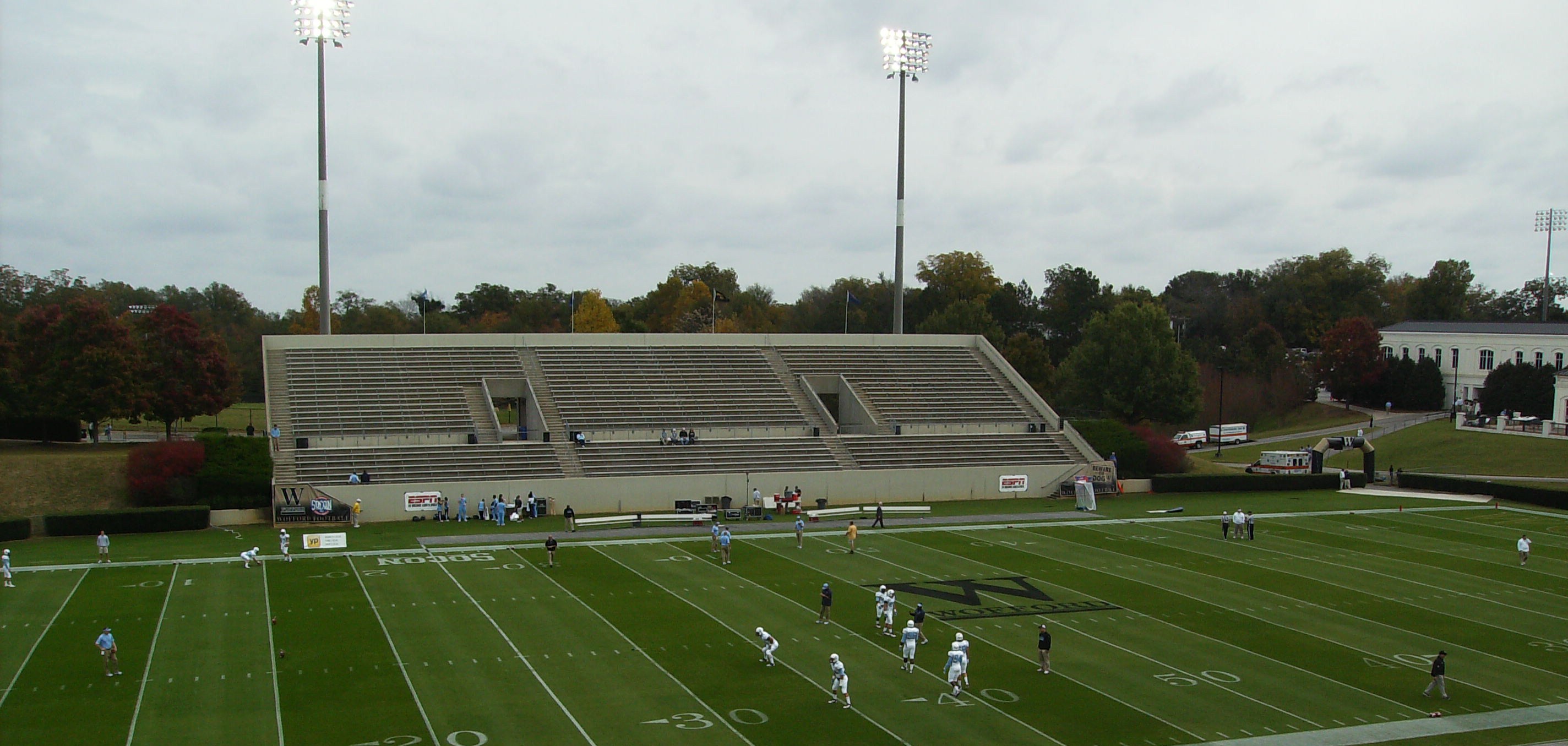
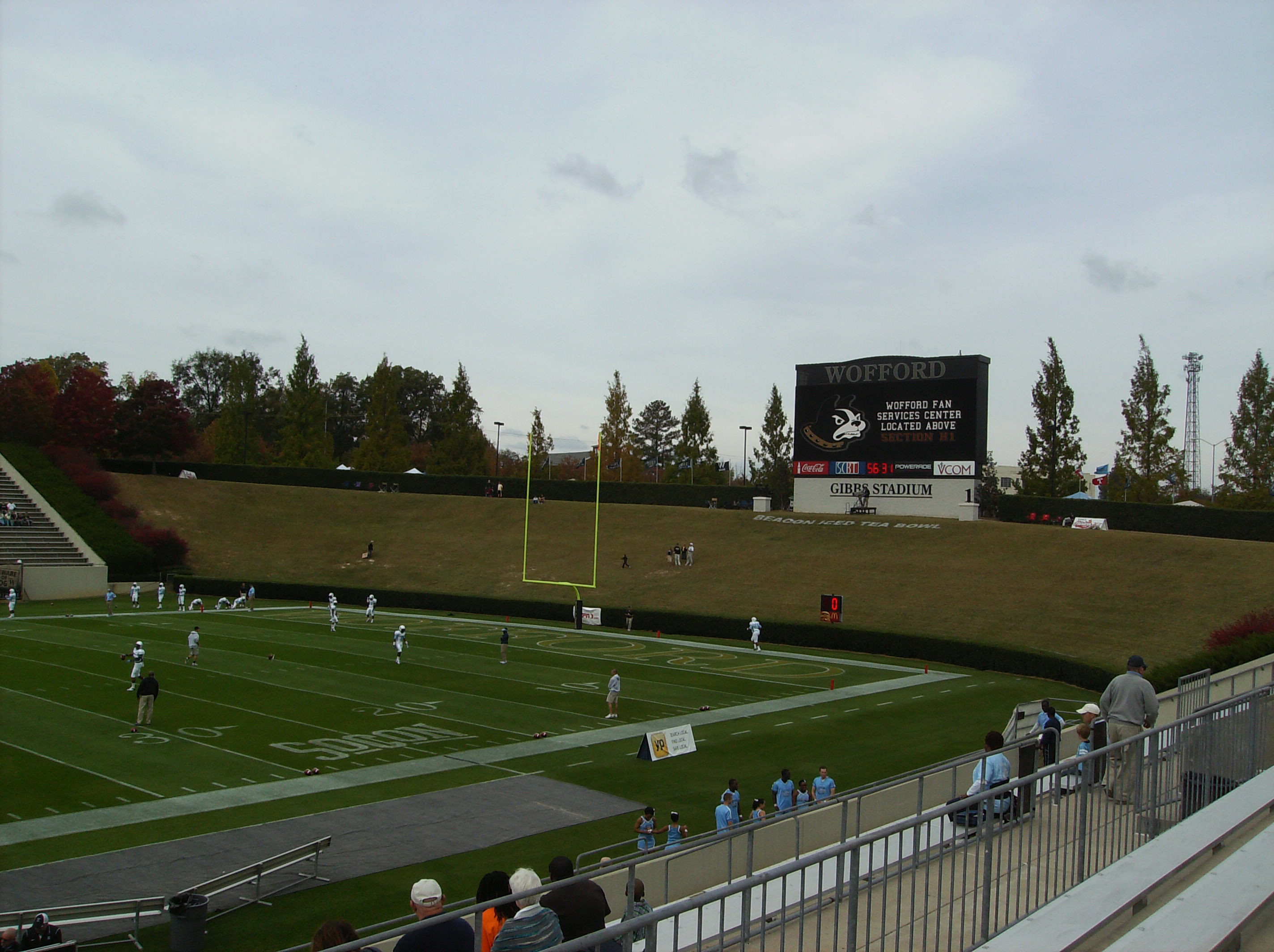
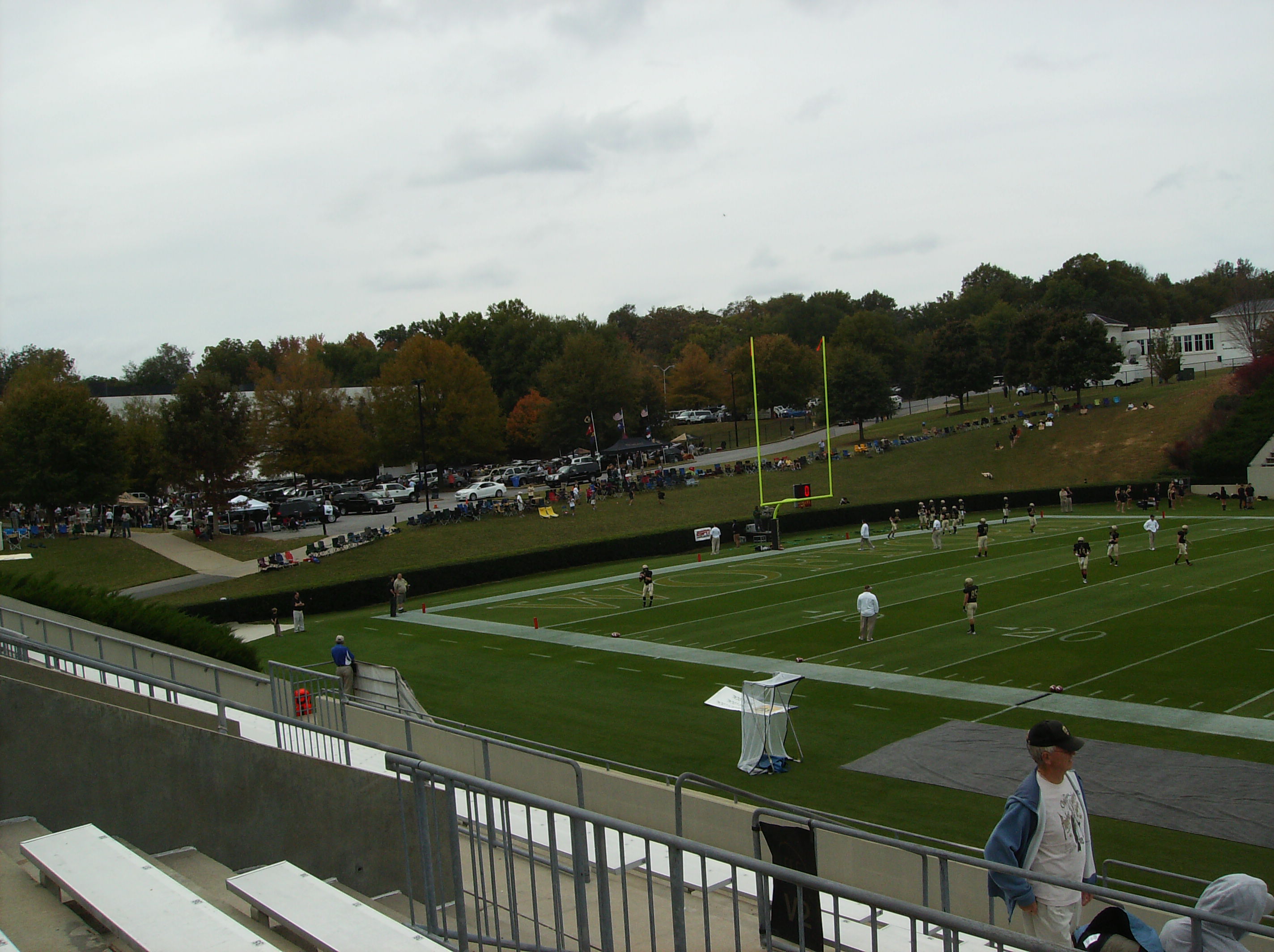
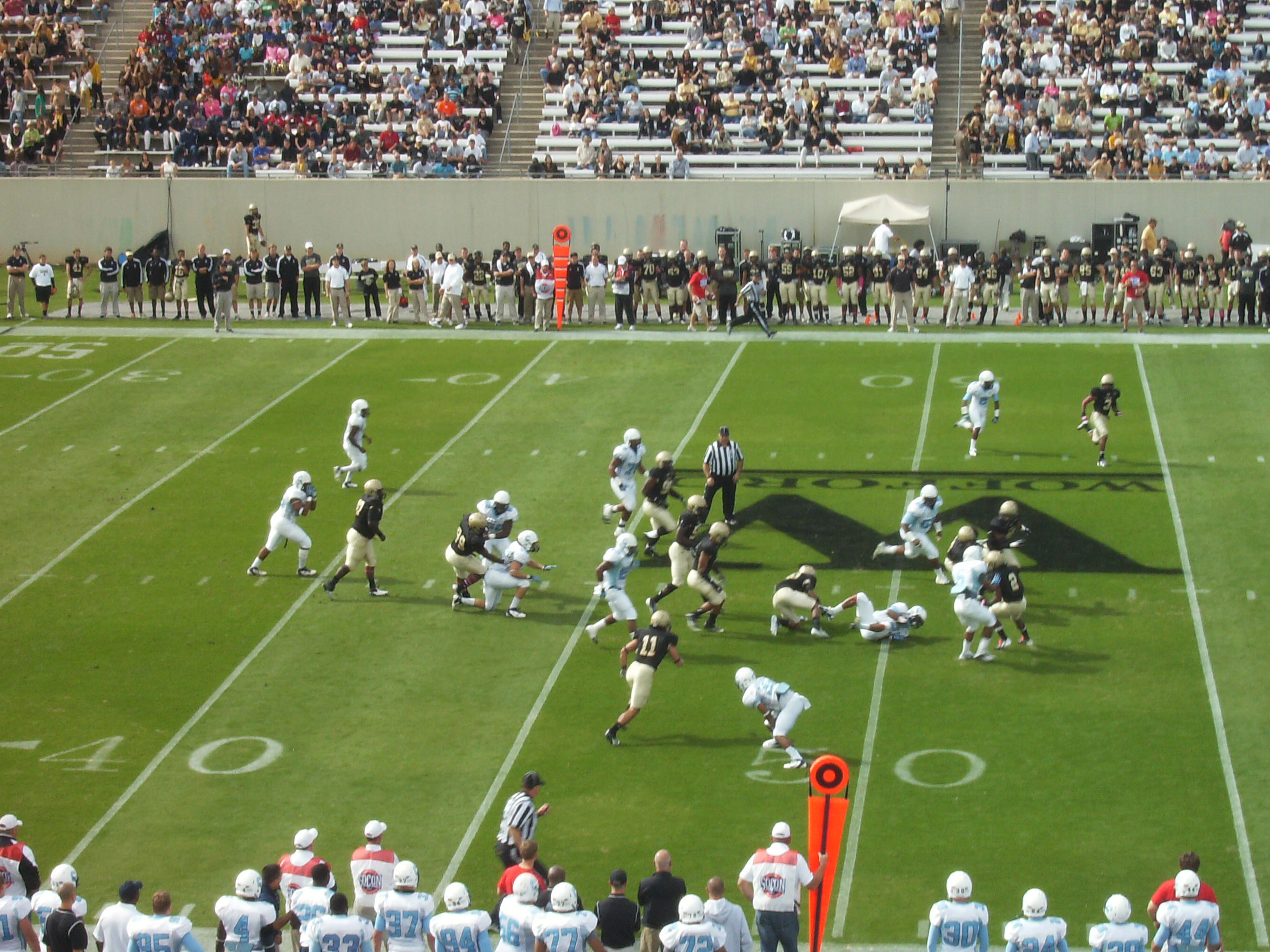
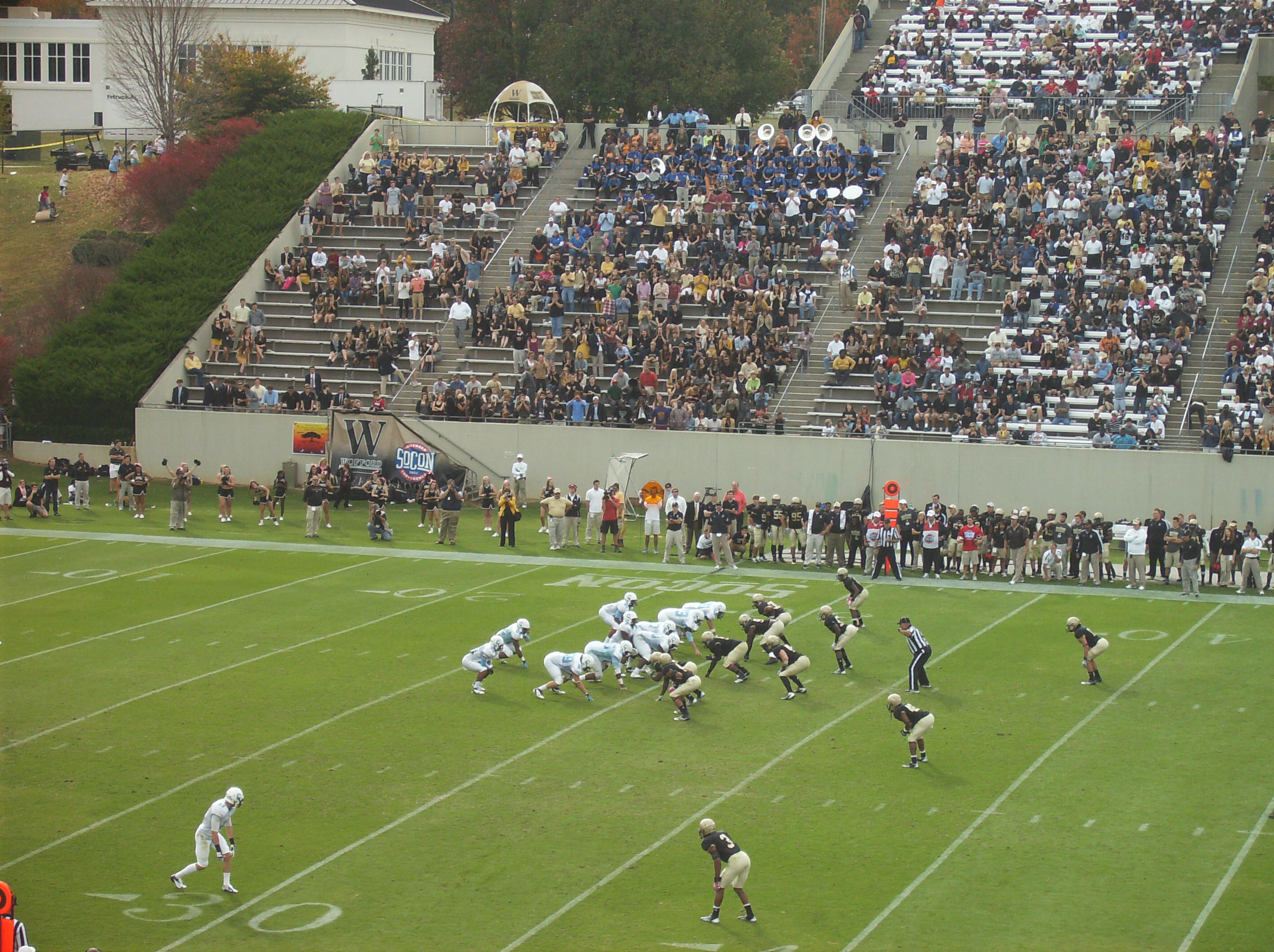
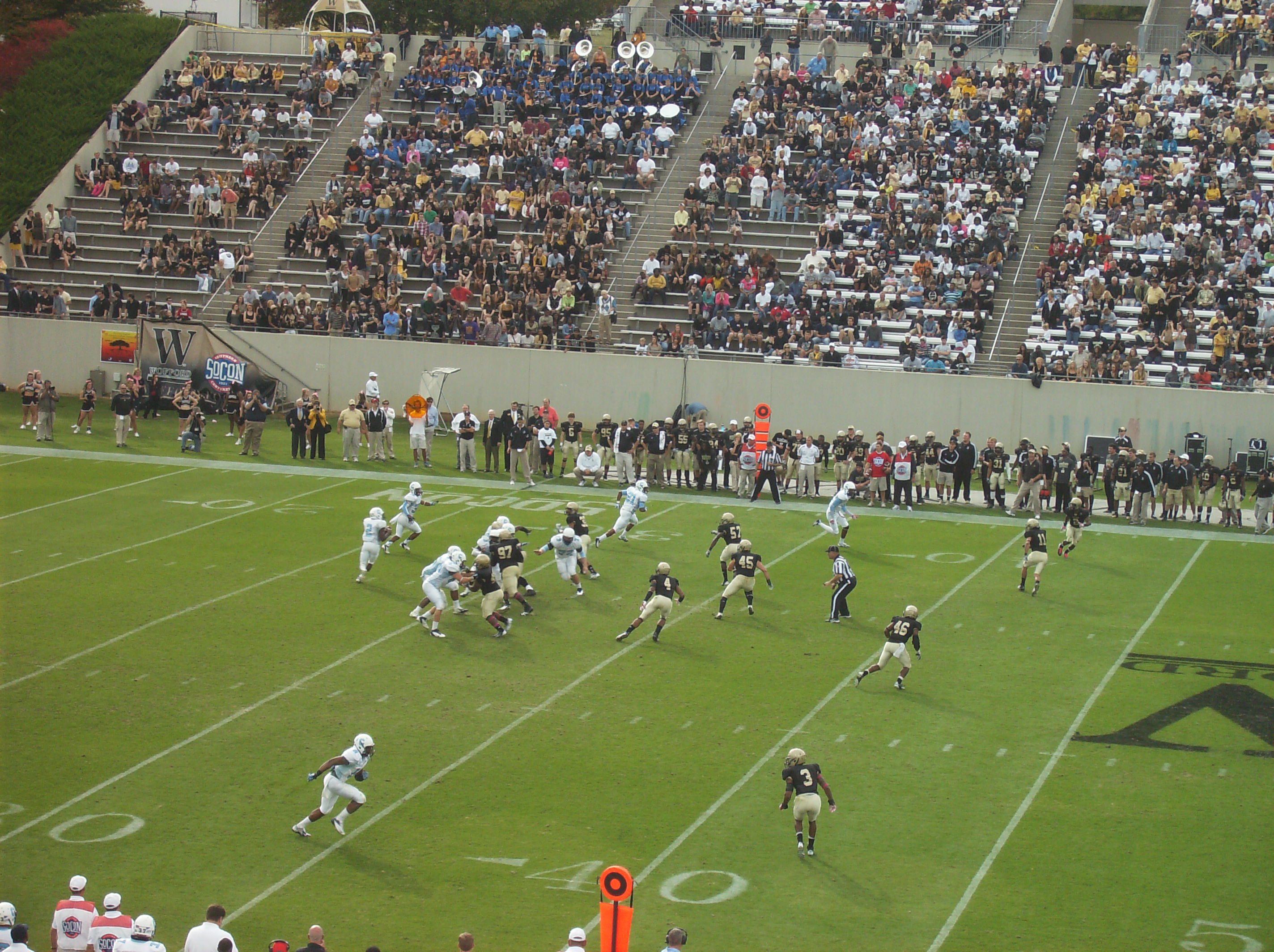
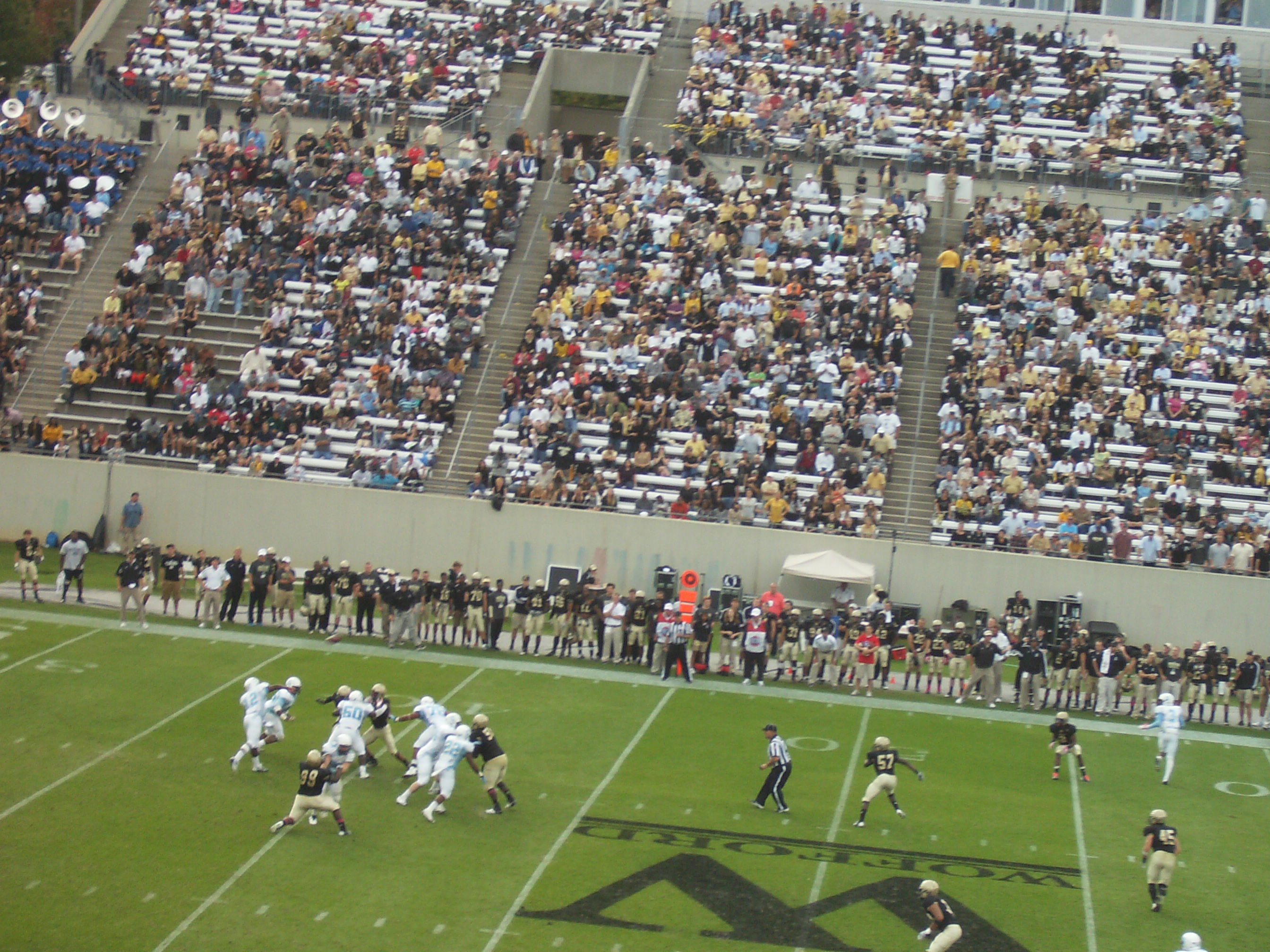
Okay, pictures. I took a ton of bad photos on Saturday. My ability to take out-of-focus shots is almost unmatched. The least  embarrassing of the lot can be found below.

2012 Football, Week 8: The Citadel vs. Wofford

The Citadel at Wofford, to be played at Gibbs Stadium in Spartanburg, South Carolina, with kickoff at 1:30 pm ET on Saturday, October 27.  The game will be streamed on ESPN3.com, with Darren Goldwater providing play-by-play and Paul Maguire supplying the analysis. It can also be heard on radio via the twelve affiliates of The Citadel Sports Network. Danny Reed (the “Voice of the Bulldogs”) will call the action alongside analyst Josh Baker, with Lee Glaze roaming the sidelines and Walt Nadzak providing pre-game, halftime, and post-game commentary. 

Links of interest:

The Citadel game notes

Wofford game notes

SoCon weekly release

The Kevin Higgins Show (following the game against Western Carolina), Part 1 and Part 2

Kevin Higgins’ 10/22 press conference quotes

Mike Ayers on this week’s SoCon teleconference

Parking map for Gibbs Stadium

Catching up with…all-SoCon punter and fisherman Cass Couey

Catch up with Darien Robinson, too

This is the sixth time in the last seven years the game between The Citadel and Wofford will be on TV and/or ESPN3.com. It has been on SportSouth, it has been on SCETV, and now it’s on ESPN3, the second time the Bulldogs have been on that streaming service this season.

Paul Maguire was the analyst when The Citadel played NC State, and he will be again on Saturday. During the NCSU game he claimed in jest that his partner in the booth, Mike Gleason, was the offspring of Jackie Gleason. Perhaps this week he will try to suggest that Darren Goldwater is the son of Barry Goldwater. We can only hope.

While I can’t find the records (which is driving me crazy), I believe that The Citadel has only won one televised game during the Kevin Higgins era. It would be nice to turn that around this weekend.

Kevin Higgins has had no answers for Wofford. In the seven games the Bulldogs have played the Terriers since he became head coach of The Citadel, Wofford has won by an average score of 34-14, never failing to put at least 28 points on the board. It doesn’t matter if the Terriers have been good or bad (the 2009 team was 3-8 but still beat The Citadel by 26).

Last year, I wrote about what I felt was a possible lack of defensive aggression for The Citadel when it plays Wofford. In last season’s matchup, Wofford did not commit a turnover, and also was not penalized. That’s a rare combination. Of course, Wofford almost never gets penalized against The Citadel.

In the last four meetings between the two teams, the Terriers have committed a total of five penalties, for thirty yards (and one of the penalties was an intentional delay-of-game to set up a punt).

While I think the Bulldog D needs to be more aggressive, I am not sure it can afford to be. As everyone knows, The Citadel is starting to run out of linebackers, with Yemi Oyegunle the latest to be lost for the season. Oyegunle has a torn groin muscle, which does not sound particularly pleasant.

Getting the injury-ravaged defense ready for Wofford is going to be a tall order, even with an extra week to prepare. I am not overly confident on that front, especially after watching Western Carolina’s offense go up and the down the field against the Bulldogs two weeks ago.

One positive I came up with after crunching some numbers: The Citadel has generally not let a loss to Wofford ruin the rest of the season. The Bulldogs are only 2-5 during Higgins’ tenure after losing to the Terriers, but the overall record post-Wofford in that seven-year time frame is a respectable 13-13.

Wofford leads the league (and the nation) in rushing offense, at 408.3 yards per game. The Terriers also lead the SoCon in total offense, scoring offense, punt return average, field goal percentage (a perfect 8-8), offensive third-down conversion percentage, turnover margin, and both “red zone” offense and defense scoring percentage.

Wofford is second in the conference in offensive pass efficiency, penalties, and offensive sacks allowed (no surprise that the three league triple option teams are 1-2-3 in the last category).

All of that is very impressive, and goes a long way to explaining the Terriers’ 6-1 record. The only caveat is Wofford’s early-season schedule did not feature particularly strong opposition. Wofford has played Gardner-Webb, Lincoln (a Division II school located in Pennsylvania), Western Carolina, Elon, Furman, Georgia Southern, and Appalachian State (in that order).

The Terriers rushed for 402 yards against Gardner-Webb and actually increased their rushing yardage totals for each of the next two weeks. That isn’t easy to do when you start off with a 400-yard effort. Wofford rushed for 449 yards against Lincoln and a staggering 590 yards versus Western Carolina.

The following week, Elon “held” the Terriers to 500 yards rushing. Running back Eric Breitenstein had a 321-yard rushing day for the Terriers in that game. Rushing totals for Wofford in its last three games: 303 (against Furman), 221 (Georgia Southern, a game the Terriers lost 17-9), and 393 (Appalachian State).

Nobody has stopped Breitenstein yet this season. He only carried the ball five times against Lincoln because there was no need to use him, but he has rushed for at least 150 yards in four of Wofford’s other six games, and ran for over 100 yards in the other two contests.

While Breitenstein has been a constant, Wofford is going to be challenged over the remainder of the season to maintain its offensive efficiency, due to the loss of some key players due to injury. Left tackle Calvin Cantrell will miss his second straight game on Saturday due to a concussion, while slotback Donovan Johnson and backup quarterback Michael Weimer (who has played quite a bit for the Terriers) are also not expected to see the field.

Jared Singleton, Wofford’s center, is hurt but listed on the two-deep and will probably play. Left guard Tymeco Gregory also got banged up in the game against Appalachian State, but is expected to start.

The injury list for Wofford extends to its defense, as linebacker Kevin Thomas (who has started three games for the Terriers and is third on the team in tackles) will not play against The Citadel. Another linebacker, Phillip LeGrande (who has started all seven games), also may not play against the Bulldogs. Defensive end Zach Bobb started Wofford’s first five games of the season, but injured his knee against Furman and is out for the season.

Wofford placekicker Christian Reed missed the game against Appalachian State with a quad injury but is listed as the starter on the two-deep for this week’s contest. Punter Kasey Redfern replaced him against the Mountaineers and made his only FG try (29 yards).

There is a touch of uncertainty with Wofford’s injury list. For example, while Todd Shanesy of the Spartanburg Herald-Journal tweeted that Weimer would be out for the game against the Bulldogs, he is still listed on the depth chart. Just keep that in mind.

If Weimer doesn’t go, that doesn’t mean starting quarterback Brian Kass will play the whole game, according to Mike Ayers. Third-string QB James Lawson will likely get some snaps on Saturday.

Incidentally, Wofford has had eighteen different players carry the ball this season. Twelve of them have at least one rush for more than twenty yards.

Among other Terriers of note: offensive right tackle Jake Miles (a preseason all-SoCon selection), outside linebacker Alvin Scioneaux (also a preseason first team pick), and inside linebacker Mike Niam, a force when healthy (he has suffered multiple knee injuries while at Wofford).

Fellow inside linebacker Mike McCrimon leads the Terriers in tackles. Defensive end Tarek Odom’s 40-yard fumble return for a TD sealed the Terriers’ win over Appalachian State. E.J. Speller is a 290-lb. redshirt freshman nosetackle who is having a fine season; he will be a key factor on Saturday.

Wofford’s defense held each of its first four opponents under 100 yards rushing. Last week, the Terriers held the Mountaineers to 106 yards rushing (363 total yards).

Odds and ends:

— Wofford’s sideline reporter for its radio broadcasts is Van Hipp, Jr. If that name sounds familiar to Low Country residents, it’s because he ran for Congress about two decades ago. Hipp wound up in a primary runoff for the seat in the 1st Congressional District, but lost to a political newcomer named Mark Sanford.

— Saturday’s game will be Wofford’s Homecoming, which means The Citadel will play in two consecutive Homecoming games, Wofford’s and its own.

— Wofford is undefeated this season when it loses the coin toss (4-0).

The 1959 game between The Citadel and Wofford was the last game in the series to be played in Orangeburg, at the County Fairgrounds. The game was played on “Big Friday” and only drew 8,000 spectators, a disappointing showing that probably led to the end of neutral-site contests between the two schools. The Citadel won 40-8; six different Bulldogs scored touchdowns in the game.

Wofford would not play The Citadel again until 1967, possibly because of a disagreement between the two coaches, Eddie Teague of The Citadel and Wofford’s Conley Snidow. Snidow accused Teague of running up the score, a charge the Bulldogs coach vehemently denied.

Not only did Snidow complain about a late touchdown scored by The Citadel (even though the TD came after Wofford had fumbled the ball on its own five-yard-line), he belittled the Bulldogs’ victory, saying it came against one of his lesser squads. There may have been some previous bad blood between the two men, as The Citadel had already announced it was suspending the series.

The 1967 contest was the only time The Citadel played Wofford between 1959 and 1975.

By the way, the main photo accompanying the game story features “Broadway Billy” Hughes, and the first paragraph of the article itself describes teammate Billy Whaley as “The Citadel’s vice president in charge of touchdowns”. Ah, those were the days.

For anyone wondering, Paul Maguire did play in the game. He did not score, but caught three passes for forty yards and punted three times, averaging 43 yards per kick.

I’ll be honest. I don’t have a good feeling about the upcoming game, not from The Citadel’s perspective. While Wofford is struggling with injuries of its own, the Terriers have more than their fair share of proven depth. They have options.

Meanwhile, the Bulldogs are painfully thin at linebacker, a problem exacerbated by (in my opinion) less than optimal play by the defensive line in recent weeks. If The Citadel is going to have any chance of winning Saturday’s matchup, the d-line has to make big plays. That hasn’t really happened in the last month or so.

Anyone who saw the game against Western Carolina has to cringe at the thought of the Bulldogs’ D versus an experienced (if beat up) offensive line and a steady quarterback like Brian Kass, with Eric Breitenstein ready to break loose at any point (he has 12 runs of 20+ yards already this season).

Am I pessimistic? Well, yes.

However, the team has to take a more positive approach. Wofford isn’t invincible, and the Bulldogs don’t need to play a perfect game to win on Saturday. They just have to play very, very well.

I’ll be in Spartanburg on Saturday. I may have my doubts, but I’ll be there. The Bulldogs were good enough to beat Georgia Southern and thrash Appalachian State in Boone. The potential is still there.

Now let’s make something of it.